

QuizTraffic rulesBrussels
Test your knowledge with our multiple-choice quiz. Learn from each answer and improve your understanding of the traffic rules and road signs of Brussels.
 Traffic signs
 Traffic rules
 Brussels
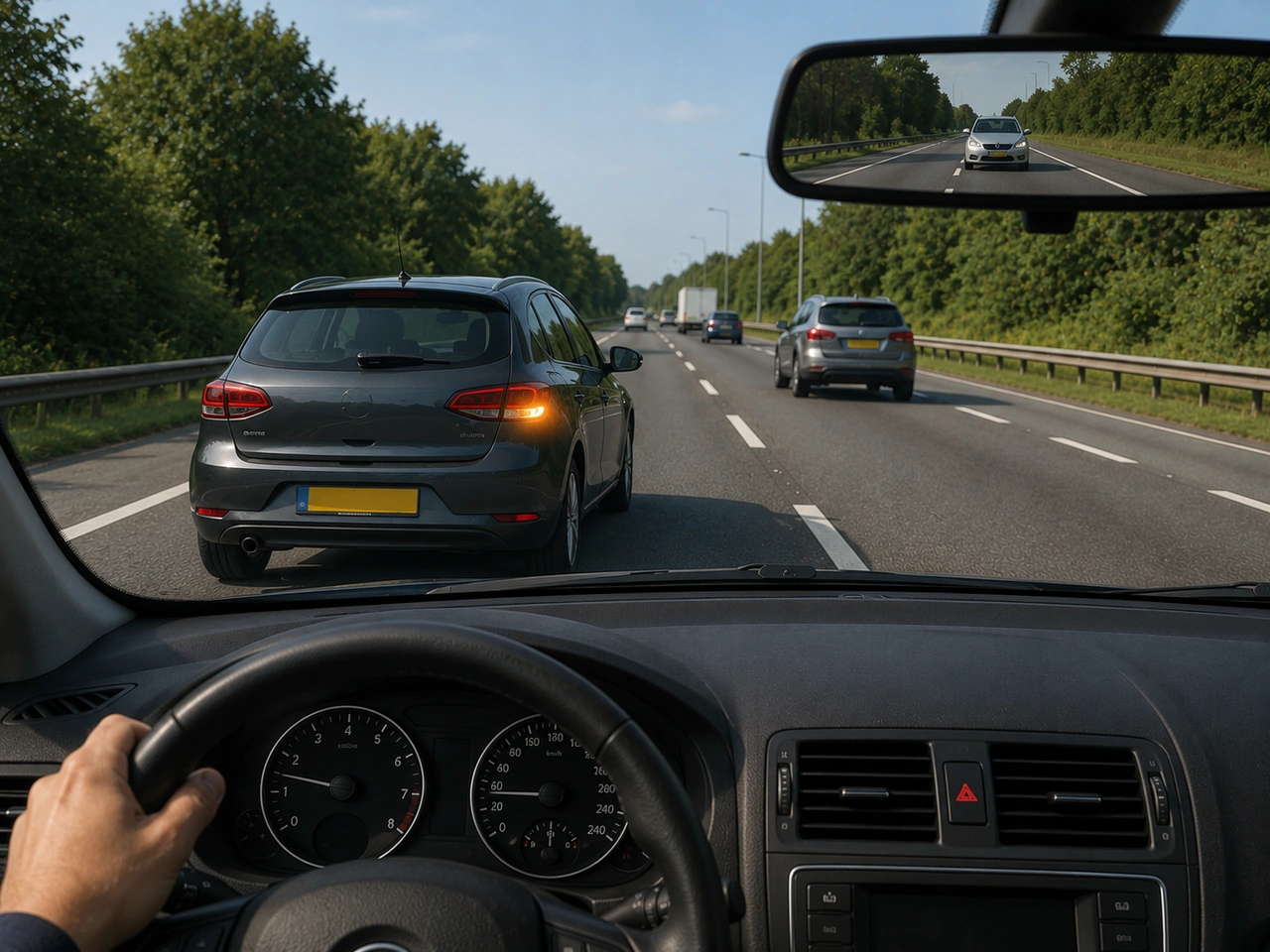
601. You should signal before turning or changing lanes.
A clear signal helps other road users understand your intentions, but you must still check that the manoeuvre can be made safely.
AI-generated by Rijbewijs-online.be • WCIT • CC BY-SA

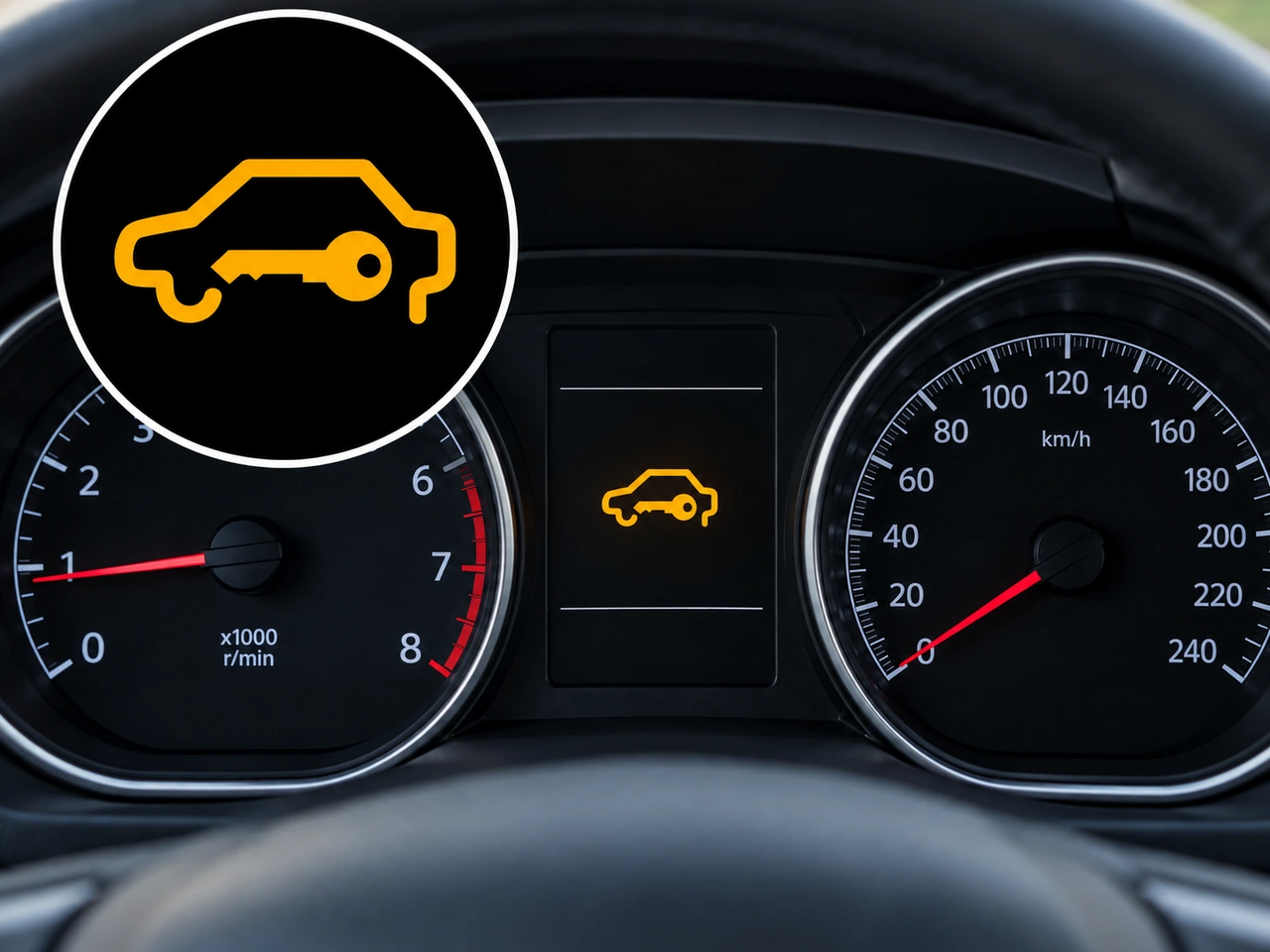
602. What does this dashboard symbol indicate?
This symbol relates to the vehicle's immobiliser or anti-theft system. If it remains illuminated or flashes unexpectedly, the vehicle may not recognise the key or there may be a fault in the security system.
AI-generated by Rijbewijs-online.be • WCIT • CC BY-SA
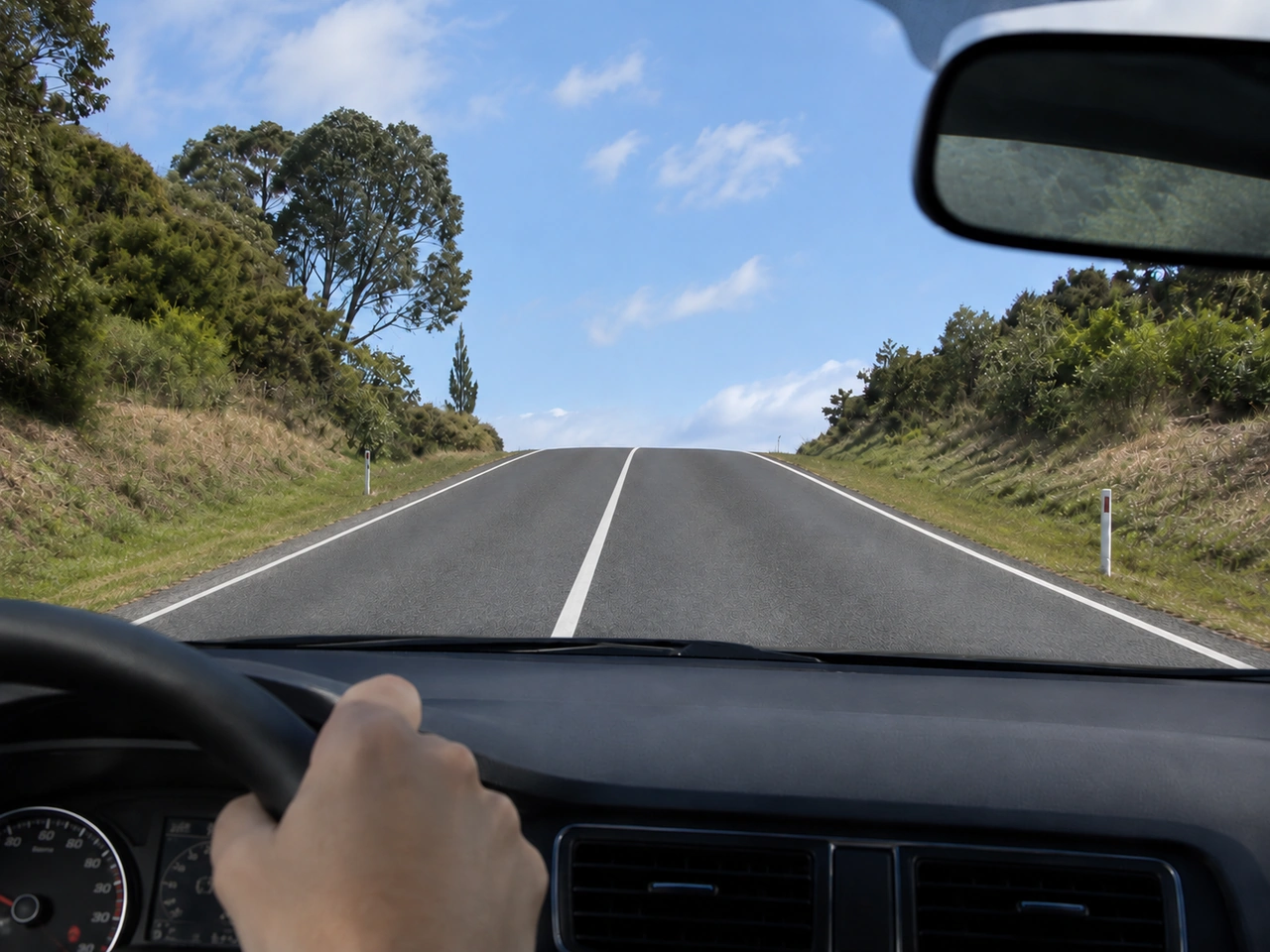
603. What should you do when approaching a hill crest?
A hill crest can hide vehicles, cyclists, pedestrians, or obstacles. Reduce speed and stay in your lane.
AI-generated by Rijbewijs-online.be • WCIT • CC BY-SA
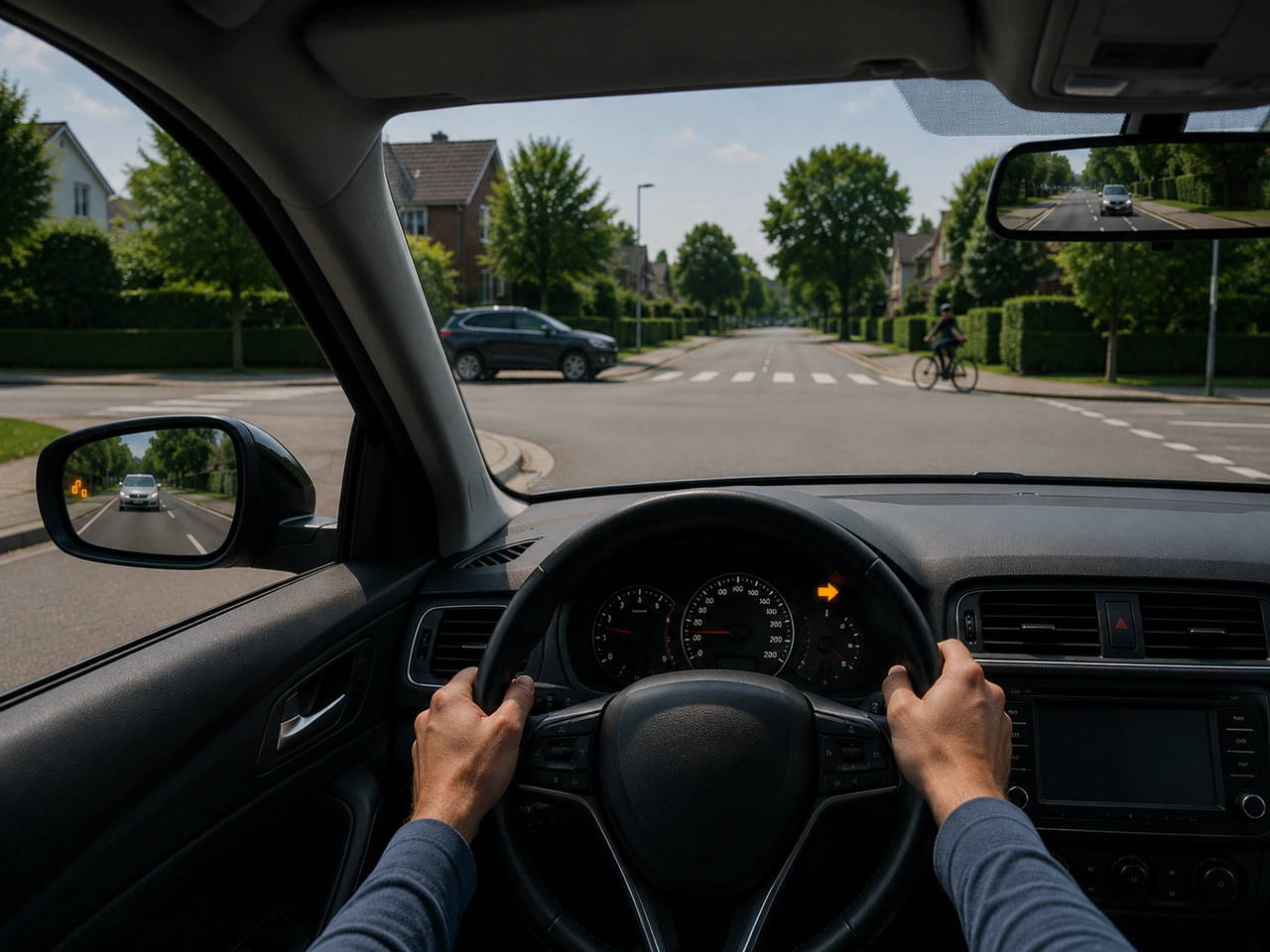
604. What should you do before making a turn?
Before turning, check your mirrors, use your indicator, and make sure the turn can be made safely.
AI-generated by Rijbewijs-online.be • WCIT • CC BY-SA
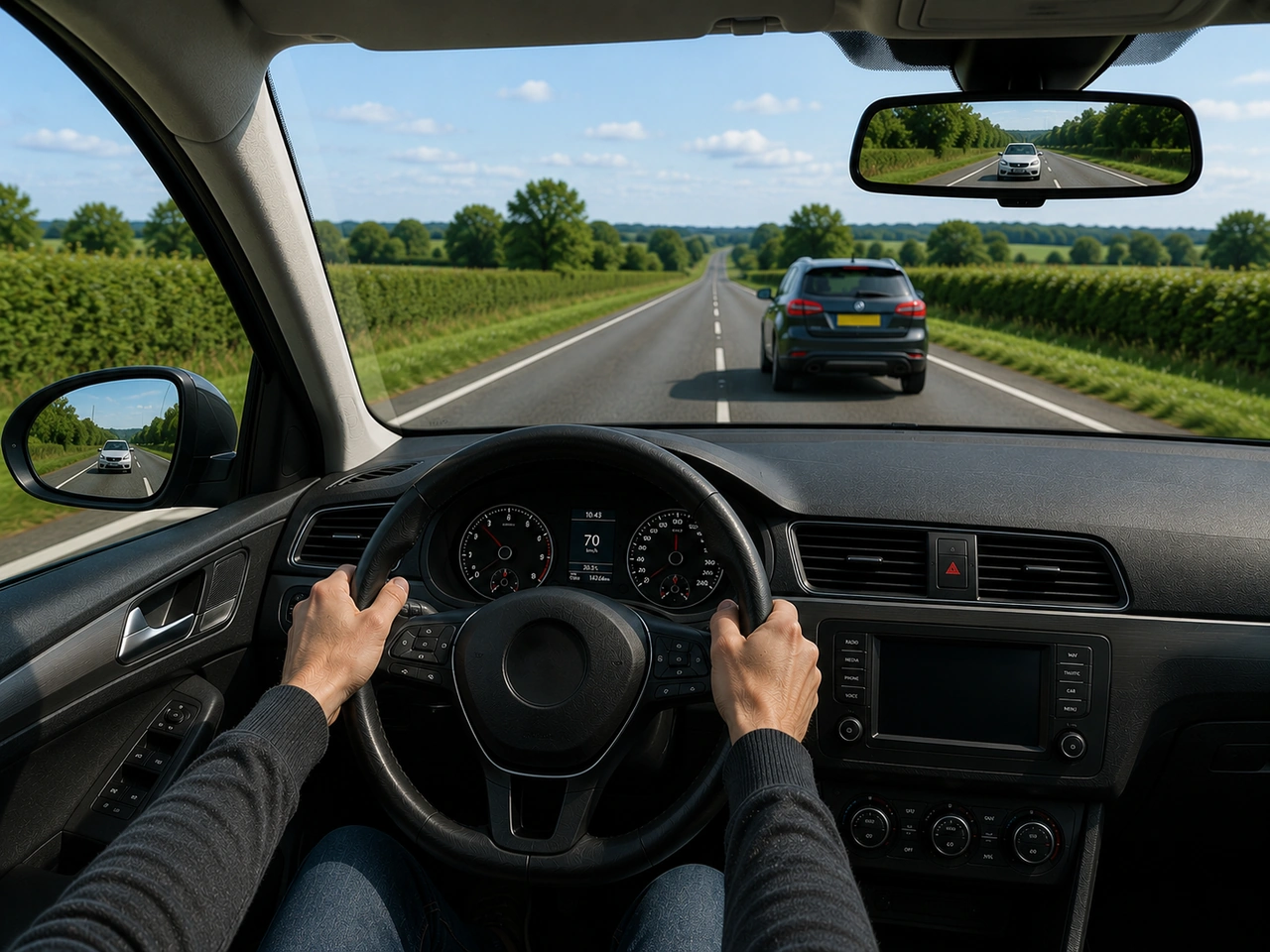
605. What should you do before overtaking another vehicle?
Before overtaking, check the road, mirrors, blind spots, signs, and markings, use your indicator, and only overtake when it is safe and permitted.
AI-generated by Rijbewijs-online.be • WCIT • CC BY-SA
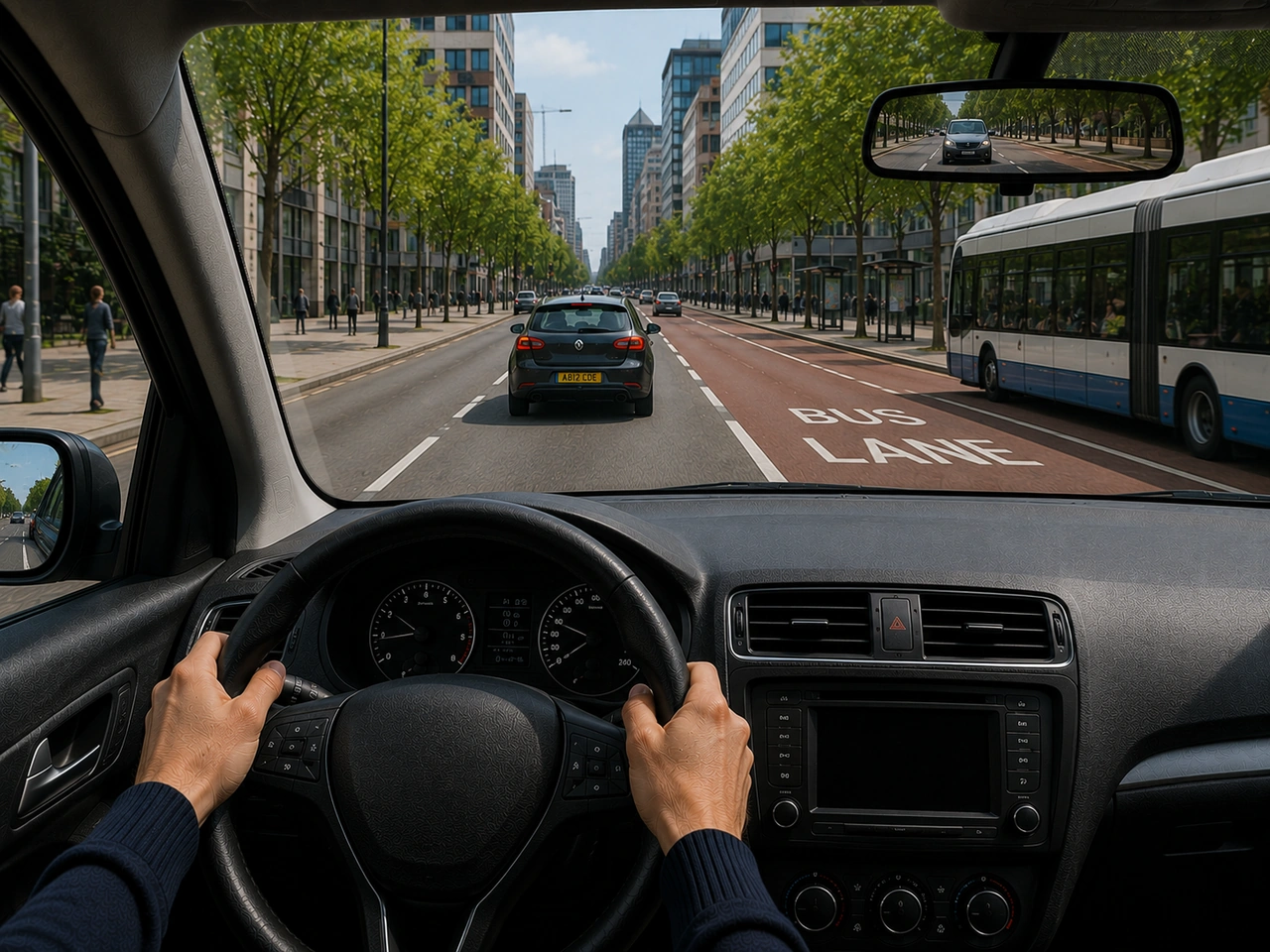
606. Why should you take extra care when crossing a tram or bus lane?
Check carefully before crossing or entering a tram or bus lane. Trams cannot steer around obstacles, and both trams and buses may need significant distance to stop.
AI-generated by Rijbewijs-online.be • WCIT • CC BY-SA
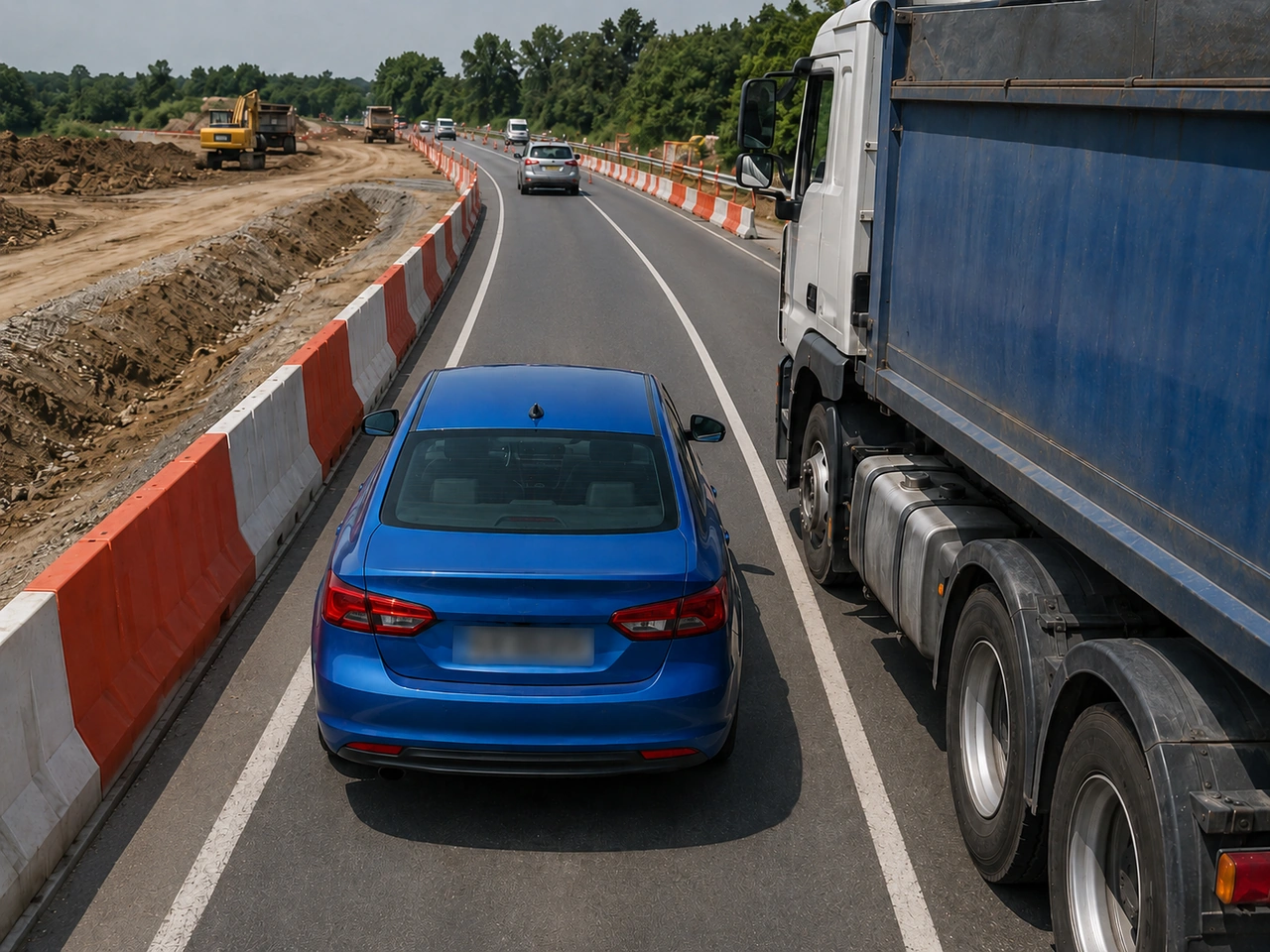
607. What should you expect when lanes become narrower in roadworks?
Narrow lanes leave less room for error. Keep a steady position, avoid drifting toward barriers or nearby vehicles, and reduce speed if necessary.
AI-generated by Rijbewijs-online.be • WCIT • CC BY-SA
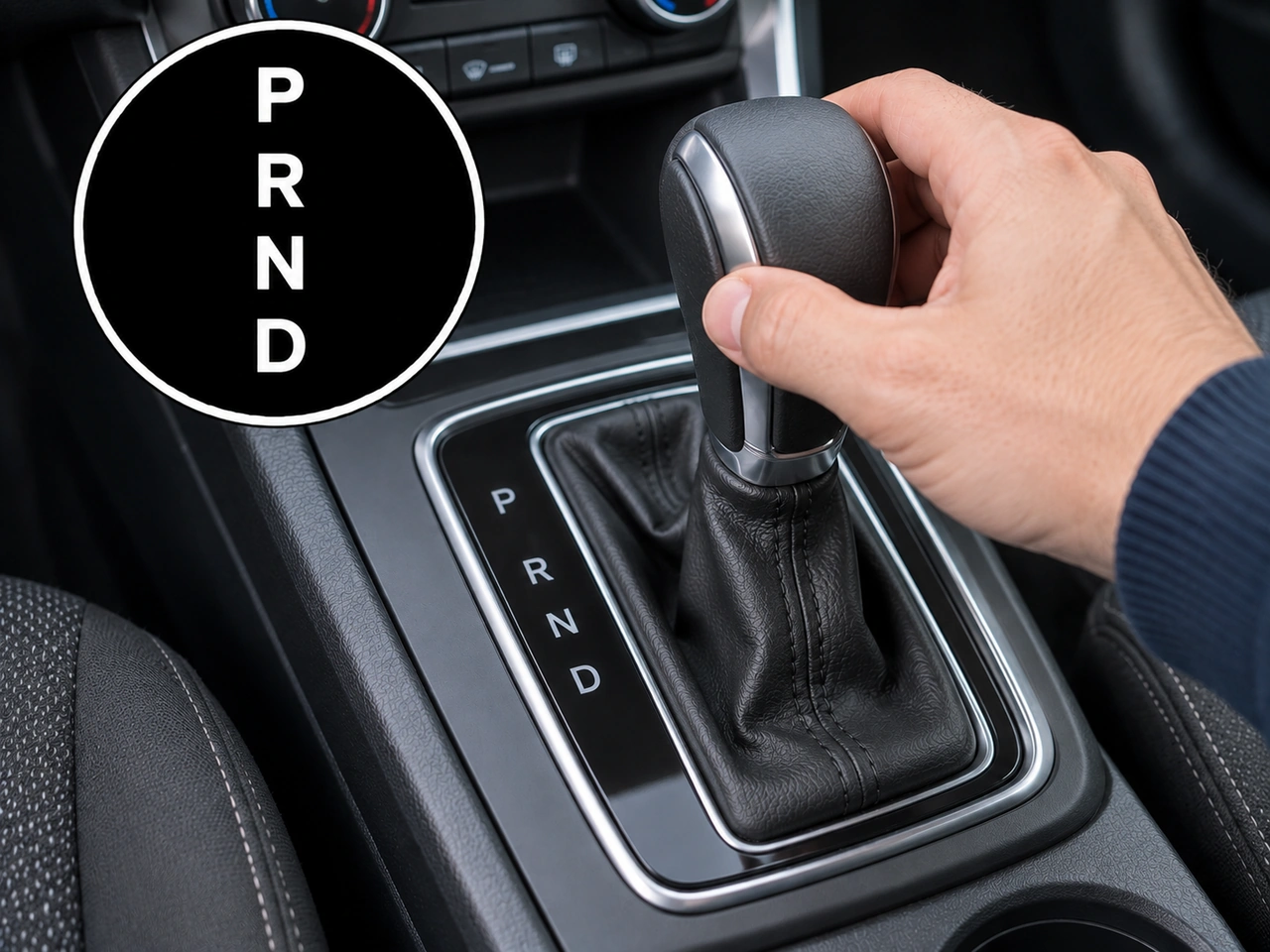
608. Which selector position is used when parking the vehicle?
Select P (Park) when parking an automatic vehicle. Park locks the transmission, but the parking brake should also be applied to secure the vehicle.
AI-generated by Rijbewijs-online.be • WCIT • CC BY-SA
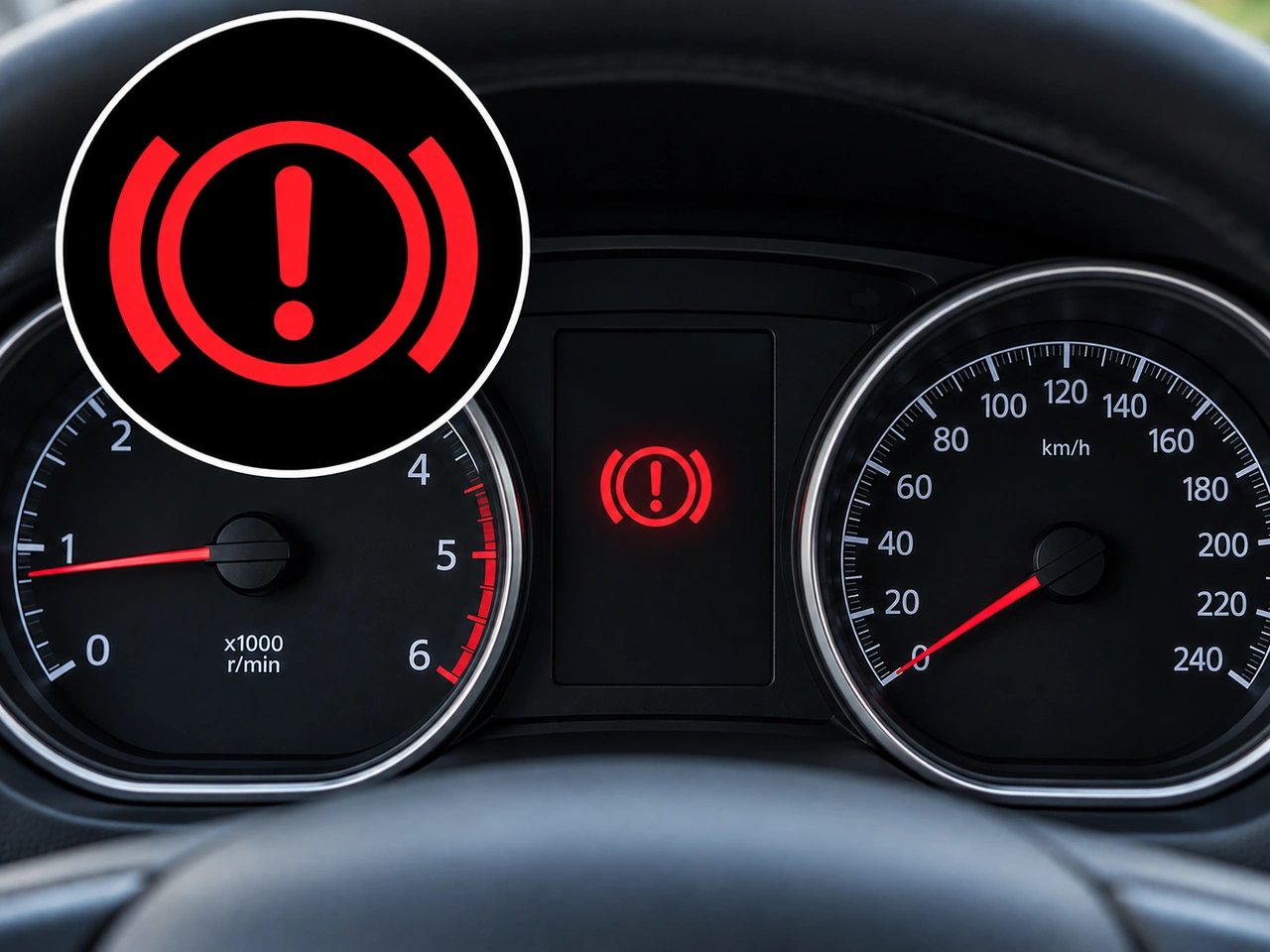
609. What does this dashboard symbol indicate?
This symbol indicates a possible brake-system fault. If it remains illuminated after the parking brake is released, stop safely and have the braking system checked.
AI-generated by Rijbewijs-online.be • WCIT • CC BY-SA
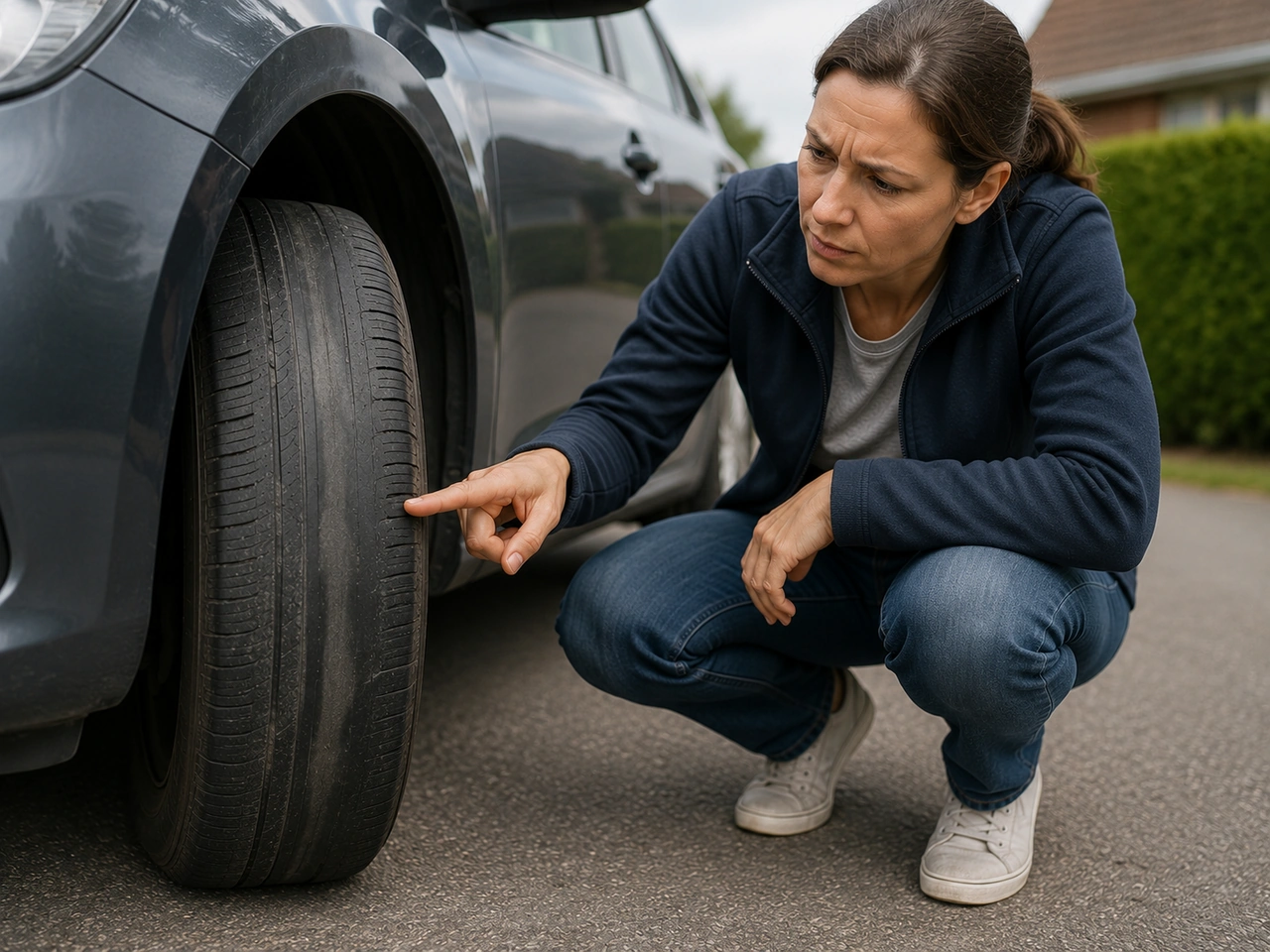
610. What can uneven tyre wear indicate?
Uneven wear may result from incorrect tyre pressure, wheel misalignment, worn suspension parts, or a brake that is not releasing properly.
AI-generated by Rijbewijs-online.be • WCIT • CC BY-SA
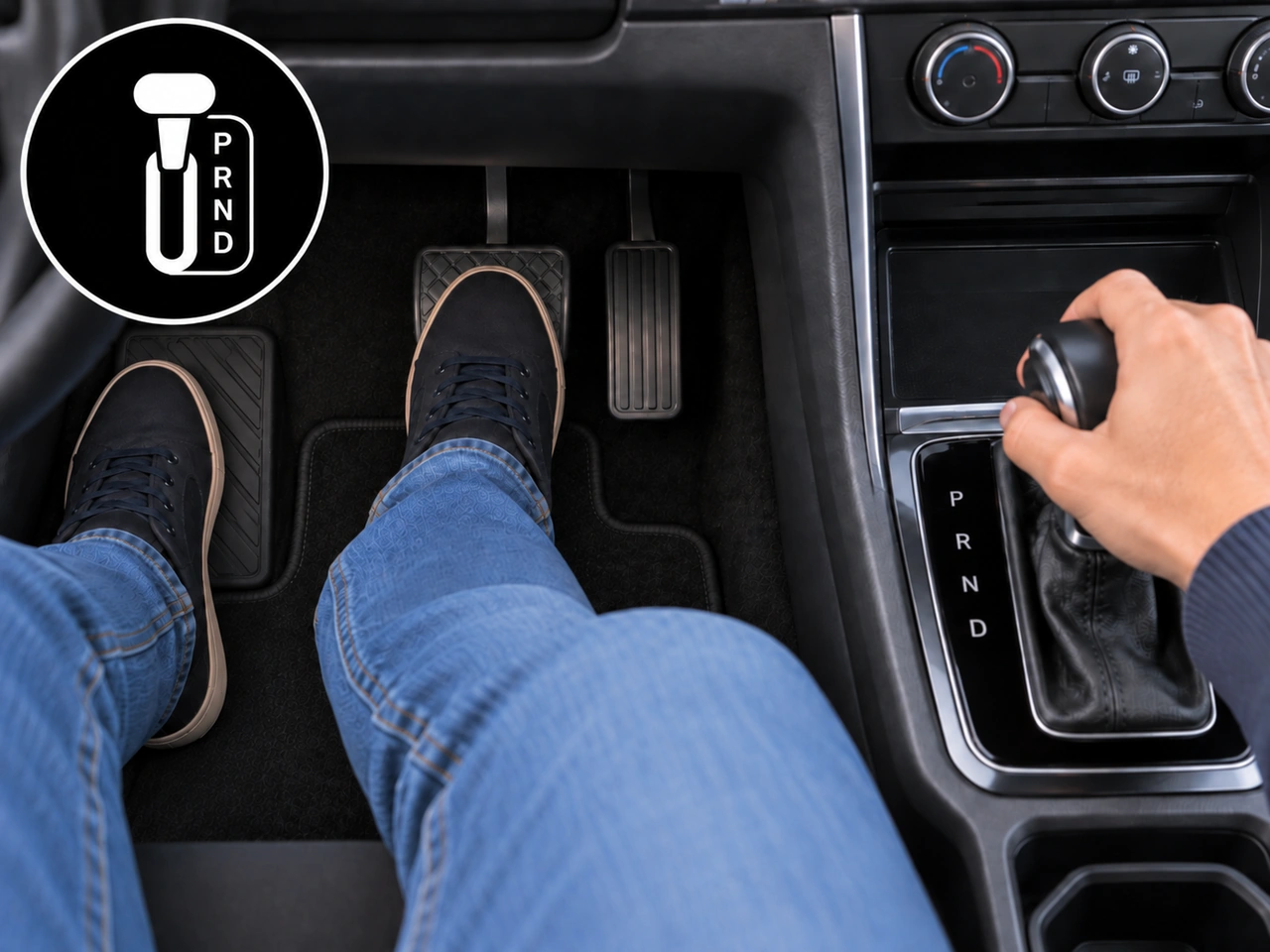
611. What should you normally do before selecting D or R in an automatic vehicle?
Before selecting D (Drive) or R (Reverse), keep the brake pedal pressed to prevent the vehicle from moving unexpectedly when the gear is engaged.
AI-generated by Rijbewijs-online.be • WCIT • CC BY-SA
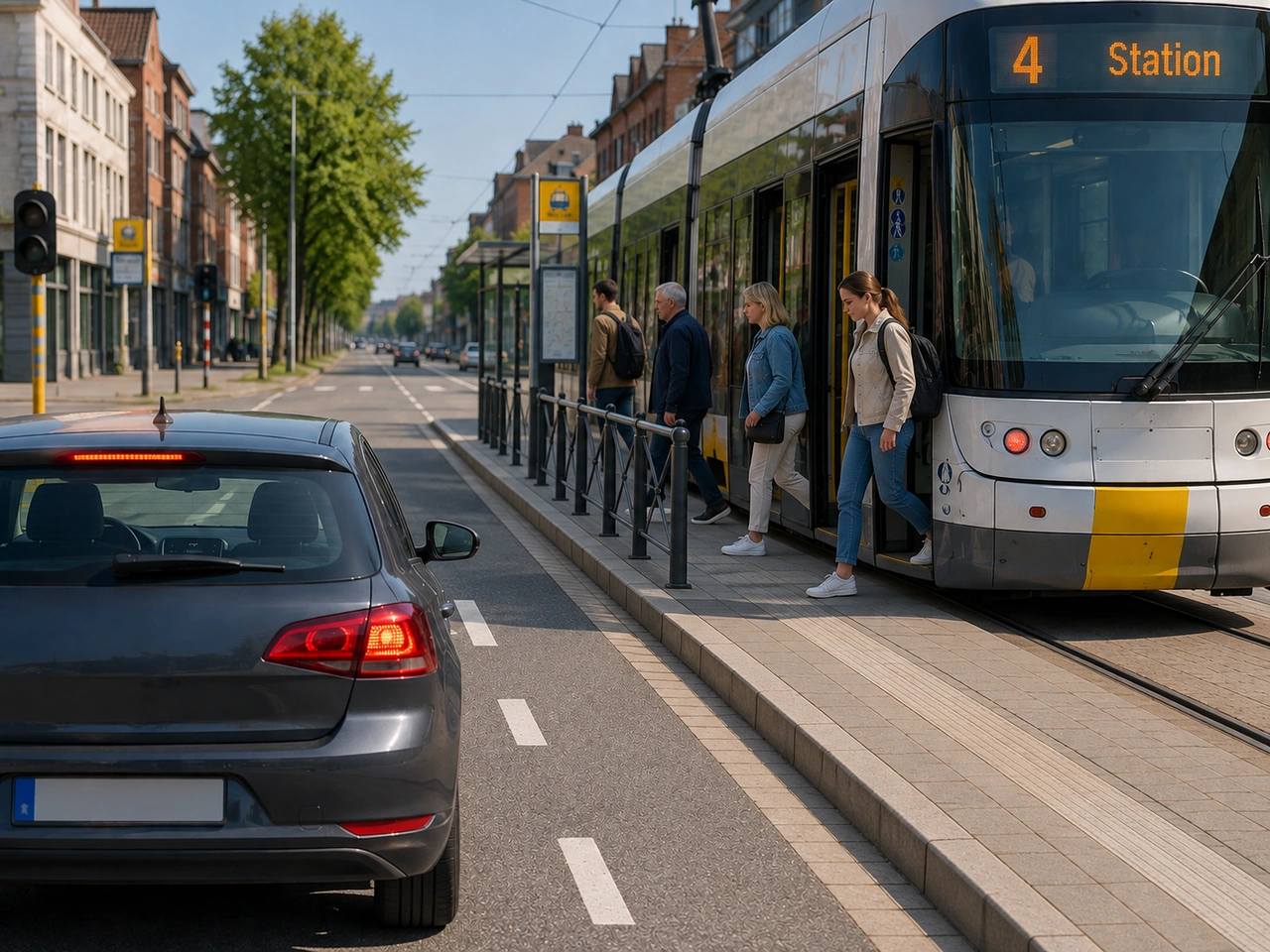
612. What must a driver do when passengers board or leave a tram without a refuge island?
Where there is no refuge island, drivers passing on the boarding side must stop and allow passengers to move safely between the tram and the pavement or roadside.
AI-generated by Rijbewijs-online.be • WCIT • CC BY-SA
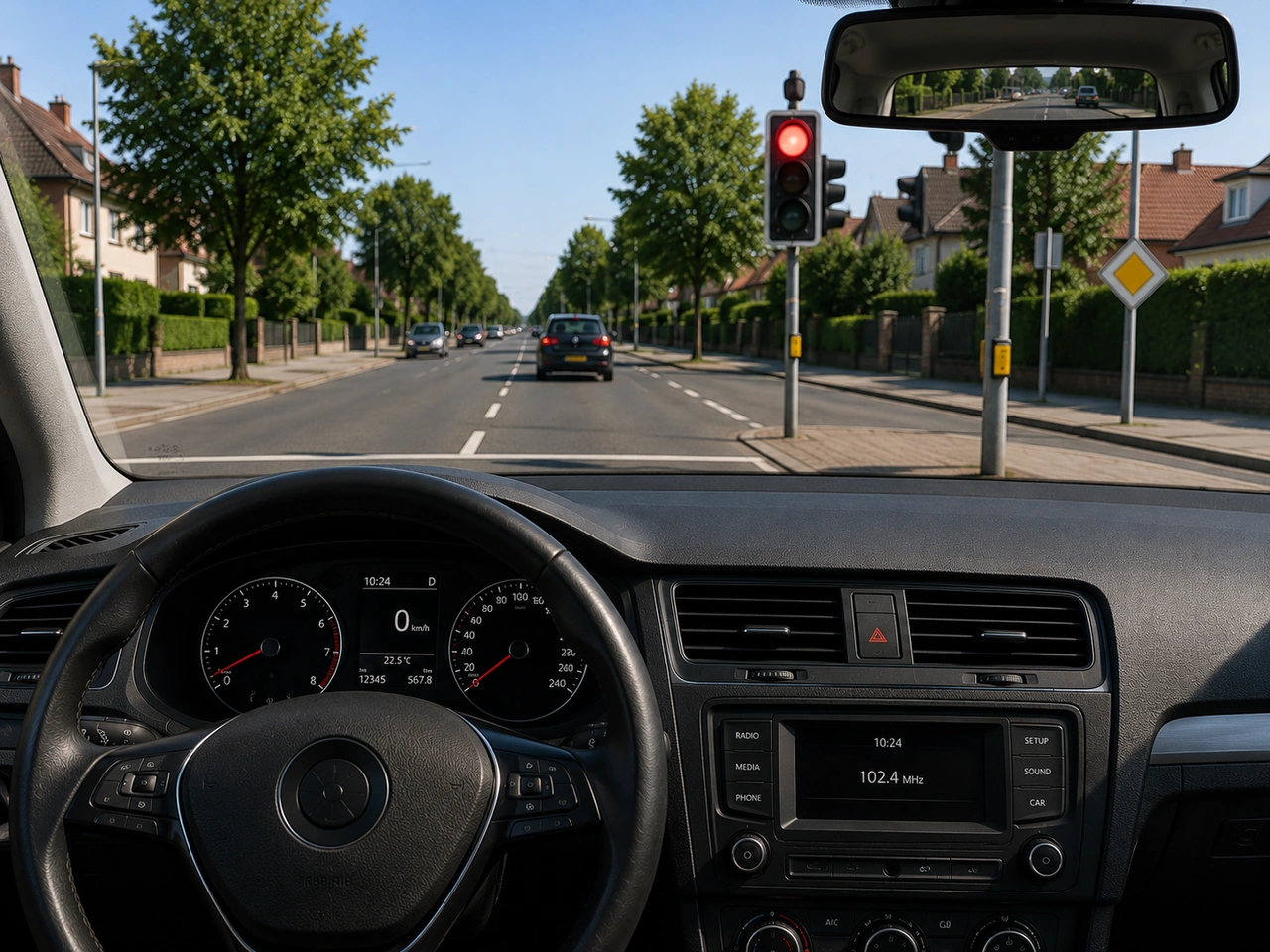
613. You must stop at a red traffic light.
A red traffic light means you must stop and wait until it is allowed to proceed.
AI-generated by Rijbewijs-online.be • WCIT • CC BY-SA
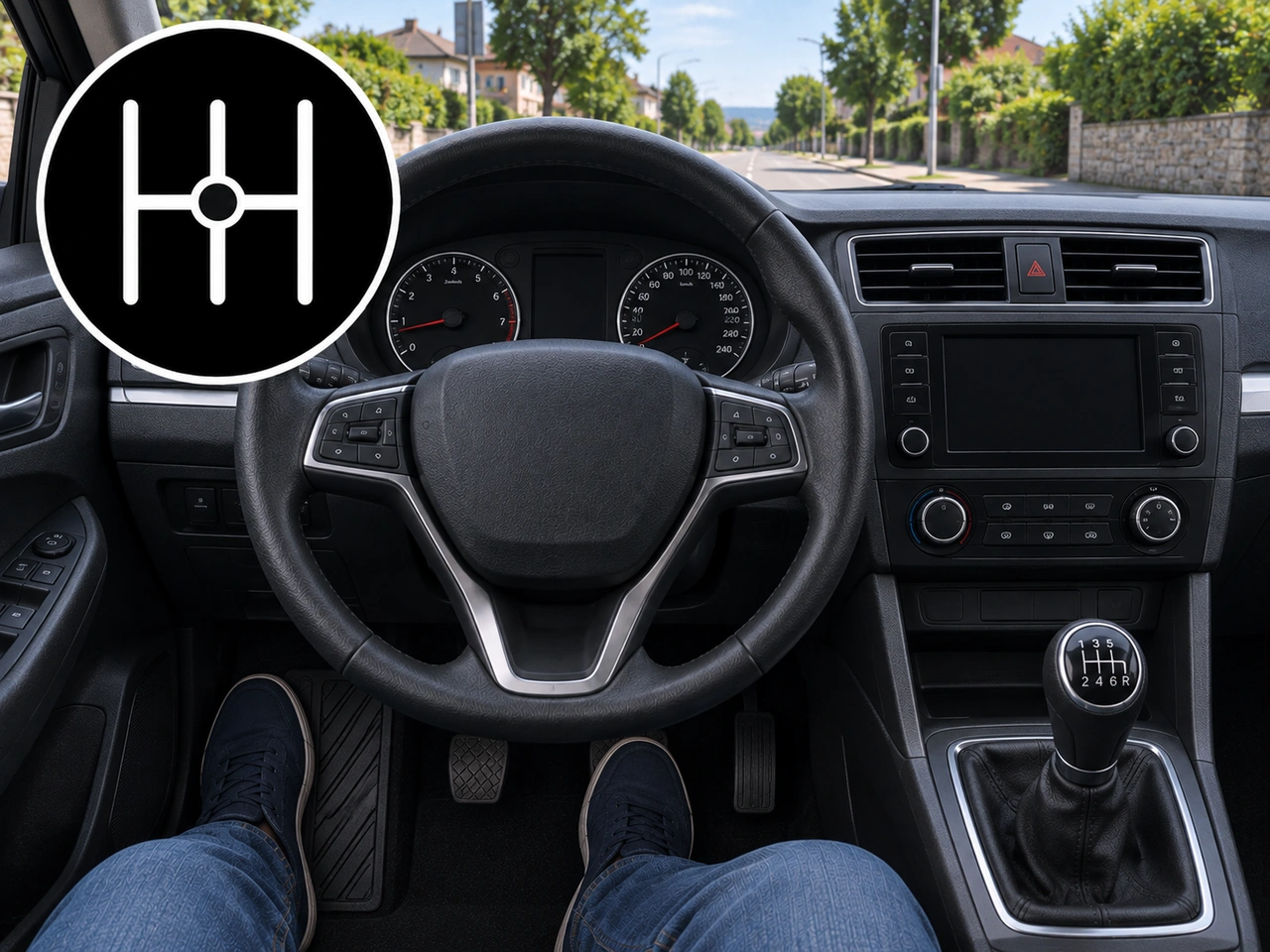
614. What should you normally do with the gearbox during a longer stop in a manual vehicle?
During a longer stop, selecting neutral and releasing the clutch can reduce unnecessary strain on the clutch release mechanism. Keep the vehicle securely held with the brake or parking brake as appropriate.
AI-generated by Rijbewijs-online.be • WCIT • CC BY-SA
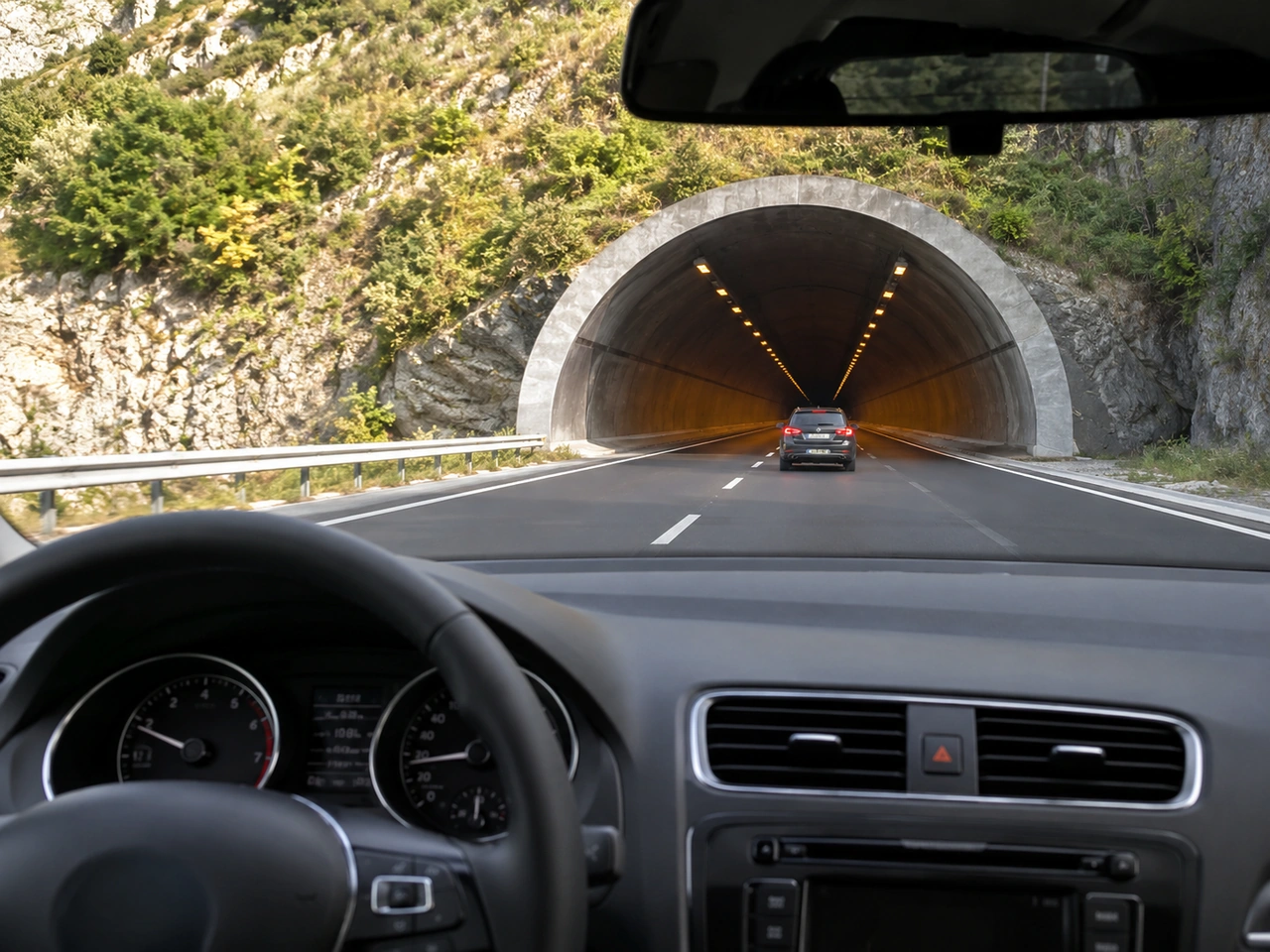
615. What should you do when approaching a tunnel?
When entering a tunnel, use the correct lights, keep enough distance, and stay alert for slower traffic.
AI-generated by Rijbewijs-online.be • WCIT • CC BY-SA
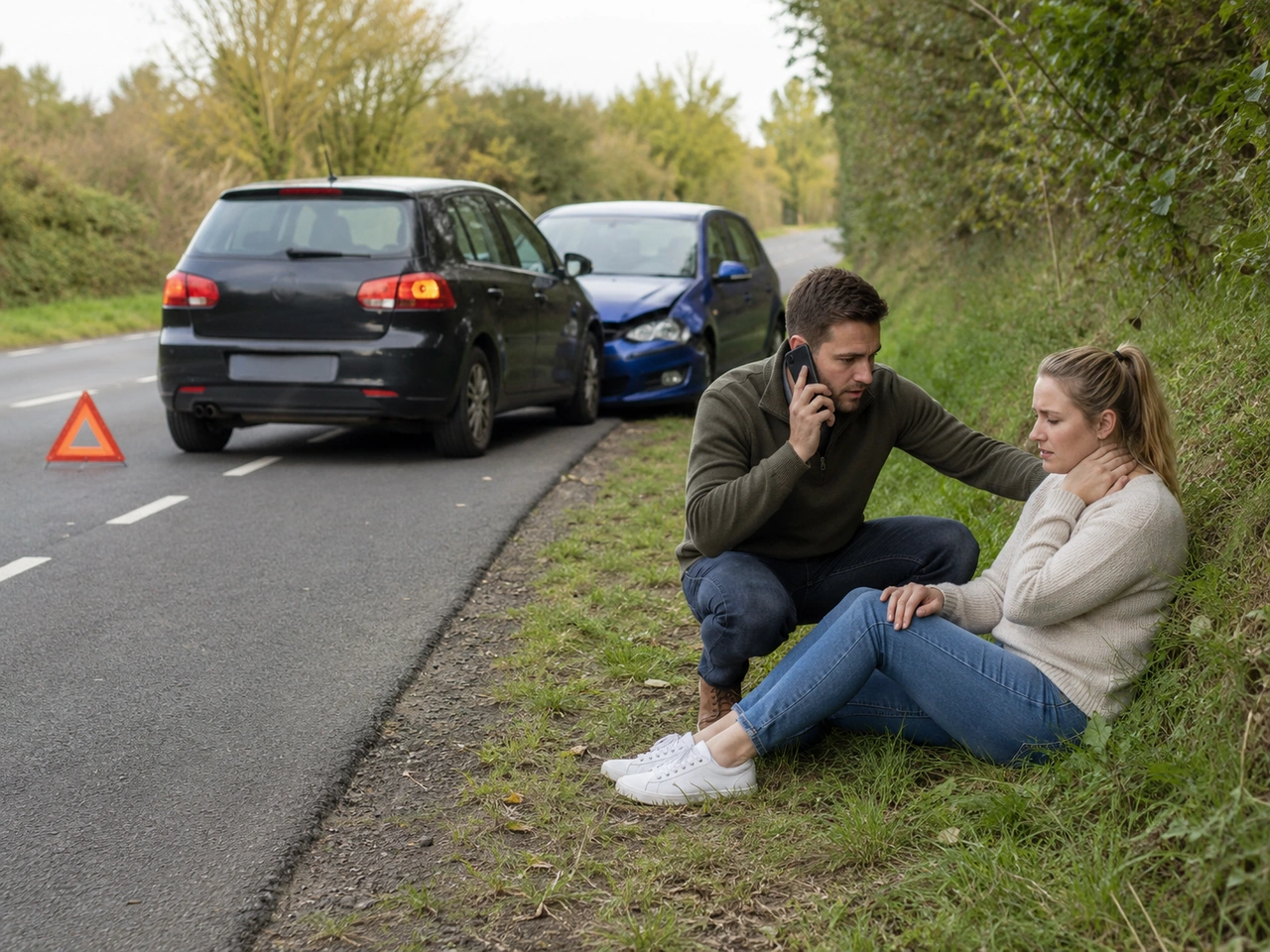
616. What should you do if someone is injured in a road collision?
Moving an injured person can worsen spinal or other injuries. Keep them calm, protect them from further danger, and provide first aid only within your level of training.
AI-generated by Rijbewijs-online.be • WCIT • CC BY-SA
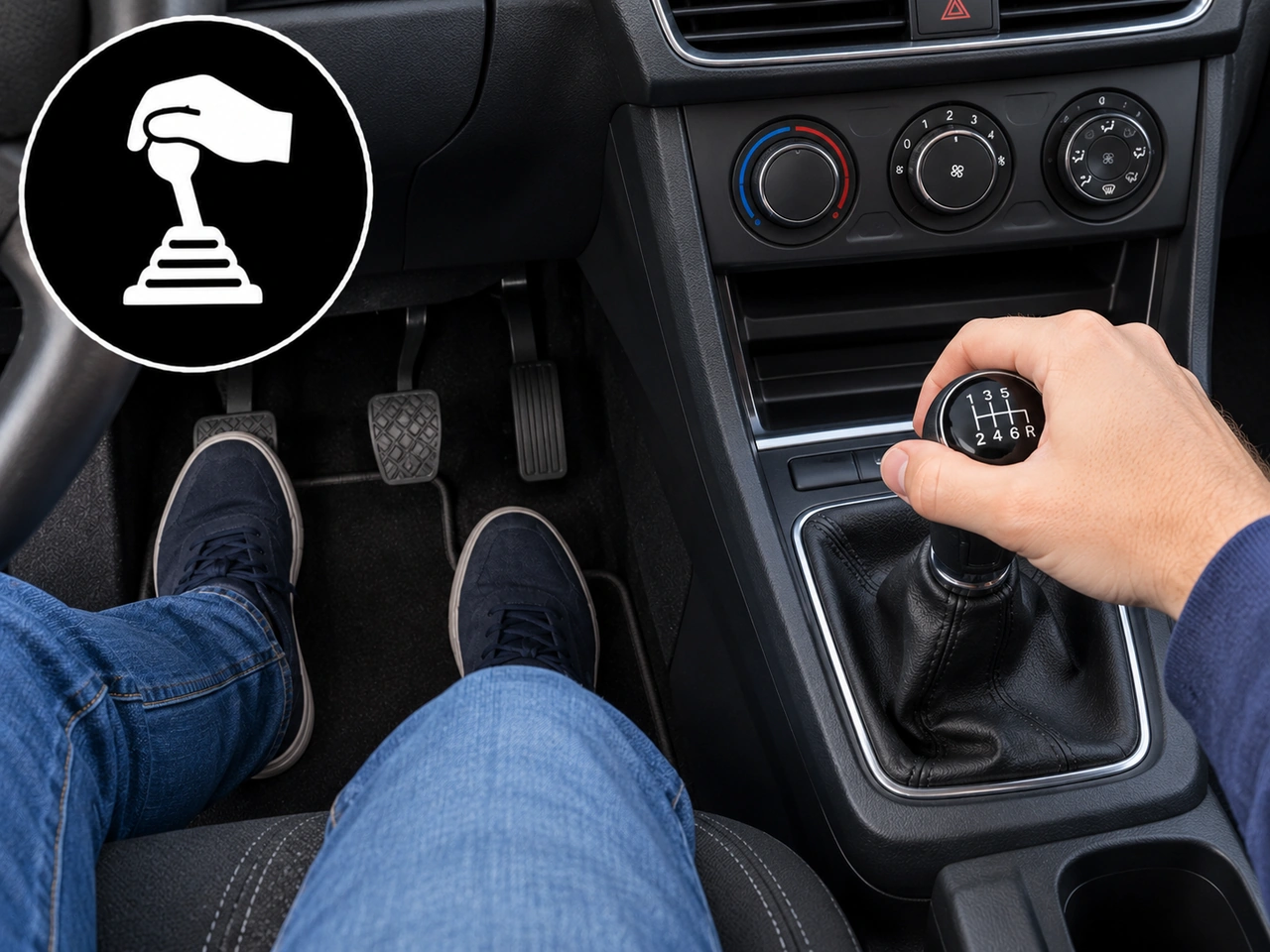
617. What should you do if a gear does not engage easily in a manual vehicle?
If a gear does not engage easily, do not force the gear lever. Make sure the clutch is fully pressed and the vehicle's speed is suitable for the gear before trying again.
AI-generated by Rijbewijs-online.be • WCIT • CC BY-SA
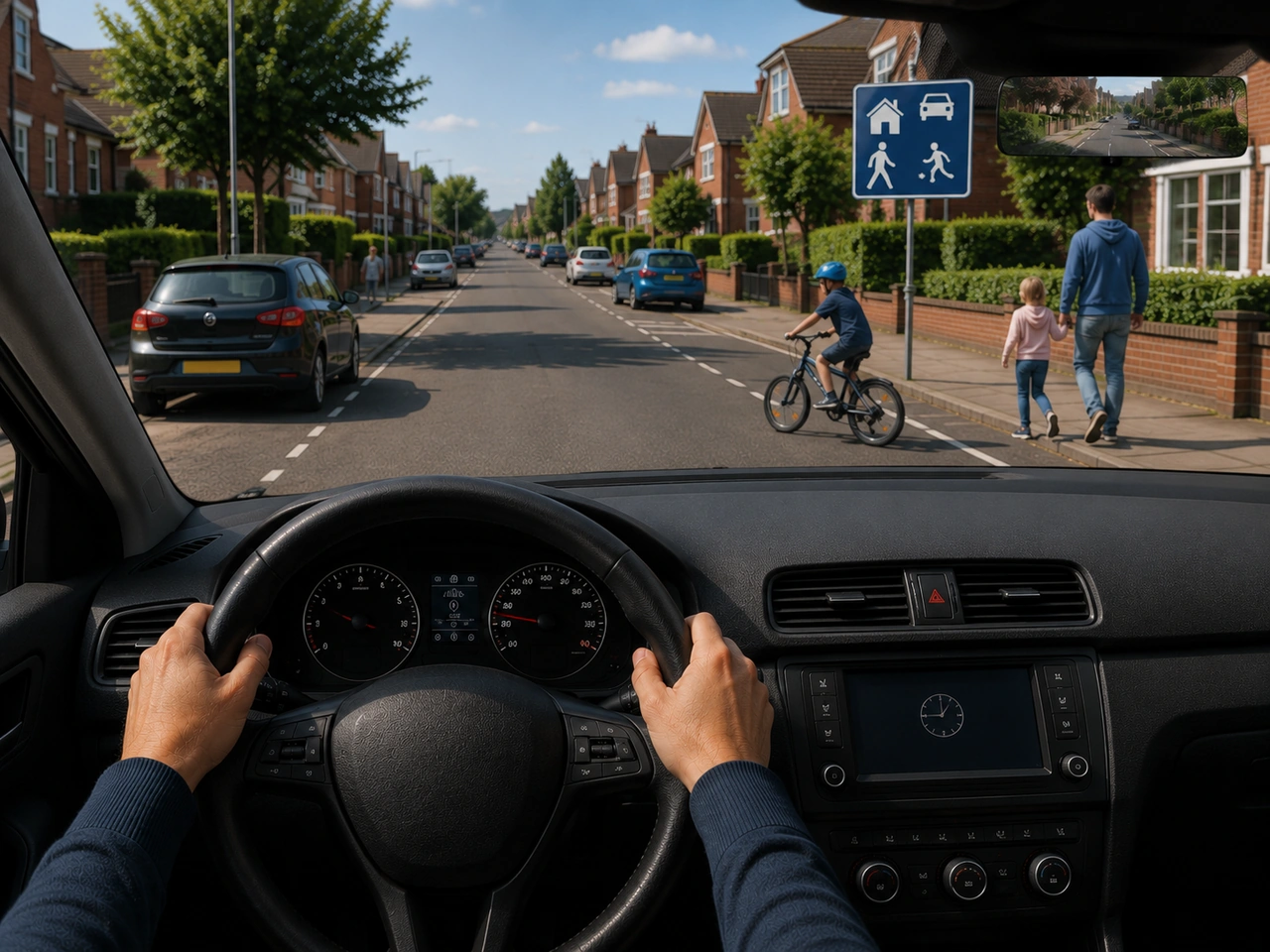
618. Why should you reduce speed in residential areas?
Residential areas often have pedestrians, cyclists, parked vehicles, driveways, and children, and hazards may appear suddenly. Lower speed gives you more time to react and stop safely.
AI-generated by Rijbewijs-online.be • WCIT • CC BY-SA
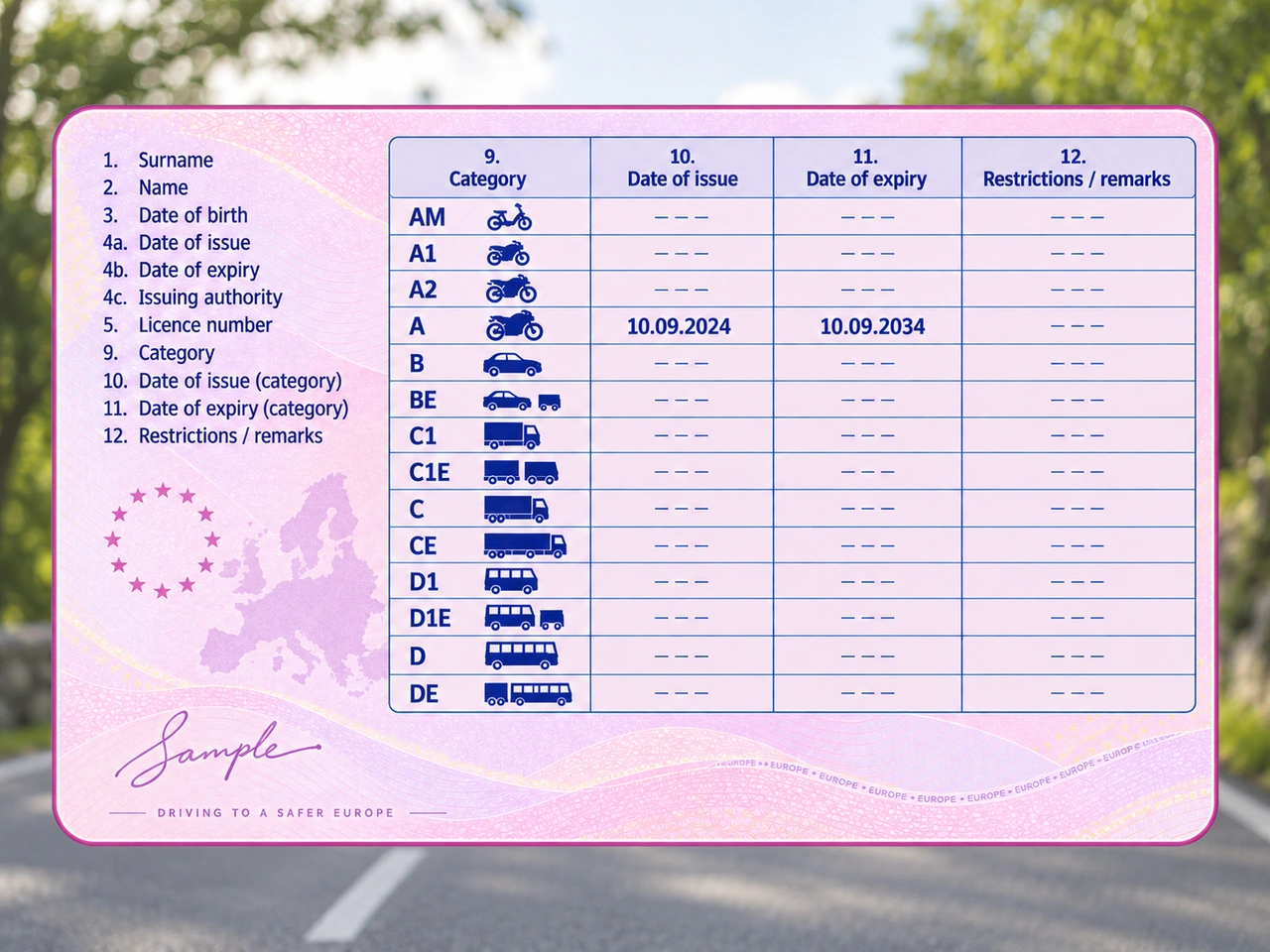
619. Which motorcycles are covered by driving licence A?
Category A covers motorcycles without the power restrictions that apply to categories A1 and A2. It also covers powered tricycles with power exceeding 15 kW.
AI-generated by Rijbewijs-online.be • WCIT • CC BY-SA
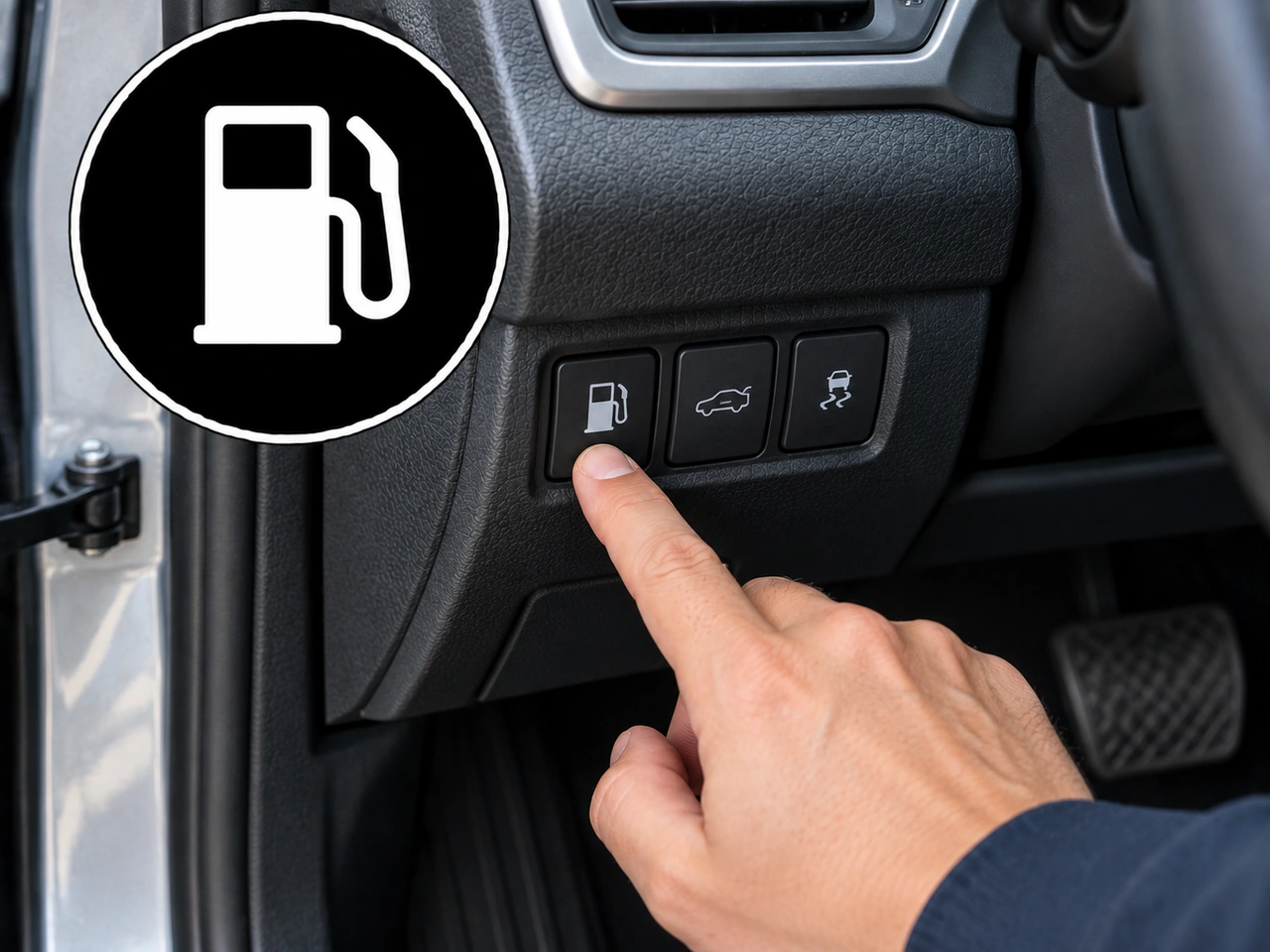
620. What does this vehicle-control symbol indicate?
This control releases the fuel-filler flap, allowing access to the vehicle's fuel filler.
AI-generated by Rijbewijs-online.be • WCIT • CC BY-SA
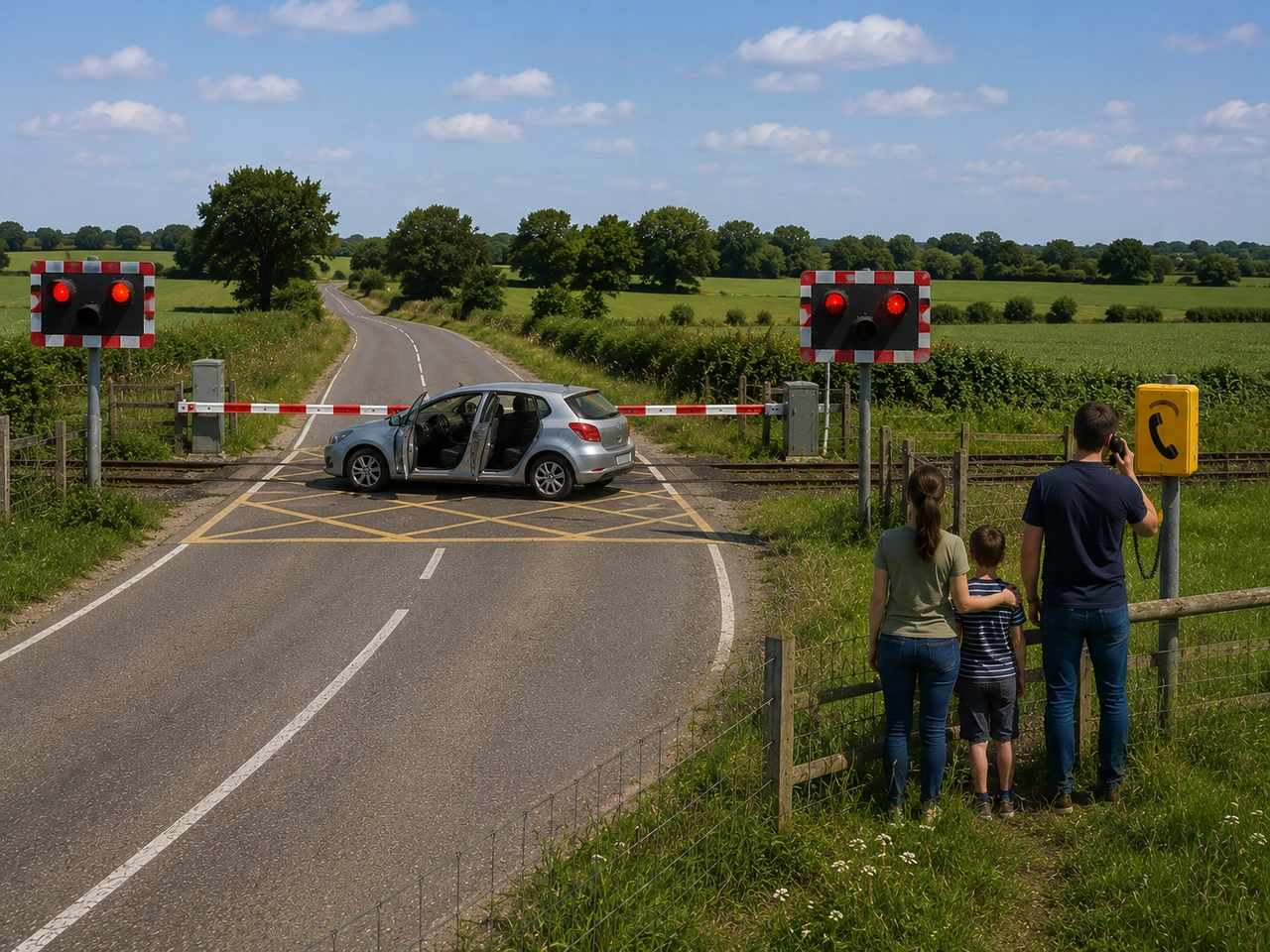
621. What should you do if your vehicle becomes stuck on a railway crossing?
Move everyone well away from the tracks. Use the crossing emergency telephone or displayed contact information where available, or contact the emergency services immediately.
AI-generated by Rijbewijs-online.be • WCIT • CC BY-SA
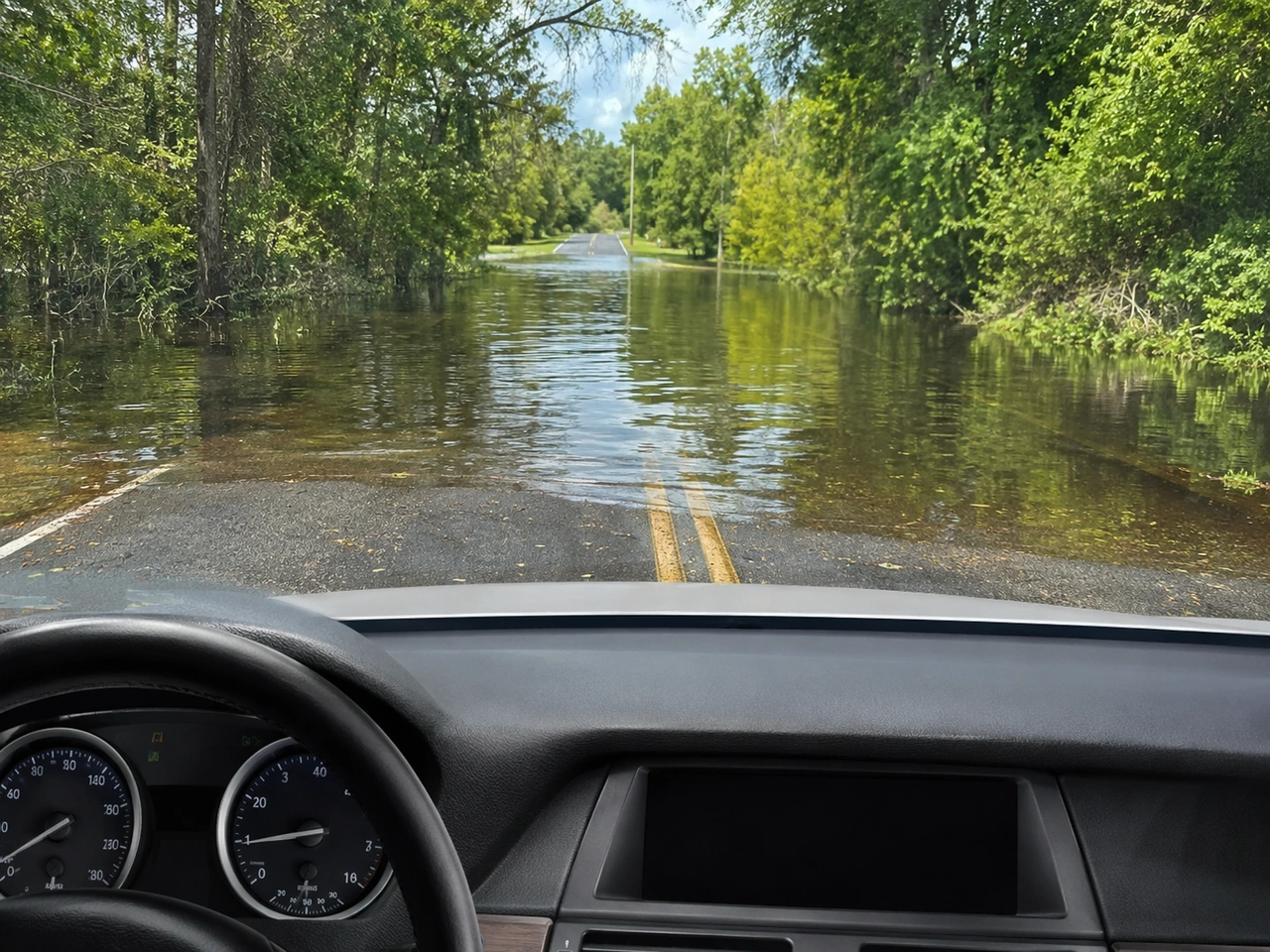
622. Why should you avoid driving through deep water?
Deep water can damage the engine, reduce braking ability, hide hazards, or cause the vehicle to lose grip. Reduce speed, assess the depth and conditions carefully, and avoid entering the water if you are unsure it is safe. If necessary, stop and use another route.
AI-generated by Rijbewijs-online.be • WCIT • CC BY-SA
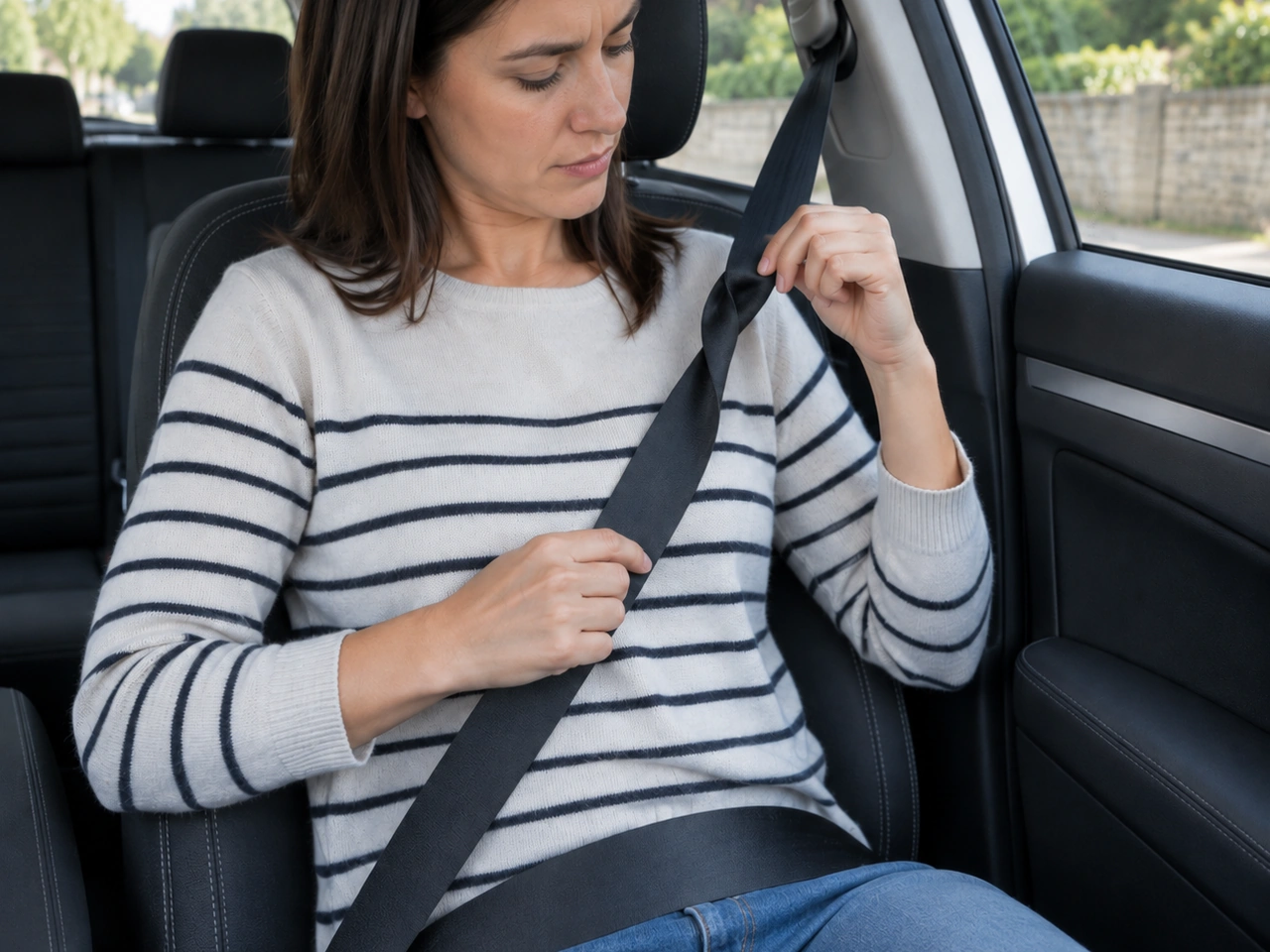
623. Why should a seat belt not be twisted when worn?
A seat belt should lie flat against the body without twists. A twisted belt concentrates force over a smaller area and may provide less effective protection in a collision.
AI-generated by Rijbewijs-online.be • WCIT • CC BY-SA
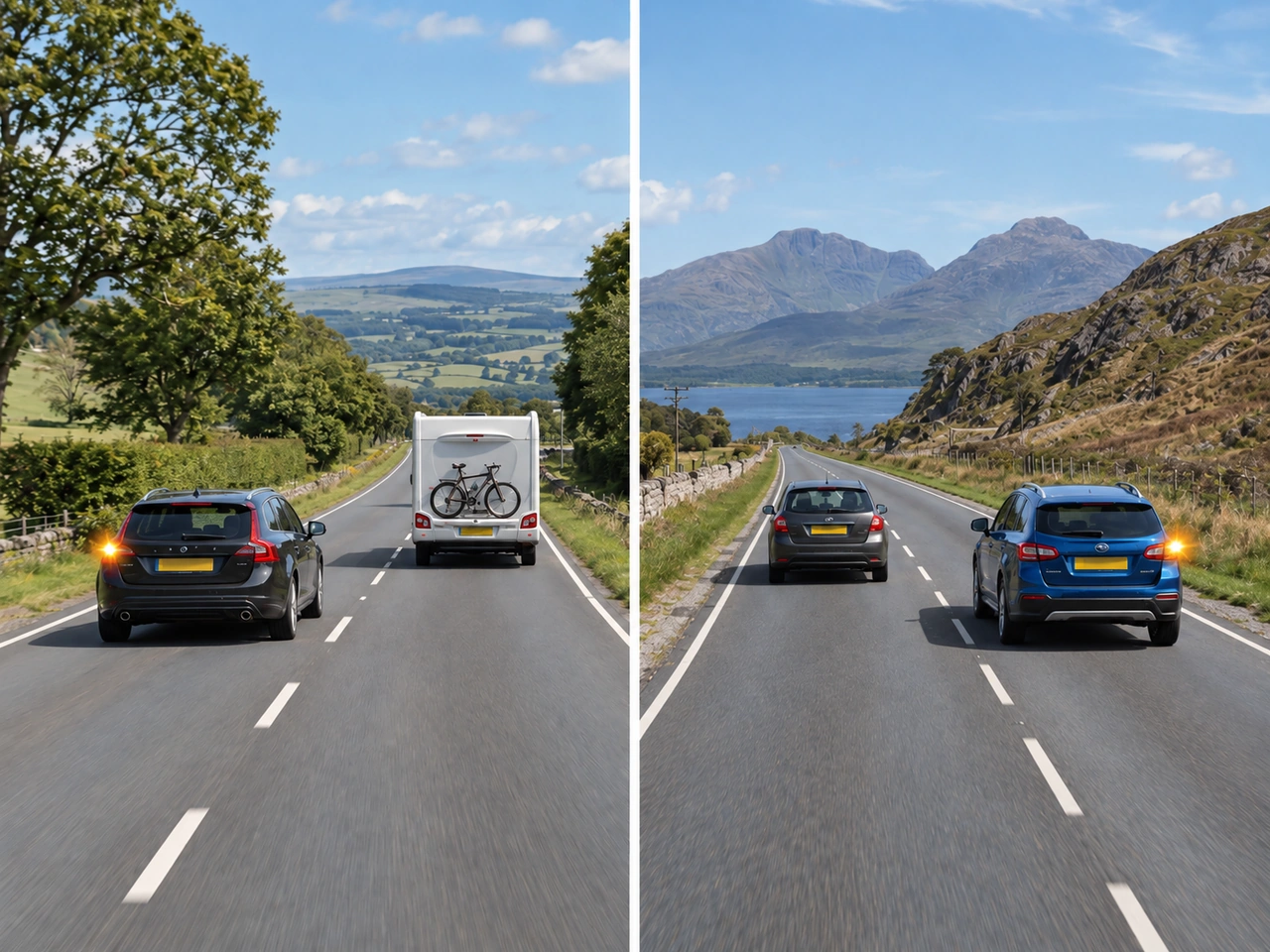
624. Which side is normally used for overtaking in Brussels?
Drivers normally overtake on the left-hand side in Brussels.
AI-generated by Rijbewijs-online.be • WCIT • CC BY-SA
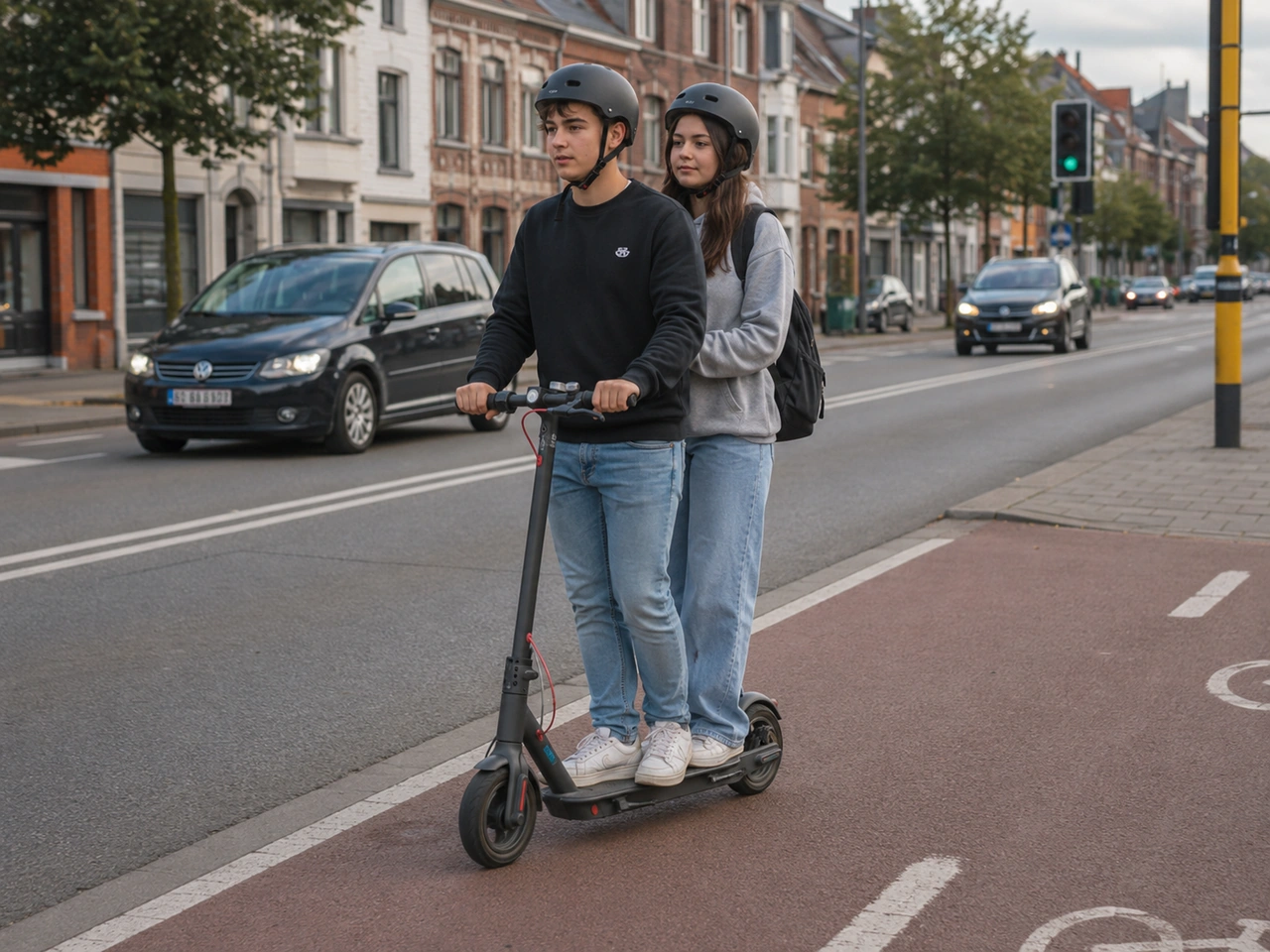
625. May you carry a passenger on an ordinary electric scooter in Belgium?
Carrying passengers is prohibited unless the personal mobility device was specifically designed for passenger transport and has sufficient seats.
AI-generated by Rijbewijs-online.be • WCIT • CC BY-SA
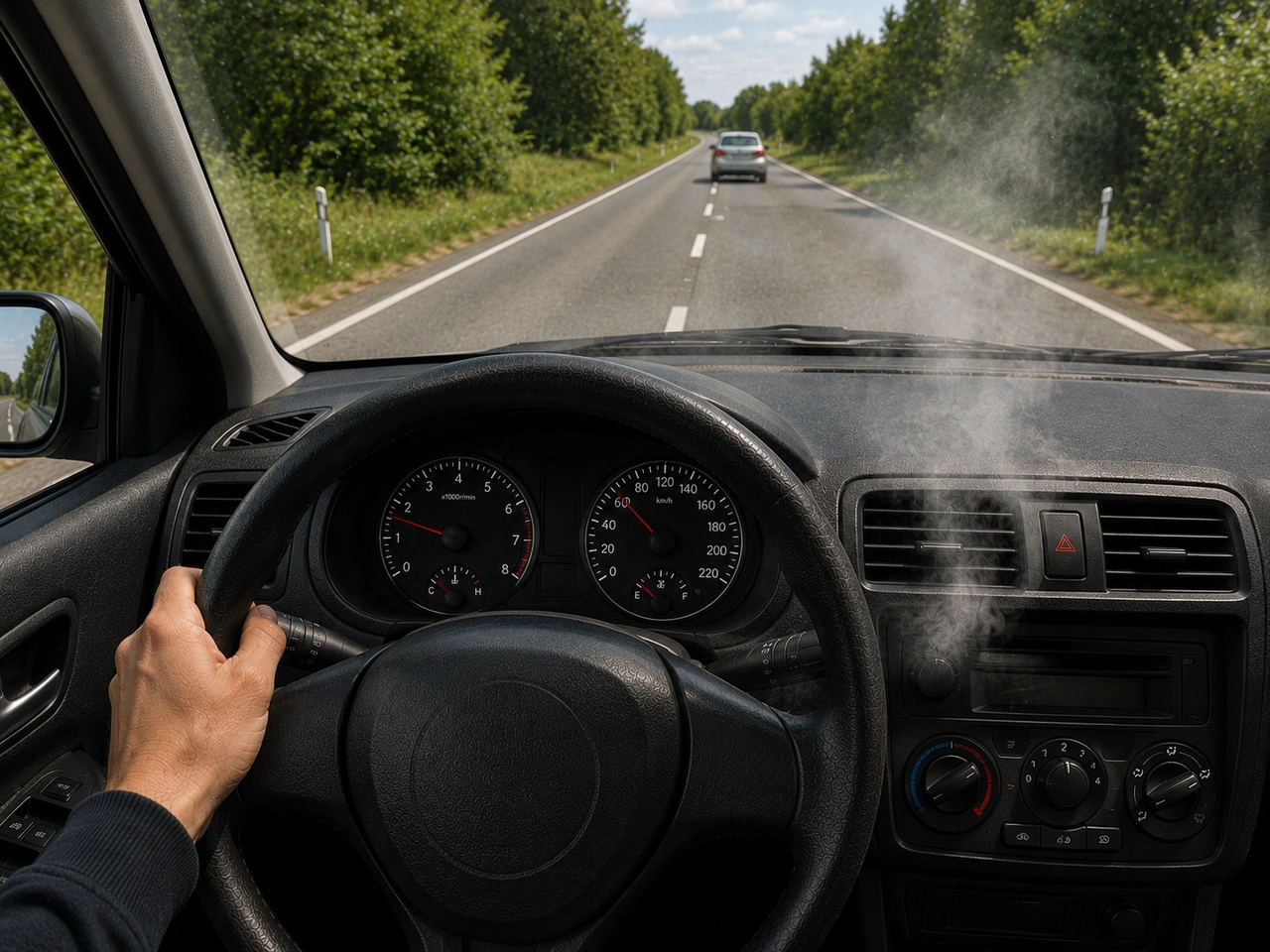
626. What should you do if exhaust fumes begin entering the car?
Exhaust gases may contain carbon monoxide, which is poisonous and may not be visible. The exhaust system should be inspected before the vehicle is used again.
AI-generated by Rijbewijs-online.be • WCIT • CC BY-SA
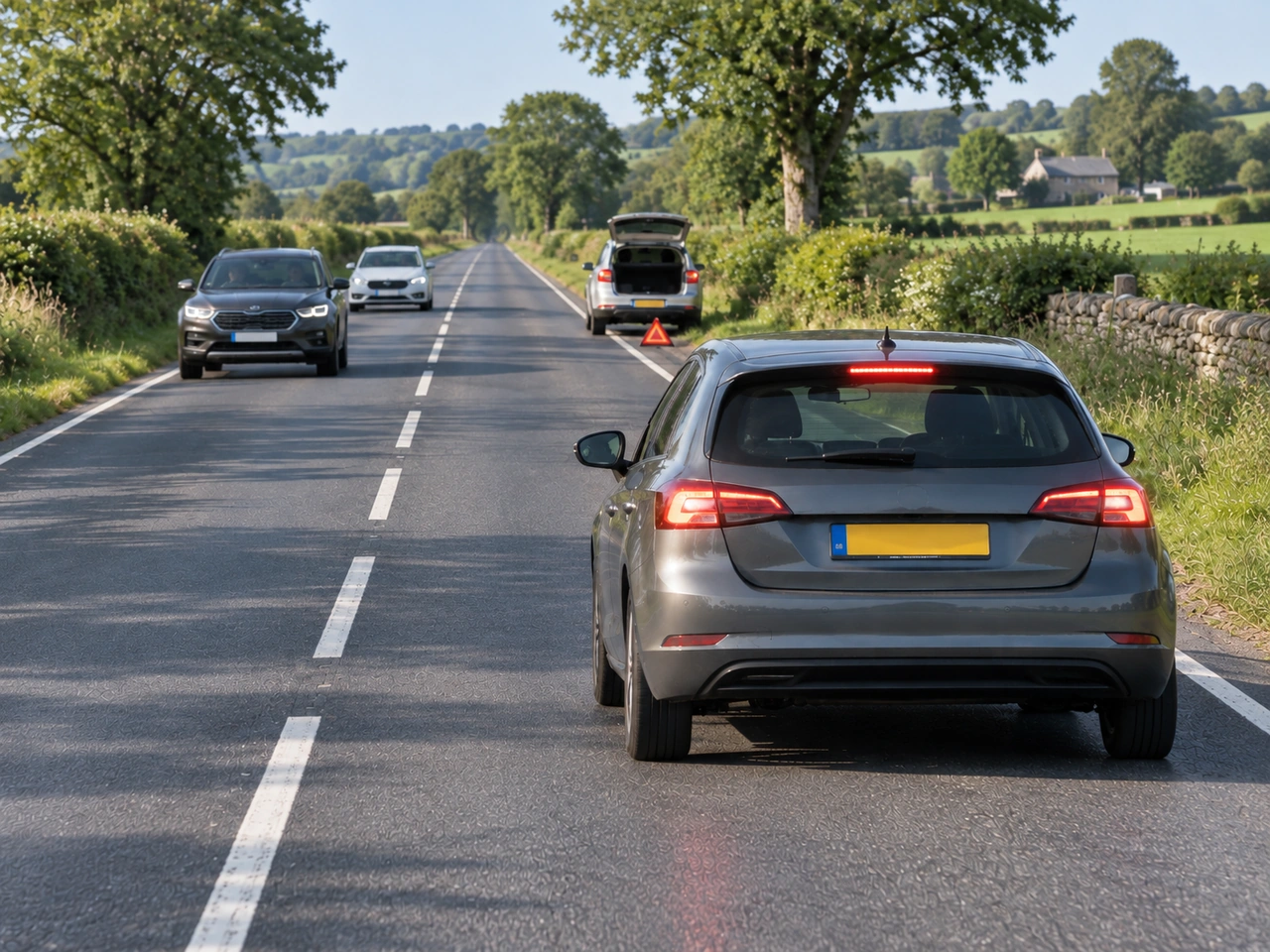
627. What makes up the total stopping distance of a vehicle?
The total stopping distance consists of the distance travelled while the driver reacts to a hazard plus the distance travelled while the vehicle is braking to a stop.
AI-generated by Rijbewijs-online.be • WCIT • CC BY-SA
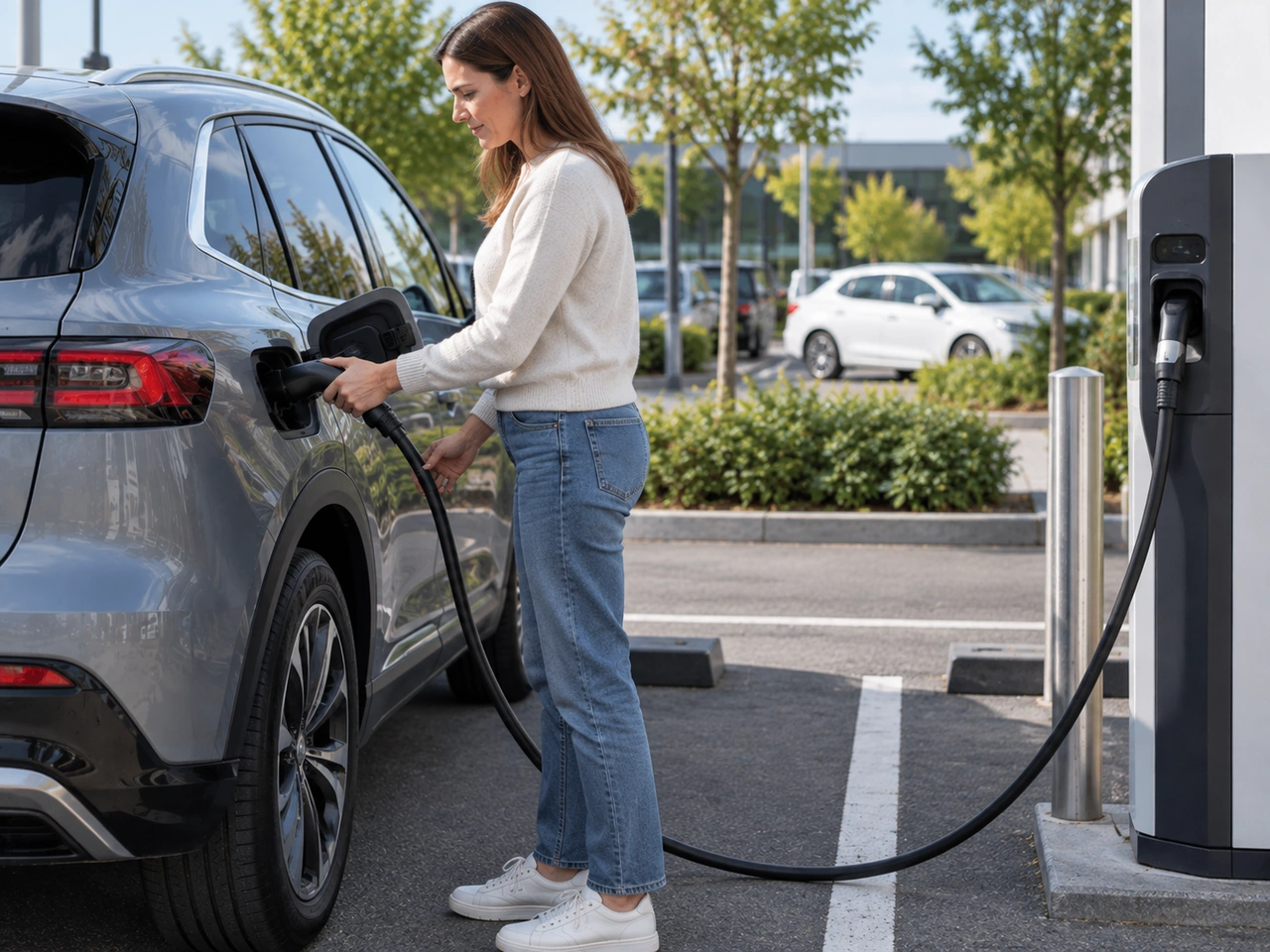
628. What should you do before driving away after charging an electric vehicle?
Before driving away, disconnect the charging cable correctly and return it to the charger or store it securely in the vehicle, as appropriate. Close the charging port and check that the area around the vehicle is clear.
AI-generated by Rijbewijs-online.be • WCIT • CC BY-SA
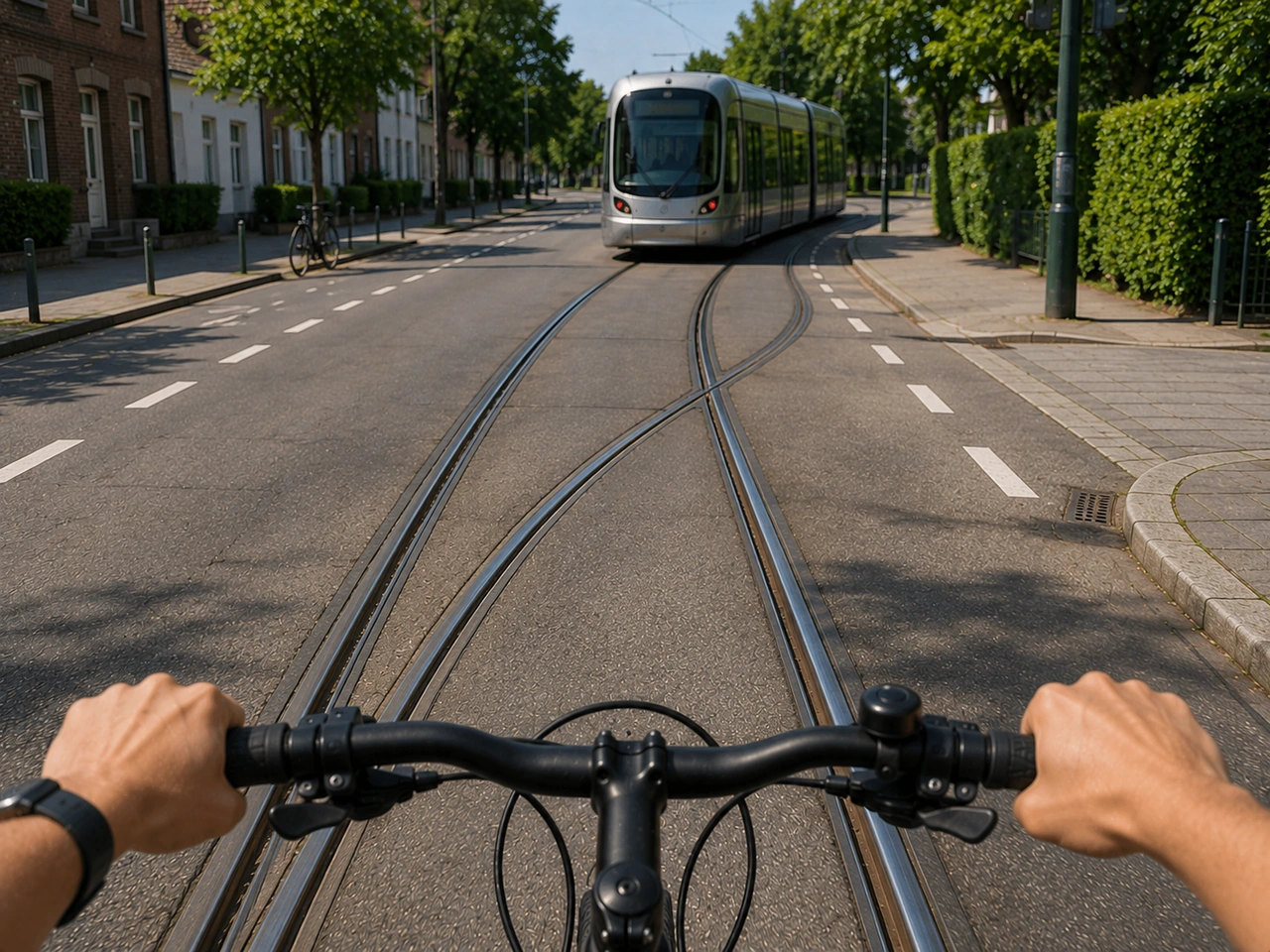
629. How should cyclists cross railway or tram tracks?
A bicycle wheel can become trapped in a rail groove. Crossing at a wider angle reduces this risk.
AI-generated by Rijbewijs-online.be • WCIT • CC BY-SA
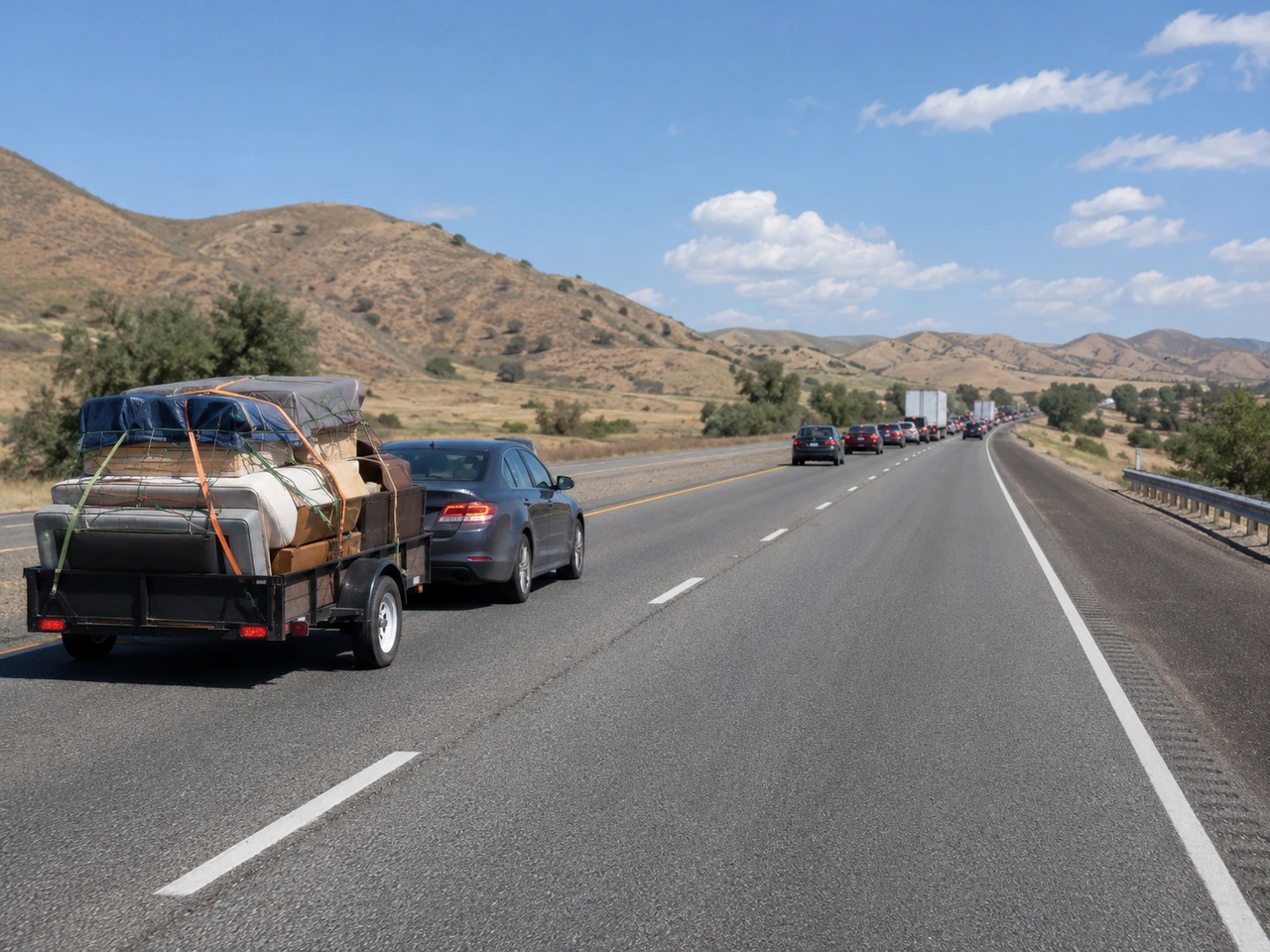
630. How can a heavy load affect stopping distance?
A heavily loaded vehicle has more mass and may require additional distance to slow down or stop safely.
AI-generated by Rijbewijs-online.be • WCIT • CC BY-SA
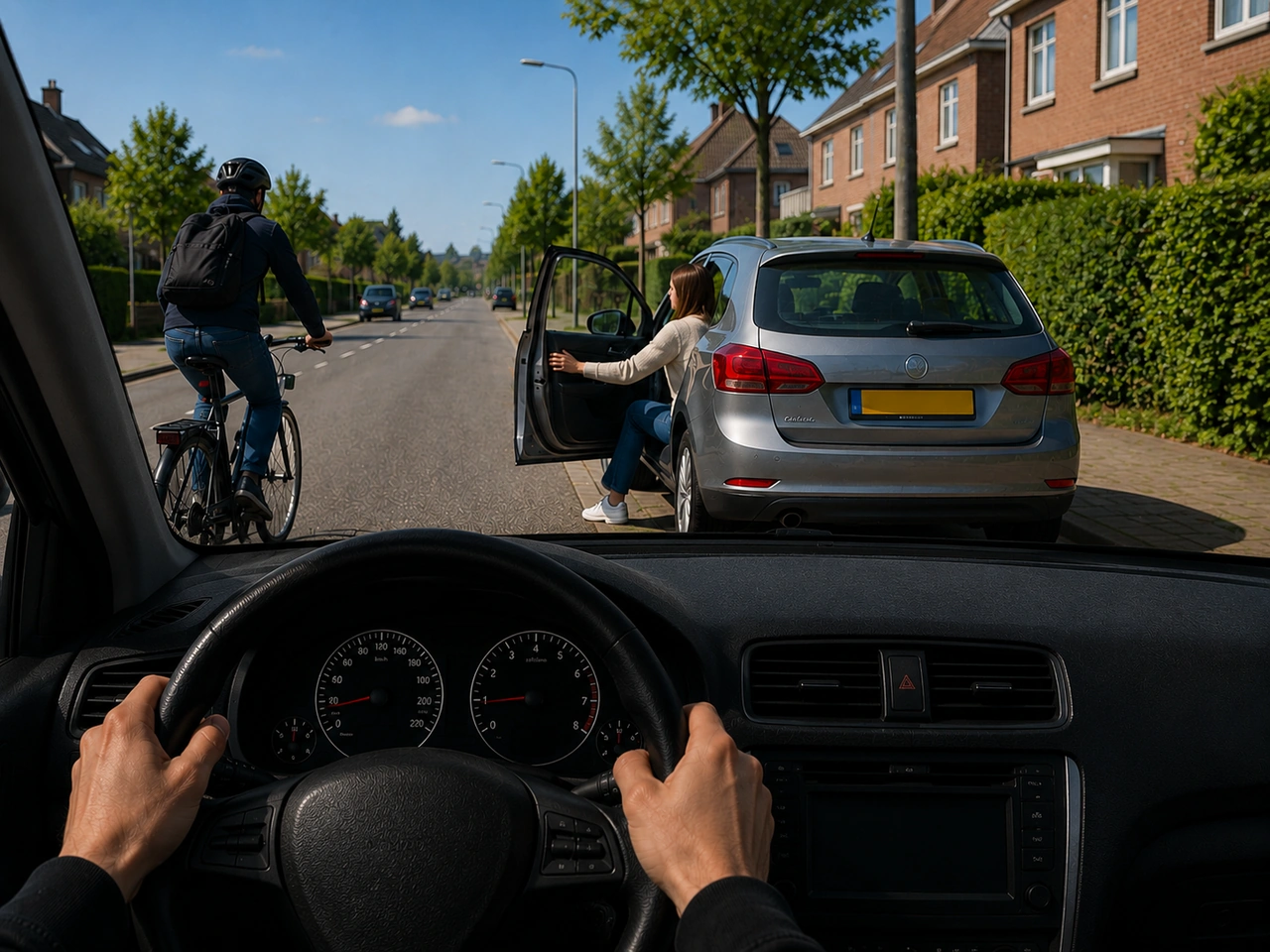
631. What should you do before opening your car door near traffic?
Before opening a car door, check carefully for cyclists, pedestrians, and vehicles to avoid causing a collision.
AI-generated by Rijbewijs-online.be • WCIT • CC BY-SA
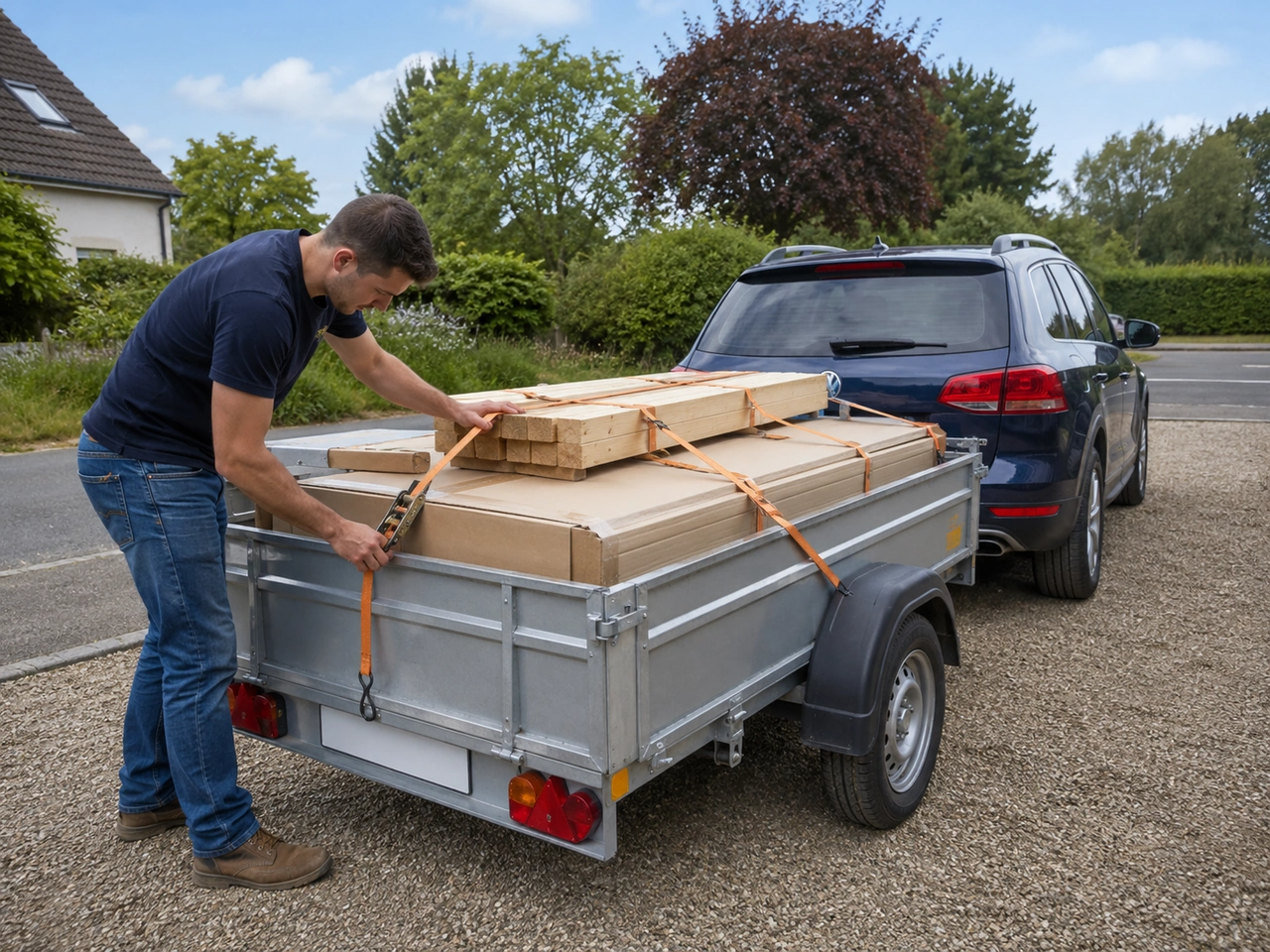
632. What should you do before driving with a load?
An unsecured load can shift, affect vehicle control, or fall into the road. Check that everything is safely restrained before moving.
AI-generated by Rijbewijs-online.be • WCIT • CC BY-SA
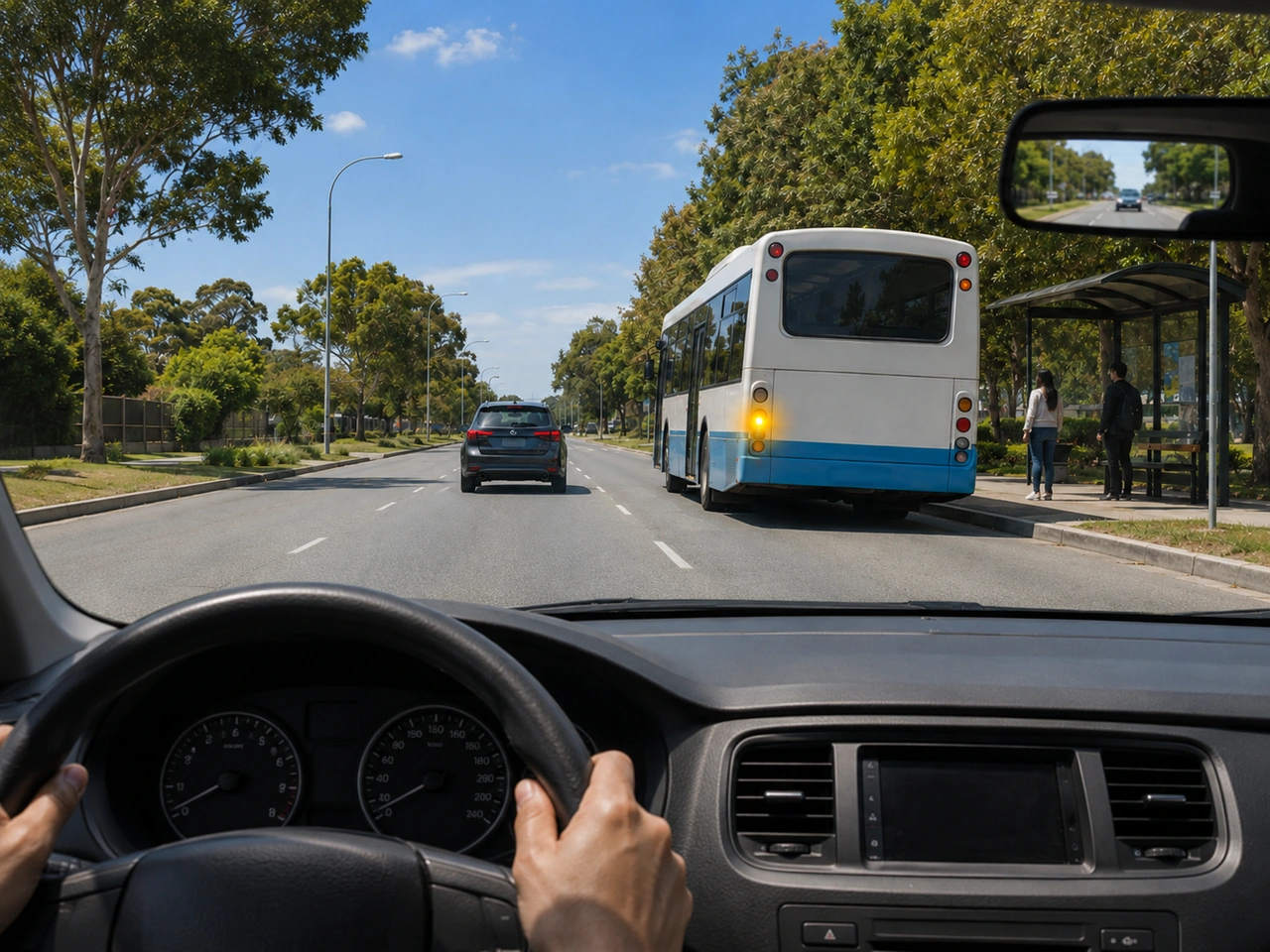
633. What should you do when a bus signals to pull away from a bus stop?
Buses may pull away after picking up passengers. Slow down, check the traffic situation, and allow space when it is safe.
AI-generated by Rijbewijs-online.be • WCIT • CC BY-SA
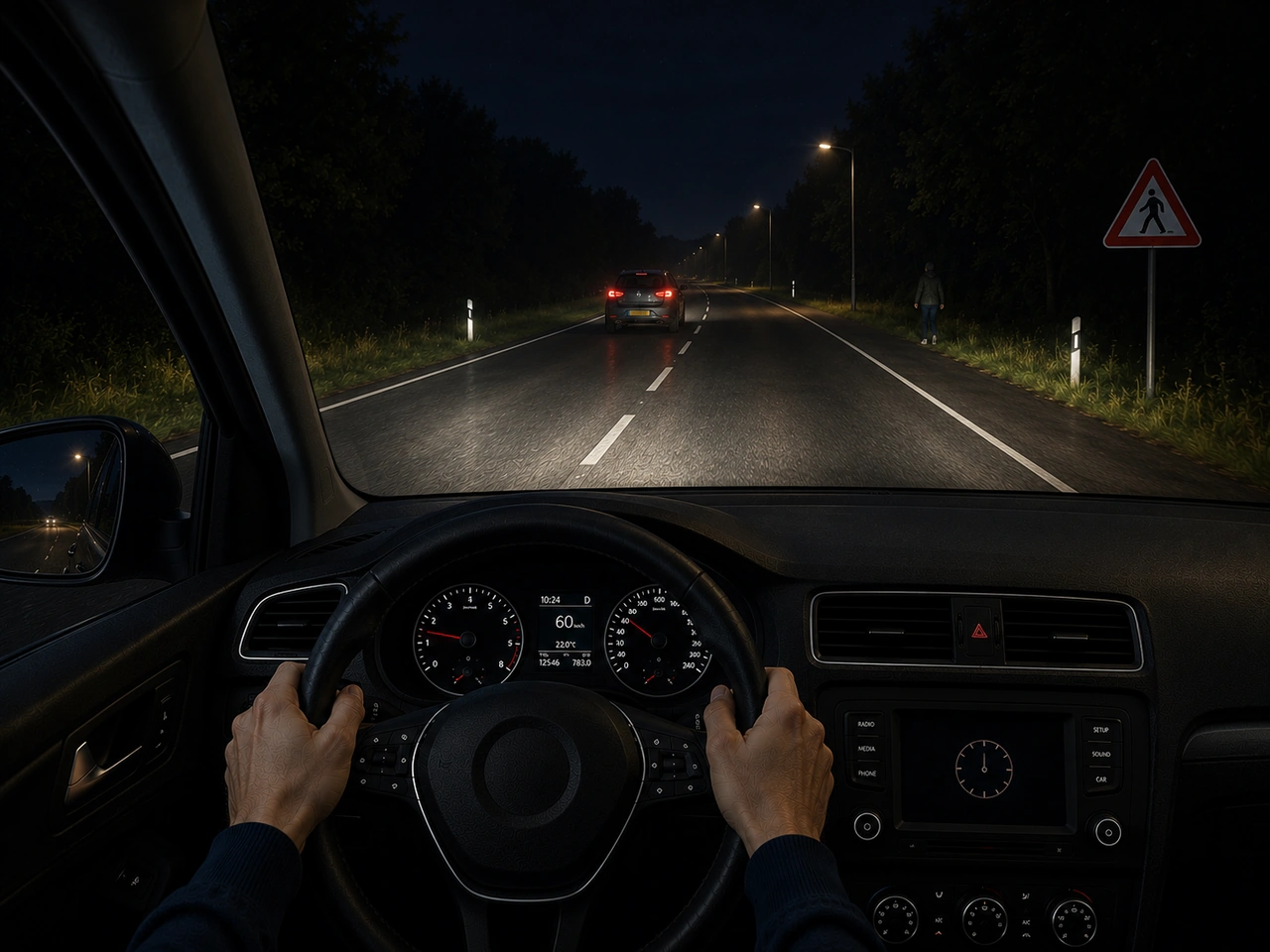
634. Why should you be extra careful at night?
At night, it is harder to see pedestrians, cyclists, road markings, and hazards. Reduce speed and use the correct lights.
AI-generated by Rijbewijs-online.be • WCIT • CC BY-SA
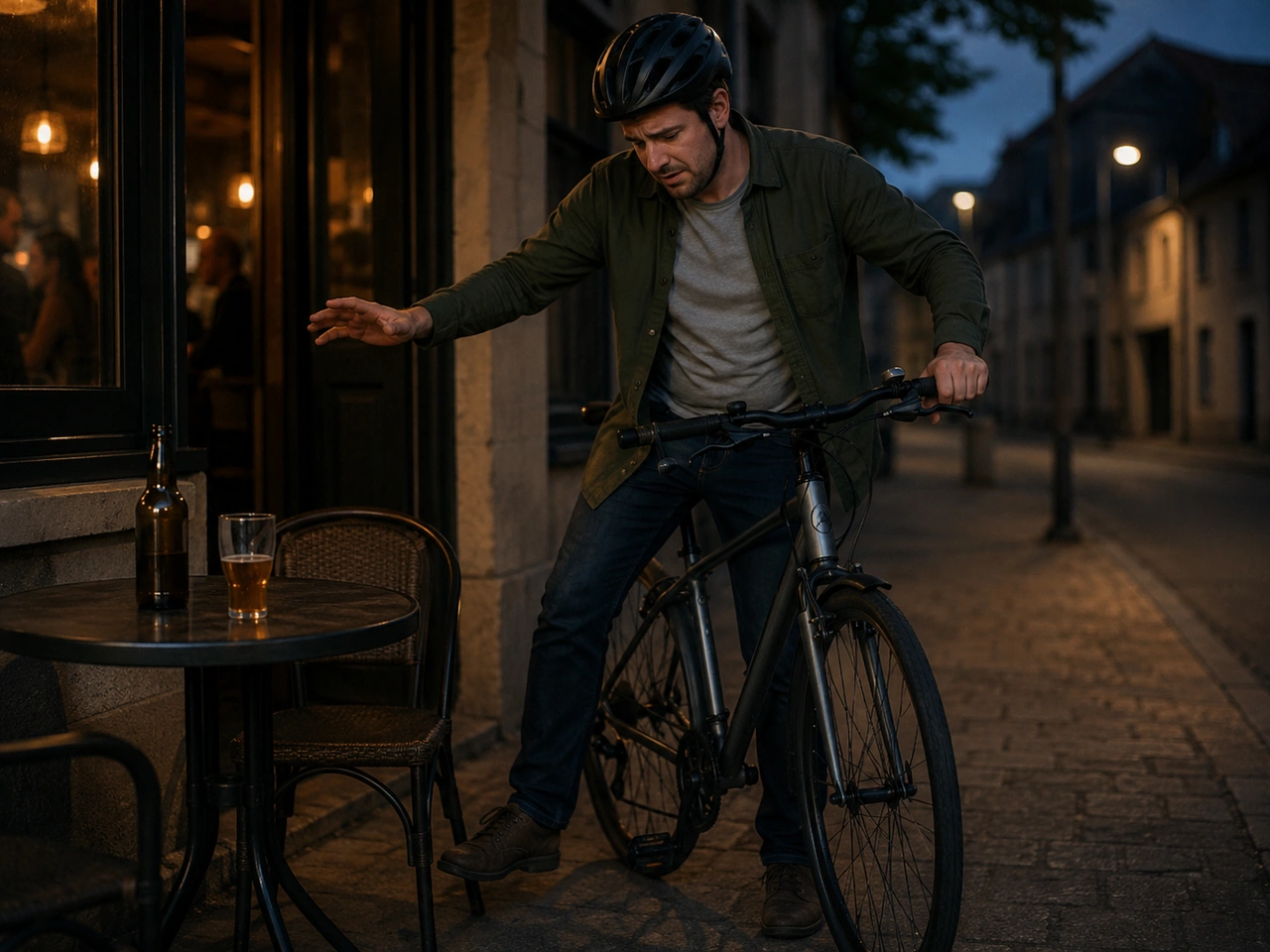
635. Why is riding a bicycle after drinking alcohol dangerous?
Alcohol can make it harder to balance, steer, judge distances, and react to hazards. Riding a bicycle while impaired may also be against the law.
AI-generated by Rijbewijs-online.be • WCIT • CC BY-SA
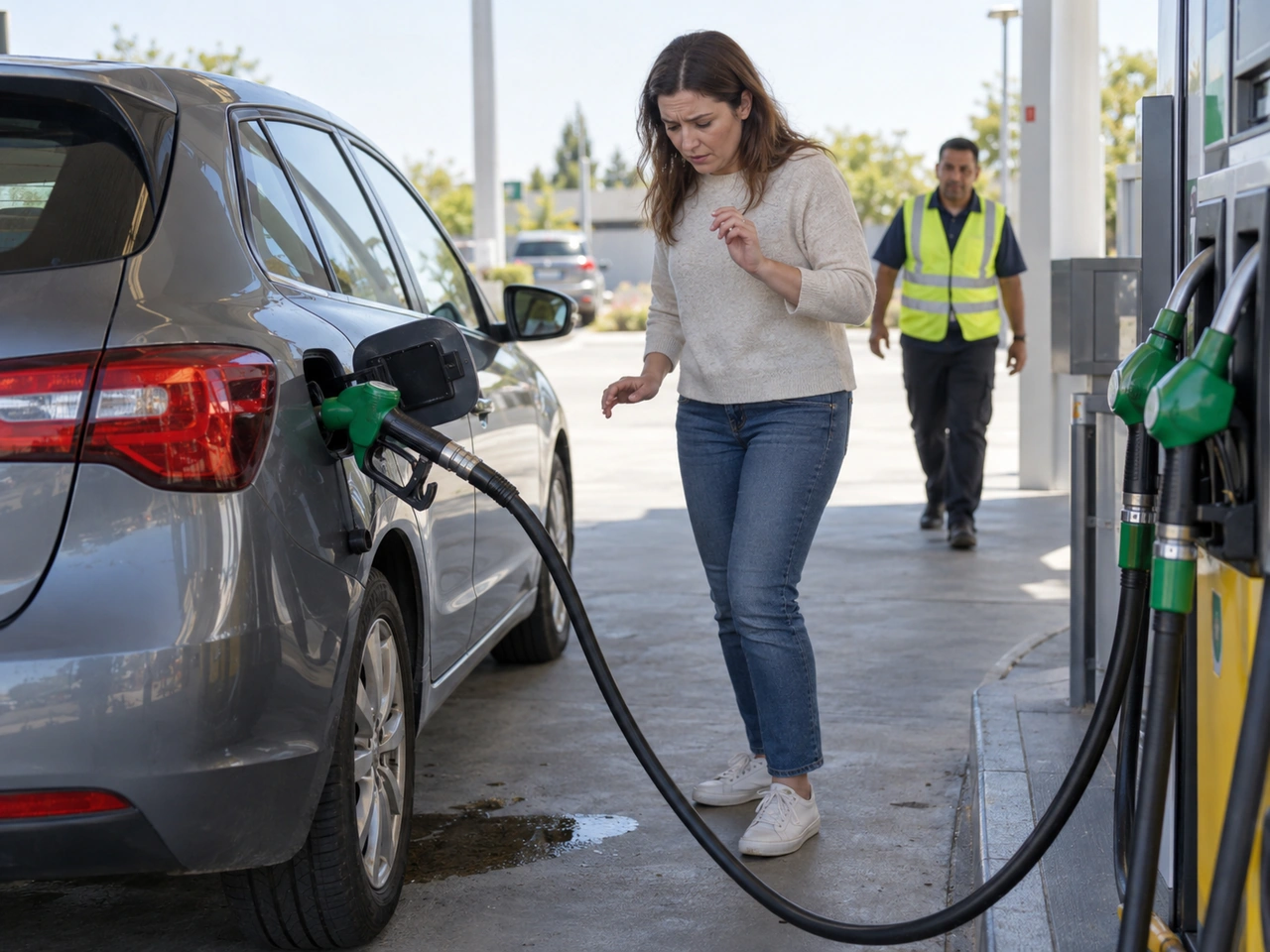
636. What should you do if fuel spills while you are refuelling?
If fuel is spilled, stop refuelling immediately and keep flames, sparks, and other ignition sources away. Do not start the vehicle until the situation is safe. Alert filling-station staff and follow their instructions for dealing with the spill.
AI-generated by Rijbewijs-online.be • WCIT • CC BY-SA
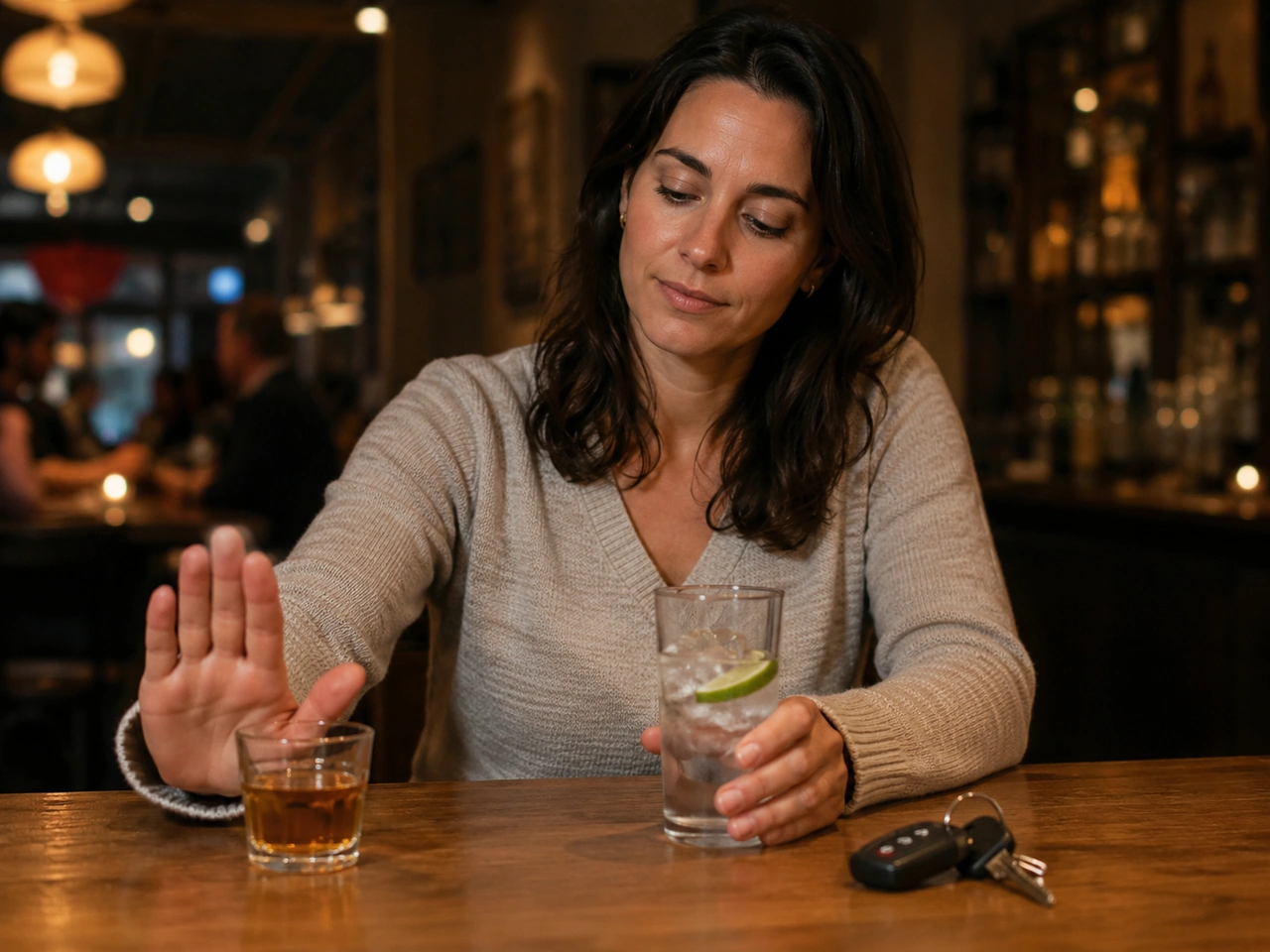
637. Should the legal alcohol limit be treated as a safe target?
A legal limit is an enforcement threshold, not a recommended drinking level. Even a small amount of alcohol can affect driving performance.
AI-generated by Rijbewijs-online.be • WCIT • CC BY-SA
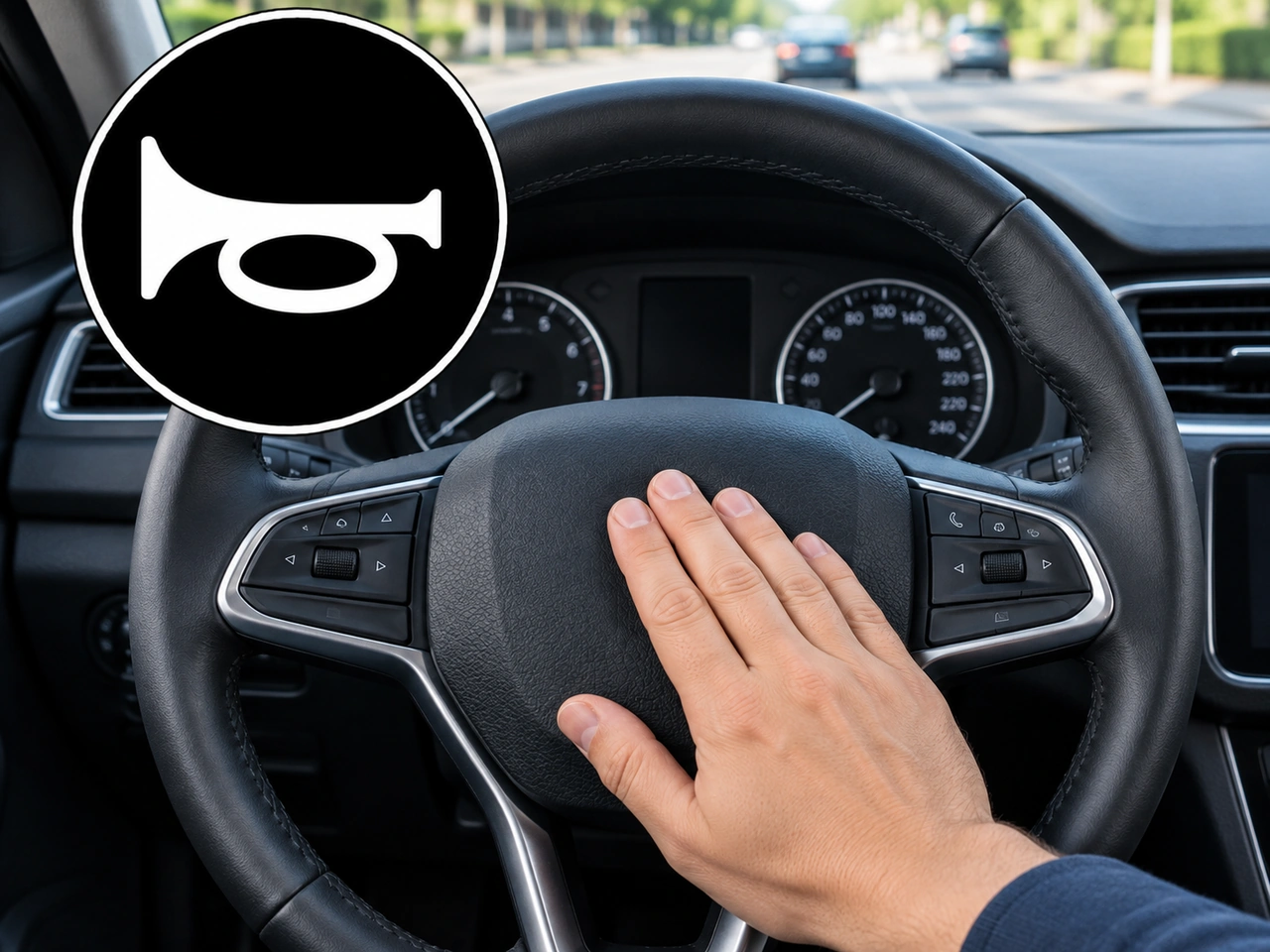
638. What does this vehicle-control symbol indicate?
This symbol indicates the horn control. The horn is used to warn other road users of your presence when necessary.
AI-generated by Rijbewijs-online.be • WCIT • CC BY-SA
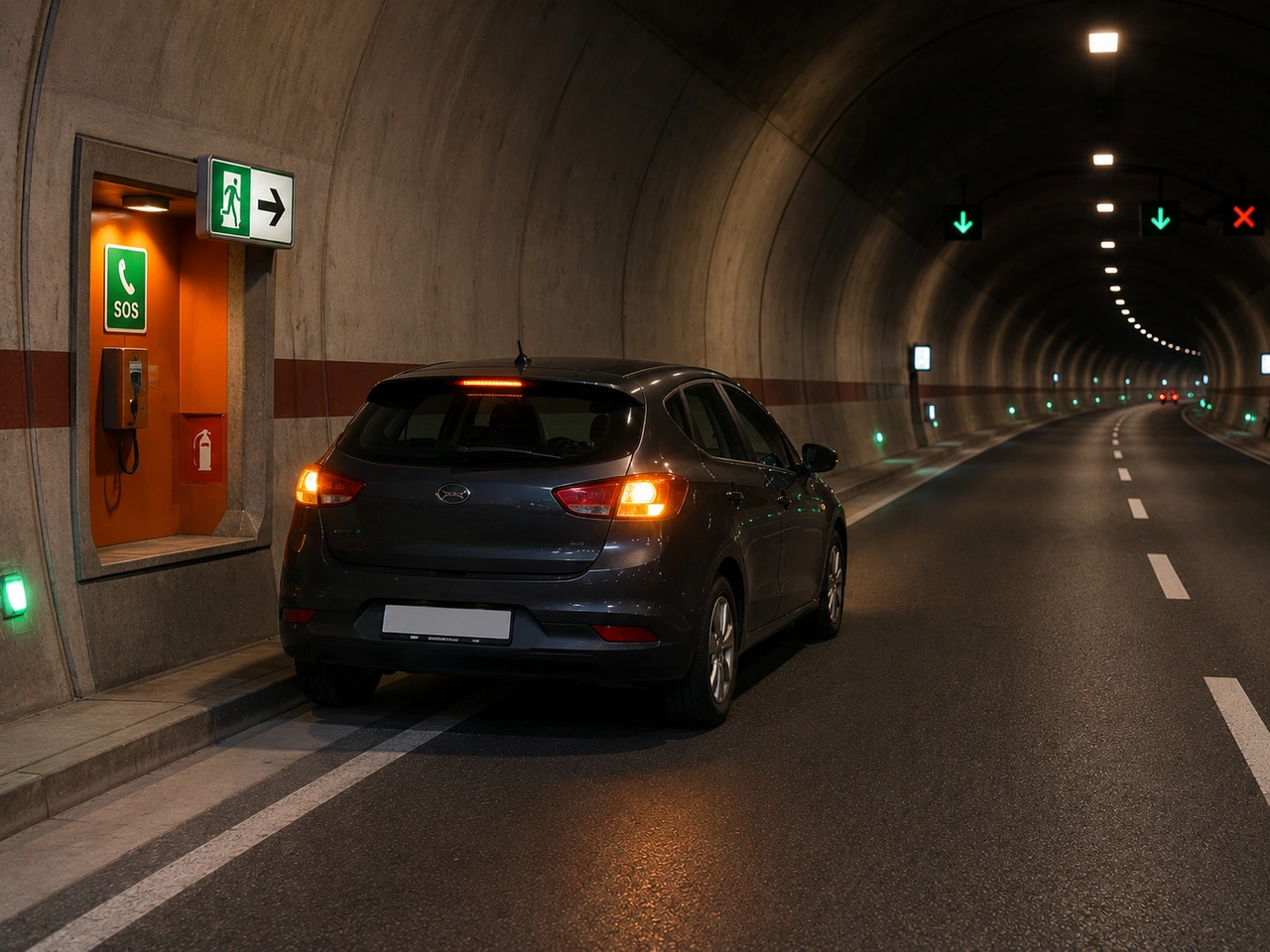
639. What should you do if your vehicle breaks down inside a road tunnel?
If possible, stop in an emergency bay or another safe place and use the hazard lights. Contact tunnel control using an emergency telephone or other available assistance system, and follow the tunnel signs and instructions.
AI-generated by Rijbewijs-online.be • WCIT • CC BY-SA
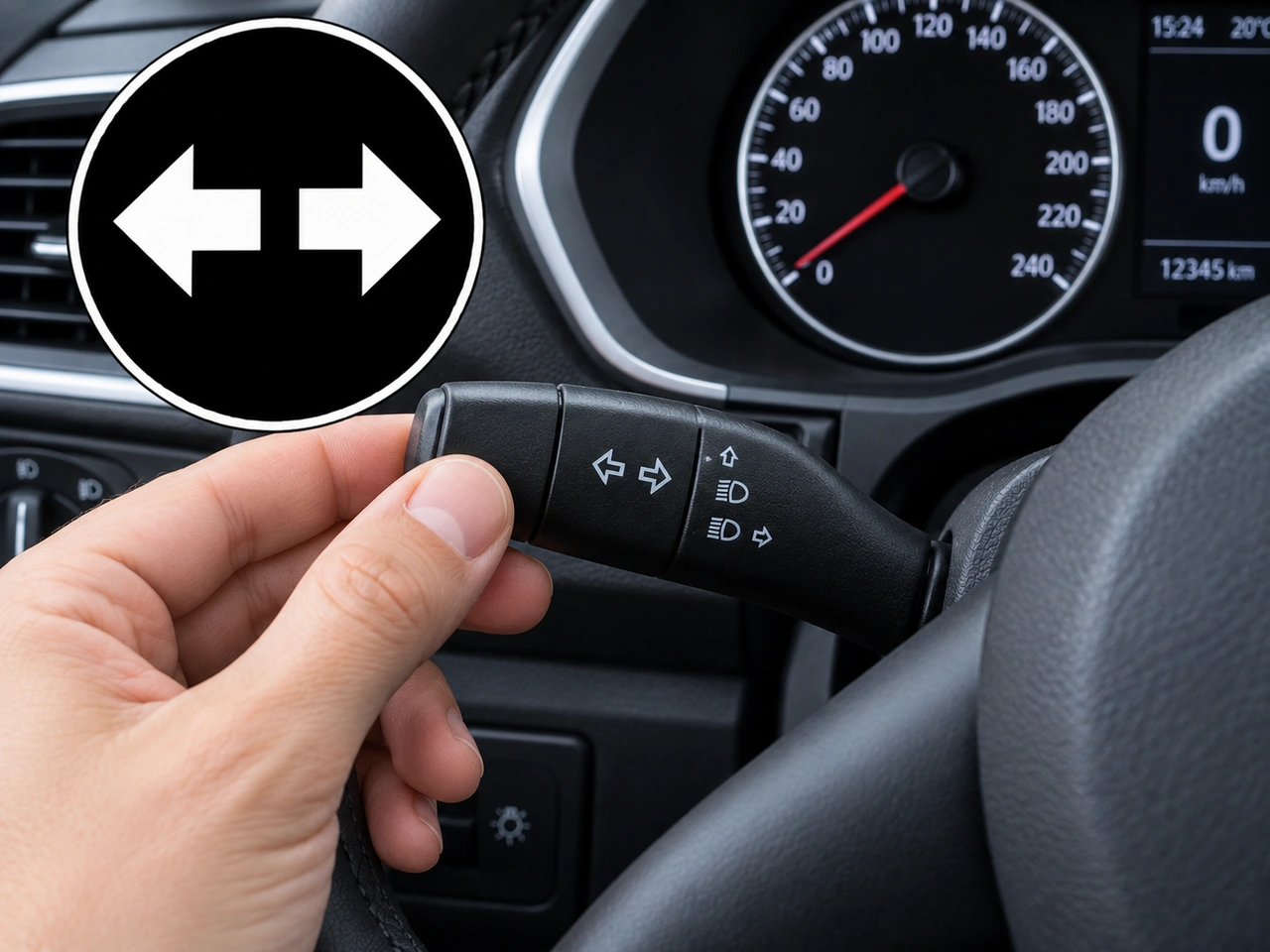
640. Which control is normally used to operate the direction indicators?
The direction indicators are normally operated using a stalk beside the steering wheel. Moving the stalk up or down activates the indicators on the corresponding side of the vehicle.
AI-generated by Rijbewijs-online.be • WCIT • CC BY-SA
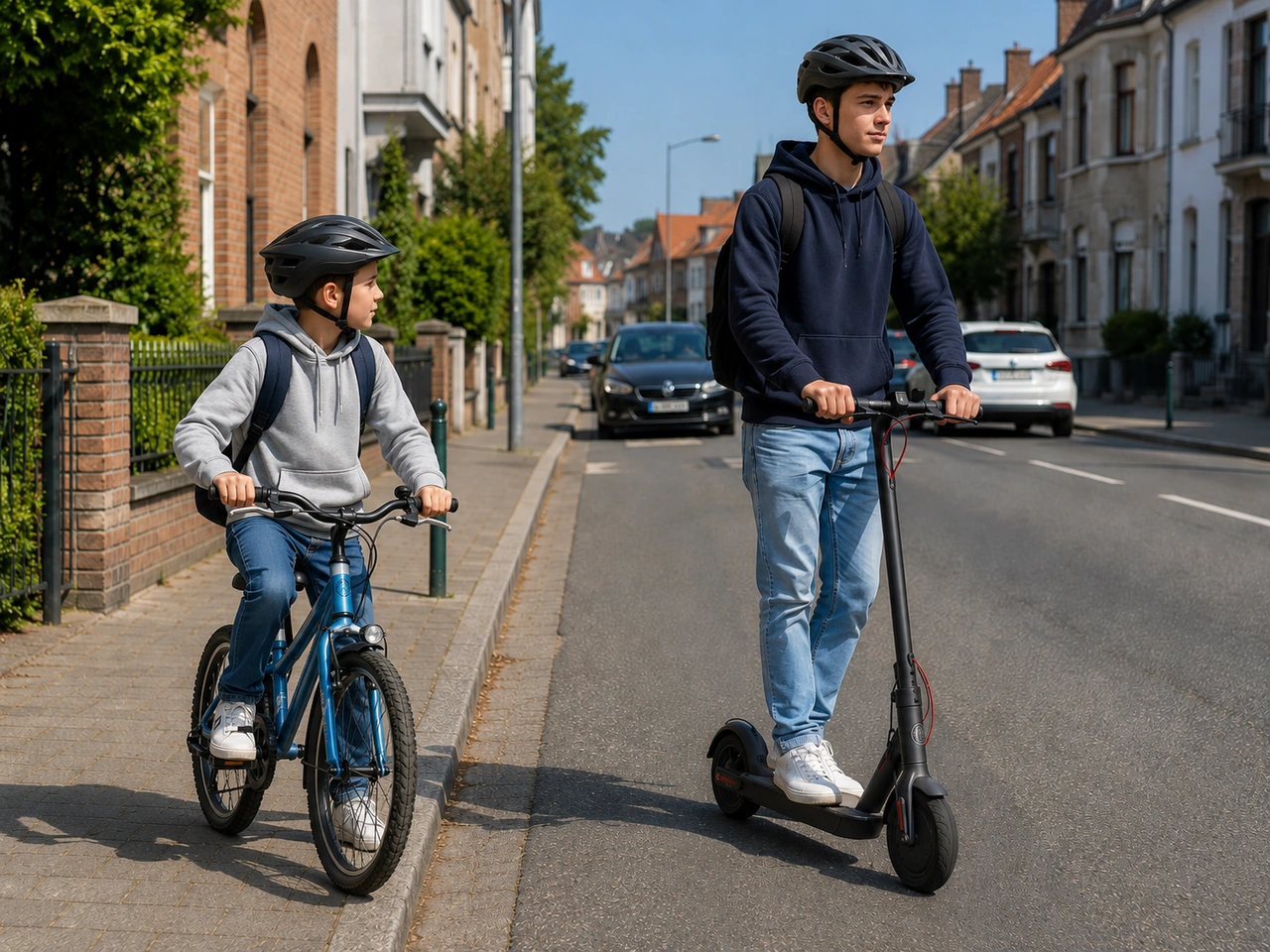
641. What is the minimum age for riding an electric scooter in Belgium?
The general minimum age for using a motorised personal mobility device is 16. Exceptions apply in certain places, including residential zones, play streets, and some reserved roads.
AI-generated by Rijbewijs-online.be • WCIT • CC BY-SA
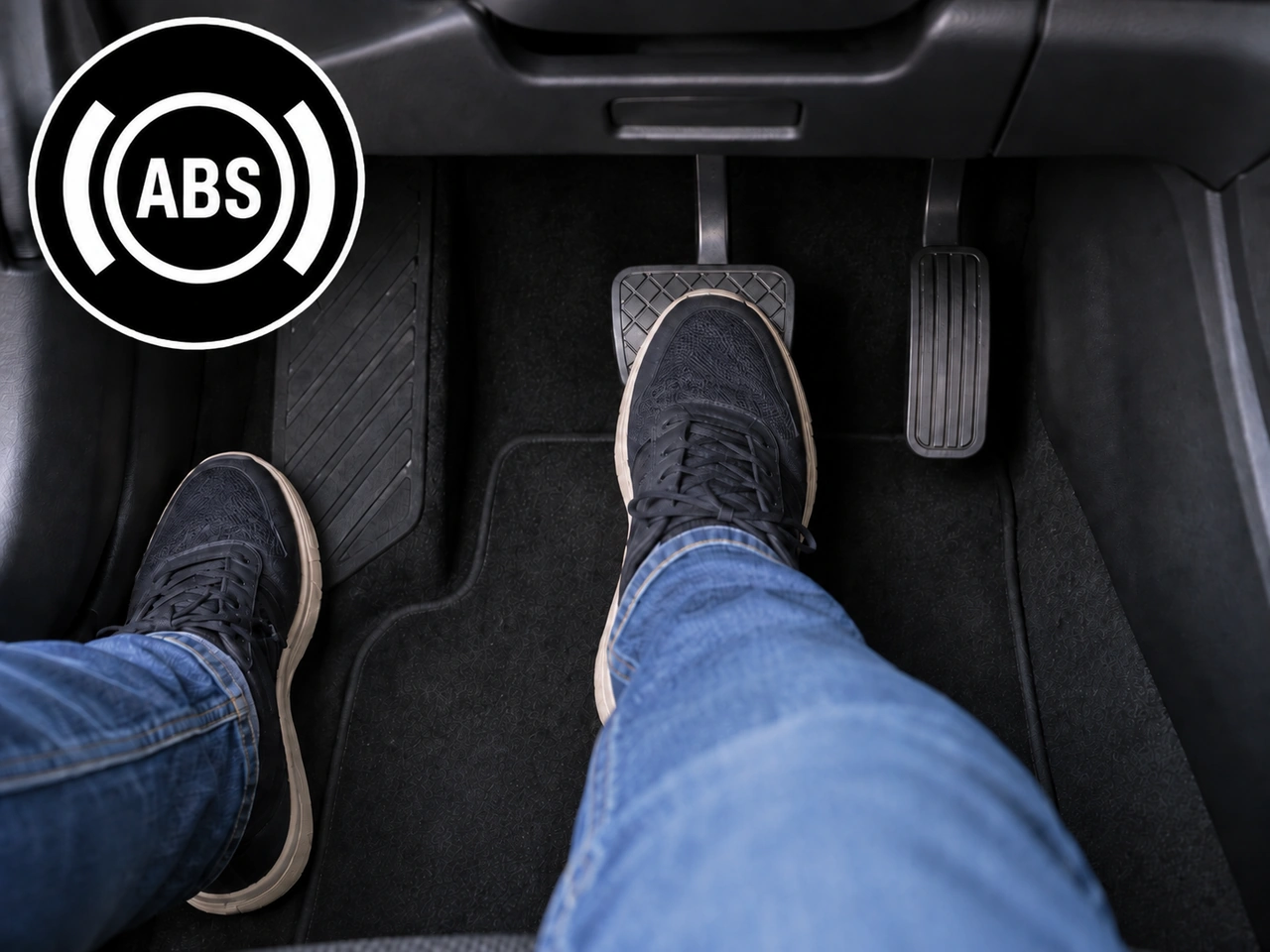
642. How should you use the brake pedal during emergency braking in a vehicle with ABS?
During emergency braking with ABS, press the brake pedal firmly and keep it pressed. Pulsation or vibration through the pedal can be normal while ABS is operating, so do not pump or release the brake.
AI-generated by Rijbewijs-online.be • WCIT • CC BY-SA
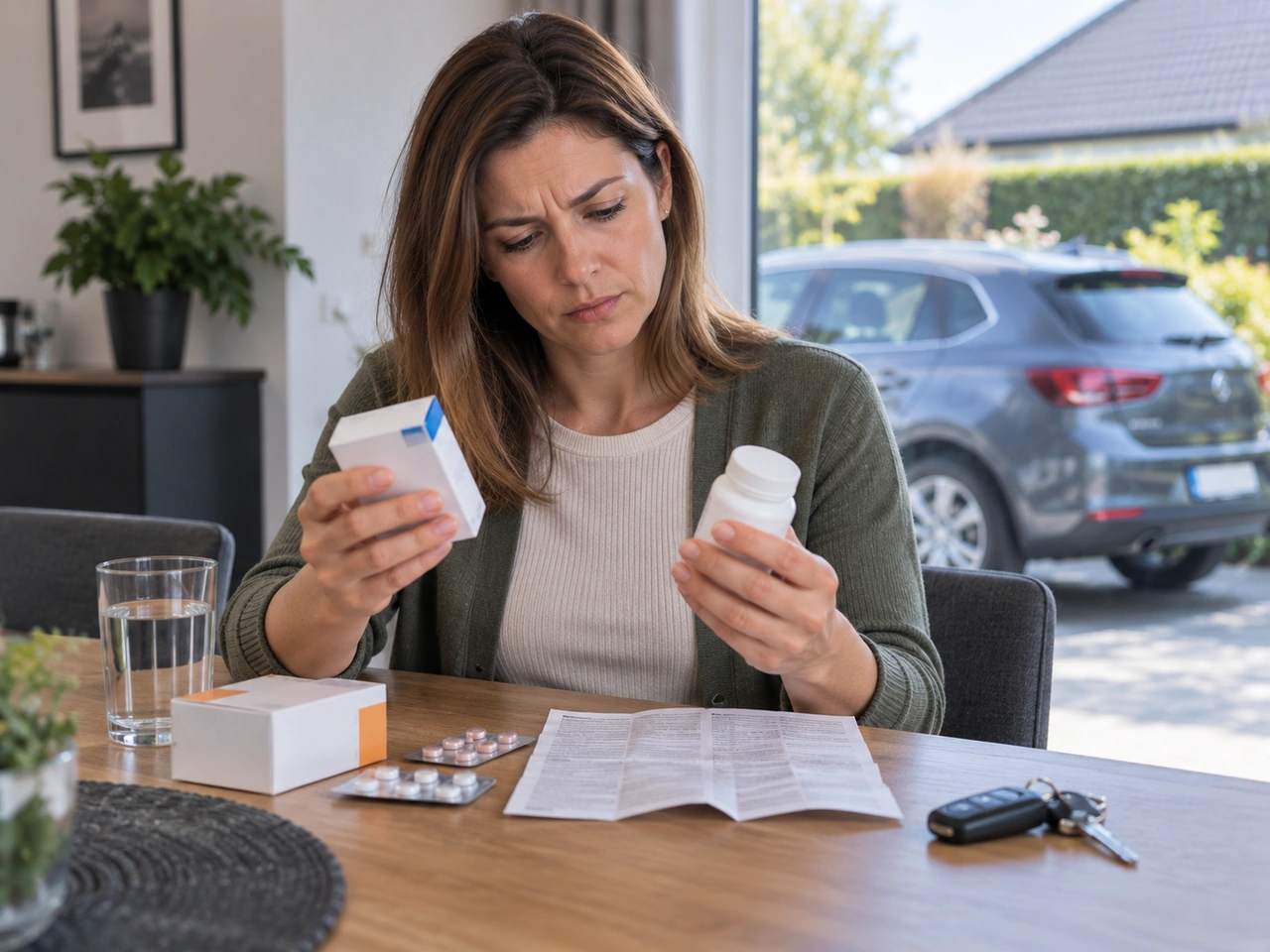
643. Why should you be careful when taking more than one medicine before driving?
Different medicines can interact or have combined side effects such as drowsiness, dizziness, blurred vision, or slower reactions. Check the instructions and seek advice from a doctor or pharmacist if you are unsure whether it is safe to drive.
AI-generated by Rijbewijs-online.be • WCIT • CC BY-SA
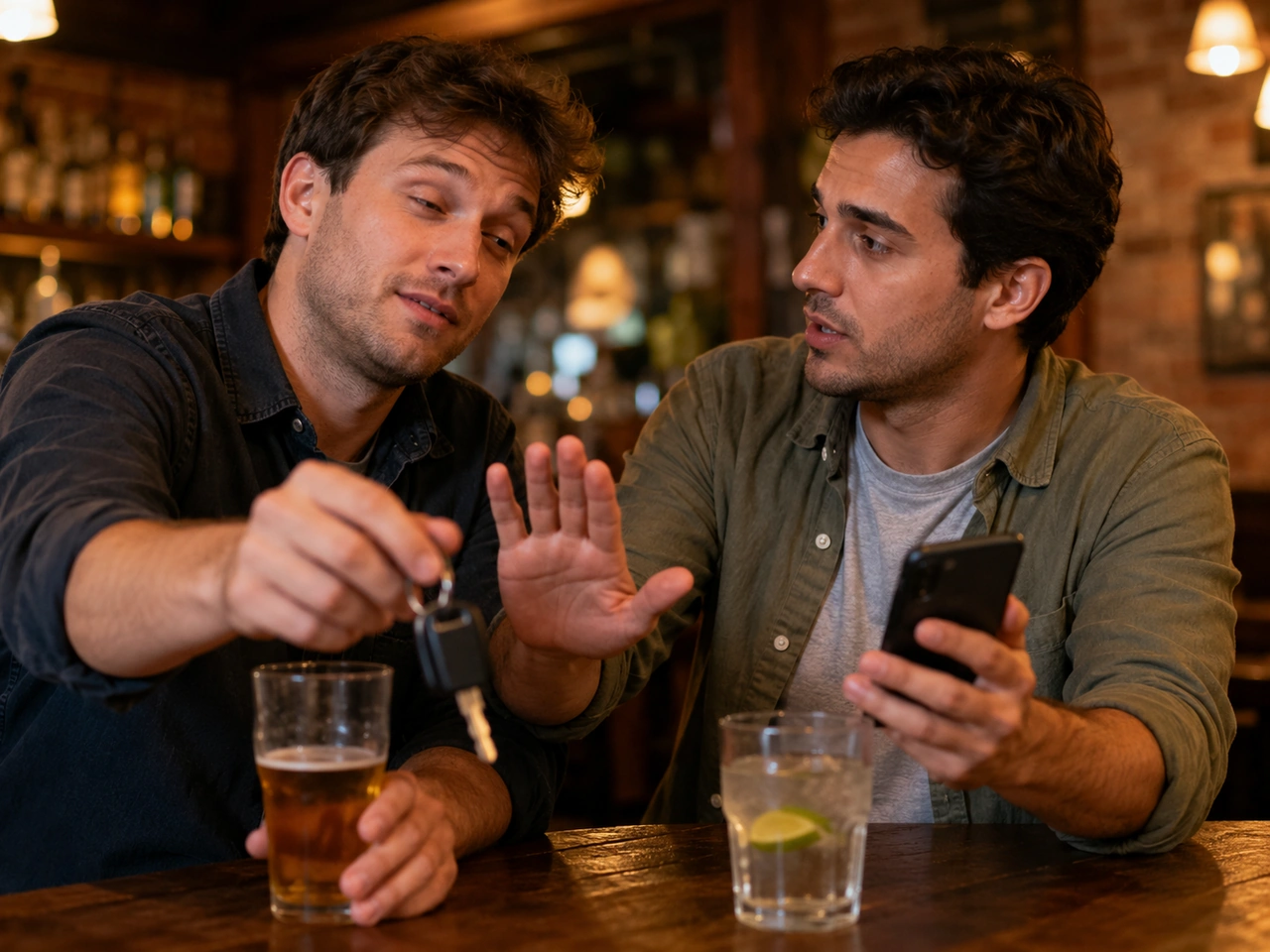
644. What should you do if a friend who has been drinking wants to drive?
Preventing an impaired person from driving can protect them, their passengers, and other road users. Arrange a sober driver, taxi, public transport, or accommodation.
AI-generated by Rijbewijs-online.be • WCIT • CC BY-SA
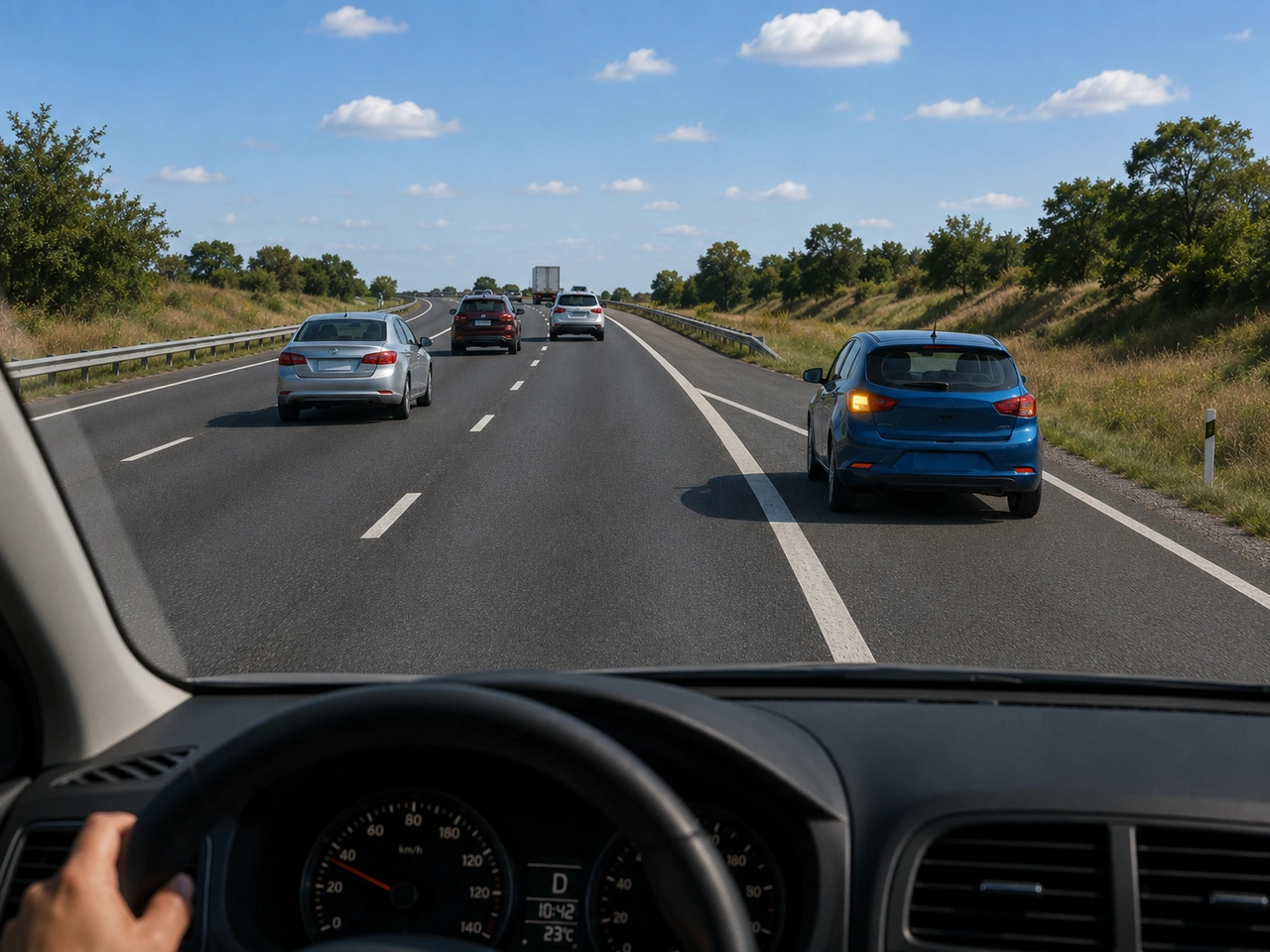
645. What should you do when joining a motorway from an entry lane?
Use the entry lane to build a suitable speed, check carefully, signal, and merge only when it is safe.
AI-generated by Rijbewijs-online.be • WCIT • CC BY-SA
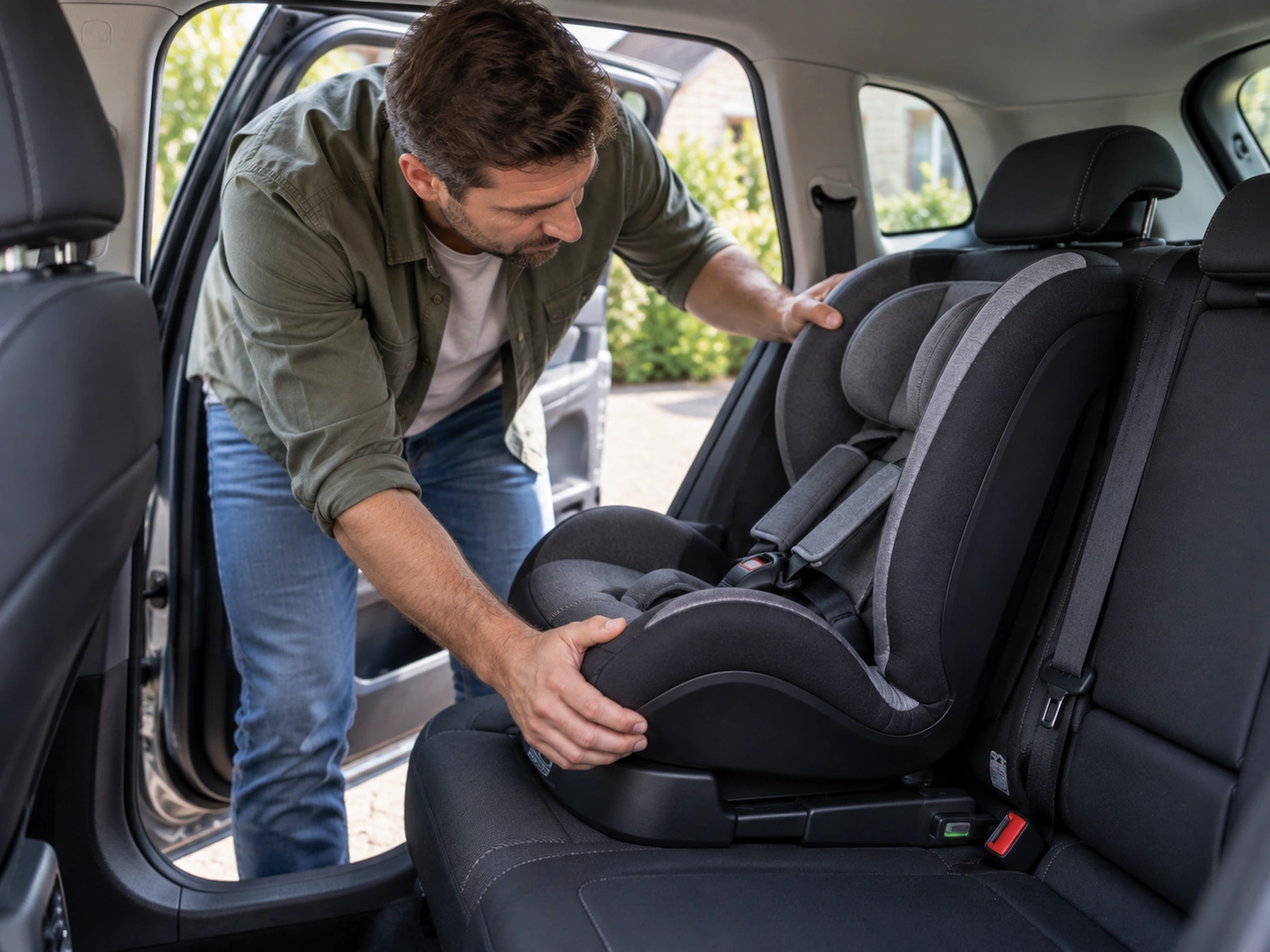
646. What should you check after fitting a child restraint?
A child restraint should be installed securely and used according to the manufacturer's instructions. Check that the seat is firmly attached, the belt or ISOFIX connection is correct, and the child is restrained properly before driving.
AI-generated by Rijbewijs-online.be • WCIT • CC BY-SA
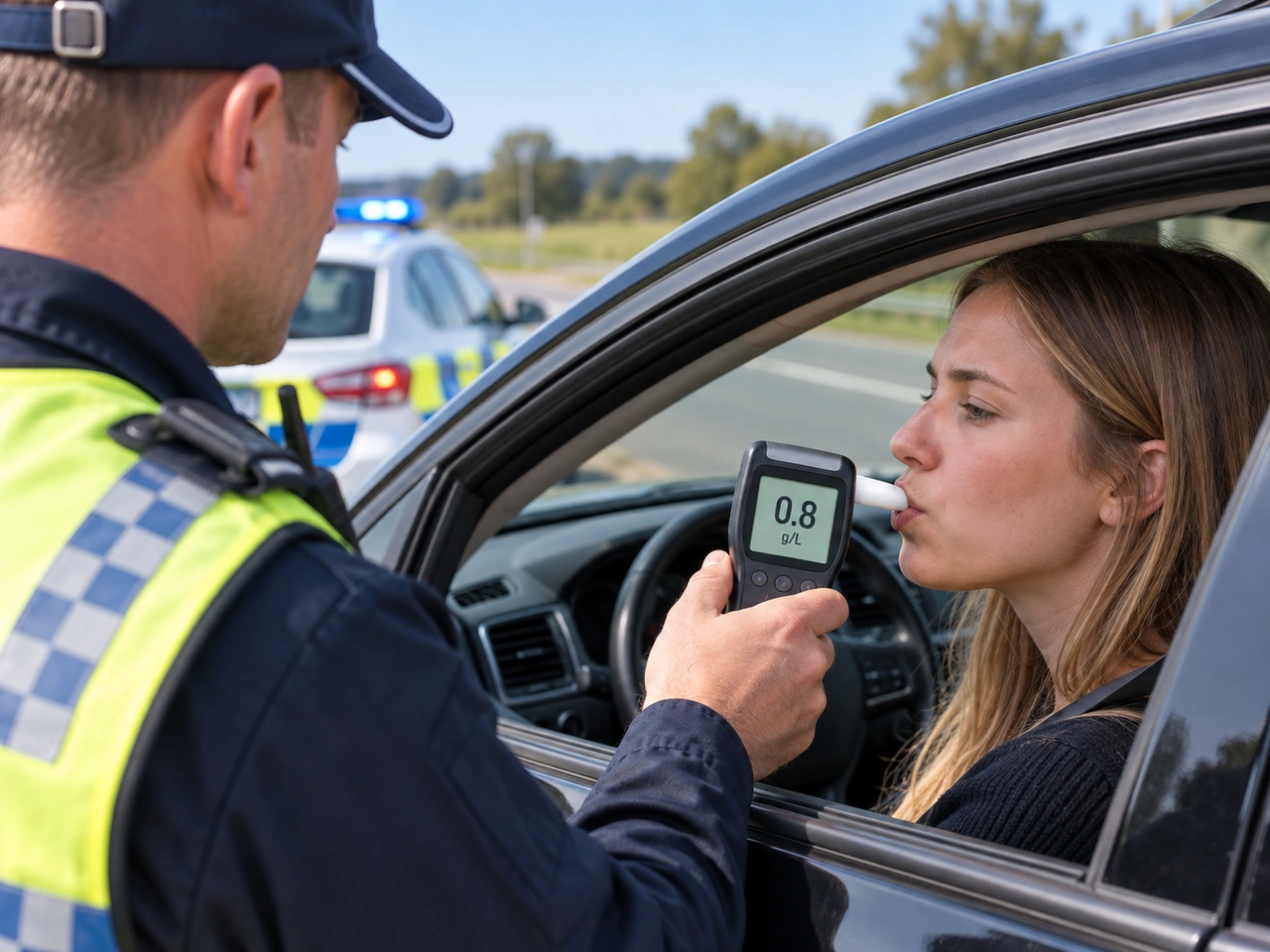
647. What is the legal blood alcohol limit for ordinary drivers in Brussels?
The legal blood alcohol limit for ordinary drivers in Brussels is 0.5 g/L.
AI-generated by Rijbewijs-online.be • WCIT • CC BY-SA
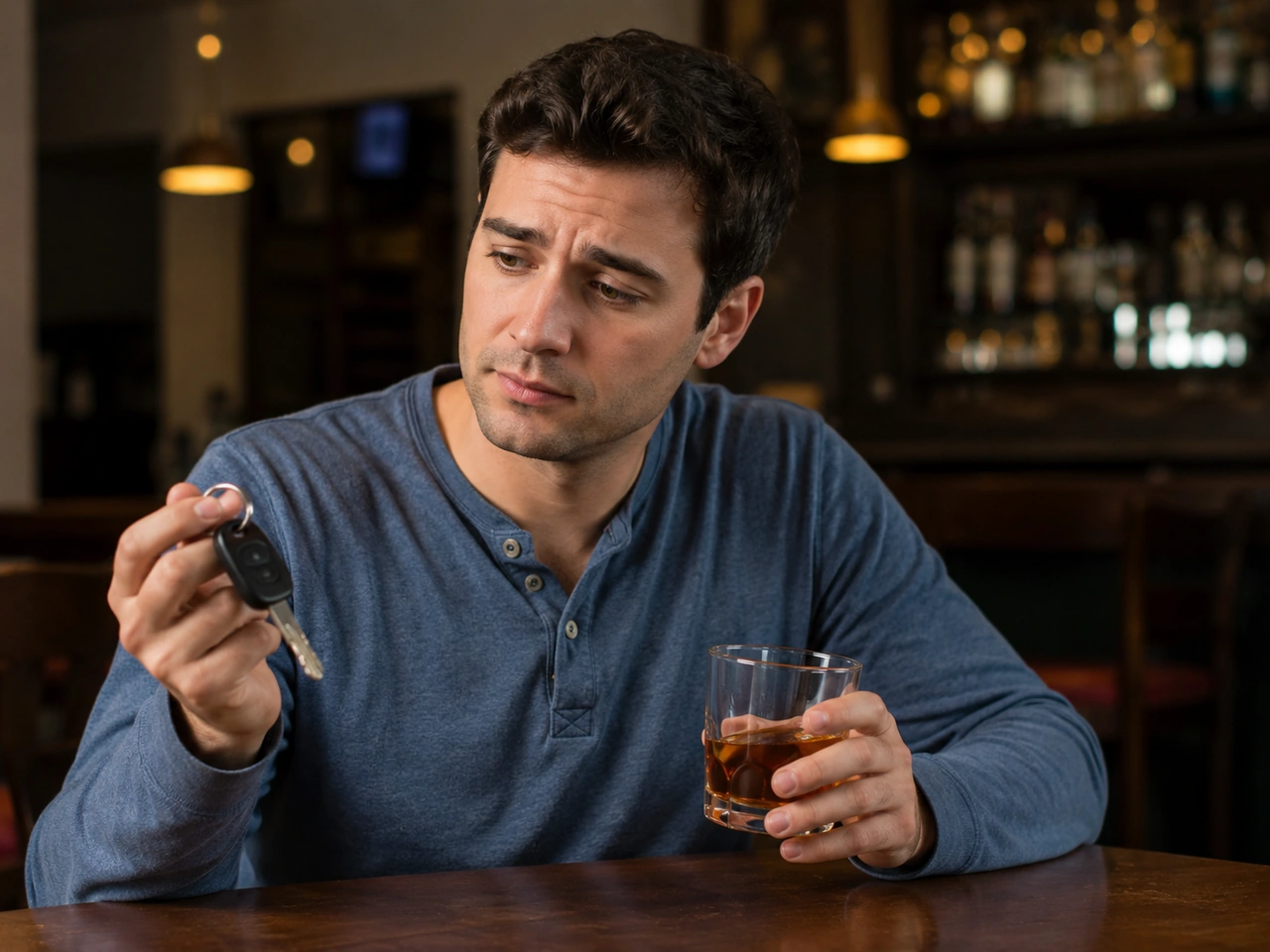
648. What is the safest choice if you have consumed alcohol?
Alcohol can impair judgement, coordination, vision, and reaction time. A sober driver, taxi, public transport, or an overnight stay is the safer choice.
AI-generated by Rijbewijs-online.be • WCIT • CC BY-SA
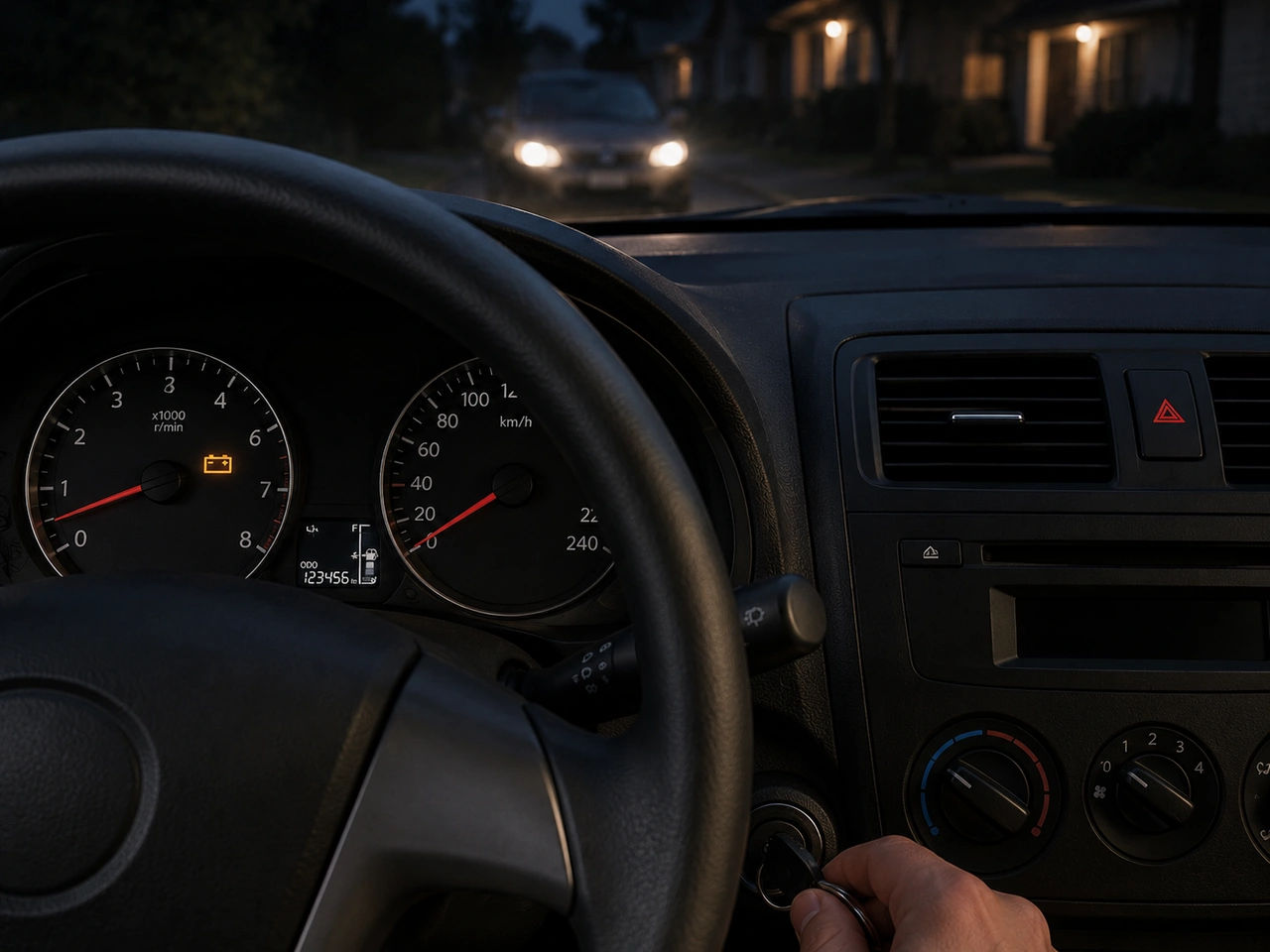
649. What can slow engine cranking or dim lights indicate?
Slow starting, dim lights, or repeated battery warnings can indicate a weak battery, poor electrical connection, or a fault in the charging system.
AI-generated by Rijbewijs-online.be • WCIT • CC BY-SA
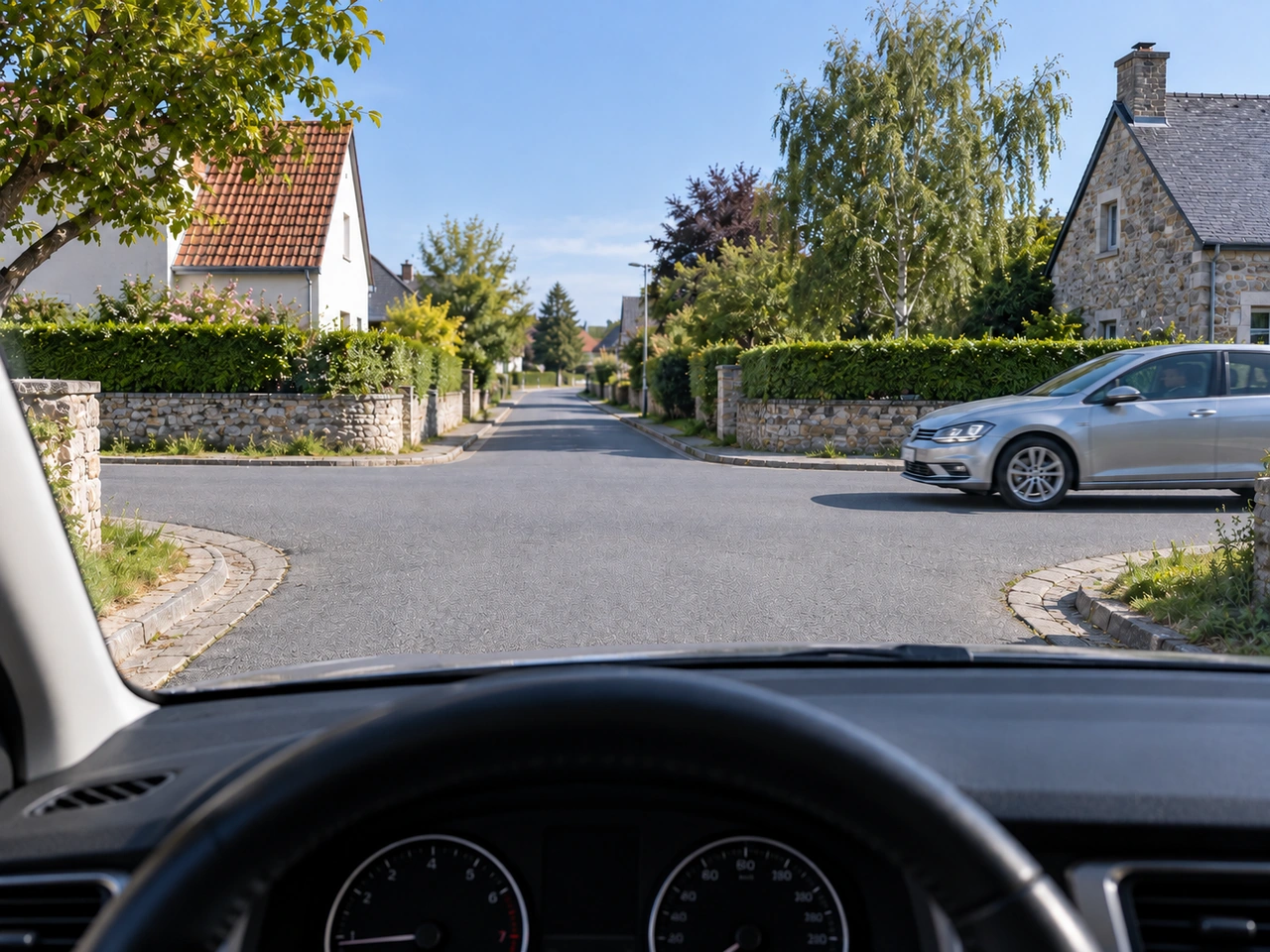
650. Does the priority-to-the-right rule apply in Brussels?
In Brussels, the priority-to-the-right rule generally applies at uncontrolled intersections.
AI-generated by Rijbewijs-online.be • WCIT • CC BY-SA