


Traffic signsChina
 Traffic rules
 China
26. Roadworks
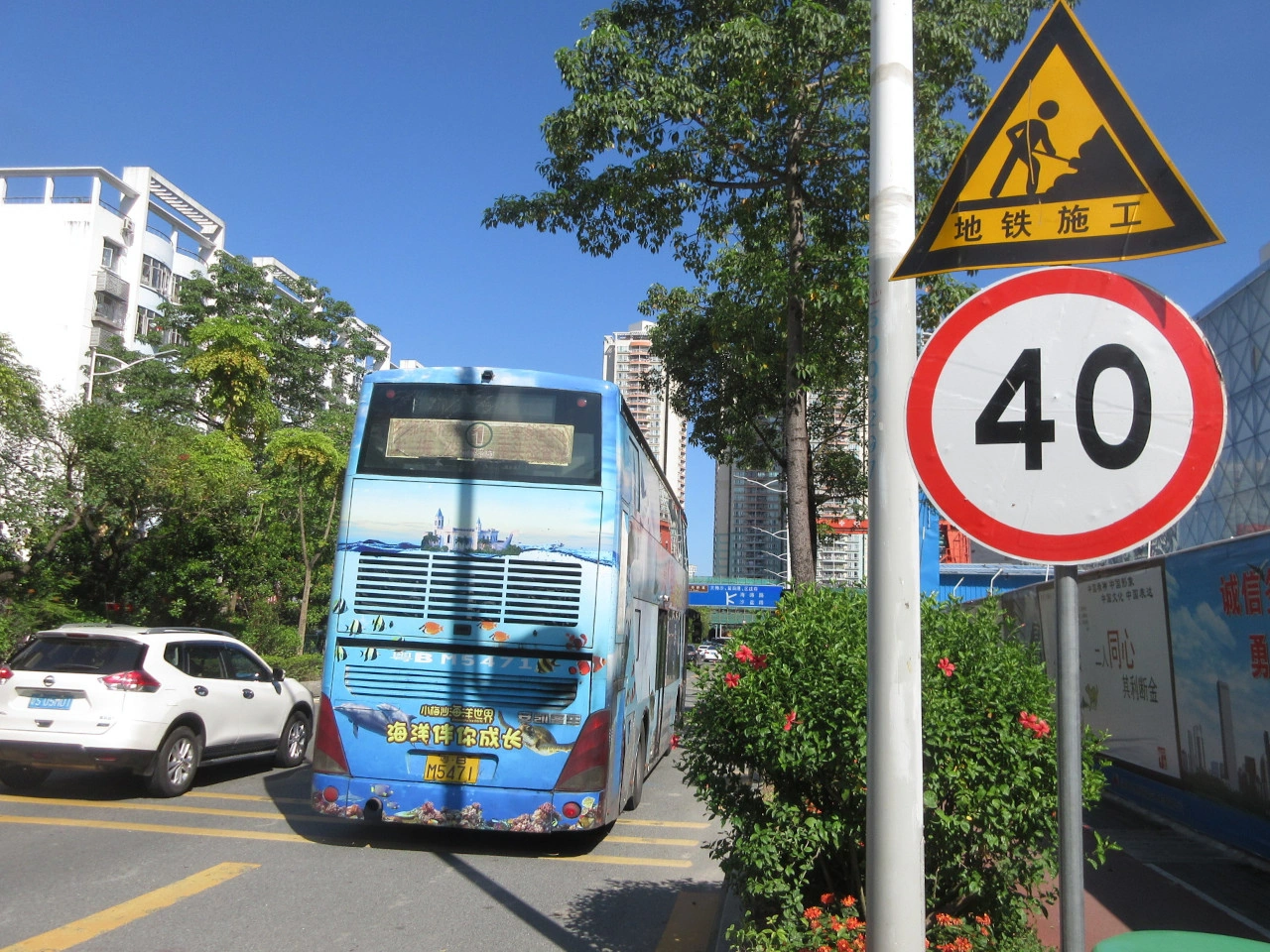
Roadworks are construction, maintenance, repair or inspection activities carried out on or beside a road. They may temporarily change the road layout, lane widths, speed limits, priority, permitted directions and facilities for pedestrians or cyclists.
Drivers must follow the temporary signs, traffic lights, barriers, road markings and instructions from authorised personnel. They should reduce speed, increase their following distance and remain prepared for narrow lanes, stopped traffic, workers, machinery and sudden changes in the route.
Wikimedia.org • Sumyantianhon • CC BY-SA
What should you watch for when approaching roadworks in mainland China?
Look for temporary warnings, cones, barriers, narrow lanes and construction vehicles. Road layouts can change temporarily, including lane shifts, traffic-light control and short one-way sections. Expect workers and slow or stationary traffic near the worksite.
🔗 jtgl.beijing.gov.cn • Beijing Traffic Police — full Road Traffic Safety Law, 2021 amended text
🔗 samr.gov.cn • SAMR — full implementing Regulations, 2017 amended text
Is a temporary speed limit at roadworks binding in mainland China?
Where an authorised temporary regulatory speed limit is in force, you must obey it. A roadworks warning alone should not be mistaken for a new numerical limit, but conditions may require driving more slowly.
🔗 jtgl.beijing.gov.cn • Beijing Traffic Police — full Road Traffic Safety Law, 2021 amended text
🔗 samr.gov.cn • SAMR — full implementing Regulations, 2017 amended text
What if only one lane remains open through roadworks in mainland China?
Follow the temporary signals, stop/go instructions, lane arrows and priority signs. Do not enter an opposing traffic lane until permitted, and give vulnerable road users and road workers extra room.
🔗 jtgl.beijing.gov.cn • Beijing Traffic Police — full Road Traffic Safety Law, 2021 amended text
🔗 samr.gov.cn • SAMR — full implementing Regulations, 2017 amended text
 Warning for roadworks.
English • Traffic sign 警36 • Roadworks. Slow down or follow the local diversion instructions.
中文 • 警36 • 施工。 前方道路施工,应减速慢行或按现场指引绕行。
Sources
🔗 Commons.wikimedia.org
🔗 Openstd.samr.gov.cn • 国家标准全文公开 • GB 5768.2-2022(含第1号修改单)
🔗 Upload.wikimedia.org • 标准原文镜像 • PDF第92页
SVG source: Standardization Administration of the People's Republic of China • Public domain • Original revision 2024-05-08. Wikimedia original unmodified.

27. Crosswind
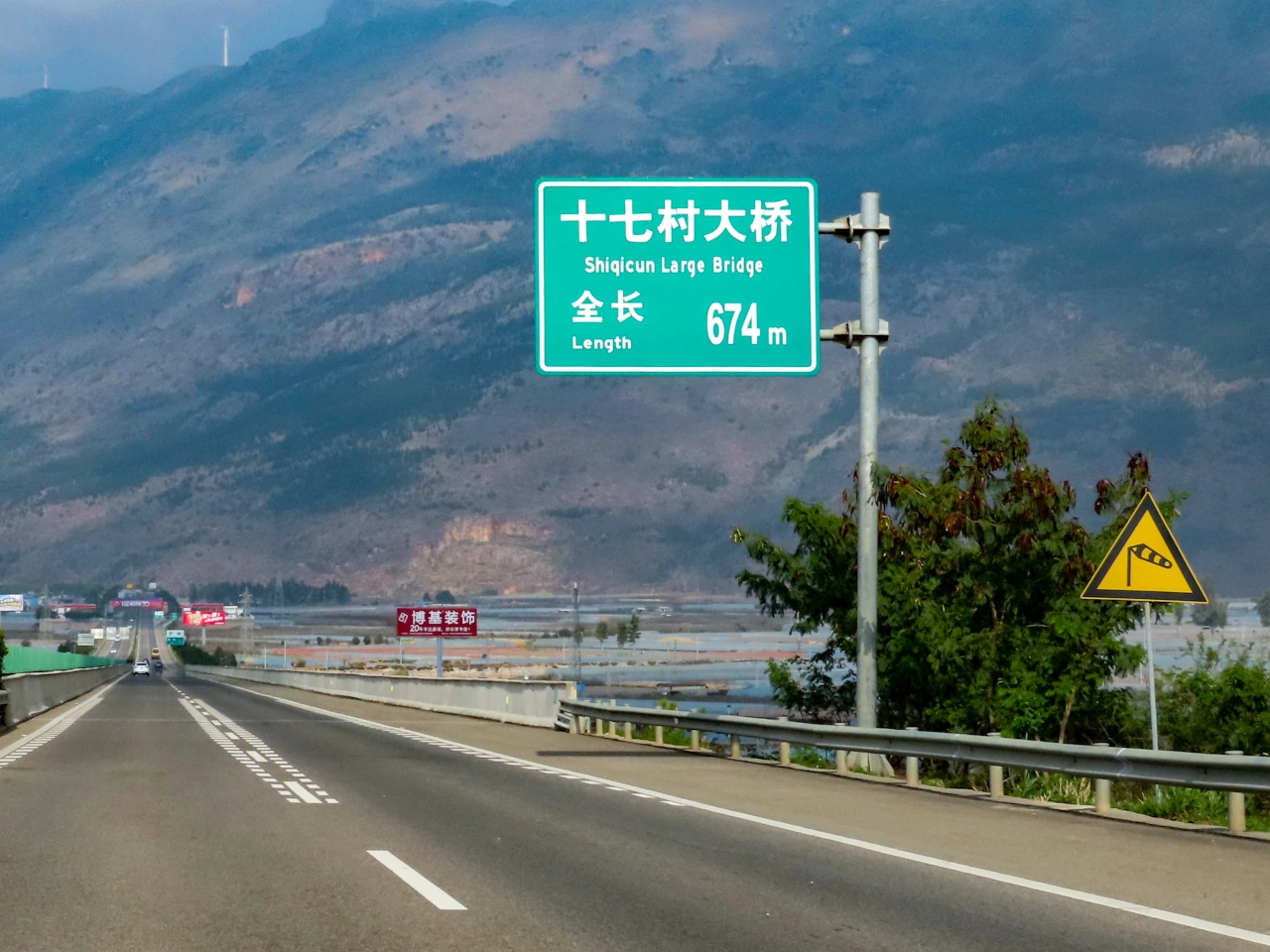
Crosswind is wind blowing across the direction of travel and can push a vehicle sideways or affect its stability. Strong or sudden gusts are especially dangerous for motorcycles, bicycles, caravans, trailers and high-sided vehicles. Drivers should reduce speed, keep a firm but relaxed grip on the steering wheel and allow extra space from other road users. Particular care is needed on bridges, exposed roads and when passing large vehicles or leaving sheltered areas, where a sudden change in wind force can move the vehicle unexpectedly.
Wikimedia.org • N509FZ • CC BY-SA
Where can crosswinds be especially hazardous in mainland China?
Exposed roads, bridges and the transition out of shelter can leave a vehicle vulnerable to sudden gusts. Allow for changing steering forces, especially beside a large vehicle. Follow actual wind warnings, closures and vehicle restrictions, and reduce speed smoothly when conditions require it.
🔗 jtgl.beijing.gov.cn • Beijing Traffic Police — full Road Traffic Safety Law, 2021 amended text
🔗 samr.gov.cn • SAMR — full implementing Regulations, 2017 amended text
Does a crosswind warning automatically impose a speed limit in mainland China?
A crosswind warning does not itself set a numerical speed limit. Obey any separate speed restriction or electronic message, and choose a lower speed whenever gusts could affect control.
🔗 jtgl.beijing.gov.cn • Beijing Traffic Police — full Road Traffic Safety Law, 2021 amended text
🔗 samr.gov.cn • SAMR — full implementing Regulations, 2017 amended text
How should you drive a motorcycle, van or vehicle towing a caravan in strong winds in mainland China?
These vehicles may react sharply to gusts. Reduce speed smoothly, leave more room from traffic, hold the controls steadily and take extra care when passing a lorry or emerging from shelter. Follow any temporary restriction for high-sided vehicles.
🔗 jtgl.beijing.gov.cn • Beijing Traffic Police — full Road Traffic Safety Law, 2021 amended text
🔗 samr.gov.cn • SAMR — full implementing Regulations, 2017 amended text
28. Height limit
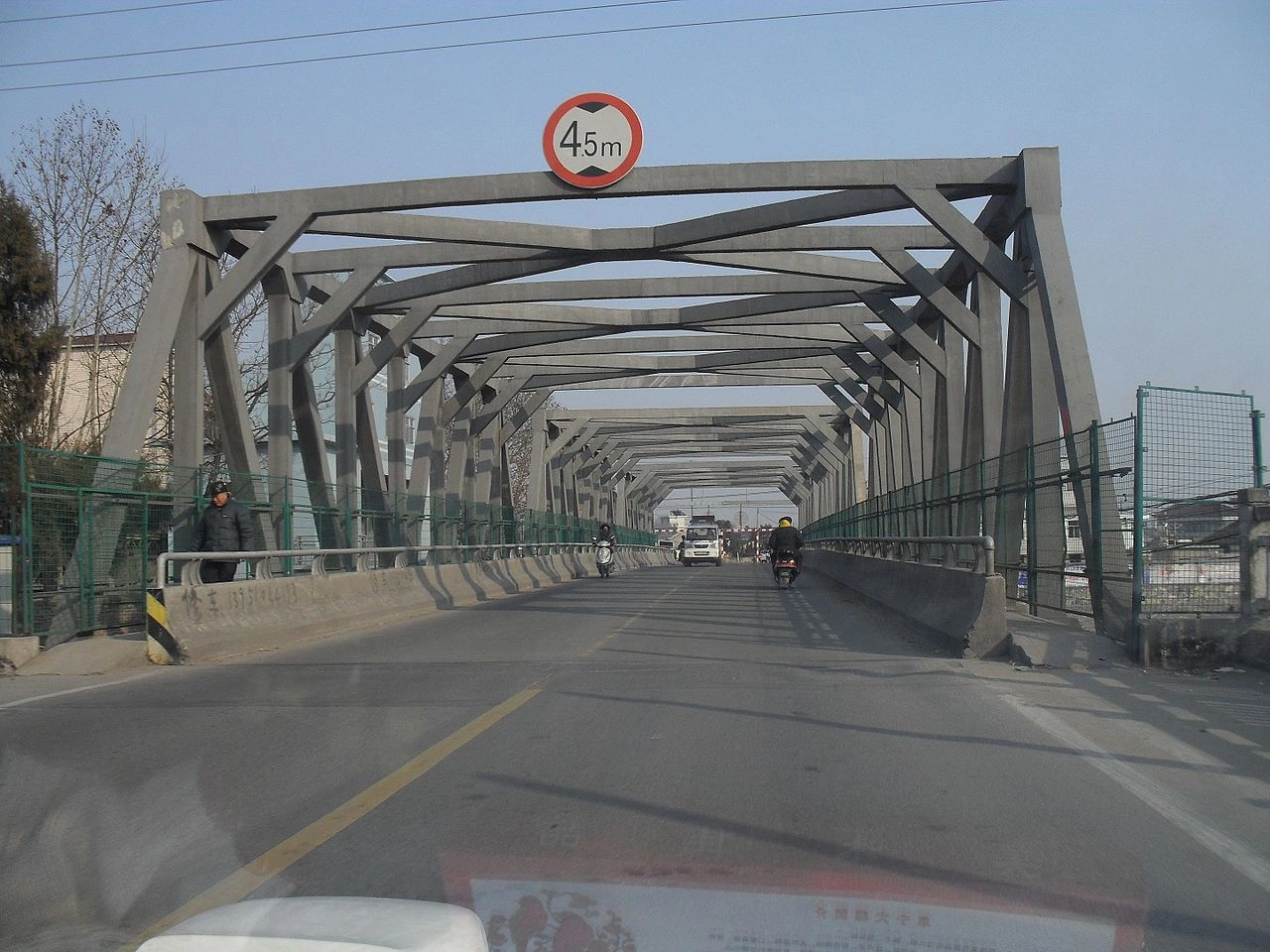
A height limit prohibits vehicles whose total height exceeds the value shown from entering or passing a road section, bridge, tunnel, gateway or other structure. The vehicle’s height includes its load and any equipment attached above it.
Drivers of high vehicles must know their exact height, observe advance warnings and use an alternative route when necessary. They should never rely only on visual judgement or attempt to pass beneath a structure when safe clearance is uncertain.
Wikimedia.org • 东京村子 • CC BY-SA
How should you read a low-bridge height restriction in mainland China?
Identify the actual height restriction and any separate advance-clearance warning, and read the measurement and supplementary information. Check the vehicle at its highest point with its load and fitted equipment before entering. A warning describes a hazard; a regulatory restriction controls entry. Use a permitted alternative if the vehicle cannot pass safely and lawfully.
🔗 jtgl.beijing.gov.cn • Beijing Traffic Police — full Road Traffic Safety Law, 2021 amended text
🔗 samr.gov.cn • SAMR — full implementing Regulations, 2017 amended text
🔗 szjj.sz.gov.cn • Shenzhen Traffic Police — official sign categories and their functions
🔗 openstd.samr.gov.cn • SAMR — current GB 5768.2-2022 status, not the full standard
🔗 std.sacinfo.org.cn • SAC — published first sign-standard amendment, effective 1 January 2026
Does a roof load count when checking vehicle height in mainland China?
Yes for practical clearance: measure the vehicle at its highest point with its load and fitted accessories, such as a roof box, bicycle or roof rack. Check the local legal measurement rules as well; an empty vehicle’s registered height is not enough when equipment has been added.
🔗 jtgl.beijing.gov.cn • Beijing Traffic Police — full Road Traffic Safety Law, 2021 amended text
🔗 samr.gov.cn • SAMR — full implementing Regulations, 2017 amended text
🔗 szjj.sz.gov.cn • Shenzhen Traffic Police — official sign categories and their functions
🔗 openstd.samr.gov.cn • SAMR — current GB 5768.2-2022 status, not the full standard
🔗 std.sacinfo.org.cn • SAC — published first sign-standard amendment, effective 1 January 2026
What should you do if your vehicle is too high for a bridge or tunnel in mainland China?
Do not try to squeeze under the structure. Use the signed alternative route and, if you are already close to the obstruction, stop where safe and seek traffic-control assistance rather than reversing unpredictably into moving traffic.
🔗 jtgl.beijing.gov.cn • Beijing Traffic Police — full Road Traffic Safety Law, 2021 amended text
🔗 samr.gov.cn • SAMR — full implementing Regulations, 2017 amended text
🔗 szjj.sz.gov.cn • Shenzhen Traffic Police — official sign categories and their functions
🔗 openstd.samr.gov.cn • SAMR — current GB 5768.2-2022 status, not the full standard
🔗 std.sacinfo.org.cn • SAC — published first sign-standard amendment, effective 1 January 2026
29. Weight limit
A weight limit prohibits vehicles or vehicle combinations whose mass exceeds the value shown from entering or passing a road section, bridge, tunnel or other structure. Depending on local law, the restriction may concern the vehicle’s actual loaded mass, maximum authorised mass or load on an individual axle.
Drivers must know which type of mass the sign refers to and must include the vehicle, passengers, cargo and any trailer where required. A vehicle that exceeds the limit must use another suitable route.
Wikimedia.org • xue siyang • CC BY-SA
What should you do if your vehicle exceeds a bridge weight limit in mainland China?
Do not drive onto the bridge. Follow the signed alternative route and check the vehicle’s gross and axle loads as applicable. A general heavy-vehicle permit does not automatically authorise crossing every restricted bridge.
🔗 jtgl.beijing.gov.cn • Beijing Traffic Police — full Road Traffic Safety Law, 2021 amended text
🔗 samr.gov.cn • SAMR — full implementing Regulations, 2017 amended text
🔗 szjj.sz.gov.cn • Shenzhen Traffic Police — official sign categories and their functions
🔗 openstd.samr.gov.cn • SAMR — current GB 5768.2-2022 status, not the full standard
🔗 std.sacinfo.org.cn • SAC — published first sign-standard amendment, effective 1 January 2026
30. Radar speed sign
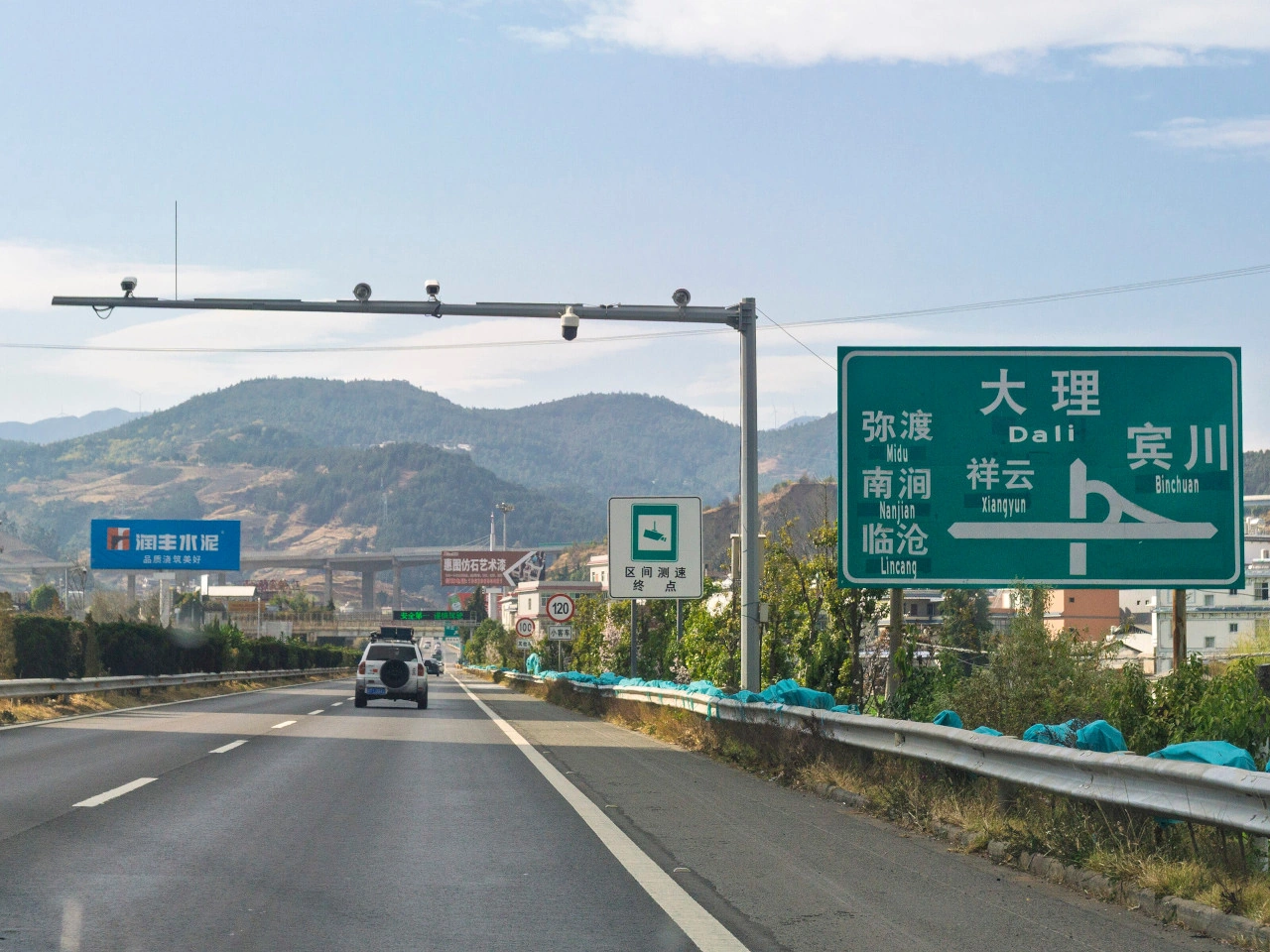
A radar speed sign warns drivers that vehicle speeds may be monitored by a fixed camera, mobile radar, lidar or average-speed enforcement system. It reminds drivers to check and respect the applicable speed limit.
The sign does not normally establish the speed limit itself. Drivers must follow the general, posted or variable speed limit applying to the road and must not brake suddenly merely because speed enforcement is indicated.
Wikimedia.org • Kcx36 • CC BY-SA
What should a driver understand from a radar or speed-camera warning in mainland China?
A notice warning of speed monitoring is separate from a regulatory speed-limit sign. Obey the applicable road, vehicle and posted maximum regardless of whether equipment is visible. A camera pictogram alone does not establish the equipment, its coverage or a legal duty to provide advance warning.
🔗 jtgl.beijing.gov.cn • Beijing Traffic Police — full Road Traffic Safety Law, 2021 amended text
🔗 samr.gov.cn • SAMR — full implementing Regulations, 2017 amended text
Which speed limit applies when a radar warning is displayed in mainland China?
Follow the speed-limit sign, applicable speed zone or statutory road and vehicle limit. A camera symbol or enforcement notice must not be mistaken for a sign raising or ending that limit.
🔗 jtgl.beijing.gov.cn • Beijing Traffic Police — full Road Traffic Safety Law, 2021 amended text
🔗 samr.gov.cn • SAMR — full implementing Regulations, 2017 amended text
Should you brake abruptly when you notice a radar sign in mainland China?
No. Adjust to the lawful and safe speed smoothly, leaving adequate space behind and ahead. Enforcement information does not authorise sudden unsafe manoeuvres or stopping to inspect the camera.
🔗 jtgl.beijing.gov.cn • Beijing Traffic Police — full Road Traffic Safety Law, 2021 amended text
🔗 samr.gov.cn • SAMR — full implementing Regulations, 2017 amended text
31. Priority at the next junction
Priority at the next junction means that drivers travelling on a particular road have priority over traffic entering from intersecting roads at the next junction. The priority arrangement is normally indicated by signs facing both the priority traffic and the traffic that must give way.
Unlike a continuing priority road, this priority applies only at the indicated intersection. Drivers must still approach cautiously and obey traffic lights, authorised officers, crossings, turning rules and other applicable signs.
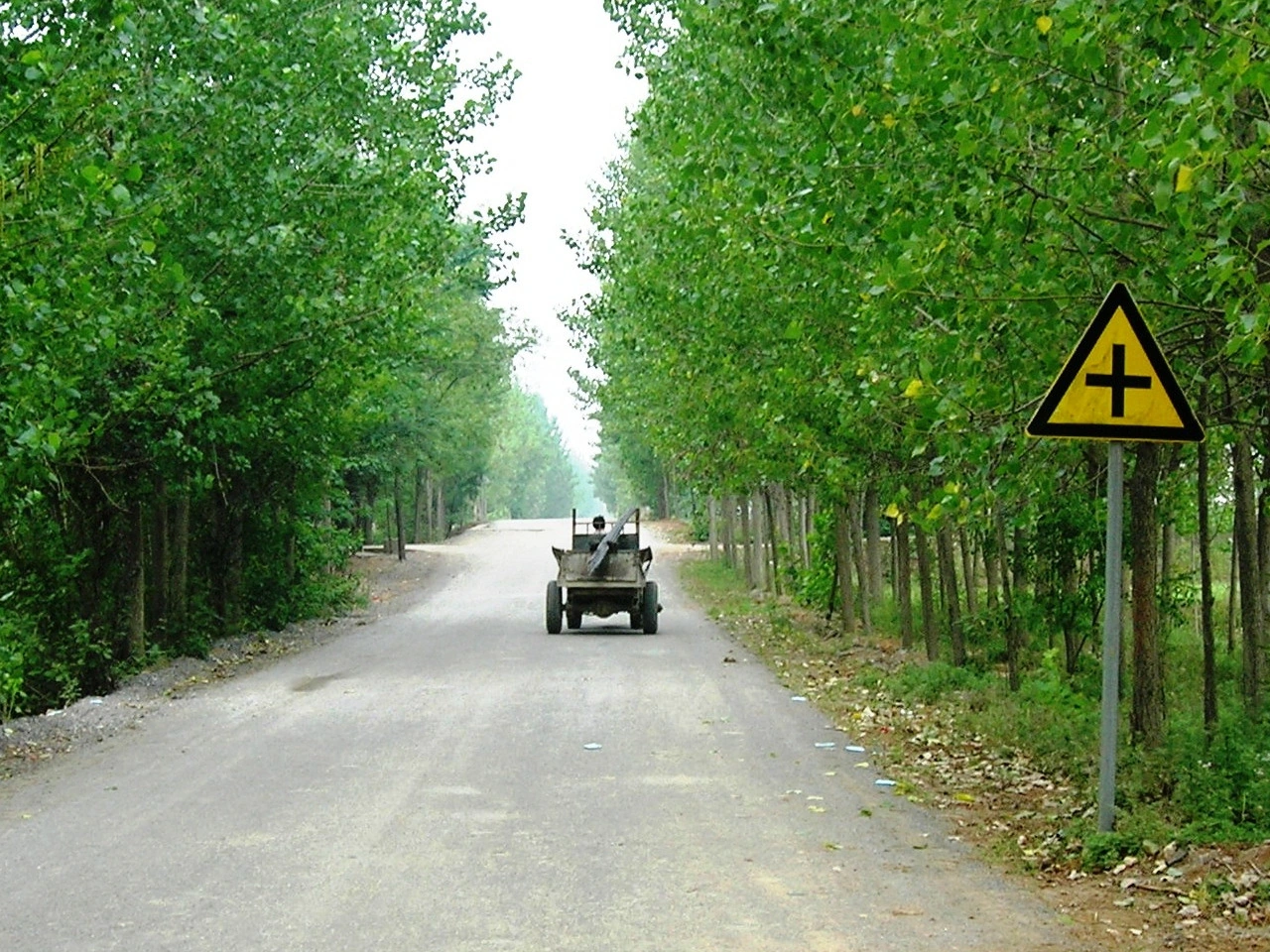
Wikimedia.org • luchangjiang~鲁昌江 • CC BY-SA
How is priority at the next junction determined in mainland China?
At a sign-controlled junction, follow the priority indicated by the signs and markings. At a junction without signals, an officer or priority signs or markings, Article 52 requires a motor-vehicle driver to stop and observe, then give way to vehicles from the right. Turning and other specific yielding duties still apply.
🔗 xzfg.moj.gov.cn • Mainland China — Regulation 52; actual junction control, no route-name priority
🔗 jtgl.beijing.gov.cn • Beijing Traffic Police — full Road Traffic Safety Law, 2021 amended text
🔗 samr.gov.cn • SAMR — full implementing Regulations, 2017 amended text
🔗 szjj.sz.gov.cn • Shenzhen Traffic Police — official sign categories and their functions
🔗 openstd.samr.gov.cn • SAMR — current GB 5768.2-2022 status, not the full standard
🔗 std.sacinfo.org.cn • SAC — published first sign-standard amendment, effective 1 January 2026
Does priority at one junction automatically continue along the entire road in mainland China?
No. Check the next junction’s actual controls. A route name, number or destination diagram does not establish continuing priority. Article 52 governs uncontrolled motor-vehicle junctions, including the duty to stop and observe before giving way to traffic from the right where priority signs and markings are absent.
🔗 xzfg.moj.gov.cn • Mainland China — Regulation 52; actual junction control, no route-name priority
🔗 jtgl.beijing.gov.cn • Beijing Traffic Police — full Road Traffic Safety Law, 2021 amended text
🔗 samr.gov.cn • SAMR — full implementing Regulations, 2017 amended text
🔗 szjj.sz.gov.cn • Shenzhen Traffic Police — official sign categories and their functions
🔗 openstd.samr.gov.cn • SAMR — current GB 5768.2-2022 status, not the full standard
🔗 std.sacinfo.org.cn • SAC — published first sign-standard amendment, effective 1 January 2026
May a driver with priority ignore pedestrians or another safety obligation at the next junction in mainland China?
No. Junction priority does not cancel duties towards pedestrians, traffic signals, emergency vehicles or other road users where the law gives them precedence. Approach at a speed allowing you to stop safely.
🔗 xzfg.moj.gov.cn • Mainland China — Regulation 52; actual junction control, no route-name priority
🔗 jtgl.beijing.gov.cn • Beijing Traffic Police — full Road Traffic Safety Law, 2021 amended text
🔗 samr.gov.cn • SAMR — full implementing Regulations, 2017 amended text
🔗 szjj.sz.gov.cn • Shenzhen Traffic Police — official sign categories and their functions
🔗 openstd.samr.gov.cn • SAMR — current GB 5768.2-2022 status, not the full standard
🔗 std.sacinfo.org.cn • SAC — published first sign-standard amendment, effective 1 January 2026
32. Traffic lights
Traffic lights use coloured lights, arrows or symbols to regulate when road users may proceed, must prepare to stop or must remain stopped. Separate signals may apply to particular directions, lanes, pedestrians, cyclists or public-transport vehicles.
A green light permits movement only when the route is clear and the movement is otherwise legal. Road users must still follow priority rules, turning restrictions, lane markings and instructions from authorised traffic controllers.
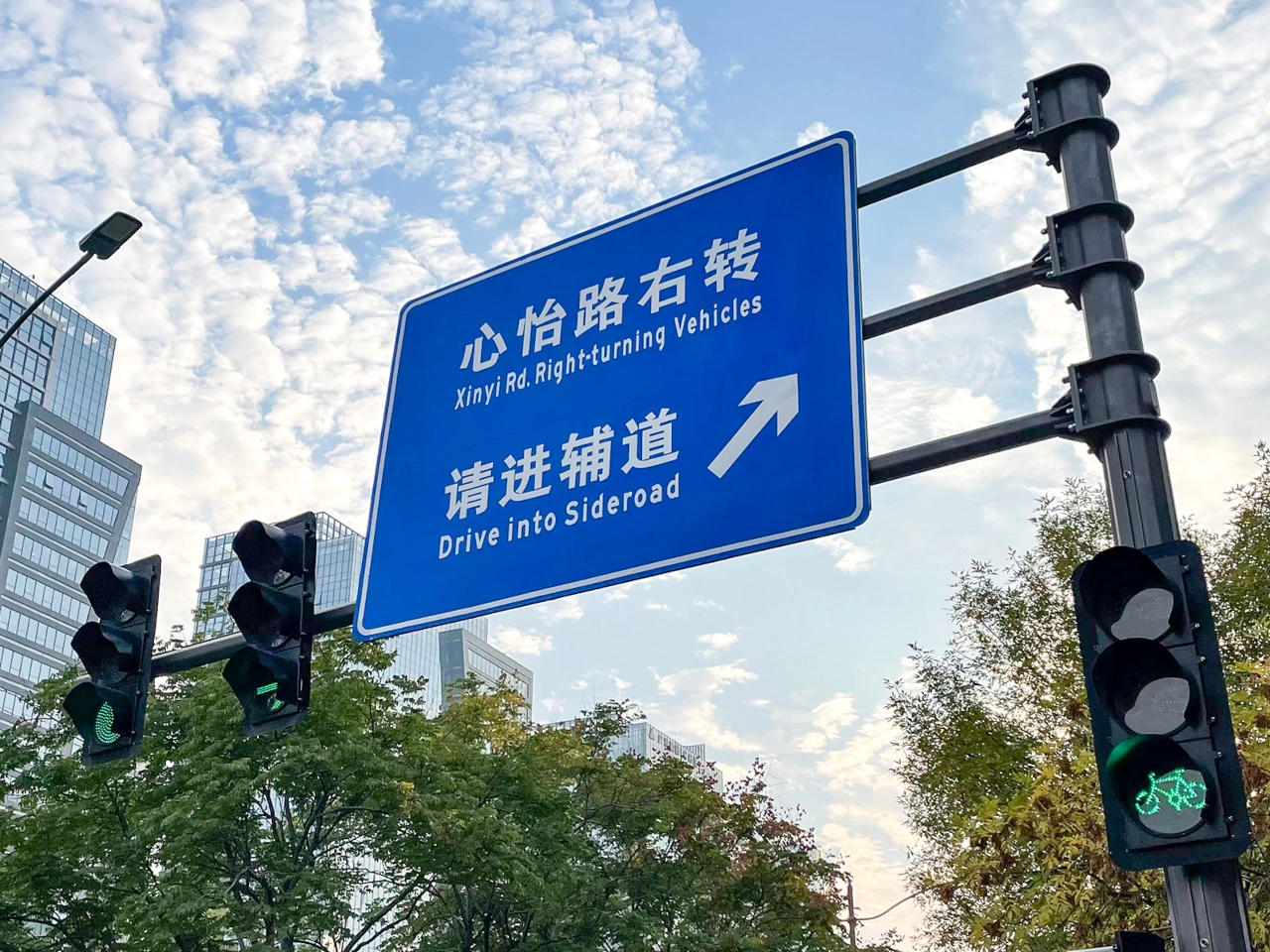
Wikimedia.org • Windmemories • CC BY-SA
What must a driver do at red, amber and green signals in mainland China?
Red prohibits vehicle movement, subject to the applicable right-turn exception. On amber, vehicles already beyond the stop line may continue. Green permits movement, but turning vehicles must not impede straight-ahead vehicles or pedestrians released by the signals. Obey directional signals and lane markings.
May you turn at a red traffic light in mainland China?
On a circular red signal, a right-turning vehicle may proceed if it does not impede vehicles or pedestrians permitted to move. This does not override a red directional arrow, a prohibited movement or lane restrictions. Check the actual signals and give way.
Can a green light remove the need to give way to pedestrians in mainland China?
No. Turning vehicles must not impede pedestrians released by the signals. At a pedestrian crossing, slow down and stop to let pedestrians who are crossing pass.
33. Traffic lights warning
A traffic lights warning is a warning sign that alerts drivers that traffic signals are located ahead. It is commonly used where the signals may be unexpected, difficult to see from a distance or located on a road where drivers need additional time to prepare to stop.
Drivers approaching a traffic lights warning should reduce speed when necessary, watch for the signals ahead and be prepared to stop if the traffic light changes or traffic is waiting at the intersection.
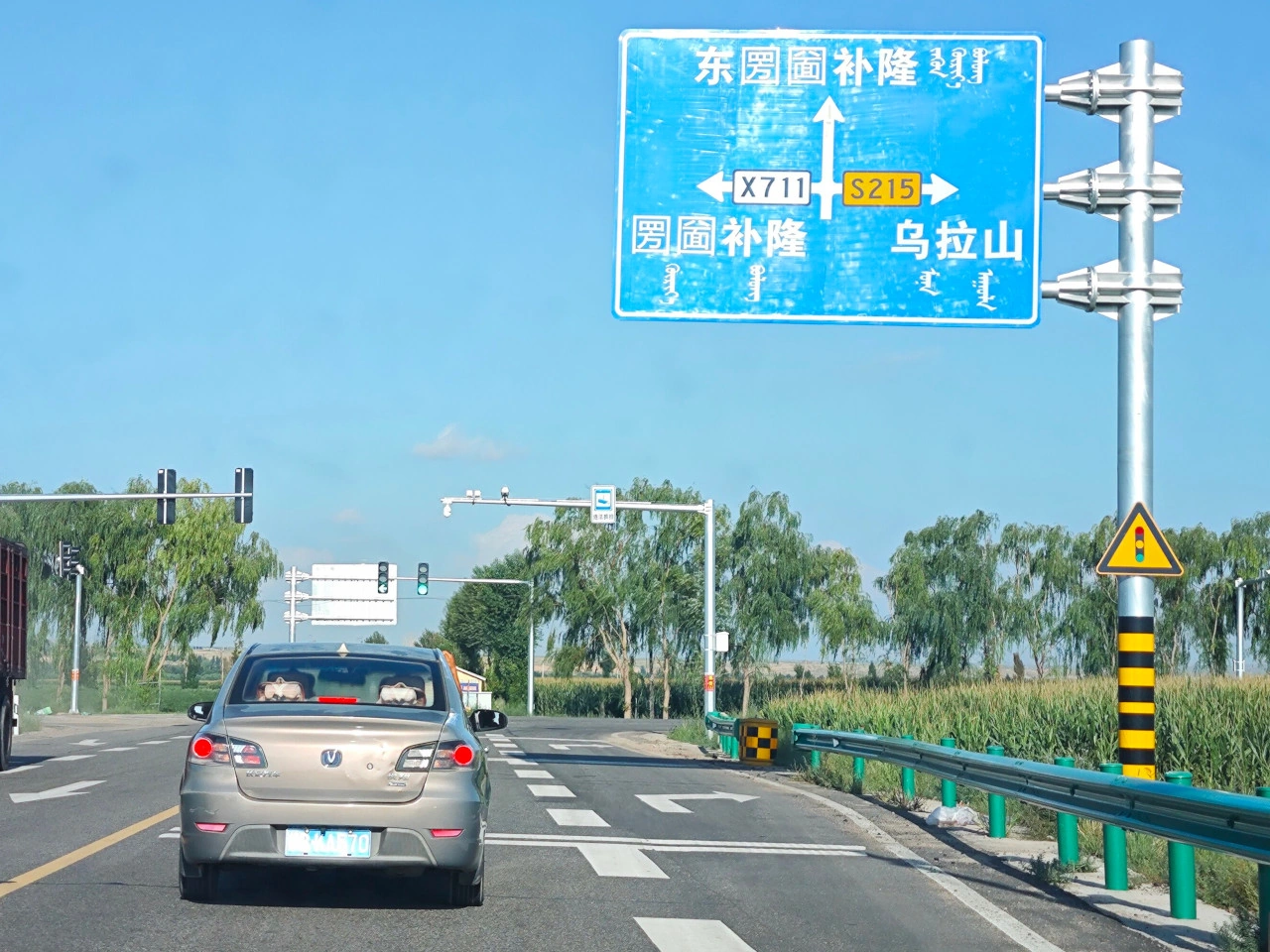
Wikimedia.org • Liuxingy • CC BY-SA
Does a traffic-lights-ahead warning require an immediate stop in mainland China?
No. A warning sign is not an automatic STOP instruction and does not create a new numerical speed limit. Reduce speed when necessary, look for a queue or a concealed signal, and obey the traffic lights and any separate speed or stop signs.
🔗 jtgl.beijing.gov.cn • Beijing Traffic Police — full Road Traffic Safety Law, 2021 amended text
🔗 samr.gov.cn • SAMR — full implementing Regulations, 2017 amended text
🔗 szjj.sz.gov.cn • Shenzhen Traffic Police — official sign categories and their functions
🔗 openstd.samr.gov.cn • SAMR — current GB 5768.2-2022 status, not the full standard
🔗 std.sacinfo.org.cn • SAC — published first sign-standard amendment, effective 1 January 2026
What should you check if the next traffic lights are difficult to see in mainland China?
Allow enough distance to stop before the marked line, watch for vehicles braking suddenly and be ready for a pedestrian or cyclist crossing. If the signals are out of order or flashing, follow the applicable local failure and priority rules rather than guessing from the warning sign.
🔗 jtgl.beijing.gov.cn • Beijing Traffic Police — full Road Traffic Safety Law, 2021 amended text
🔗 samr.gov.cn • SAMR — full implementing Regulations, 2017 amended text
🔗 szjj.sz.gov.cn • Shenzhen Traffic Police — official sign categories and their functions
🔗 openstd.samr.gov.cn • SAMR — current GB 5768.2-2022 status, not the full standard
🔗 std.sacinfo.org.cn • SAC — published first sign-standard amendment, effective 1 January 2026
34. Pedestrian lights
Pedestrian lights are traffic signals that regulate when pedestrians may begin crossing a road. They normally display a red standing figure to prohibit starting and a green walking figure to permit crossing.
A flashing signal or countdown may warn that the permitted crossing period is ending. Pedestrians should cross without unnecessary delay, while turning drivers must remain alert and allow pedestrians who entered lawfully to finish crossing safely.
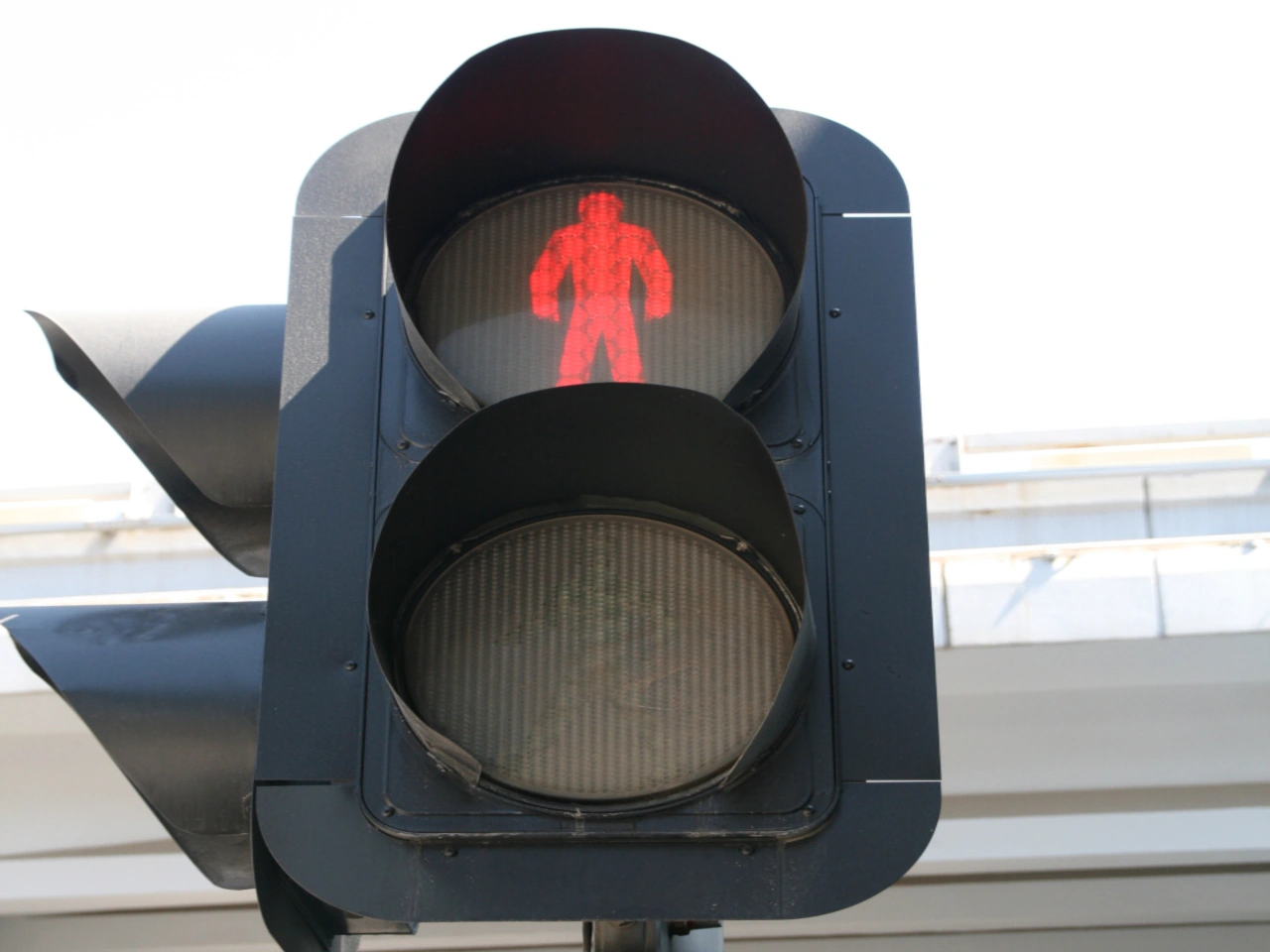
Wikimedia.org • poeloq • CC BY
What do pedestrian traffic signals mean in mainland China?
Green permits pedestrians to cross. Red prohibits entering the crossing; pedestrians already on it may continue across or wait at the road centre line. Check the actual pedestrian signal and traffic before stepping out.
What if the pedestrian signal changes while you are crossing in mainland China?
If the signal turns red after you have entered the crossing, the regulations allow you to continue or to wait at the road centre line. Do not start a new crossing on red.
May turning drivers ignore pedestrians on a signal-controlled crossing in mainland China?
No. Turning vehicles must not impede pedestrians permitted to cross. Drivers approaching a pedestrian crossing must slow down and stop to let pedestrians who are crossing pass.
Where should audible crossing signals be installed under mainland Chinese regulations?
At pedestrian-crossing signals on road sections frequently used by blind people.
May mainland Chinese pedestrians wait at the centre line if their crossing signal turns red?
Yes. Those already on the crossing may continue or wait at the road’s centre line.
35. Driving licence
A driving licence is an official document authorising a person to drive one or more specified categories of motor vehicle. It may contain conditions, restrictions, category codes and expiry dates that determine which vehicles the holder may drive.
Drivers must hold a licence that is valid for the vehicle category and jurisdiction concerned. A licence may be provisional, full, restricted, suspended or withdrawn, and additional qualifications may be required for professional driving.
Wikimedia.org • PRC • CC0
Which driving-licence entitlement is needed for an ordinary car in mainland China?
In mainland China, ordinary cars require the appropriate Chinese licence class, commonly C1 for eligible manual-transmission cars or C2 for eligible automatic-transmission cars. A different entitlement may be needed for motorcycles, heavy vehicles, trailers or passenger transport.
🔗 jtgl.beijing.gov.cn • Beijing Traffic Police — full Road Traffic Safety Law, 2021 amended text
🔗 samr.gov.cn • SAMR — full implementing Regulations, 2017 amended text
🔗 jtgl.beijing.gov.cn • Beijing Police — national licensing Annex 1, C1/C2 vehicle categories
Can a visitor drive in mainland China using a driving licence issued abroad?
A foreign licence or International Driving Permit does not by itself authorise driving in mainland China. Eligible visitors must obtain an appropriate Chinese temporary driving permit or licence before driving.
🔗 jtgl.beijing.gov.cn • Beijing Traffic Police — full Road Traffic Safety Law, 2021 amended text
🔗 samr.gov.cn • SAMR — full implementing Regulations, 2017 amended text
🔗 jtgl.beijing.gov.cn • Beijing Police — national licensing Annex 1, C1/C2 vehicle categories
Does an International Driving Permit replace the original licence in mainland China?
No. Mainland China does not accept an IDP as independent driving authorisation. A legally issued Chinese licence or temporary permit is required.
🔗 jtgl.beijing.gov.cn • Beijing Traffic Police — full Road Traffic Safety Law, 2021 amended text
🔗 samr.gov.cn • SAMR — full implementing Regulations, 2017 amended text
🔗 jtgl.beijing.gov.cn • Beijing Police — national licensing Annex 1, C1/C2 vehicle categories
36. Location marker
A location marker is a roadside reference showing a measured position along a road. It normally identifies a kilometre, mile or smaller interval measured from an established starting point on that route.
Kilometre and hectometre markers help road users, emergency services, road authorities and maintenance crews identify an exact section of road. They do not impose a speed limit, priority rule or access restriction.
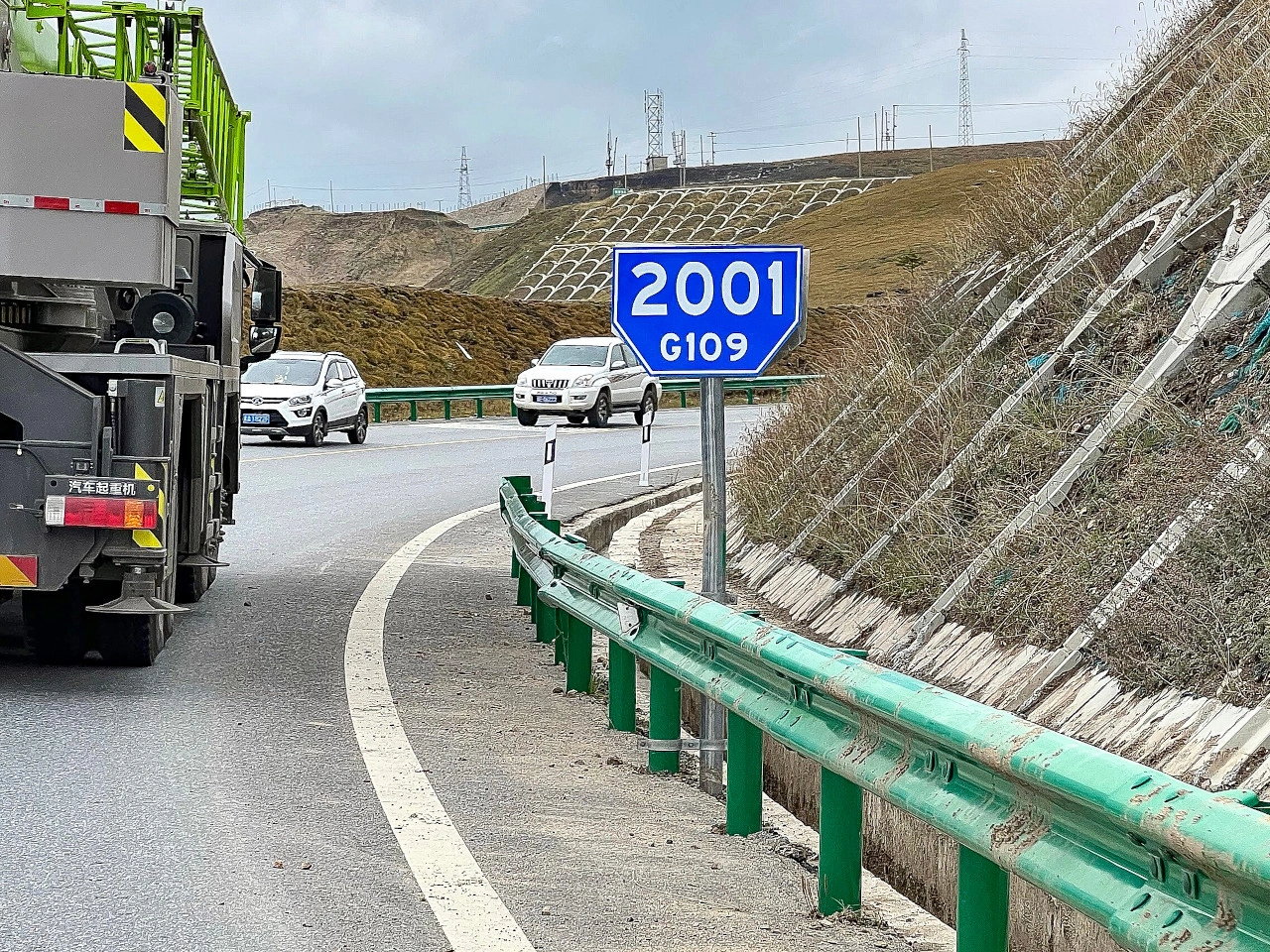
Wikimedia.org • N509FZ • CC BY-SA
What does a roadside location marker tell you in mainland China?
Where used, a roadside reference marker gives a measured position along a particular road, usually as a kilometre or other chainage reference. Designs and units are determined by the local road authority; the number is not automatically a distance to the next destination.
🔗 jtgl.beijing.gov.cn • Beijing Traffic Police — full Road Traffic Safety Law, 2021 amended text
🔗 samr.gov.cn • SAMR — full implementing Regulations, 2017 amended text
🔗 szjj.sz.gov.cn • Shenzhen Traffic Police — official sign categories and their functions
🔗 openstd.samr.gov.cn • SAMR — current GB 5768.2-2022 status, not the full standard
🔗 std.sacinfo.org.cn • SAC — published first sign-standard amendment, effective 1 January 2026
How can a location marker help in an emergency in mainland China?
If you can see a marker safely, give the emergency operator the route number or road name, travel direction and marker reading. Additional landmarks, exits and GPS position can help. Do not leave a safe place or enter traffic to read a post.
🔗 jtgl.beijing.gov.cn • Beijing Traffic Police — full Road Traffic Safety Law, 2021 amended text
🔗 samr.gov.cn • SAMR — full implementing Regulations, 2017 amended text
🔗 szjj.sz.gov.cn • Shenzhen Traffic Police — official sign categories and their functions
🔗 openstd.samr.gov.cn • SAMR — current GB 5768.2-2022 status, not the full standard
🔗 std.sacinfo.org.cn • SAC — published first sign-standard amendment, effective 1 January 2026
Does a location marker set a speed limit or permit stopping in mainland China?
No. A location marker is for orientation and road management; it does not itself set a speed limit, change priority or permit parking. Follow the actual traffic signs and stop only where the law and safety allow.
🔗 jtgl.beijing.gov.cn • Beijing Traffic Police — full Road Traffic Safety Law, 2021 amended text
🔗 samr.gov.cn • SAMR — full implementing Regulations, 2017 amended text
🔗 szjj.sz.gov.cn • Shenzhen Traffic Police — official sign categories and their functions
🔗 openstd.samr.gov.cn • SAMR — current GB 5768.2-2022 status, not the full standard
🔗 std.sacinfo.org.cn • SAC — published first sign-standard amendment, effective 1 January 2026
37. Traffic mirror
A traffic mirror is a convex mirror installed near an intersection, driveway, bend or other location with restricted visibility. Its curved surface provides a wider view of approaching road users than an ordinary flat mirror.
A traffic mirror is only a visibility aid. It may distort distance, speed and direction and may be affected by darkness, weather, dirt or damage. Drivers must continue to observe the road directly, obey all priority rules and proceed only when it is safe.
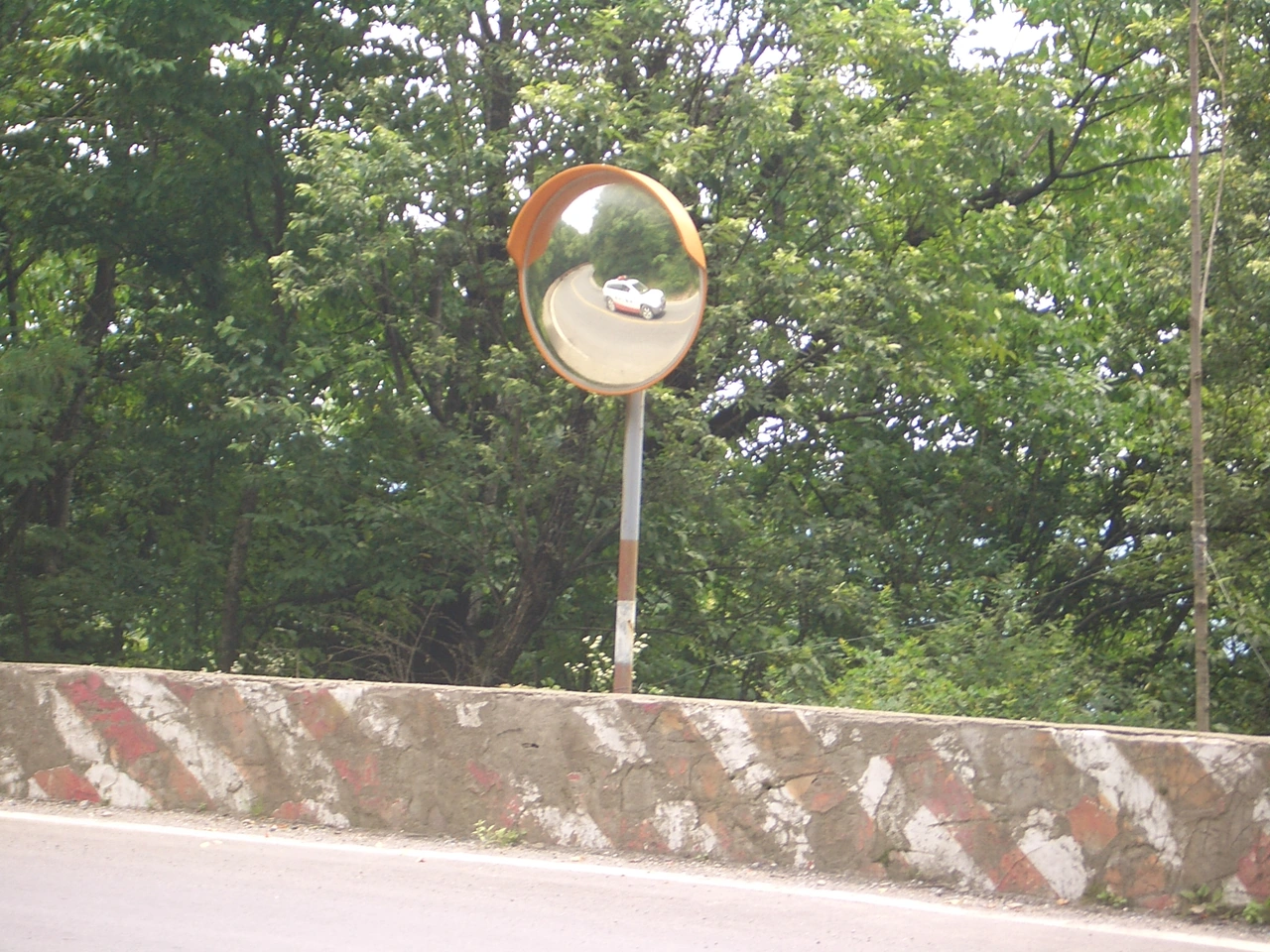
Wikimedia.org • Vmenkov • CC BY-SA
What is a traffic mirror?
A traffic mirror is a roadside visibility aid that can help users see around a blind corner or obstruction. It gives an indirect view, which may be restricted or distorted; it does not replace checking whether it is safe to proceed.
🔗 monmouthshire.gov.uk • Monmouthshire Council, roadside visibility mirrors
🔗 devon.gov.uk • Devon County Council, mirrors on the highway
Does a traffic mirror show an exact image?
No. The reflected image can be distorted, and glare, bad weather or dirt can restrict the view. Judging an approaching vehicle’s speed from a mirror can be difficult. Do not rely on the mirror alone.
🔗 monmouthshire.gov.uk • Monmouthshire Council, roadside visibility mirrors
🔗 devon.gov.uk • Devon County Council, mirrors on the highway
Does seeing an empty mirror mean the road is clear?
No. Another road user may be outside the reflected area, hidden by glare or too small to notice. Always check the road directly before proceeding.
🔗 monmouthshire.gov.uk • Monmouthshire Council, roadside visibility mirrors
🔗 devon.gov.uk • Devon County Council, mirrors on the highway
38. Parking
Parking means leaving a vehicle stationary at a place for a period of time rather than stopping only briefly because of traffic conditions or another immediate necessity. Many countries distinguish parking from a short stop made to pick up or drop off passengers or to load or unload goods, although the exact legal definition varies.
Parking may be permitted, restricted, reserved, time-limited or prohibited by traffic signs, road markings, parking zones and local regulations. Drivers must park without creating a danger or unnecessary obstruction and must comply with any conditions concerning payment, permits, vehicle categories or maximum parking duration.
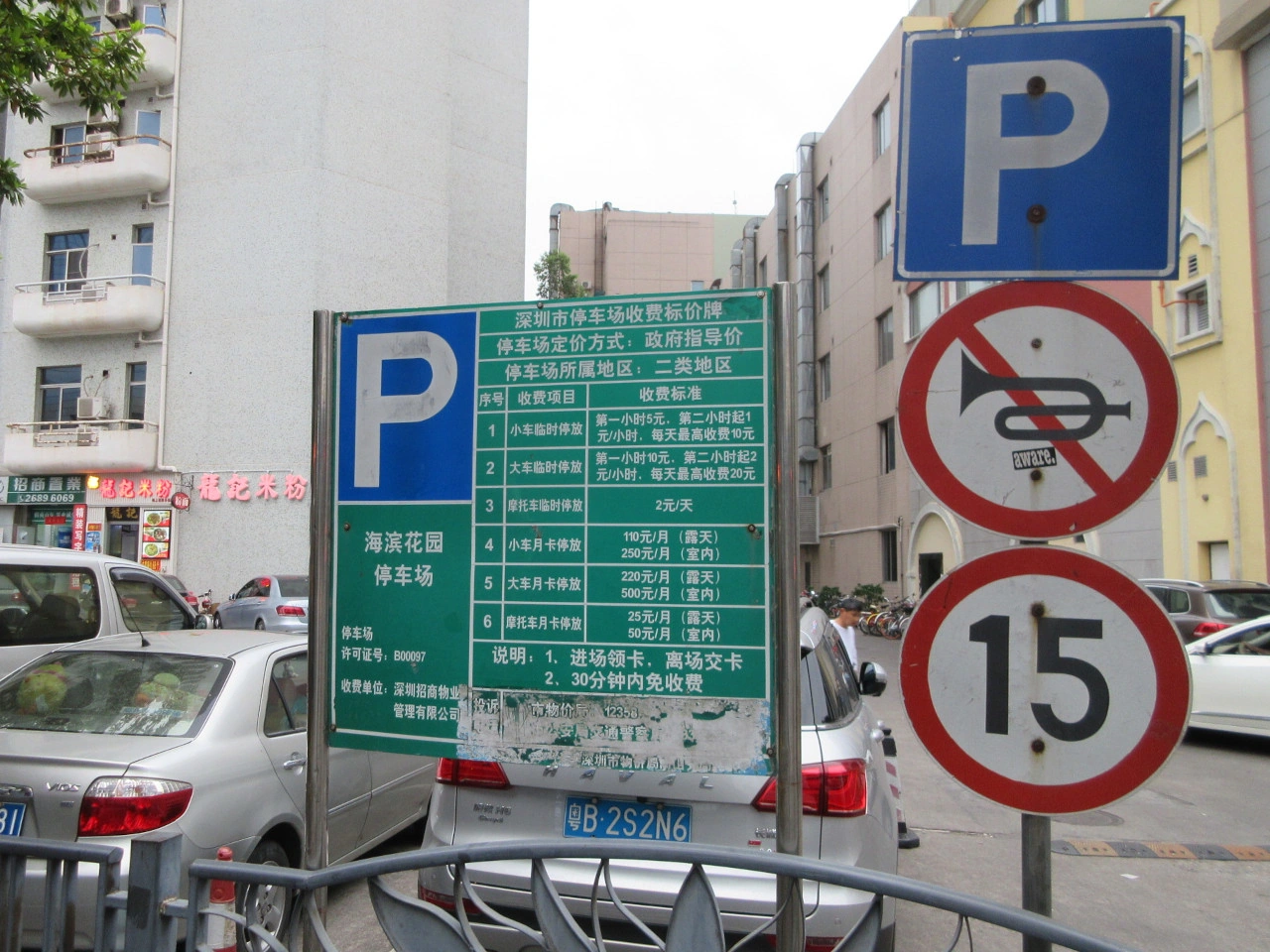
Wikimedia.org • Wiaauquaiu • CC BY-SA
May you leave the car during a lawful temporary roadside stop in mainland China?
No. The driver must remain with it, stay close to the right edge and leave immediately after boarding or loading finishes.
May passengers open the doors before a temporarily stopping car is stationary in mainland China?
No. Wait until it has fully stopped; opening doors must not obstruct vehicles or pedestrians.
Must a car fit completely inside a Beijing on-street parking bay?
Yes. Park in the direction of traffic, without any part of the vehicle extending beyond the bay.
39. No parking
No parking indicates that vehicles may not be left parked at the location or along the section of road covered by the restriction. Depending on local law, a driver may still be allowed to stop briefly to pick up or drop off passengers or to load or unload goods, provided stopping itself is not prohibited.
A no-parking restriction may apply continuously or only during specified times, days, vehicle categories or sections of road. Its exact extent and exceptions are determined by the traffic sign, supplementary panels, road markings and local traffic regulations.
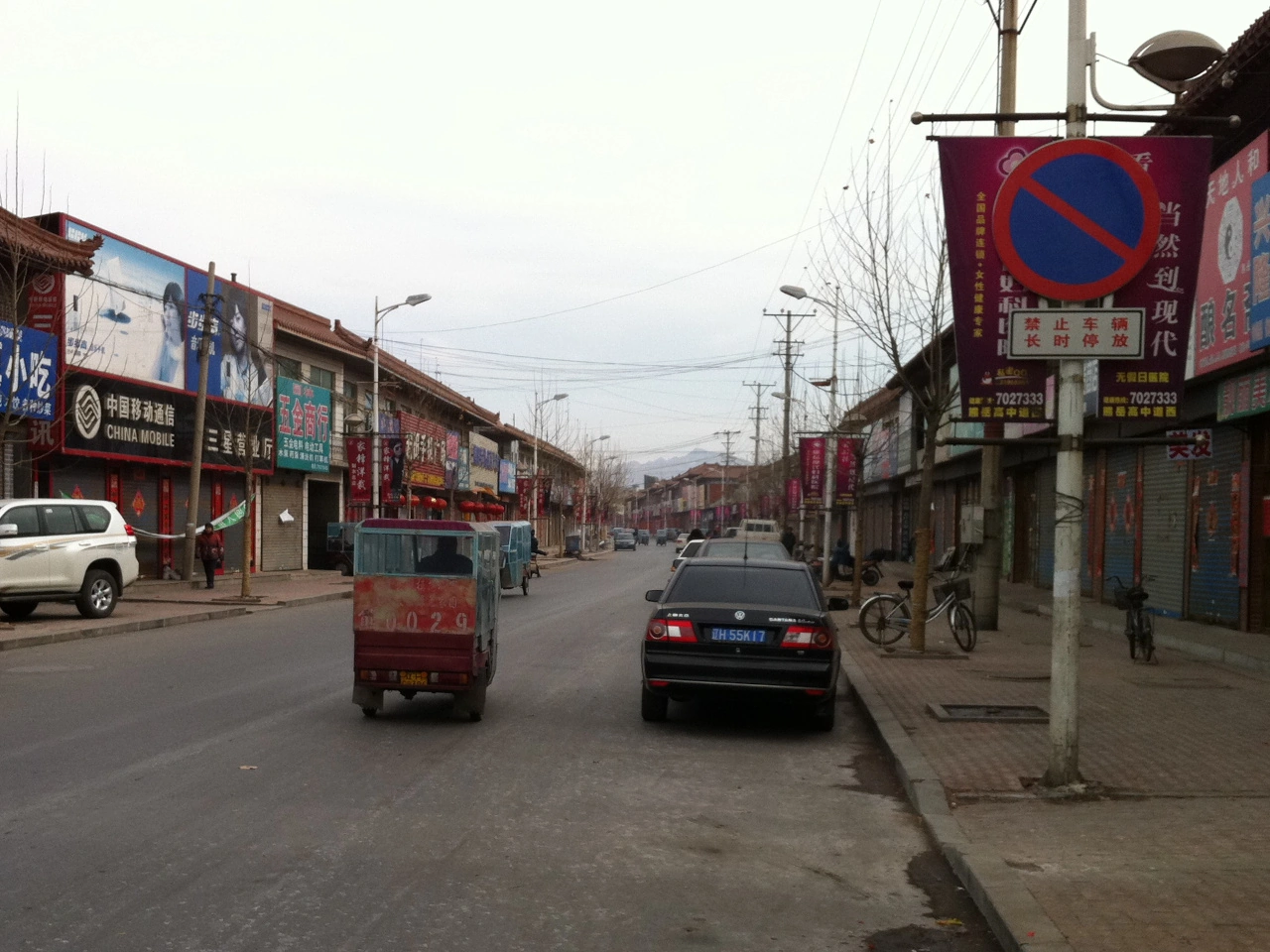
Wikimedia.org • Matthew Summerton • CC BY-SA
Is pavement parking generally permitted for cars in mainland China?
No. The law prohibits it except in parking bays lawfully marked under its provisions.
🔗 jtgl.beijing.gov.cn • China, Road Traffic Safety Law, 2021 amendment, article 56
40. No stopping
No stopping means that vehicles are not permitted to stop voluntarily at the indicated location, even briefly for picking up or dropping off passengers or loading or unloading goods. It is a stricter restriction than a no-parking rule.
A no-stopping restriction may be indicated by a traffic sign, road marking or local traffic regulation. Drivers should continue to a place where stopping is permitted unless they are forced to stop by traffic conditions, an emergency or another legal requirement.
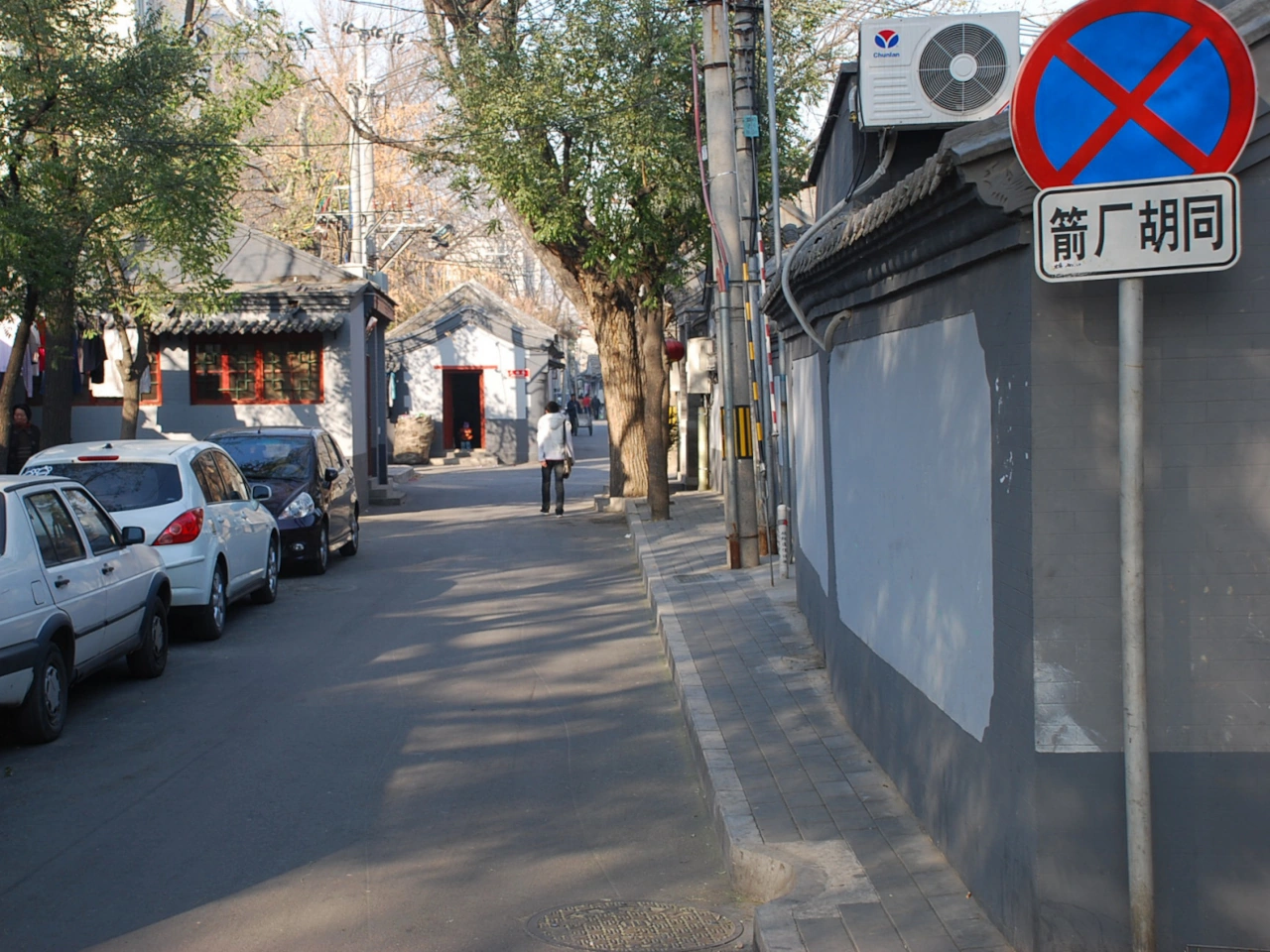
Wikimedia.org • 高晶 • CC0
How close to an intersection may you make a voluntary temporary stop in mainland China?
Do not stop at the intersection or within 50 metres of it.
Can you make a temporary stop on a mainland Chinese pedestrian crossing?
No. Article 63 prohibits stopping on pedestrian crossings and roadwork sections.
What clearance normally applies around a mainland Chinese bus stop?
Keep 30 metres clear, except when using the relevant facility as permitted by Article 63.
Can you temporarily stop beside a fire hydrant in mainland China?
Keep 30 metres clear, except for vehicles using the relevant facility under the statutory exception.
41. Disabled parking
Disabled parking refers to parking spaces and parking privileges reserved for people with disabilities who meet the applicable eligibility requirements. Reserved spaces are normally identified by the international wheelchair symbol and are positioned to provide easier access to nearby facilities.
Use of a disabled parking space generally requires a valid disabled parking permit or card. The permit normally belongs to the eligible person rather than to a particular vehicle and may only be used when that person is driving or travelling in the vehicle.
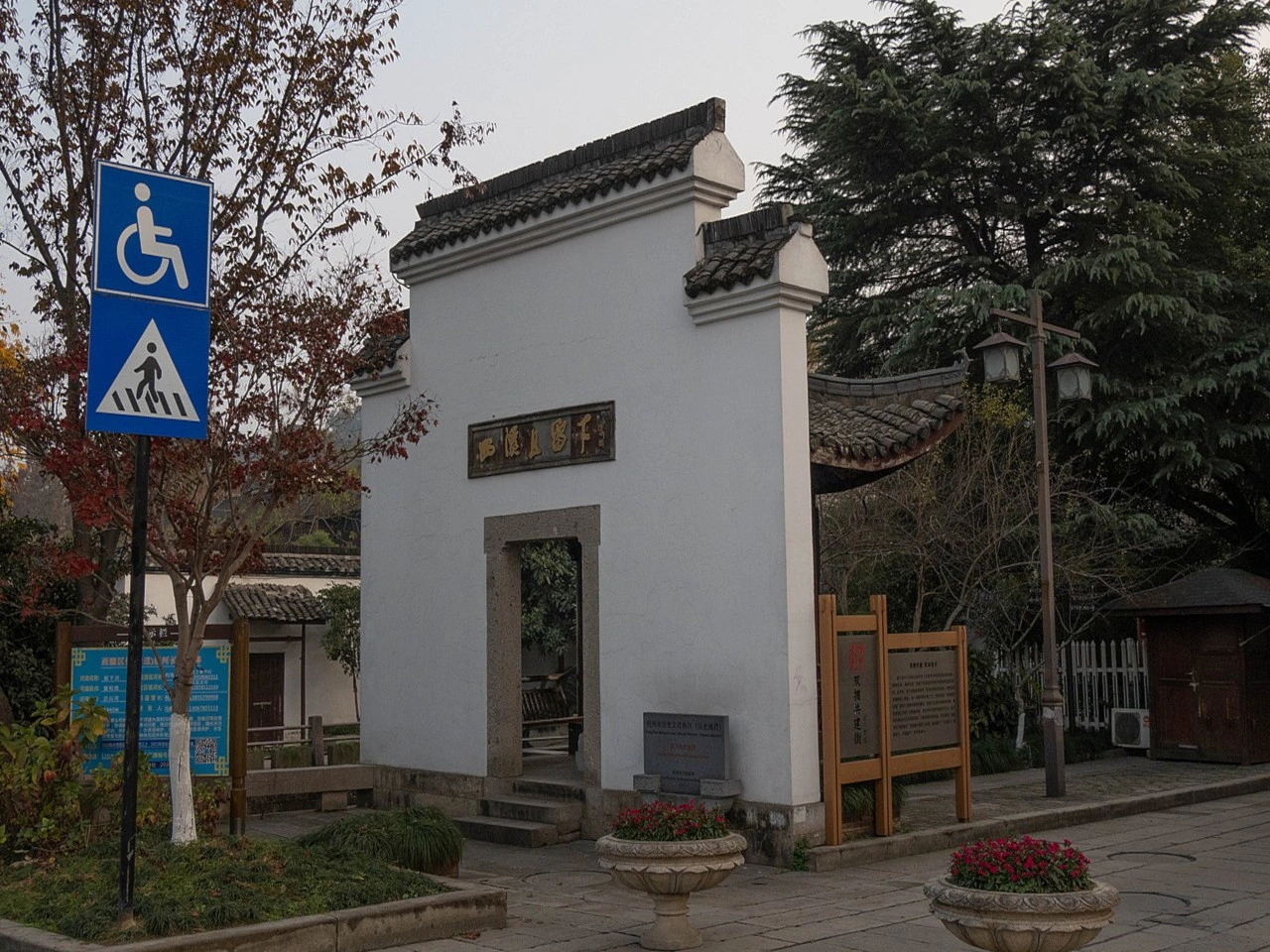
Wikimedia.org • Siyuwj • CC BY-SA
Who may use a disabled parking space?
Disabled parking spaces are intended for eligible people who hold a valid disabled parking permit or card. The exact eligibility requirements and permit system depend on the country.
🔗 epan.gov.gr • Greek Government, Blue Disability Parking Card; Greek example
🔗 europa.eu • Your Europe, disability parking in Hungary; Hungarian example
Does a disabled parking permit always provide free parking?
No. A permit may provide access to reserved spaces or exemptions from certain parking restrictions, but rules concerning parking charges and time limits vary between countries and local authorities.
🔗 epan.gov.gr • Greek Government, Blue Disability Parking Card; Greek example
🔗 europa.eu • Your Europe, disability parking in Hungary; Hungarian example
42. Reversing
Reversing means driving a vehicle backwards. It is commonly used when parking, leaving a confined space or repositioning a vehicle where forward movement is not practical.
Before reversing, the driver should check mirrors and blind spots, look carefully around the vehicle and make sure the area behind is clear. Reversing should be performed slowly and only for as long as necessary because visibility behind the vehicle is often limited.

Wikimedia.org • Kārlis Dambrāns • CC BY
What must Chinese drivers check before reversing?
Check behind the vehicle and reverse only after confirming it is safe.
🔗 xzfg.moj.gov.cn • Mainland China — Regulation 50, observation and prohibited locations
🔗 jtgl.beijing.gov.cn • Beijing Traffic Police — full Road Traffic Safety Law, 2021 amended text
🔗 samr.gov.cn • SAMR — full implementing Regulations, 2017 amended text
Can you reverse on Chinese one-way roads?
No. Reversing is prohibited on one-way roads.
🔗 xzfg.moj.gov.cn • Mainland China — Regulation 50, observation and prohibited locations
🔗 jtgl.beijing.gov.cn • Beijing Traffic Police — full Road Traffic Safety Law, 2021 amended text
🔗 samr.gov.cn • SAMR — full implementing Regulations, 2017 amended text
43. U-turn
A U-turn is a driving manoeuvre in which a vehicle turns around to travel in the opposite direction. It normally involves crossing part of the roadway and re-entering traffic facing the direction from which the vehicle came.
Before making a U-turn, the driver should check surrounding traffic, pedestrians and cyclists, signal when required and make sure there is enough visibility and space to complete the manoeuvre safely. U-turns may be prohibited by traffic signs or on particular types of roads.
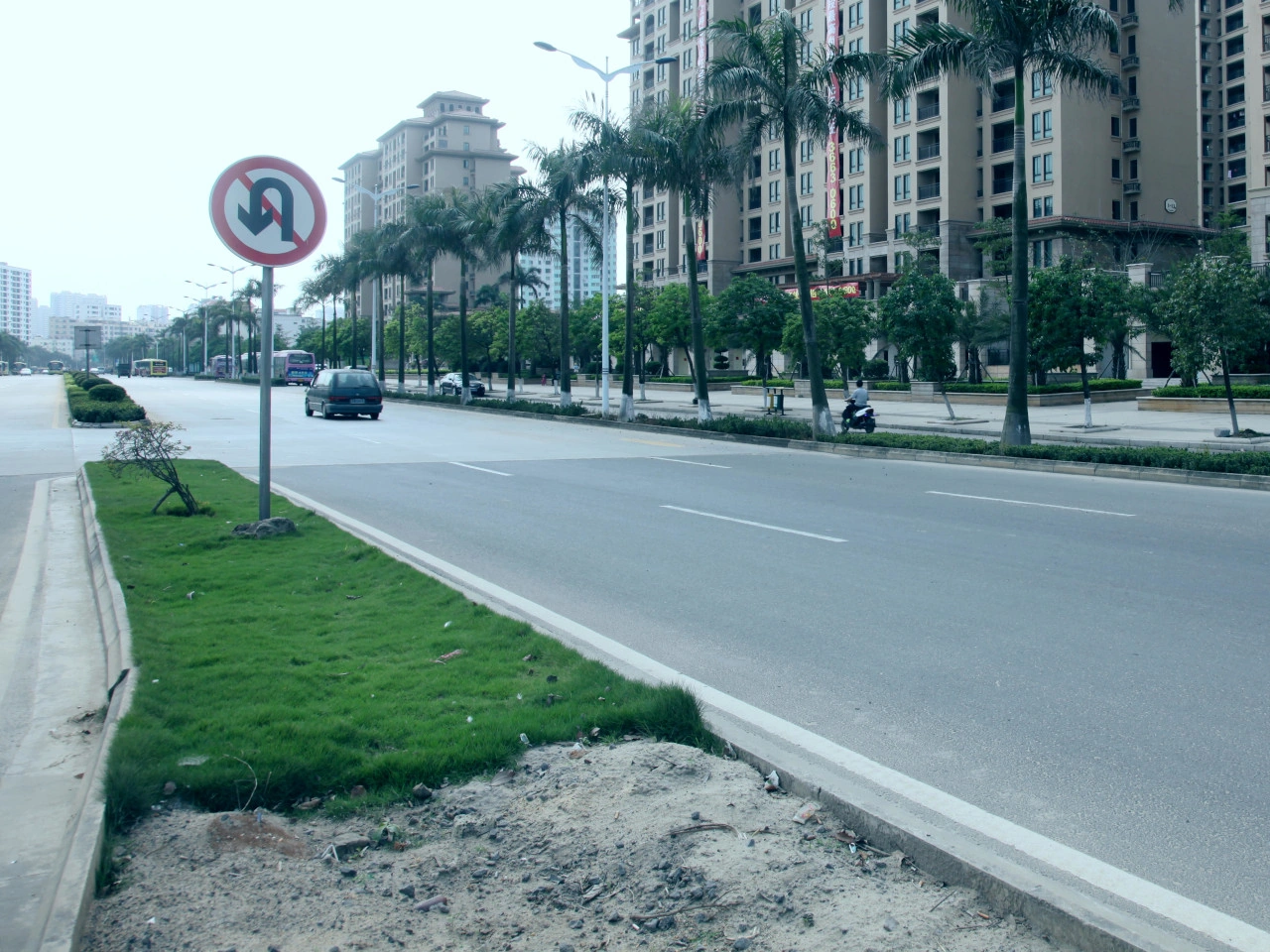
Wikimedia.org • 川号子 • CC BY
Does a Chinese No Left Turn sign restrict U-turns?
Yes. U-turns are prohibited where signs or markings prohibit left turns or U-turns.
🔗 xzfg.moj.gov.cn • Mainland China — Regulation 49; no-left-turn also prohibits U-turn
🔗 jtgl.beijing.gov.cn • Beijing Traffic Police — full Road Traffic Safety Law, 2021 amended text
🔗 samr.gov.cn • SAMR — full implementing Regulations, 2017 amended text
Can you U-turn on Chinese pedestrian crossings?
No. U-turns are prohibited there.
🔗 xzfg.moj.gov.cn • Mainland China — Regulation 49; no-left-turn also prohibits U-turn
🔗 jtgl.beijing.gov.cn • Beijing Traffic Police — full Road Traffic Safety Law, 2021 amended text
🔗 samr.gov.cn • SAMR — full implementing Regulations, 2017 amended text
44. Uncontrolled crossroad
An uncontrolled crossroad is an intersection where traffic priority is not specifically regulated by traffic lights, an authorised person or signs assigning priority to particular approaches. Drivers must therefore determine who has priority using the default traffic rules that apply in that country.
The applicable rule varies between countries and may include priority from the right, priority from the left or another default right-of-way rule. Drivers should approach an uncontrolled crossroad carefully, observe traffic from every direction and never assume that a wider or busier road automatically has priority.
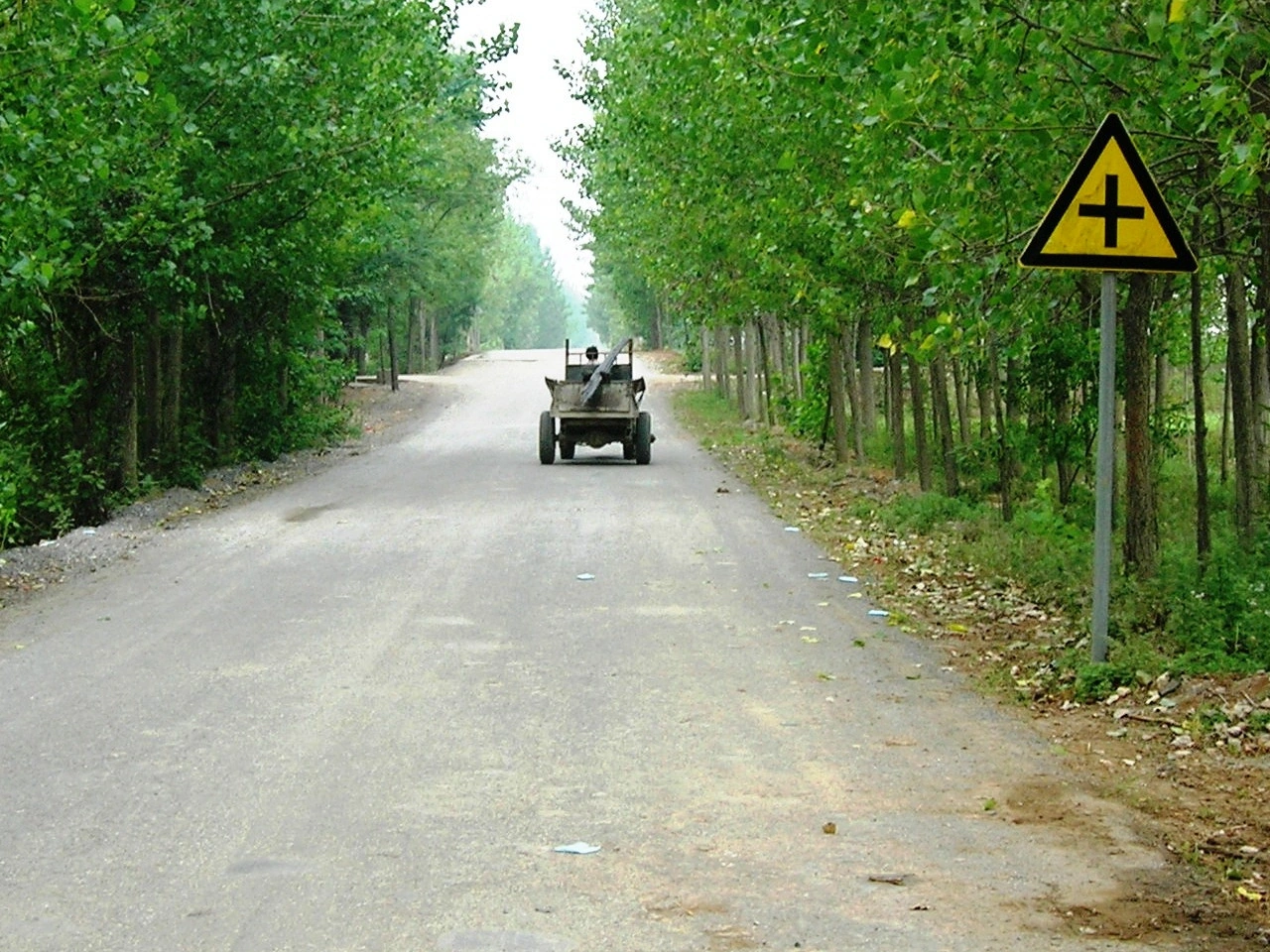
Wikimedia.org • luchangjiang~鲁昌江 • CC BY-SA
What is an uncontrolled crossroad?
An uncontrolled crossroad is an intersection where priority is not specifically assigned by traffic lights, an authorised person or priority signs. Drivers must use the default priority rules of the country.
Who has priority at an uncontrolled crossroad?
This depends on the local traffic law. Some countries use priority from the right, while others use different rules. Drivers should know the default intersection rule of the country in which they are driving.
What should you do if you are unsure who has priority?
Reduce speed and be prepared to stop. Never force your way through an intersection simply because the priority situation is unclear.
45. Provisional licence
A provisional licence allows a learner driver to practise driving on public roads before obtaining a full driving licence. The conditions vary between countries and may determine whether the learner must be accompanied by an approved supervisor, which vehicles may be driven, where and when driving is permitted and how long the licence remains valid. A provisional licence is normally subject to stricter rules than a full licence and is intended specifically for learning and gaining practical driving experience.
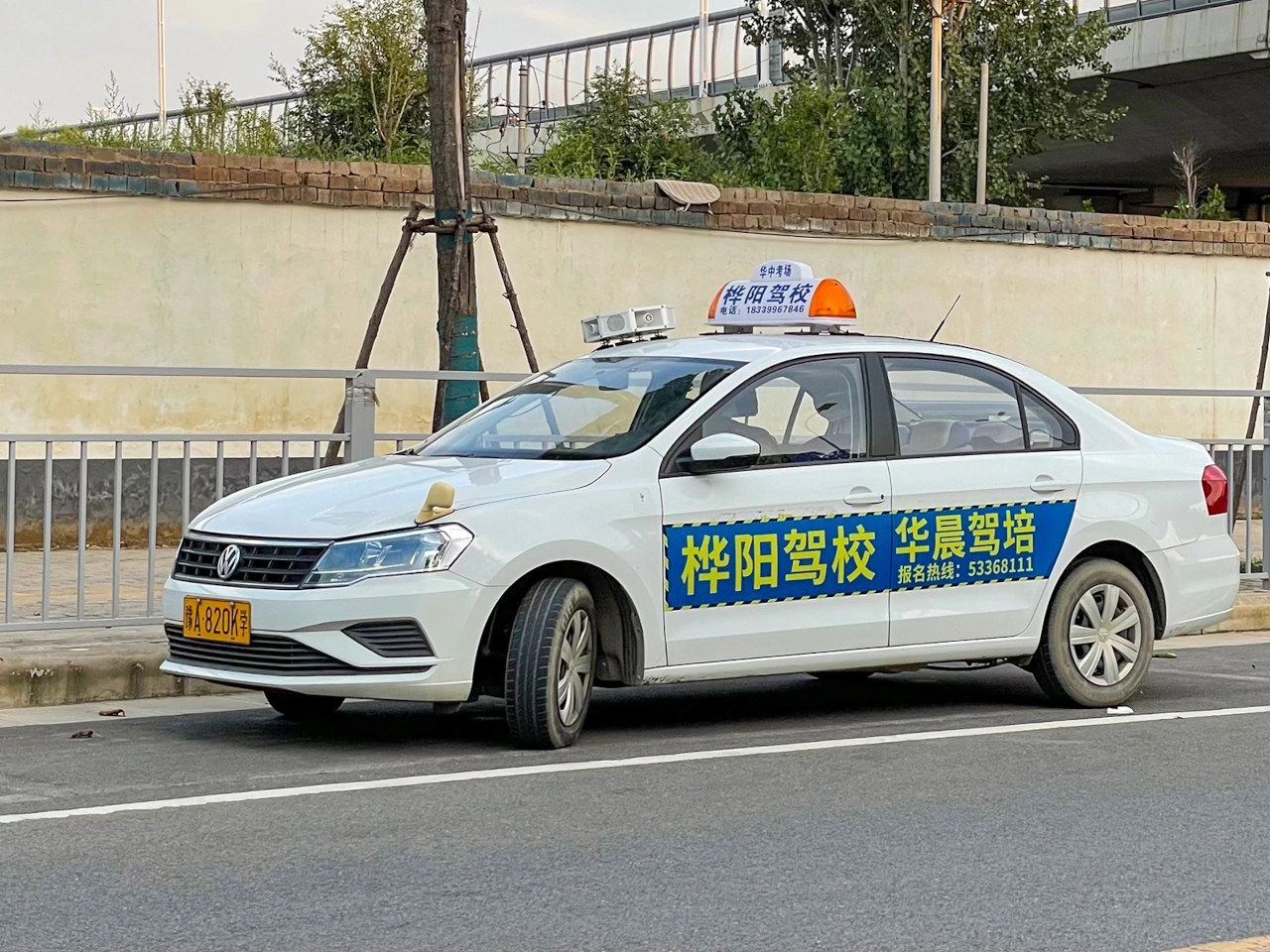
Wikimedia.org • WindmemoriesWindmemories • CC BY-SA
What is a provisional driving licence?
The meaning depends on the jurisdiction. In Great Britain and Flanders, a provisional licence can authorise learning under specified conditions. In the Australian Capital Territory, a provisional licence follows the learner stage and assessment. It is not a universal synonym for a learner licence.
🔗 vlaanderen.be • Flanders, obtaining a category B driving licence; learner provisional licences
🔗 gov.uk • GOV.UK, driving lessons and learning to drive; GB learner rules
Can you drive alone with a provisional licence?
Check the jurisdiction, licence stage and its conditions. In Flanders, some provisional licences require a registered supervisor, while another option permits independent practice after approved training. In Great Britain, car learners must follow the supervision rules. Other countries may use provisional for a later licensing stage.
🔗 vlaanderen.be • Flanders, obtaining a category B driving licence; learner provisional licences
🔗 gov.uk • GOV.UK, driving lessons and learning to drive; GB learner rules
How long is a provisional licence valid?
There is no universal validity period or renewal procedure. Check the issuing authority’s rules for the particular licence. For example, Flanders distinguishes 18-month and 36-month provisional learner licences; another jurisdiction may use provisional for a different stage altogether.
🔗 vlaanderen.be • Flanders, obtaining a category B driving licence; learner provisional licences
🔗 gov.uk • GOV.UK, driving lessons and learning to drive; GB learner rules
46. Emergency exit
An emergency exit is a marked escape route that allows road users to leave a tunnel or other enclosed traffic facility during a serious incident such as a fire, smoke development or another emergency. Emergency exits lead towards a safer area separated from the immediate danger.
In an emergency, occupants should leave their vehicle when evacuation is necessary and follow the emergency-exit signs and instructions. They should move away from the danger rather than remaining inside the tunnel or returning to their vehicle.
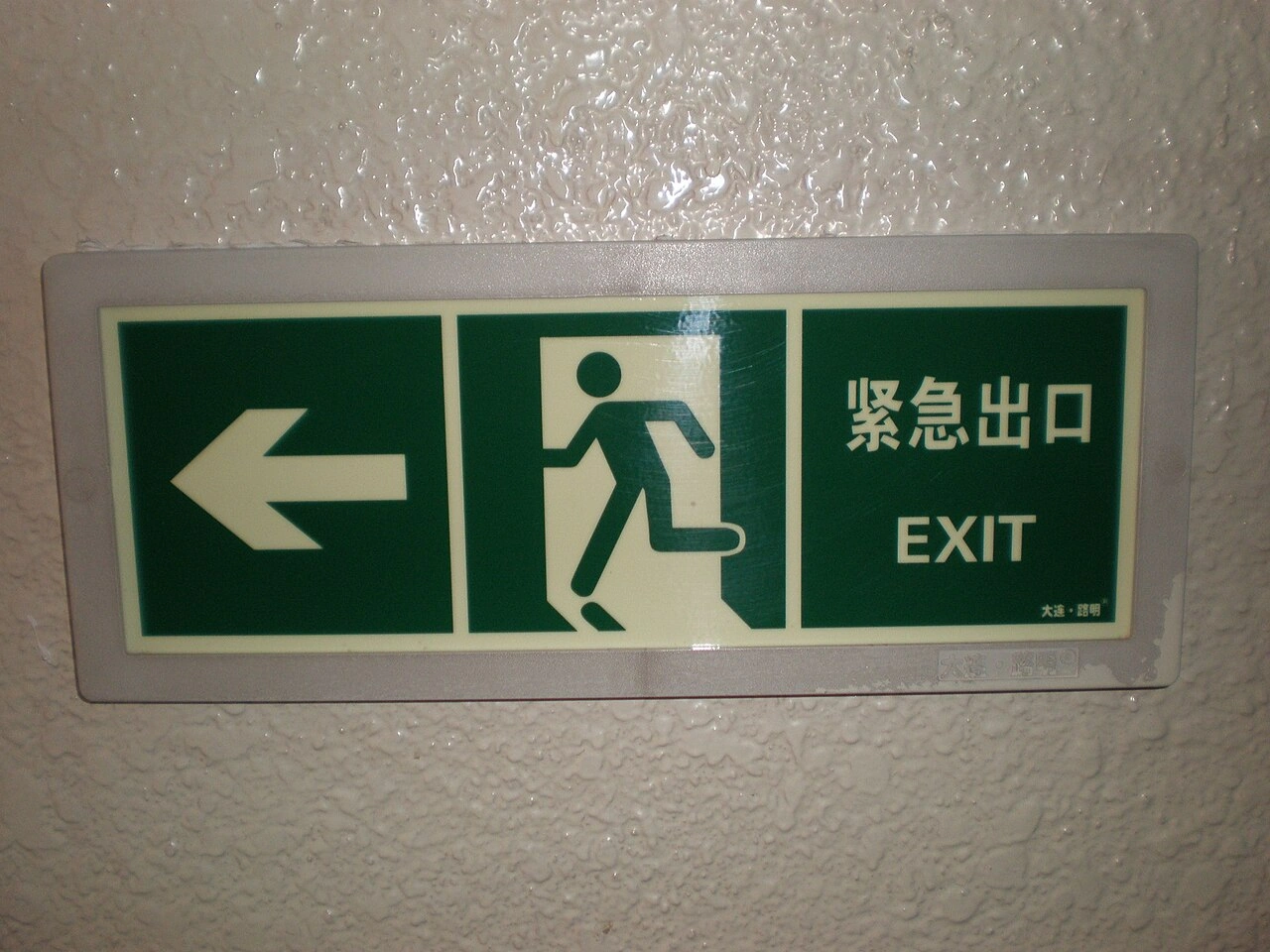
Wikimedia.org • BrokenSphere • CC BY-SA
Should you take your vehicle through an emergency exit?
No. Tunnel emergency exits are intended for people evacuating on foot. Leave the vehicle when necessary and follow the marked escape route towards safety.
🔗 crisiscenter.be • Belgian National Crisis Centre, tunnel evacuation on foot
🔗 merseytravel.gov.uk • Merseytravel, road-tunnel evacuation instructions
🔗 gov.uk • UK DfT, emergency-exit pedestrian signs and information symbols
47. Runaway truck ramp
A runaway truck ramp, also called an emergency escape lane, is a specially constructed lane designed to stop a vehicle that has lost effective braking, particularly a heavy vehicle descending a steep hill. The ramp may use an uphill gradient, deep gravel or another energy-absorbing surface to slow and stop the vehicle.
A driver who has lost braking ability should enter the escape ramp as early and safely as possible rather than trying to continue down the hill. Escape ramps are emergency facilities and must not be used for ordinary stopping, parking or turning.
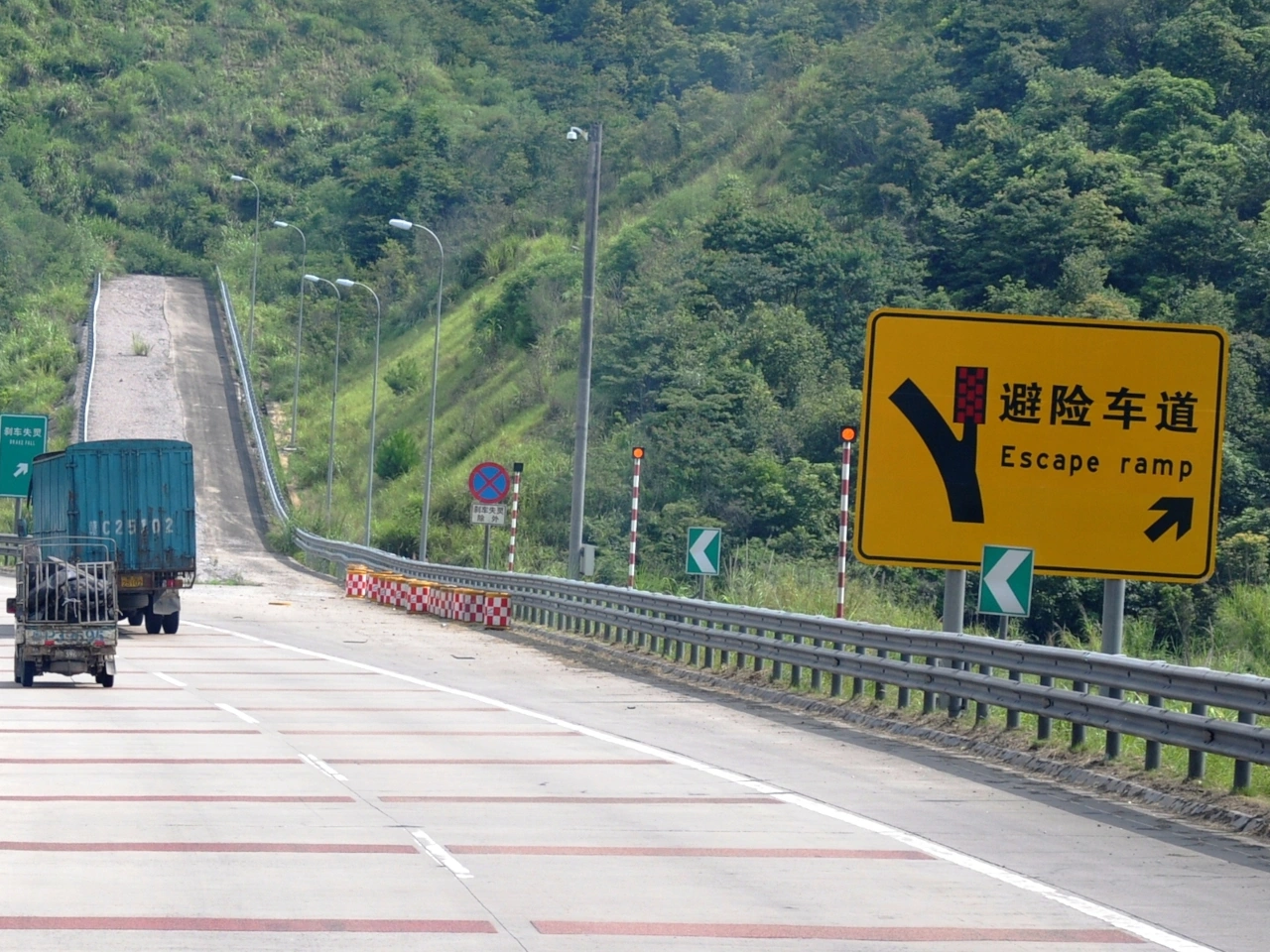
Wikimedia.org • Yuxuan1122 • CC BY-SA
Can you use a runaway truck ramp for normal stopping or parking?
No. An escape ramp is an emergency safety facility and should be kept clear for vehicles that have lost effective braking or control.
48. Horn
A horn is a sound-producing device used to warn other road users of danger or to attract their attention when necessary for safety. Most motor vehicles are equipped with an electric horn operated from the steering wheel. Traffic laws generally restrict unnecessary or excessive horn use, especially in built-up or residential areas. The horn should therefore be used as a warning device rather than as a way to express frustration or greet other road users.
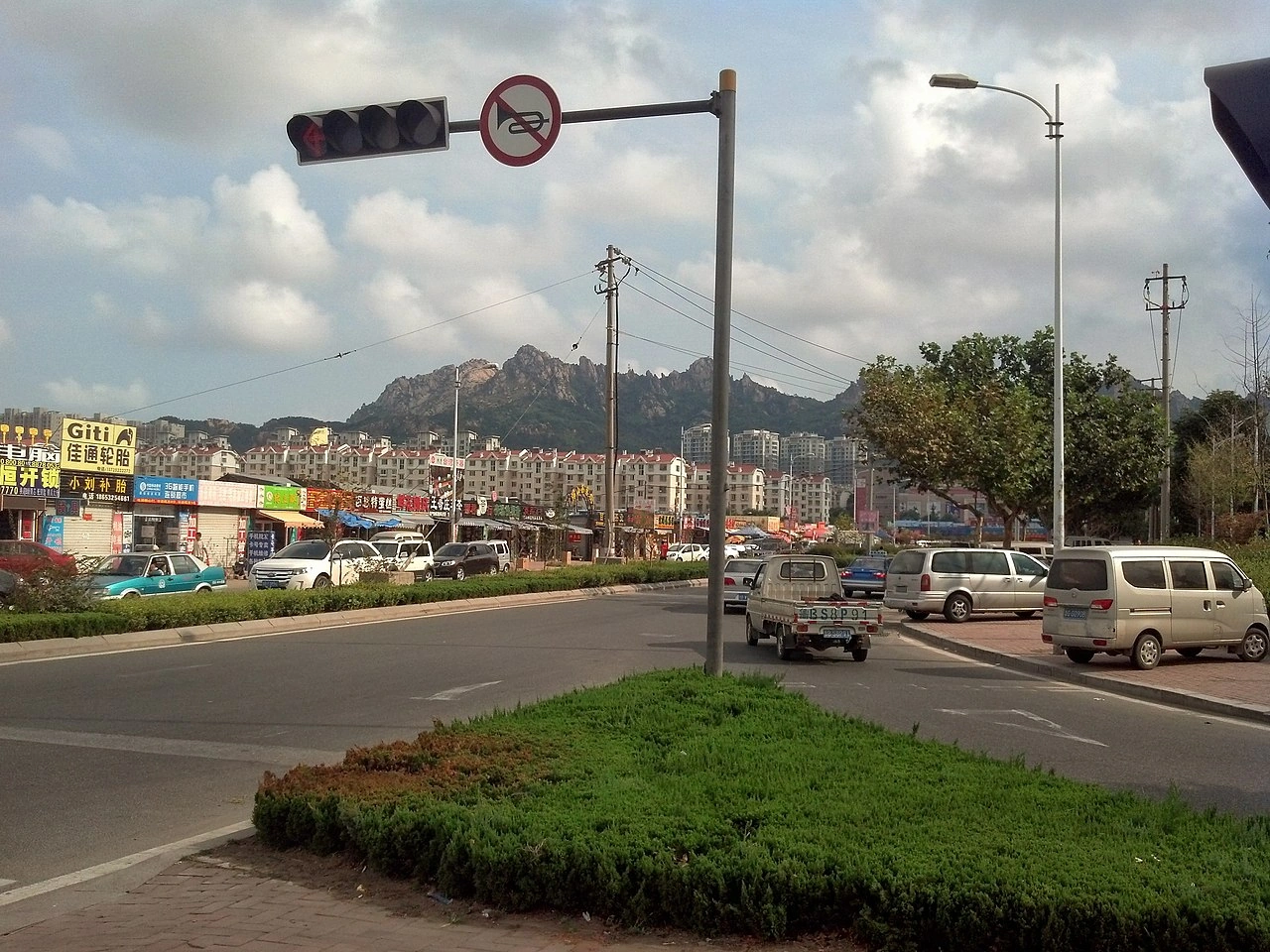
Wikimedia.org • Kobe Bryn • CC BY
What is a car horn?
A car horn is a sound-producing warning device used to alert other road users when their attention is needed for safety.
🔗 gov.uk • Great Britain Highway Code, Rule 112; national guidance example
When should you use the horn?
The horn should generally be used when a sound warning is necessary to help prevent danger or an accident. The exact circumstances in which horn use is permitted depend on local traffic laws.
🔗 gov.uk • Great Britain Highway Code, Rule 112; national guidance example
Can you use the horn to show annoyance?
Generally, no. A horn is intended as a safety warning device, and unnecessary or excessive use may be prohibited by local traffic rules.
🔗 gov.uk • Great Britain Highway Code, Rule 112; national guidance example
49. Axle weight limit
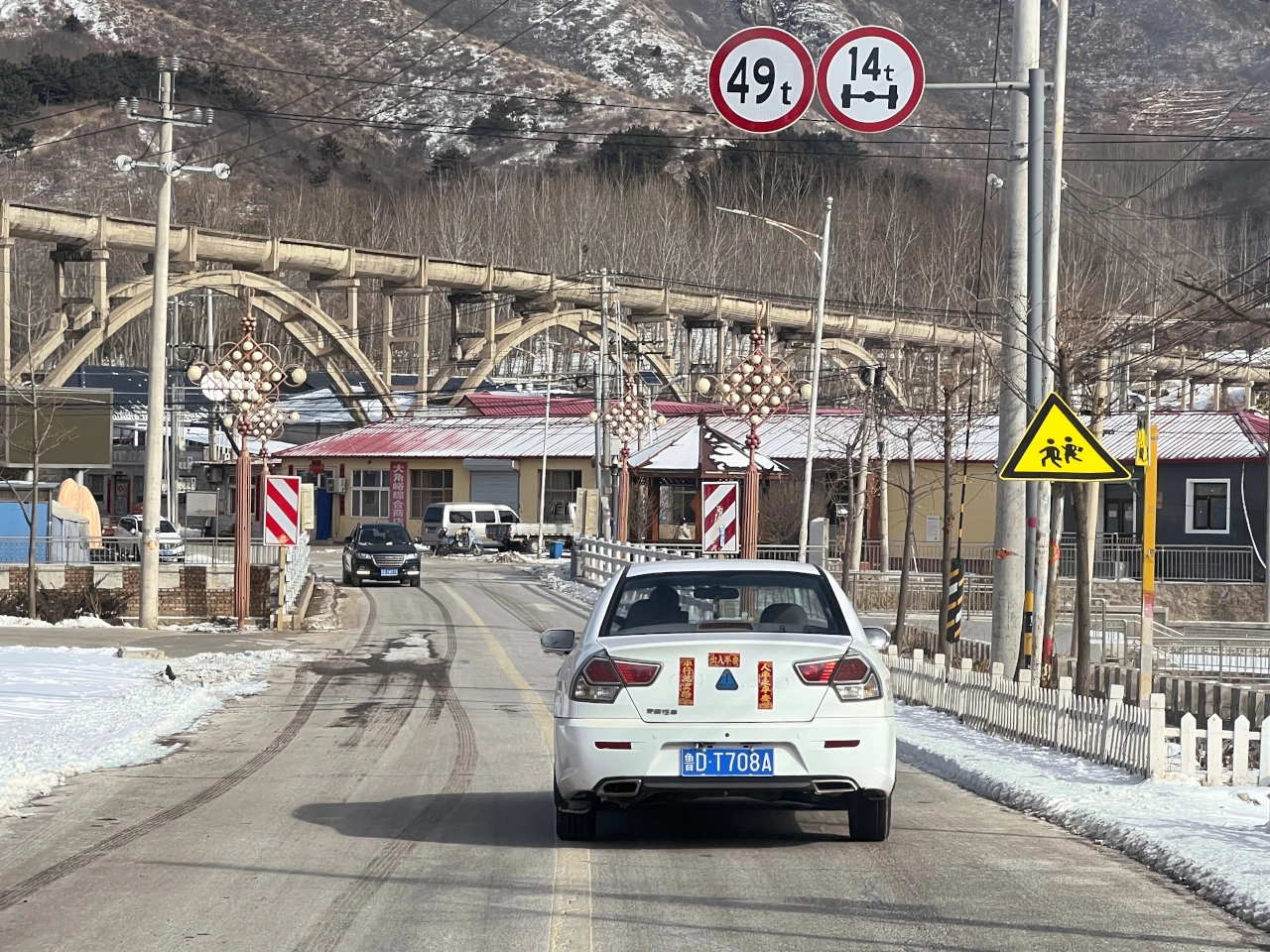
An axle weight limit is the maximum permitted weight or load carried by a single axle of a vehicle. It limits how much force an axle and its wheels may transmit to the road, independently of the vehicle's total weight.
Axle weight limits help protect bridges and road surfaces from excessive loads and contribute to safe vehicle operation. A vehicle can comply with an overall weight limit while still exceeding an axle limit if its load is distributed incorrectly.
Wikimedia.org • N509FZ • CC BY-SA
What does an axle weight limit mean?
An axle weight limit specifies the maximum permitted load carried by an individual axle or axle group. A vehicle exceeding the indicated axle load may not use the restricted road or structure.
Why are axle weight limits used?
They help prevent excessive stress on roads and structures such as bridges. They also ensure that vehicle loads are distributed safely between the axles.
50. Charging station
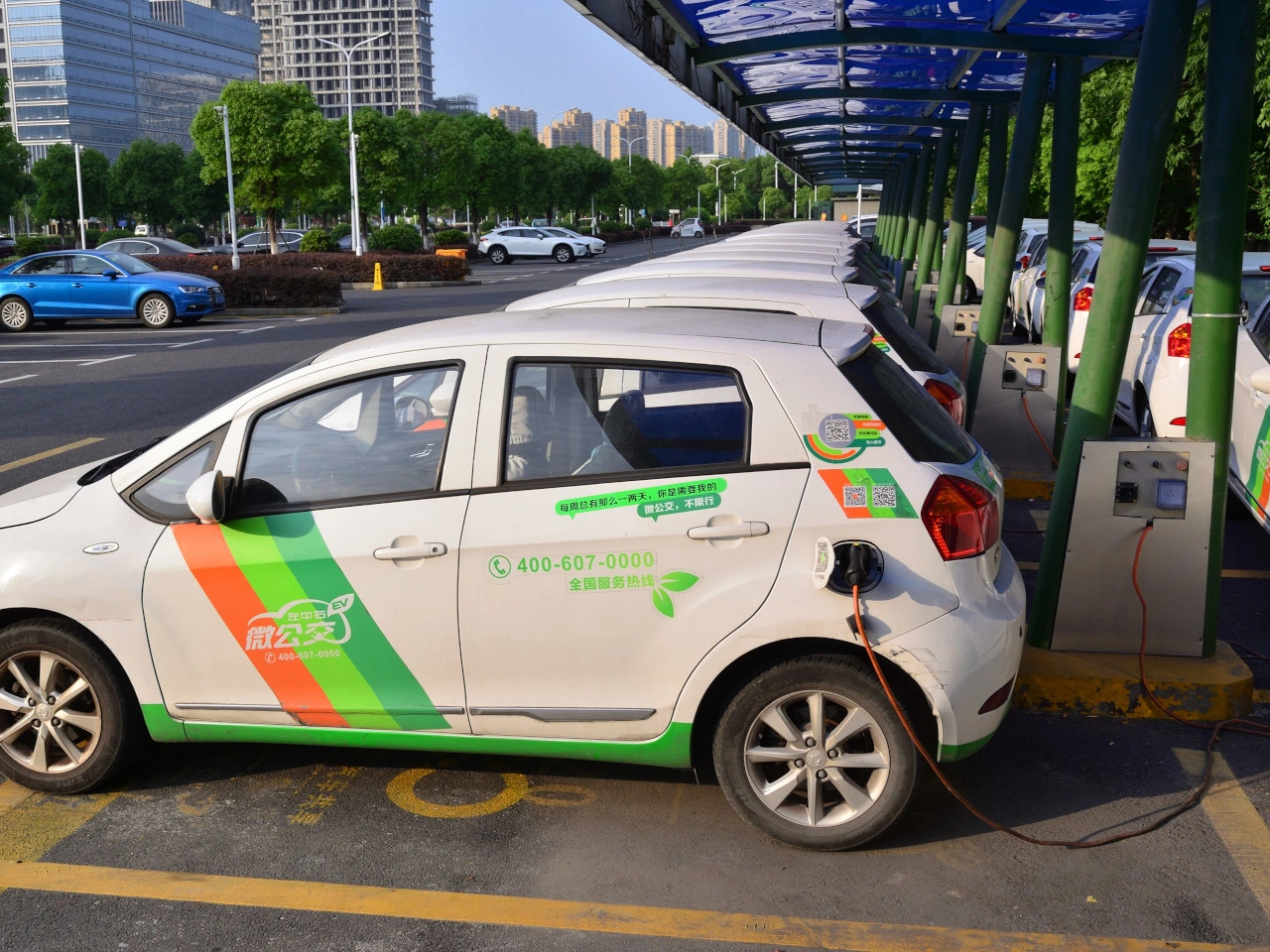
A charging station is a location equipped with one or more charging points where the battery of an electric or plug-in hybrid vehicle can be connected to an electricity supply and recharged. Charging stations may be located along public roads, in car parks, at service areas or on private property.
Charging spaces may be reserved for vehicles that are charging and can be subject to parking restrictions, time limits, payment requirements or other conditions. Drivers must follow the traffic signs, parking regulations and charging instructions applying at the location.
Wikimedia.org • Raysonho • CC0
What is a charging station?
A charging station is a location where electric vehicles can be connected to an electricity supply to recharge their batteries. A station may contain one or several individual charging points.
🔗 tfl.gov.uk • Transport for London, electric vehicles and charging points; London example
Who can use an electric-vehicle charging station?
Charging stations are intended for vehicles that can be externally charged, such as battery-electric vehicles and plug-in hybrid vehicles. The exact vehicle categories permitted may be indicated by local signs or operator conditions.
🔗 tfl.gov.uk • Transport for London, electric vehicles and charging points; London example
Can a charging station have a maximum parking time?
Yes. Traffic signs, parking regulations or charging conditions may establish a maximum duration to encourage drivers to move their vehicles and make the charger available to others.
🔗 tfl.gov.uk • Transport for London, electric vehicles and charging points; London example