


Advisory speedGreece
 Traffic rules
 Greece
1. Advisory speed
An advisory speed is a recommended speed for a particular road section or hazard rather than a legally imposed maximum speed. It may be shown near bends, junctions, steep gradients, roadworks or other locations where a lower speed can help drivers negotiate the road safely.
Drivers should treat an advisory speed as guidance for safe driving conditions and should travel even more slowly when weather, visibility, traffic or road conditions require it. A separate legally binding speed limit must still be obeyed.
What does an advisory-speed sign mean in Greece?
The Road Traffic Code defines a recommended-speed information sign. Official Greek wording is Συνιστώμενη ταχύτητα. The recommendation is distinct from a maximum-speed restriction or compulsory minimum.
🔗 aade.gr • Greece, Road Traffic Code 5209/2025 — articles 24, 114(1); signs Article 7
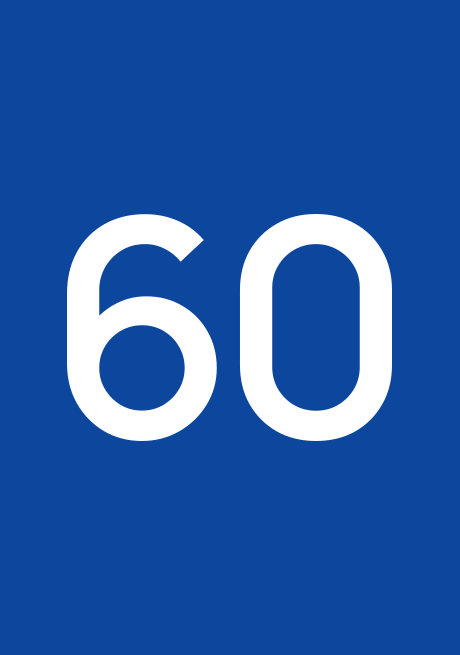 Advisory speed limit.
English • Traffic sign Π-64 • Advisory speed: 60 km/h.
Ελληνικά • Π-64 • Συνιστώμενη ταχύτητα: 60 χιλιόμετρα την ώρα.
Sources
🔗 Commons.wikimedia.org (Gigillo83 • CC BY-SA 3.0)
🔗 Aade.gr • Ν. 5209/2025 • ΚΟΚ • άρθρο 7 παρ. 4 περ. π
🔗 Aade.gr • Παράρτημα Α΄ • Π-64
SVG source: Gigillo83 • CC BY-SA 3.0 • Original revision 2022-01-29. Wikimedia original unmodified.
Can an advisory speed override a lower legal limit in Greece?
No. A recommendation does not authorise exceeding an applicable legal maximum, including a lower vehicle-specific limit. Follow the binding restriction and use a still lower speed if the hazard or conditions require it.
🔗 aade.gr • Greece, Road Traffic Code 5209/2025 — articles 24, 114(1); signs Article 7
Must I maintain an advisory speed in poor conditions in Greece?
No. A recommendation is not a compulsory minimum or a guarantee that its number is safe in all conditions. Reduce speed for poor grip, restricted visibility, traffic or another hazard, and retain control of the vehicle.
🔗 aade.gr • Greece, Road Traffic Code 5209/2025 — articles 24, 114(1); signs Article 7

