


QuizTraffic signsItaly
Test your knowledge with our multiple-choice quiz. Learn from each answer and improve your understanding of the traffic rules and road signs of Italy.
 Traffic signs
 Traffic rules
 Italy
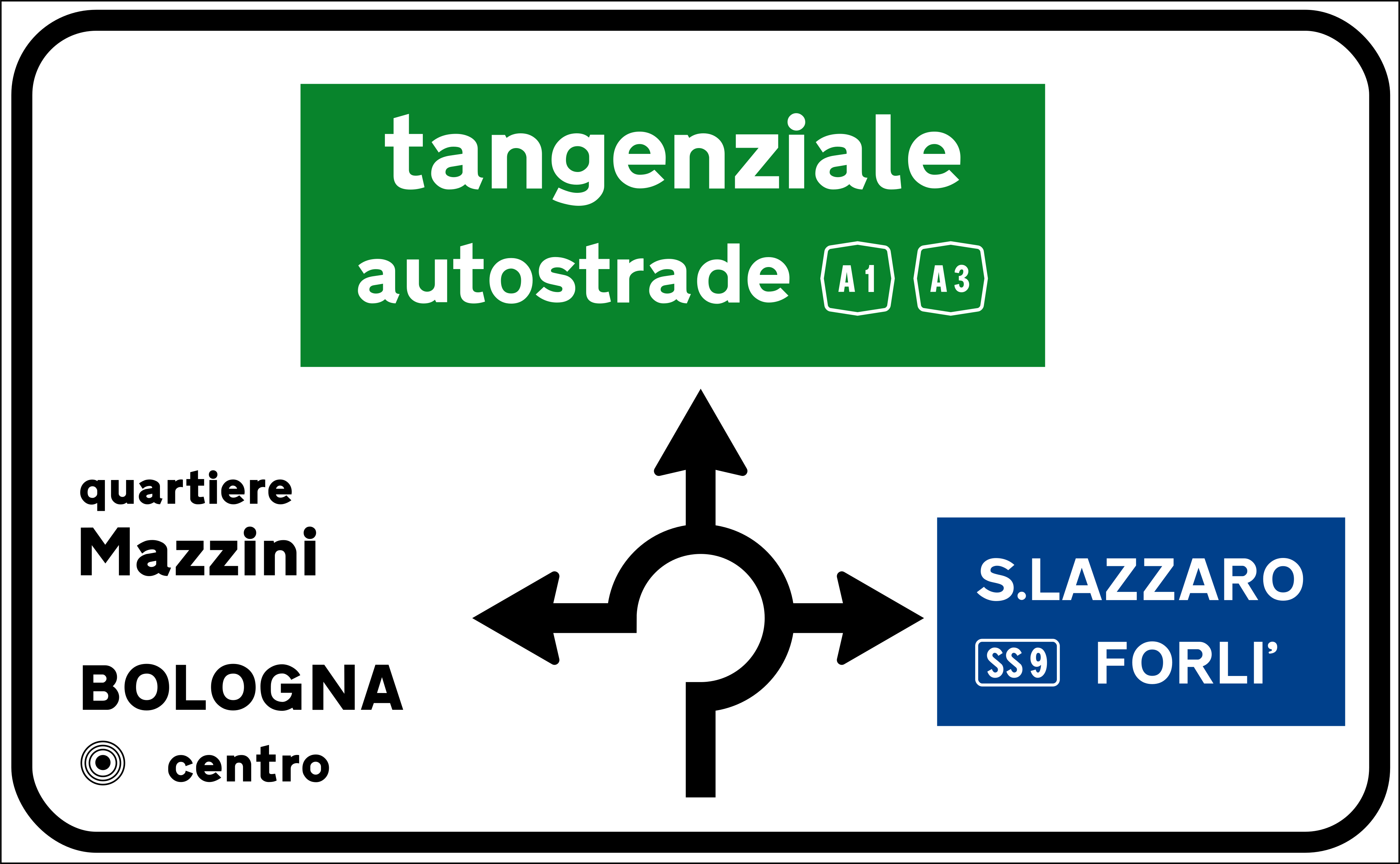
101. What does this traffic sign mean?
This traffic sign gives information about directions at a roundabout. The diagram shows the available exits and the destinations reached from them.
English • Advance junction sign — article 127 • Advance roundabout junction sign. Shows the roundabout layout and destinations reachable from its branches. The panels and lettering identify the destinations and associated roads.
Italiano • Preavviso di intersezione — art. 127 • Preavviso di intersezione con circolazione rotatoria. Rappresenta l’intersezione con circolazione rotatoria e le destinazioni raggiungibili dai vari rami. I riquadri e le iscrizioni indicano le destinazioni e le relative strade.
Sources
🔗 Commons.wikimedia.org
🔗 Normattiva.it • D.P.R. 495/1992 • testo vigente • art. 127, comma 2, 6, 13
Image via Commons.wikimedia.org
Original: Ministero dei Lavori Pubblici Vectorization: Arbalete • CC BY-SA 4.0 • Source revision 2023-06-01. Wikimedia original unmodified.

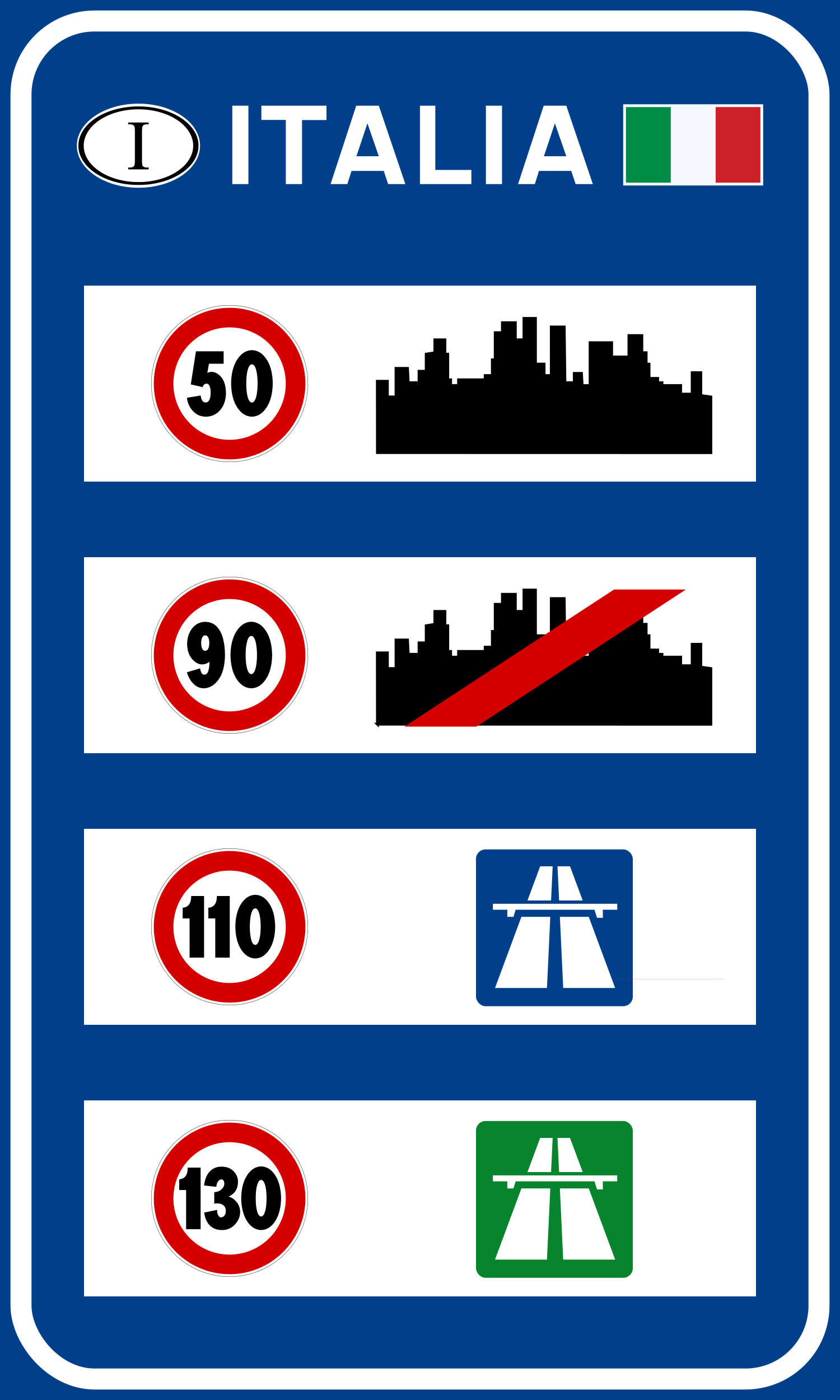
102. What does this traffic sign mean?
This traffic sign indicates the national speed limits. The applicable default maximum speeds depend on the road type, vehicle category and local traffic rules when no different speed limit is indicated.
English • Traffic sign II.352 • General speed limits. Shows Italy's general speed limits in this order: built-up areas, roads outside built-up areas, principal extra-urban roads and motorways. The sign does not override any lower applicable limits.
Italiano • Figura II.352 • Limiti di velocità generali. Riporta i limiti generali di velocità in Italia, nell’ordine: centri abitati, strade fuori dei centri abitati, strade extraurbane principali e autostrade. Il cartello non sostituisce gli eventuali limiti inferiori applicabili.
Sources
🔗 Commons.wikimedia.org (Gigillo83 • CC BY-SA 3.0)
🔗 Normattiva.it • D.P.R. 495/1992 • testo vigente • art. 135, comma 27
🔗 Gazzettaufficiale.it • Gazzetta Ufficiale • Figura II.352 • pagina 323
SVG source: Gigillo83 • CC BY-SA 3.0 • Original revision 2025-09-29. Wikimedia original unmodified.
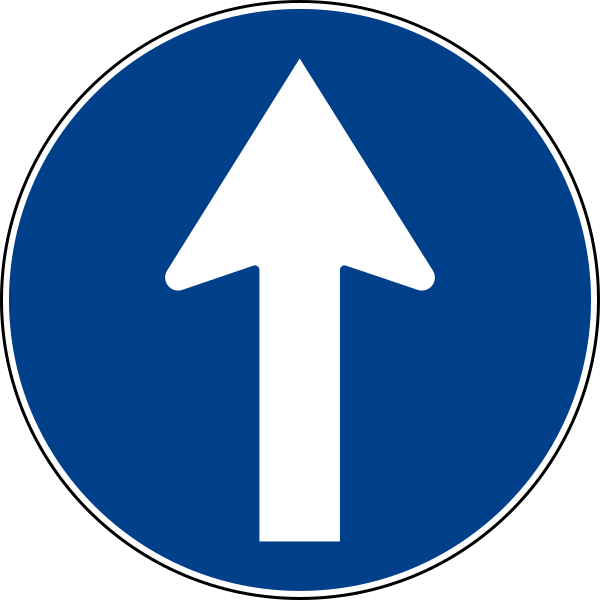
103. What does this traffic sign mean?
This traffic sign indicates that driving straight ahead is mandatory. Traffic must continue straight ahead and may not turn left or right at the location to which the sign applies.
English • Traffic sign II.80/a • Straight ahead only. Straight ahead is the only permitted direction.
Italiano • Figura II.80/a • Direzione obbligatoria diritto. Indica che l’unica direzione consentita è diritto.
Sources
🔗 Commons.wikimedia.org (F l a n k e r • CC BY-SA 3.0)
🔗 Normattiva.it • D.P.R. 495/1992 • testo vigente • art. 122, comma 2
🔗 Gazzettaufficiale.it • Gazzetta Ufficiale • Figura II.80/a • pagina 269
SVG source: F l a n k e r • CC BY-SA 3.0 • Original revision 2010-07-17. Wikimedia original unmodified.
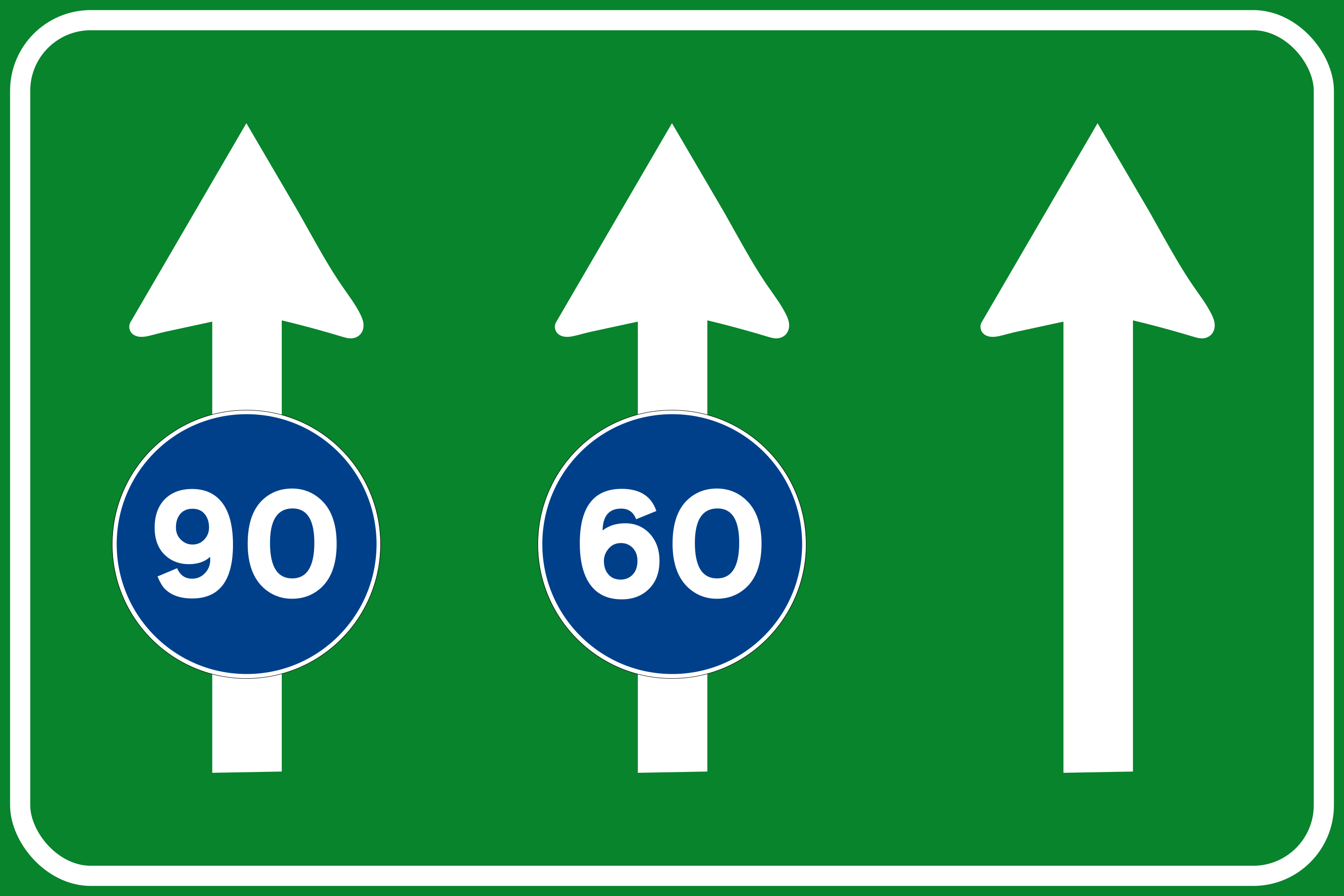
104. What does this traffic sign mean?
This traffic sign indicates the minimum speed for the indicated lane. Vehicles using that lane must comply with the displayed minimum speed according to the applicable traffic rules.
English • Traffic sign II.338 • Lane use. Shows compulsory minimum speeds for individual lanes. Vehicles unable to reach the indicated speed must use a lane further to the right.
Italiano • Figura II.338 • Uso corsie. Indica le velocità minime obbligatorie sulle singole corsie. I veicoli che non possono raggiungere il valore indicato devono usare una corsia più a destra.
Sources
🔗 Commons.wikimedia.org (Gigillo83 • CC BY-SA 3.0)
🔗 Normattiva.it • D.P.R. 495/1992 • testo vigente • art. 135, comma 19
🔗 Gazzettaufficiale.it • Gazzetta Ufficiale • Figura II.338 • pagina 320
SVG source: Gigillo83 • CC BY-SA 3.0 • Original revision 2023-06-17. Wikimedia original unmodified.
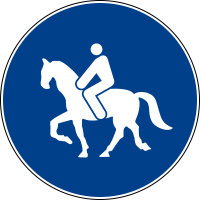
105. What does this traffic sign mean?
This traffic sign indicates a mandatory path for equestrians. Equestrians must use the designated path where the sign applies. Other road users may use it only where the applicable signs or local rules permit them to do so.
English • Traffic sign II.94 • Route reserved for pack or riding animals. Marks a route reserved for four-legged pack or riding animals; other road-user categories are prohibited.
Italiano • Figura II.94 • Percorso riservato ai quadrupedi da soma o da sella. Indica un percorso riservato ai quadrupedi da soma o da sella; è vietato alle altre categorie di utenti.
Sources
🔗 Commons.wikimedia.org
🔗 Normattiva.it • D.P.R. 495/1992 • testo vigente • art. 122, comma 9(d)
🔗 Gazzettaufficiale.it • Gazzetta Ufficiale • Figura II.94 • pagina 275
SVG source: F l a n k e r • Public domain • Original revision 2026-04-03. Wikimedia original unmodified.
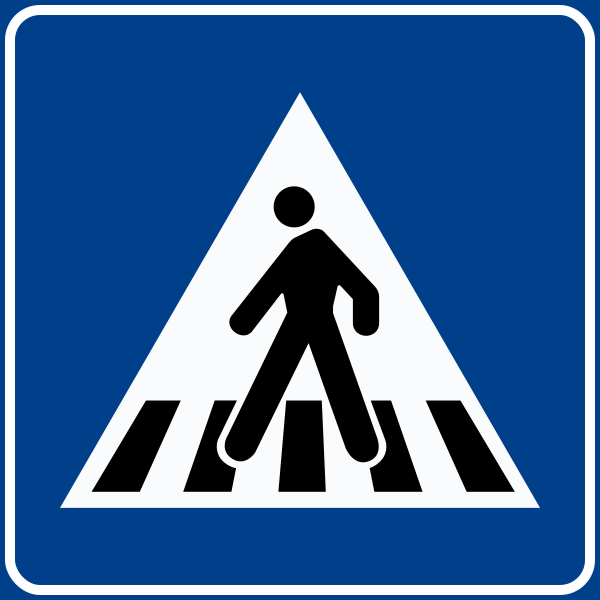
106. What does this traffic sign mean?
This traffic sign indicates a crossing for pedestrians. It marks a designated place where pedestrians cross the road. Priority and crossing rules depend on the applicable traffic signs, signals and local regulations.
English • Traffic sign II.303 • Pedestrian crossing. Marks a crossing without traffic signals and away from junctions.
Italiano • Figura II.303 • Attraversamento pedonale. Localizza un attraversamento pedonale non regolato da semaforo e non in corrispondenza di intersezioni.
Sources
🔗 Commons.wikimedia.org
🔗 Normattiva.it • D.P.R. 495/1992 • testo vigente • art. 135, comma 3
🔗 Gazzettaufficiale.it • Gazzetta Ufficiale • Figura II.303 • pagina 311
SVG source: F l a n k e r • Public domain • Original revision 2025-02-23. Wikimedia original unmodified.
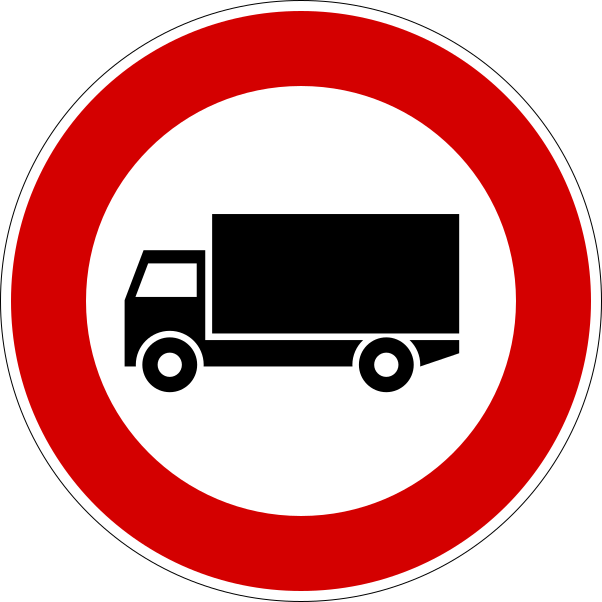
107. What does this traffic sign mean?
This traffic sign indicates that trucks are prohibited. Trucks covered by the sign may not enter or continue beyond it. Any applicable weight threshold or vehicle-category limitation is determined by the sign, supplementary information and local rules.
English • Traffic sign II.60/a • No vehicles with a fully laden mass exceeding 3.5 t. Vehicles not used for passenger transport are prohibited if their fully laden mass recorded in the registration document exceeds 3.5 t. An inscription or supplementary plate may specify a different mass.
Italiano • Figura II.60/a • Transito vietato ai veicoli di massa a pieno carico superiore a 3,5 t. Vieta il transito ai veicoli non adibiti al trasporto di persone con massa a pieno carico superiore a 3,5 t indicata nella carta di circolazione. Un’iscrizione o un pannello può stabilire una massa diversa.
Sources
🔗 Commons.wikimedia.org
🔗 Normattiva.it • D.P.R. 495/1992 • testo vigente • art. 117, comma 1(i)
🔗 Gazzettaufficiale.it • Gazzetta Ufficiale • Figura II.60/a • pagina 262
SVG source: F l a n k e r • Public domain • Original revision 2024-08-12. Wikimedia original unmodified.
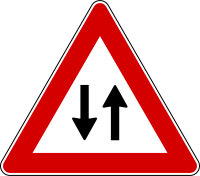
108. What does this traffic sign mean?
This traffic sign indicates a warning for two-way traffic. Oncoming traffic will use the same road or carriageway ahead. Keep to the correct side of the road and overtake only where it is permitted and clearly safe.
English • Traffic sign II.26 • Two-way traffic. Warns of traffic in both directions on the same carriageway after a one-way section.
Italiano • Figura II.26 • Doppio senso di circolazione. Presegnala un tratto di strada con circolazione nei due sensi sulla stessa carreggiata, dopo un tratto a senso unico.
Sources
🔗 Commons.wikimedia.org
🔗 Normattiva.it • D.P.R. 495/1992 • testo vigente • art. 96, comma 1
🔗 Gazzettaufficiale.it • Gazzetta Ufficiale • Figura II.26 • pagina 252
SVG source: F l a n k e r • Public domain • Original revision 2011-02-05. Wikimedia original unmodified.
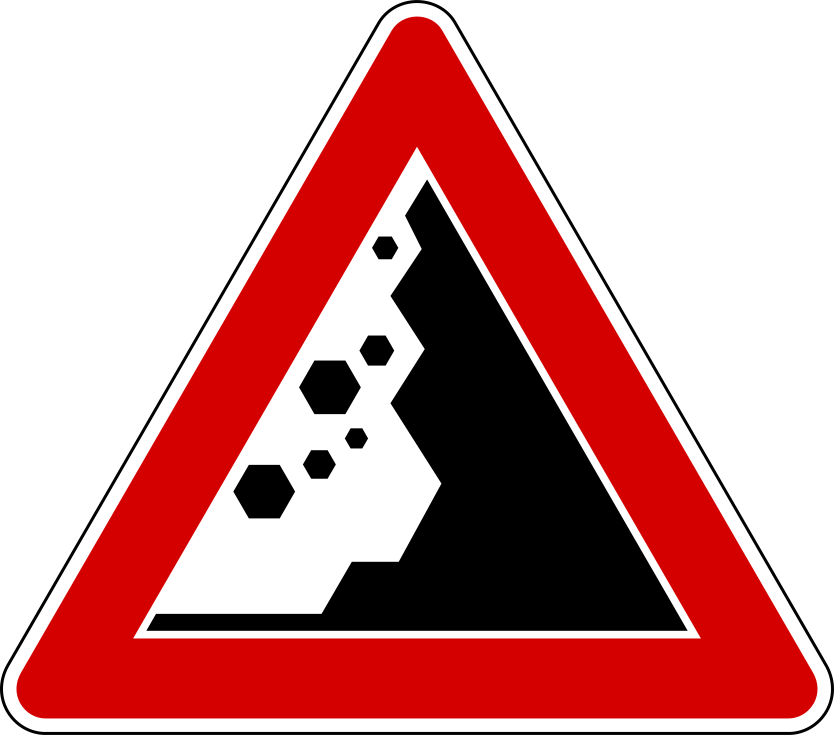
109. What does this traffic sign mean?
This traffic sign indicates a warning for falling rocks. Rocks or stones may fall from nearby slopes or may already be lying on the road. Reduce speed, scan the road ahead and be prepared to avoid or stop for fallen material.
English • Traffic sign II.30/b • Falling rocks. Warns of falling stones or rocks, or their possible presence on the carriageway. The slope shown is on the right.
Italiano • Figura II.30/b • Caduta massi. Presegnala un tratto con pericolo di caduta di pietre o massi, oppure con possibile presenza di questi sulla carreggiata. La scarpata rappresentata è a destra.
Sources
🔗 Commons.wikimedia.org
🔗 Normattiva.it • D.P.R. 495/1992 • testo vigente • art. 98, comma 2
🔗 Gazzettaufficiale.it • Gazzetta Ufficiale • Figura II.30/b • pagina 253
SVG source: F l a n k e r • Public domain • Original revision 2011-02-05. Wikimedia original unmodified.
Current figure reference verified in Normattiva.it • Normattiva, current article 98.
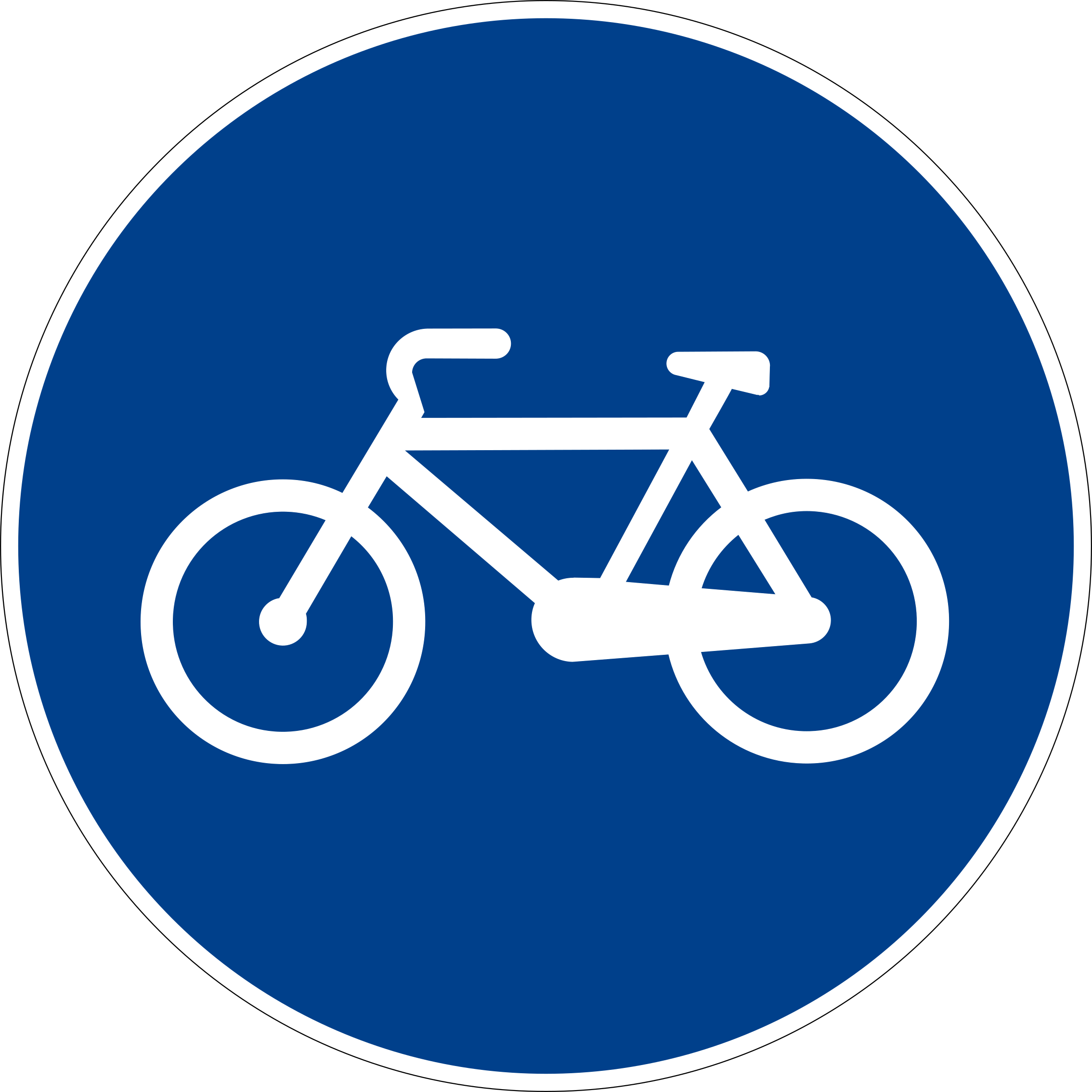
110. What does this traffic sign mean?
This traffic sign indicates a mandatory path for cyclists. Cyclists must use the designated path where the sign applies. Other road users may use the path only where the applicable signs or local rules permit them to do so.
English • Traffic sign II.90 • Cycle path. Marks a track, lane or route reserved for cycles; other road-user categories are prohibited.
Italiano • Figura II.90 • Pista ciclabile. Indica una pista, corsia o itinerario riservato alla circolazione dei velocipedi; è vietato alle altre categorie di utenti.
Sources
🔗 Commons.wikimedia.org (F l a n k e r • CC BY-SA 4.0)
🔗 Normattiva.it • D.P.R. 495/1992 • testo vigente • art. 122, comma 9(b)
🔗 Gazzettaufficiale.it • Gazzetta Ufficiale • Figura II.90 • pagina 273
🔗 Normattiva.it • D.P.R. 495/1992 • allegati e successive modifiche
SVG source: F l a n k e r • CC BY-SA 4.0 • Original revision 2026-05-12. Wikimedia original unmodified.
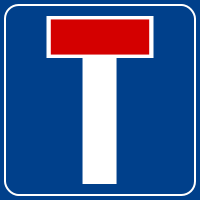
111. What does this traffic sign mean?
This traffic sign indicates a dead end street. The road has no through route for vehicles, although access to properties or other destinations along the road may still be possible.
English • Traffic sign II.309 • Dead-end road. At the start of the road, indicates that it has no exit for vehicles.
Italiano • Figura II.309 • Strada senza uscita. All’inizio della strada indica che essa è senza uscita per i veicoli.
Sources
🔗 Commons.wikimedia.org
🔗 Normattiva.it • D.P.R. 495/1992 • testo vigente • art. 135, comma 7
🔗 Gazzettaufficiale.it • Gazzetta Ufficiale • Figura II.309 • pagina 312
Image via Commons.wikimedia.org
F l a n k e r • Public domain • Source revision 2014-03-28. Wikimedia original unmodified.
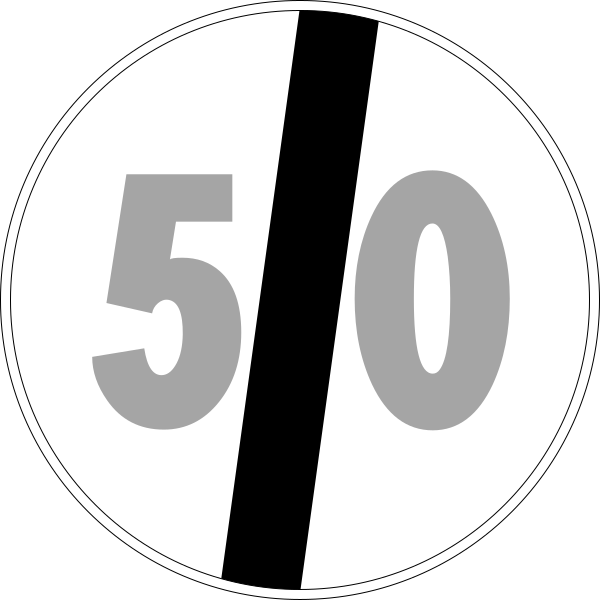
112. What does this traffic sign mean?
This traffic sign indicates the end of the previously indicated speed limit. From this point, follow any newly posted limit or the applicable default speed rules for the road and vehicle category.
English • Traffic sign II.71 • End of speed limit. The general limits applying to that type of road resume.
Italiano • Figura II.71 • Fine limitazione di velocità. Indica il ripristino dei limiti generali di velocità vigenti per quel tipo di strada.
Sources
🔗 Commons.wikimedia.org
🔗 Normattiva.it • D.P.R. 495/1992 • testo vigente • art. 119, comma 1(b)
🔗 Gazzettaufficiale.it • Gazzetta Ufficiale • Figura II.71 • pagina 266
SVG source: Original: Ministero dei Lavori Pubblici Vectorization: Arbalete • Public domain • Original revision 2024-09-03. Wikimedia original unmodified.
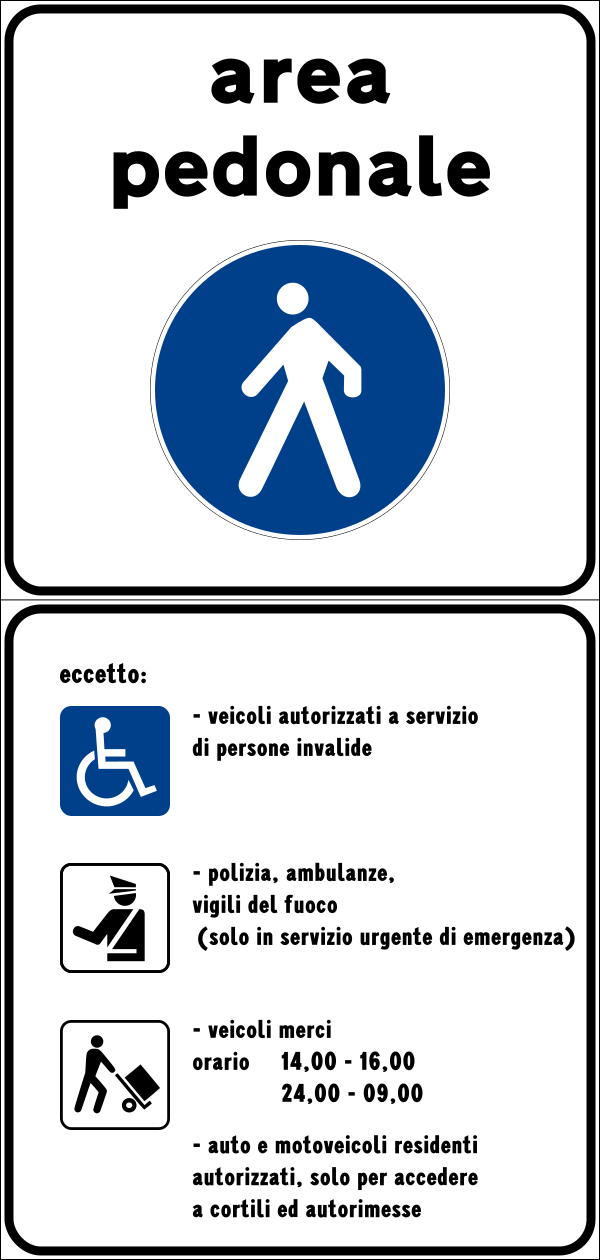
113. What does this traffic sign mean?
This traffic sign indicates the start of a pedestrian zone. Pedestrians are the principal road users within the zone, while access by vehicles and other road users is subject to the applicable traffic signs and local rules.
English • Traffic sign II.320 • Pedestrian area. Marks the beginning of an area closed to vehicle traffic. Any exemptions, restrictions and exceptions are specified on the supplementary plate and must be read with the sign.
Italiano • Figura II.320 • Area pedonale. Indica l’inizio di una zona interdetta alla circolazione dei veicoli. Eventuali deroghe, limitazioni ed eccezioni sono precisate dal pannello integrativo e vanno lette insieme al segnale.
Sources
🔗 Commons.wikimedia.org
🔗 Normattiva.it • D.P.R. 495/1992 • testo vigente • art. 135, comma 13
🔗 Normattiva.it • Allegati ufficiali aggiornati • Figura II.320
Image via Commons.wikimedia.org
Official design: Ministero dei Lavori Pubblici; vectorisation: Arbalete; incorporated elements by Pav03, Gigillo83 and Earthshaker13 • CC BY-SA 4.0 • Source revision 2024-09-15. Wikimedia original unmodified.

114. What does this traffic sign mean?
This traffic sign indicates that cyclists are prohibited. Cyclists may not enter or continue beyond the sign. Other road users may still be permitted unless another restriction applies.
English • Traffic sign II.55 • No bicycles. Cycles are prohibited.
Italiano • Figura II.55 • Transito vietato alle biciclette. Vieta il transito ai velocipedi.
Sources
🔗 Commons.wikimedia.org
🔗 Normattiva.it • D.P.R. 495/1992 • testo vigente • art. 117, comma 1(d)
🔗 Gazzettaufficiale.it • Gazzetta Ufficiale • Figura II.55 • pagina 261
Replacement SVG: Commons.wikimedia.org • Wikimedia Commons original • No machine-readable author provided. Benedicto16 assumed (based on copyright claims). • Public domain • Original revision 2013-10-08. Wikimedia original unmodified.
Image via Commons.wikimedia.org
No machine-readable author provided. Benedicto16 assumed (based on copyright claims). • Public domain • Source revision 2013-10-08. Wikimedia original unmodified.
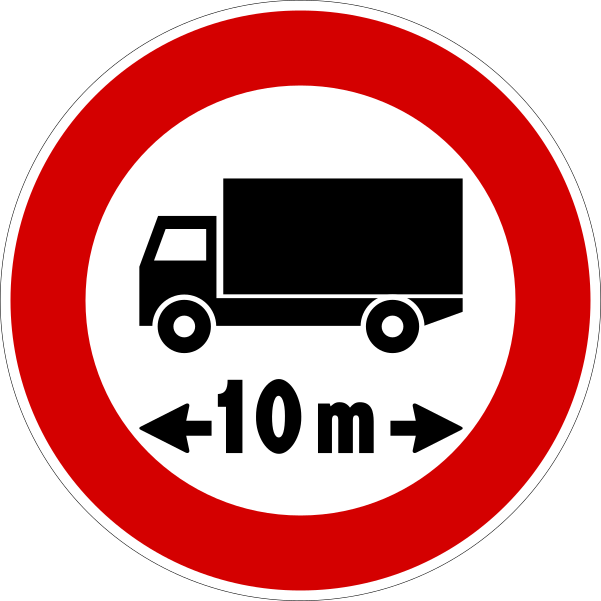
115. What does this traffic sign mean?
This traffic sign indicates that vehicles longer than indicated are prohibited. A vehicle or vehicle combination whose overall length, including its load, exceeds the displayed limit may not continue beyond the sign.
English • Traffic sign II.67 • No vehicles or vehicle combinations longer than indicated. The prohibition applies where their actual length at the time of passage exceeds the value shown in metres.
Italiano • Figura II.67 • Transito vietato ai veicoli o complessi di veicoli aventi lunghezza superiore a quella indicata. Vieta il transito ai veicoli o complessi di veicoli la cui lunghezza effettiva al momento del passaggio supera il valore indicato in metri.
Sources
🔗 Commons.wikimedia.org
🔗 Normattiva.it • D.P.R. 495/1992 • testo vigente • art. 118, comma 1(c), 3
🔗 Gazzettaufficiale.it • Gazzetta Ufficiale • Figura II.67 • pagina 264
SVG source: F l a n k e r • Public domain • Original revision 2023-10-01. Wikimedia original unmodified.
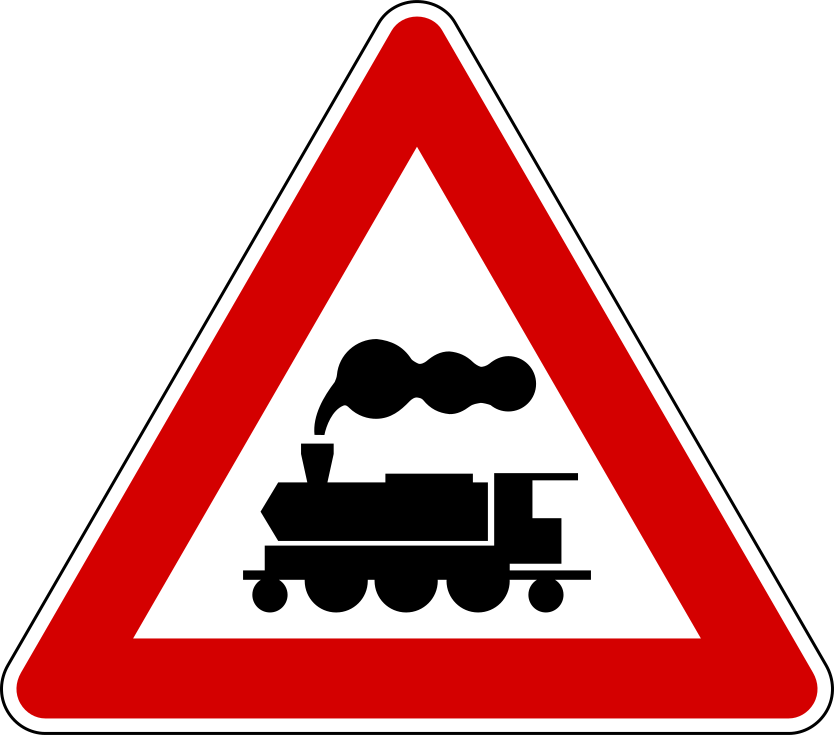
116. What does this traffic sign mean?
This traffic sign indicates a warning for a railway crossing without barriers. It alerts drivers to an upcoming level crossing where railway tracks cross the road and no barriers or gates are present to stop traffic. Drivers should slow down and look both ways for trains.
English • Traffic sign II.9 • Level crossing without barriers. Warns of a railway crossing with no barriers.
Italiano • Figura II.9 • Passaggio a livello senza barriere. Presegnala un attraversamento ferroviario privo di barriere.
Sources
🔗 Commons.wikimedia.org
🔗 Normattiva.it • D.P.R. 495/1992 • testo vigente • art. 87, comma 2
🔗 Gazzettaufficiale.it • Gazzetta Ufficiale • Figura II.9 • pagina 247
SVG source: F l a n k e r • Public domain • Original revision 2011-07-24. Wikimedia original unmodified.
Current figure reference verified in Normattiva.it • Normattiva, current article 87.
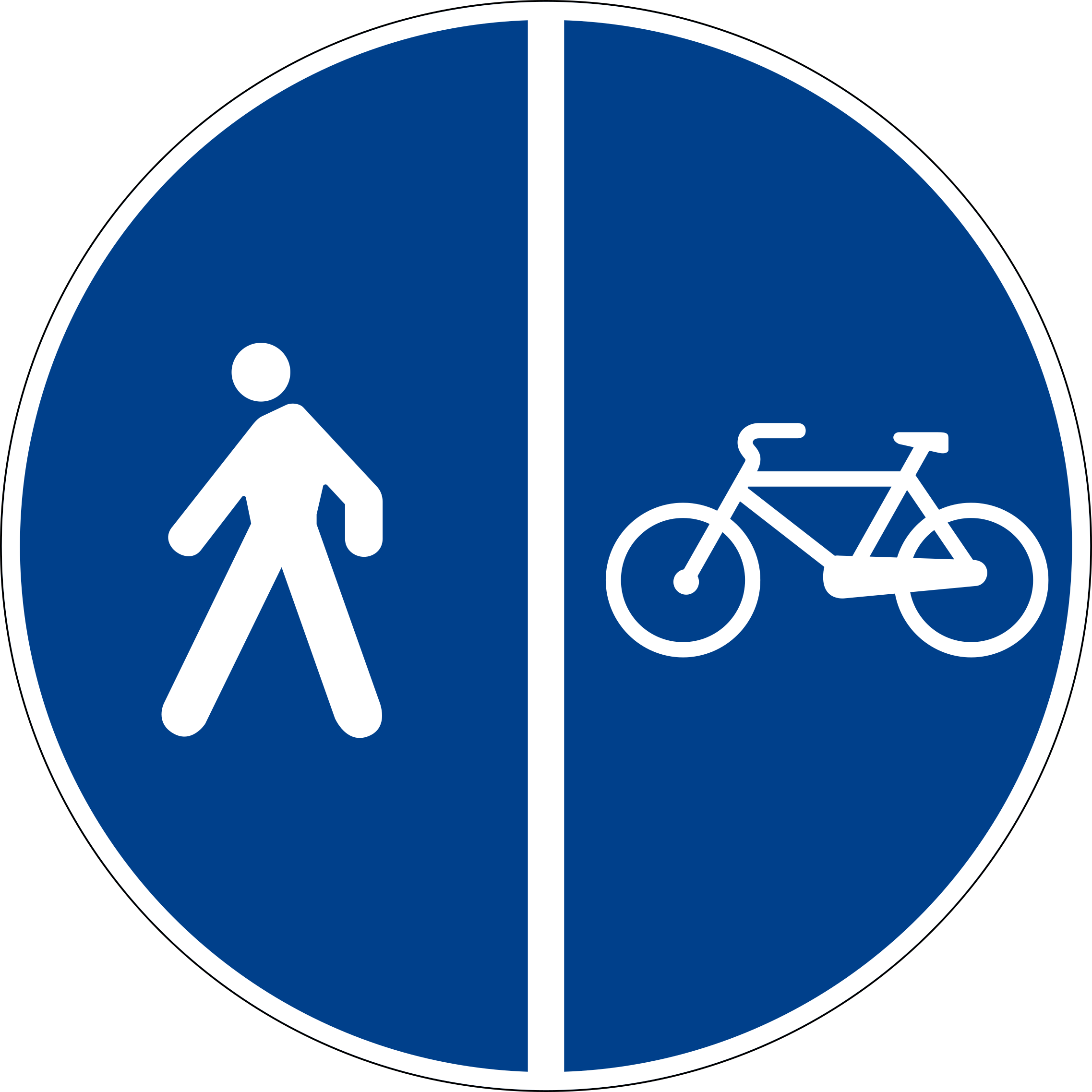
117. What does this traffic sign mean?
This traffic sign indicates a mandatory divided path for pedestrians and cyclists. Pedestrians and cyclists must use the section designated for them. Other road users may use the path only where the applicable signs or local rules permit them to do so.
English • Traffic sign II.92/a • Cycle path alongside a pavement. Marks a reserved cycle path alongside a pavement or pedestrian route.
Italiano • Figura II.92/a • Pista ciclabile contigua al marciapiede. Indica una pista riservata ai velocipedi affiancata a un marciapiede o percorso pedonale.
Sources
🔗 Commons.wikimedia.org
🔗 Normattiva.it • D.P.R. 495/1992 • testo vigente • art. 122, comma 9(c)
🔗 Gazzettaufficiale.it • Gazzetta Ufficiale • Figura II.92/a • pagina 274
🔗 Normattiva.it • D.P.R. 495/1992 • allegati e successive modifiche
SVG source: F l a n k e r • Public domain • Original revision 2026-06-15. Wikimedia original unmodified.

118. What does this traffic sign mean?
This traffic sign indicates that traffic must pass an obstacle on the left. Keep to the left of the obstacle and follow any accompanying signs or road markings.
English • Traffic sign II.82/a • Pass on the left. Drivers must pass to the left of the obstacle, obstruction, traffic island or central reservation.
Italiano • Figura II.82/a • Passaggio obbligatorio a sinistra. Obbliga a passare a sinistra dell’ostacolo, dell’ingombro, dell’isola di traffico o dello spartitraffico.
Sources
🔗 Commons.wikimedia.org (F l a n k e r • CC BY-SA 3.0)
🔗 Normattiva.it • D.P.R. 495/1992 • testo vigente • art. 122, comma 4
🔗 Gazzettaufficiale.it • Gazzetta Ufficiale • Figura II.82/a • pagina 271
Replacement SVG: Commons.wikimedia.org • Wikimedia Commons original • 3247 • Public domain • Original revision 2023-05-28. Wikimedia original unmodified.
Image via Commons.wikimedia.org
3247 • Public domain • Source revision 2023-05-28. Wikimedia original unmodified.
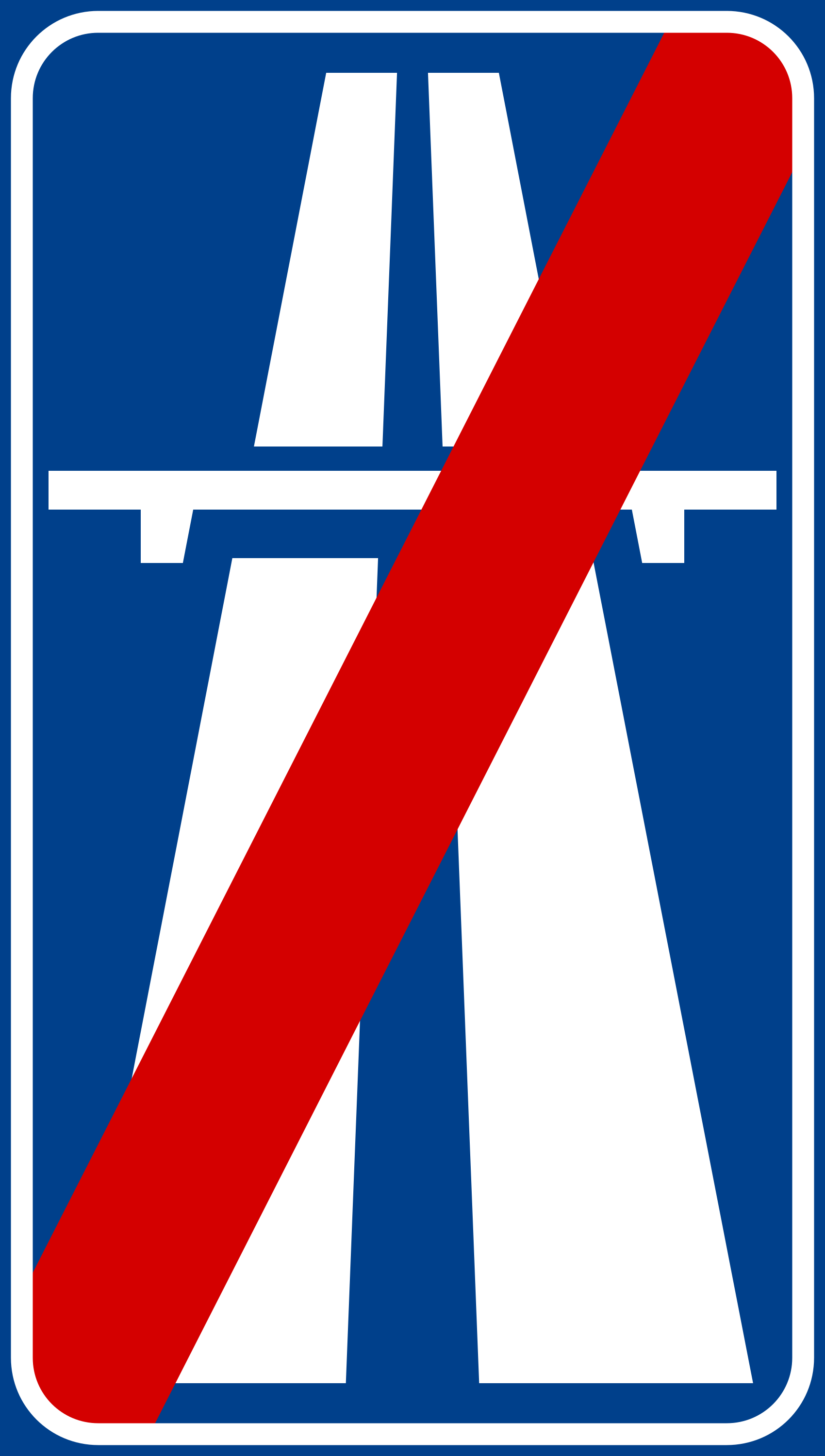
119. What does this traffic sign mean?
This traffic sign indicates the end of the motorway. The special motorway rules end at this point. Follow the speed limits, access rules and other traffic signs that apply to the road ahead.
English • Traffic sign II.346 — blue background • End of a principal extra-urban road. The crossed-out symbol on a blue background marks its end. The motorway version has a green background.
Italiano • Figura II.346 — fondo blu • Fine strada extraurbana principale. Il simbolo barrato con fondo blu indica la fine di una strada extraurbana principale. La variante relativa all’autostrada ha fondo verde.
Sources
🔗 Commons.wikimedia.org
🔗 Normattiva.it • D.P.R. 495/1992 • testo vigente • art. 135, comma 23
🔗 Gazzettaufficiale.it • Gazzetta Ufficiale • Figura II.346 — fondo blu • pagina 322
SVG source: ColdShine • Public domain • Original revision 2023-11-23. Wikimedia original unmodified.
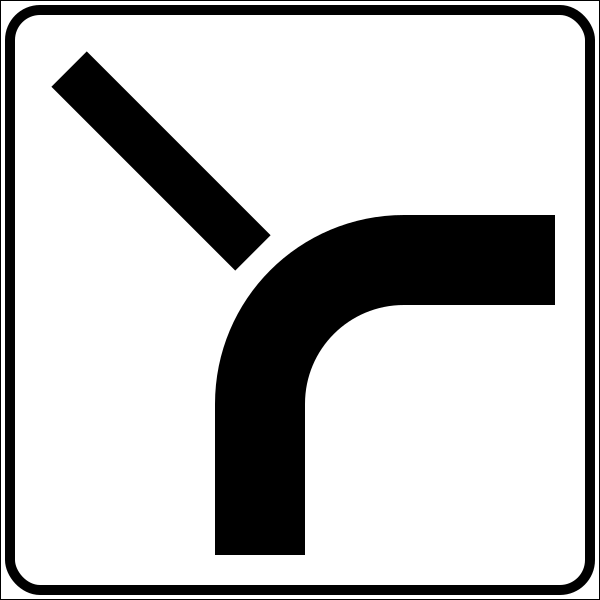
120. What does this traffic sign mean?
This traffic sign shows the shape or layout of an upcoming junction. The diagram indicates how the approaching road and connecting roads are arranged.
English • Model II.7 • Course of the priority road. The thicker line represents the road with priority over the narrower branches. Read the plate together with the priority sign. The plate supplements the main sign and must be read together with it.
Italiano • Modello II.7 • Andamento della strada principale. La striscia più larga rappresenta la strada che gode della precedenza rispetto ai rami più stretti. Il pannello va interpretato insieme al segnale di precedenza. Il pannello integra il segnale principale e deve essere interpretato insieme a esso.
Sources
🔗 Commons.wikimedia.org
🔗 Normattiva.it • D.P.R. 495/1992 • testo vigente • art. 83, comma 11
🔗 Gazzettaufficiale.it • Gazzetta Ufficiale • Modello II.7 • pagina 243
SVG source: Original: Ministero dei Lavori Pubblici Vectorization: Arbalete • Public domain • Original revision 2024-07-12. Wikimedia original unmodified.
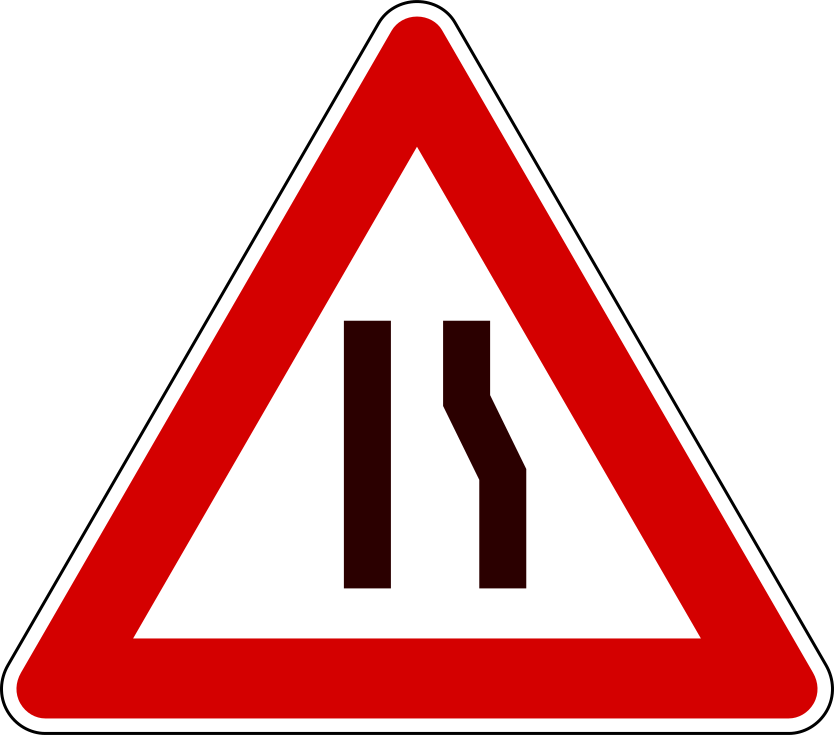
121. What does this traffic sign mean?
This traffic sign indicates a warning for a road narrowing on the right. The available road width decreases from the right side ahead. Reduce speed, follow the lane markings and maintain sufficient clearance from other traffic and the road edge.
English • Traffic sign II.19 • Road narrows on the right. Warns of a narrowing on the right side of the carriageway that is dangerous for traffic.
Italiano • Figura II.19 • Strettoia asimmetrica a destra. Presegnala un restringimento sul lato destro della carreggiata pericoloso per la circolazione.
Sources
🔗 Commons.wikimedia.org (F l a n k e r • CC BY-SA 3.0)
🔗 Normattiva.it • D.P.R. 495/1992 • testo vigente • art. 90, comma 1–2
🔗 Gazzettaufficiale.it • Gazzetta Ufficiale • Figura II.19 • pagina 250
SVG source: F l a n k e r • CC BY-SA 3.0 • Original revision 2011-02-05. Wikimedia original unmodified.
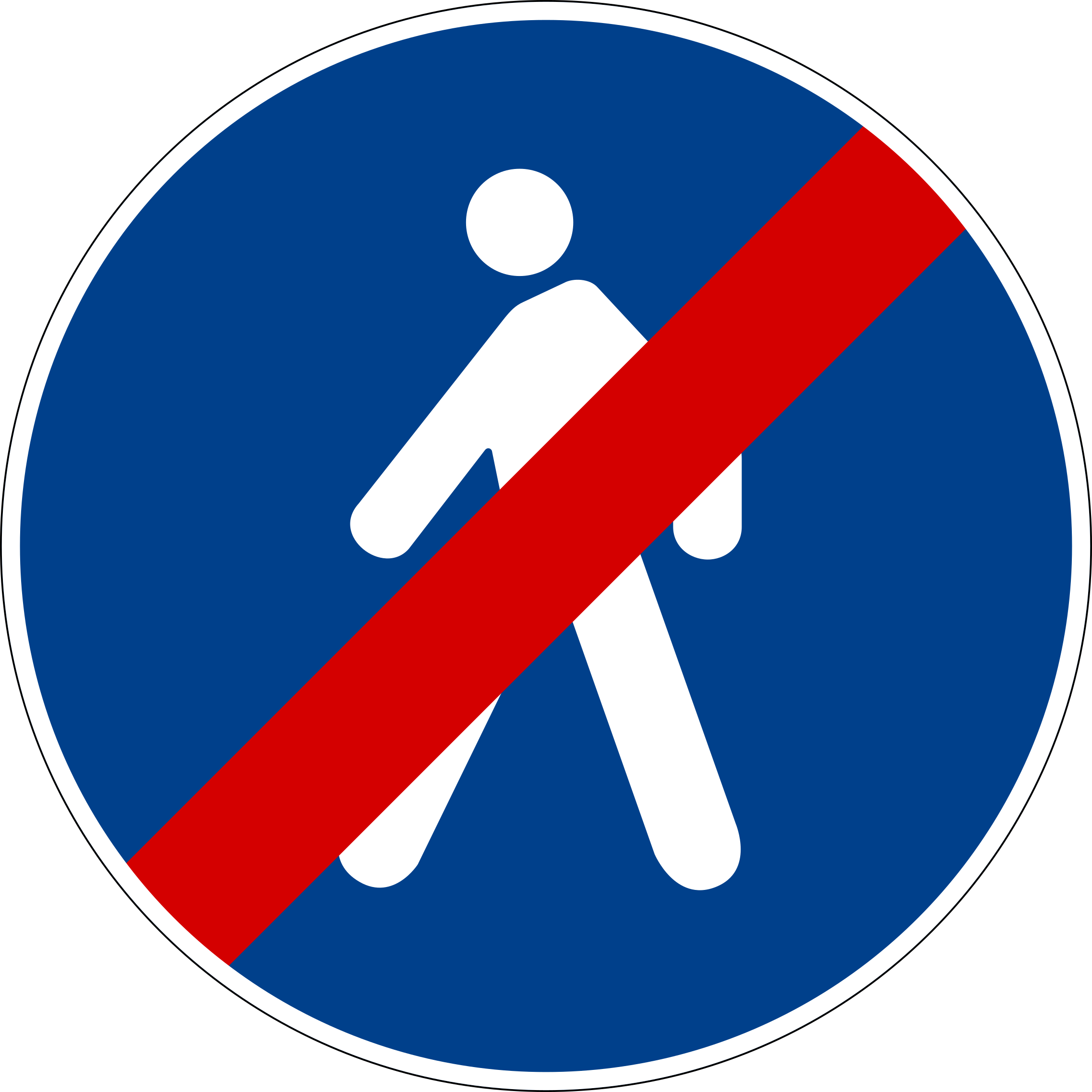
122. What does this traffic sign mean?
This traffic sign indicates the end of the mandatory path for pedestrians. The requirement associated with the designated path ends at this point. Pedestrians must continue according to the subsequent path or road layout and applicable local rules.
English • Traffic sign II.89 • End of footpath. Marks the end of the route reserved for pedestrians.
Italiano • Figura II.89 • Fine percorso pedonale. Indica la fine del percorso riservato ai pedoni.
Sources
🔗 Commons.wikimedia.org
🔗 Normattiva.it • D.P.R. 495/1992 • testo vigente • art. 122, comma 10
🔗 Gazzettaufficiale.it • Gazzetta Ufficiale • Figura II.89 • pagina 273
SVG source: F l a n k e r • Public domain • Original revision 2026-06-15. Wikimedia original unmodified.
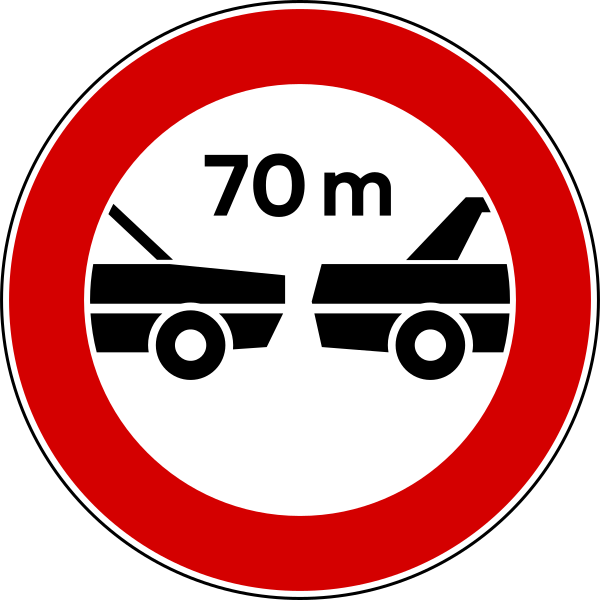
123. What does this traffic sign mean?
This traffic sign indicates the minimum distance that must be maintained from the vehicle ahead. Drivers must keep at least the distance shown.
English • Traffic sign II.49 • Compulsory minimum following distance. Drivers must not follow the vehicle ahead at less than the distance shown in metres.
Italiano • Figura II.49 • Distanziamento minimo obbligatorio. Vieta di seguire il veicolo che precede a una distanza inferiore a quella indicata in metri.
Sources
🔗 Commons.wikimedia.org
🔗 Normattiva.it • D.P.R. 495/1992 • testo vigente • art. 116, comma 1(d)
🔗 Gazzettaufficiale.it • Gazzetta Ufficiale • Figura II.49 • pagina 259
SVG source: F l a n k e r • Public domain • Original revision 2010-07-17. Wikimedia original unmodified.
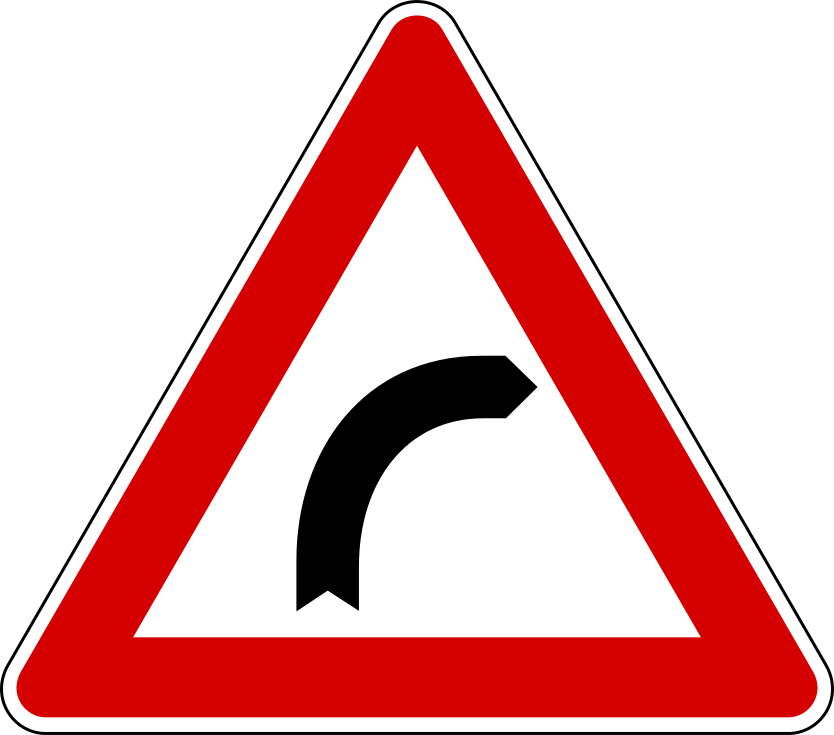
124. What does this traffic sign mean?
This traffic sign indicates a warning for a curve to the right. A right-hand bend lies ahead. Reduce speed before entering the curve, maintain your lane position and use smooth steering.
English • Traffic sign II.4 • Bend to the right. Warns of a right-hand bend that is dangerous because of its characteristics or limited visibility.
Italiano • Figura II.4 • Curva a destra. Presegnala una curva pericolosa a destra per le sue caratteristiche o per l’insufficiente visibilità.
Sources
🔗 Commons.wikimedia.org (F l a n k e r • CC BY-SA 3.0)
🔗 Normattiva.it • D.P.R. 495/1992 • testo vigente • art. 86, comma 1
🔗 Gazzettaufficiale.it • Gazzetta Ufficiale • Figura II.4 • pagina 246
SVG source: F l a n k e r • CC BY-SA 3.0 • Original revision 2011-02-05. Wikimedia original unmodified.
Current figure reference verified in Normattiva.it • Normattiva, current article 86.
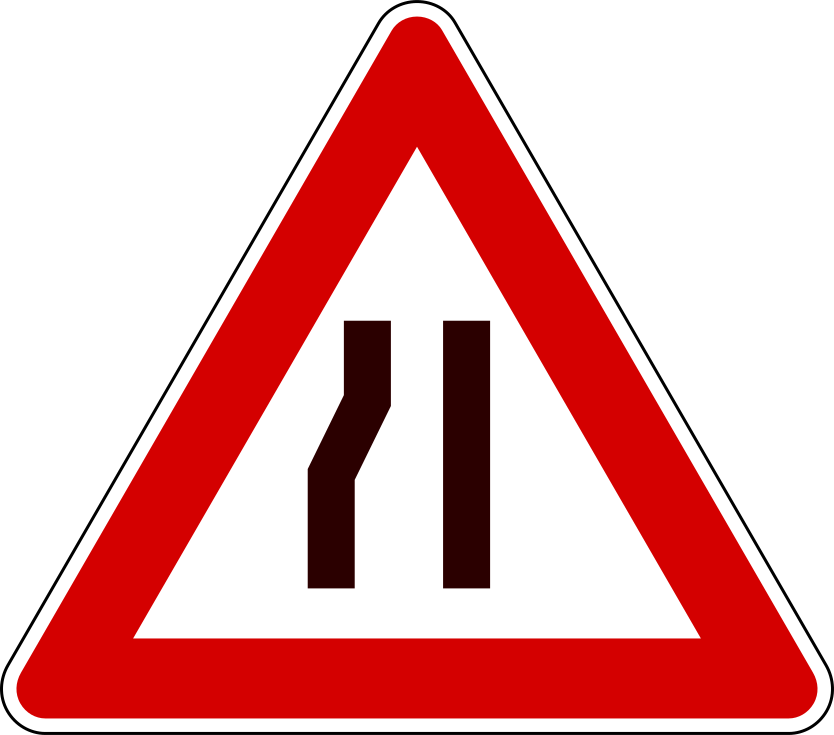
125. What does this traffic sign mean?
This traffic sign indicates a warning for a road narrowing on the left. The available road width decreases from the left side ahead. Reduce speed, follow the lane markings and maintain sufficient clearance from other traffic and the road edge.
English • Traffic sign II.18 • Road narrows on the left. Warns of a narrowing on the left side of the carriageway that is dangerous for traffic.
Italiano • Figura II.18 • Strettoia asimmetrica a sinistra. Presegnala un restringimento sul lato sinistro della carreggiata pericoloso per la circolazione.
Sources
🔗 Commons.wikimedia.org (F l a n k e r • CC BY-SA 3.0)
🔗 Normattiva.it • D.P.R. 495/1992 • testo vigente • art. 90, comma 1–2
🔗 Gazzettaufficiale.it • Gazzetta Ufficiale • Figura II.18 • pagina 250
SVG source: F l a n k e r • CC BY-SA 3.0 • Original revision 2011-02-05. Wikimedia original unmodified.
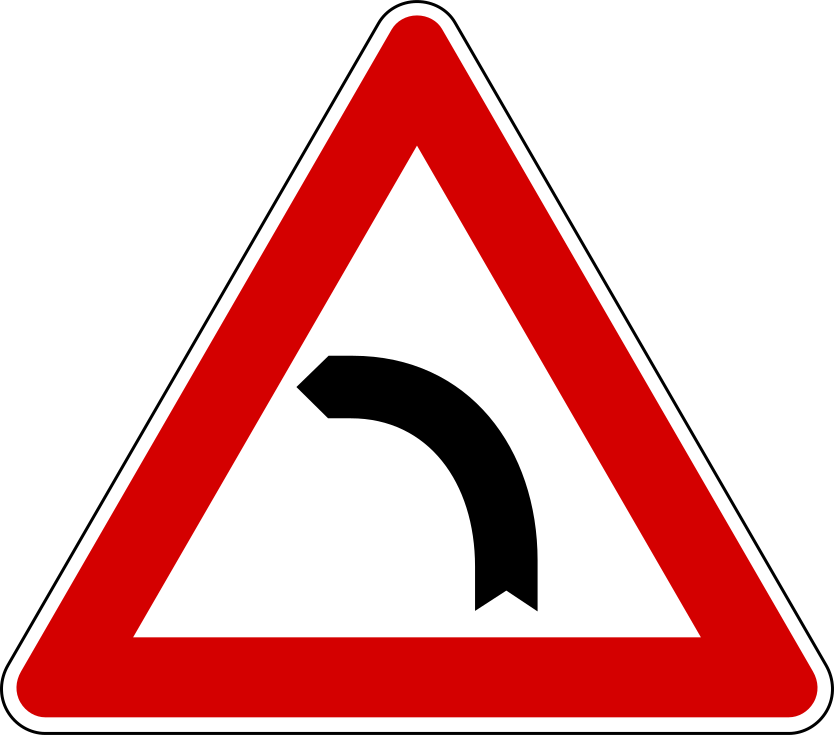
126. What does this traffic sign mean?
This traffic sign indicates a warning for a curve to the left. A left-hand bend lies ahead. Reduce speed before entering the curve, maintain your lane position and use smooth steering.
English • Traffic sign II.5 • Bend to the left. Warns of a left-hand bend that is dangerous because of its characteristics or limited visibility.
Italiano • Figura II.5 • Curva a sinistra. Presegnala una curva pericolosa a sinistra per le sue caratteristiche o per l’insufficiente visibilità.
Sources
🔗 Commons.wikimedia.org (F l a n k e r • CC BY-SA 3.0)
🔗 Normattiva.it • D.P.R. 495/1992 • testo vigente • art. 86, comma 1
🔗 Gazzettaufficiale.it • Gazzetta Ufficiale • Figura II.5 • pagina 246
SVG source: F l a n k e r • CC BY-SA 3.0 • Original revision 2011-02-05. Wikimedia original unmodified.
Current figure reference verified in Normattiva.it • Normattiva, current article 86.
