QuizTraffic rulesMexico

This interesting quiz helps you test your knowledge in a clear and visual way. With easy multiple-choice questions, you can quickly build confidence and learn new facts while keeping it simple, interactive, and fun.


What is the main safety risk of aggressive driving?

301. What is the main safety risk of aggressive driving?

It can increase tyre and brake wear.
It can make the journey less comfortable.
✓ It increases the risk of crashes.
It can increase fuel consumption.

Aggressive driving, such as tailgating, speeding, or sudden lane changes, reduces safety margins and increases the risk of crashes and conflict with other road users.

Driver displaying aggressive behaviour in traffic
AI-generated by Rijbewijs-online.be • WCIT • CC BY-SA
What should you do after stopping because of a breakdown?

302. What should you do after stopping because of a breakdown?

Leave the parking brake off if the road is level.
Stand behind the vehicle to warn approaching traffic.
Switch off the hazard lights once the vehicle has stopped.
✓ Apply the parking brake, switch off the engine, and use hazard lights.

Secure the vehicle so that it cannot move and use the hazard warning lights to alert approaching traffic. Where required and safe, place a warning triangle to give additional warning.

Broken-down vehicle with hazard warning lights
AI-generated by Rijbewijs-online.be • WCIT • CC BY-SA
How can alcohol affect your driving ability?

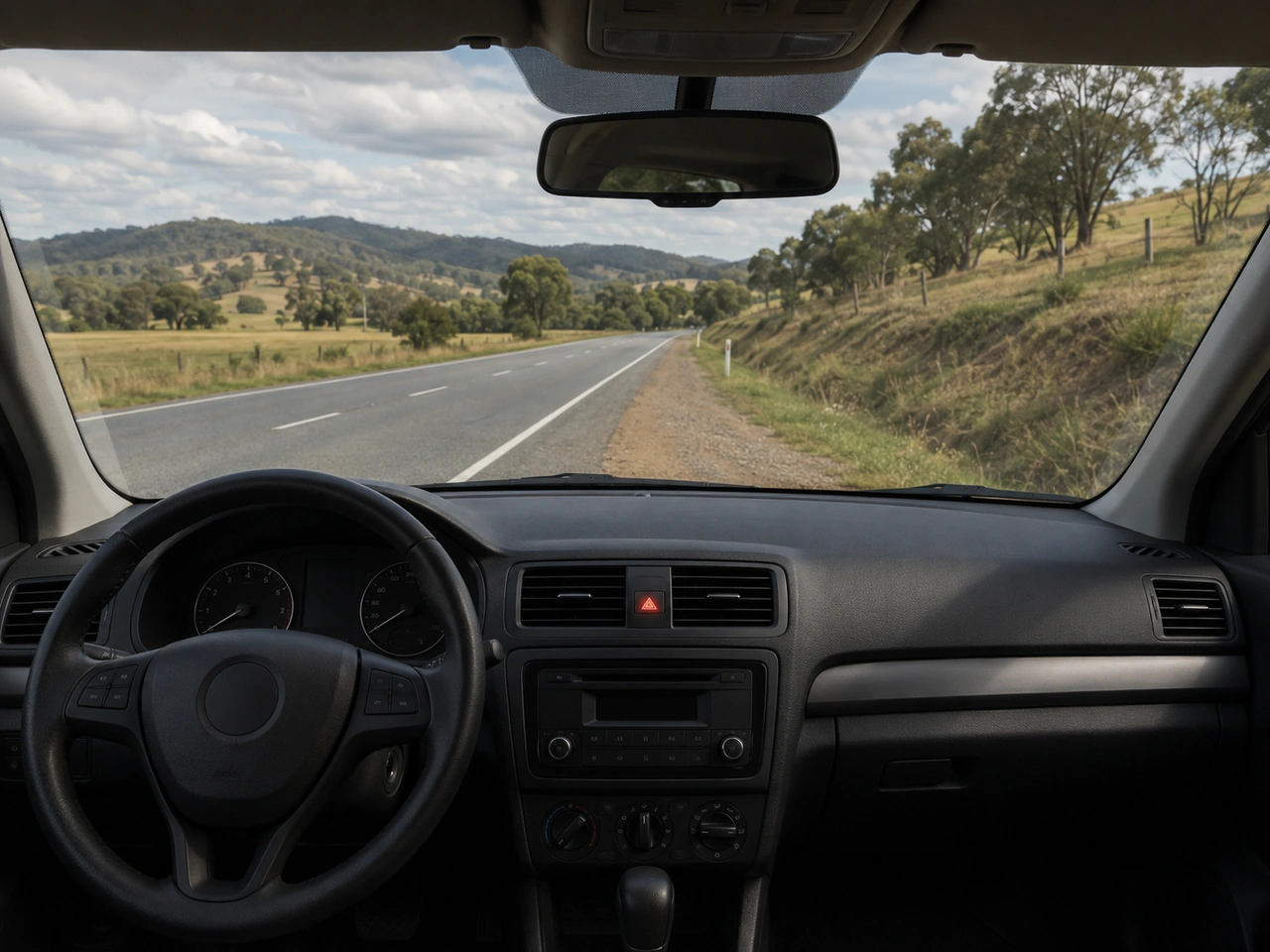
303. How can alcohol affect your driving ability?

It improves your vision in poor light.
✓ It can reduce judgement, coordination, and reaction speed.
It improves your ability to judge distance.
It has no effect if you drive slowly.

Alcohol affects several abilities needed for safe driving, including concentration, decision-making, coordination, and hazard perception.

Alcohol impairment and driving ability
AI-generated by Rijbewijs-online.be • WCIT • CC BY-SA
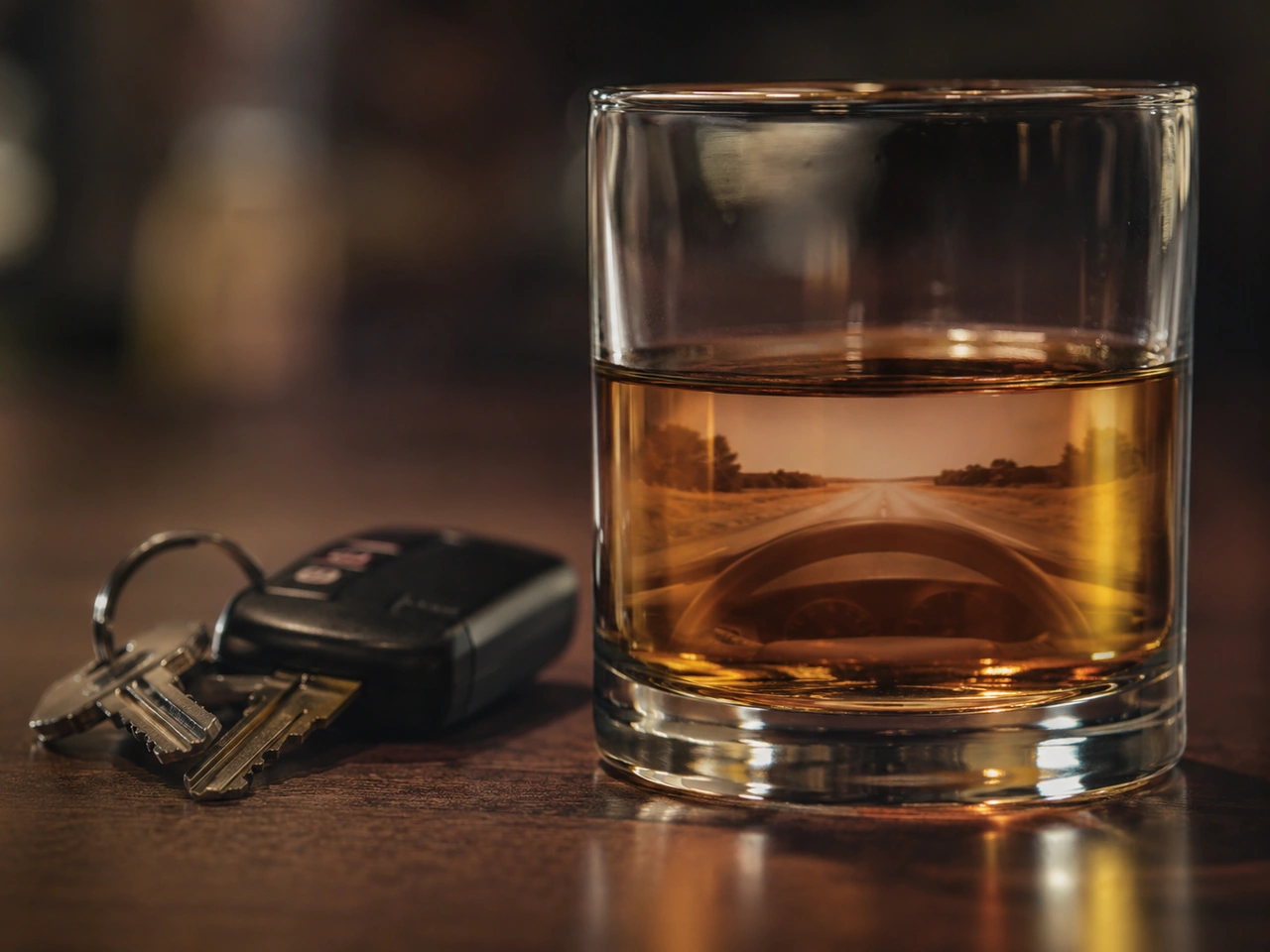
Why should you leave extra space when passing road workers?

304. Why should you leave extra space when passing road workers?

Road workers are protected by the construction barriers.
Road workers always have priority over passing traffic.
To keep construction dust away from your vehicle.
✓ They may be working close to moving traffic.

Workers may be only a short distance from passing vehicles. Reduce speed and leave as much safe space as possible.

Vehicle passing workers close to the road
AI-generated by Rijbewijs-online.be • WCIT • CC BY-SA
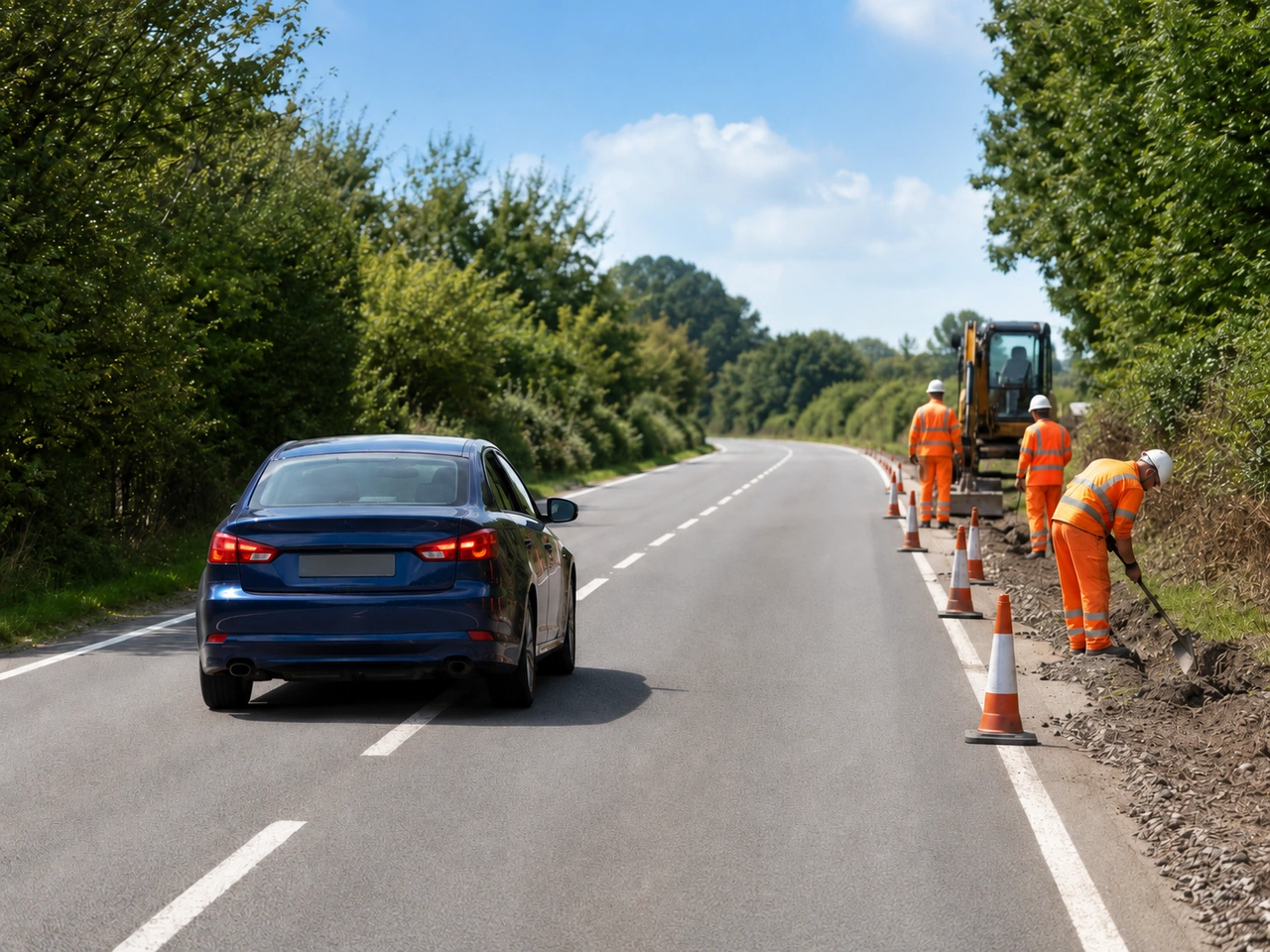
Which control is normally used to switch on the dipped headlights?

305. Which control is normally used to switch on the dipped headlights?

✓ The lighting control.
The hazard warning switch.
The rear-window demister.
The windscreen-wiper control.

The lighting control is normally used to switch on the dipped headlights. Depending on the vehicle, it may be a rotary switch or part of a lighting stalk.

Lighting control for switching on dipped headlights
AI-generated by Rijbewijs-online.be • WCIT • CC BY-SA
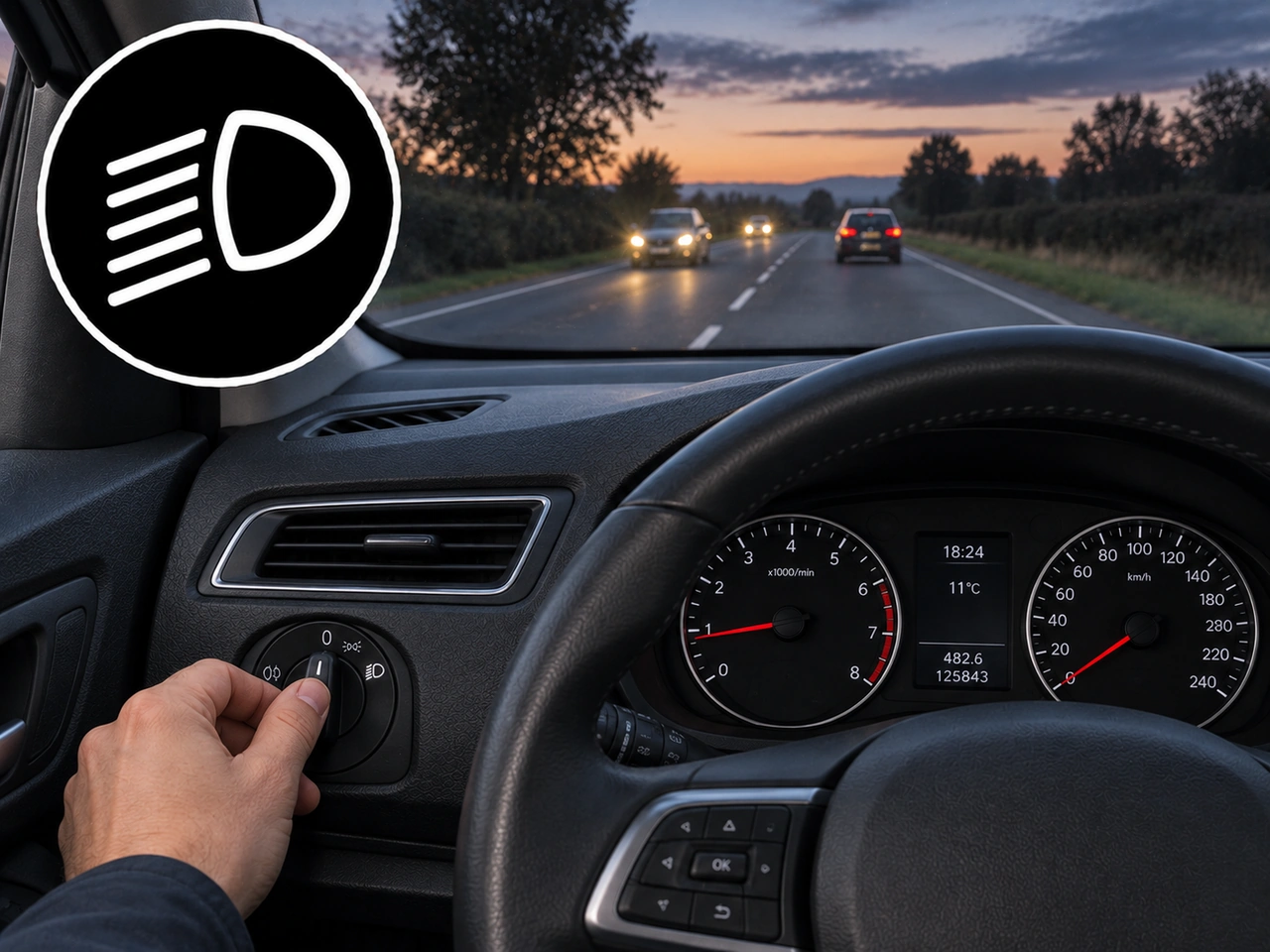
What may happen if you release the clutch too quickly when moving off?

306. What may happen if you release the clutch too quickly when moving off?

The headlights may switch off.
The parking brake may engage.
The steering may lock.
✓ The engine may stall.

Releasing the clutch pedal too quickly when moving off can cause the engine to stall. Release the clutch smoothly through the biting point while applying the accelerator progressively.

Clutch release and engine stalling when moving off
AI-generated by Rijbewijs-online.be • WCIT • CC BY-SA
What should you do when traffic is merging from another lane?

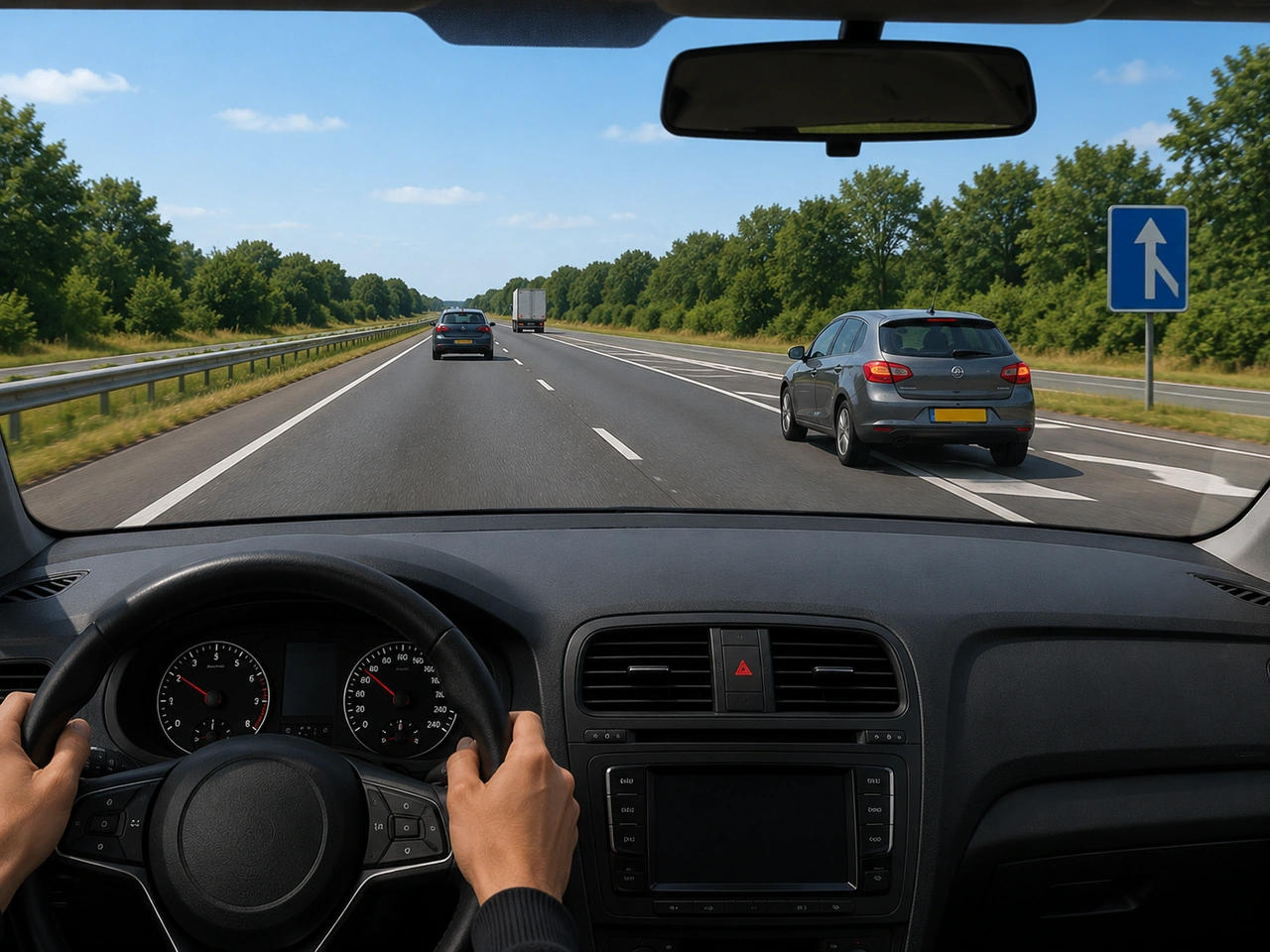
307. What should you do when traffic is merging from another lane?

Move into another lane without checking around you.
Speed up slightly so they can merge behind you.
Move closer to the vehicle ahead to keep your lane clear.
✓ Adjust your speed and leave space when safe.

When traffic merges, good observation and speed control help vehicles join safely without sudden braking or conflict.

Vehicle merging from an adjacent lane
AI-generated by Rijbewijs-online.be • WCIT • CC BY-SA
What should you normally do before changing gear in a manual vehicle?

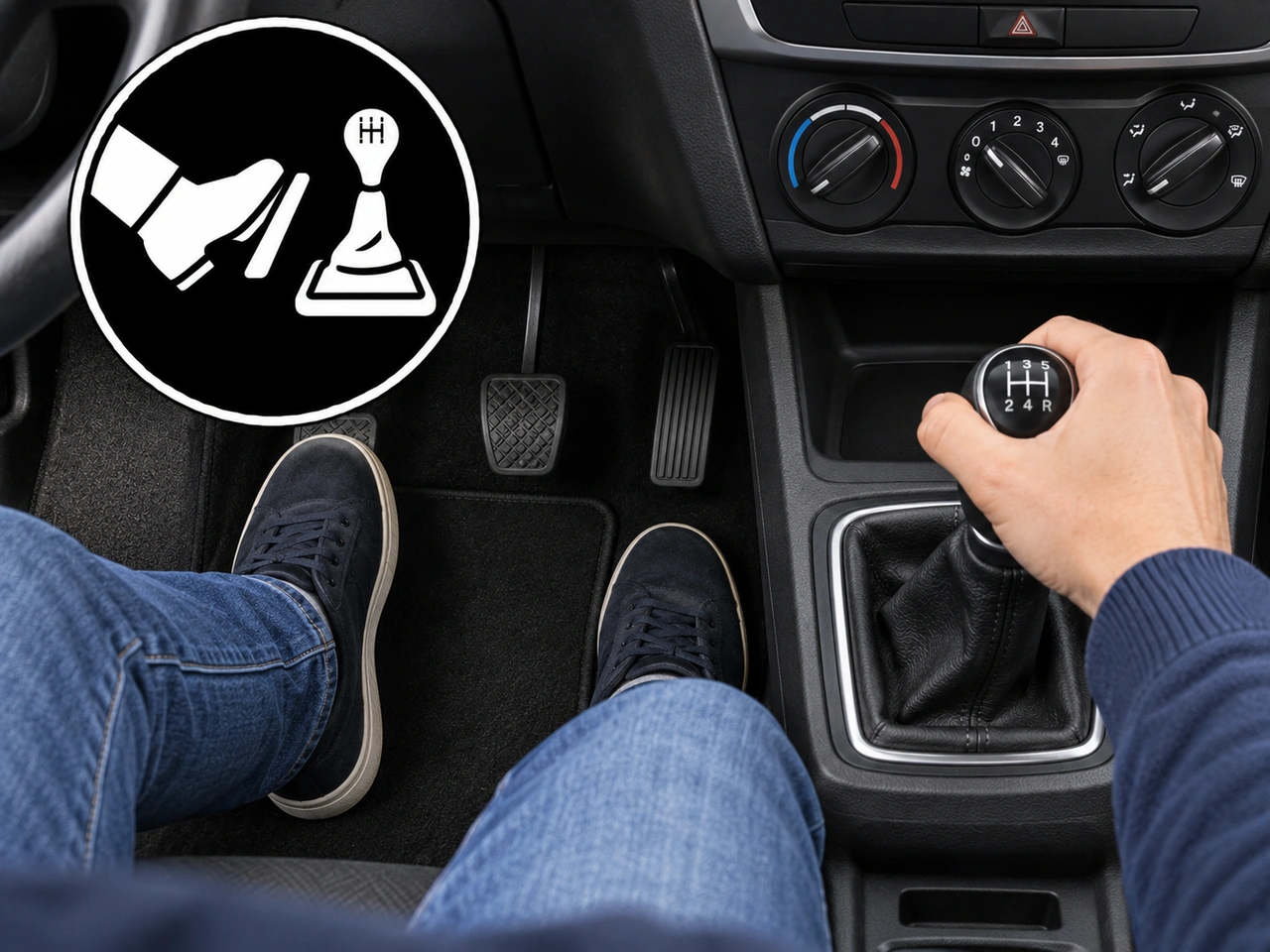
308. What should you normally do before changing gear in a manual vehicle?

Switch off the engine.
Press the accelerator pedal fully.
Apply the parking brake.
✓ Press the clutch pedal fully.

Pressing the clutch pedal disconnects the engine from the transmission so that another gear can be selected. After changing gear, the clutch should be released smoothly.

Clutch operation when changing gear in a manual vehicle
AI-generated by Rijbewijs-online.be • WCIT • CC BY-SA
What should you do if a child runs onto the road ahead?

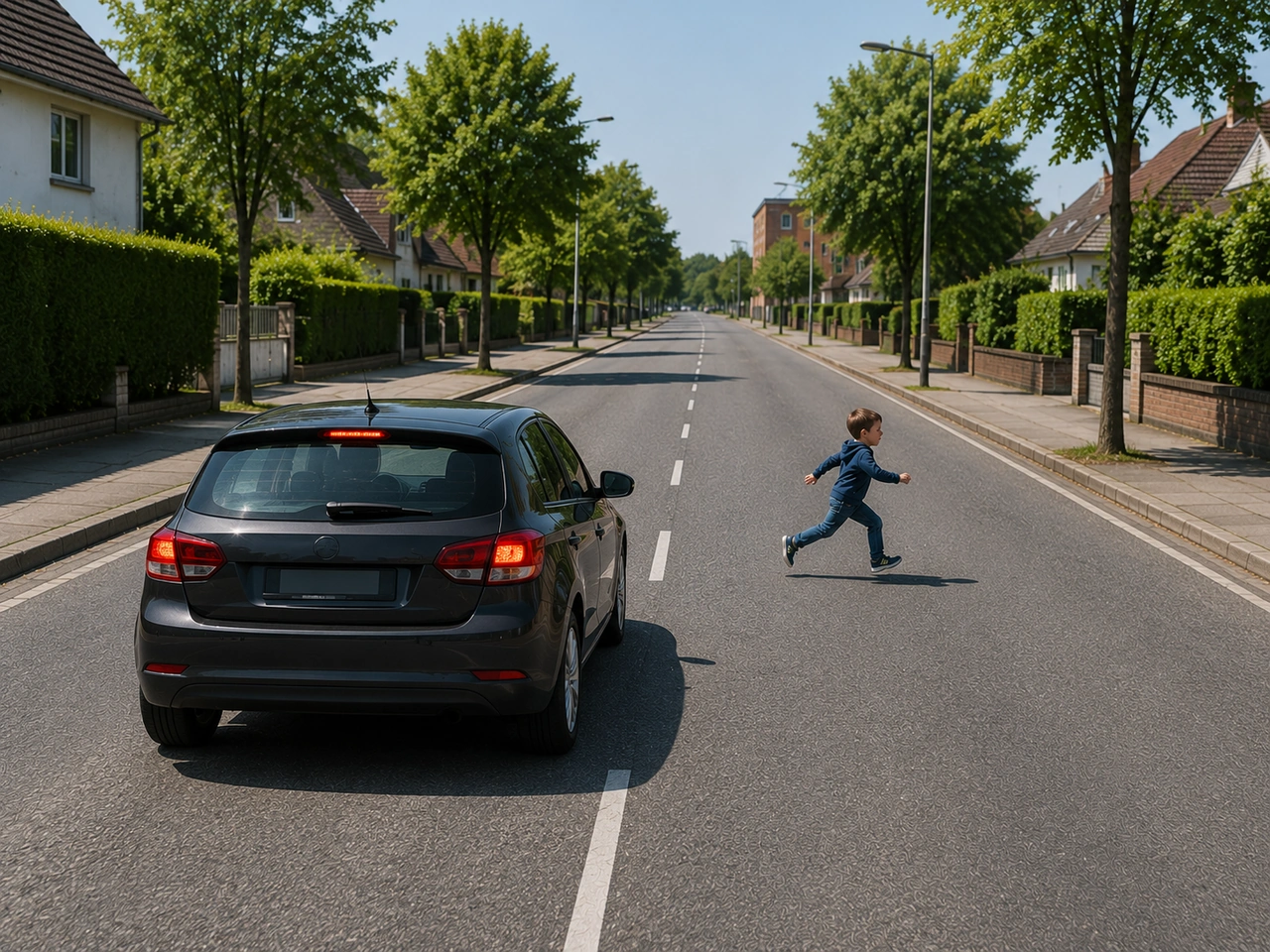
309. What should you do if a child runs onto the road ahead?

Sound your horn and continue driving.
✓ Brake firmly and be prepared to stop.
Swerve immediately into the opposite lane.
Accelerate to pass before the child moves further into the road.

Children can act unpredictably. Brake firmly, stay alert, and be prepared for more children to follow.

Child entering the road ahead of a vehicle
AI-generated by Rijbewijs-online.be • WCIT • CC BY-SA
Why should you use your indicator before turning?

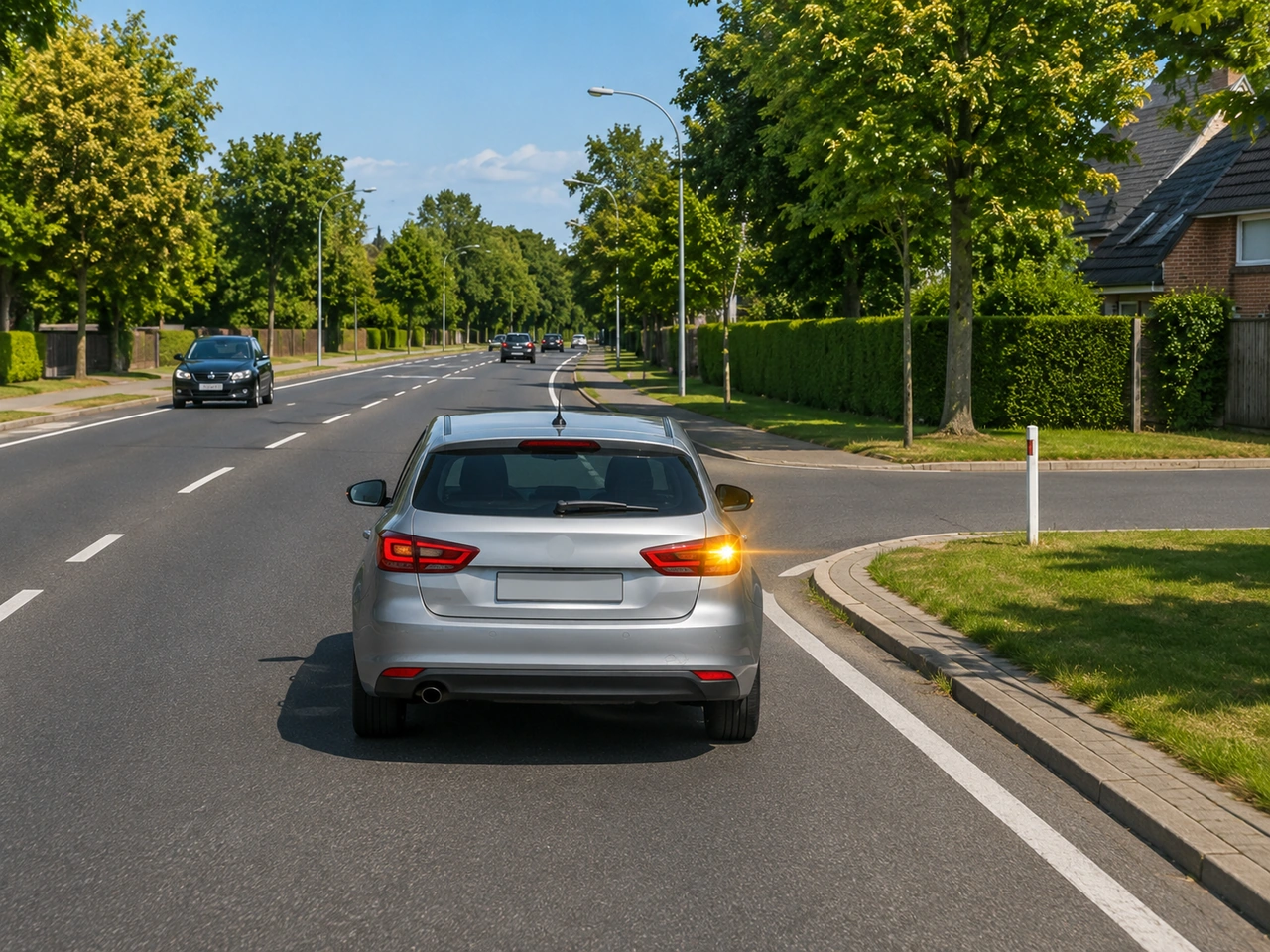
310. Why should you use your indicator before turning?

To make other road users stop for you.
To show that the turn is safe to make.
✓ To show other road users what you plan to do.
To give yourself priority over other traffic.

Indicators help other drivers, cyclists, and pedestrians understand your intentions in time.

Vehicle indicator signalling an intended turn
AI-generated by Rijbewijs-online.be • WCIT • CC BY-SA
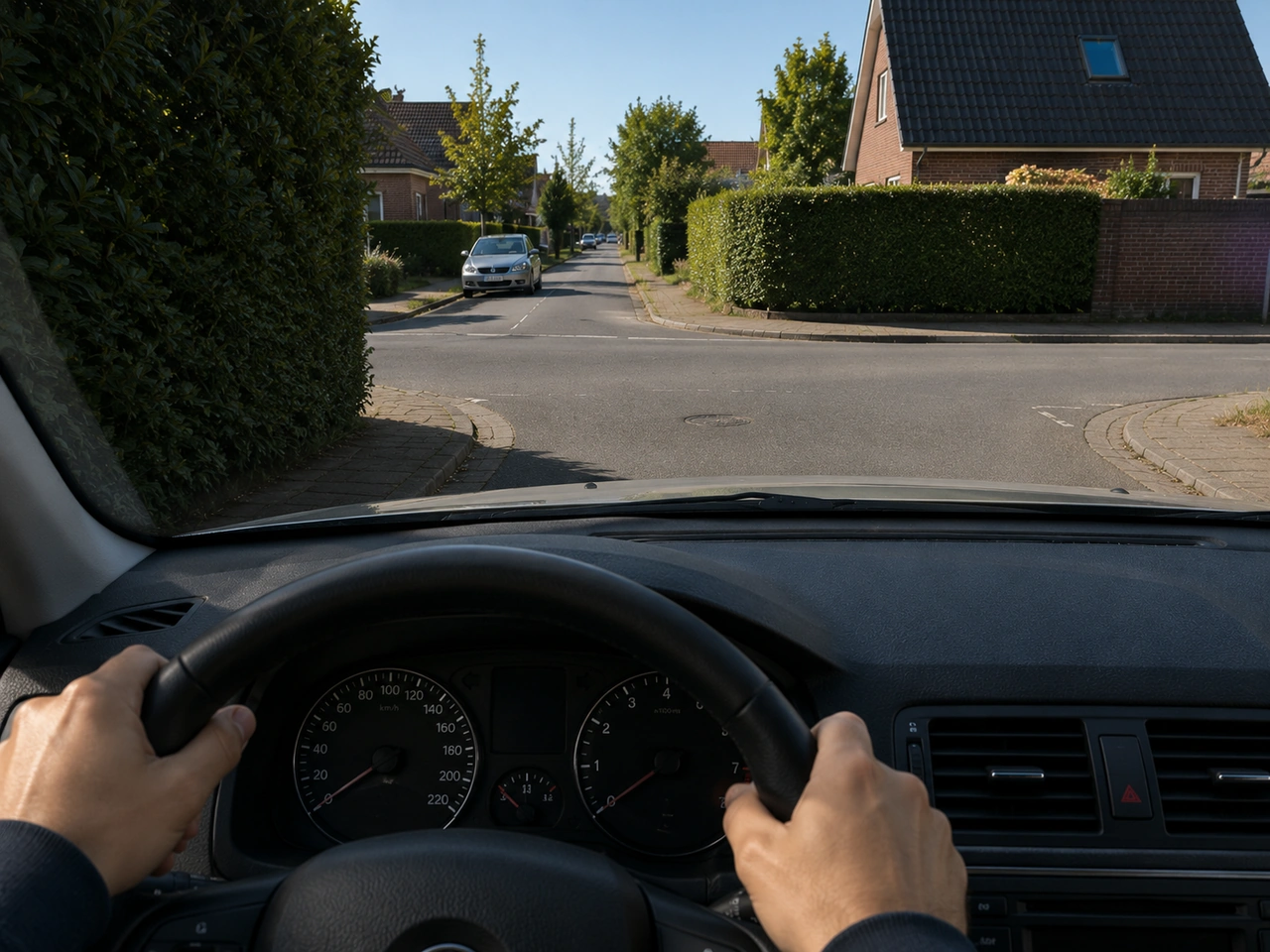
What should you do when your view is blocked at a junction?

311. What should you do when your view is blocked at a junction?

Look only in the direction traffic normally comes from.
✓ Slow down and proceed carefully.
Drive through quickly before other traffic appears.
Sound your horn and enter the junction.

If your view is blocked, slow down and make sure the way is clear before entering the junction.

Restricted view of approaching traffic at a junction
AI-generated by Rijbewijs-online.be • WCIT • CC BY-SA
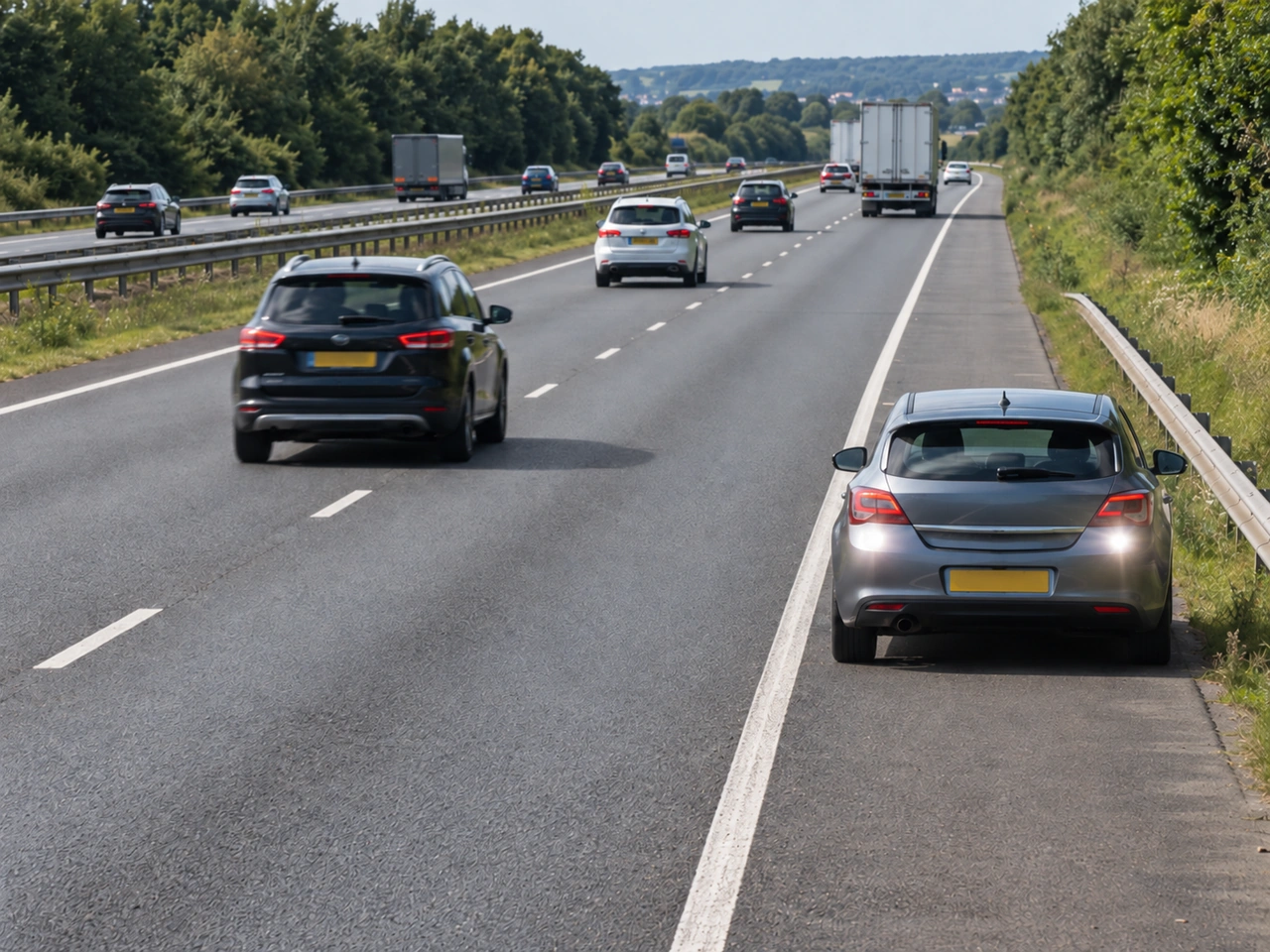
Why are reversing and making a U-turn on a motorway extremely dangerous?

312. Why are reversing and making a U-turn on a motorway extremely dangerous?

Motorway cameras may not recognise the vehicle correctly.
The vehicle may use more fuel during the manoeuvre.
✓ Other drivers approach quickly and do not expect traffic facing them.
The steering may become heavier while turning around.

Motorway traffic travels at high speed. Unexpected reversing or turning can cause a severe collision.

Vehicle on a motorway hard shoulder
AI-generated by Rijbewijs-online.be • WCIT • CC BY-SA
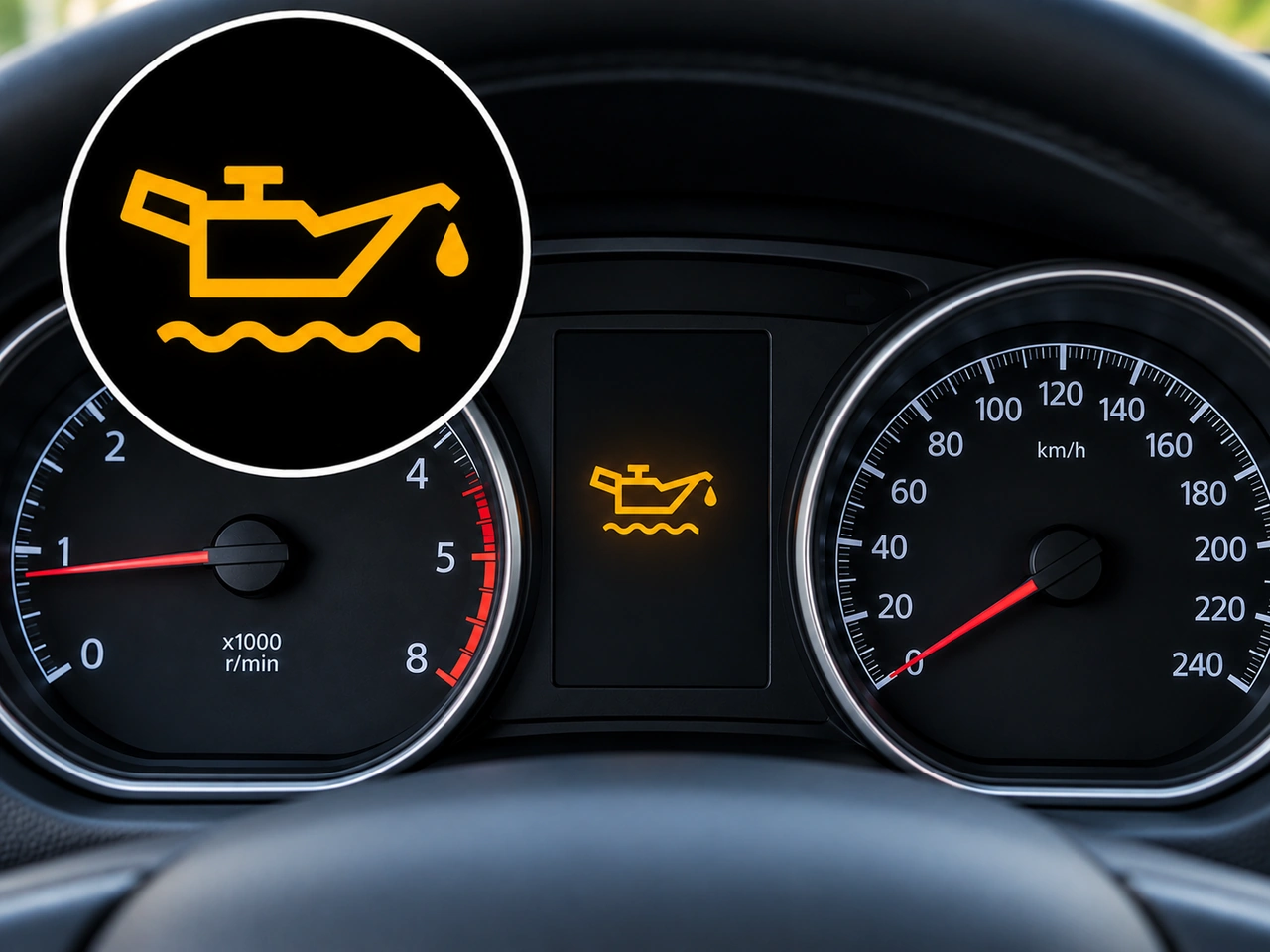
What does this dashboard symbol indicate?

313. What does this dashboard symbol indicate?

✓ Low engine oil level.
Engine-temperature warning.
Low oil pressure.
Low coolant level.

This symbol indicates that the engine oil level is low. Check the oil level according to the manufacturer's instructions and add the correct oil if necessary.

Low oil-level warning symbol on the dashboard
AI-generated by Rijbewijs-online.be • WCIT • CC BY-SA
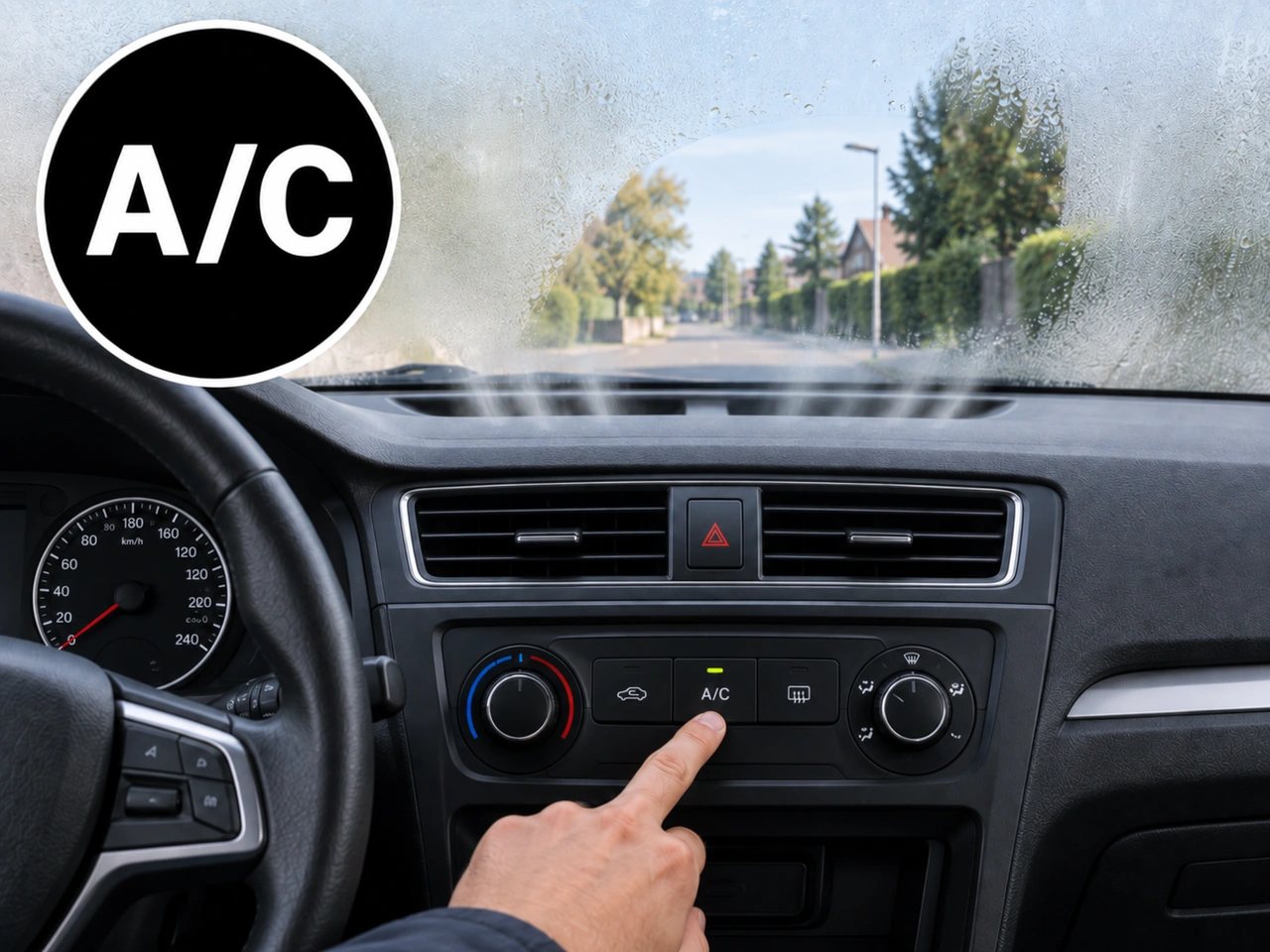
How can air conditioning help demist the windows?

314. How can air conditioning help demist the windows?

By opening the windows automatically.
By increasing air recirculation.
✓ By removing moisture from the air.
By heating the rear window directly.

Using the air conditioning can help demist the windows because it removes moisture from the cabin air. Directing this drier air towards the windscreen can clear condensation more quickly.

Air-conditioning controls used to demist the windscreen
AI-generated by Rijbewijs-online.be • WCIT • CC BY-SA
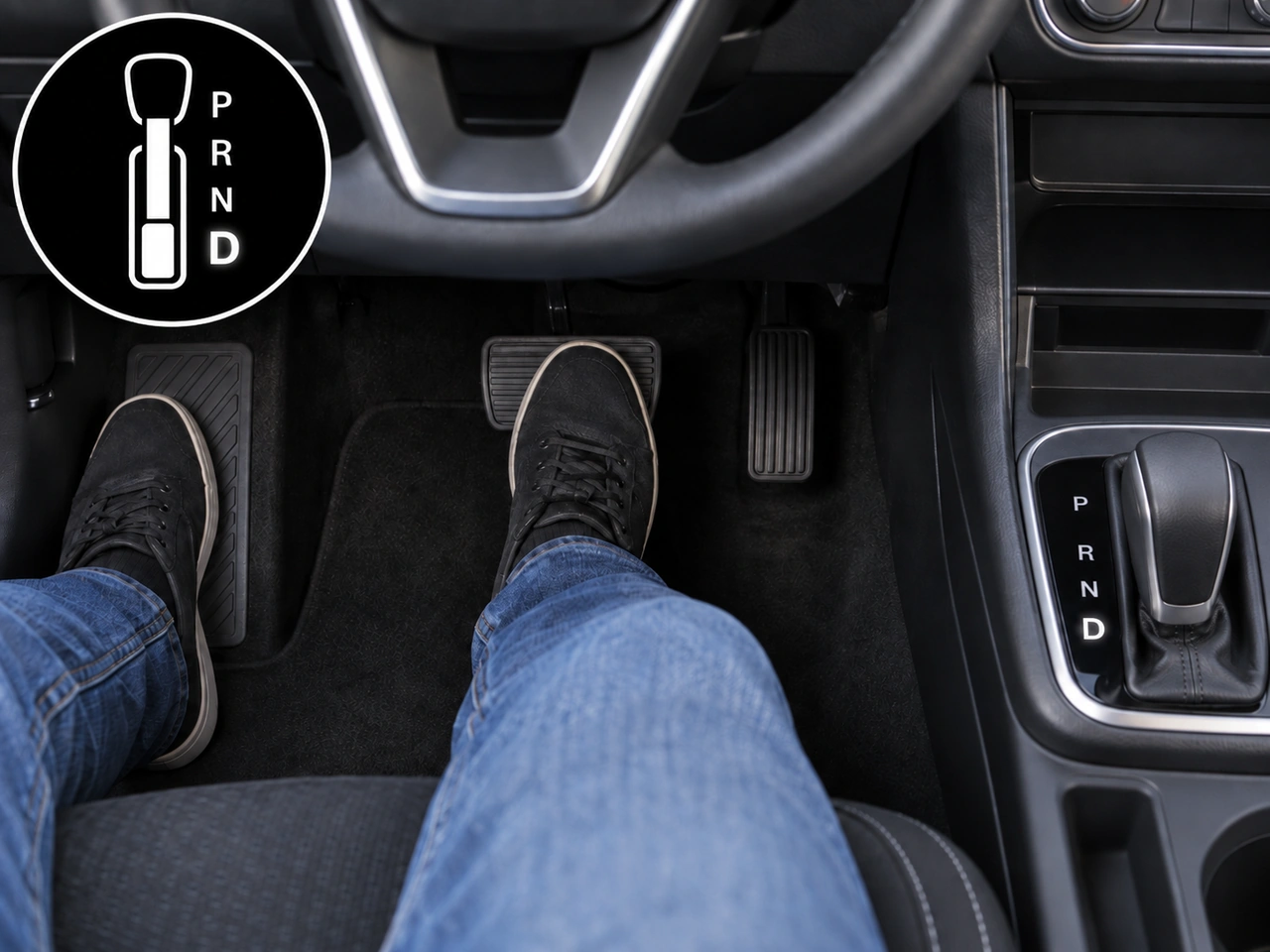
What should you do when an automatic vehicle is stationary in D?

315. What should you do when an automatic vehicle is stationary in D?

Select reverse gear.
✓ Keep the brake pedal pressed.
Press the accelerator lightly.
Release the parking brake.

An automatic vehicle may creep forward when D (Drive) is selected, even without pressing the accelerator. Keep the brake pedal pressed while stationary to prevent unintended movement.

Automatic gear selector in Drive and brake-pedal control
AI-generated by Rijbewijs-online.be • WCIT • CC BY-SA
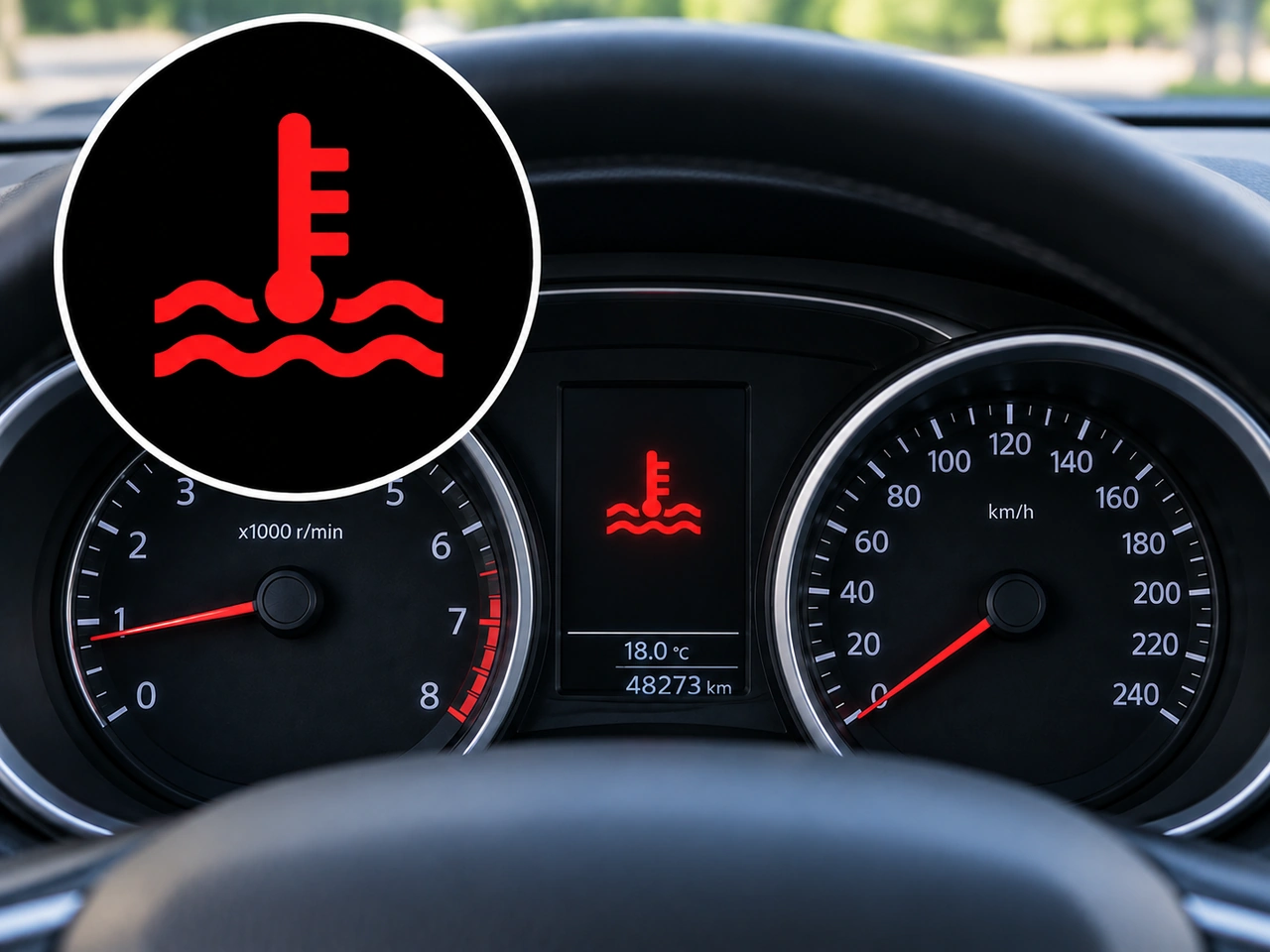
What does this dashboard symbol indicate?

316. What does this dashboard symbol indicate?

Low washer fluid.
Charging-system warning.
Engine-management warning.
✓ Engine-temperature warning.

This symbol indicates that the engine coolant temperature is too high. If it illuminates while driving, stop safely and allow the engine to cool before investigating the cause.

Engine-temperature warning symbol on the dashboard
AI-generated by Rijbewijs-online.be • WCIT • CC BY-SA
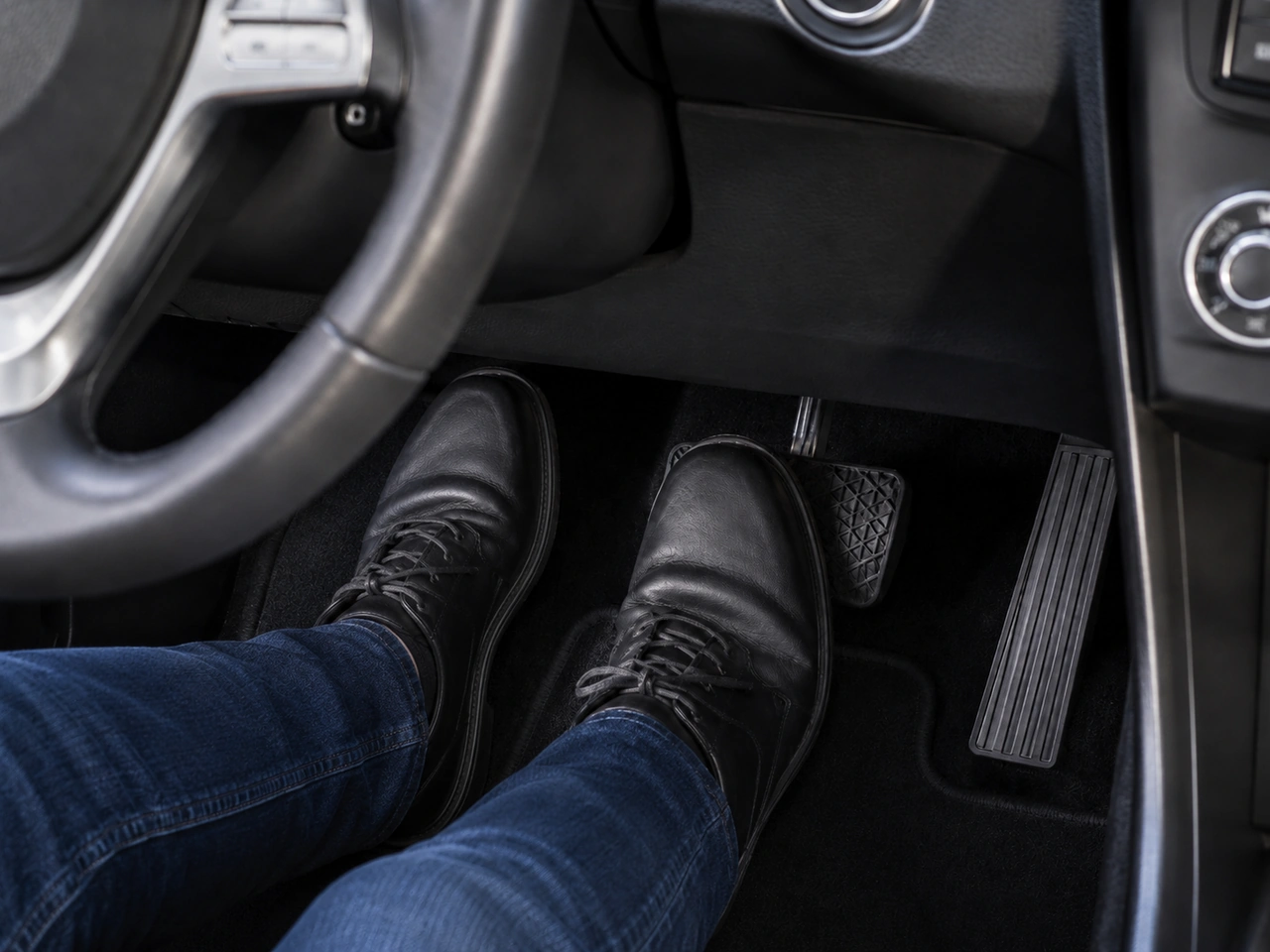
What should you do if the brake pedal feels unusually soft?

317. What should you do if the brake pedal feels unusually soft?

Continue until the brakes begin making noise.
Use only the parking brake while driving.
Reduce the tyre pressure to improve braking.
✓ Stop safely and have the braking system inspected.

A soft brake pedal or increased stopping distance may indicate a serious brake fault. Do not continue driving normally until the system has been checked.

Brake-pedal check for a possible braking fault
AI-generated by Rijbewijs-online.be • WCIT • CC BY-SA
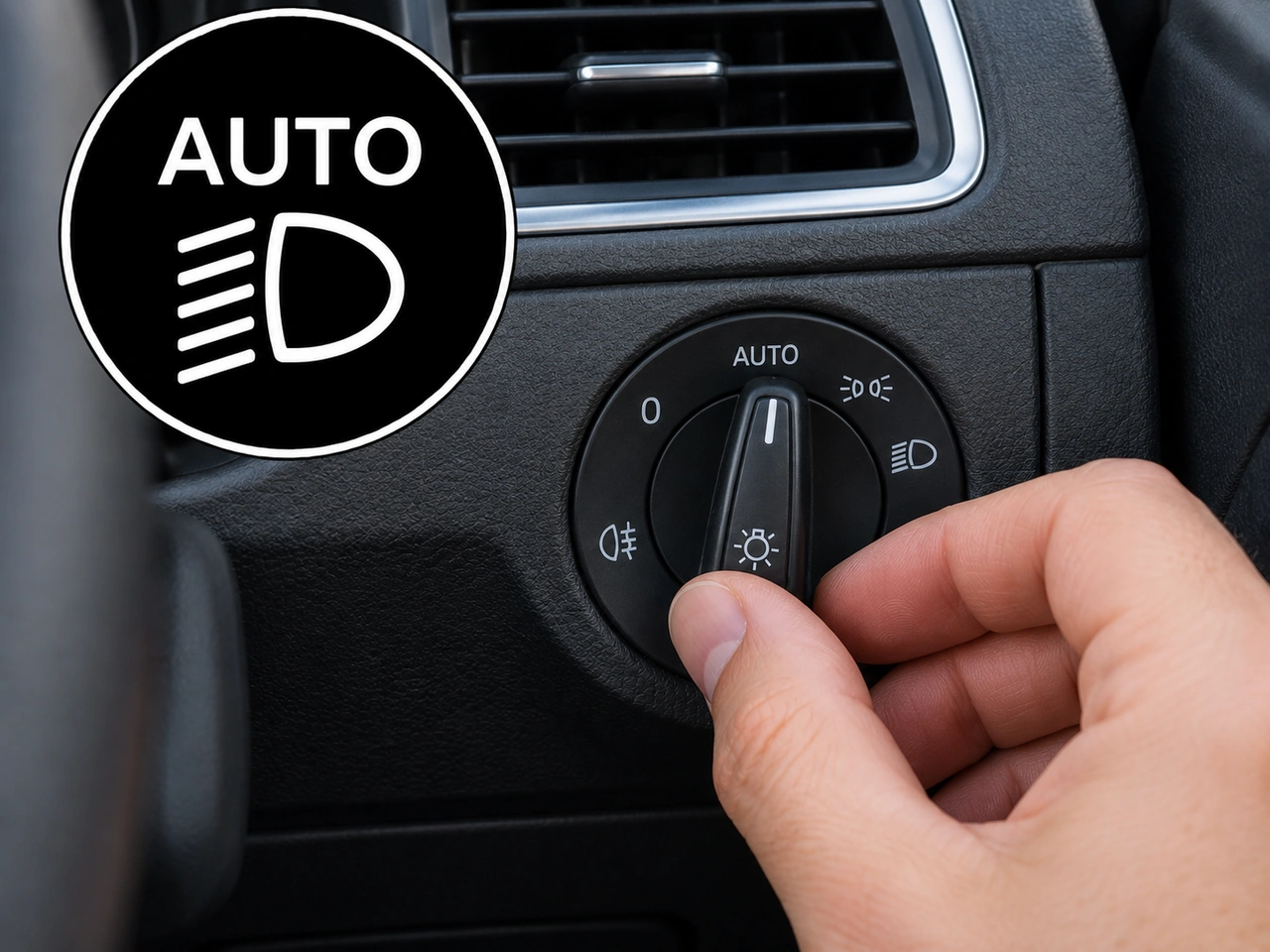
What does the AUTO setting on the lighting control do?

318. What does the AUTO setting on the lighting control do?

✓ It switches the headlights on or off automatically when needed.
It keeps the main beam switched on.
It switches on the hazard warning lights.
It switches on the front fog lights.

The AUTO lighting setting allows the vehicle to switch its exterior lights on or off automatically according to ambient light conditions. The driver remains responsible for ensuring that the correct lights are being used.

AUTO setting on the vehicle's lighting control
AI-generated by Rijbewijs-online.be • WCIT • CC BY-SA
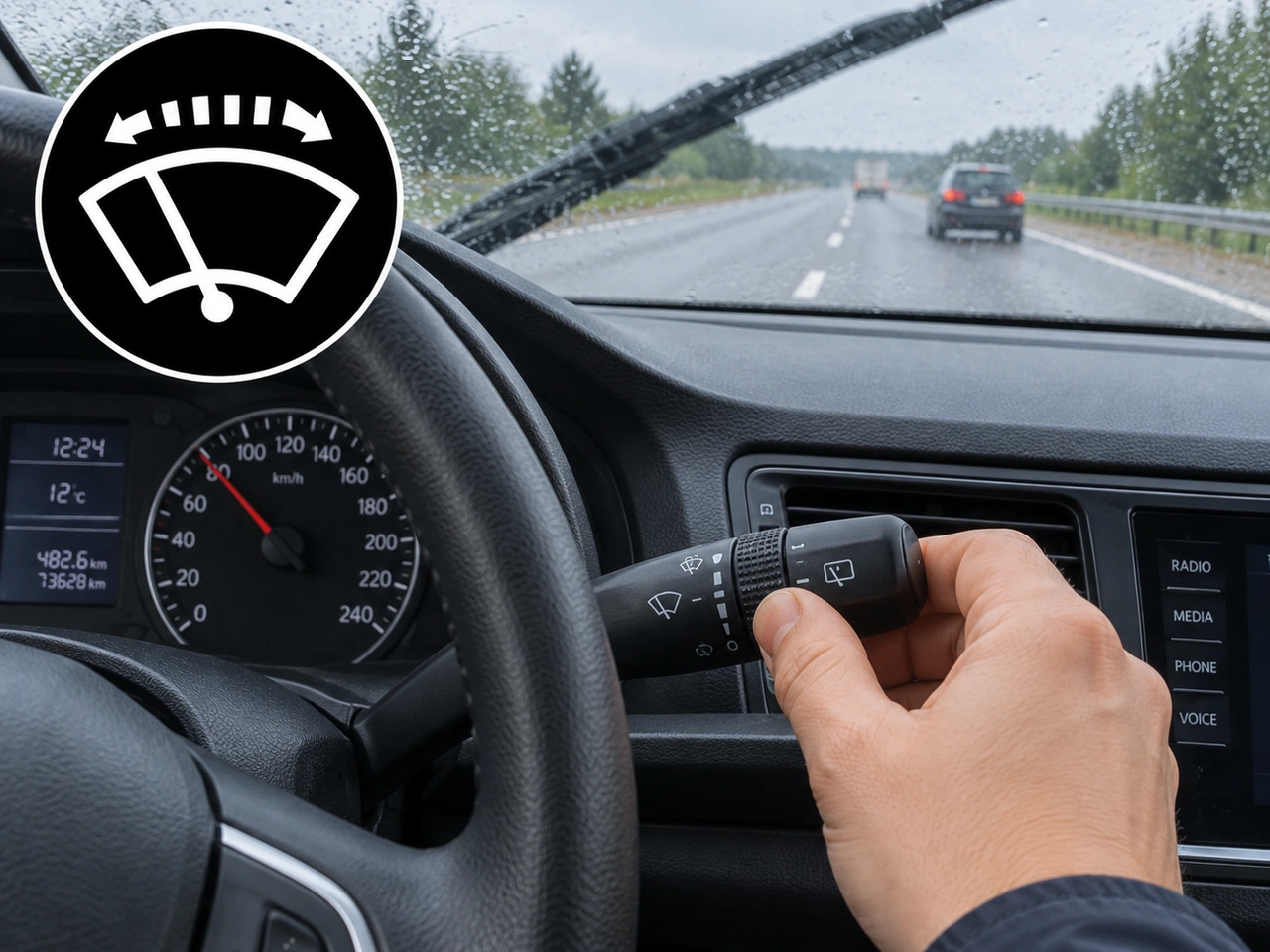
What does the intermittent wiper interval control adjust?

319. What does the intermittent wiper interval control adjust?

The amount of washer fluid sprayed.
✓ The time between wiper sweeps.
The brightness of the dashboard.
The speed of the rear wiper.

The intermittent wiper interval control adjusts the time between windscreen-wiper sweeps, allowing the driver to match the wiping frequency to light rain or spray.

Interval adjustment for intermittent windscreen wiping
AI-generated by Rijbewijs-online.be • WCIT • CC BY-SA
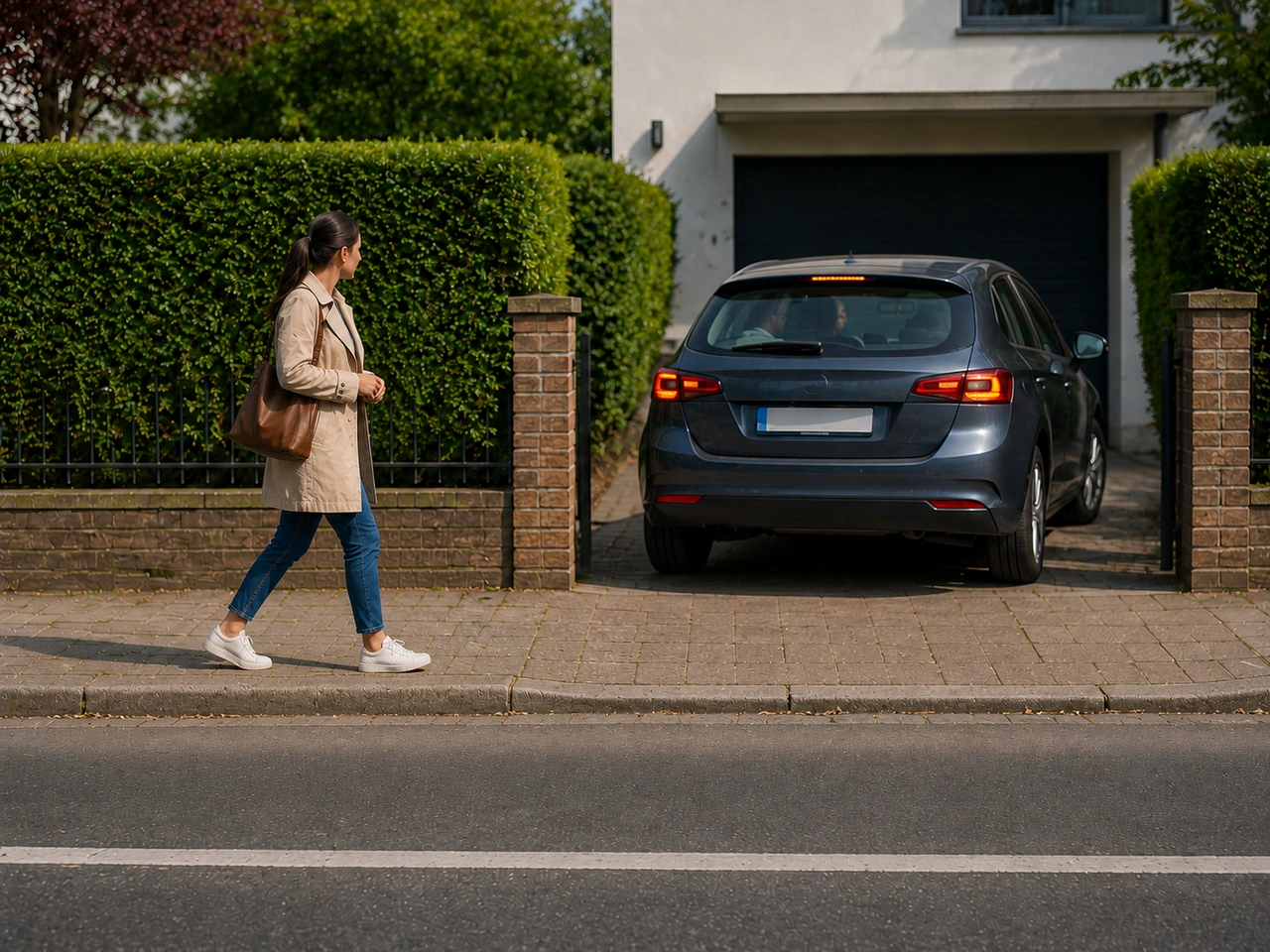
What should you do when walking near a driveway?

320. What should you do when walking near a driveway?

✓ Watch for vehicles entering or leaving.
Cross the driveway quickly without checking.
Assume vehicles will stop before crossing your path.
Watch only for vehicles leaving the driveway.

Vehicles may enter or leave driveways suddenly. Stay alert and check for moving vehicles.

Pedestrian passing a driveway entrance
AI-generated by Rijbewijs-online.be • WCIT • CC BY-SA
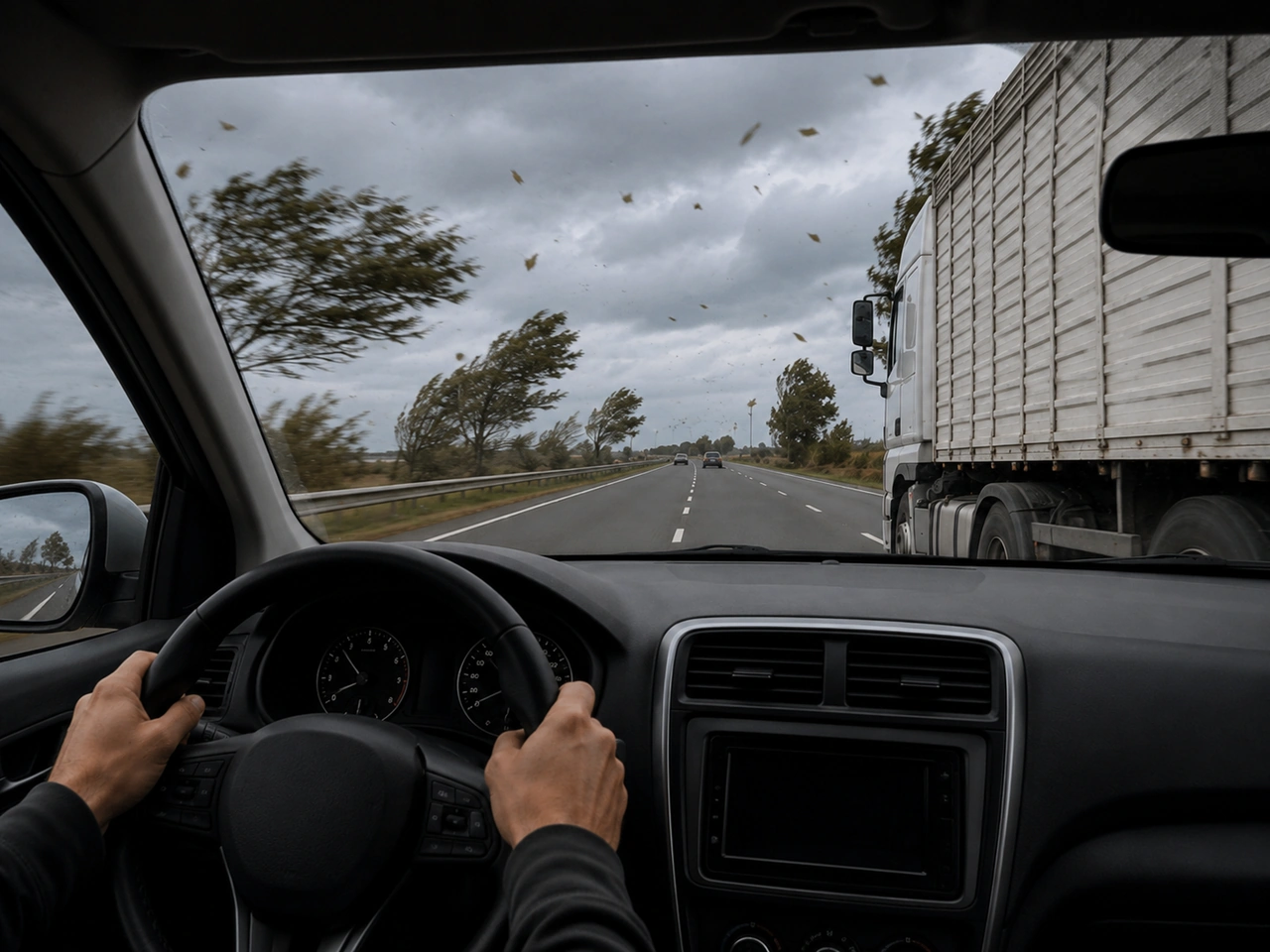
How should you pass a large vehicle in strong winds?

321. How should you pass a large vehicle in strong winds?

✓ Be prepared for sudden wind changes when passing.
Keep the steering fixed while you move past it.
Stay close beside it to remain sheltered from the wind.
Accelerate sharply as soon as you start passing.

Large vehicles can block wind and then expose you to strong gusts when you pass them.

Vehicle passing a large vehicle in windy conditions
AI-generated by Rijbewijs-online.be • WCIT • CC BY-SA
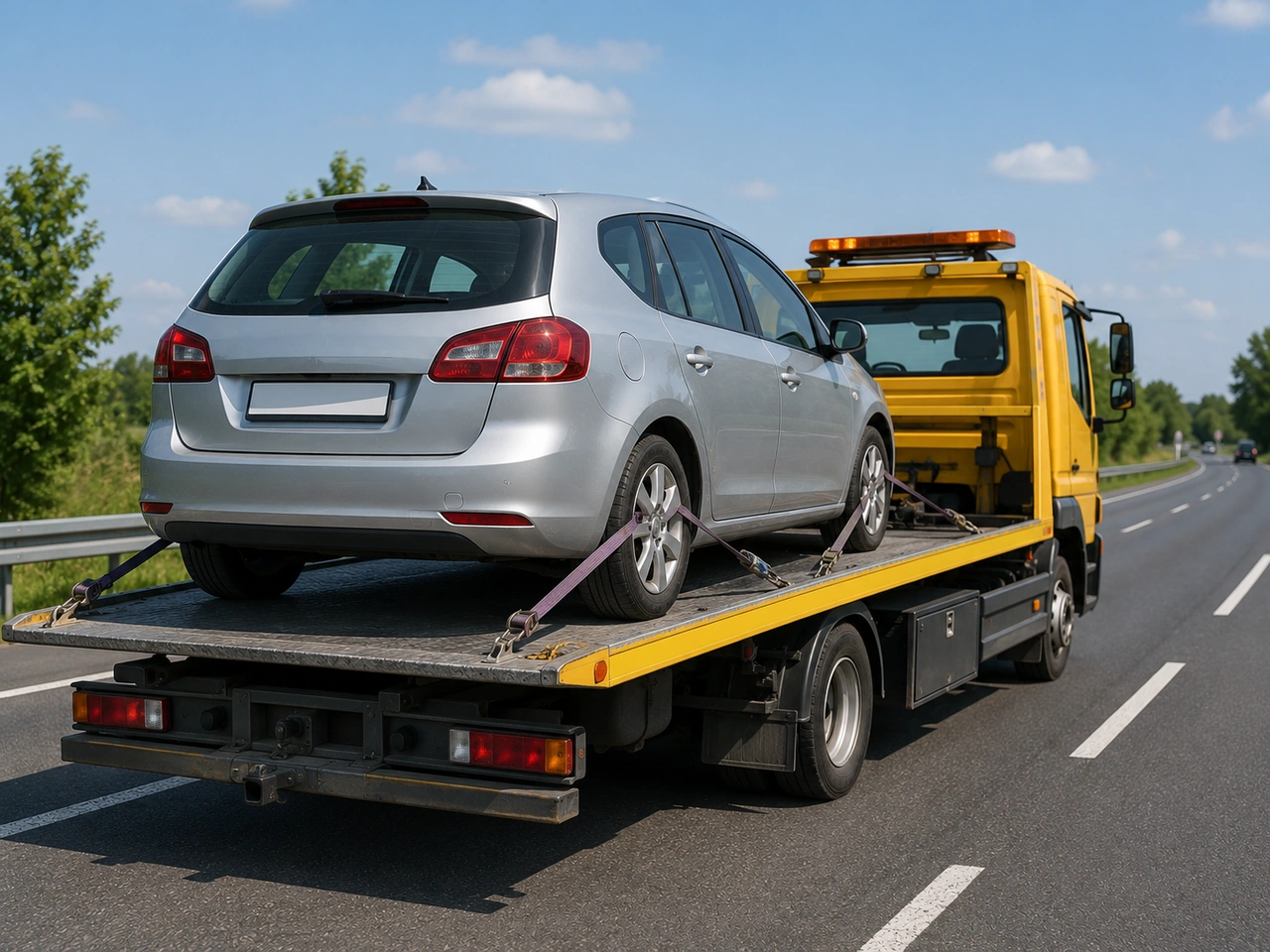
How should a disabled vehicle be towed?

322. How should a disabled vehicle be towed?

By attaching a rope to the bumper.
Without checking the steering or brakes.
✓ Use approved towing points and a method permitted by local rules.
With nobody controlling the disabled vehicle.

Incorrect towing can damage the vehicle or cause loss of control. Follow the manufacturer's instructions and local rules, and use professional recovery when the correct procedure is uncertain.

Disabled vehicle being towed
AI-generated by Rijbewijs-online.be • WCIT • CC BY-SA
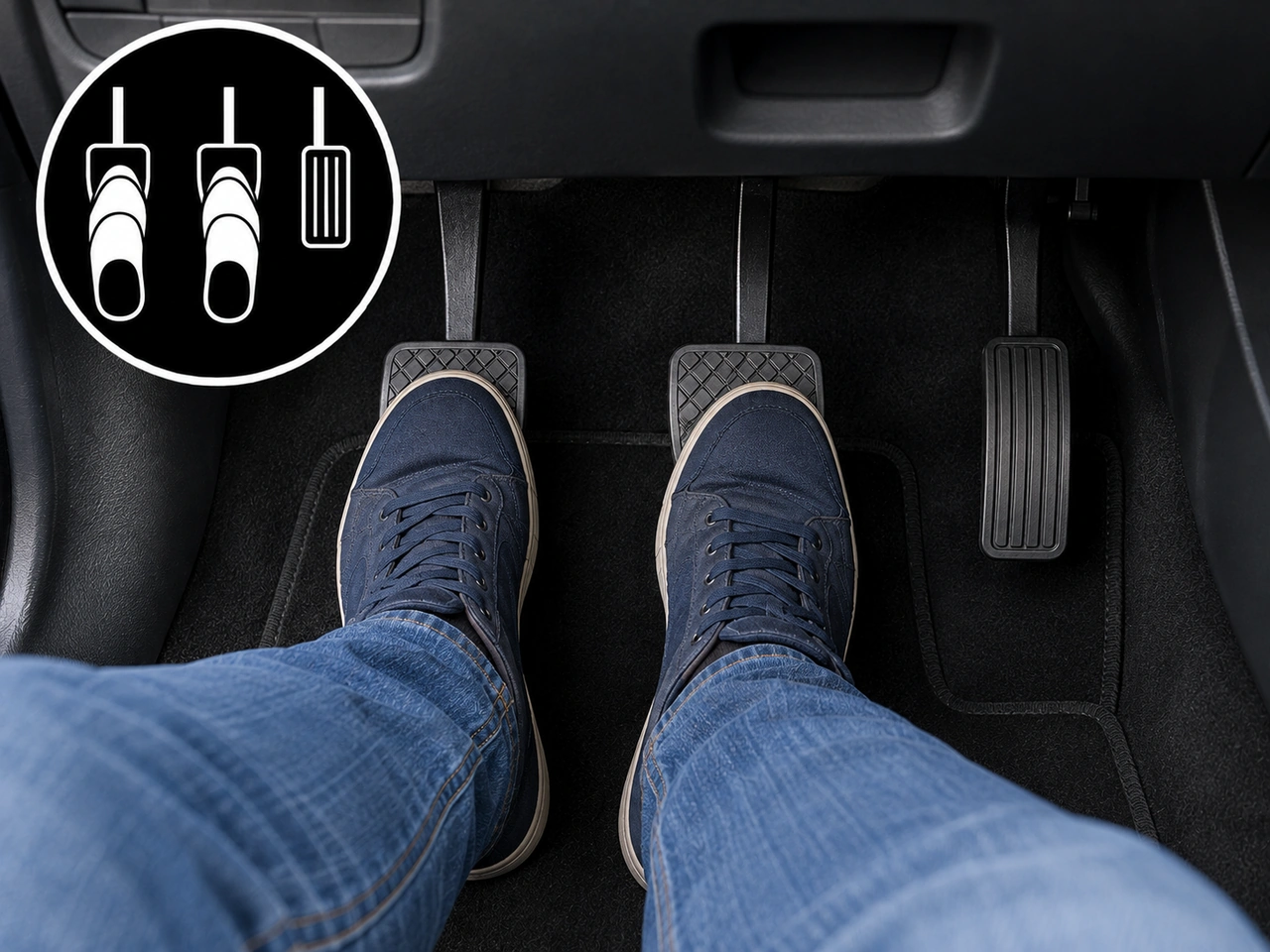
What should you do with the clutch during emergency braking in a manual vehicle?

323. What should you do with the clutch during emergency braking in a manual vehicle?

Keep it partly pressed.
Release it suddenly.
Pump it repeatedly.
✓ Press it fully while maintaining firm brake pressure.

During emergency braking in a manual vehicle, maintain firm pressure on the brake and press the clutch pedal fully so the engine does not stall as the vehicle slows. Do not reduce braking pressure while operating the clutch.

Brake and clutch operation during an emergency stop
AI-generated by Rijbewijs-online.be • WCIT • CC BY-SA
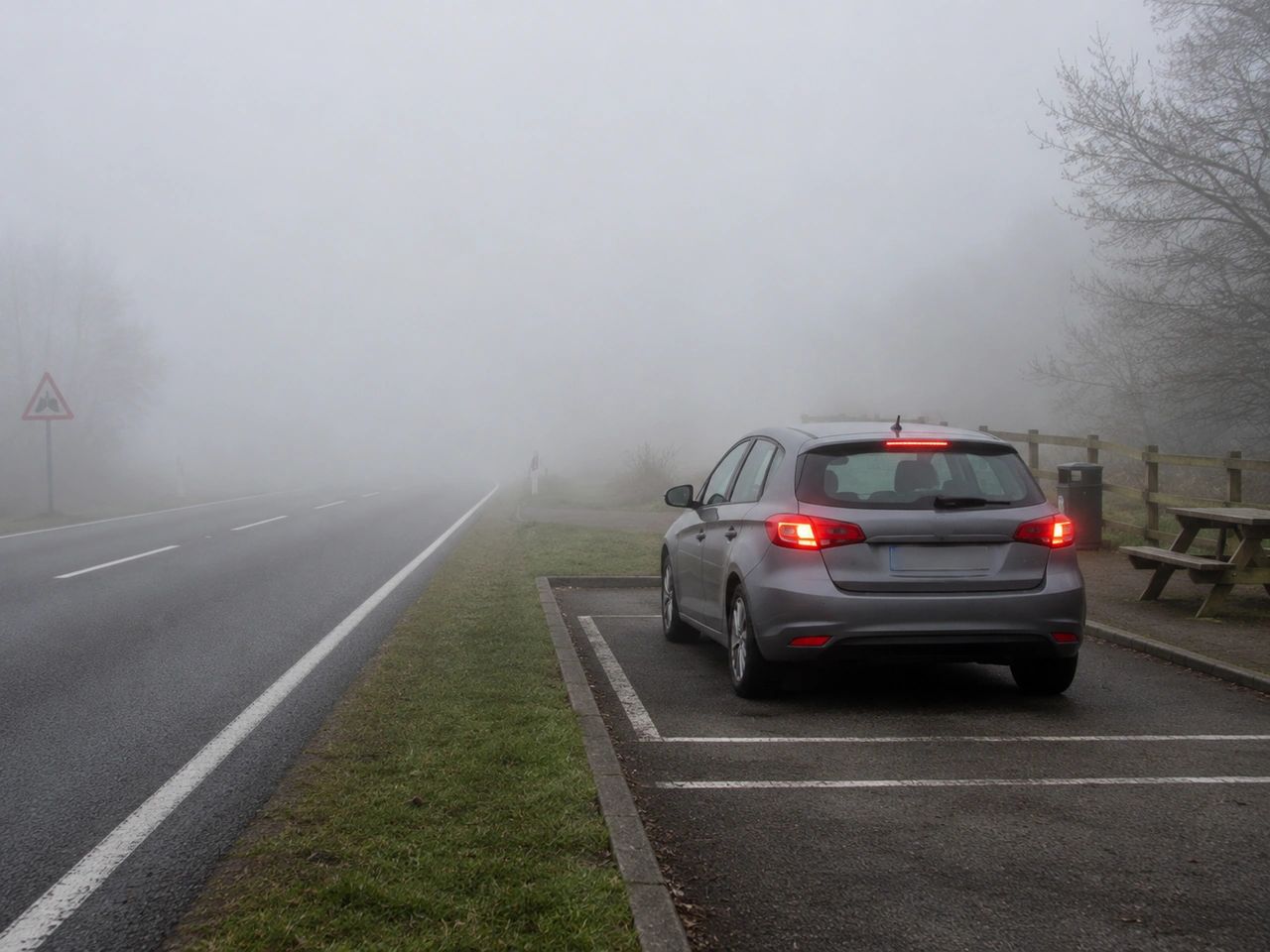
What should you do if fog becomes so thick that you cannot see safely?

324. What should you do if fog becomes so thick that you cannot see safely?

Follow the vehicle ahead closely for guidance.
Use main beam and keep driving.
✓ Slow down and stop in a safe location away from traffic if necessary.
Continue slowly by following the road markings.

If visibility becomes dangerously poor, find a safe place to stop rather than continuing without being able to see clearly.

Dense fog obscuring the road ahead
AI-generated by Rijbewijs-online.be • WCIT • CC BY-SA
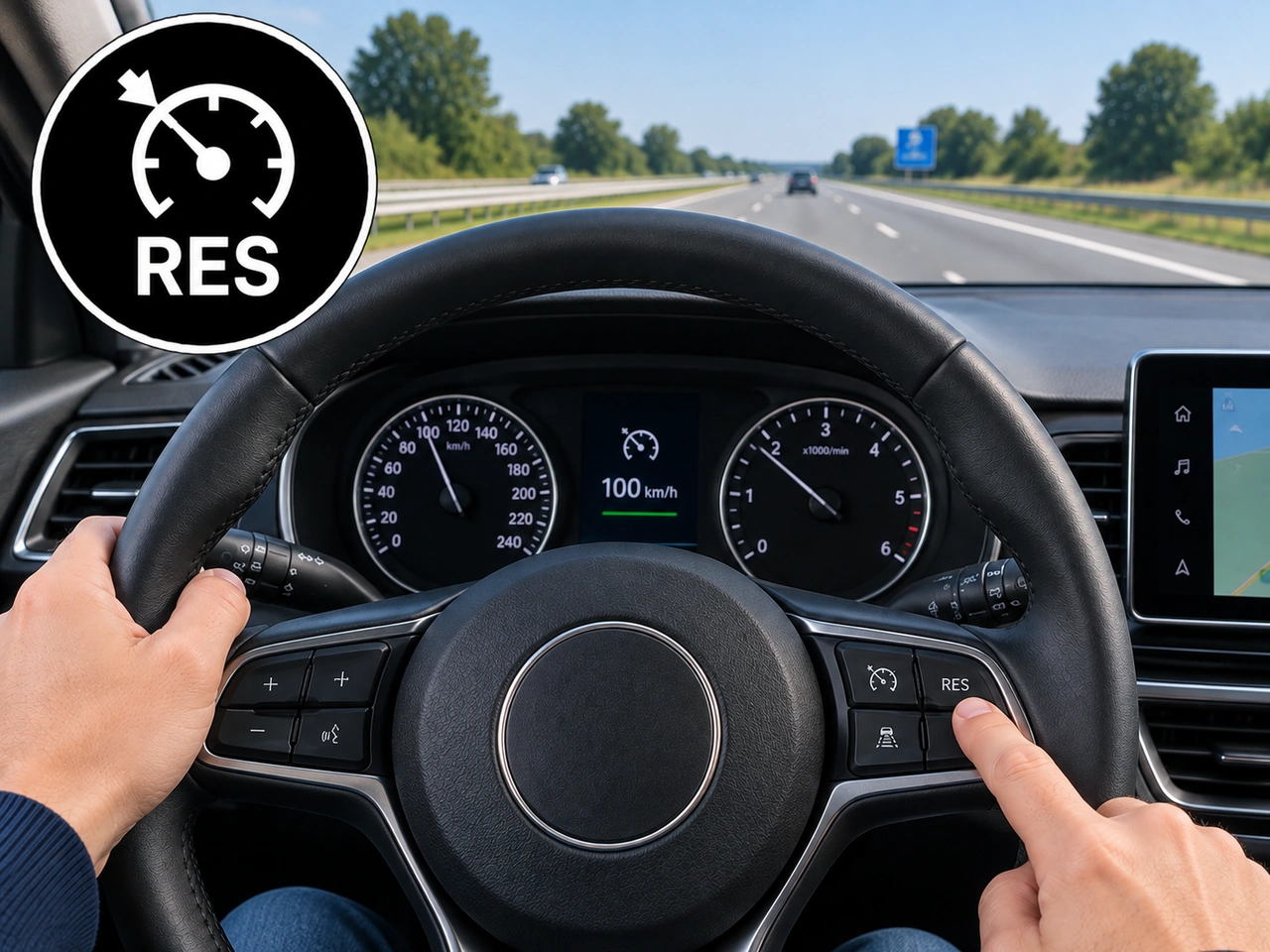
What does the resume function of cruise control normally do?

325. What does the resume function of cruise control normally do?

Switches cruise control off completely.
Sets the vehicle's current speed as a new limit.
✓ Returns the vehicle to the previously set cruising speed.
Applies the brakes automatically.

The resume function normally returns the vehicle to the previously set cruise-control speed after the system has been temporarily disengaged. The driver should use it only when traffic and road conditions are suitable.

RES button for resuming the stored cruising speed
AI-generated by Rijbewijs-online.be • WCIT • CC BY-SA
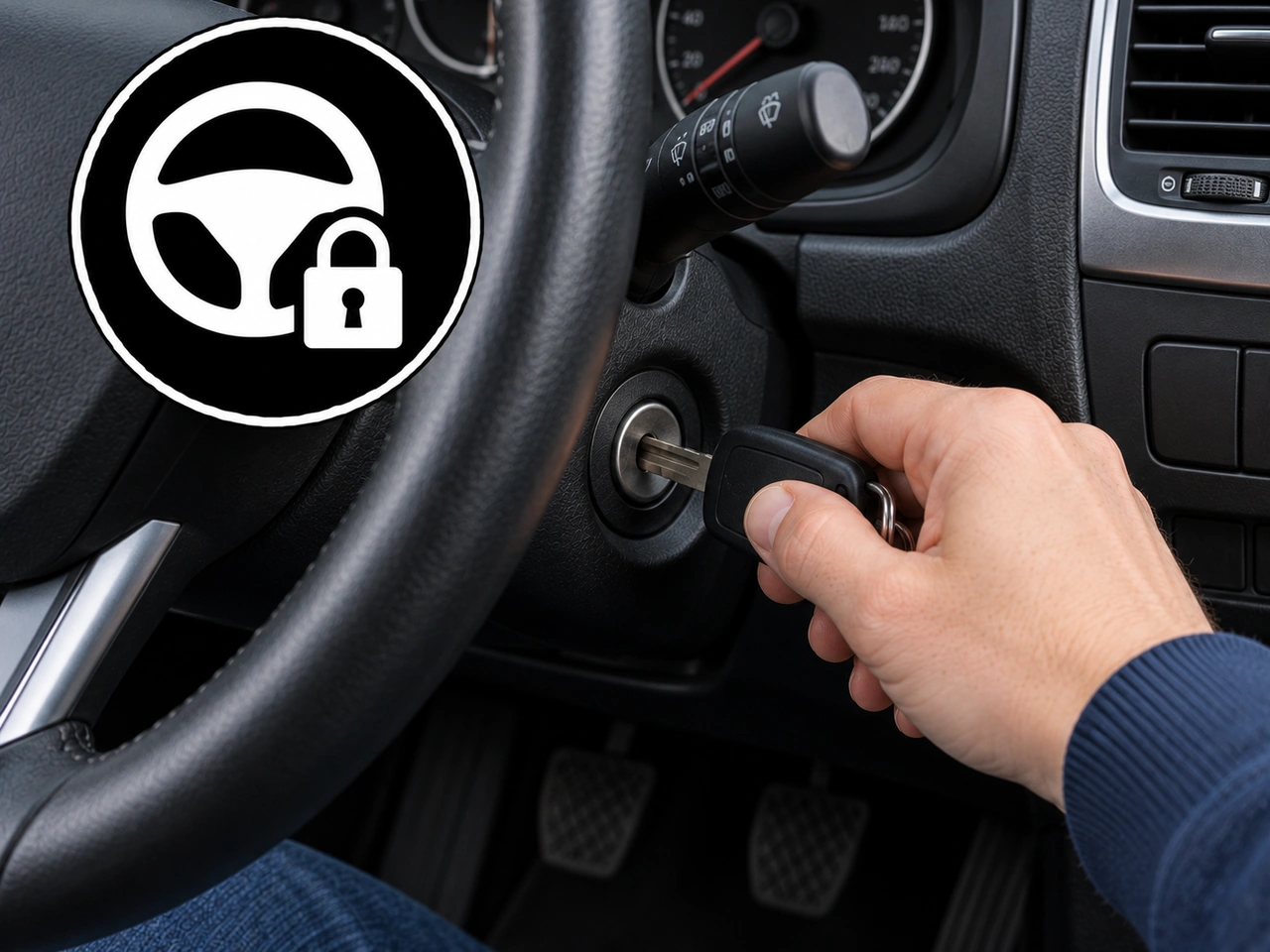
What may happen to the steering when the ignition key is removed?

326. What may happen to the steering when the ignition key is removed?

The power steering remains fully active.
The steering becomes lighter.
✓ The steering lock may engage.
The wheels automatically straighten.

On vehicles fitted with a steering lock, removing the ignition key may allow the steering lock to engage. Never remove the key while the vehicle is moving.

Ignition key and vehicle steering lock
AI-generated by Rijbewijs-online.be • WCIT • CC BY-SA
Does opening a window make an alcohol-impaired driver safe?

327. Does opening a window make an alcohol-impaired driver safe?

Yes, if you also drink some water.
Yes, but only when driving slowly.
✓ No, fresh air does not remove alcohol from the body.
Yes, because fresh air helps you sober up.

Fresh air may make someone feel more awake, but it does not reduce their alcohol concentration or restore safe driving ability.

Open car window and an alcohol-impaired driver
AI-generated by Rijbewijs-online.be • WCIT • CC BY-SA
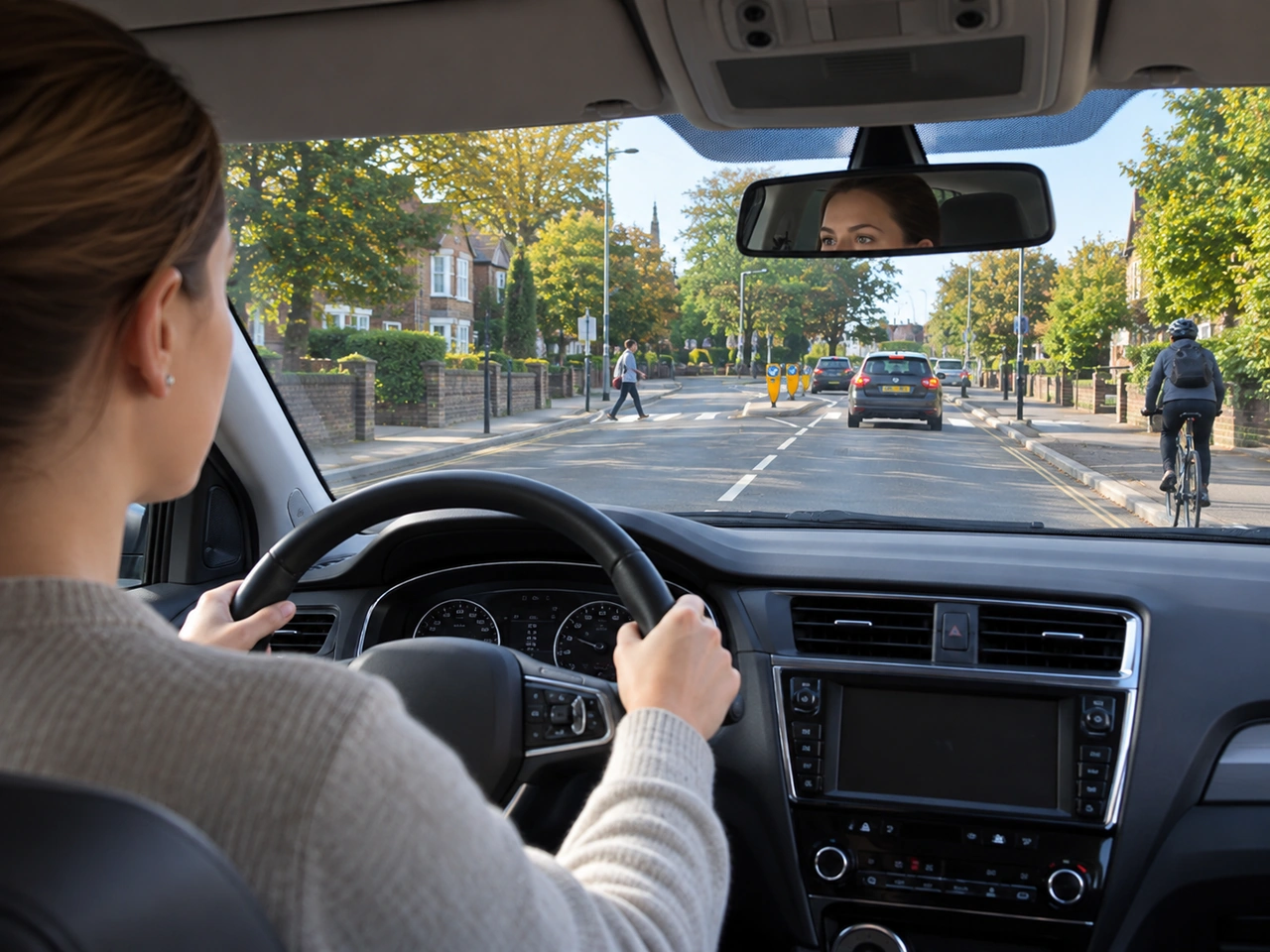
Why should you look well ahead while driving?

328. Why should you look well ahead while driving?

To follow the vehicle ahead more closely.
✓ To identify developing hazards early and gain more time to react.
To maintain the same speed in every situation.
To avoid checking your mirrors as often.

Looking well ahead helps you identify developing hazards early, such as slowing traffic, pedestrians, junctions, or changing road conditions. Earlier detection gives you more time to assess the situation and respond smoothly and safely.

Driver observing the road and traffic ahead
AI-generated by Rijbewijs-online.be • WCIT • CC BY-SA
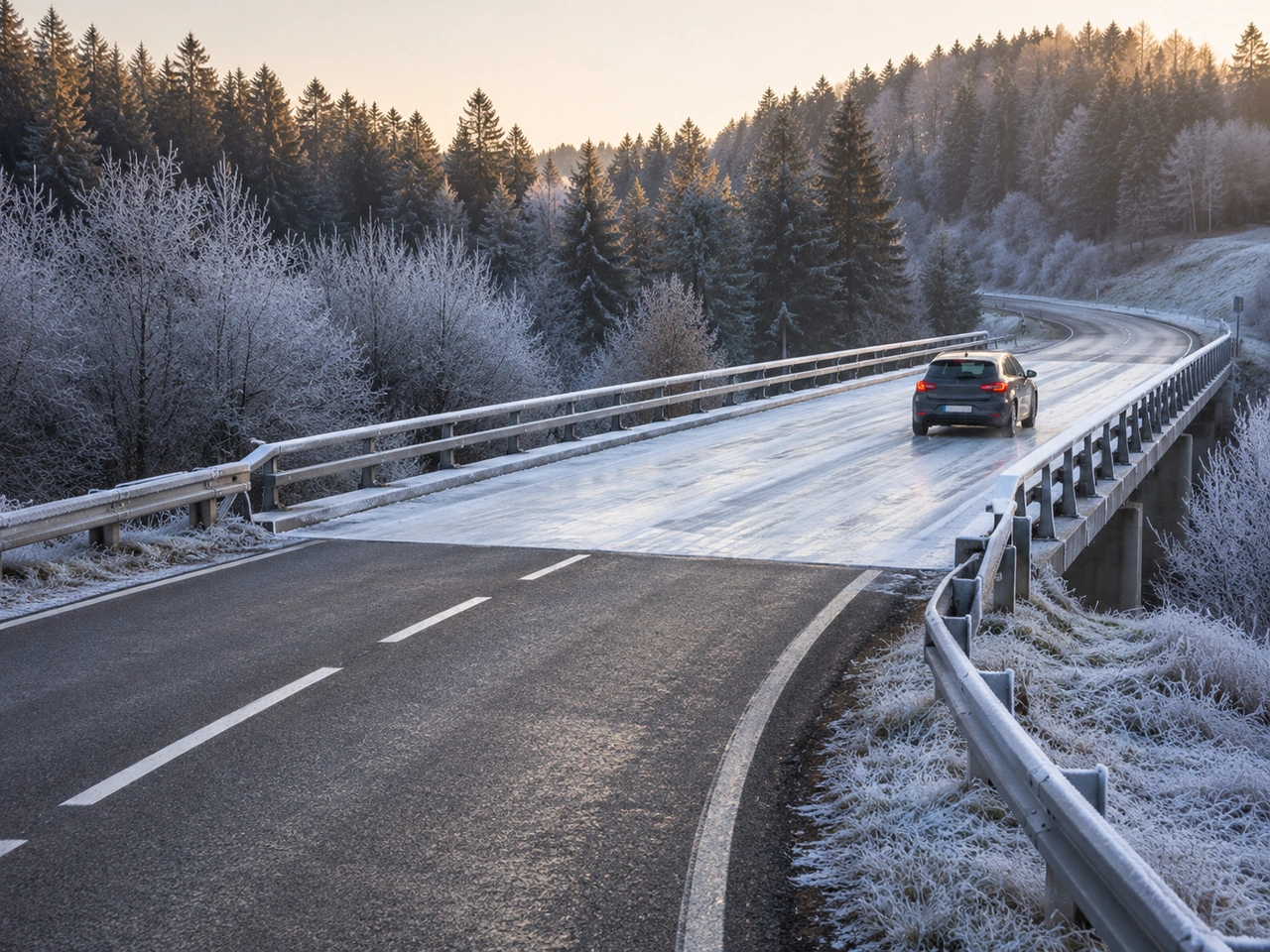
Why can bridges and overpasses become icy before nearby roads?

329. Why can bridges and overpasses become icy before nearby roads?

Road salt is less effective on bridges.
Bridges are always at a higher altitude.
Their barriers trap cold air on the road surface.
✓ Cold air circulates above and below them.

Bridges lose heat from both their upper and lower surfaces, so they can freeze before roads built directly on the ground.

Icy surface on an exposed bridge
AI-generated by Rijbewijs-online.be • WCIT • CC BY-SA
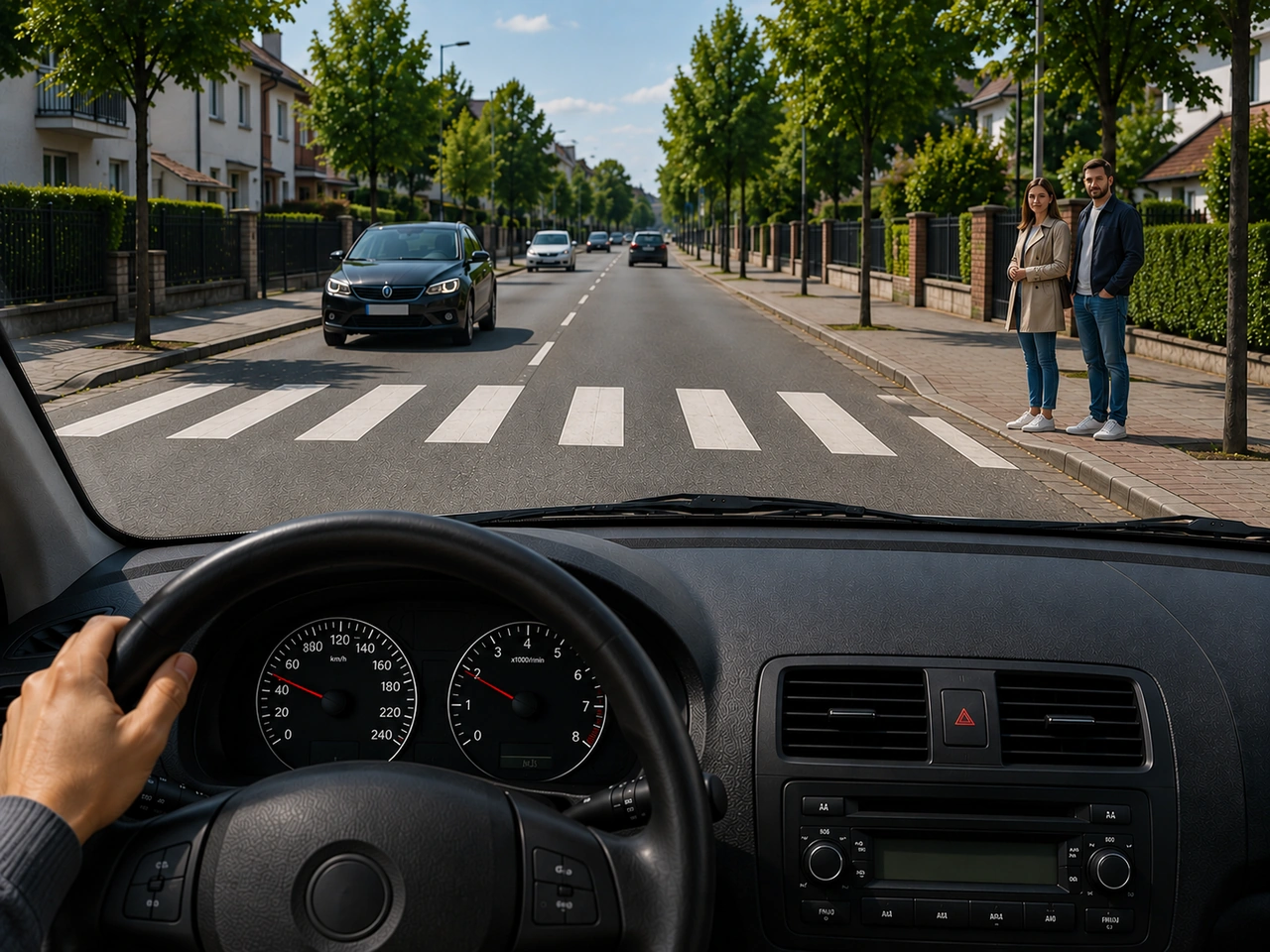
What should you do when people are waiting at a pedestrian crossing?

330. What should you do when people are waiting at a pedestrian crossing?

Continue if nobody has stepped onto the crossing.
✓ Slow down and stop if they want to cross.
Drive through if the pedestrians are still waiting.
Maintain your speed until someone starts crossing.

When people are waiting near a pedestrian crossing, reduce your speed and be ready to stop. Pedestrians may begin crossing at any moment.

People waiting at a pedestrian crossing
AI-generated by Rijbewijs-online.be • WCIT • CC BY-SA
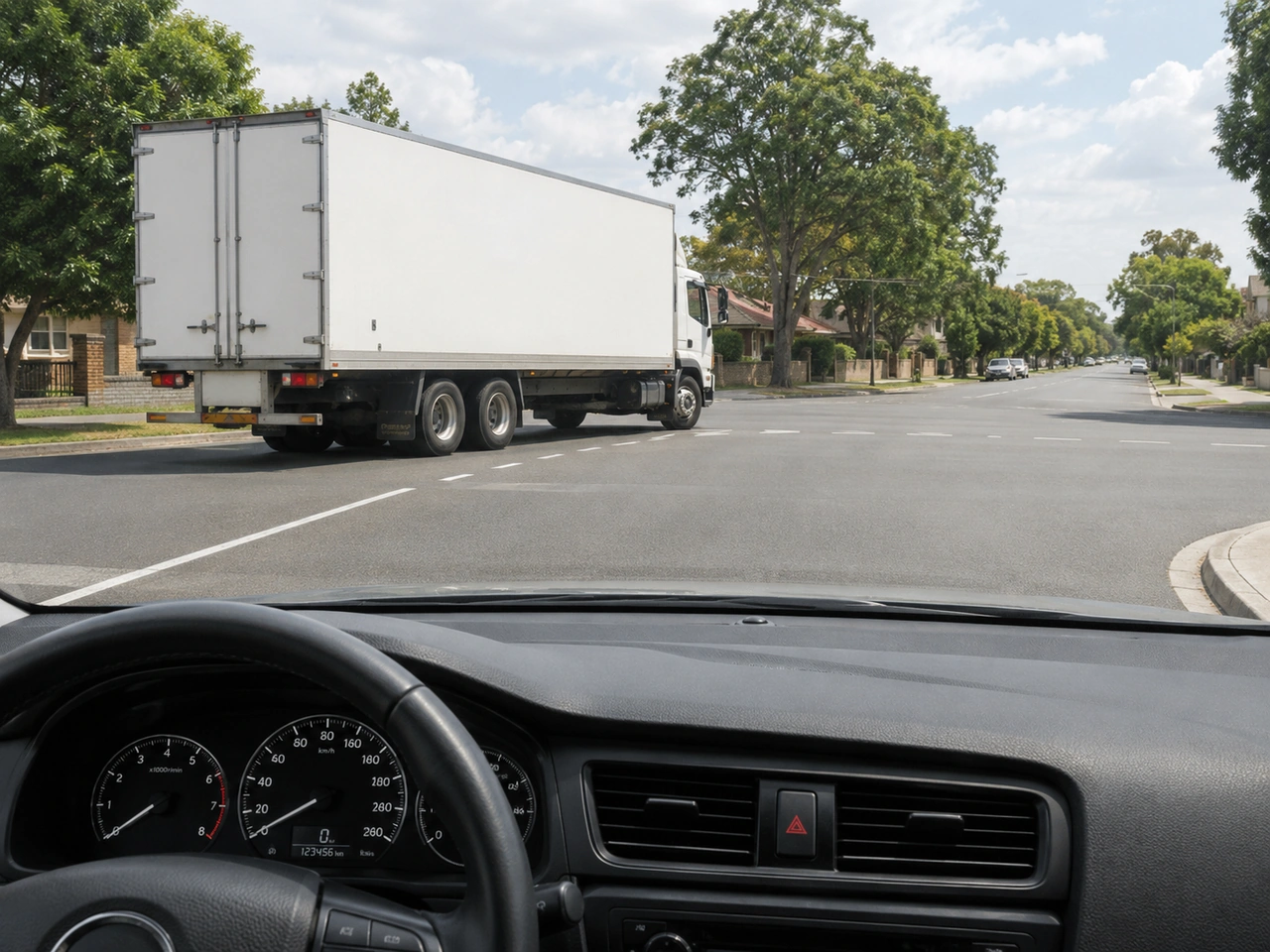
Why should you leave space beside large vehicles when they turn?

331. Why should you leave space beside large vehicles when they turn?

✓ They may need extra room to complete the turn.
They always have priority while turning.
They can turn only from the centre of the road.
They always turn more slowly than cars.

Large vehicles often swing wide when turning and have larger blind spots. Keep clear and do not move into the space beside them.

Large vehicle needing extra space to turn
AI-generated by Rijbewijs-online.be • WCIT • CC BY-SA
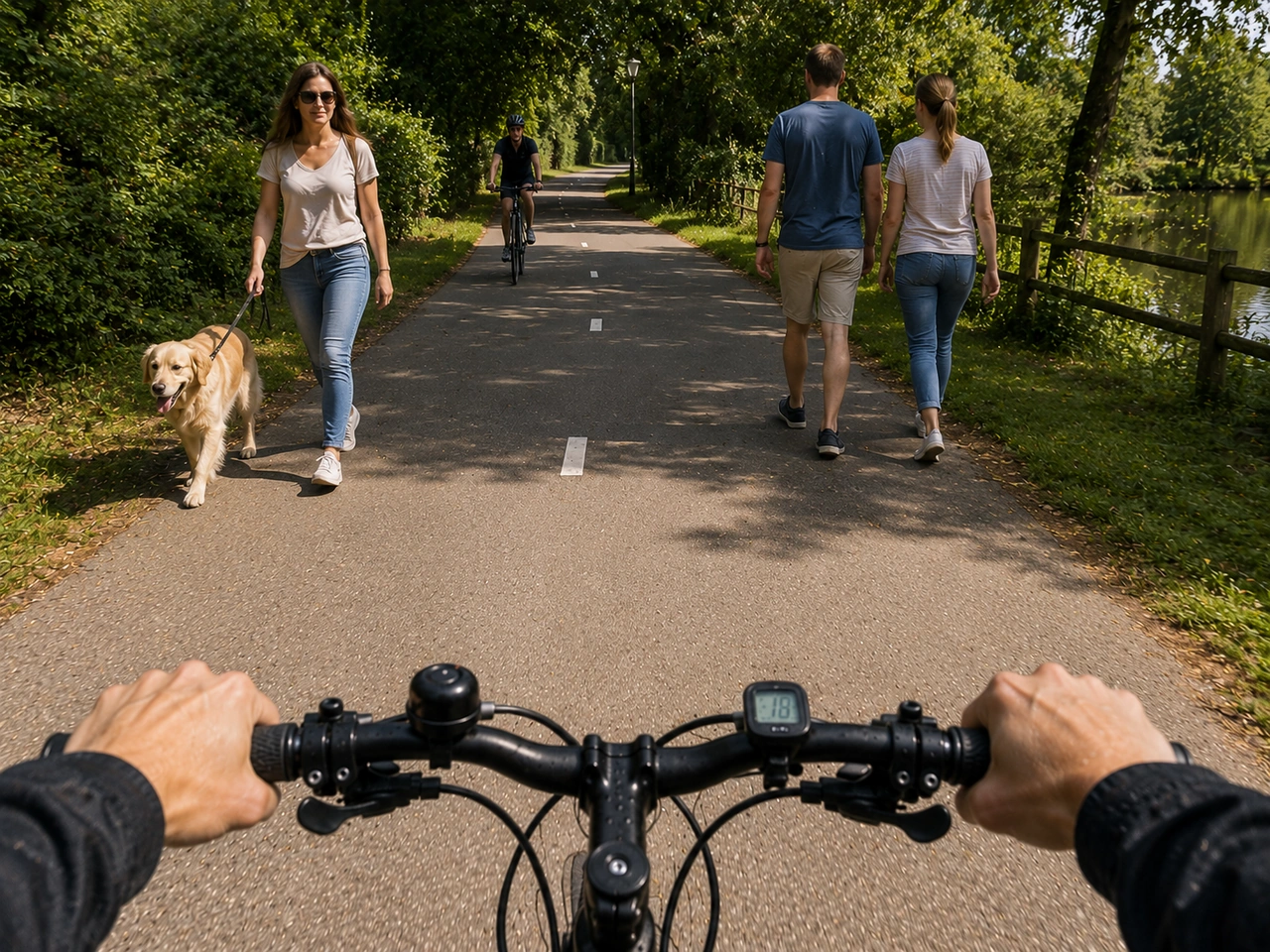
What should cyclists do when passing pedestrians on a shared path?

332. What should cyclists do when passing pedestrians on a shared path?

✓ Slow down, give warning, and leave enough space.
Pass quickly before they change direction.
Use your bell and keep the same speed.
Assume they will hear you approaching.

Pedestrians may change direction unexpectedly. A warning and safe passing distance reduce the risk of a collision.

Cyclist passing pedestrians on a shared path
AI-generated by Rijbewijs-online.be • WCIT • CC BY-SA
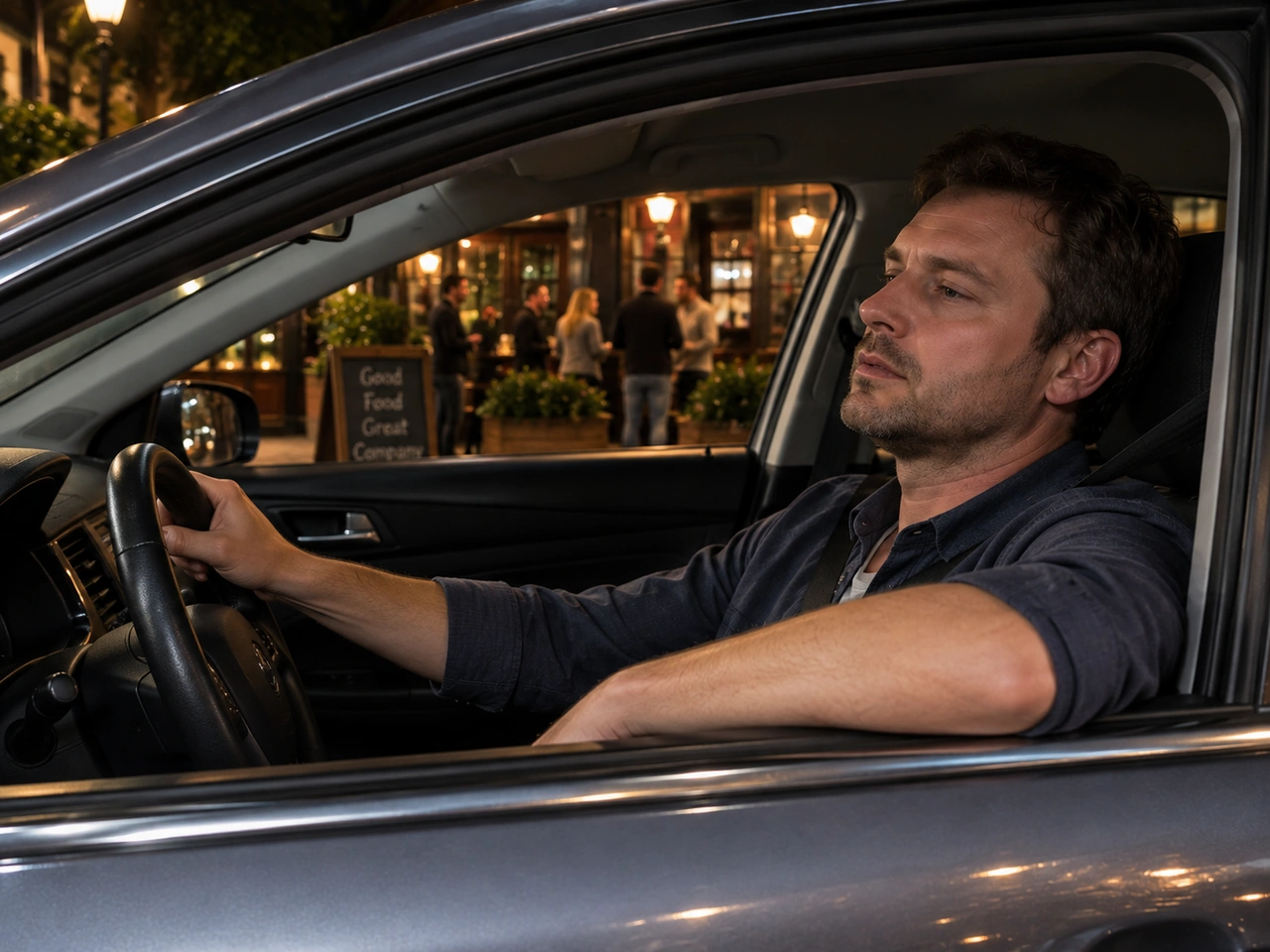
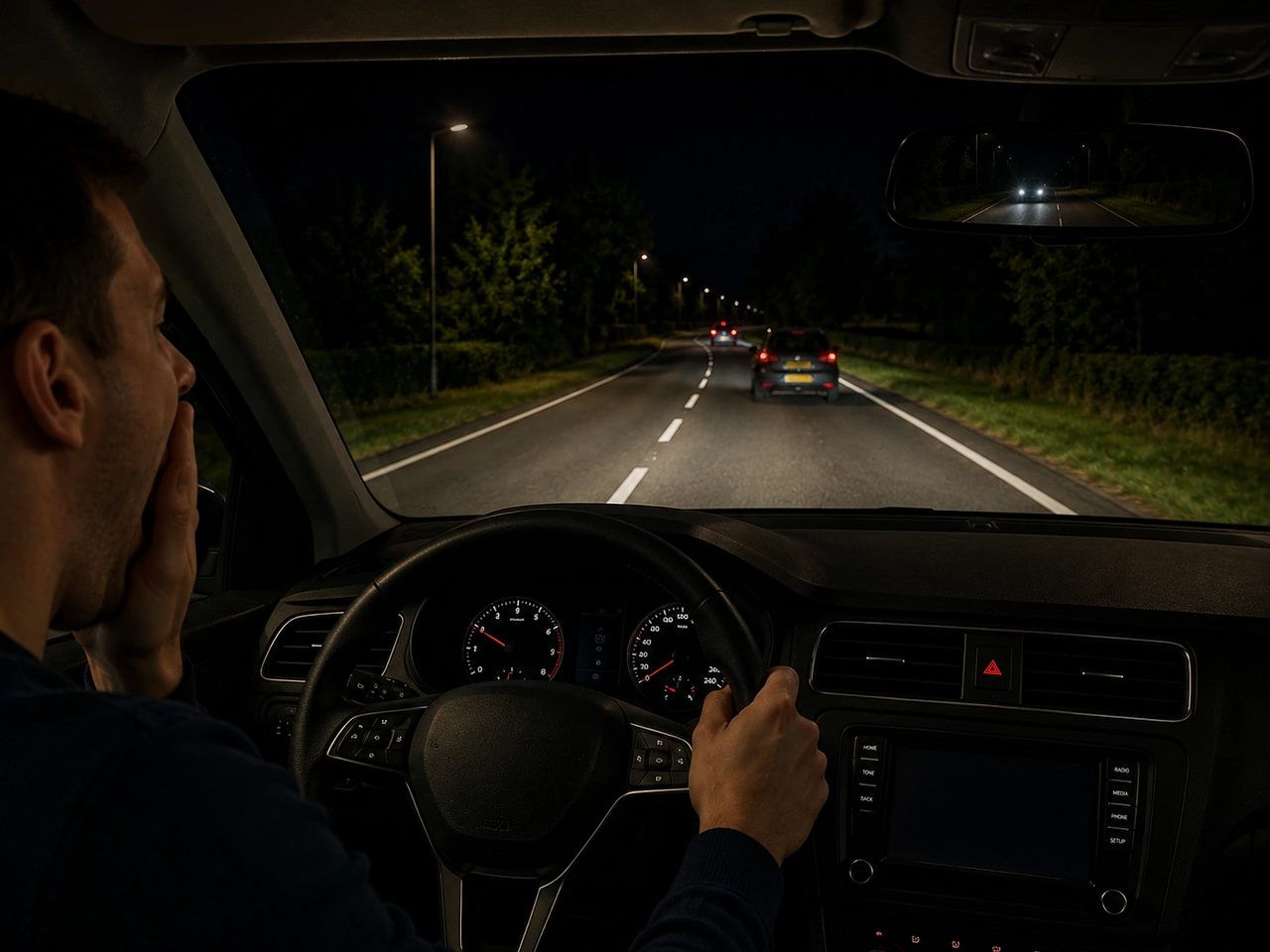
What should you do if you feel tired while driving?

333. What should you do if you feel tired while driving?

✓ Stop in a safe place and take a break.
Open a window and continue driving.
Drive faster to reach your destination sooner.
Turn up the radio to stay alert.

Driving while tired reduces concentration and reaction time. Stop somewhere safe and rest before continuing.

Tired driver taking a break from a journey
AI-generated by Rijbewijs-online.be • WCIT • CC BY-SA
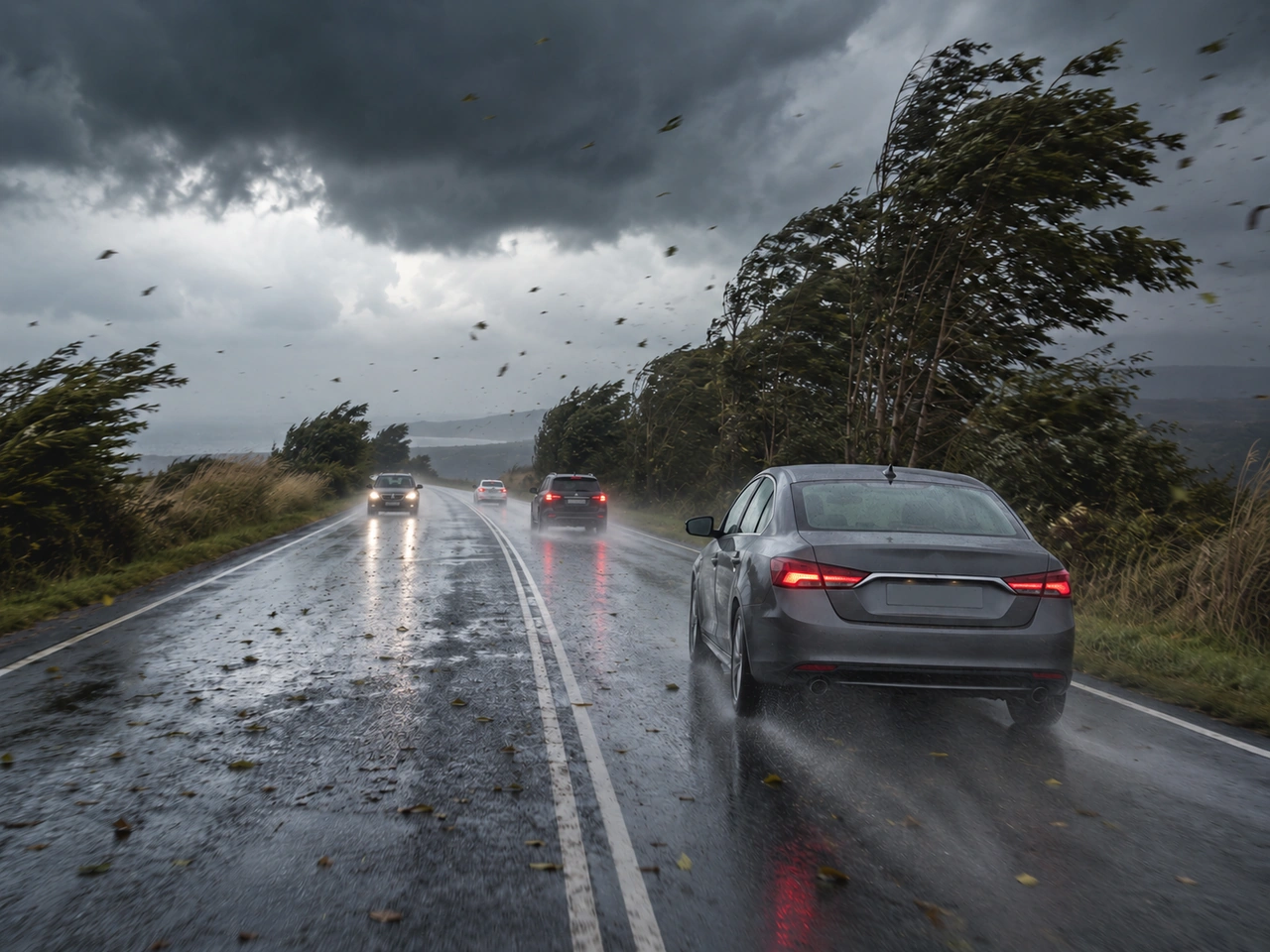
Why should you hold the steering wheel firmly during strong gusts?

334. Why should you hold the steering wheel firmly during strong gusts?

To keep the suspension level.
To reduce braking distance.
To make the power steering work better.
✓ To maintain control if the vehicle is pushed.

A firm but relaxed grip helps you respond safely to sudden changes caused by wind.

Driver holding the steering wheel during strong gusts
AI-generated by Rijbewijs-online.be • WCIT • CC BY-SA
What colour is a stop sign usually?

335. What colour is a stop sign usually?

✓ Red.
Blue.
Green.
Yellow.

Stop signs are almost always red because red is universally associated with danger and the need to stop immediately.

Red octagonal stop sign
AI-generated by Rijbewijs-online.be • WCIT • CC BY-SA
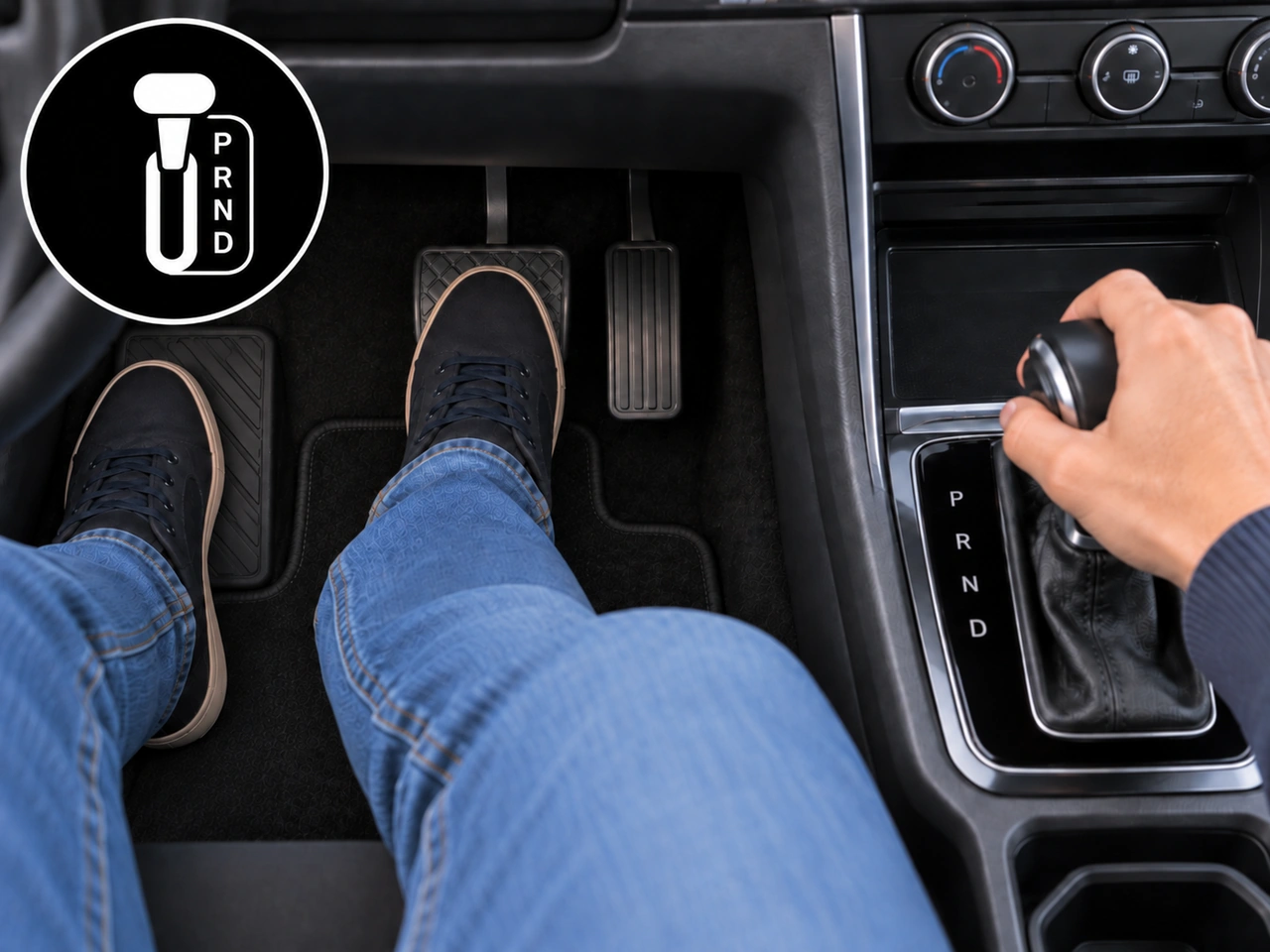
What should you normally do before selecting D or R in an automatic vehicle?

336. What should you normally do before selecting D or R in an automatic vehicle?

Switch off the engine.
Press the accelerator pedal.
✓ Press and hold the brake pedal.
Apply the parking brake only.

Before selecting D (Drive) or R (Reverse), keep the brake pedal pressed to prevent the vehicle from moving unexpectedly when the gear is engaged.

Holding the brake before selecting an automatic driving gear
AI-generated by Rijbewijs-online.be • WCIT • CC BY-SA
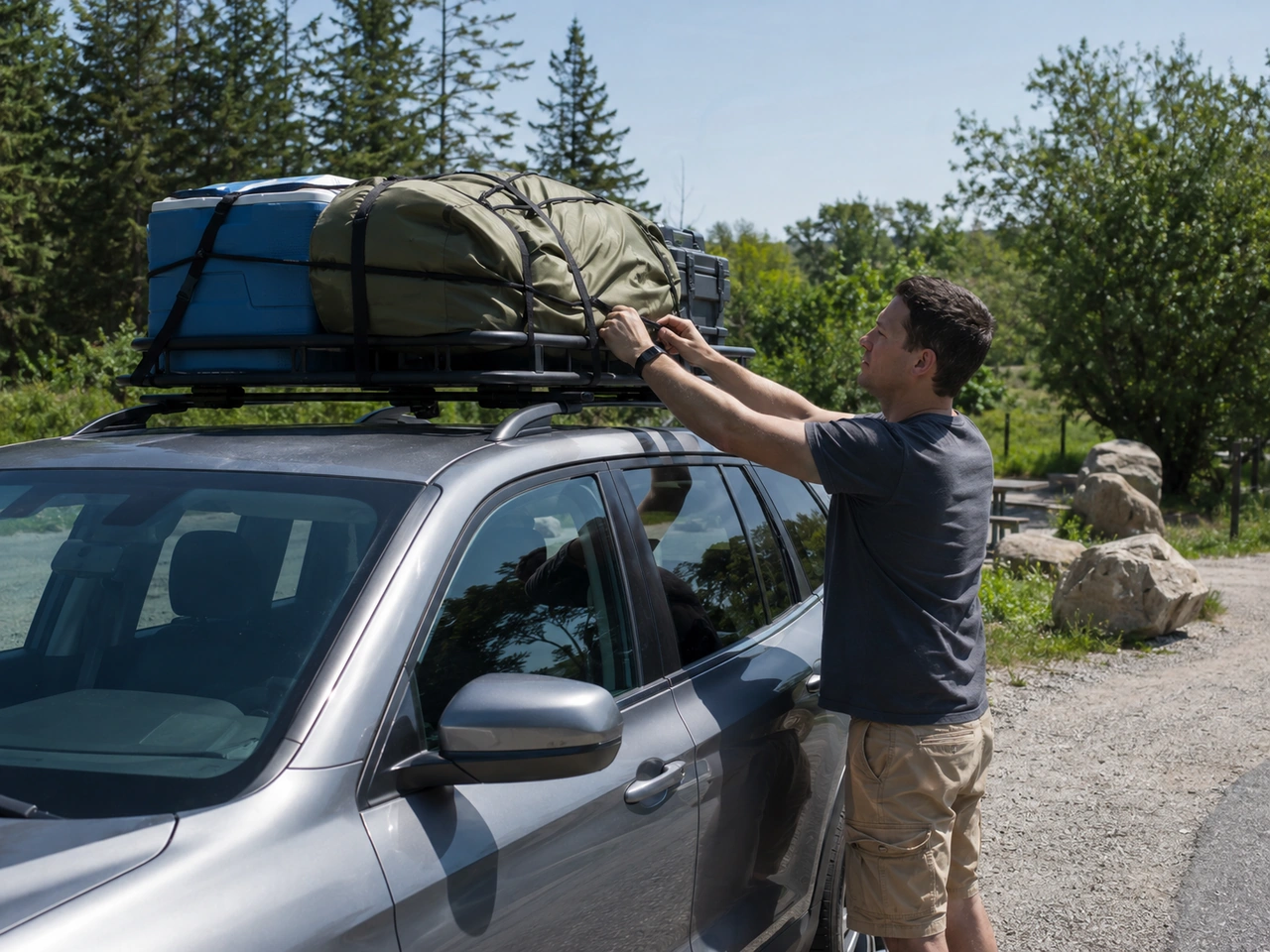
Why must a roof load be securely attached?

337. Why must a roof load be securely attached?

To stop the roof rack from increasing fuel consumption.
To keep the vehicle within its normal height.
✓ It could shift or fall and create a serious hazard.
Because the roof will hold the load in place while driving.

A roof load is exposed to strong airflow and movement. It must be restrained correctly and kept within the permitted limits.

Load secured to a vehicle's roof
AI-generated by Rijbewijs-online.be • WCIT • CC BY-SA
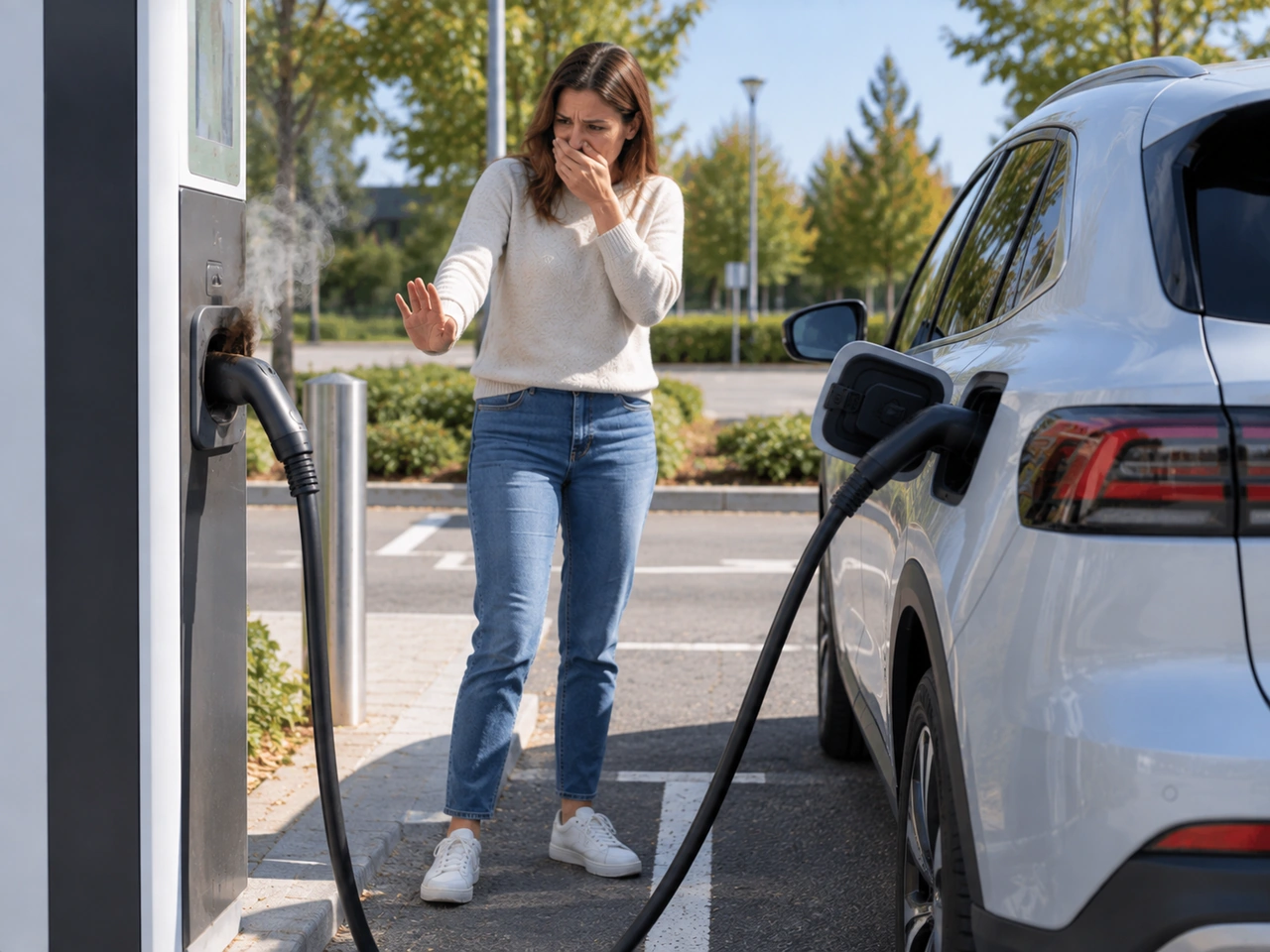
What should you do if EV charging equipment becomes unusually hot or smells burnt?

338. What should you do if EV charging equipment becomes unusually hot or smells burnt?

Pour water over the equipment to cool it.
Continue charging at a lower power setting.
✓ Stop the charging session, keep clear, and report the fault.
Cover the equipment to contain the heat.

Unusual heat, a burning smell, smoke, sparks, or repeated charging faults can indicate an electrical problem. Stop using the charging equipment if it is safe to do so, keep clear of anything damaged or overheating, and report the fault or seek appropriate assistance.

Faulty electric-vehicle charging equipment
AI-generated by Rijbewijs-online.be • WCIT • CC BY-SA
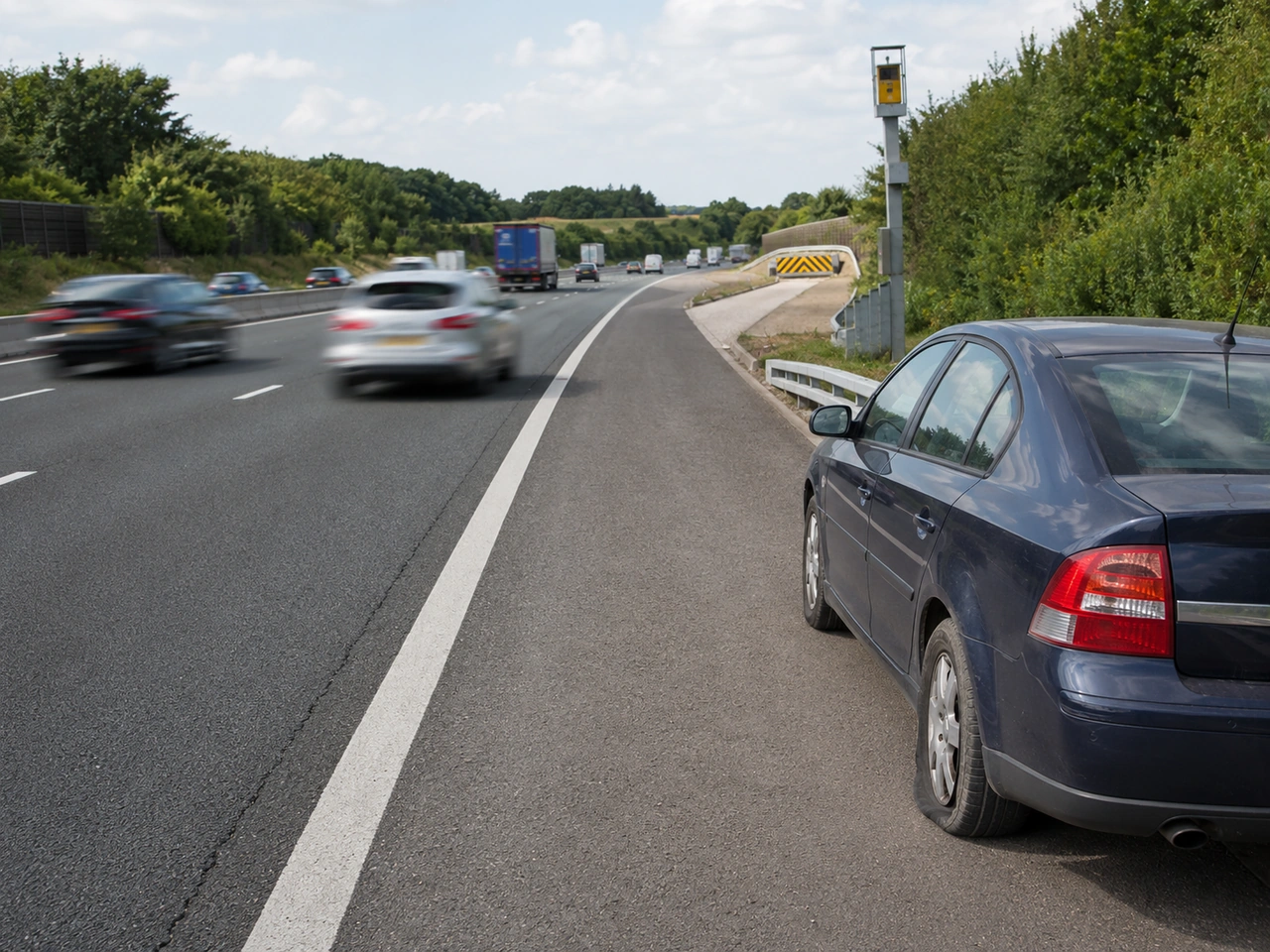
What should you do about a flat tyre on a high-speed road?

339. What should you do about a flat tyre on a high-speed road?

Ask passengers to help change the wheel quickly.
Stop immediately and change the tyre where you are.
✓ Move to a protected location if possible and call for professional recovery.
Repair the tyre beside the traffic lane using hazard lights.

Changing a wheel close to high-speed traffic is extremely dangerous. Move away from traffic and use professional assistance.

Vehicle stopped with a flat tyre on a high-speed road
AI-generated by Rijbewijs-online.be • WCIT • CC BY-SA
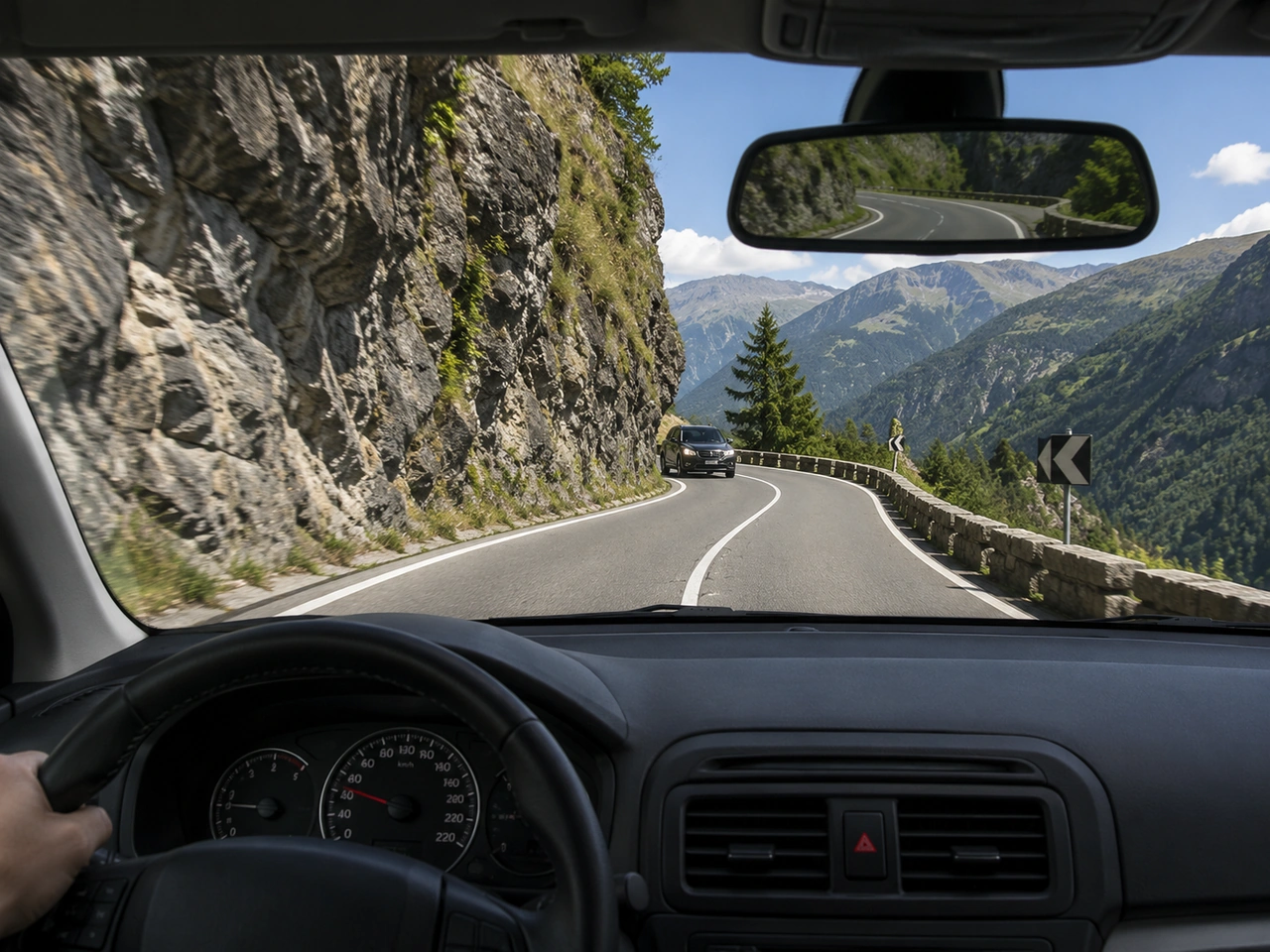
How should you approach a sharp bend on a mountain road?

340. How should you approach a sharp bend on a mountain road?

Accelerate through the bend to maintain momentum.
Overtake just before entering the bend.
✓ Reduce speed before the bend and remain in your lane.
Brake hard while turning through the bend.

Mountain bends may hide oncoming vehicles, cyclists, animals, or debris. Slow down before entering and keep a safe road position.

Sharp bend on a mountain road
AI-generated by Rijbewijs-online.be • WCIT • CC BY-SA
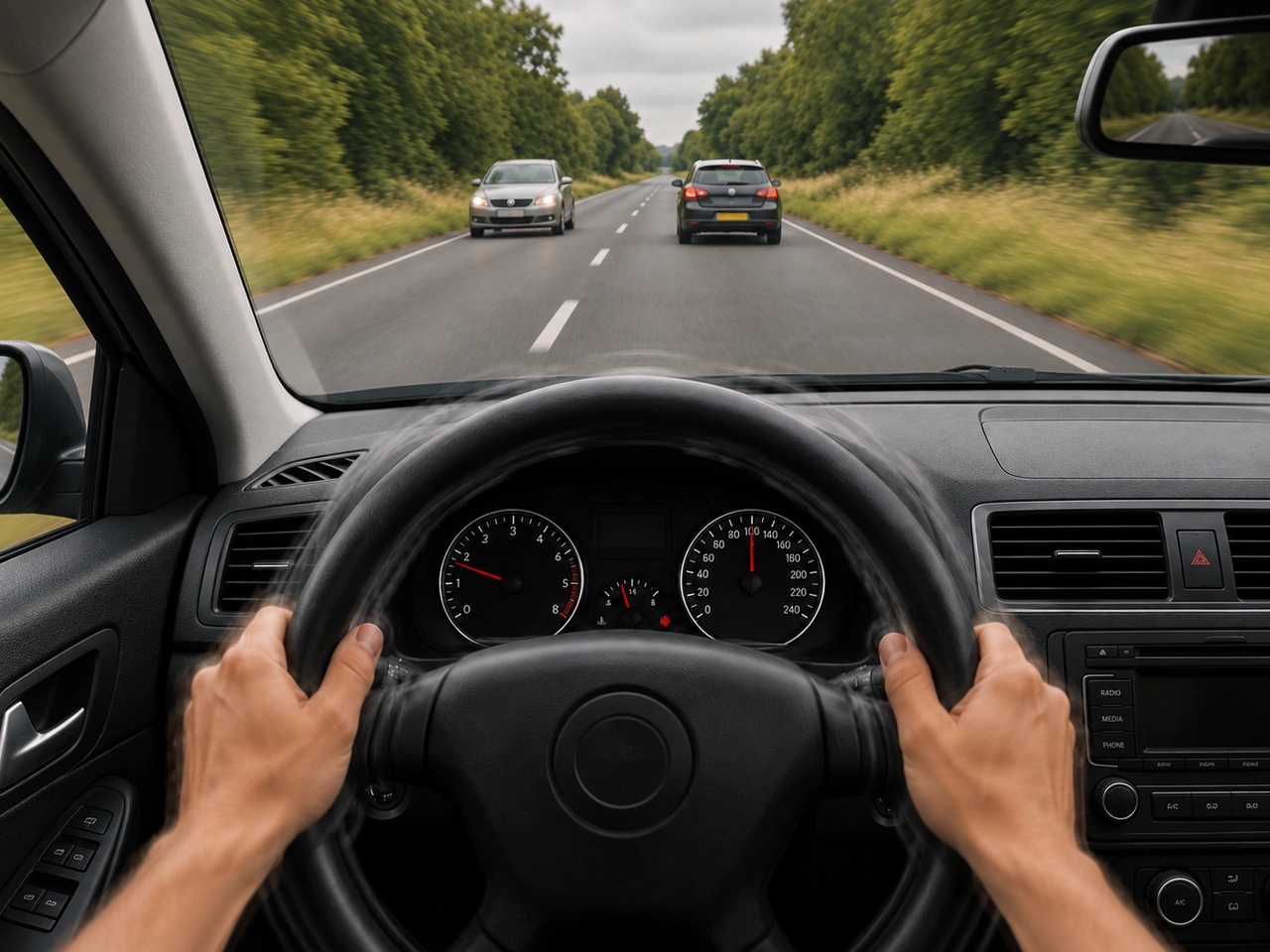
What should you do if an unusual vibration develops in the steering wheel?

341. What should you do if an unusual vibration develops in the steering wheel?

✓ Reduce speed and have the tyres, wheels, and steering checked.
Increase speed until the vibration becomes less noticeable.
Keep driving if the vehicle still steers normally.
Reduce the tyre pressure slightly to smooth the ride.

An unusual vibration may indicate tyre damage, wheel imbalance, loose components, or another mechanical fault. Reduce speed and arrange an inspection.

Driver experiencing vibration through the steering wheel
AI-generated by Rijbewijs-online.be • WCIT • CC BY-SA
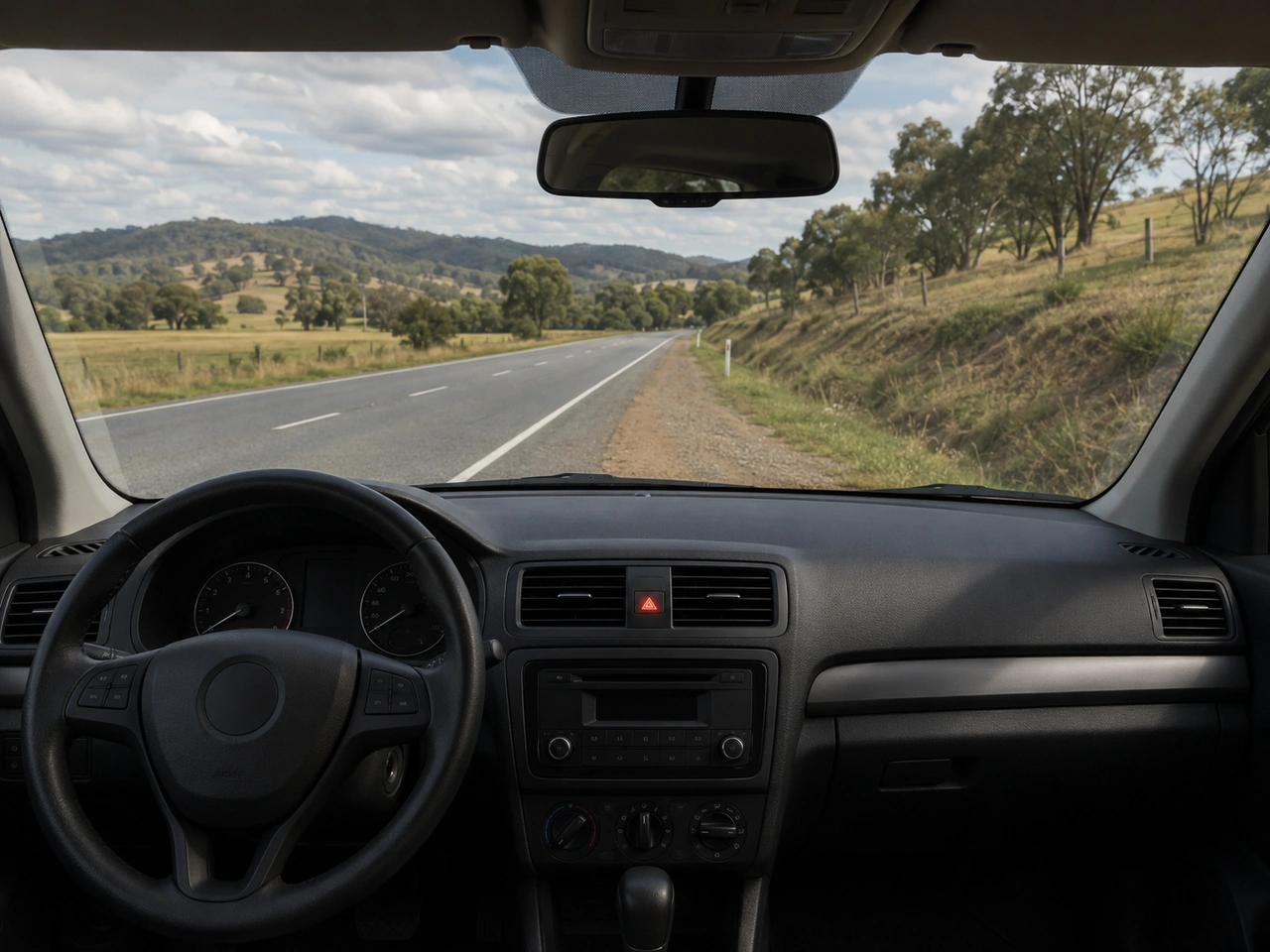
How should you leave a broken-down vehicle when traffic is passing nearby?

342. How should you leave a broken-down vehicle when traffic is passing nearby?

Walk around the vehicle on the traffic side.
Get out immediately without checking for traffic.
Stand beside the vehicle before moving away.
✓ Use the door furthest from moving traffic when it is safe to do so.

Leaving through the side away from traffic reduces the risk of being struck by a passing vehicle.

Leaving a broken-down vehicle away from passing traffic
AI-generated by Rijbewijs-online.be • WCIT • CC BY-SA
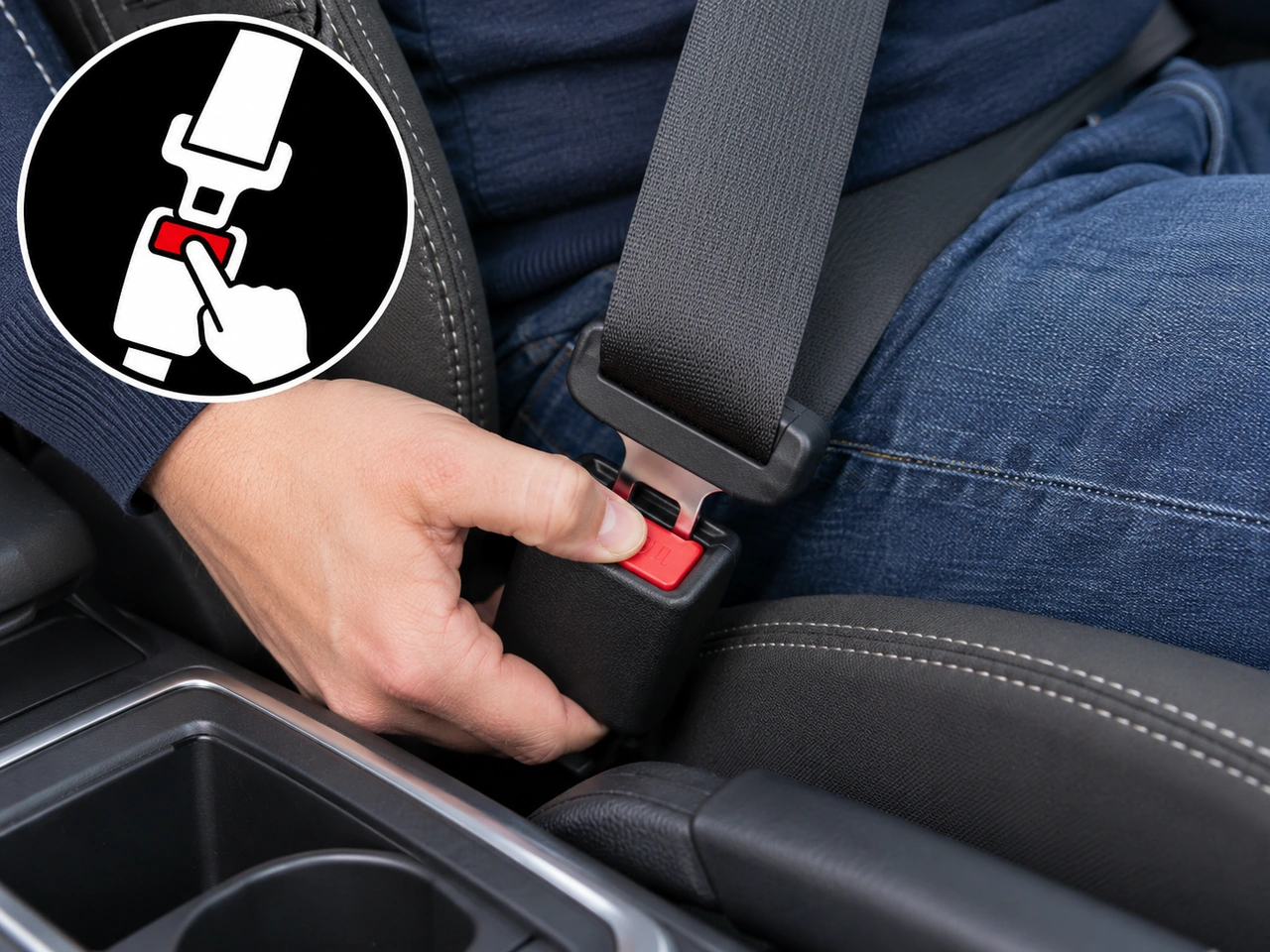
What is the button on a seat-belt buckle used for?

343. What is the button on a seat-belt buckle used for?

To tighten the shoulder belt.
To lock the seat in position.
To adjust the belt height.
✓ To release the seat belt.

Pressing the button on the seat-belt buckle releases the latch so the belt can be unfastened. Keep the seat belt fastened whenever required while the vehicle is moving.

Release button on a seat-belt buckle
AI-generated by Rijbewijs-online.be • WCIT • CC BY-SA
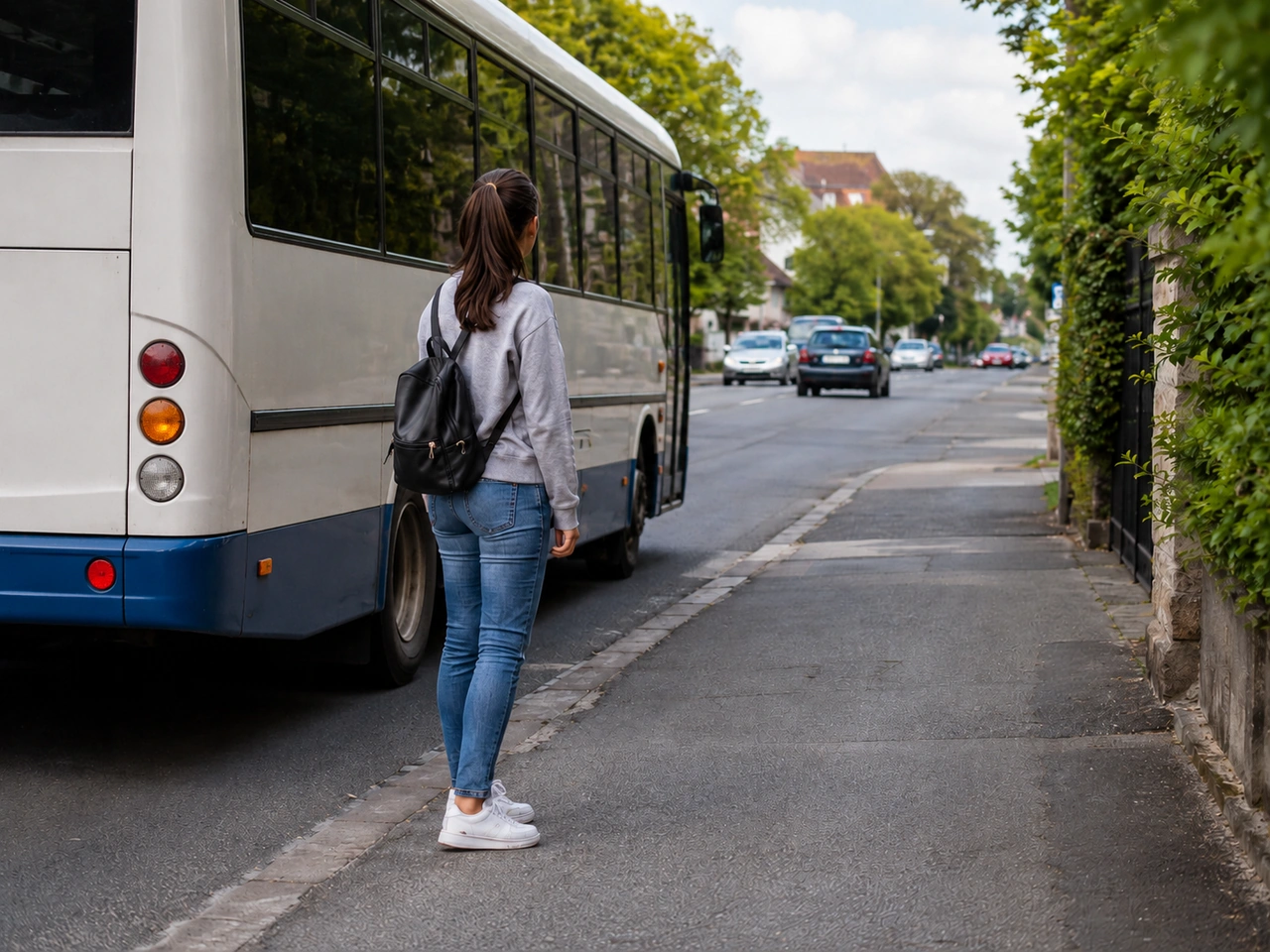
What should you do before crossing behind a bus or large vehicle?

344. What should you do before crossing behind a bus or large vehicle?

✓ Wait until you have a clear view of the road.
Stay close behind the vehicle while crossing.
Cross if the nearest traffic lane appears clear.
Cross as soon as the vehicle has stopped.

Large vehicles can block your view and hide you from drivers. Wait until you can clearly see the road before crossing.

Pedestrian preparing to cross behind a bus
AI-generated by Rijbewijs-online.be • WCIT • CC BY-SA
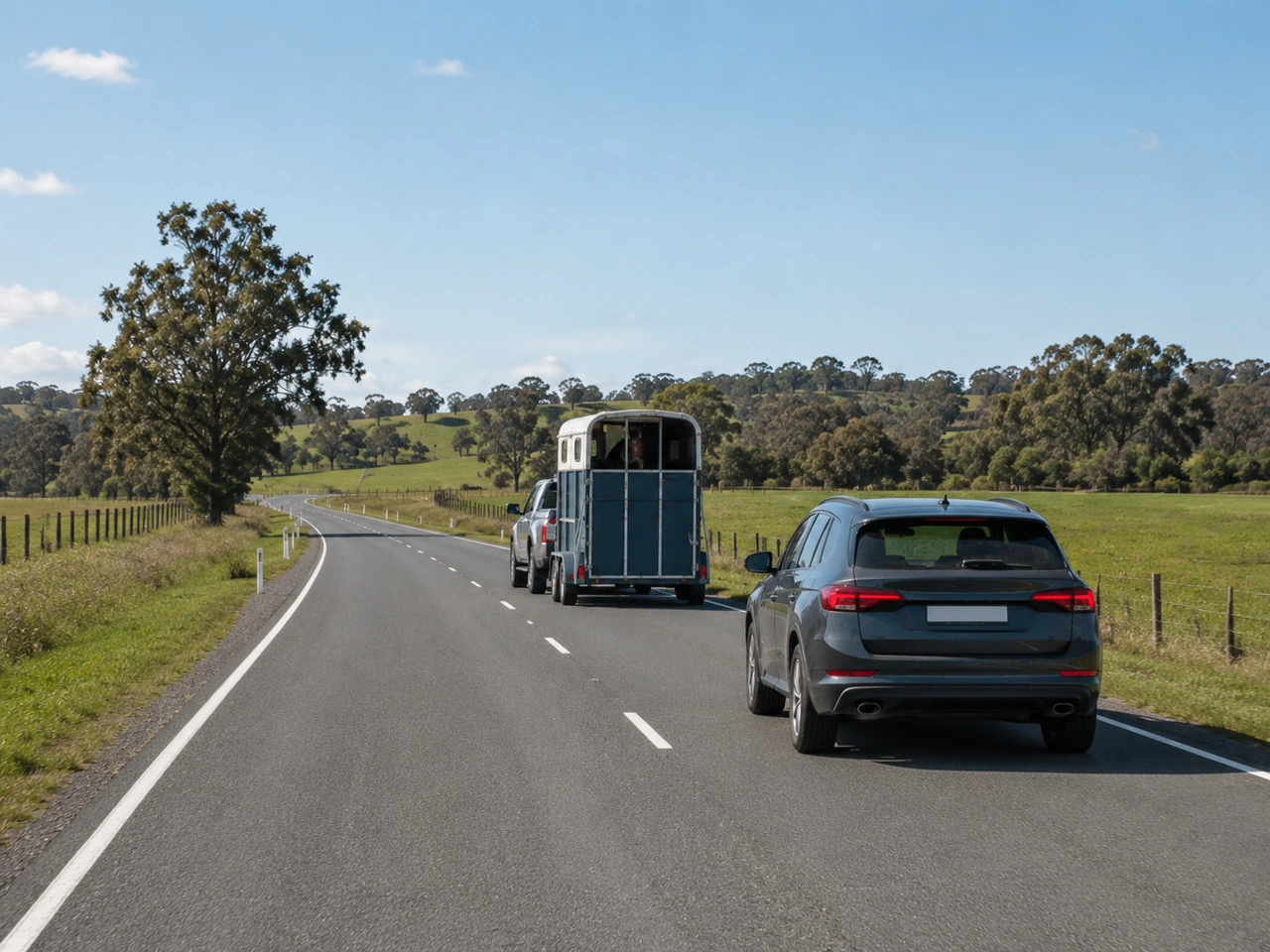
Why should you leave extra space behind a vehicle carrying animals?

345. Why should you leave extra space behind a vehicle carrying animals?

Because these vehicles always have priority.
✓ Because it may move slowly or stop unexpectedly.
Because they must always travel in the centre of the road.
Because they cannot use their horn.

Vehicles transporting animals may accelerate slowly, take bends carefully, or brake gently to protect their load.

Vehicle following an animal transporter
AI-generated by Rijbewijs-online.be • WCIT • CC BY-SA
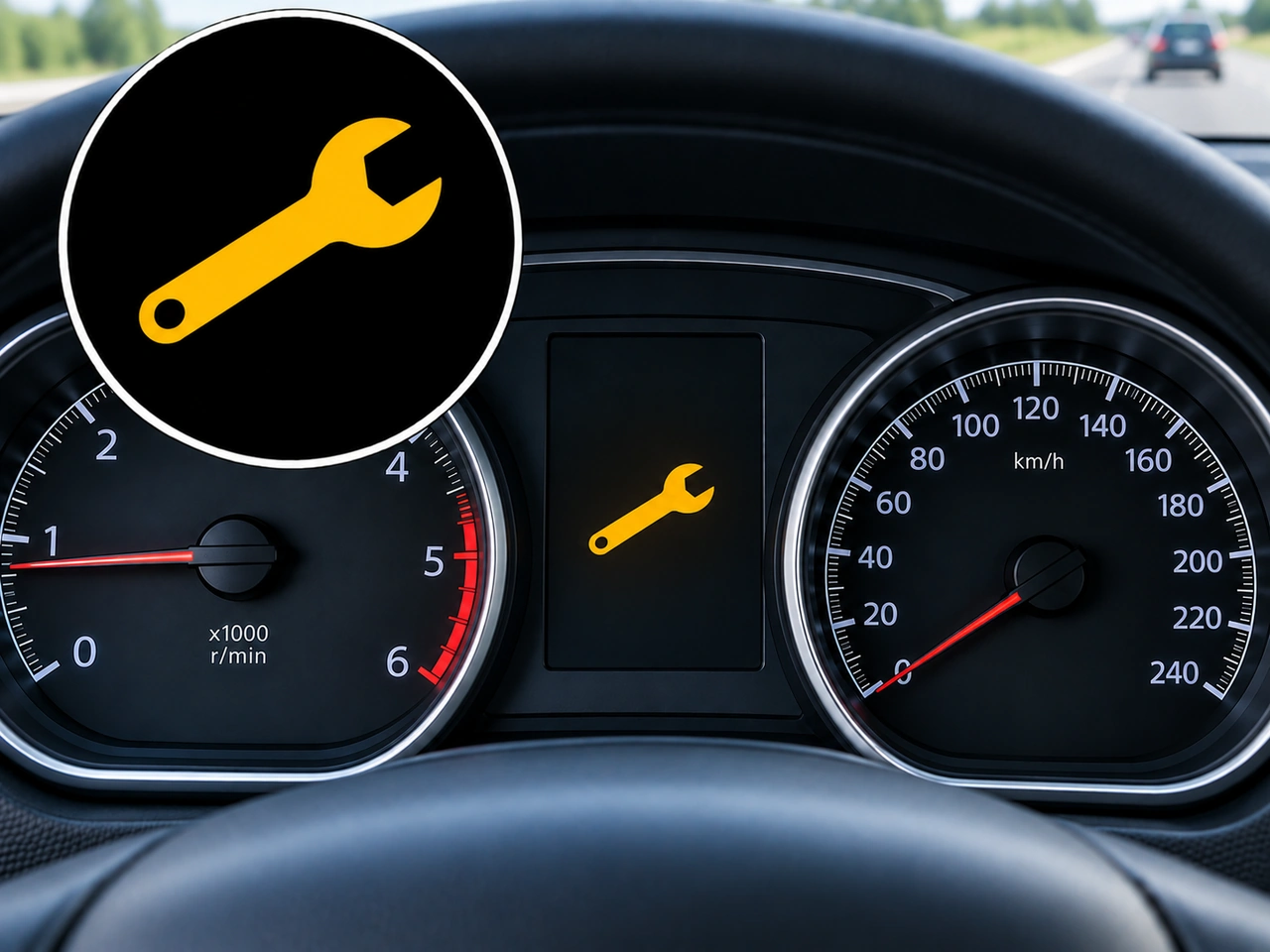
What does this dashboard symbol indicate?

346. What does this dashboard symbol indicate?

Power-steering warning.
Brake-system warning.
Charging-system warning.
✓ Service or maintenance required.

This symbol indicates that the vehicle requires servicing or maintenance. The exact meaning and required maintenance can vary between vehicles, so check the vehicle information display or owner's manual.

Service reminder symbol on the dashboard
AI-generated by Rijbewijs-online.be • WCIT • CC BY-SA
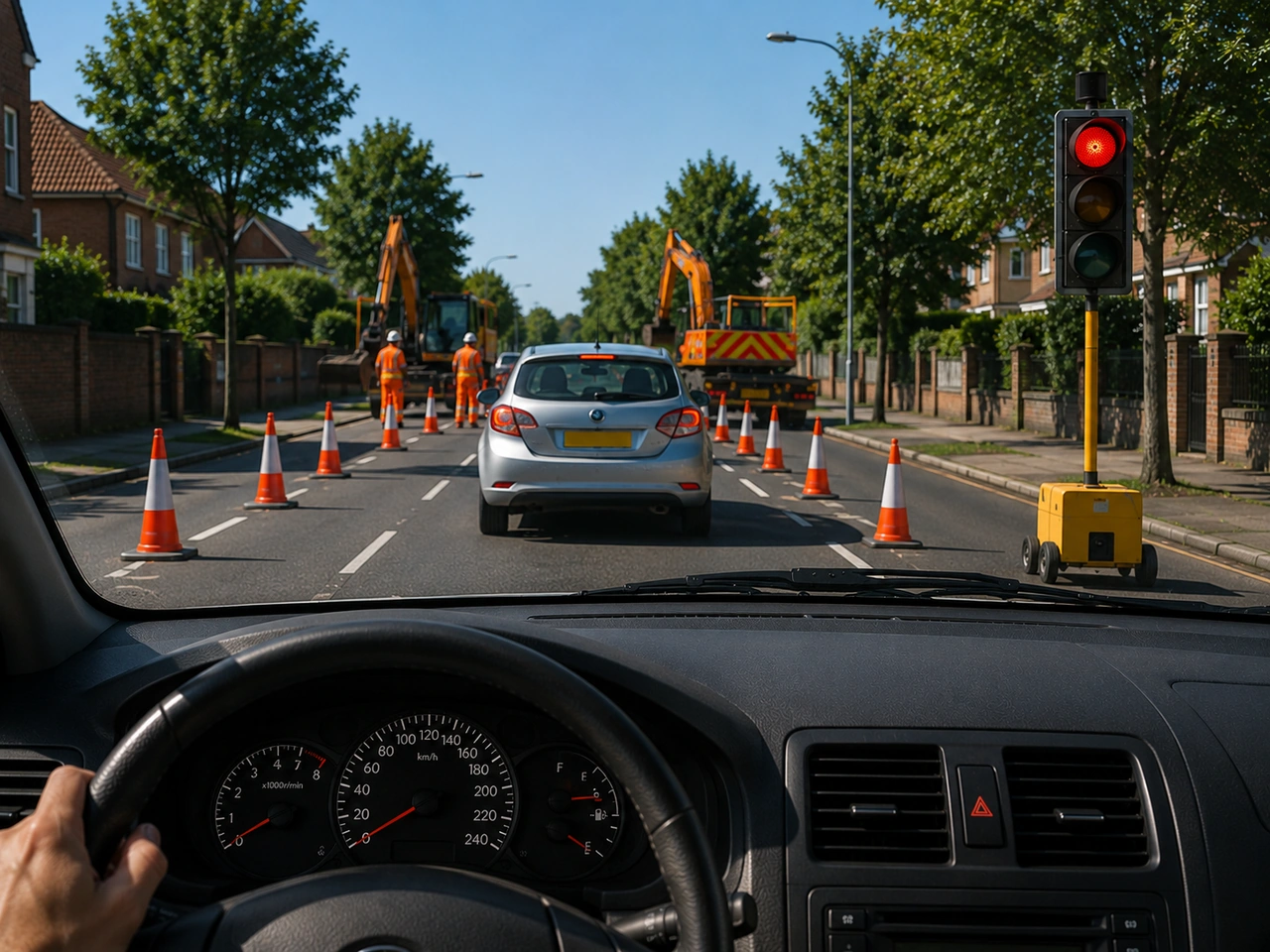
What should you do when roadworks are ahead?

347. What should you do when roadworks are ahead?

Ignore temporary signs if permanent signs are still visible.
Use your horn to warn road workers that you are approaching.
Follow the vehicle ahead closely through the work zone.
✓ Slow down and follow the temporary signs.

Roadworks can create narrow lanes, workers near traffic, uneven surfaces, and temporary rules. Slow down and follow the signs.

Roadworks and temporary traffic signs ahead
AI-generated by Rijbewijs-online.be • WCIT • CC BY-SA
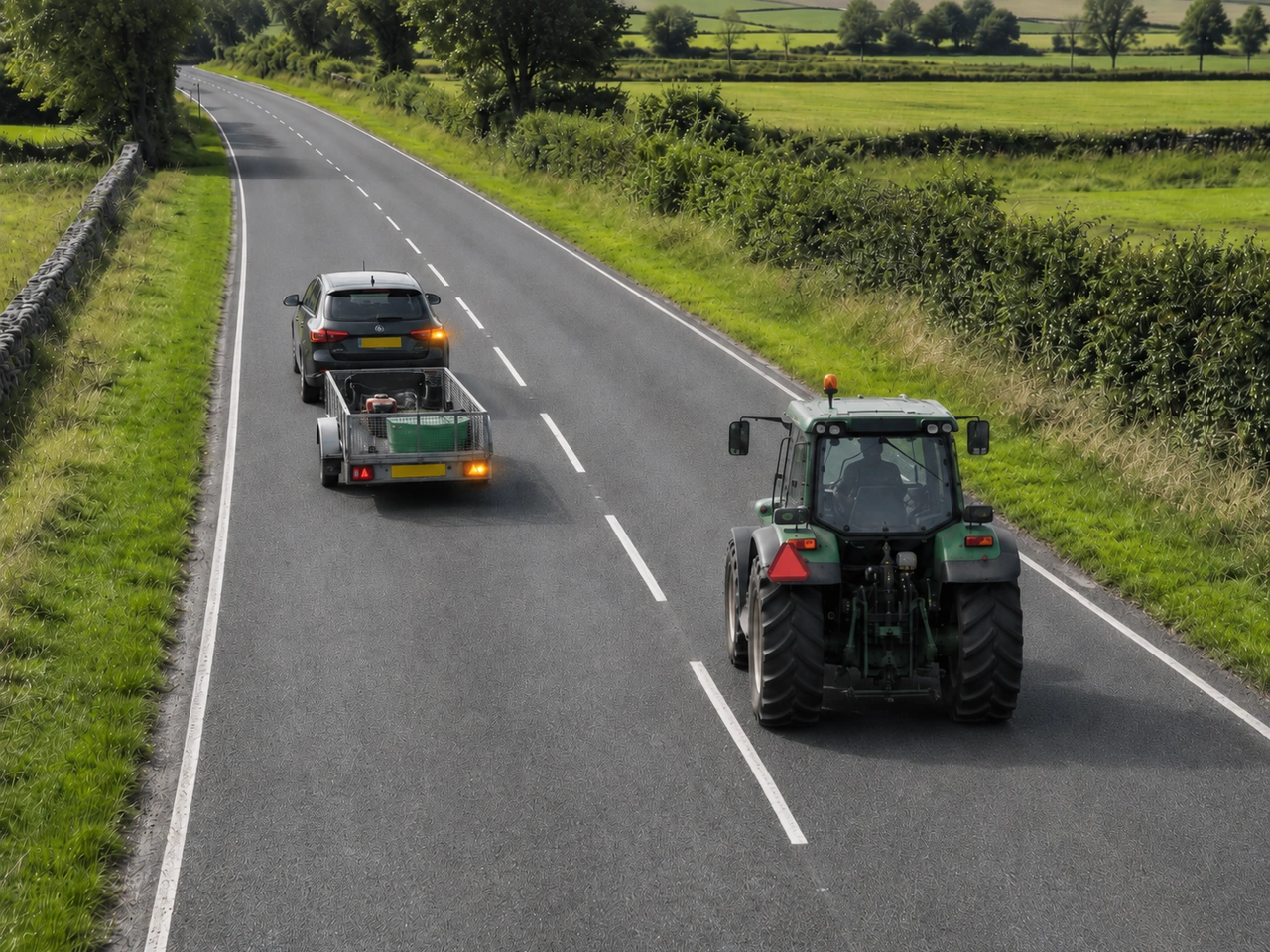
What should you do before overtaking while towing a trailer?

348. What should you do before overtaking while towing a trailer?

Accelerate sharply once you move into the other lane.
✓ Allow extra time and distance for the manoeuvre.
Begin overtaking as soon as the road looks clear.
Assume the trailer will follow the same path as the vehicle.

A towing vehicle accelerates more slowly, and the trailer makes the whole vehicle combination longer. Remember to allow a much larger safe gap before overtaking and enough space to return safely to your lane.

Vehicle preparing to overtake while towing a trailer
AI-generated by Rijbewijs-online.be • WCIT • CC BY-SA
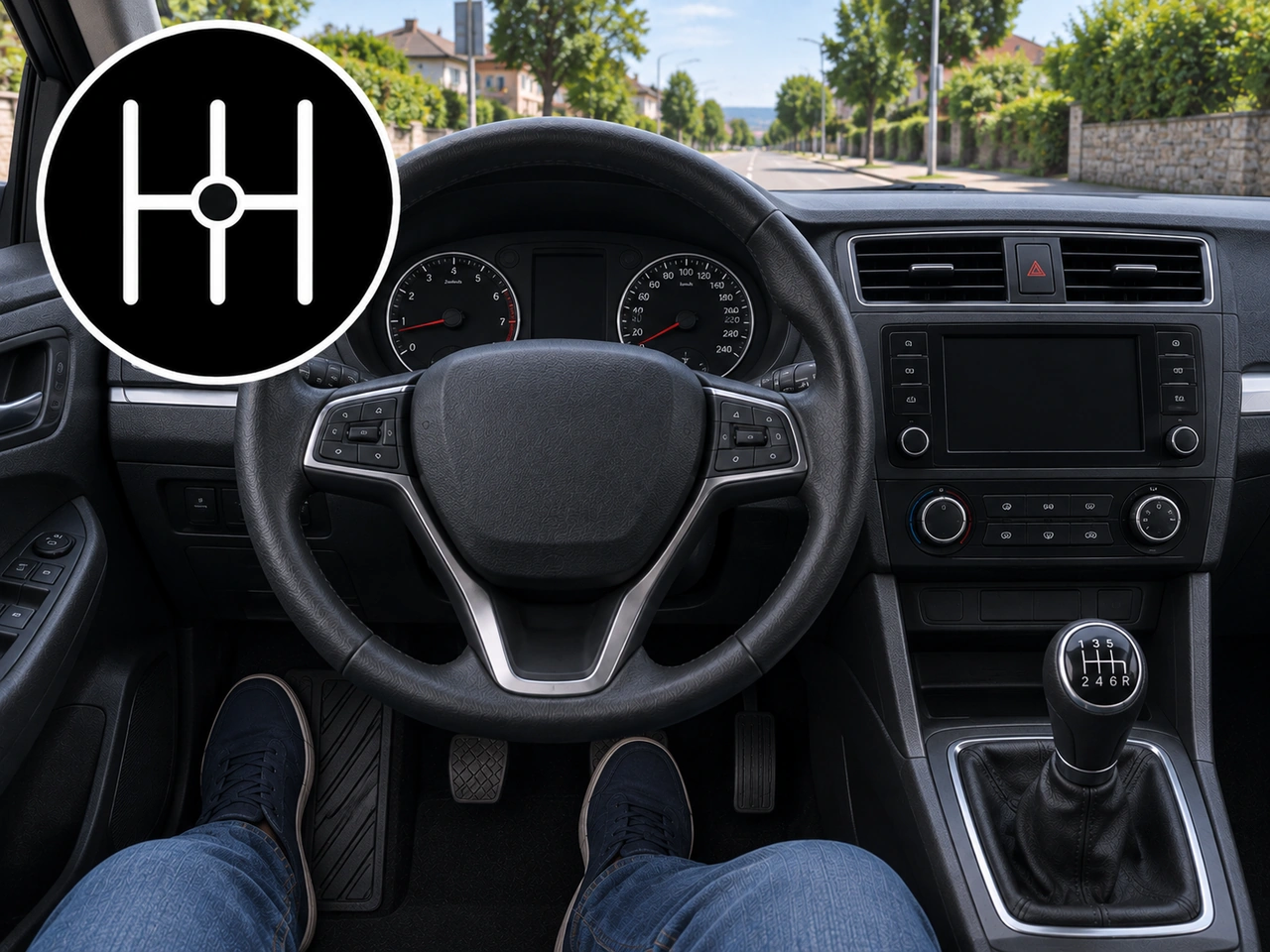
What should you normally do with the gearbox during a longer stop in a manual vehicle?

349. What should you normally do with the gearbox during a longer stop in a manual vehicle?

Select reverse gear.
✓ Select neutral and release the clutch.
Keep first gear selected with the clutch pressed.
Keep the accelerator pressed.

During a longer stop, selecting neutral and releasing the clutch can reduce unnecessary strain on the clutch release mechanism. Keep the vehicle securely held with the brake or parking brake as appropriate.

Neutral gear selection during a longer stop
AI-generated by Rijbewijs-online.be • WCIT • CC BY-SA
When should you use rear fog lights?

350. When should you use rear fog lights?

When driving on high-speed roads at night.
✓ When visibility is seriously reduced by fog or similar conditions.
When visibility is slightly reduced.
When another vehicle is following closely.

Rear fog lights are very bright and should only be used when visibility is poor enough to require them.

Rear fog lights used in severely reduced visibility
AI-generated by Rijbewijs-online.be • WCIT • CC BY-SA