


Traffic signsNorway
 Traffic rules
 Norway
76. Trikke
A Trikke is a three-wheeled standing personal-mobility vehicle with one front wheel and two rear wheels. The rider stands on platforms between the wheels and steers with handlebars. Depending on the model, propulsion may come from the rider's body movement or from an electric motor.
Trikke vehicles use a distinctive leaning or cambering frame that allows the rider to turn and manoeuvre by shifting body weight. The traffic rules that apply depend on whether the vehicle is motorised and on its technical characteristics.

Wikimedia.org • FaceMePLS • CC BY
What is a Trikke?
A Trikke is a three-wheeled standing personal-mobility vehicle that is steered with handlebars and by leaning or shifting the rider's body.
Can a Trikke have an electric motor?
Yes. Trikke-type vehicles can be human-powered or electrically powered, depending on the model.
Which traffic rules apply to a Trikke?
The applicable rules depend on the vehicle's propulsion, maximum design speed and legal classification. A human-powered and an electric Trikke may therefore be treated differently.

77. Personal mobility device
A personal mobility device, also called a personal transporter, is a compact device designed to transport one person over relatively short distances. Examples can include kick scooters, electric scooters, skateboards, self-balancing devices and mobility devices.
Personal transporters may be powered by the user's own effort or by an electric motor. Their legal classification, maximum speed, minimum riding age and permitted place on the road vary between countries, so users must follow the local traffic signs and regulations.

Wikimedia.org • Maurizio Pesce • CC BY
What is a personal transporter?
A personal transporter is a compact device designed to transport an individual, commonly over relatively short distances.
What are examples of personal transporters?
Examples can include electric scooters, kick scooters, skateboards, self-balancing devices, monowheels and certain mobility devices.
Is an electric scooter a personal transporter?
Yes, commonly. Electric scooters are one of the most widespread forms of motorised personal transporter, although their precise legal classification varies between countries.
Is a personal transporter the same as a bicycle?
No. A bicycle is primarily propelled through pedals or hand cranks. Personal transporters can use other methods of propulsion and may belong to a separate legal category.
Is a personal transporter the same as a moped?
Not necessarily. Low-speed personal mobility devices are often classified separately from mopeds. Devices exceeding specified speed or construction limits may fall into another vehicle category.
Can personal transporters use cycle paths?
This depends on the country and type of device. Motorised personal transporters are often permitted or required to use cycle infrastructure where available.
Can personal transporters use the pavement?
This depends on local law. Motorised devices may be prohibited from ordinary pavements, while people using non-motorised devices at walking speed may sometimes be treated as pedestrians.
Is there a minimum age for using an electric personal transporter?
Some countries impose a minimum riding age for electric scooters and similar motorised devices. The applicable age and exceptions vary between jurisdictions.
Can you carry a passenger on a personal transporter?
Only when the device is specifically designed and legally permitted to carry passengers. Most ordinary electric scooters are designed for one person only.
Do personal transporters need lights and brakes?
Motorised devices may be subject to requirements concerning lights, reflectors, brakes and audible warning devices. The required equipment depends on local traffic and technical regulations.
Is a helmet compulsory on a personal transporter?
This varies between countries and device categories. Even where a helmet is not legally compulsory, wearing an appropriate helmet can provide additional protection in a fall or collision.
Can you modify a personal transporter to make it faster?
A modification that increases the vehicle beyond the legal speed or technical limits may change its classification or make it illegal for use on public roads.
78. Skateboard
A skateboard is a small board mounted on wheels that is ridden by standing on the deck and moving by pushing against the ground or using gravity. Skateboards are commonly used for recreation, sport and short-distance personal transport.
Skateboard users should maintain control, watch carefully for pedestrians and traffic and adapt their speed to the surrounding environment. Where skateboards may be used and which traffic rules apply vary between countries.

Wikimedia.org • David Martín • CC BY-SA
What is a skateboard?
A skateboard is a board fitted with wheels that is ridden while standing and normally propelled by pushing against the ground or by gravity.
Can a skateboard be used for transport?
Yes. In addition to recreational and sporting use, skateboards can be used for short-distance personal travel where local traffic rules permit.
Where can skateboard users ride?
This depends on the country and the user's speed. Skateboard users may be treated similarly to pedestrians or cyclists under some traffic-law systems.
79. Segway
A Segway is a self-balancing electric personal transporter that allows a standing rider to move by shifting their body position while the vehicle's electronic balancing system maintains stability. The classic Segway Personal Transporter has two wheels and is controlled using a handlebar or steering mechanism.
Segways are used for personal transport, tourism, security and other short-distance travel. Their legal status and where they may be ridden depend on national traffic rules governing personal mobility devices.

Wikimedia.org • Chris Brown • CC BY
What is a Segway?
A Segway is a self-balancing electric personal transporter designed to carry a standing rider.
How does a Segway stay balanced?
A Segway uses an electronic self-balancing system that continuously responds to the rider's movements and helps keep the vehicle upright.
Where can you ride a Segway?
This depends on local traffic laws. Segways may be classified as personal mobility devices, bicycles or another vehicle category, which determines whether they may use cycle paths, roads or other areas.
80. Kick scooter
A kick scooter is a personal mobility device with a narrow platform, two or more wheels and a handlebar. A non-motorised kick scooter is propelled by pushing against the ground with one foot, while an electric kick scooter uses an electric motor for propulsion.
Kick scooters are commonly used for recreation and short-distance travel. Where they may be ridden and which traffic rules apply depend on whether the scooter is motorised and on its legal classification.

Wikimedia.org • Alex Genz • CC BY-SA
What is a kick scooter?
A kick scooter is a personal mobility device with a standing platform, wheels and a handlebar, normally propelled by pushing against the ground with one foot.
Can a kick scooter have an electric motor?
Yes. Electric kick scooters use a motor for propulsion and may be subject to different traffic rules from non-motorised kick scooters.
Where can you ride a kick scooter?
This depends on the country's traffic rules and whether the scooter is motorised. Users may be treated as pedestrians, cyclists or another category of road user.
81. Roller skates
Roller skates are footwear fitted with wheels that allow a person to move by skating over a smooth surface. Traditional roller skates usually have four wheels arranged in two pairs, while inline skates have their wheels arranged in a single line.
Roller skaters should maintain control, adapt their speed to the surroundings and watch carefully for pedestrians, cyclists, vehicles and uneven surfaces. Where roller skating is permitted and which traffic rules apply vary between countries.

Wikimedia.org • gt8073a • CC BY
What are roller skates?
Roller skates are footwear equipped with wheels that allow the user to move by skating.
What is the difference between roller skates and inline skates?
Traditional roller skates normally have two pairs of wheels, while inline skates have several wheels arranged in a single line.
Where can roller skates be used?
This depends on local traffic rules. Roller skaters may be required to follow pedestrian or cyclist rules depending on the country, location and speed at which they are travelling.
82. Mailman
A mailman, or postal worker, is a person who collects, transports or delivers letters, parcels and other postal items. Postal workers may travel on foot or use bicycles, vans, motorcycles or other vehicles while completing their delivery routes.
When working near roads, postal workers must follow the traffic rules that apply to pedestrians, cyclists or drivers according to how they are travelling. Other road users should take care where postal workers may frequently stop, cross the road or enter and leave vehicles.

Wikimedia.org • Partij van de Arbeid • CC BY
What is a mailman?
A mailman, also called a postal worker or mail carrier, is a person who collects or delivers letters, parcels and other postal items.
How do postal workers travel while delivering mail?
Depending on the delivery route, postal workers may travel on foot, by bicycle, motorcycle, van or another delivery vehicle.
Do postal workers have special traffic priority?
Not automatically. Postal workers normally follow the traffic rules applicable to them as pedestrians, cyclists or drivers unless a country's laws provide a specific exemption.
83. Hitchhiker
A hitchhiker is a person who waits beside a road or at another suitable location and asks passing drivers for a free ride toward their destination. Hitchhiking is a form of informal transport and is permitted, restricted or prohibited in different locations depending on national and local traffic rules.
Hitchhikers should wait in a safe and legally permitted place away from moving traffic and should not stand where they obstruct traffic or encourage vehicles to stop in a dangerous location.

Wikimedia.org • rawpixel • CC0
What is a hitchhiker?
A hitchhiker is a person who asks passing drivers for a ride, usually without using a formal public-transport or taxi service.
Where should a hitchhiker wait?
A hitchhiker should wait in a safe and legally permitted location away from moving traffic, where a driver can stop without creating a danger or obstruction.
Can you hitchhike on a motorway?
Generally, no. Pedestrians are prohibited from motorways in many countries, so hitchhikers should use suitable locations outside the motorway itself, subject to local rules.
84. Toddler
A toddler is a young child who has progressed beyond infancy but still requires close supervision and special protection around roads and vehicles. Toddlers may travel as passengers in cars, public transport, bicycles or other vehicles subject to the safety requirements that apply in each country.
When travelling by car, toddlers should use an appropriate child restraint system suited to their size. Adults should also supervise them carefully near roads, parking areas and moving vehicles.

Wikimedia.org • Hildewagelmans • CC0
How should a toddler travel in a car?
A toddler should travel in an appropriate child restraint system that is suitable for the child's size and correctly installed in the vehicle.
Why do toddlers need special protection around traffic?
Toddlers are particularly vulnerable and may not understand traffic hazards, so they require close adult supervision and suitable protection when travelling in vehicles.
Can a rear-facing toddler seat be placed in front of an active airbag?
No. A rear-facing child restraint should not be placed in front of an active frontal airbag because the airbag can create a serious danger to the child.
85. Child
A child is a young person who requires particular care and protection in road traffic because of their smaller size, limited experience and developing ability to recognise traffic hazards. Children may participate in traffic as pedestrians, cyclists or passengers in vehicles.
Drivers should take extra care when children are present or may reasonably be expected, particularly near schools, playgrounds, residential areas and pedestrian crossings.

Wikimedia.org • Trailnet • CC BY-SA
Why are children particularly vulnerable in traffic?
Children may have more difficulty judging vehicle speed, distance and traffic situations and are less visible to drivers because of their smaller size.
How should drivers behave when children are near the road?
Drivers should reduce speed when necessary, remain especially alert and be prepared to stop if a child enters or approaches the roadway.
How should children travel in a car?
Children should use an appropriate child restraint or seat belt according to their size, age and the applicable national rules.
86. Disability
Disability refers to a physical, sensory, intellectual or other long-term condition that, together with environmental or accessibility barriers, may affect how a person participates in everyday activities. In road traffic, people with disabilities may participate as pedestrians, drivers, cyclists, passengers or users of mobility devices.
Road systems should take account of accessibility, safe crossings, suitable parking and sufficient time and space for people with different mobility or sensory needs. Drivers should take particular care around road users who may require additional time or space to travel safely.

Wikimedia.org • MarkBuckawicki • CC0
Are people with disabilities separate road users?
No. A person with a disability may participate in traffic as a pedestrian, driver, cyclist, passenger or another type of road user and generally follows the rules applying to that role.
Why is accessibility important in road traffic?
Accessible infrastructure such as step-free routes, suitable crossings, clear signals and reserved parking can make it easier and safer for people with different mobility or sensory needs to travel independently.
How should drivers behave around people with disabilities?
Drivers should remain patient, leave sufficient space and allow enough time for people to move or cross safely, particularly where their mobility or perception may be affected.
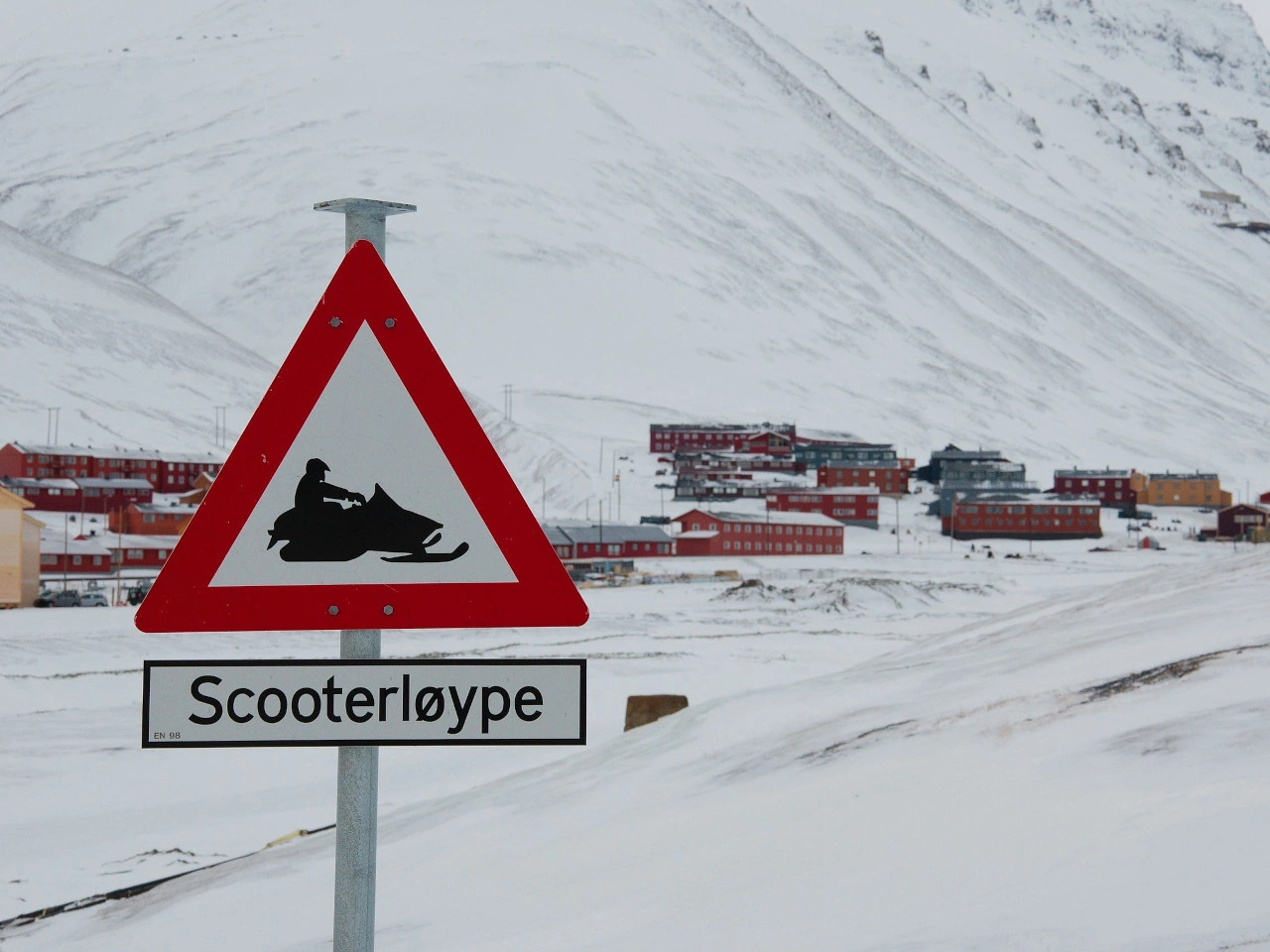
87. Snowmobile
A snowmobile is a motorised vehicle designed primarily for travelling over snow and ice. It typically uses one or more skis at the front for steering and a powered continuous track at the rear for propulsion.
Snowmobiles are commonly used for winter recreation, transport, rescue work and access to remote snowy areas. Where they may be operated depends on local rules concerning trails, public roads, protected areas and vehicle registration.
Wikimedia.org • Magnus Hagdorn • CC BY-SA
What is a snowmobile?
A snowmobile is a motorised vehicle designed to travel over snow, normally using skis for steering and a powered track for propulsion.
Where are snowmobiles commonly used?
Snowmobiles are commonly used on snow-covered trails and terrain for recreation, transport, utility work and access to remote areas.
Can a snowmobile be driven on public roads?
It depends on local law and the vehicle's approval. Many snowmobiles are primarily off-road vehicles, and public-road use may require registration, road approval, insurance and an appropriate driving licence.
88. Motorail
Motorail is a rail service that transports passengers together with their car, motorcycle or other eligible vehicle on the same journey. The passengers normally travel in passenger coaches or sleeping accommodation while their vehicle is carried on dedicated vehicle-transport wagons.
Motorail services are mainly intended for long-distance travel, allowing travellers to avoid driving the entire route while still having their own vehicle available at their destination. Vehicle dimensions, loading procedures and eligible routes depend on the operator.

Wikimedia.org • NAC • CC BY-SA
What is Motorail?
Motorail is a train service that transports passengers and their vehicle together, with the vehicle carried on specialised railway wagons.
Which vehicles can be carried on a Motorail train?
Depending on the operator and route, Motorail services may carry cars, motorcycles or other eligible road vehicles. Size and weight restrictions may apply.
Do passengers remain inside their car on a Motorail train?
No. Passengers normally leave their vehicle after loading and travel separately in the passenger accommodation provided by the train.
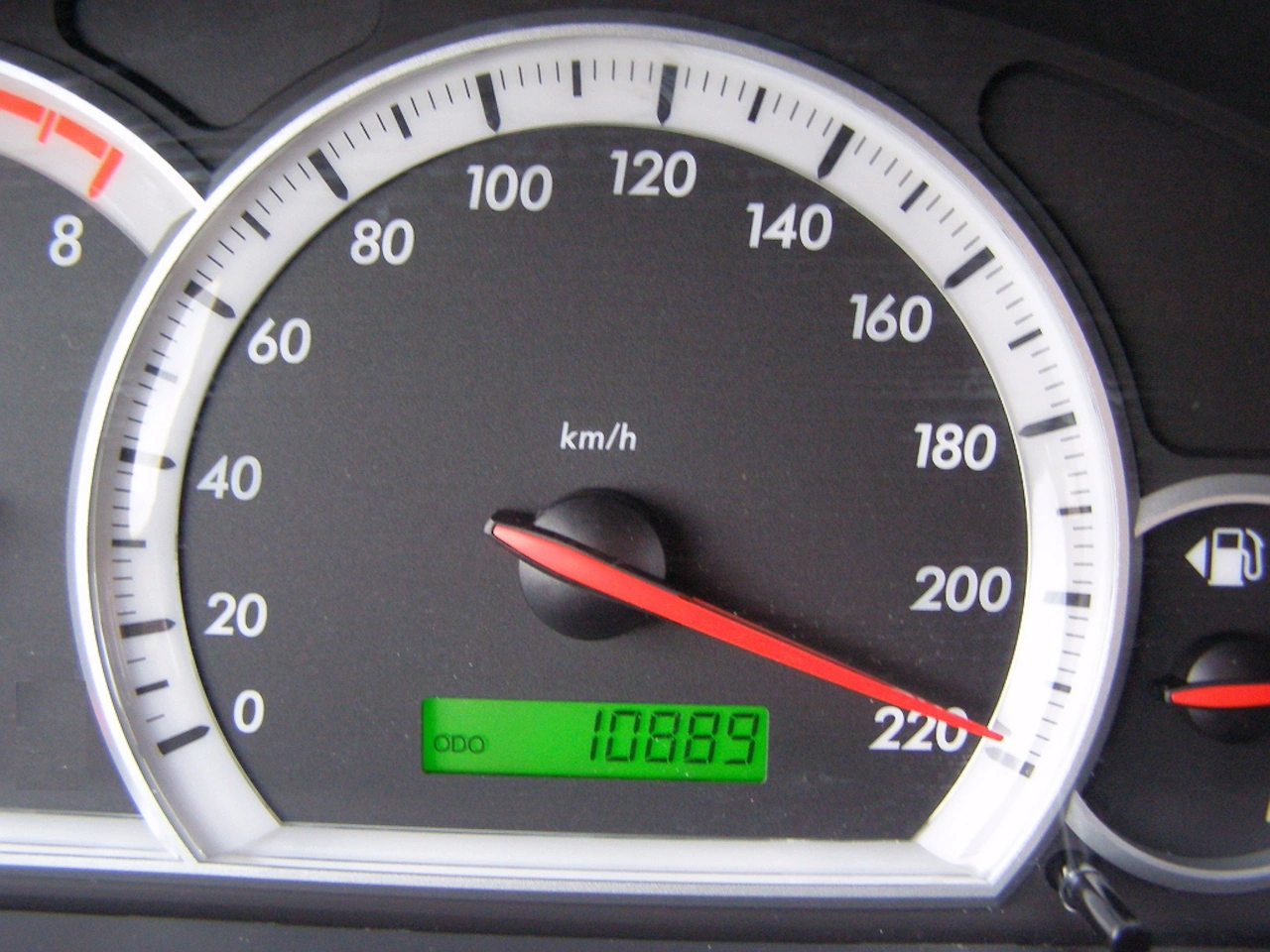
89. km/h
km/h means kilometres per hour and is a unit used to measure speed. It expresses how many kilometres a vehicle or other moving object would travel in one hour if it maintained the same speed.
For example, a speed of 50 km/h means travelling at a rate of 50 kilometres per hour. Kilometres per hour are widely used for road speeds and speed limits in countries that use the metric system.
Wikimedia.org • Bluescan sv.wiki • CC0
What does km/h mean?
km/h is the abbreviation for kilometres per hour, a unit used to measure speed.
What does 50 km/h mean?
A speed of 50 km/h means that, if the speed remained constant, the vehicle would travel 50 kilometres in one hour.
Is km/h the same as mph?
No. km/h measures speed in kilometres per hour, while mph measures speed in miles per hour. The two units therefore represent different numerical speeds.
90. mph
mph means miles per hour and is a unit used to measure speed. It expresses how many miles a vehicle or other moving object would travel in one hour if it maintained the same speed.
For example, a speed of 50 mph means travelling at a rate of 50 miles per hour. One mile per hour is approximately 1.61 km/h, so speeds expressed in mph and km/h have different numerical values.

Wikimedia.org • Greg Gjerdingen • CC BY
What does mph mean?
mph is the abbreviation for miles per hour, a unit used to measure speed.
What does 50 mph mean?
A speed of 50 mph means that, if the speed remained constant, the vehicle would travel 50 miles in one hour.
Is mph the same as km/h?
No. mph measures speed in miles per hour, while km/h measures speed in kilometres per hour. 1 mph is approximately 1.61 km/h.
91. Speedometer
A speedometer is an instrument in a vehicle that shows the vehicle's current speed. It is normally displayed on the instrument panel and may use an analogue dial, a digital display or both.
Drivers should use the speedometer to monitor their speed and remain within the applicable speed limit. The displayed unit is usually kilometres per hour or miles per hour, depending on the country and vehicle.

Wikimedia.org • Andreas Schmidt • CC BY-SA
What is a speedometer?
A speedometer is an instrument that displays the current speed of a vehicle.
Where is the speedometer located?
It is normally located on the vehicle's instrument panel or digital driver display, where it can be seen easily while driving.
Which units can a speedometer use?
A speedometer may display speed in kilometres per hour (km/h), miles per hour (mph) or both, depending on the vehicle and market.
92. Ride height
Ride height is the height at which a vehicle's body or chassis sits above the road surface. It is determined mainly by the suspension, wheels and tyres and can also change according to the vehicle's load.
Changing the ride height by lowering or raising the suspension can affect ground clearance, wheel alignment, handling and the space available between the vehicle and the road. Vehicle modifications must comply with the technical and approval rules that apply in the country.
Wikimedia.org • mark6mauno • CC BY
What is ride height?
Ride height describes how high a vehicle's body or chassis sits above the road surface.
What affects a vehicle's ride height?
Ride height can be affected by the suspension, wheel and tyre dimensions, vehicle load and suspension modifications.
Can a vehicle's ride height be changed?
Yes. Suspension modifications can lower or raise a vehicle, but such modifications may be subject to technical approval, inspection and safety requirements.
93. Dirt road
A dirt road is an unpaved road whose surface consists mainly of natural soil, earth or compacted ground rather than asphalt, concrete or an added gravel surface. Dirt roads are commonly found in rural, agricultural, forest and remote areas.
Drivers on dirt roads should adapt their speed to the surface conditions and avoid sudden braking, acceleration or steering. Dust, mud, ruts, potholes and reduced tyre grip can make driving more difficult, especially during or after bad weather.

Wikimedia.org • Игоревич • CC0
What is a dirt road?
A dirt road is an unpaved road surfaced mainly with natural soil or compacted earth.
What is the difference between a dirt road and a gravel road?
A dirt road mainly uses the natural earth or soil as its driving surface, while a gravel road normally has a deliberately added layer of gravel or crushed stone.
How should you drive on a dirt road?
Use a suitable speed, increase following distance when necessary and accelerate, brake and steer smoothly. Extra care may be required when the surface is dusty, muddy, rutted or uneven.
94. Driving
Driving is the act of controlling and operating a vehicle or other recognised means of transport in traffic. It involves steering, accelerating, braking, observing the road and interacting safely with other road users.
Safe driving requires the driver to remain in control, follow traffic rules and signals, observe surrounding traffic and adapt to road, weather and visibility conditions.

Wikimedia.org • BP63Vincent • CC BY-SA
What is driving?
Driving is the act of controlling and operating a vehicle while travelling in traffic.
What does safe driving require?
Safe driving requires proper vehicle control, attention to the road, compliance with traffic rules and appropriate reactions to other road users and changing conditions.
Who can legally drive a motor vehicle?
The requirements vary by country and vehicle type. Drivers may need to meet minimum-age, driving-licence, medical-fitness and vehicle-category requirements.
95. Start-stop system
A start-stop system is a vehicle system that automatically switches off the engine when the vehicle is stationary and restarts it when the driver is ready to move again. It is commonly used in vehicles with combustion engines to reduce unnecessary engine idling.
The system normally operates automatically when certain conditions are met, such as when the vehicle stops in traffic. Its operation does not replace the driver's responsibility to control the vehicle safely and follow the applicable traffic rules.
Wikimedia.org • Bindydad123 • CC BY-SA
What is a start-stop system?
A start-stop system automatically switches off the engine when the vehicle is stationary and restarts it when the driver is ready to continue.
Why do vehicles use a start-stop system?
The system is primarily intended to reduce unnecessary engine idling, particularly when a vehicle is waiting in traffic.
Does the engine always switch off when the vehicle stops?
Not necessarily. The system may keep the engine running when operating conditions do not allow an automatic stop, depending on the vehicle and its systems.
96. Manual transmission
A manual transmission is a vehicle transmission in which the driver selects the gears manually, usually using a gear lever together with a clutch pedal. The driver operates the clutch to disconnect and reconnect the engine from the transmission when starting, stopping or changing gears.
Driving a manual vehicle requires the driver to coordinate the clutch, accelerator and gear selection. Compared with an automatic transmission, gear changes are controlled directly by the driver rather than being performed automatically by the vehicle.
Wikimedia.org • 21C117 • CC BY-SA
What is a manual transmission?
A manual transmission is a gearbox in which the driver manually selects the appropriate gear, normally using a gear lever and clutch pedal.
What does the clutch do in a manual vehicle?
The clutch temporarily disconnects the engine from the transmission, allowing the driver to start, stop and change gears smoothly.
What is the difference between a manual and automatic transmission?
With a manual transmission, the driver selects and changes gears. An automatic transmission normally selects the appropriate gears automatically without requiring a conventional clutch pedal.
97. Automatic transmission
An automatic transmission is a vehicle transmission that changes gears automatically without requiring the driver to operate a conventional clutch pedal and manually select each gear. Depending on the design, the driver normally selects positions such as park, reverse, neutral and drive while the transmission manages gear changes.
An automatic transmission can make driving simpler by removing the need to coordinate a clutch pedal and manual gear changes. Automatic transmissions include several different technologies, such as conventional automatics, continuously variable transmissions and dual-clutch systems.
Wikimedia.org • Jhcbs1019 • CC BY-SA
What is an automatic transmission?
An automatic transmission is a gearbox that automatically selects and changes gears without requiring the driver to operate a conventional clutch pedal.
How is an automatic transmission different from a manual transmission?
With an automatic transmission, gear changes are handled automatically, while a manual transmission normally requires the driver to operate a clutch and select each gear manually.
Do all automatic transmissions work in the same way?
No. Different designs include conventional automatic transmissions, continuously variable transmissions and dual-clutch systems, although they can all operate without the driver manually controlling a clutch during normal driving.
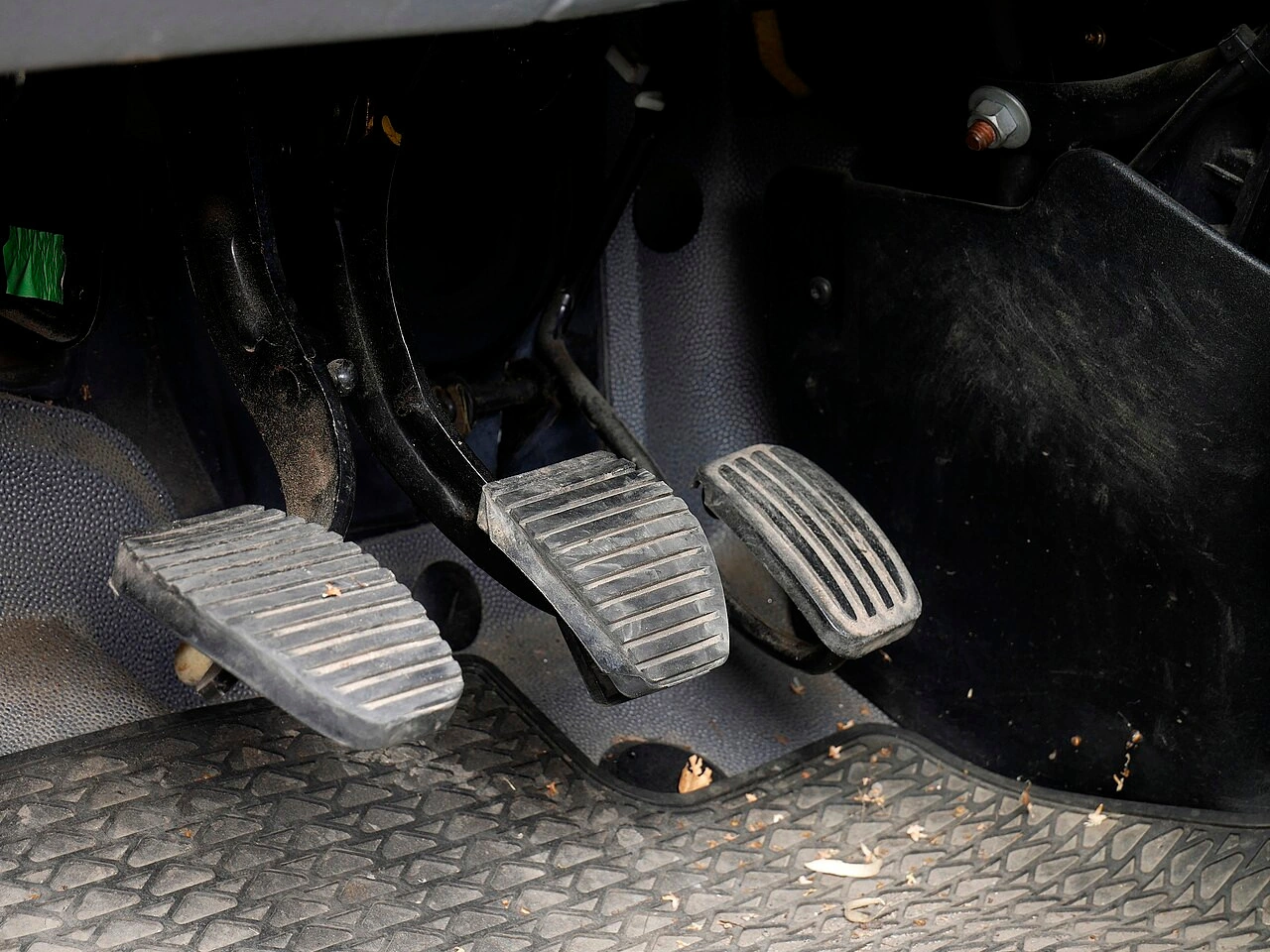
98. Throttle
A throttle is a control used to regulate the power produced by an engine or motor. In most cars and trucks, the driver controls the throttle through the accelerator pedal, while motorcycles commonly use a twist grip on the handlebar.
Increasing the throttle generally increases the power available for acceleration, while reducing it decreases the power delivered to the wheels. The exact system differs between combustion-engine, hybrid and electric vehicles.
Wikimedia.org • Santeri Viinamäki • CC BY-SA
What is a throttle?
A throttle is a control that regulates how much power an engine or motor produces.
How does a driver control the throttle?
In most cars, the throttle is controlled using the accelerator pedal. Motorcycles and some other vehicles commonly use a twist-grip throttle.
Is the throttle the same as the accelerator?
They are closely related but not exactly the same. The accelerator is the driver's control, while the throttle refers more broadly to the system that responds to that input and regulates engine or motor power.
99. Tachometer
A tachometer is an instrument that shows the rotational speed of an engine or motor, usually measured in revolutions per minute (RPM). It is commonly displayed on the vehicle's instrument panel near the speedometer.
A tachometer helps the driver understand how fast the engine is rotating and can assist with selecting an appropriate gear in vehicles with a manual transmission. It measures engine speed rather than the vehicle's road speed.
Wikimedia.org • メルビル • CC BY-SA
What is a tachometer?
A tachometer is an instrument that measures and displays the rotational speed of an engine or motor, usually in revolutions per minute.
What does RPM mean on a tachometer?
RPM means revolutions per minute and indicates how many complete rotations the engine's crankshaft makes in one minute.
Is a tachometer the same as a speedometer?
No. A tachometer shows engine rotational speed, while a speedometer shows the vehicle's road speed.
100. Steering wheel
A steering wheel is the primary control used by a driver to change the direction of a vehicle. Turning the steering wheel operates the steering system, which changes the angle of the steered wheels and directs the vehicle along the intended path.
The driver should use the steering wheel smoothly and remain in full control of the vehicle. Modern steering systems may include power assistance, electronic controls and buttons for functions such as audio, cruise control or driver information.

Wikimedia.org • Mario Roberto Durán Ortiz • CC BY-SA
What is a steering wheel?
A steering wheel is the driver's main control for changing the direction in which a vehicle travels.
How does a steering wheel control the vehicle?
Turning the steering wheel operates the vehicle's steering system, which changes the direction of the steered wheels.
Should you make sudden steering movements?
Normally, no. Steering should be smooth and controlled because sudden movements can destabilise the vehicle or create danger for other road users.