MotorwayUruguay

An introduction to the traffic rules and road signs of Uruguay. Learn about driving, road safety and much more in our illustrated book, with answers to frequently asked questions.

For informational purposes only. Always follow official regulations. Some content and images were created with AI assistance.


1. Motorway

A motorway is a road specially designed and signposted for motor traffic. Motorways normally have separate carriageways for opposing traffic, controlled access through designated entrances and exits, no direct access to neighbouring properties, and no level crossings with other roads, railways or paths.

Special traffic rules apply on motorways. The permitted road users, speed limits, lane rules, tolls and emergency procedures vary between countries, so drivers must follow the local traffic signs and regulations.

Does a major divided highway in Uruguay automatically permit motorway speeds used abroad?

No. Uruguay’s national regulation sets limits by the road and vehicle concerned. A divided layout alone is not permission to use a foreign motorway maximum. Follow the road’s signed limit and the national rules.
🔗 impo.com.uy • Uruguay Law 18191 — Regulation 13.1, 13.3–13.7; replacement 13.2 in Decree 173/2013 Article 2; local higher-limit authorisation is section-specific

🔗 impo.com.uy • National Road Traffic Regulation — 13.1 and 13.3–13.7; old 13.2 replaced by Decree 173/2013 Article 2

🔗 impo.com.uy • Decree 173/2013 Article 2 — operative replacement of Regulation 13.2, rural 90/80 and 60/40/20 km/h reductions

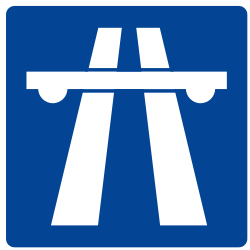
Start of a motorway. Start of a motorway.

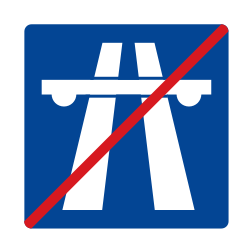
End of the motorway. End of the motorway.

What speed limit applies to cars on a major highway in Uruguay?

Outside urban and suburban areas, the general maximum in optimal conditions is 90 km/h for a light vehicle without a trailer. The ministry can authorise and sign higher limits on suitable sections, up to 110 km/h. This is not a universal highway limit.

🔗 impo.com.uy • Uruguay Law 18191 — Regulation 13.1, 13.3–13.7; replacement 13.2 in Decree 173/2013 Article 2; local higher-limit authorisation is section-specific

🔗 impo.com.uy • National Road Traffic Regulation — 13.1 and 13.3–13.7; old 13.2 replaced by Decree 173/2013 Article 2

🔗 impo.com.uy • Decree 173/2013 Article 2 — operative replacement of Regulation 13.2, rural 90/80 and 60/40/20 km/h reductions

What should a foreign driver check before using toll roads in Uruguay?

Check the official Telepeaje arrangements for foreign number plates. The system offers a tourist registration option, and the transport ministry also publishes information on a foreign-vehicle pass. Verify the current payment arrangement before travelling.

🔗 impo.com.uy • Uruguay Law 18191 — Regulation 13.1, 13.3–13.7; replacement 13.2 in Decree 173/2013 Article 2; local higher-limit authorisation is section-specific

🔗 impo.com.uy • National Road Traffic Regulation — 13.1 and 13.3–13.7; old 13.2 replaced by Decree 173/2013 Article 2

🔗 impo.com.uy • Decree 173/2013 Article 2 — operative replacement of Regulation 13.2, rural 90/80 and 60/40/20 km/h reductions

🔗 telepeaje.com.uy • Telepeaje Uruguay — Pase Turista, foreign-plate registration and payment arrangements

🔗 telepeaje.com.uy • Telepeaje Uruguay — Abono Extranjero, current foreign-vehicle arrangement

Can I use the light-car highway limit while towing a trailer in Uruguay?

Do not assume so. The general 90 km/h category covers light vehicles without a trailer and specifically authorised buses; the general maximum for other vehicles outside built-up areas is 80 km/h. Follow any lower signed or applicable restriction.

🔗 impo.com.uy • Uruguay Law 18191 — Regulation 13.1, 13.3–13.7; replacement 13.2 in Decree 173/2013 Article 2; local higher-limit authorisation is section-specific

🔗 impo.com.uy • National Road Traffic Regulation — 13.1 and 13.3–13.7; old 13.2 replaced by Decree 173/2013 Article 2

🔗 impo.com.uy • Decree 173/2013 Article 2 — operative replacement of Regulation 13.2, rural 90/80 and 60/40/20 km/h reductions