


Slippery roadUruguay
 Traffic rules
 Uruguay
1. Slippery road
A slippery road has reduced tyre grip and can make steering, braking and acceleration less effective. Roads may become slippery because of rain, ice, snow, mud, oil, loose material or other substances on the surface. Drivers should reduce speed, increase their following distance and avoid sudden steering, braking or acceleration. Extra caution is needed in bends, on bridges and wherever the road surface changes unexpectedly.
What can make roads slippery in Uruguay?
Rain and standing water can reduce grip, and ice, snow or other surface contamination can make it worse where present. Different parts of the road can have very different grip even when they look clear. Adapt speed and following distance to the actual surface and weather.
How should you drive on a slippery road in Uruguay?
Reduce speed early, increase the gap to the vehicle ahead and use smooth steering, braking and acceleration. Do not rely on the posted maximum as a safe target when grip is poor.
Does a slippery-road warning sign in Uruguay automatically impose a lower number?
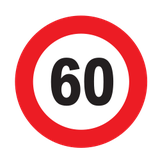
Where the slippery-road sign is a prescribed danger warning on a rural road outside urban and suburban areas, the regulation reduces the relevant maximum to 60 km/h near it if no numerical maximum is indicated. Obey any lower applicable restriction and choose a still lower speed if the hazard or conditions require it. Do not assume that every warning is merely advisory about speed.
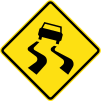 Warning for a slippery road surface.
English • Traffic sign P-27 • Slippery surface. Avoid harsh braking or steering changes.
Español • P-27 • Pavimento resbaladizo. Advierte una superficie que puede resultar resbaladiza. Evita frenadas y cambios de dirección bruscos.
Sources
🔗 Commons.wikimedia.org
🔗 Gub.uy • MTOP, Norma Uruguaya de Señalización Vertical, PDF p. 98
🔗 Gub.uy • MTOP, significado, PDF p. 45
Replacement SVG: Commons.wikimedia.org • Wikimedia Commons original • Gobierno de Chile • Public domain • Original revision 2012-12-11. Wikimedia original unmodified.
Image via Commons.wikimedia.org
Gobierno de Chile • Public domain • Source revision 2012-12-11. Wikimedia original unmodified.

