


Traffic signsWallonia
 Traffic rules
 Wallonia
 Priority signs
 Warning signs
 Prohibitory signs
 Mandatory signs
 Information signs
 Additional signs
Traffic signs
A traffic sign is a standardised visual symbol placed along roads to guide, warn, or regulate drivers, cyclists, and pedestrians. These signs provide essential information about road conditions, rules, directions, and potential hazards, helping to ensure safety and smooth traffic flow. They come in various shapes and colours—such as triangular warning signs, circular prohibitory or mandatory signs, and rectangular information signs—each designed for quick recognition and clear understanding.
What are Belgian A-series traffic signs?
The A series mainly consists of warning signs. They warn road users of a danger ahead, such as dangerous curves, road narrowing, slippery roads, pedestrian crossings or railway crossings.
 Warning for a danger with no specific traffic sign.
Signal routier A51 • Danger non défini par un symbole spécial. Un panneau additionnel indique la nature du danger.
Verkeersbord A51 • Gevaar dat niet door een speciaal symbool wordt bepaald. Een onderbord duidt de aard van het gevaar aan.
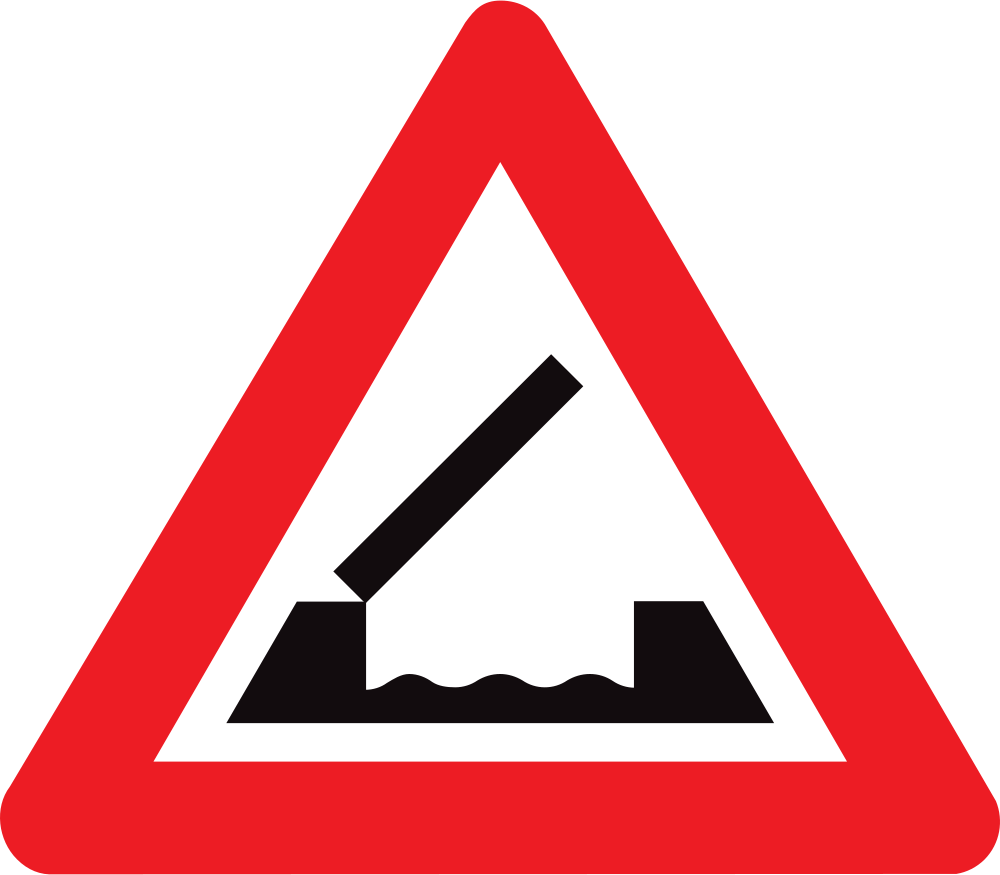 Warning for a movable bridge.
Signal routier A9 • Pont mobile.
Verkeersbord A9 • Beweegbare brug.
What are Belgian B-series traffic signs?
The B series contains priority signs. These signs regulate matters such as giving way, stopping, priority roads, priority from the right and priority at narrow passages.
 Stop and give way.
Signal routier B5 • Marquer l’arrêt et céder la priorité.
Verkeersbord B5 • Stoppen en voorrang verlenen.
 Give way.
Signal routier B1 • Céder la priorité.
Verkeersbord B1 • Voorrang verlenen.
What are Belgian C-series traffic signs?
The C series contains prohibition and restriction signs. They can prohibit access, restrict particular categories of vehicles, impose a maximum speed or prohibit certain manoeuvres.
 No entry.
Signal routier C1 • Sens interdit à tout conducteur.
Verkeersbord C1 • Verboden richting voor iedere bestuurder.
 Access prohibited in both directions.
Signal routier C3 • Accès interdit, dans les deux sens, à tout conducteur.
Verkeersbord C3 • Verboden toegang, in beide richtingen, voor iedere bestuurder.
What are Belgian D-series traffic signs?
The D series contains mandatory signs. They can require drivers to follow a particular direction or require certain road users to use a designated part of the public road.
 Driving straight ahead mandatory.
Signal routier D1 • Obligation de suivre la direction indiquée par la flèche. La disposition des lieux détermine la position de la flèche. Si le signal présentant une flèche non coudée, est placé sur un obstacle, il signifie obligation de passer du côté indiqué par la flèche.
Verkeersbord D1 • Verplichting de door de pijl aangeduide richting te volgen. De plaatsgesteldheid bepaalt de stand van de pijl. Wanneer het verkeersbord dat een niet-gebogen pijl voorstelt, op een hindernis geplaatst is, betekent het dat langs de door de pijl aangeduide richting moet voorbijgereden worden.
What are Belgian E-series traffic signs?
The E series contains signs concerning stopping and parking. They can prohibit stopping or parking or indicate and regulate parking places.
 Parking prohibited.
Signal routier E1 • Stationnement interdit.
Verkeersbord E1 • Parkeerverbod.
What are Belgian F-series traffic signs?
The F series mainly contains indication signs and signs establishing particular traffic situations, such as motorways, built-up areas, one-way roads, bus lanes, pedestrian crossings and dead-end roads.
 Start of a built-up area.
Signal routier F1b • Commencement d'une agglomération. Ce signal est placé à droite, à chaque accès d'une agglomération; il peut être répété à gauche.
Verkeersbord F1b • Begin van een bebouwde kom. Dit verkeersbord wordt rechts geplaatst op elke toegangsweg tot een bebouwde kom; het mag links herhaald worden.
Are Belgian traffic signs legally binding?
Yes. Road users must obey Belgian traffic signs when they are regular in form, sufficiently visible and installed in accordance with the applicable rules.
What takes priority if Belgian traffic instructions, signs and rules conflict?
Instructions given by authorised persons take priority over traffic signs and the ordinary traffic rules. Traffic signs take priority over the ordinary traffic rules. When traffic lights are operating at a location, priority signs placed on the same road do not apply there.
Are traffic lights and road markings also traffic signs?
No. Belgian law distinguishes between traffic lights, traffic signs and road markings. Together they form the traffic-signalling system that road users must follow.
How are Belgian traffic signs currently classified?
Under the current Belgian Road Code, traffic signs are divided into six categories: warning signs, priority signs, prohibitory signs, mandatory signs, signs concerning stopping and parking, and information signs.
Can an additional sign change the meaning of a Belgian traffic sign?
Yes. An additional sign placed below a traffic sign can supplement, specify or limit its meaning. It may indicate matters such as a distance, the length of a regulation, a period, a particular vehicle category or an exception.
Can Belgian traffic signs be displayed electronically?
Yes. Traffic signs can be displayed using dynamic or variable signalling. Their colours may be adapted for the electronic display, but red remains red and the legal meaning of the sign does not change.
Who is allowed to place traffic signs on Belgian public roads?
Traffic signs may normally only be placed by the legally competent authorities. Temporary signalling may also be used in specific circumstances, such as roadworks, traffic obstructions or emergencies, in accordance with the applicable rules.
Why is Belgium introducing new traffic signs?
Belgium’s new Code of the Public Road modernises and reorganises the traffic-sign system. Many signs have been adapted to use simpler and more internationally harmonised symbols, while obsolete signs are removed and several situations receive their own dedicated signs instead of relying on combinations of existing signs and additional panels.
How will Belgian traffic signs look different under the new Road Code?
Many signs receive modernised and simplified symbols. Warning and prohibitory signs receive a white contrast border, additional contrast is introduced between blue and red areas on certain signs, and the current blue additional signs are replaced by white panels with black symbols or text.
How are traffic signs classified under Belgium’s new Road Code?
The new Code keeps the familiar A, B, C, D, E and F series and adds a clearer structure with R-series signs for special regulations, Z-series signs for zonal regulations and M-series additional signs.
When do Belgium’s new traffic signs become valid?
Belgium’s new Code of the Public Road takes effect on 1 June 2027. The new traffic signs may not be used before that date.
Must all current Belgian traffic signs be replaced on 1 June 2027?
No. Most current Belgian traffic signs may remain in use during a long transition period and do not have to be replaced immediately. Most old models remain valid until 1 January 2045.
Are there Belgian traffic signs that must be replaced earlier?
Yes. Traffic signs E5, E7 and E11 lose their meaning on 1 June 2027. The current F17 and F18 bus-lane signs and associated markings lose their meaning on 1 June 2030, while certain current F111 and F113 cycling-zone signs lose their meaning on 1 January 2035.
Can an old Belgian traffic sign remain in place but receive the meaning of the new Road Code?
Yes. Many current signs may physically remain in place during the transition period. From 1 June 2027, they are interpreted according to the new Code of the Public Road unless a specific transitional provision provides otherwise.
Should drivers learn both the current and new Belgian traffic signs?
Yes. The current traffic signs remain relevant until the new Code takes effect, and many old designs will remain on Belgian roads for years afterwards. During the transition period, drivers should therefore be able to recognise both current and new traffic signs.

201. Caravan site
This traffic sign indicates a caravan site. The designated area provides parking or accommodation for caravans.
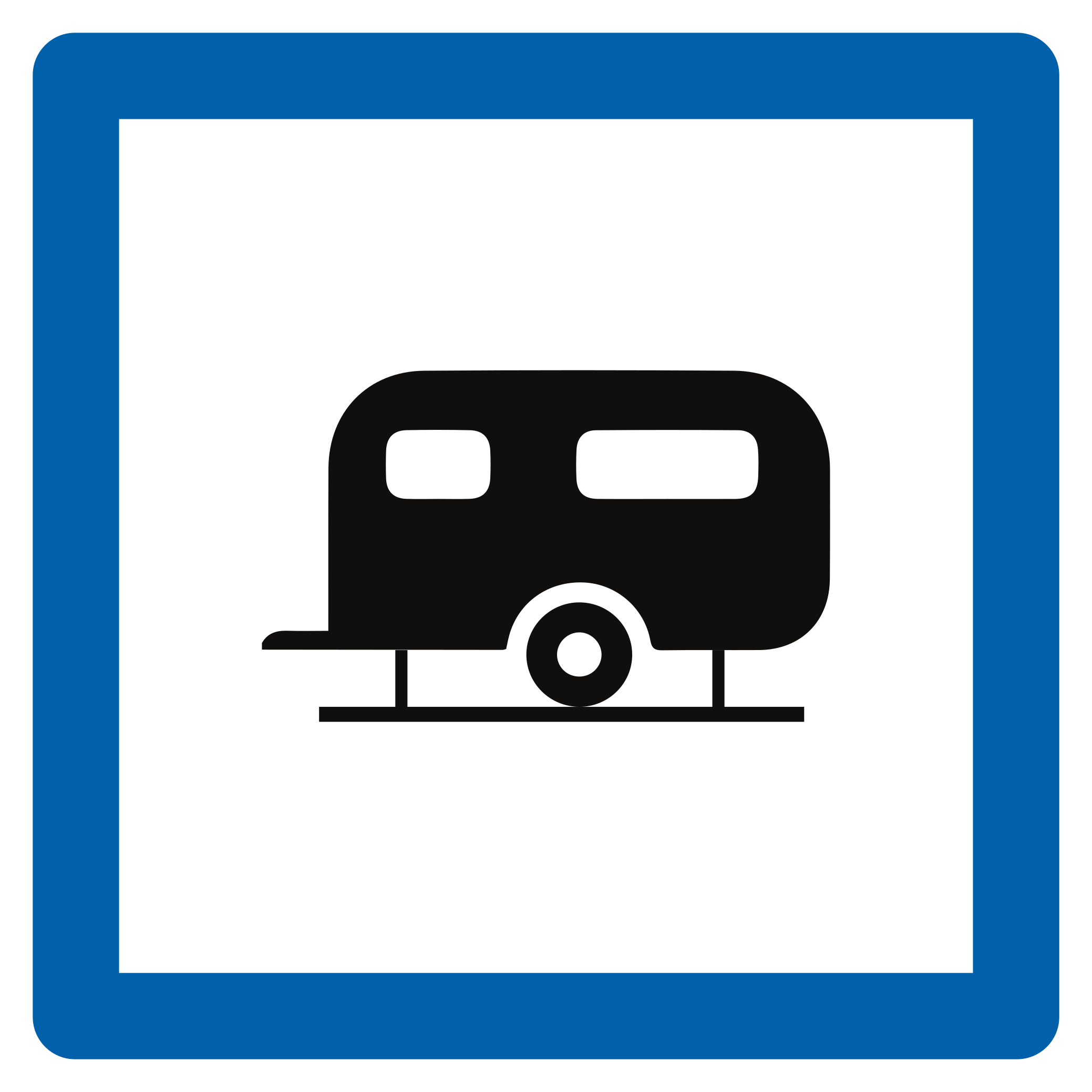
Signal routier F73 • Terrain de caravaning.
202. Camper site
This traffic sign indicates a camper site. The designated area provides parking or overnight accommodation for motorhomes and similar recreational vehicles.
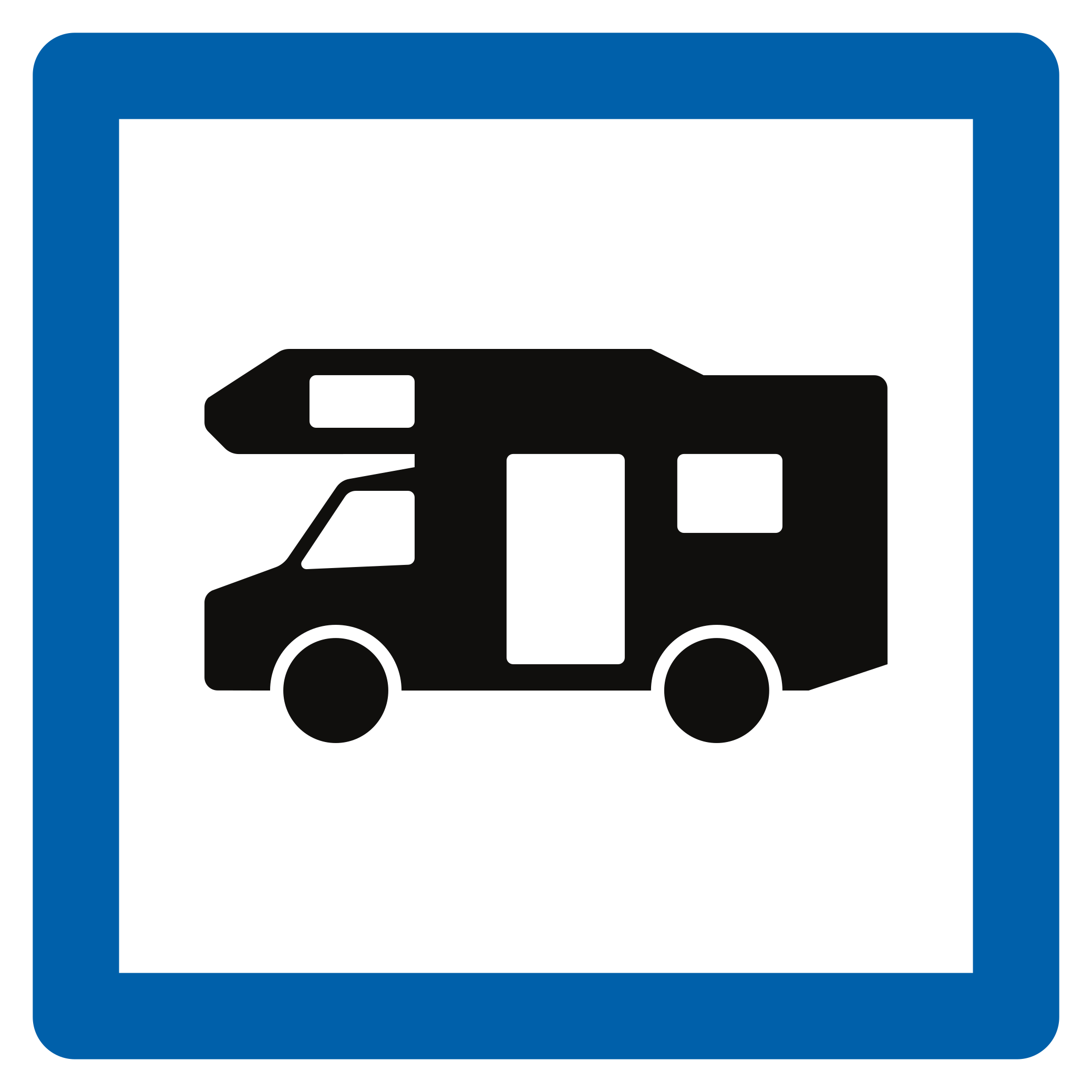
Signal routier F74 • Terrain pour autocaravane.
203. Information point
This traffic sign indicates an information point. Information about the local area, destinations or available services can be obtained there.

Signal routier F77 • Point d’information touristique.
204. Public toilet
This traffic sign indicates a public toilet. Toilet facilities available for public use are located at or near the indicated place.
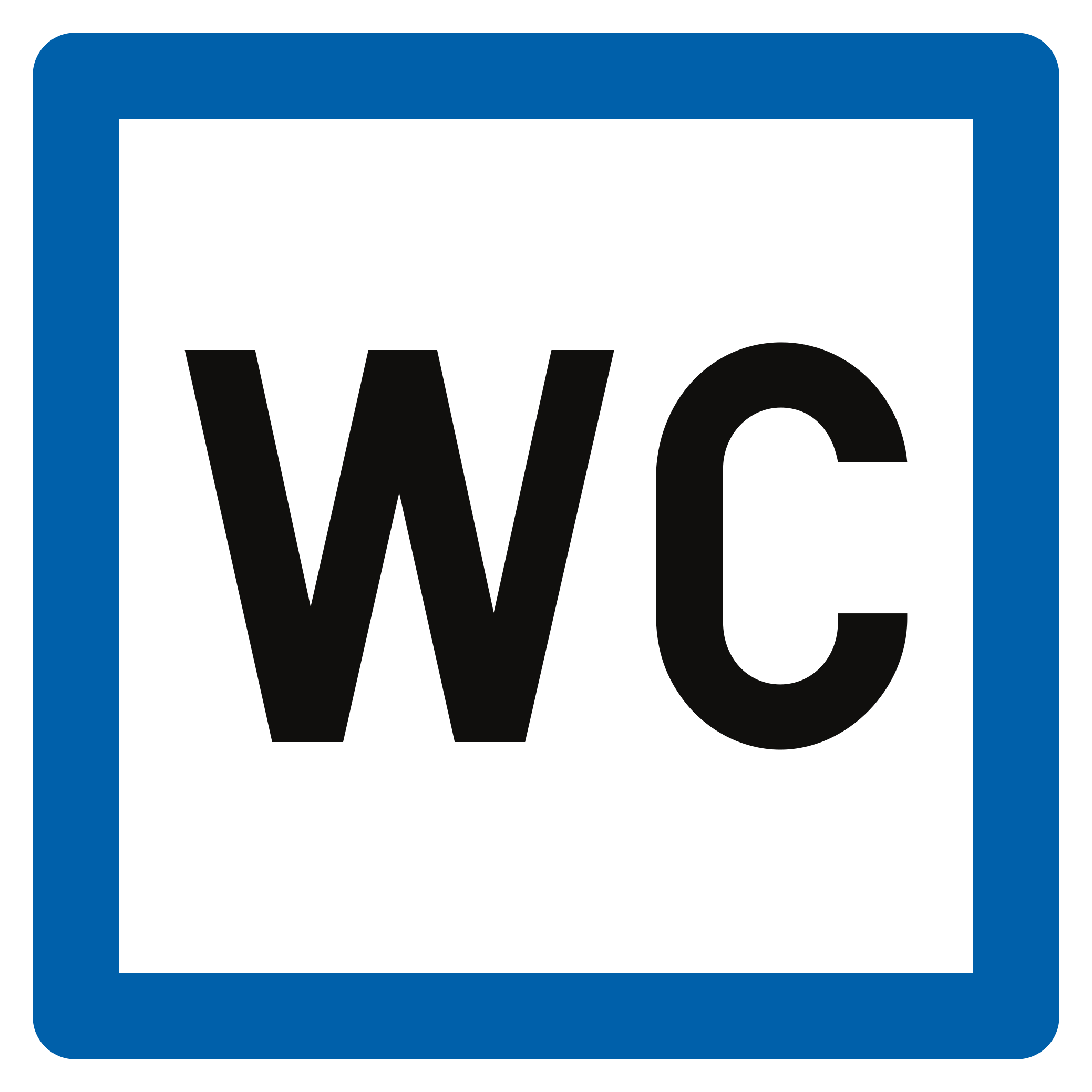
Signal routier F78 • Toilette.
205. Telephone
This traffic sign indicates the location of a telephone available for public use.

Signal routier F63 • Téléphone.
206. Emergency telephone
This traffic sign indicates the location of an emergency telephone. The telephone provides a direct means of requesting assistance in an emergency.
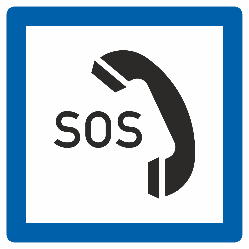
Signal routier F64 • Téléphone d’appel d’urgence.
207. Viewpoint
This traffic sign indicates a viewpoint. A viewpoint is a designated location offering a view of the surrounding landscape or another place of interest.

Signal routier F79 • Point de vue.
208. Petrol station
This traffic sign indicates a petrol station. Fuel for motor vehicles is available at the indicated location. The available fuel types may be shown on the sign or accompanying information.
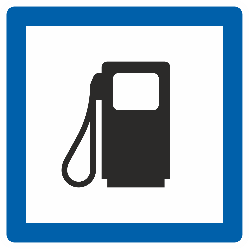
Signal routier F65a • Distribution de carburant. Le type du carburant peut être indiqué sur le signal ou sur un panneau additionnel.
209. Charging station
This traffic sign indicates a charging station. Electric vehicles can be recharged at the indicated location. Follow any parking, charging or access conditions that apply.
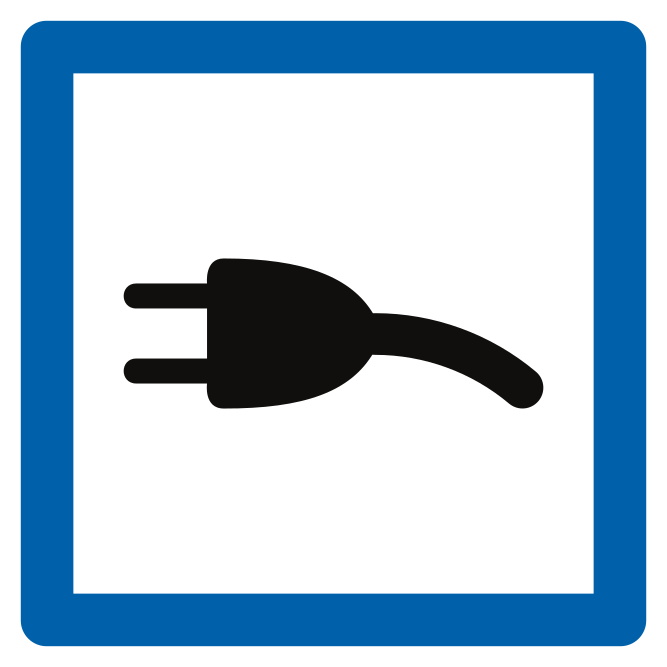
Signal routier F65b • Borne de recharge électrique.
210. Ordinary road number
This traffic sign indicates an ordinary road number. The number identifies the road or route and can be used to follow directions and route signs.
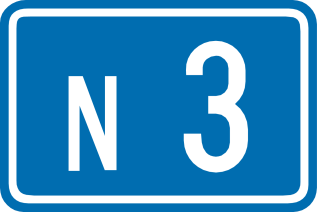
Signal routier F23a • Numéro d’une route ordinaire.
211. E-route number
This traffic sign indicates an E-route number. E-routes form part of the international European road network and are identified by the letter E followed by a route number.
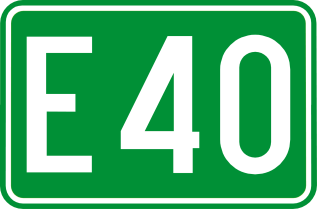
Signal routier F23c • Numéro d’une route internationale.
212. Motorway number
This traffic sign indicates a motorway number. The number identifies the motorway and helps road users follow the correct route.
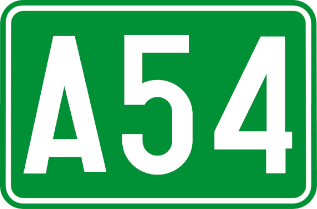
Signal routier F23b • Numéro d’une autoroute.
213. Ring road number
This traffic sign indicates a ring road number. The number identifies a route that forms or follows a ring around a city or another area.
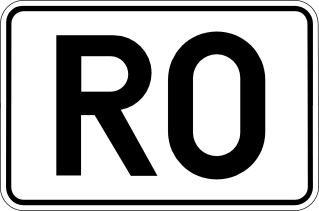
Signal routier F23d • Numéro d’un ring.
214. Emergency exit
This traffic sign indicates an emergency exit. The exit provides an evacuation route to be used when leaving the area in an emergency.
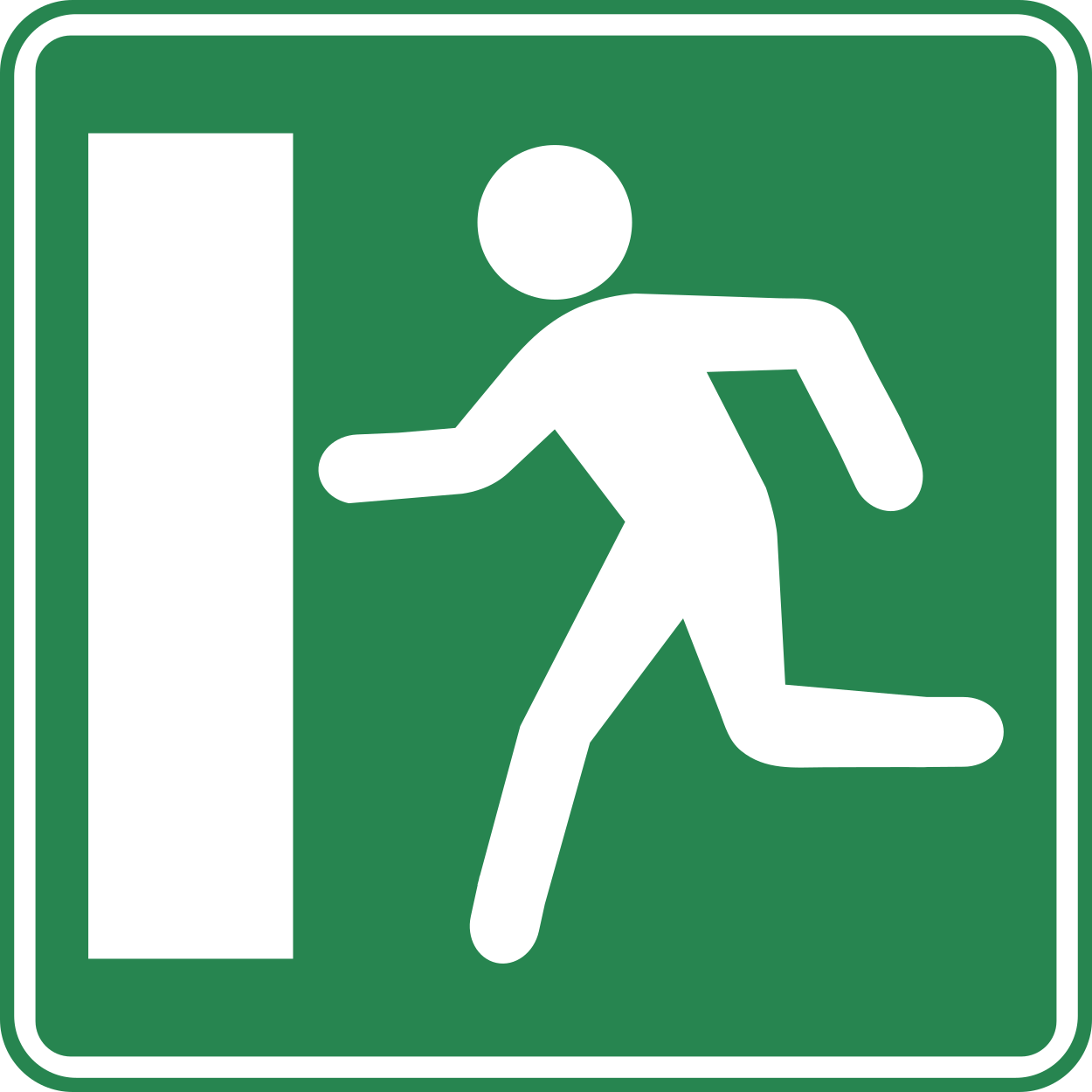
Signal routier F52a • Indication d’une issue de secours.
215. Direction to emergency exit
This traffic sign indicates the direction to an emergency exit. Follow the indicated direction to reach the evacuation route or emergency exit.
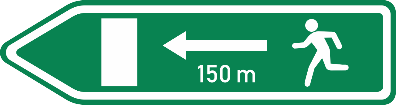
Signal routier F52b • Voie d’évacuation : annonce de l’issue de secours la plus proche dans la direction indiquée.
216. Signpost with distance to location
This traffic sign indicates the direction and remaining distance to the named destination.

Signal routier F29 • Signal de direction. La distance en kilomètres peut être indiquée sur le signal.
217. Direction to the motorway
This traffic sign indicates the direction to a motorway and the destination reached by following it.

Signal routier F31 • Signal de direction. Itinéraire par autoroute.
218. Recommended route for cyclists
This traffic sign indicates a recommended route for cyclists toward the named destination. Follow the arrow to continue along the suggested cycling route.

Signal routier F34b.1 • Signal de direction : itinéraire conseillé à des catégories déterminées d’usagers. Ces signaux peuvent aussi avoir un fond vert.
219. Recommended route for cyclists to a tourist destination
This traffic sign indicates a recommended route for cyclists to a tourist destination. Follow the arrow to continue along the suggested cycling route.

Signal routier F34c.1 • Signal de direction : itinéraire vers une destination touristique, conseillé à des catégories déterminées d’usagers. Ces signaux peuvent aussi avoir un fond vert.
220. Direction to a restaurant
This traffic sign indicates the direction to the named restaurant. Follow the arrow to reach it.

Signal routier F37 • Signal de direction : hôtel ou motel, restaurant, cafétéria, terrain de camping, terrain de caravaning, terrain pour autocaravane, auberge de jeunesse, emplacement pour pique-nique.
221. Signpost to ring road
This traffic sign indicates the direction to a ring road that routes traffic around a city or town. Follow the arrow to join the ring road.

Signal routier F33a • Signal de direction à distance : aéroport, hall de foire ou centre d’exposition, port, car-ferry, parc d’activités économiques, hôpital.
222. Signpost to river for tourists
This traffic sign indicates the direction to the named river or another tourist attraction associated with it. Follow the arrow to reach the destination.

Signal routier F33b • Signal de direction à distance : vallée ou cours d’eau touristique. La distance en kilomètres peut être indiquée sur le signal.
223. River
This traffic sign indicates the river or other watercourse being crossed. It is an information sign and does not impose a traffic rule.

Signal routier F44 • Cours d’eau.
224. Direction to a railway station
This traffic sign indicates the direction to a nearby railway station. Follow the arrow to reach the station serving the named location.

Signal routier F34a • Signal de direction à proximité d’équipements et établissements publics ou d’intérêt général, par exemple une gare de chemin de fer, un hôpital, un hôtel de ville ou maison communale, un bureau de poste.
225. Signpost to tourist location
This traffic sign indicates the direction to the named tourist attraction or place of interest. The symbol may identify the type of attraction or a well-known landmark.
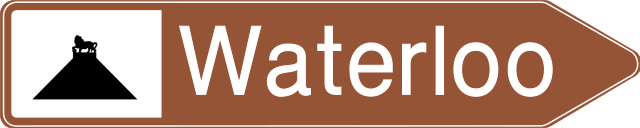
Signal routier F33c • Signal de direction à distance : centre sportif ou stade ou hall omnisport, monument historique, ruines, monastère ou abbaye, parc culturel ou parc de loisirs ou parc d’attractions, monument ou site remarquable, parc naturel, point d’information touristique, point de vue.
226. Start of airport zone
This traffic sign indicates the start of an airport zone. Special traffic rules or access conditions may apply within the zone. Follow the applicable traffic signs and any instructions given by authorised personnel.
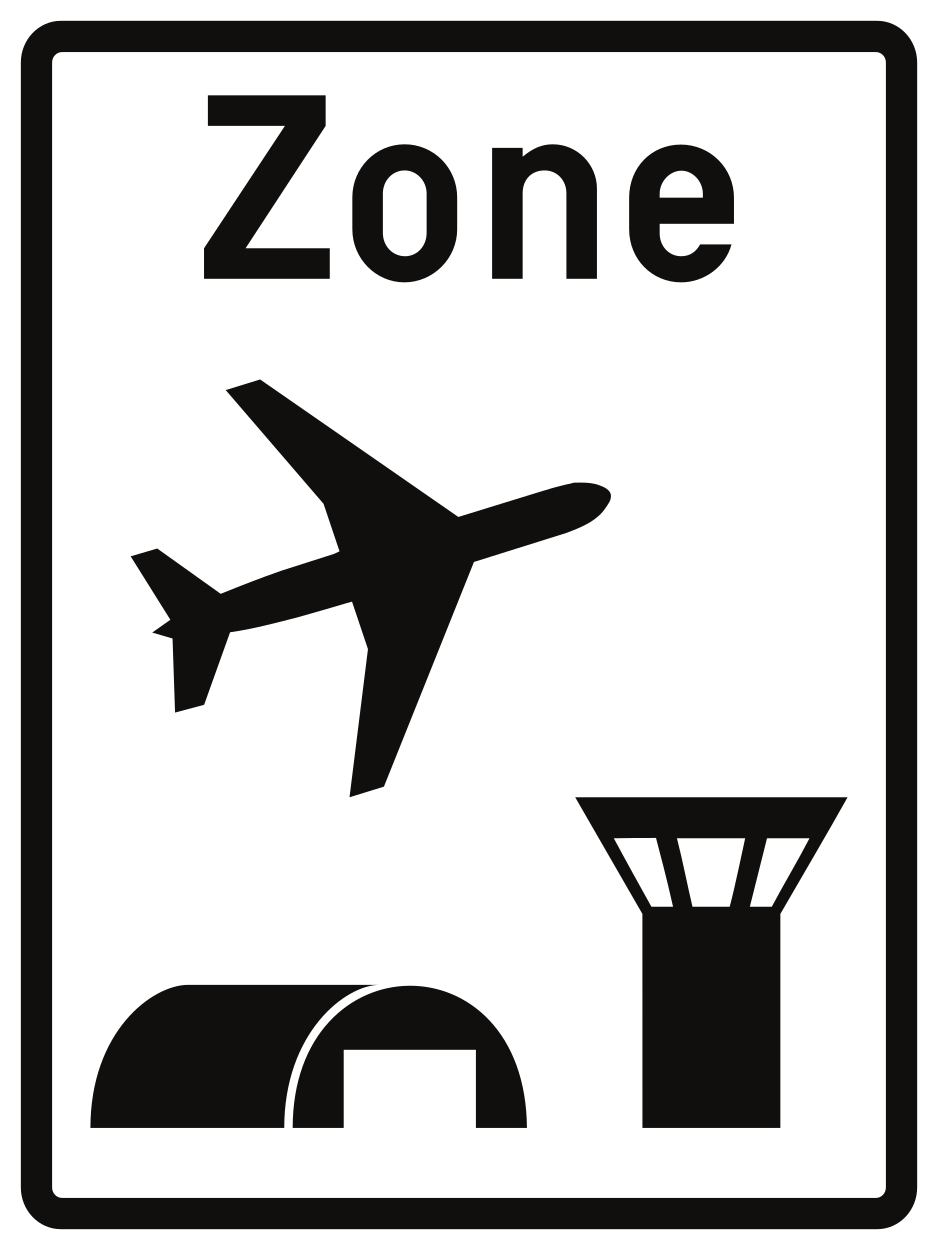
Signal routier R21 • Début d’une zone aéroportuaire. La vitesse maximale qui s’y applique peut être indiquée à titre informatif sur le signal en bas à droite.
227. End of airport zone
This traffic sign indicates the end of the airport zone. Special rules associated with the airport zone end at this point. Other traffic rules or separately indicated restrictions may still apply.
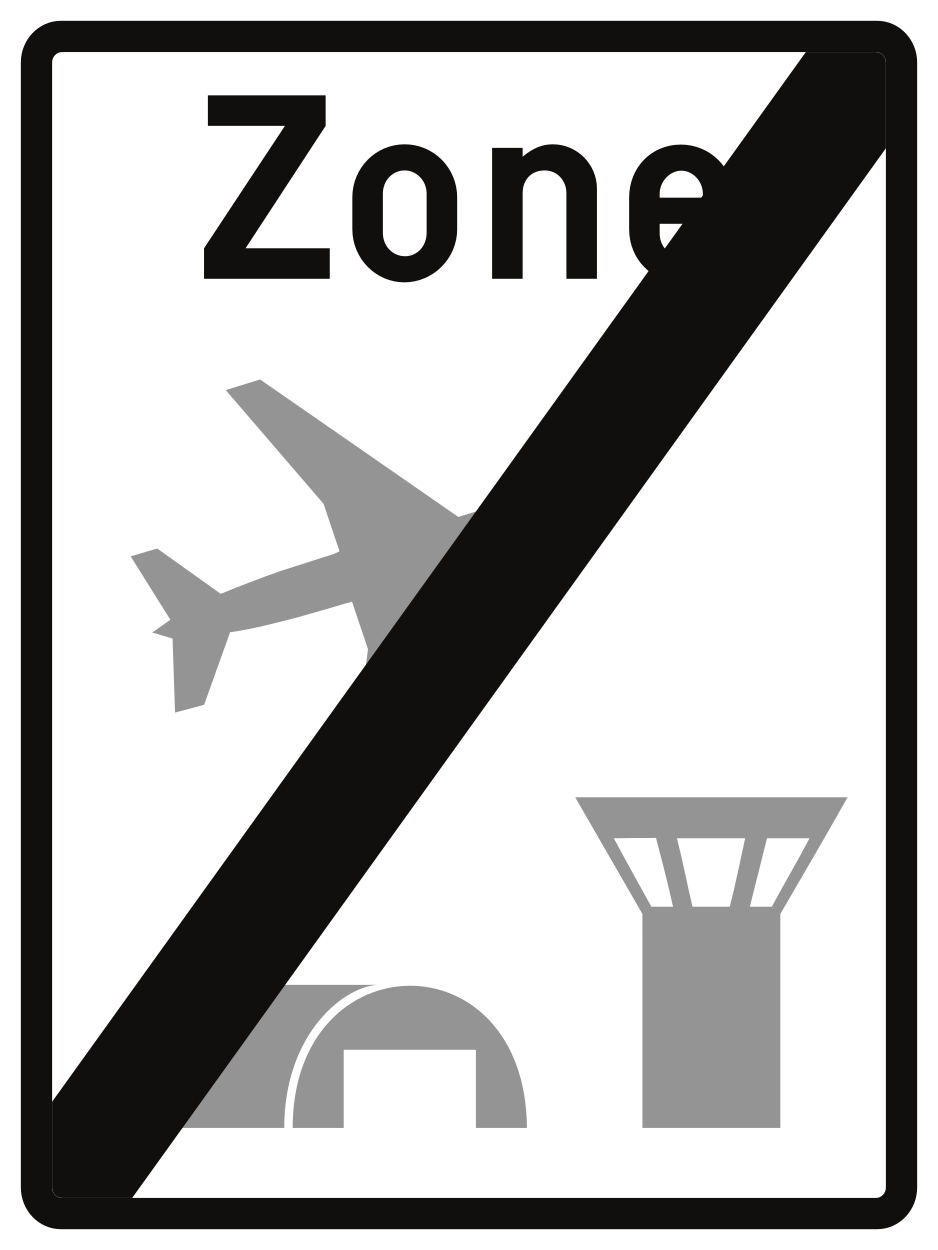
Signal routier R23 • Fin d’une zone aéroportuaire.
228. For cyclists
This supplementary sign indicates that the main traffic sign applies specifically to cyclists.
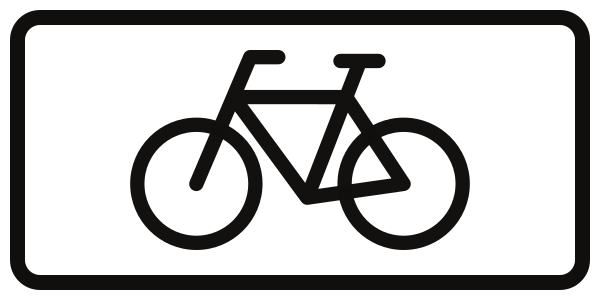
Signal routier M33-P.2 • Bicyclettes.
229. Pedestrians excepted
This supplementary sign indicates that pedestrians are excepted from the restriction or obligation shown by the main traffic sign.
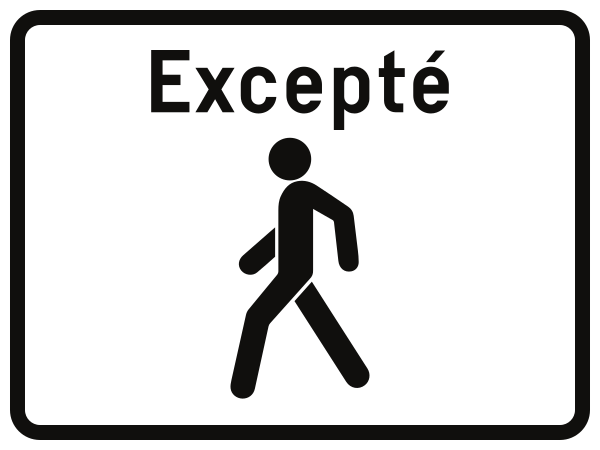
Signal routier M41a-P.1 • Excepté piétons.
230. Cyclists allowed
This supplementary sign indicates that cyclists are allowed where the main traffic sign would otherwise restrict their access or use.
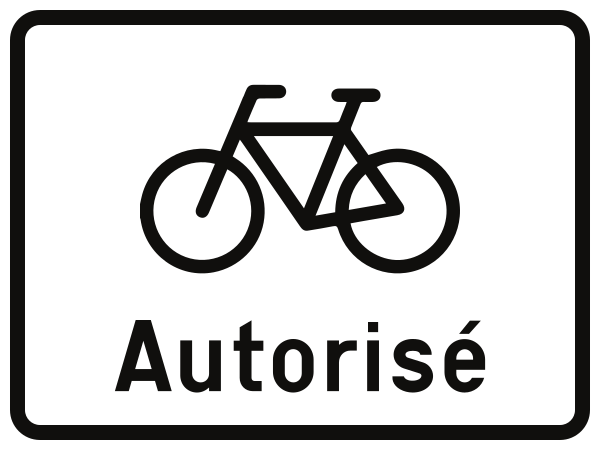
Signal routier M41b-P.2 • Cyclistes autorisés.
231. Cyclists allowed
This supplementary sign indicates that cyclists are allowed where the main traffic sign would otherwise restrict their access or use.
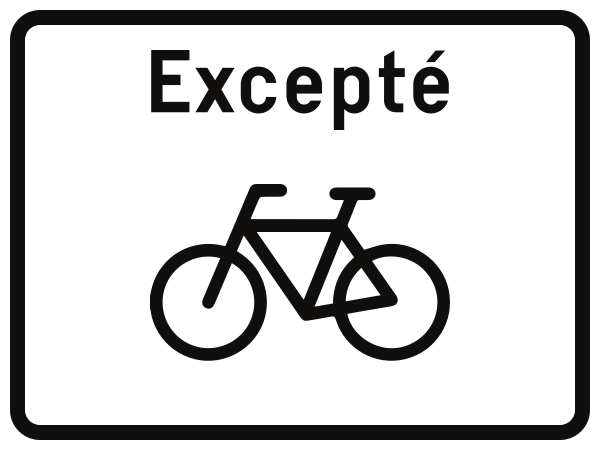
Signal routier M41a-P.2 • Excepté cyclistes.
232. Delivery vehicles allowed
This supplementary sign indicates that delivery vehicles are allowed where the main traffic sign would otherwise restrict their access, use or parking. The vehicles and activities covered depend on the applicable local rules.
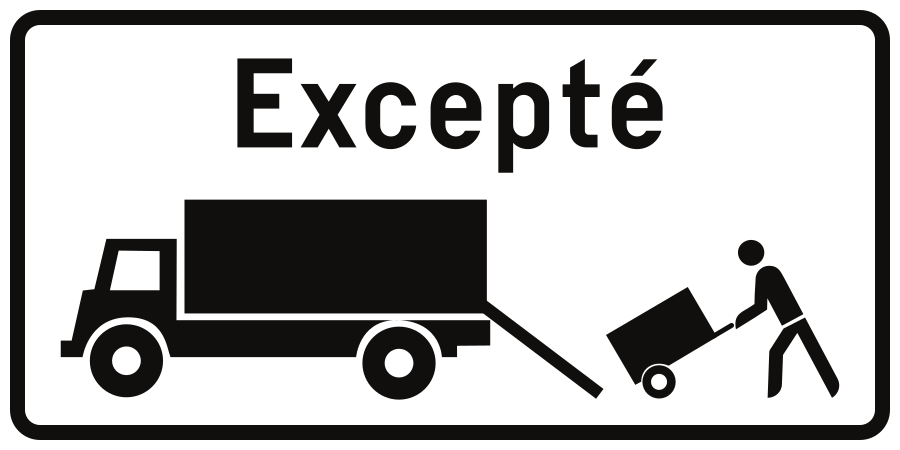
Signal routier M41a-P.30 • Excepté chargement et déchargement de marchandises.
233. Local traffic allowed
This supplementary sign indicates that local traffic is allowed where the main traffic sign would otherwise restrict access. Which journeys or road users qualify as local traffic depends on the applicable local rules.
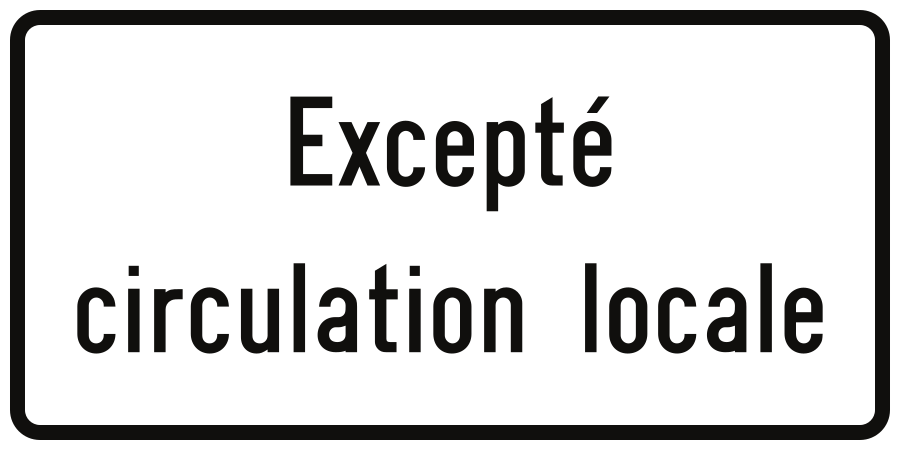
Signal routier M41a • Excepté circulation locale.
234. Mandatory for class P mopeds
This supplementary sign indicates that the mandatory rule shown by the main traffic sign also applies to class P mopeds (speed pedelecs). Their riders must follow the indicated requirement.
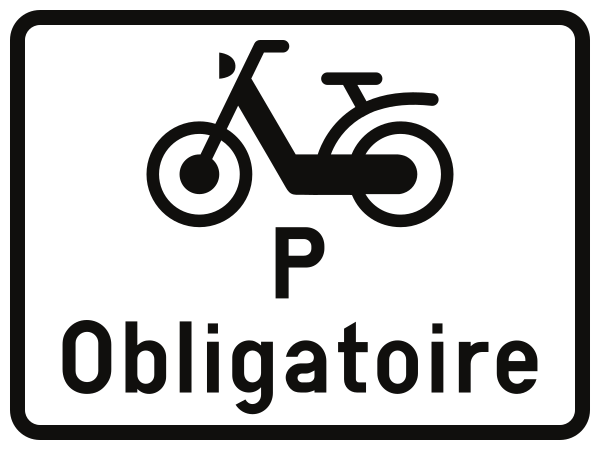
Signal routier M55a-P.8 • Obligatoire pour les conducteurs de speedpedelecs.
235. Prohibited for class B mopeds
This supplementary sign indicates that the prohibition shown by the main traffic sign applies specifically to class B mopeds.
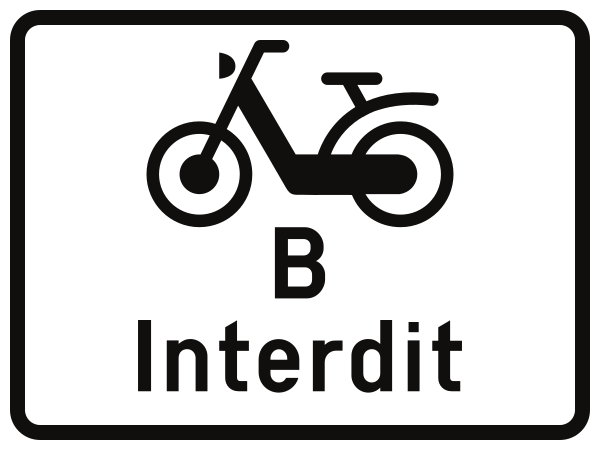
Signal routier M55b-P.8 • Interdit pour les conducteurs de cyclomoteurs à deux roues classe B.
236. Cyclists from both directions
This supplementary sign indicates that cyclists may approach from both directions on the road or cycle path concerned by the main sign.
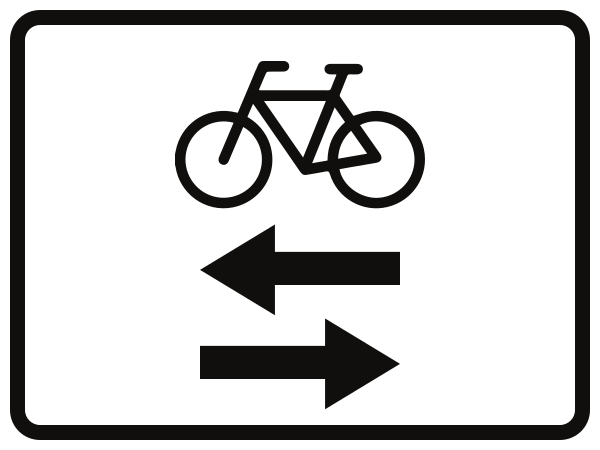
Signal routier M53 • Cyclistes dans les deux directions.
237. Cyclists and mopeds from both directions
This supplementary sign indicates that cyclists and mopeds may approach from both directions on the road or path concerned by the main sign.
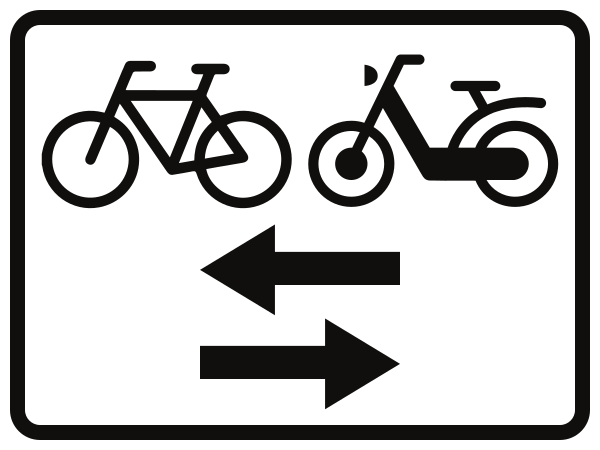
Signal routier M53 • Cyclistes et conducteurs de cyclomoteurs à deux roues dans les deux directions.
238. Traffic in both directions
This supplementary sign indicates that traffic travels in both directions on the road or lane concerned by the main sign.
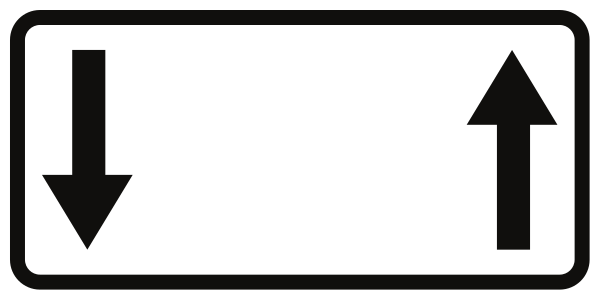
Signal routier M53 • Circulation dans les deux sens.
239. Cyclists in both directions
This supplementary sign indicates that cyclists travel in both directions on the road, lane or cycle path concerned by the main sign.
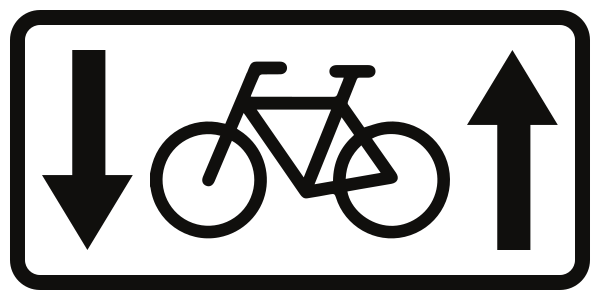
Signal routier M53 • Cyclistes dans les deux sens.
240. Cyclists and mopeds in both directions
This supplementary sign indicates that cyclists and mopeds travel in both directions on the road, lane or path concerned by the main sign.
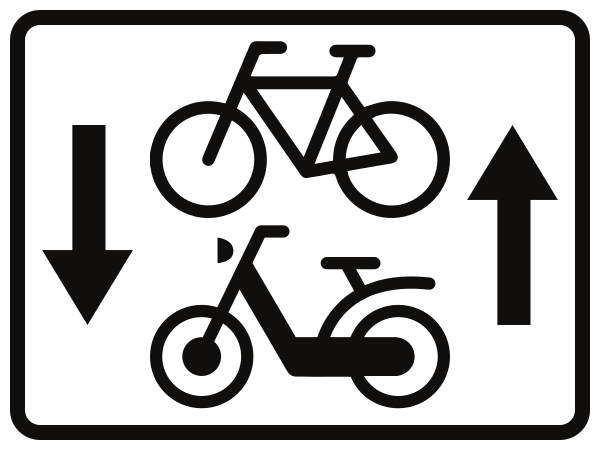
Signal routier M53 • Cyclistes et conducteurs de cyclomoteurs à deux roues dans les deux sens.
241. To the left
This supplementary sign indicates that the main traffic sign applies in the direction shown by the arrow, to the left.
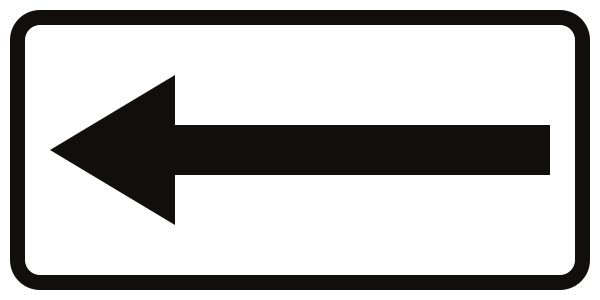
Signal routier M15 • L’orientation de la flèche ou des flèches détermine l’endroit où la réglementation est d’application.
242. To the left or right
This supplementary sign indicates that the main traffic sign applies in both directions shown by the arrows, to the left and right.

Signal routier M13 • Rappel de la réglementation. Le nombre de places concernées peut être indiqué sur la flèche.
243. To the right
This supplementary sign indicates that the main traffic sign applies in the direction shown by the arrow, to the right.
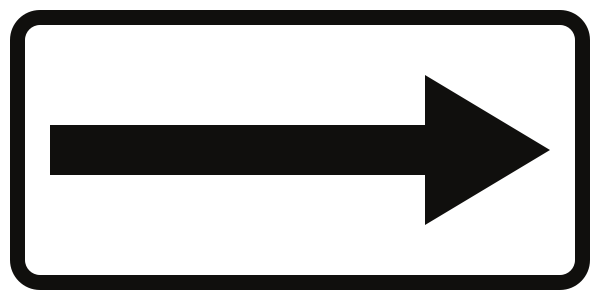
Signal routier M15 • L’orientation de la flèche ou des flèches détermine l’endroit où la réglementation est d’application.
244. Start of regulation for metres
This supplementary sign indicates that the regulation shown by the main traffic sign starts here and applies for the indicated distance.
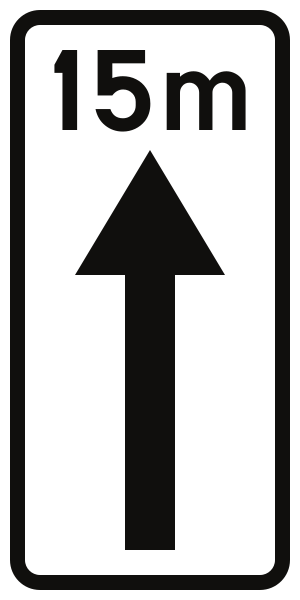
Signal routier M9 • Début de la réglementation et distance sur laquelle elle est applicable.
245. Start of regulation
This supplementary sign indicates the start of the regulation shown by the main traffic sign. The regulation begins at this point.

Signal routier M7 • Début de la réglementation.
246. Continuation of regulation
This supplementary sign indicates the continuation or reminder of the regulation shown by the main traffic sign.

Signal routier M11 • Prolongement de la réglementation qui est d’application avant le carrefour ou rappel de la réglementation.
247. End of regulation
This supplementary sign indicates the end of the regulation shown by the main traffic sign. The regulation ends at this point.

Signal routier M8 • Fin de la réglementation. L’indication de la fin de la réglementation n’est pas signalée lorsqu’elle coïncide avec un carrefour ou avec une autre signalisation routière relative à l’arrêt ou au stationnement.
248. Regulation applies left and right
This supplementary sign indicates that the regulation shown by the main traffic sign applies to the left and right, as shown by the arrows.
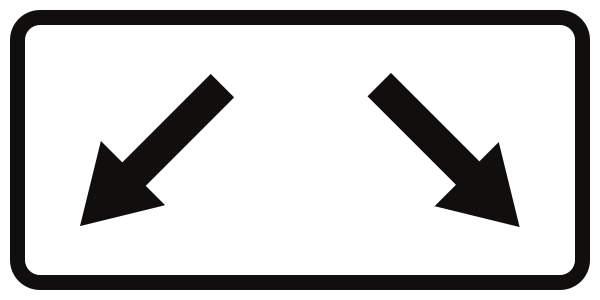
Signal routier M15 • L’orientation de la flèche ou des flèches détermine l’endroit où la réglementation est d’application.
249. Regulation applies left, right and below
This supplementary sign indicates that the regulation shown by the main traffic sign applies in the three directions shown: to the left, below and to the right.
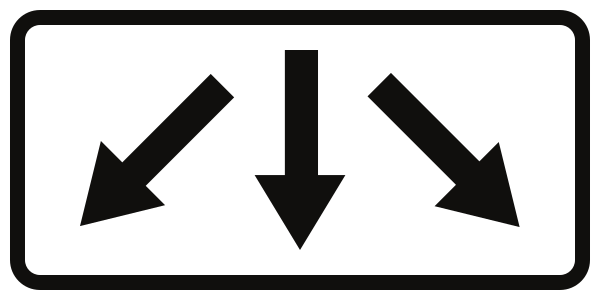
Signal routier M15 • L’orientation de la flèche ou des flèches détermine l’endroit où la réglementation est d’application.
250. Exit on the left
This supplementary sign indicates that the main traffic sign refers to an exit on the left of a road divided into traffic lanes.
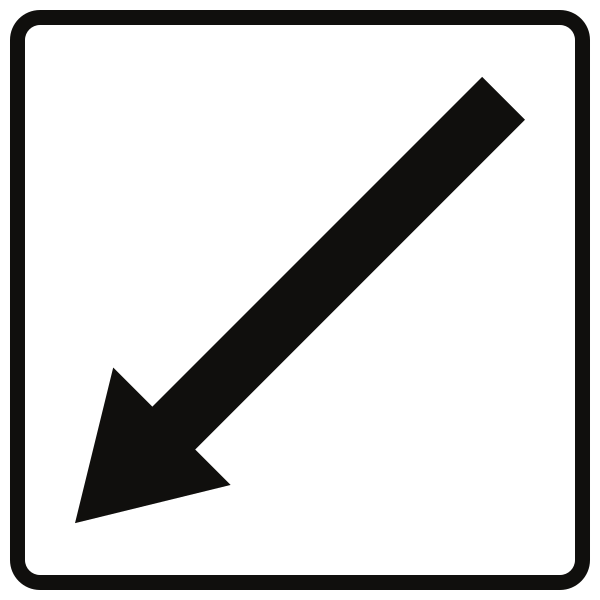
Signal routier M57b • Une sortie située à gauche d’une chaussée divisée en bandes de circulation.