
BahnübergangItalien

Lerne Verkehrsregeln mit klaren Erklärungen und visuellen Beispielen in unserem illustrierten Buch – einfach, verständlich und anschaulich.


21. Bahnübergang

Ein Bahnübergang ist eine Stelle, an der eine Straße oder ein Weg Bahngleise höhengleich kreuzt. Er kann durch Schranken, Warnlichter, Glocken, Verkehrszeichen oder eine Kombination dieser Einrichtungen gesichert sein.

Verkehrsteilnehmer müssen sich vorsichtig nähern und dürfen niemals einfahren, wenn sich ein Zug nähert, Warnsignale aktiv sind oder die Ausfahrt blockiert ist. Sie sollten die Gleise zügig überqueren und dürfen niemals auf den Gleisen anhalten, warten oder eingeschlossen werden.
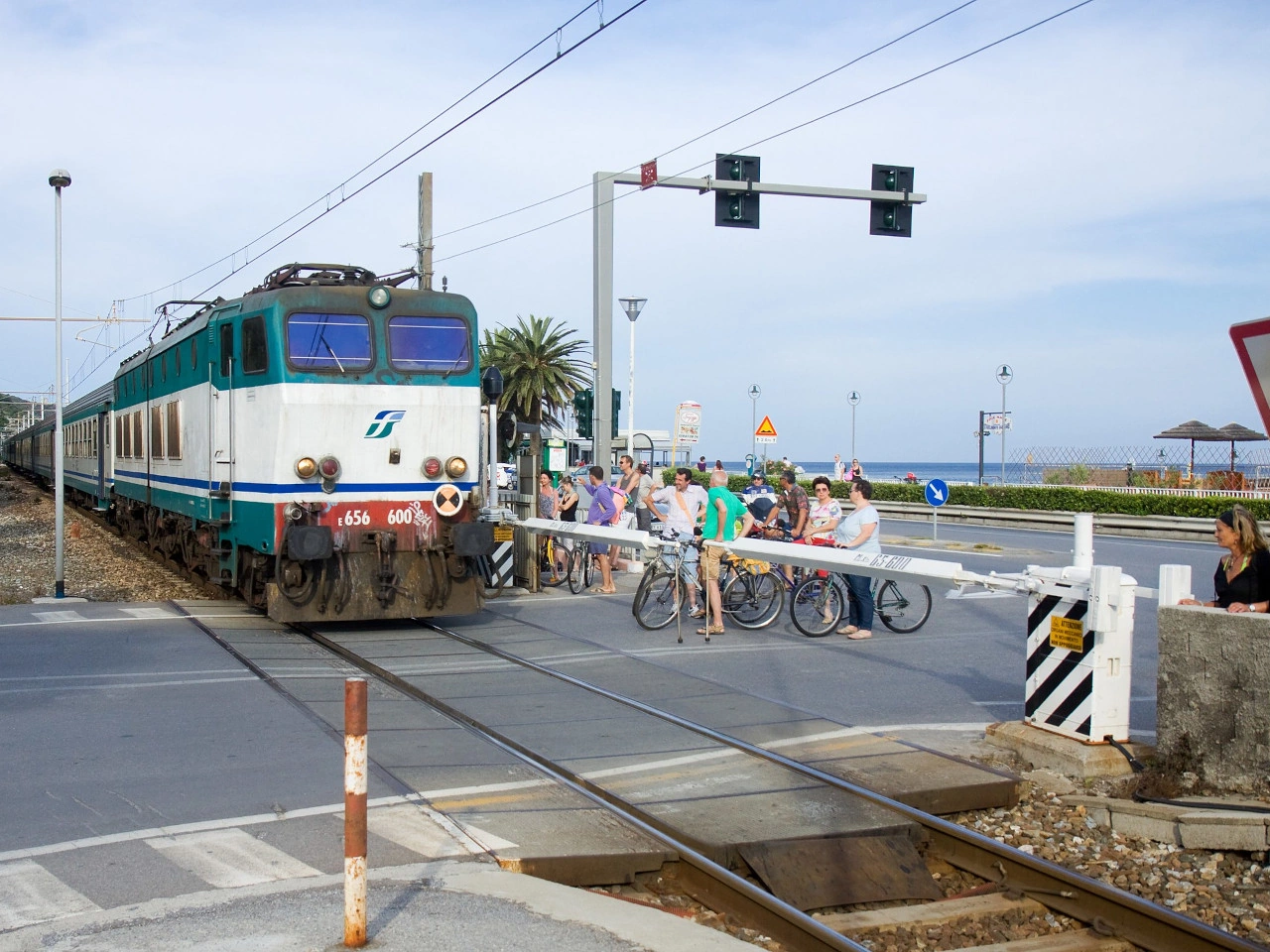
Bahnübergang
What is a railway crossing?

A railway crossing is a place where a road or path crosses railway tracks at the same level.

What is another name for a railway crossing?

It may also be called a level crossing or, particularly in North America, a railroad crossing.

How can you recognise a railway crossing?

It may be indicated by warning signs, crossbuck signs, barriers, flashing lights, bells or road markings. The design differs between countries.

What is the difference between a crossing with and without barriers?

A protected crossing uses full or partial barriers to block road traffic when a train approaches. A crossing without barriers relies on signs, lights, bells or the road user’s own observation.

Must you always stop at a railway crossing?

Not necessarily. You must stop when required by lights, barriers, signs, an approaching train or an authorised person. At an unprotected crossing, slow down and proceed only after checking that no train is approaching.

What do flashing red lights mean?

Flashing red lights mean stop and do not enter the crossing. Remain stopped until the signal permits you to continue.

May you cross while a barrier is moving?

No. Do not enter while a barrier is lowering, rising or closed. Wait until the crossing is fully open and all prohibiting signals have stopped.

May you drive around a closed barrier?

No. Never drive, cycle or walk around or underneath a closed or moving barrier.

What does a warning bell mean?

A warning bell or audible signal normally means that the crossing is closing or that a train is approaching. Do not enter the crossing while it is sounding.

What does a flashing white light mean?

In some countries, a flashing white light indicates that the crossing equipment is operating and road users may pass when the route is clear. Its exact meaning depends on local law.

What should you do at a crossing without lights or barriers?

Reduce speed, look and listen carefully in both directions and cross only after making sure that no train or other rail vehicle is approaching.

May you cross immediately after a train has passed?

Not automatically. Another train may approach on a second track. Wait until all warning signals stop and the crossing is fully open.

What if traffic ahead is blocking the exit?

Do not enter the crossing unless there is enough room beyond the tracks for your entire vehicle. Never rely on traffic moving before a train arrives.

May you wait on the tracks?

No. Railway tracks must always remain clear. Do not stop because of congestion, traffic lights or another obstruction beyond the crossing.

May you overtake at a railway crossing?

Overtaking is often prohibited or restricted because another vehicle can obstruct the view of an approaching train or warning signal. Follow local signs and overtaking rules.

May you stop or park on a railway crossing?

No. Stopping or parking on the tracks creates an immediate and potentially fatal danger.

Do the crossing signals apply to pedestrians and cyclists?

Yes. Pedestrians and cyclists must obey barriers, lights, bells and authorised personnel in the same way as other road users.

Should cyclists ride across the tracks at an angle?

Where possible, cross the rails at an angle close to 90 degrees. Rails can trap a bicycle wheel, especially when they are wet or cross the road diagonally.

What should drivers of long vehicles check?

Make sure the entire vehicle and any trailer can clear the crossing without stopping. Consider the available space, road gradient, turning room and traffic beyond the tracks.

What should drivers of high vehicles check?

Observe all height restrictions and warning signs. Electrified railway lines may have overhead equipment that can be struck by an excessively high vehicle or load.

What should you do if the signals appear defective?

Treat the crossing with extreme caution. Do not assume that no train is approaching merely because the lights or barriers are not operating.

What should you do if your vehicle becomes stuck on the tracks?

Evacuate everyone immediately, move well away from the railway and contact the emergency services or railway operator. Do not remain in the vehicle or return for belongings.

Is a railway crossing the same as tram tracks in the road?

Not always. A railway crossing normally crosses tracks that are separate from the carriageway, while tram or street-running railway tracks may form part of the road itself.

1 Italien 2 Autobahn 3 Wohngebiet 4 Geschwindigkeitsbegrenzung 5 Gehweg 6 Radweg 7 Gemeinsamer Geh- und Radweg 8 Fußgängerzone 9 Zoll 10 Einbahnverkehr 11 Kaianlage 12 Steigung oder Gefälle 13 Busspur 14 Bushaltestelle 15 Sackgasse 16 Stoppschild 17 Vorfahrt gewähren 18 Kreisverkehr 19 Fahrbahnverengung 20 Fußgängerüberweg 21 Bahnübergang 22 Vorgeschriebene Fahrtrichtung 23 Überholen 24 Wild- oder Viehwechsel 25 Steinschlag 26 Kurve 27 Richtungstafel 28 Falschfahrt 29 Straßenarbeiten 30 Höhenbegrenzung 31 Gewichtsbeschränkung 32 Ampeln 33 Fußgängerampeln 34 Fahrbahnmarkierungen 35 Führerschein 36 Kilometrierungsmarkierung 37 Verkehrsspiegel 38 Notruftelefon 39 Staatsgrenze 40 Radroute 41 Aufhebung einer Beschränkung 42 Parkverbot 43 Behindertenparkplatz 44 Verkehrsmanagement 45 Rückwärtsfahren 46 Fahrbahnschäden 47 Sehenswürdigkeit 48 Hupe 49 Kennzeichen 50 Ladestation 51 Allgemeine Gefahr 52 Radfahrer 53 Motorrad 54 Lkw 55 Bus 56 Polizei 57 Krankenwagen 58 Europäische Abgasnorm 59 Schlagloch 60 Weg 61 Feinstaub 62 Luftverschmutzung 63 Hauptverkehrszeit 64 Straßenverkehrsordnung 65 Straßenrinne 66 Lastenfahrrad 67 Forstfahrzeug 68 Baufahrzeug 69 Sattelzug 70 Oberleitungsbus 71 Speed-Pedelec 72 Lieferfahrzeug 73 Leerlauf 74 Abschleppwagen 75 Allradantrieb 76 Verbot für Fahrzeuge 77 Fahrrad 78 Motorradausrüstung 79 Gleis 80 Wohnwagen 81 Anhänger 82 Anhängerkupplung 83 Feuerwehrfahrzeug 84 Sirene 85 Konvoi 86 Warnbeleuchtung von Einsatzfahrzeugen 87 Landwirtschaftliche Maschinen 88 Elektrofahrrad 89 Elektrofahrzeug 90 Pedelec 91 Leichtkraftfahrzeug 92 Microcar 93 Geländefahrzeug 94 Lieferwagen 95 Freizeitfahrzeug 96 Motorroller 97 Trikke 98 Persönliches Mobilitätsgerät 99 Skateboard 100 Segway ...