


TunnelCanada
 Traffic rules
 Canada
1. Tunnel
A tunnel is a covered passage that carries a road through or beneath an obstacle such as a hill, mountain, building, waterway or another transport route. Road tunnels may contain one or more traffic lanes and can carry traffic in one or both directions.
Driving in a tunnel requires particular attention because visibility, available escape routes and space for avoiding hazards are limited. Drivers should follow the applicable lighting, speed, lane and following-distance rules and pay attention to emergency exits, traffic signals and variable-message signs.
What should I check before entering a tunnel in Canada?
Tunnel rules depend on the province and the facility. Check the posted speed, clearance, access and lane controls. Do not assume an Ontario handbook rule or one tunnel operator’s instructions apply to every Canadian tunnel.
Does a tunnel sign in Canada set a universal speed limit?
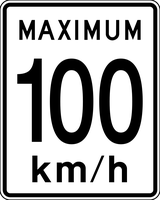
No single speed can be read from the tunnel pictogram. Apply the road’s relevant limit and any permanent or electronic speed restriction, and drive more slowly when visibility, queues or another hazard require it.
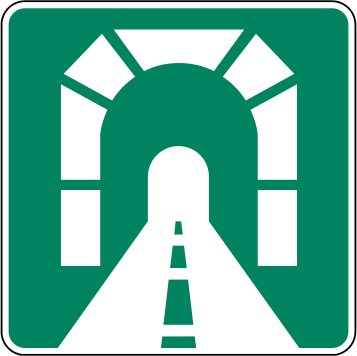 Start of a tunnel.
English • Québec I-265 • Tunnel. A tunnel is indicated. Prepare for the change in visibility and follow any additional tunnel controls.
Sources
🔗 Commons.wikimedia.org
🔗 Cdn-contenu.quebec.ca • Québec MTMD · Information signs poster 1, April 2026, p. 1
SVG source: Transports Québec • Public domain • Original revision 2013-09-15. Wikimedia original unmodified.
Is every tunnel in Canada open to pedestrians and cyclists?
No. Check the road category and access signs before entering. A motorway tunnel, a vehicle-restricted tunnel and a purpose-built walking or cycling underpass have different access arrangements. Emergency evacuation routes do not establish ordinary public access.

