


Mandatory signsChina
 Traffic rules
 China
 Priority signs
 Warning signs
 Prohibitory signs
 Mandatory signs
 Information signs
 Additional signs
Mandatory signs
A mandatory sign is a traffic sign that tells drivers what they must do. Instead of prohibiting actions, these signs impose obligations such as following a specific direction, using a particular lane, or keeping a minimum speed. Their purpose is to guide traffic safely and efficiently by ensuring that all road users follow the same required behaviour in places where it is necessary for order and safety.



How are compulsory instructions shown in China?
Instruction signs prescribe what vehicles or pedestrians must follow. They are distinct from direction-guidance signs.
🔗 jtgl.beijing.gov.cn • Beijing Traffic Police — full Road Traffic Safety Law, 2021 amended text
🔗 samr.gov.cn • SAMR — full implementing Regulations, 2017 amended text
🔗 szjj.sz.gov.cn • Shenzhen Traffic Police — official sign categories and their functions
🔗 openstd.samr.gov.cn • SAMR — current GB 5768.2-2022 status, not the full standard
🔗 std.sacinfo.org.cn • SAC — published first sign-standard amendment, effective 1 January 2026
What does a mandatory-direction sign require in China?
Where a compulsory-direction sign is installed in China, follow only the arrow direction or permitted combination of directions. The restriction applies at the location or movement it regulates; it is not an instruction to ignore other traffic controls.
🔗 jtgl.beijing.gov.cn • Beijing Traffic Police — full Road Traffic Safety Law, 2021 amended text
🔗 samr.gov.cn • SAMR — full implementing Regulations, 2017 amended text
🔗 szjj.sz.gov.cn • Shenzhen Traffic Police — official sign categories and their functions
🔗 openstd.samr.gov.cn • SAMR — current GB 5768.2-2022 status, not the full standard
🔗 std.sacinfo.org.cn • SAC — published first sign-standard amendment, effective 1 January 2026
Does a mandatory-direction sign give me priority over pedestrians in China?
No. It tells you which way to move, not who goes first. Check traffic lights, other priority signs, pedestrians and cyclists, and give way when required before completing the manoeuvre.
🔗 jtgl.beijing.gov.cn • Beijing Traffic Police — full Road Traffic Safety Law, 2021 amended text
🔗 samr.gov.cn • SAMR — full implementing Regulations, 2017 amended text
🔗 szjj.sz.gov.cn • Shenzhen Traffic Police — official sign categories and their functions
🔗 openstd.samr.gov.cn • SAMR — current GB 5768.2-2022 status, not the full standard
🔗 std.sacinfo.org.cn • SAC — published first sign-standard amendment, effective 1 January 2026

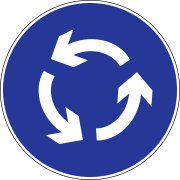
1. Mandatory roundabout direction
This traffic sign indicates the mandatory direction around a roundabout. Traffic must circulate in the direction shown by the arrows. The sign does not itself determine priority; follow the applicable priority signs, traffic signals and local rules.
English • Traffic sign 示9 • Roundabout circulation. Follow the arrows around the island, keeping right; give priority to circulating vehicles when entering.
中文 • 示9 • 环岛行驶。 车辆必须按箭头所示方向靠右环行,进入环岛时应让环内车辆优先通行。
Sources
🔗 Commons.wikimedia.org
🔗 Openstd.samr.gov.cn • 国家标准全文公开 • GB 5768.2-2022(含第1号修改单)
🔗 Upload.wikimedia.org • 标准原文镜像 • PDF第54页
SVG source: Beijing Traffic Management Bureau • Public domain • Original revision 2022-02-25. Wikimedia original unmodified.
Artwork verified against Openstd.samr.gov.cn • official published diagram 示9.
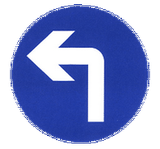
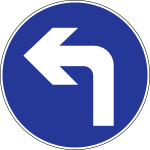
2. Turning left mandatory
This traffic sign indicates that turning left is mandatory at the junction ahead. Traffic must turn left and may not continue straight ahead or turn right.
English • Traffic sign 示2 • Turn left. Turn left at the junction ahead.
中文 • 示2 • 向左转弯。 前方路口应向左转弯。
Sources
🔗 Commons.wikimedia.org
🔗 Openstd.samr.gov.cn • 国家标准全文公开 • GB 5768.2-2022(含第1号修改单)
🔗 Upload.wikimedia.org • 标准原文镜像 • PDF第52页
SVG source: Beijing Traffic Management Bureau • Public domain • Original revision 2021-12-29. Wikimedia original unmodified.
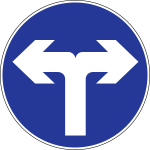
3. Turning left or right mandatory
This traffic sign indicates that turning left or right is mandatory at the junction ahead. Traffic may turn either left or right but may not continue straight ahead.
English • Traffic sign 示6 • Left or right only. At the junction ahead, turn left or right; do not continue straight ahead.
中文 • 示6 • 向左和向右转弯。 前方路口只能向左或向右转弯,不得直行。
Sources
🔗 Commons.wikimedia.org
🔗 Openstd.samr.gov.cn • 国家标准全文公开 • GB 5768.2-2022(含第1号修改单)
🔗 Upload.wikimedia.org • 标准原文镜像 • PDF第53页
SVG source: Beijing Traffic Management Bureau • Public domain • Original revision 2021-12-21. Wikimedia original unmodified.
4. Turning right mandatory
This traffic sign indicates that turning right is mandatory at the junction ahead. Traffic must turn right and may not continue straight ahead or turn left.
English • Traffic sign 示3 • Turn right. Turn right at the junction ahead.
中文 • 示3 • 向右转弯。 前方路口应向右转弯。
Sources
🔗 Commons.wikimedia.org
🔗 Openstd.samr.gov.cn • 国家标准全文公开 • GB 5768.2-2022(含第1号修改单)
🔗 Upload.wikimedia.org • 标准原文镜像 • PDF第52页
SVG source: Beijing Traffic Management Bureau • Public domain • Original revision 2021-12-29. Wikimedia original unmodified.
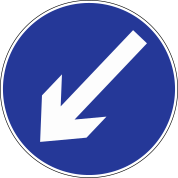
5. Pass obstacle on the left
This traffic sign indicates that traffic must pass an obstacle on the left. Keep to the left of the obstacle and follow any accompanying signs or road markings.
English • Traffic sign 示8 • Pass to the left of the divider. Vehicles must pass to the left of the divider or traffic island.
中文 • 示8 • 分隔带左侧行驶。 车辆应从分隔带或交通岛的左侧通过。
Sources
🔗 Commons.wikimedia.org
🔗 Openstd.samr.gov.cn • 国家标准全文公开 • GB 5768.2-2022(含第1号修改单)
🔗 Upload.wikimedia.org • 标准原文镜像 • PDF第53页
SVG source: Beijing Traffic Management Bureau • Public domain • Original revision 2022-02-25. Wikimedia original unmodified.
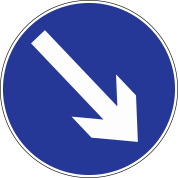
6. Pass obstacle on the right
This traffic sign indicates that traffic must pass an obstacle on the right. Keep to the right of the obstacle and follow any accompanying signs or road markings.
English • Traffic sign 示7 • Pass to the right of the divider. Vehicles must pass to the right of the divider or traffic island.
中文 • 示7 • 分隔带右侧行驶。 车辆应从分隔带或交通岛的右侧通过。
Sources
🔗 Commons.wikimedia.org
🔗 Openstd.samr.gov.cn • 国家标准全文公开 • GB 5768.2-2022(含第1号修改单)
🔗 Upload.wikimedia.org • 标准原文镜像 • PDF第53页
SVG source: Beijing Traffic Management Bureau • Public domain • Original revision 2022-02-25. Wikimedia original unmodified.
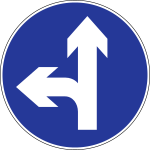
7. Driving straight ahead or turning left mandatory
This traffic sign indicates that traffic must continue straight ahead or turn left. One of the indicated directions must be followed; turning right is prohibited.
English • Traffic sign 示4 • Straight ahead or left. At the junction ahead, straight ahead or left turns are permitted; right turns are prohibited.
中文 • 示4 • 直行和向左转弯。 前方路口可直行或向左转弯,不得向右转弯。
Sources
🔗 Commons.wikimedia.org
🔗 Openstd.samr.gov.cn • 国家标准全文公开 • GB 5768.2-2022(含第1号修改单)
🔗 Upload.wikimedia.org • 标准原文镜像 • PDF第53页
SVG source: Beijing Traffic Management Bureau • Public domain • Original revision 2021-12-02. Wikimedia original unmodified.
8. Driving straight ahead or turning right mandatory
This traffic sign indicates that traffic must continue straight ahead or turn right. One of the indicated directions must be followed; turning left is prohibited.
English • Traffic sign 示5 • Straight ahead or right. At the junction ahead, straight ahead or right turns are permitted; left turns are prohibited.
中文 • 示5 • 直行和向右转弯。 前方路口可直行或向右转弯,不得向左转弯。
Sources
🔗 Commons.wikimedia.org
🔗 Openstd.samr.gov.cn • 国家标准全文公开 • GB 5768.2-2022(含第1号修改单)
🔗 Upload.wikimedia.org • 标准原文镜像 • PDF第53页
SVG source: Beijing Traffic Management Bureau • Public domain • Original revision 2021-12-02. Wikimedia original unmodified.
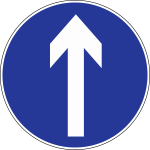
9. Driving straight ahead mandatory
This traffic sign indicates that driving straight ahead is mandatory. Traffic must continue straight ahead and may not turn left or right at the location to which the sign applies.
English • Traffic sign 示1 • Straight ahead only. Only straight-ahead travel is permitted at the junction ahead.
中文 • 示1 • 直行。 前方路口只准直行。
Sources
🔗 Commons.wikimedia.org
🔗 Openstd.samr.gov.cn • 国家标准全文公开 • GB 5768.2-2022(含第1号修改单)
🔗 Upload.wikimedia.org • 标准原文镜像 • PDF第51页
SVG source: Beijing Traffic Management Bureau • Public domain • Original revision 2021-12-02. Wikimedia original unmodified.
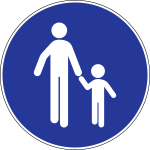
10. Mandatory path for pedestrians
This traffic sign indicates the start of a mandatory path for pedestrians. Pedestrians must use the designated path, while other road users may use it only where the applicable signs or local rules permit them to do so.
English • Traffic sign 示35 (symbol category) • Pedestrians only. No vehicles may enter this section; observe supplementary operating times. Identified by sign category or symbol meaning; an exact match between this complete drawing and the current standard layout has not been confirmed.
中文 • 示35图形类别 • 行人。 该段道路仅供行人步行,任何车辆不准进入;有时段规定时按辅助标志执行。 已按标志类别或图形含义识别;此完整图形与现行标准版式的精确对应尚未确认。
Sources
🔗 Commons.wikimedia.org
🔗 Openstd.samr.gov.cn • 国家标准全文公开 • GB 5768.2-2022(含第1号修改单)
🔗 Upload.wikimedia.org • 标准原文镜像 • PDF第65页
SVG source: Beijing Traffic Management Bureau • Public domain • Original revision 2022-12-12. Wikimedia original unmodified.
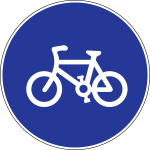
11. Mandatory path for cyclists
This traffic sign indicates a mandatory path for cyclists. Cyclists must use the designated path where the sign applies. Other road users may use the path only where the applicable signs or local rules permit them to do so.
English • Traffic sign 示31 • Non-motorised vehicles only. The road is reserved for non-motorised vehicles; only explicit supplementary information can limit it further to bicycles.
中文 • 示31 • 非机动车行驶。 该道路仅供非机动车通行;只有明确的辅助说明才能进一步限定为自行车。
Sources
🔗 Commons.wikimedia.org
🔗 Openstd.samr.gov.cn • 国家标准全文公开 • GB 5768.2-2022(含第1号修改单)
🔗 Upload.wikimedia.org • 标准原文镜像 • PDF第64页
SVG source: Beijing Traffic Management Bureau • Public domain • Original revision 2021-12-15. Wikimedia original unmodified.
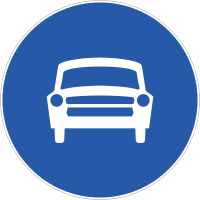
12. Mandatory lane for cars
This traffic sign indicates a mandatory lane for cars. Cars must use the designated lane or route where the sign applies. Other road users may use it only where the applicable signs or local rules permit them to do so.
English • Traffic sign 示24 • Motor vehicles only. The road is reserved for motor vehicles, not only passenger cars. This is not solely a motor-vehicle lane sign.
中文 • 示24 • 机动车行驶。 该道路仅供机动车通行;不是只允许小汽车,也不是单独的机动车车道标志。
Sources
🔗 Commons.wikimedia.org
🔗 Openstd.samr.gov.cn • 国家标准全文公开 • GB 5768.2-2022(含第1号修改单)
🔗 Upload.wikimedia.org • 标准原文镜像 • PDF第61页
SVG source: มองโกเลีย๔๔ • Public domain • Original revision 2026-03-24. Wikimedia original unmodified.
13. Using the horn mandatory
This traffic sign indicates that using the horn is mandatory. Drivers covered by the sign must sound the horn at the location or section indicated, in accordance with the applicable local rules.
English • Traffic sign 示12 • Sound the horn. Sound the horn here to warn oncoming traffic.
中文 • 示12 • 鸣喇叭。 车辆行至此处应鸣喇叭,以提醒对向来车。
Sources
🔗 Commons.wikimedia.org
🔗 Openstd.samr.gov.cn • 国家标准全文公开 • GB 5768.2-2022(含第1号修改单)
🔗 Upload.wikimedia.org • 标准原文镜像 • PDF第57页
SVG source: Beijing Traffic Management Bureau • Public domain • Original revision 2022-02-27. Wikimedia original unmodified.
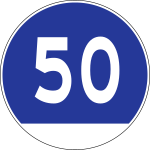
14. Start of a minimum speed
This traffic sign indicates the start of a minimum speed. Road users covered by the sign must travel at or above the indicated speed when conditions allow. Driving more slowly may still be necessary because of traffic, weather, road conditions or another safety-related reason.
English • Traffic sign 示14 (symbol category) • Minimum speed: 50 km/h. Motor vehicles entering must observe the 50 km/h minimum without exceeding the applicable maximum. Identified by sign category or symbol meaning; an exact match between this complete drawing and the current standard layout has not been confirmed.
中文 • 示14图形类别 • 最低限速:50 km/h。 驶入前方道路的机动车应按50 km/h最低限速行驶,同时不得超过适用最高限速。 已按标志类别或图形含义识别;此完整图形与现行标准版式的精确对应尚未确认。
Sources
🔗 Commons.wikimedia.org
🔗 Openstd.samr.gov.cn • 国家标准全文公开 • GB 5768.2-2022(含第1号修改单)
🔗 Upload.wikimedia.org • 标准原文镜像 • PDF第58页
SVG source: Beijing Traffic Management Bureau มองโกเลีย๔๔ • Public domain • Original revision 2022-02-27. Wikimedia original unmodified.
