

Slippery roadColombia
 Traffic rules
 Colombia
1. Slippery road
A slippery road has reduced tyre grip and can make steering, braking and acceleration less effective. Roads may become slippery because of rain, ice, snow, mud, oil, loose material or other substances on the surface. Drivers should reduce speed, increase their following distance and avoid sudden steering, braking or acceleration. Extra caution is needed in bends, on bridges and wherever the road surface changes unexpectedly.
What can make roads slippery in Colombia?
Rain, standing water, mud and loose material can reduce grip. Ice or other contamination can make it worse where present, and different parts of the road can have very different grip even when they look clear. Adapt speed and following distance to the actual surface and weather.
How should you drive on a slippery road in Colombia?
Reduce speed early, increase the gap to the vehicle ahead and use smooth steering, braking and acceleration. Do not rely on the posted maximum as a safe target when grip is poor.
Does a slippery-road warning sign in Colombia automatically impose a lower number?
The warning sign highlights a reduced-grip risk; it normally does not itself prescribe a new numerical speed limit. A separate speed-limit sign, temporary restriction or local condition may still apply. Travel below the legal maximum when necessary for safety.
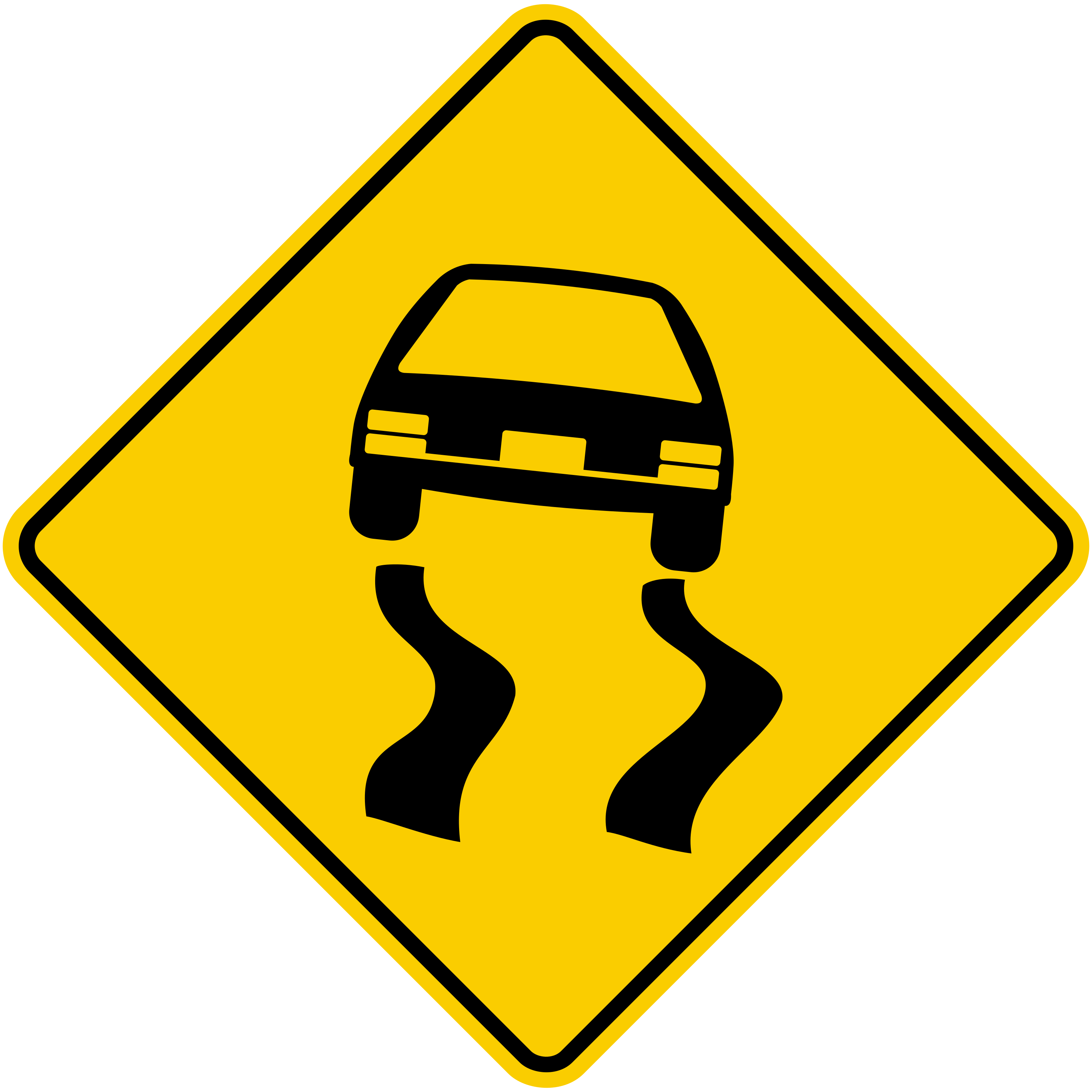 Warning for a slippery road surface.
English • Traffic sign SP-44 • Slippery surface. Avoid harsh braking, acceleration or steering changes.
Español • SP-44 • Superficie deslizante. Advierte que el pavimento puede ser resbaladizo. Evita frenadas, aceleraciones y cambios de dirección bruscos.
Sources
🔗 Commons.wikimedia.org
🔗 Transmilenio.gov.co • MinTransporte/ANSV: Manual de Señalización Vial 2024, página PDF 141
SVG source: Gobierno de Colombia • Public domain • Original revision 2017-09-10. Wikimedia original unmodified.

