


Traffic signsFrance
 Traffic rules
 France
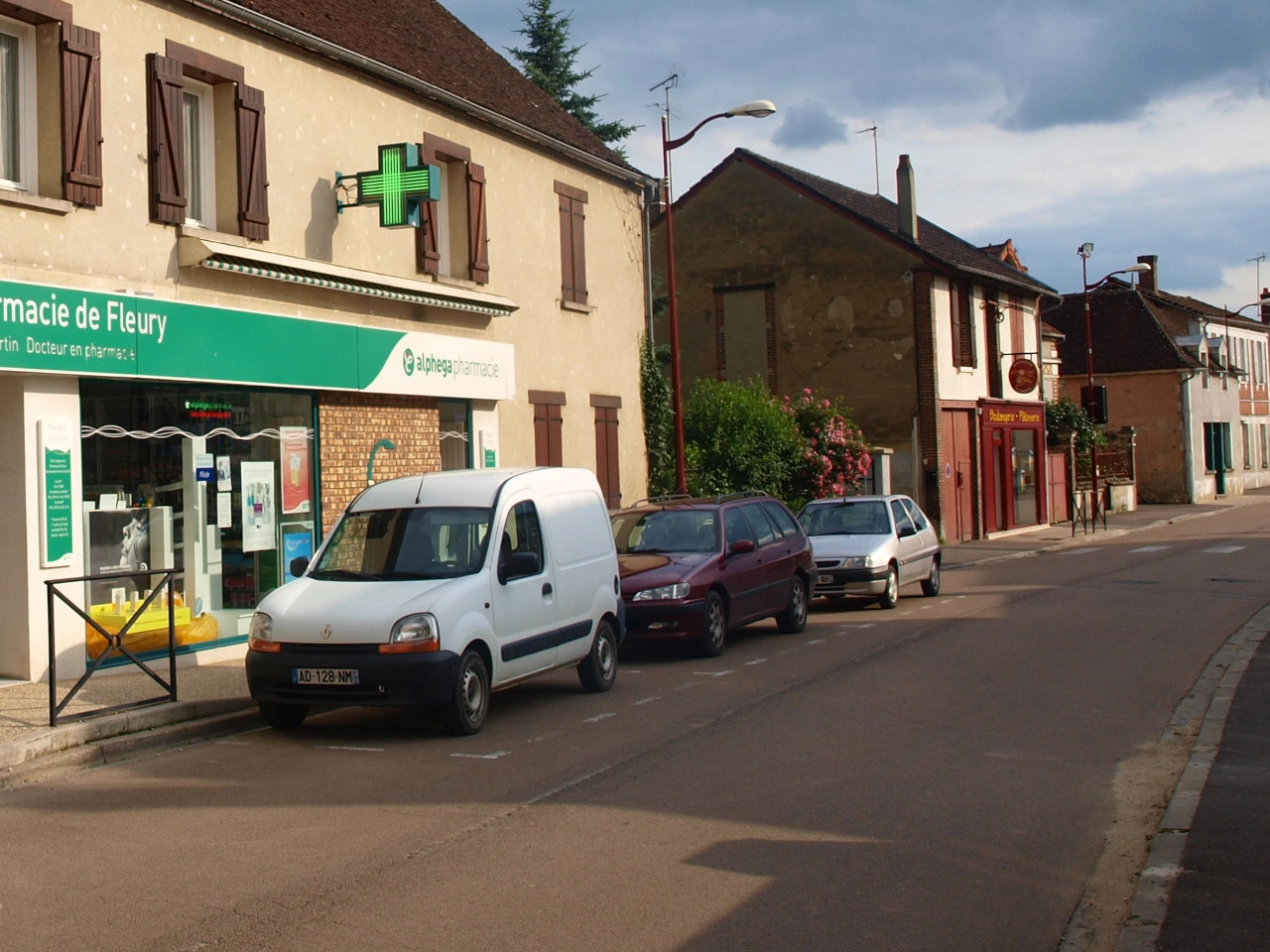
76. Parallel parking
Parallel parking is a method of parking a vehicle parallel to the edge of the road, usually in a space between two parked vehicles. It is commonly used where parking spaces are arranged along the side of a street.
Parallel parking normally involves positioning the vehicle beside the available space and reversing into it while carefully checking mirrors, blind spots and surrounding traffic. The vehicle should finish within the permitted parking area and close enough to the road edge without obstructing other road users.
Wikimedia.org • François GOGLINS • CC BY-SA
What is parallel parking?
Parallel parking means positioning a vehicle parallel to the edge of the road, typically between vehicles already parked along the kerb or roadside.
What should you check before parallel parking?
Check mirrors and blind spots, signal when required and make sure there is enough space to complete the manoeuvre without endangering pedestrians, cyclists or other traffic.
How should a vehicle be positioned after parallel parking?
The vehicle should be completely within the permitted parking area, reasonably close to the road edge and positioned so that it does not unnecessarily obstruct traffic or access to other vehicles.

77. Alternate-side parking
Alternate-side parking is a parking system in which vehicles must park on different sides of a street at different times or on different dates. The system may be used to keep streets accessible, distribute parking or allow activities such as street cleaning or maintenance.
The applicable side may change daily, weekly, monthly or according to another schedule. Drivers must check the local signs and rules carefully, because the timing and method of changing sides differ between countries and municipalities.
Wikimedia.org • CC0
What is alternate-side parking?
Alternate-side parking requires vehicles to park on one side of a street during a specified period and on the opposite side during another period. The applicable side is normally determined by traffic signs or local regulations.
Why is alternate-side parking used?
It can help maintain sufficient road width, distribute parked vehicles between both sides of a street and provide access for street cleaning, maintenance, snow removal or emergency vehicles.
When must you move a vehicle to the other side?
The changeover time depends on the local rules. Drivers should check the signs carefully because some systems require vehicles to change sides at a particular time or on specific dates.
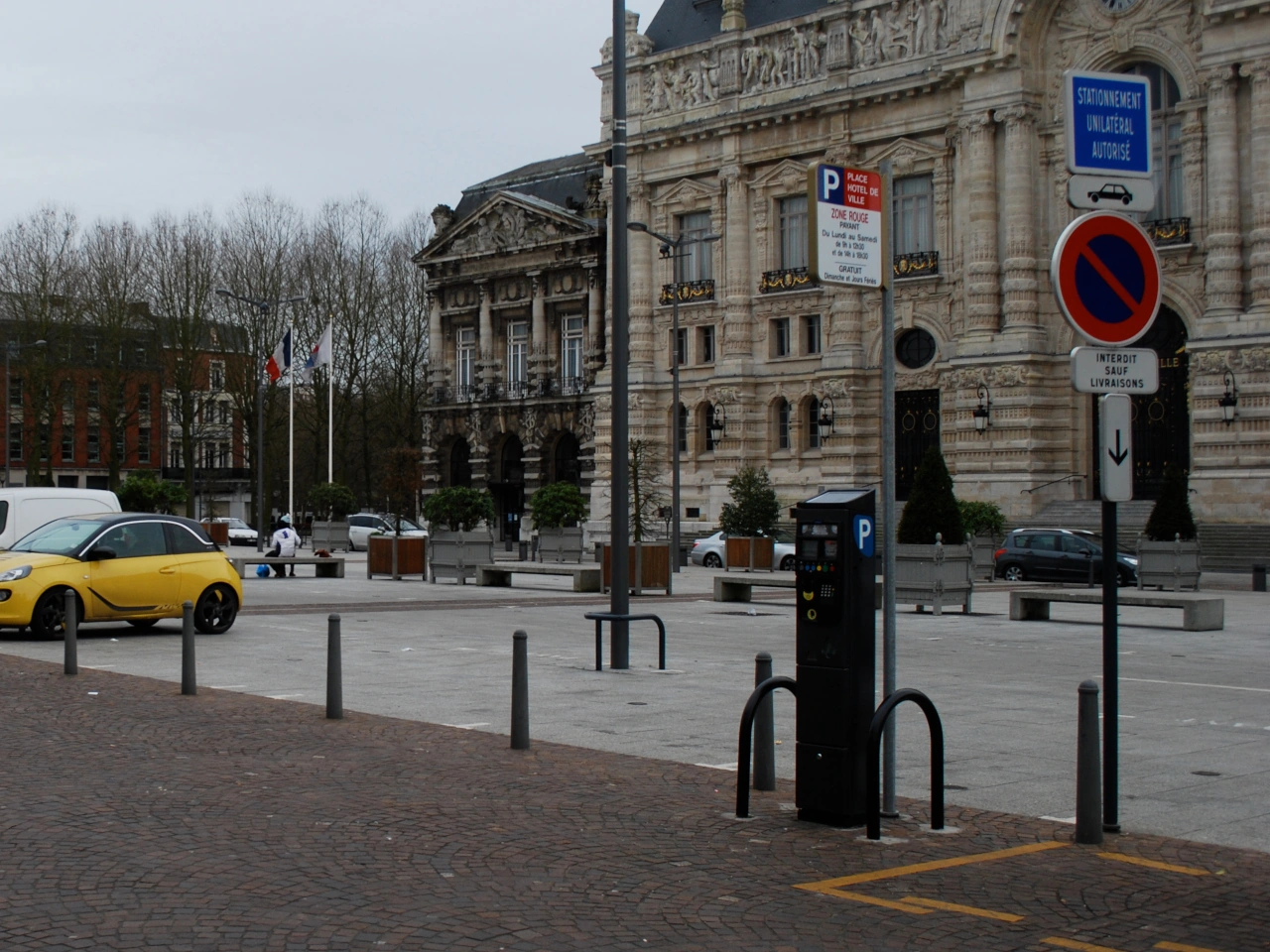
78. Parking meter
A parking meter is a device used to regulate and usually collect payment for parking in a designated parking space or area. It may require drivers to pay for a particular parking period, enter a vehicle registration number or obtain a ticket that must be displayed in the vehicle.
Parking meters may accept coins, payment cards, contactless payments or electronic payment methods, depending on the local system. Drivers must follow the instructions, operating hours, maximum parking duration and tariffs indicated on the meter, nearby signs or other official parking information.
Wikimedia.org • Jeanhousen • CC BY-SA
What is a parking meter?
A parking meter is a device used to regulate parking and, in many cases, collect payment for the time a vehicle occupies a parking space or parking area.
How does a parking meter work?
The driver normally selects or pays for a permitted parking period according to the instructions on the machine. Depending on the system, the driver may receive a ticket, enter the vehicle registration number or activate parking electronically.
Do you always have to display a parking ticket?
No. Some systems issue a ticket that must be displayed visibly inside the vehicle, while others record the vehicle registration number electronically and require no paper ticket.
How can you tell when paid parking applies?
Check the parking signs, parking meter and local instructions. They normally indicate the hours and days during which payment is required, as well as the applicable tariff and maximum parking duration.
Can parking be free outside the meter's operating hours?
Often yes, but this depends on the local parking regulations. The meter or nearby signs should indicate when payment is required and whether other restrictions continue to apply outside those hours.
Can a parking meter limit how long you may park?
Yes. Paid parking areas may have a maximum parking duration. Paying additional money does not necessarily allow you to remain beyond the maximum period specified by the parking rules.
What should you do if a parking meter is out of order?
Follow the local instructions for defective machines. You may be required to use another meter, a parking disc, a mobile payment service or another permitted method. The procedure varies between countries and municipalities.
Can you pay for parking with a mobile phone?
Many parking authorities allow payment through an approved mobile application, text-message service or other electronic system. Only use payment methods officially indicated for the parking area.
What happens if you pay for the wrong vehicle?
In systems linked to a vehicle registration number, entering the wrong registration may mean that the vehicle has no valid parking session. Check the information carefully before confirming payment.
Does paying a parking meter make parking legal everywhere?
No. Payment does not override general traffic rules or parking prohibitions. The vehicle must still be parked legally and must not obstruct crossings, intersections, driveways, reserved spaces or other protected locations.
79. Parking disc
A parking disc is a device used to indicate the time a vehicle was parked in an area where parking duration is limited. The driver sets the disc to the required arrival time and displays it clearly inside the vehicle.
Parking-disc systems are commonly used in blue zones or other time-limited parking areas. The permitted parking duration, operating hours and method for setting the disc depend on national or local rules and the traffic signs in place.
Wikimedia.org • Chabe01 • CC BY-SA
What is a parking disc used for?
A parking disc shows when a vehicle arrived at a time-limited parking space. It allows parking enforcement officers to determine whether the permitted parking period has been exceeded.
Where should a parking disc be displayed?
It should normally be placed clearly visible behind the windscreen or in another position specified by local traffic rules so that the indicated time can be read from outside the vehicle.
Can you change the time on a parking disc without moving the vehicle?
Generally no where the applicable rules prohibit extending the parking period in this way. The vehicle normally has to leave the parking space before a new parking period can begin.
80. Disabled parking
Disabled parking refers to parking spaces and parking privileges reserved for people with disabilities who meet the applicable eligibility requirements. Reserved spaces are normally identified by the international wheelchair symbol and are positioned to provide easier access to nearby facilities.
Use of a disabled parking space generally requires a valid disabled parking permit or card. The permit normally belongs to the eligible person rather than to a particular vehicle and may only be used when that person is driving or travelling in the vehicle.
Wikimedia.org • Mic • CC BY
Who may use a disabled parking space?
Disabled parking spaces are intended for eligible people who hold a valid disabled parking permit or card. The exact eligibility requirements and permit system depend on the country.
Can someone use a disabled parking permit when the holder is not present?
Generally no. Disabled parking permits are normally personal and may only be used when the permit holder is driving or travelling in the vehicle.
Does a disabled parking permit always provide free parking?
No. A permit may provide access to reserved spaces or exemptions from certain parking restrictions, but rules concerning parking charges and time limits vary between countries and local authorities.
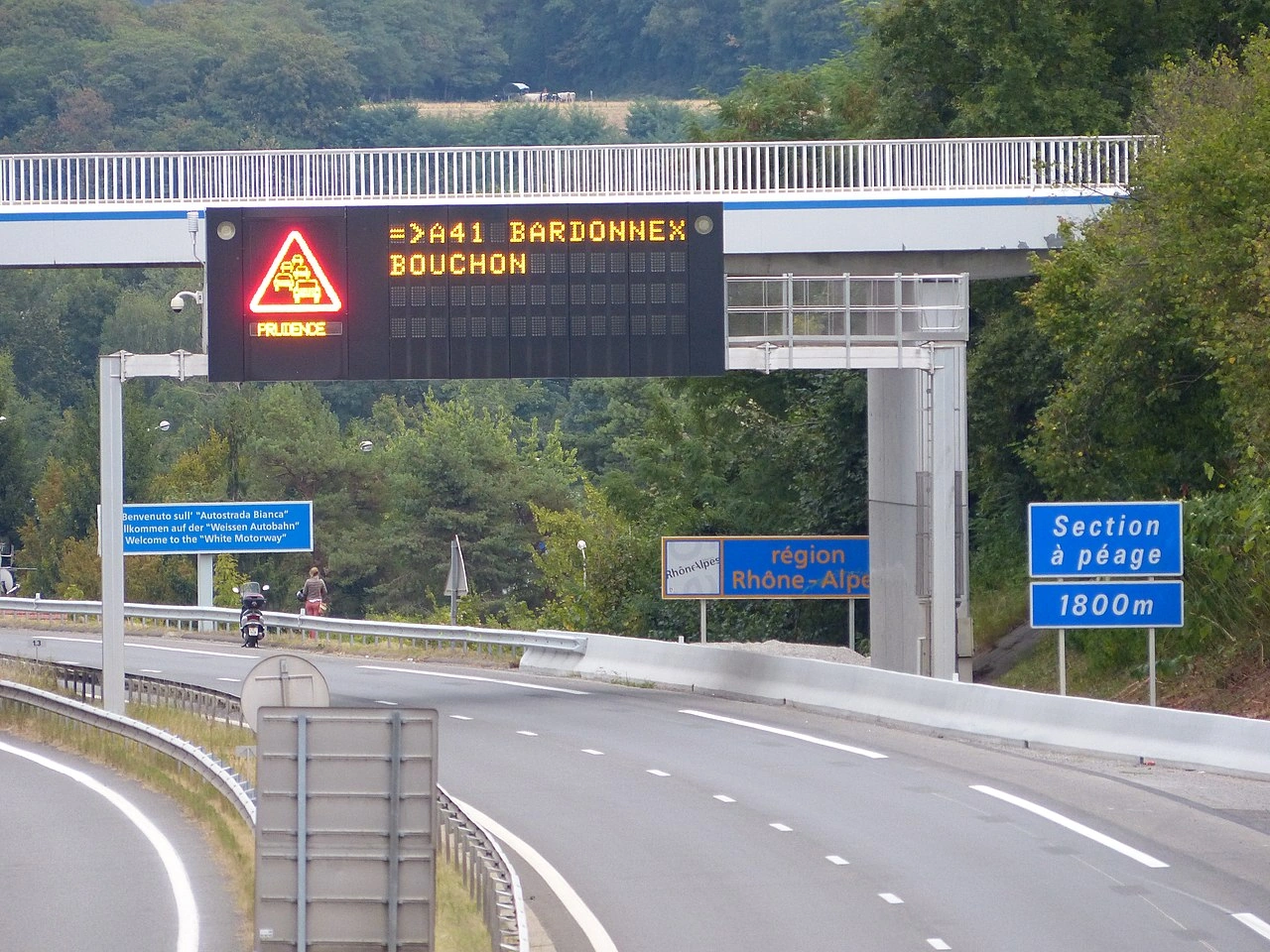
81. Traffic management
Traffic management is the organised control, regulation and guidance of road users to improve safety, traffic flow and the efficient use of roads. It can include traffic lights, road signs, road markings, lane controls, variable speed limits, diversions and directions given by authorised persons.
Traffic management may be permanent or temporary. Temporary measures are commonly introduced during roadworks, congestion, collisions, public events or other incidents. Drivers and other road users must follow the signs, signals and instructions applying at the location, even when they differ from the normal traffic arrangement.
Wikimedia.org • Marc Mongenet • CC BY-SA
What is traffic management?
Traffic management is the organised control and guidance of traffic using signs, signals, road markings, lane controls, speed restrictions, diversions and other measures.
Why is traffic management used?
Traffic management is used to improve safety, control traffic flow and reduce disruption. It can also protect road workers, pedestrians, cyclists and emergency services.
How can traffic be managed?
Common methods include traffic lights, road signs, road markings, variable-message signs, lane-control signals, temporary barriers, speed restrictions and diversions. Authorised persons may also direct traffic.
Can traffic management change the normal speed limit?
Yes. Temporary or variable speed-limit signs may impose a different maximum speed because of congestion, roadworks, weather, incidents or other conditions. Drivers must follow the limit currently displayed.
Can traffic management change which lanes you may use?
Yes. Lane-control signals, temporary signs or road markings may close lanes, move traffic into different lanes or require drivers to change lane. Follow the current signs and markings rather than the normal road layout.
What should you do when a traffic lane is closed?
Move into an open lane safely and in good time, following any arrows, signs and local merging rules. Never continue along a lane that is clearly indicated as closed.
Can temporary traffic signs be compulsory?
Yes. Properly authorised temporary signs used for roadworks, incidents or other traffic-management measures must be obeyed in the same way as other official traffic signs.
What should you do when an authorised person directs traffic?
Follow the directions of the authorised person. In many countries, these directions take precedence over traffic lights, road signs or the normal traffic rules.
How is traffic managed around roadworks?
Roadworks may use temporary speed limits, lane closures, barriers, temporary markings, traffic lights and diversions. Road users should reduce speed where necessary and carefully follow the temporary route.
Does traffic management also protect pedestrians and cyclists?
Yes. Temporary or permanent traffic arrangements should account for pedestrians and cyclists as well as motor vehicles. They may be provided with separate routes, crossings, signals or diversions where necessary.
82. Merging
Merging is the process of joining a stream of traffic from another lane or road, such as when an entry lane joins a motorway or when two traffic lanes become one. The merging driver must observe surrounding traffic, signal when required and enter an appropriate gap safely.
Drivers already in the continuing traffic lane should remain alert to merging vehicles and avoid unnecessarily preventing them from joining. Special zipper-merging rules may apply when traffic is heavily congested and a lane ends.
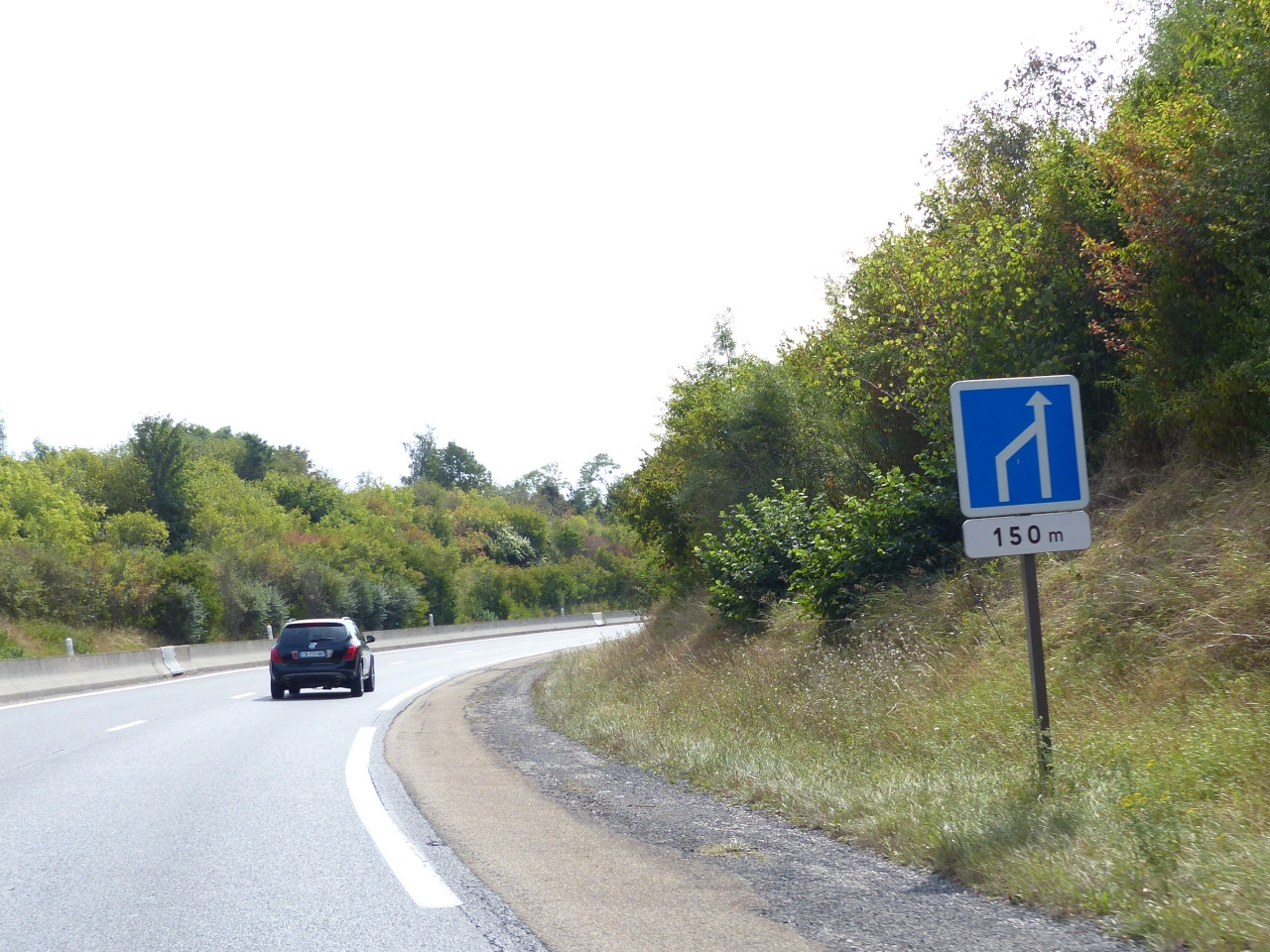
Wikimedia.org • Marc Mongenet • CC BY-SA
What does merging mean in traffic?
Merging means joining another stream or lane of traffic, usually where an entry lane, acceleration lane or another traffic lane connects with the continuing roadway.
Who has priority when merging?
This depends on the road layout and national traffic rules. In many situations, the driver changing lanes must give way to vehicles already travelling in the lane being entered, unless signs or specific merging rules provide otherwise.
What is zipper merging?
Zipper merging is a system used where a lane ends during congested traffic. Drivers use both lanes up to the merging point and then enter the continuing lane alternately, one vehicle from each traffic stream.
83. Reversing
Reversing means driving a vehicle backwards. It is commonly used when parking, leaving a confined space or repositioning a vehicle where forward movement is not practical.
Before reversing, the driver should check mirrors and blind spots, look carefully around the vehicle and make sure the area behind is clear. Reversing should be performed slowly and only for as long as necessary because visibility behind the vehicle is often limited.

Wikimedia.org • Kārlis Dambrāns • CC BY
What should you check before reversing?
Check behind and around the vehicle for pedestrians, cyclists, other vehicles and obstacles. Use mirrors and cameras where available, but also look directly because monitoring systems can have blind spots.
Who has priority when a vehicle is reversing?
In many countries, reversing is treated as a manoeuvre and the reversing driver must give way to other road users. The exact legal requirements depend on national traffic rules.
Should you reverse for a long distance?
No. Reversing should normally be limited to the distance necessary to complete the manoeuvre safely. Driving forward generally provides better visibility and vehicle control.
84. U-turn
A U-turn is a driving manoeuvre in which a vehicle turns around to travel in the opposite direction. It normally involves crossing part of the roadway and re-entering traffic facing the direction from which the vehicle came.
Before making a U-turn, the driver should check surrounding traffic, pedestrians and cyclists, signal when required and make sure there is enough visibility and space to complete the manoeuvre safely. U-turns may be prohibited by traffic signs or on particular types of roads.
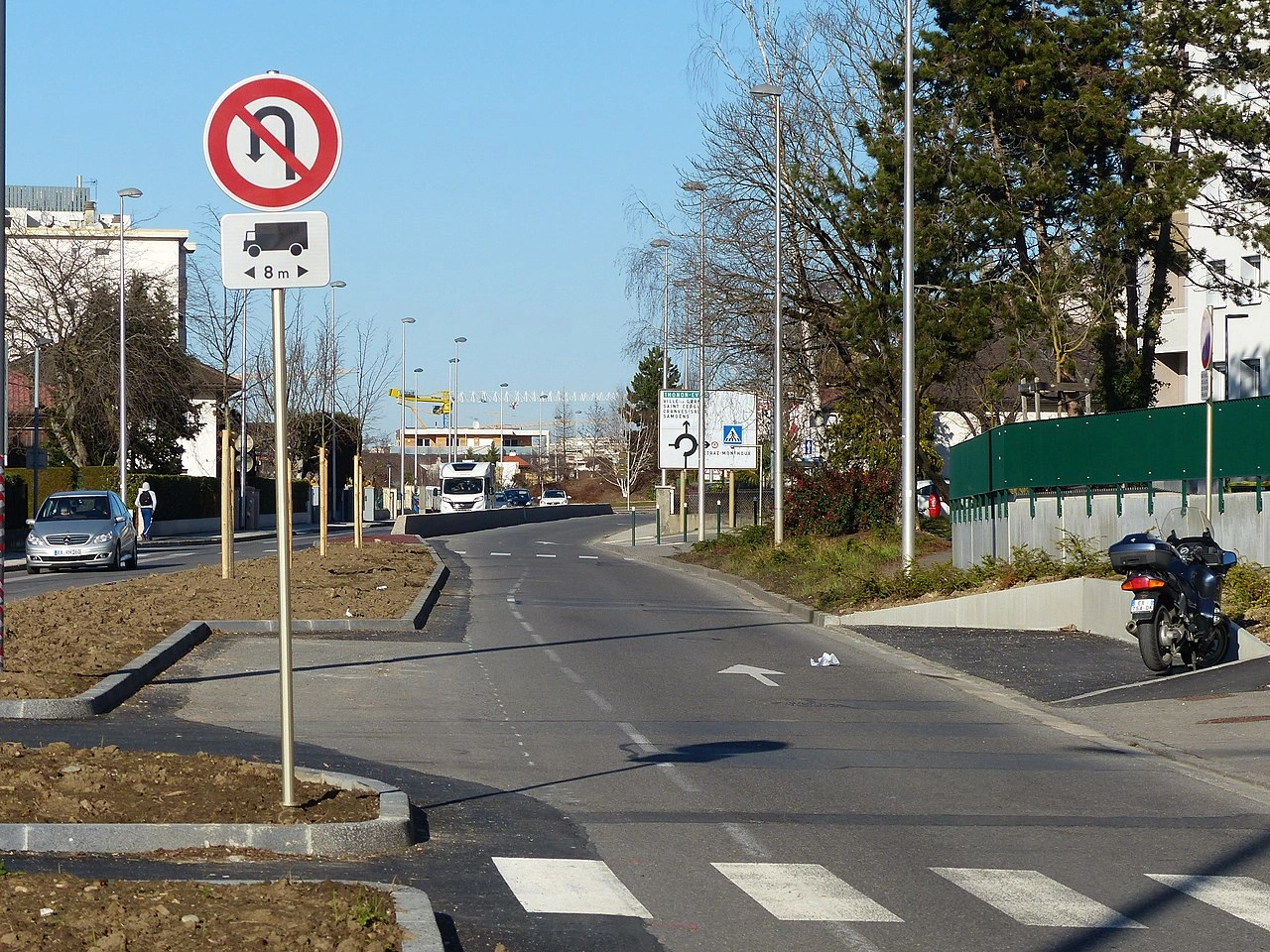
Wikimedia.org • Marc Mongenet • CC BY-SA
What is a U-turn?
A U-turn is a manoeuvre used to reverse a vehicle's direction so that it continues along the road in the opposite direction.
What should you check before making a U-turn?
Check traffic in all relevant directions, mirrors and blind spots, and look for pedestrians, cyclists and other road users. Make sure there is sufficient visibility and space and that the manoeuvre is permitted.
Can you make a U-turn anywhere?
No. U-turns may be prohibited by traffic signs or road rules and should never be attempted where visibility, road layout or traffic conditions make the manoeuvre unsafe.
85. Carpool
Carpool means sharing a car journey with one or more other people who are travelling in the same direction. The occupants may share travel costs or simply travel together to reduce the number of separate vehicles making the same journey.
Carpooling is commonly used for commuting, school journeys and longer-distance travel. Some road networks provide dedicated carpool parking areas where travellers can meet, leave one vehicle and continue their journey together.
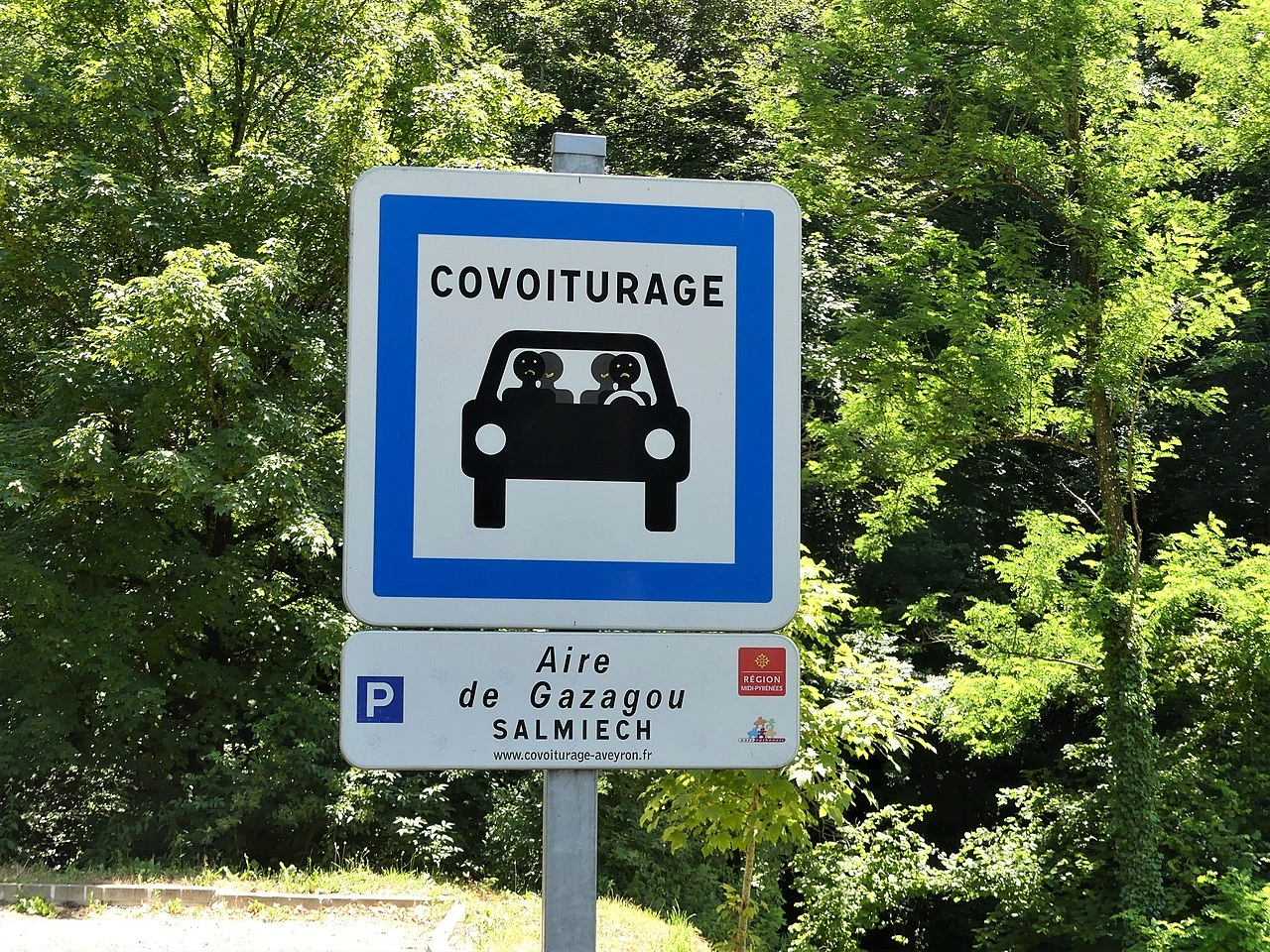
Wikimedia.org • Père Igor • CC BY-SA
What is carpooling?
Carpooling means two or more people sharing the same car for a journey instead of travelling separately in different vehicles.
What is a carpool parking area?
A carpool parking area is a designated place where travellers can meet, park one or more vehicles and continue their journey together in a shared car.
Is carpooling the same as carsharing?
No. Carpooling means several people travelling together in the same vehicle, while carsharing means different users having access to the same shared vehicle at different times.
86. Traffic jam
A traffic jam is a situation where traffic becomes heavily congested and vehicles move very slowly or stop for extended periods. Traffic jams are commonly caused by high traffic volumes, accidents, roadworks, lane closures or poor weather. Drivers should remain patient, keep a safe distance, avoid unnecessary lane changes and watch for motorcycles, emergency vehicles and sudden braking. Where lanes merge during congestion, local rules may require drivers to use a zipper-merging system.
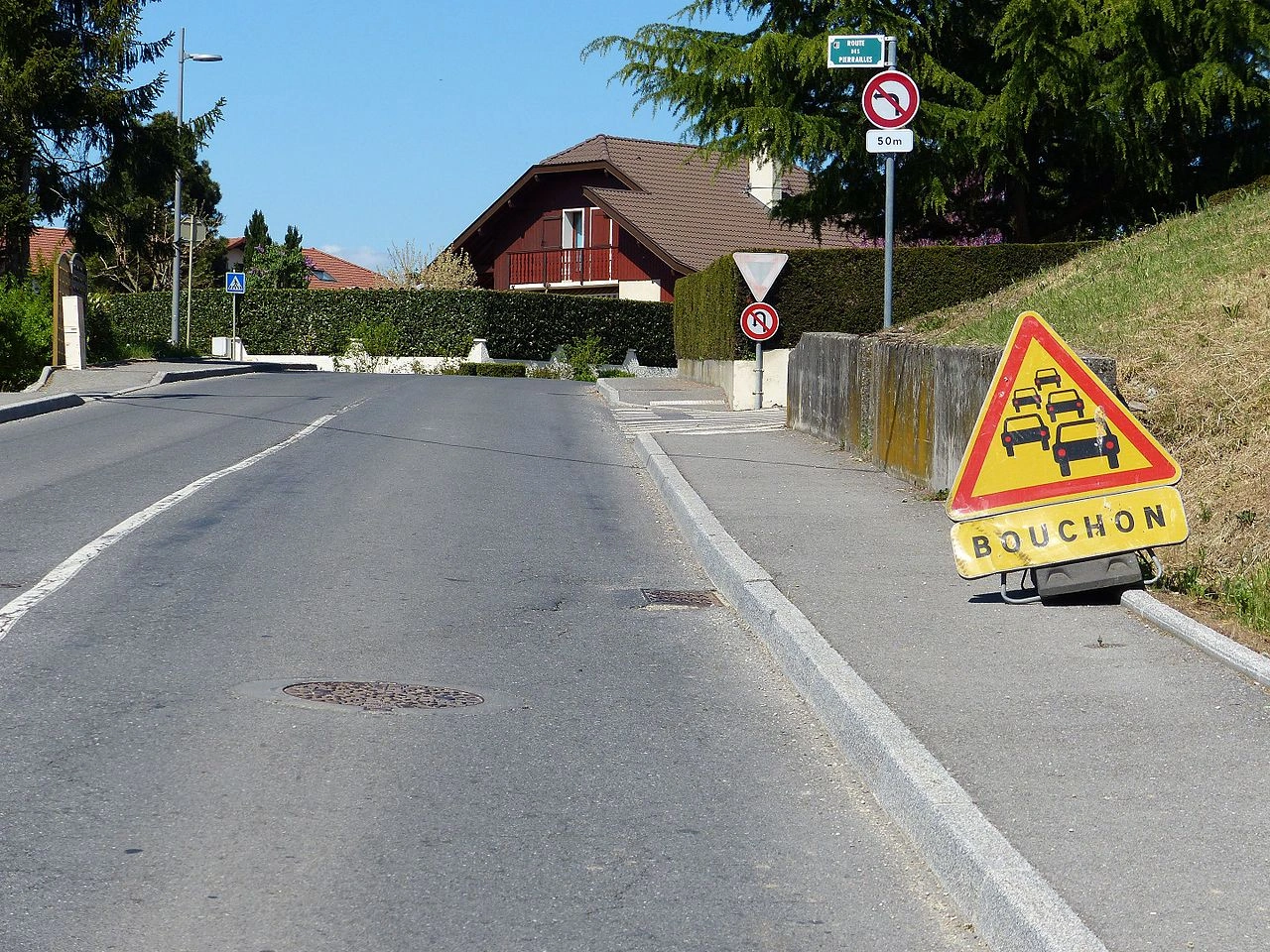
Wikimedia.org • Marc Mongenet • CC BY-SA
What is a traffic jam?
A traffic jam occurs when traffic becomes congested and vehicles move slowly or remain stationary because the road cannot accommodate the normal flow of traffic.
What causes traffic jams?
Common causes include heavy traffic, accidents, roadworks, lane closures, bottlenecks and poor weather.
How should you drive in a traffic jam?
Keep a safe distance, avoid sudden braking and unnecessary lane changes, and remain alert for changing traffic conditions and emergency vehicles.
Should you change lanes frequently in a traffic jam?
Usually not. Frequent lane changes can disrupt traffic flow and increase the risk of collisions. Change lanes only when necessary and safe.
What is zipper merging?
Zipper merging is a system where drivers use all available lanes until a lane ends or becomes blocked and then merge alternately into the remaining lane.
Should you leave space for emergency vehicles in a traffic jam?
Yes. Many countries require or recommend drivers to create space for emergency vehicles when traffic becomes congested or stationary.
87. Uncontrolled crossroad
An uncontrolled crossroad is an intersection where traffic priority is not specifically regulated by traffic lights, an authorised person or signs assigning priority to particular approaches. Drivers must therefore determine who has priority using the default traffic rules that apply in that country.
The applicable rule varies between countries and may include priority from the right, priority from the left or another default right-of-way rule. Drivers should approach an uncontrolled crossroad carefully, observe traffic from every direction and never assume that a wider or busier road automatically has priority.
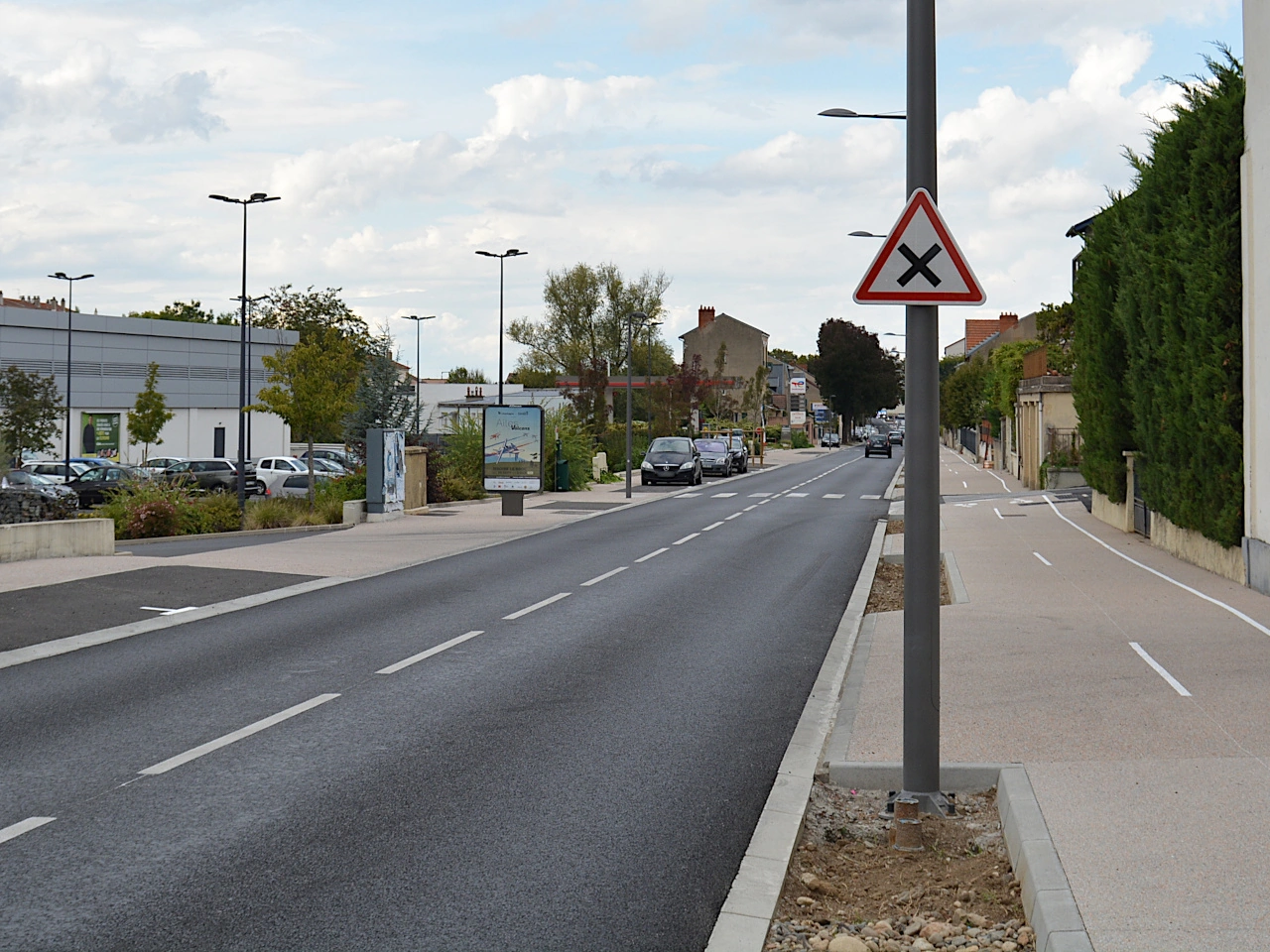
Wikimedia.org • Tabl-trai • CC BY-SA
What is an uncontrolled crossroad?
An uncontrolled crossroad is an intersection where priority is not specifically assigned by traffic lights, an authorised person or priority signs. Drivers must use the default priority rules of the country.
Who has priority at an uncontrolled crossroad?
This depends on the local traffic law. Some countries use priority from the right, while others use different rules. Drivers should know the default intersection rule of the country in which they are driving.
Does the wider road automatically have priority?
Not necessarily. The width, surface or amount of traffic on a road does not by itself determine priority unless local law specifically provides otherwise.
Should you slow down at an uncontrolled crossroad?
Yes. Approach at a speed that allows you to observe approaching traffic, determine who has priority and stop safely if necessary.
Do cyclists have to follow the priority rules at an uncontrolled crossroad?
Yes. Cyclists generally follow the applicable intersection priority rules unless a specific cycle facility, sign or local rule provides otherwise.
Does driving straight ahead automatically give you priority?
No. Continuing straight ahead does not automatically give priority over traffic approaching on another road. The applicable priority rules must still be followed.
Does turning right or left change the priority rules?
Turning may create additional obligations, particularly towards pedestrians, cyclists or opposing traffic. Drivers must follow both the intersection priority rule and the rules governing the intended turn.
What if two vehicles reach an uncontrolled crossroad at the same time?
Apply the country's default priority rule. Do not rely simply on which vehicle appears to have arrived first unless local law specifically uses that rule.
What if the traffic lights at an intersection are not working?
The intersection is not necessarily completely uncontrolled. Priority signs, road markings and default priority rules may still determine who must give way. Drivers should approach with particular caution.
What should you do if you are unsure who has priority?
Reduce speed and be prepared to stop. Never force your way through an intersection simply because the priority situation is unclear.
88. Road surface
A road surface warning indicates that the road ahead may be uneven, damaged or in poor condition and could affect the stability, steering or braking of a vehicle. The hazard may include bumps, depressions, potholes, broken pavement or other irregularities in the road surface.
Drivers should reduce speed where necessary, maintain a safe distance and avoid sudden steering or braking when passing over an irregular surface. The exact meaning and appearance of the warning sign vary between countries, so drivers must follow the local traffic signs and regulations.
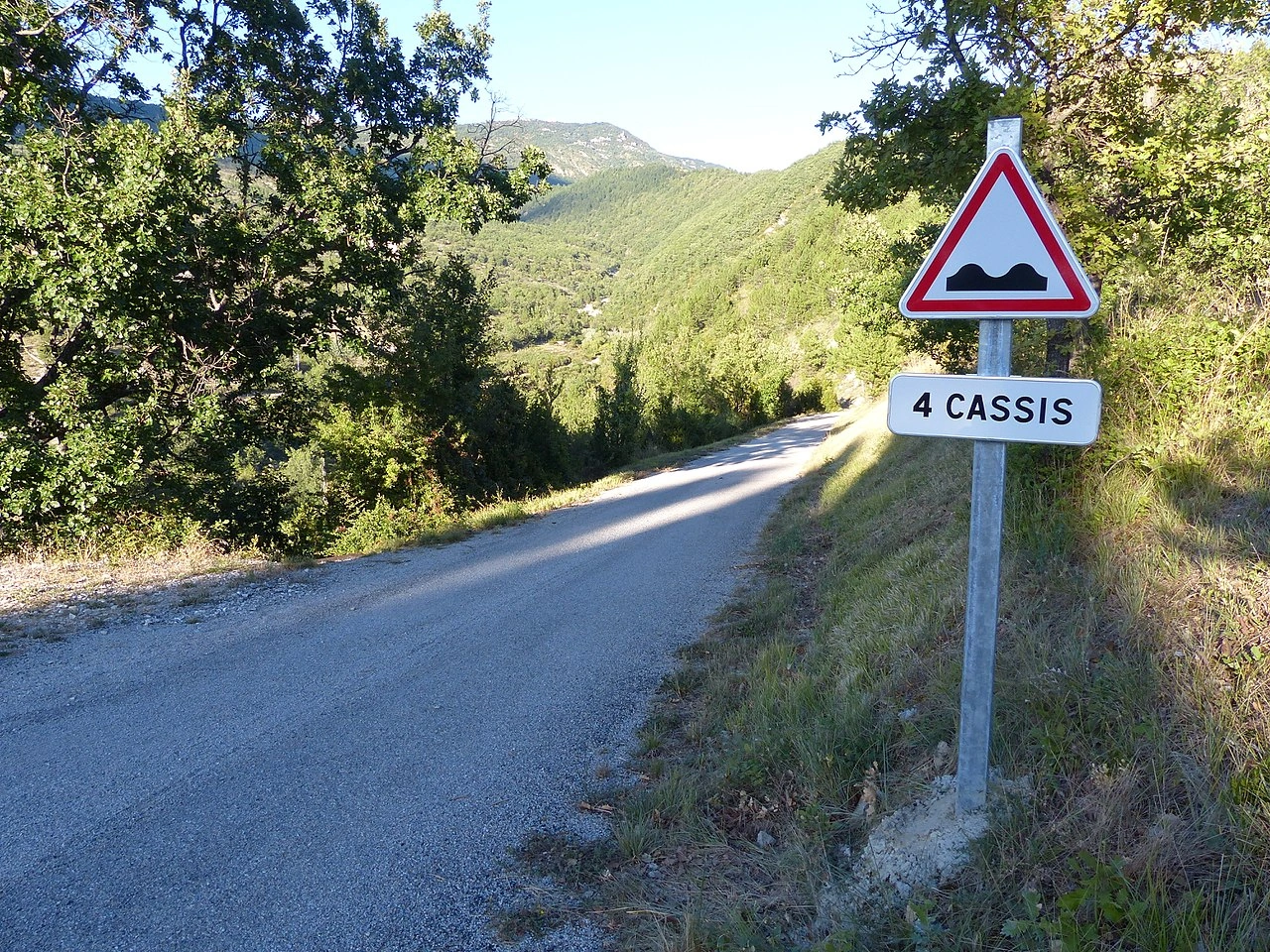
Wikimedia.org • Marc Mongenet • CC BY-SA
What does a road surface warning mean?
A road surface warning indicates that the surface ahead may be uneven, damaged or otherwise capable of affecting the safe movement of vehicles.
What kinds of road defects can the warning indicate?
Depending on the country, it may warn of bumps, depressions, potholes, broken pavement, uneven repairs or other surface irregularities.
What should you do when you see a road surface warning?
Reduce speed where necessary, increase your awareness of the road ahead and be prepared for changes in the vehicle's stability or direction.
Does a road surface warning impose a specific speed limit?
Not normally. A warning sign alerts drivers to a hazard rather than establishing a numerical speed limit. A separate speed-limit sign may be used where a particular maximum speed is required.
Should you brake before reaching an uneven road surface?
Where slowing is necessary, it is generally safer to reduce speed before reaching the irregular surface rather than braking sharply while travelling over it.
Why can an uneven road surface be dangerous?
A severe surface irregularity can affect tyre contact, steering, braking and vehicle stability. It can also damage tyres, wheels or suspension components.
Are motorcycles and bicycles particularly affected by uneven surfaces?
Yes. Two-wheeled vehicles can be particularly sensitive to potholes, ridges and other irregularities because these hazards may disturb their balance or alter their direction suddenly.
Is an uneven-road warning the same as a slippery-road warning?
No. An uneven-road warning concerns the physical condition or shape of the road surface. A slippery-road warning concerns reduced tyre grip caused by the surface or conditions such as water, ice, mud or other substances.
Can the warning apply over a longer section of road?
Yes. A supplementary sign may indicate the distance to the hazard or the length of the affected section, depending on the country's traffic-sign system.
Should you increase your following distance on a poor road surface?
Yes, when conditions require it. Additional distance provides more time to react if the vehicle ahead slows suddenly to avoid a pothole or other surface defect.
89. Ring road
A ring road is a road or connected system of roads that runs around or partly around a city, town or urban area. It is designed to distribute traffic between different parts of the area and to allow through traffic to bypass congested central streets.
A ring road is not necessarily a motorway or expressway. It may consist of motorways, divided highways, ordinary roads or a combination of different road types. The applicable speed limits, access restrictions, priority rules and lane rules therefore depend on the individual section and the local traffic signs and regulations.
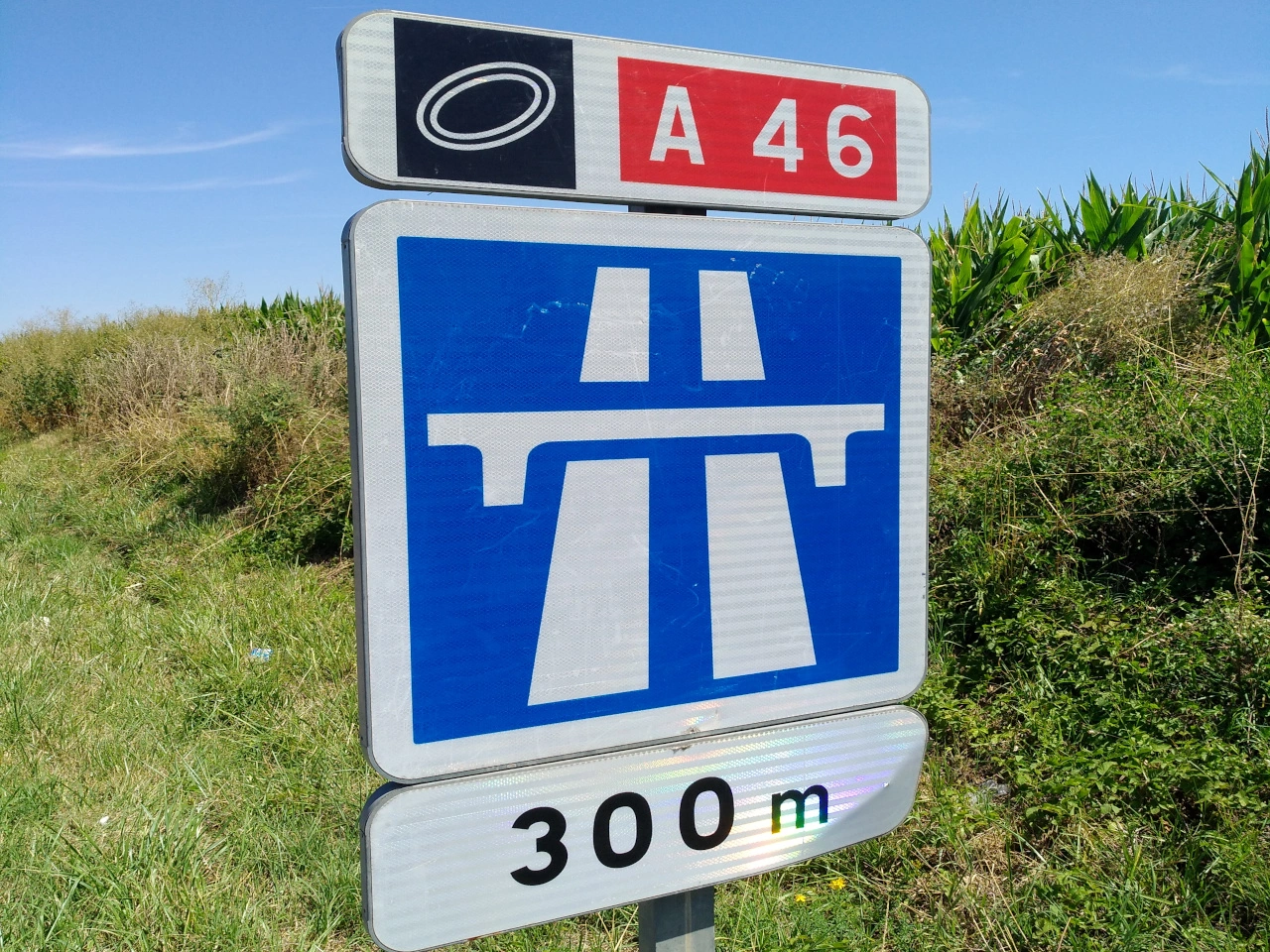
Wikimedia.org • Sebleouf • CC BY-SA
What is a ring road?
A ring road is a road or connected route that runs around or partly around an urban area and helps distribute traffic between different destinations without requiring all traffic to pass through the centre.
Why are ring roads built?
Ring roads are commonly used to divert through traffic, connect major roads and provide access to different parts of a city. They can reduce the amount of traffic travelling through central streets.
Is a ring road always a complete circle?
No. A ring road may completely surround a city, form only part of a loop or consist of several connected roads that together perform a ring-road function.
Is a ring road the same as a motorway?
No. Some ring roads are motorways, while others consist of expressways, ordinary roads or a mixture of road types. Motorway rules apply only where the road is legally designated as a motorway.
What is the speed limit on a ring road?
There is no universal ring-road speed limit. The applicable speed depends on the country, road classification, location and posted traffic signs.
How can you recognise a ring road?
Ring roads are usually indicated by route numbers, directional signs or the name of the ring. The signs may also show destinations that can be reached by travelling clockwise or anticlockwise around the urban area.
Can a ring road have intersections and traffic lights?
Yes. Ordinary ring roads may contain intersections, roundabouts and traffic lights. Fully controlled-access ring roads or motorway sections generally use grade-separated junctions instead.
Can pedestrians and cyclists use a ring road?
This depends on the road type and local access rules. They may use some ordinary-road sections but are normally prohibited from motorway sections and other roads where signs restrict access.
Which lane should you use on a ring road?
Follow the country's normal lane-use rules and any lane-direction signs. On multi-lane sections, choose the appropriate lane in good time when approaching an interchange or exit.
What should you do if you miss an exit on a ring road?
Continue safely to the next suitable junction or exit. Never reverse, make an unsafe U-turn or cross restricted areas in an attempt to return to a missed exit.
90. Exit
An exit is a designated route or point where traffic leaves a road, motorway, expressway or other major route. On high-speed roads, an exit usually leads from the main carriageway onto an exit lane or ramp that connects with another road or destination.
Drivers approaching an exit should follow the direction signs and road markings, move into the appropriate lane in good time and adjust their speed as necessary after leaving the main traffic flow.
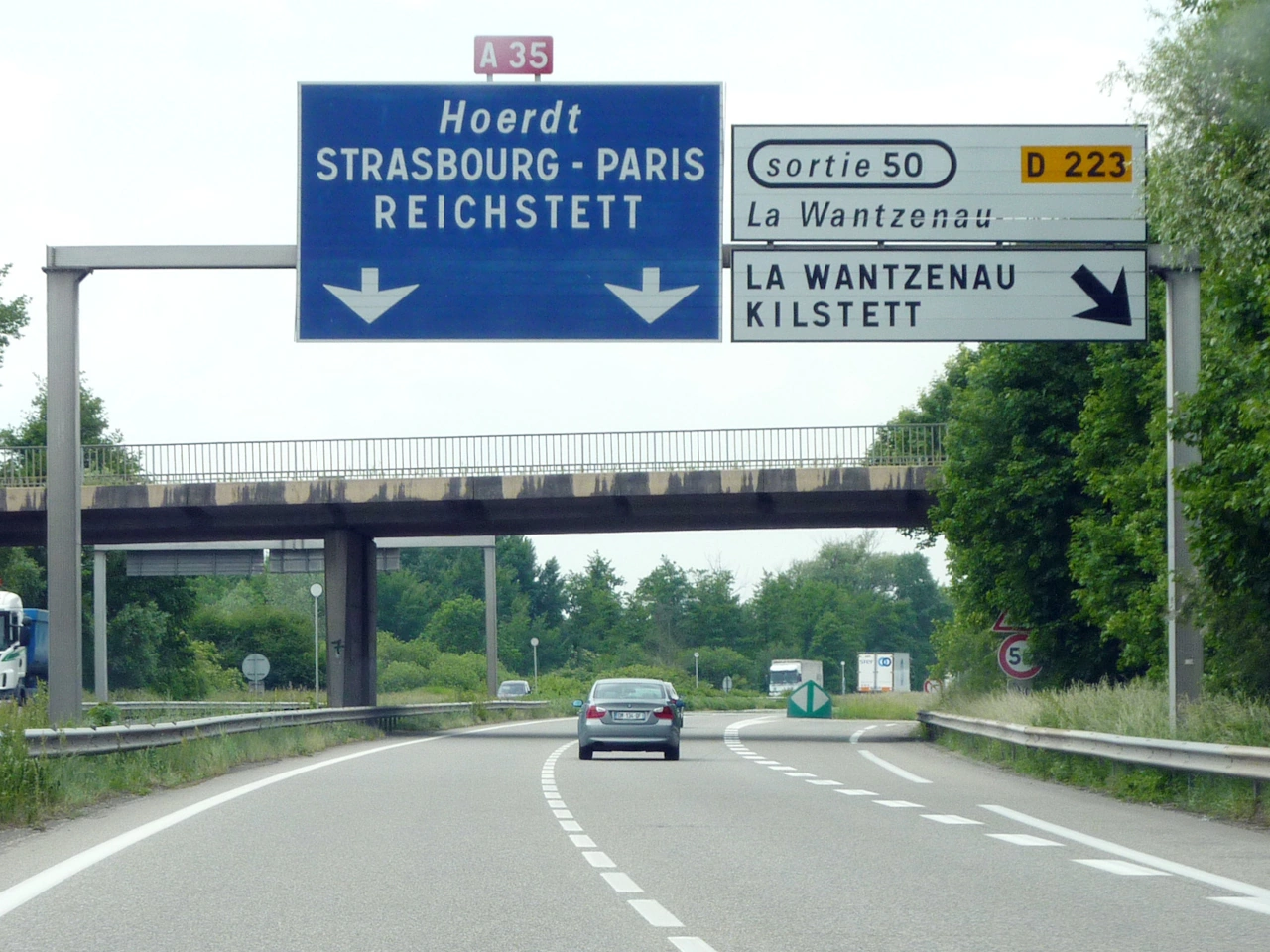
Wikimedia.org • BlueBreezeWiki • CC BY-SA
What is a road exit?
An exit is a designated route or point that allows traffic to leave a road, motorway or expressway and continue toward another road or destination.
How should you prepare for an exit?
Check the direction signs, select the correct lane in good time, signal when required and avoid sudden lane changes when approaching the exit.
What should you do if you miss your exit?
Continue safely along the road and use a later exit or another permitted route. Do not stop, reverse or make a dangerous sudden manoeuvre simply to reach an exit you have missed.
91. Information point
An information point is a designated place where travellers can obtain information about the surrounding area, local services, tourist attractions, routes or other useful facilities. It may be located beside a road, at a rest area, in a town or near an important destination.
Information points are often indicated by a service or information sign. Depending on the location, they may provide maps, brochures, route information, tourist assistance or digital information for visitors.
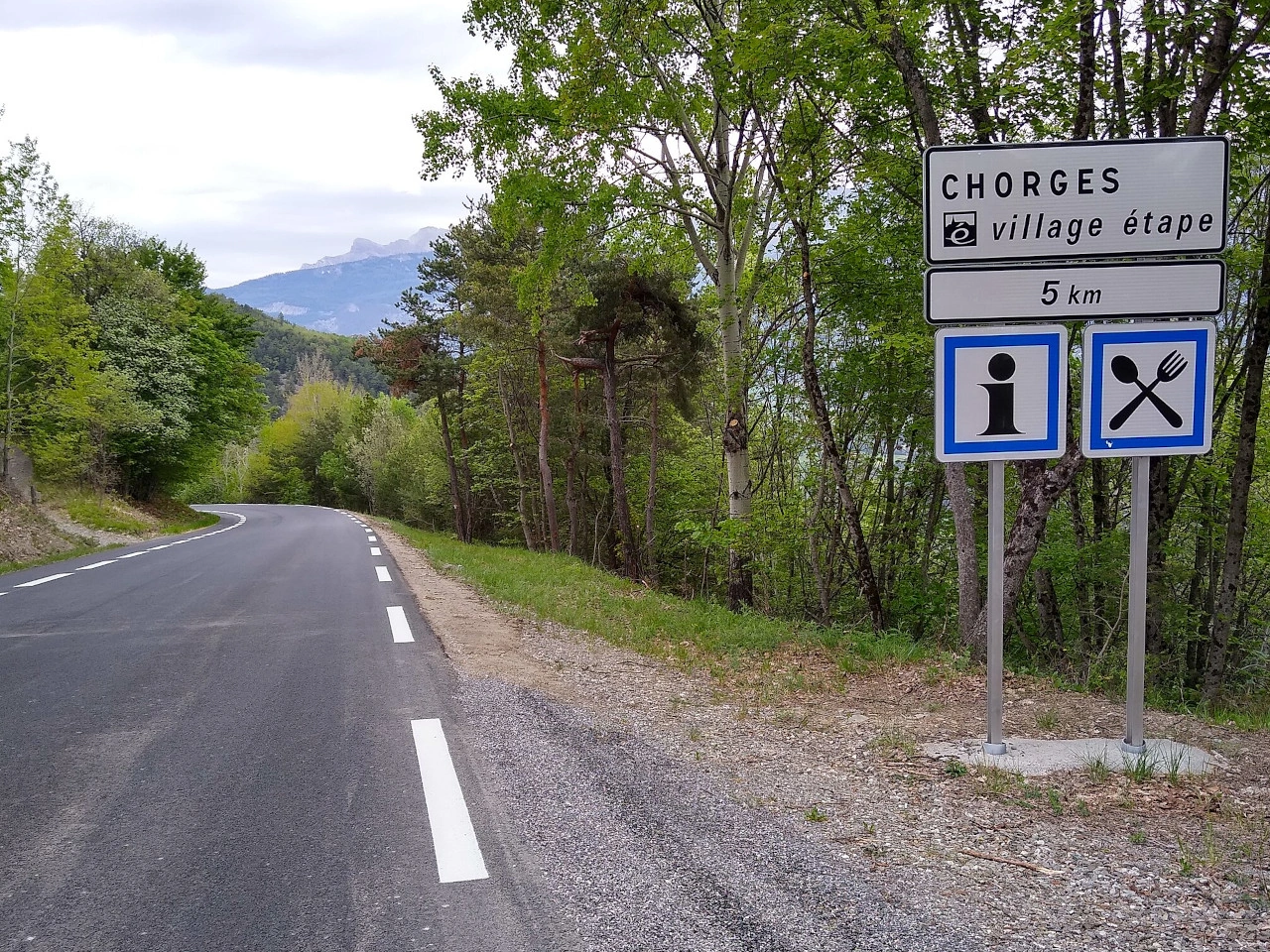
Wikimedia.org • Marc Mongenet • CC BY-SA
What is an information point?
An information point is a place where travellers can obtain information about local destinations, attractions, services, routes or other useful facilities.
What information can you find at an information point?
Depending on the location, an information point may provide maps, tourist information, directions, information about attractions and details about nearby services.
How is an information point indicated?
Many countries use a service or information sign to direct road users toward an information point. The exact symbol and sign design vary between countries.
92. Horse riding
Horse riding includes activities involving horses and riders. In road traffic, an equestrian or horse rider may use roads, bridleways or specially designated routes, depending on the rules and infrastructure provided.
Drivers approaching horses and riders should reduce speed, leave sufficient space and avoid sudden noise or movements that could frighten the animal. Riders must also follow the traffic rules that apply to them.
Wikimedia.org • Havang(nl) • CC0
What does equestrian mean in road traffic?
Equestrian refers to horse riding and, in a traffic context, particularly to people travelling on horseback or using designated horse-riding routes.
Where can equestrians ride?
Depending on local rules, riders may use roads, bridleways, paths or routes specifically designated for horse riding.
How should drivers behave near horse riders?
Drivers should slow down, leave plenty of space and pass calmly, avoiding sudden acceleration, horn use or other actions that could frighten the horse.
93. Provisional licence
A provisional licence allows a learner driver to practise driving on public roads before obtaining a full driving licence. The conditions vary between countries and may determine whether the learner must be accompanied by an approved supervisor, which vehicles may be driven, where and when driving is permitted and how long the licence remains valid. A provisional licence is normally subject to stricter rules than a full licence and is intended specifically for learning and gaining practical driving experience.
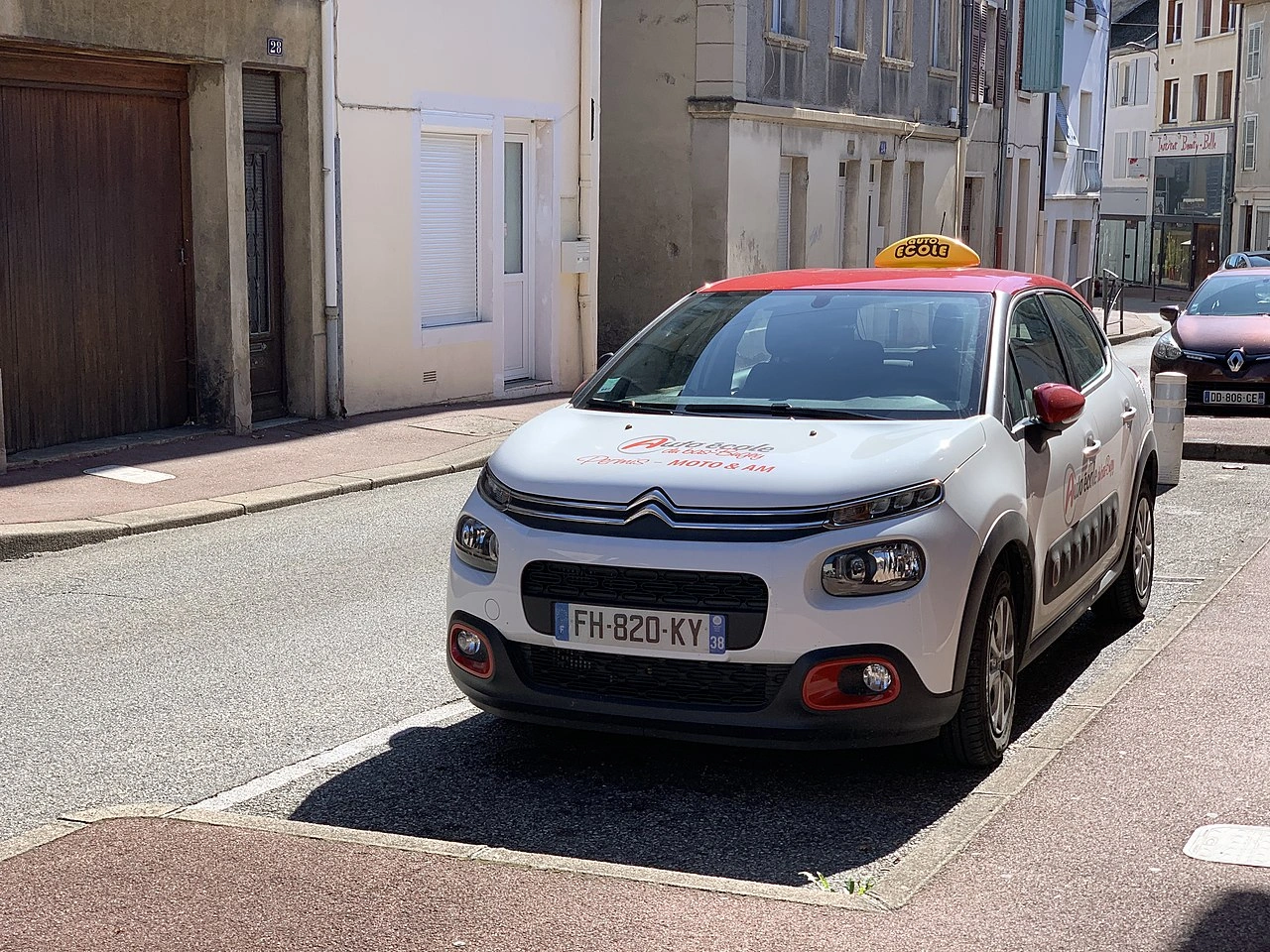
Wikimedia.org • Benoît Prieur • CC0
What is a provisional driving licence?
A provisional driving licence allows a learner driver to practise driving under specified conditions before obtaining a full driving licence.
Can you drive alone with a provisional licence?
This depends on the type of provisional licence and local rules. Some licences require an approved supervisor, while others allow the learner to practise alone after completing specified training.
How long is a provisional licence valid?
The validity period varies between countries and licence types. If it expires before the learner passes the practical exam, additional conditions may apply before another provisional licence can be obtained.
Can you drive abroad with a provisional licence?
Often not. A provisional licence may be valid only in the country that issued it. Learners should check the applicable rules before attempting to drive abroad.
Are there restrictions on when a learner may drive?
Yes, in some countries. Provisional licences may include restrictions on night driving, passengers, trailers, vehicle types or certain roads.
Do you need to display a learner sign?
Many countries require a learner vehicle to display an L plate or another learner-driver sign. The design and conditions vary by country.
94. Hazardous cargo
Hazardous cargo, also called dangerous goods, consists of substances or articles that can create a significant risk to people, property or the environment during transport. Examples include explosives, flammable liquids and gases, toxic substances, corrosive materials and radioactive substances.
Transporting hazardous cargo can require special packaging, labels, vehicle markings, documentation, equipment and driver training. Additional route or tunnel restrictions may also apply depending on the type and quantity of dangerous goods being carried.
Wikimedia.org • Marc Mongenet • CC BY-SA
What is considered hazardous cargo?
Hazardous cargo includes substances and articles classified as dangerous for transport, such as explosives, gases, flammable materials, toxic or infectious substances, radioactive materials and corrosive substances.
Does hazardous cargo need special markings?
Yes, when the applicable dangerous-goods rules require them. Packages and vehicles can require hazard labels, placards, identification numbers or other markings that identify the nature of the danger.
Can hazardous cargo be prohibited on certain roads or in tunnels?
Yes. Dangerous-goods vehicles can be subject to route and tunnel restrictions according to the type and quantity of goods being transported and the classification of the road or tunnel.
95. Emergency exit
An emergency exit is a marked escape route that allows road users to leave a tunnel or other enclosed traffic facility during a serious incident such as a fire, smoke development or another emergency. Emergency exits lead towards a safer area separated from the immediate danger.
In an emergency, occupants should leave their vehicle when evacuation is necessary and follow the emergency-exit signs and instructions. They should move away from the danger rather than remaining inside the tunnel or returning to their vehicle.
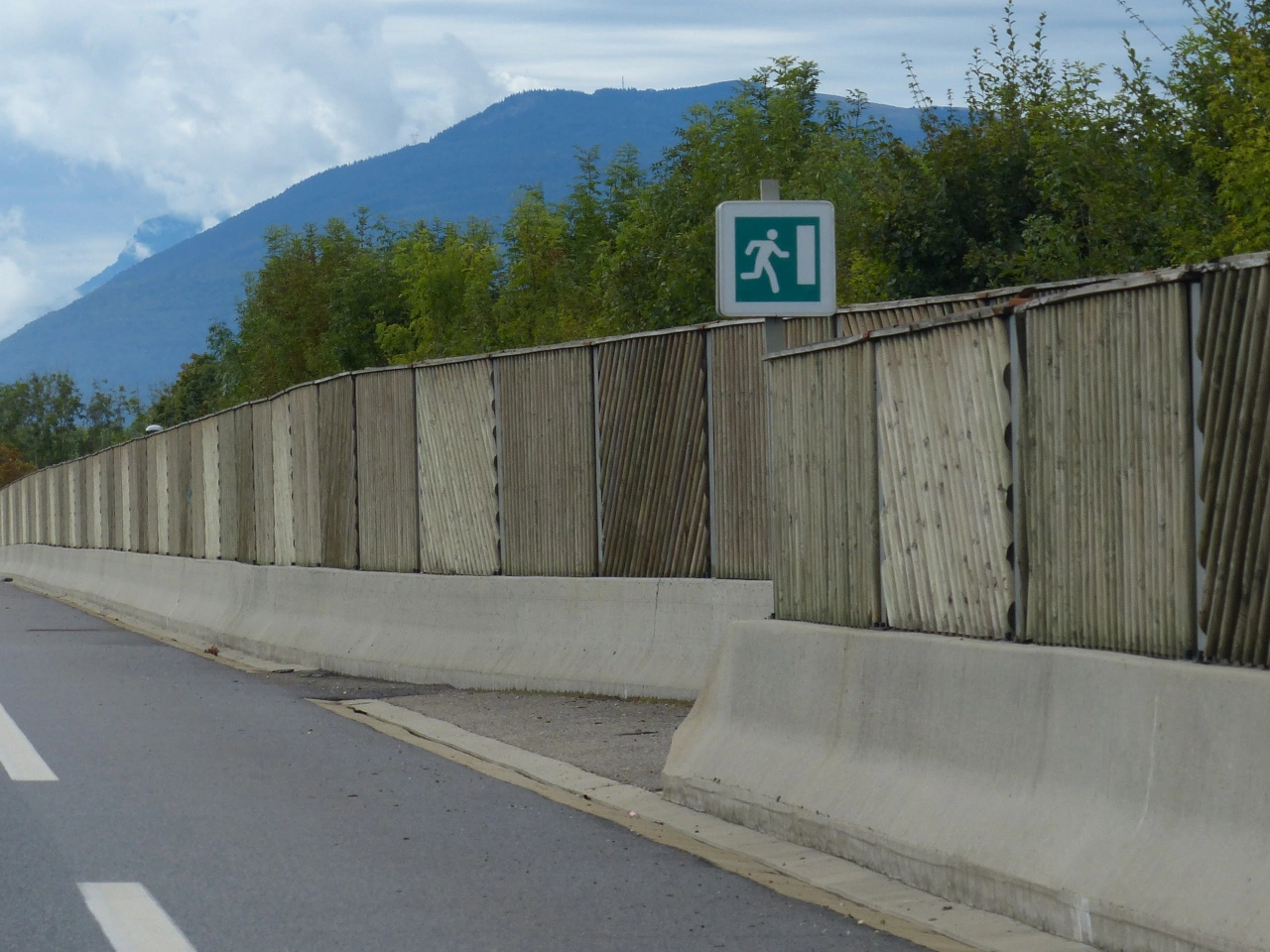
Wikimedia.org • Marc Mongenet • CC BY-SA
What is an emergency exit in a road tunnel?
An emergency exit is a designated escape route that allows people to leave the traffic area of a tunnel and reach a safer location during an emergency.
When should you use a tunnel emergency exit?
Use an emergency exit when evacuation is necessary because of fire, smoke or another serious danger, or when instructed to evacuate by tunnel personnel or emergency services.
Should you take your vehicle through an emergency exit?
No. Tunnel emergency exits are intended for people evacuating on foot. Leave the vehicle when necessary and follow the marked escape route towards safety.
96. Runaway truck ramp
A runaway truck ramp, also called an emergency escape lane, is a specially constructed lane designed to stop a vehicle that has lost effective braking, particularly a heavy vehicle descending a steep hill. The ramp may use an uphill gradient, deep gravel or another energy-absorbing surface to slow and stop the vehicle.
A driver who has lost braking ability should enter the escape ramp as early and safely as possible rather than trying to continue down the hill. Escape ramps are emergency facilities and must not be used for ordinary stopping, parking or turning.
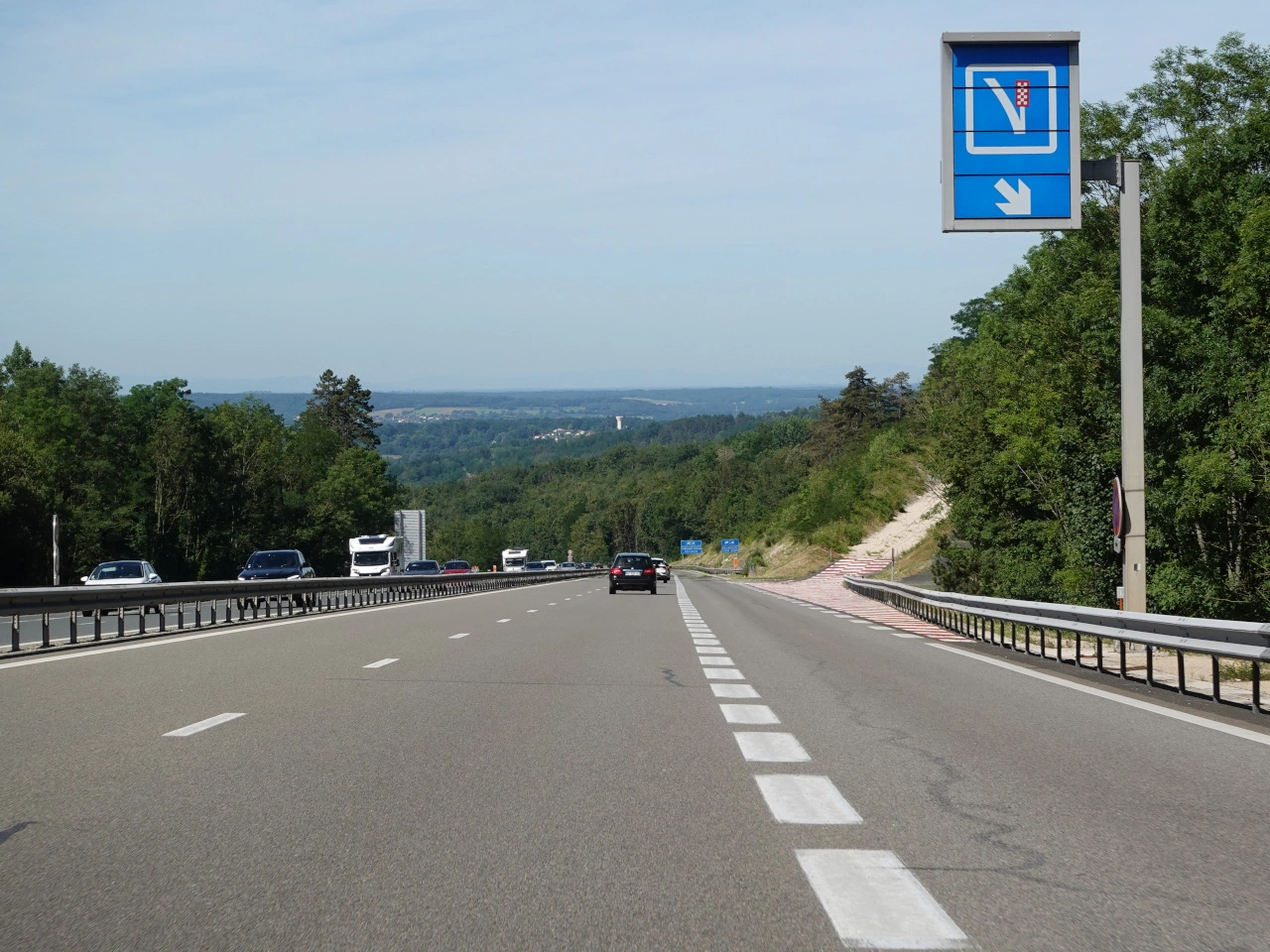
Wikimedia.org • Marc Mongenet • CC BY-SA
What is a runaway truck ramp used for?
It provides an emergency stopping area for a vehicle that can no longer slow down adequately with its normal brakes. It is particularly intended for heavy vehicles on long or steep descents.
How does a runaway truck ramp stop a vehicle?
Depending on its design, the ramp may rise uphill or contain deep gravel, sand or another arresting material that creates resistance and rapidly reduces the vehicle's speed.
Can you use a runaway truck ramp for normal stopping or parking?
No. An escape ramp is an emergency safety facility and should be kept clear for vehicles that have lost effective braking or control.
97. Radio service
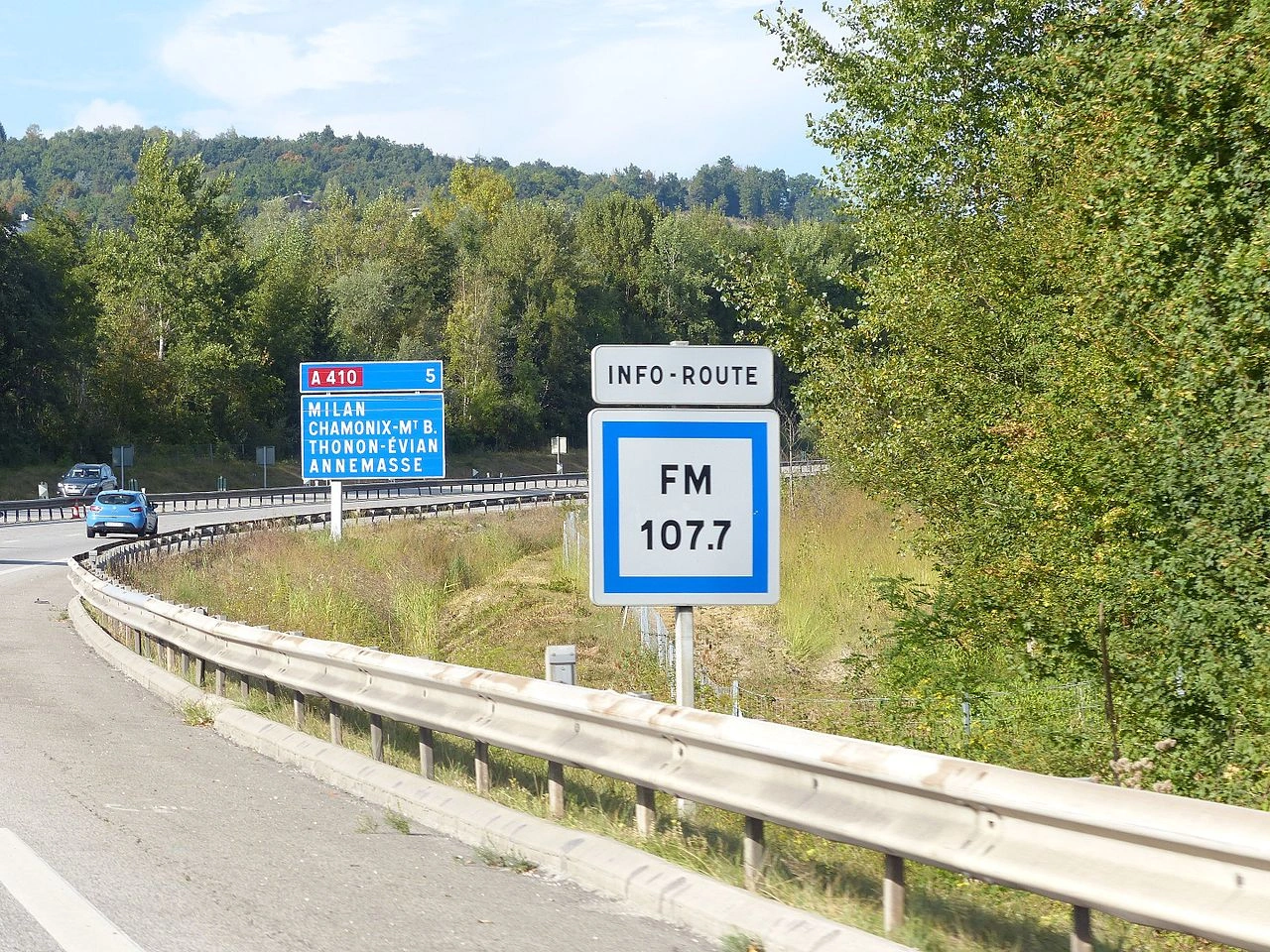
A radio service is a radio broadcast that provides drivers with traffic information such as congestion, road closures, accidents, weather conditions or other events affecting a journey. Roadside signs may indicate a particular radio station and frequency where traffic information is available.
Drivers can tune to the indicated frequency to receive local traffic information while travelling through the area. The service is informational and does not replace traffic signs, signals or instructions from authorised persons.
Wikimedia.org • Marc Mongenet • CC BY-SA
What is a traffic radio service?
A traffic radio service broadcasts information for road users, such as congestion, collisions, roadworks, closures or other conditions that may affect traffic.
What does a radio service road sign indicate?
It indicates a radio station or frequency on which drivers can receive traffic information relevant to the road or surrounding area.
Do radio traffic reports override road signs?
No. Radio information can help drivers anticipate conditions and choose a route, but drivers must continue to obey traffic signs, signals, road rules and instructions from authorised persons.
98. Oversize load
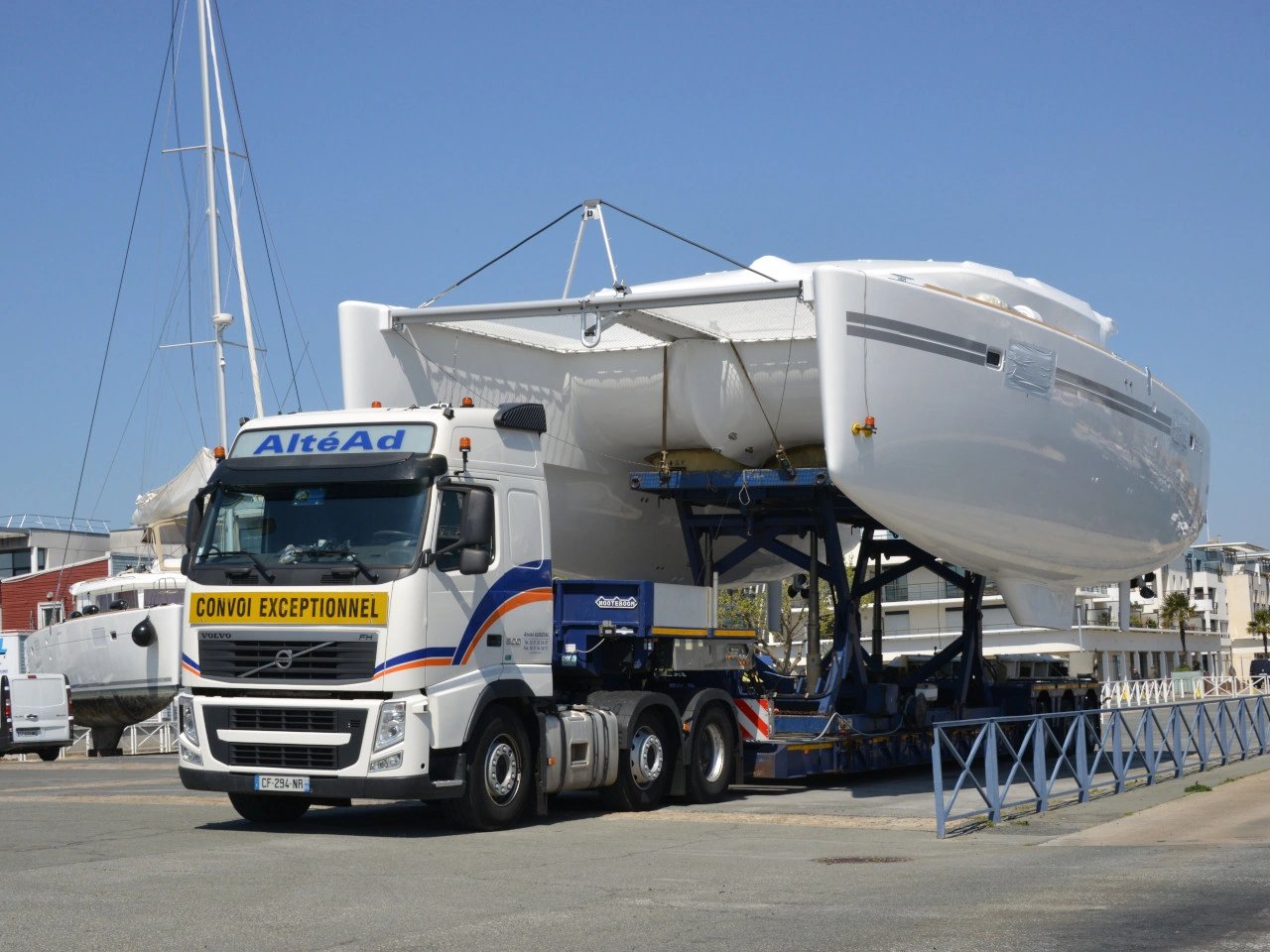
An oversize load is a load that causes a vehicle or vehicle combination to exceed the normally permitted dimensions for road traffic, such as maximum length, width or height. Oversize loads often involve large machinery, construction components or other items that cannot reasonably be divided into smaller loads.
Transporting an oversize load may require a special permit, an approved route, warning signs, lights or escort vehicles. Drivers must comply with the conditions imposed by the authorities responsible for the roads on which the transport takes place.
Wikimedia.org • Jean-Pierre Bazard • CC BY-SA
What is an oversize load?
An oversize load is a load that makes a vehicle or vehicle combination exceed one or more of the normal legal dimensions for road use, such as its permitted width, height or length.
Does an oversize load require a special permit?
Often yes. Depending on the country, dimensions and route, a permit may be required and can specify where and when the vehicle may travel and what additional safety measures must be used.
Why might an oversize load need an escort vehicle?
Escort vehicles can warn other road users, help manage difficult road sections and assist the exceptional vehicle when its size creates additional traffic risks. The number and type of escorts required depend on national rules and the dimensions of the transport.
99. Lane
A lane is a longitudinal part of a roadway intended to accommodate a line of moving vehicles. A roadway may contain one or several lanes for traffic travelling in the same or opposite directions.
Lanes are commonly separated by continuous or broken road markings. Traffic signs, lane arrows and lane-control signals may indicate which vehicles may use a lane, which direction traffic must follow or whether a lane is open or closed.
Wikimedia.org • Marc Mongenet • CC BY-SA
What is a traffic lane?
A traffic lane is a longitudinal part of a roadway intended for a line of moving vehicles.
Is a lane the same as a roadway?
No. A roadway is the larger area intended for vehicle traffic and may contain one or several individual lanes.
How are traffic lanes normally marked?
Lanes are commonly separated by continuous or broken longitudinal road markings. Their appearance and legal meaning depend on the local traffic-sign system.
Can you cross a broken lane line?
Normally yes, when permitted and safe, for example when changing lane or overtaking. Drivers must still check surrounding traffic and follow local rules.
Can you cross a continuous lane line?
Normally no, except where local law provides a specific exception. A continuous line generally indicates that crossing the marking is prohibited.
Should you signal before changing lane?
Yes. Drivers should indicate their intention in sufficient time and change lane only after making sure the movement can be completed safely.
Who has priority when changing lane?
A driver changing lane generally must give way to traffic already travelling in the lane being entered, although specific merging rules may apply in some situations.
Can a lane be reserved for certain vehicles?
Yes. Particular lanes may be reserved for buses, bicycles, high-occupancy vehicles or other specified traffic according to local signs and regulations.
Can a traffic lane be temporarily closed?
Yes. Lane-control signals, temporary signs, barriers or roadworks markings may close a lane or direct traffic into another lane.
What should you do when your lane ends?
Follow the merging rules and road markings, observe surrounding traffic and move into the continuing lane safely. Special zipper-merging rules may apply during congestion.
What do lane-direction arrows mean?
Arrows painted in a lane can indicate the direction or directions that traffic using that lane must follow, particularly when approaching an intersection.
Should you remain in one lane when possible?
Yes. Avoid unnecessary lane changes. Choose an appropriate lane and change only when needed for overtaking, turning, merging or following the required route.
100. Tyre inflation station
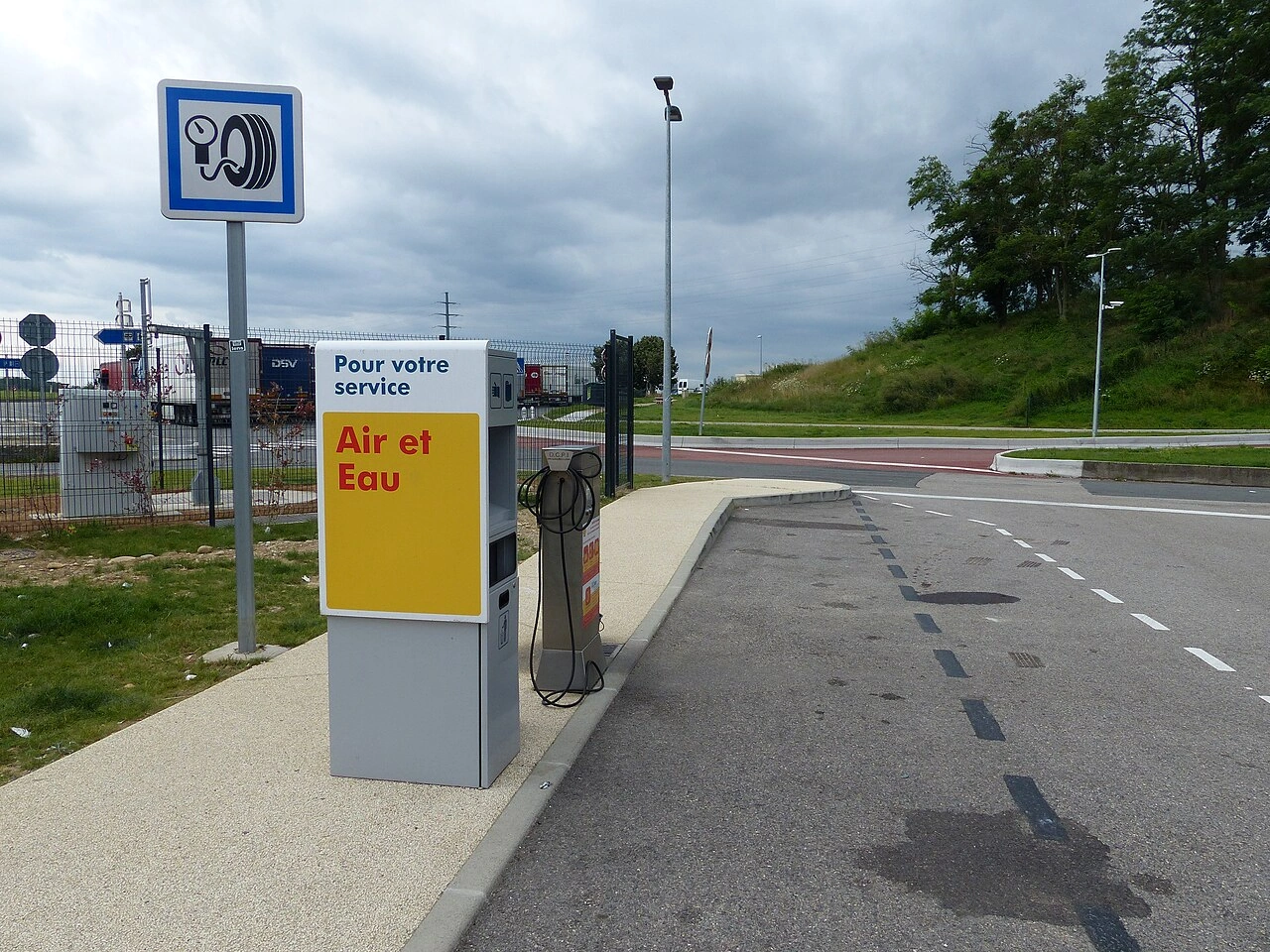
An tyre inflation station is a facility where drivers can check and adjust the air pressure in their vehicle's tyres. It is commonly located at filling stations, service areas, garages or other roadside facilities and usually provides a pressure gauge and compressed-air hose.
Correct tyre pressure contributes to safe handling, braking, tyre wear and fuel or energy efficiency. Drivers should inflate their tyres to the pressure recommended for their vehicle and load conditions.
Wikimedia.org • Marc Mongenet • CC BY-SA
What is an air pressure station?
An air pressure station is a facility where drivers can measure and adjust the air pressure in their vehicle's tyres.
Where can you find an air pressure station?
Air pressure equipment is commonly available at filling stations, service areas, garages and other vehicle-service facilities.
What tyre pressure should you use?
Use the tyre pressure recommended by the vehicle manufacturer. The required pressure can vary according to the vehicle, tyres and load.