

Traffic signsWorldwide
 Traffic rules
 Worldwide
276. Horsecart
A horsecart, or horse-drawn vehicle, is a wheeled vehicle pulled by one or more horses and controlled by a driver. Horsecarts may be used for transport, agriculture, tourism, recreation or ceremonial purposes.
Because horses can react unexpectedly to traffic, noise or sudden movements, other road users should reduce speed, leave sufficient space and avoid actions that could frighten the animals.
Wikimedia.org • Dirk Schmidt • CC0
What is a horsecart?
A horsecart is a wheeled vehicle that is pulled by one or more horses and controlled by a driver.
Where can horsecarts be used?
Depending on local rules, horsecarts may use public roads, rural routes or specially designated areas and may be used for transport, agriculture, tourism or recreation.
How should drivers behave around a horsecart?
Drivers should slow down, leave sufficient space and pass calmly, avoiding unnecessary noise or sudden movements that could frighten the horses.

277. Livestock
Livestock refers to domesticated farm animals such as cattle, sheep, goats and pigs that are kept for agricultural purposes. In road traffic, livestock may occasionally be moved along or across public roads, particularly in rural and farming areas.
Drivers approaching livestock should reduce speed, leave sufficient space and avoid sudden noise or movements that could frighten the animals. Animals on the road should be kept under proper control so that they do not obstruct traffic or cause accidents.
Wikimedia.org • Alex Proimos • CC BY
What is livestock?
Livestock refers to domesticated farm animals kept for agricultural purposes, such as cattle, sheep, goats and pigs.
Can livestock be moved on public roads?
Yes, where local rules permit. Livestock may need to be moved along or across roads, particularly between fields or agricultural properties.
How should drivers behave near livestock?
Drivers should slow down, leave sufficient space and avoid frightening the animals. They should be prepared to stop if the animals become unpredictable or block the road.
278. Rickshaw
A rickshaw is a small vehicle designed to carry one or more passengers and traditionally operated by a person who pulls or pedals it. Modern rickshaws can include pedal-powered cycle rickshaws as well as motorised or electric versions.
Rickshaws are commonly used for short-distance passenger transport, tourism and urban mobility. Their legal classification and the roads or cycle facilities they may use depend on their construction, width, propulsion and national traffic rules.
Wikimedia.org • Maarten Visser • CC BY-SA
What is a rickshaw?
A rickshaw is a small passenger-carrying vehicle that may be human-powered, pedal-powered or motorised.
What is a cycle rickshaw?
A cycle rickshaw is a pedal-powered rickshaw, usually with three wheels, in which the driver pedals while one or more passengers sit in a separate seating area.
Do all rickshaws follow the same traffic rules?
No. Their legal status can depend on whether they are pedal-powered or motorised and on characteristics such as their width, speed, power and number of wheels.
279. Skier
A skier is a person who travels over snow using skis attached to their boots. Skiers may participate in alpine skiing, cross-country skiing, touring or other winter recreational activities.
Where skiing routes cross or approach roads, skiers should follow the applicable signs, crossing rules and local safety instructions. Drivers should remain alert in winter-sports areas where skiers may be present near the roadway.
Wikimedia.org • Safa Hovinen • CC BY
What is a skier?
A skier is a person who travels over snow using a pair of skis.
Where can skiers be encountered near roads?
Skiers may be encountered near ski resorts, cross-country trails, mountain roads and places where skiing routes cross or approach public roads.
How should drivers behave when skiers are near a road?
Drivers should reduce speed when necessary, remain alert and be prepared to stop where skiers may cross or enter the roadway.
280. Snowmobile
A snowmobile is a motorised vehicle designed primarily for travelling over snow and ice. It typically uses one or more skis at the front for steering and a powered continuous track at the rear for propulsion.
Snowmobiles are commonly used for winter recreation, transport, rescue work and access to remote snowy areas. Where they may be operated depends on local rules concerning trails, public roads, protected areas and vehicle registration.
Wikimedia.org • Timo Newton-Syms • CC BY-SA
What is a snowmobile?
A snowmobile is a motorised vehicle designed to travel over snow, normally using skis for steering and a powered track for propulsion.
Where are snowmobiles commonly used?
Snowmobiles are commonly used on snow-covered trails and terrain for recreation, transport, utility work and access to remote areas.
Can a snowmobile be driven on public roads?
It depends on local law and the vehicle's approval. Many snowmobiles are primarily off-road vehicles, and public-road use may require registration, road approval, insurance and an appropriate driving licence.
281. Motor vehicle
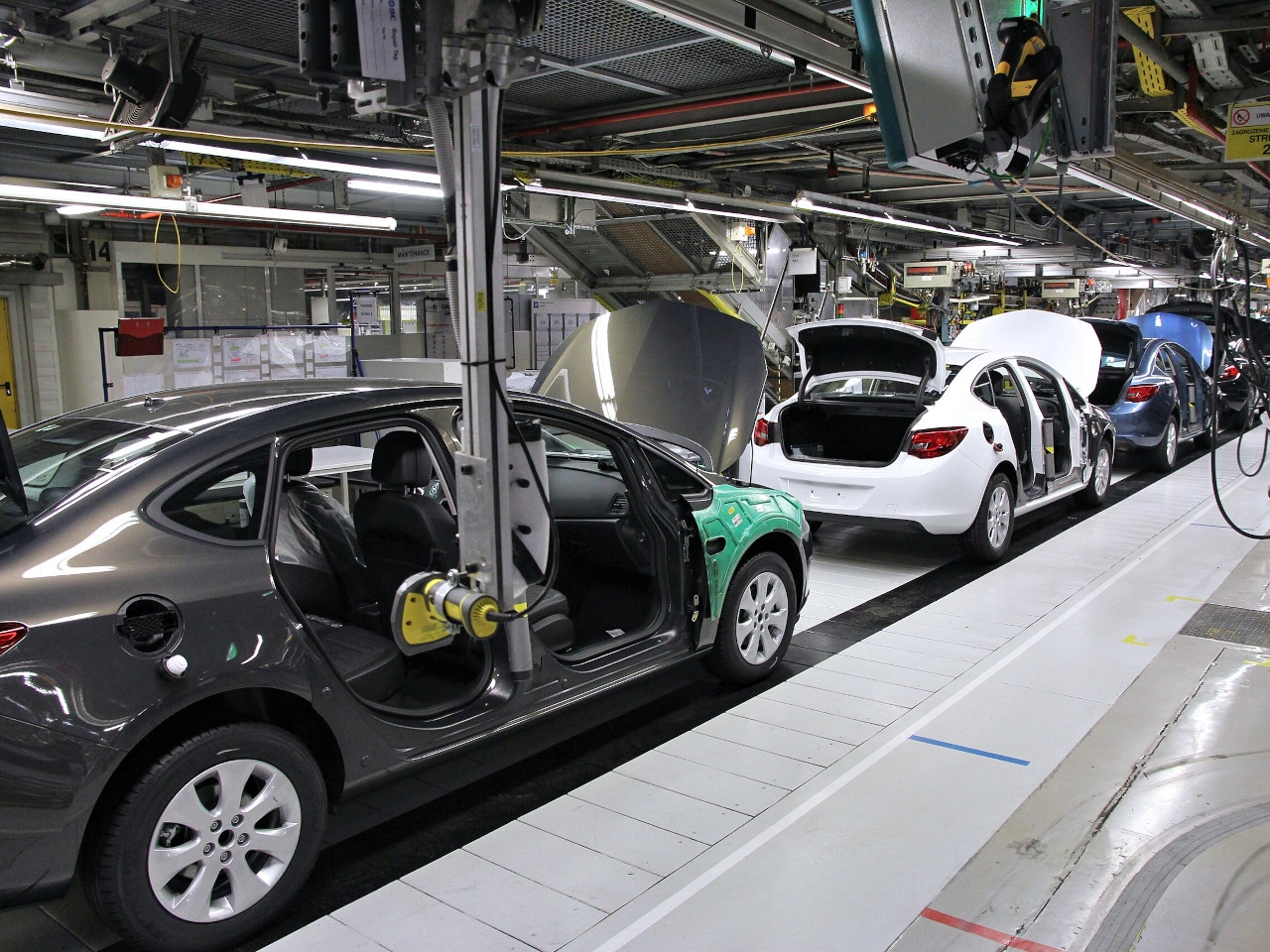
A motor vehicle is a vehicle equipped with a motor and designed to move under its own power. Motor vehicles include many different categories, such as cars, motorcycles, buses, trucks and certain mopeds.
The traffic rules applying to a motor vehicle depend on its vehicle category, weight, dimensions, power and maximum design speed. Registration, insurance, licensing and road-access requirements can therefore differ between types of motor vehicles.
Wikimedia.org • Marek Ślusarczyk • CC BY
What is a motor vehicle?
A motor vehicle is a vehicle equipped with a motor and designed to travel under its own power.
What are examples of motor vehicles?
Motor vehicles can include cars, motorcycles, mopeds, buses, trucks and other self-propelled road vehicles, depending on the country's legal definitions.
Is every electrically assisted vehicle a motor vehicle?
Not necessarily. Some electrically assisted bicycles and personal mobility devices may be placed in separate legal categories even though they have an electric motor.
282. Commercial vehicle
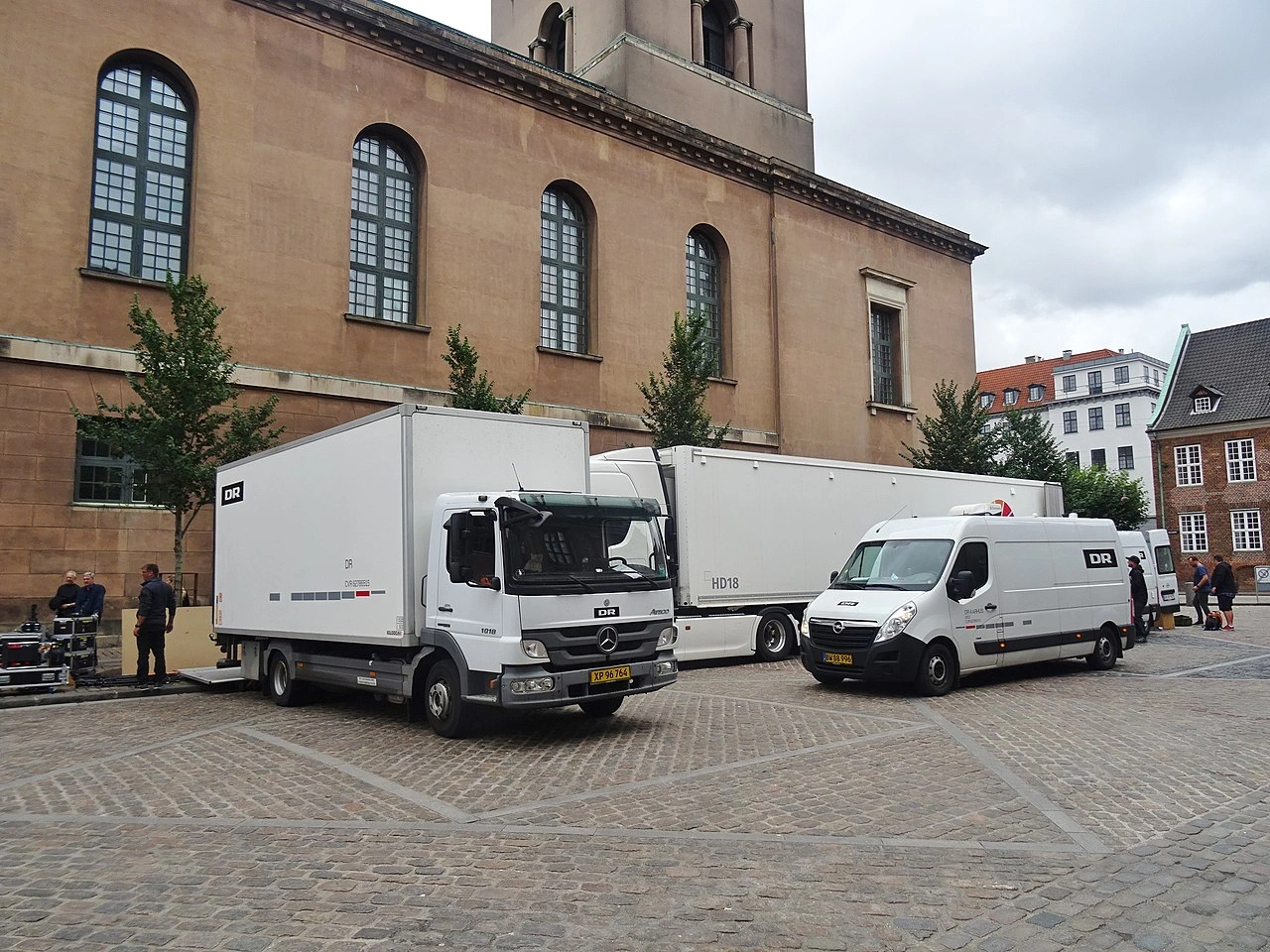
A commercial vehicle is a motor vehicle used primarily for business purposes, such as transporting goods, equipment or passengers for professional or commercial activities. Commercial vehicles can include vans, trucks, buses, coaches and other specialised vehicles.
The rules applying to a commercial vehicle depend on its vehicle category, weight, dimensions, number of passengers and type of use. Driving-licence, road-access, inspection, taxation and operating requirements can therefore differ considerably between vehicles.
Wikimedia.org • Leif Jørgensen • CC BY-SA
What is a commercial vehicle?
A commercial vehicle is a vehicle used primarily for business activities such as transporting goods, equipment or passengers.
What are examples of commercial vehicles?
Commercial vehicles can include delivery vans, trucks, buses, coaches and specialised work vehicles.
Do all commercial vehicles follow the same traffic rules?
No. The applicable rules can depend on the vehicle's weight, dimensions, purpose, passenger capacity and legal vehicle category.
283. Crossing guard
A crossing guard is a person who helps pedestrians cross a road safely, particularly near schools or other places where children, older people or vulnerable pedestrians frequently cross. Depending on local law, a crossing guard may be authorised to stop traffic or may simply assist pedestrians in choosing a safe moment to cross.
Drivers approaching a crossing guard should reduce speed, remain alert and obey any legally authorised stop signal or instruction. The powers, equipment and training requirements for crossing guards vary between countries.
Wikimedia.org • Lewis Clarke • CC BY-SA
What is a crossing guard?
A crossing guard is a person who assists pedestrians in crossing a road safely, often near schools or other locations with frequent pedestrian activity.
Can a crossing guard stop traffic?
It depends on local law. In some countries authorised crossing guards have the legal power to stop traffic using a prescribed sign or signal, while other helpers may only assist pedestrians without directing drivers.
How should drivers behave near a crossing guard?
Drivers should slow down, remain attentive and obey authorised stop signals so that pedestrians can cross safely.
284. Motorail
Motorail is a rail service that transports passengers together with their car, motorcycle or other eligible vehicle on the same journey. The passengers normally travel in passenger coaches or sleeping accommodation while their vehicle is carried on dedicated vehicle-transport wagons.
Motorail services are mainly intended for long-distance travel, allowing travellers to avoid driving the entire route while still having their own vehicle available at their destination. Vehicle dimensions, loading procedures and eligible routes depend on the operator.

Wikimedia.org • NAC • CC BY-SA
What is Motorail?
Motorail is a train service that transports passengers and their vehicle together, with the vehicle carried on specialised railway wagons.
Which vehicles can be carried on a Motorail train?
Depending on the operator and route, Motorail services may carry cars, motorcycles or other eligible road vehicles. Size and weight restrictions may apply.
Do passengers remain inside their car on a Motorail train?
No. Passengers normally leave their vehicle after loading and travel separately in the passenger accommodation provided by the train.
285. Garbage truck
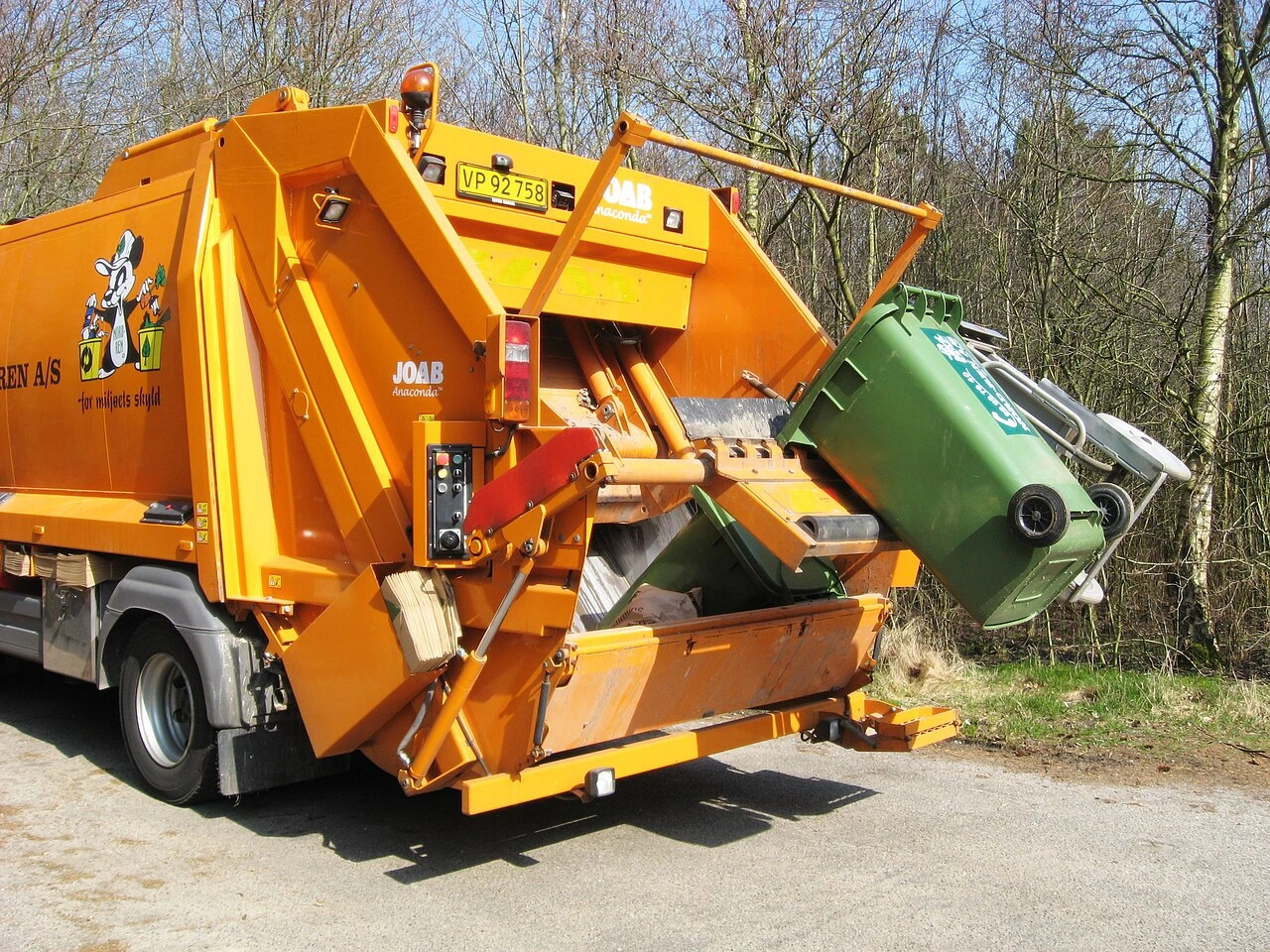
A garbage truck is a specialised vehicle used to collect and transport household waste, recyclable materials or other refuse. Many garbage trucks are equipped with lifting equipment and a compaction system that allows waste containers to be emptied and their contents compressed inside the vehicle.
Garbage trucks frequently stop and start while collection workers operate around the vehicle. Other road users should approach carefully, reduce speed when necessary and watch for workers, containers and vehicles entering or leaving the roadway.
Wikimedia.org • Tomasz Sienicki • CC BY
What is a garbage truck?
A garbage truck is a specialised vehicle used to collect and transport waste or recyclable materials.
Why should you take extra care around a garbage truck?
Garbage trucks may stop frequently and have workers moving around them. Drivers should reduce speed when necessary and watch carefully for workers, bins and other road users.
Do garbage trucks always have special traffic priority?
No. Waste-collection vehicles normally remain subject to ordinary traffic rules unless specific national or local rules provide an exemption for their work.
286. Snowplough
A snowplough is a vehicle equipped with a blade or other device for removing snow from roads and other paved surfaces. Snowploughs may also carry equipment for spreading salt, grit or other materials intended to reduce ice and improve traction.
Drivers approaching or following a snowplough should reduce speed, keep a safe distance and avoid overtaking unless there is sufficient visibility and space. Snow, salt or other material discharged by the vehicle can reduce visibility and create additional hazards.
Wikimedia.org • Superbass • CC BY-SA
What is a snowplough?
A snowplough is a vehicle fitted with equipment designed to remove snow from roads or other paved surfaces.
Can a snowplough also spread salt or grit?
Yes. Many winter-maintenance vehicles can combine snow removal with equipment that spreads salt, grit or other substances used to improve road conditions.
How should you drive near a snowplough?
Keep a safe distance, reduce speed and avoid unnecessary overtaking. Snow or road-treatment material may be thrown from the vehicle and visibility may be reduced.
287. Street sweeper
A street sweeper is a specialised vehicle used to clean roads, streets and other paved areas. It typically uses rotating brushes, suction equipment, water sprays or a combination of these systems to remove dust, leaves, litter and other debris from the road surface.
Street sweepers often operate at low speed and may stop, change position or work close to the edge of the roadway. Other road users should approach carefully, maintain sufficient distance and watch for workers or debris around the vehicle.
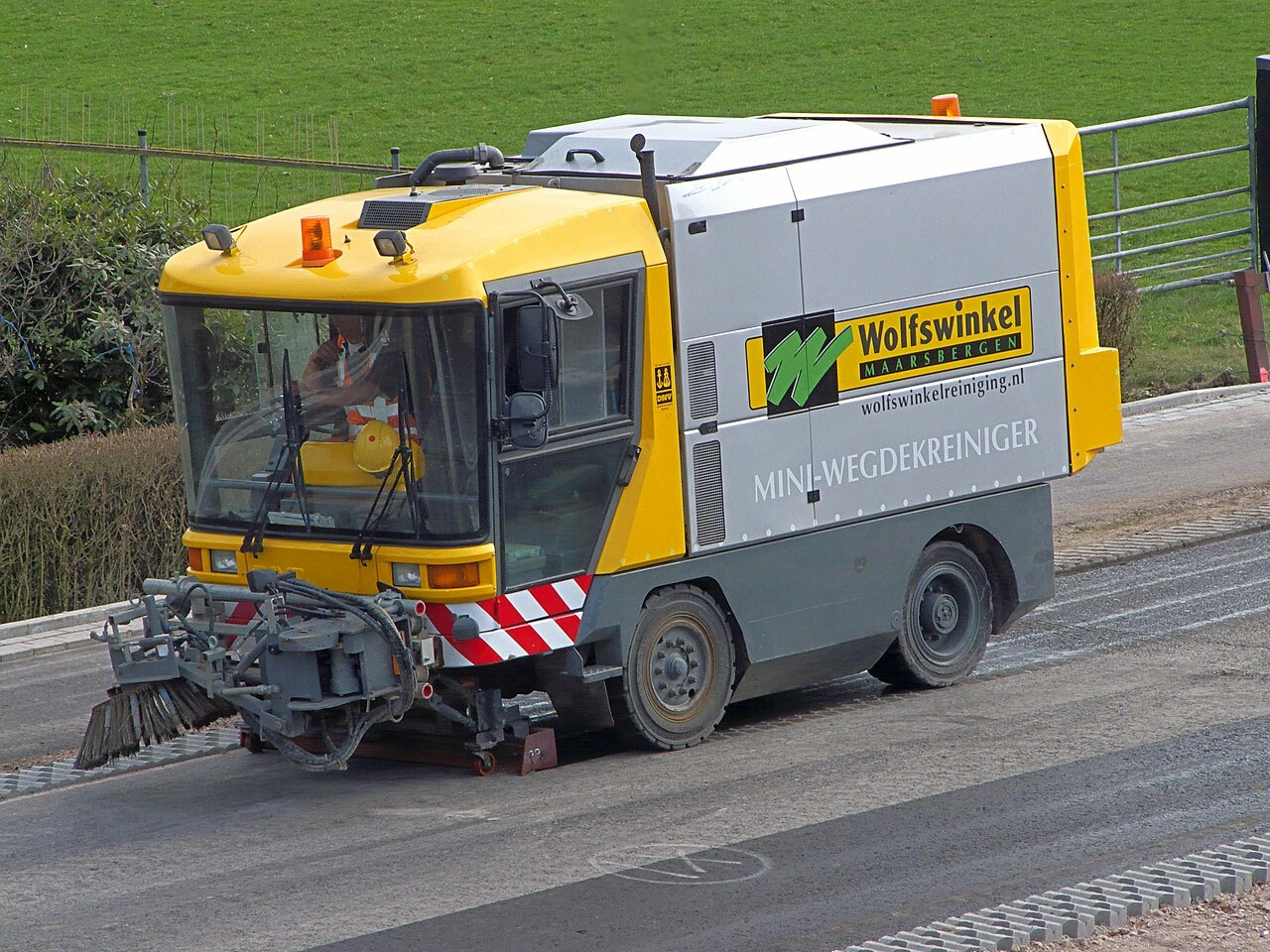
Wikimedia.org • Rasbak • CC BY-SA
What is a street sweeper?
A street sweeper is a specialised vehicle used to clean roads and other paved surfaces by collecting dust, litter, leaves and debris.
How does a street sweeper clean the road?
Street sweepers commonly use rotating brushes, suction equipment and water sprays to loosen and collect dirt and debris from the road surface.
How should you drive near a street sweeper?
Reduce speed when necessary, keep a safe distance and overtake only when there is sufficient space and visibility. Be prepared for the sweeper to move slowly or change its road position while working.
288. Parking violation
A parking violation occurs when a vehicle is parked contrary to the traffic rules, signs, road markings or parking conditions that apply at that location. Examples include parking where it is prohibited, obstructing traffic, using a reserved space without authorisation or exceeding an applicable parking restriction.
Parking violations may result in fines, parking charges, wheel clamping, removal of the vehicle or other enforcement measures, depending on the country and the type and seriousness of the violation.
Wikimedia.org • O'Dea • CC BY-SA
What is a parking violation?
A parking violation occurs when a vehicle is parked in a way that does not comply with the applicable traffic rules, signs, markings or parking conditions.
What are common parking violations?
Examples include parking where prohibited, blocking a sidewalk or crossing, using a reserved space without permission, failing to pay or exceeding a permitted parking time.
What can happen after a parking violation?
Depending on local law and the offence, the vehicle owner or driver may receive a fine, parking charge or other enforcement measure, and a dangerously or illegally parked vehicle may sometimes be removed.
289. km/h
km/h means kilometres per hour and is a unit used to measure speed. It expresses how many kilometres a vehicle or other moving object would travel in one hour if it maintained the same speed.
For example, a speed of 50 km/h means travelling at a rate of 50 kilometres per hour. Kilometres per hour are widely used for road speeds and speed limits in countries that use the metric system.
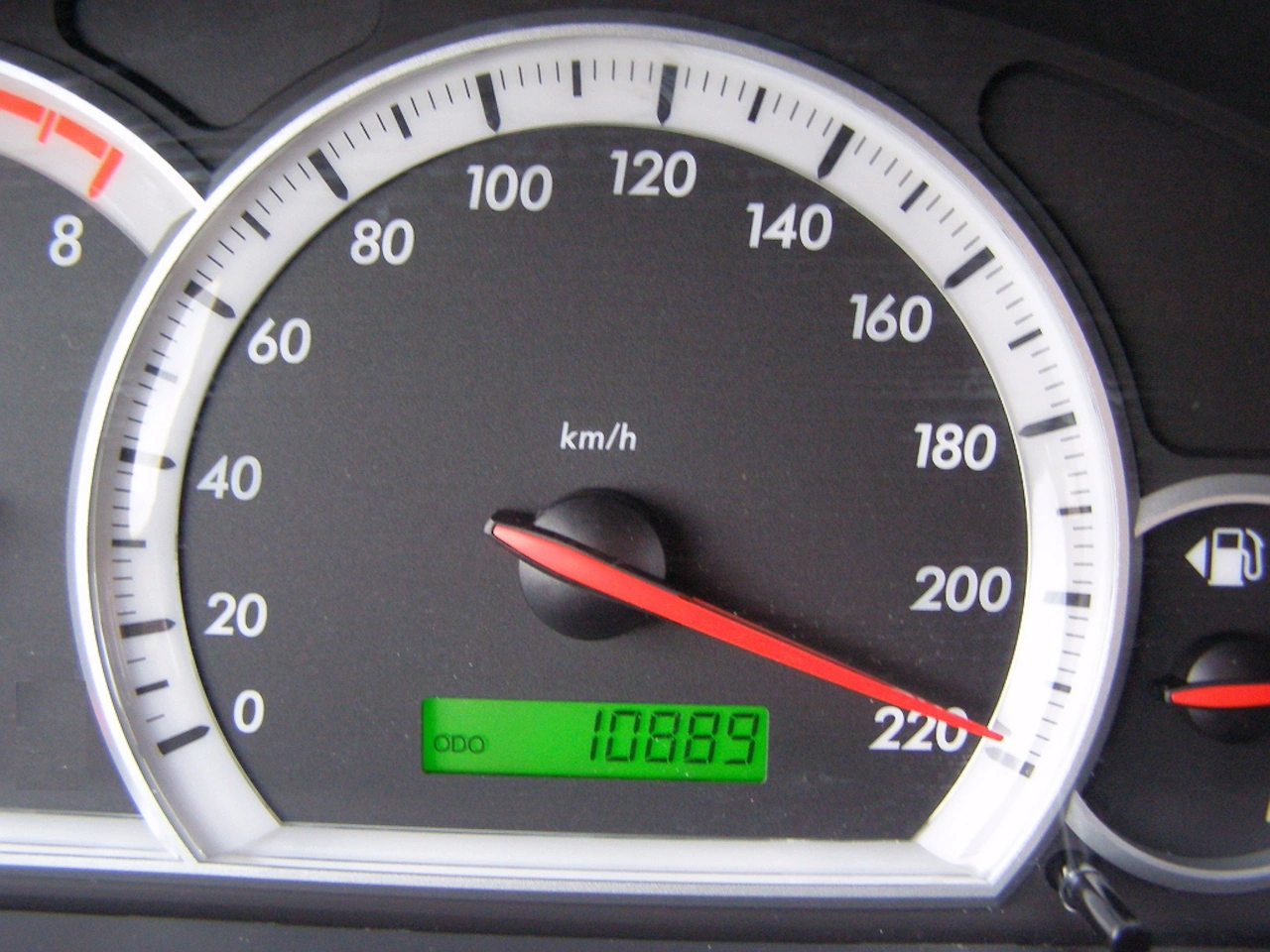
Wikimedia.org • Bluescan sv.wiki • CC0
What does km/h mean?
km/h is the abbreviation for kilometres per hour, a unit used to measure speed.
What does 50 km/h mean?
A speed of 50 km/h means that, if the speed remained constant, the vehicle would travel 50 kilometres in one hour.
Is km/h the same as mph?
No. km/h measures speed in kilometres per hour, while mph measures speed in miles per hour. The two units therefore represent different numerical speeds.
290. mph
mph means miles per hour and is a unit used to measure speed. It expresses how many miles a vehicle or other moving object would travel in one hour if it maintained the same speed.
For example, a speed of 50 mph means travelling at a rate of 50 miles per hour. One mile per hour is approximately 1.61 km/h, so speeds expressed in mph and km/h have different numerical values.

Wikimedia.org • Greg Gjerdingen • CC BY
What does mph mean?
mph is the abbreviation for miles per hour, a unit used to measure speed.
What does 50 mph mean?
A speed of 50 mph means that, if the speed remained constant, the vehicle would travel 50 miles in one hour.
Is mph the same as km/h?
No. mph measures speed in miles per hour, while km/h measures speed in kilometres per hour. 1 mph is approximately 1.61 km/h.
291. Speedometer
A speedometer is an instrument in a vehicle that shows the vehicle's current speed. It is normally displayed on the instrument panel and may use an analogue dial, a digital display or both.
Drivers should use the speedometer to monitor their speed and remain within the applicable speed limit. The displayed unit is usually kilometres per hour or miles per hour, depending on the country and vehicle.

Wikimedia.org • Andreas Schmidt • CC BY-SA
What is a speedometer?
A speedometer is an instrument that displays the current speed of a vehicle.
Where is the speedometer located?
It is normally located on the vehicle's instrument panel or digital driver display, where it can be seen easily while driving.
Which units can a speedometer use?
A speedometer may display speed in kilometres per hour (km/h), miles per hour (mph) or both, depending on the vehicle and market.
292. National speed
A national speed limit is a default maximum speed established by law for a particular type of road or vehicle when no lower or different local speed limit is indicated. National or general speed limits can differ according to whether the road is a motorway, rural road, built-up-area road or another road category.
Drivers should know the default speed limits that apply in the country or region where they are travelling and always obey any posted speed limit that overrides the general rule.
Wikimedia.org • My Friend • CC BY-SA
What is a national speed limit?
A national speed limit is a default maximum speed established by law for particular roads or vehicles when no different local restriction applies.
Is there always one national speed limit?
No. A country may have different general limits for motorways, rural roads and built-up areas, and some countries allow regional authorities to establish different default limits.
Can a traffic sign override the national speed limit?
Yes. A posted regulatory speed limit may impose a lower or, where legally permitted, higher maximum speed than the general limit for that road.
293. Play street
A play street is a street that is temporarily closed or restricted to normal motor traffic so that people, especially children, can use the roadway for play and recreation. Play streets are usually created during specific hours or days and are marked with temporary barriers or traffic signs.
Within a play street, people playing are given priority over permitted vehicle traffic. Any vehicles that are allowed to enter must travel very slowly and avoid endangering or obstructing people using the street.
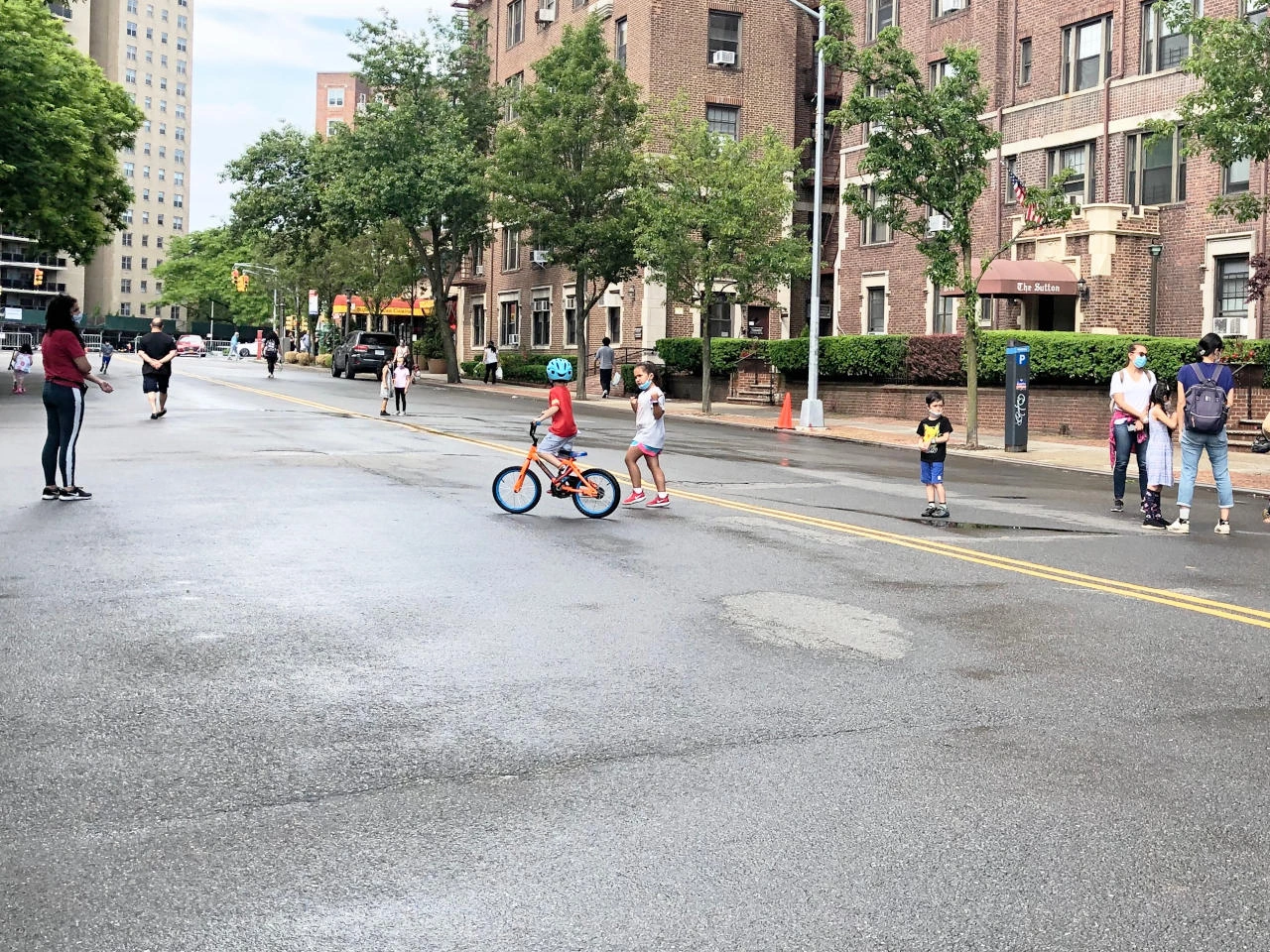
Wikimedia.org • Jim Griffin • CC0
What is a play street?
A play street is a street temporarily reserved mainly for play and recreation, with ordinary motor traffic restricted or prohibited during specified periods.
Can vehicles enter a play street?
Only where the applicable rules allow them. Access is commonly limited to residents, emergency vehicles, authorised vehicles or other specifically permitted traffic.
How should permitted vehicles drive in a play street?
Permitted vehicles should travel at walking pace, give priority to people playing and stop when necessary to avoid danger or obstruction.
294. Rumble strip
A rumble strip is a raised, grooved or textured section of road surface that creates vibration and noise when a vehicle drives over it. Rumble strips are used to attract a driver's attention and warn of hazards, lane departure, an approaching junction or another situation requiring increased caution.
Rumble strips may be installed across a traffic lane or along the edge or centre of a road. They are primarily a warning device and do not by themselves necessarily impose a particular speed limit or traffic restriction.
Wikimedia.org • Michiel TM • CC BY-SA
What is a rumble strip?
A rumble strip is a textured or raised road-surface feature that produces vibration and noise when a vehicle passes over it.
Why are rumble strips used?
They are used to alert drivers to hazards, approaching road features or unintended movement out of a traffic lane.
Does a rumble strip impose a speed limit?
Not by itself. A rumble strip warns or attracts attention, while any legally binding speed restriction must be established by the applicable traffic rules or regulatory signs.
295. Speed cushion
A speed cushion is a raised traffic-calming device placed on part of a traffic lane to encourage drivers to reduce speed. Unlike a conventional speed hump that extends across most or all of the roadway, a speed cushion is narrower so that wider vehicles such as buses or emergency vehicles may be able to pass over it with less disturbance.
Speed cushions are designed to slow ordinary passenger vehicles while reducing the impact on larger vehicles and two-wheelers. Their dimensions, placement and legal effect vary between countries.
Wikimedia.org • Zorro2212 • CC BY-SA
What is a speed cushion?
A speed cushion is a raised traffic-calming device that covers only part of a traffic lane and encourages vehicles to reduce speed.
How is a speed cushion different from a speed hump?
A speed hump normally extends across most or all of the roadway, while a speed cushion is narrower and leaves space beside it so that some wider vehicles can pass with less disturbance.
Why are speed cushions used?
They are used to reduce the speed of ordinary vehicles while limiting inconvenience to buses, heavy vehicles, emergency vehicles and some two-wheelers.
296. Ride height
Ride height is the height at which a vehicle's body or chassis sits above the road surface. It is determined mainly by the suspension, wheels and tyres and can also change according to the vehicle's load.
Changing the ride height by lowering or raising the suspension can affect ground clearance, wheel alignment, handling and the space available between the vehicle and the road. Vehicle modifications must comply with the technical and approval rules that apply in the country.
Wikimedia.org • mark6mauno • CC BY
What is ride height?
Ride height describes how high a vehicle's body or chassis sits above the road surface.
What affects a vehicle's ride height?
Ride height can be affected by the suspension, wheel and tyre dimensions, vehicle load and suspension modifications.
Can a vehicle's ride height be changed?
Yes. Suspension modifications can lower or raise a vehicle, but such modifications may be subject to technical approval, inspection and safety requirements.
297. Funeral procession
A funeral procession is an organised group of people or vehicles travelling together as part of a funeral, usually between a place of ceremony and a cemetery or crematorium. A procession may include a hearse followed by family members, other vehicles or pedestrians.
Other road users should avoid unnecessarily interrupting or separating a funeral procession and should follow any directions given by police, authorised traffic controllers or funeral escorts. The legal status and priority rules for funeral processions vary between countries.
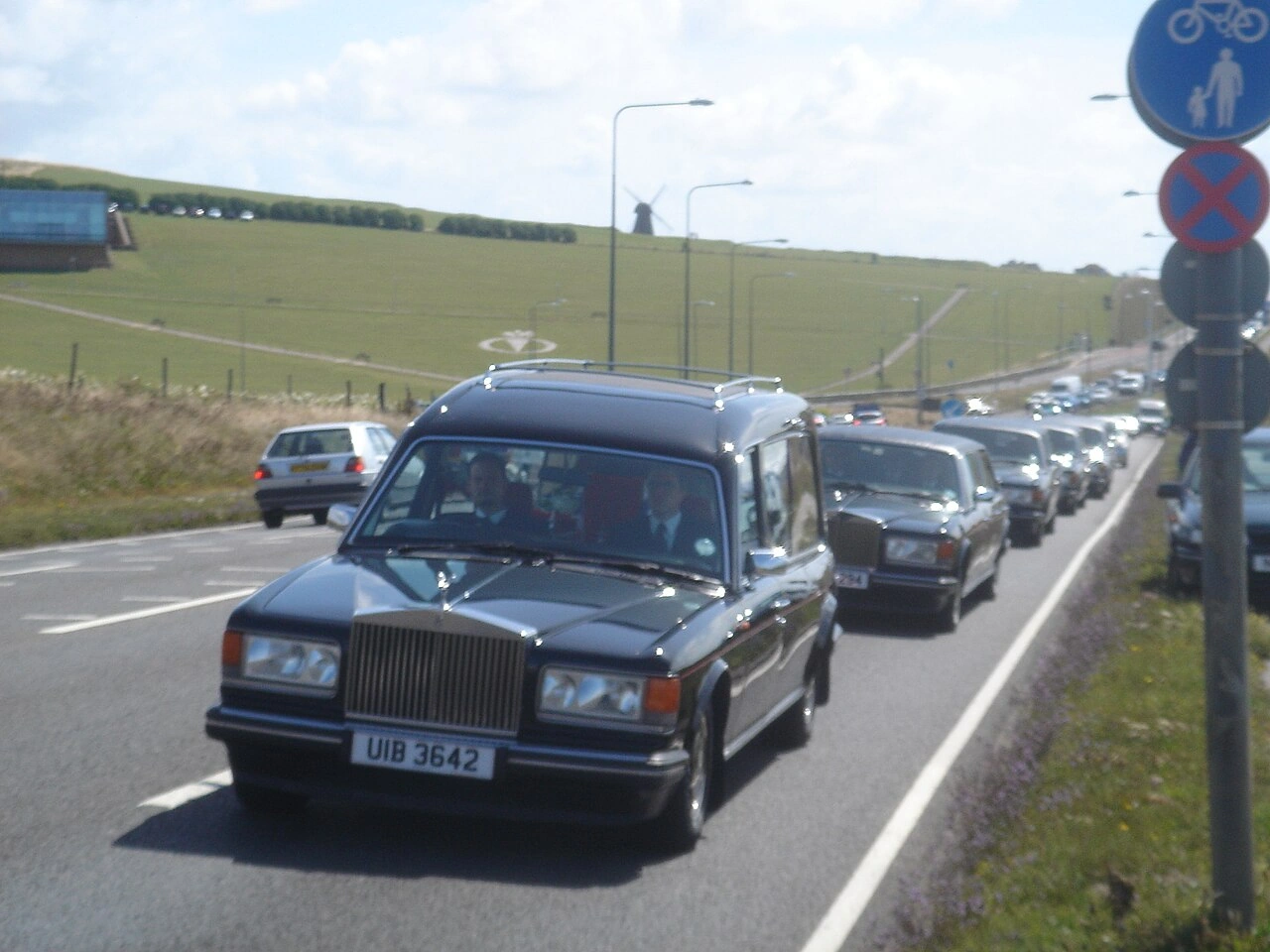
Wikimedia.org • The Voice of Hassocks • CC0
What is a funeral procession?
A funeral procession is an organised group of pedestrians or vehicles travelling together as part of a funeral ceremony.
Does a funeral procession automatically have priority?
Not necessarily. The priority given to funeral processions differs between countries. Unless specific rules or authorised traffic control apply, participants must normally obey the usual traffic lights, signs and priority rules.
Should you drive through a funeral procession?
Generally, you should avoid breaking through an organised procession and allow its participants to remain together, subject to the applicable local traffic rules.
298. Dirt road
A dirt road is an unpaved road whose surface consists mainly of natural soil, earth or compacted ground rather than asphalt, concrete or an added gravel surface. Dirt roads are commonly found in rural, agricultural, forest and remote areas.
Drivers on dirt roads should adapt their speed to the surface conditions and avoid sudden braking, acceleration or steering. Dust, mud, ruts, potholes and reduced tyre grip can make driving more difficult, especially during or after bad weather.
Wikimedia.org • Игоревич • CC0
What is a dirt road?
A dirt road is an unpaved road surfaced mainly with natural soil or compacted earth.
What is the difference between a dirt road and a gravel road?
A dirt road mainly uses the natural earth or soil as its driving surface, while a gravel road normally has a deliberately added layer of gravel or crushed stone.
How should you drive on a dirt road?
Use a suitable speed, increase following distance when necessary and accelerate, brake and steer smoothly. Extra care may be required when the surface is dusty, muddy, rutted or uneven.
299. Driving
Driving is the act of controlling and operating a vehicle or other recognised means of transport in traffic. It involves steering, accelerating, braking, observing the road and interacting safely with other road users.
Safe driving requires the driver to remain in control, follow traffic rules and signals, observe surrounding traffic and adapt to road, weather and visibility conditions.

Wikimedia.org • BP63Vincent • CC BY-SA
What is driving?
Driving is the act of controlling and operating a vehicle while travelling in traffic.
What does safe driving require?
Safe driving requires proper vehicle control, attention to the road, compliance with traffic rules and appropriate reactions to other road users and changing conditions.
Who can legally drive a motor vehicle?
The requirements vary by country and vehicle type. Drivers may need to meet minimum-age, driving-licence, medical-fitness and vehicle-category requirements.
300. Start-stop system
A start-stop system is a vehicle system that automatically switches off the engine when the vehicle is stationary and restarts it when the driver is ready to move again. It is commonly used in vehicles with combustion engines to reduce unnecessary engine idling.
The system normally operates automatically when certain conditions are met, such as when the vehicle stops in traffic. Its operation does not replace the driver's responsibility to control the vehicle safely and follow the applicable traffic rules.
Wikimedia.org • Bindydad123 • CC BY-SA
What is a start-stop system?
A start-stop system automatically switches off the engine when the vehicle is stationary and restarts it when the driver is ready to continue.
Why do vehicles use a start-stop system?
The system is primarily intended to reduce unnecessary engine idling, particularly when a vehicle is waiting in traffic.
Does the engine always switch off when the vehicle stops?
Not necessarily. The system may keep the engine running when operating conditions do not allow an automatic stop, depending on the vehicle and its systems.