QuizTraffic rules

This interesting quiz helps you test your knowledge in a clear and visual way. With easy multiple-choice questions, you can quickly build confidence and learn new facts while keeping it simple, interactive, and fun.

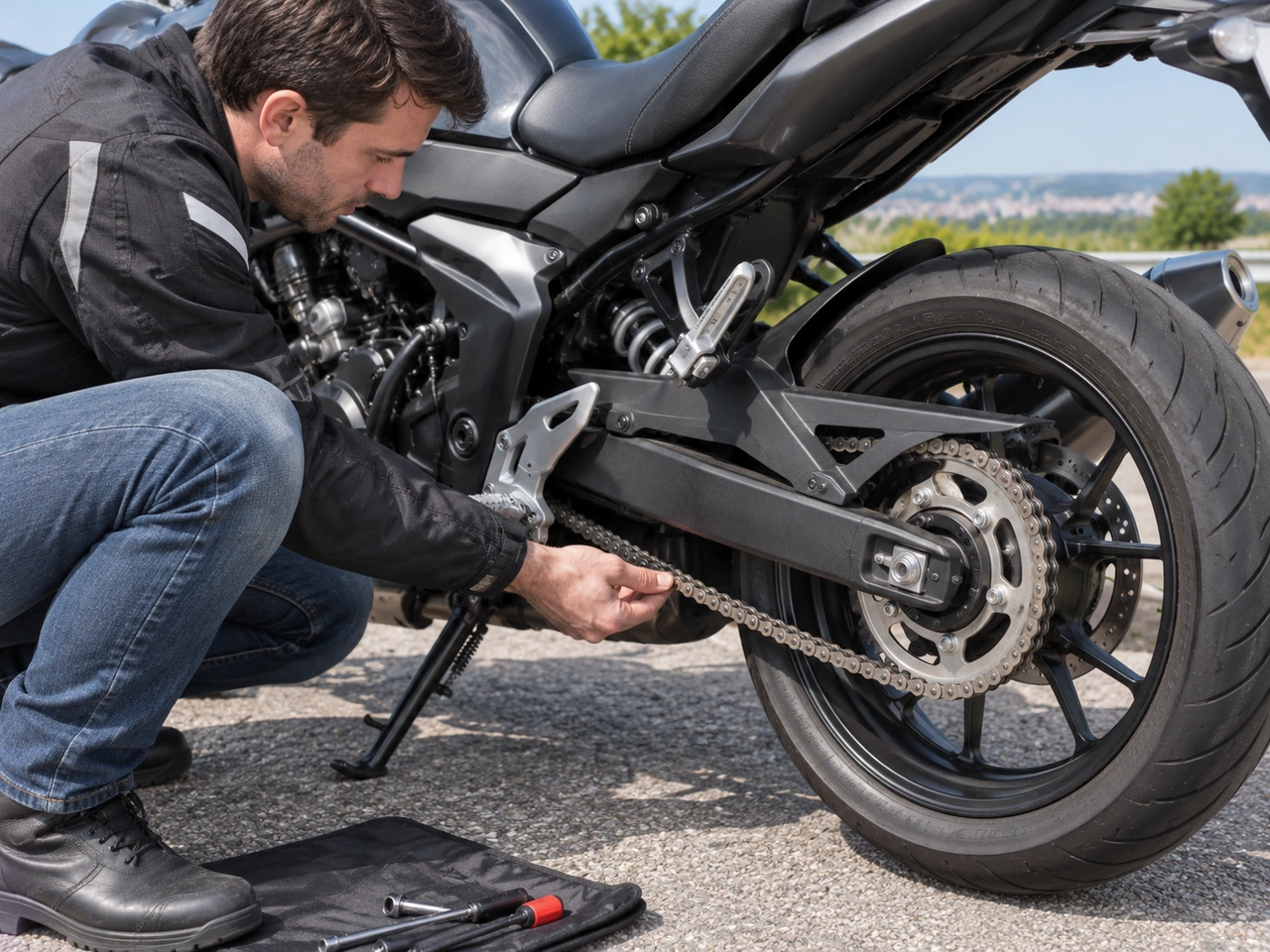
What should you do if a motorcycle's drive chain is too loose?

151. What should you do if a motorcycle's drive chain is too loose?

Lubricate it and ignore the loose tension.
Tighten it as much as possible.
✓ Adjust it correctly or have it checked before riding.
Increase speed to keep the chain under tension.

A loose drive chain can affect power transmission, damage components, or come off the sprockets. The chain should have the correct tension and lubrication specified by the motorcycle manufacturer. A chain that is too tight can also cause damage.

Loose drive chain on a motorcycle
AI-generated by Rijbewijs-online.be • WCIT • CC BY-SA
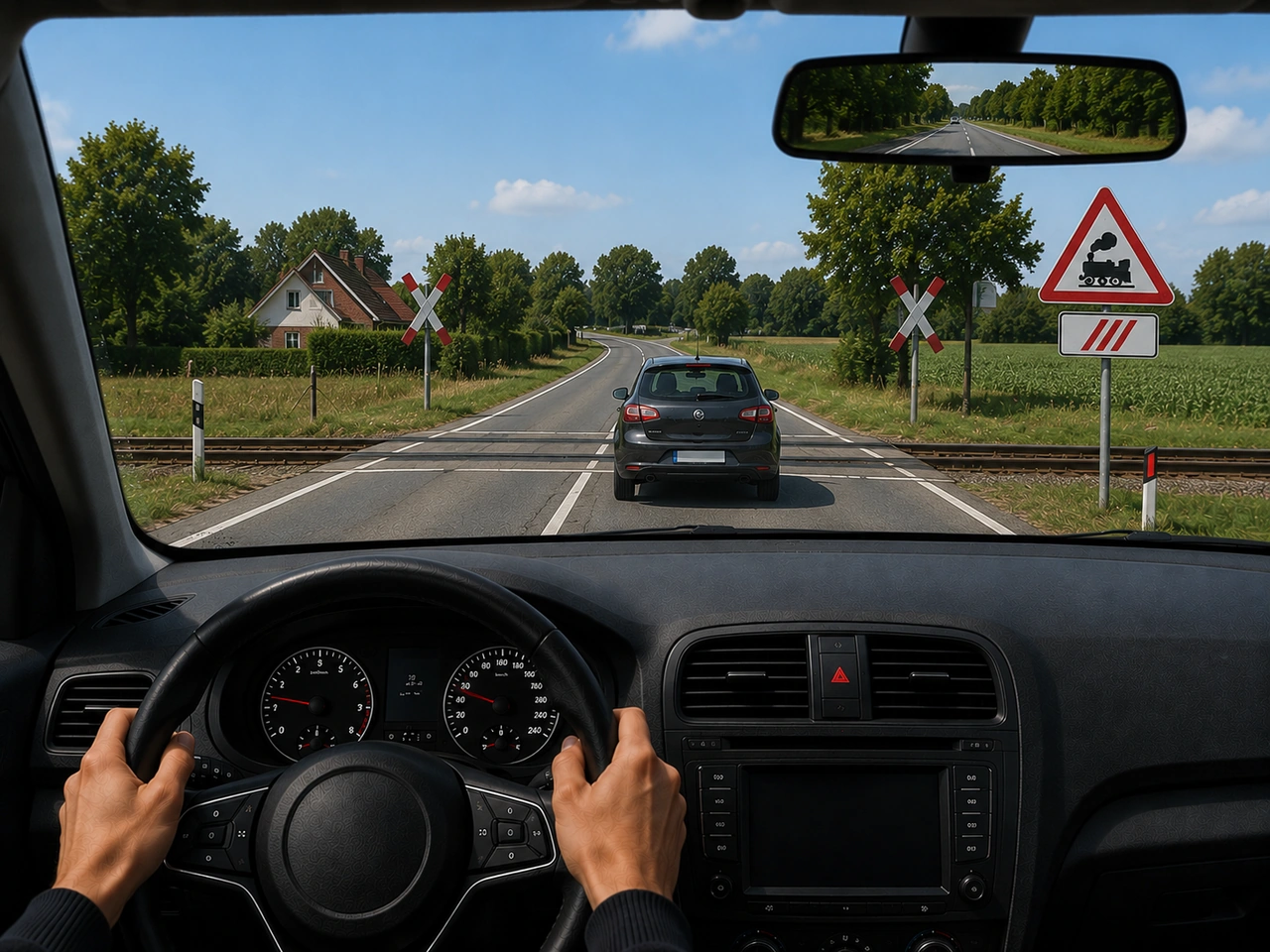
What should you do at a railway crossing without barriers?

152. What should you do at a railway crossing without barriers?

✓ Stop if required, check carefully, and cross only when safe.
Stop only if you hear a train approaching.
Cross quickly if you cannot see a train.
Follow the vehicle ahead without checking yourself.

Approach railway crossings carefully, obey any requirement to stop and any warning signals or barriers, and cross only when it is safe.

Railway crossing without barriers
AI-generated by Rijbewijs-online.be • WCIT • CC BY-SA
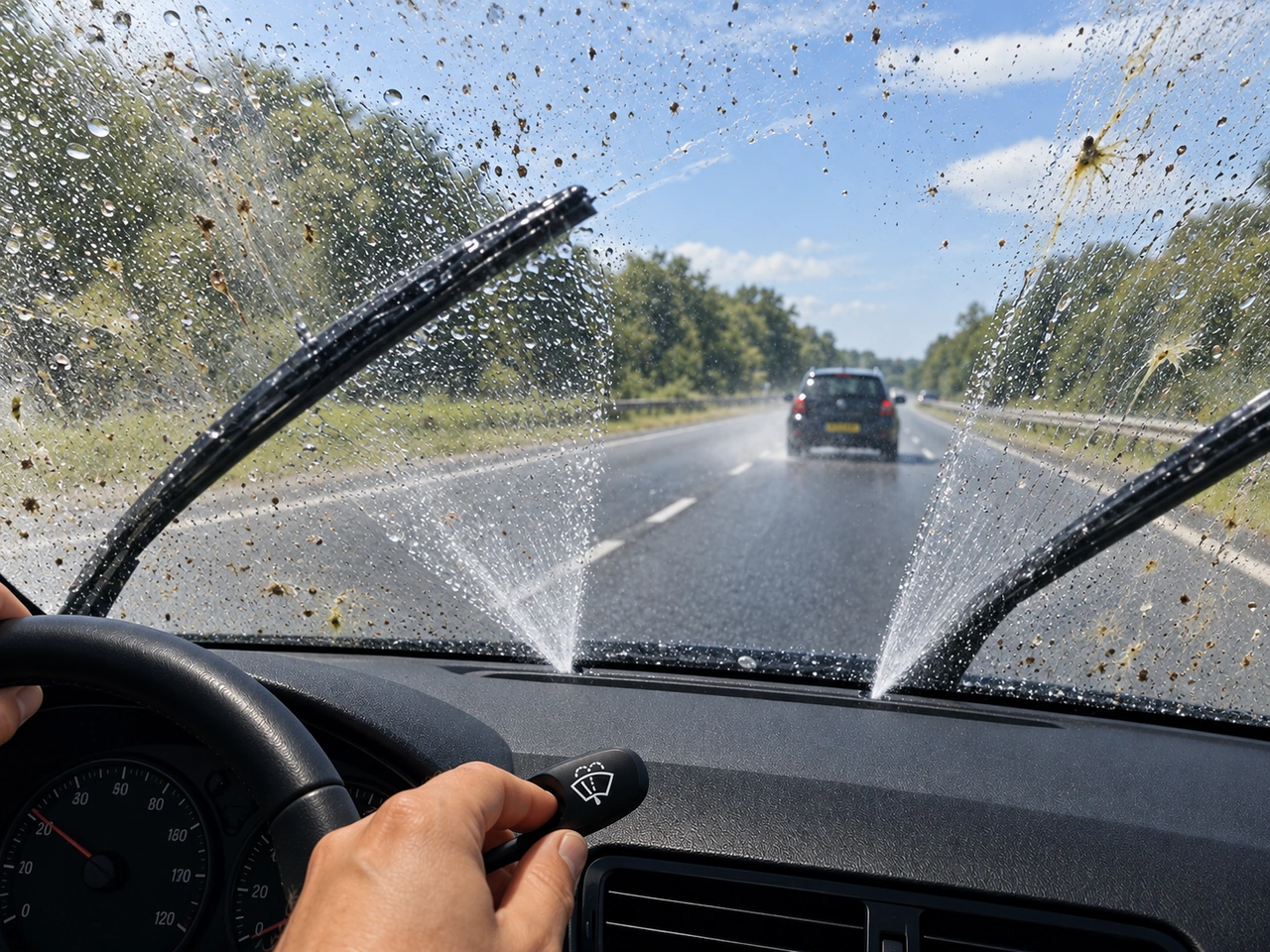
Why should the windscreen washer reservoir contain suitable washer fluid?

153. Why should the windscreen washer reservoir contain suitable washer fluid?

Washer fluid is needed only in freezing weather.
✓ It helps remove dirt, salt, insects, and spray from the windscreen.
The reservoir needs fluid only when the windscreen is visibly dirty.
Plain water always cleans the windscreen just as well.

A clear windscreen is essential for safe observation. Suitable washer fluid helps clean the glass and may provide protection against freezing in cold conditions.

Windscreen washer-fluid reservoir in a vehicle
AI-generated by Rijbewijs-online.be • WCIT • CC BY-SA
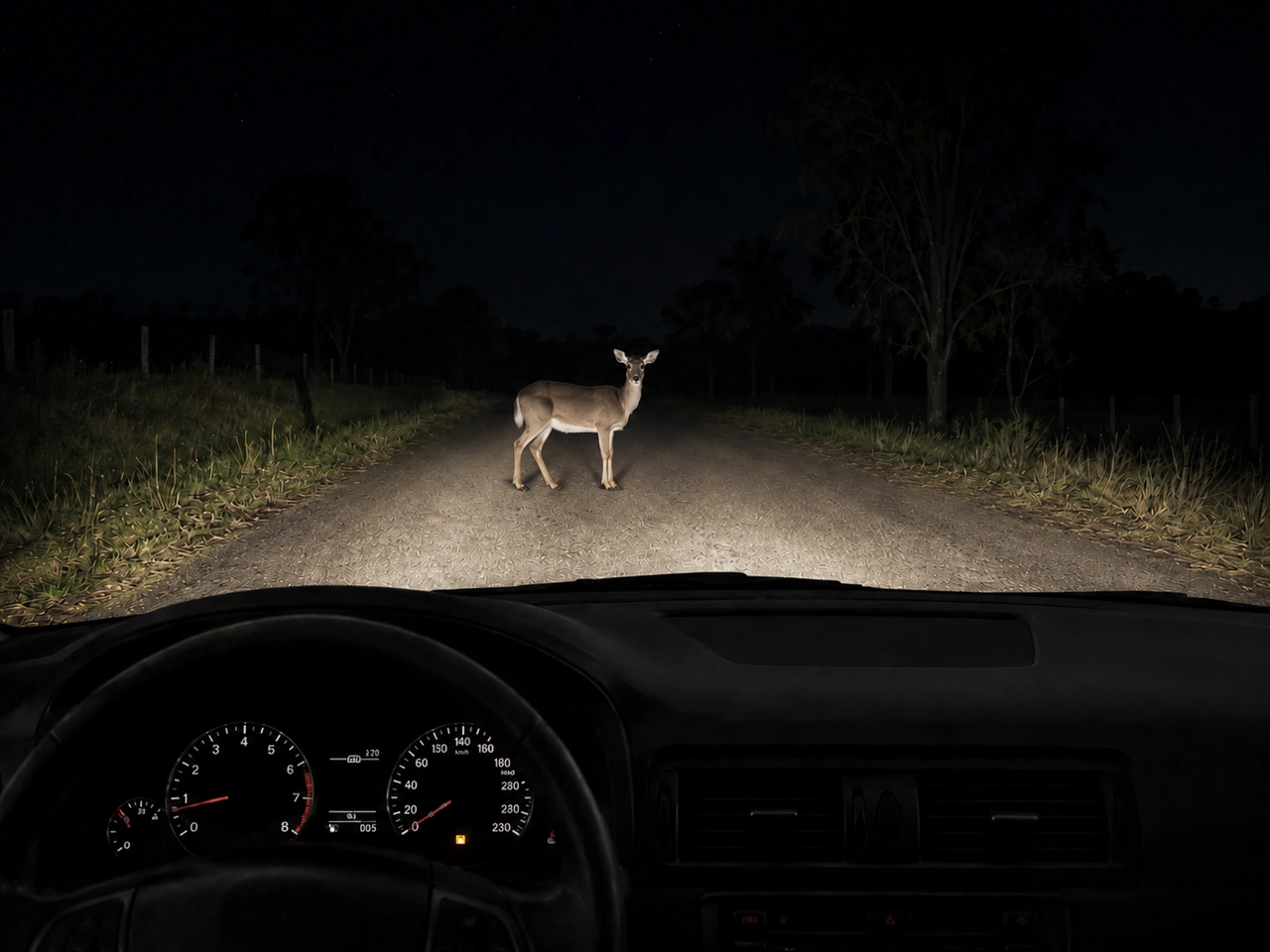
What should you do if an animal is standing on the road at night?

154. What should you do if an animal is standing on the road at night?

Sound your horn and continue at the same speed.
Drive around it immediately without slowing down.
Switch off your headlights as you approach.
✓ Slow down and be prepared to stop.

Animals may freeze, turn back, or move unpredictably when caught in vehicle headlights.

Animal standing on a road at night
AI-generated by Rijbewijs-online.be • WCIT • CC BY-SA
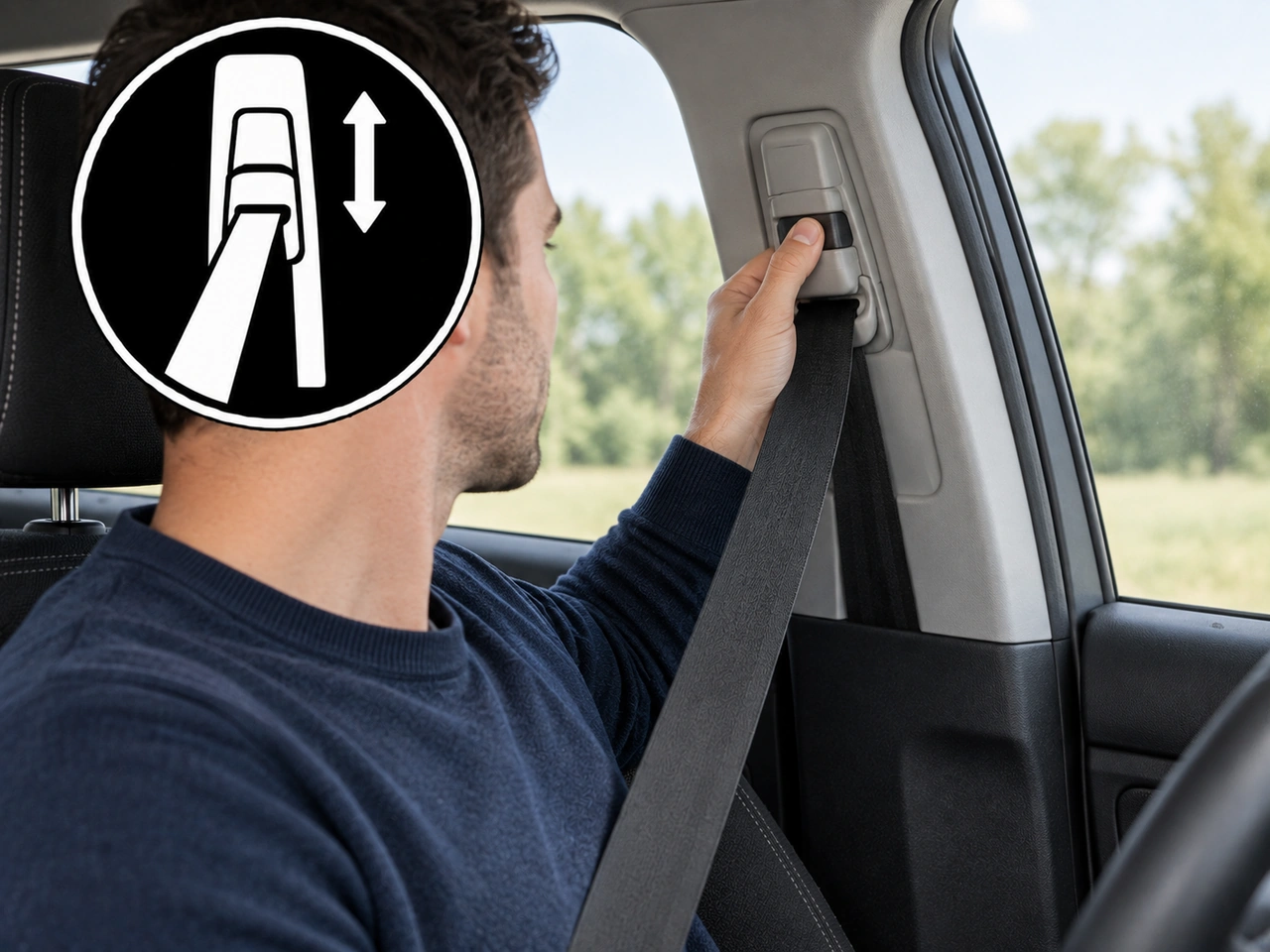
Why should the seat-belt height be adjusted correctly?

155. Why should the seat-belt height be adjusted correctly?

To increase the length of the lap belt.
To prevent the seat from moving.
✓ To position the shoulder belt correctly across the body.
To make the belt easier to unfasten.

The seat-belt height adjustment helps position the shoulder belt correctly across the chest and shoulder. It should not run across the neck or under the arm.

Height adjustment for the shoulder section of a seat belt
AI-generated by Rijbewijs-online.be • WCIT • CC BY-SA
What should you check shortly after securing a load?

156. What should you check shortly after securing a load?

Loosen the restraints slightly after the load has settled.
Increase speed briefly to test the restraints.
Check the load only when you reach your destination.
✓ Stop safely and check that the restraints are still tight.

Loads and straps may settle or loosen after the journey begins. Recheck them at a safe stopping place.

Rechecking straps securing a vehicle's load
AI-generated by Rijbewijs-online.be • WCIT • CC BY-SA
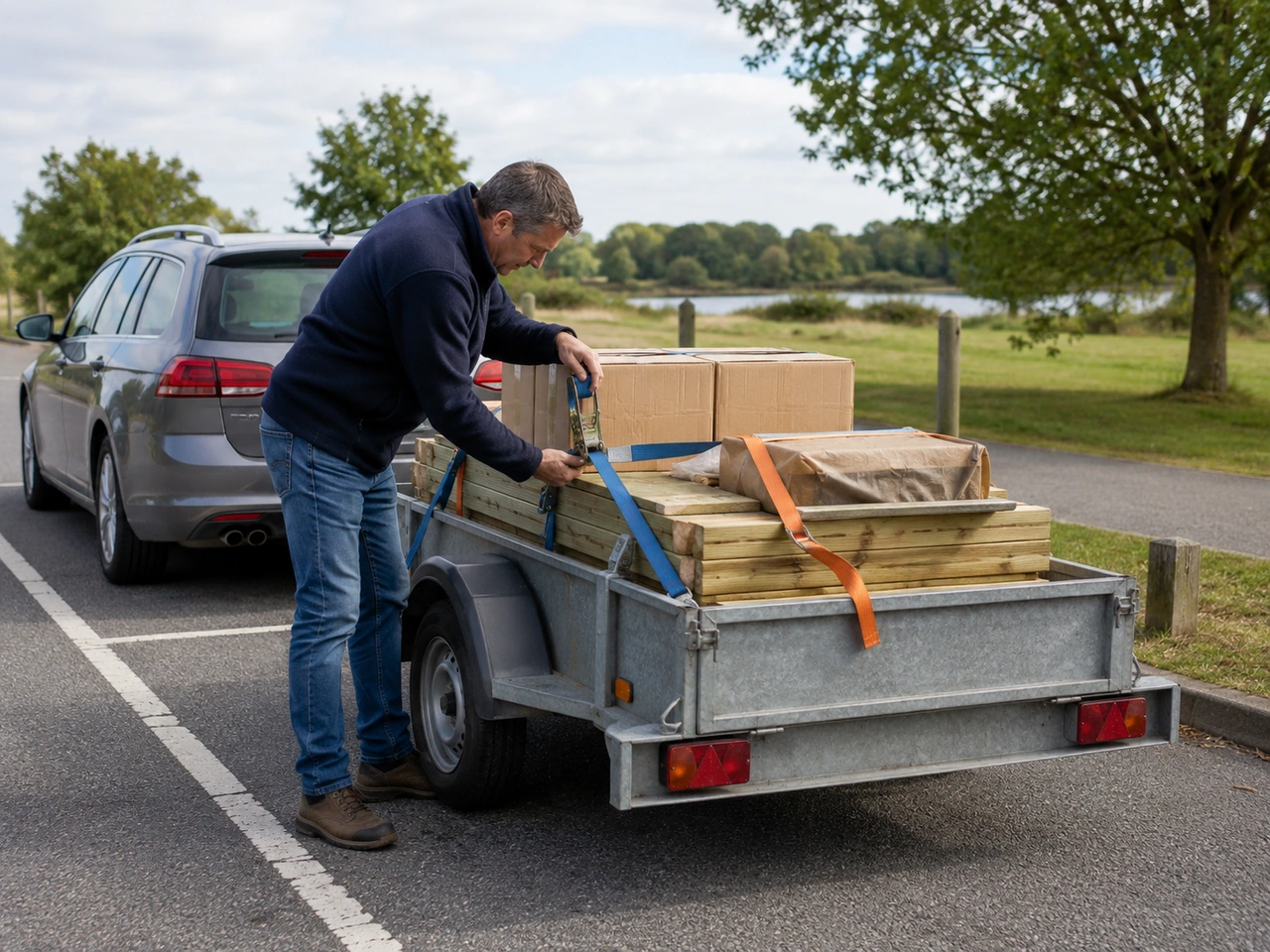
Why should you not ignore temporary speed limits?

157. Why should you not ignore temporary speed limits?

✓ They are used to protect people and manage hazards.
They apply only when traffic is congested.
They can be ignored when the road looks clear.
They apply only to road workers.

Temporary speed limits may be used near roadworks, accidents, events, or dangerous conditions. They help keep traffic safe.

Temporary speed-limit sign at roadworks
AI-generated by Rijbewijs-online.be • WCIT • CC BY-SA
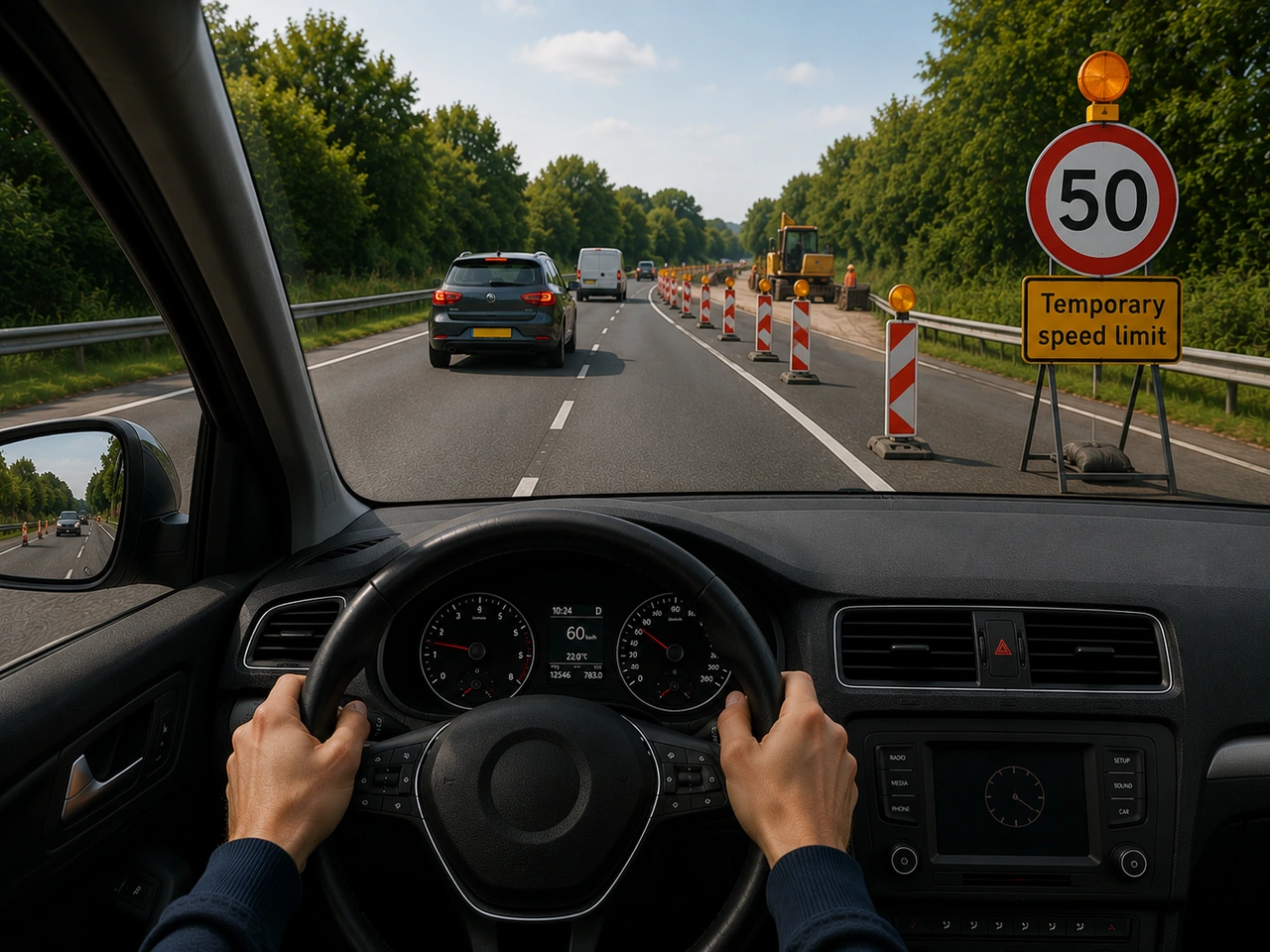
What should you do if one of your tyres suddenly bursts while driving?

158. What should you do if one of your tyres suddenly bursts while driving?

Release the steering wheel and let the vehicle slow itself.
Pump the brake pedal repeatedly.
Accelerate briefly to stabilise the vehicle.
✓ Hold the steering wheel firmly and slow down gradually.

A tyre burst can make the vehicle unstable. Hold the wheel firmly, avoid sudden braking or steering, and slow down gradually.

Vehicle tyre damaged by a sudden blowout
AI-generated by Rijbewijs-online.be • WCIT • CC BY-SA
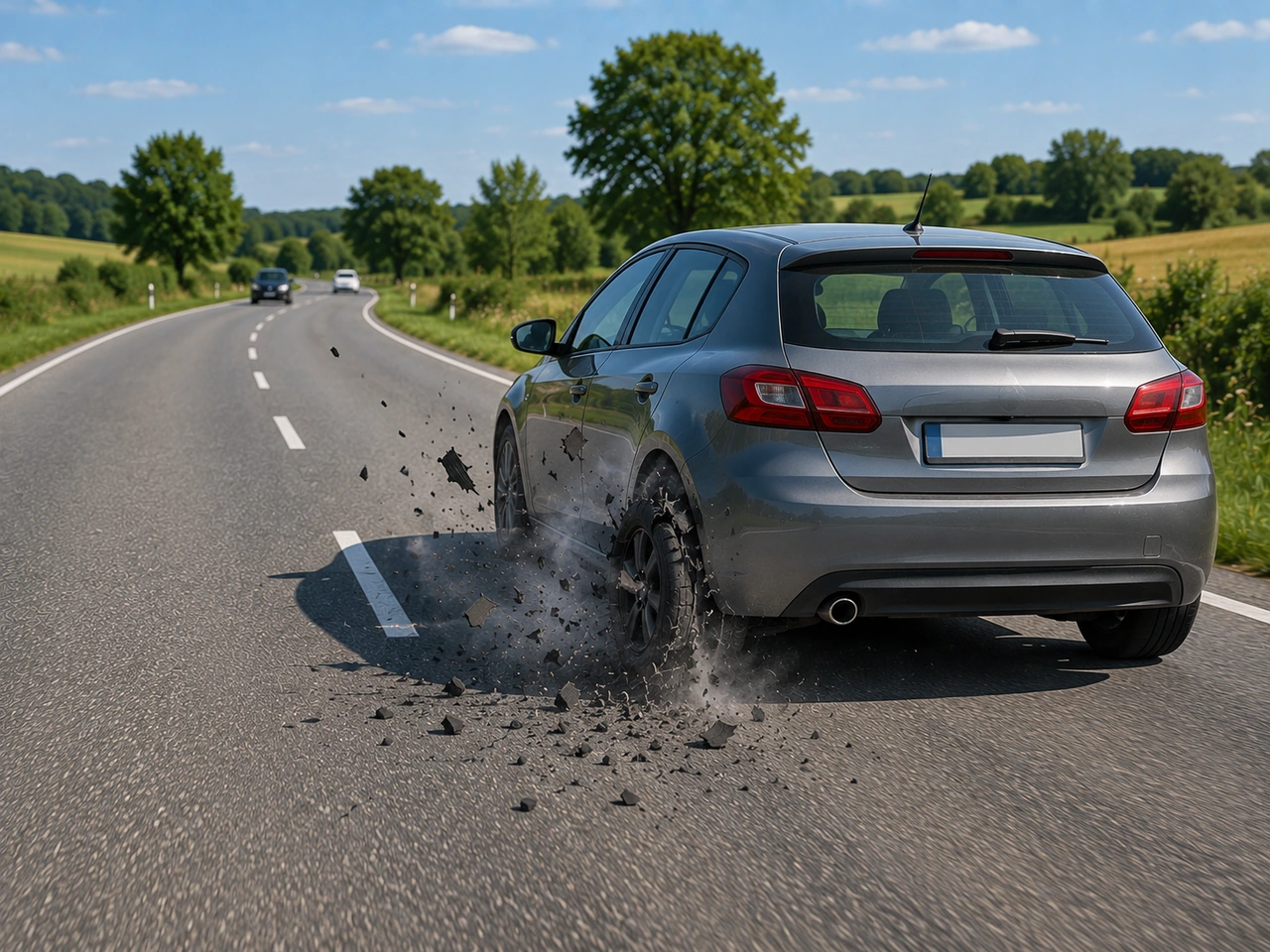
Why should you not overtake near the top of a hill?

159. Why should you not overtake near the top of a hill?

Speed limits always decrease near hill crests.
Vehicles ahead always have priority on hills.
Hilltops usually have a slippery road surface.
✓ You may not see oncoming traffic or hidden hazards.

Near the top of a hill, your view ahead is limited. Oncoming vehicles, cyclists, pedestrians, or obstacles may be hidden.

Hill crest hiding the road ahead
AI-generated by Rijbewijs-online.be • WCIT • CC BY-SA
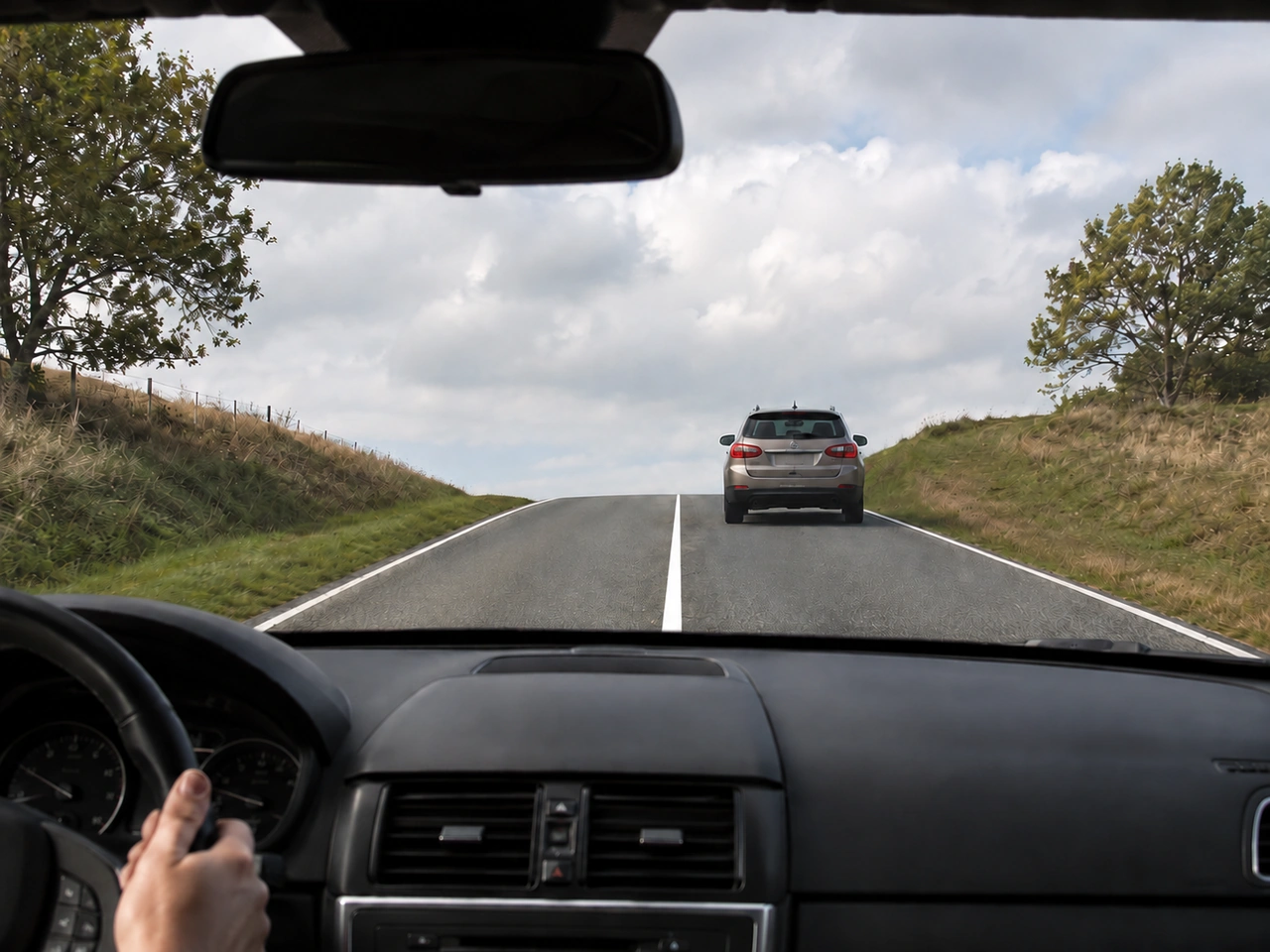
What should you do at a railway crossing when the barriers are closing?

160. What should you do at a railway crossing when the barriers are closing?

Cross quickly if you cannot see a train.
Stop only when the barriers are fully lowered.
Follow the vehicle ahead across the tracks.
✓ Stop and wait until the barriers are completely open.

Never enter a railway crossing when barriers are closing or warning signals are active. Stop and wait until it is safe.

Barriers closing at a railway crossing
AI-generated by Rijbewijs-online.be • WCIT • CC BY-SA
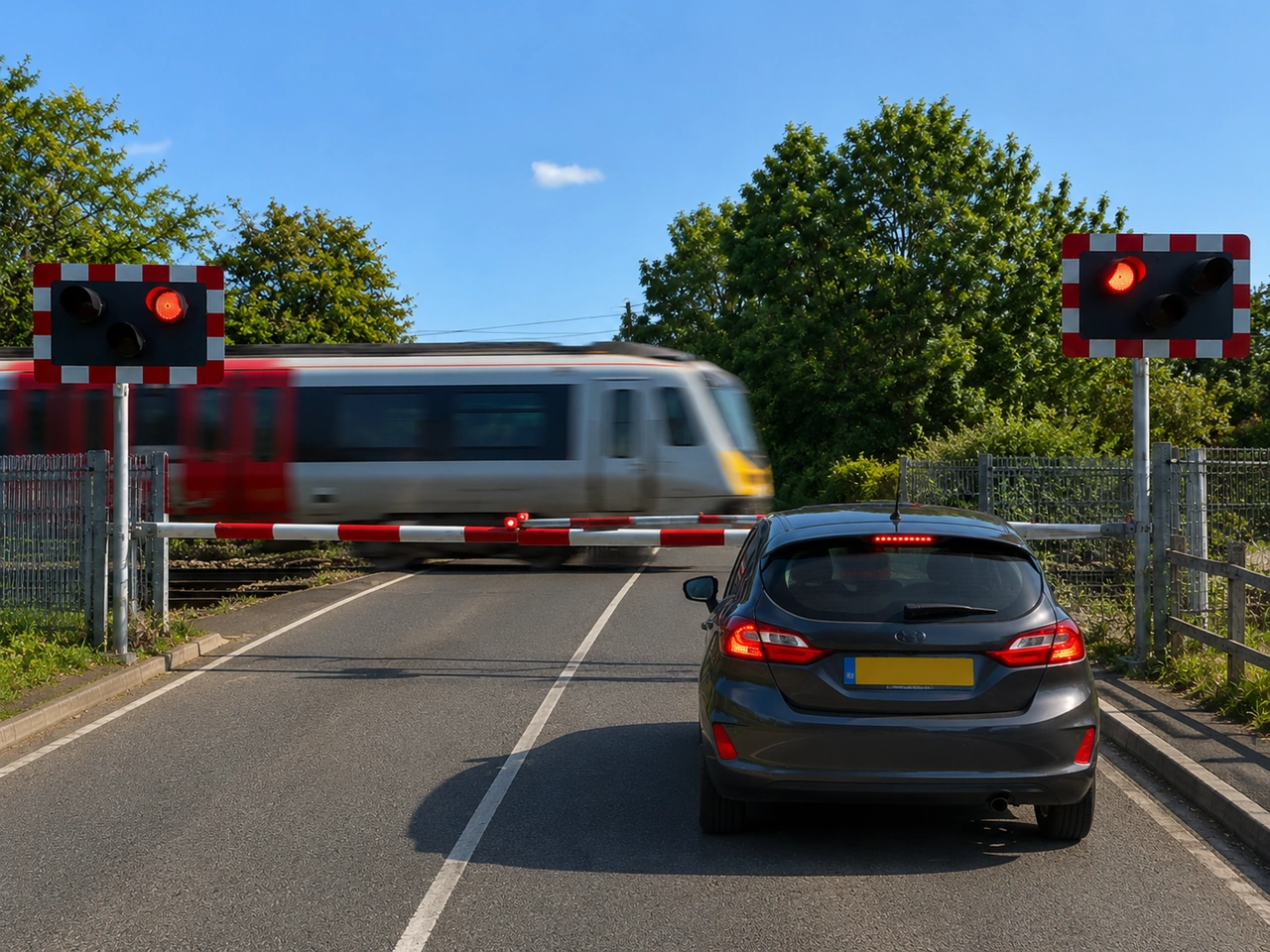
What should you do before a long journey to reduce the risk of driver fatigue?

161. What should you do before a long journey to reduce the risk of driver fatigue?

Plan to drive through the night.
Keep the cabin as warm as possible.
✓ Get enough sleep before starting the journey.
Drink several energy drinks before leaving.

Getting enough sleep before a long journey helps reduce the risk of driver fatigue. Plan breaks in advance and avoid starting a long drive when you are already tired.

Rest and preparation before a long drive
AI-generated by Rijbewijs-online.be • WCIT • CC BY-SA

Speed limits only apply when there is heavy traffic.

162. Speed limits only apply when there is heavy traffic.

✓ False.
True.

Speed limits apply at all times unless a different limit is clearly indicated.

Speed-limit sign beside a road
AI-generated by Rijbewijs-online.be • WCIT • CC BY-SA
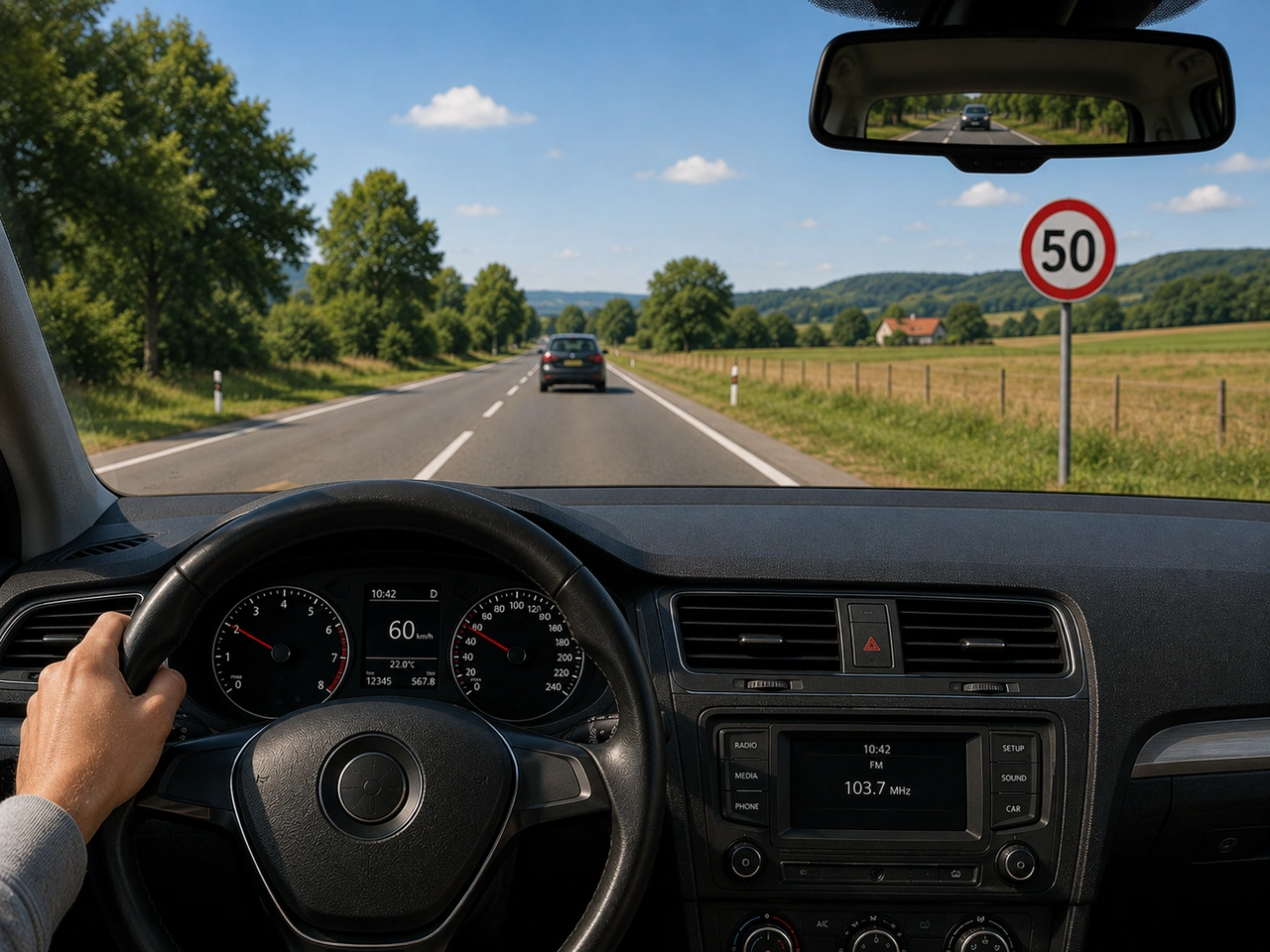
Why should you avoid remaining beside a large vehicle on a motorway?

163. Why should you avoid remaining beside a large vehicle on a motorway?

Large vehicles cannot change lanes at motorway speeds.
✓ You may remain in its blind spot and have less room to escape.
Large vehicles always travel more slowly than cars.
Their tyres may reduce the motorway speed limit.

Large vehicles have significant blind spots. Avoid travelling alongside them longer than necessary.

Vehicle alongside a large vehicle on a motorway
AI-generated by Rijbewijs-online.be • WCIT • CC BY-SA
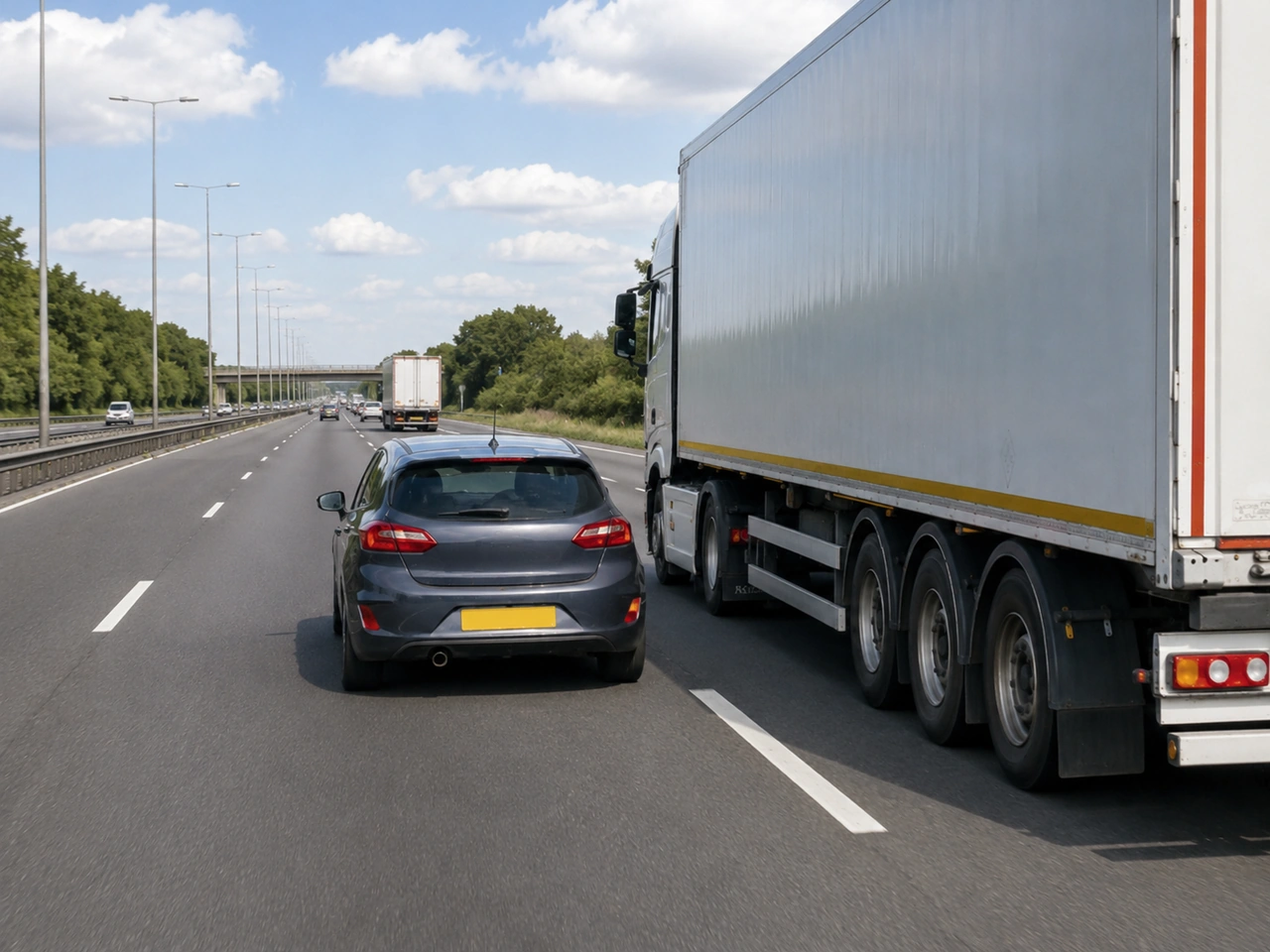
What is the purpose of the anti-dazzle control on the rear-view mirror?

164. What is the purpose of the anti-dazzle control on the rear-view mirror?

To enlarge the view behind.
To activate the reversing camera.
✓ To reduce glare from headlights behind.
To heat the rear window.

The anti-dazzle setting reduces glare from the headlights of vehicles behind, helping the driver maintain a clear view without being dazzled.

Anti-dazzle control on an interior rear-view mirror
AI-generated by Rijbewijs-online.be • WCIT • CC BY-SA
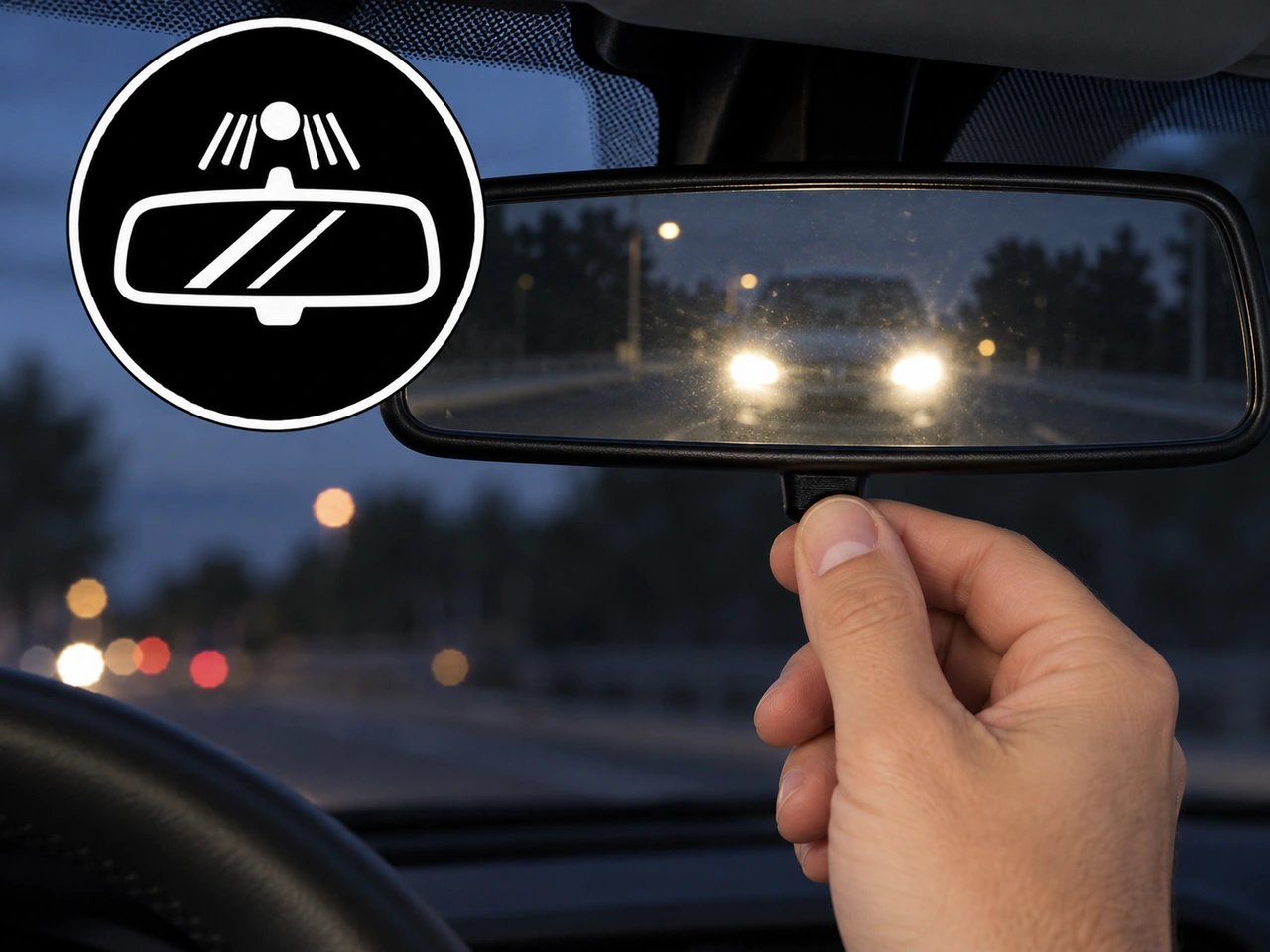
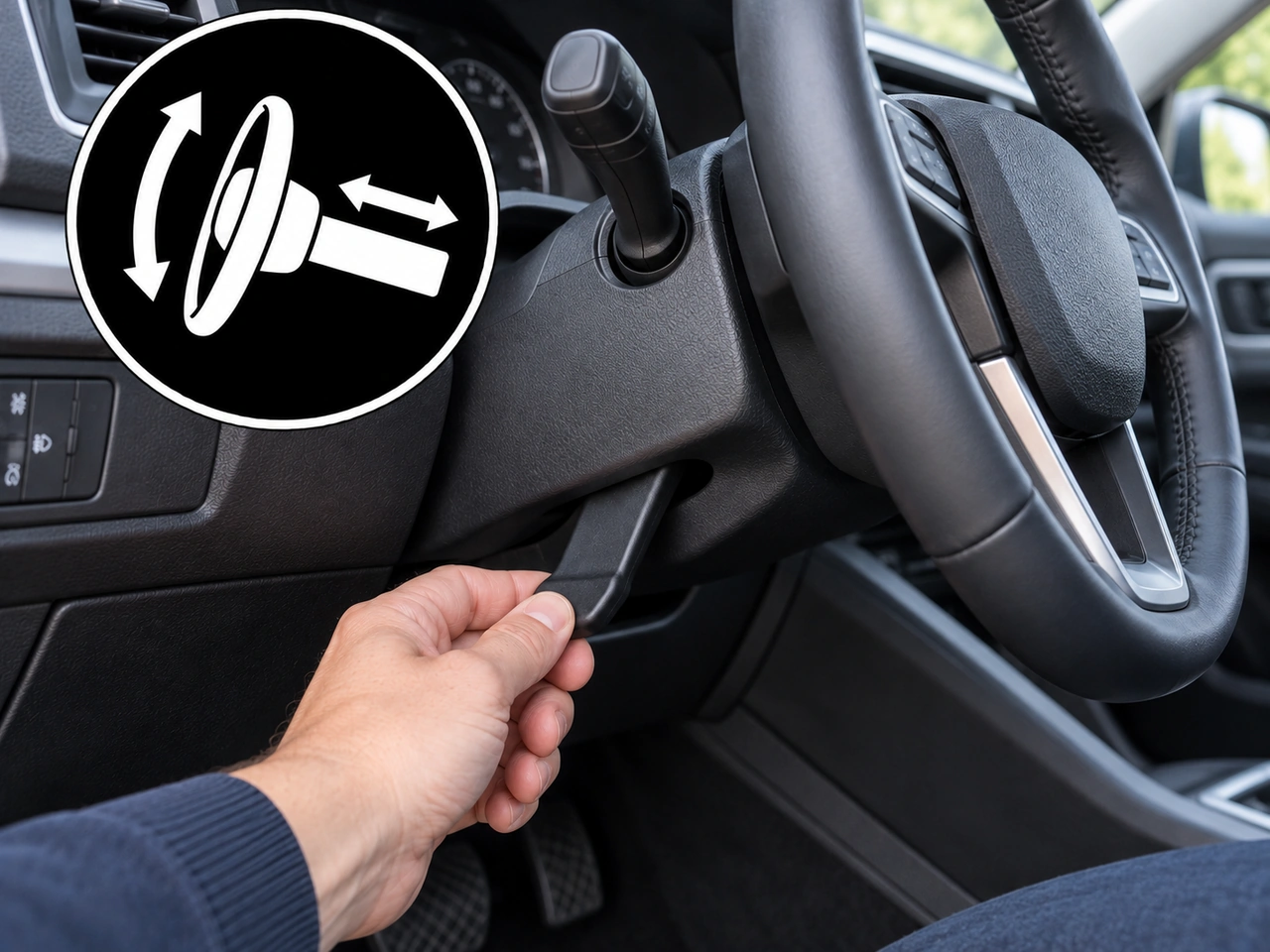
What does this vehicle-control symbol indicate?

165. What does this vehicle-control symbol indicate?

Power-steering control.
Cruise control.
Exterior mirror adjustment.
✓ Steering-wheel adjustment.

This control adjusts the position of the steering wheel. Depending on the vehicle, the steering wheel may be moved up or down and forwards or backwards to obtain a safe and comfortable driving position.

Control for adjusting the steering-wheel position
AI-generated by Rijbewijs-online.be • WCIT • CC BY-SA
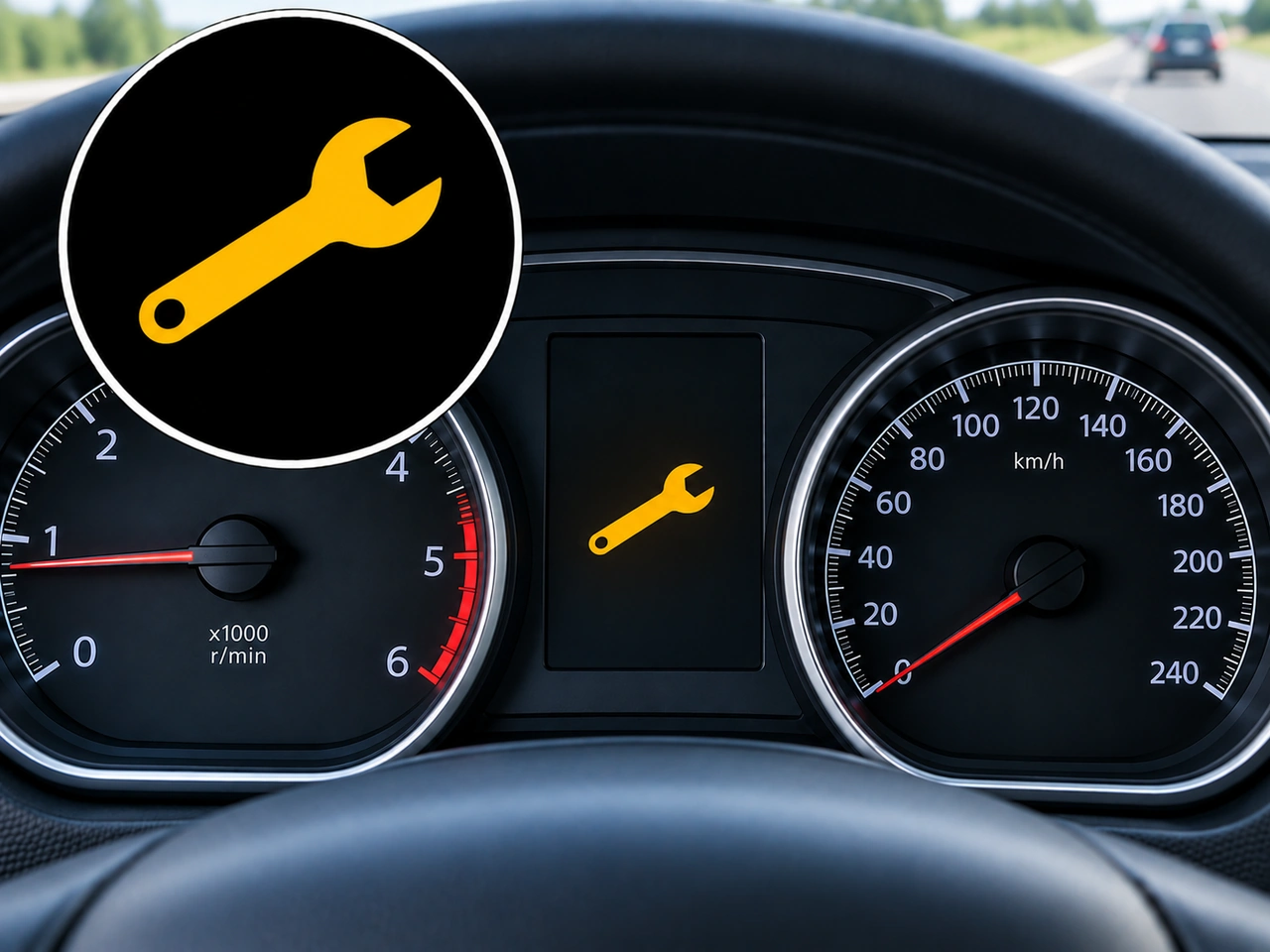
What does this dashboard symbol indicate?

166. What does this dashboard symbol indicate?

✓ Service or maintenance required.
Engine-management warning.
Charging-system warning.
Power-steering warning.

This symbol indicates that the vehicle requires servicing or maintenance. The exact meaning and required maintenance can vary between vehicles, so check the vehicle information display or owner's manual.

Service reminder symbol on the dashboard
AI-generated by Rijbewijs-online.be • WCIT • CC BY-SA
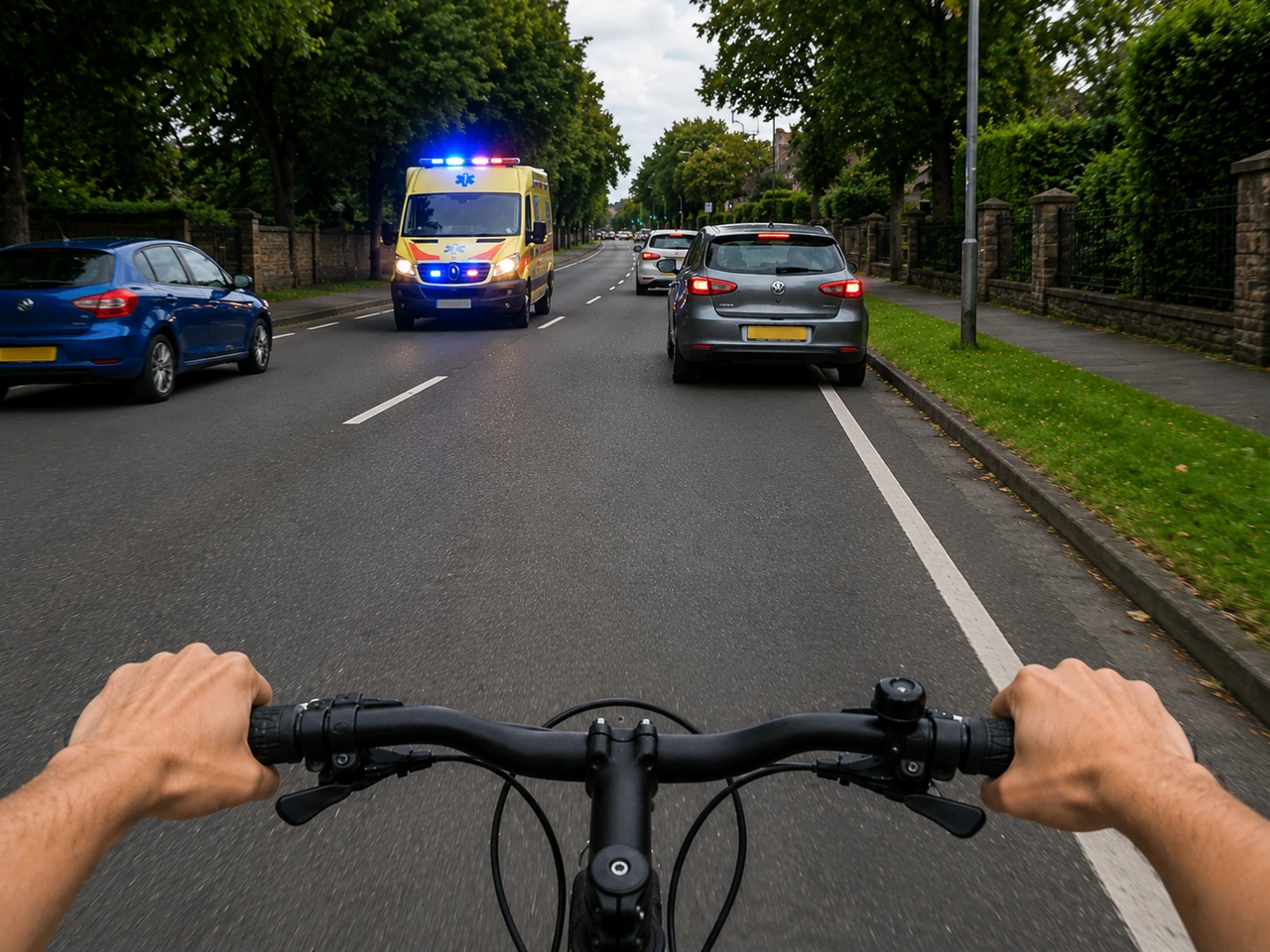
What should cyclists do when an emergency vehicle with lights and siren approaches?

167. What should cyclists do when an emergency vehicle with lights and siren approaches?

Keep riding normally and let the driver find a way past.
Move aside quickly without checking around you.
✓ Stay alert and move to a safe position without obstructing it.
Stop immediately, even if you are in the traffic lane.

Emergency vehicles need a clear route. Move predictably and stop only where doing so is safe.

Cyclist near an approaching emergency vehicle
AI-generated by Rijbewijs-online.be • WCIT • CC BY-SA
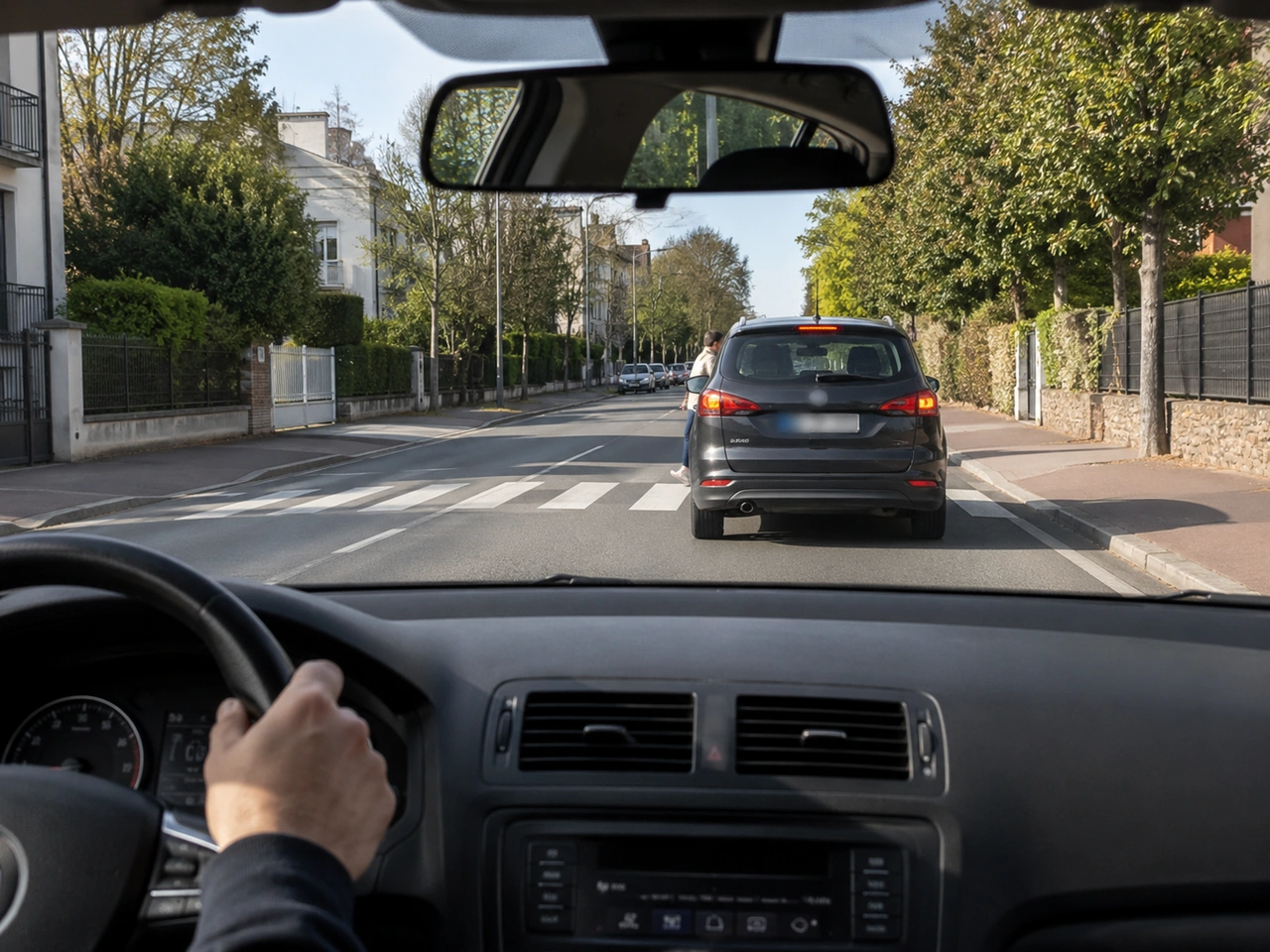
Why should you avoid overtaking when approaching a pedestrian crossing?

168. Why should you avoid overtaking when approaching a pedestrian crossing?

Crossing markings can make lane changes more difficult.
✓ A pedestrian may be hidden by the vehicle ahead.
The crossing may make it harder to judge your speed.
The road surface is usually more slippery near crossings.

A vehicle slowing or stopping near a pedestrian crossing may be hiding someone who is crossing. Overtaking could put you directly into the pedestrian's path.

Vehicles approaching a pedestrian crossing
AI-generated by Rijbewijs-online.be • WCIT • CC BY-SA
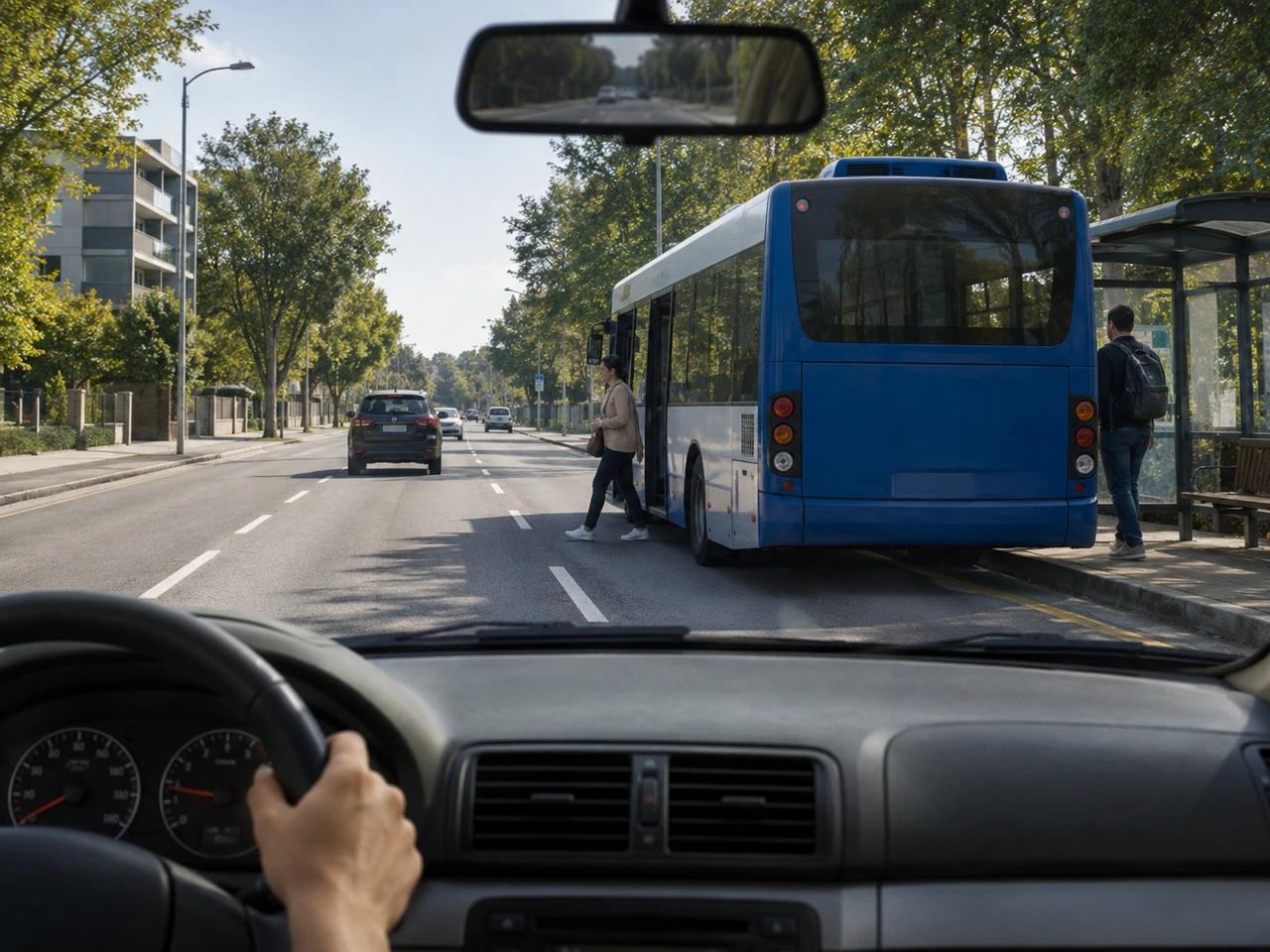
Why should you be careful when driving beside a bus at a stop?

169. Why should you be careful when driving beside a bus at a stop?

The road surface is usually more slippery near bus stops.
A stopped bus always has priority over passing traffic.
Vehicles beside a bus must always stop and wait.
✓ Passengers may step out or cross near the bus.

Stopped buses can hide pedestrians, and passengers may cross unexpectedly. Slow down and be ready to react.

Vehicle passing a bus at a stop
AI-generated by Rijbewijs-online.be • WCIT • CC BY-SA
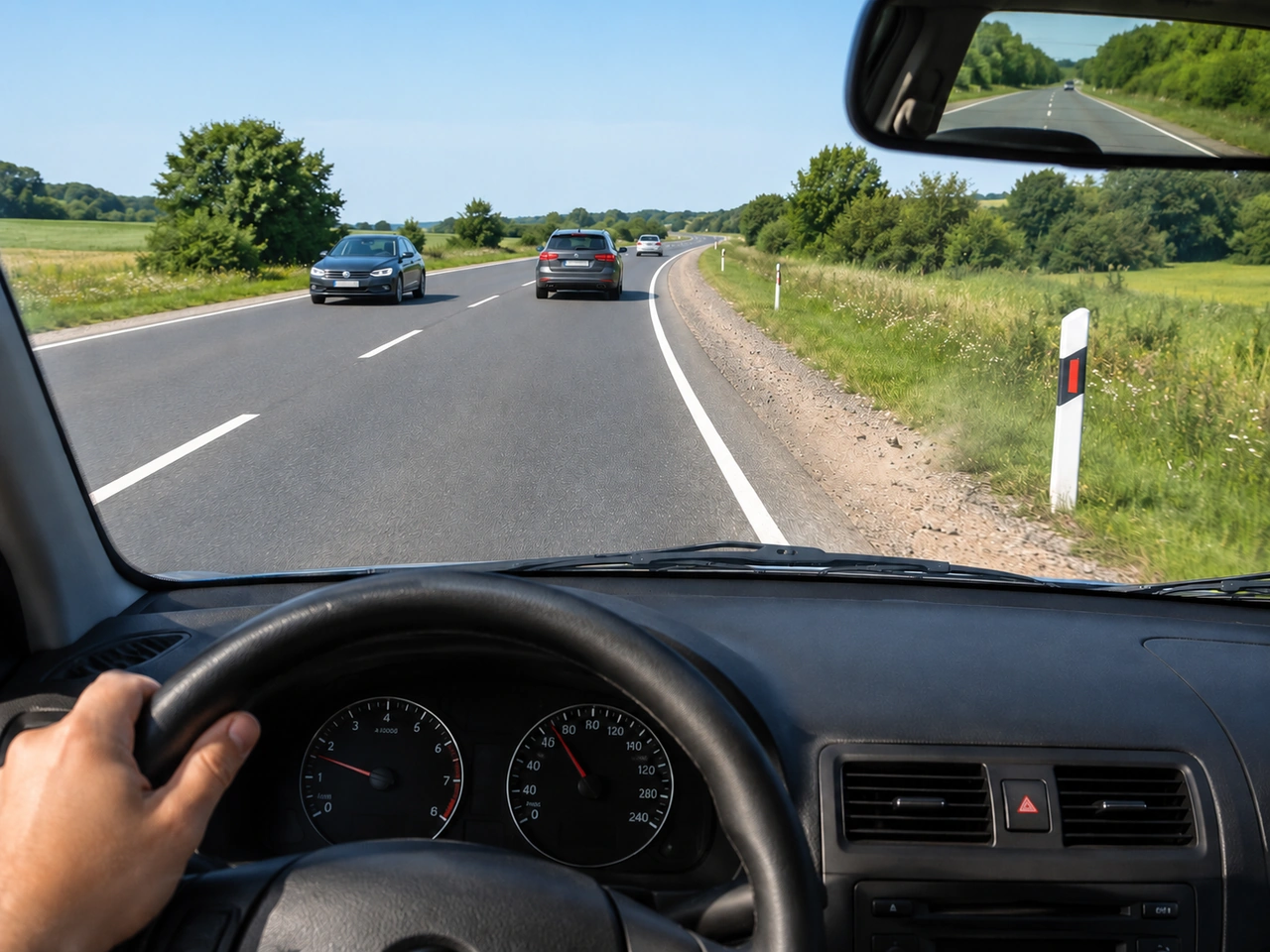
What should you do if your vehicle begins to drift onto the shoulder?

170. What should you do if your vehicle begins to drift onto the shoulder?

✓ Ease off the accelerator and steer back smoothly when safe.
Accelerate slightly before steering back onto the road.
Keep driving on the shoulder until the road becomes wider.
Steer back onto the road as quickly as possible.

If you drift onto the shoulder, avoid sudden steering or braking. Slow gently and return to the road smoothly when it is safe.

Vehicle drifting towards the road shoulder
AI-generated by Rijbewijs-online.be • WCIT • CC BY-SA
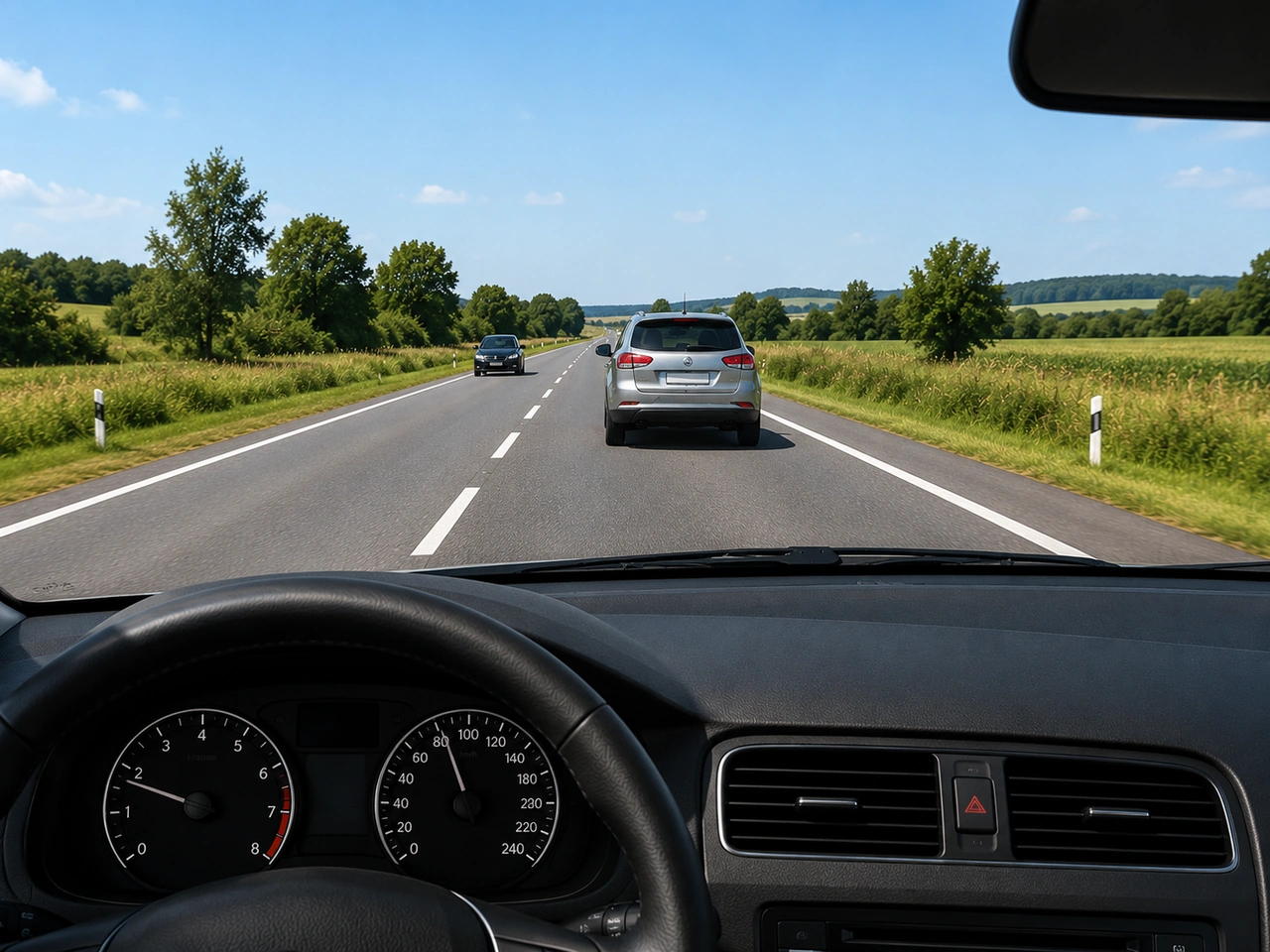
Why should you keep a safe following distance?

171. Why should you keep a safe following distance?

To reduce wear on the brakes.
To make overtaking easier.
✓ To have enough time to stop.
To make your vehicle easier to see ahead.

A safe following distance gives you enough time to react if the vehicle in front slows down or stops suddenly.

Gap between a vehicle and the traffic ahead
AI-generated by Rijbewijs-online.be • WCIT • CC BY-SA
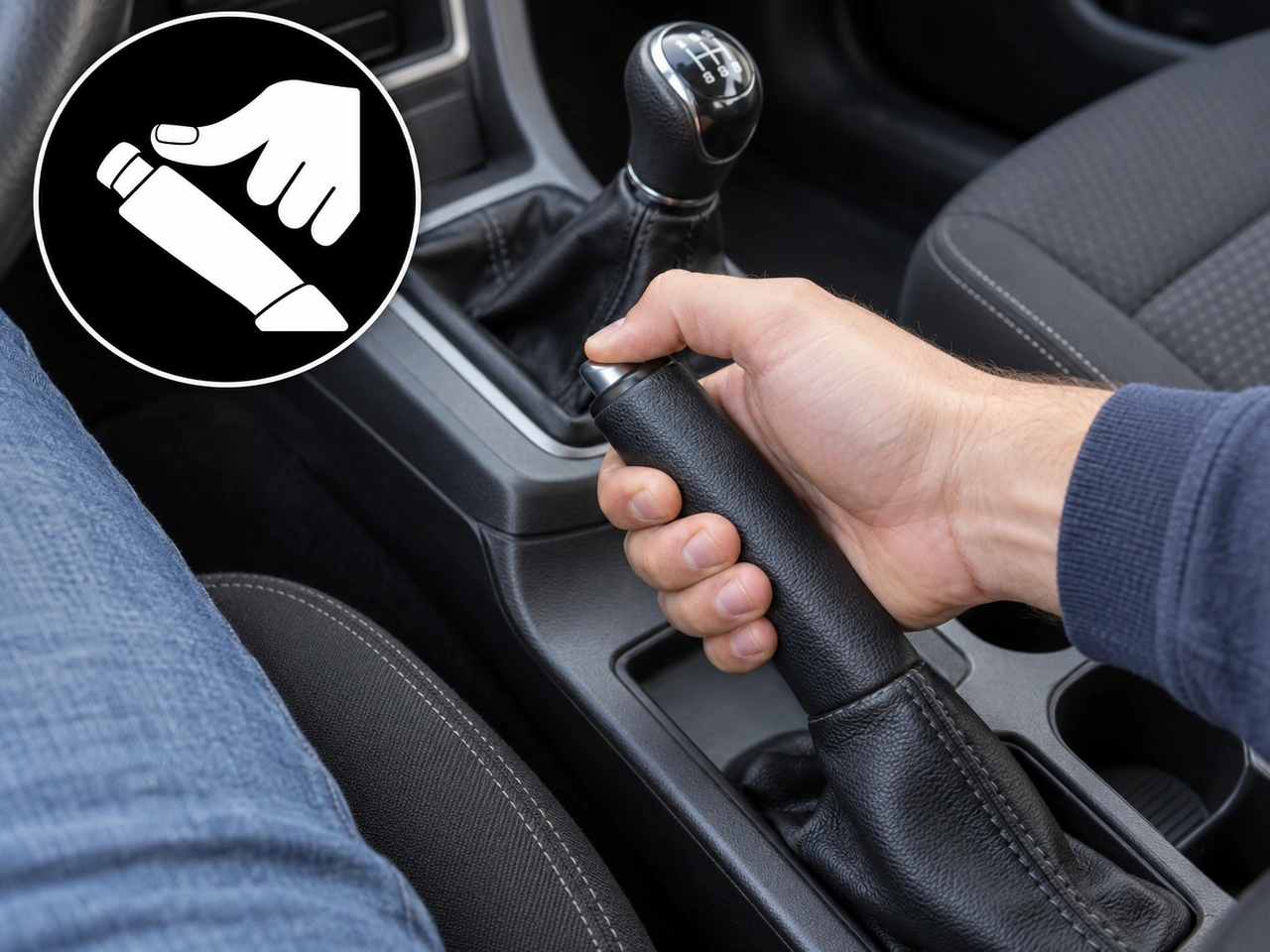
What is the button on a manual handbrake lever used for?

172. What is the button on a manual handbrake lever used for?

To select reverse gear.
To apply the service brakes.
✓ To release the handbrake mechanism.
To unlock the steering.

To release a manual handbrake, pull the lever up slightly, press and hold the release button, then lower the lever under control.

Release button on a manual handbrake lever
AI-generated by Rijbewijs-online.be • WCIT • CC BY-SA
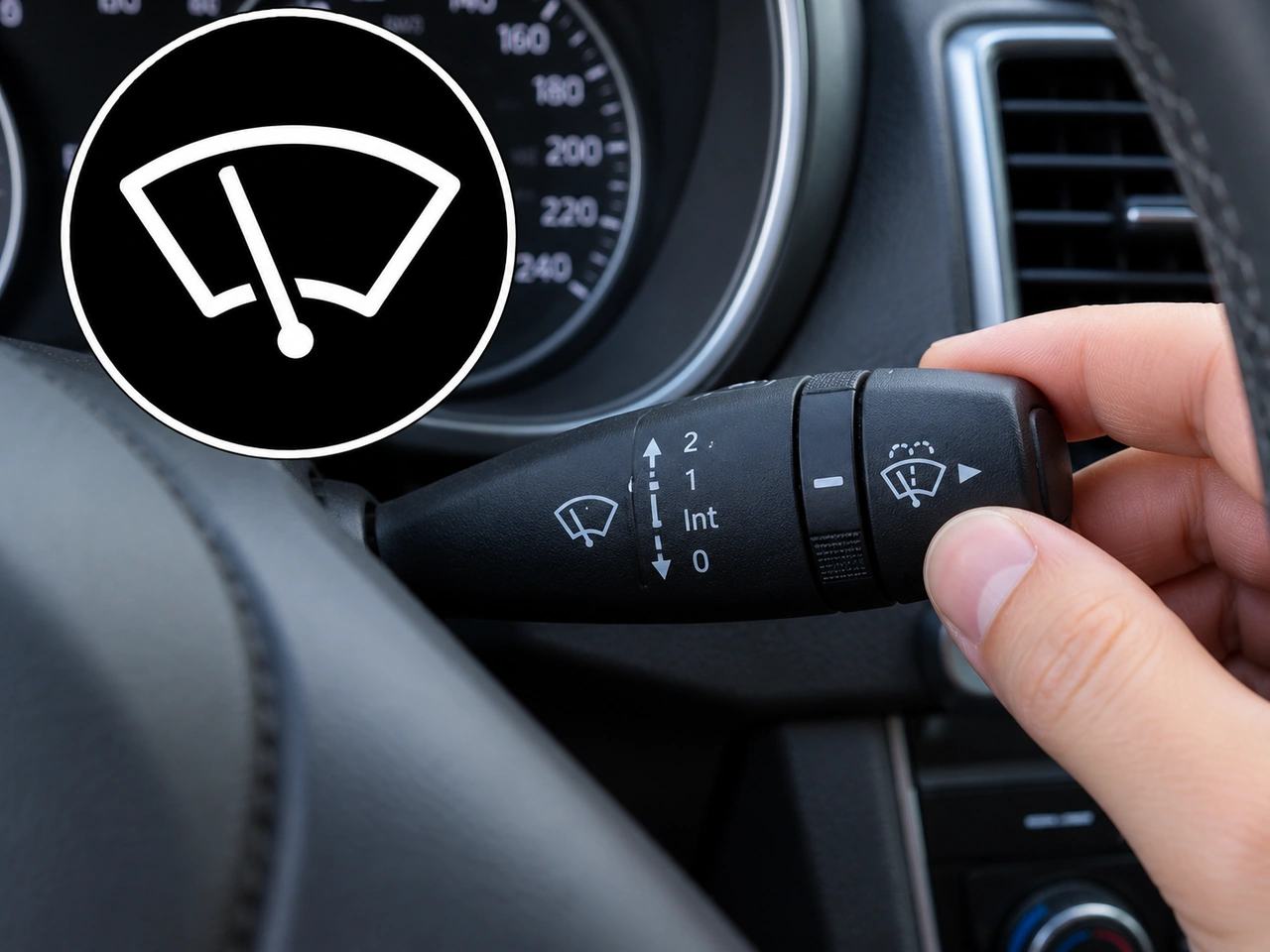
What does this vehicle-control symbol indicate?

173. What does this vehicle-control symbol indicate?

✓ Windscreen wiper speed.
Windscreen washer.
Automatic headlights.
Rear window demister.

This symbol relates to the windscreen wipers. The control allows the driver to select an appropriate wiping mode or speed for the amount of rain and visibility conditions.

Windscreen-wiper control for adjusting wiping speed
AI-generated by Rijbewijs-online.be • WCIT • CC BY-SA
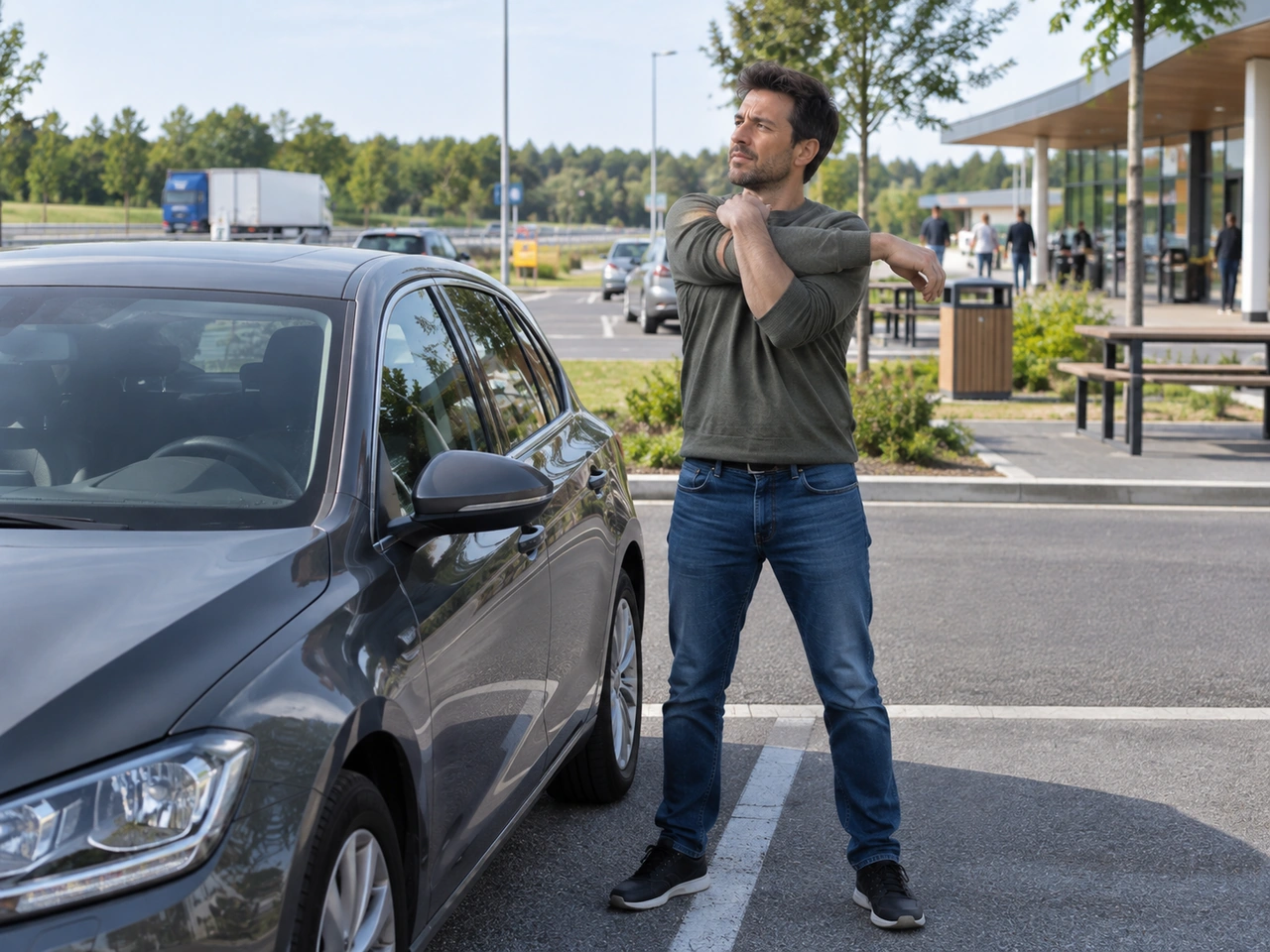
Why should you take regular breaks during a long journey?

174. Why should you take regular breaks during a long journey?

To make the journey feel shorter.
✓ To help prevent fatigue and maintain concentration.
To allow the engine to cool down.
To improve fuel quality.

Regular breaks during a long journey help reduce fatigue and maintain concentration. Do not wait until you are struggling to stay awake before stopping to rest.

Driver resting during a long journey
AI-generated by Rijbewijs-online.be • WCIT • CC BY-SA
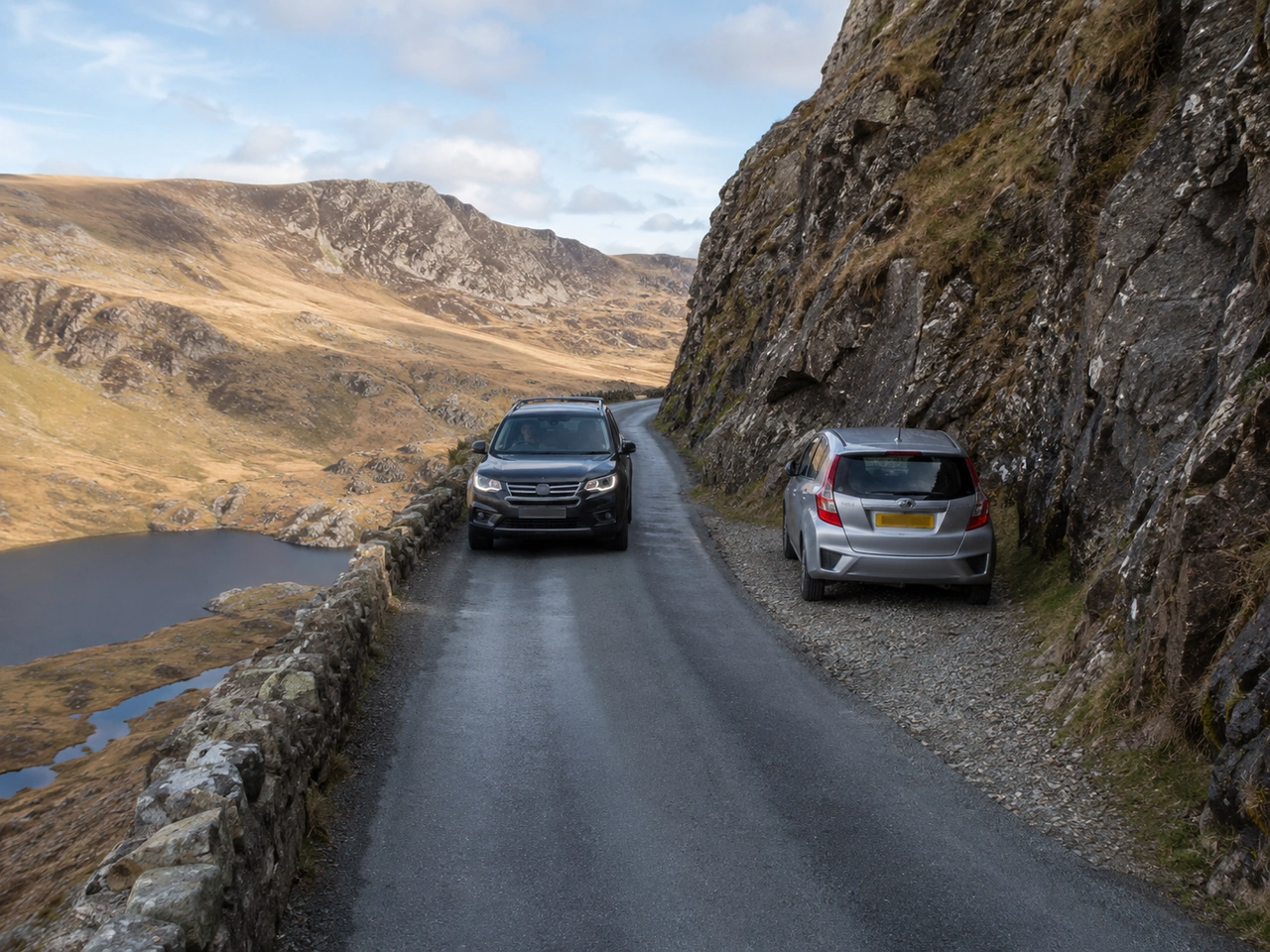
What should you do when meeting another vehicle on a narrow mountain road?

175. What should you do when meeting another vehicle on a narrow mountain road?

Maintain speed and pass as closely as possible.
✓ Slow down and use a safe passing place if necessary.
Stop where the road is narrowest and wait.
Move toward the centre so the other driver gives way.

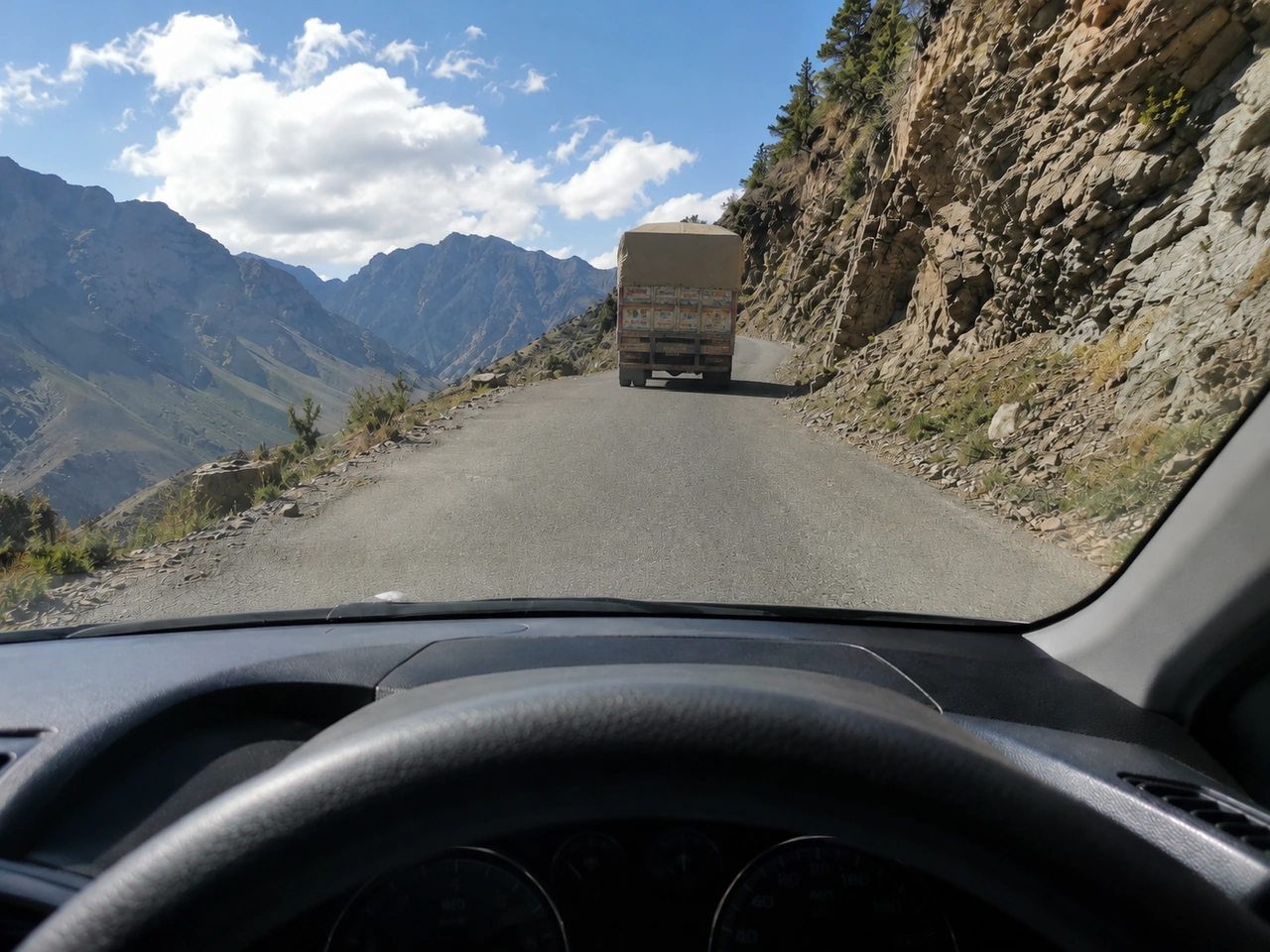
Narrow mountain roads may not provide enough space for two vehicles. Reduce speed and cooperate to pass safely.

Vehicles meeting on a narrow mountain road
AI-generated by Rijbewijs-online.be • WCIT • CC BY-SA
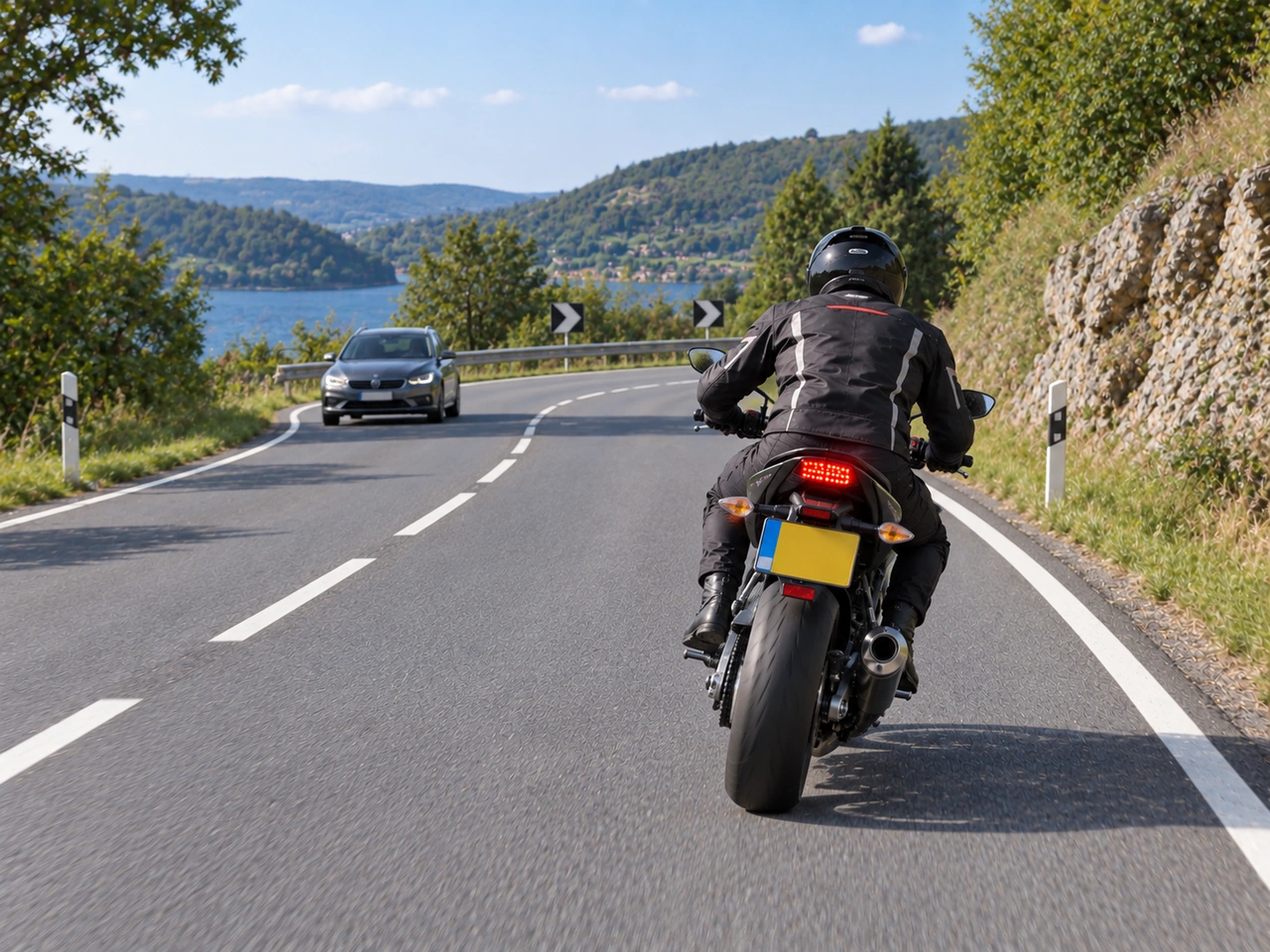
What should a motorcyclist do before entering a bend?

176. What should a motorcyclist do before entering a bend?

Accelerate before checking how sharp the bend is.
✓ Reduce speed before the bend and look through it.
Brake hard after beginning to lean.
Move close to the centre of the road.

Adjust your speed before entering the bend so you can steer smoothly and remain within a safe position. Look through the bend towards where you want to travel and be prepared for hazards that may be hidden from view.

Motorcyclist approaching a bend
AI-generated by Rijbewijs-online.be • WCIT • CC BY-SA
Should rear-seat passengers be securely restrained?

177. Should rear-seat passengers be securely restrained?

Yes, but only children need restraints in the rear.
✓ Yes, using seat belts or suitable child restraints as appropriate.
Only if the vehicle does not have rear airbags.
No, only front-seat occupants need to be restrained.

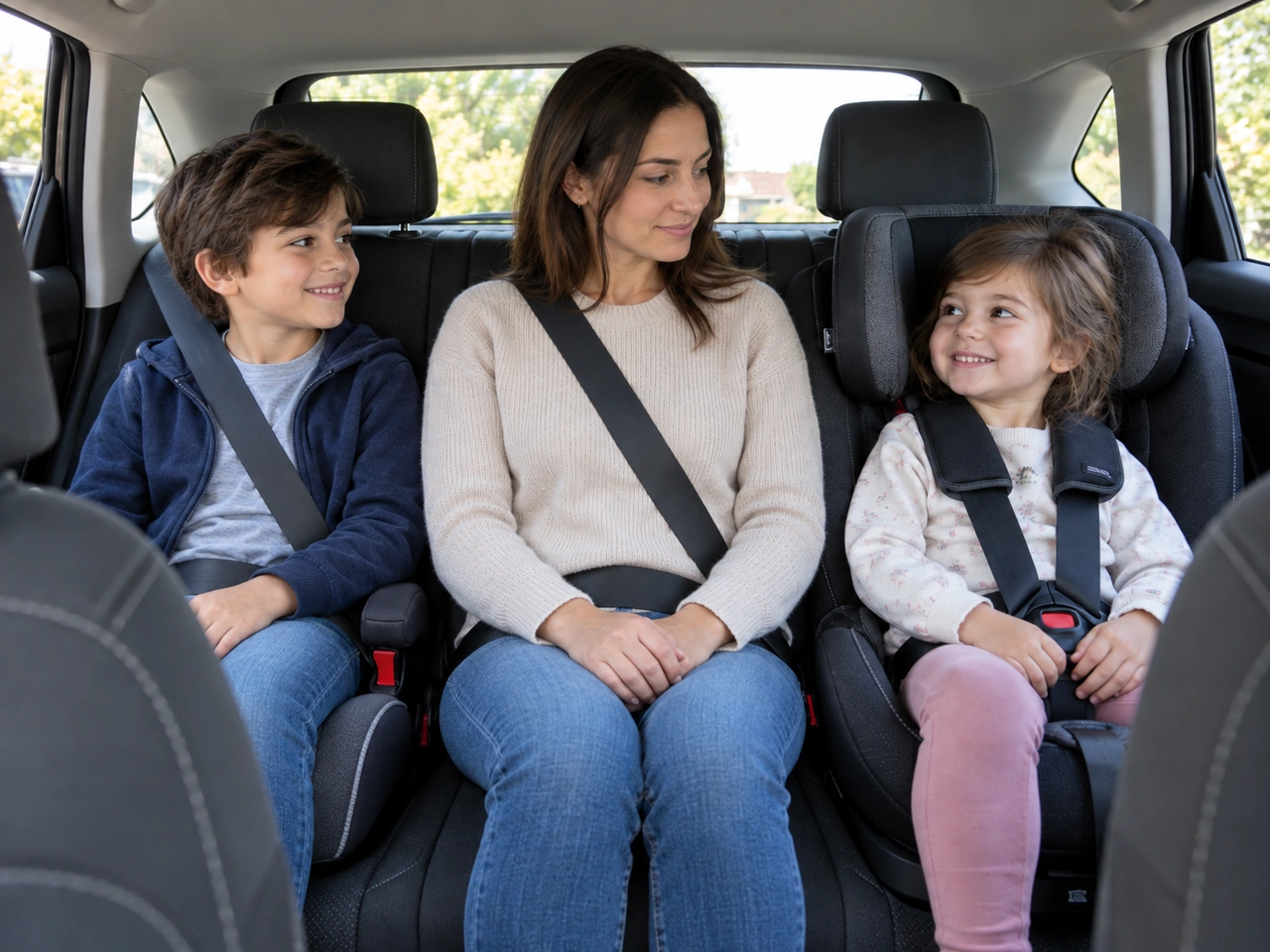
Rear-seat passengers should be securely restrained using seat belts or suitable child restraints as appropriate. Proper restraint reduces the risk of serious injury and prevents occupants from being thrown around or forwards in a collision.

Rear-seat passengers secured for a journey
AI-generated by Rijbewijs-online.be • WCIT • CC BY-SA
What should you do if your vehicle begins rolling backward on a steep incline?

178. What should you do if your vehicle begins rolling backward on a steep incline?

Accelerate while continuing to roll backward.
✓ Apply the brake, secure the vehicle, and restart carefully.
Open the door and step out.
Switch off the engine and restart immediately.

Stop the vehicle under control, apply the parking brake if necessary, and prepare to move away again safely.

Vehicle rolling backwards on a steep incline
AI-generated by Rijbewijs-online.be • WCIT • CC BY-SA
What should you do after hitting a deep pothole hard?

179. What should you do after hitting a deep pothole hard?

✓ Check for tyre or wheel damage when it is safe to stop.
Brake sharply to check whether the wheels are damaged.
Continue driving normally if the tyre still looks inflated.
Reduce the tyre pressure to absorb further bumps.

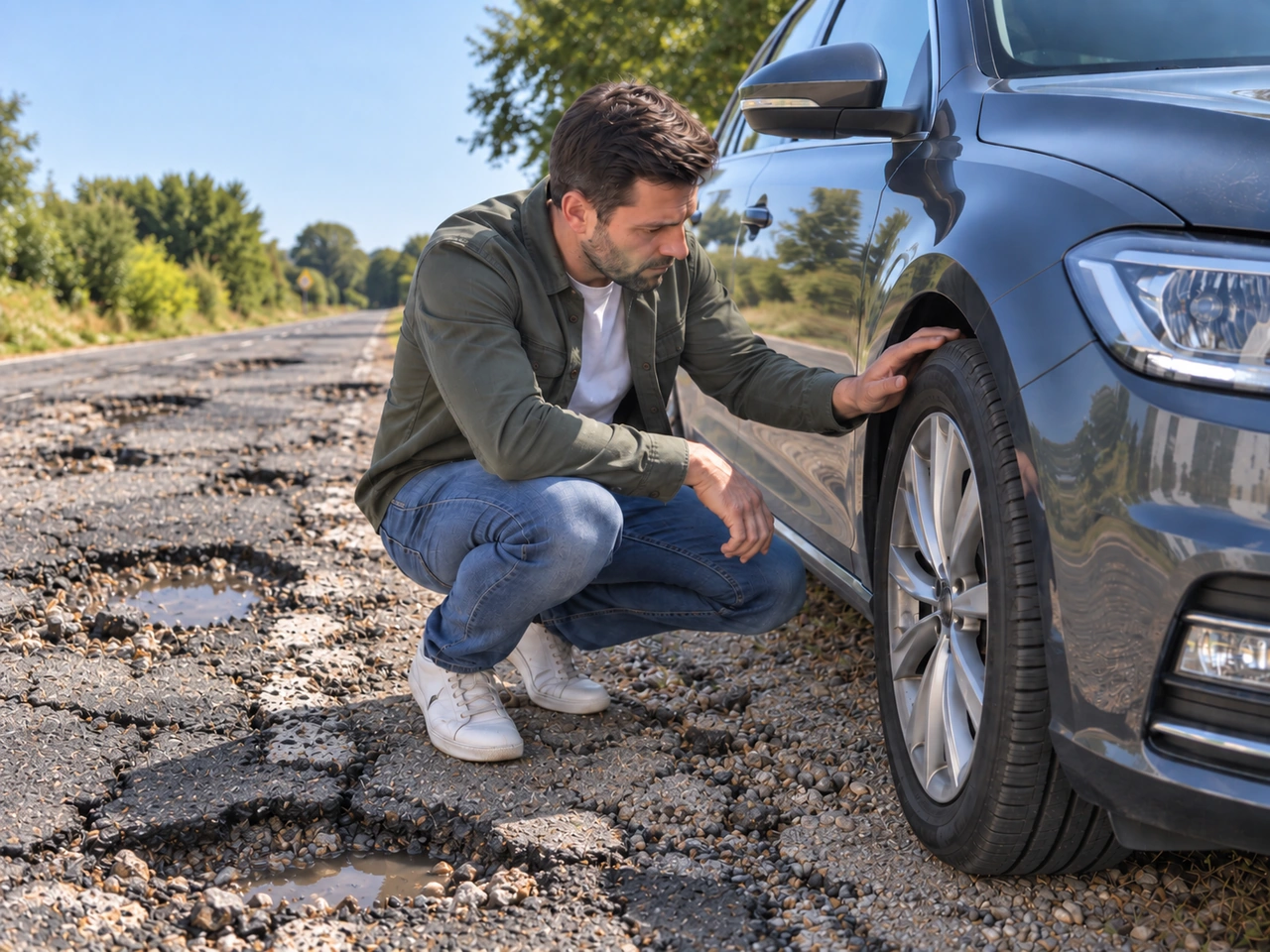
A hard impact with a pothole can damage tyres, wheel rims, steering, suspension, or wheel alignment. When it is safe to stop, inspect the tyres and wheels and pay attention to unusual vibration, pulling, or steering changes. Have the vehicle checked if you suspect damage.

Checking a tyre and wheel after hitting a pothole
AI-generated by Rijbewijs-online.be • WCIT • CC BY-SA
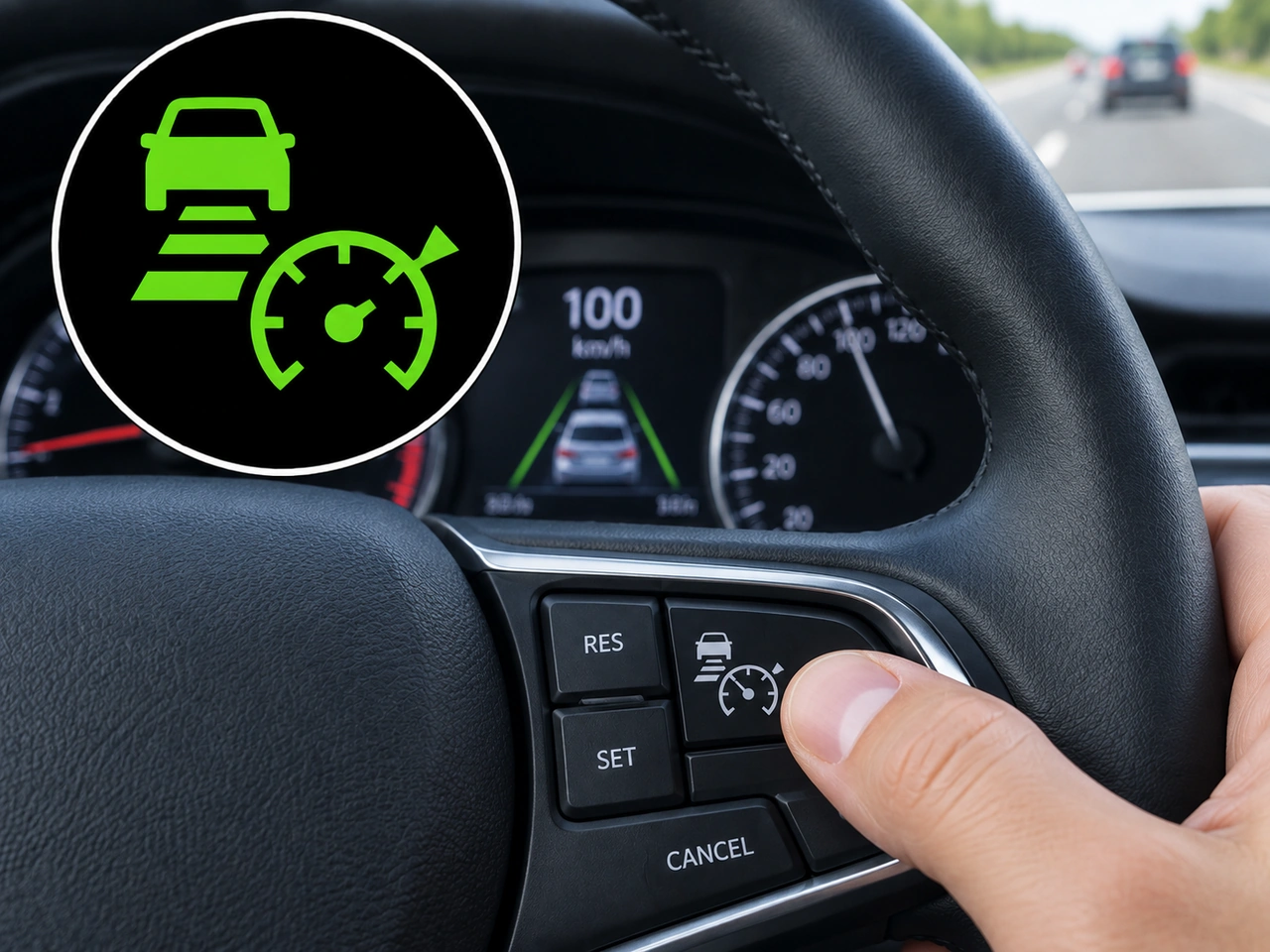
What does this dashboard symbol indicate?

180. What does this dashboard symbol indicate?

Parking assistance.
Electronic stability control.
Automatic start-stop system.
✓ Adaptive cruise control.

This symbol relates to adaptive cruise control (ACC). The system can maintain a selected speed and automatically adjust the vehicle's speed to help maintain a set distance from traffic ahead.

Adaptive cruise-control symbol on the dashboard
AI-generated by Rijbewijs-online.be • WCIT • CC BY-SA
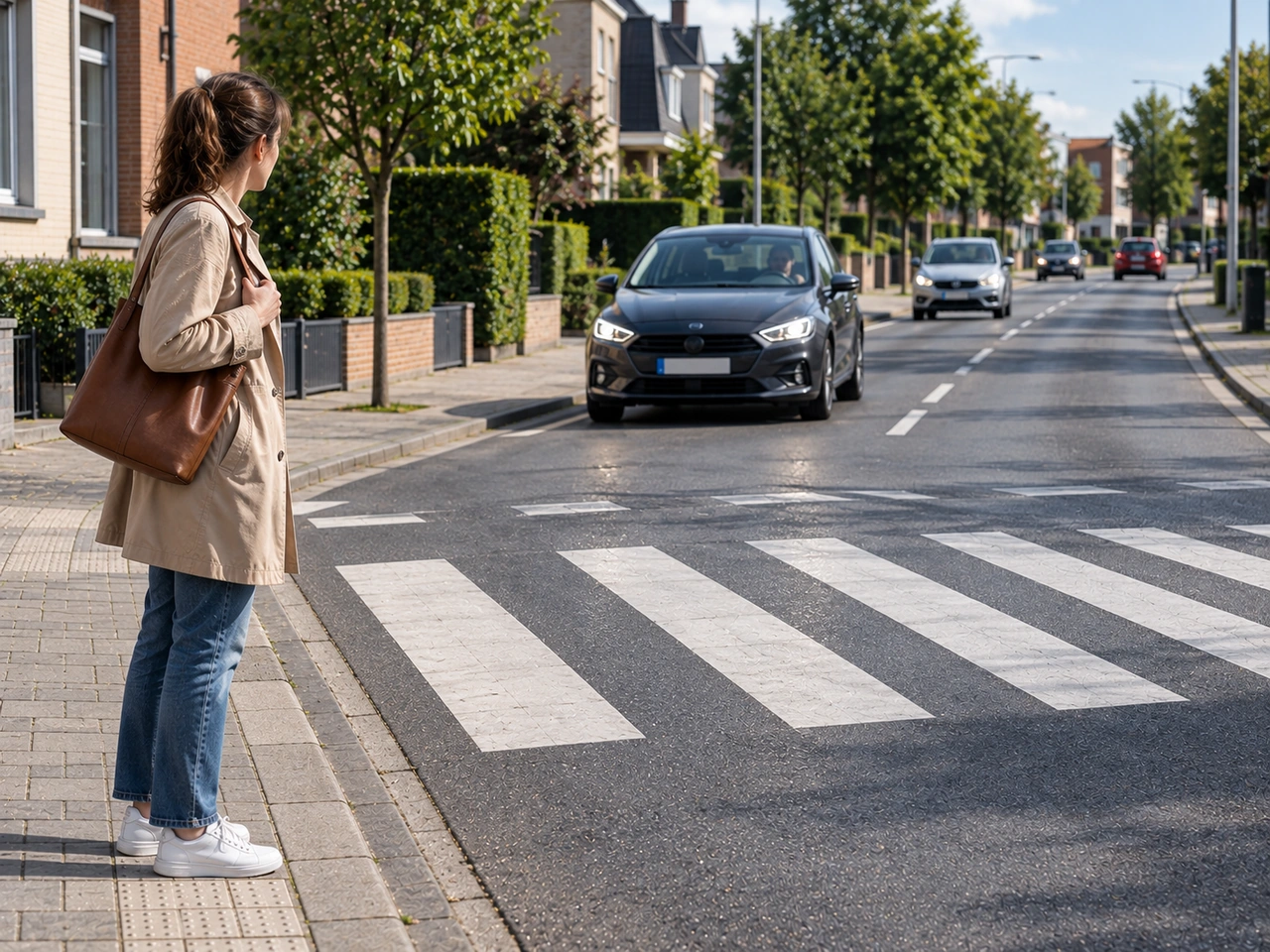
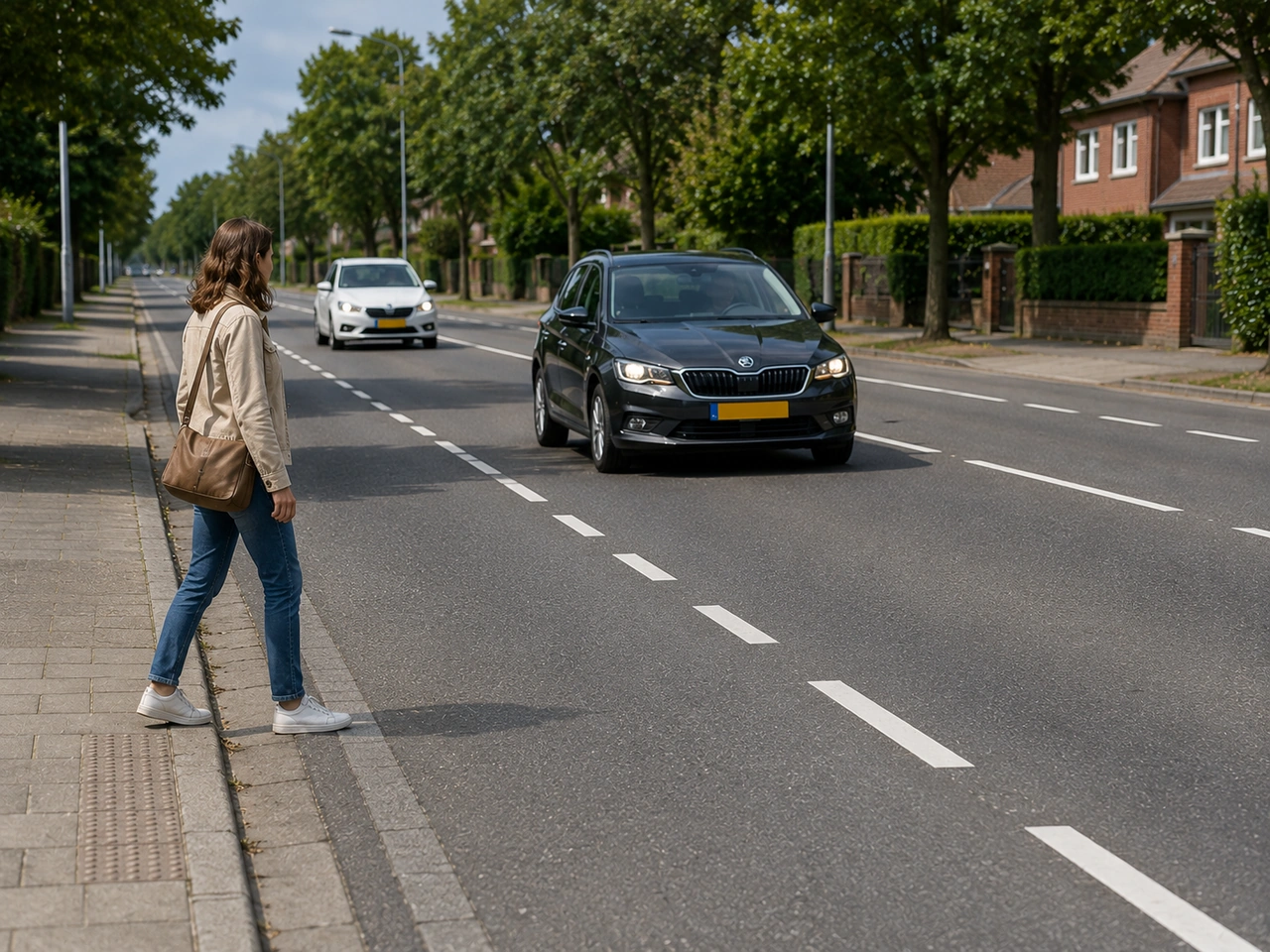
What should you do before using a pedestrian crossing?

181. What should you do before using a pedestrian crossing?

Cross as soon as the nearest vehicle starts slowing down.
✓ Make sure it is safe to cross.
Check only the lane nearest to you before crossing.
Cross once a driver makes eye contact with you.

Even at a pedestrian crossing, make sure approaching drivers have seen you and are able to stop before you cross.

Pedestrian checking traffic before using a crossing
AI-generated by Rijbewijs-online.be • WCIT • CC BY-SA
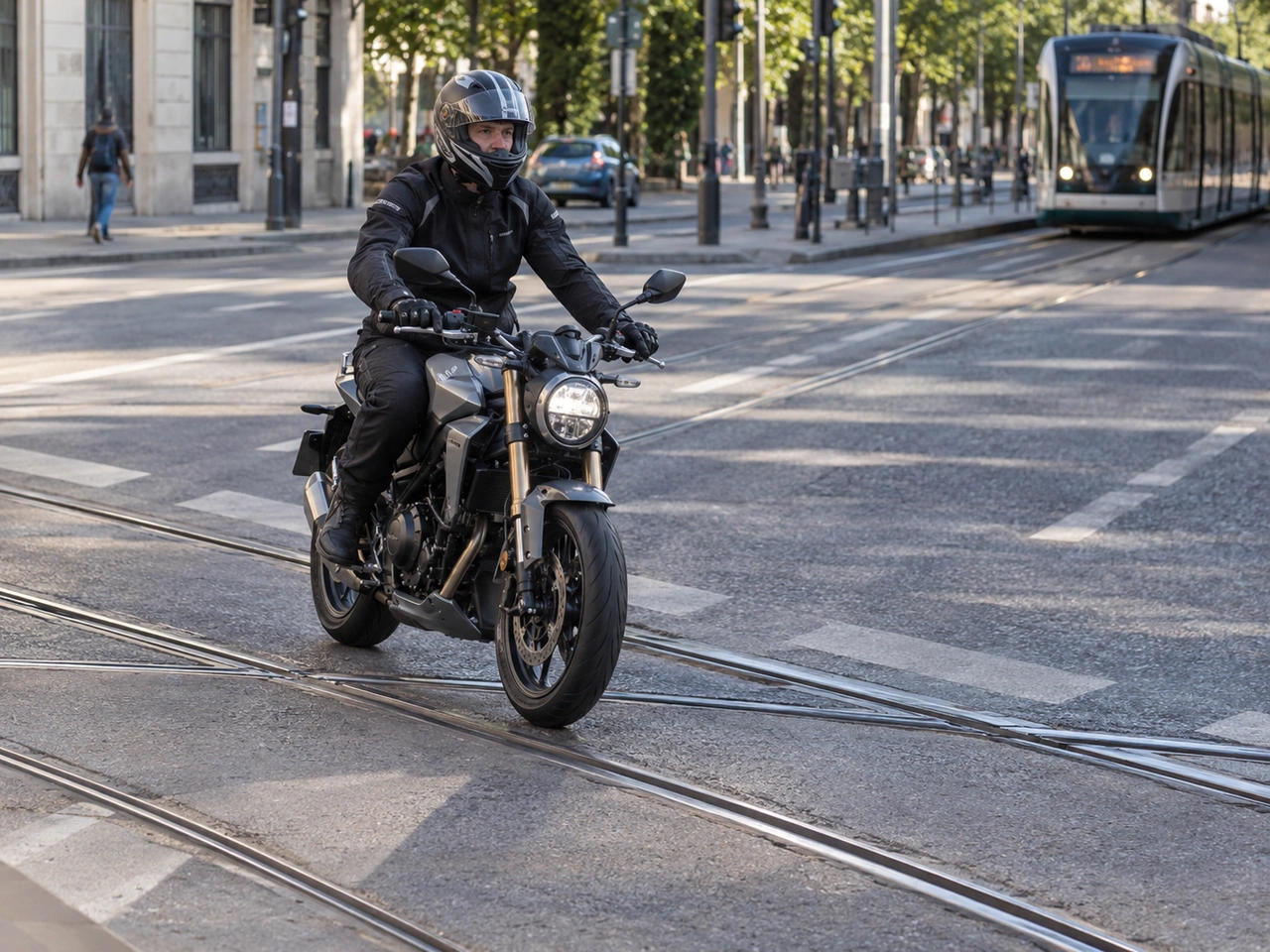
How should a motorcyclist cross tram or railway rails?

182. How should a motorcyclist cross tram or railway rails?

By accelerating hard as the front wheel reaches the rail.
While braking firmly on the rails.
With the motorcycle leaning sharply.
✓ At a safe angle, as close to perpendicular as practical.

Rails can be slippery and can catch a motorcycle tyre, especially when wet. Cross them at a sufficiently large angle, as close to perpendicular as practical, and avoid sudden braking, acceleration or steering while crossing.

Motorcycle crossing rails in the road
AI-generated by Rijbewijs-online.be • WCIT • CC BY-SA
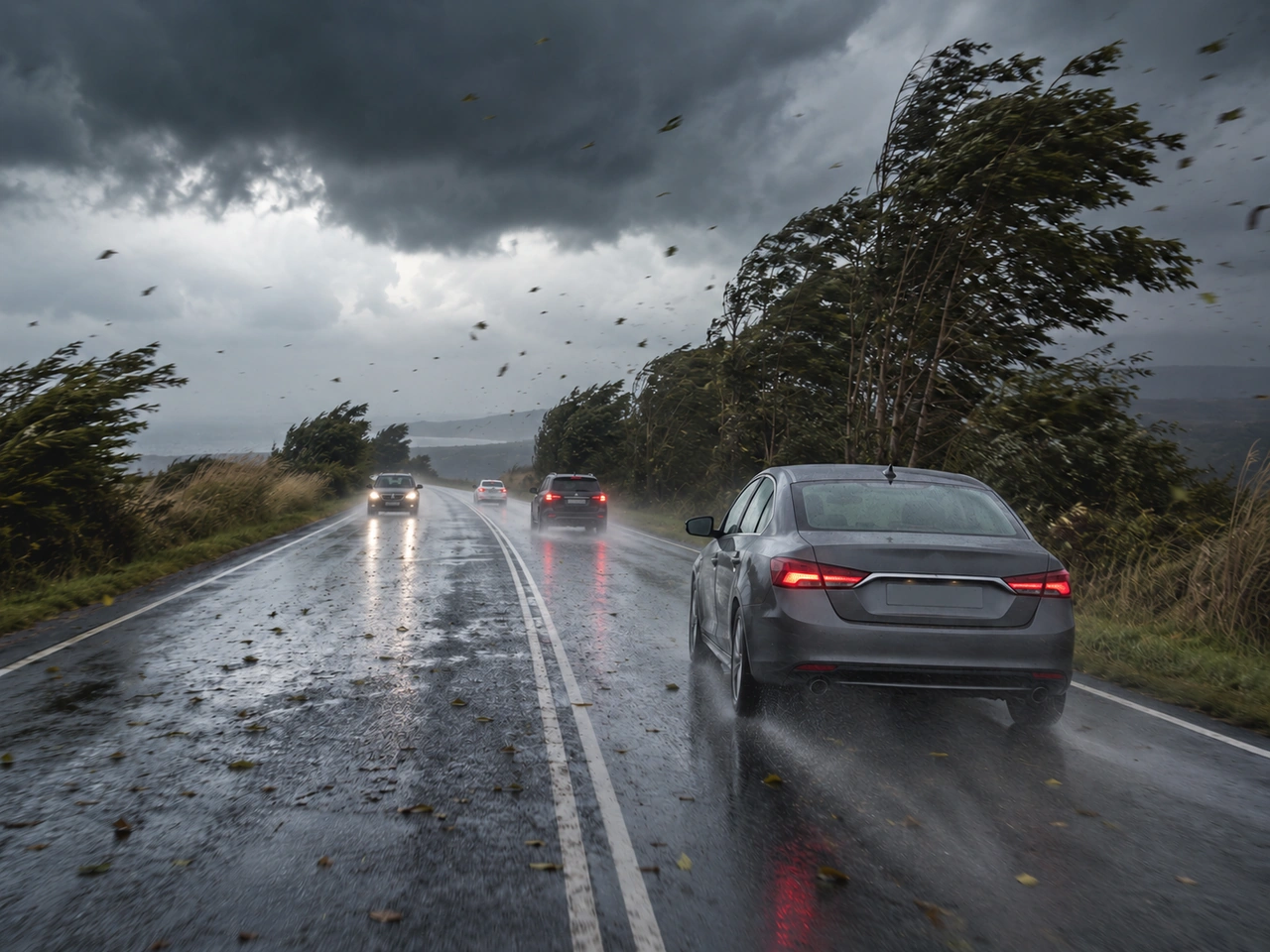
Why should you hold the steering wheel firmly during strong gusts?

183. Why should you hold the steering wheel firmly during strong gusts?

To reduce braking distance.
To make the power steering work better.
✓ To maintain control if the vehicle is pushed.
To improve tyre grip.

A firm but relaxed grip helps you respond safely to sudden changes caused by wind.

Driver holding the steering wheel during strong gusts
AI-generated by Rijbewijs-online.be • WCIT • CC BY-SA
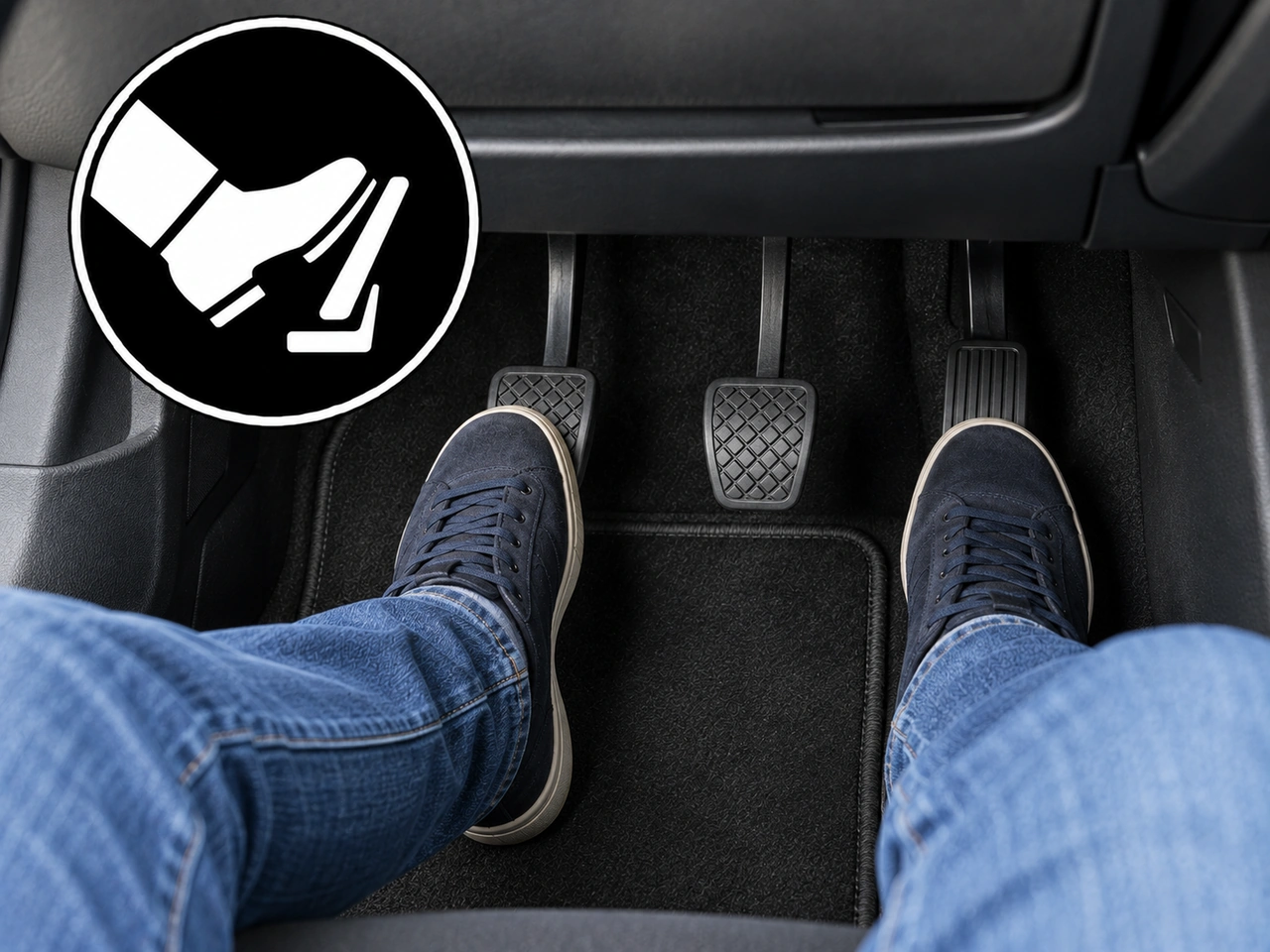
What is the clutch biting point?

184. What is the clutch biting point?

The point where the parking brake releases.
✓ The point where the clutch begins to transmit power to the wheels.
The point where the clutch pedal is fully pressed.
The point where the engine switches off.

The clutch biting point is reached as the clutch pedal is released and the clutch begins to transmit power from the engine to the transmission. Controlling this point helps the driver move off smoothly.

Clutch-pedal control when moving off
AI-generated by Rijbewijs-online.be • WCIT • CC BY-SA
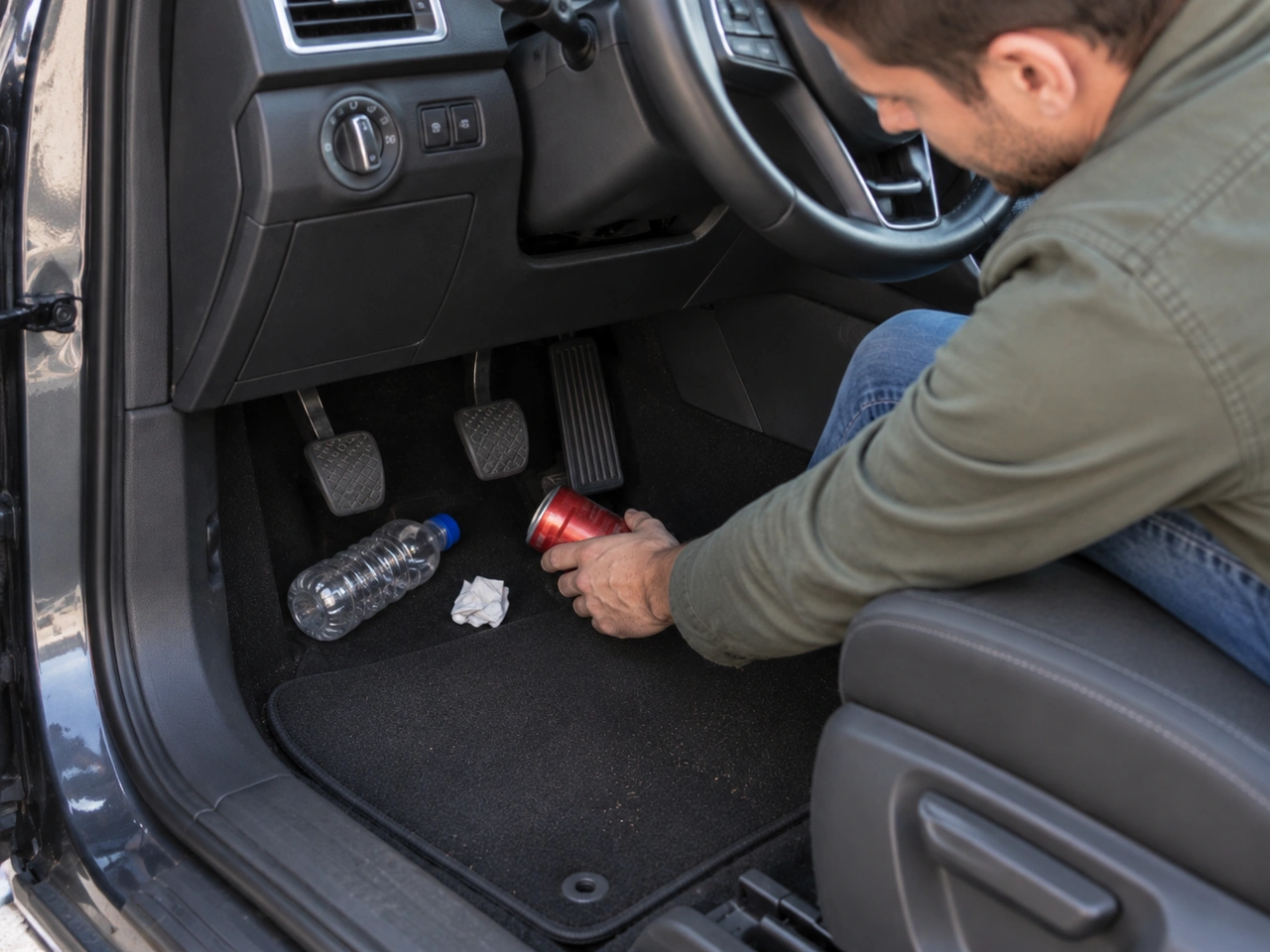
Why should you keep the driver's footwell free of loose objects?

185. Why should you keep the driver's footwell free of loose objects?

They could make it harder to adjust the driver's seat.
They could block the footwell ventilation.
✓ They could roll into the pedals and interfere with control.
They could make the pedals noisier to operate.

Loose objects in the driver's footwell, such as bottles, cans, or rubbish, can roll into the pedal area and interfere with the accelerator, brake, or clutch. Keep the footwell clear so you can operate the pedals safely and without obstruction.

Loose objects in the driver's footwell
AI-generated by Rijbewijs-online.be • WCIT • CC BY-SA
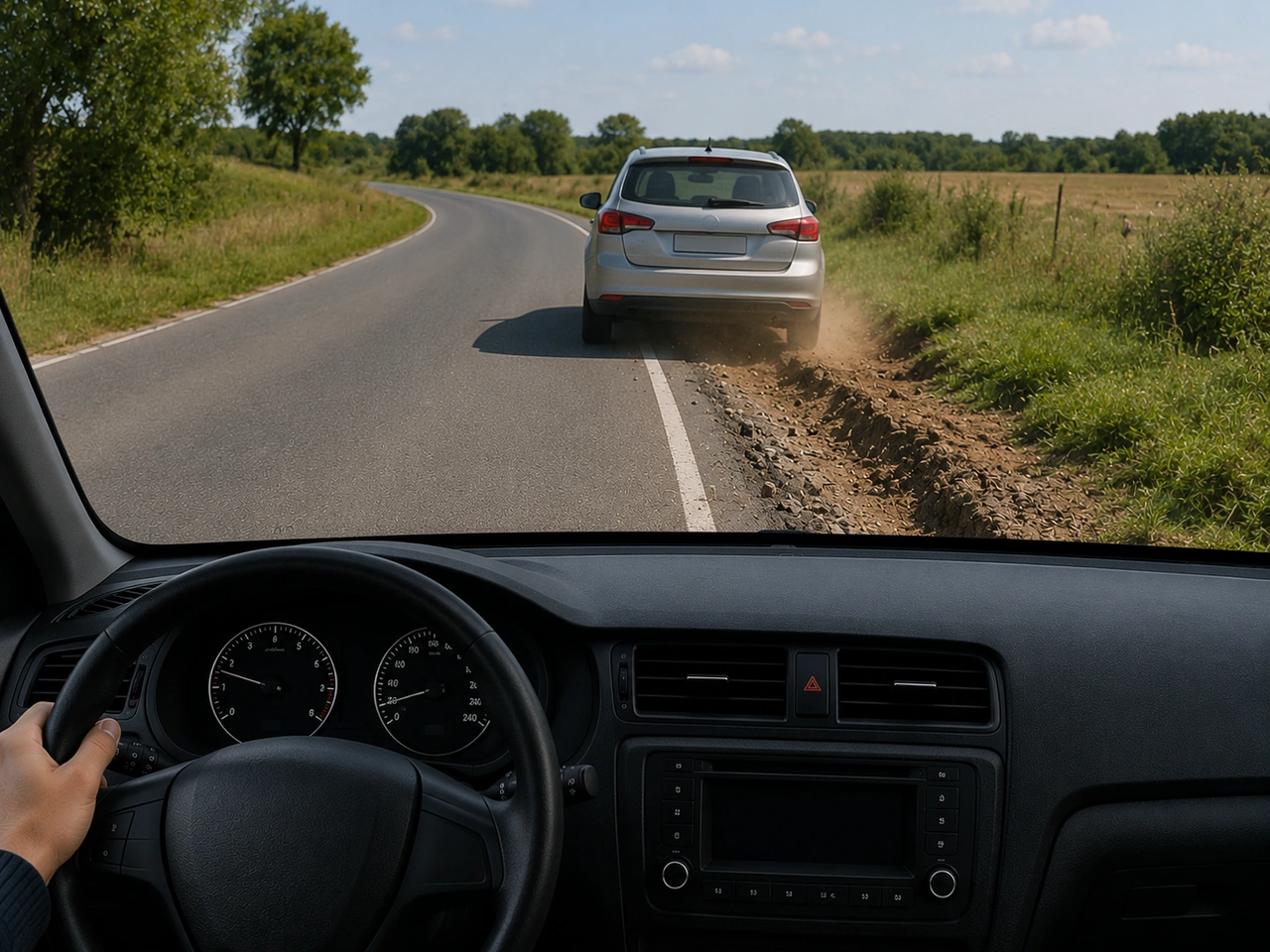
Why should you avoid driving too close to the edge of the road?

186. Why should you avoid driving too close to the edge of the road?

It can make your speed harder to judge.
It can make oncoming traffic harder to see.
✓ The edge may be uneven or weak.
It can make the steering require more effort.

Road edges can be soft, uneven, or damaged. Driving too close to the edge can reduce control or cause the vehicle to leave the road.

Vehicle travelling close to the road edge
AI-generated by Rijbewijs-online.be • WCIT • CC BY-SA
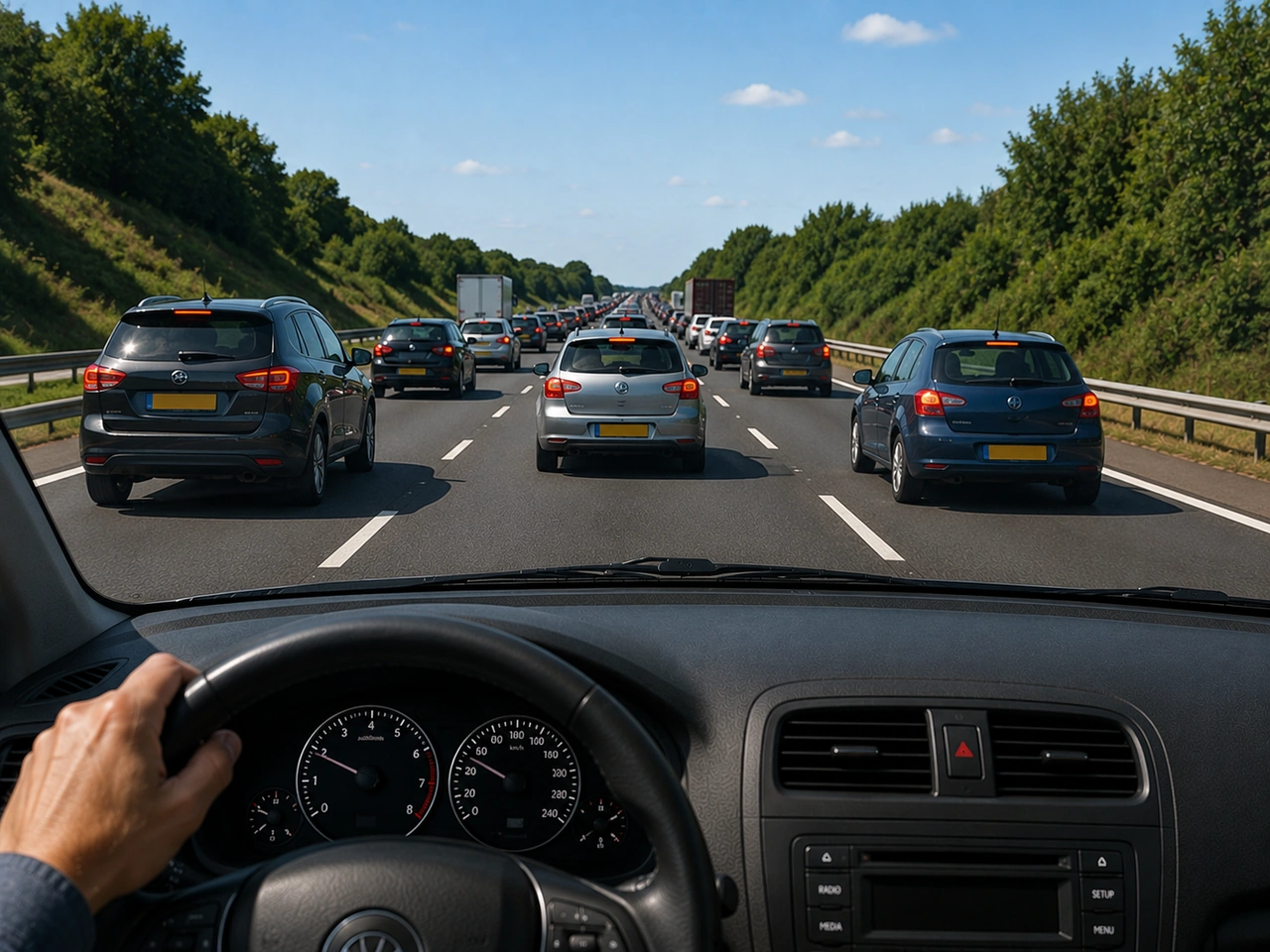
What should you do if traffic suddenly slows on a motorway?

187. What should you do if traffic suddenly slows on a motorway?

Change lanes immediately to avoid slowing down.
Move onto the shoulder and continue driving.
✓ Slow down smoothly and warn traffic behind if needed.
Brake suddenly as soon as you notice slower traffic.

When traffic slows suddenly, reduce speed smoothly, keep a safe distance, and use hazard lights if needed to warn following traffic.

Motorway traffic slowing ahead
AI-generated by Rijbewijs-online.be • WCIT • CC BY-SA
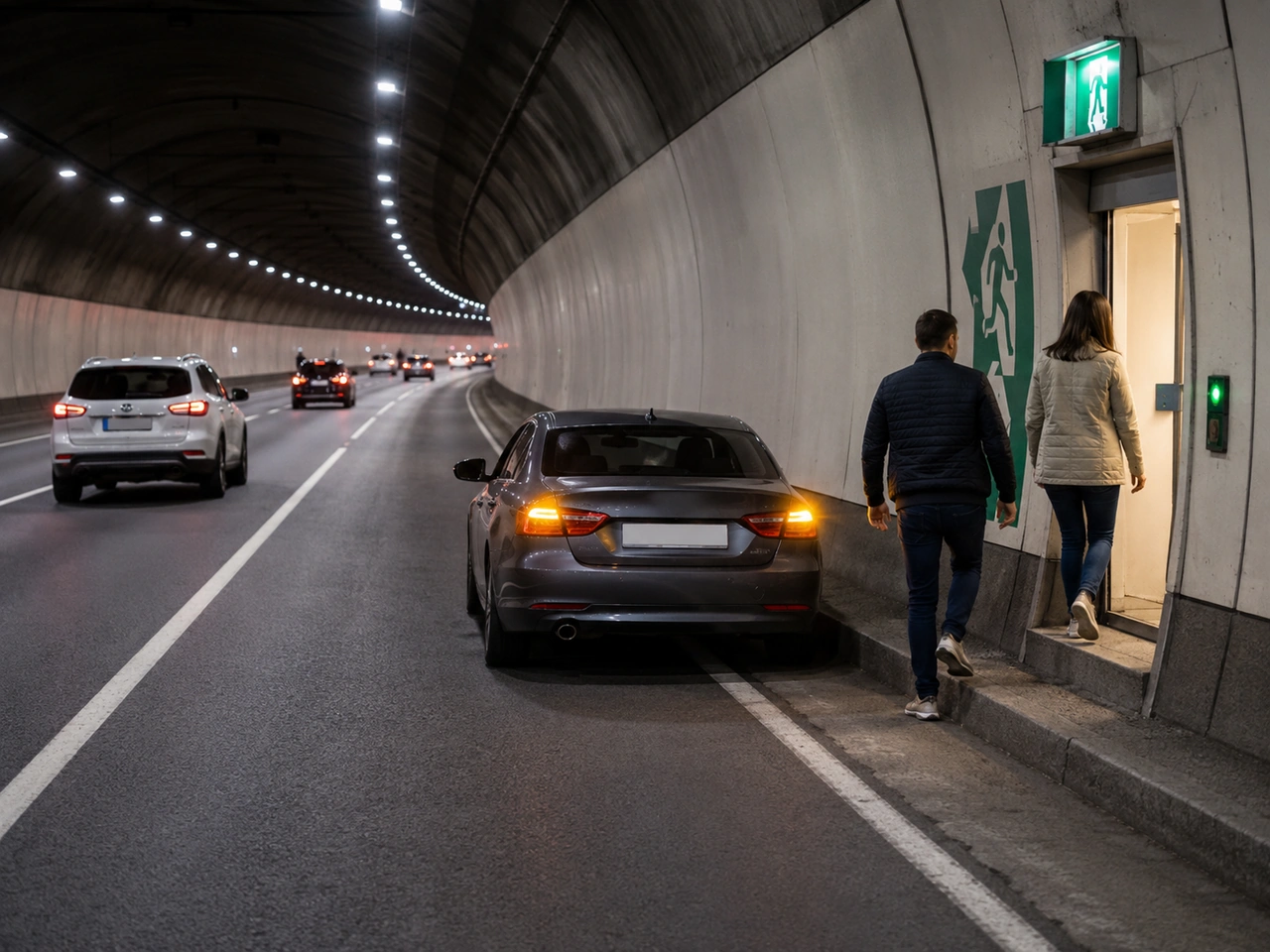
Where should you go after safely leaving a disabled vehicle in a tunnel?

188. Where should you go after safely leaving a disabled vehicle in a tunnel?

Stay close to the vehicle until traffic starts moving.
Wait directly behind the vehicle where drivers can see you.
Walk along the traffic lane toward the tunnel entrance.
✓ To a protected emergency area or exit away from traffic.

Move away from live traffic and use a marked emergency exit, refuge area, or protected walkway where available.

Leaving a disabled vehicle for a tunnel emergency area
AI-generated by Rijbewijs-online.be • WCIT • CC BY-SA
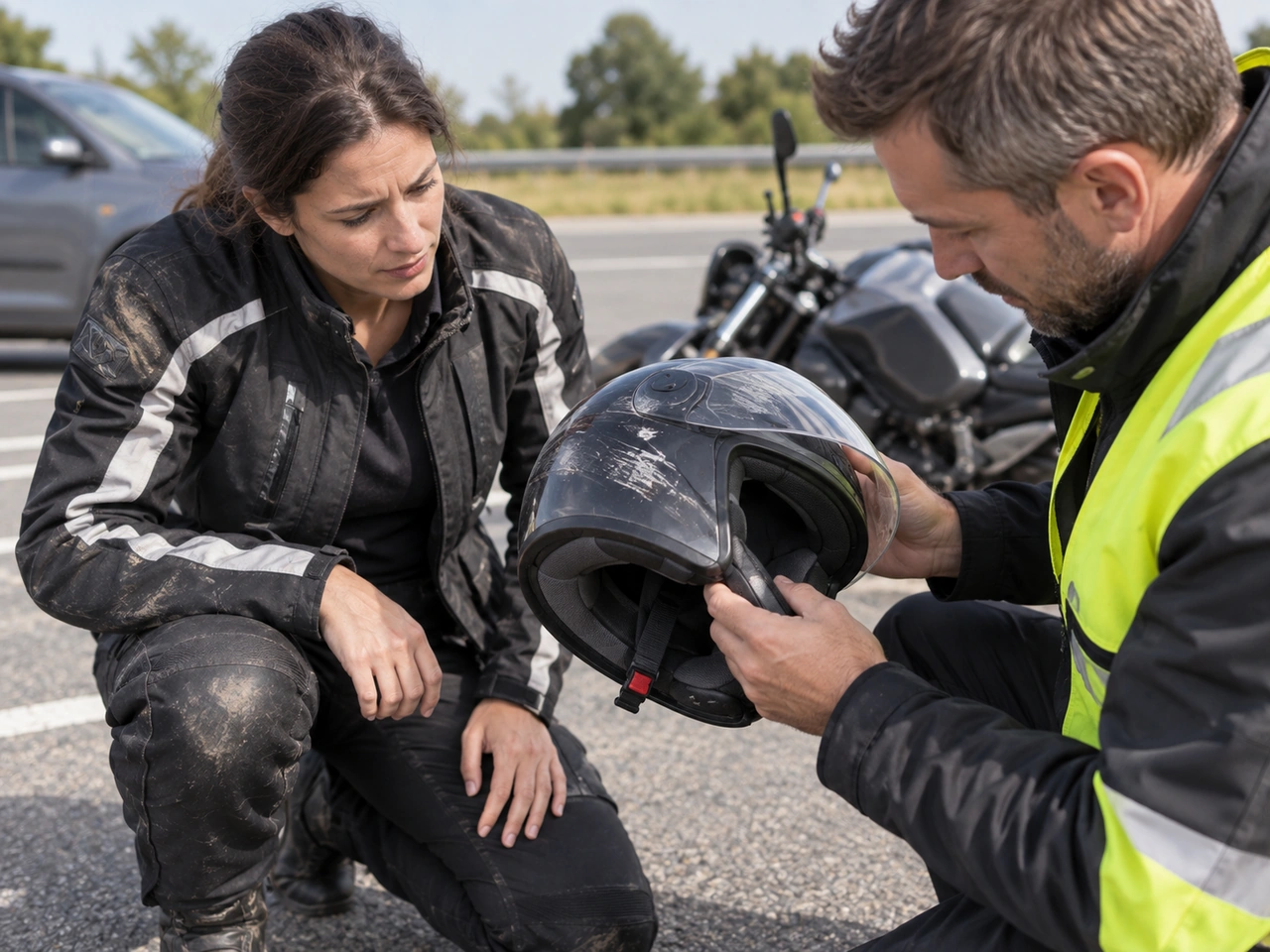
What should you do with a helmet that has taken a significant impact in a collision?

189. What should you do with a helmet that has taken a significant impact in a collision?

Use it again after tightening the straps.
Replace only the outer shell if it is scratched.
✓ Stop using it and follow the manufacturer's replacement guidance.
Keep using it if there are no visible cracks.

A helmet can be damaged internally by a significant impact even when no damage is visible from the outside. Stop using the helmet and follow the manufacturer's guidance, which will commonly require replacement after a significant impact.

Helmet inspection after a significant impact
AI-generated by Rijbewijs-online.be • WCIT • CC BY-SA
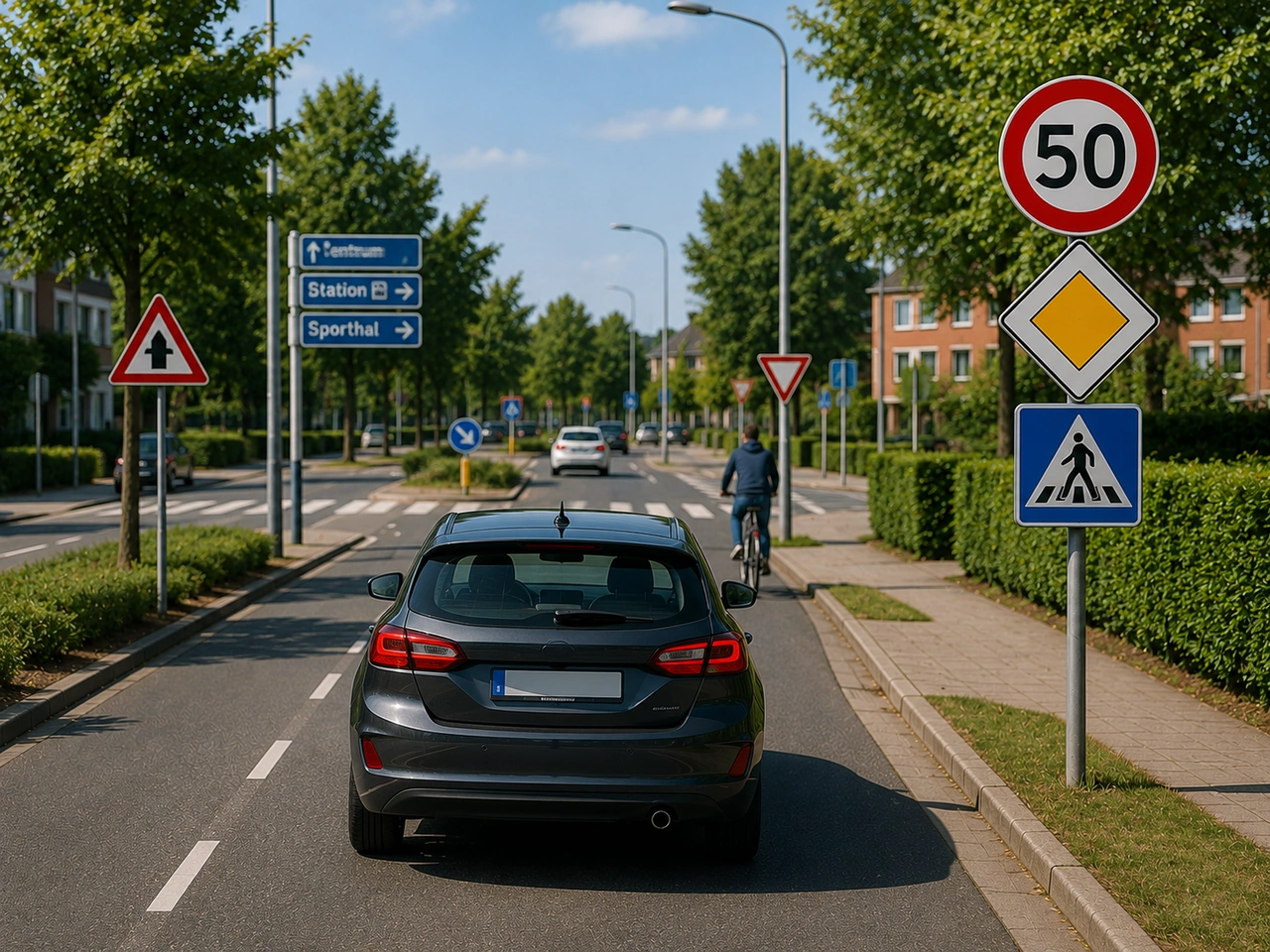
Why should you obey traffic signs?

190. Why should you obey traffic signs?

✓ To improve safety for everyone.
To avoid checking for other road users.
To make sure you always have priority.
To make other drivers responsible for your safety.

Traffic signs help organise traffic and improve safety for drivers, cyclists, and pedestrians.

Traffic signs using Vienna-style designs
AI-generated by Rijbewijs-online.be • WCIT • CC BY-SA
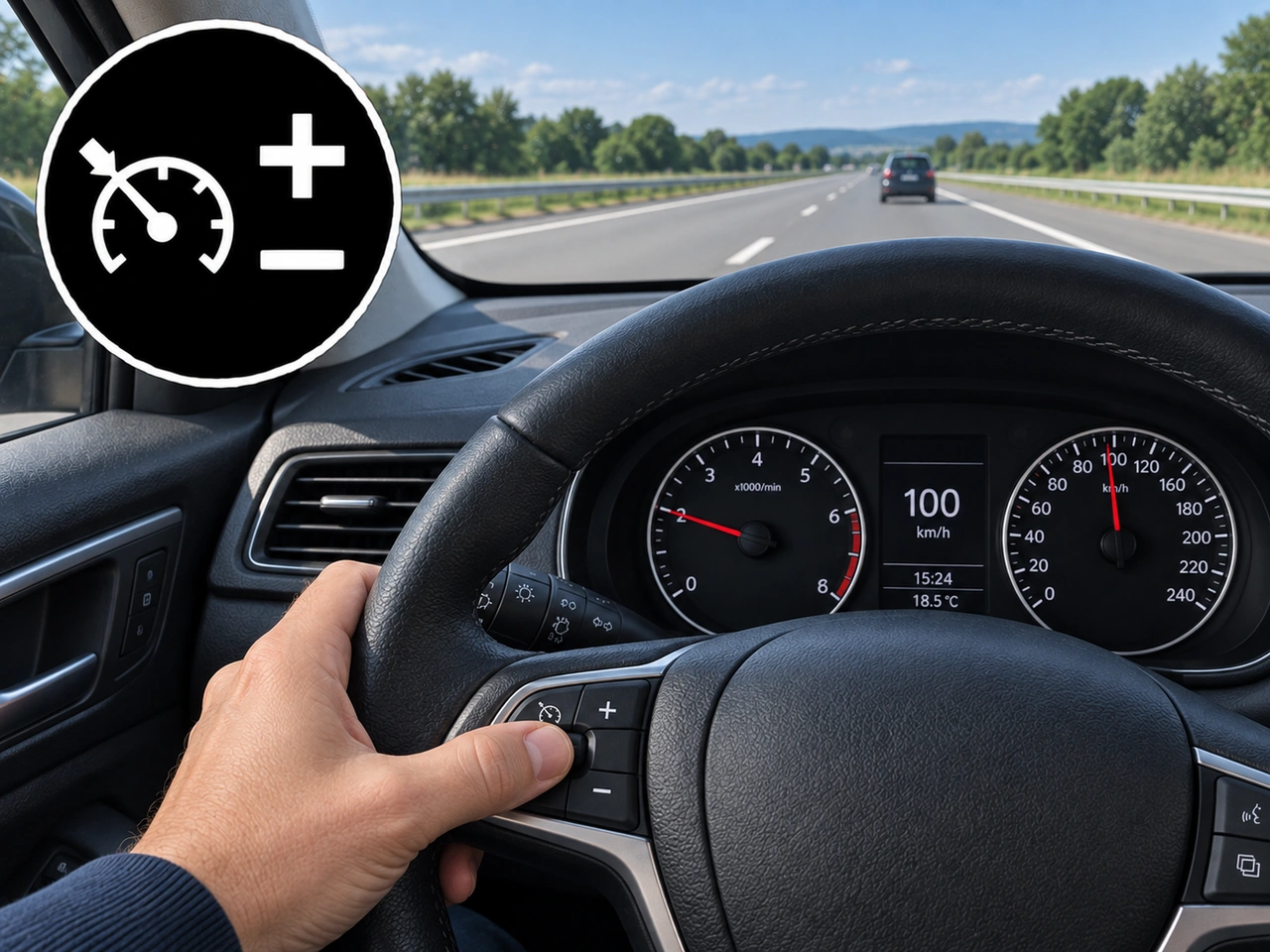
What do the + and − controls of cruise control normally do?

191. What do the + and − controls of cruise control normally do?

✓ Increase or decrease the selected cruising speed.
Change the transmission gear.
Apply or release the parking brake.
Switch between cruise control and the speed limiter.

When cruise control is active, the + and − controls normally increase or decrease the selected cruising speed. The amount of each adjustment can vary between vehicles.

Plus and minus controls for the cruising speed
AI-generated by Rijbewijs-online.be • WCIT • CC BY-SA
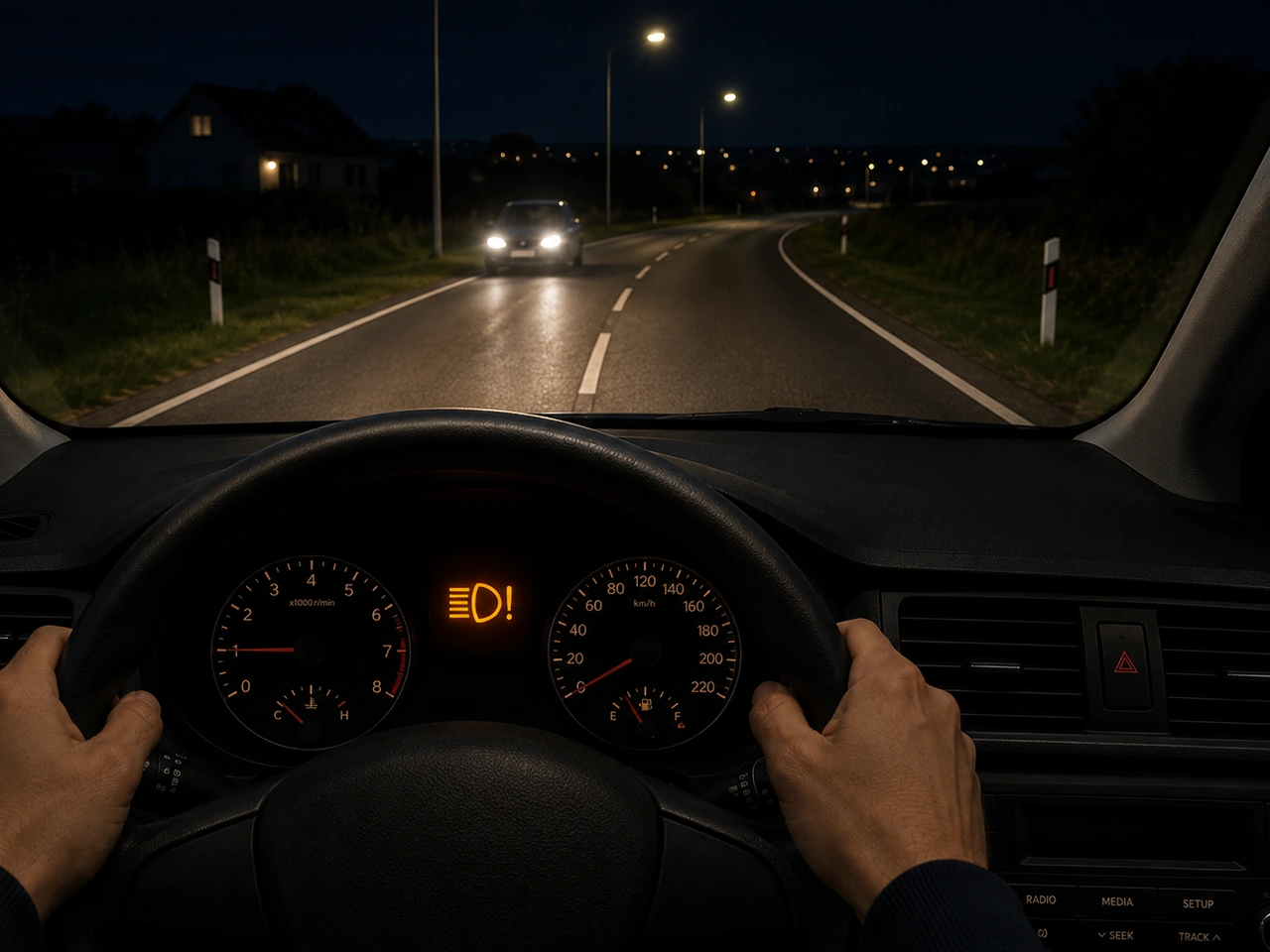
What should you do if your headlights fail while driving at night?

192. What should you do if your headlights fail while driving at night?

✓ Reduce speed and stop safely using any remaining lights or hazard lights.
Use hazard lights and continue to your destination.
Stop immediately in the traffic lane.
Continue slowly if the road is well lit.

Without effective headlights, you may not see hazards and other road users may not see you. Stop in a safe location as soon as possible.

Vehicle with failed headlights at night
AI-generated by Rijbewijs-online.be • WCIT • CC BY-SA
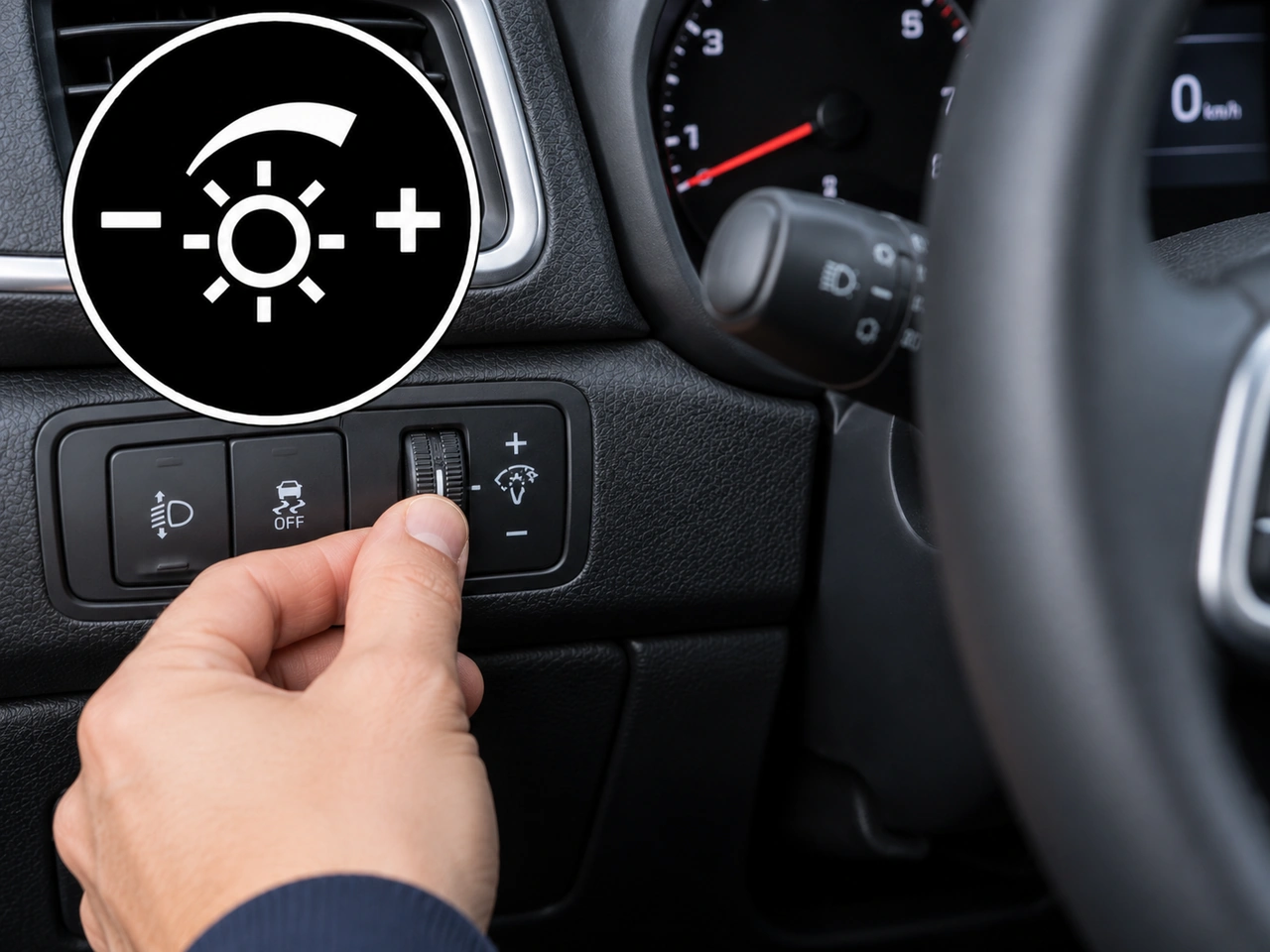
What does this vehicle-control symbol indicate?

193. What does this vehicle-control symbol indicate?

Interior lighting.
✓ Instrument-panel brightness.
Headlight level adjustment.
Front fog lights.

This control adjusts the brightness of the instrument panel and dashboard illumination, allowing the driver to reduce or increase the lighting level.

Control for adjusting instrument-panel brightness
AI-generated by Rijbewijs-online.be • WCIT • CC BY-SA
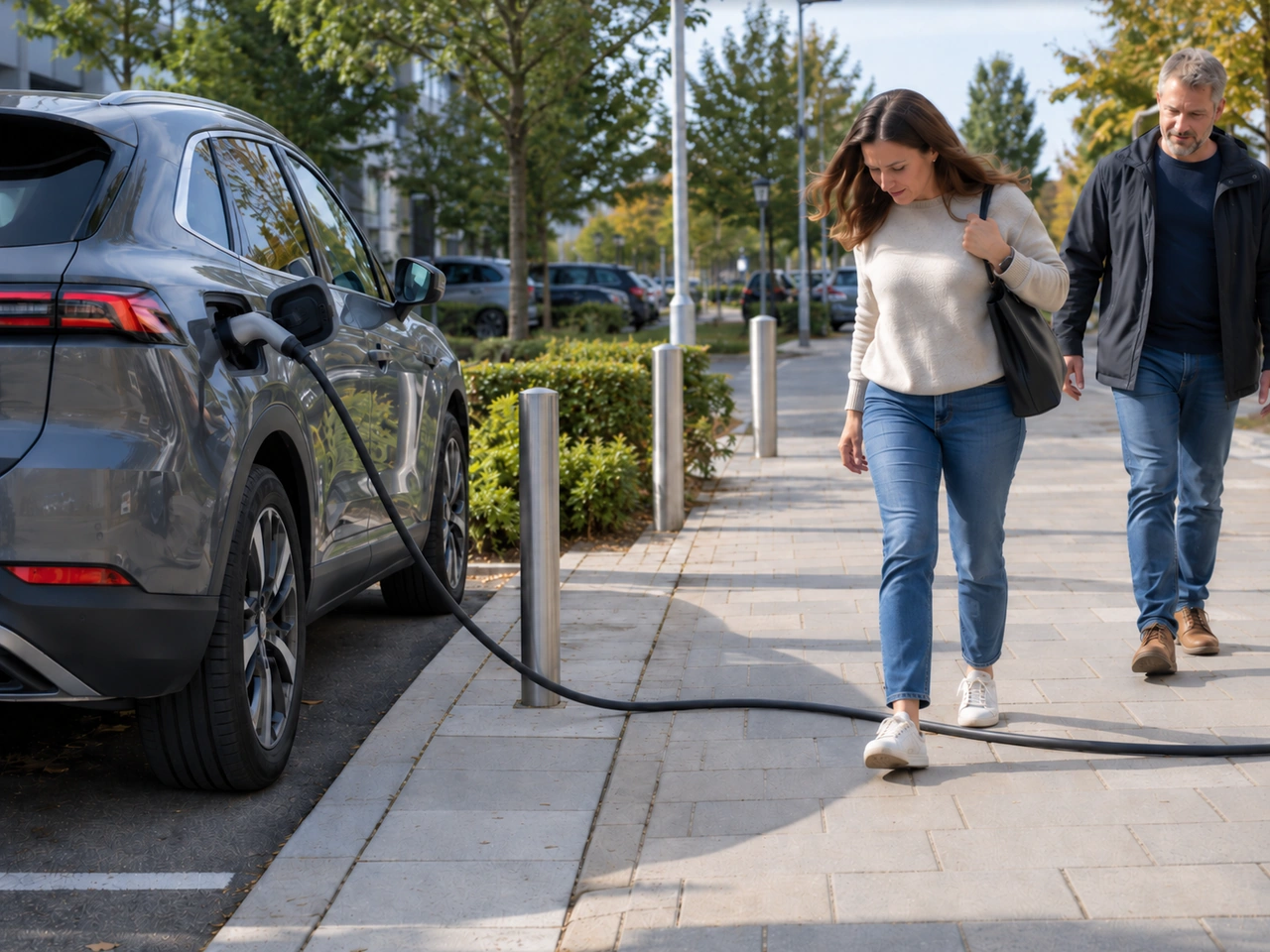
How should an EV charging cable be positioned where pedestrians may pass?

194. How should an EV charging cable be positioned where pedestrians may pass?

✓ So it does not create a trip hazard or obstruct the route.
Across the shortest possible route, even if people walk there.
Across the pavement where it is easiest to see.
Loose on the ground so pedestrians can step over it.

An EV charging cable should be positioned so it does not create a trip hazard or unnecessarily obstruct pedestrians. Where a cable must cross a walking route, use an appropriate approved cable-management or protection system and follow local requirements.

Charging cable near a pedestrian route
AI-generated by Rijbewijs-online.be • WCIT • CC BY-SA
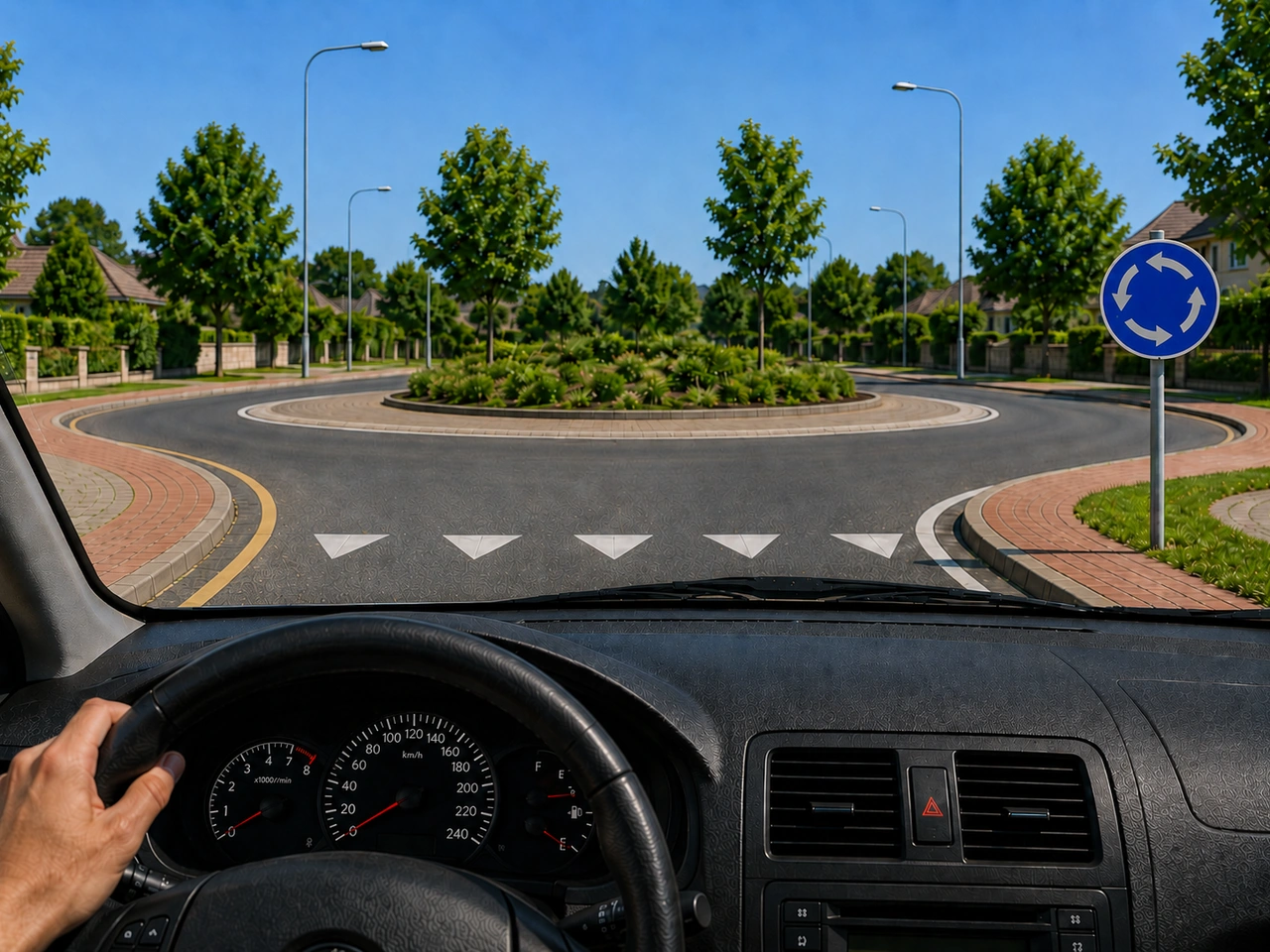
What should you do before entering a roundabout?

195. What should you do before entering a roundabout?

Enter without giving way if you are going straight ahead.
Maintain your speed unless another vehicle blocks your path.
Enter first if you reach the roundabout before other traffic.
✓ Slow down and give way when required.

Before entering a roundabout, reduce your speed, observe traffic, and give way according to the local rules.

Vehicle approaching a roundabout
AI-generated by Rijbewijs-online.be • WCIT • CC BY-SA
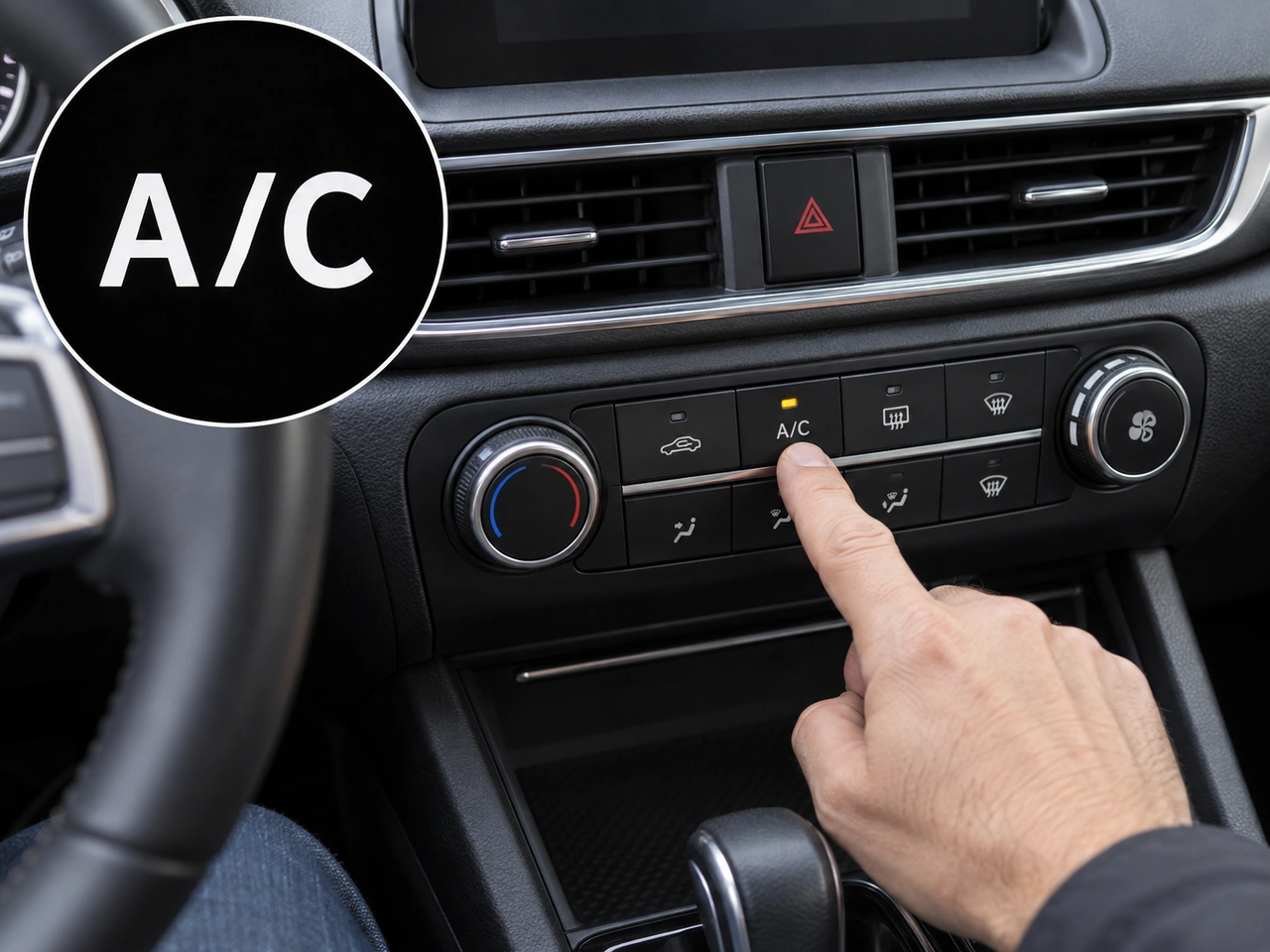
What does this vehicle-control symbol indicate?

196. What does this vehicle-control symbol indicate?

Front windscreen demister.
Rear window demister.
Fan speed.
✓ Air conditioning.

The A/C symbol controls the vehicle's air-conditioning system. Air conditioning can cool and dehumidify the air inside the vehicle, which can also help clear mist from the windows.

Air-conditioning control with the A/C symbol
AI-generated by Rijbewijs-online.be • WCIT • CC BY-SA
What should you do before crossing the road?

197. What should you do before crossing the road?

Listen for vehicles instead of looking.
Cross if the nearest vehicle is slowing down.
✓ Look for traffic in all directions.
Look only where traffic normally comes from.

Always check for approaching traffic from every direction before crossing.

Pedestrian checking for traffic before crossing
AI-generated by Rijbewijs-online.be • WCIT • CC BY-SA
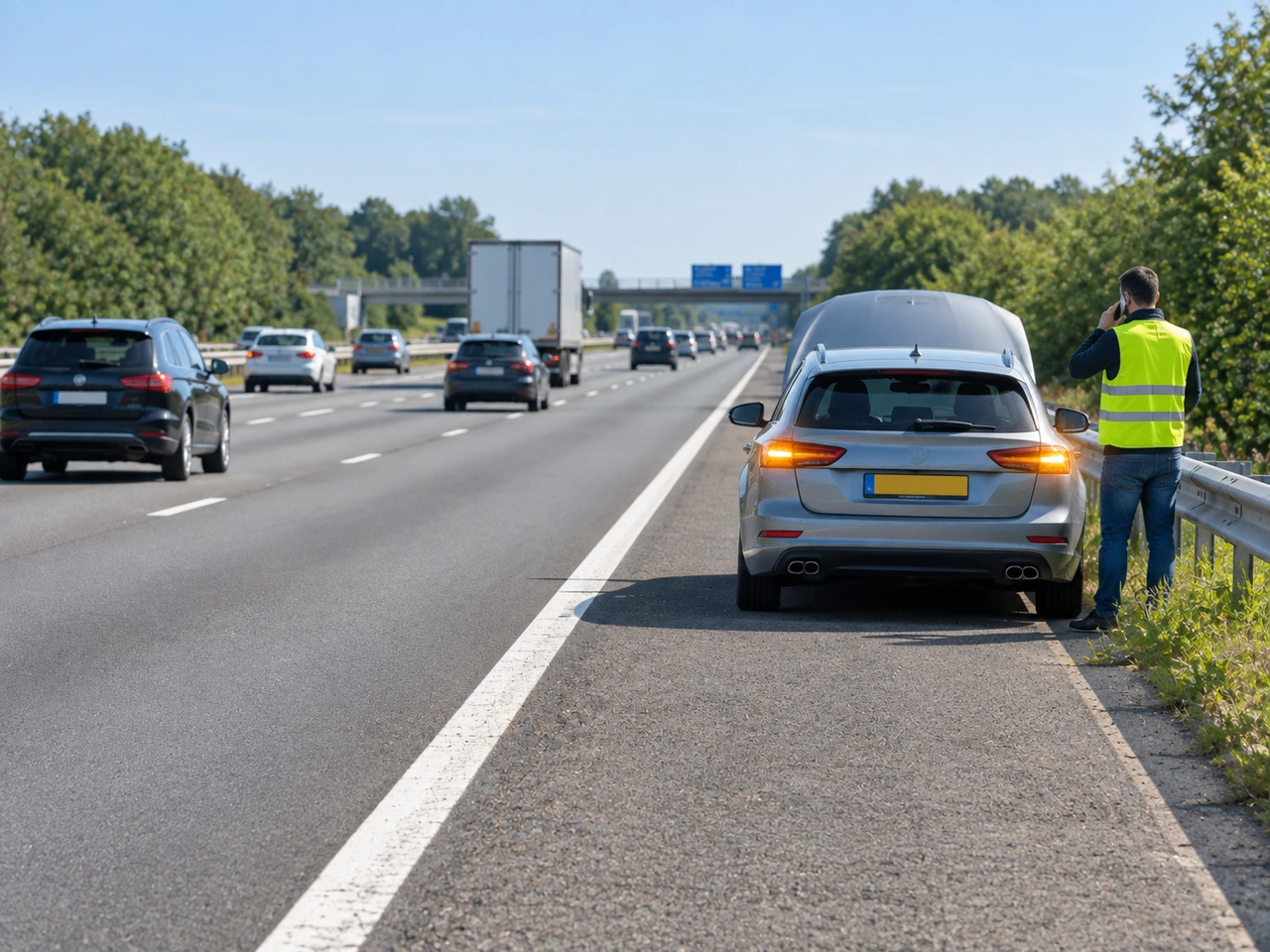
What is the main purpose of a motorway emergency lane or hard shoulder?

198. What is the main purpose of a motorway emergency lane or hard shoulder?

✓ For emergencies and breakdowns.
For overtaking slow-moving traffic.
For allowing faster vehicles to pass.
For driving when the motorway is busy.

A motorway emergency lane or hard shoulder is primarily intended for emergencies and breakdowns, not normal driving. In some places it may be opened temporarily as a traffic lane when signs or signals specifically permit this.

Motorway hard shoulder beside the traffic lanes
AI-generated by Rijbewijs-online.be • WCIT • CC BY-SA
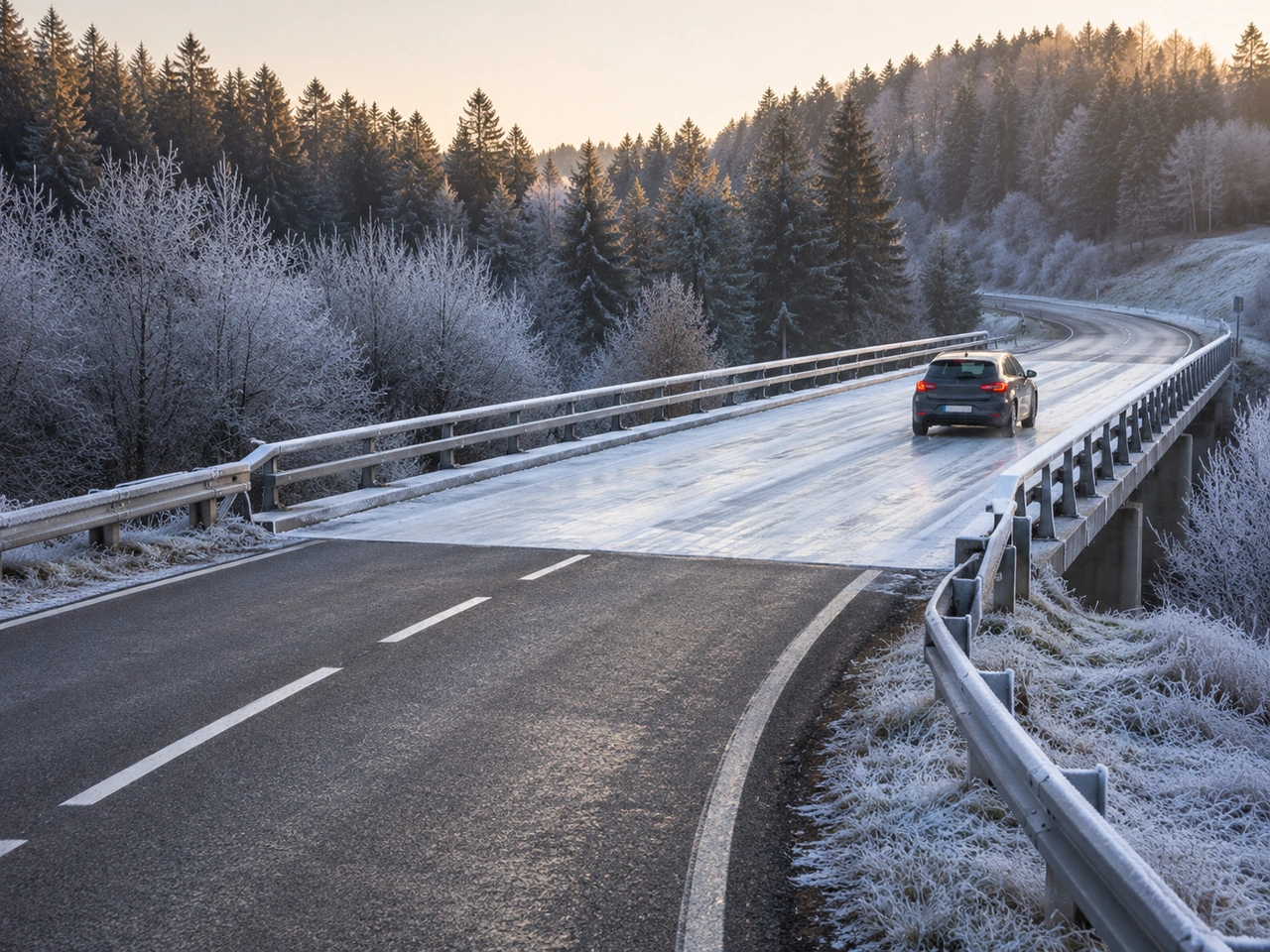
Why can bridges and overpasses become icy before nearby roads?

199. Why can bridges and overpasses become icy before nearby roads?

✓ Cold air circulates above and below them.
Road salt is less effective on bridges.
Traffic usually moves faster across bridges.
Their barriers trap cold air on the road surface.

Bridges lose heat from both their upper and lower surfaces, so they can freeze before roads built directly on the ground.

Icy surface on an exposed bridge
AI-generated by Rijbewijs-online.be • WCIT • CC BY-SA
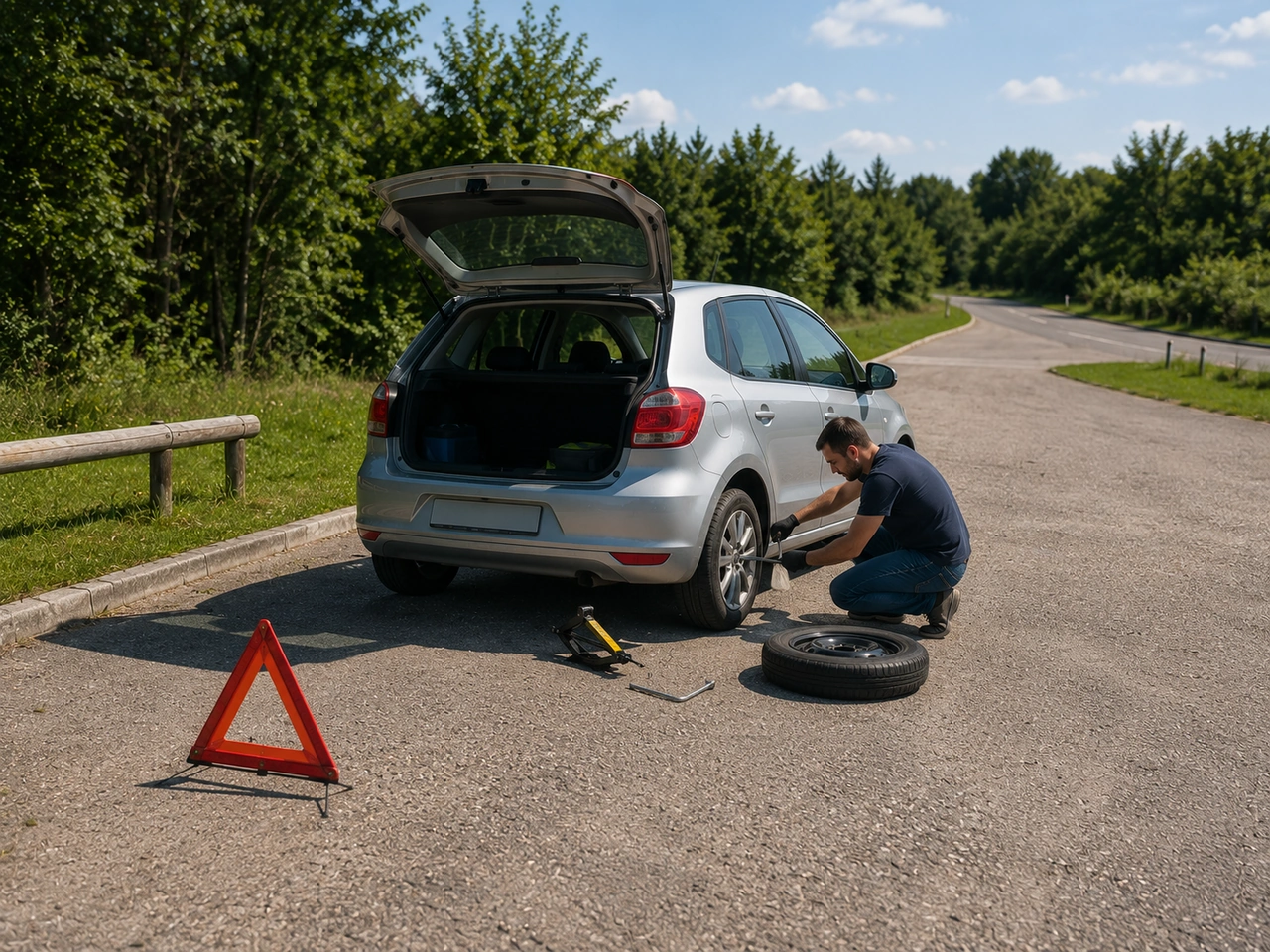
Where should you change a wheel after a puncture?

200. Where should you change a wheel after a puncture?

On a slight slope if the parking brake is applied.
✓ On firm, level ground well away from moving traffic.
As close to moving traffic as possible to keep off the verge.
Where the puncture occurred, as long as the hazard lights are on.

The vehicle must be stable and protected from traffic. Apply the parking brake and follow the manufacturer's wheel-changing instructions.

Wheel change on firm ground away from traffic
AI-generated by Rijbewijs-online.be • WCIT • CC BY-SA