CurvaArgentina

Aprende normas de tráfico con explicaciones claras y ejemplos visuales en nuestro libro ilustrado, diseñado para que estudiar sea sencillo y ameno.


19. Curva

Una curva es un tramo de carretera que cambia de dirección hacia la izquierda o la derecha. Una curva cerrada, inesperada o con poca visibilidad puede reducir la visión del conductor sobre tráfico que se aproxima, vehículos detenidos, peatones y otros peligros.

Los conductores deben reducir la velocidad antes de entrar en la curva, permanecer dentro de su carril y utilizar movimientos suaves de dirección, frenada y aceleración. Las señales de advertencia pueden indicar la dirección de la primera curva o una serie de curvas sucesivas.
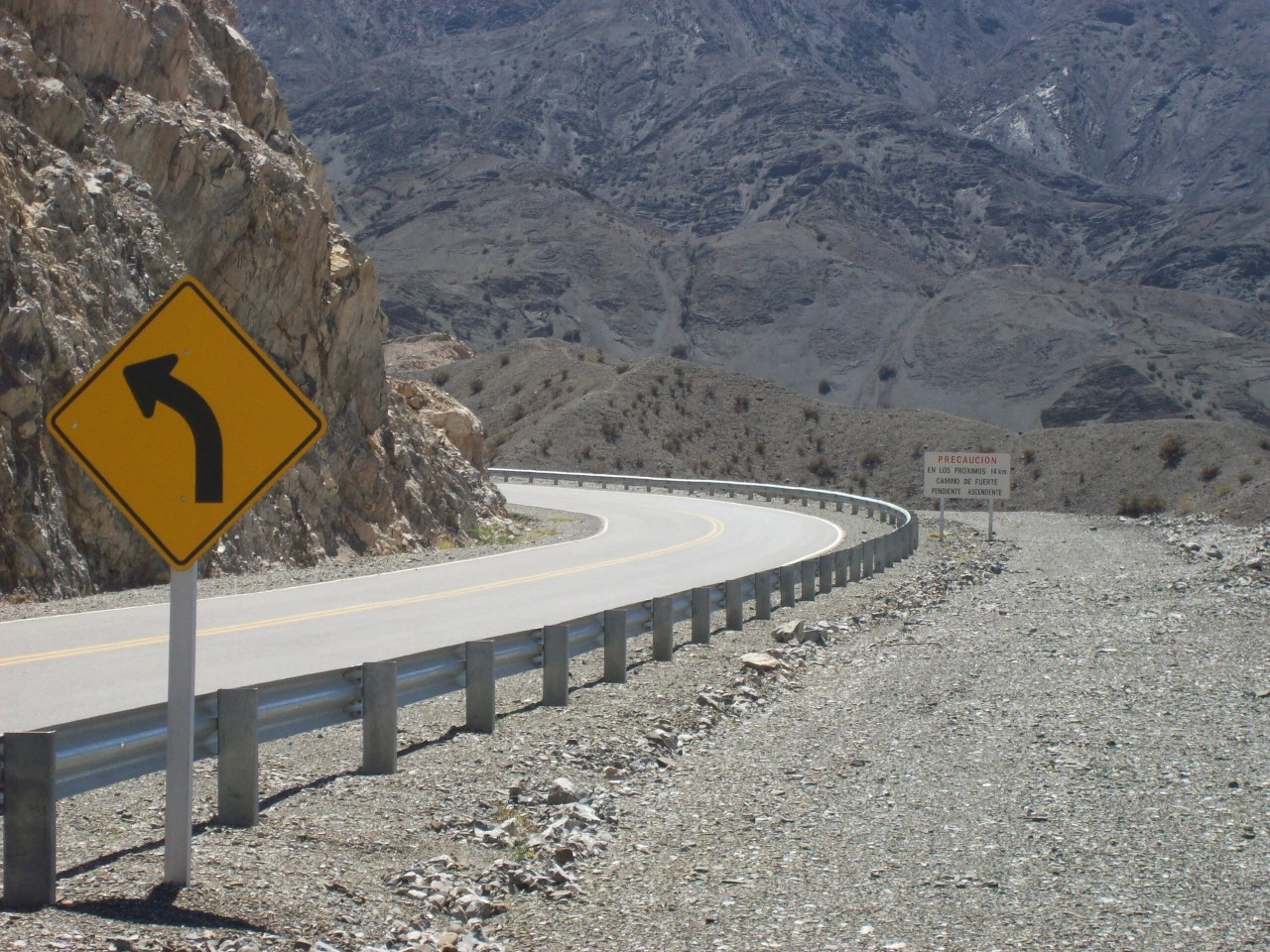
Curva
What is a road curve?

A road curve is a section where the road changes direction to the left or right.

How can you recognise a dangerous curve?

It may be indicated by a triangular warning sign showing a curved line. The symbol normally indicates whether the first curve turns left or right.

What is a double curve?

A double curve consists of two curves in opposite directions. The warning sign normally shows the direction of the first curve.

Can a sign warn of more than two curves?

Yes. A double-curve symbol may also warn of a longer sequence of successive curves. A supplementary panel may indicate the length of the winding section.

Does a curve-warning sign impose a speed limit?

No. It normally warns of danger rather than setting a numerical limit. Drivers must still reduce speed when the permitted maximum would be unsafe.

When should you reduce speed for a curve?

Reduce speed before entering the curve, while the vehicle is travelling straight and has maximum stability.

Should you brake heavily while cornering?

No. Harsh braking in a curve can reduce stability and grip. Complete most braking beforehand and use smooth adjustments where necessary.

Should you accelerate through a curve?

Maintain a controlled speed through the curve. Accelerate smoothly only when the exit becomes visible and the vehicle is stable.

Where should you look while driving through a curve?

Look towards the path you intend to follow and the visible exit of the curve. Continue checking the road surface, lane position and nearby traffic.

Must you remain in your lane?

Yes. Do not cross the centre line or cut across another lane, even when this would make the curve appear easier to negotiate.

Why is visibility limited in a curve?

Buildings, vegetation, slopes, barriers and the road alignment may hide oncoming traffic, cyclists, pedestrians, stopped vehicles or debris.

How fast should you drive through a curve?

Choose a speed that allows you to remain in your lane and stop within the distance you can see to be clear. The safe speed may be far below the legal maximum.

What is an advisory speed for a curve?

An advisory speed is a recommended safe speed for negotiating the curve under suitable conditions. It is not necessarily the legal maximum speed.

How do rain, snow or ice affect a curve?

They reduce tyre grip and increase the risk of skidding. Reduce speed earlier, use smooth controls and leave additional distance from other vehicles.

What should you do if gravel or debris is present?

Avoid sudden braking or steering. Reduce speed smoothly and follow a clear path without entering another traffic lane.

May you overtake in a curve?

Do not overtake when visibility is insufficient to see approaching traffic and complete the manoeuvre safely. Local law, signs and continuous road markings may also prohibit overtaking.

May you stop or park in a curve?

Only where it is permitted and the vehicle remains clearly visible. Stopping or parking in a poorly visible curve may create a serious hazard and is often prohibited.

Should you follow another vehicle closely through a curve?

No. Leave enough distance to react if the vehicle ahead brakes for a hidden obstruction or a sharper part of the curve.

Why should motorcyclists take extra care?

Motorcycles require grip for both cornering and braking. Riders should reduce speed before the curve, choose a stable line and avoid painted markings, gravel and slippery surfaces.

How can a curve affect a trailer or caravan?

A trailer may sway, track closer to the inside of the curve or become unstable when speed and steering inputs are excessive. Enter slowly and steer smoothly.

Why do large vehicles need more space?

Buses and trucks may move closer to lane boundaries because of their length and width. Other drivers should avoid travelling beside them through a tight curve.

What should you do if an oncoming vehicle crosses the centre line?

Reduce speed, move safely towards your side of the road and avoid a sudden manoeuvre that could cause another collision. Sound a warning only when reasonably necessary.

Does the absence of a warning sign mean every curve is safe at the speed limit?

No. Drivers must assess every curve and adapt their speed even when no warning sign is displayed.

1 Argentina 2 Autopista 3 Límite de velocidad 4 Velocidad mínima 5 Carril bici 6 Resalto 7 Pendiente 8 Parada de autobús 9 Señal de STOP 10 Ceda el paso 11 Glorieta 12 Estrechamiento de calzada 13 Paso a nivel 14 Dirección obligatoria 15 Prohibición de giro 16 Zona escolar 17 Adelantamiento 18 Cruce de animales 19 Curva 20 Circulación en sentido contrario 21 Obras 22 Límite de altura 23 Semáforos 24 Frontera internacional 25 Estacionamiento 26 Prohibido estacionar 27 Prohibido parar 28 Marcha atrás 29 Intersección sin regulación 30 Matrícula 31 Estación de carga 32 Depresión 33 Documento de identidad 34 Peatón 35 Ciclista 36 Camión 37 Autobús 38 Policía 39 Ambulancia 40 Taxi 41 Bache 42 Camino 43 Partículas 44 Contaminación del aire 45 Hora punta 46 Código de circulación 47 Canaleta de la calle 48 Bicicleta de carga 49 Vehículo forestal 50 Vehículo de construcción 51 Camión articulado 52 Trolebús 53 Speed pedelec 54 Vehículo de reparto 55 Motor al ralentí 56 Grúa 57 Tracción a las cuatro ruedas 58 Bicicleta 59 Equipamiento de motocicleta 60 Vía férrea 61 Caravana 62 Remolque 63 Enganche de remolque 64 Camión de bomberos 65 Sirena 66 Convoy 67 Luces de vehículos de emergencia 68 Maquinaria agrícola 69 Bicicleta eléctrica 70 Vehículo eléctrico 71 Pedelec 72 Cuadriciclo 73 Microcoche 74 Vehículo todoterreno 75 Furgoneta 76 Vehículo recreativo 77 Scooter 78 Trikke 79 Vehículo de movilidad personal 80 Monopatín 81 Segway 82 Patinete 83 Patines 84 Cartero 85 Autoestopista 86 Niño pequeño 87 Niño 88 Discapacidad 89 Tren para automóviles 90 km/h 91 mph 92 Velocímetro 93 Altura libre del vehículo 94 Camino de tierra 95 Conducción 96 Sistema start-stop 97 Cambio manual 98 Cambio automático 99 Acelerador 100 Cuentarrevoluciones ...