ResaltoNoruega

Aprende normas de tráfico con explicaciones claras y ejemplos visuales en nuestro libro ilustrado, diseñado para que estudiar sea sencillo y ameno.


6. Resalto

Un resalto es un dispositivo elevado de calmado del tráfico colocado a través de toda o parte de una carretera para obligar a los conductores a reducir la velocidad. Se utiliza habitualmente cerca de escuelas, zonas residenciales, pasos de peatones y otros lugares donde son necesarias velocidades bajas.

Los conductores deben reducir la velocidad antes de llegar al resalto y cruzarlo de forma suave y controlada. Pasar demasiado rápido puede reducir el control del vehículo, causar molestias a los ocupantes y dañar el vehículo.
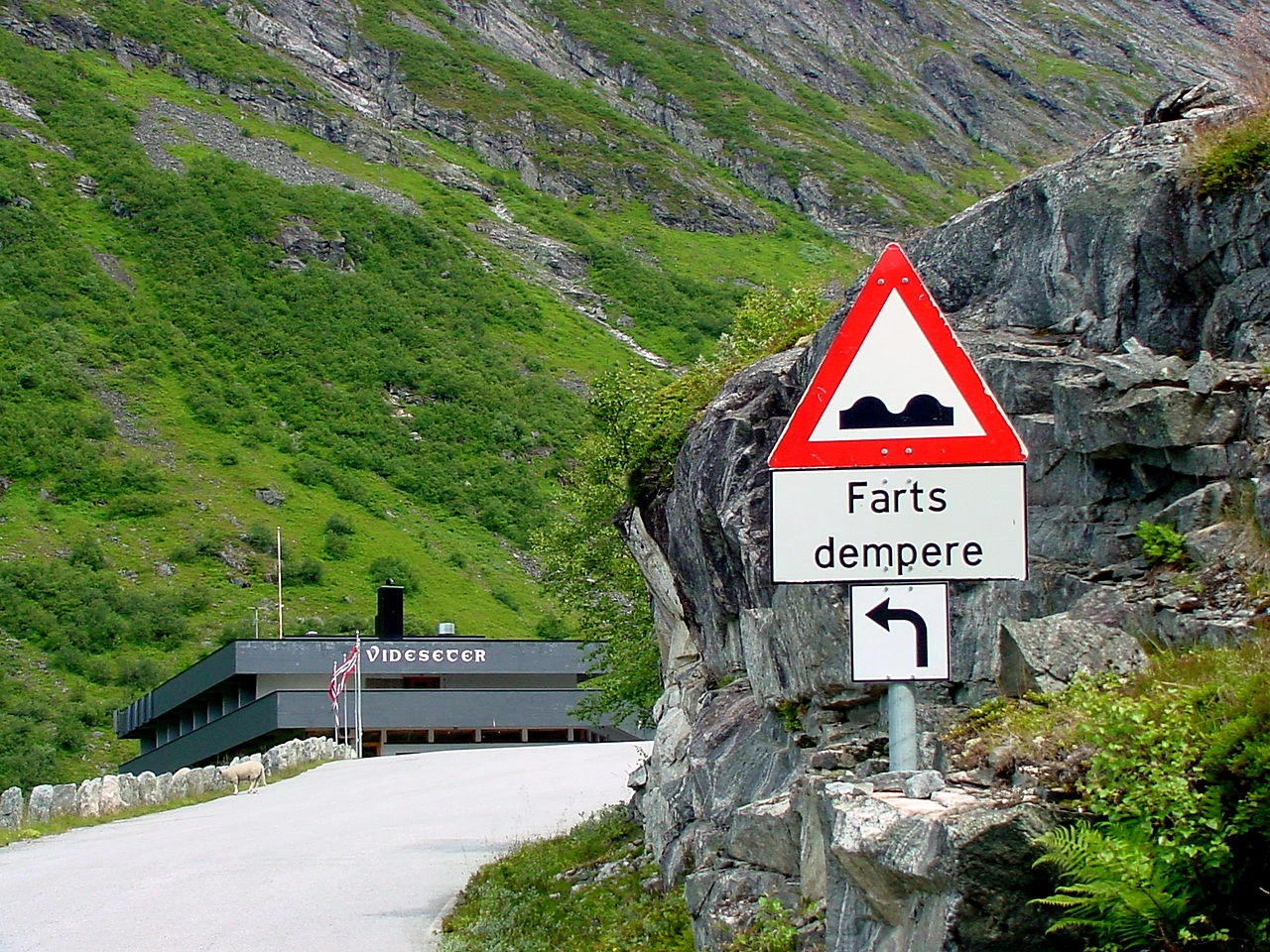
Resalto
What is the purpose of a speed bump?

A speed bump is intended to physically reduce vehicle speeds. It encourages drivers to slow down in places where pedestrians, cyclists, children or local traffic may be present.

How can you recognise a speed bump?

A speed bump is a raised section extending across all or part of the road. It may be marked with contrasting paint, road markings or warning signs to make it more visible.

Is a speed bump the same as a speed table?

No. A speed bump or speed hump normally has a rounded profile. A speed table has ramps leading to a longer, flat raised section that may contain an intersection or pedestrian crossing.

Is a speed cushion the same as a speed bump?

No. A speed cushion is a narrower raised device that does not cover the full width of a traffic lane. Its design may allow buses and emergency vehicles to pass with less disturbance while still slowing smaller vehicles.

Is there a universal speed limit over a speed bump?

No. The legal speed depends on the country, traffic signs and road type. Even when no special limit applies, drivers must cross the device at a speed that is safe for the road, vehicle and passengers.

How should you approach a speed bump?

Check surrounding traffic, reduce your speed smoothly and approach in a straight line where possible. Avoid sudden braking immediately before the bump.

Should you brake while crossing a speed bump?

Most of the necessary braking should be completed before reaching the raised surface. Cross at a steady, low speed and avoid harsh braking or acceleration while the wheels are on the device.

Should you drive across a speed bump at an angle?

Normally not. Cross in the normal direction of the traffic lane unless the road layout requires otherwise. Driving diagonally may place the vehicle in the path of approaching or overtaking traffic.

May motorcycles and bicycles use a speed bump?

Yes. Riders should reduce speed, keep the vehicle stable and cross as directly as possible. Painted or wet raised surfaces may provide less grip.

Do pedestrians have priority at a speed bump?

Not automatically. A speed bump does not by itself create a pedestrian crossing. Pedestrian priority depends on crossings, traffic signals, signs and local law.

Does a speed bump change priority at an intersection?

No. The presence of a raised surface does not normally change the priority rules. Drivers must continue to follow traffic signs, signals and the ordinary intersection rules.

May you overtake on a speed bump?

Overtaking may be restricted by local law or signs. Even where it is not expressly prohibited, drivers should avoid overtaking when the raised surface, limited space or nearby vulnerable road users make the manoeuvre unsafe.

May you stop or park on a speed bump?

This depends on local law. Stopping or parking may be prohibited because the vehicle could obstruct visibility, traffic flow or the purpose of the traffic-calming device.

Can a speed bump damage a vehicle?

A correctly designed speed bump should be crossed safely at an appropriate speed. Crossing too quickly may damage tyres, wheels, suspension, bodywork or cargo and may cause passengers discomfort.

Does the road speed limit change after a speed bump?

Not necessarily. A special limit may apply only to the raised device, while a signed speed restriction or speed zone may continue beyond it. Drivers must follow the applicable signs and local rules.

Why do buses and emergency vehicles sometimes avoid speed bumps?

Raised devices can affect passenger comfort, emergency response and large vehicles. Some roads therefore use speed tables, cushions or other traffic-calming measures designed to reduce these effects.

1 Noruega 2 Autopista 3 Zona 4 Límite de velocidad 5 Túnel 6 Resalto 7 Pendiente 8 Carril bus 9 Ceda el paso 10 Glorieta 11 Vía con prioridad 12 Paso a nivel 13 Zona escolar 14 Cruce de animales 15 Desprendimiento de rocas 16 Aeronaves 17 Curva 18 Obras 19 Señal de control de velocidad 20 Semáforos 21 Advertencia de semáforos 22 Permiso de conducir 23 Ruta ciclista 24 Estacionamiento 25 Prohibido estacionar 26 Disco de estacionamiento 27 Marcha atrás 28 Equitación 29 Límite de población 30 Matrícula 31 Estación de carga 32 Peligros 33 Camión 34 Autobús 35 Policía 36 Ambulancia 37 Taxi 38 Norma europea de emisiones 39 Bache 40 Camino 41 Partículas 42 Contaminación del aire 43 Hora punta 44 Código de circulación 45 Canaleta de la calle 46 Bicicleta de carga 47 Vehículo forestal 48 Vehículo de construcción 49 Camión articulado 50 Trolebús 51 Speed pedelec 52 Vehículo de reparto 53 Motor al ralentí 54 Grúa 55 Tracción a las cuatro ruedas 56 Bicicleta 57 Equipamiento de motocicleta 58 Vía férrea 59 Caravana 60 Remolque 61 Enganche de remolque 62 Camión de bomberos 63 Sirena 64 Convoy 65 Luces de vehículos de emergencia 66 Maquinaria agrícola 67 Bicicleta eléctrica 68 Vehículo eléctrico 69 Pedelec 70 Cuadriciclo 71 Microcoche 72 Vehículo todoterreno 73 Furgoneta 74 Vehículo recreativo 75 Scooter 76 Trikke 77 Vehículo de movilidad personal 78 Monopatín 79 Segway 80 Patinete 81 Patines 82 Cartero 83 Autoestopista 84 Niño pequeño 85 Niño 86 Discapacidad 87 Moto de nieve 88 Tren para automóviles 89 km/h 90 mph 91 Velocímetro 92 Altura libre del vehículo 93 Camino de tierra 94 Conducción 95 Sistema start-stop 96 Cambio manual 97 Cambio automático 98 Acelerador 99 Cuentarrevoluciones 100 Volante ...