
Normas de tráficoPortugal

Aprende normas de tráfico con explicaciones claras y ejemplos visuales en nuestro libro ilustrado, diseñado para que estudiar sea sencillo y ameno.


1 Portugal 2 Autopista 3 Zona 4 Límite de velocidad 5 Carril bici 6 Parada de autobús 7 Calle sin salida 8 Señal de STOP 9 Glorieta 10 Paso a nivel 11 Dirección obligatoria 12 Zona escolar 13 Adelantamiento 14 Cruce de animales 15 Circulación en sentido contrario 16 Semáforos 17 Espejo de tráfico 18 Frontera internacional 19 Estacionamiento 20 Prohibido estacionar 21 Estacionamiento para personas con discapacidad 22 Marcha atrás 23 Atracción turística 24 Matrícula 25 Estación de carga 26 Autobús 27 Policía 28 Ambulancia 29 Norma europea de emisiones 30 Bache 31 Camino 32 Partículas 33 Contaminación del aire 34 Hora punta 35 Código de circulación 36 Canaleta de la calle 37 Bicicleta de carga 38 Vehículo forestal 39 Vehículo de construcción 40 Camión articulado 41 Trolebús 42 Speed pedelec 43 Vehículo de reparto 44 Motor al ralentí 45 Grúa 46 Tracción a las cuatro ruedas 47 Bicicleta 48 Equipamiento de motocicleta 49 Vía férrea 50 Caravana 51 Remolque 52 Enganche de remolque 53 Camión de bomberos 54 Sirena 55 Convoy 56 Luces de vehículos de emergencia 57 Maquinaria agrícola 58 Bicicleta eléctrica 59 Vehículo eléctrico 60 Pedelec 61 Cuadriciclo 62 Microcoche 63 Vehículo todoterreno 64 Furgoneta 65 Vehículo recreativo 66 Scooter 67 Trikke 68 Vehículo de movilidad personal 69 Monopatín 70 Segway 71 Patinete 72 Patines 73 Cartero 74 Autoestopista 75 Niño pequeño 76 Niño 77 Discapacidad 78 Tren para automóviles 79 km/h 80 mph 81 Velocímetro 82 Altura libre del vehículo 83 Camino de tierra 84 Conducción 85 Sistema start-stop 86 Cambio manual 87 Cambio automático 88 Acelerador 89 Cuentarrevoluciones 90 Volante 91 Dirección asistida 92 Exploración visual 93 Espejo 94 Combustible 95 Indicador de combustible 96 Gasolina 97 Diésel 98 Líquido de escape diésel 99 Seguro de automóvil 100 Botiquín de primeros auxilios ...

1. Portugal

Portugal se encuentra en el extremo occidental de la península ibérica, en el suroeste de Europa, comparte su única frontera terrestre con España y está orientado hacia el océano Atlántico; el país también incluye las Azores y Madeira. Se circula por la derecha. Las condiciones de las carreteras van desde rutas metropolitanas concurridas alrededor de Lisboa y Oporto y grandes autopistas norte-sur hasta carreteras sinuosas por el interior montañoso y vías empinadas en las islas atlánticas. El portugués es la lengua normalmente utilizada para la información escrita en las señales de tráfico, mientras que la mayoría de señales de advertencia y reglamentación utilizan símbolos reconocibles internacionalmente.

Una característica especialmente importante para los visitantes es el sistema de peajes de autopista de Portugal. No existe una viñeta nacional de autopista: algunas rutas siguen siendo de peaje, con plazas convencionales y tramos que utilizan únicamente cobro electrónico. Sin embargo, la red ha cambiado considerablemente en los últimos años. Desde el 1 de enero de 2025 se eliminaron los peajes en varios antiguos tramos de pago, incluidos la A22, A23 y A24, y desde el 1 de enero de 2026 toda la A25 también es gratuita. Por ello, los conductores deben comprobar la situación actual de los peajes de la ruta prevista en lugar de basarse en mapas o información de viaje antiguos.

AI
¿Por qué lado de la carretera se circula en Portugal?

Se circula por el lado derecho de la carretera. Los adelantamientos se realizan normalmente por la izquierda.

¿Cuál es el número de emergencia en Portugal?

Llame al 112 para servicios de emergencia como policía, ambulancia o bomberos. El número está disponible en toda la Unión Europea.

¿Cuál es el límite de alcohol para conducir en Portugal?

El límite general de alcohol en sangre es de 0,5 g/l. Un límite inferior de 0,2 g/l se aplica a conductores en periodo probatorio y a determinados conductores profesionales y de servicios especiales, incluidos taxis, TVDE, vehículos pesados, emergencias y transporte de mercancías peligrosas.

¿Cuál es el límite de velocidad en zonas urbanas de Portugal?

Para un turismo ordinario, la velocidad máxima general en una zona urbana es de 50 km/h, salvo que las señales impongan otro límite.

¿Cuál es el límite de velocidad fuera de zonas urbanas en Portugal?

Para un turismo ordinario sin remolque, la velocidad máxima general en carreteras ordinarias fuera de zonas urbanas es de 90 km/h, salvo que se señalice otro límite.

¿Cuál es el límite de velocidad en carreteras reservadas a automóviles y motocicletas en Portugal?

Para un turismo ordinario sin remolque, la velocidad máxima general en una carretera reservada a automóviles y motocicletas es de 100 km/h, salvo que las señales indiquen lo contrario.

¿Cuál es el límite de velocidad en las autopistas de Portugal?

Para un turismo ordinario sin remolque, la velocidad máxima general en autopista es de 120 km/h, salvo que se indique un límite inferior.

¿Existe una velocidad mínima en las autopistas portuguesas?

Sí. En autopista, los conductores normalmente no deben circular a una velocidad instantánea inferior a 50 km/h, sin perjuicio de las situaciones en las que la carretera, el tráfico o la seguridad exijan ir más despacio.

¿Qué usuarios tienen prohibido utilizar las autopistas portuguesas?

Las autopistas están prohibidas a peatones, bicicletas, ciclomotores, determinadas motocicletas pequeñas y triciclos, cuadriciclos, vehículos agrícolas y varios otros usuarios lentos. También están prohibidos los vehículos o conjuntos que no puedan superar los 60 km/h, o cuya velocidad máxima permitida sea de 60 km/h o inferior.

¿Necesita una viñeta de autopista en Portugal?

No. Portugal no utiliza una viñeta nacional de autopista. En su lugar, se cobran peajes en determinadas carreteras y tramos mediante plazas convencionales, cobro electrónico o una combinación de sistemas.

¿Siguen siendo de peaje todas las autopistas portuguesas?

No. Portugal mantiene autopistas de peaje, pero los peajes se eliminaron de varias rutas y tramos desde el 1 de enero de 2025. La red gratuita incluye, entre otras, la A22, A23 y A24, y desde el 1 de enero de 2026 toda la A25 también tiene tarifa de peaje cero.

¿Cómo funcionan los peajes electrónicos de autopista en Portugal?

Algunas carreteras de peaje utilizan cobro exclusivamente electrónico, donde equipos instalados sobre la vía identifican los vehículos sin obligarlos a detenerse. Los conductores de vehículos matriculados en el extranjero deben organizar un método de pago compatible y comprobar la red de peajes vigente antes de viajar.

¿Deben los turismos utilizar los faros durante el día en Portugal?

No existe una obligación general para los turismos ordinarios de utilizar luces de cruce durante todo trayecto diurno con buena visibilidad. Las luces deben utilizarse desde el anochecer hasta el amanecer y durante el día siempre que la visibilidad sea insuficiente, por ejemplo con niebla, lluvia intensa, nieve, humo o polvo. Pueden aplicarse requisitos adicionales cuando se indique o a determinados tipos de vehículos.

¿Deben las motocicletas utilizar los faros durante el día en Portugal?

Sí. Las motocicletas, ciclomotores, triciclos y cuadriciclos deben circular normalmente con la luz de cruce delantera y la luz de posición trasera encendidas.

¿Son obligatorios los neumáticos de invierno o las cadenas para nieve en Portugal?

Portugal no tiene una obligación estacional general de neumáticos de invierno para turismos ordinarios. Sin embargo, cuando se muestre la señal D9 de cadenas para nieve, los vehículos solo pueden continuar con cadenas montadas en dos ruedas motrices. Estas condiciones son especialmente relevantes en carreteras de montaña con nieve o hielo.

¿Son obligatorios los cinturones de seguridad en Portugal?

Sí. Conductores y pasajeros deben utilizar los cinturones de seguridad y demás dispositivos de seguridad exigidos legalmente instalados en el vehículo, salvo determinadas exenciones legales.

¿Cuándo deben utilizar los niños un sistema de retención infantil en Portugal?

Los niños menores de 12 años y de menos de 135 cm de altura deben utilizar normalmente un sistema de retención infantil homologado adecuado para su tamaño y peso. Generalmente se transportan en los asientos traseros, salvo las excepciones legales específicas.

¿Son obligatorios los cascos de motocicleta en Portugal?

Sí. Los conductores y pasajeros de motocicletas, ciclomotores, triciclos y cuadriciclos deben llevar normalmente un casco oficialmente homologado, correctamente colocado y abrochado. Se aplican excepciones limitadas a vehículos con estructuras rígidas de protección adecuadas.

¿Puede utilizar un teléfono móvil mientras conduce en Portugal?

Los conductores no deben manipular de forma continua ni utilizar equipos que puedan interferir con la conducción, incluido un teléfono de mano. Se permite el uso manos libres cuando no requiere manipular continuamente el dispositivo.

¿Se aplica la prioridad de la derecha en Portugal?

Sí. En una intersección o cruce sin señales ni otra regla de prioridad aplicable, el conductor debe normalmente ceder el paso a los vehículos que se aproximan por la derecha.

¿Quién tiene prioridad en una glorieta en Portugal?

Los conductores que entran en una glorieta deben ceder el paso al tráfico que ya circula por ella. Si se toma la primera salida, debe utilizarse el carril derecho; para una salida posterior, debe pasarse al carril derecho solo después de rebasar la salida inmediatamente anterior a la que se desea tomar.

¿Qué deben hacer los conductores en los pasos de peatones en Portugal?

En un paso señalizado no regulado, los conductores deben reducir la velocidad y, si es necesario, detenerse para peatones o ciclistas que ya hayan comenzado a cruzar. Al girar hacia otra carretera, también deben dejar pasar a peatones y ciclistas que crucen esa carretera, incluso si no existe un paso señalizado.

¿Qué significa una luz ámbar de semáforo en Portugal?

Una luz ámbar normalmente significa detenerse. El conductor solo puede continuar cuando ya esté tan cerca del semáforo que detenerse exigiría una frenada brusca. Una luz verde permite avanzar únicamente cuando la intersección puede despejarse con seguridad.

¿Qué equipamiento de seguridad debe llevar un turismo en Portugal?

Los vehículos de motor incluidos en la norma portuguesa de equipamiento deben llevar un triángulo de emergencia y un chaleco de seguridad retrorreflectante homologados. Cuando un vehículo queda inmovilizado en la calzada o el arcén, el triángulo debe colocarse normalmente al menos 30 m detrás y ser visible desde al menos 100 m; la persona que lo coloque o atienda el vehículo debe llevar el chaleco.

¿Cuánto espacio deben dejar los conductores al adelantar a un ciclista en Portugal?

El conductor de un vehículo de motor debe mantener una distancia lateral de al menos 1,5 metros respecto a un ciclista y reducir la velocidad durante el adelantamiento.

¿Tiene Portugal zonas de bajas emisiones?

Sí, pero están definidas por cada municipio y no por un único sistema nacional de zonas de bajas emisiones. Los conductores deben comprobar las normas del municipio al que vayan a entrar, especialmente en las grandes ciudades.

¿Puede detenerse o estacionar en una autopista portuguesa?

Detenerse o estacionar en una autopista está generalmente prohibido salvo en los lugares específicamente previstos para ello. Una parada forzosa por avería o accidente está sujeta a normas de seguridad de emergencia independientes.

2. Autopista

Una autopista es una carretera especialmente diseñada y señalizada para el tráfico de vehículos de motor. Las autopistas suelen tener calzadas separadas para los sentidos opuestos, acceso controlado mediante entradas y salidas designadas, ningún acceso directo a propiedades colindantes y ningún cruce al mismo nivel con otras carreteras, vías férreas o caminos.

En las autopistas se aplican normas de tráfico especiales. Los usuarios permitidos, los límites de velocidad, las normas de carril, los peajes y los procedimientos de emergencia varían entre países, por lo que los conductores deben respetar las señales y normas de tráfico locales.

How can you recognise a motorway?

A motorway is normally identified by a special motorway sign at its entrance. It commonly has separate carriageways, controlled entrances and exits, and no ordinary intersections or direct access to neighbouring properties.

Who may use a motorway?

Motorways are primarily intended for motor vehicles capable of travelling safely at motorway speeds. Pedestrians, cyclists, animals and certain slow vehicles are generally prohibited, but the exact access requirements differ between countries.

What is the speed limit on a motorway?

There is no universal motorway speed limit. The applicable limit depends on the country, road section, vehicle category and driving conditions. Posted or variable speed-limit signs may replace the general national limit.

How should you enter a motorway?

Use the entrance or acceleration lane to observe motorway traffic and adjust your speed where possible. Enter only when there is a safe gap and follow the local priority and merging rules.

How should you leave a motorway?

Move into the correct lane in good time and signal when required. Enter the exit or deceleration lane before reducing your speed, unless traffic, signs or road conditions require you to slow down earlier.

Which lane should you use on a motorway?

Follow the local keep-left or keep-right rule and any lane-direction signs. Lanes closer to the centre of the motorway are commonly used for overtaking, but lane-use rules differ between countries and vehicle categories.

Can you stop on a motorway?

Voluntary stopping and parking are normally permitted only in designated parking or service areas. Drivers may still have to stop because of congestion, an emergency or another unavoidable situation.

Can you reverse or make a U-turn on a motorway?

Reversing, making a U-turn and driving against the direction of traffic are generally prohibited. If you miss an exit, continue to the next suitable exit.

What should you do if your vehicle breaks down?

Move the vehicle out of the traffic lanes when this can be done safely, activate the hazard warning lights and follow the local breakdown procedures. Leave the vehicle safely, keep away from moving traffic and use a warning triangle or safety vest where required by local law.

What is the difference between a motorway and an expressway?

A motorway normally has the highest level of access control and is governed by specific motorway rules. An expressway may have similar characteristics but may permit different road users or contain lower-standard junctions. The legal distinction varies between countries.

3. Zona

Una zona de tráfico es un área en la que una norma de tráfico se aplica a todas las carreteras o tramos incluidos. La norma normalmente comienza en una señal de entrada a zona y sigue siendo aplicable hasta pasar la señal correspondiente de fin de zona.

Las zonas pueden regular la velocidad, el estacionamiento, el acceso, las categorías de vehículos, las emisiones u otros comportamientos de tráfico. Las señales utilizadas, las carreteras incluidas y el efecto de las intersecciones o excepciones locales dependen de la legislación de tráfico local.

Zona
What is a traffic zone?

A traffic zone is a defined area in which a particular restriction, prohibition or obligation applies throughout the included roads rather than only at one location.

How can you recognise a traffic zone?

A traffic zone normally begins with a zone-entry sign showing the applicable rule. A corresponding end-of-zone sign indicates where that rule stops applying.

What is the difference between a zone sign and an ordinary traffic sign?

An ordinary sign usually applies to a particular road, direction, lane or section. A zone sign applies throughout a designated area, which may contain several roads and intersections.

Does a zone normally continue after an intersection?

Usually, yes. A zonal rule commonly continues through intersections until an end-of-zone sign is reached. The exact effect of intersections depends on local law.

How does a traffic zone end?

A traffic zone normally ends when you pass the corresponding end-of-zone sign. The normal road rules or another signed regulation then apply.

Can more than one rule apply inside a zone?

Yes. A zone may contain several regulations, such as a speed limit together with parking or access restrictions. Drivers must observe every applicable sign.

Can another traffic sign apply inside a zone?

Yes. A local sign may introduce a different or more restrictive rule on a particular road or section. Whether the original zonal rule resumes afterwards depends on local law and the type of regulation.

What types of traffic zones exist?

Common examples include speed zones, parking zones, low-emission zones, pedestrian zones, cycling zones, school zones and zones restricting particular vehicle categories.

Is a traffic zone the same as a built-up area?

No. A built-up area is a broader legally defined urban area. A traffic zone imposes a specific signed rule and may be located inside or outside a built-up area.

Is a traffic zone the same as a residential area?

No. A residential area describes an area mainly used for housing. It may contain one or more traffic zones, but the terms do not automatically have the same legal meaning.

Does a zonal rule apply to every road user?

Not necessarily. The sign, symbol or additional panel may limit the rule to particular vehicles, road users, times or circumstances.

What should you do when entering a traffic zone?

Observe the entrance sign carefully, identify every displayed rule and remember that the regulation may continue across several roads and intersections until the zone ends.

4. Límite de velocidad

Un límite de velocidad es la velocidad máxima legal permitida en una carretera, carril o dentro de una zona designada. Puede estar establecido por la legislación general de tráfico o indicado mediante señales fijas, variables o temporales.

Un límite de velocidad es un máximo, no una velocidad objetivo. Los conductores deben circular más despacio cuando el tráfico, la visibilidad, el tiempo, el estado de la carretera, los usuarios vulnerables o el estado del vehículo hagan insegura la velocidad máxima permitida.

Límite de velocidad
What is a speed limit?

A speed limit is the maximum legal speed permitted on a road, lane or within a designated area. It does not require drivers to travel at that speed.

How can you recognise a speed limit?

A speed limit is commonly displayed as a number on a regulatory traffic sign. General limits may also apply automatically because of the country, road category, vehicle type or surrounding area, even when no speed-limit sign is present.

Is the speed limit a recommended driving speed?

No. It is the highest speed legally permitted under suitable conditions. Drivers must reduce their speed whenever travelling at the limit would be unsafe.

Can you drive more slowly than the speed limit?

Yes. Drivers should travel more slowly when required by traffic, weather, visibility, road conditions or nearby vulnerable road users. Driving unnecessarily slowly may nevertheless be prohibited when it obstructs normal traffic.

Does the same speed limit apply to every vehicle?

Not always. Lower limits may apply to heavy vehicles, buses, vehicles towing trailers, novice drivers or other vehicle categories. The lowest applicable limit must be respected.

What is a default speed limit?

A default speed limit applies automatically to a particular road type or area when no traffic sign indicates another limit. Examples include general limits for motorways, built-up areas or roads outside built-up areas.

Does a posted speed limit replace the default limit?

Usually, yes. A legally placed speed-limit sign normally introduces another maximum speed, although lower vehicle-specific or special-road limits may continue to apply.

When does a speed-limit sign take effect?

A speed restriction normally begins at the location of the sign. Drivers should reduce their speed before passing the sign so that they are already travelling within the limit when it takes effect.

When does a speed limit end?

A signed limit may end at an intersection, an end-of-limit sign, another speed-limit sign or the beginning or end of a legally defined area. The exact rule differs between countries.

Does an intersection end a speed limit?

This depends on local law. An ordinary speed restriction may end at an intersection in some countries, while a zonal speed limit normally continues across intersections until an end-of-zone sign.

What is a speed zone?

A speed zone is an area in which the displayed maximum speed applies throughout all included roads. The limit normally remains in force until the corresponding end-of-zone sign.

What is a variable speed limit?

A variable speed limit is displayed on an electronic or changeable sign and may be adjusted according to congestion, weather, incidents or roadworks. When activated, it has the same legal importance as another applicable regulatory speed sign.

Can different lanes have different speed limits?

Yes. Signs positioned above individual lanes may impose different limits on those lanes. Drivers must observe the limit applying to the lane they use.

Can a temporary speed limit apply?

Yes. Temporary limits may be introduced near roadworks, collisions, hazards or special events. Drivers must follow the temporary traffic signs and instructions that are legally in force.

May you exceed the speed limit while overtaking?

No. Overtaking does not normally permit a driver to exceed the applicable maximum speed. The manoeuvre must be completed safely while respecting the speed limit.

Do poor conditions change the legal speed limit?

Some countries impose specific lower limits in rain, snow or other conditions. Even where the numerical limit does not change, drivers must reduce their speed sufficiently for the conditions.

5. Carril bici

Un carril bici es una parte de una carretera o una ruta separada destinada principalmente o exclusivamente a personas que circulan en bicicleta. Puede estar físicamente separado del tráfico motorizado, marcado sobre la calzada o identificado mediante señales.

Los carriles bici pueden ser de un solo sentido, de doble sentido o compartidos con otros usuarios. Los usuarios permitidos, el sentido de circulación, las normas de prioridad y la obligación de utilizarlo dependen de las señales y normas de tráfico locales.

Carril bici
How can you recognise a bike path?

A bike path may be identified by a bicycle traffic sign, bicycle symbols, coloured surfacing or road markings. It may run beside the carriageway or follow a completely separate route.

Is a bike path the same as a bike lane?

Not always. A bike lane is normally marked directly on or beside the carriageway, while a bike path may be physically separated from motor traffic. The terminology and legal distinction vary between countries.

Must cyclists use a bike path?

This depends on local law and the signs displayed. Some bike paths are mandatory, while others are optional. Cyclists may also be permitted to leave a path to turn, overtake or avoid an obstruction.

Can a bike path carry traffic in both directions?

Yes. Some bike paths are two-way, but others may be used only in the direction indicated by signs, markings or their position beside the road. Cyclists should not assume that every path permits travel in both directions.

May pedestrians use a bike path?

Pedestrians may use a bike path where it is designated as a shared-use path or where local law permits it. On a cycle-only path, pedestrians may be prohibited or permitted only when no suitable pedestrian facility is available.

May mopeds or speed pedelecs use a bike path?

This depends on the country, vehicle category, road speed and traffic signs. Some bike paths permit or require certain mopeds or speed pedelecs, while others are reserved exclusively for ordinary bicycles.

May motor vehicles use a bike path?

Normally not. Motor vehicles may cross a bike path to enter another road or property where this is permitted, but they must follow the applicable priority rules and must not endanger path users.

Who has priority where a vehicle crosses a bike path?

Priority depends on the road layout, signs, signals and local law. Drivers crossing a continuous bike path commonly have to give way to its users, but cyclists approaching a separate cycle crossing may not automatically have priority before entering it.

Does a cyclist always have priority at a cycle crossing?

No. A marked cycle crossing does not universally give an approaching cyclist priority. Cyclists should enter cautiously and observe approaching traffic unless signs, signals or local rules clearly give them priority.

Is there a speed limit on a bike path?

Some countries or local authorities impose specific limits, particularly on shared paths. Even without a posted limit, cyclists must travel at a safe and considerate speed for the width, visibility and number of other users.

May you stop or park on a bike path?

Normally not. Stopping or parking on a bike path can force cyclists into motor traffic and may be expressly prohibited by law.

What should cyclists do when passing pedestrians?

Reduce speed, give a clear warning where appropriate and leave sufficient space. Pedestrians may change direction unexpectedly, especially on a shared path.

What should cyclists do when a bike path is blocked?

Slow down and check surrounding traffic before leaving the path. Avoid the obstruction safely and return to the bike path when permitted and practical.

Can cyclists ride side by side on a bike path?

This depends on local law and the available width. Even where riding side by side is permitted, cyclists must not block, endanger or unnecessarily hinder other path users.

What is the difference between a bike path and a shared-use path?

A bike path is intended primarily or exclusively for cycling. A shared-use path is legally intended for cyclists together with pedestrians or other indicated road users, who must use the space considerately.

6. Parada de autobús

Una parada de autobús es un lugar designado donde autobuses u otros vehículos de transporte público se detienen para que los pasajeros suban o bajen. Puede estar indicada mediante una señal, marcas viales, refugio, plataforma elevada u otros elementos.

Las normas sobre parar, estacionar, adelantar y ceder el paso a autobuses que salen de una parada varían entre países. Los conductores deben prestar especial atención a peatones que puedan cruzar cerca de la parada.

Parada de autobús
What is a bus stop?

A bus stop is a designated location where buses stop so that passengers can board or leave the vehicle.

What should you watch for near a bus stop?

Watch for buses entering or leaving the stop, passengers near the roadway and pedestrians who may cross the road.

Can you park at a bus stop?

Parking or stopping at or near a bus stop is often restricted or prohibited so that buses can reach the stop safely. The exact restrictions depend on local traffic rules.

7. Calle sin salida

Una calle sin salida es una carretera que no permite continuar hacia otra vía porque termina más adelante. Puede acabar en una zona para dar la vuelta, una propiedad, un obstáculo o un tramo reservado a peatones o ciclistas.

Los conductores deben evitar entrar si necesitan continuar más allá del final y estar preparados para dar la vuelta o retroceder con seguridad. Una calle sin salida para vehículos de motor puede seguir ofreciendo paso a peatones o ciclistas.

Calle sin salida
What is a dead-end road?

A dead-end road is a road that provides no through route for some or all vehicles. Traffic entering it normally has to return by the same route.

How can you recognise a dead end?

A dead end may be indicated by a blue rectangular sign showing a road blocked at one end. The exact colour, design and symbol vary between countries.

Does a dead-end sign prohibit entry?

Normally not. It generally provides information rather than prohibiting access. Drivers may enter to reach a destination unless another sign restricts entry.

Is a dead-end sign the same as a no-entry sign?

No. A dead-end sign warns that the road does not continue as a through route. A no-entry sign prohibits drivers from entering in the indicated direction.

Does a dead-end road always physically end?

No. It may end at a wall, gate, turning area or private property, or it may continue as a narrower path that motor vehicles cannot use.

Can pedestrians continue through a dead end?

Sometimes. A separate symbol, sign or visible path may indicate that pedestrians can continue beyond the point where motor traffic ends.

Can cyclists continue through a dead end?

Sometimes. A sign may indicate a through route for cyclists, but cyclists must still follow any access, direction and path-use rules that apply.

Does a dead-end sign change the speed limit?

No. The normal road, zonal or posted speed limit remains applicable. Drivers should nevertheless reduce speed when space, visibility or nearby pedestrians require it.

Does a dead-end road have different priority rules?

No. Traffic lights, priority signs and the ordinary intersection rules continue to apply.

Does traffic leaving a dead-end road have to give way?

Not solely because the road is a dead end. Priority depends on the signs, road surface, road category and local priority rules.

May you make a U-turn in a dead-end road?

A driver may turn around where the manoeuvre is legal, safe and does not obstruct other road users. Local signs or road markings may prohibit it.

May you reverse in a dead-end road?

Reverse only when necessary and when the route is clear. Give way to all other road users and avoid reversing for a long distance where a safer turning place is available.

Who has priority while a vehicle is turning around?

A driver performing a turning or reversing manoeuvre must normally give way to other road users.

May you park in a dead-end road?

The dead-end sign itself does not normally prohibit parking. Drivers must follow the ordinary parking rules and must not block entrances, pedestrian routes, emergency access or turning areas.

May you park in the turning area?

Only where parking is permitted and sufficient room remains for other vehicles to turn. Blocking the turning area can force vehicles to reverse for an unsafe distance.

Why should large vehicles avoid some dead-end roads?

Trucks, buses and vehicles towing trailers may not have enough space to turn around. Drivers should check the route and any length, width, weight or access restrictions before entering.

Can emergency vehicles enter a dead-end road?

Yes. Emergency and service vehicles may need access to properties within it. Other vehicles should not block the road or its turning space.

What should you do after entering a dead end by mistake?

Continue cautiously to a suitable turning place. Turn around or reverse only after checking carefully for pedestrians, cyclists, vehicles and other obstacles.

Does the absence of a dead-end sign guarantee a through route?

No. Temporary closures, private access, gates, roadworks or outdated navigation information may still prevent passage. Drivers must observe the actual road and signs.

8. Señal de STOP

Una señal de STOP obliga a los conductores a detener completamente el vehículo antes de continuar. La parada debe realizarse en la línea de detención, antes del paso de peatones o, si no existen, en un punto desde el que se pueda observar con seguridad el tráfico transversal.

Después de detenerse, el conductor debe ceder el paso a cualquier usuario que tenga prioridad y continuar solo cuando sea seguro. La forma y el texto de la señal pueden variar ligeramente entre países.

Señal de STOP
What does a stop sign mean?

A stop sign requires a driver to come to a complete stop and give way before proceeding.

How can you recognise a stop sign?

A stop sign is commonly a red octagonal sign displaying the word STOP. Some countries use another legally recognised design, so drivers must learn the signs used locally.

Must you stop when no other traffic is visible?

Yes. The obligation to stop applies even when the road appears completely clear.

What is a complete stop?

A complete stop means that the vehicle has ceased moving entirely. Merely slowing down or allowing the vehicle to continue rolling does not satisfy the requirement.

Where should you stop?

Stop before the stop line where one is provided. Without a line, stop at the legally prescribed position before entering the intersection, crossing or priority road.

May you stop beyond the stop line?

No. The required first stop must be made before the line. If visibility is limited, move forward cautiously after stopping and stop again where necessary before proceeding.

Must every vehicle in a queue stop separately?

Yes. Each driver must make an individual complete stop. Following another vehicle through without stopping is not permitted.

Does stopping give you priority?

No. After stopping, you must continue to give way to all road users who have priority.

Who must you give way to?

Give way to traffic on the road being entered or crossed and to pedestrians, cyclists or other road users who have priority under the applicable rules.

What is the difference between a stop sign and a give-way sign?

A stop sign always requires a complete stop. A give-way sign requires the driver to yield but normally allows continued movement when the road is clearly free.

May you turn after stopping?

Yes. After stopping and giving way, you may turn in any direction permitted by signs, signals, lane arrows and road markings.

May you turn right at a red traffic light after stopping?

This depends entirely on local law and traffic signs. A stop sign does not by itself permit a turn against a red light.

Does a stop sign impose a speed limit?

No. It imposes a stopping and yielding obligation. The normal posted or general speed limit remains applicable before and after the intersection.

Does a stop sign apply to cyclists?

In many countries, cyclists are drivers and must stop unless a specific sign or local rule provides an exception.

What happens at an all-way stop?

The order in which drivers may proceed depends on local rules, commonly involving arrival order, vehicle position and turning direction. Drivers should communicate cautiously and never assume another driver will yield.

What if two vehicles stop at the same time?

Apply the local priority rule and proceed only when the intentions of the other driver are clear. Avoid forcing the other vehicle to brake or change direction.

Do traffic lights override a stop sign?

Where functioning traffic lights control the same movement, they commonly take precedence over the stop sign. Local rules determine what applies when the lights are switched off or flashing.

Do instructions from a police officer override a stop sign?

Yes. Instructions from an authorised traffic officer normally take precedence over traffic signs and ordinary priority rules.

Can a temporary stop sign be legally binding?

Yes. A correctly placed temporary stop sign at roadworks, an event or another temporary traffic arrangement must be obeyed.

What should you do when the stop sign is partly hidden?

If you recognise that a stop sign applies, reduce speed and obey it. Report damaged, obscured or missing signs to the responsible road authority where appropriate.

9. Glorieta

Una glorieta es una intersección en la que el tráfico circula alrededor de una isla central en una dirección establecida. Las entradas y salidas pueden tener uno o varios carriles y estar controladas por señales, marcas o semáforos.

Las normas de prioridad en las glorietas varían entre países y según la señalización. Los conductores deben colocarse correctamente, ceder el paso cuando sea obligatorio, señalizar según las normas locales y comprobar la presencia de ciclistas y peatones antes de salir.

What is a roundabout?

A roundabout is a circular road arrangement where traffic travels in one direction around a central island before leaving through the chosen exit.

How can you recognise a roundabout?

A roundabout is normally identified by a circular-direction sign, a central island and entry roads controlled by signs, markings or local priority rules.

Which direction does traffic travel around a roundabout?

The direction depends on the country’s driving side. Traffic normally travels anticlockwise in right-hand-traffic countries and clockwise in left-hand-traffic countries.

Who has priority at a roundabout?

Priority differs between countries and roundabout designs. Entering traffic commonly gives way to traffic already circulating, but drivers must always follow the actual priority signs and signals.

Must you stop before entering a roundabout?

Not always. Stop when required by a stop sign, traffic light or approaching priority traffic. Otherwise, reduce speed and enter only when there is a safe gap.

Does a roundabout always have a give-way sign?

No. The sign arrangement depends on local law. Some circular intersections use ordinary priority rules or traffic lights instead.

How should you approach a roundabout?

Reduce speed, observe the signs and markings, choose the appropriate lane and check for pedestrians, cyclists and circulating traffic.

Which lane should you choose?

Follow the lane arrows and destination signs. As a general guide, use the lane appropriate for your exit, but exact lane-selection rules differ between countries and roundabout layouts.

May you use an inner lane?

Yes, where the road layout and local rules permit it. Before leaving, change lanes safely and give way to road users already travelling in the lane you wish to enter.

Do you need to signal when entering?

This depends on local law. Some countries require a signal for particular exits, while others require no signal when entering.

Do you need to signal when leaving?

Usually, yes. Signal in the direction of the exit early enough to inform other road users, but not so early that your intention becomes misleading.

Does signalling give you priority?

No. A direction indicator communicates your intention but does not permit you to force another road user to brake or change direction.

May you change lanes on a roundabout?

Only when the lane markings permit it and the manoeuvre can be completed safely. Check mirrors and blind spots, signal where required and give way to traffic already in the target lane.

What should you do if you miss your exit?

Continue around the roundabout and approach the exit again. Do not stop, reverse or cut suddenly across another lane.

May you drive over the central island?

Normally not. Some small roundabouts have a mountable central section intended only for vehicles that cannot otherwise negotiate the road safely.

Do cyclists have priority at a roundabout?

Priority depends on whether cyclists use the carriageway, a continuing bike path or a separate cycle crossing. Drivers and cyclists must follow the signs, markings and local priority rules.

What should drivers check before leaving?

Check mirrors and blind spots for cyclists, mopeds, motorcycles and vehicles beside you. Also check for pedestrians crossing the exit road.

Do pedestrians have priority at roundabout exits?

Pedestrian priority depends on crossings and local law. Drivers should approach exits slowly and be prepared to yield to pedestrians crossing or about to cross.

Does a roundabout have a special speed limit?

Not universally. The posted or general road limit applies, but drivers must travel slowly enough to negotiate the roundabout safely.

May you overtake on a roundabout?

Passing another vehicle may be permitted on a multilane roundabout, but drivers must remain within their lane and avoid unsafe lane changes. Local overtaking restrictions may apply.

May you stop or park on a roundabout?

Follow local signs and parking rules. Stopping or parking on the circulating roadway is commonly prohibited or unsafe because it obstructs traffic and reduces visibility.

Is every circular intersection a roundabout?

No. A circular junction may be governed by traffic lights, ordinary priority rules or another road design. Its legal status depends on its signs and local definition.

10. Paso a nivel

Un paso a nivel es un lugar donde una carretera o camino cruza vías férreas al mismo nivel. Puede estar protegido mediante barreras, luces de advertencia, señales acústicas, señales de tráfico o una combinación de estas medidas.

Los usuarios deben aproximarse con cuidado y no entrar nunca cuando se acerque un tren, estén activas las señales de advertencia o la salida esté bloqueada. Deben cruzar sin demora y nunca detenerse, esperar o quedar atrapados sobre las vías.

What is a railway crossing?

A railway crossing is a place where a road or path crosses railway tracks at the same level.

What is another name for a railway crossing?

It may also be called a level crossing or, particularly in North America, a railroad crossing.

How can you recognise a railway crossing?

It may be indicated by warning signs, crossbuck signs, barriers, flashing lights, bells or road markings. The design differs between countries.

What is the difference between a crossing with and without barriers?

A protected crossing uses full or partial barriers to block road traffic when a train approaches. A crossing without barriers relies on signs, lights, bells or the road user’s own observation.

Must you always stop at a railway crossing?

Not necessarily. You must stop when required by lights, barriers, signs, an approaching train or an authorised person. At an unprotected crossing, slow down and proceed only after checking that no train is approaching.

What do flashing red lights mean?

Flashing red lights mean stop and do not enter the crossing. Remain stopped until the signal permits you to continue.

May you cross while a barrier is moving?

No. Do not enter while a barrier is lowering, rising or closed. Wait until the crossing is fully open and all prohibiting signals have stopped.

May you drive around a closed barrier?

No. Never drive, cycle or walk around or underneath a closed or moving barrier.

What does a warning bell mean?

A warning bell or audible signal normally means that the crossing is closing or that a train is approaching. Do not enter the crossing while it is sounding.

What does a flashing white light mean?

In some countries, a flashing white light indicates that the crossing equipment is operating and road users may pass when the route is clear. Its exact meaning depends on local law.

What should you do at a crossing without lights or barriers?

Reduce speed, look and listen carefully in both directions and cross only after making sure that no train or other rail vehicle is approaching.

May you cross immediately after a train has passed?

Not automatically. Another train may approach on a second track. Wait until all warning signals stop and the crossing is fully open.

What if traffic ahead is blocking the exit?

Do not enter the crossing unless there is enough room beyond the tracks for your entire vehicle. Never rely on traffic moving before a train arrives.

May you wait on the tracks?

No. Railway tracks must always remain clear. Do not stop because of congestion, traffic lights or another obstruction beyond the crossing.

May you overtake at a railway crossing?

Overtaking is often prohibited or restricted because another vehicle can obstruct the view of an approaching train or warning signal. Follow local signs and overtaking rules.

May you stop or park on a railway crossing?

No. Stopping or parking on the tracks creates an immediate and potentially fatal danger.

Do the crossing signals apply to pedestrians and cyclists?

Yes. Pedestrians and cyclists must obey barriers, lights, bells and authorised personnel in the same way as other road users.

Should cyclists ride across the tracks at an angle?

Where possible, cross the rails at an angle close to 90 degrees. Rails can trap a bicycle wheel, especially when they are wet or cross the road diagonally.

What should drivers of long vehicles check?

Make sure the entire vehicle and any trailer can clear the crossing without stopping. Consider the available space, road gradient, turning room and traffic beyond the tracks.

What should drivers of high vehicles check?

Observe all height restrictions and warning signs. Electrified railway lines may have overhead equipment that can be struck by an excessively high vehicle or load.

What should you do if the signals appear defective?

Treat the crossing with extreme caution. Do not assume that no train is approaching merely because the lights or barriers are not operating.

What should you do if your vehicle becomes stuck on the tracks?

Evacuate everyone immediately, move well away from the railway and contact the emergency services or railway operator. Do not remain in the vehicle or return for belongings.

Is a railway crossing the same as tram tracks in the road?

Not always. A railway crossing normally crosses tracks that are separate from the carriageway, while tram or street-running railway tracks may form part of the road itself.

11. Dirección obligatoria

Una señal de dirección obligatoria exige a los conductores circular únicamente en la dirección o una de las direcciones indicadas por su flecha o flechas. Puede obligar a seguir recto, girar o pasar un obstáculo por un lado determinado.

La señal no determina por sí sola la prioridad ni la velocidad. Los conductores deben seguir utilizando el carril adecuado, señalizar cuando sea obligatorio y ceder el paso conforme a las señales y normas de tráfico locales.

Dirección obligatoria
What does a mandatory-direction sign mean?

It requires drivers to follow the direction or one of the directions shown by the arrow or arrows.

How can you recognise a mandatory-direction sign?

It is commonly a blue circular sign with one or more white arrows. Colours and designs may differ in some countries.

What does an upward arrow mean?

It normally means that drivers must continue straight ahead and may not turn in another direction at that location.

What does a left or right arrow mean?

It normally requires drivers to turn or proceed in the direction shown by the arrow.

What do two arrows mean?

Drivers may choose one of the displayed directions. Any direction not shown is prohibited.

What does an arrow beside an obstacle mean?

It requires drivers to pass the traffic island, barrier, roadworks equipment or other obstruction on the side indicated by the arrow.

Is a mandatory-direction sign the same as a one-way sign?

No. A mandatory-direction sign prescribes a movement at a particular location. A one-way sign indicates the permitted direction along a road or carriageway.

Is it the same as a no-turn sign?

No. A mandatory sign states which direction must be followed, while a prohibition sign states which movement is forbidden. Both may produce a similar practical result.

Does the sign impose a speed limit?

No. Drivers must follow the applicable general, zonal or posted speed limit and reduce speed when necessary to complete the required movement safely.

Does the sign give you priority?

No. You must still obey traffic lights, priority signs and the ordinary rules concerning oncoming traffic, pedestrians, cyclists and other road users.

When does the obligation begin?

It normally applies at the sign, intersection or obstacle associated with it. An advance sign may indicate that the obligation begins farther ahead.

Can a mandatory-direction sign apply to only one lane?

Yes. When it is positioned above a particular lane or clearly associated with that lane, it normally applies only to traffic using that lane.

Can road arrows also prescribe a direction?

Yes. Lane arrows may require drivers to use a particular lane and follow one of the directions displayed within that lane.

Must you use an indicator?

Yes, when the required movement involves turning or changing position and local law requires signalling. The sign does not replace the obligation to indicate.

Does signalling give you priority?

No. An indicator communicates your intention but does not allow you to force another road user to brake or change direction.

May you make a U-turn?

Not when doing so would conflict with the mandatory direction or another prohibition. Drivers must follow the permitted route shown by the signs and markings.

May you reverse to avoid following the sign?

No. Reversing must not be used to evade a mandatory direction. Continue along a lawful route and turn around later where permitted.

Does the sign apply to cyclists?

Cyclists are normally treated as drivers and must obey the sign unless a supplementary panel or local rule expressly exempts them.

Can other road users be exempted?

Yes. Supplementary signs may exempt or separately regulate cyclists, public transport or other specified categories where local law permits this.

What if the required route is blocked?

Do not enter a closed or unsafe route. Stop where safe and follow temporary signs, traffic lights or instructions from authorised personnel.

Do traffic lights cancel a mandatory-direction sign?

Not normally. Traffic lights determine when traffic may proceed, while the mandatory-direction sign determines which movement is permitted.

Do police instructions override the sign?

Yes. Instructions from an authorised traffic officer normally take precedence over traffic signs and ordinary traffic rules.

Can a temporary mandatory-direction sign be binding?

Yes. Properly placed temporary signs at roadworks, incidents or events must be obeyed.

What is a mandatory route for dangerous-goods vehicles?

It requires vehicles carrying specified dangerous goods to follow a designated route suitable for their cargo and any applicable tunnel restrictions.

When does the mandatory direction end?

The obligation is normally completed after the driver has followed the required direction at the intersection or passed the obstacle on the indicated side.

12. Zona escolar

Una zona escolar es una carretera o conjunto de carreteras cerca de un colegio donde numerosos niños pueden caminar, montar en bicicleta, cruzar la calzada o subir y bajar de vehículos. Puede identificarse mediante señales de advertencia, señales de zona, marcas viales, medidas de calmado del tráfico o luces intermitentes.

Pueden aplicarse límites de velocidad especiales, restricciones de estacionamiento o normas de acceso de forma permanente o únicamente durante las horas de entrada y salida. Los conductores deben reducir la velocidad, vigilar atentamente a los niños y estar preparados para detenerse.

Zona escolar
What is a school area?

A school area is a road or group of roads near a school where drivers should expect large numbers of children, pedestrians, cyclists and stopping vehicles.

How can you recognise a school area?

It may be identified by school warning signs, speed-zone signs, flashing lights, road markings, coloured surfacing or traffic-calming measures. The signs differ between countries.

Does every road beside a school have special legal rules?

No. Special school-area rules normally apply only where signs, signals or local legislation establish them.

What is the speed limit in a school area?

There is no universal school-area speed limit. The applicable limit depends on the country, region, signs and whether a variable restriction is active.

Is the school-area speed limit always active?

Some limits apply permanently, while others apply only during displayed times or when flashing or variable signs are active. Drivers must observe the actual sign arrangement.

Must you drive below the displayed limit?

Yes, when necessary. The displayed speed is a maximum. Children, congestion, poor visibility or vehicles stopping near the school may require a much lower speed.

Why are children especially vulnerable in traffic?

Children may have difficulty judging speed and distance, may be hidden by parked vehicles and may enter the road unexpectedly.

How should you approach a school area?

Reduce speed early, increase your observation and be prepared for children crossing, cyclists changing direction, vehicle doors opening and cars stopping suddenly.

Do children automatically have priority everywhere?

No. Priority depends on crossings, traffic lights, authorised crossing supervisors and local rules. Drivers must nevertheless take exceptional care to avoid endangering children.

Must you obey a school crossing supervisor?

Yes. Drivers and other road users must follow lawful instructions given by an authorised person controlling traffic for children.

May children cross away from a pedestrian crossing?

This depends on local pedestrian rules. Drivers should remain prepared for children to cross unexpectedly, even where they are required to use a nearby crossing.

Does a school sign create pedestrian priority?

Not by itself. A school warning sign alerts drivers to children but does not normally create the legal effect of a pedestrian crossing.

Does a school area change intersection priority?

No. Traffic lights, priority signs and the ordinary intersection rules remain applicable unless another traffic arrangement provides otherwise.

May you overtake in a school area?

Overtaking may be restricted by signs or local law. Even where it is permitted, drivers should not overtake when children, crossings, limited visibility or stopped vehicles make the manoeuvre unsafe.

May you stop to drop off a child?

Only where stopping is permitted and can be completed safely. Do not stop on a crossing, pavement, bike path, bus stop or another prohibited or dangerous location.

May you park near a school entrance?

Follow the parking signs and markings. Do not block entrances, pavements, bike paths, crossings, visibility or access for buses and emergency vehicles.

Why is double parking dangerous near a school?

It blocks traffic and visibility and may force children to walk between moving vehicles or enter the road from behind an obstruction.

What should you watch for near school buses?

Expect children to enter or leave the vehicle and possibly cross the road. Reduce speed and follow any special warning lights, signs or local school-bus rules.

May cyclists ride through a school area?

Normally, yes. They must follow the applicable road, bike-path, speed and priority rules. Drivers should expect inexperienced young cyclists.

Is a school area the same as a school street?

No. A school area normally remains open to traffic under special caution or speed rules. A school street temporarily restricts or excludes motor traffic during specified periods.

Is a school area the same as a Zone 30?

Not universally. A school area may form part of a Zone 30, use another speed limit or have a variable restriction that applies only at particular times.

When do the school-area rules end?

They normally end at an end sign, at the end of the stated time period or when the variable signal is no longer active. The surrounding road rules then apply.

13. Adelantamiento

El adelantamiento es la maniobra de pasar a otro usuario que circula en la misma dirección. Normalmente implica desplazarse a otra posición o carril, pasar al usuario más lento y volver a la posición adecuada cuando sea seguro.

Antes de adelantar, el conductor debe asegurarse de que hay visibilidad y espacio suficientes, comprobar espejos y ángulos muertos, señalizar cuando corresponda y verificar que ningún otro usuario ya está adelantando. La maniobra debe completarse sin superar el límite de velocidad ni poner en peligro a otros usuarios.

On which side should you overtake?

In right-hand traffic countries, overtaking normally takes place on the left. In left-hand traffic countries, it normally takes place on the right. National rules can provide exceptions in particular situations.

What should you check before overtaking?

Make sure there is sufficient visibility and space, check mirrors and blind spots, ensure that nobody behind has already started overtaking and confirm that you can safely return to your normal position after passing.

When should you not overtake?

Do not overtake where signs or road markings prohibit it or where visibility, approaching traffic, intersections, crossings, bends, hills or other conditions make the manoeuvre unsafe.

14. Cruce de animales

Una advertencia de cruce de animales indica un lugar o tramo donde animales salvajes, ganado o animales montados pueden entrar o cruzar la carretera. Los animales pueden aparecer de repente, moverse de forma imprevisible o ser difíciles de ver en la oscuridad, entre vegetación o con mal tiempo.

Los conductores deben reducir la velocidad, observar ambos lados de la carretera y mantenerse preparados para detenerse. La señal no concede por sí misma prioridad a los animales ni impone un límite numérico de velocidad, pero los conductores deben evitar asustarlos, ponerlos en peligro o colisionar con ellos.

Cruce de animales
What does an animals-crossing sign mean?

It warns that animals may enter or cross the road in the area ahead.

Which animals may the sign refer to?

Depending on the symbol and local conditions, it may refer to deer, cattle, horses, sheep, goats, wild boar or other animals.

How can you recognise an animals-crossing sign?

It is commonly a triangular warning sign displaying the silhouette of an animal. The species shown may indicate the type of animal most likely to be encountered.

Does the sign mean animals are always present?

No. It indicates an increased likelihood of animals crossing, not that animals will be present every time.

Does the sign impose a speed limit?

No. The normal posted or general speed limit remains applicable, but drivers must reduce speed when necessary to react safely.

Do animals have priority because of the sign?

No automatic priority is created by the warning sign. Drivers must nevertheless avoid danger and allow animals already on the road to pass safely.

How should you approach an animal-crossing area?

Reduce speed, increase your following distance and scan the road, verges, fields and vegetation for movement or reflected eyes.

When are wild animals most likely to appear?

Animal activity is often greater around dawn, dusk and darkness, although animals may cross at any time.

Why should you expect more than one animal?

Many animals travel in groups. When one animal crosses, others may follow immediately from the same direction.

Should you sound the horn?

Avoid unnecessary horn use or engine revving because it may frighten an animal and make its movement less predictable. Use a warning only when reasonably necessary to prevent danger.

Should you use full-beam headlights?

Use the appropriate lights without dazzling other road users. When an animal is visible, reduce speed and avoid relying on full beam to make it move away.

What should you do when an animal is on the road?

Slow down smoothly, stop when necessary and allow it enough time and space to leave. Avoid sudden acceleration or aggressive steering.

Should you swerve to avoid an animal?

Avoid an uncontrolled swerve that could cause a collision with another vehicle, tree, barrier, cyclist or pedestrian. Brake firmly while maintaining control and steer only when a safe escape path is clearly available.

How should you pass livestock?

Pass only when the animals and their handlers have sufficient space. Drive slowly, avoid noise and be prepared for an animal to change direction unexpectedly.

How should you pass a horse and rider?

Reduce speed, leave a large lateral distance and pass quietly. Avoid sounding the horn, accelerating sharply or passing when oncoming traffic prevents sufficient clearance.

Must you follow instructions from an animal handler?

Follow lawful instructions from an authorised person and cooperate with handlers controlling animals on or across the road.

May you overtake near an animal crossing?

The warning sign does not necessarily prohibit overtaking, but overtaking should be avoided when animals, limited visibility or approaching traffic make the manoeuvre unsafe.

What if an animal appears behind another vehicle?

Maintain enough following distance to see beyond the vehicle ahead. Be prepared for it to brake suddenly when an animal enters the road.

What should motorcyclists and cyclists do?

Reduce speed, keep both hands firmly in control and avoid sudden movements. Animals may react unexpectedly to quiet or fast-approaching two-wheeled vehicles.

What should you do after hitting an animal?

Stop safely, activate the hazard warning lights and check for injured people. Contact the emergency services or police when necessary and do not approach a wounded wild animal, which may defend itself.

Should you move an injured or dead wild animal?

Normally not. Keep a safe distance and allow the police, wildlife authorities or an animal-rescue service to handle it.

Can animals be present without a warning sign?

Yes. Drivers remain responsible for observing the road and adjusting their speed even where no animal warning sign is displayed.

15. Circulación en sentido contrario

La circulación en sentido contrario se produce cuando un conductor circula contra el sentido legalmente permitido del tráfico. Puede ocurrir en una calle de sentido único, carretera de calzadas separadas, entrada o salida de autopista u otro tramo reservado al tráfico de una sola dirección.

Circular en sentido contrario genera un riesgo extremo de colisión frontal. Los conductores deben respetar las señales de dirección, las de entrada prohibida, las flechas de carril y las marcas viales. Quien entre accidentalmente en una vía en sentido incorrecto debe reducir la velocidad, advertir al resto del tráfico, detenerse en el lugar más seguro disponible y contactar con los servicios de emergencia.

Circulación en sentido contrario
What is wrong-way driving?

Wrong-way driving means travelling against the legally permitted direction of traffic.

Where can wrong-way driving occur?

It can occur on one-way streets, divided roads, motorways, slip roads, tunnels, car parks and temporary traffic arrangements.

Why is wrong-way driving especially dangerous?

Other drivers do not expect approaching traffic in their lane, and the combined speeds can make a head-on collision extremely severe.

How can you recognise a prohibited direction?

Look for no-entry signs, one-way signs, mandatory-direction signs, lane arrows and road markings. Motorway exits may also have repeated signs or warning systems facing the wrong direction.

Is wrong-way driving the same as entering a no-entry road?

Entering past a no-entry sign can cause wrong-way driving, but the term also covers turning around on a divided road or using the wrong carriageway without passing such a sign.

Is driving against a one-way street always prohibited?

Normally, yes. However, signs may expressly permit certain road users, such as cyclists or public transport, to travel in the opposite direction.

Is authorised contraflow traffic wrong-way driving?

No. A cyclist, bus or other road user travelling in an expressly authorised contraflow lane or direction is using the road legally.

Can roadworks temporarily change the normal direction?

Yes. Temporary signs, barriers, lane signals and markings may redirect traffic onto another lane or carriageway. Follow the temporary arrangement rather than the usual road layout.

What should you do when you see a wrong-way driver?

Reduce speed immediately, keep as far as safely possible towards the outer edge of your carriageway and avoid sudden lane changes. Warn the police or emergency services as soon as this can be done safely.

Should you attempt to stop the wrong-way driver?

No. Do not block, chase or turn after the vehicle. Protect yourself and allow trained emergency services to intervene.

Should you flash your headlights?

A brief warning may help the driver recognise the error, but avoid prolonged or aggressive signalling that could cause panic or an unpredictable manoeuvre.

Should you sound the horn?

Use the horn only when reasonably necessary to warn of immediate danger. Your first priority is to reduce speed and create as much safe space as possible.

Should you stop in a live traffic lane?

Normally not. Sudden stopping may cause a rear-end collision. Slow down and move towards a safe shoulder, refuge or other protected location where possible.

What should you do after receiving a wrong-way-driver warning?

Reduce speed, stop overtaking, increase your following distance and remain in the lane or position recommended by the local authorities or warning system.

Should you continue using the overtaking lane?

Avoid unnecessary use of lanes nearest opposing or central traffic when a wrong-way driver has been reported. Follow local emergency guidance and electronic signs.

What should you do if you are driving in the wrong direction?

Slow down immediately, activate the hazard warning lights and use dipped headlights where required. Move to the safest available edge or shoulder and stop.

Should you accelerate to reach the next exit?

No. Increasing speed greatly increases the collision risk. Stop safely and wait for instructions from the police.

Should you make a U-turn across traffic?

No. Do not turn across live lanes, cross a central reservation or attempt to correct the mistake through another dangerous manoeuvre.

Should you reverse back to the entrance?

No. Reversing against traffic or along a motorway slip road creates additional danger. Stop safely and contact the emergency services.

Should you leave the vehicle after stopping?

This depends on the location and immediate danger. Remain protected from moving traffic and follow instructions from the emergency services. Do not stand in a live lane.

How should you contact the emergency services?

Stop safely before using a handheld phone. A passenger may call while the vehicle is moving when local law permits and this can be done without distracting the driver.

What information should you report?

Report the road name or number, direction, nearby exit or landmark, vehicle description and the wrong-way driver’s approximate location and direction.

What commonly causes wrong-way driving?

Possible causes include confusion at junctions, poor visibility, unfamiliar roads, impairment, navigation errors, turning around illegally or deliberately ignoring traffic signs.

How can drivers prevent entering the wrong direction?

Slow down at unfamiliar junctions, read signs before turning, verify the road layout and do not rely exclusively on navigation instructions.

Does a navigation system override traffic signs?

No. Traffic signs, signals, markings and instructions from authorised persons always take precedence over navigation guidance.

16. Semáforos

Los semáforos utilizan luces de colores, flechas o símbolos para regular cuándo los usuarios pueden avanzar, deben prepararse para detenerse o deben permanecer detenidos. Pueden existir señales independientes para determinadas direcciones, carriles, peatones, ciclistas o vehículos de transporte público.

Una luz verde permite avanzar solo cuando el recorrido está libre y la maniobra es legal. Los usuarios deben seguir respetando las normas de prioridad, restricciones de giro, marcas de carril e instrucciones de los agentes autorizados.
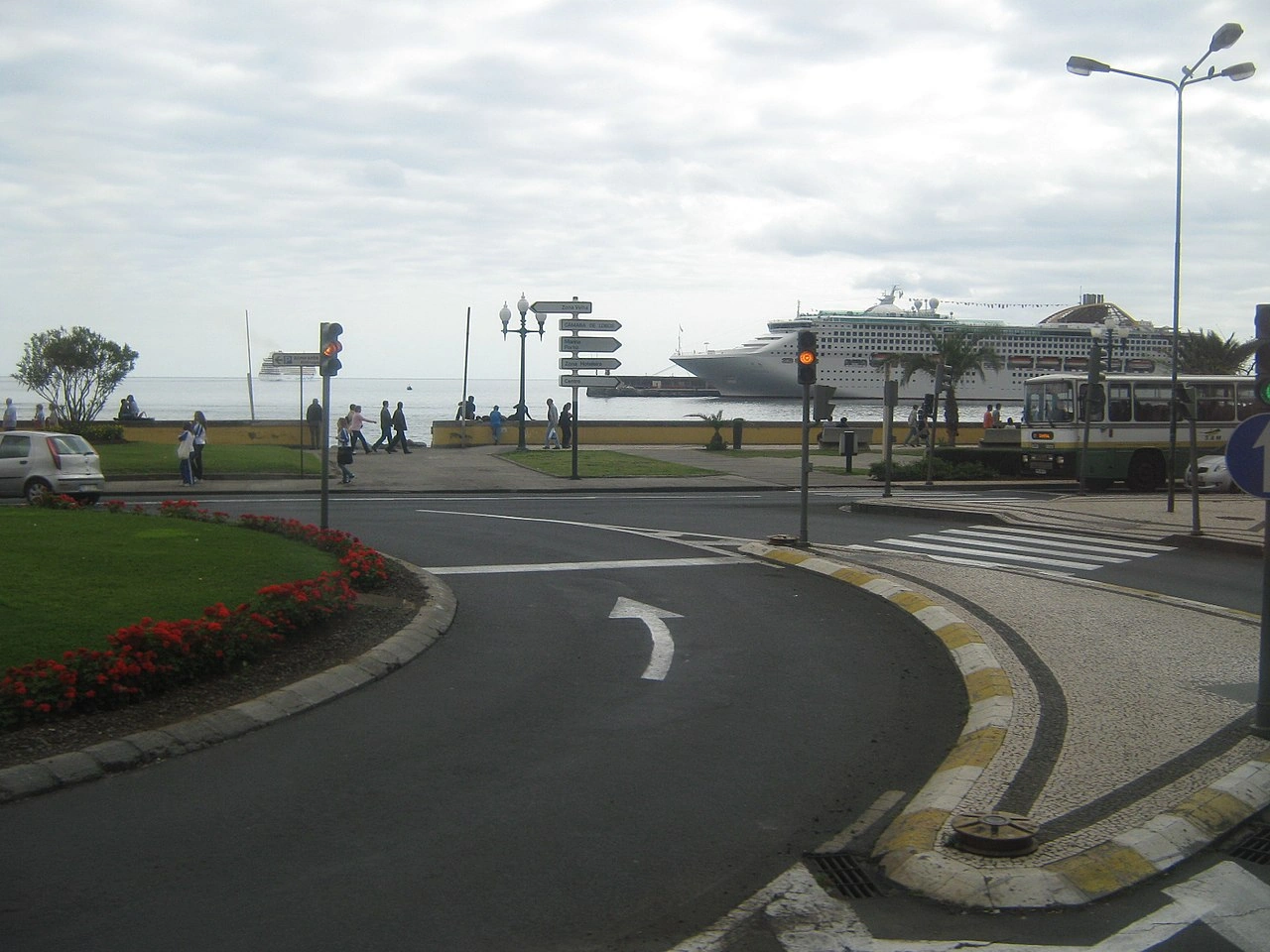
Semáforos
What are traffic lights?

Traffic lights are signals that use coloured lights, arrows or road-user symbols to regulate traffic movements.

What does a red traffic light mean?

A red light requires road users to stop before the stop line or signal and remain stopped until movement is permitted.

What does a steady amber light mean?

A steady amber light normally requires drivers to stop unless they are already too close to stop safely. It warns that the signal is changing to red.

What does a green traffic light mean?

A green light permits road users to pass the signal, but only when the route is clear and the intended movement is otherwise legal.

Does green mean that you have priority over everyone?

No. You may still have to give way to pedestrians, cyclists, oncoming traffic or other road users when turning or following a conditional arrow.

May you enter a blocked intersection on green?

No. Do not enter when congestion is likely to leave you stopped inside the intersection and obstructing crossing traffic.

Where should you stop at a red light?

Stop before the stop line. When no stop line is provided, stop before the traffic light or at another legally prescribed position.

May you cross the stop line and then stop?

No. The required stop must normally be completed before the stop line. Do not stop on a pedestrian or cycle crossing.

What if the light changes to amber while you are approaching?

Stop when this can be done safely. Continue only when you are already too close to stop without creating danger.

Should you accelerate to pass an amber light?

No. Do not accelerate to avoid stopping. Maintain control and stop unless doing so safely is no longer possible.

What do arrow-shaped traffic lights mean?

They have the same general meaning as circular lights, but the prohibition or permission applies only to the direction shown by the arrow.

What does a green arrow displayed with a red light mean?

It may permit travel in the indicated direction while other movements remain prohibited. Drivers may still have to give way to conflicting traffic and pedestrians.

Does a green arrow override a no-turn sign?

Not universally. Drivers must follow the complete local sign arrangement. A traffic signal does not necessarily cancel a separate regulatory prohibition.

May you turn right on red?

Only where local law or a specific sign or signal expressly permits it. There is no universal right to turn on red.

What does a flashing amber light mean?

It warns of a potential hazard and normally allows cautious passage. The ordinary priority arrangement remains applicable.

What should you do when the normal lights are flashing amber?

Reduce speed, observe the intersection carefully and follow the applicable priority signs or default priority rules.

What does a flashing red light mean?

Its meaning depends on local law. At railway crossings and some movable bridges, flashing red lights normally require road users to stop.

What do lane-control signals mean?

A red cross normally closes the lane, a green downward arrow opens it and an amber diagonal arrow instructs drivers to leave the lane in the indicated direction.

May you continue beneath a red lane-control cross?

No. Move out of the lane safely before reaching the red cross unless an authorised person or emergency rule directs otherwise.

What does an amber diagonal lane arrow mean?

It warns that the lane is closing or unavailable ahead. Drivers must move into the adjacent lane indicated by the arrow when safe.

Can separate lights apply to cyclists?

Yes. A signal displaying a bicycle symbol applies to the road users legally covered by that signal rather than to general motor traffic.

Can separate lights apply to pedestrians?

Yes. Pedestrian lights normally use red and green human figures to indicate whether pedestrians may begin crossing.

What does a flashing green pedestrian light mean?

It normally warns that the crossing period is about to end. Pedestrians who have not started should wait for the next green signal.

What if the pedestrian signal changes while someone is crossing?

A person who entered lawfully should continue without unnecessary delay. Turning drivers must allow the crossing to be completed safely.

Can buses and trams have separate traffic lights?

Yes. Public-transport signals may use bars, circles, triangles or other symbols that apply only to authorised service vehicles.

Do functioning traffic lights override priority signs?

They commonly replace the priority arrangement at that location. Priority signs may apply again when the normal signals are inactive or flashing.

Do instructions from a police officer override traffic lights?

Yes. Instructions from an authorised traffic controller normally take precedence over lights, signs, markings and ordinary rules.

What should you do when the lights are not working?

Reduce speed and follow the priority signs, temporary signals, authorised personnel or default priority rules that apply.

May you clear an intersection after the light turns red?

Yes, when you entered lawfully and must leave the intersection. Complete the movement cautiously without endangering other road users.

Does a green light impose a minimum speed?

No. Drivers may proceed but must continue at a safe and legal speed.

May you use a handheld phone while waiting at red?

This depends on local law. In many countries, a driver temporarily stopped in traffic is still considered to be driving and may not use a handheld device.

17. Espejo de tráfico

Un espejo de tráfico es un espejo convexo instalado para mejorar la visibilidad en lugares donde edificios, vegetación, curvas u otros obstáculos impiden ver claramente el tráfico que se aproxima. Suele utilizarse en intersecciones, accesos, aparcamientos y salidas estrechas.

El espejo puede ayudar a detectar otros usuarios, pero no sustituye la observación directa ni modifica las normas de prioridad. Los conductores deben avanzar lentamente y continuar comprobando el tráfico por otros medios.
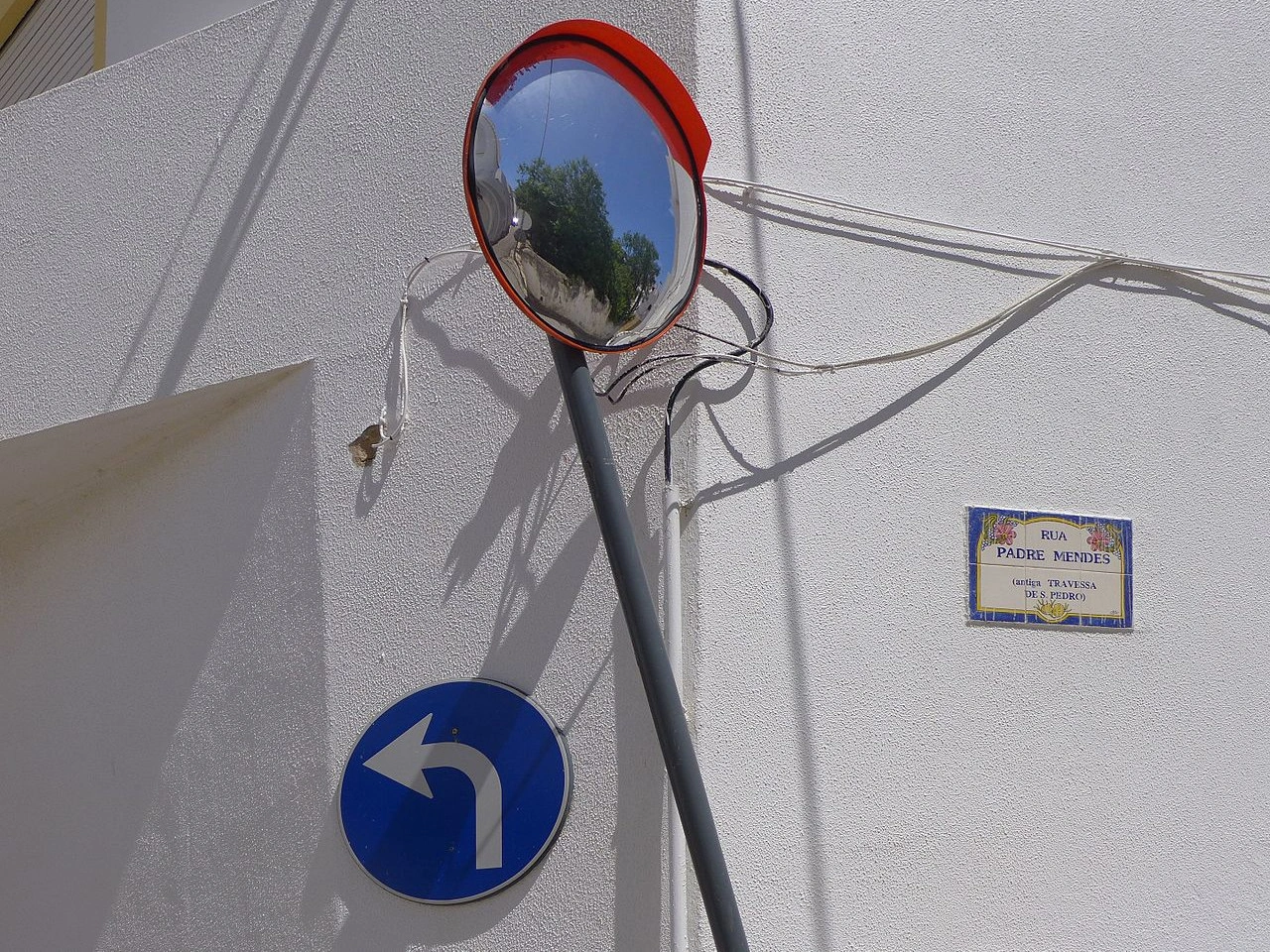
Espejo de tráfico
What is a traffic mirror?

A traffic mirror is a convex roadside mirror that helps road users see around an obstruction or into a road with limited visibility.

Where are traffic mirrors commonly installed?

They may be placed near intersections, narrow roads, bends, car-park exits, private driveways, tunnels or other locations where buildings, vegetation or road geometry obstruct the view.

Why is the mirror curved?

A convex surface provides a wider field of view than a flat mirror, allowing more of the approaching road to be seen.

Does a traffic mirror show an exact image?

No. The reflected image is distorted, and objects normally appear smaller and farther away than they really are.

Can you accurately judge speed in a traffic mirror?

Not reliably. The curved image makes it difficult to estimate how fast another road user is approaching.

Can you accurately judge distance in the mirror?

No. Distance can appear greater than it really is, so an approaching vehicle may reach the intersection sooner than expected.

Can the mirror create a blind area?

Yes. Its position and viewing angle may leave parts of the road outside the reflected image. Small cyclists, motorcycles or pedestrians may also be difficult to notice.

Does a traffic mirror give you priority?

No. It does not change priority. Drivers must continue to follow stop signs, give-way signs, traffic lights and the ordinary priority rules.

Does seeing an empty mirror mean the road is clear?

No. Another road user may be outside the reflected area, hidden by glare or too small to notice. Always check the road directly before proceeding.

Must you still stop at a stop sign?

Yes. The mirror does not replace the mandatory complete stop. Stop at the prescribed position, then use direct observation and the mirror as additional information.

Must you still give way?

Yes. You may proceed only when traffic with priority can continue without being forced to brake, stop or change direction.

How should you use a traffic mirror?

Approach slowly, stop when required and scan the mirror for movement. Then look directly in both directions and continue only after confirming that the road is clear.

Should you look only at the mirror?

No. Alternate between the mirror and direct observation. The mirror should supplement rather than replace normal checks.

Can rain affect a traffic mirror?

Yes. Rain, water droplets and spray may blur or partially obscure the reflected image.

Can frost or condensation affect it?

Yes. Dew, condensation, frost, ice or snow may make the mirror difficult or impossible to use.

Can sunlight cause problems?

Yes. Sunlight may create glare or reflections that hide approaching road users.

Can headlights be misleading at night?

Yes. Reflected headlights may make it difficult to determine the exact direction, distance or speed of an approaching vehicle.

Can the mirror move out of position?

Yes. Wind, impacts, vandalism, vibration or temperature changes may alter its orientation and make the reflected view inaccurate.

What if the mirror is dirty or damaged?

Do not rely on it. Proceed with additional caution and report the defect to the responsible road authority or property owner.

Does a traffic mirror impose a speed limit?

No. The applicable road or posted speed limit remains in force, but restricted visibility normally requires a lower approach speed.

Does it require drivers to sound the horn?

No. Use the horn only where local law permits it and a warning is reasonably necessary to prevent danger.

Can pedestrians and cyclists use the mirror?

Yes. It may help them observe approaching traffic, but they must also look directly and follow the applicable crossing and priority rules.

Can a private individual install a traffic mirror?

A mirror may generally be installed on private property with the owner’s permission, subject to local rules. Installing one on, above or beside a public road normally requires permission from the road authority.

Should a mirror replace better road design?

No. Removing vegetation, relocating parking, improving the intersection layout or changing traffic circulation may provide a safer and more reliable solution.

18. Frontera internacional

Una frontera internacional es el límite legal entre dos países. Una señal fronteriza puede identificar el país al que se entra y recordar a los conductores que pueden aplicarse normas de tráfico, límites de velocidad, señales, requisitos del vehículo y normas documentales diferentes.

La propia señal de frontera normalmente no obliga a detenerse. Los controles de pasaporte, inmigración o aduanas pueden realizarse en un puesto fronterizo, pero algunas fronteras internacionales pueden cruzarse sin controles rutinarios en virtud de acuerdos regionales.

Frontera internacional
What is an international border?

An international border is the legal boundary between two countries.

How can you recognise an international border?

It may be identified by a country-name sign, national or regional symbols, flags, border posts, customs facilities or passport-control signs.

Does every international border have a road sign?

No. Borders may be marked differently, and some minor roads or open-border areas may have only a small identification sign or boundary marker.

Does a border sign require you to stop?

Not normally. Stop only when required by traffic lights, barriers, officers, customs signs, passport controls or another instruction.

When do the destination country’s traffic rules begin?

The new country’s traffic laws apply from the international boundary, not merely from the next town or major intersection.

Does the border sign itself impose the new rules?

No. The rules change because you have entered another country. The sign identifies that change of jurisdiction.

Can the driving side change at a border?

Yes. Where neighbouring countries use different driving sides, a specially designed road arrangement guides traffic safely from one side to the other.

Can speed limits change at the border?

Yes. The destination country may have different general limits for motorways, built-up areas, rural roads and particular vehicle categories.

Is the border sign a speed-limit sign?

No. Drivers must learn the destination country’s general limits and obey any regulatory signs displayed after crossing.

Can traffic-sign designs change?

Yes. Colours, symbols, shapes and road-marking conventions may differ, even when neighbouring countries follow similar international standards.

Can vehicle-equipment requirements change?

Yes. Requirements concerning safety vests, warning triangles, winter tyres, lights, toll equipment or environmental stickers may differ between countries.

Which documents may be required?

Depending on the journey, drivers may need a passport or identity card, driving licence, vehicle-registration document, insurance evidence, visa or customs documents.

Is a border check the same as customs control?

No. Border or immigration control concerns people and travel documents. Customs control principally concerns goods, cargo, money and applicable duties or restrictions.

Can immigration and customs controls occur together?

Yes. Both may operate at the same border facility even though they perform different legal functions.

Does every border have passport control?

No. Countries participating in an open-border area may normally cross internal borders without routine checks, although temporary controls may still be introduced.

Does every border have customs control?

No. Countries within a customs union may allow goods to move across their internal borders without ordinary customs duties or routine customs formalities.

Is an open border completely uncontrolled?

No. Police, customs and other authorities may still conduct lawful checks, enforce national rules and temporarily control the border where permitted.

May you cross the border anywhere?

Only where local law permits it. External or controlled borders may have to be crossed through an authorised border-crossing point during its operating hours.

Can a border crossing be temporarily closed?

Yes. Closures or restrictions may result from security measures, emergencies, severe weather, roadworks or administrative decisions.

Can certain vehicles be restricted?

Yes. A crossing may restrict heavy vehicles, dangerous goods, agricultural traffic, pedestrians or cyclists because of road design or border-control facilities.

May goods have to be declared?

Yes. Commercial goods, restricted products, goods exceeding personal allowances and certain amounts of cash may require declaration.

Do tolls or road charges change at the border?

They may. The destination country may use toll roads, vignettes, distance-based charges, low-emission zones or other payment systems.

Should you rely only on navigation software?

No. Navigation information may not include current border controls, vehicle restrictions or document requirements. Follow official signs and instructions.

What should you do before an international road journey?

Check the destination and transit countries’ traffic rules, required documents, insurance, vehicle equipment, tolls and border or customs requirements.

Do instructions from border officers override ordinary signs?

Yes. Follow lawful instructions from authorised border, police and customs officers, even when they temporarily differ from the normal traffic arrangement.

19. Estacionamiento

Estacionar significa dejar un vehículo inmóvil en un lugar durante un periodo de tiempo, en lugar de detenerlo solo brevemente por las condiciones del tráfico u otra necesidad inmediata. Muchos países distinguen el estacionamiento de una parada corta para recoger o dejar pasajeros o para cargar o descargar mercancías, aunque la definición legal exacta varía.

El estacionamiento puede estar permitido, restringido, reservado, limitado en el tiempo o prohibido mediante señales de tráfico, marcas viales, zonas de estacionamiento y normas locales. Los conductores deben estacionar sin crear peligro ni obstrucción innecesaria y cumplir las condiciones relativas a pago, permisos, categorías de vehículos o duración máxima.

Estacionamiento
What is the difference between parking and stopping?

Parking generally means leaving a vehicle stationary for longer than a brief stop required for passengers, loading or unloading. A vehicle stopped because of traffic lights, congestion, an emergency or another traffic condition is normally not considered parked. The precise legal definitions vary between countries.

How can you tell where parking is allowed?

Look for parking signs, prohibition signs, road markings and parking-zone signs. Local rules may also permit parking along certain roads even when individual parking spaces are not marked.

Can you park anywhere if there is no sign prohibiting parking?

No. General traffic rules can prohibit parking even when no specific prohibition sign is present. Common examples include locations where a parked vehicle would obstruct visibility, crossings, intersections, cycle facilities or the movement of other traffic.

Can you park on a pavement or sidewalk?

Parking on a pavement or sidewalk is prohibited or restricted in many countries unless signs or markings specifically allow it. Vehicles must not force pedestrians into the roadway or block an accessible pedestrian route.

Can you park near a pedestrian crossing?

Parking on or close to a pedestrian crossing is generally restricted because a vehicle can hide pedestrians from approaching drivers. The required clearance distance varies between countries.

Can you park close to an intersection?

Many countries prohibit parking within a specified distance of an intersection because parked vehicles can reduce visibility and obstruct turning traffic. Follow the local distance requirements and any signs or markings.

What does a parking sign mean?

A parking sign identifies a place or area where parking is permitted or regulated. Additional signs or panels may specify time limits, payment requirements, vehicle categories, permits or particular parking arrangements.

How does paid parking work?

Where parking is subject to payment, drivers must follow the instructions displayed locally. Payment may be made through a parking meter, ticket machine, mobile application or another authorised system. The permitted duration and charging periods vary by location.

Who may use an accessible parking space?

Spaces marked for people with disabilities are reserved for vehicles displaying or registered with the required disability parking permit. Eligibility, permit display requirements and parking privileges depend on national and local law.

Can you leave a vehicle parked for an unlimited time?

Not necessarily. Local rules may impose a maximum parking duration, even where parking is otherwise permitted. Different limits may apply to abandoned, commercial, heavy or recreational vehicles.

20. Prohibido estacionar

Prohibido estacionar indica que los vehículos no pueden quedar estacionados en el lugar o tramo de carretera cubierto por la restricción. Según la legislación local, todavía puede permitirse detenerse brevemente para recoger o dejar pasajeros o para cargar o descargar mercancías, siempre que la parada en sí no esté prohibida.

La prohibición de estacionar puede aplicarse de forma continua o solo durante determinadas horas, días, categorías de vehículos o tramos de carretera. Su alcance exacto y las excepciones vienen determinados por la señal, los paneles complementarios, las marcas viales y las normas locales.
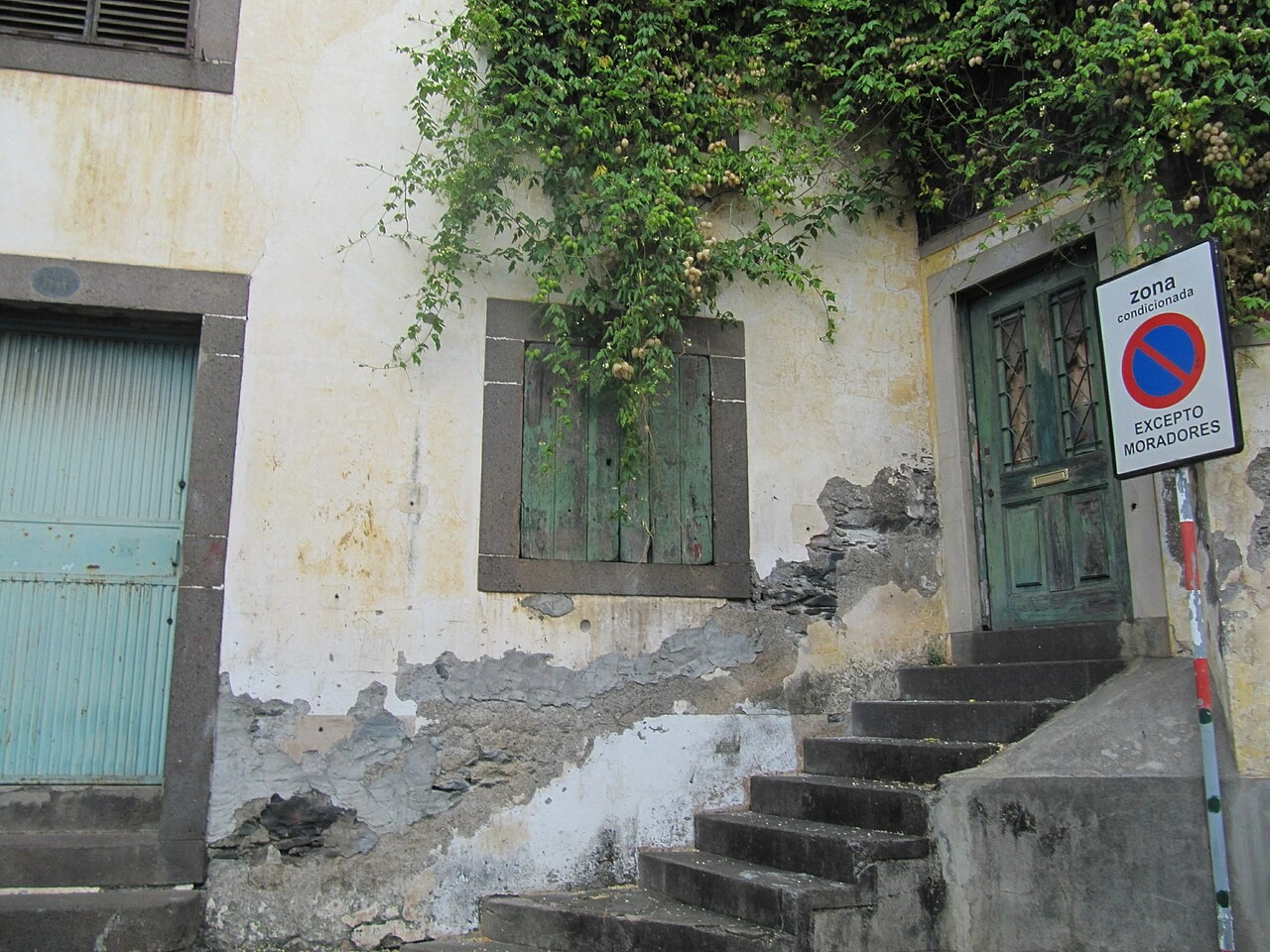
Prohibido estacionar
What does a no-parking sign mean?

A no-parking sign prohibits leaving a vehicle parked in the area or along the section of road to which the restriction applies. The exact legal definition of parking and the extent of the prohibition vary between countries.

Is no parking the same as no stopping?

No. A no-parking restriction commonly still permits certain brief stops, such as picking up or dropping off passengers or loading or unloading goods. A no-stopping restriction is stricter and generally prohibits voluntary stopping as well as parking.

Can you wait in your vehicle where parking is prohibited?

Remaining inside the vehicle does not necessarily mean that it is not parked. If the vehicle remains stationary beyond what local law permits as a brief stop, it may legally be considered parked even when the driver stays inside.

Can you pick up or drop off passengers in a no-parking area?

Often yes, if stopping is permitted and the vehicle remains there only as long as reasonably necessary for passengers to get in or out. Local rules may impose stricter restrictions at particular locations.

Can you load or unload goods where parking is prohibited?

In many countries, genuine loading or unloading is treated as stopping rather than parking and may therefore be permitted. The vehicle should remain there only for the time reasonably necessary for the activity.

How far does a no-parking restriction apply?

This depends on the country's signing rules. The restriction may continue to the next intersection, an end sign, a stated distance or the end of a designated zone. Supplementary arrows or distance panels may indicate its exact extent.

Does a no-parking sign apply on both sides of the road?

Usually a roadside no-parking sign applies only to the side of the road on which it is placed, unless it forms part of a zonal restriction or local signs indicate otherwise.

Can a no-parking restriction apply only at certain times?

Yes. A supplementary panel may restrict the prohibition to particular hours, days or periods. Outside those periods, parking may be permitted if no other rule prohibits it.

Can a no-parking restriction apply only to certain vehicles?

Yes. Additional signs or symbols may make a parking restriction applicable to particular vehicle categories, such as heavy vehicles, motorcycles or other specified vehicles.

Can you park immediately after a no-parking sign ends?

Only if parking is otherwise legal. The end of a specific no-parking restriction does not override general parking prohibitions near crossings, intersections, driveways, traffic signs or other protected locations.

21. Estacionamiento para personas con discapacidad

El estacionamiento para personas con discapacidad se refiere a plazas y privilegios reservados para personas con discapacidad que cumplen los requisitos aplicables. Las plazas reservadas suelen identificarse con el símbolo internacional de la silla de ruedas y situarse para facilitar el acceso a instalaciones cercanas.

El uso de una plaza reservada normalmente requiere una tarjeta o permiso válido para personas con discapacidad. El permiso suele corresponder a la persona autorizada y no a un vehículo concreto, y solo puede utilizarse cuando esa persona conduce o viaja en el vehículo.

Estacionamiento para personas con discapacidad
Who may use a disabled parking space?

Disabled parking spaces are intended for eligible people who hold a valid disabled parking permit or card. The exact eligibility requirements and permit system depend on the country.

Can someone use a disabled parking permit when the holder is not present?

Generally no. Disabled parking permits are normally personal and may only be used when the permit holder is driving or travelling in the vehicle.

Does a disabled parking permit always provide free parking?

No. A permit may provide access to reserved spaces or exemptions from certain parking restrictions, but rules concerning parking charges and time limits vary between countries and local authorities.

22. Marcha atrás

La marcha atrás consiste en conducir un vehículo hacia atrás. Se utiliza habitualmente al estacionar, salir de un espacio reducido o recolocar un vehículo cuando avanzar no es práctico.

Antes de dar marcha atrás, el conductor debe comprobar espejos y ángulos muertos, mirar cuidadosamente alrededor y asegurarse de que la zona posterior está libre. Debe hacerse lentamente y solo durante el tiempo necesario porque la visibilidad hacia atrás suele ser limitada.

Marcha atrás
What should you check before reversing?

Check behind and around the vehicle for pedestrians, cyclists, other vehicles and obstacles. Use mirrors and cameras where available, but also look directly because monitoring systems can have blind spots.

Who has priority when a vehicle is reversing?

In many countries, reversing is treated as a manoeuvre and the reversing driver must give way to other road users. The exact legal requirements depend on national traffic rules.

Should you reverse for a long distance?

No. Reversing should normally be limited to the distance necessary to complete the manoeuvre safely. Driving forward generally provides better visibility and vehicle control.

23. Atracción turística

Una atracción turística es un lugar de interés al que los visitantes pueden desplazarse por motivos culturales, históricos, recreativos, naturales o de entretenimiento. Entre los ejemplos se incluyen monumentos, castillos, museos, parajes escénicos, parques de atracciones y otros destinos destacados.

Las atracciones turísticas pueden indicarse mediante señales turísticas o de dirección que ayudan a los viajeros a encontrar el destino. Los colores, símbolos y tipos de atracciones mostrados varían entre países.

Atracción turística
What is a tourist attraction?

A tourist attraction is a place that visitors travel to because of its cultural, historical, natural, recreational or entertainment value.

What are examples of tourist attractions?

Examples include monuments, castles, museums, scenic locations, cultural sites, amusement parks and recreational destinations.

Can tourist attractions be indicated by road signs?

Yes. Many countries use tourist or direction signs to guide travellers toward important attractions and places of interest.

24. Matrícula

Una matrícula, también llamada placa de matrícula, es una placa que muestra un identificador único asignado a un vehículo por la autoridad competente. Permite identificarlo para fines como matriculación, control de tráfico, impuestos, seguro y control de estacionamiento.

El aspecto, formato, ubicación y número de placas exigidas varían entre países y categorías de vehículos. Los conductores deben asegurarse de que las matrículas estén correctamente instaladas, claramente visibles y legibles y seguir las normas locales cuando una placa se pierda, sea robada, dañada o sustituida.

Matrícula
What is a licence plate?

A licence plate is a plate displaying the registration identifier assigned to a vehicle. It allows authorities and other authorised systems to identify the vehicle's registration.

Is a licence plate the same as a registration plate?

Yes. Licence plate, registration plate and number plate are different terms commonly used for the plate displaying a vehicle's official registration number.

Does every vehicle need a licence plate?

Most motor vehicles used on public roads must display one or more registration plates, but requirements differ for motorcycles, trailers, agricultural vehicles and other special vehicle categories.

Do vehicles need both front and rear licence plates?

This depends on the country and vehicle type. Cars commonly require front and rear plates, while motorcycles and certain other vehicles may require only a rear plate.

Must a licence plate remain visible?

Yes. A required registration plate must normally remain clearly visible and readable. It should not be hidden by luggage, dirt, accessories or other objects.

Can you modify a licence plate?

Generally no. Changing the characters, colours, dimensions or appearance of an official plate may make it invalid or illegal. Plates and authorised reproductions must comply with local specifications.

What should you do if a licence plate is lost or stolen?

Follow the local reporting and replacement procedure. Many countries require the loss or theft to be reported to the police or vehicle-registration authority before a replacement plate can be issued.

Can you drive with a damaged licence plate?

A plate must remain legible and compliant with local requirements. If damage prevents it from being read or makes it invalid, it should be replaced according to the local registration procedure.

Can a licence plate be personalised?

Some countries allow motorists to request a personalised registration combination. The available characters, formats and prohibited combinations are determined by the registration authority.

Does a licence plate stay with the vehicle when it is sold?

This varies between countries. In some systems the plate remains with the vehicle, while in others it remains associated with the registered holder and may be retained or returned when the vehicle is sold.

25. Estación de carga

Una estación de carga es un lugar equipado con uno o más puntos donde la batería de un vehículo eléctrico o híbrido enchufable puede conectarse a una fuente de electricidad y recargarse. Puede estar situada junto a vías públicas, en aparcamientos, áreas de servicio o propiedades privadas.

Las plazas de carga pueden estar reservadas a vehículos que estén cargando y sujetas a restricciones de estacionamiento, límites de tiempo, pago u otras condiciones. Los conductores deben respetar las señales, normas de estacionamiento e instrucciones de carga aplicables.

Estación de carga
What is a charging station?

A charging station is a location where electric vehicles can be connected to an electricity supply to recharge their batteries. A station may contain one or several individual charging points.

Who can use an electric-vehicle charging station?

Charging stations are intended for vehicles that can be externally charged, such as battery-electric vehicles and plug-in hybrid vehicles. The exact vehicle categories permitted may be indicated by local signs or operator conditions.

Is a charging space an ordinary parking space?

Not necessarily. A space beside a charger may be reserved for electric vehicles or vehicles that are charging. Drivers must check the signs and markings before parking there.

Can a petrol or diesel vehicle park at a charging station?

Not where the parking space is officially reserved for electric vehicles. An ordinary parking space located near a charger may be different, so the applicable signs and markings determine who may park there.

Can an electric vehicle park at a charging point without charging?

This depends on the local traffic and parking rules. Many charging spaces require the vehicle to be connected to the charger, even if the vehicle itself is electric.

Do you have to pay to use a charging station?

Charging may be free or subject to payment. The price and payment method are determined by the charging operator, while separate parking charges may also apply.

Can a charging station have a maximum parking time?

Yes. Traffic signs, parking regulations or charging conditions may establish a maximum duration to encourage drivers to move their vehicles and make the charger available to others.

Must you move the vehicle when charging is finished?

Follow the local parking rules and charging conditions. Some locations require vehicles to leave after charging or impose additional fees or time limits when the charging session has ended.

Does using a charger override ordinary parking restrictions?

No. A charging station does not allow a driver to ignore no-parking rules, reserved spaces, time limits or other traffic regulations. The vehicle must still be legally parked.

Are all charging stations equally fast?

No. Charging stations can provide different charging powers. Some are intended for longer parking periods, while high-power chargers can recharge compatible vehicles much more quickly.