
Gestión del tráficoValonia

Aprende normas de tráfico con explicaciones claras y ejemplos visuales en nuestro libro ilustrado, diseñado para que estudiar sea sencillo y ameno.


54. Gestión del tráfico

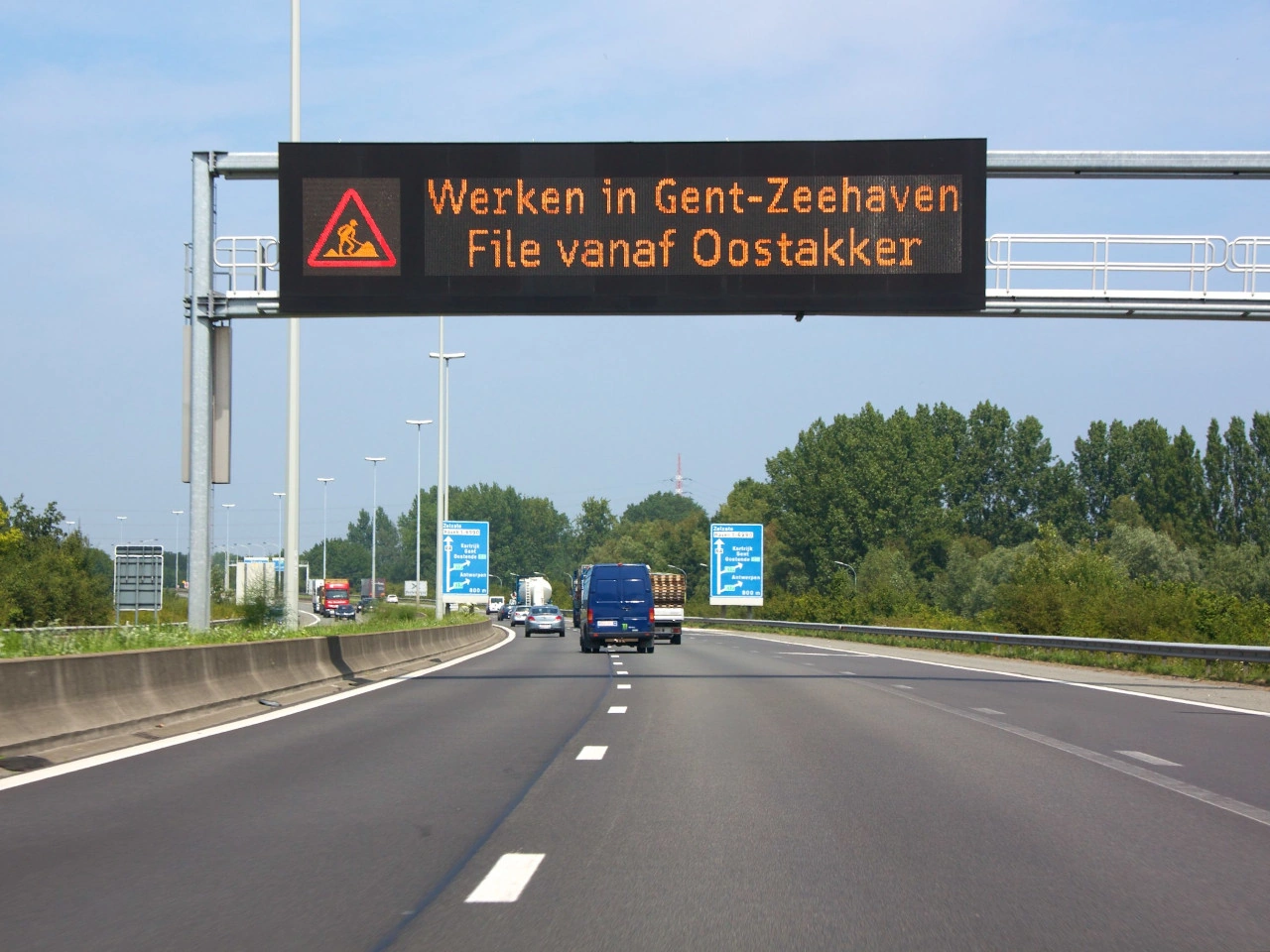
La gestión del tráfico es el control, regulación y orientación organizada de los usuarios para mejorar la seguridad, fluidez y uso eficiente de las carreteras. Puede incluir semáforos, señales, marcas, controles de carril, límites variables, desvíos e instrucciones de personas autorizadas.

La gestión puede ser permanente o temporal. Las medidas temporales son habituales durante obras, congestión, colisiones, eventos públicos u otros incidentes. Los usuarios deben seguir las señales e instrucciones aplicables en el lugar aunque difieran de la disposición normal.
Gestión del tráfico
How is traffic managed in Belgium?

Belgian traffic can be managed using traffic lights, road signs, road markings, lane-control signals, temporary traffic arrangements and instructions from authorised persons. Different measures may be used depending on traffic conditions, roadworks or incidents.

Must you obey traffic-management signs in Belgium?

Yes. Road users must obey official traffic lights, road signs and road markings when they comply with the prescribed form, are sufficiently visible and have been installed according to the applicable rules.

Which instruction has priority in Belgian traffic?

The orders of an authorised person take precedence over traffic signs and over the ordinary traffic rules. Traffic signs in turn take precedence over the general traffic rules.

What should you do if a police officer gives an instruction that conflicts with a traffic light?

You must follow the police officer's instruction. Orders given by an authorised person have a higher legal priority than traffic lights, road signs, road markings and the normal traffic rules.

Do traffic lights take precedence over priority signs in Belgium?

When traffic lights are operating at a location, the priority signs on the same road normally do not apply. There are specific exceptions, including flashing amber lights, lane-control signals and the B22 and B23 signs for cyclists and certain other riders.

What does a red cross above a Belgian traffic lane mean?

A red cross above a lane means that traffic is prohibited from using that lane or part of the road. Drivers must leave or avoid the closed lane as directed by the traffic-management signals.

What does a green arrow above a Belgian traffic lane mean?

A green downward-pointing arrow indicates that traffic may use the lane or part of the public road beneath it.

What does an orange diagonal arrow above a Belgian traffic lane mean?

An orange diagonal arrow, whether flashing or not, indicates that the lane must be left in the direction shown by the arrow. Drivers should change lane safely before reaching the closure.

What does a flashing amber traffic light mean in Belgium?

A flashing amber light means that road users may pass the signal but must proceed with increased caution. The flashing amber light does not change the normal priority rules.

What do temporary orange road markings mean in Belgium?

At roadworks, orange temporary lane markings may be used to guide traffic. They have the same meaning as the corresponding white continuous or broken lines and make white longitudinal markings at the same location temporarily inapplicable.

Can traffic be temporarily diverted in Belgium?

Yes. Traffic may be diverted or channelled because of roadworks, incidents or other obstructions. Temporary signs, barriers, markings and other traffic-management measures indicate the route that road users must follow.

Can police temporarily change the traffic arrangement during an emergency?

Yes. In urgent situations where traffic is obstructed, the police may use temporary traffic signs to divert or channel traffic. Such temporary signs must be removed when normal traffic conditions have been restored.

1 Valonia 2 Autopista 3 Vía rápida 4 Zona residencial 5 Zona urbana 6 Zona 7 Límite de velocidad 8 Carril bici 9 Calle ciclista 10 Zona peatonal 11 Resalto 12 Aduana 13 Sentido único 14 Muelle 15 Pendiente 16 Carril bus 17 Calle sin salida 18 Señal de STOP 19 Ceda el paso 20 Glorieta 21 Vía con prioridad 22 Estrechamiento de calzada 23 Prioridad sobre el tráfico en sentido contrario 24 Ceda el paso al tráfico en sentido contrario 25 Paso de peatones 26 Paso a nivel 27 Dirección obligatoria 28 Prohibición de giro 29 Zona escolar 30 Cruce de animales 31 Desprendimiento de rocas 32 Curva 33 Panel direccional 34 Circulación en sentido contrario 35 Obras 36 Límite de altura 37 Límite de anchura 38 Límite de peso 39 Señal de control de velocidad 40 Barreras selectivas 41 Señal de dirección en intersección 42 Prioridad en la próxima intersección 43 Semáforos 44 Semáforos peatonales 45 Permiso de conducir 46 Marcador de ubicación 47 Espejo de tráfico 48 Frontera internacional 49 Ruta ciclista 50 Estacionamiento 51 Prohibido estacionar 52 Kiss and Ride 53 Parquímetro 54 Gestión del tráfico 55 Marcha atrás 56 Intersección sin regulación 57 Estado de la calzada 58 Circunvalación 59 Autopista ciclista 60 Matrícula 61 Estación de carga 62 Peligros 63 Giro con semáforo rojo 64 Documento de identidad 65 Riesgo de incendio 66 Peatón 67 Ciclomotor 68 Turismo 69 Camión 70 Autobús 71 Policía 72 Ambulancia 73 Semáforos para tranvías 74 Norma europea de emisiones 75 Bache 76 Plaza 77 Camino 78 Partículas 79 Contaminación del aire 80 Hora punta 81 Código de circulación 82 Canaleta de la calle 83 Bicicleta de carga 84 Vehículo forestal 85 Vehículo de construcción 86 Camión articulado 87 Trolebús 88 Speed pedelec 89 Vehículo de reparto 90 Motor al ralentí 91 Grúa 92 Tracción a las cuatro ruedas 93 Prohibido el paso de vehículos 94 Bicicleta 95 Equipamiento de motocicleta 96 Automotor ferroviario 97 Vía férrea 98 Transporte público 99 Caravana 100 Remolque ...