EinbahnverkehrAustralien

Lerne Verkehrsregeln mit klaren Erklärungen und visuellen Beispielen in unserem illustrierten Buch – einfach, verständlich und anschaulich.


11. Einbahnverkehr

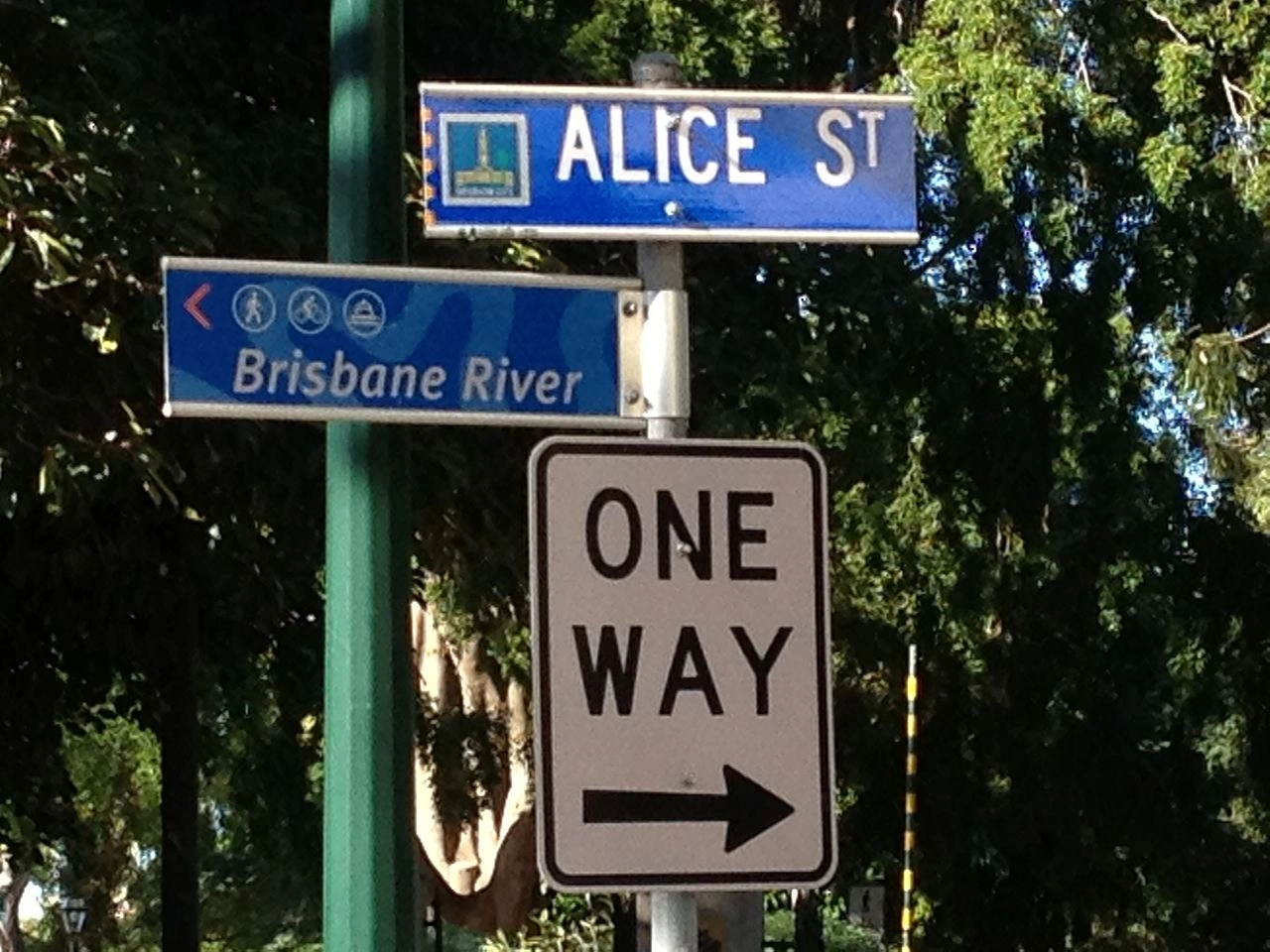
Einbahnverkehr bedeutet, dass Fahrzeuge auf einer Straße oder Fahrbahn nur in einer festgelegten Richtung fahren dürfen. Die zulässige Richtung wird normalerweise durch Verkehrszeichen, Fahrstreifenpfeile oder Fahrbahnmarkierungen angezeigt.

Bestimmte Verkehrsteilnehmer wie Radfahrer oder öffentliche Verkehrsmittel können entgegen der allgemeinen Fahrtrichtung zugelassen sein, wenn dies ausdrücklich ausgeschildert ist. Eine Einbahnstraße bestimmt für sich allein weder Geschwindigkeitsbegrenzung, Vorfahrt noch Parkregeln.
Einbahnverkehr
What is a one-way road?

A one-way road is a road or carriageway on which vehicles may travel only in the designated direction.

How can you recognise one-way traffic?

One-way traffic is normally indicated by a one-way sign at the entrance and a no-entry sign at the opposite end. Lane arrows and road markings may provide additional guidance.

Is a one-way sign the same as a no-entry sign?

No. A one-way sign confirms the permitted direction of travel. A no-entry sign prohibits drivers from entering from the opposite direction.

Does one-way traffic apply to the entire road?

It may apply to an entire road, one carriageway, a particular lane or only a designated section. Drivers must follow the signs and markings applying to the part of the road they use.

Can a divided road have one-way traffic on each carriageway?

Yes. On a divided road, each carriageway normally carries traffic in one direction even though the road as a whole carries traffic in both directions.

May cyclists travel against one-way traffic?

Only when traffic signs or local law expressly permit contraflow cycling. Drivers should check supplementary signs and remain alert for cyclists approaching from the opposite direction.

May buses travel against one-way traffic?

Public-transport vehicles may use a contraflow lane where signs and road markings permit it. Other drivers may not use that lane unless they are also authorised.

Does a one-way road have its own speed limit?

No. The applicable speed depends on the country, road type, surrounding area and traffic signs.

Does one-way traffic change priority at intersections?

No. Drivers must continue to follow traffic lights, priority signs and the ordinary local priority rules.

Does traffic on a one-way road always have priority?

No. The one-way designation regulates direction of travel, not priority. Traffic entering or crossing the road may still have priority under signs or local law.

Which lane should you use on a one-way road?

Follow the local lane-positioning rules, lane arrows and destination signs. Drivers commonly keep to the normal side of the road unless overtaking, turning or choosing a marked lane.

Where should you position yourself before turning?

Use the lane or side indicated for the intended direction. On many one-way roads, drivers turning towards the opposite side of the road may position themselves closer to that side before turning.

May you overtake on a one-way road?

Overtaking may be permitted where there is sufficient space and no sign or rule prohibits it. The normal overtaking side and safety requirements continue to apply unless local law provides otherwise.

May you reverse on a one-way road?

A short reversing manoeuvre may be permitted where local law allows it and it can be completed safely. Drivers must not use reversing to travel along the road in the prohibited direction.

May you make a U-turn on a one-way road?

You may not turn around and continue against the permitted direction. A U-turn may also be prohibited by signs or general traffic law.

May you park on both sides of a one-way road?

This depends on local law, signs, markings and the available width. Some countries permit parking along either side, while others retain stricter positioning rules.

Can pedestrians come from both directions?

Yes. One-way traffic restrictions normally apply to vehicles using the carriageway, not to pedestrians using pavements or other pedestrian facilities.

Should you still check both directions?

Yes. Cyclists, buses, emergency vehicles or other authorised users may approach from the opposite direction. Drivers should check both directions before turning, crossing or opening a vehicle door.

What should you do if you enter a one-way road incorrectly?

Do not continue against traffic. Stop somewhere safe without creating additional danger and follow lawful directions to leave or correct the situation. Do not reverse blindly into an intersection.

How does one-way traffic end?

The restriction may end at an end sign, an intersection, a change in road design or a sign warning that two-way traffic resumes. Follow the local signs and road layout.

1 Australien 2 Autobahn 3 Wohngebiet 4 Geschwindigkeitsbegrenzung 5 Richtgeschwindigkeit 6 Radweg 7 Warnung vor Fußgängern 8 Brücke 9 Bremsschwelle 10 Mautstraße 11 Einbahnverkehr 12 Steigung oder Gefälle 13 Bushaltestelle 14 Stoppschild 15 Vorfahrt gewähren 16 Kreisverkehr 17 Fußgängerüberweg 18 Bahnübergang 19 Vorgeschriebene Fahrtrichtung 20 Abbiegeverbot 21 Schulbereich 22 Wild- oder Viehwechsel 23 Rutschige Fahrbahn 24 Kurve 25 Richtungstafel 26 Falschfahrt 27 Höhenbegrenzung 28 Geschwindigkeitskontrolle 29 Selektive Sperren 30 Ampeln 31 Warnung vor Ampeln 32 Fußgängerampeln 33 Fahrbahnmarkierungen 34 Linksverkehr 35 Führerschein 36 Kilometrierungsmarkierung 37 Notruftelefon 38 Parkverbot 39 Halteverbot 40 Behindertenparkplatz 41 Verkehrsmanagement 42 Rückwärtsfahren 43 Wenden 44 Ungeregelte Kreuzung 45 Überbreite oder übergroße Ladung 46 Kennzeichen 47 Ladestation 48 Anliegerverkehr 49 Moped 50 Lkw 51 Bus 52 Polizei 53 Krankenwagen 54 Schlagloch 55 Weg 56 Feinstaub 57 Luftverschmutzung 58 Hauptverkehrszeit 59 Straßenverkehrsordnung 60 Gegenverkehr 61 Straßenrinne 62 Lastenfahrrad 63 Forstfahrzeug 64 Baufahrzeug 65 Sattelzug 66 Oberleitungsbus 67 Speed-Pedelec 68 Lieferfahrzeug 69 Leerlauf 70 Abschleppwagen 71 Allradantrieb 72 Fahrrad 73 Motorradausrüstung 74 Straßenbahn 75 Gleis 76 Wohnwagen 77 Anhänger 78 Anhängerkupplung 79 Feuerwehrfahrzeug 80 Sirene 81 Konvoi 82 Warnbeleuchtung von Einsatzfahrzeugen 83 Landwirtschaftliche Maschinen 84 Elektrofahrrad 85 Elektrofahrzeug 86 Pedelec 87 Leichtkraftfahrzeug 88 Microcar 89 Geländefahrzeug 90 Lieferwagen 91 Freizeitfahrzeug 92 Motorroller 93 Trikke 94 Persönliches Mobilitätsgerät 95 Skateboard 96 Segway 97 Tretroller 98 Rollschuhe 99 Postzusteller 100 Anhalter ...