

FahrradstraßeFlandern
 Verkehrsregeln
 Flandern
9. Fahrradstraße
Eine Fahrradstraße ist eine Straße, die baulich oder rechtlich so gestaltet ist, dass Radfahrer im Mischverkehr eine besonders wichtige Stellung haben. Kraftfahrzeuge dürfen häufig einfahren, müssen Geschwindigkeit und Fahrweise jedoch an den Radverkehr anpassen.
Je nach Land dürfen Radfahrer einen größeren Teil der Fahrbahn nutzen, und Kraftfahrzeuge können vom Überholen ausgeschlossen sein. Geschwindigkeitsbegrenzung, Vorfahrtsregeln, zugelassene Fahrzeuge sowie Beginn und Ende der Straße richten sich nach den örtlichen Verkehrszeichen und Vorschriften.
How can you recognise a Belgian cycling zone?
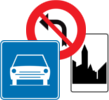
A Belgian cycling zone begins at traffic sign F111 and ends at traffic sign F113. The word indicating the cycling zone on these signs is optional.
 Beginn einer Fahrradzone.
Signal routier F111 • Début d'une zone cyclable. La mention « Zone cyclable » sur le signal est facultative.
Verkeersbord F111 • Begin van de fietszone. De vermelding « Fietszone » op het verkeersbord is facultatief.
 Ende der Fahrradzone.
Signal routier F113 • Fin d'une zone cyclable.
Verkeersbord F113 • Einde van een fietszone.
What changes for cyclist streets under Belgium’s new Road Code?
Belgium’s new Code of the Public Road takes effect on 1 June 2027. The current traffic sign F111 marking the beginning of a cycling zone becomes traffic sign R17, while traffic sign F113 marking the end becomes traffic sign R19. The new signs refer to a cycling zone, and the applicable maximum speed may be displayed on the sign. Cyclists may use the full width of the carriageway when it is open only in their direction and the right-hand half when traffic is permitted in both directions. Existing F111 and F113 signs with zonal validity or the wording indicating a cyclist street may remain valid until 1 January 2035.
 Beginn einer Fahrradzone.
Signal routier R17 • Début d'une zone cyclable. La mention « Zone cyclable » peut être indiquée sur le dessus du signal. La vitesse maximale qui s’y applique peut être indiquée à titre informatif sur le signal en bas à droite.
Verkeersbord R17 • Begin van een fietszone. De vermelding “Fietszone” kan bovenaan op het verkeersbord aangeduid zijn. De maximale snelheid die er geldt, kan rechtsonder als aanwijzing op het verkeersbord aangeduid zijn.
 Ende der Fahrradzone.
Signal routier R19 • Fin d'une zone cyclable.
Verkeersbord R19 • Einde van een fietszone.
What is a cycling street called in Belgium?
The current Belgian legal term is fietszone, or cycling zone. The older term fietsstraat, meaning bicycle street, may still appear on existing traffic signs.
Are older Belgian fietsstraat signs still valid?
Yes. Existing F111 and F113 signs bearing the older term Fietsstraat may remain in use until 1 January 2035 and continue to indicate a cycling zone.
Can a Belgian cycling zone include several streets?
Yes. A fietszone may consist of one or more public roads on which the special rules concerning cyclists apply.
What is the speed limit in a Belgian cycling zone?
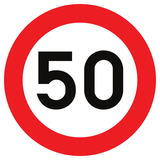
The maximum speed is 30 km/h. This limit applies to every driver, including cyclists and speed-pedelec riders.
May motor vehicles enter a Belgian cycling zone?
Yes. Motor vehicles are permitted unless additional traffic signs restrict access. Their drivers must respect the 30 km/h limit and the prohibition on overtaking cyclists.
May motor vehicles overtake cyclists in a Belgian cycling zone?
No. Motor vehicles may not overtake cyclists within the cycling zone, even when the road appears wide enough to maintain the normal passing distance.
May a motor vehicle overtake when no cyclist is present?
The special prohibition concerns the overtaking of cyclists. Motor vehicles may pass other vehicles only where the ordinary overtaking rules allow it and the manoeuvre can be completed safely.
May cyclists overtake motor vehicles?
Yes. The special overtaking prohibition applies to motor vehicles overtaking cyclists. Cyclists may overtake another vehicle when this is otherwise legal and safe.
May cyclists overtake one another?
Yes. Cyclists may overtake other cyclists when sufficient space and visibility are available and the manoeuvre does not endanger other road users.
Where may cyclists ride on a one-way street in a Belgian cycling zone?
When the carriageway is open to traffic only in the cyclists’ direction, cyclists may use the entire width of the carriageway.
Where may cyclists ride on a two-way street?
When the carriageway is open in both directions, cyclists may use the right-hand half of the carriageway in their direction of travel.
May cyclists ride side by side in a Belgian cycling zone?
Yes. Their right to use the entire carriageway on a one-way street, or its right-hand half on a two-way street, allows cyclists to ride side by side within that space when it is safe.
Do the same rules apply to speed pedelecs?
Yes. For the Belgian cycling-zone rules, drivers of cycles and speed pedelecs are treated as cyclists.
Do cyclists automatically have priority in a cycling zone?
No. The ordinary priority rules remain applicable. Cyclists must obey traffic lights, give-way and stop signs, priority-from-the-right rules and pedestrian crossings.
Does entering a cycling zone change the priority at intersections?
No. Traffic sign F111 introduces the cycling-zone rules but does not by itself make the road a priority road or give cyclists priority over crossing traffic.
May pedestrians use the entire carriageway?
No. A cycling zone is not a woonerf, pedestrian zone or shared pedestrian area. Pedestrians must follow the normal rules concerning pavements, verges, crossings and use of the carriageway.
May you stop or park in a Belgian cycling zone?
The cycling-zone rules do not create a general stopping or parking prohibition. Drivers must follow the ordinary parking rules and any signs or markings and may not obstruct traffic or endanger cyclists.
Does red road surfacing create a cycling zone?
No. Red surfacing, bicycle symbols and road markings may make the zone more visible, but the legal cycling-zone rules begin with traffic sign F111.
When do the Belgian cycling-zone rules end?
The special rules end when the driver passes traffic sign F113. The ordinary speed, positioning and overtaking rules then apply unless another sign introduces a different regulation.


