

HauptverkehrszeitFlandern
 Verkehrsregeln
 Flandern
80. Hauptverkehrszeit
Die Hauptverkehrszeit ist ein Zeitraum, in dem Straßen und öffentliche Verkehrsnetze besonders stark ausgelastet sind, meist weil viele Menschen gleichzeitig zur Arbeit, zur Schule oder zu anderen regelmäßigen Zielen fahren beziehungsweise von dort zurückkehren. Sie tritt an Werktagen gewöhnlich morgens sowie am späten Nachmittag oder Abend auf.
Verkehr in der Hauptverkehrszeit kann zu Stau, geringeren Geschwindigkeiten, längeren Fahrzeiten und häufigem Anhalten führen. Fahrer sollten einen sicheren Abstand halten, geduldig bleiben, wechselnde Verkehrsbedingungen voraussehen und vorübergehende oder dynamische Verkehrsmanagementmaßnahmen beachten.

What is rush hour in Belgium?
Rush hour refers to periods of particularly heavy traffic, usually associated with morning and evening commuting on working days.
Is there an official Belgian rush-hour time?
No. There is no single nationwide period legally defined as rush hour. The timing and severity of peak traffic depend on the road, region, day and actual traffic conditions.
Does rush hour change the normal Belgian traffic rules?
No. Ordinary traffic rules continue to apply during congestion. Drivers must continue to respect speed limits, lane rules, traffic lights, signs, following distances and other requirements.
Can Belgium use lower speed limits during rush hour?
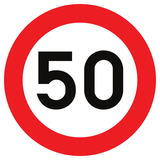
Yes. Dynamic traffic-management systems can display speed limits according to traffic conditions. Drivers must respect the maximum speed indicated by the applicable signs or lane-control signals.
What is a Belgian rush-hour lane?
A spitsstrook is an additional motorway lane that can be opened during busy periods to provide extra road capacity. On Flemish motorways it is normally situated on the right-hand side where the emergency lane would otherwise be.
How do you know whether a Belgian rush-hour lane is open?
The lane may be used when the dynamic lane-control signal above it displays a green arrow or an applicable maximum speed.
What does a red cross above a Belgian rush-hour lane mean?
A red cross means that the lane is closed and ordinary traffic may not use it. Drivers must leave or avoid the lane as required.
Can you use a rush-hour lane if the overhead signals are switched off?
No. When the dynamic signalling above a Belgian rush-hour lane is completely extinguished, the rush-hour lane is considered closed and may not be used.
Is there one fixed speed limit on Belgian rush-hour lanes?
No. The permitted speed can be controlled dynamically. Drivers must follow the speed displayed above the lane and any other applicable speed restriction.
Must you form an emergency corridor during Belgian rush-hour congestion?
Yes. As soon as congestion develops on a carriageway with at least two lanes in the same direction, drivers must form an emergency corridor between the leftmost lane and the lane immediately to its right.
May you use your handheld phone while stationary in a Belgian traffic jam?
No. Being temporarily stationary because of congestion does not allow the driver to use, hold or manipulate a handheld electronic device with a screen. The applicable Belgian rules concerning mobile devices continue to apply in traffic jams.
Where can drivers check Belgian rush-hour traffic conditions?
Current traffic information and expected journey times are available through the regional traffic-information services. Checking conditions before departure can help drivers anticipate congestion and choose an appropriate route or departure time.


