


Stop signArgentina
 Traffic rules
 Argentina
9. Stop sign
A stop sign requires drivers to bring their vehicle to a complete stop and give way before entering or crossing the road ahead. The stop must be made at the stop line or another legally prescribed position.
After stopping, the driver may continue only when this can be done safely and without interfering with traffic that has priority. The sign does not create priority for the driver who has stopped.
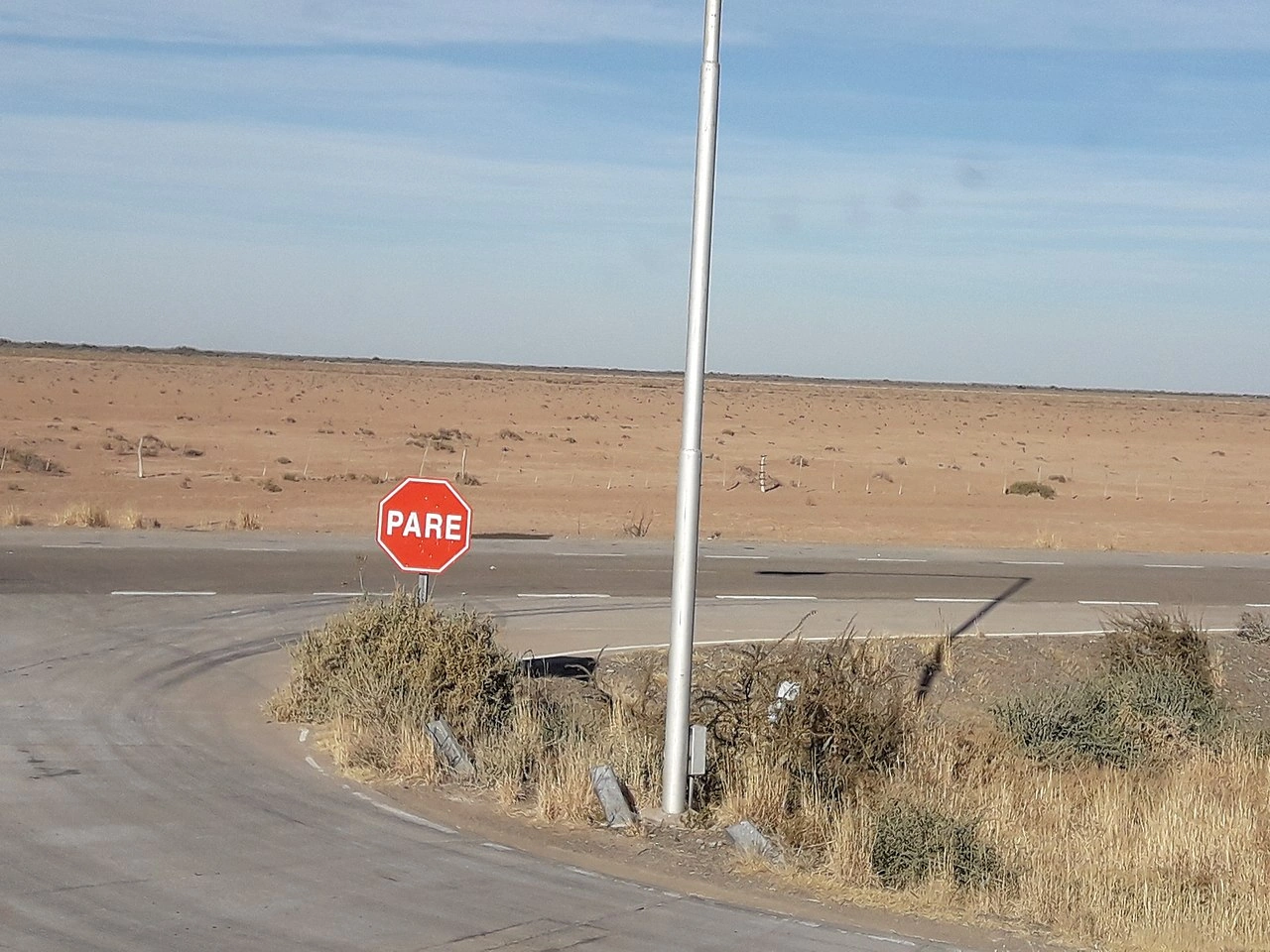
Wikimedia.org • WM2911 • CC BY-SA
Must I stop completely at a stop sign in Argentina?
Where Argentina’s national rules apply, PARE requires a complete stop before the junction without entering the pedestrian crossing, even if no traffic is visible on the other road. Continue only after giving way to vehicles and pedestrians on the cross road. Check the adopted provincial or municipal rules elsewhere.
🔗 argentina.gob.ar • Argentina, Decree 779/1995, Annex L, updated sign system; 🔗 argentina.gob.ar • Argentina, National Traffic Law 24,449, updated text
Where must I stop at a stop-controlled junction in Argentina?
Under the national sign system, stop before the stop line and do not invade the pedestrian crossing. If there is no line, stop before the junction while keeping the pedestrian route clear. Obtain a safe view and give way before continuing; check the applicable local rules.
🔗 argentina.gob.ar • Argentina, Decree 779/1995, Annex L, updated sign system; 🔗 argentina.gob.ar • Argentina, National Traffic Law 24,449, updated text
Does stopping first give me priority at a stop sign in Argentina?
Under the national rules, stopping first does not give you priority. PARE requires a complete stop and giving way to vehicles and pedestrians on the cross road before proceeding safely. Each driver must satisfy those duties independently. Check the adopted provincial or municipal rules elsewhere.
🔗 argentina.gob.ar • Argentina, Decree 779/1995, Annex L, updated sign system; 🔗 argentina.gob.ar • Argentina, National Traffic Law 24,449, updated text


