
Traffic rulesBosnia and Herzegovina
Learn the traffic rules of Bosnia and Herzegovina with lots of pictures, clear traffic signs and interactive quizzes. Simple, visual and easy to follow.


The driver-licensing system in Bosnia and Herzegovina
Who regulates driver licensing in Bosnia and Herzegovina?
The principal eligibility, licence-category, training and road-safety rules are established at state level by the Law on the Basis of Road Traffic Safety in Bosnia and Herzegovina and its implementing regulations.
Administration is divided among state, entity, cantonal and Brčko District authorities, so the office handling an application depends on the applicant’s place of residence.
Which authority issues a driving licence in the Federation of Bosnia and Herzegovina?
In the Federation of Bosnia and Herzegovina, issuance, renewal and replacement are handled by the competent cantonal ministry of the interior according to the driver’s residence.
The exact counter, administrative fee and local appointment procedure can therefore differ between cantons.
Which authority issues a driving licence in Republika Srpska?
In Republika Srpska, driving-licence applications are handled by the Ministry of the Interior of Republika Srpska through the competent organisational unit for the applicant’s residence.
Which authority issues a driving licence in Brčko District?
In Brčko District, the competent authority is the Public Register Department of Brčko District.
What is the role of IDDEEA?
The Agency for Identification Documents, Registers and Data Exchange of Bosnia and Herzegovina, known as IDDEEA, maintains the technical infrastructure and personalises driving-licence cards.
IDDEEA does not normally receive and decide an ordinary citizen’s application at the counter; the competent interior or district authority conducts the administrative procedure.
Who organises driver training and examinations?
Authorised driving schools provide theory and practical training, while the Red Cross performs first-aid training.
The competent education authorities of the entities, cantons and Brčko District organise and supervise examinations and appoint licensed examination commissions.
Are the core licence rules the same throughout the country?
Yes. Minimum ages, licence categories, the national training framework, novice-driver restrictions and the principal traffic-law rules apply throughout Bosnia and Herzegovina.
Practical administration, examination scheduling, fees and local procedures may differ among the Federation’s cantons, Republika Srpska and Brčko District.
Can a person hold more than one Bosnia and Herzegovina driving licence?
A driver should have one valid national driving licence showing every category and subcategory for which the person is authorised.
A replacement or exchange normally cancels or removes the previous document from active use.
Must the driving licence be carried while driving?
Yes. A driver must carry a valid driving licence for the appropriate category and present it when requested by an authorised officer.
Can the owner let an unlicensed person drive the vehicle?
No. The owner or person controlling a vehicle must not allow it to be driven by someone who lacks the correct licence category, is prohibited from driving or is otherwise legally unfit to drive.
The owner must also identify the person to whom the vehicle was entrusted when lawfully requested by an authorised officer.
Can a licence contain restrictions or conditions?
Yes. A licence may record conditions requiring corrective lenses, a hearing aid, an orthopaedic aid, an adapted vehicle or automatic transmission.
The holder must comply with every condition shown on the licence whenever driving.
Is the Bosnia and Herzegovina licence a standard card?
Yes. The licence is issued as an ID-1-format plastic card and records the holder’s identity, validity period, categories, category dates and applicable restrictions.
Eligibility for a first category B licence
What does category B cover?
Category B covers motor vehicles other than motorcycles with a maximum authorised mass not exceeding 3,500 kg and no more than eight passenger seats in addition to the driver’s seat.
It includes most private cars, light vans and similar vehicles within those limits.
What is the minimum age for category B?
The minimum age for obtaining the right to drive category B is 18 years.
Can theory and first-aid training begin before age 18?
Yes. A candidate may begin road-rules theory and first-aid training up to three months before reaching the statutory minimum age.
The candidate must still satisfy the age requirement before obtaining the category B entitlement and before any stage for which the minimum age is legally required.
What general conditions must a category B applicant satisfy?
The applicant must be physically and psychologically fit, have reached the required age, complete the prescribed training, pass the required examinations and not be subject to a driving prohibition.
Residence and identity requirements must also be satisfied when applying for the licence card.
Must a first-time applicant attend a driving school?
Yes. A candidate must prepare through an authorised driving school or an eligible formal vocational-education programme.
Private practice with a parent or friend does not replace the statutory practical instruction given by a licensed driving instructor.
Can a family member teach the candidate on public roads?
No, not as a substitute for licensed instruction. Before passing the driving examination, the candidate may drive the training vehicle on the road only under the prescribed training arrangements with a licensed instructor.
Bosnia and Herzegovina does not use the ordinary parent-supervised learner-permit model found in some countries.
Which documents are normally needed to enrol?
A first category B candidate normally presents a valid identity card, proof of registered residence and a medical certificate from an authorised health institution.
The driving school or examination authority may request copies and additional local forms.
Must the candidate be medically examined before training?
Yes. The candidate must undergo a medical examination at an authorised health institution before beginning driver training.
How long is the candidate’s medical certificate valid?
The statutory medical certificate for a driver candidate is valid for 12 months from the date of issue.
A fresh certificate may be required if the training, examination or licence application is not completed within the permitted period.
Can a person with a disability obtain a driving licence?
Yes, when the person meets the medical standards and can drive safely with any prescribed conditions or adaptations.
Practical training for a candidate with a physical disability must take place in a suitably adapted vehicle approved by an authorised institution.
Can an applicant be restricted to automatic transmission?
Yes. When the applicant qualifies in an automatic vehicle, the licence can be marked with the automatic-transmission restriction, recorded as code 10.02.
How can an automatic-only driver qualify for a manual car?
The driver must complete the prescribed additional practical training and pass the required assessment in a manual-transmission category B vehicle.
The national training rules provide for 10 practical lessons where the holder already has category B restricted to automatic transmission.
First aid and theory training
Is first-aid training compulsory?
Yes. First-aid training and the first-aid examination form part of the route to a first category B licence.
Who provides first-aid training?
Driver-candidate first-aid training is organised by the Red Cross in Bosnia and Herzegovina and delivered by appropriately qualified medical personnel.
How long is the standard first-aid course?
The standard programme described for category B consists of nine lessons: six theory lessons and three practical lessons.
What does first-aid training cover?
It covers the purpose and sequence of first aid, resuscitation, unconsciousness, bleeding, open wounds, immobilisation, evacuation and other injuries likely to arise in a road collision.
It also addresses the importance of medical fitness for safe driving.
How many theory lessons are required for category B?
The category B road-rules programme consists of 28 instructional lessons.
What subjects are covered in theory training?
The course covers traffic rules, road signs, junctions, vehicle-safety basics, alcohol and drugs, fatigue, defensive driving, vulnerable road users, collision duties, enforcement and penalties.
It also develops hazard awareness and the ability to anticipate other road users’ actions.
Can a candidate miss theory lessons?
A category B candidate may be permitted to miss up to eight lessons for justified reasons under the national training regulation.
Attendance records are maintained, and an examination application can be rejected if the training requirements have not genuinely been met.
Can theory training be completed entirely by self-study?
No. Self-study and practice tests are useful, but they do not replace the prescribed course delivered through an authorised driving school.
Can a candidate change driving schools during training?
Yes. The former driving school must provide confirmation of the completed part of the programme and return the original documents needed to continue elsewhere.
The interruption and transfer must be entered in the training records.
Does the driving school issue completion certificates?
Yes. The driving school issues certificates for successfully completed theory and practical training, while the Red Cross issues the first-aid training certificate.
These documents support the candidate’s applications for the corresponding examinations.
Can the theory and first-aid courses be taken in either order?
The local scheduling arrangement may vary, but both parts must be successfully completed and both examinations passed before practical road training begins.
How should a candidate verify course fees?
Training and examination costs can vary by competent authority and authorised provider.
The candidate should request a written breakdown covering medical examination, first aid, theory lessons, practical lessons, examinations, retests and the final licence card before enrolling.
Theory and first-aid examinations
Who conducts the driver examinations?
The examinations are organised by the competent education authority and conducted before a licensed commission.
The responsible authority depends on whether the candidate is in a Federation canton, Republika Srpska or Brčko District.
What is the format of the category B theory examination?
The written knowledge examination contains 40 questions: 20 general theory questions, 10 road-sign questions and 10 junction questions.
How is the theory examination scored?
Correct theory answers are worth two points, road-sign answers three points and junction answers five points.
The maximum score is 120 points.
What score is required to pass the theory examination?
A candidate must obtain at least 108 points, equal to 90% of the available score.
When are theory results normally available?
The candidate is graded as passed or not passed, and the result is normally available on the day of the examination.
What happens after passing the theory examination?
The competent authority issues a certificate confirming that the candidate passed the road-traffic-rules examination.
The candidate must carry the required proof during practical training when requested by an authorised officer.
What is the format of the first-aid examination?
The standard first-aid examination consists of 10 questions.
How many first-aid answers must be correct?
The candidate must normally answer at least eight of the ten questions correctly.
Can practical driving lessons begin before both examinations are passed?
No. The candidate must pass both the road-rules examination and the first-aid examination before beginning the practical driving programme.
What happens after failing an examination?
The candidate remains unqualified for the next dependent stage and must apply for another examination under the local authority’s scheduling and payment rules.
Retest fees and available dates should be confirmed with the competent education authority or driving school.
Can unauthorised help or cheating invalidate the examination?
Yes. A candidate may not use prohibited assistance or materials during an examination.
The attempt can be terminated or recorded as failed, and additional administrative consequences may follow.
Are examination questions nationally coordinated?
Yes. The state ministry organises a unified catalogue of test questions, and examination authorities create tests from that catalogue.
Practical driving training
How many practical lessons are required for a first category B licence?
A first-time category B candidate must complete 35 practical driving lessons.
How long is one practical lesson?
One instructional lesson lasts 45 minutes.
A double lesson or block lasts 90 minutes.
How much practical instruction can be taken in one day?
The standard limit is two instructional lessons or one 90-minute block in a day.
Where do the first practical lessons take place?
The first four lessons are normally conducted on a training ground or a road with low traffic intensity.
Training then progresses to public roads and increasingly complex traffic.
What skills are taught in the practical programme?
The programme covers vehicle preparation, starting, stopping, gear use, reversing, turning, parking, gradients, lane changes, junctions, overtaking and interaction with pedestrians and other road users.
It also includes urban and non-urban driving, dense traffic and special conditions such as darkness, rain, snow or fog when practicable.
Must the learner vehicle have special equipment?
Yes. It must satisfy the requirements for an authorised driving-school vehicle, including instructor controls and the prescribed training markings.
How is a training vehicle identified?
A driving-school vehicle carries the prescribed training board and special markings.
The law also requires the practical-training vehicle on the road to display the designated blue-and-white learner indication.
Who may give practical instruction?
Only a licensed driving instructor authorised for the relevant category may deliver the practical training.
What documents must the candidate carry during a lesson?
The candidate must carry proof of medical fitness and proof of having passed the road-rules examination for the category being trained.
These documents must be shown when requested by an authorised officer.
What documents must the instructor carry?
The instructor must carry a valid driving licence, the instructor licence and the prescribed instructor work record or diary.
Can practical training be recorded by camera?
A driving-school vehicle may use a camera for training analysis with the candidate’s written consent.
Showing the recording to third parties requires the candidate’s express written consent.
Can extra lessons be taken after the minimum programme?
Yes. The statutory number is a minimum; additional instruction can be arranged when the candidate or instructor considers it necessary for safe and consistent performance.
The practical driving examination
When can a candidate take the practical examination?
The candidate must have reached the required age, passed first aid and theory, completed the prescribed practical programme and possess the required completion certificates.
The candidate must also remain medically fit and free from a driving prohibition.
Where is the practical examination conducted?
The category B examination is conducted in real traffic on public roads in a place meeting the prescribed traffic and technical conditions.
Which vehicle is used for the examination?
The examination is normally taken in a compliant category B driving-school vehicle, commonly the vehicle in which the candidate trained.
The vehicle must be roadworthy, correctly equipped and accepted by the examination authority.
Who is in the vehicle during the examination?
The candidate drives while the licensed instructor and the authorised examiner or commission member occupy the prescribed seats.
What does the examiner assess?
The examiner assesses preparation, observation, vehicle control, signalling, speed choice, road position, priority, junctions, manoeuvres and safe interaction with other road users.
A candidate must demonstrate independent, lawful and consistently safe driving.
Are parking and reversing assessed?
Yes. Reversing, parking, turning and other low-speed control tasks form part of the practical skills that candidates must master and may be assessed.
Can a dangerous action cause immediate failure?
Yes. Conduct that creates danger, requires intervention or shows serious disregard for traffic rules can cause the examination to be terminated or failed.
What happens after passing the practical examination?
The competent education authority issues a certificate confirming that the candidate passed the driving examination for the relevant category.
The candidate must then submit a separate application for the physical driving licence.
Can the candidate drive alone immediately after passing?
No. Passing the examination is not a substitute for possessing a valid issued driving licence.
The person may drive independently only after the licence has been issued and the category is valid.
What happens after failing the practical examination?
The person remains a candidate and may drive only under lawful training conditions with an instructor.
Additional lessons are advisable before applying for a new test under the local retest procedure.
Can practical-examination fees differ by area?
Yes. Examination administration and fees are handled by the competent education authorities, so the current amount and payment instructions must be checked locally.
Can an applicant appeal an examination or administrative decision?
The available objection or appeal procedure depends on the decision and the competent authority.
The candidate should request the written result, reasons and legal-remedy instructions whenever a formal decision is disputed.
Novice-driver rules
How long is a person treated as a new driver?
Several special restrictions apply for the first two years from the issue of the first driving licence.
The zero-alcohol rule has a broader duration and also applies to any driver with less than three years of driving experience or who is under 21.
Must a new driver display a P sign?
Yes. A person who obtains a driving licence for the first time must mark the vehicle with the prescribed P sign for two years.
What speed restrictions apply during the first two years?
A new holder of category A1, A, B or C1 may not exceed 70 km/h on ordinary roads, 90 km/h on roads reserved for motor traffic and express roads, or 120 km/h on motorways, even where a higher general limit is posted.
The driver must always obey any lower posted or situational limit.
May a new category B driver tow a trailer?
No. During the first two years, the novice restriction prohibits towing a trailer with the affected vehicle.
May a new driver perform organised transport of children?
No. During the first two years, the novice driver may not use the vehicle for organised transport of children.
What alcohol limit applies to a novice driver?
The legal threshold is 0.0 g/kg for a driver under 21 or with less than three years of driving experience.
This is stricter than the general threshold applied to an ordinary experienced private driver.
Does zero alcohol apply even after the two-year P-sign period?
It can. A driver who has completed two years but still has less than three years of driving experience remains subject to the 0.0 g/kg rule.
A driver under 21 is also subject to zero alcohol regardless of whether the P-sign period has ended.
What happens if a first-time category B driver collects four penalty points?
If four penalty points are collected within the first two years, the competent issuing authority revokes and cancels the category B licence.
The person is then legally treated as not having passed the category B driving examination.
Do novice rules continue when driving another person’s car?
Yes. The restrictions attach to the driver, not to ownership of the vehicle.
The P sign must be displayed on whichever vehicle the novice driver operates.
Can a novice driver drive on a motorway?
Yes. Motorway driving is not generally prohibited, but the novice may not exceed 120 km/h and must obey every lower posted limit and all other novice restrictions.
Can a novice driver carry ordinary passengers?
Ordinary passenger transport is not generally prohibited merely because the driver is a novice.
Seat, restraint, vehicle-capacity and child-safety rules must be respected, and organised child transport remains prohibited during the two-year period.
Does a novice driver have to carry special paperwork?
The issued driving licence and ordinary required vehicle documents must be carried.
The most visible extra obligation is the prescribed P marking on the vehicle.
Licence categories, motorcycles, heavy vehicles and trailers
Which main licence categories are used?
The national system uses categories A, B, BE, C, CE, D and DE and subcategories A1, B1, C1, C1E, D1 and D1E.
What is the minimum age for A1 and B1?
The minimum age is 16 years for A1 and B1, as well as for tractors and working machines under the statutory conditions.
What is the minimum age for category A?
The minimum statutory age for category A is 18 years.
What is the minimum age for category C1?
The minimum age for subcategory C1 is 18 years, and the applicant must already satisfy the required lower-category progression rules.
What is the minimum age for categories C and CE?
The minimum age is 21 years.
What is the minimum age for D1 and D1E?
The minimum age is 21 years.
What is the minimum age for D and DE?
The minimum age is 24 years.
Must category B be held before C or C1?
Yes. Category C and subcategory C1 may be obtained only by a driver who already holds category B.
Must category B be held before D1?
Yes. The applicant must have held category B for at least two years before obtaining D1.
What previous experience is required for category D?
The applicant must have held category B, C or D1 for at least two years, in addition to meeting the age, medical, training and examination requirements.
Can a category B driver tow a light trailer?
Yes. Category B vehicles may be used with a light trailer within the statutory vehicle and mass limits.
The driver must also obey the towing vehicle’s technical limits and the trailer’s registration and loading requirements.
When is category BE required?
Category BE is the trailer category linked to category B and may be obtained only by a person who already holds category B.
The exact entitlement must be checked against the national category definitions and the maximum authorised masses recorded for the vehicle combination.
Does category B include B1?
Yes. A category B holder may also drive vehicles in subcategory B1.
Does category B authorise mopeds and tractors?
Under the national category rules, holders of B and several higher categories may also drive a moped, light quadricycle, motor cultivator, tractor and working machine.
Any registration, occupational or road-use restrictions applicable to the particular vehicle still apply.
Does a car licence automatically authorise motorcycles?
No. Category B does not replace the appropriate A1 or A entitlement for motorcycles outside the limited vehicles expressly covered by the law.
What does category C1 cover?
C1 covers goods vehicles above the category B mass limit and up to the statutory C1 upper limit of 7,500 kg.
What does category C cover?
Category C covers goods vehicles with a maximum authorised mass above 7,500 kg.
What does D1 cover?
D1 covers passenger vehicles with more than eight but no more than 16 passenger seats, excluding the driver’s seat.
What does category D cover?
Category D covers passenger vehicles with more than eight passenger seats in addition to the driver.
Do professional drivers need anything beyond the licence category?
Often yes. Public passenger transport, commercial goods transport and other professional operations can require occupational qualifications, medical checks, tachograph compliance, employer authorisation or permits in addition to the driving licence.
Issue, validity, renewal and replacement
Where is the first driving-licence application submitted?
The application is submitted to the competent issuing authority for the applicant’s registered residence or authorised place of stay.
That means a cantonal interior ministry in the Federation, the Republika Srpska Ministry of the Interior or the Brčko District Public Register Department.
Which form is used for a driving-licence application?
The national application is made on form VD-1, completed through the competent authority.
Which documents are required for the first licence?
The national regulation requires a qualifying medical certificate, the certificate of passing the relevant driving examination, proof of residence or authorised stay and proof of payment for the licence form.
Identity data, photograph and signature are checked through the official records or captured when necessary.
How recent must the medical certificate be for the first licence?
It must not be older than 12 months when submitted for the first issue.
How recent must the driving-examination certificate be?
The national driving-licence regulation states that the certificate submitted for first issue must not be older than three months.
Applicants should therefore apply promptly after passing and confirm any electronic-record procedure with the local office.
How much does the licence card cost?
The prescribed licence-form charge is commonly published as 60 KM.
A local administrative fee may also apply, so the applicant should use the payment instructions issued by the competent office rather than relying on an old payment slip.
How long does issuance take?
IDDEEA publishes a statutory period of 15 days for issuing a driving licence after a complete application.
Local service information and actual processing can vary, so the receipt or competent office should be consulted for the collection date.
Is an urgent driving-licence procedure available?
IDDEEA states that there is no urgent or expedited procedure for an ordinary driving-licence application.
Who may collect the completed licence?
The applicant may collect it personally, and the national procedure also permits collection by an authorised representative with a valid power of attorney.
How long is an ordinary driving licence valid?
The ordinary validity period is 10 years from issue.
How long is a licence valid after age 65?
A licence issued to a person older than 65 is normally valid for three years.
Medical findings can require a shorter medically justified validity period within the statutory framework.
What happens when a licence is issued after age 55 but before 65?
Its validity is normally limited so that it does not extend beyond the holder’s 65th birthday, although it may not be set for less than three years solely under that age rule.
Can medical fitness shorten the validity?
Yes. An authorised health institution can recommend a shorter validity because of the holder’s health.
The regulation provides that such a medically shortened licence is not ordinarily issued for less than two years.
Can renewal be requested before the licence expires?
Yes. Renewal may be requested during the final year of validity, and the new validity period runs from the issue date of the replacement card.
Is a medical certificate always required for ordinary renewal?
No. An ordinary full-term licence is generally renewed with the expiring licence and proof of payment.
A medical certificate is required where the earlier licence had a shortened medical validity and for the specified passenger categories such as D and D1.
Must drivers over 65 provide medical evidence at renewal?
Yes. Drivers aged 65 or older are subject to medical review when renewing the licence.
What should be done if the licence is lost or stolen?
The disappearance must be reported promptly to the competent authority or police in the place where it became known.
The missing document is formally invalidated, the prescribed public notice or proof is obtained, and a replacement application is submitted with the required payment.
When must a damaged licence be replaced?
A replacement is required when the card is damaged, worn or no longer reliably readable.
The old card is surrendered with the application.
Must the card be replaced after a change of address?
A change of residence does not by itself normally require a new card because the address is maintained in the driver record.
The driver must register with the newly competent authority within the prescribed period, commonly 15 days.
Must the licence be replaced after a name or other recorded-data change?
Yes. A change to information appearing on the card requires a replacement application and proof of the changed data.
Foreign licences, visitors and international permits
Can a temporary visitor drive with a foreign licence?
Yes. A foreign visitor or a Bosnia and Herzegovina citizen residing abroad may drive temporarily with a valid foreign licence or a valid International Driving Permit issued in accordance with the Vienna Convention.
The licence must cover the relevant vehicle category.
Is an International Driving Permit required for every visitor?
No. A valid national foreign licence can be sufficient under the law.
An International Driving Permit or official translation is advisable when the national licence is not readily understandable, and both documents should be carried together where an IDP is used.
Can an International Driving Permit be used without the national licence?
It should not be treated as a stand-alone replacement for the underlying national licence.
The driver should carry the valid original national licence to which the permit relates.
How long may a new permanent resident use a foreign licence?
A foreigner granted permanent residence, or a Bosnia and Herzegovina citizen returning to settle permanently, may generally use the valid foreign licence for six months from entry or from approval of permanent residence, whichever statutory starting point is more favourable.
Can a foreign licence be exchanged without taking the driving tests?
Generally yes, when the applicant satisfies the statutory conditions and the foreign licence is valid and recognisable.
The competent authority can require reliable proof of the categories and validity if this is not clear from the licence itself.
What special rule applies to a Bosnia and Herzegovina citizen exchanging a foreign licence?
The citizen must show that they lived in the country that issued the foreign licence for more than six months.
Which documents are normally required for an exchange?
The applicant normally submits the valid foreign licence, a translation certified by a court interpreter, proof of identity and lawful residence, a medical certificate no older than six months and proof of payment.
The competent authority may request additional confirmation from the issuing country.
Can an expired foreign licence be exchanged?
No, not under the ordinary exchange procedure. The foreign licence submitted for exchange must be valid and unexpired.
What if the foreign licence does not clearly show the category or expiry?
The applicant must provide an official document that conclusively confirms which vehicles the licence authorises and that the entitlement remains valid.
What happens to the foreign licence after exchange?
The competent authority normally returns the foreign licence through official channels to the issuing state after the Bosnia and Herzegovina licence is issued.
Special handling can apply in protected-person or asylum cases.
Can an International Driving Permit be exchanged for a national licence?
No. An International Driving Permit is not itself exchangeable for a Bosnia and Herzegovina driving licence.
Can a Bosnia and Herzegovina licence holder obtain an International Driving Permit?
Yes. An eligible national licence holder may apply through an authorised auto-moto club, federation or society.
How long is a Bosnia and Herzegovina International Driving Permit valid?
It is normally issued for two years, or for another period required by the applicable international agreement.
Can a Bosnia and Herzegovina International Driving Permit be used inside the country?
No. A permit issued in Bosnia and Herzegovina is intended for use abroad and cannot replace the national driving licence for driving within Bosnia and Herzegovina.
Does every country recognise the Bosnia and Herzegovina licence or IDP in the same way?
No. Recognition, translation rules, minimum age, vehicle-rental conditions and residence deadlines are determined by the destination country.
Drivers should verify official destination-country requirements before travelling.
Can the state refuse recognition of licences from a particular country?
Yes. The state ministry may decide not to recognise licences from a country whose driver-training programme substantially differs from Bosnia and Herzegovina’s requirements.
Penalty points, suspension and cancellation
Does Bosnia and Herzegovina use penalty points?
Yes. Qualifying traffic offences can add one or two penalty points depending on their seriousness.
When are penalty points recorded?
Points are entered after the penalty notice or court decision becomes final and enforceable.
How long does an individual penalty point remain active?
An individual point is normally deleted from the record 12 months after it was imposed, subject to the special procedures applying after licence withdrawal.
What happens after seven points in one year?
A driver who receives at least seven points within one year is summoned to lectures on the consequences of disregarding or not knowing traffic rules.
What happens if the driver ignores the required lectures?
The competent authority can temporarily withdraw the licence until the driver attends the lectures.
What happens after ten points in one year?
The licence is withdrawn for 30 days, and the driver must undergo a test of road-traffic-rule knowledge.
The licence is returned after the withdrawal period only when the driver provides proof of passing the required check.
What happens if another ten points are collected within two years?
A repeat accumulation of at least ten points within two years results in a 60-day licence withdrawal.
Passing the required knowledge check is again necessary before return.
What special point rule applies to a first-time category B driver?
Four points within the first two years lead to revocation and cancellation of the licence.
The person is then treated as not having passed category B and must follow the applicable process to qualify again.
What is the difference between temporary withdrawal and a driving ban?
Temporary withdrawal removes the physical licence or pauses its use under an administrative measure.
A driving ban or disqualification is a legal prohibition, often imposed for a stated category and period as part of an offence decision.
Can police temporarily take a licence at the roadside?
Yes. The law permits temporary seizure in specified situations, including where immediate safety, alcohol, testing refusal or another statutory ground exists.
The officer must issue a receipt recording the licence and the method of return.
Can a driver legally drive while the licence is withdrawn or a ban is active?
No. Driving during a withdrawal, suspension, cancellation or prohibition is a serious offence and can lead to further sanctions.
Can serious offences lead to both a fine and a driving ban?
Yes. Many serious offences can carry a fine, penalty points and a protective measure prohibiting driving for a stated period.
The exact consequence depends on the offence, alcohol level, speed, collision outcome and prior history.
Do unpaid fines or unresolved measures affect licence procedures?
They can affect enforcement and administrative processing.
Drivers should check official records and resolve fines, bans and document holds through the competent authority rather than relying on an unofficial payment intermediary.
Can a driver check recorded fines or points online?
IDDEEA and competent interior authorities provide electronic or local services for checking certain records, subject to identity verification and service availability.
Alcohol, drugs and medical fitness
What is the general alcohol threshold for an experienced private driver?
For an ordinary experienced private driver outside the zero-tolerance groups, the statutory threshold is above 0.3 g/kg blood alcohol.
A driver can still be treated as unfit where an expert examination finds alcohol-related impairment regardless of the measured amount.
Who is subject to a 0.0 g/kg alcohol limit?
Zero tolerance applies to drivers of C, CE, D, DE, C1, C1E, D1 and D1E while driving those vehicles; public-transport and professional drivers while working; instructors during lessons; driver candidates during lessons; and drivers under 21 or with less than three years of experience.
Can a candidate or instructor drink before a practical lesson?
No. Both the candidate and the instructor are subject to the 0.0 g/kg rule during practical training.
Is drug-impaired driving prohibited?
Yes. A person must not drive under the influence of narcotic drugs or other intoxicating substances.
Can medicine make a person unfit to drive?
Yes. A driver must not drive when medicine, illness, fatigue or psychological condition makes safe vehicle control impossible.
Warnings from the prescriber and medicine packaging must be followed.
Must a driver use prescribed corrective aids?
Yes. A driver must use any glasses, contact lenses, hearing device, orthopaedic aid or adapted control required for safe driving and recorded as a licence condition.
Who performs driver medical examinations?
Medical examinations are carried out by health institutions authorised under the laws of the entities, cantons and Brčko District.
Which drivers undergo regular medical examinations?
Public-transport drivers undergo periodic examinations, generally every three years; driving instructors are examined when renewing their instructor authorisation; and D, DE, D1 and D1E holders provide medical evidence at each licence renewal.
Drivers aged 65 or older and holders of medically shortened licences are also medically reviewed at renewal.
When can an extraordinary medical examination be ordered?
An extraordinary examination may be ordered where there are reasonable grounds to suspect that a driver is no longer physically or psychologically capable of safe driving.
Can a health condition result in a conditional rather than refused licence?
Yes. The authority may issue or continue a licence with corrective-aid, vehicle-adaptation, transmission or review conditions when medical evidence supports safe driving under those limitations.
What should a driver do after a seizure, blackout or serious health change?
The driver should stop driving and obtain medical advice before resuming.
The condition may need to be reported or assessed by the competent licensing authority where it affects the legal medical standards.
Does reaching age 65 automatically end the right to drive?
No. Driving may continue while the person meets the medical standards and renews the licence at the shorter statutory interval.
Can fatigue alone make driving unlawful?
Yes. A person who is so fatigued, ill or psychologically unfit that safe driving is impossible must not drive, even when no alcohol or drug is involved.
Sources and methodology
When was this page last reviewed?
This page was last reviewed on .
Which sources were used to compile this page?
This page was compiled using the consolidated state road-traffic law, national regulations on driving licences and driver training, official information from IDDEEA, competent interior and e-government authorities, and guidance published by BIHAMK.
National rules were separated from entity, cantonal and Brčko District administrative procedures.
How was the information researched and prepared?
The official material was reorganised and rewritten into a concise question-and-answer format. AI-assisted tools were used to help research, structure and draft the content.
The information was then reviewed against the official and institutional sources listed below.
Can licensing rules, procedures and fees change?
Yes. Legislation, examination procedures, authority responsibilities, card fees and local administrative charges can change.
Always confirm important requirements with the competent driving school, education authority or issuing office before enrolling, booking an examination or making a payment.
Which official and institutional sources can I consult?
Principal sources
- IDDEEA: driving licences and competent issuing authorities
- IDDEEA: frequently asked questions and document-issue periods
- National Regulation on the Driving Licence
- Consolidated Law on the Basis of Road Traffic Safety in Bosnia and Herzegovina
- Official Gazette 12/18: amendments to the driver-training regulation
- Official Gazette 16/21: further amendments to the driver-training regulation
- BIHAMK: route to a category B driving licence
- Ministry of the Interior of Republika Srpska: driving-licence procedures
- Canton Sarajevo eGovernment: issue of a driving licence
Is this website affiliated with a government authority?
This website is an independent educational resource and is not affiliated with IDDEEA, a ministry, examination authority, driving school or auto-moto organisation in Bosnia and Herzegovina.
The information is provided for general guidance and does not replace official instructions or legislation.
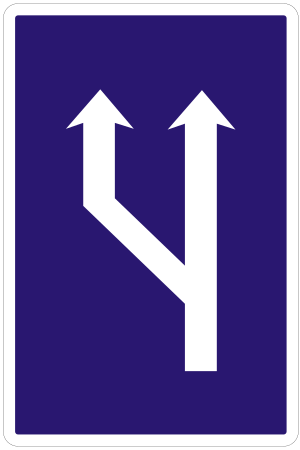
1. What does this traffic sign mean?
This traffic sign indicates the start of a new traffic lane. The displayed road layout shows where the additional lane begins and how the traffic lanes continue.
English • Traffic sign III-96 • Lane begins. Marks an additional lane for travel in the same direction.
Bosanski • III-96 • Otvaranje saobraćajne trake. Početak dodatne saobraćajne trake za kretanje vozila u istom smjeru.
Sources
🔗 Commons.wikimedia.org (Gigillo83 • CC BY-SA 4.0)
🔗 Ms.ks.gov.ba • Pravilnik o saobraćajnim znakovima • član 36, tačka 74
Replacement SVG: Commons.wikimedia.org • Wikimedia Commons original • Ministry of Interior of the Slovak Republic • Public domain • Original revision 2010-08-26. Wikimedia original unmodified.
Image via Commons.wikimedia.org
Ministry of Interior of the Slovak Republic • Public domain • Source revision 2010-08-26. Wikimedia original unmodified.
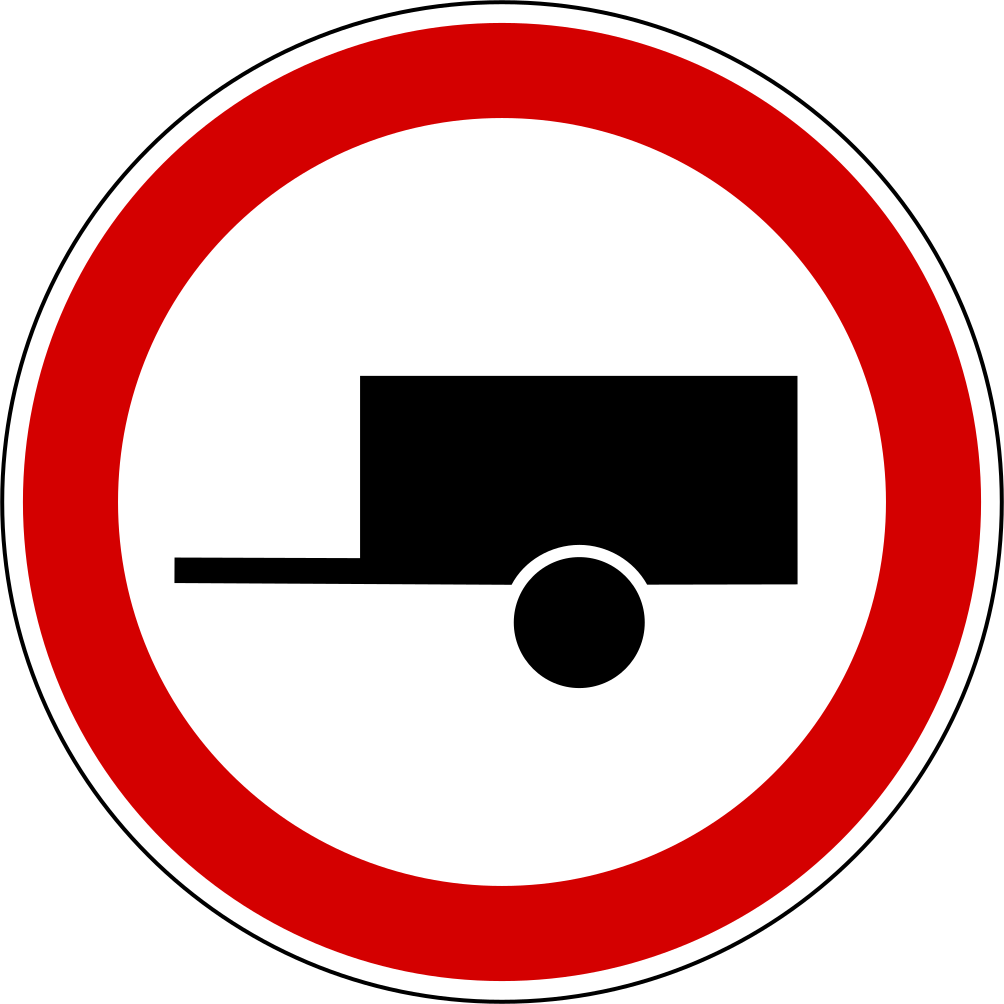
2. What does this traffic sign mean?
This traffic sign indicates that trailers are prohibited. Vehicles towing trailers covered by the sign may not enter or continue beyond it. Vehicles without a trailer may still be permitted unless another restriction applies.
English • Traffic sign II-11 • No motor-powered vehicles towing trailers. All motor-powered vehicles towing a trailer are prohibited.
Bosanski • II-11 • Zabrana saobraćaja za vozila na motorni pogon koja vuku priključno vozilo. Zabranjen saobraćaj svim vozilima na motorni pogon koja vuku priključno vozilo.
Sources
🔗 Commons.wikimedia.org
🔗 Ms.ks.gov.ba • Pravilnik o saobraćajnim znakovima • član 29, tačka 11
🔗 Montk.gov.ba • Izmjene Pravilnika • Službeni glasnik BiH 61/07 • član 1
SVG source: Government of Slovenia • Public domain • Original revision 2014-05-12. Wikimedia original unmodified.
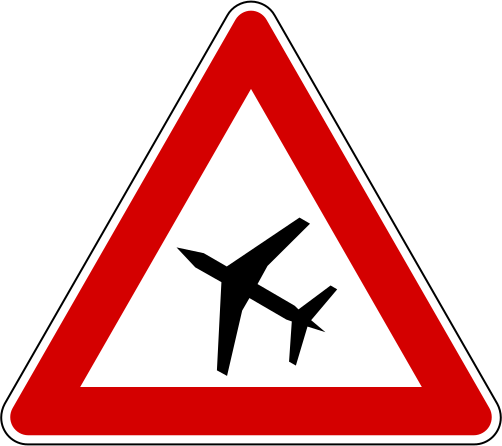
3. What does this traffic sign mean?
This traffic sign indicates a warning for low-flying aircraft. Aircraft may pass over the road at low altitude and can create sudden noise or visual distraction. Keep your attention on the road and maintain control of the vehicle.
English • Traffic sign I-28 • Airfield nearby. Aircraft fly low over the road when landing or taking off.
Bosanski • I-28 • Blizina aerodromske piste. Dio ceste preko kojeg avioni prelijeću u niskom letu pri slijetanju ili polijetanju.
Sources
🔗 Commons.wikimedia.org
🔗 Ms.ks.gov.ba • Pravilnik o saobraćajnim znakovima • član 21, tačka 18
SVG source: Government of Slovenia • Public domain • Original revision 2014-05-11. Wikimedia original unmodified.
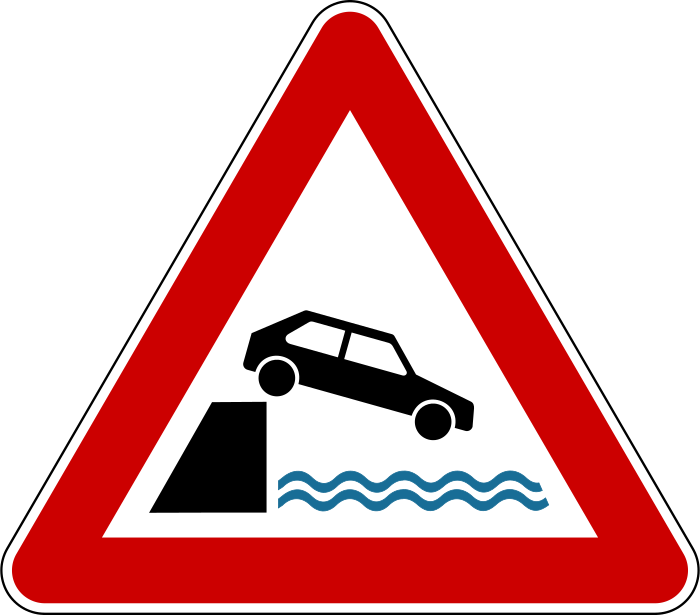
4. What does this traffic sign mean?
This traffic sign indicates a warning for a quayside or riverbank. The road approaches or runs close to an edge beside water, where a vehicle could leave the roadway and enter the water. Reduce speed, identify the road edge carefully and take extra care in darkness or poor visibility.
English • Traffic sign I-11 • Water's edge. Warns of a road section alongside the shore.
Bosanski • I-11 • Blizina obale. Približavanje dijelu ceste uz obalu.
Sources
🔗 Commons.wikimedia.org (Gigillo83 • CC BY-SA 4.0)
🔗 Ms.ks.gov.ba • Pravilnik o saobraćajnim znakovima • član 21, tačka 5
Image via Commons.wikimedia.org
Gigillo83 • CC BY-SA 4.0 • Source revision 2022-01-17. Wikimedia original unmodified.
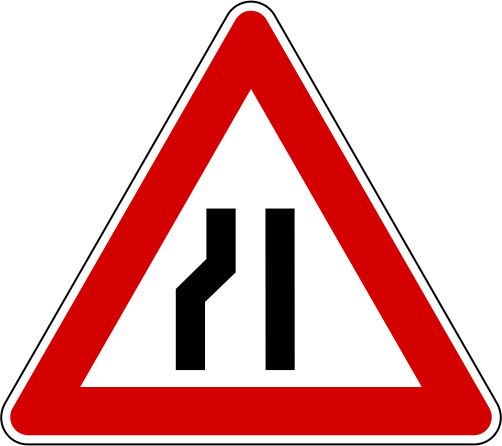
5. What does this traffic sign mean?
This traffic sign indicates a warning for a road narrowing on the left. The available road width decreases from the left side ahead. Reduce speed, follow the lane markings and maintain sufficient clearance from other traffic and the road edge.
English • Traffic sign I-9 • Road narrows on the left. Warns of a dangerous narrowing on the left.
Bosanski • I-9 • Suženje ceste s lijeve strane. Približavanje opasnom suženju kolovoza s lijeve strane.
Sources
🔗 Commons.wikimedia.org (No.cilepogača • CC BY-SA 4.0)
🔗 Ms.ks.gov.ba • Pravilnik o saobraćajnim znakovima • član 21, tačka 3
Replacement SVG: Commons.wikimedia.org • Wikimedia Commons original • Government of Slovenia • Public domain • Original revision 2014-05-10. Wikimedia original unmodified.
Image via Commons.wikimedia.org
Government of Slovenia • Public domain • Source revision 2014-05-10. Wikimedia original unmodified.
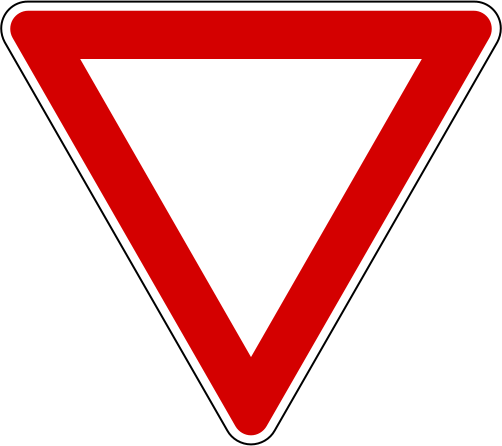
6. What does this traffic sign mean?
This traffic sign means give way. Slow down and give way to traffic that has priority. Stop if necessary and proceed only when it is safe.
English • Traffic sign II-1 • Priority road ahead. Drivers must give way to vehicles on the road being approached.
Bosanski • II-1 • Nailazak na cestu s prvenstvom prolaza. Vozač mora ustupiti prvenstvo prolaza vozilima koja se kreću cestom na koju nailazi.
Sources
🔗 Commons.wikimedia.org (Devon Rushing • CC BY-SA 4.0)
🔗 Ms.ks.gov.ba • Pravilnik o saobraćajnim znakovima • član 29, tačka 1
Replacement SVG: Commons.wikimedia.org • Wikimedia Commons original • Government of Slovenia • Public domain • Original revision 2014-05-12. Wikimedia original unmodified.
Image via Commons.wikimedia.org
Government of Slovenia • Public domain • Source revision 2014-05-12. Wikimedia original unmodified.
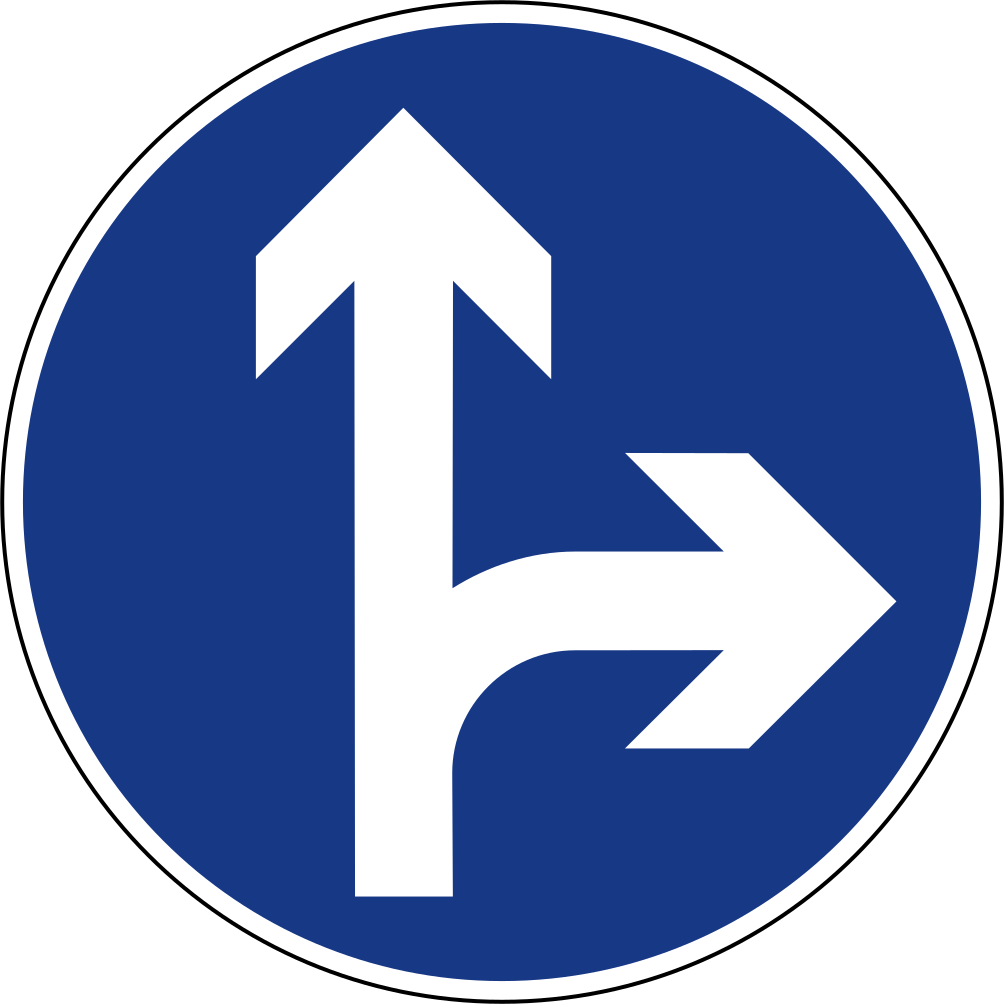
7. What does this traffic sign mean?
This traffic sign indicates that traffic must continue straight ahead or turn right. One of the indicated directions must be followed; turning left is prohibited.
English • Traffic sign II-59 • Straight ahead or right only. Vehicles may travel straight ahead or right.
Bosanski • II-59 • Dozvoljeni smjerovi — ravno ili desno. Vozila se smiju kretati ravno ili udesno.
Sources
🔗 Commons.wikimedia.org
🔗 Ms.ks.gov.ba • Pravilnik o saobraćajnim znakovima • član 30, tačka 9
SVG source: Government of Slovenia • Public domain • Original revision 2014-05-14. Wikimedia original unmodified.
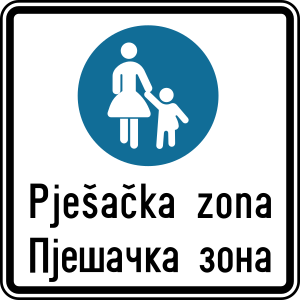
8. What does this traffic sign mean?
This traffic sign indicates the start of a pedestrian zone. Pedestrians are the principal road users within the zone, while access by vehicles and other road users is subject to the applicable traffic signs and local rules.
English • Traffic sign III-28 • Pedestrian zone. Entry to an area exclusively for pedestrians; motor-powered vehicles are prohibited.
Bosanski • III-28 • Pješačka zona. Ulazak u područje namijenjeno isključivo kretanju pješaka; kretanje vozila na motorni pogon je zabranjeno.
Sources
🔗 Commons.wikimedia.org (Gigillo83 • CC BY-SA 4.0)
🔗 Ms.ks.gov.ba • Pravilnik o saobraćajnim znakovima • član 36, tačka 19
Image via Commons.wikimedia.org
Gigillo83 • CC BY-SA 4.0 • Source revision 2022-01-18. Wikimedia original unmodified.
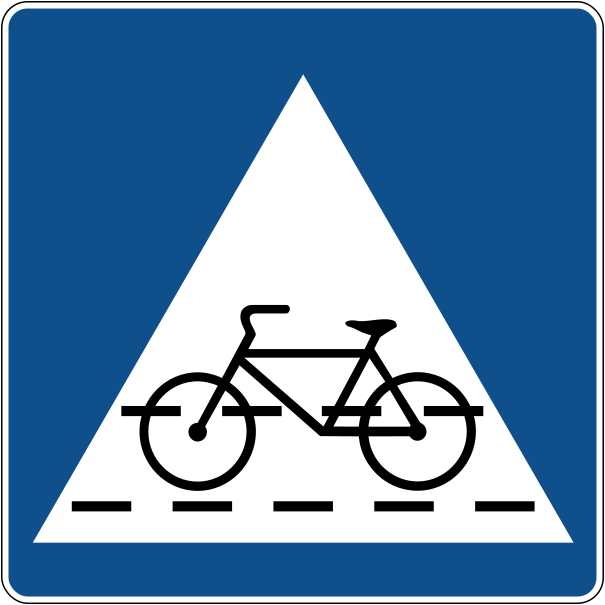
9. What does this traffic sign mean?
This traffic sign indicates a crossing for cyclists. It marks a designated place where cyclists cross the road. Priority depends on the applicable traffic signs, signals and local rules.
English • Traffic sign III-7 • Marked cycle crossing. Marks where a cycle path crosses the road.
Bosanski • III-7 • Obilježeni prijelaz biciklističke staze. Mjesto obilježenog prijelaza biciklističke staze preko ceste.
Sources
🔗 Commons.wikimedia.org
🔗 Ms.ks.gov.ba • Pravilnik o saobraćajnim znakovima • član 36, tačka 5
SVG source: Government of the Republic of Croatia • Public domain • Original revision 2022-09-01. Wikimedia original unmodified.
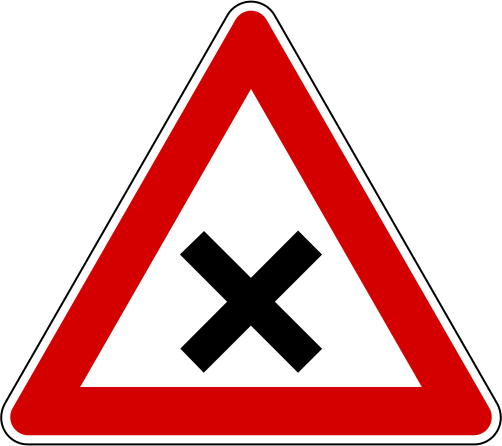
10. What does this traffic sign mean?
This traffic sign indicates a warning for an uncontrolled crossroad. An intersection without traffic signals or signs assigning priority lies ahead. Reduce speed, watch for traffic approaching from other directions and follow the applicable local priority rules.
English • Traffic sign I-34 • Junction of equal-priority roads. Warns of a junction where neither road has priority.
Bosanski • I-34 • Ukrštanje cesta istog značaja. Približavanje raskrsnici na kojoj nijedna cesta nema prvenstvo prolaza.
Sources
🔗 Commons.wikimedia.org (No.cilepogača • CC BY-SA 4.0)
🔗 Ms.ks.gov.ba • Pravilnik o saobraćajnim znakovima • član 21, tačka 23
Replacement SVG: Commons.wikimedia.org • Wikimedia Commons original • Government of Slovenia • Public domain • Original revision 2014-05-11. Wikimedia original unmodified.
Image via Commons.wikimedia.org
Government of Slovenia • Public domain • Source revision 2014-05-11. Wikimedia original unmodified.
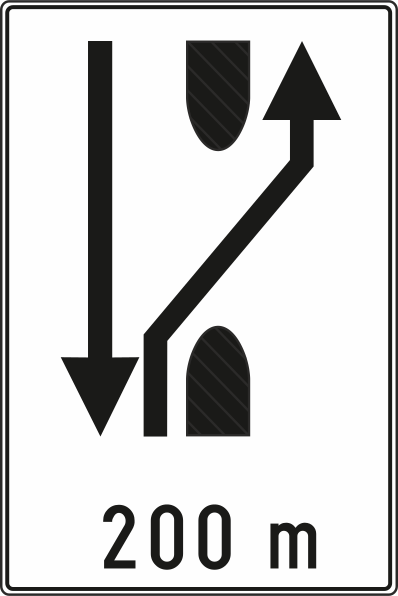
11. What does this traffic sign mean?
This traffic sign indicates that traffic is directed back through an opening in the central reservation. Follow the displayed direction and temporary lane markings as the diversion ends.
English • Traffic sign III-121 • Return to a separate carriageway. In 200 m, the temporary use of the opposing carriageway ends and vehicles return to their own carriageway.
Bosanski • III-121 • Povratak na odvojeni kolovoz. Za 200 m završava privremeno preusmjeravanje na suprotni kolovoz; vozila se vraćaju na kolovoz za svoj smjer.
Sources
🔗 Commons.wikimedia.org
🔗 Ms.ks.gov.ba • Pravilnik o saobraćajnim znakovima • član 36, tačka 92
SVG source: Government of the Republic of Croatia • Public domain • Original revision 2023-12-20. Wikimedia original unmodified.
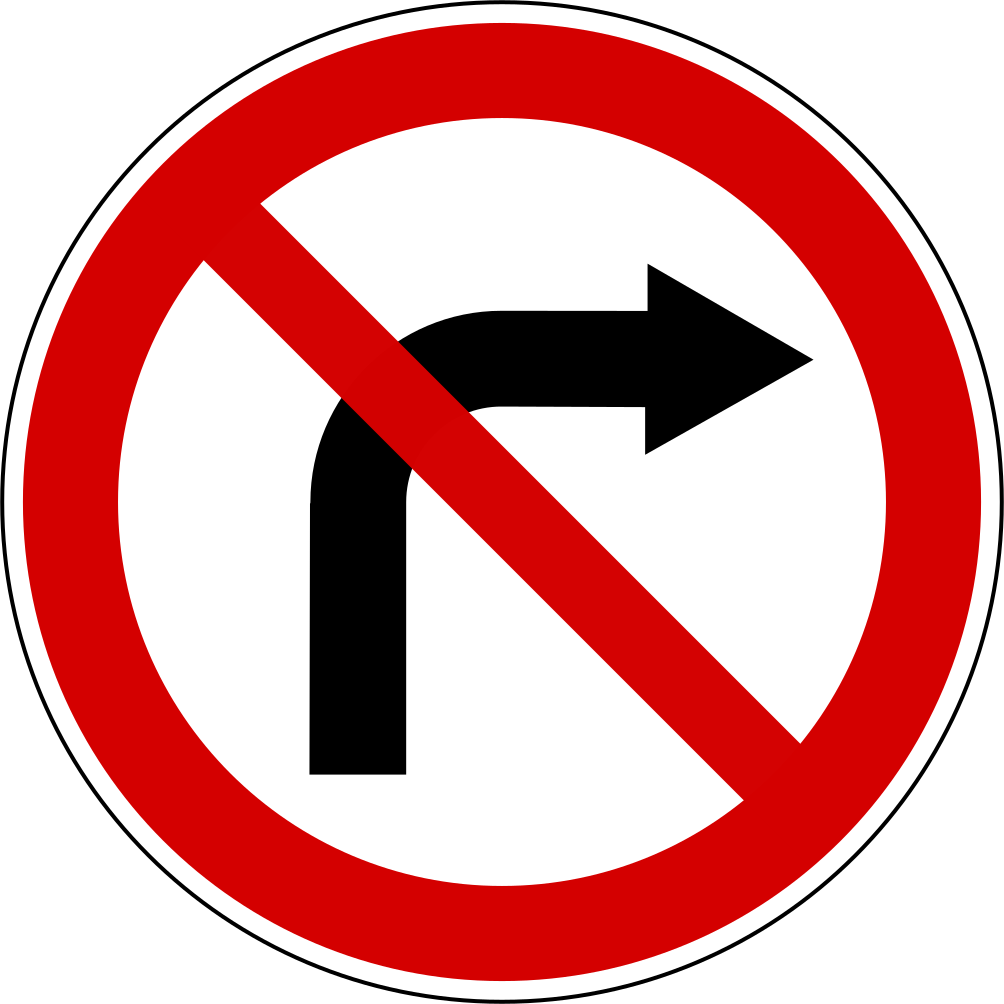
12. What does this traffic sign mean?
This traffic sign indicates that turning right is prohibited. A right turn may not be made where the sign applies. Other movements may still be permitted unless another restriction applies.
English • Traffic sign II-30 • No right turn. Turning right at this location is prohibited.
Bosanski • II-30 • Zabrana skretanja udesno. Na ovom mjestu zabranjeno je skretanje udesno.
Sources
🔗 Commons.wikimedia.org (JankoBot56 • CC BY-SA 4.0)
🔗 Ms.ks.gov.ba • Pravilnik o saobraćajnim znakovima • član 29, tačka 30
Replacement SVG: Commons.wikimedia.org • Wikimedia Commons original • Government of Slovenia • Public domain • Original revision 2014-05-13. Wikimedia original unmodified.
Image via Commons.wikimedia.org
Government of Slovenia • Public domain • Source revision 2014-05-13. Wikimedia original unmodified.

13. What does this traffic sign mean?
This traffic sign indicates a warning for a danger with no specific traffic sign. It's a general warning sign used when there is a hazard ahead that does not have its own dedicated warning sign. For example: road accidents, flooded roads and roads blocked by fallen trees. It usually has a supplementary sign attached that tells drivers of what hazard to expect.
English • Traffic sign I-33 • Danger on the road. Warns of a danger without its own specific sign. A supplementary plate may explain its nature.
Bosanski • I-33 • Opasnost na cesti. Približavanje opasnosti za koju nije predviđen poseban znak. Dopunska tabla može objasniti vrstu opasnosti.
Sources
🔗 Commons.wikimedia.org (No.cilepogača • CC BY-SA 4.0)
🔗 Ms.ks.gov.ba • Pravilnik o saobraćajnim znakovima • član 21, tačka 22
Replacement SVG: Commons.wikimedia.org • Wikimedia Commons original • Government of Slovenia • Public domain • Original revision 2014-05-11. Wikimedia original unmodified.
Artwork verified against Ms.ks.gov.ba • official published diagram I-33.
Image via Commons.wikimedia.org
Government of Slovenia • Public domain • Source revision 2014-05-11. Wikimedia original unmodified.

14. What does this traffic sign mean?
This traffic sign indicates a warning for a speed bump. A raised traffic-calming feature lies ahead. Reduce speed before reaching it to maintain vehicle control and avoid damage or discomfort.
English • Traffic sign I-12–I-14 • Uneven carriageway — hump. Warns of a hump in the carriageway.
Bosanski • I-12–I-14 • Neravan kolovoz — izbočina. Približavanje izbočini na kolovozu.
Sources
🔗 Commons.wikimedia.org
🔗 Ms.ks.gov.ba • Pravilnik o saobraćajnim znakovima • član 21, tačka 6
SVG source: Government of Slovenia • Public domain • Original revision 2014-05-11. Wikimedia original unmodified.
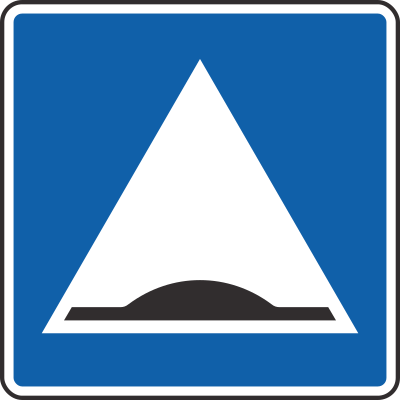
15. What does this traffic sign mean?
This traffic sign indicates a speed bump. A speed bump is a raised section of the roadway designed to reduce vehicle speeds.
English • Traffic sign III-12 • Traffic-calming hump. Marks the location of a traffic-calming hump.
Bosanski • III-12 • Preventivna izbočina na cesti. Mjesto na kojem se nalazi preventivna izbočina za smirivanje saobraćaja.
Sources
🔗 Commons.wikimedia.org (Gigillo83 • CC BY-SA 4.0)
🔗 Ms.ks.gov.ba • Pravilnik o saobraćajnim znakovima • član 36, tačka 10
SVG source: Gigillo83 • CC BY-SA 4.0 • Original revision 2025-05-17. Wikimedia original unmodified.
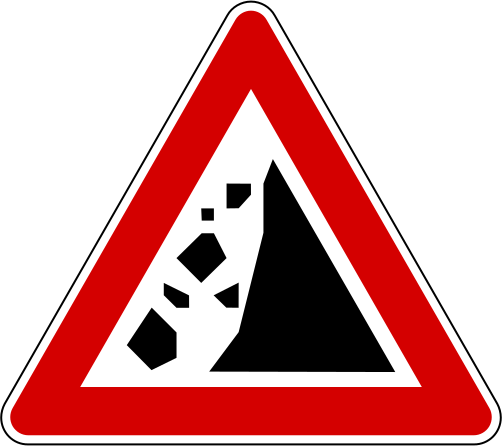
16. What does this traffic sign mean?
This traffic sign indicates a warning for falling rocks. Rocks or stones may fall from nearby slopes or may already be lying on the road. Reduce speed, scan the road ahead and be prepared to avoid or stop for fallen material.
English • Traffic sign I-17 • Falling rocks from the right. Stones may fall from the right or lie on the carriageway.
Bosanski • I-17 • Odron kamena s desne strane kolovoza. Približavanje dijelu ceste gdje kamenje može padati s desne strane ili se nalaziti na kolovozu.
Sources
🔗 Commons.wikimedia.org (JankoBot56 • CC BY-SA 4.0)
🔗 Ms.ks.gov.ba • Pravilnik o saobraćajnim znakovima • član 21, tačka 9
Replacement SVG: Commons.wikimedia.org • Wikimedia Commons original • Government of Slovenia • Public domain • Original revision 2014-05-11. Wikimedia original unmodified.
Image via Commons.wikimedia.org
Government of Slovenia • Public domain • Source revision 2014-05-11. Wikimedia original unmodified.
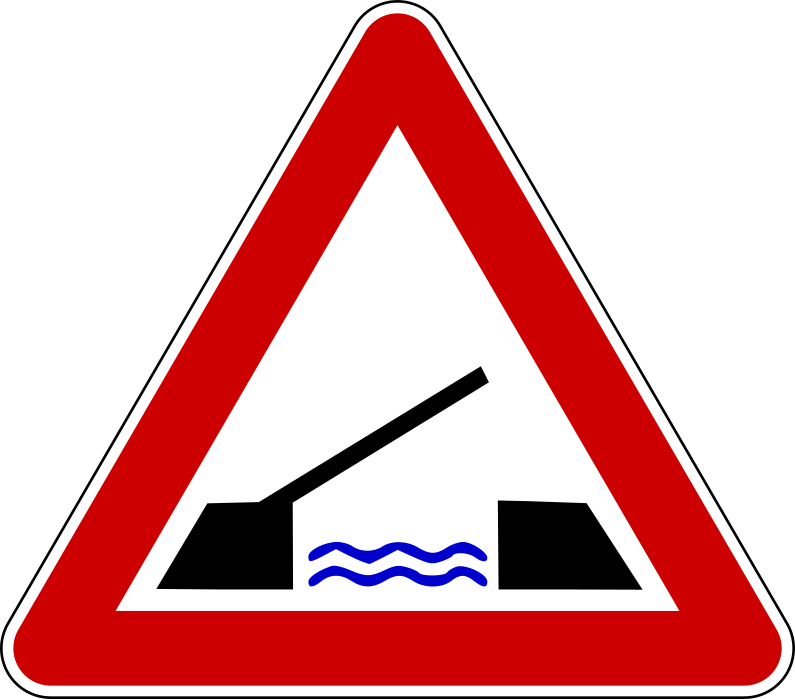
17. What does this traffic sign mean?
This traffic sign indicates a warning for a movable bridge. The bridge ahead can open, lift or move to allow water traffic to pass. Reduce speed and be prepared to stop when required by barriers, traffic lights or other signals.
English • Traffic sign I-10 • Movable bridge. Warns of a movable bridge ahead.
Bosanski • I-10 • Pokretni most. Približavanje mjestu na kojem cesta prelazi preko pokretnog mosta.
Sources
🔗 Commons.wikimedia.org (Gigillo83 • CC BY-SA 4.0)
🔗 Ms.ks.gov.ba • Pravilnik o saobraćajnim znakovima • član 21, tačka 4
Image via Commons.wikimedia.org
Gigillo83 • CC BY-SA 4.0 • Source revision 2015-05-13. Wikimedia original unmodified.
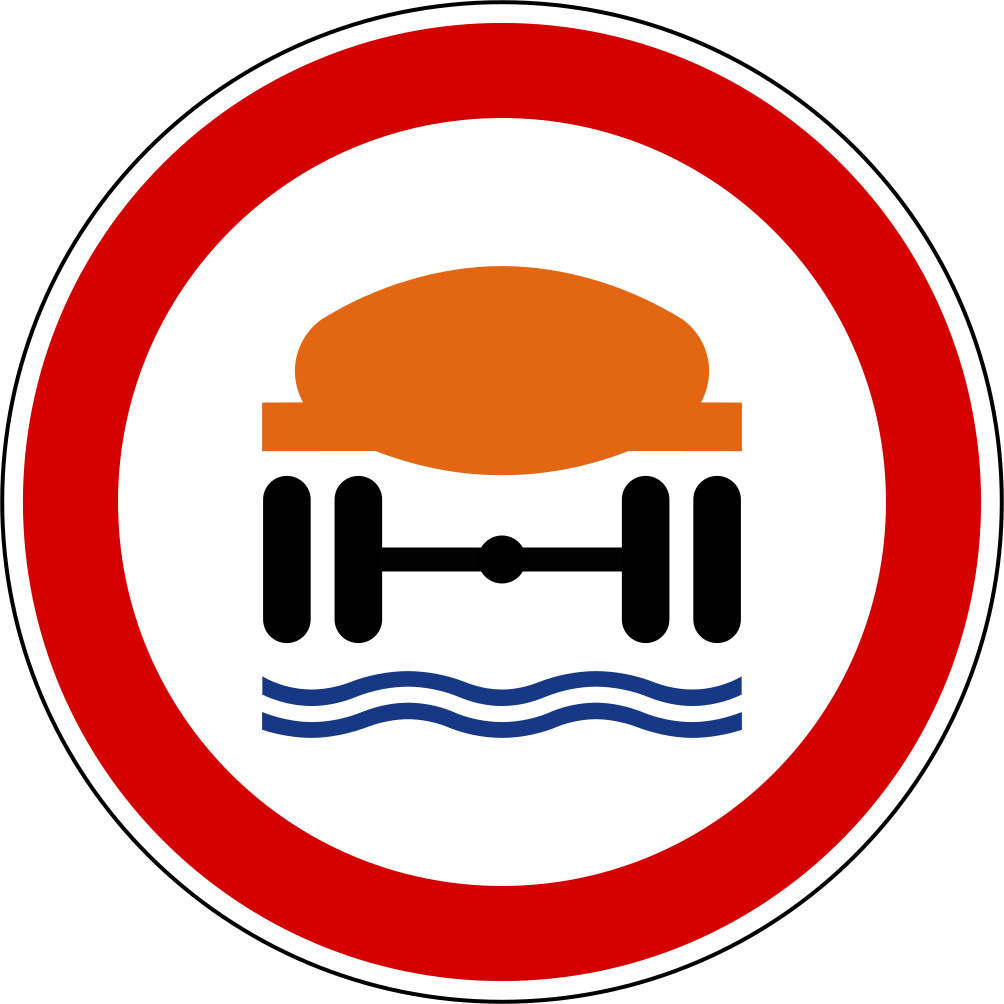
18. What does this traffic sign mean?
This traffic sign indicates that vehicles carrying water-polluting substances are prohibited. Vehicles carrying the substances covered by the sign may not enter or continue beyond it.
English • Traffic sign II-8 • No tankers. Prohibits vehicles carrying substances that may endanger the environment. The regulations exempt fuel for propulsion in a tank meeting ECE requirements.
Bosanski • II-8 • Zabrana saobraćaja za cisterne. Zabranjen saobraćaj vozilima koja prevoze materije koje mogu ugroziti čovjekov okoliš. Pravilnik izuzima pogonsko gorivo u cisterni koja ispunjava uvjete ECE.
Sources
🔗 Commons.wikimedia.org (JankoBot56 • CC BY-SA 4.0)
🔗 Ms.ks.gov.ba • Pravilnik o saobraćajnim znakovima • član 29, tačka 8
SVG source: Commons.wikimedia.org
Government of Slovenia • Public domain. Original SVG unmodified.
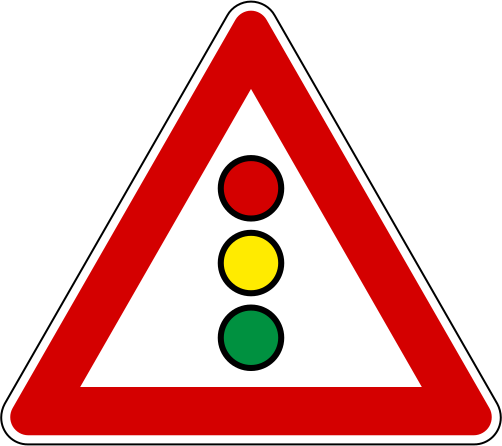
19. What does this traffic sign mean?
This traffic sign indicates a warning for traffic lights ahead. Traffic signals are located ahead and may not be visible early enough without advance warning. Reduce speed and be prepared to stop if the signal requires it.
English • Traffic sign I-26 • Traffic signals ahead. Warns of a junction or marked pedestrian crossing controlled by light signals.
Bosanski • I-26 • Nailazak na svjetlosnu saobraćajnu signalizaciju. Približavanje raskrsnici ili obilježenom pješačkom prijelazu na kojem se saobraćaj regulira svjetlosnim znakovima.
Sources
🔗 Commons.wikimedia.org (JankoBot56 • CC BY-SA 4.0)
🔗 Ms.ks.gov.ba • Pravilnik o saobraćajnim znakovima • član 21, tačka 17
Replacement SVG: Commons.wikimedia.org • Wikimedia Commons original • Government of Slovenia • Public domain • Original revision 2014-05-11. Wikimedia original unmodified.
Artwork verified against Ms.ks.gov.ba • official published diagram I-26.
Image via Commons.wikimedia.org
Government of Slovenia • Public domain • Source revision 2014-05-11. Wikimedia original unmodified.
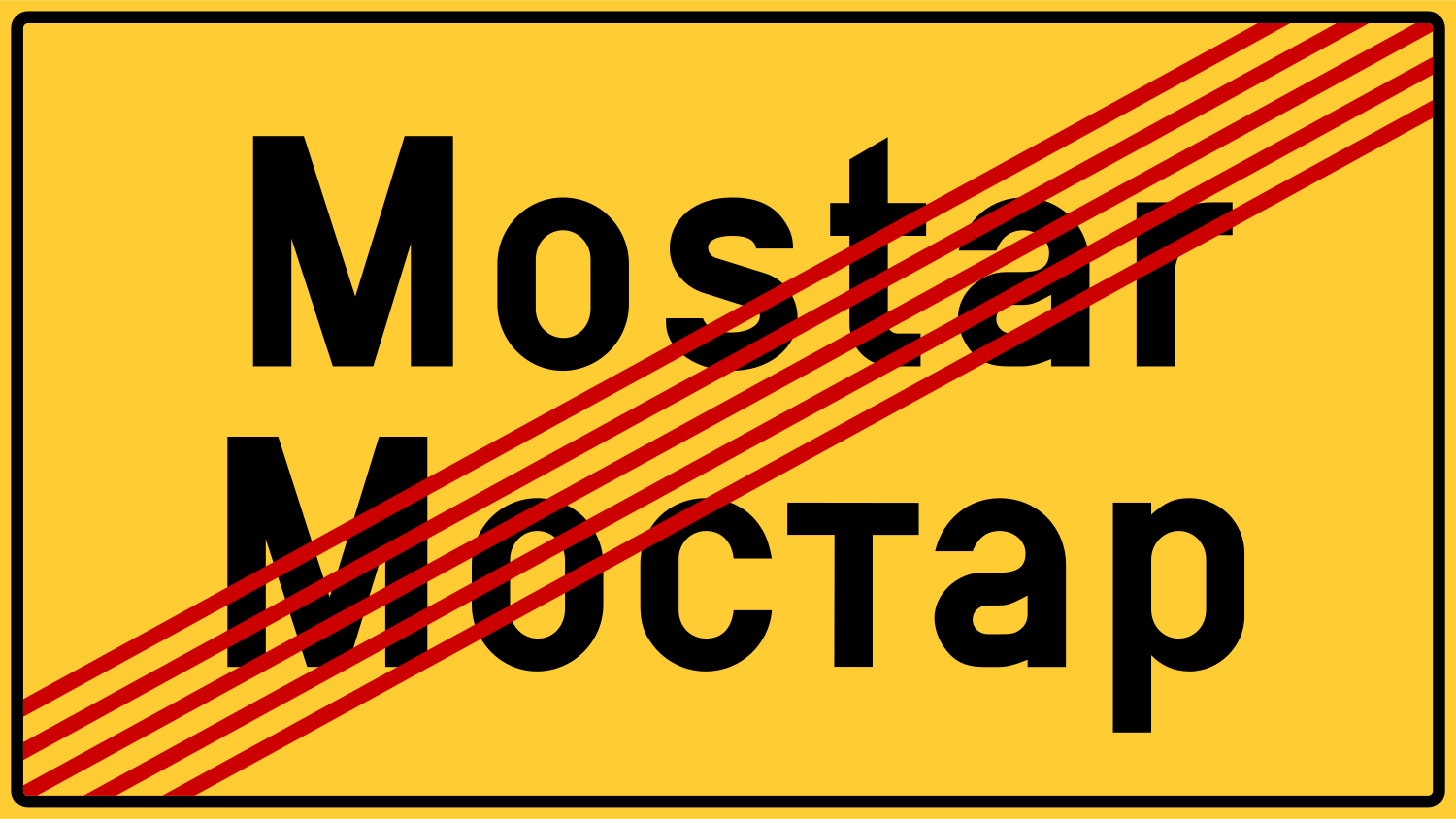
20. What does this traffic sign mean?
This traffic sign indicates the end of the built-up area. The traffic rules specifically associated with the built-up area cease to apply from this point according to the applicable local regulations.
English • Traffic sign III-85 • End of settlement. Leaving Mostar; the built-up-area traffic rules cease to apply from this boundary.
Bosanski • III-85 • Završetak naseljenog mjesta. Izlazak iz naselja Mostar i granica od koje prestaju važiti saobraćajni propisi koji se primjenjuju u naselju.
Sources
🔗 Commons.wikimedia.org (Gigillo83 • CC BY-SA 4.0)
🔗 Ms.ks.gov.ba • Pravilnik o saobraćajnim znakovima • član 36, tačka 67
🔗 Sluzbenenovine.ba • Izmjene Zakona • Službeni glasnik BiH 35/26 • član 1
Image via Commons.wikimedia.org
Gigillo83 • CC BY-SA 4.0 • Source revision 2022-02-11. Wikimedia original unmodified.
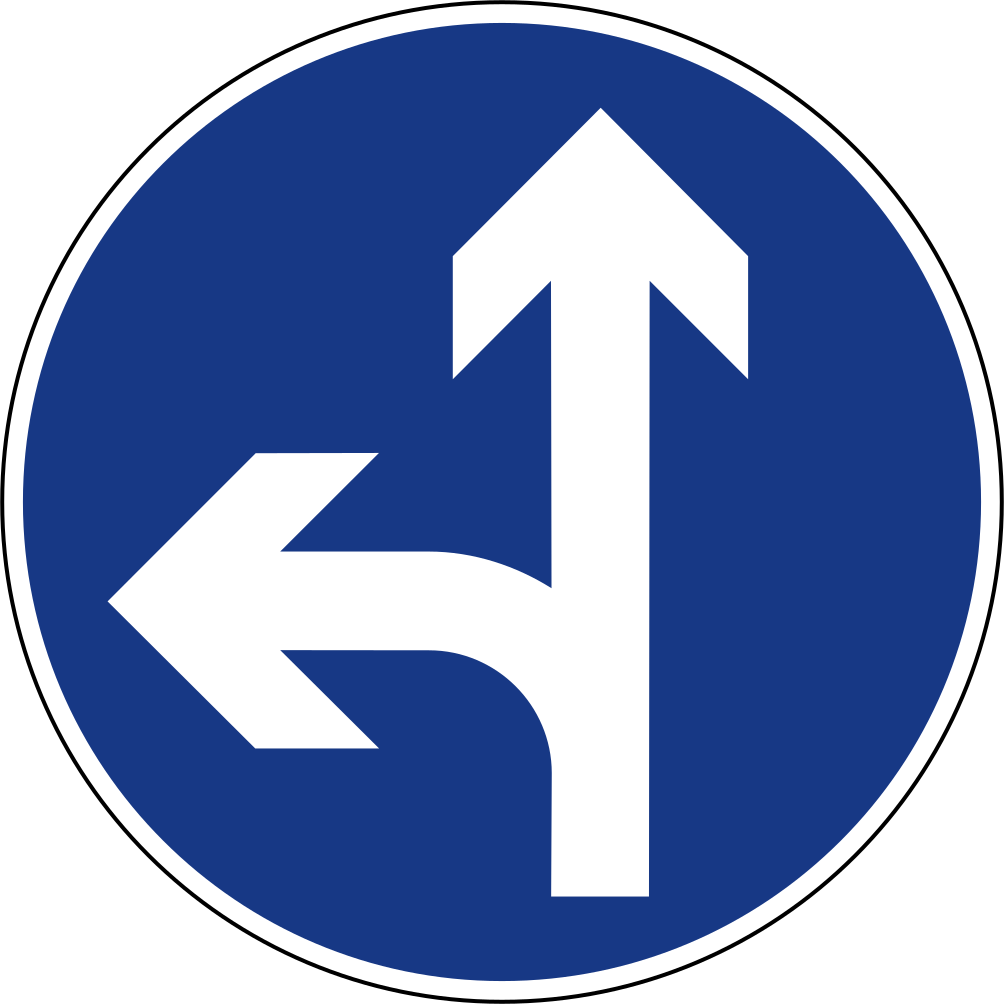
21. What does this traffic sign mean?
This traffic sign indicates that traffic must continue straight ahead or turn left. One of the indicated directions must be followed; turning right is prohibited.
English • Traffic sign II-58 • Straight ahead or left only. Vehicles may travel straight ahead or left.
Bosanski • II-58 • Dozvoljeni smjerovi — ravno ili lijevo. Vozila se smiju kretati ravno ili ulijevo.
Sources
🔗 Commons.wikimedia.org
🔗 Ms.ks.gov.ba • Pravilnik o saobraćajnim znakovima • član 30, tačka 9
SVG source: Government of Slovenia • Public domain • Original revision 2014-05-14. Wikimedia original unmodified.
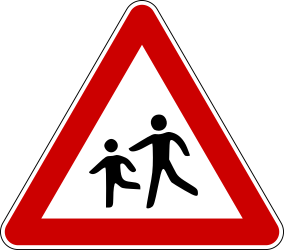
22. What does this traffic sign mean?
This traffic sign indicates a warning for children. Children may be present on or near the road and may cross unexpectedly. Reduce speed, scan both sides of the road carefully and be prepared to stop.
English • Traffic sign I-20 • Children on the road. Warns of a place frequently used by children or with many children, such as outside a school, nursery or playground.
Bosanski • I-20 • Djeca na cesti. Približavanje mjestu na kojem se djeca često ili u većem broju kreću, naprimjer ispred škole, vrtića ili igrališta.
Sources
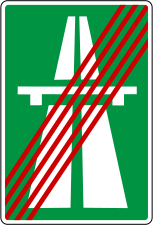
23. What does this traffic sign mean?
This traffic sign indicates the end of the motorway. The special motorway rules end at this point. Follow the speed limits, access rules and other traffic signs that apply to the road ahead.
English • Traffic sign III-74 • End of motorway. Marks where the motorway ends.
Bosanski • III-74 • Završetak autoceste. Mjesto na kojem završava autocesta.
Sources
🔗 Commons.wikimedia.org (Gigillo83 • CC BY-SA 4.0)
🔗 Ms.ks.gov.ba • Pravilnik o saobraćajnim znakovima • član 36, tačka 58
Image via Commons.wikimedia.org
Gigillo83 • CC BY-SA 4.0 • Source revision 2022-01-31. Wikimedia original unmodified.
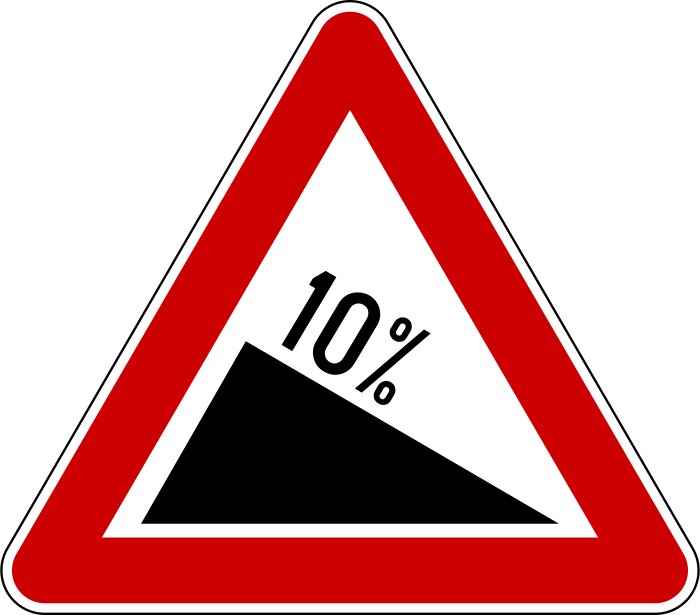
24. What does this traffic sign mean?
This traffic sign indicates a warning for a steep descent. A steep downhill gradient lies ahead and the vehicle may gain speed quickly. Reduce speed before the descent, select a suitable gear and use engine braking where appropriate. Allow extra distance for heavy or towing vehicles.
English • Traffic sign I-5 • Dangerous descent. The percentage shown gives the gradient.
Bosanski • I-5 • Opasna nizbrdica. Približavanje opasnoj nizbrdici. Naznačeni postotak označava nagib.
Sources
🔗 Commons.wikimedia.org (Gigillo83 • CC BY-SA 4.0)
🔗 Ms.ks.gov.ba • Pravilnik o saobraćajnim znakovima • član 21, tačka 2
Image via Commons.wikimedia.org
Gigillo83 • CC BY-SA 4.0 • Source revision 2022-01-17. Wikimedia original unmodified.
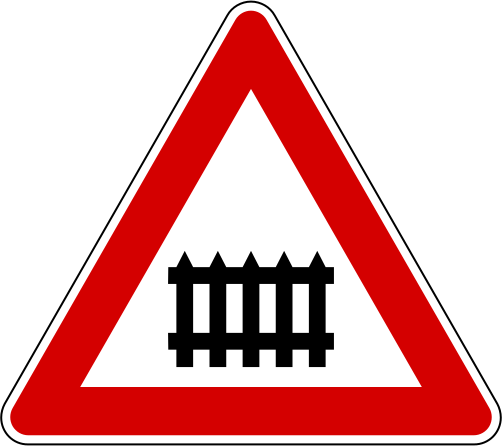
25. What does this traffic sign mean?
This traffic sign indicates a warning for a railway crossing with barriers. It alerts drivers to an upcoming level crossing with gates or barriers that close when a train approaches. Drivers should be ready to stop when the barriers are down or flashing lights activate. Never attempt to cross when gates are closing or closed.
English • Traffic sign I-48 • Railway crossing with barriers or half-barriers. Warns of a protected level crossing.
Bosanski • I-48 • Prijelaz preko željezničke pruge s branicima ili polubranicima. Približavanje željezničkom prijelazu u nivou osiguranom branicima ili polubranicima.
Sources
🔗 Commons.wikimedia.org (JankoBot56 • CC BY-SA 4.0)
🔗 Ms.ks.gov.ba • Pravilnik o saobraćajnim znakovima • član 21, tačka 33
SVG source: Commons.wikimedia.org
Government of Slovenia • Public domain. Original SVG unmodified.
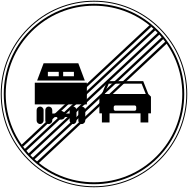
26. What does this traffic sign mean?
This traffic sign indicates the end of the overtaking prohibition for trucks. The preceding truck overtaking restriction ends at this point. Other overtaking rules and restrictions may still apply.
English • Traffic sign III-15 • End of overtaking prohibition for goods vehicles. Ends the previously imposed prohibition.
Bosanski • III-15 • Prestanak zabrane pretjecanja za teretna vozila. Od ovog mjesta prestaje prethodno određena zabrana pretjecanja za teretna vozila.
Sources
🔗 Commons.wikimedia.org (Gigillo83 • CC BY-SA 4.0)
🔗 Ms.ks.gov.ba • Pravilnik o saobraćajnim znakovima • član 36, tačka 12
Image via Commons.wikimedia.org
Gigillo83 • CC BY-SA 4.0 • Source revision 2015-05-14. Wikimedia original unmodified.

27. What does this traffic sign mean?
This traffic sign indicates that drivers may not enter the road from either direction.
English • Traffic sign II-3 • No traffic in either direction. All vehicles are prohibited both ways.
Bosanski • II-3 • Zabrana saobraćaja u oba smjera. Zabranjen saobraćaj svim vozilima u oba smjera.
Sources
🔗 Commons.wikimedia.org
🔗 Ms.ks.gov.ba • Pravilnik o saobraćajnim znakovima • član 29, tačka 3
SVG source: Government of Slovenia • Public domain • Original revision 2014-05-12. Wikimedia original unmodified.
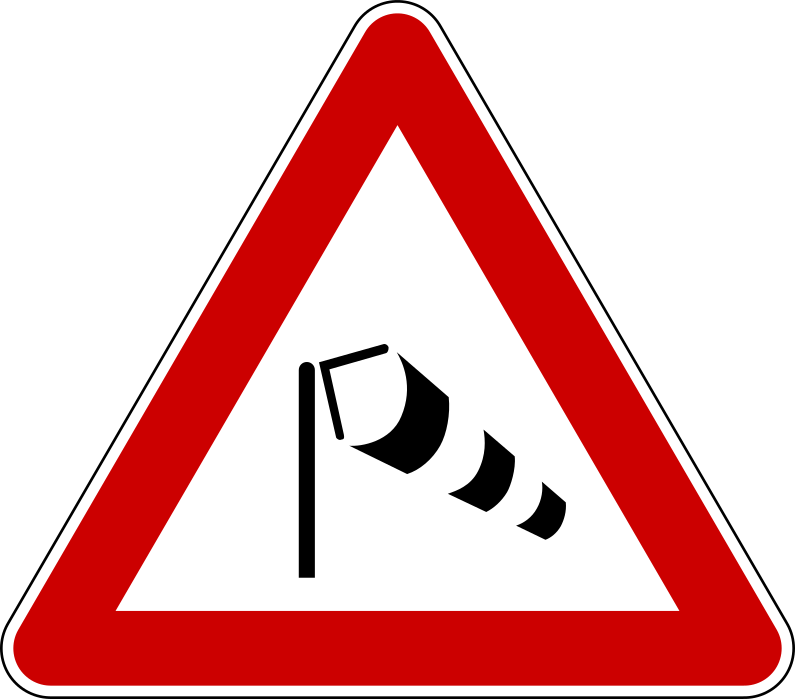
28. What does this traffic sign mean?
This traffic sign indicates a warning for strong crosswinds. Side winds may suddenly affect vehicle stability and steering. Reduce speed, keep a firm but controlled grip on the steering wheel and take extra care with high-sided vehicles, motorcycles and trailers.
English • Traffic sign I-29 • Crosswinds from the left. Strong winds frequently blow across the road from the left.
Bosanski • I-29 • Bočni vjetar s lijeve strane. Približavanje dijelu ceste na kojem često puše jak bočni vjetar s lijeve strane.
Sources
🔗 Commons.wikimedia.org (Gigillo83 • CC BY-SA 4.0)
🔗 Ms.ks.gov.ba • Pravilnik o saobraćajnim znakovima • član 21, tačka 19
Image via Commons.wikimedia.org
Gigillo83 • CC BY-SA 4.0 • Source revision 2022-02-13. Wikimedia original unmodified.
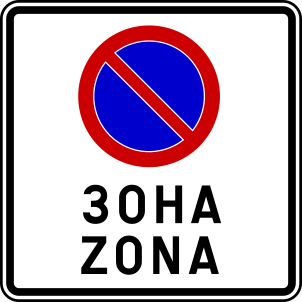
29. What does this traffic sign mean?
This traffic sign indicates the start of a no-parking zone. The parking prohibition applies throughout the zone according to the applicable zonal rules until the zone is ended or another rule replaces it.
English • Traffic sign III-32 • Limited-duration parking zone. Entry to a zone with a general parking time limit, regardless of charges. A plate may specify applicable days or hours.
Bosanski • III-32 • Zona u kojoj je ograničeno trajanje parkiranja. Ulazak u zonu s općim ograničenjem trajanja parkiranja, bez obzira plaća li se naknada. Dopunska tabla može odrediti dane ili sate primjene.
Sources
🔗 Commons.wikimedia.org (Gigillo83 • CC BY-SA 4.0)
🔗 Ms.ks.gov.ba • Pravilnik o saobraćajnim znakovima • član 36, tačka 23
SVG source: Gigillo83 • CC BY-SA 4.0 • Original revision 2022-01-17. Wikimedia original unmodified.
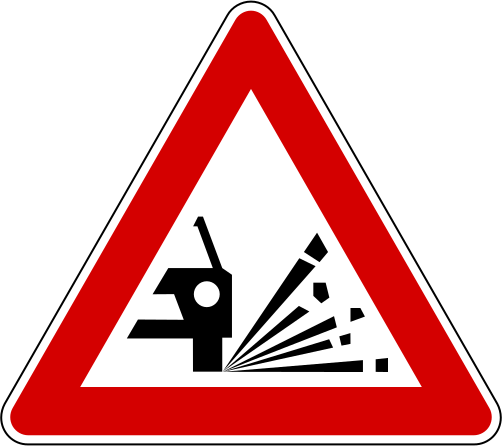
30. What does this traffic sign mean?
This traffic sign indicates a warning for loose chippings. Loose stones or gravel may reduce tyre grip and can be thrown up by passing vehicles. Reduce speed, increase your following distance and avoid sudden braking, acceleration or steering movements.
English • Traffic sign I-16 • Flying stones. Warns of unrolled crushed stone or small stones on a hard surface, with an increased risk of stones being thrown up.
Bosanski • I-16 • Kamenje pršti. Približavanje dijelu ceste s neuvaljanim tucanikom ili sitnim kamenjem na tvrdoj podlozi; postoji povećana opasnost od prštanja kamenja.
Sources
🔗 Commons.wikimedia.org (JankoBot56 • CC BY-SA 4.0)
🔗 Ms.ks.gov.ba • Pravilnik o saobraćajnim znakovima • član 21, tačka 8
Replacement SVG: Commons.wikimedia.org • Wikimedia Commons original • Government of Slovenia • Public domain • Original revision 2014-05-11. Wikimedia original unmodified.
Image via Commons.wikimedia.org
Government of Slovenia • Public domain • Source revision 2014-05-11. Wikimedia original unmodified.
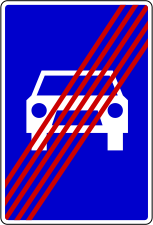
31. What does this traffic sign mean?
This traffic sign indicates the end of the expressway. The special traffic rules associated with the expressway end at this point. Follow the rules and traffic signs that apply to the road ahead.
English • Traffic sign III-76 • End of expressway or road reserved for motor vehicles. Marks where that road ends.
Bosanski • III-76 • Završetak brze ceste ili ceste rezervirane za saobraćaj motornih vozila. Mjesto na kojem završava brza cesta ili cesta rezervirana za saobraćaj motornih vozila.
Sources
🔗 Commons.wikimedia.org (Gigillo83 • CC BY-SA 4.0)
🔗 Ms.ks.gov.ba • Pravilnik o saobraćajnim znakovima • član 36, tačka 60
Image via Commons.wikimedia.org
Gigillo83 • CC BY-SA 4.0 • Source revision 2022-01-31. Wikimedia original unmodified.
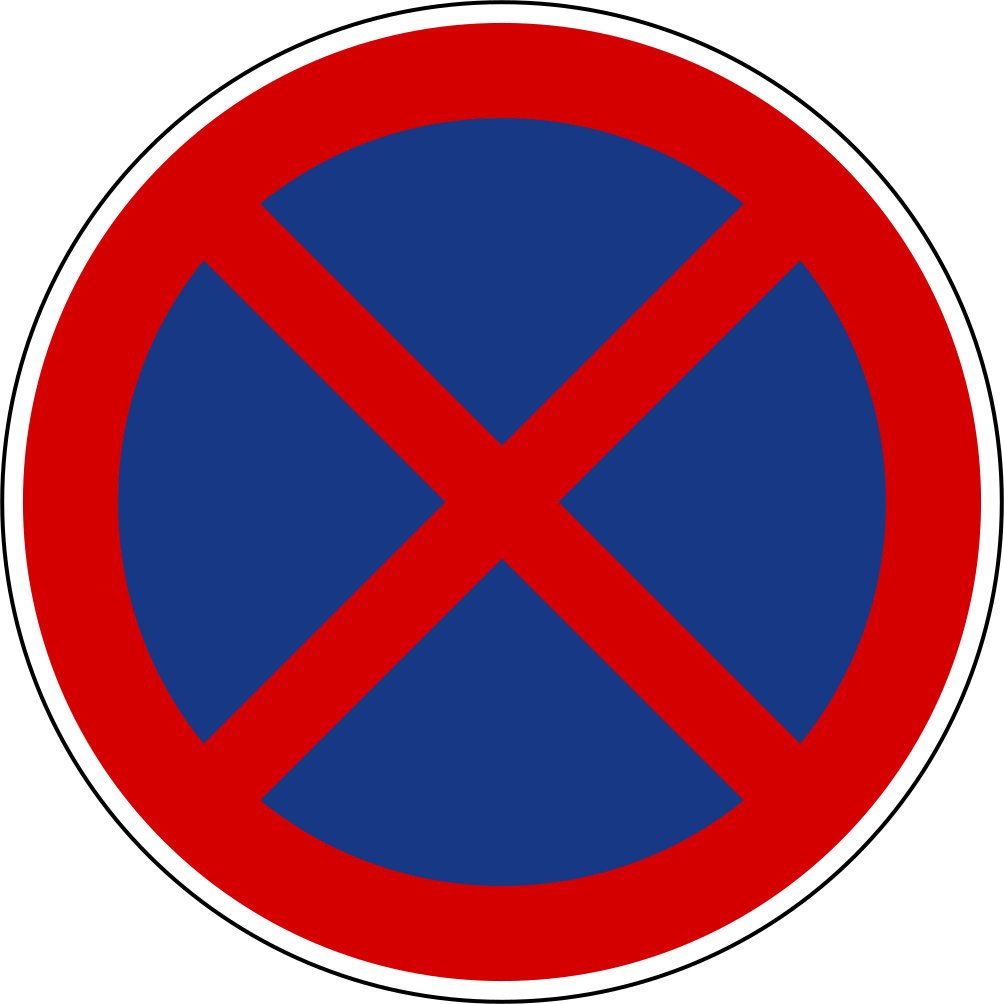
32. What does this traffic sign mean?
This traffic sign indicates that parking and stopping are prohibited. Vehicles may not stop or park voluntarily where the restriction applies, except where an applicable rule provides an exemption or stopping is required by traffic conditions.
English • Traffic sign II-41 • No stopping or parking. Both are prohibited on the side where the sign stands.
Bosanski • II-41 • Zabrana zaustavljanja i parkiranja. Na strani ceste na kojoj je znak postavljen zabranjeno je zaustavljanje i parkiranje vozila.
Sources
🔗 Commons.wikimedia.org
🔗 Ms.ks.gov.ba • Pravilnik o saobraćajnim znakovima • član 29, tačka 41
SVG source: Government of Slovenia • Public domain • Original revision 2018-08-18. Wikimedia original unmodified.
Artwork verified against Ms.ks.gov.ba • official published diagram II-41.
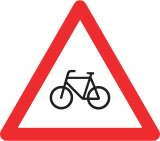
33. What does this traffic sign mean?
This traffic sign indicates a warning for cyclists. Cyclists may be riding along or crossing the road ahead. Reduce speed, watch carefully for cyclists and maintain the passing distance required by the applicable local rules.
English • Traffic sign I-22 • Cyclists on the road. Warns of a section used by cyclists or a place where they frequently emerge from a side road or cycle path.
Bosanski • I-22 • Biciklisti na cesti. Približavanje dijelu ceste kojim se kreću biciklisti ili mjestu gdje često izlaze s bočne ceste ili biciklističke staze.
Sources
🔗 Commons.wikimedia.org (No.cilepogača • CC BY-SA 4.0)
🔗 Ms.ks.gov.ba • Pravilnik o saobraćajnim znakovima • član 21, tačka 13
Replacement SVG: Commons.wikimedia.org • Wikimedia Commons original • Bundesamt für Strassen (ASTRA) • Public domain • Original revision 2017-08-16. Wikimedia original unmodified.
Artwork verified against Ms.ks.gov.ba • official published diagram I-22.
Image via Commons.wikimedia.org
Bundesamt für Strassen (ASTRA) • Public domain • Source revision 2017-08-16. Wikimedia original unmodified.
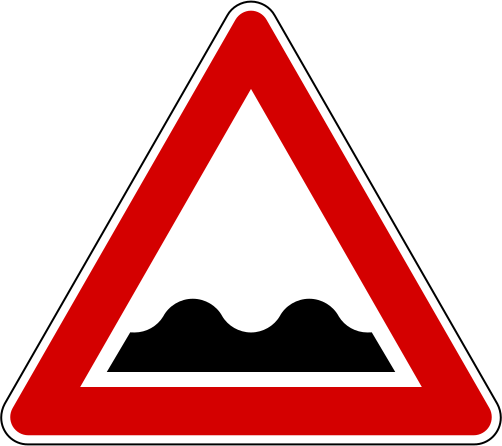
34. What does this traffic sign mean?
This traffic sign indicates a warning for a bad or uneven road surface. Potholes, bumps, depressions or other surface irregularities may affect vehicle stability and braking. Reduce speed and avoid sudden manoeuvres.
English • Traffic sign I-14 • Uneven carriageway. Warns of successive humps and depressions.
Bosanski • I-14 • Neravan kolovoz. Približavanje dijelu ceste s uzastopnim izbočinama i ulegnućima na kolovozu.
Sources
🔗 Commons.wikimedia.org
🔗 Ms.ks.gov.ba • Pravilnik o saobraćajnim znakovima • član 21, tačka 6
SVG source: Government of Slovenia • Public domain • Original revision 2014-05-11. Wikimedia original unmodified.
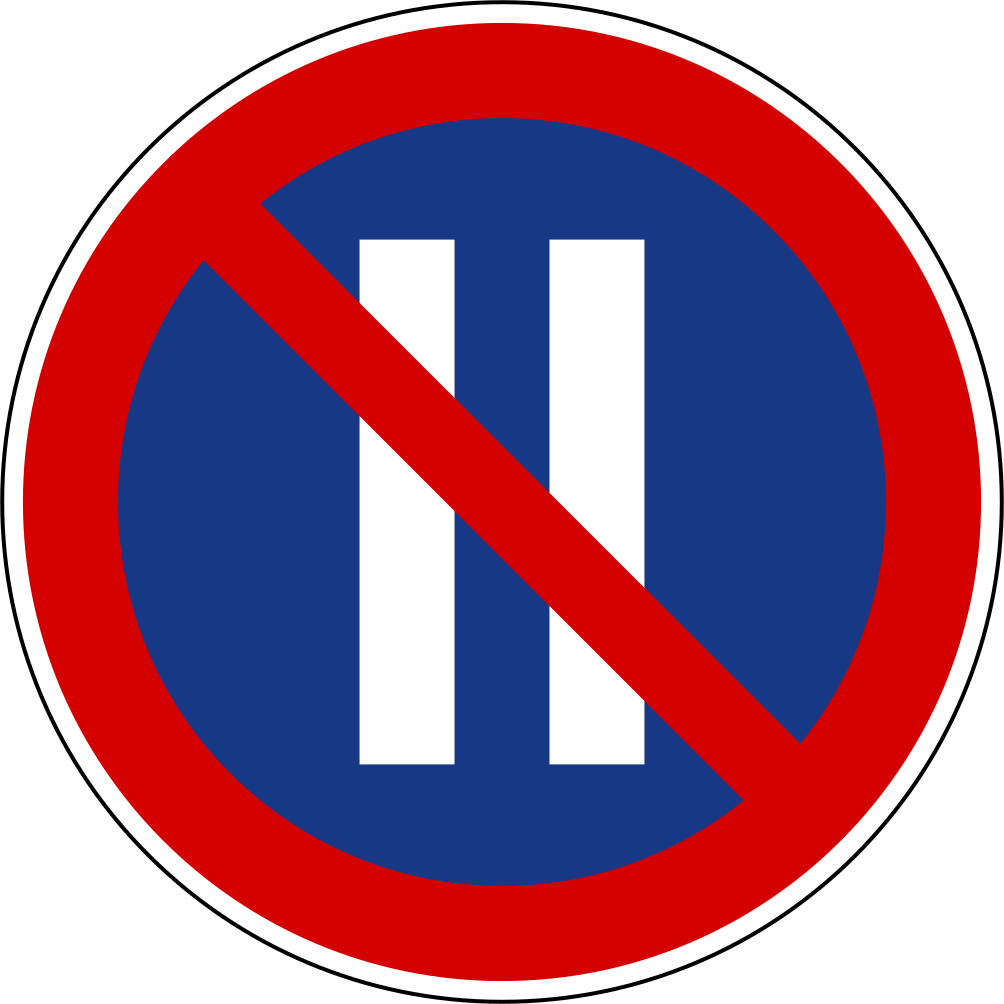
35. What does this traffic sign mean?
This traffic sign indicates that parking is prohibited on even-numbered dates on the side of the road covered by the sign. The applicable changeover times, exceptions and rules for the opposite side depend on local regulations.
English • Traffic sign II-44 • Alternate parking — even-numbered days. Parking is prohibited on the indicated section on even-numbered days.
Bosanski • II-44 • Naizmjenično parkiranje — parni dani. Na označenom dijelu ceste zabranjeno je parkiranje u parne dane.
Sources
🔗 Commons.wikimedia.org
🔗 Ms.ks.gov.ba • Pravilnik o saobraćajnim znakovima • član 29, tačka 44
SVG source: Government of Slovenia • Public domain • Original revision 2018-08-18. Wikimedia original unmodified.
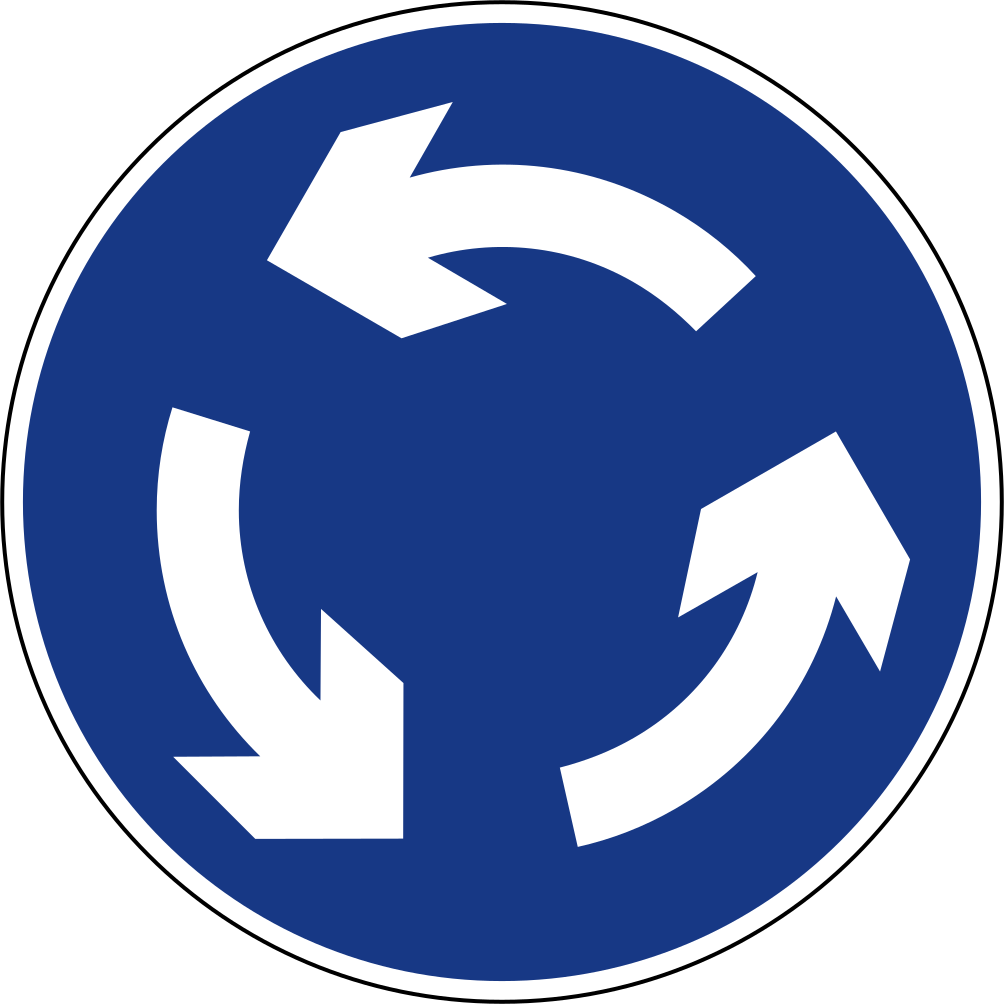
36. What does this traffic sign mean?
This traffic sign indicates the mandatory direction around a roundabout. Traffic must circulate in the direction shown by the arrows. The sign does not itself determine priority; follow the applicable priority signs, traffic signals and local rules.
English • Traffic sign II-64 • Roundabout circulation. Vehicles must circulate anticlockwise.
Bosanski • II-64 • Kružni tok saobraćaja. Vozila se moraju kretati kružno, suprotno smjeru kazaljke na satu.
Sources
🔗 Commons.wikimedia.org
🔗 Ms.ks.gov.ba • Pravilnik o saobraćajnim znakovima • član 30, tačka 10
SVG source: Government of Slovenia • Public domain • Original revision 2014-05-14. Wikimedia original unmodified.
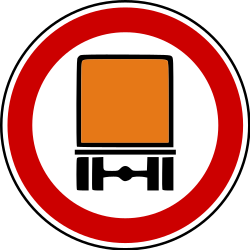
37. What does this traffic sign mean?
This traffic sign indicates that vehicles carrying dangerous goods are prohibited. Vehicles carrying the dangerous goods covered by the sign may not enter or continue beyond it.
English • Traffic sign II-10 • No vehicles carrying dangerous substances. These vehicles are prohibited.
Bosanski • II-10 • Zabrana saobraćaja za vozila koja prevoze opasne materije. Zabranjen saobraćaj vozilima koja prevoze opasne materije.
Sources
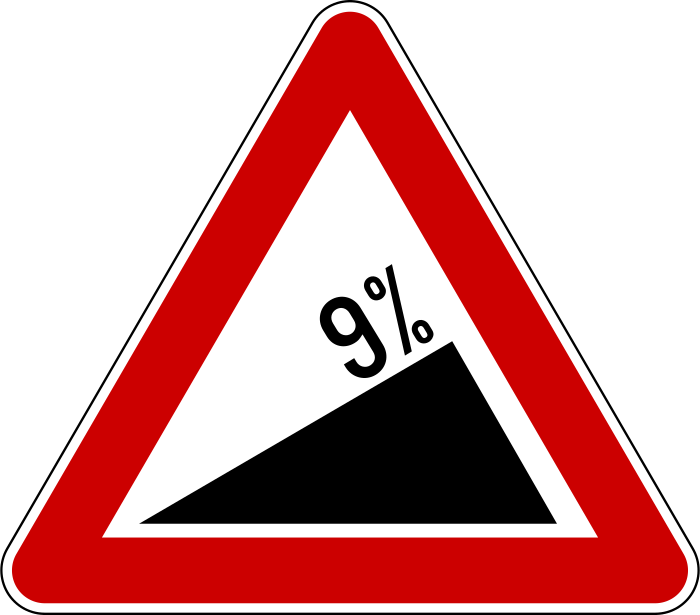
38. What does this traffic sign mean?
This traffic sign indicates a warning for a steep ascent. A steep uphill gradient lies ahead and may cause heavy or low-powered vehicles to lose speed. Select a suitable gear, maintain a safe following distance and be prepared for slower traffic.
English • Traffic sign I-6 • Dangerous ascent. The percentage shown gives the gradient.
Bosanski • I-6 • Opasan uspon. Približavanje opasnom usponu. Naznačeni postotak označava nagib.
Sources
🔗 Commons.wikimedia.org (Gigillo83 • CC BY-SA 4.0)
🔗 Ms.ks.gov.ba • Pravilnik o saobraćajnim znakovima • član 21, tačka 2
Image via Commons.wikimedia.org
Gigillo83 • CC BY-SA 4.0 • Source revision 2022-01-17. Wikimedia original unmodified.
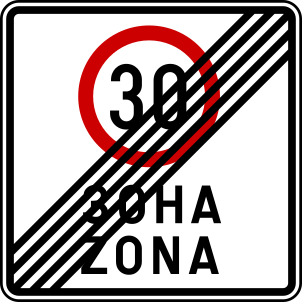
39. What does this traffic sign mean?
This traffic sign indicates the end of the zone with a speed limit. The zonal speed limit ends at this point. Follow any newly posted limit or the applicable default speed rules.
English • Traffic sign III-27 • End of speed limit zone. Exit from the zone with a 30 km/h limit.
Bosanski • III-27 • Završetak zone u kojoj je brzina kretanja ograničena. Izlazak iz zone u kojoj je važilo ograničenje brzine od 30 km/h.
Sources
🔗 Commons.wikimedia.org (Gigillo83 • CC BY-SA 4.0)
🔗 Ms.ks.gov.ba • Pravilnik o saobraćajnim znakovima • član 36, tačka 18
SVG source: Gigillo83 • CC BY-SA 4.0 • Original revision 2022-01-17. Wikimedia original unmodified.
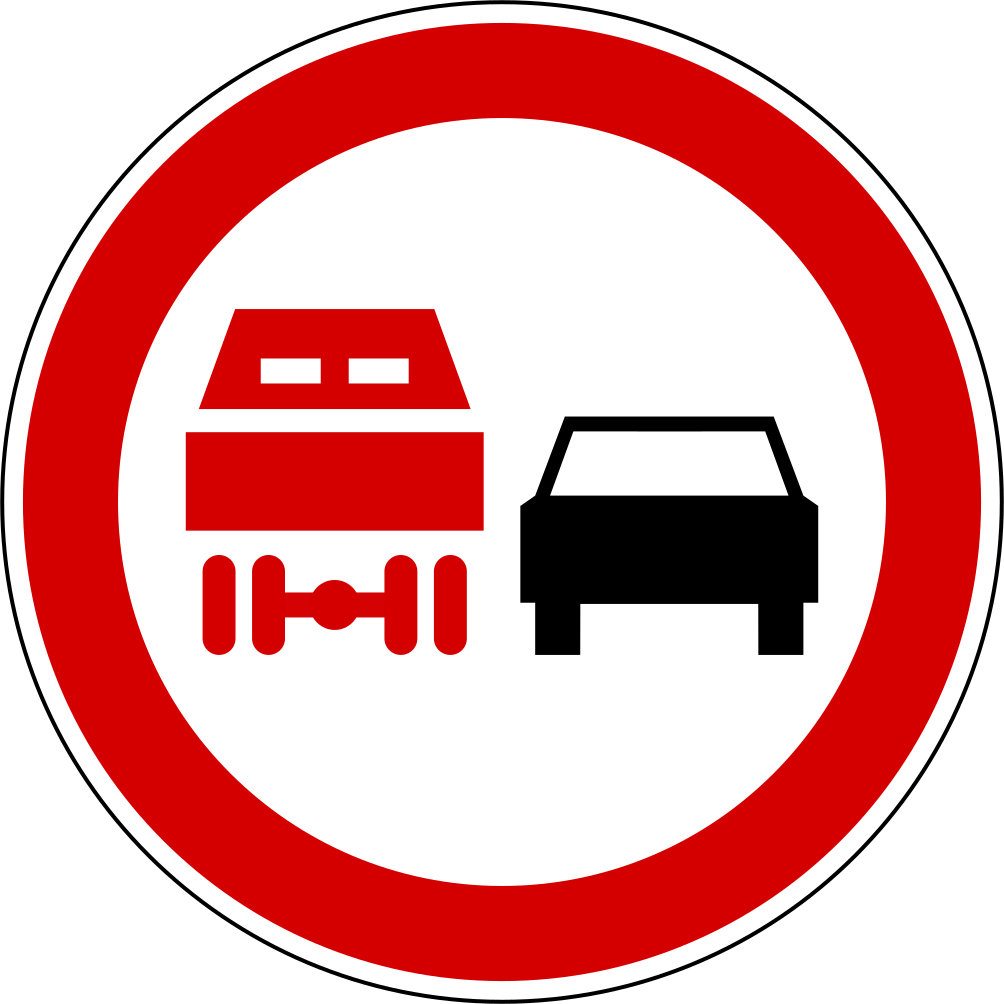
40. What does this traffic sign mean?
This traffic sign indicates that overtaking is prohibited for trucks. Trucks covered by the sign may not overtake where the prohibition applies. The affected truck categories and any exceptions depend on the applicable local rules.
English • Traffic sign II-33 • No overtaking by goods vehicles. Goods vehicles with a maximum authorised mass over 3.5 t must not overtake other motor vehicles except motorcycles without trailers and motorised bicycles. A plate may specify another mass.
Bosanski • II-33 • Zabrana pretjecanja za teretna vozila. Teretnim vozilima čija najveća dopuštena masa prelazi 3,5 t zabranjeno je pretjecanje drugih motornih vozila, osim motocikla bez prikolice i bicikla s motorom. Dopunska tabla može odrediti drugu masu.
Sources
🔗 Commons.wikimedia.org (Gigillo83 • CC BY-SA 4.0)
🔗 Ms.ks.gov.ba • Pravilnik o saobraćajnim znakovima • član 29, tačka 33
Replacement SVG: Commons.wikimedia.org • Wikimedia Commons original • Government of Slovenia • Public domain • Original revision 2014-05-13. Wikimedia original unmodified.
Artwork verified against Ms.ks.gov.ba • official published diagram II-33.
Image via Commons.wikimedia.org
Government of Slovenia • Public domain • Source revision 2014-05-13. Wikimedia original unmodified.
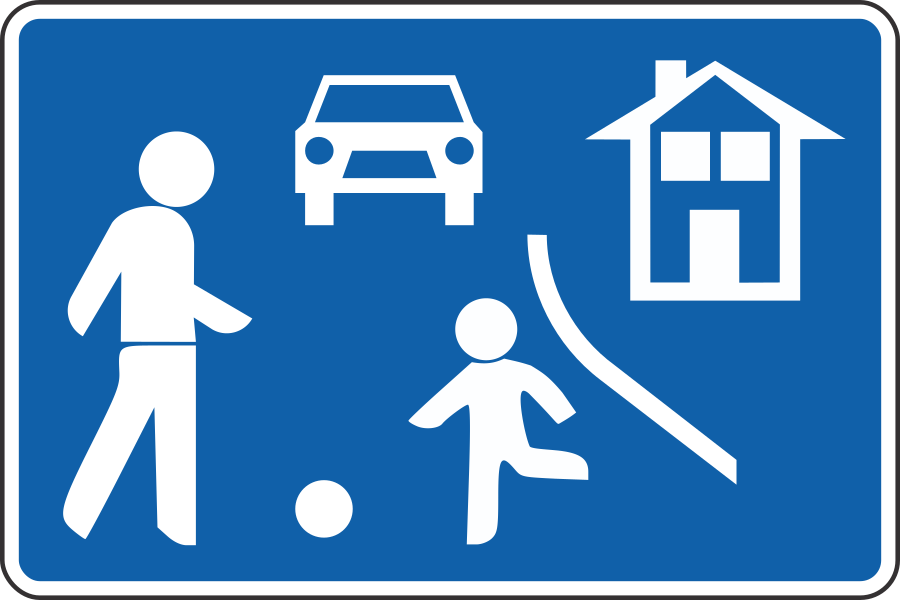
41. What does this traffic sign mean?
This traffic sign indicates the start of a residential area. Special traffic rules apply within the area according to the applicable signs and local regulations. These rules may affect speed, parking and how different road users use the road.
English • Traffic sign III-30 • Residential area with traffic calming. Entry to a settlement area where driving faster than walking speed is prohibited and children's play is permitted.
Bosanski • III-30 • Područje smirenog saobraćaja. Ulazak u područje naselja u kojem se ne smije voziti brže od brzine hoda pješaka i u kojem je dječija igra dopuštena.
Sources
🔗 Commons.wikimedia.org (Gigillo83 • CC BY-SA 4.0)
🔗 Ms.ks.gov.ba • Pravilnik o saobraćajnim znakovima • član 36, tačka 21
Replacement SVG: Commons.wikimedia.org • Wikimedia Commons original • Gigillo83 • CC BY-SA 4.0 • Original revision 2025-05-01. Wikimedia original unmodified.
Image via Commons.wikimedia.org
Gigillo83 • CC BY-SA 4.0 • Source revision 2025-05-01. Wikimedia original unmodified.
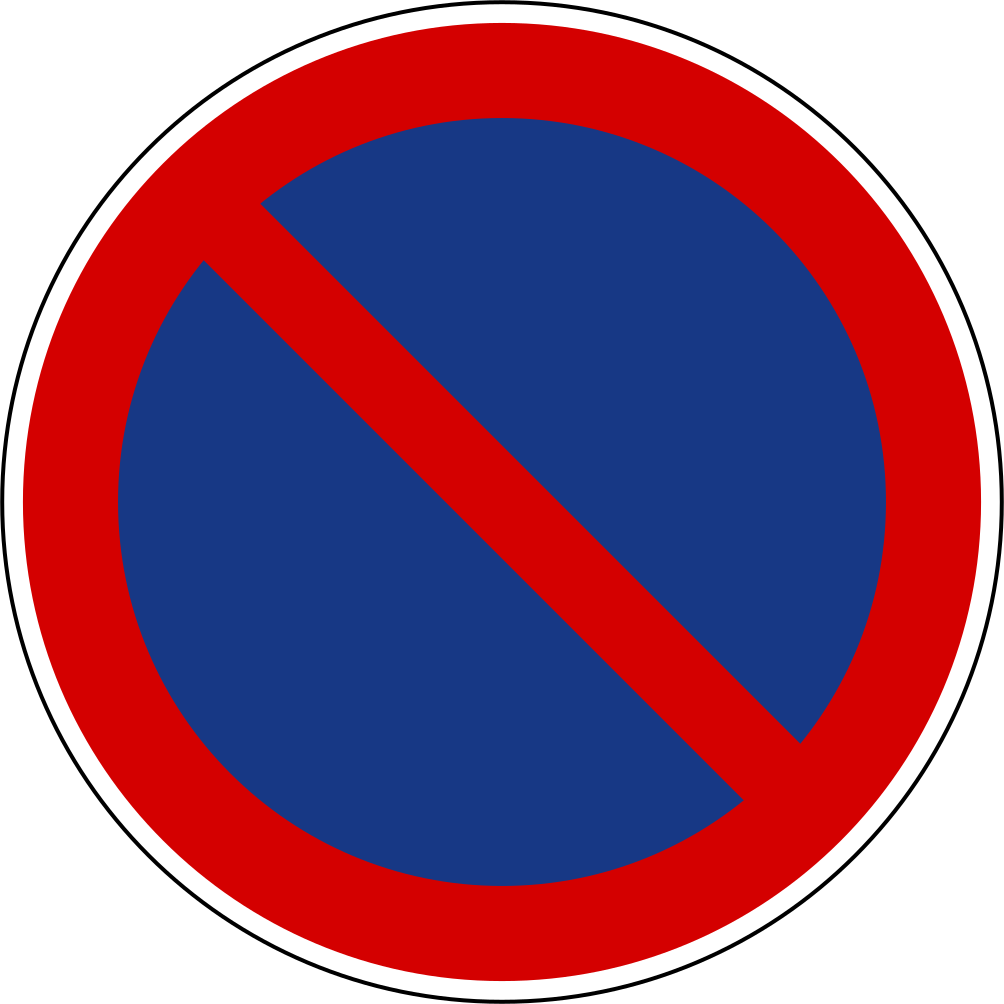
42. What does this traffic sign mean?
This traffic sign indicates that parking is prohibited. Vehicles may not be parked in the area covered by the sign unless an exception applies. Brief stopping to pick up or drop off passengers or to load or unload goods may still be permitted where local rules allow it.
English • Traffic sign II-42 • No parking. Vehicles must not park on the side where the sign stands.
Bosanski • II-42 • Zabrana parkiranja. Na strani ceste na kojoj je znak postavljen zabranjeno je parkiranje vozila.
Sources
🔗 Commons.wikimedia.org
🔗 Ms.ks.gov.ba • Pravilnik o saobraćajnim znakovima • član 29, tačka 42
SVG source: Government of Slovenia • Public domain • Original revision 2018-08-18. Wikimedia original unmodified.
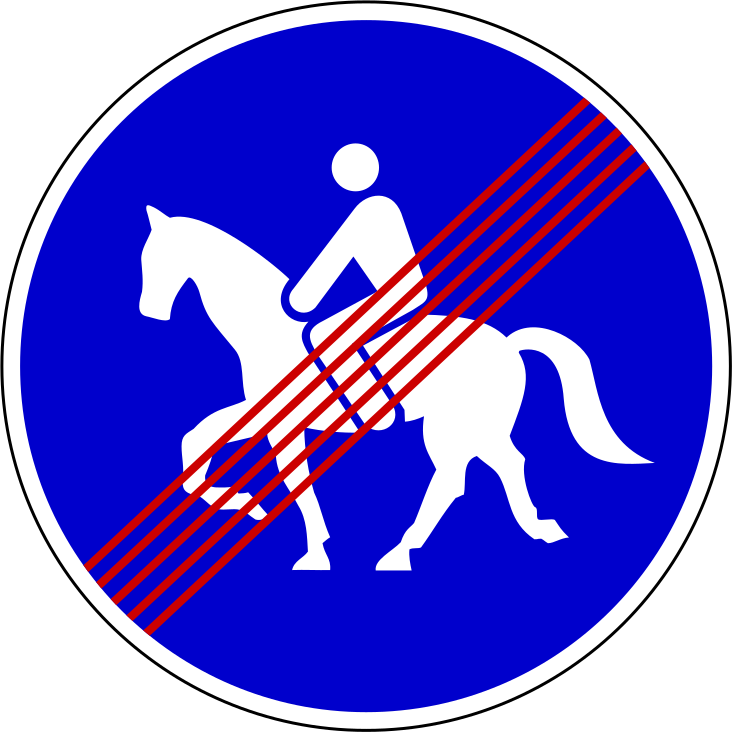
43. What does this traffic sign mean?
This traffic sign indicates the end of the mandatory path for equestrians. The requirement associated with the designated path ends at this point. Equestrians must continue according to the subsequent path or road layout and applicable local rules.
English • Traffic sign III-23 • End of bridleway. Marks the end of the previously indicated route.
Bosanski • III-23 • Završetak staze za jahače. Mjesto na kojem završava prethodno označena staza za jahače.
Sources
🔗 Commons.wikimedia.org (Gigillo83 • CC BY-SA 4.0)
🔗 Ms.ks.gov.ba • Pravilnik o saobraćajnim znakovima • član 36, tačka 16
SVG source: Gigillo83 • CC BY-SA 4.0 • Original revision 2022-02-02. Wikimedia original unmodified.
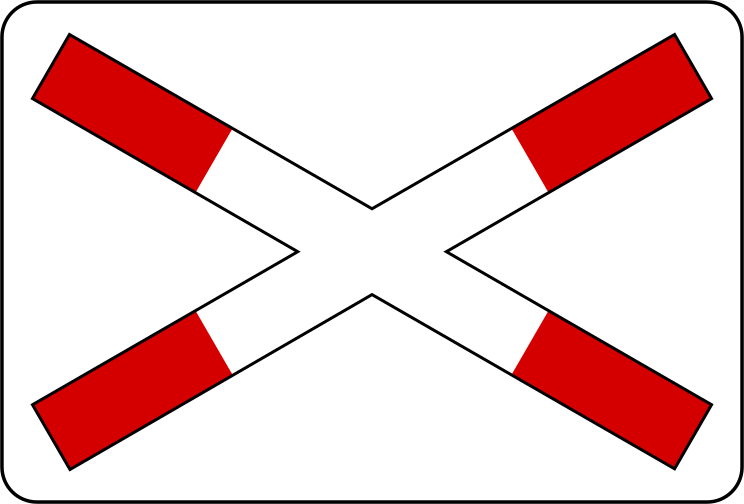
44. What does this traffic sign mean?
This traffic sign indicates a warning for a railway crossing with one track. It alerts drivers to a level crossing where a single railway track crosses the road. Drivers should approach with caution and be prepared to stop, even if no barriers or warning lights are active.
English • Traffic sign I-50 • Crossbuck — single track. Marks a single-track railway crossing without barriers or half-barriers.
Bosanski • I-50 • Andrejin krst — jedan kolosijek. Mjesto prijelaza ceste preko željezničke pruge s jednim kolosijekom, bez branika ili polubranika.
Sources
🔗 Commons.wikimedia.org
🔗 Ms.ks.gov.ba • Pravilnik o saobraćajnim znakovima • član 21, tačka 35
Image via Commons.wikimedia.org
Government of Slovenia • Public domain • Source revision 2014-05-11. Wikimedia original unmodified.
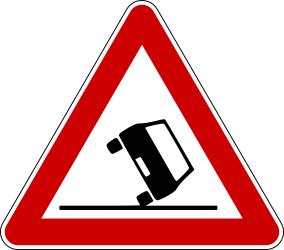
45. What does this traffic sign mean?
This traffic sign indicates a warning for accidents. It warns drivers of an accident hazard or an accident affecting the road ahead. Reduce speed, increase your following distance and be prepared for stopped traffic, emergency services or an obstruction.
English • Traffic sign I-42 • Vehicle rollover or skidding. Warns of an increased risk of skidding off the road or overturning.
Bosanski • I-42 • Prevrtanje ili iskliznuće vozila. Približavanje dijelu ceste s povećanom opasnošću od iskliznuća ili prevrtanja vozila.
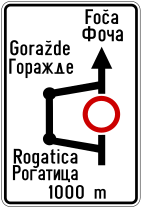
46. What does this traffic sign mean?
This traffic sign indicates a detour for vehicles that cannot continue on the normal route. Vehicles affected by the relevant restriction should follow the indicated alternative route.
English • Traffic sign III-111 • Advance diversion sign. Shows the diversion route because of a settlement, prohibition or carriageway damage. The image diverts via Rogatica towards Foča and Goražde; the closed section is 1000 m ahead.
Bosanski • III-111 • Predznak za obilazak. Prikazuje pravac i smjer obilaska zbog naselja, zabrane ili oštećenja kolovoza. Na prikazu obilazak vodi preko Rogatice prema Foči i Goraždu, a zatvoreni dio je udaljen 1000 m.
Sources
🔗 Commons.wikimedia.org (Gigillo83 • CC BY-SA 4.0)
🔗 Ms.ks.gov.ba • Pravilnik o saobraćajnim znakovima • član 36, tačka 86
SVG source: Gigillo83 • CC BY-SA 4.0 • Original revision 2022-01-27. Wikimedia original unmodified.
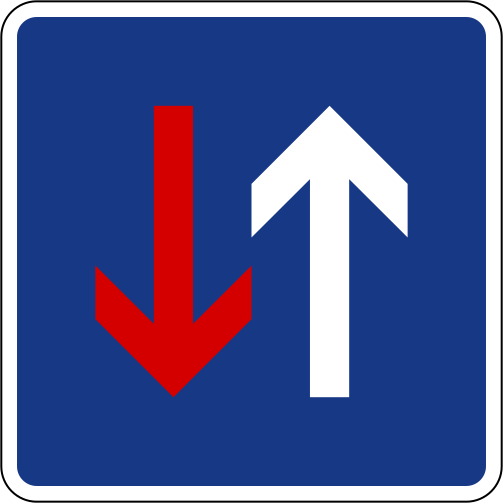
47. What does this traffic sign mean?
This traffic sign indicates a road narrowing where oncoming drivers have to give way.
English • Traffic sign III-1 • Priority over oncoming vehicles. Vehicles travelling in this direction have priority at the narrow passage.
Bosanski • III-1 • Prvenstvo prolaza u odnosu na vozila iz suprotnog smjera. Na uskom prolazu vozila iz ovog smjera imaju prvenstvo prolaza u odnosu na vozila koja dolaze iz suprotnog smjera.
Sources
🔗 Commons.wikimedia.org
🔗 Ms.ks.gov.ba • Pravilnik o saobraćajnim znakovima • član 36, tačka 1
Replacement SVG: Commons.wikimedia.org • Wikimedia Commons original • Government of Slovenia • Public domain • Original revision 2014-05-14. Wikimedia original unmodified.
Image via Commons.wikimedia.org
Government of Slovenia • Public domain • Source revision 2014-05-14. Wikimedia original unmodified.
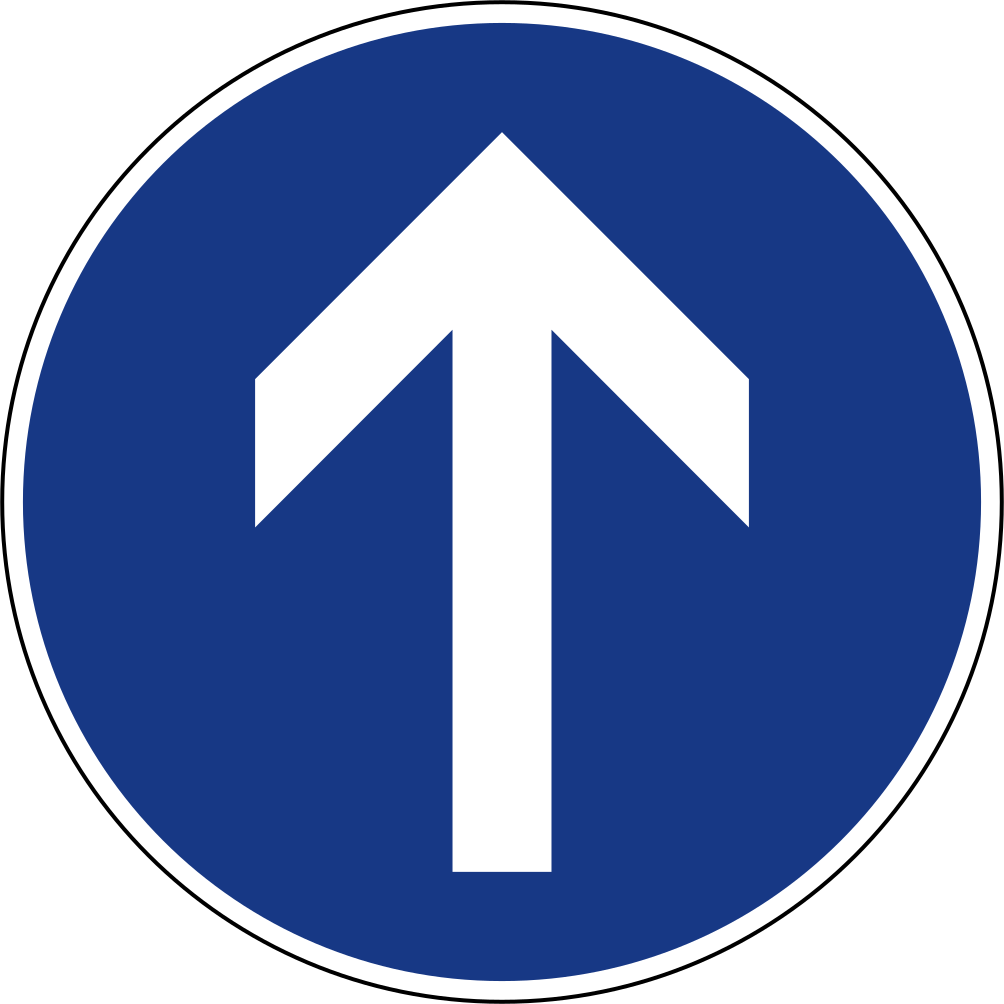
48. What does this traffic sign mean?
This traffic sign indicates that driving straight ahead is mandatory. Traffic must continue straight ahead and may not turn left or right at the location to which the sign applies.
English • Traffic sign II-52 • Compulsory direction — straight ahead. Vehicles must travel straight ahead.
Bosanski • II-52 • Obavezan smjer — ravno. Vozila se moraju kretati ravno.
Sources
🔗 Commons.wikimedia.org
🔗 Ms.ks.gov.ba • Pravilnik o saobraćajnim znakovima • član 30, tačka 8
SVG source: Government of Slovenia • Public domain • Original revision 2014-05-14. Wikimedia original unmodified.
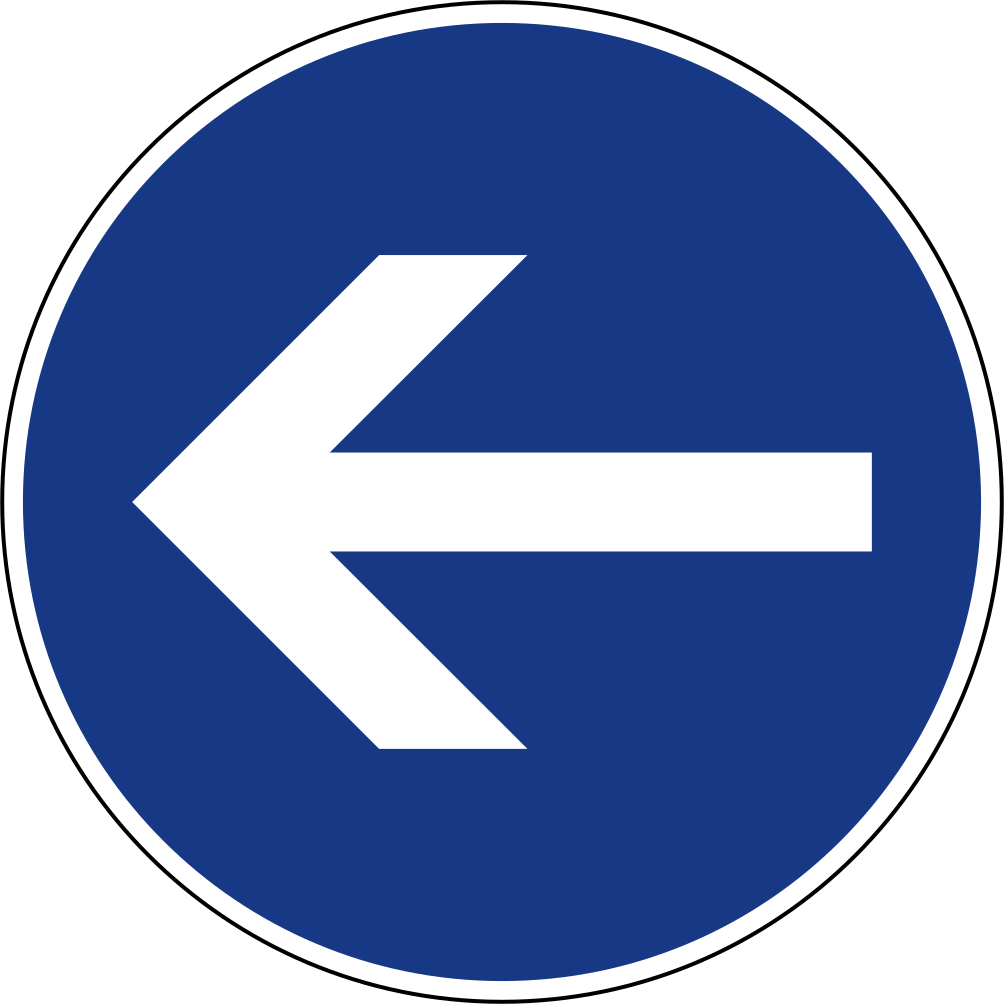
49. What does this traffic sign mean?
This traffic sign indicates a mandatory direction to the left. Traffic must proceed to the left at the sign and may not continue straight ahead or to the right.
English • Traffic sign II-54 • Compulsory direction — left. Vehicles must turn left from the sign's location.
Bosanski • II-54 • Obavezan smjer — lijevo. Vozila se moraju kretati ulijevo od mjesta na kojem je znak postavljen.
Sources
🔗 Commons.wikimedia.org
🔗 Ms.ks.gov.ba • Pravilnik o saobraćajnim znakovima • član 30, tačka 8
SVG source: Government of Slovenia • Public domain • Original revision 2014-05-14. Wikimedia original unmodified.
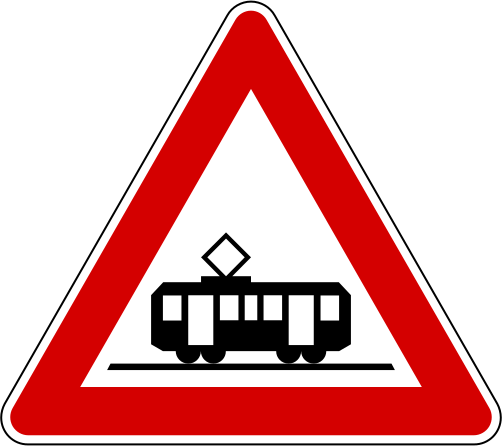
50. What does this traffic sign mean?
This traffic sign indicates a warning for trams. Tram tracks cross or run along the road ahead, and trams may enter the traffic path. Reduce speed, watch carefully for approaching trams and follow the applicable traffic signals, priority signs and local rules.
English • Traffic sign I-47 • Tram tracks. Warns of a road crossing tram tracks at the same level.
Bosanski • I-47 • Tramvajska pruga. Približavanje prijelazu ceste preko tramvajske pruge u istom nivou.
Sources
🔗 Commons.wikimedia.org (JankoBot56 • CC BY-SA 4.0)
🔗 Ms.ks.gov.ba • Pravilnik o saobraćajnim znakovima • član 21, tačka 32
SVG source: Commons.wikimedia.org
Government of Slovenia • Public domain. Original SVG unmodified.