


QuizTraffic rulesBelgium
Test your knowledge with our multiple-choice quiz. Learn from each answer and improve your understanding of the traffic rules and road signs of Belgium.
 Traffic signs
 Traffic rules
 Belgium
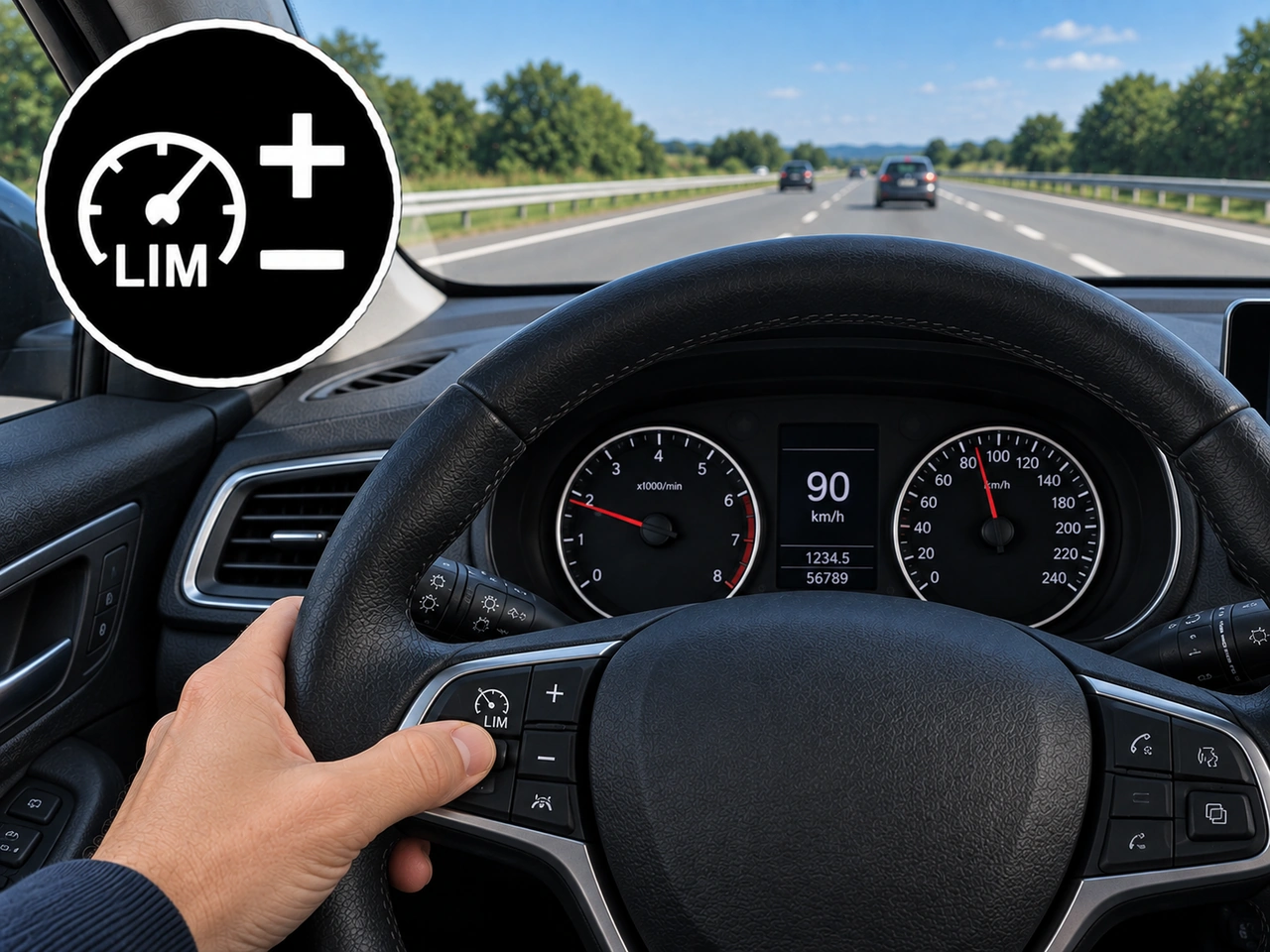
301. What do the + and − controls normally adjust when the speed limiter is active?
When the speed limiter is active, the + and − controls normally increase or decrease the selected maximum speed. The exact adjustment steps can vary between vehicles.
AI-generated by Rijbewijs-online.be • WCIT • CC BY-SA

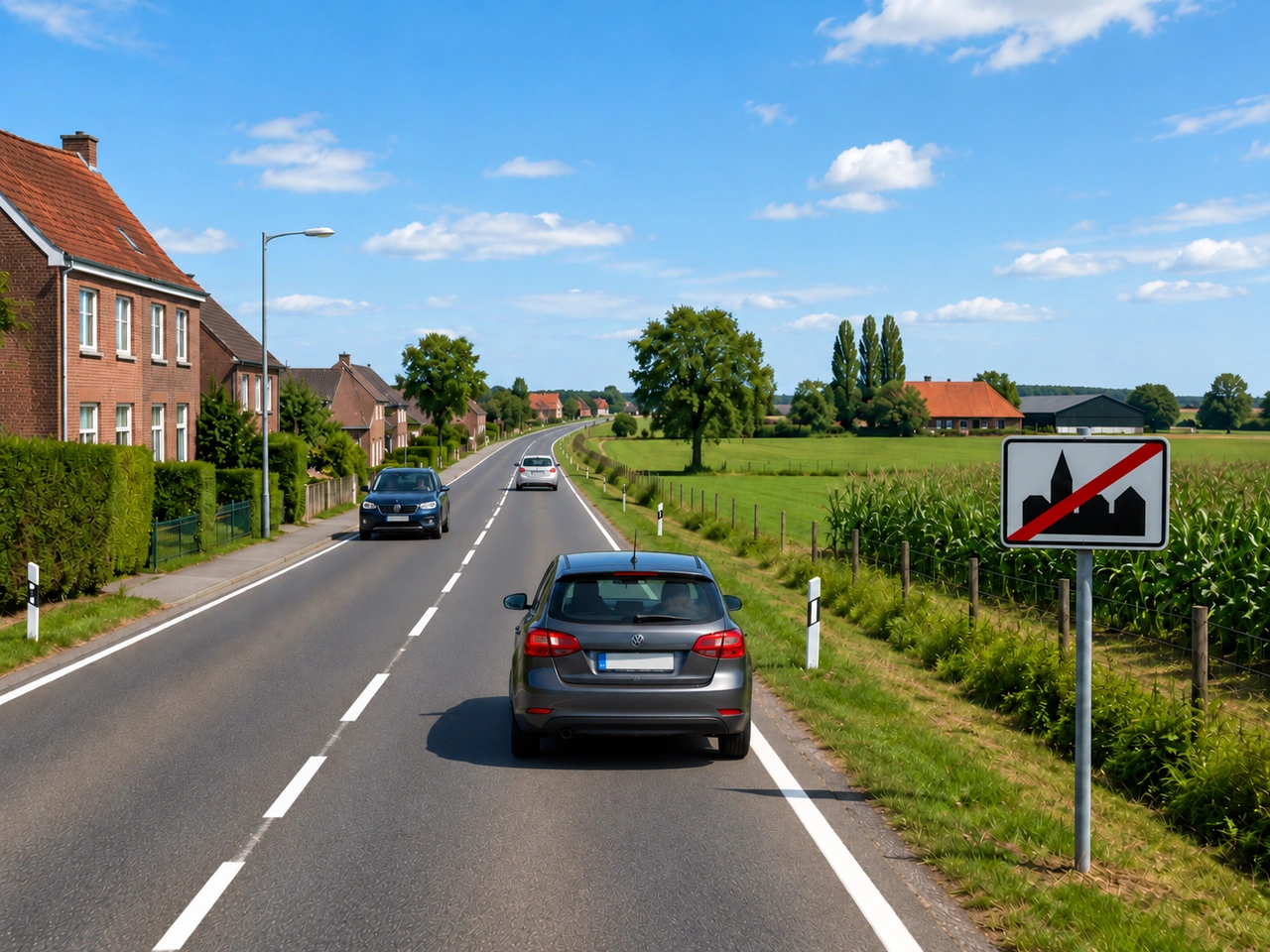
302. What is the general speed limit on an ordinary road outside built-up areas in Flanders?
In Flanders, the general limit on ordinary roads outside built-up areas is 70 km/h. A traffic sign may impose another limit.
AI-generated by Rijbewijs-online.be • WCIT • CC BY-SA
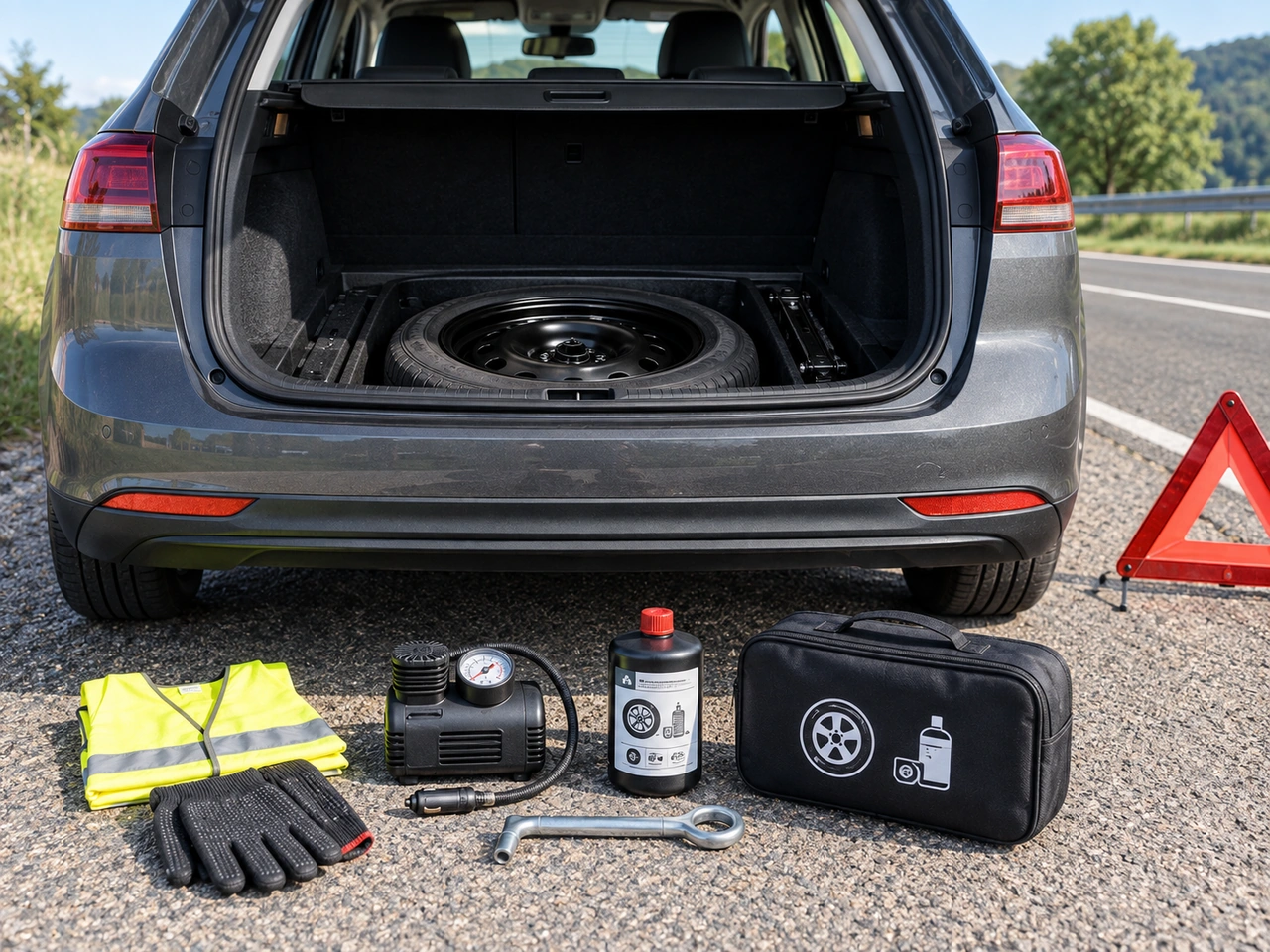
303. Must cars carry equipment for dealing with a puncture in Belgium?
Cars in Belgium are not generally required to carry a spare wheel or tyre repair kit.
AI-generated by Rijbewijs-online.be • WCIT • CC BY-SA
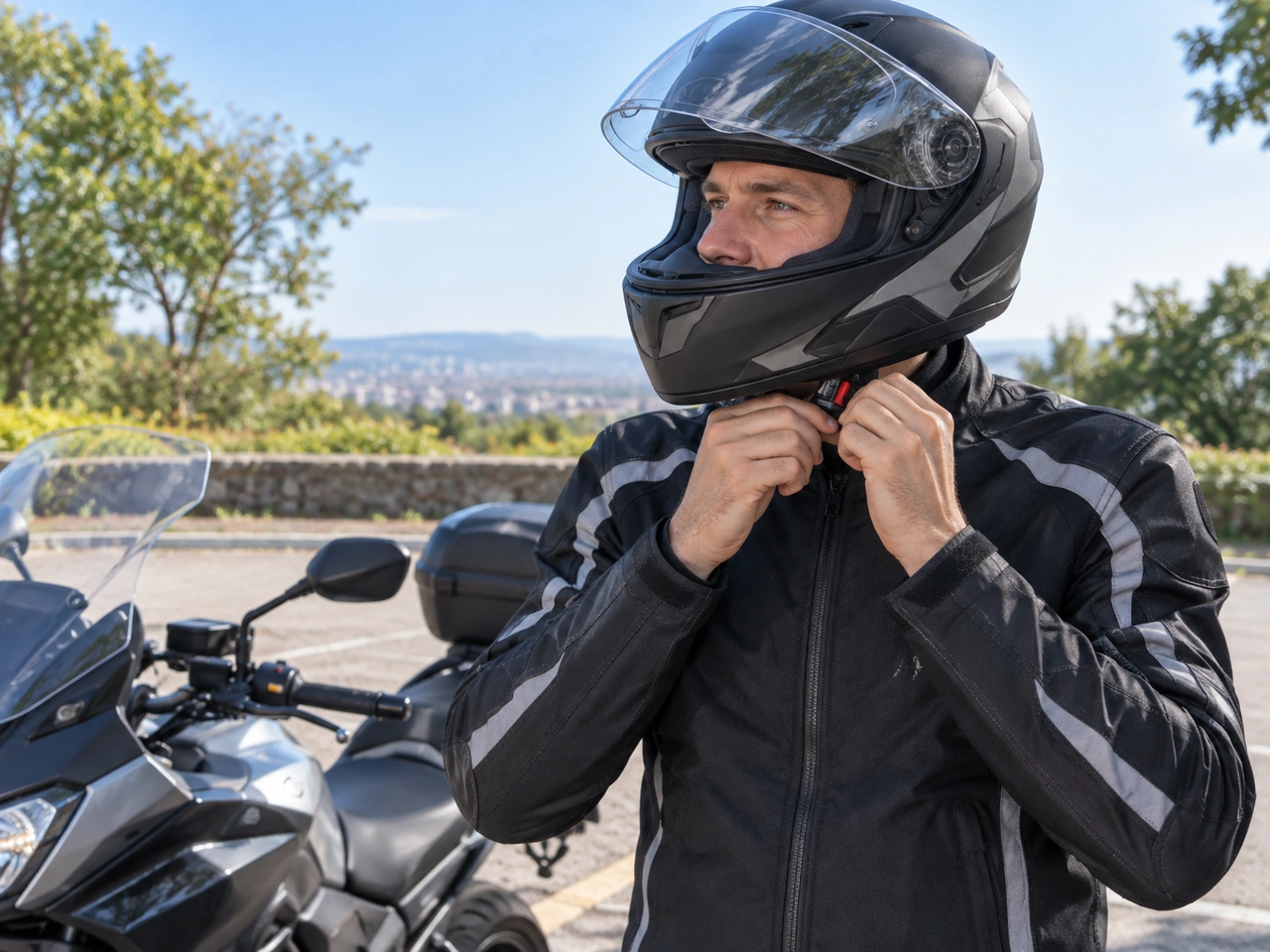
304. Why should a motorcycle helmet be worn correctly and securely fastened?
A correctly fitted and securely fastened motorcycle helmet helps protect the rider's head and can reduce the risk and severity of head injury in a collision or fall.
AI-generated by Rijbewijs-online.be • WCIT • CC BY-SA
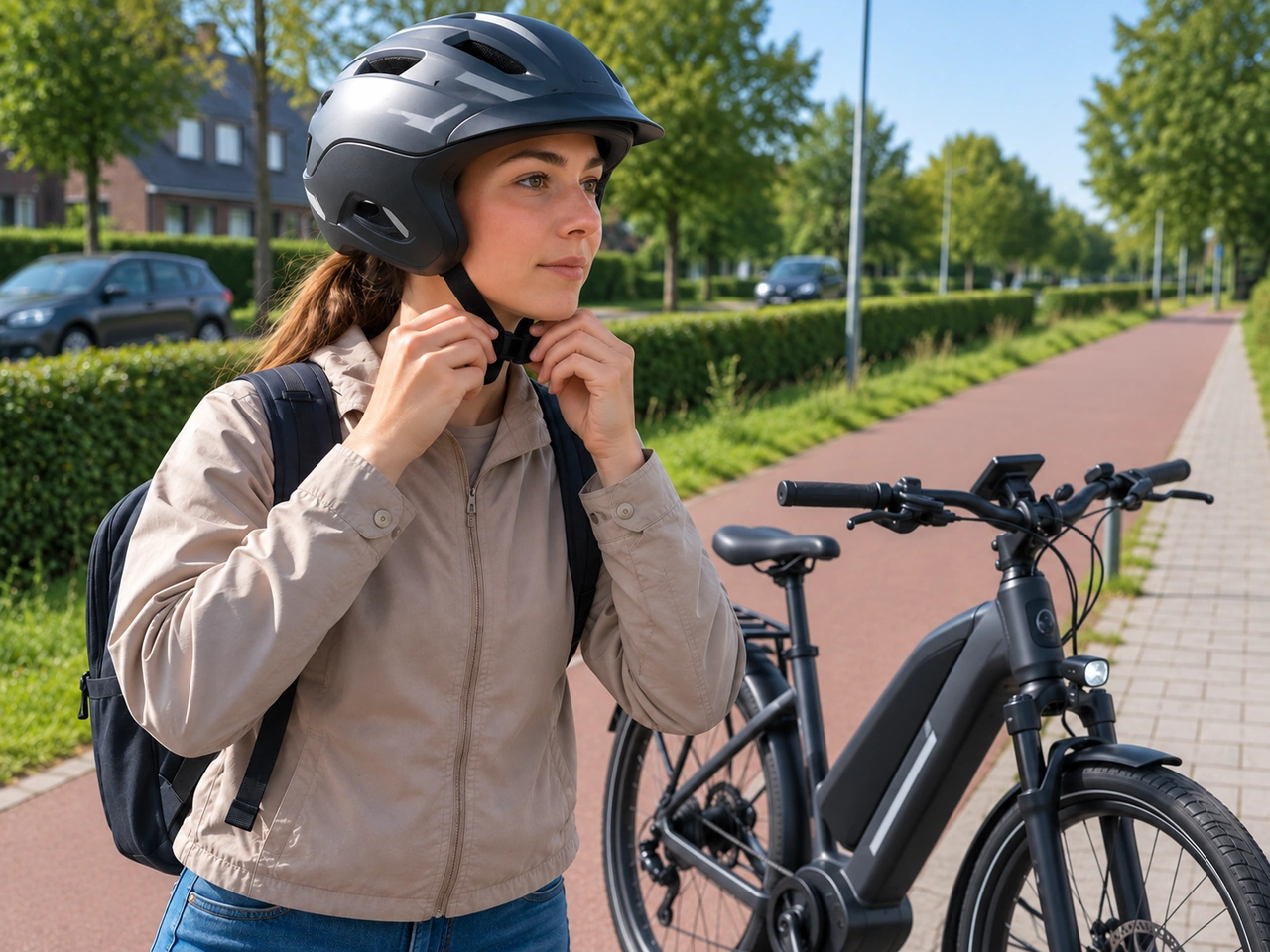
305. What helmet must a speed-pedelec rider wear in Belgium?
A speed-pedelec rider must wear either an approved moped helmet or a bicycle helmet that provides additional protection to the temples and the back of the head.
AI-generated by Rijbewijs-online.be • WCIT • CC BY-SA
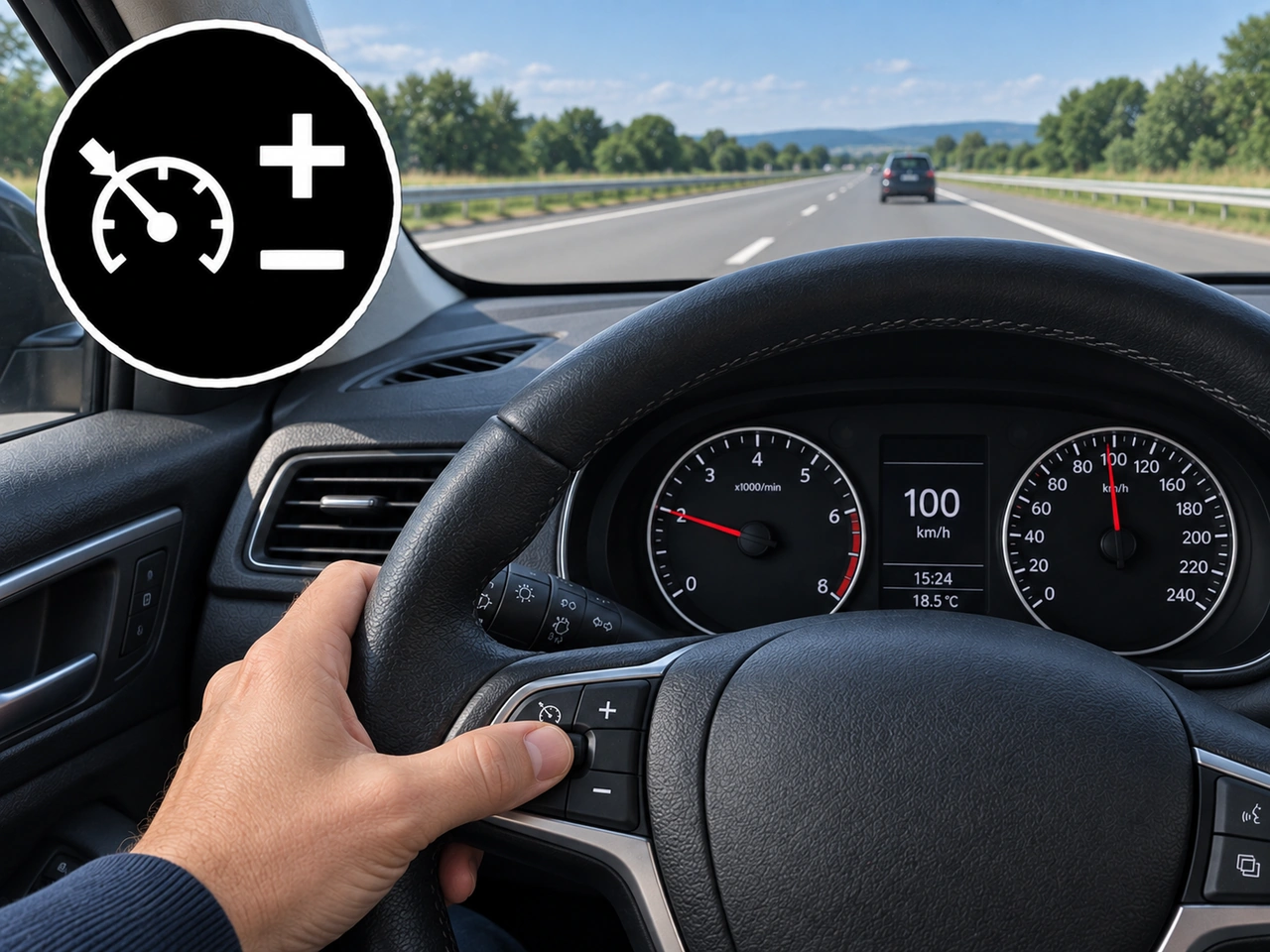
306. What do the + and − controls of cruise control normally do?
When cruise control is active, the + and − controls normally increase or decrease the selected cruising speed. The amount of each adjustment can vary between vehicles.
AI-generated by Rijbewijs-online.be • WCIT • CC BY-SA
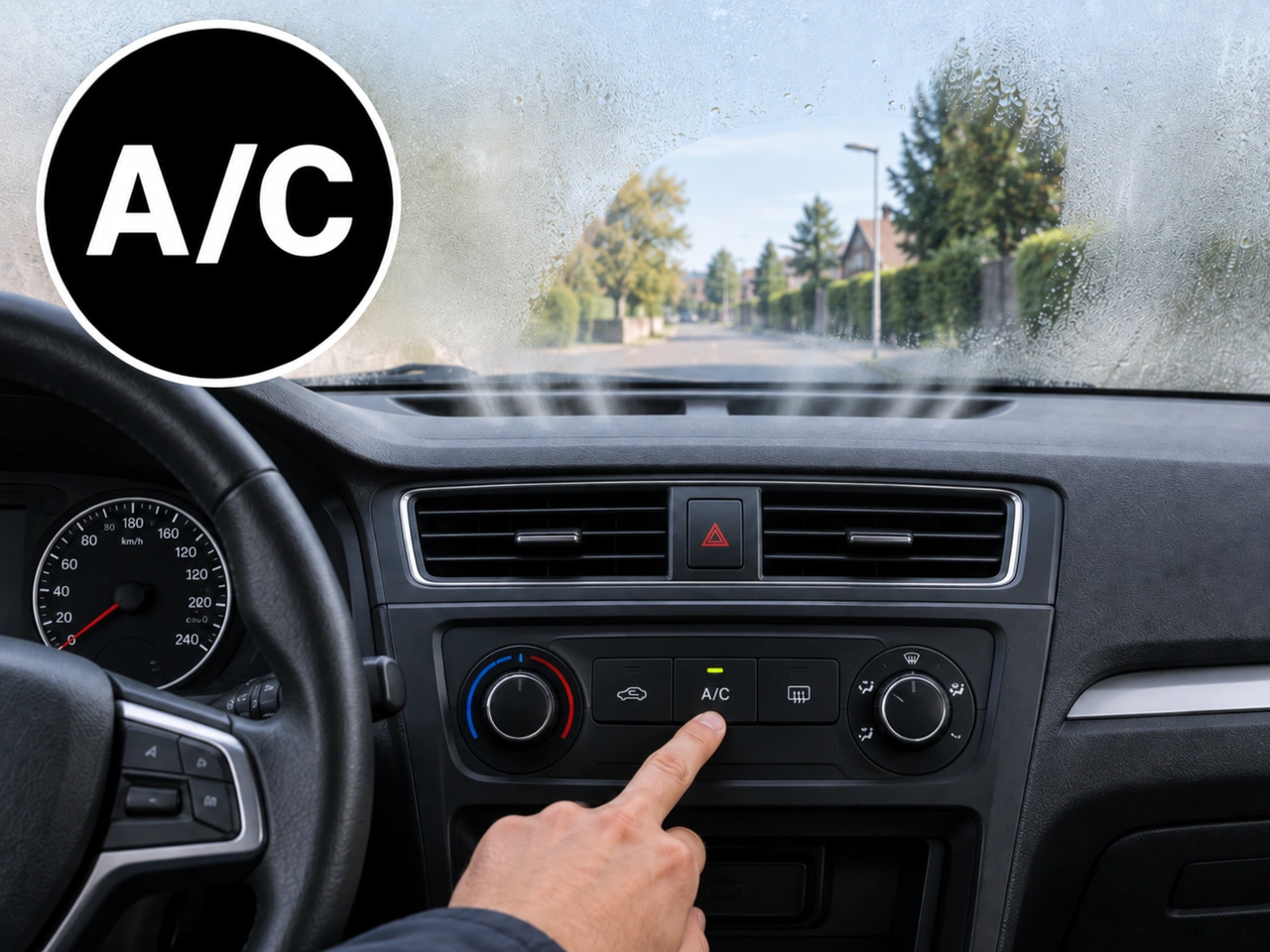
307. How can air conditioning help demist the windows?
Using the air conditioning can help demist the windows because it removes moisture from the cabin air. Directing this drier air towards the windscreen can clear condensation more quickly.
AI-generated by Rijbewijs-online.be • WCIT • CC BY-SA
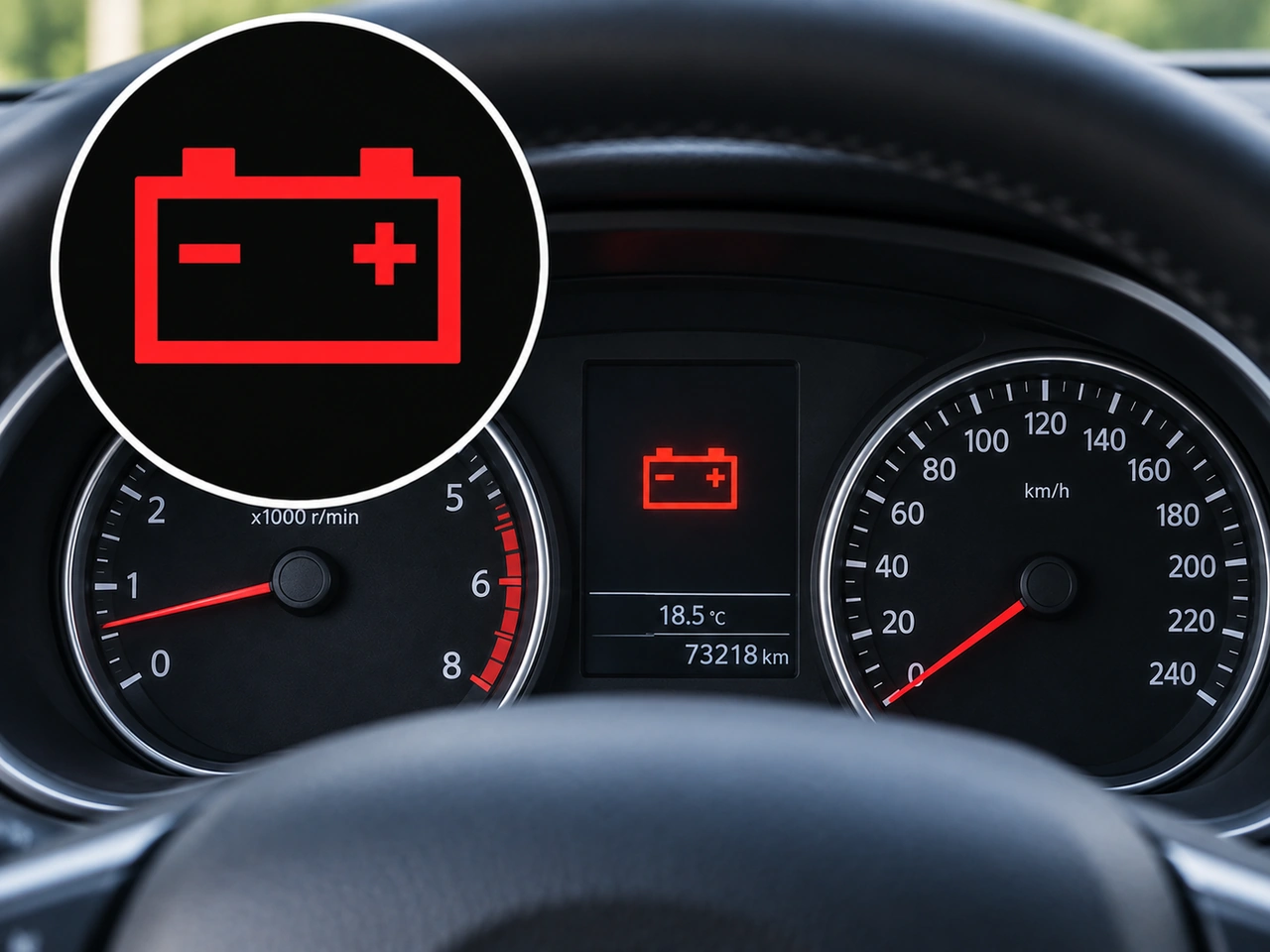
308. What does this dashboard symbol indicate?
This symbol indicates a problem with the vehicle's charging system. If it remains illuminated while the engine is running, the battery may not be charging correctly because of a fault with the alternator, battery, wiring, or related components.
AI-generated by Rijbewijs-online.be • WCIT • CC BY-SA
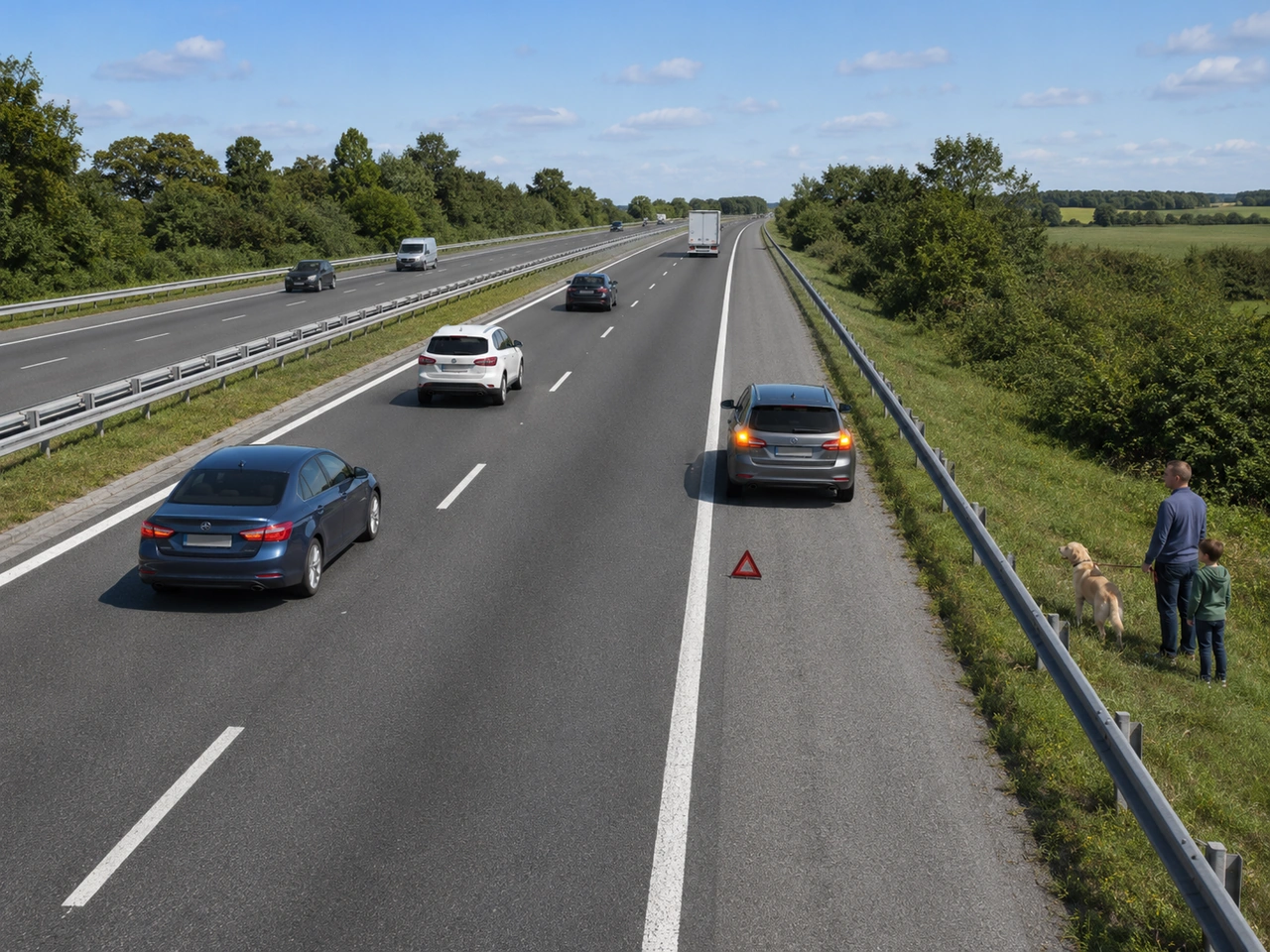
309. Where should passengers wait after safely leaving a broken-down vehicle?
Move passengers, children, and pets away from the carriageway. On high-speed roads, wait behind a safety barrier where possible.
AI-generated by Rijbewijs-online.be • WCIT • CC BY-SA
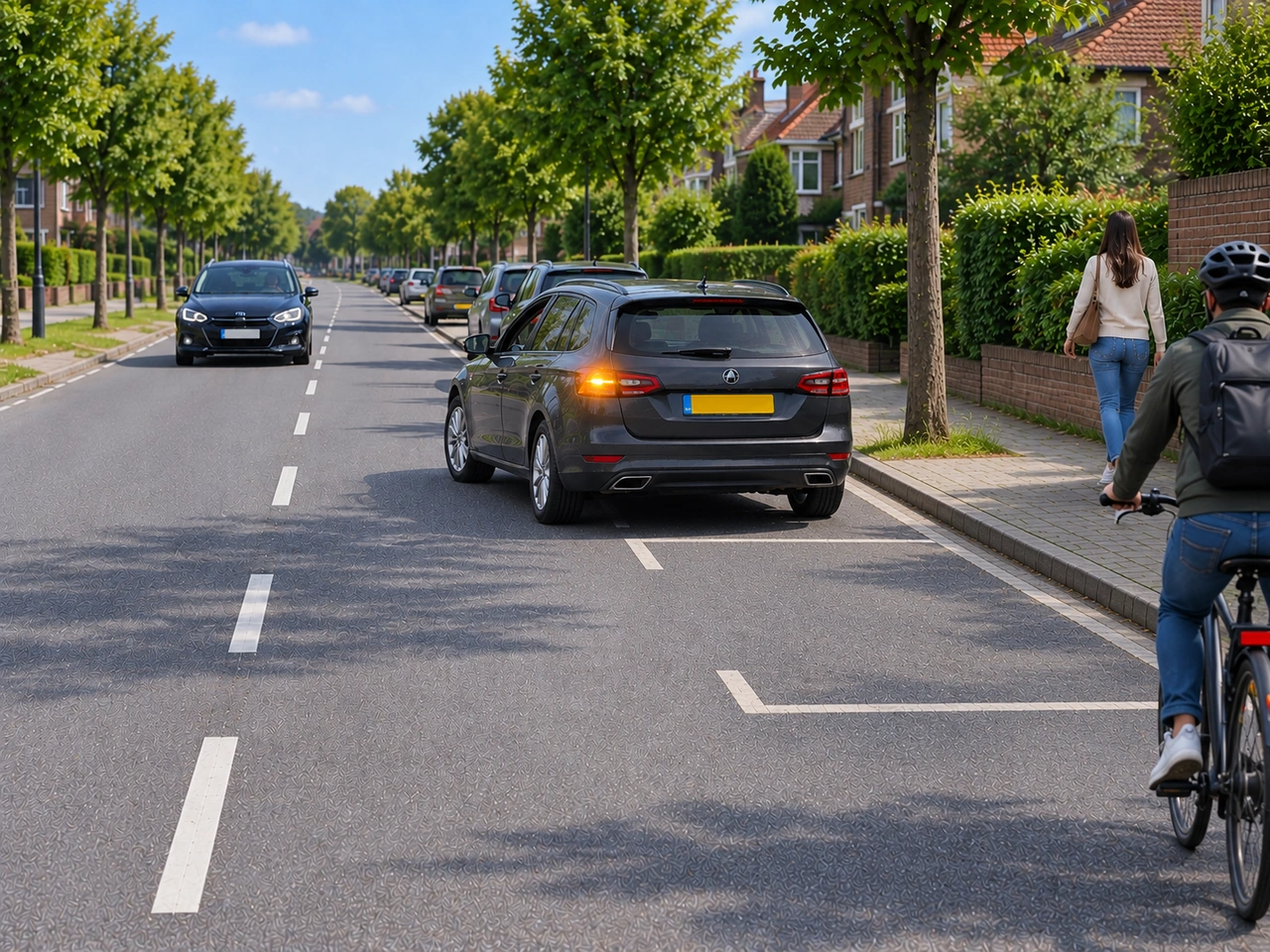
310. Who must you give way to when leaving a parking place?
Leaving a parking place is a manoeuvre. A driver performing a manoeuvre must give way to all other road users.
AI-generated by Rijbewijs-online.be • WCIT • CC BY-SA
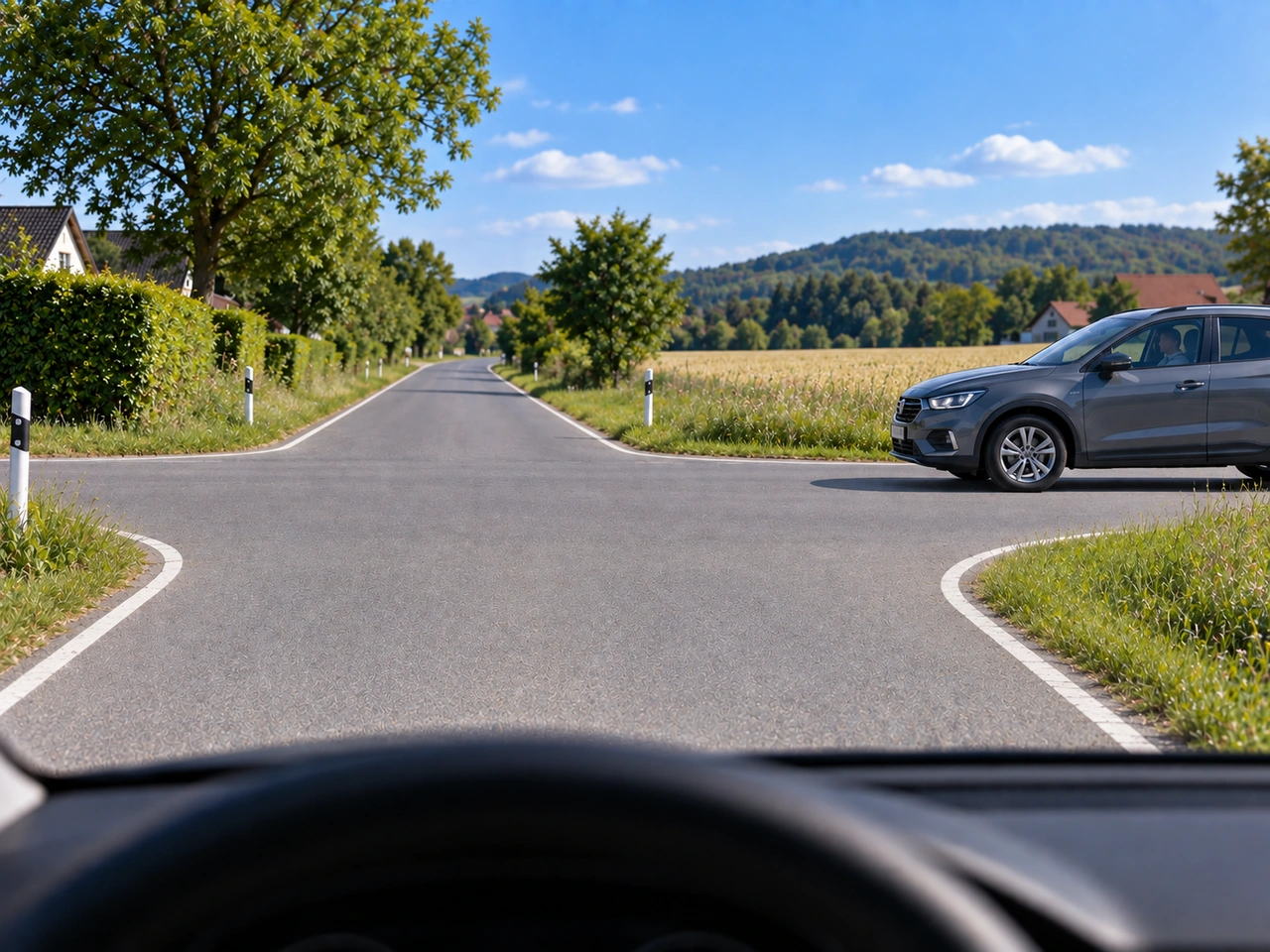
311. Who generally has priority at an uncontrolled intersection in Belgium?
At an uncontrolled intersection in Belgium, you generally give way to traffic approaching from the right.
AI-generated by Rijbewijs-online.be • WCIT • CC BY-SA
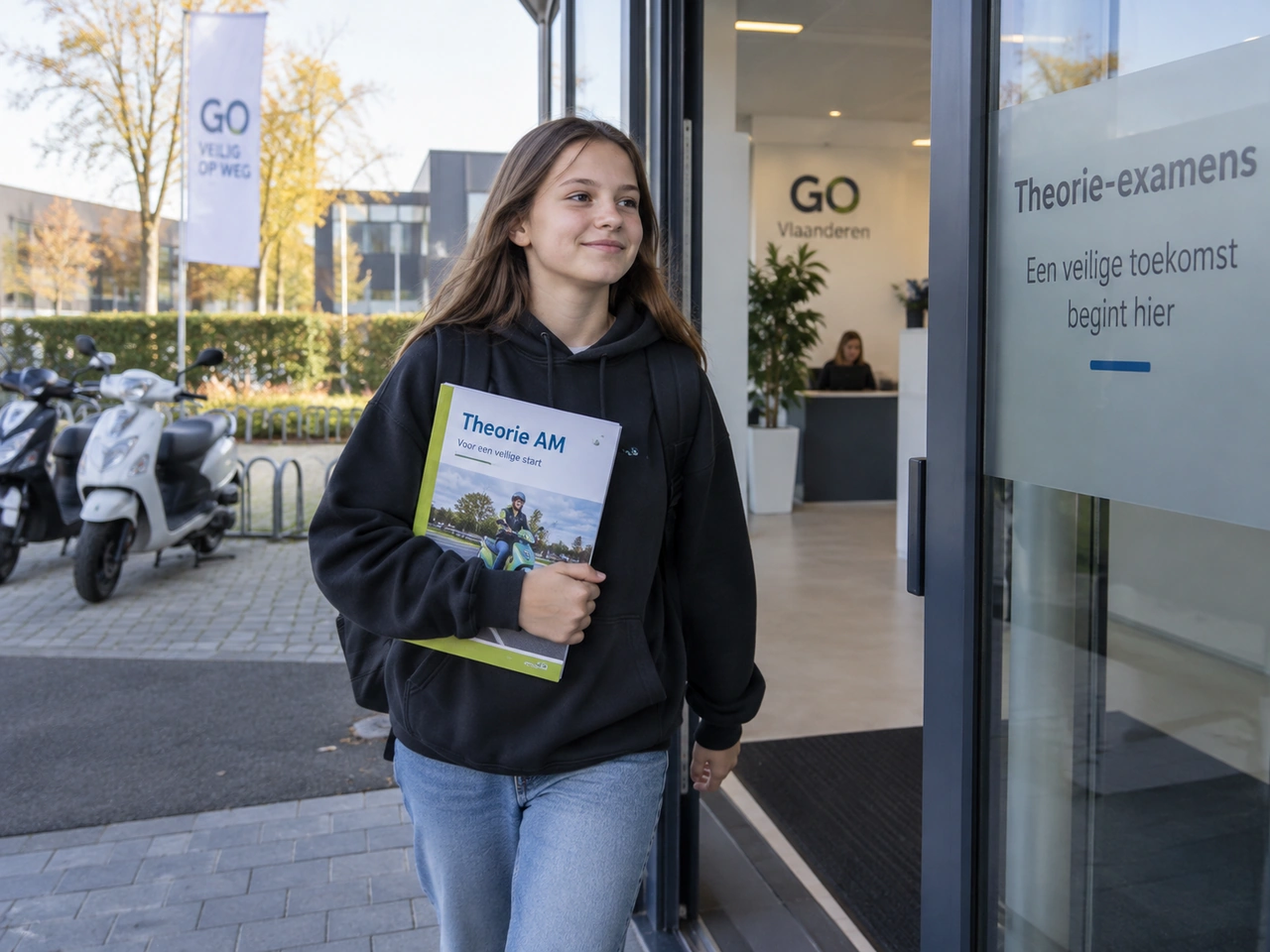
312. When can you take the Belgian category AM theory test?
The theory test for driving licence AM may be taken from three months before the age of 16. The licence itself may be obtained from the age of 16.
AI-generated by Rijbewijs-online.be • WCIT • CC BY-SA
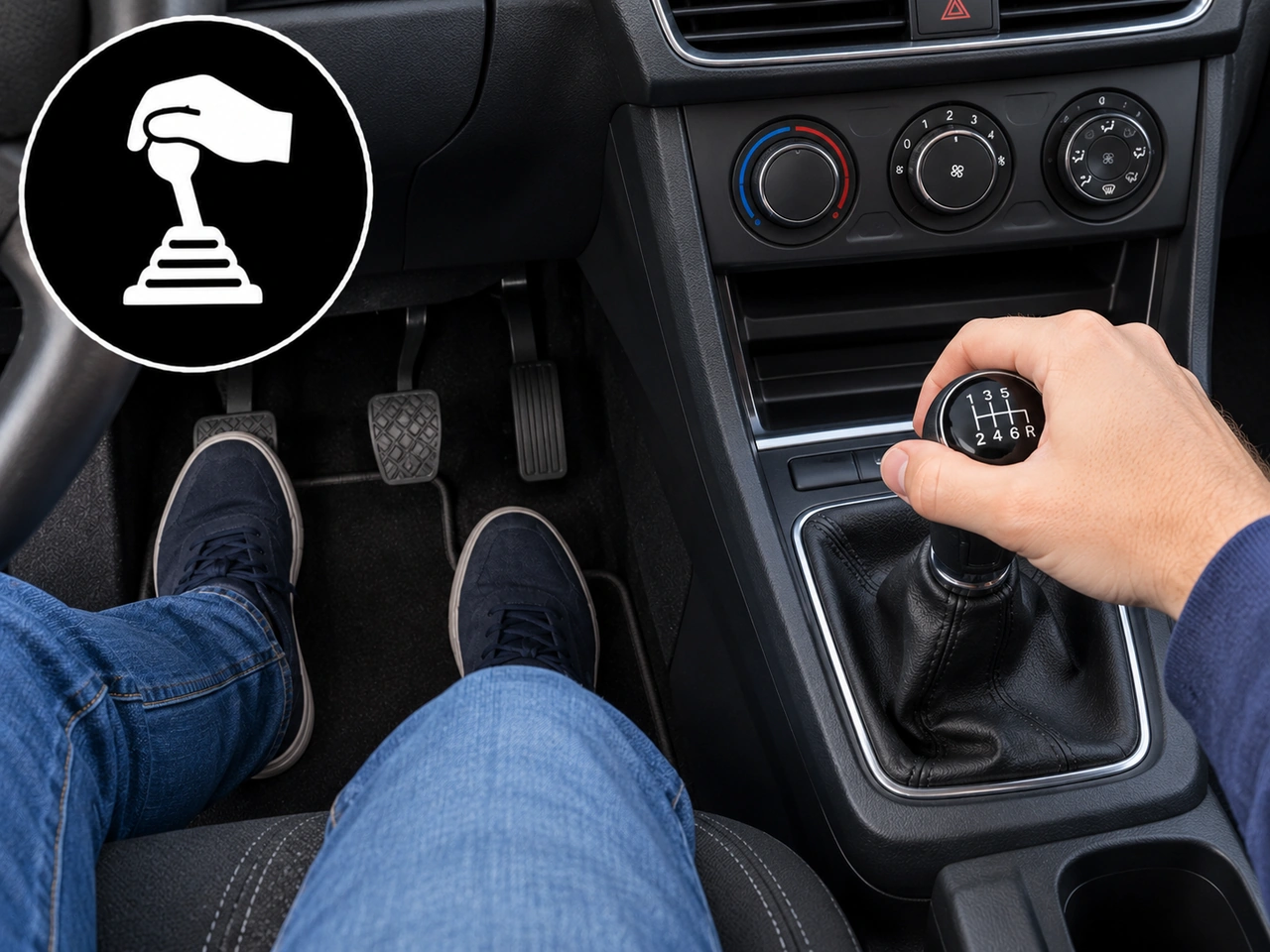
313. What should you do if a gear does not engage easily in a manual vehicle?
If a gear does not engage easily, do not force the gear lever. Make sure the clutch is fully pressed and the vehicle's speed is suitable for the gear before trying again.
AI-generated by Rijbewijs-online.be • WCIT • CC BY-SA
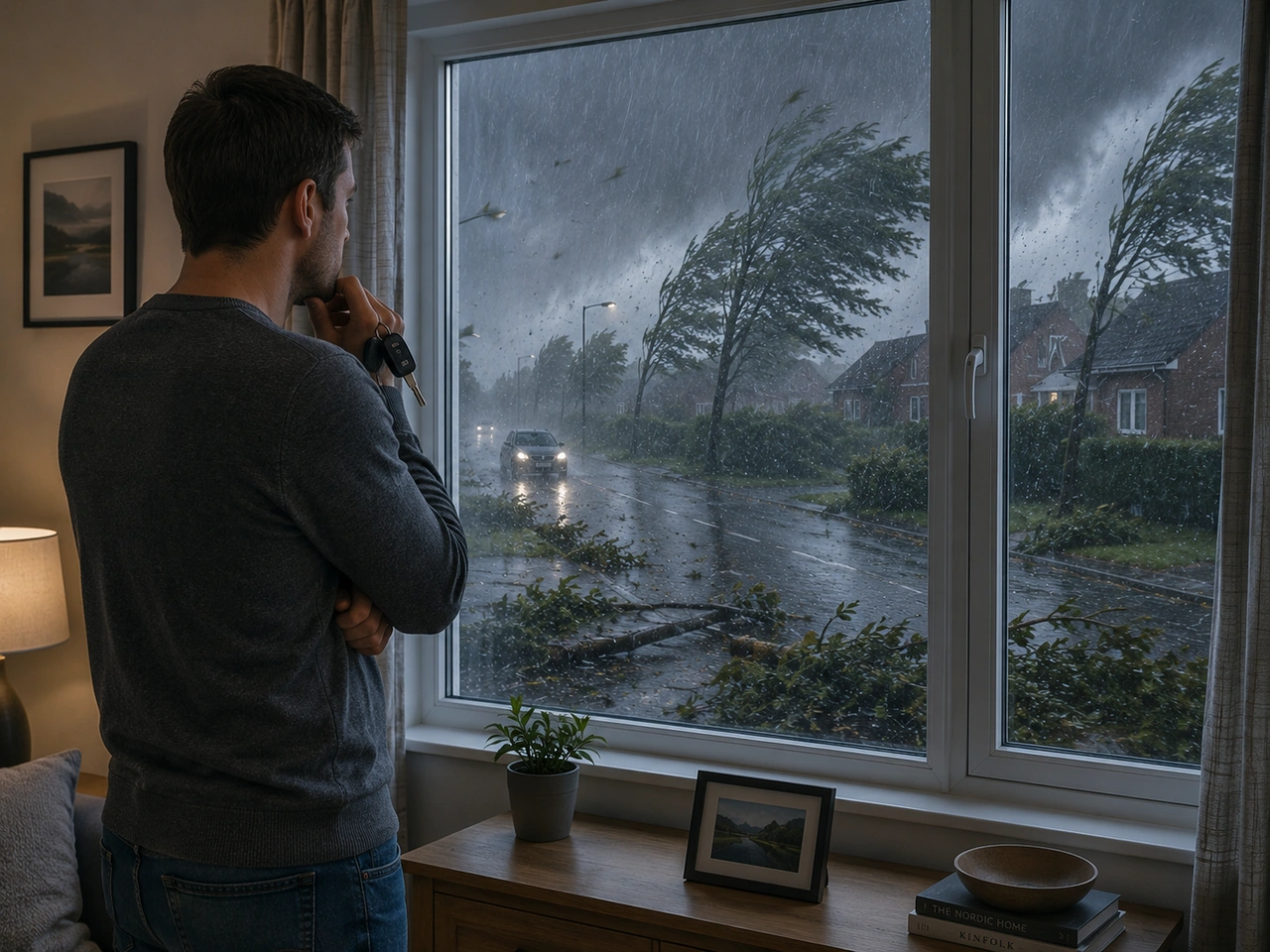
314. When should you consider delaying a journey because of severe weather?
Severe weather can create dangerous conditions. Delaying a journey may be the safest choice when risks are too high.
AI-generated by Rijbewijs-online.be • WCIT • CC BY-SA
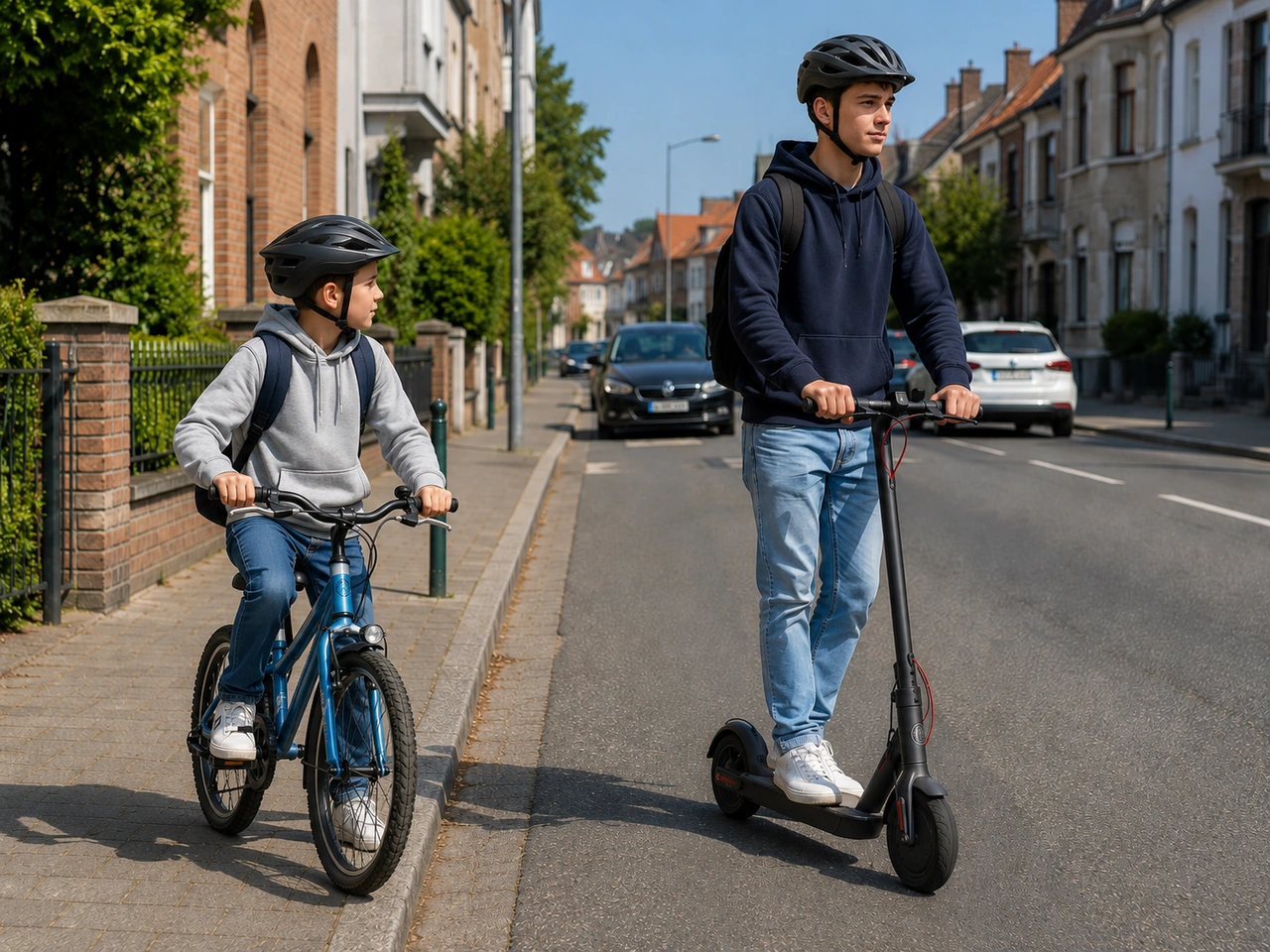
315. What is the minimum age for riding an electric scooter in Belgium?
The general minimum age for using a motorised personal mobility device is 16. Exceptions apply in certain places, including residential zones, play streets, and some reserved roads.
AI-generated by Rijbewijs-online.be • WCIT • CC BY-SA
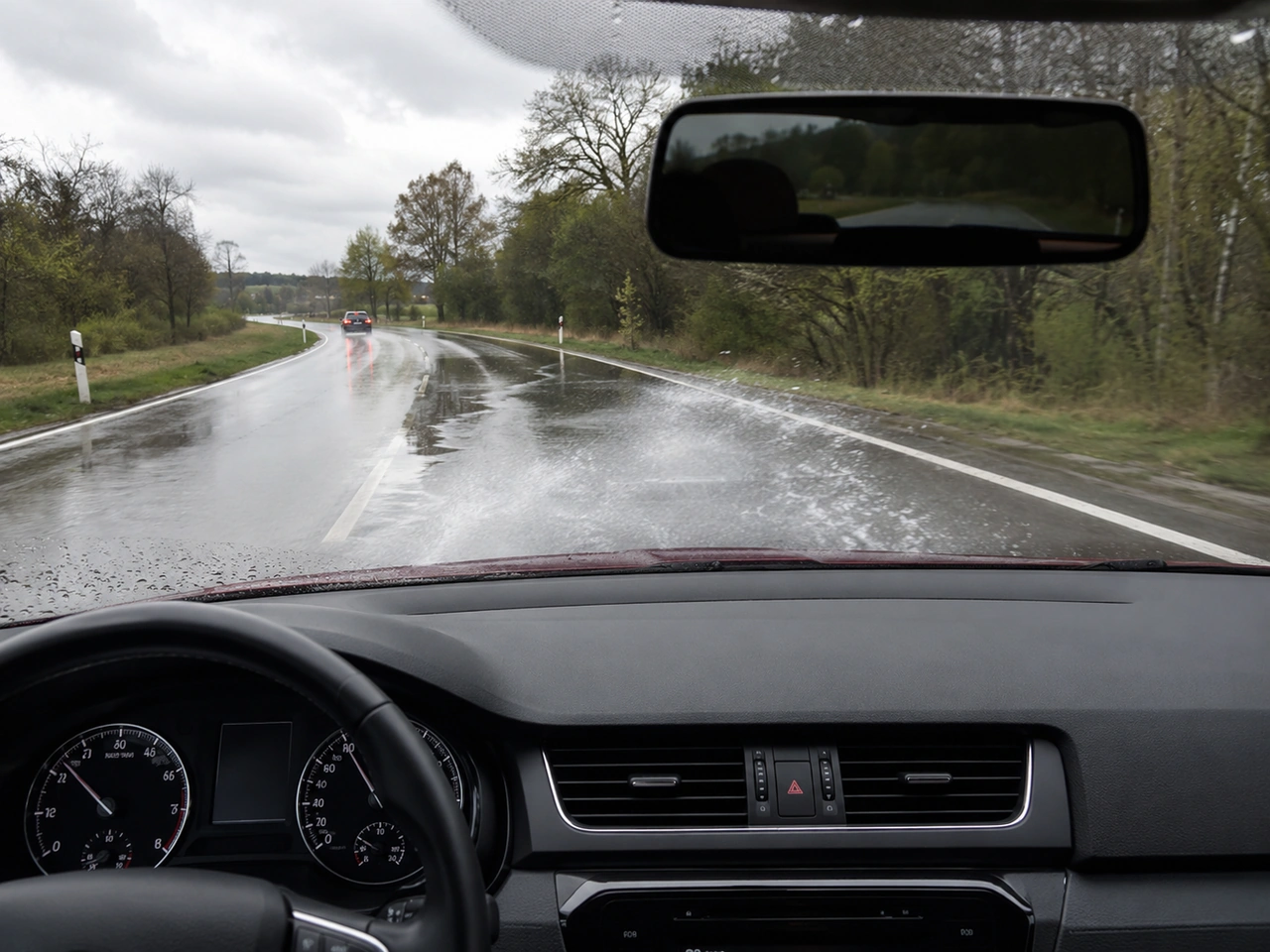
316. Why is it dangerous to drive through standing water at speed?
Driving too fast through water can cause aquaplaning, where the tyres lose grip and the driver may lose control.
AI-generated by Rijbewijs-online.be • WCIT • CC BY-SA
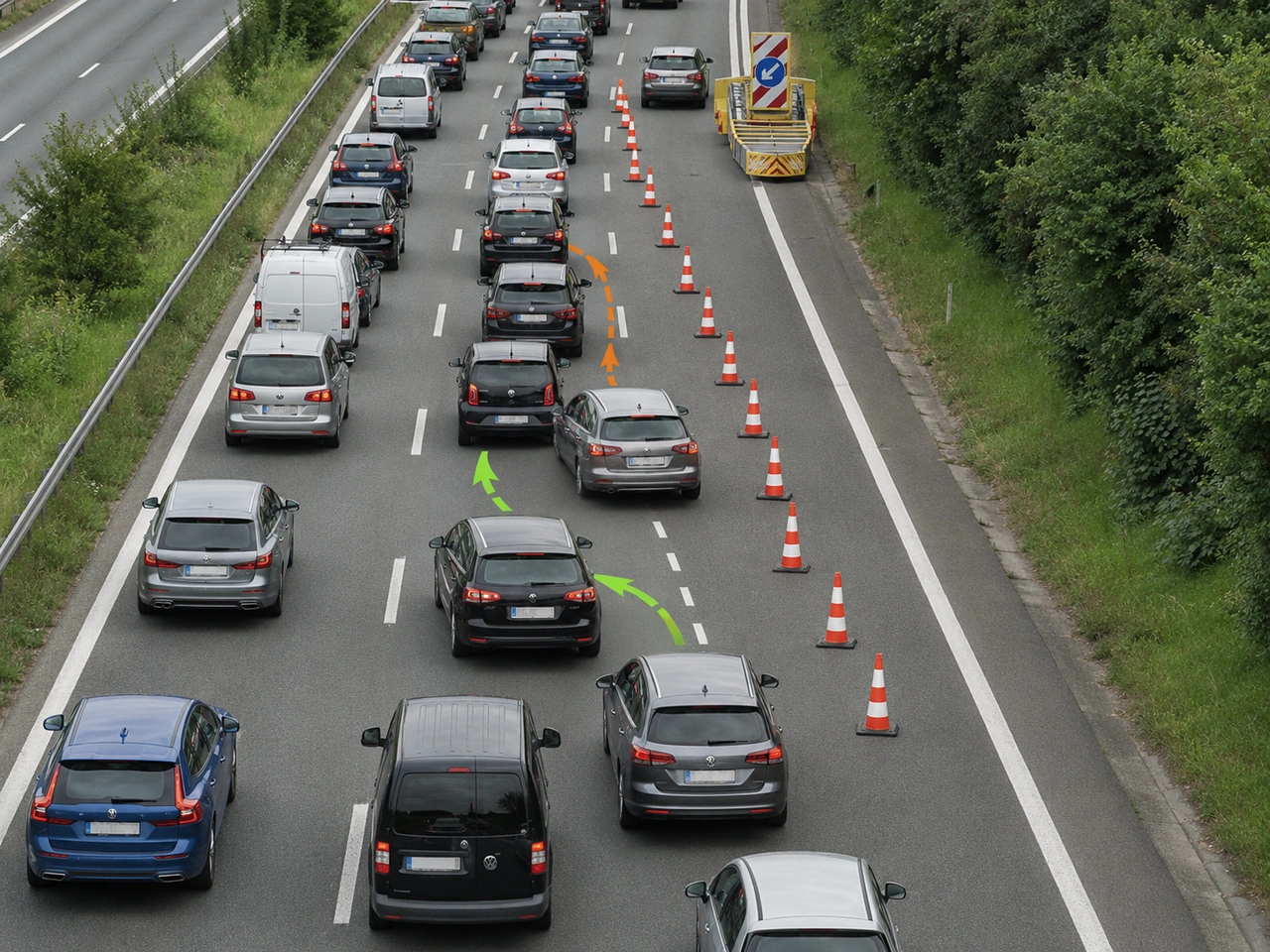
317. When should you merge if your lane ends during heavily congested traffic?
During heavily slowed traffic, Belgian zipper-merging rules require drivers to use the ending lane until just before the narrowing. Drivers in the continuing lane must then allow one vehicle to merge alternately.
AI-generated by Rijbewijs-online.be • WCIT • CC BY-SA
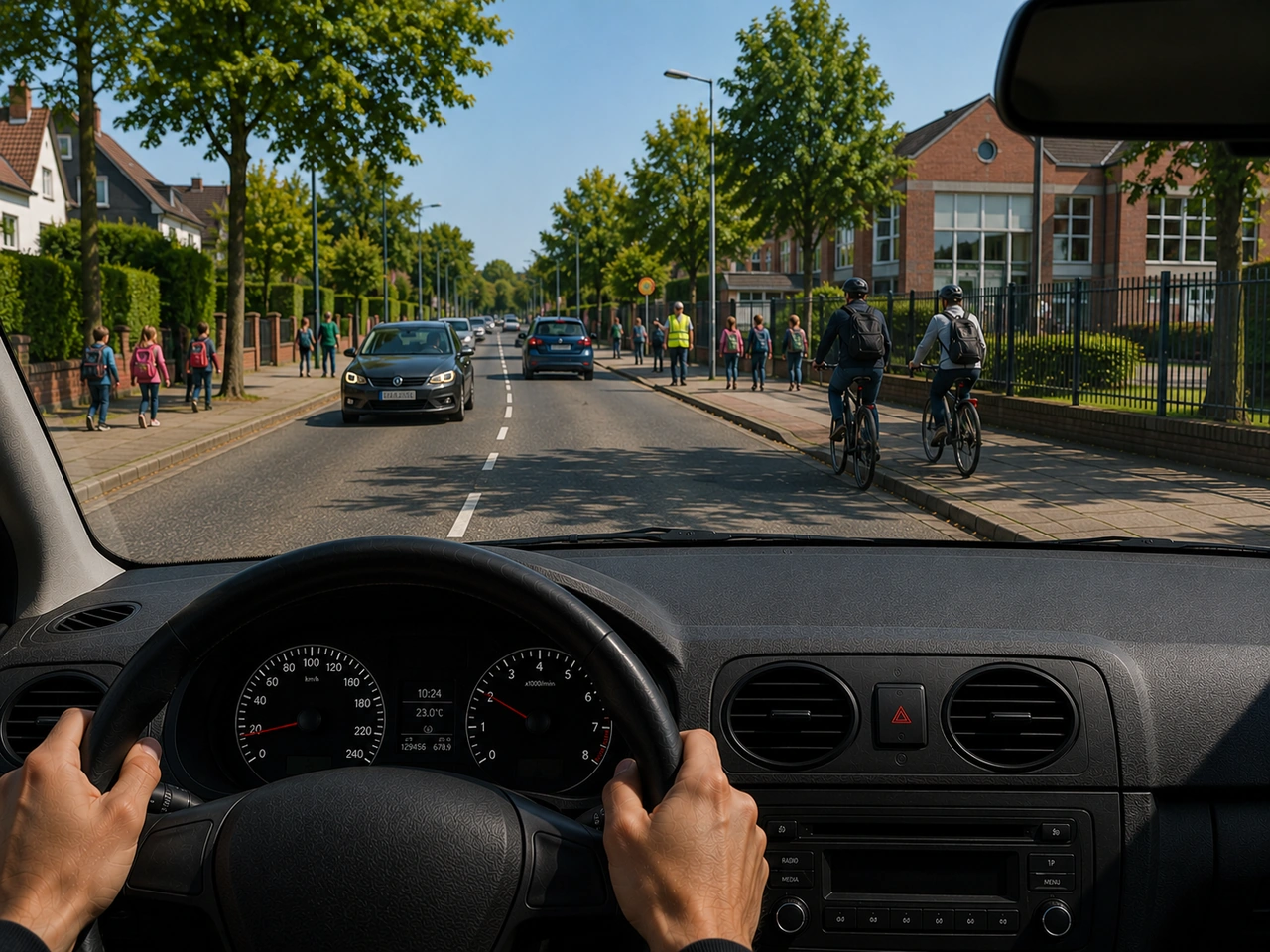
318. What should you do when driving near a school area?
Children near schools may cross unexpectedly or be hidden between parked vehicles. Reduce speed and be ready to stop.
AI-generated by Rijbewijs-online.be • WCIT • CC BY-SA
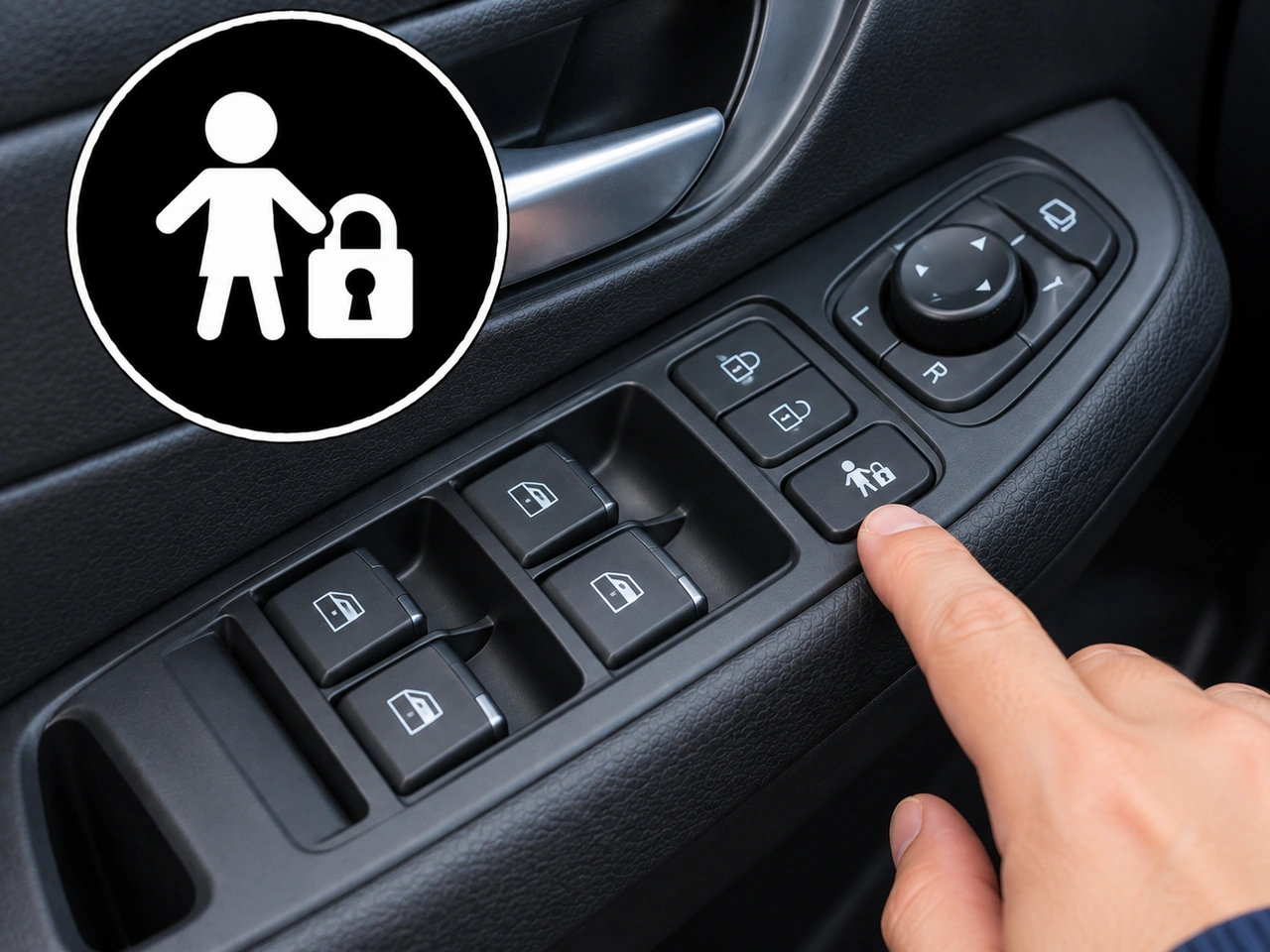
319. What does this vehicle-control symbol indicate?
This control activates the child safety lock. It helps prevent a rear door from being opened from inside the vehicle, depending on the vehicle and system design.
AI-generated by Rijbewijs-online.be • WCIT • CC BY-SA
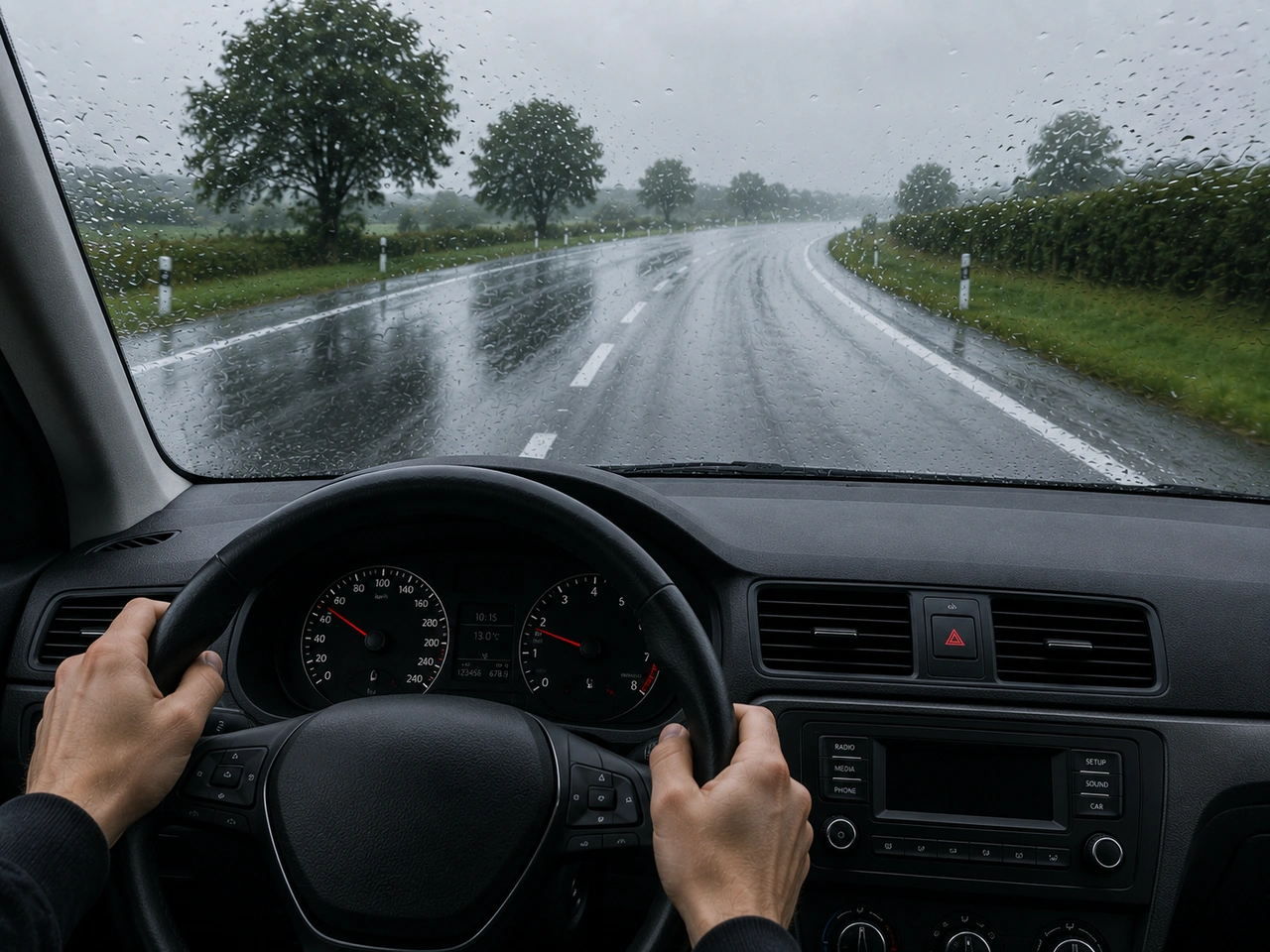
320. What should you do if your vehicle begins to aquaplane?
Aquaplaning happens when the tyres lose contact with the road surface. Ease off the accelerator, avoid sudden movements, and wait for grip to return.
AI-generated by Rijbewijs-online.be • WCIT • CC BY-SA
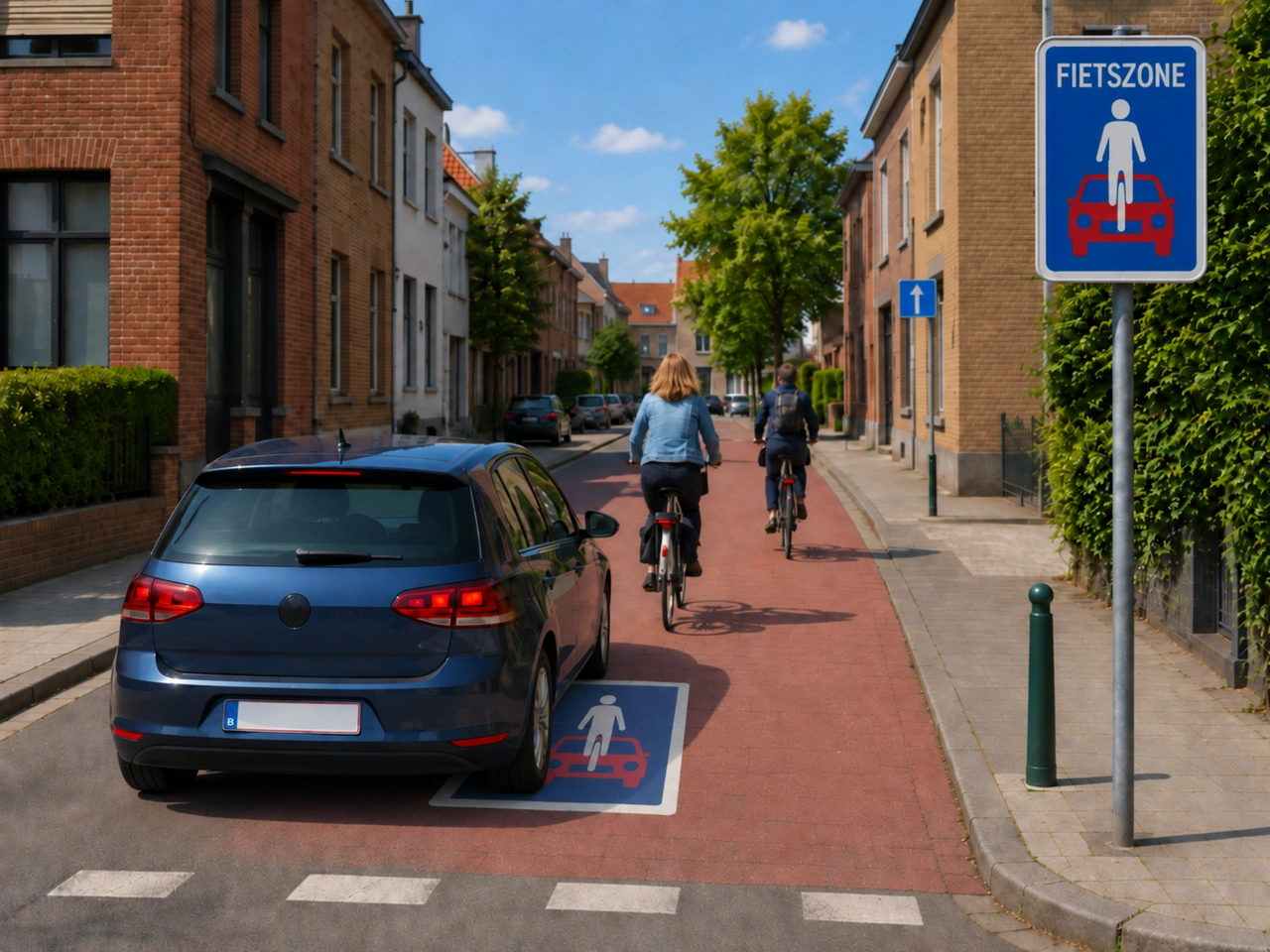
321. What rule applies to motor vehicles inside a Belgian cycle zone?
Motor vehicles may enter a cycle zone, but they may not overtake cyclists. The maximum speed throughout the zone is 30 km/h.
AI-generated by Rijbewijs-online.be • WCIT • CC BY-SA
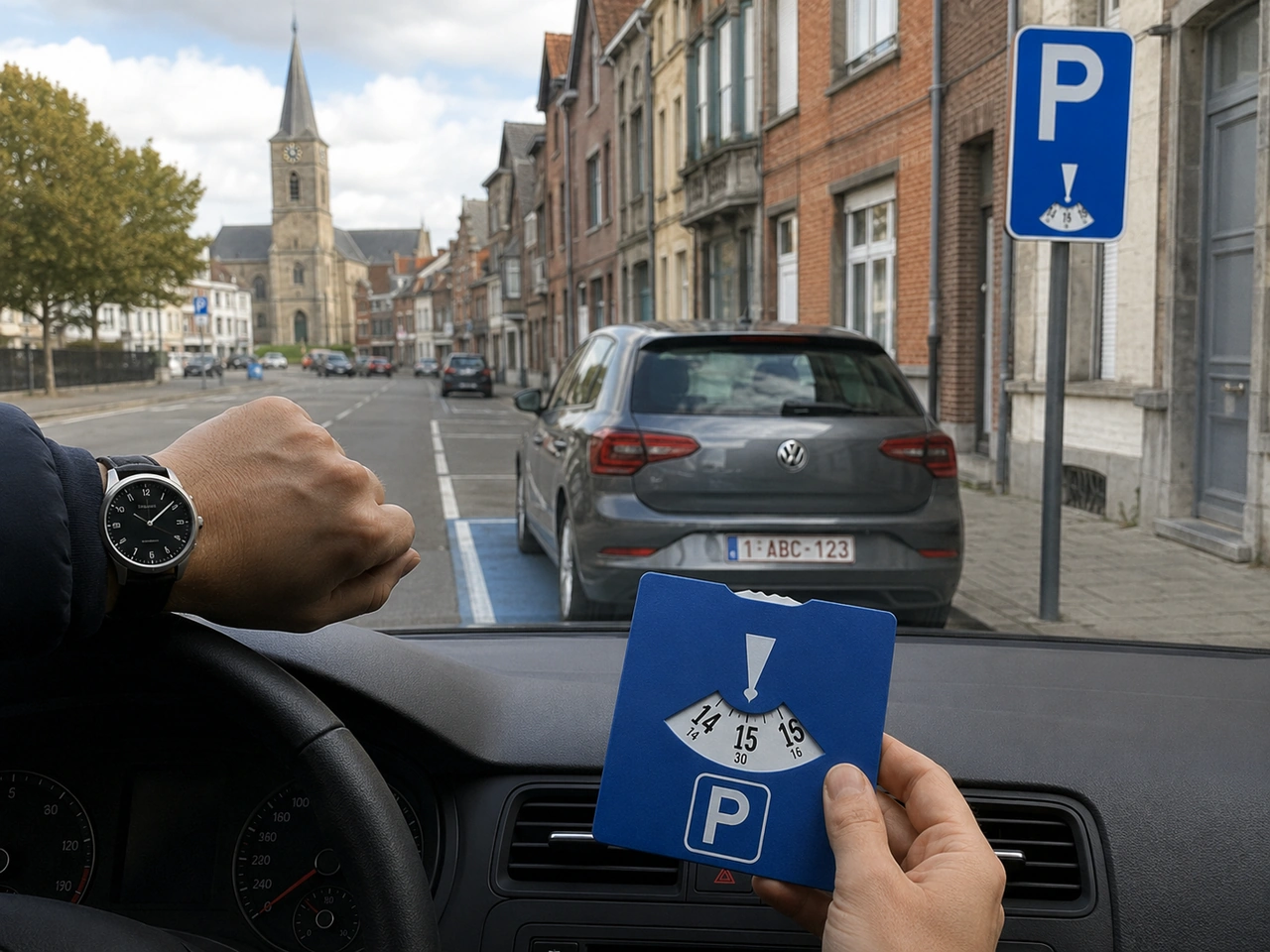
322. How should you set a parking disc when parking in a Belgian blue zone?
The arrow must be placed on the time mark immediately following the arrival time. Unless signs state otherwise, the standard blue-zone rules apply on working days from 09:00 to 18:00 for a maximum of two hours.
AI-generated by Rijbewijs-online.be • WCIT • CC BY-SA
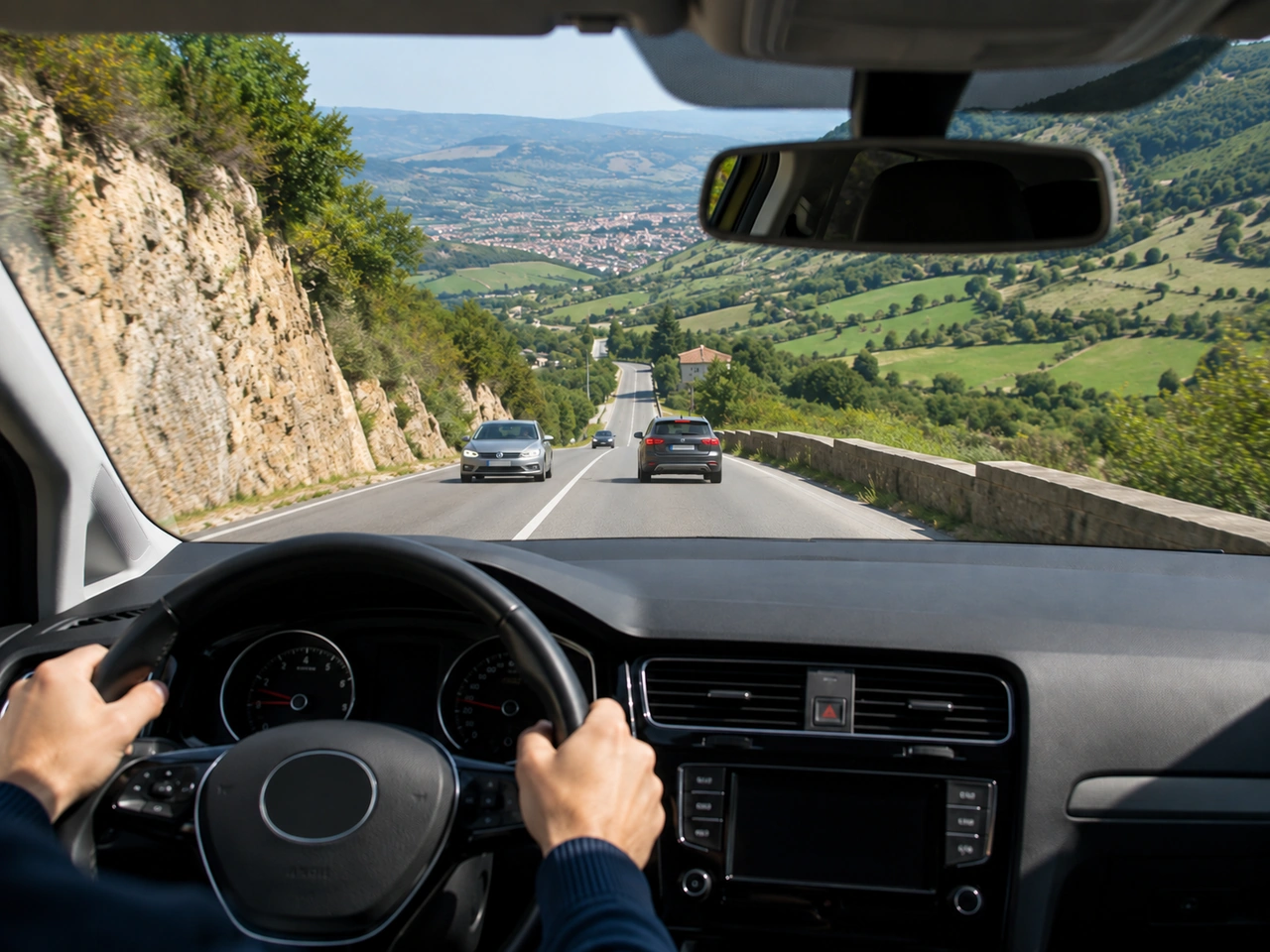
323. What should you do before driving down a long, steep hill?
A lower gear helps control your speed and reduces the amount of continuous braking needed on a long descent.
AI-generated by Rijbewijs-online.be • WCIT • CC BY-SA
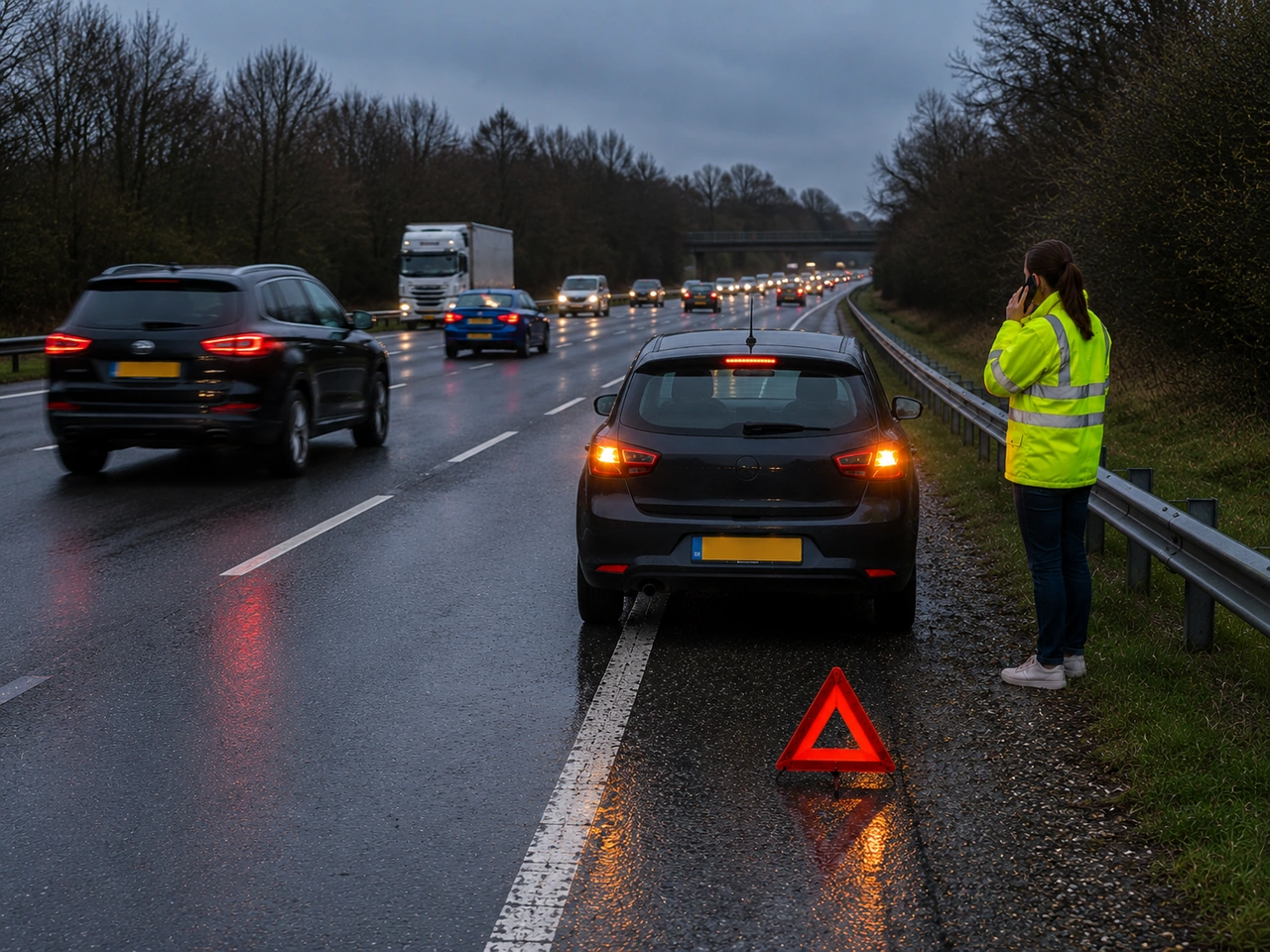
324. What information is needed when requesting emergency assistance?
Road numbers, junctions, location markers, direction of travel, and a clear description of the incident help assistance reach you quickly.
AI-generated by Rijbewijs-online.be • WCIT • CC BY-SA
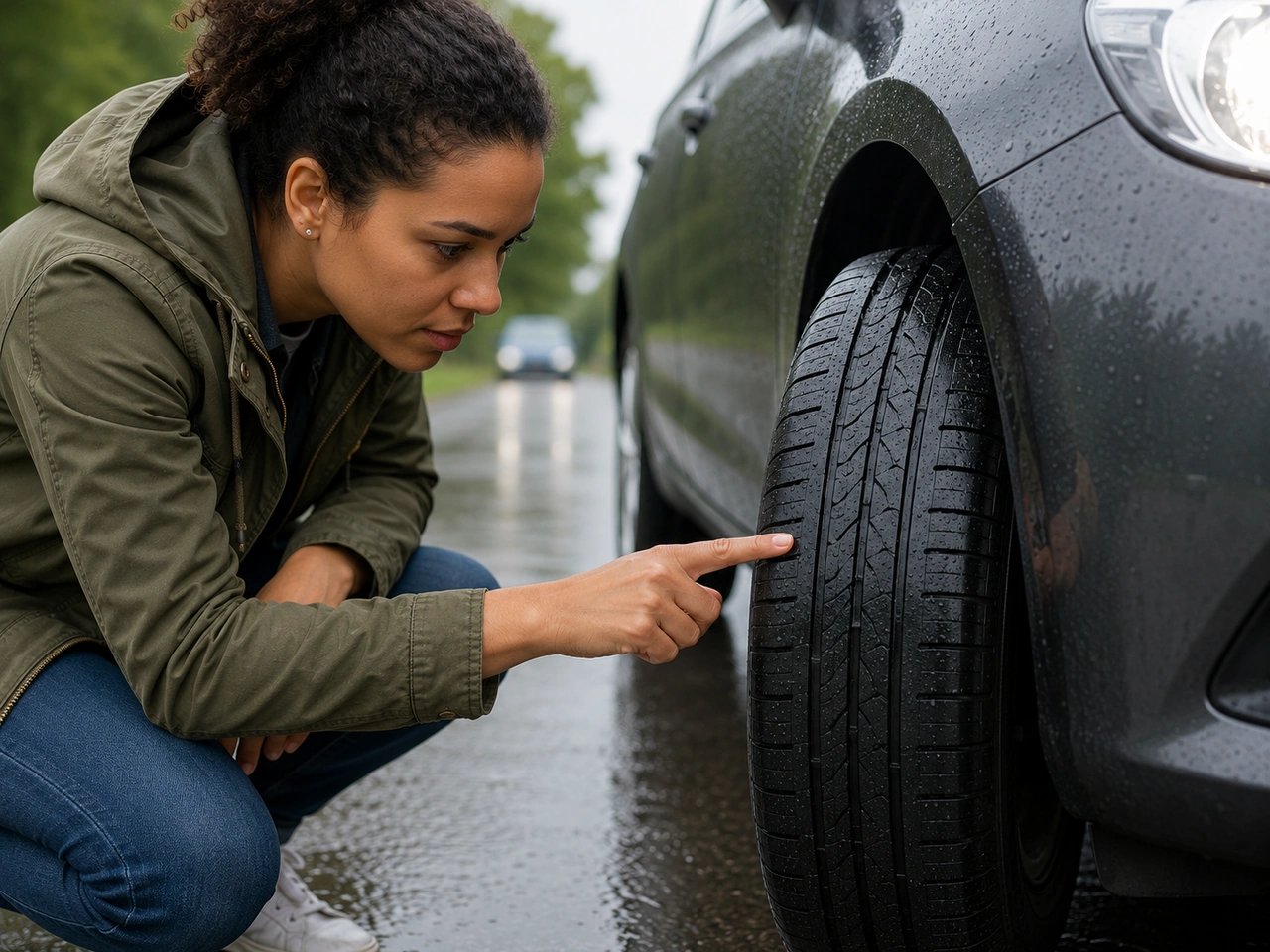
325. Why is adequate tyre tread important?
Tyre tread helps the vehicle grip the road and disperse water. Worn tread increases the risk of skidding and aquaplaning, especially in wet conditions.
AI-generated by Rijbewijs-online.be • WCIT • CC BY-SA
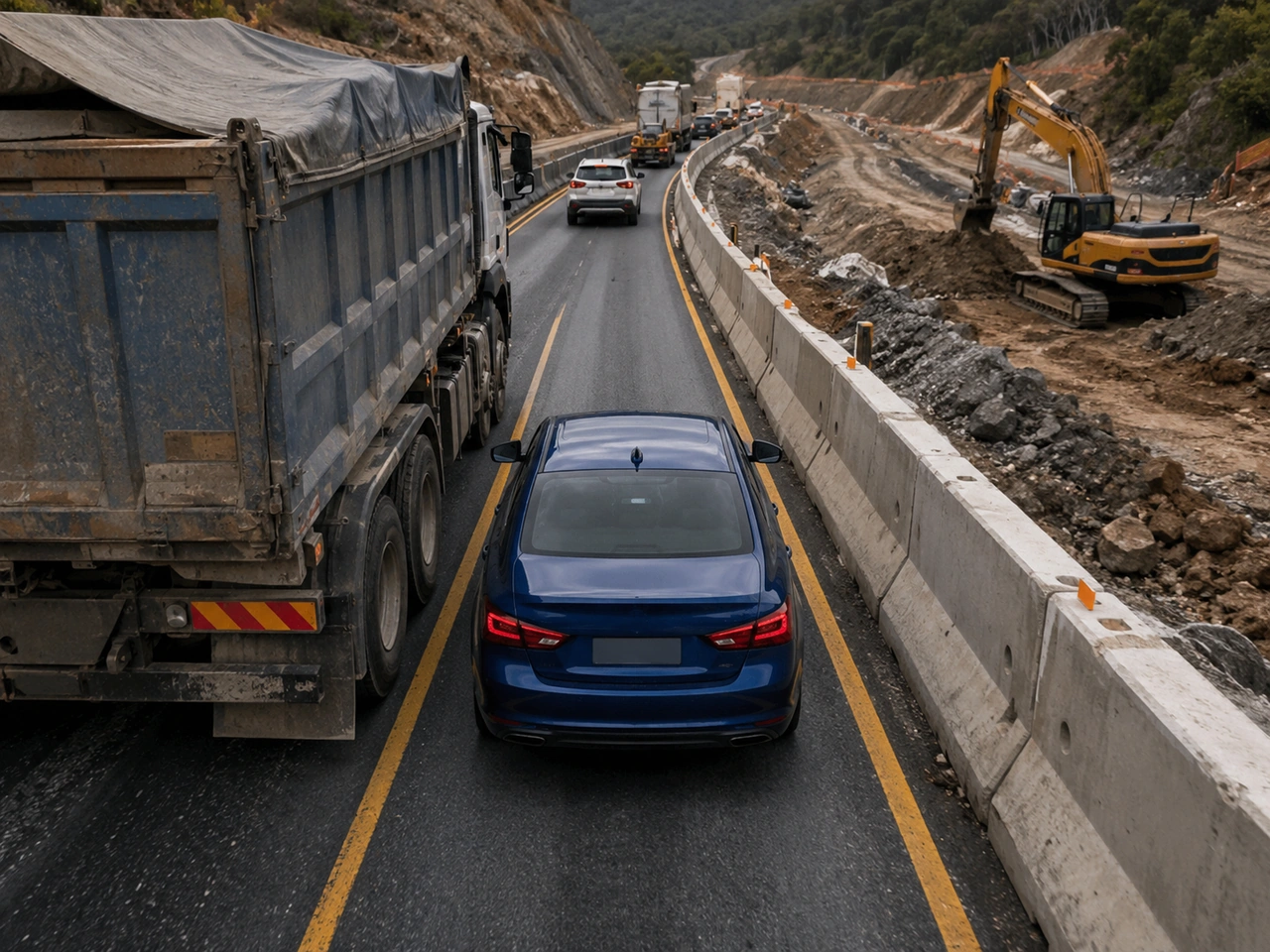
326. Why should you avoid unnecessary lane changes in roadworks?
Frequent lane changes create additional risk where space is limited and drivers are already adapting to temporary layouts.
AI-generated by Rijbewijs-online.be • WCIT • CC BY-SA
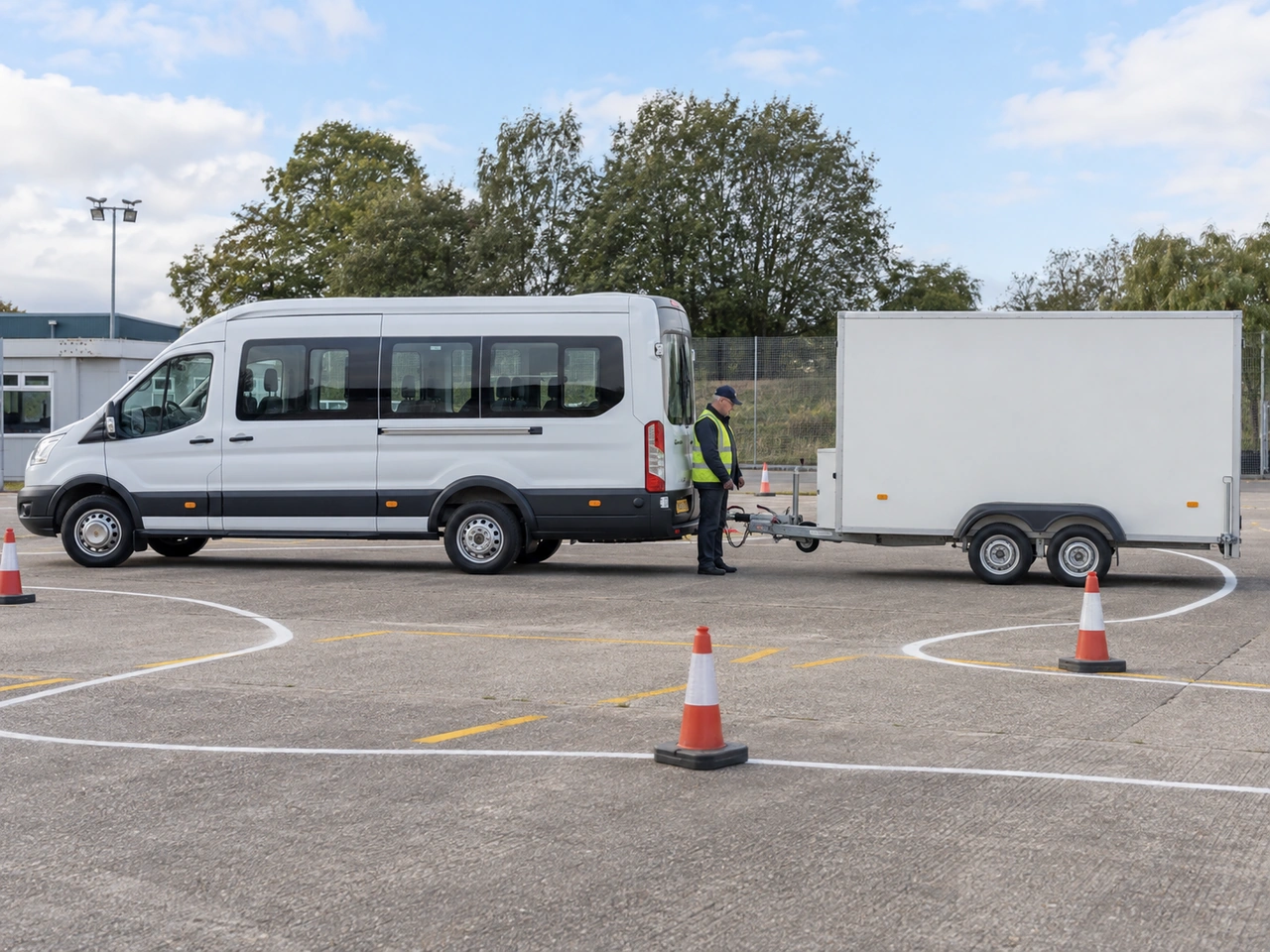
327. What is the minimum licence for a D1 minibus towing a trailer over 750 kg?
Category D1 permits a trailer with a maximum authorised mass of up to 750 kg. A D1 vehicle towing a trailer above 750 kg requires category D1E.
AI-generated by Rijbewijs-online.be • WCIT • CC BY-SA
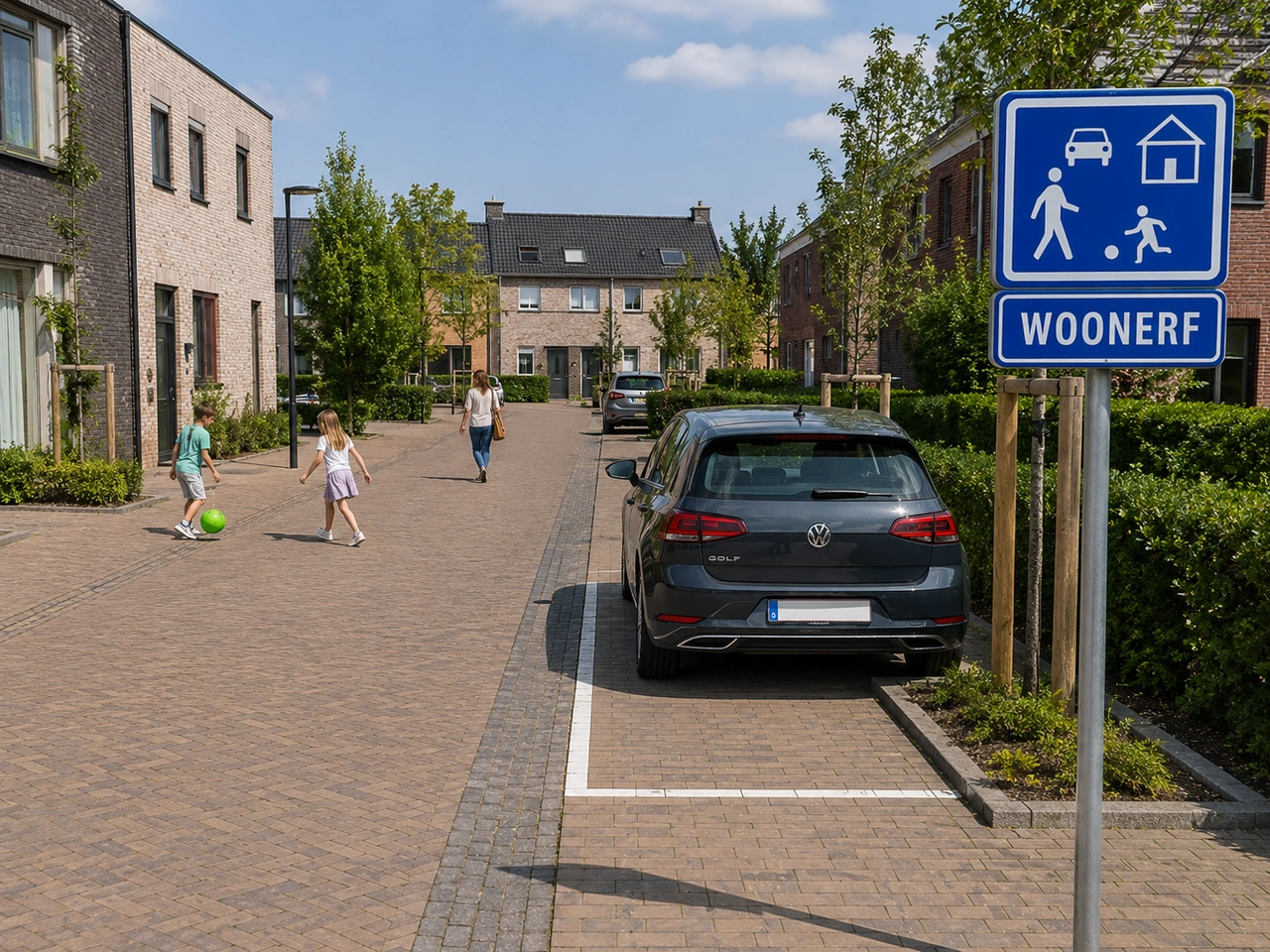
328. Where may you park inside a Belgian residential zone or shared-space zone?
Parking is prohibited inside a woonerf or erf except in designated parking places or where a traffic sign expressly allows it.
AI-generated by Rijbewijs-online.be • WCIT • CC BY-SA
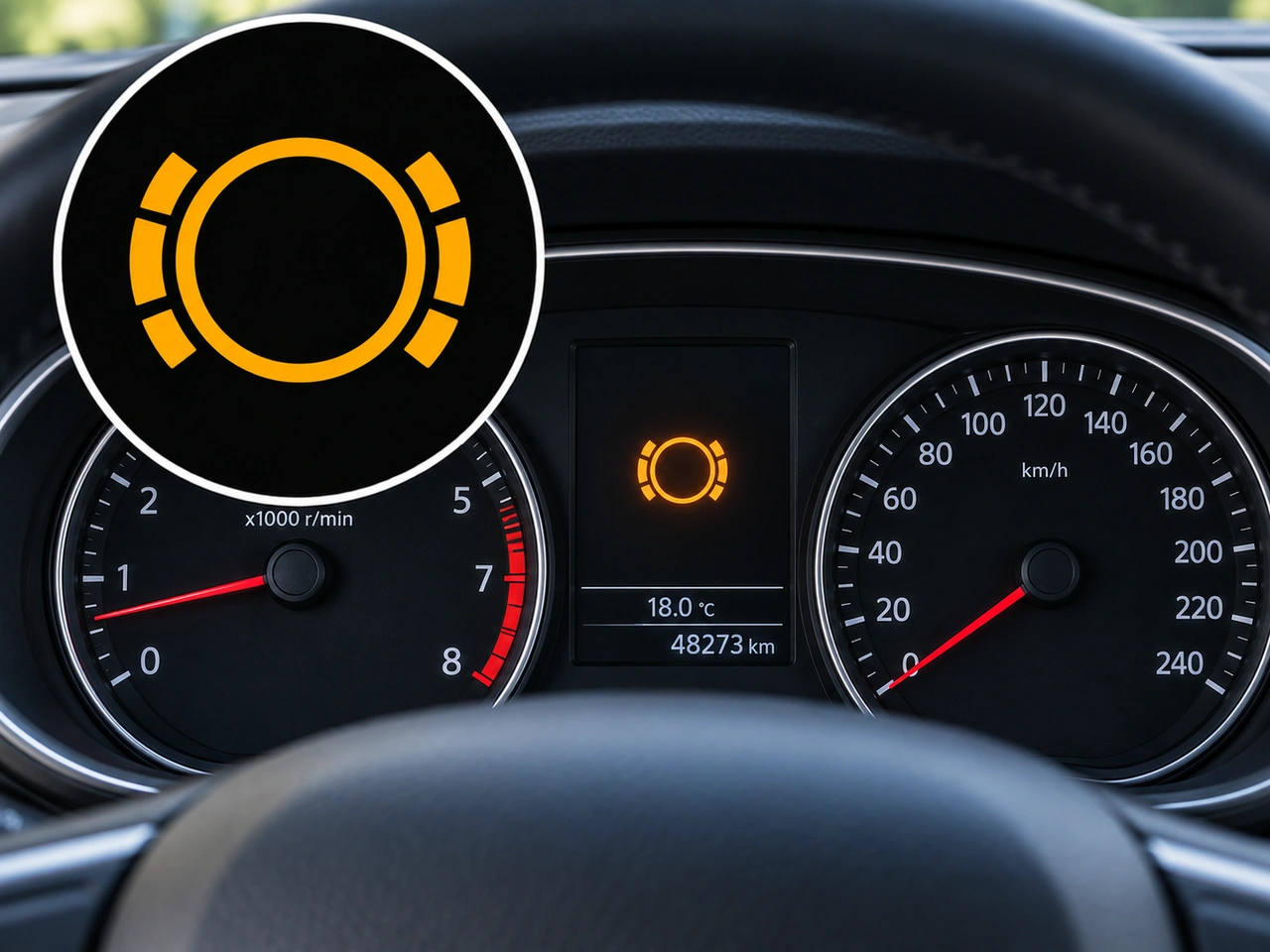
329. What does this dashboard symbol indicate?
This symbol indicates that the brake pads may be worn and should be inspected. Continuing to drive with excessively worn brake pads can reduce braking performance and damage other brake components.
AI-generated by Rijbewijs-online.be • WCIT • CC BY-SA
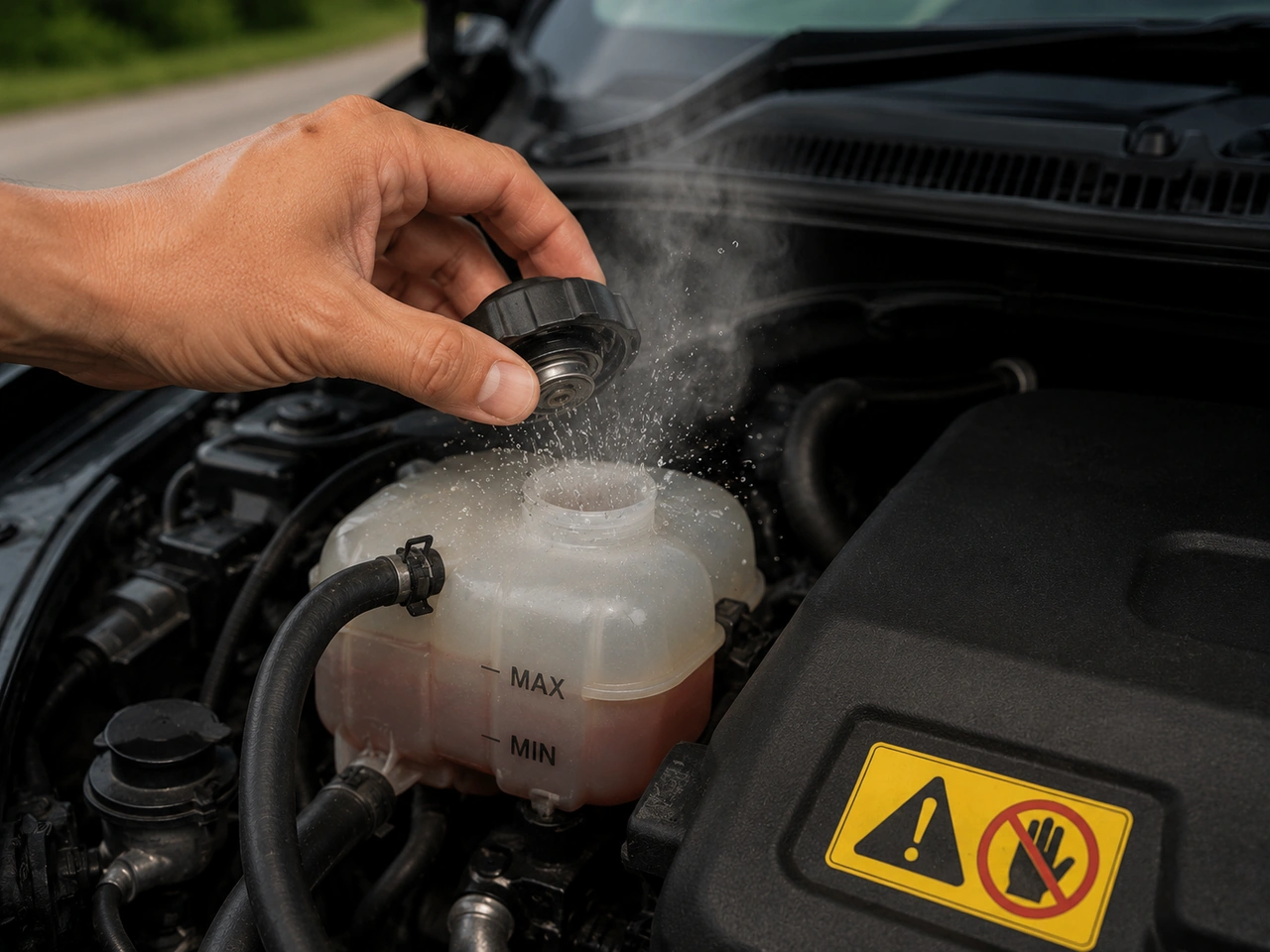
330. Why should you avoid removing the coolant cap while the engine is hot?
A hot cooling system may remain under pressure. Allow the engine to cool and follow the manufacturer's instructions before checking or adding coolant.
AI-generated by Rijbewijs-online.be • WCIT • CC BY-SA
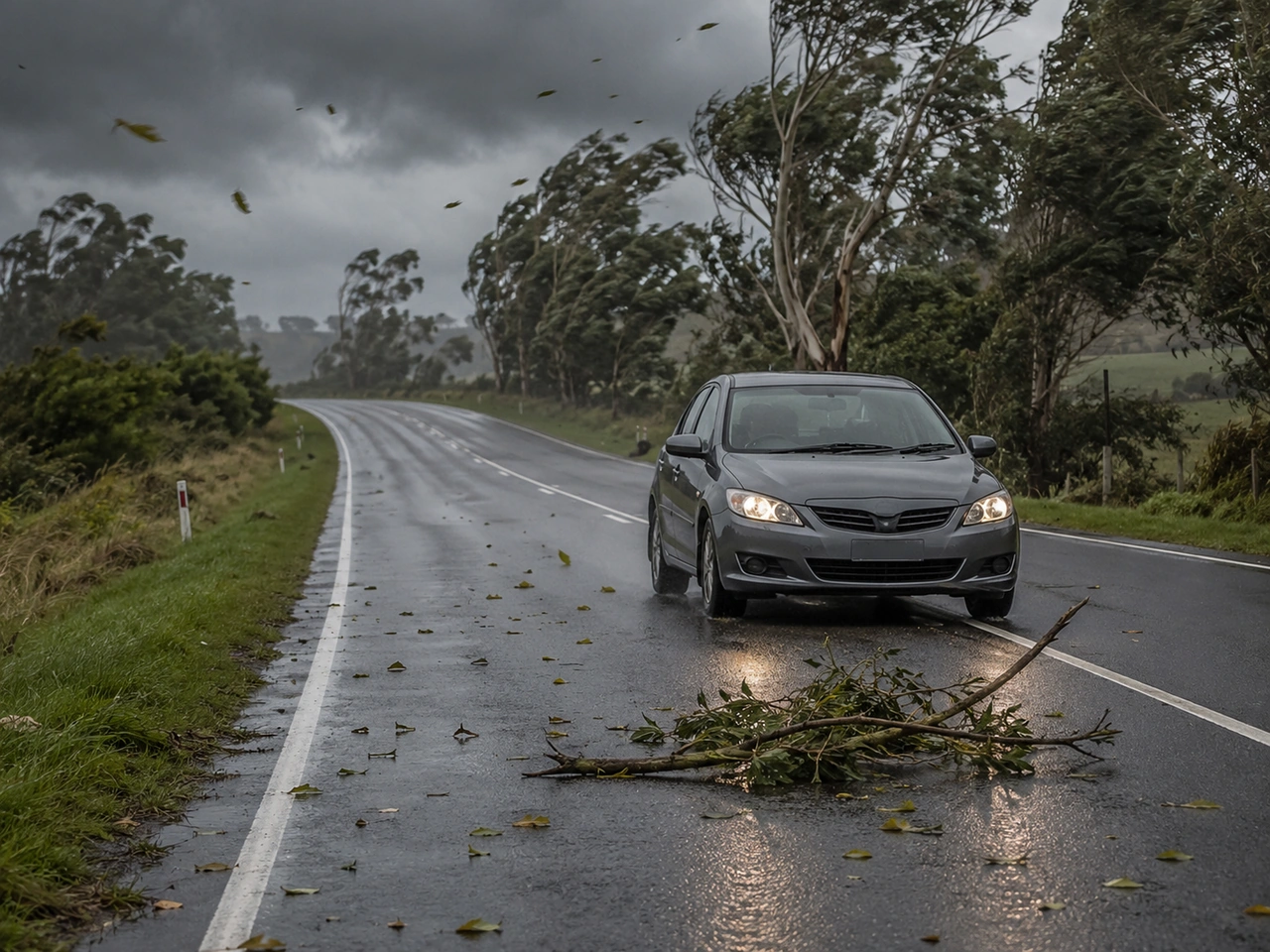
331. What should you do when branches or debris are blowing onto the road?
Wind can blow unexpected obstacles onto the road. Reduce speed and avoid them safely.
AI-generated by Rijbewijs-online.be • WCIT • CC BY-SA
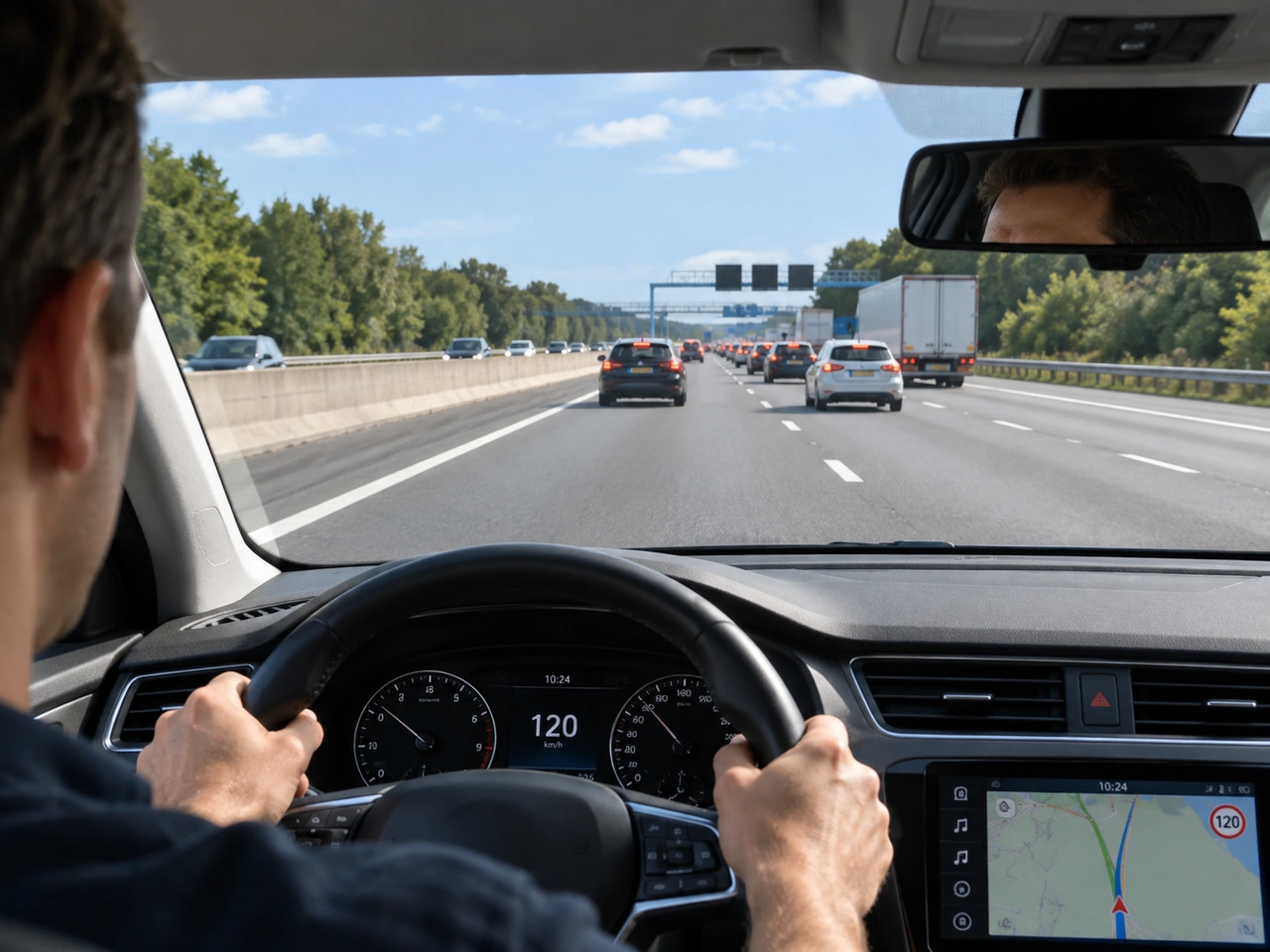
332. How does higher speed affect a vehicle's stopping distance?
As speed increases, the vehicle travels farther while the driver reacts and requires more distance to brake. This means the total stopping distance increases significantly as speed rises.
AI-generated by Rijbewijs-online.be • WCIT • CC BY-SA
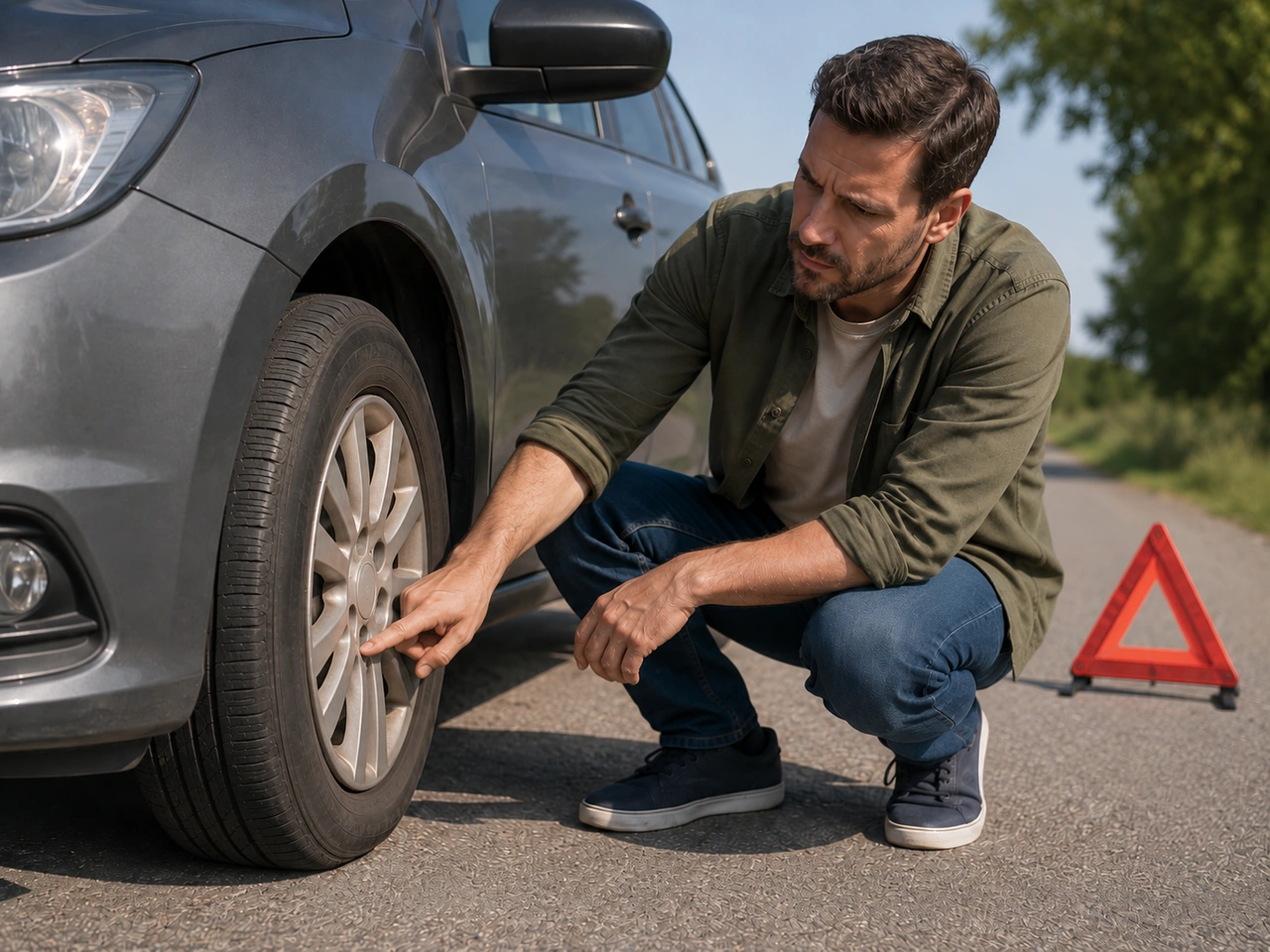
333. What should you do if a tyre has a deep cut, bulge, or exposed cords?
Cuts, bulges, and exposed cords can indicate serious structural damage. The tyre may fail suddenly and should not be used normally.
AI-generated by Rijbewijs-online.be • WCIT • CC BY-SA
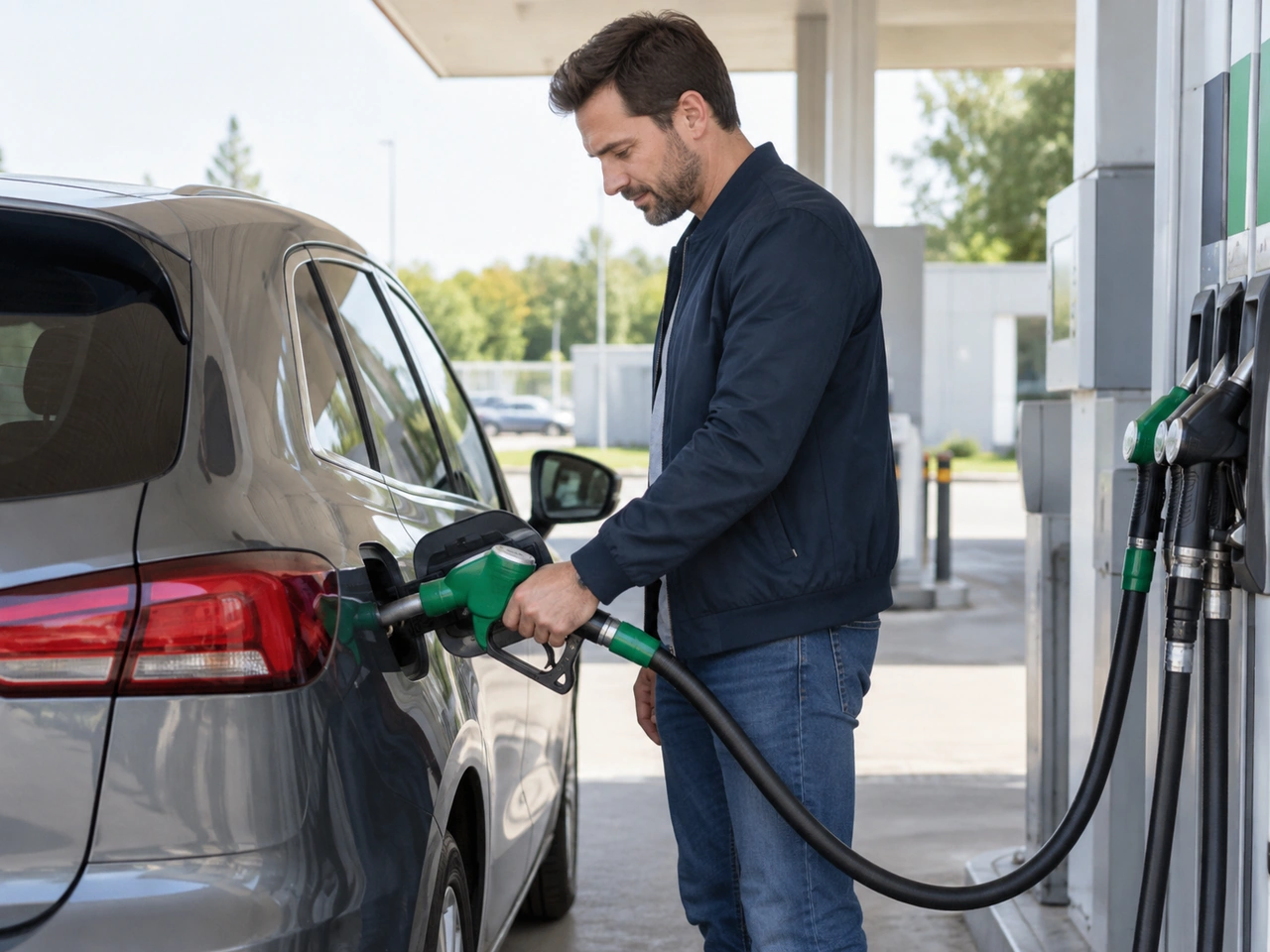
334. What should you normally do when the fuel nozzle automatically clicks off?
When the fuel nozzle automatically clicks off, stop refuelling rather than repeatedly topping up the tank. Continuing can cause fuel to spill or overflow and may interfere with the vehicle's fuel-vapour control system.
AI-generated by Rijbewijs-online.be • WCIT • CC BY-SA
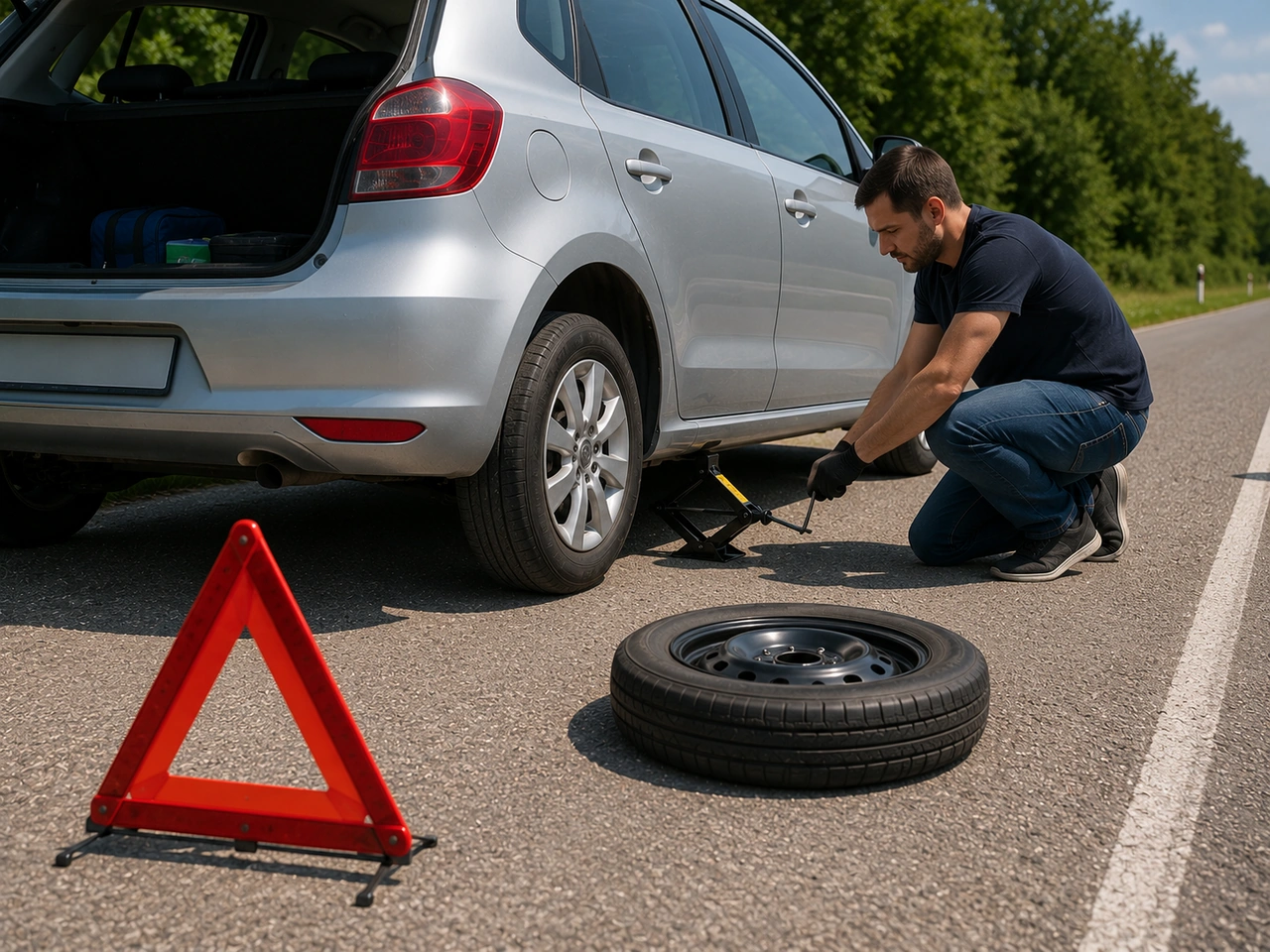
335. What is important when raising a vehicle with its jack?
A jack can slip or fail if it is incorrectly positioned. Secure the vehicle and use additional approved supports before working underneath it.
AI-generated by Rijbewijs-online.be • WCIT • CC BY-SA
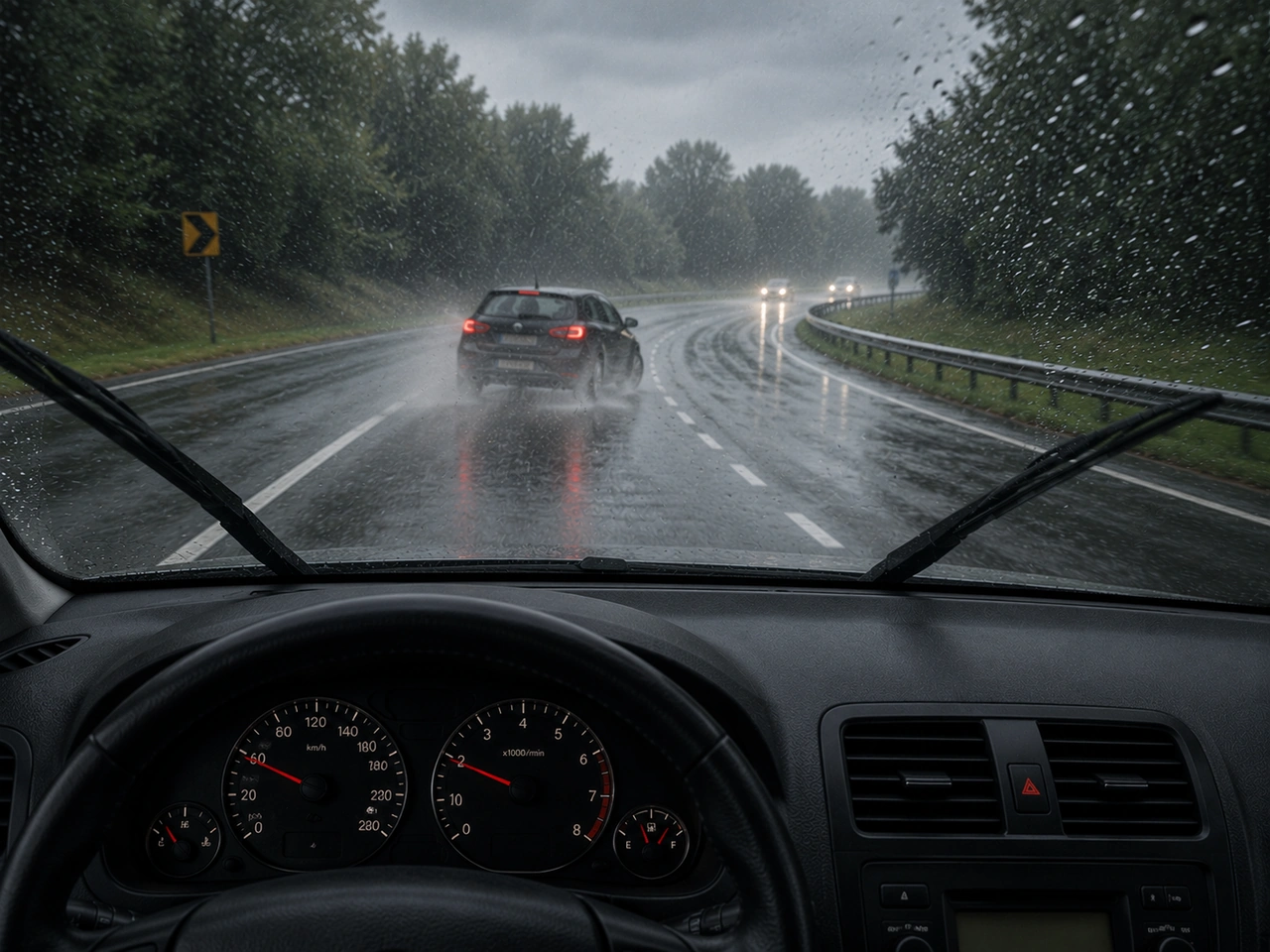
336. What should you avoid if your vehicle loses grip on a wet road?
Abrupt inputs can upset the vehicle further. Smooth control gives the tyres a better chance to regain grip.
AI-generated by Rijbewijs-online.be • WCIT • CC BY-SA
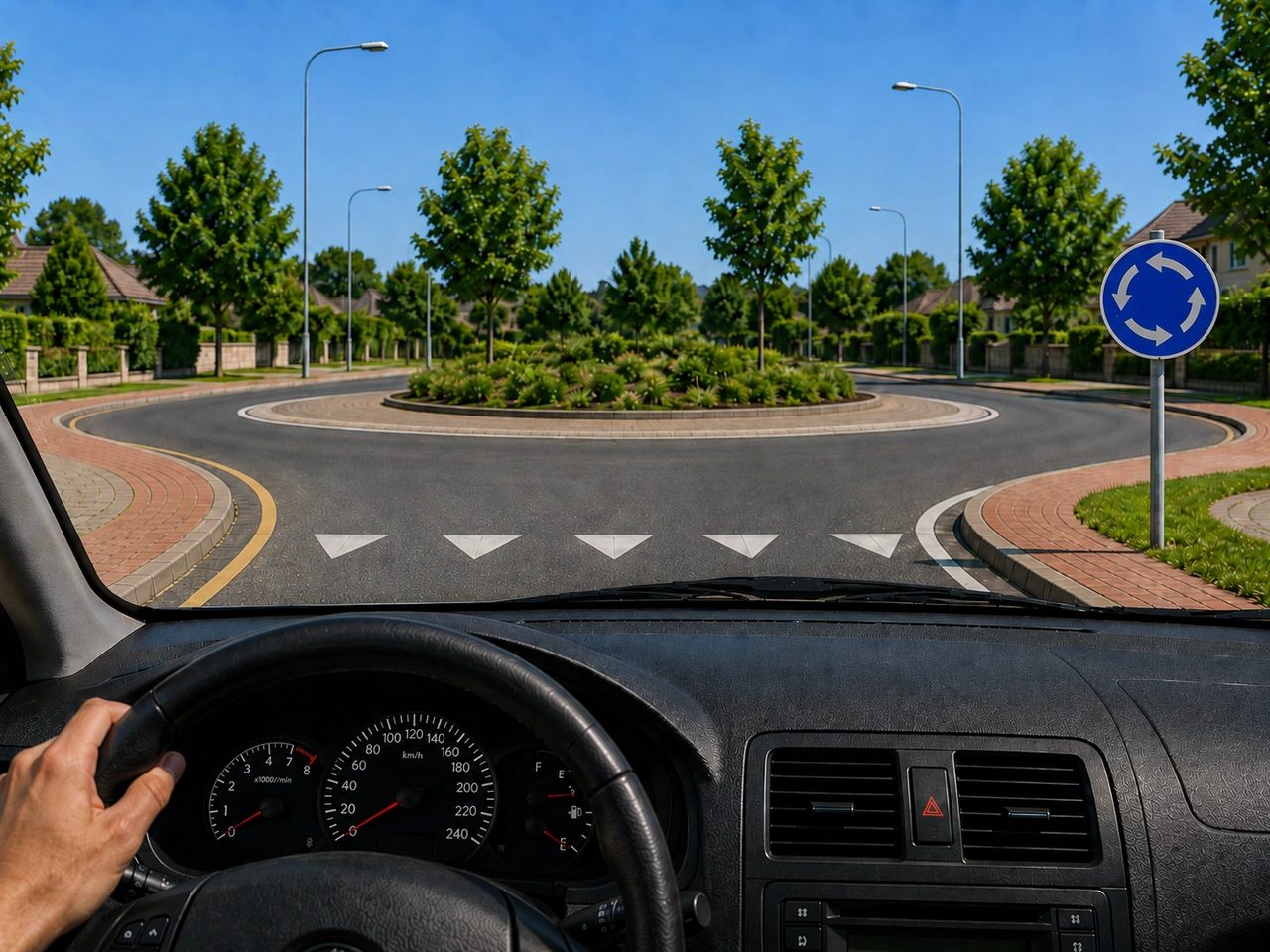
337. What should you do before entering a roundabout?
Before entering a roundabout, reduce your speed, observe traffic, and give way according to the local rules.
AI-generated by Rijbewijs-online.be • WCIT • CC BY-SA
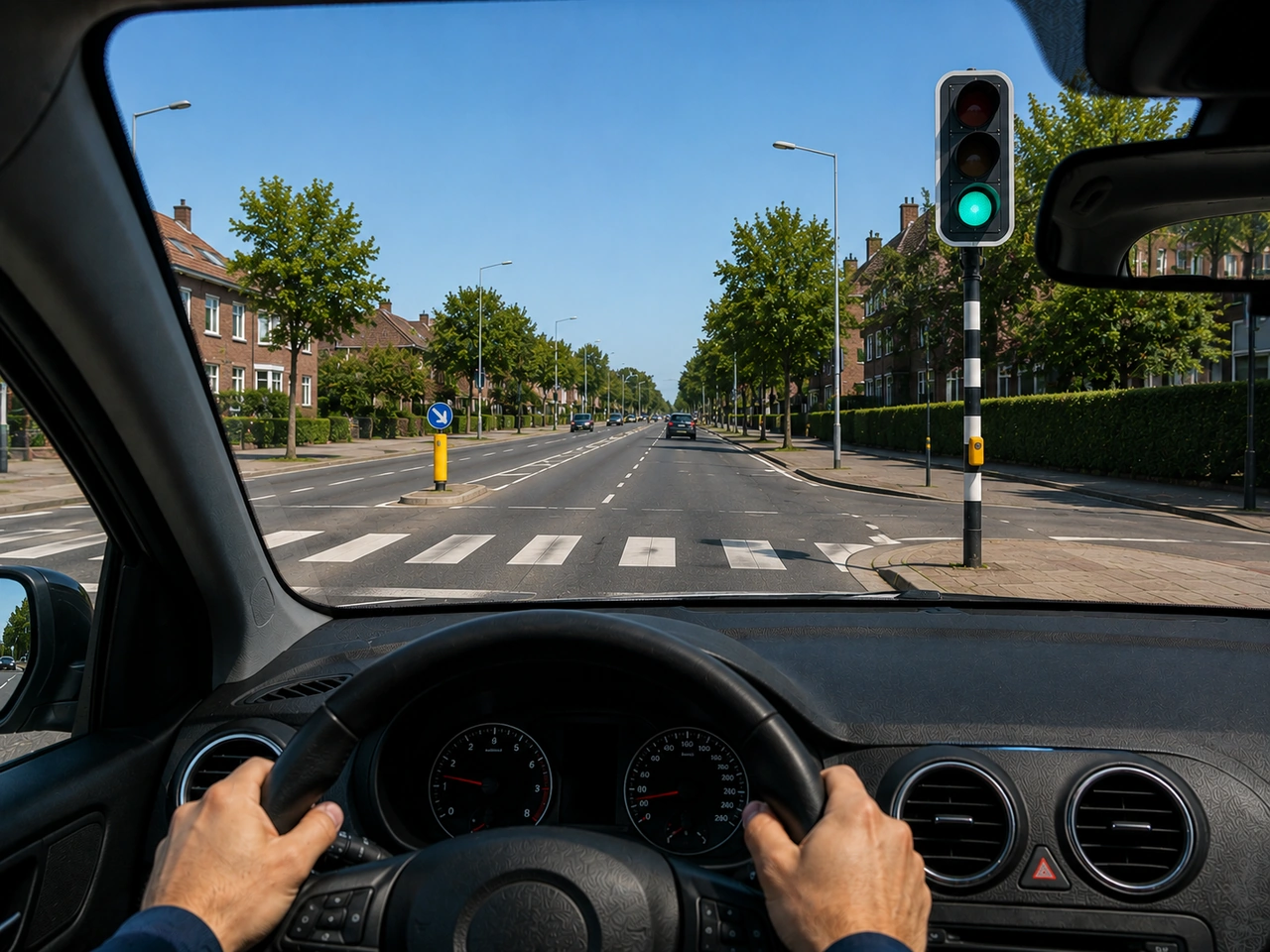
338. What does a green traffic light mean?
A green light allows you to continue, but you must still watch for pedestrians, cyclists, and other road users.
AI-generated by Rijbewijs-online.be • WCIT • CC BY-SA
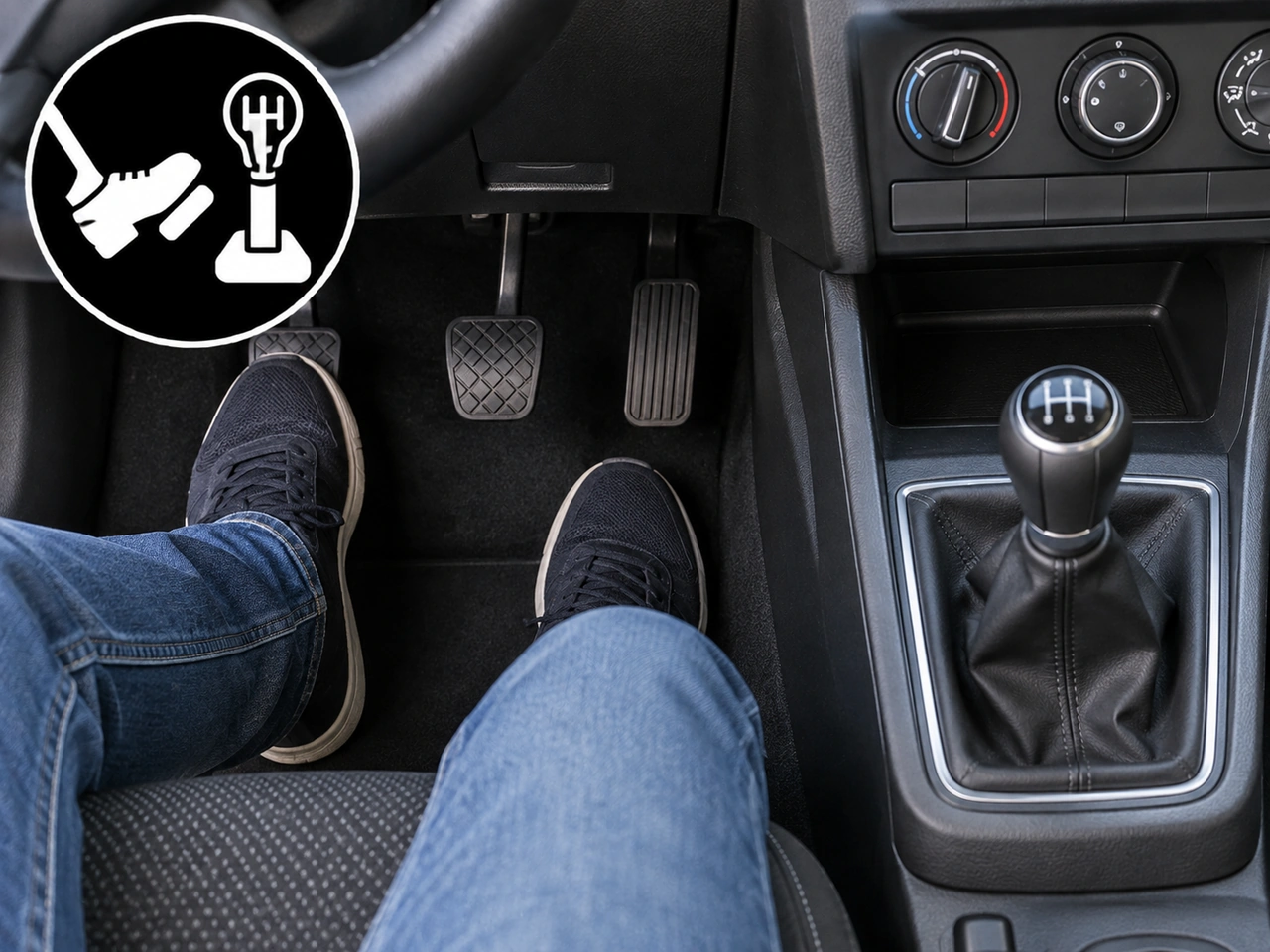
339. What should you check before starting a manual vehicle?
Before starting a manual vehicle, make sure the gearbox is in neutral and press the clutch pedal. This helps prevent the vehicle from moving unexpectedly when the engine starts.
AI-generated by Rijbewijs-online.be • WCIT • CC BY-SA
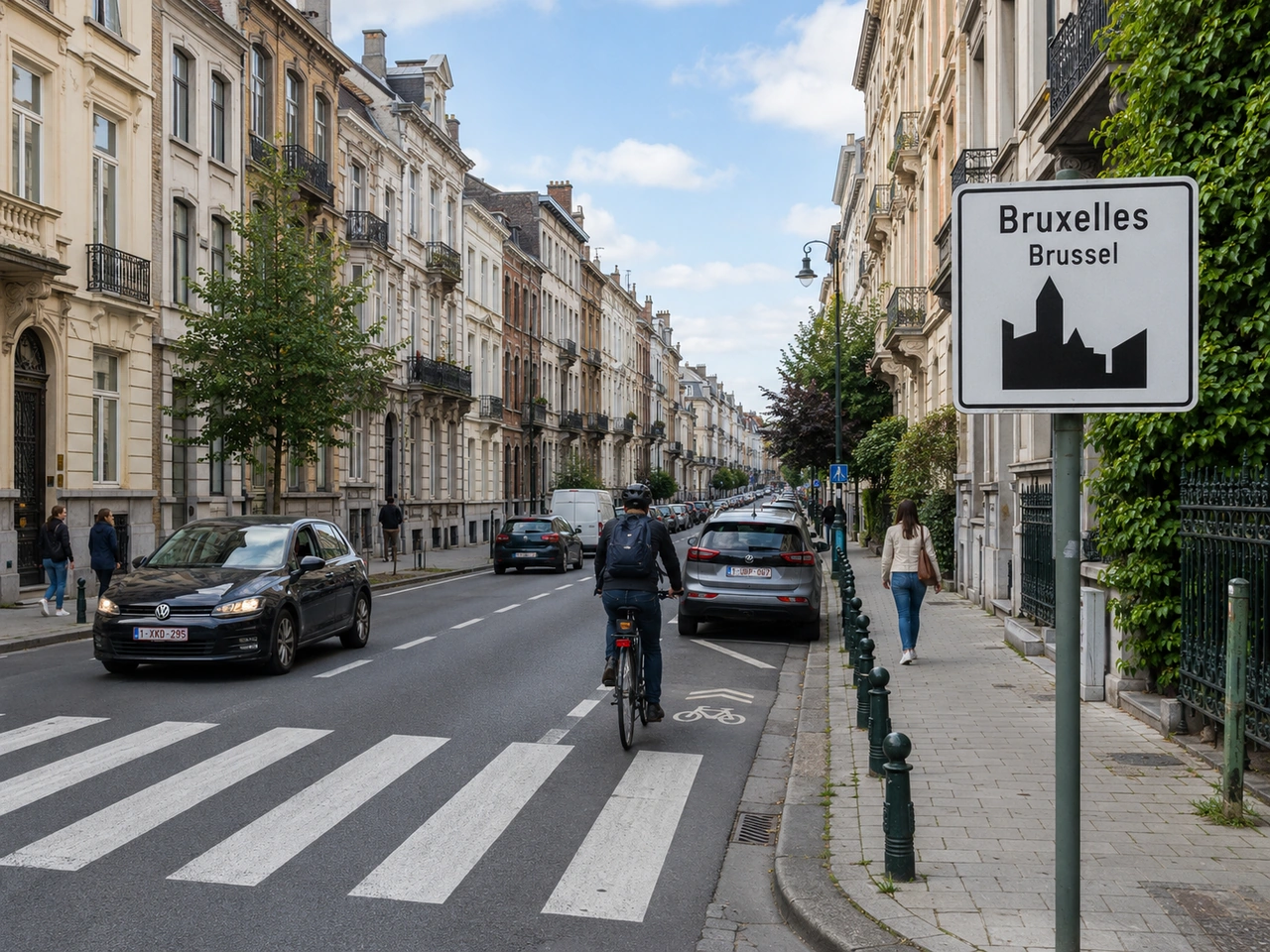
340. What is the general speed limit in built-up areas in Brussels?
In the Brussels-Capital Region, the general speed limit inside built-up areas is 30 km/h. Traffic signs may impose a different limit on particular roads.
AI-generated by Rijbewijs-online.be • WCIT • CC BY-SA
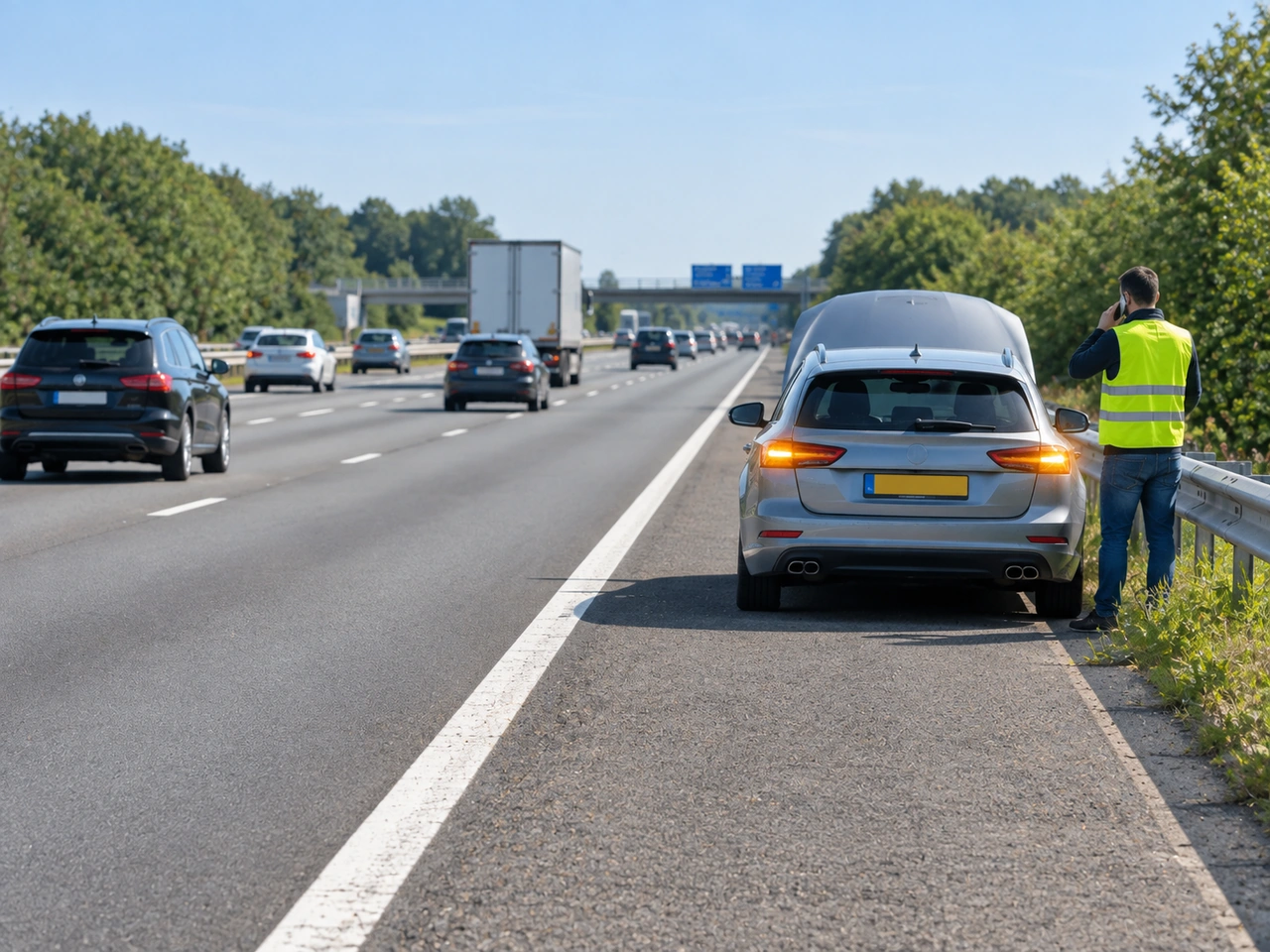
341. What is the main purpose of a motorway emergency lane or hard shoulder?
A motorway emergency lane or hard shoulder is primarily intended for emergencies and breakdowns, not normal driving. In some places it may be opened temporarily as a traffic lane when signs or signals specifically permit this.
AI-generated by Rijbewijs-online.be • WCIT • CC BY-SA
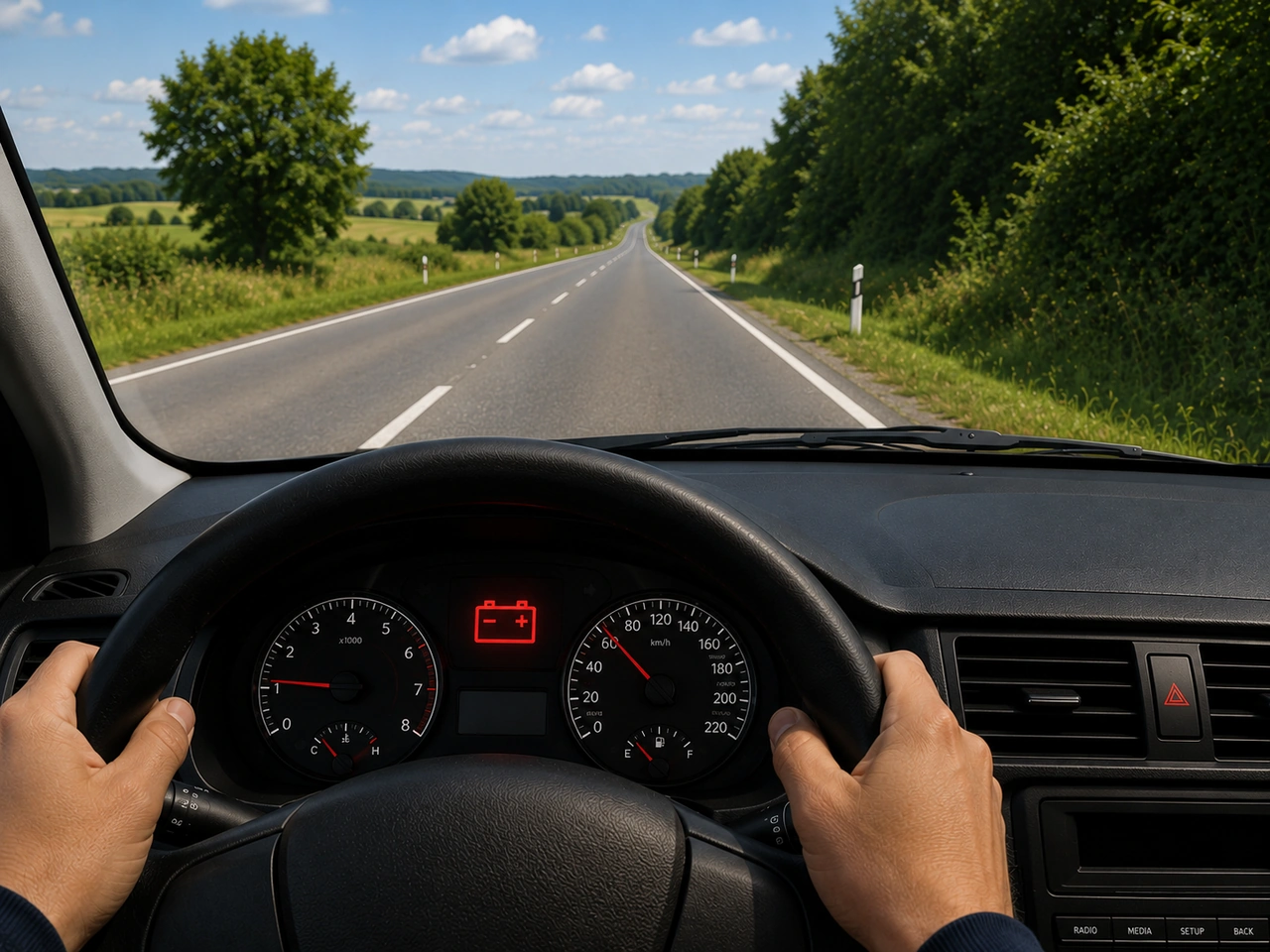
342. What should you do if the charging-system warning light comes on?
The alternator or charging system may have failed. The vehicle may stop once the remaining battery charge is exhausted.
AI-generated by Rijbewijs-online.be • WCIT • CC BY-SA
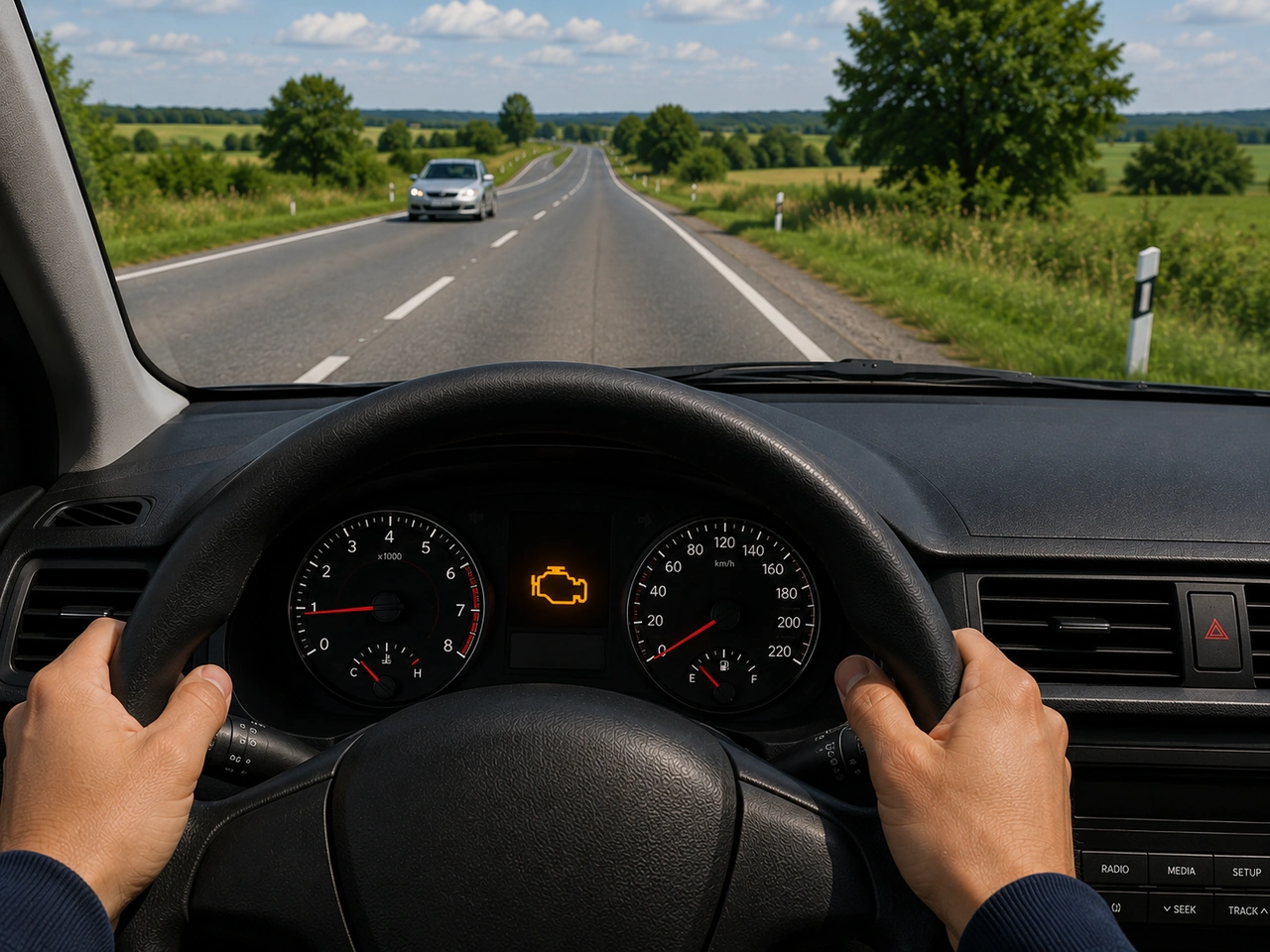
343. What should you expect if the engine suddenly stalls while the vehicle is moving?
Power assistance may be reduced when the engine stops. Keep control, use the hazard lights if needed, and steer toward a safe stopping area.
AI-generated by Rijbewijs-online.be • WCIT • CC BY-SA
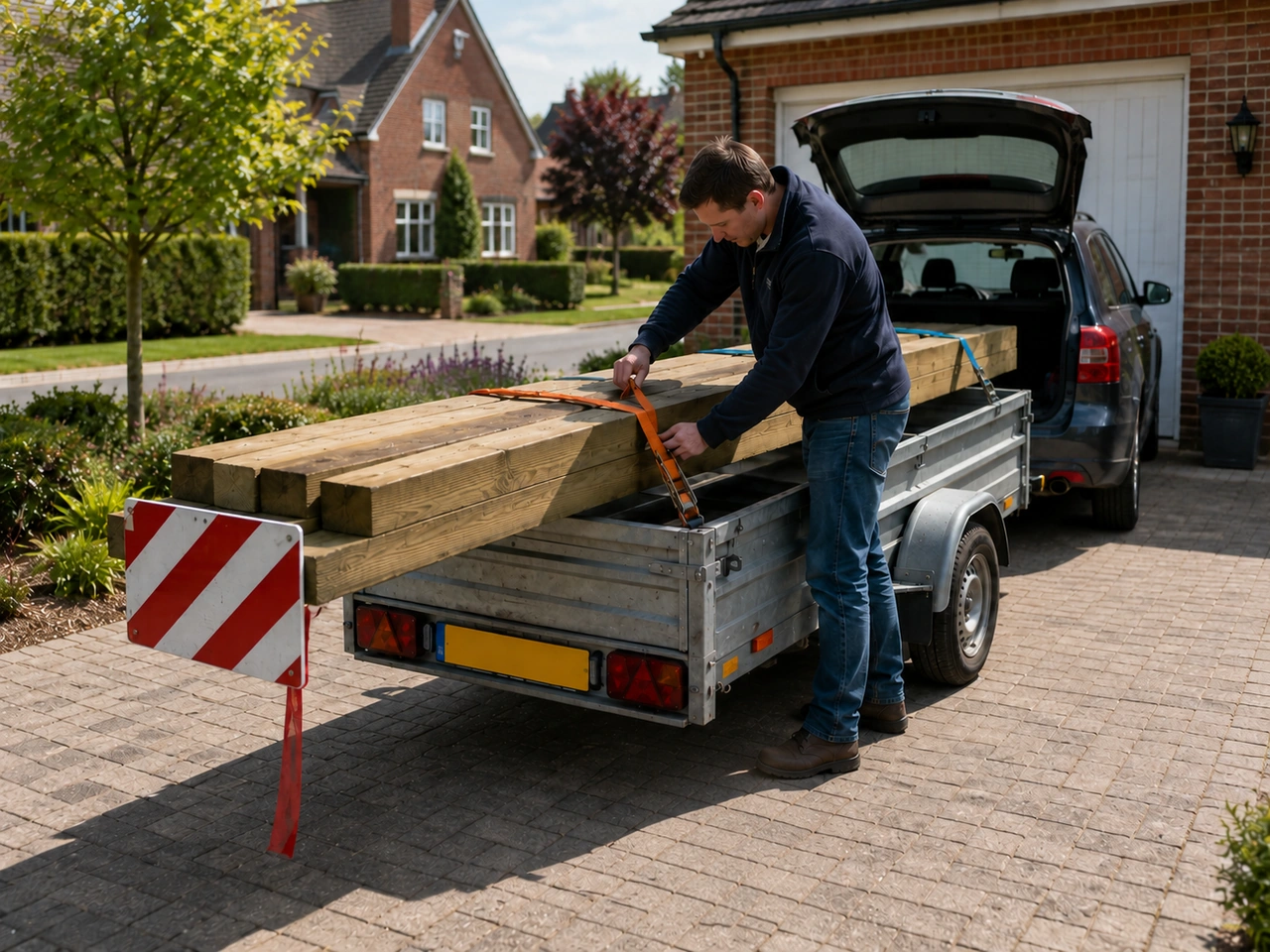
344. What should you do if a load extends beyond the vehicle?
An extending load may create additional danger and may require specific markings or equipment under local rules.
AI-generated by Rijbewijs-online.be • WCIT • CC BY-SA
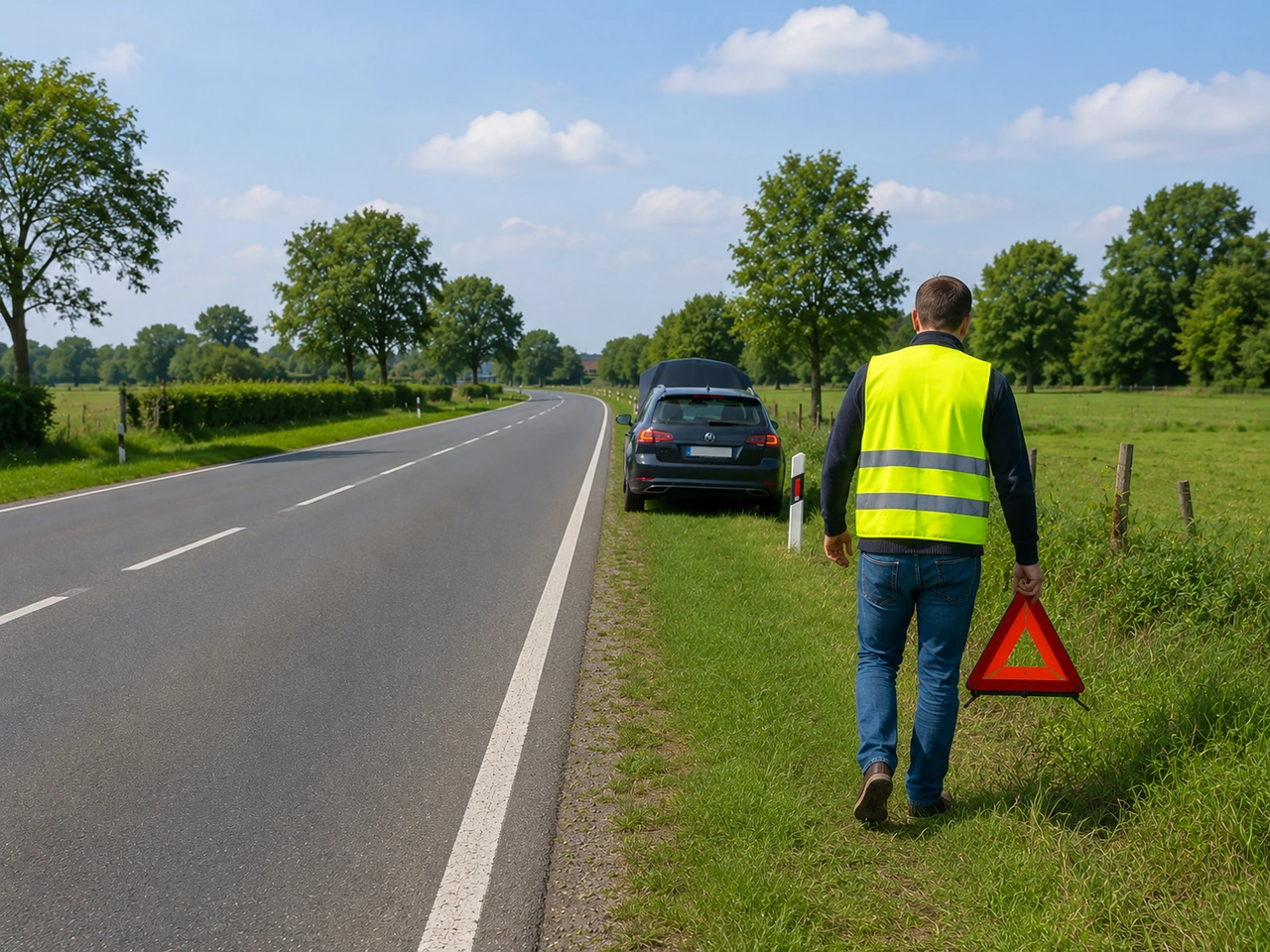
345. How far behind a broken-down vehicle should the warning triangle normally be placed?
The warning triangle should normally be placed at least 30 metres away on ordinary roads and at least 100 metres away on motorways.
AI-generated by Rijbewijs-online.be • WCIT • CC BY-SA
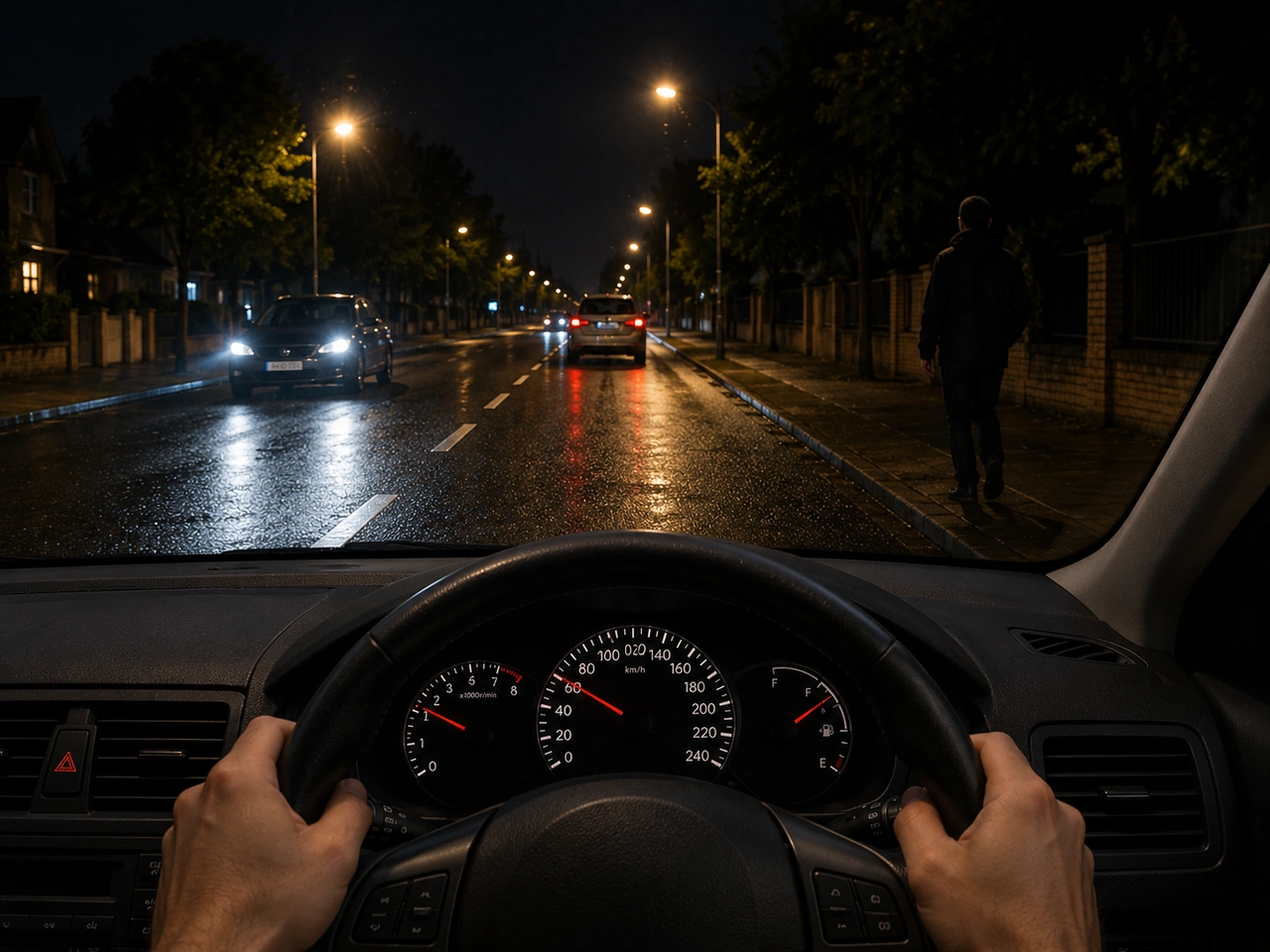
346. Why should you avoid wearing dark clothing at night?
Dark clothing makes pedestrians harder to see in low-light conditions. Bright or reflective clothing improves visibility.
AI-generated by Rijbewijs-online.be • WCIT • CC BY-SA
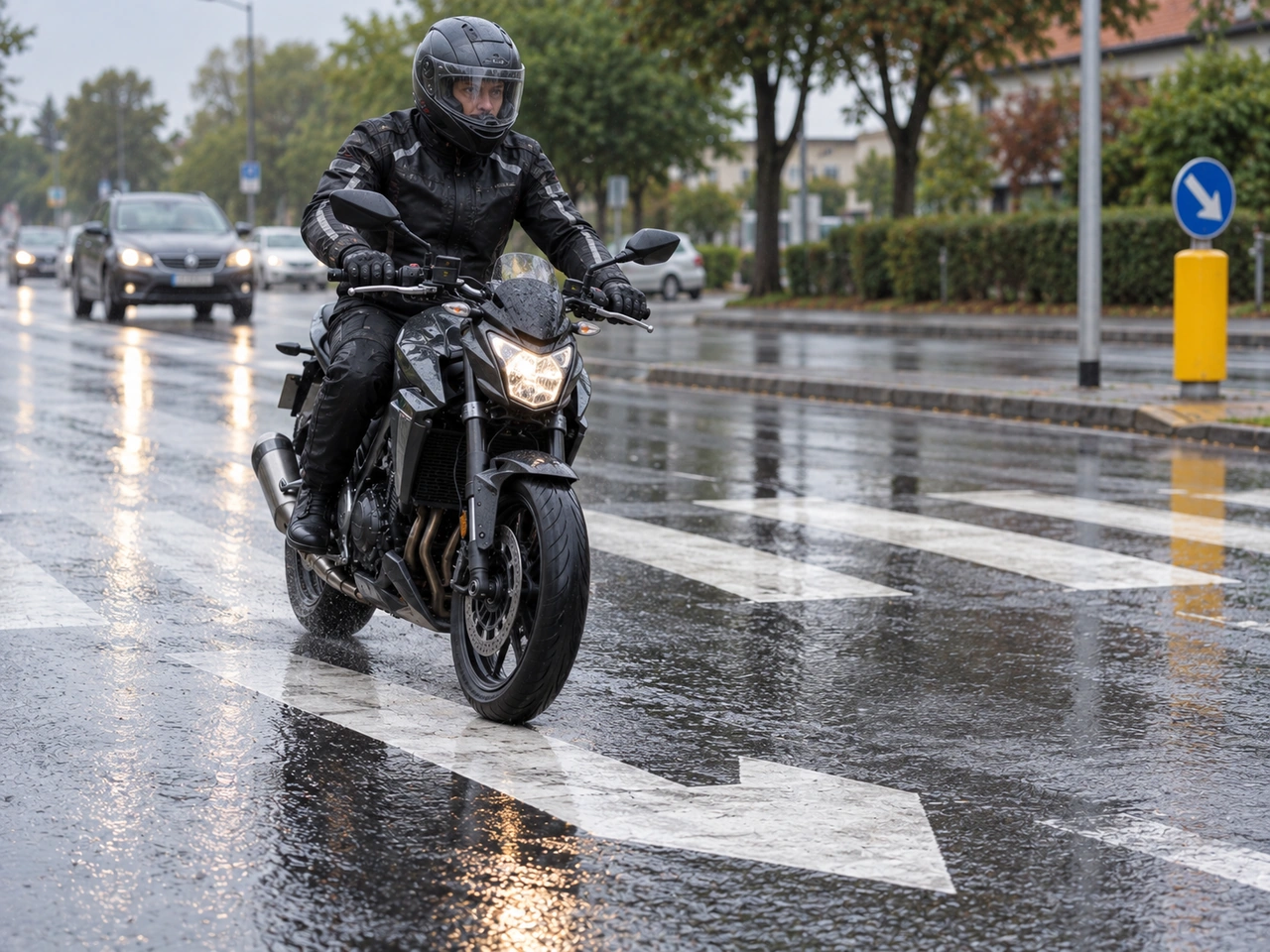
347. Why should motorcyclists take extra care on wet road markings?
Wet painted road markings can provide less grip than the surrounding road surface. Ride smoothly over them and avoid sudden braking, acceleration or steering that could cause the tyres to lose grip.
AI-generated by Rijbewijs-online.be • WCIT • CC BY-SA
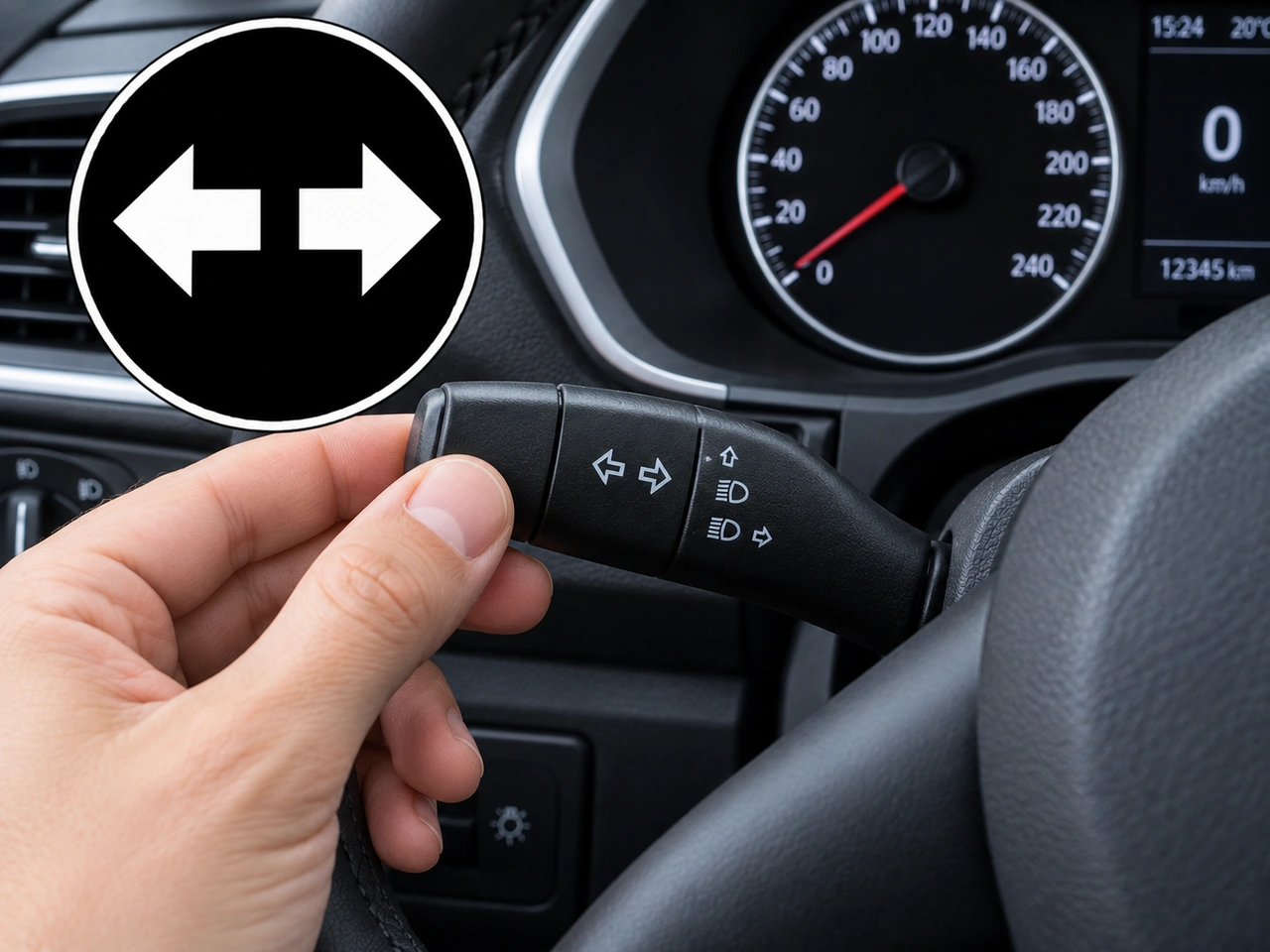
348. Which control is normally used to operate the direction indicators?
The direction indicators are normally operated using a stalk beside the steering wheel. Moving the stalk up or down activates the indicators on the corresponding side of the vehicle.
AI-generated by Rijbewijs-online.be • WCIT • CC BY-SA
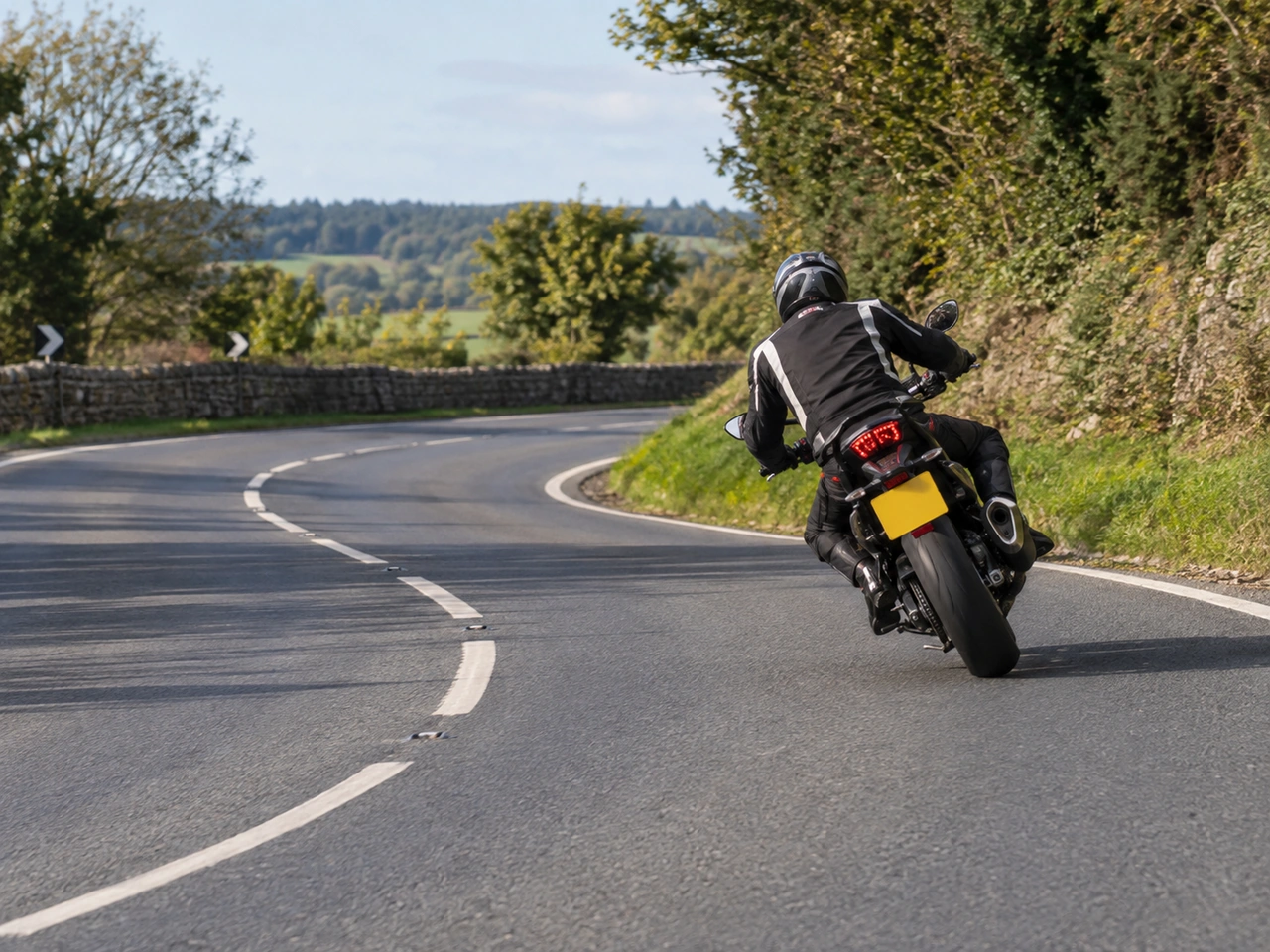
349. Why should hard braking be avoided while a motorcycle is leaning in a bend?
When a motorcycle is leaning, the tyres are already using grip to turn. Hard braking can demand additional grip and may reduce stability. Whenever possible, adjust speed before the bend and use smooth, controlled inputs while cornering.
AI-generated by Rijbewijs-online.be • WCIT • CC BY-SA
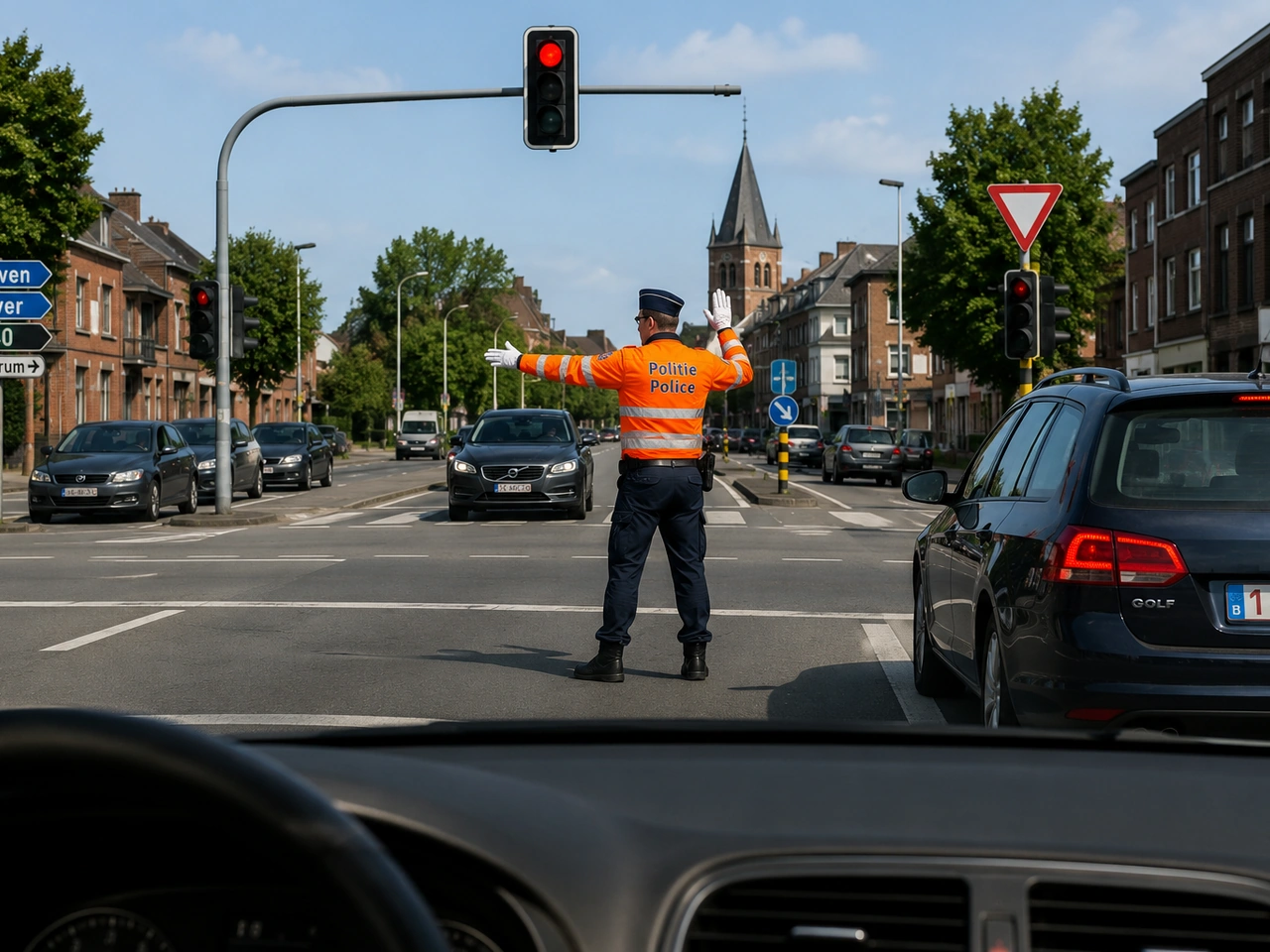
350. What should you do if a police officer directs you through a red light?
A police officer's directions take priority over traffic lights, traffic signs, and general traffic rules.
AI-generated by Rijbewijs-online.be • WCIT • CC BY-SA