

Traffic lightsColombia
 Traffic rules
 Colombia
9. Traffic lights
Traffic lights use coloured lights, arrows or symbols to regulate when road users may proceed, must prepare to stop or must remain stopped. Separate signals may apply to particular directions, lanes, pedestrians, cyclists or public-transport vehicles.
A green light permits movement only when the route is clear and the movement is otherwise legal. Road users must still follow priority rules, turning restrictions, lane markings and instructions from authorised traffic controllers.
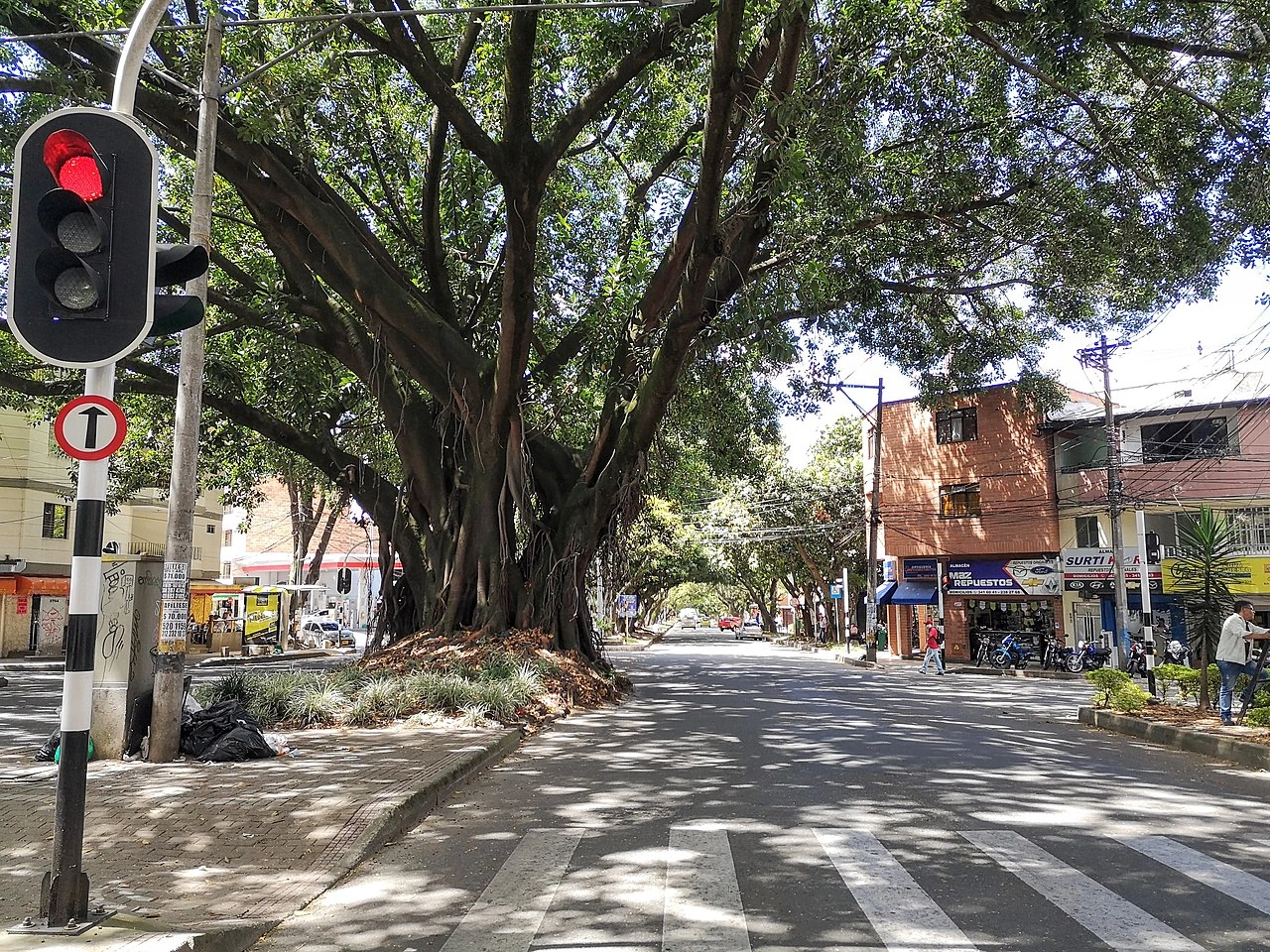
Wikimedia.org • XalD • CC BY-SA
What must a driver do at red, amber and green signals in Colombia?
On red, stop without invading the start of the pedestrian-crossing area; if it is unmarked, article 118 treats it as extending two metres from the signal. Do not enter the junction on amber, start moving or accelerate during amber; if already inside, finish clearing it. Green remains subject to pedestrian priority and keeping the junction clear.
🔗 cancilleria.gov.co • Colombia, National Traffic Code, Law 769/2002, compiled text
May you turn at a red traffic light in Colombia?
Article 118 generally permits a right turn on red unless it is prohibited by special signage. Stop first, respect pedestrian priority and proceed only without endangering pedestrians or other traffic. Follow any applicable local traffic-authority controls; this permission does not authorise a left turn on red.
🔗 cancilleria.gov.co • Colombia, National Traffic Code, Law 769/2002, compiled text
Can a green light remove the need to give way to pedestrians in Colombia?
No. A green signal is not a guarantee that the junction is empty. Check for people already crossing, vehicles completing a movement and any separate pedestrian, bicycle or turning signals. Do not enter if you cannot clear the junction safely.
🔗 cancilleria.gov.co • Colombia, National Traffic Code, Law 769/2002, compiled text


