


FootpathDenmark
 Traffic rules
 Denmark
5. Footpath
A footpath is a path or part of a road intended primarily for pedestrian traffic. It may run alongside a road, through a park or residential area, or independently from roads used by motor vehicles.
A footpath may be reserved exclusively for pedestrians or may form part of a shared route with cyclists or other permitted users. Access, priority and permitted users depend on the traffic signs and local regulations applying to the path.
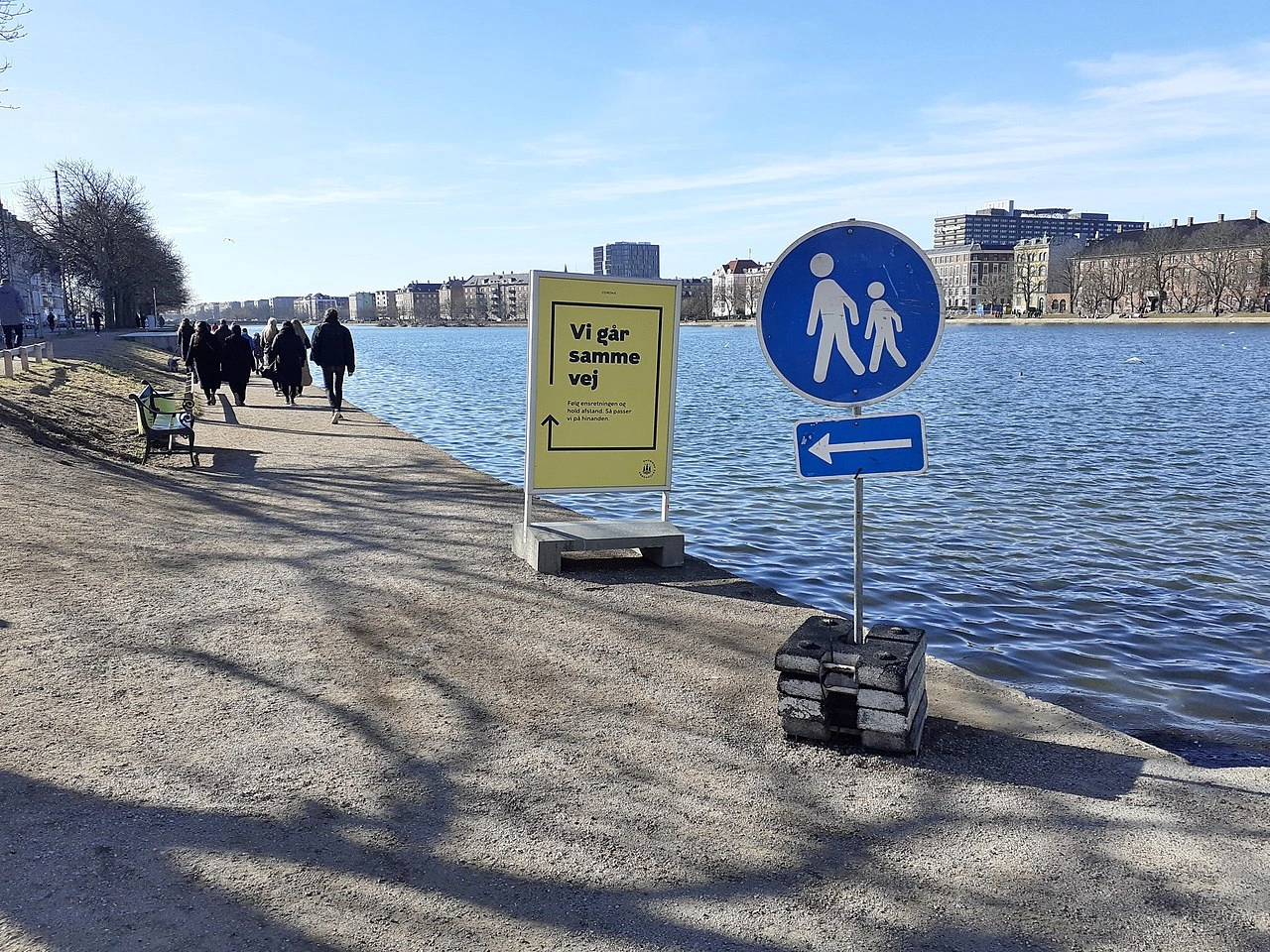
Wikimedia.org • Leif Jørgensen • CC BY-SA
What does Denmark’s blue circular pedestrian-path sign mean?
It marks a Gangsti, a path which pedestrians must use and which is reserved for them. A roadside pavement is a fortov. A sign with both pedestrian and bicycle symbols identifies a shared or divided facility instead.
🔗 retsinformation.dk • Danish signing order BEK 425/2023 — operative sign and marking descriptions
Can cyclists use an ordinary Danish pavement or pedestrian path?
Cycling on a fortov or gangsti is generally prohibited, subject to authorised exceptions under the traffic rules. Do not treat a pedestrian-only sign as a shared-path sign. Dismount where cycling is not permitted.
🔗 retsinformation.dk • Danish signing order BEK 425/2023 — operative sign and marking descriptions
Where should I walk if a Danish road has no pavement or footpath?
Use a suitable verge; if no suitable pedestrian surface is available, walking on the cycle path or carriageway may be necessary. On the carriageway, normally walk on the left facing traffic. People pushing a bicycle or moped may use the right side.
🔗 retsinformation.dk • Danish signing order BEK 425/2023 — operative sign and marking descriptions


