


Pedestrian zoneDenmark
 Traffic rules
 Denmark
7. Pedestrian zone
A pedestrian zone is an area consisting of one or more streets that are reserved primarily for pedestrians. Motor-vehicle access is normally prohibited or restricted to authorised users, particular purposes or specified times.
Pedestrians may usually use the full width of the available road space. Rules concerning cyclists, deliveries, public transport, vehicle speed, stopping and parking depend on local traffic signs and regulations.
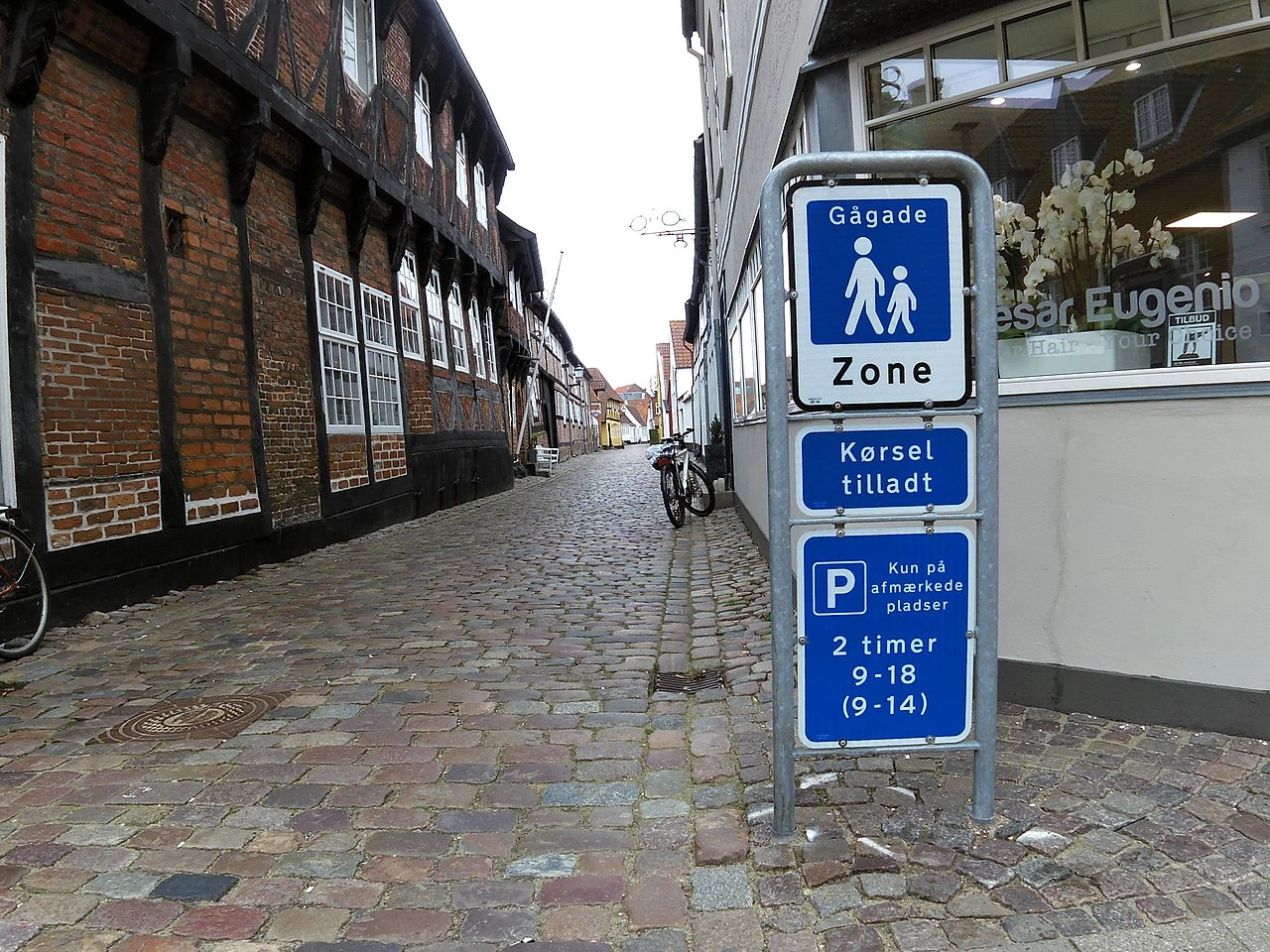
Wikimedia.org • Hjart • CC BY-SA
What is a pedestrian zone?
A pedestrian zone is an area where pedestrians are the principal road users and ordinary motor-vehicle access is prohibited or strictly restricted.
How can you recognise a pedestrian zone?
A pedestrian zone is normally identified by a special entrance sign. An end sign indicates where the pedestrian-zone rules stop applying.
Is a pedestrian zone the same as a pavement?
No. A pavement is a part of a road intended for pedestrians. A pedestrian zone may include the entire width of one or more streets, squares or other public spaces.
Is a pedestrian zone completely free of vehicles?
Not always. Emergency vehicles, maintenance vehicles, public transport, delivery vehicles, residents or other authorised traffic may be permitted under local rules.
May cyclists enter a pedestrian zone?
This depends on the traffic signs and local law. Cycling may be permitted at all times, during specified hours or not at all. Cyclists who are not permitted to ride may normally walk while pushing their bicycles.
Must cyclists give way to pedestrians?
Where cycling is permitted, cyclists must normally adapt their speed and avoid hindering or endangering pedestrians. They may be required to dismount when the zone is crowded.
May electric scooters enter a pedestrian zone?
This depends on how electric scooters are legally classified and on the signs displayed. They may be treated as pedestrians at very low speeds, as cyclists or as another vehicle category.
May pedestrians use the whole street?
Usually, yes. Pedestrians may generally use the full width of the pedestrian zone, although marked sections may be reserved for authorised vehicles, cyclists or public transport.
Do pedestrians have priority over authorised vehicles?
Authorised drivers must normally travel cautiously, leave pedestrians sufficient space and stop when necessary. The precise priority rule depends on local law.
What is the speed limit for authorised vehicles?
There is no universal numerical limit. Many countries require authorised vehicles to travel at walking pace or another very low speed.
May children play in a pedestrian zone?
Playing may be permitted because the area is primarily reserved for pedestrians, but this depends on local law. Children must still be supervised where authorised vehicles, cyclists or public transport are present.
May vehicles enter for deliveries?
Deliveries may be permitted during specified hours or under particular access conditions. Drivers must observe the information displayed at the entrance.
May taxis enter a pedestrian zone?
Taxis may be permitted to enter for passenger collection or drop-off, but access may be restricted to certain destinations, times or permit holders.
May you stop or park in a pedestrian zone?
Parking is normally prohibited or limited to specially authorised places. Brief stopping for authorised loading, unloading or passenger access may be permitted under local rules.
Does an intersection end a pedestrian zone?
Not necessarily. A pedestrian zone may include several connected streets and intersections. Its rules normally continue until the corresponding end sign is passed.
What is the difference between a pedestrian zone and a residential shared-space area?
A pedestrian zone is primarily reserved for pedestrians and usually restricts motor traffic. A residential shared-space area normally permits general local traffic but imposes very low speeds and special pedestrian and parking rules.
When do the pedestrian-zone rules end?
The special rules normally end at an end-of-pedestrian-zone sign. The ordinary rules of the surrounding road or another signed zone then apply.


