


Railway crossingIndia
 Traffic rules
 India
8. Railway crossing
A railway crossing, also called a level crossing or railroad crossing, is a place where a road or path crosses railway tracks at the same level. It may be protected by barriers, warning lights, bells, traffic signs or a combination of these measures.
Road users must approach carefully and never enter when a train is approaching, warning signals are active or the exit is blocked. They should cross promptly and must never stop, wait or become trapped on the tracks.
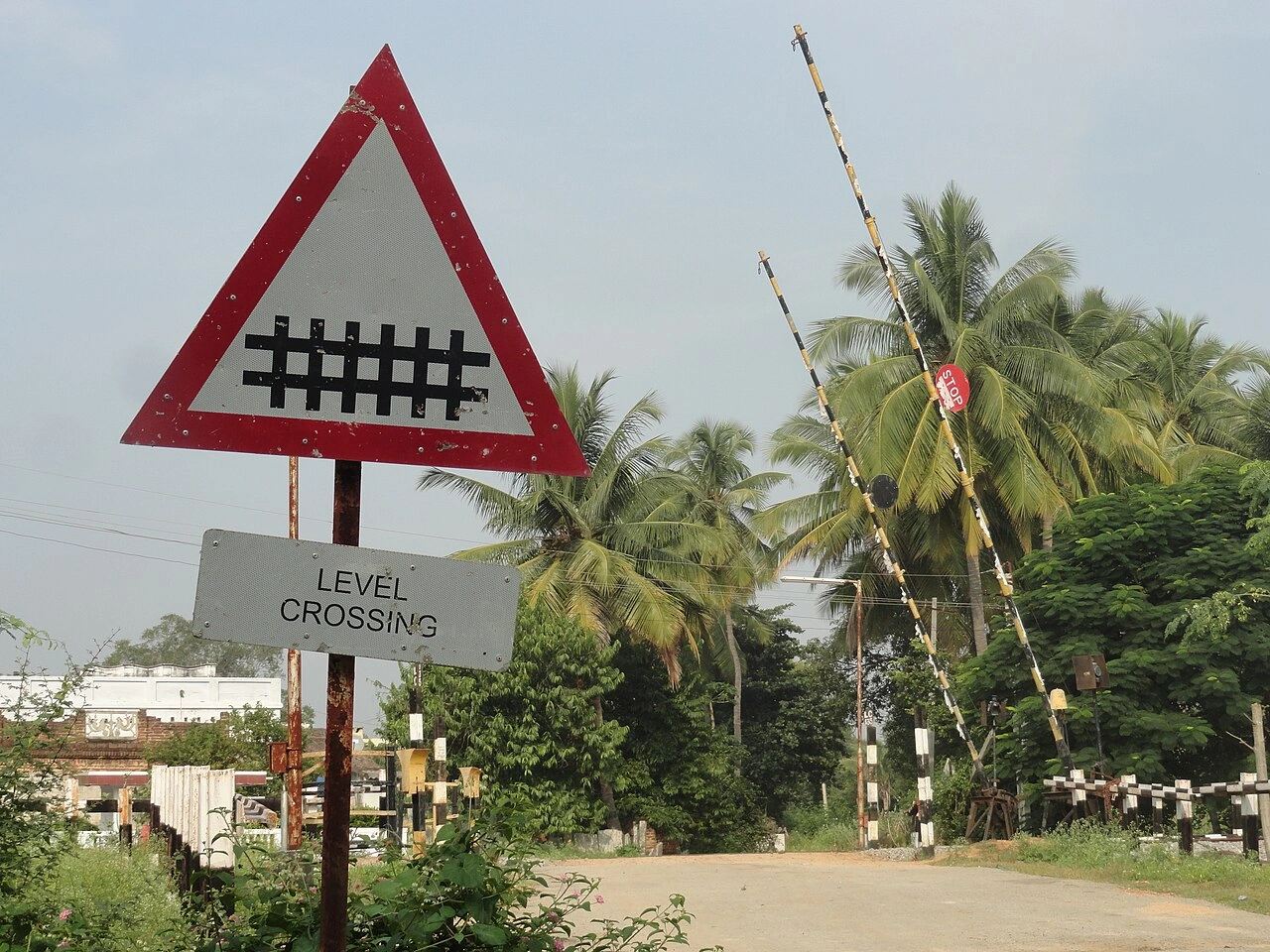
Wikimedia.org • Bhaskaranaidu • CC BY-SA
When must drivers stop at a railway level crossing in India?
At a guarded crossing, do not enter after the gates or barriers have closed or started closing, or against the red signal. At an unguarded railway level crossing, Section 131 requires a motor-vehicle driver to stop and arrange the prescribed check for an approaching train or trolley before crossing. Follow authorised railway instructions and never enter without room to clear the tracks.
🔗 morth.gov.in • India — Act Section 131; Regulation 19
🔗 morth.gov.in • MoRTH — GSR 38(E), 15 January 2024, clause 12: indirect-vision devices
🔗 pib.gov.in • PIB/MoRTH — official confirmation of the 2020 driving-regulation amendment
Must I stop at every unguarded railway crossing in India?
Yes. Section 131 requires every motor-vehicle driver approaching an unguarded railway level crossing to stop. A conductor, cleaner, attendant or another person in the vehicle must walk up, check both directions for a train or trolley and guide the vehicle across. If nobody else is available, the driver must get out and check before crossing. A missing STOP sign is not an exemption from that statutory duty.
🔗 morth.gov.in • India — Act Section 131; Regulation 19
🔗 morth.gov.in • MoRTH — GSR 38(E), 15 January 2024, clause 12: indirect-vision devices
🔗 pib.gov.in • PIB/MoRTH — official confirmation of the 2020 driving-regulation amendment
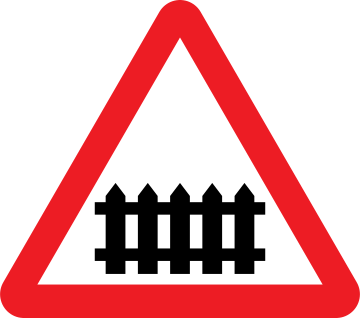 Warning for a railway crossing with barriers.
English • IRC:67-2022 • Fig. 15.71 — family • Guarded railway crossing. A railway level crossing with gates is ahead. The website drawing omits the advance-distance panel shown with the current sign. Meaning identified at sign-family or illustration level; this complete drawing is not confirmed as an exact current standard design.
Sources
🔗 Commons.wikimedia.org
🔗 My.folderit.com • IRC:67-2022 • primary-text mirror • PDF page113
SVG source: Indian Roads Congress • Public domain • Original revision 2023-07-05. Wikimedia original unmodified.
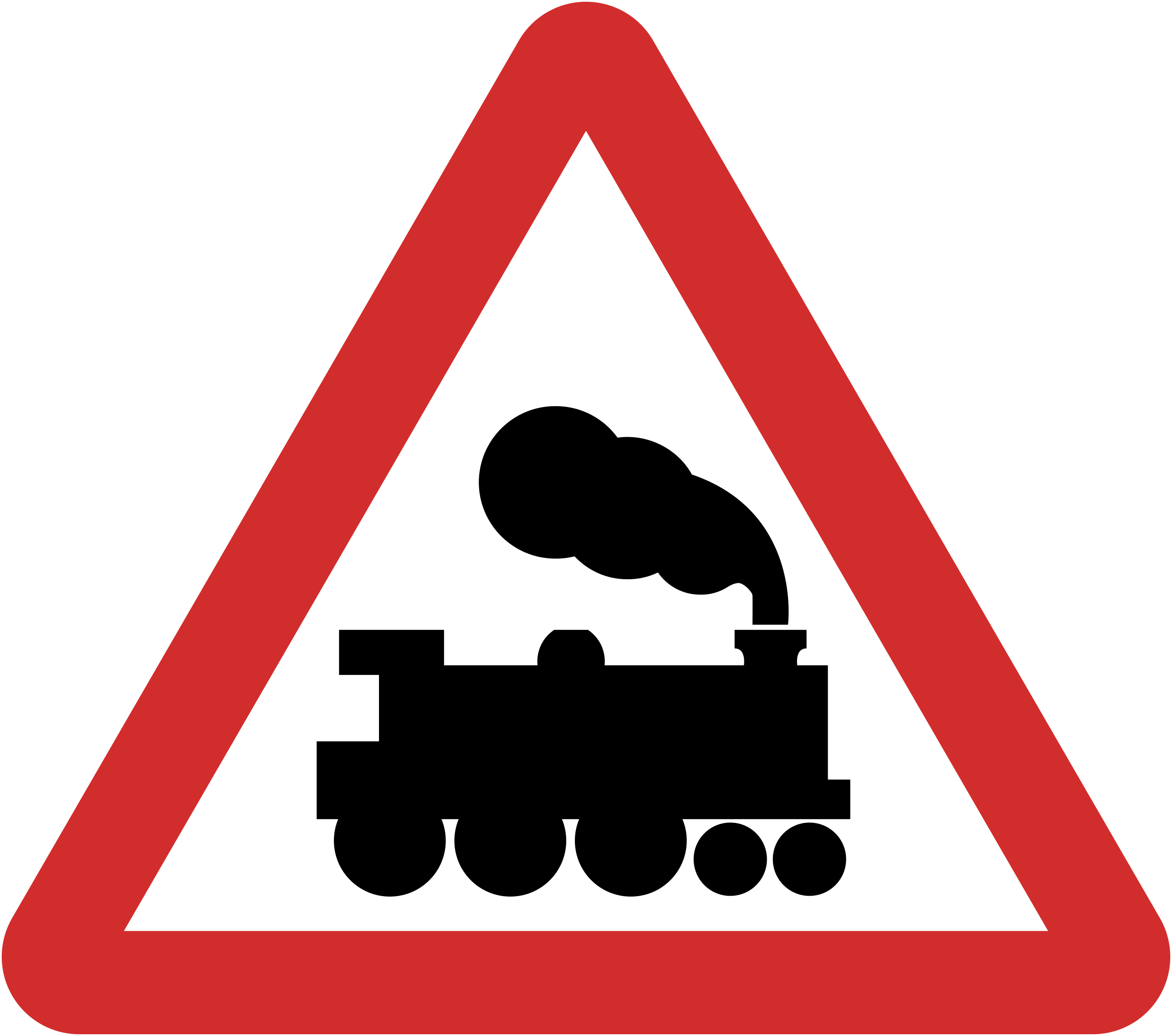 Warning for a railway crossing without barriers.
English • IRC:67-2022 • Fig. 15.70 — family • Unguarded railway crossing. A railway level crossing without gates is ahead. This older steam-engine illustration differs from the current train drawing and omits the current advance-distance panel. Meaning identified at sign-family or illustration level; this complete drawing is not confirmed as an exact current standard design.
Sources
🔗 Commons.wikimedia.org
🔗 My.folderit.com • IRC:67-2022 • primary-text mirror • PDF page113
Image via Commons.wikimedia.org
Nepali Department of Roads • Public domain • Source revision 2020-03-09. Wikimedia original unmodified.
 Warning for a railway crossing with one track.
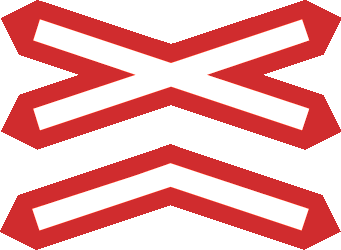 Warning for a railway crossing with two or more tracks.
What if road traffic is queued beyond a railway crossing in India?
Wait before the tracks until there is room to take your entire vehicle off the crossing. Do not follow another vehicle onto the tracks without checking the exit. Keep the tracks clear even if no train is visible.
🔗 morth.gov.in • India — Act Section 131; Regulation 19
🔗 morth.gov.in • MoRTH — GSR 38(E), 15 January 2024, clause 12: indirect-vision devices
🔗 pib.gov.in • PIB/MoRTH — official confirmation of the 2020 driving-regulation amendment


