


Traffic lightsIndia
 Traffic rules
 India
14. Traffic lights
Traffic lights use coloured lights, arrows or symbols to regulate when road users may proceed, must prepare to stop or must remain stopped. Separate signals may apply to particular directions, lanes, pedestrians, cyclists or public-transport vehicles.
A green light permits movement only when the route is clear and the movement is otherwise legal. Road users must still follow priority rules, turning restrictions, lane markings and instructions from authorised traffic controllers.
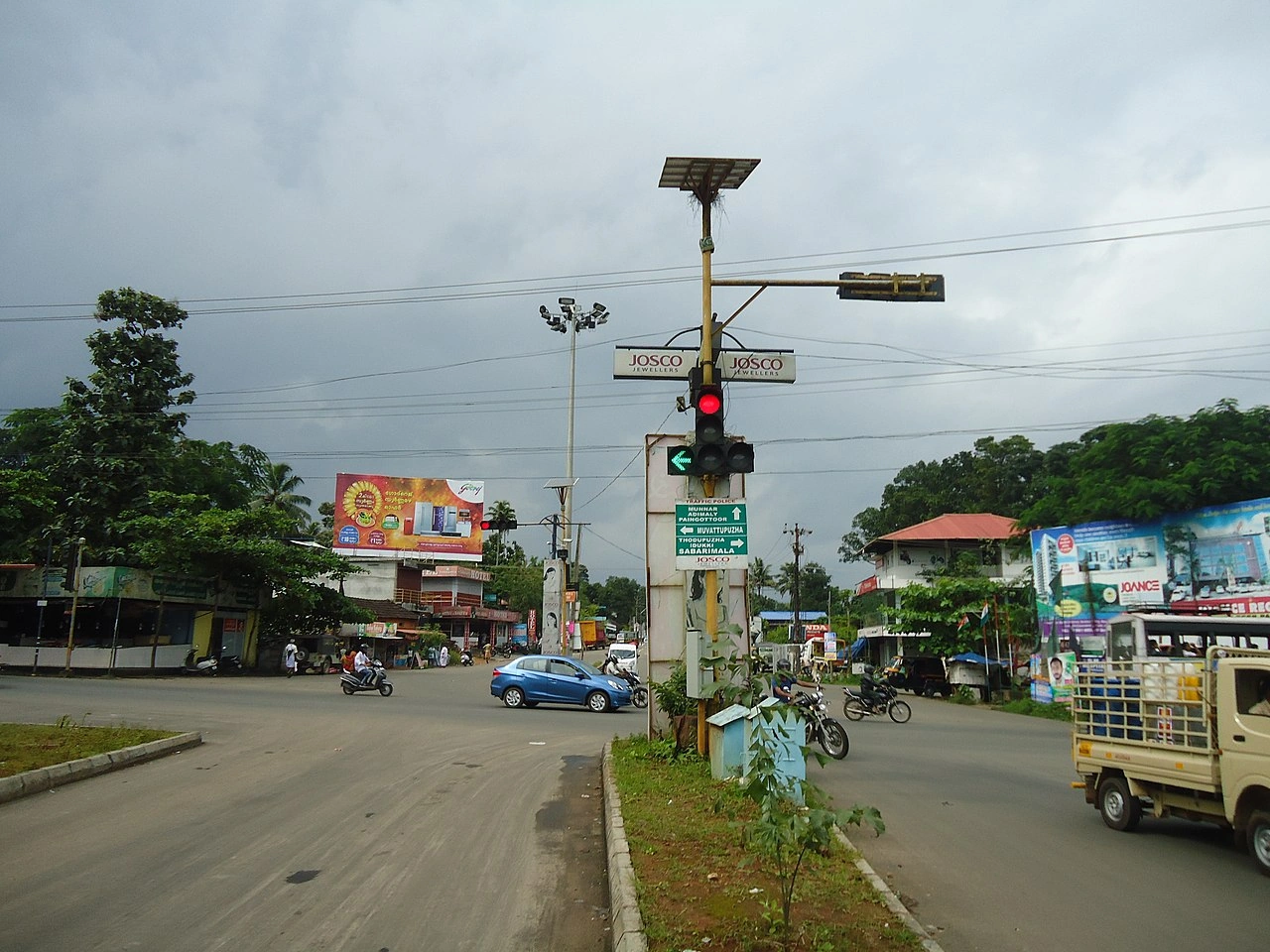
Wikimedia.org • Ranjithsiji • CC BY-SA
What must a driver do at red, amber and green signals in India?
Stop for red at the stop line before the pedestrian crossing, or at the prescribed alternative stopping place if it is absent. Green permits entry only when the way ahead is clear and you have given way to pedestrians and vehicles already within the intersection. Amber requires stopping subject to the stated close-approach exception; do not accelerate to beat it.
🔗 cdnbbsr.s3waas.gov.in • Motor Vehicles (Driving) Regulations 2017, regulations 3,8-9,12
May you turn at a red traffic light in India?
The national Driving Regulations allow a left turn on red unless a traffic control device or road sign prohibits it. Give way to traffic approaching from the right and to pedestrians and cyclists crossing on your left. This is not permission to ignore another applicable direction or restriction.
🔗 cdnbbsr.s3waas.gov.in • Motor Vehicles (Driving) Regulations 2017, regulations 3,8-9,12
Can a green light remove the need to give way to pedestrians in India?
No. When green appears, give way to pedestrians already within the intersection or at an adjacent pedestrian crossing, and to vehicles already in the intersection. Enter only if the way ahead is clear.
🔗 cdnbbsr.s3waas.gov.in • Motor Vehicles (Driving) Regulations 2017, regulations 3,8-9,12


