


Speed limitPeru
 Traffic rules
 Peru
1. Speed limit
A speed limit is the maximum legal speed permitted on a road, lane or within a designated area. It may be established by general traffic law or indicated by fixed, variable or temporary traffic signs.
A speed limit is a maximum, not a target speed. Drivers must travel more slowly whenever traffic, visibility, weather, road conditions, vulnerable road users or the condition of the vehicle make the maximum permitted speed unsafe.
Which general speed limits should car drivers know in Peru?
For ordinary cars, general maxima include 30 km/h on urban streets and jirones, 50 km/h on avenues, 80 km/h on urban vías expresas and 100 km/h on highways. The 60 km/h category is caminos rurales, rather than every road outside a town. Separate populated-area limits and special precautionary maxima apply, including 20 km/h near educational and other specified busy premises during entry, operation and departure. Follow applicable lower restrictions; poor visibility and adverse weather halve the relevant statutory maxima.
How do poor visibility and adverse weather affect Peru’s statutory maxima?
On affected sections, poor visibility and adverse weather such as fog, heavy rain, snow, smoke or dust reduces the maxima established by the relevant traffic-regulation articles to half the normal maximum. Lower applicable restrictions and the duty to drive safely still govern.
Does a Peruvian highway retain its normal 100 km/h car limit through a populated area?
No. Where the populated-area rules apply, the maxima are 30 km/h in commercial areas and 50 km/h in residential areas, with 30 km/h in school and hospital areas covered by the rule. The responsible authority must sign the crossing. Observe lower applicable restrictions.
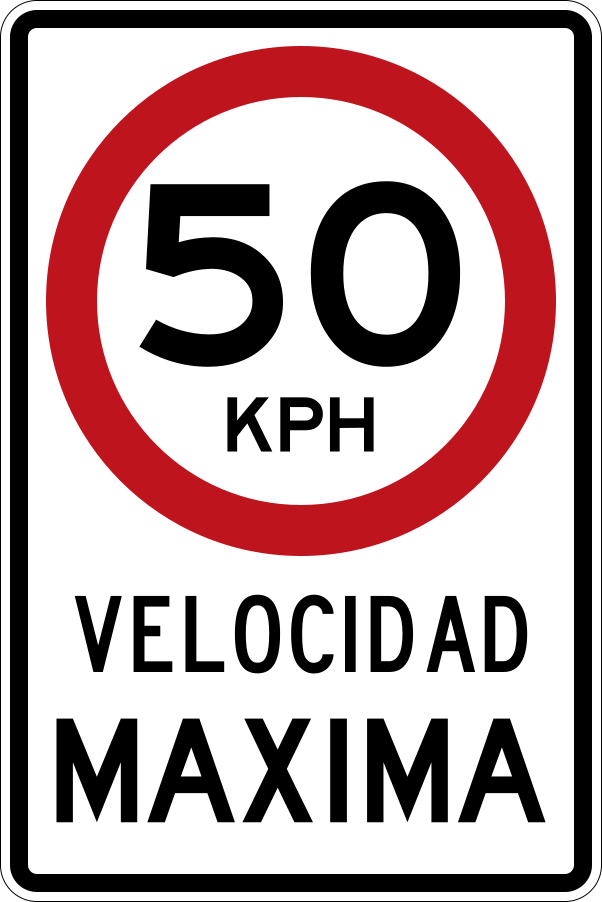 Start of a speed limit.
English • Traffic sign R-30 · historical • Maximum speed: 50 km/h. Sets a 50 km/h maximum. Reduce speed when conditions require. Historical design identified in the manual approved by R.M. No. 210-2000-MTC/15.02. This drawing is explained without presenting it as the current 2024 design.
Español • R-30 · histórico • Velocidad máxima: 50 km/h. Establece una velocidad máxima de 50 kilómetros por hora. Reduce la velocidad cuando las condiciones lo exijan. Diseño histórico identificado en el manual aprobado por R.M. N.º 210-2000-MTC/15.02. Se explica este dibujo, sin presentarlo como el diseño vigente de 2024.
Sources
🔗 Commons.wikimedia.org
🔗 Sutran.gob.pe • MTC: manual histórico, página PDF 19
🔗 Sutran.gob.pe • Manual histórico: dibujo de referencia, página PDF 26
Image via Commons.wikimedia.org
Government of the Republic of Peru – Ministry of Transport and Communications • Public domain • Source revision 2026-04-20. Wikimedia original unmodified.

