


Traffic rulesPeru
 Traffic rules
 Argentina
 Australia
 Austria
 Bangladesh
 Belgium
 Bosnia and Herzegovina
 Brazil
 Canada
 Chile
Chile
 China
China
 Colombia
 Czechia
 Denmark
 Finland
 France
 Germany
 Greece
 Hungary
 Iceland
 India
India
 Indonesia
 Ireland
 Italy
Italy
 Japan
Japan
 Malaysia
 Mexico
 Nepal
Nepal
 Netherlands
 New Zealand
 Norway
 Panama
 Peru
Peru
 Philippines
 Poland
 Portugal
 Romania
 Russia
 Serbia
 Slovakia
 Slovenia
 South Africa
 Spain
Spain
 Sweden
 Switzerland
 Thailand
 Turkey
 Ukraine
 United Kingdom
 United States
 Uruguay
 Worldwide
1. Peru
Peru’s roads connect the Pacific coast with the high Andes and the Amazonian east, so driving conditions can vary considerably across the country. Traffic keeps to the right. Long climbs, tight mountain bends, steep gradients and sections affected by fog, heavy rain or rockfall make careful route planning especially important. On a steep section that is wide enough for only one vehicle, the ascending vehicle has priority over one travelling downhill.
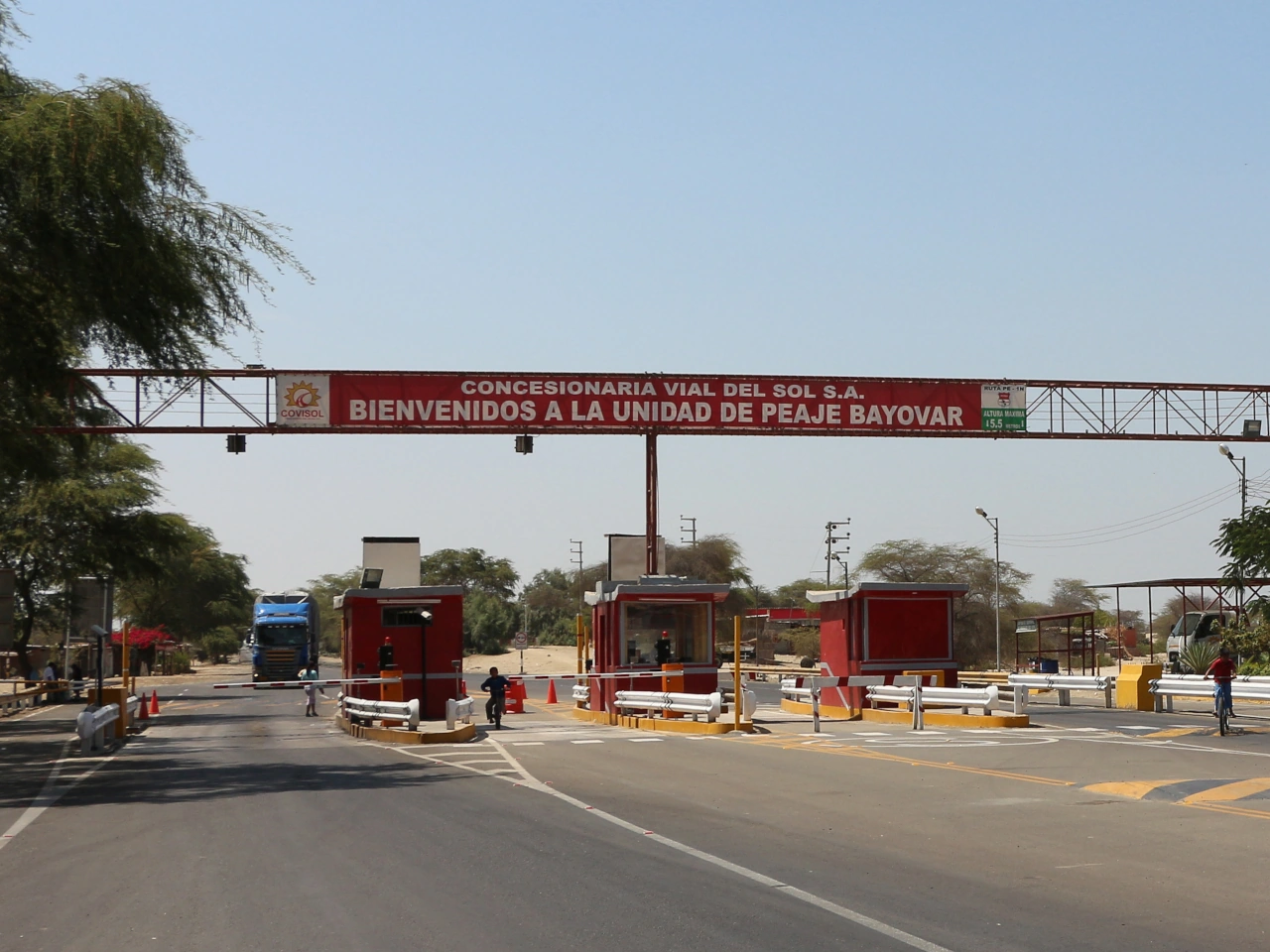
Peru uses route-specific tolls rather than a national vignette, with toll stations on a number of concession roads and electronic telepeaje available on some routes. Low-beam headlights must be used 24 hours a day on the national and departmental/regional road networks. Road signs follow national MTC standards and are principally in Spanish. Before a long journey, particularly through mountainous areas, drivers should check current road conditions because maintenance, severe weather and natural events can cause temporary restrictions or closures.
AI-generated by Rijbewijs-online.be • WCIT • CC BY-SA
Which side of the road do you drive on in Peru?
Drive on the right. On a normal two-way road, overtaking is carried out on the left when it can be done safely and legally.
What are the main emergency numbers in Peru?
Call 105 for the police, 116 for the fire service and 106 for SAMU emergency medical assistance where that service is available. Peru is developing a unified 911 emergency system, but the new central system is still under construction, integration and testing and should not yet be treated as a nationwide replacement for the existing numbers.
What is the alcohol limit for driving in Peru?
Under Peru’s criminal-law thresholds, an ordinary driver can commit the offence of drink-driving when the blood-alcohol concentration is over 0.5 g/L. For drivers providing public passenger, goods or cargo transport, the lower threshold is over 0.25 g/L. The traffic regulations also prohibit driving when alcohol, drugs or other substances reduce the ability to drive safely.
What are the general urban speed limits in Peru?
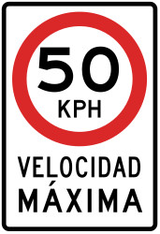
Where no lower limit is posted, the general maximum is 30 km/h on streets and jirones and 50 km/h on avenues. The competent road authority can impose lower signed limits where conditions require them.
What are the general speed limits on Peruvian highways?
On carreteras, the general maximum is 100 km/h for cars, pickup-type vehicles and motorcycles; 90 km/h for public passenger vehicles and motorhomes; 80 km/h for freight vehicles and vehicles towing a motorhome; and 70 km/h for dangerous-goods and school-transport vehicles. A lower posted limit must be obeyed.
What is the speed limit on rural roads in Peru?
The general maximum on caminos rurales is 60 km/h, unless another limit is established and signed by the competent authority.
What speed limits apply where a highway crosses a populated area in Peru?
For highways crossing populated areas or sections with continuous or partly dispersed housing, the general maxima are 30 km/h in commercial areas and 50 km/h in residential areas. The maximum in school and hospital areas covered by this rule is 30 km/h, and the crossing must be signed by the competent authority.
Are Peru's speed limits reduced in fog or severe weather?
Yes. On sections with poor visibility or adverse weather such as fog, heavy rain, snow, smoke or dust clouds, the maximum limits established by Articles 162, 163 and 164 of the Traffic Regulation are reduced to half of the normal maximum.
Is there a tolerance when speed is measured in Peru?
Yes. The general speed-enforcement rule uses a 5 km/h tolerance margin, so an excess is sanctionable when the measured speed exceeds the applicable maximum plus that margin. This is an enforcement margin, not an additional speed limit to aim for.
Do you need a vignette to use roads in Peru?
No. Peru does not use a nationwide road vignette. Tolls are charged on particular roads and concessions through toll stations, and some concessions offer telepeaje electronic payment. Toll arrangements therefore depend on the route.
Do headlights have to be used during the day in Peru?
Yes on major interurban networks. Vehicles on the national and departmental/regional road networks must use low-beam headlights 24 hours a day. In urban areas, lights are required when natural light, visibility or traffic conditions make them necessary.
Are seat belts compulsory in Peru?
Yes. Seat belts are compulsory for occupants of the front seats, subject to the vehicle-category rules. In rear seats, their use is compulsory when the vehicle was equipped with them at the factory and in other cases where the regulations require them.
What are the child-restraint rules in Peru?
For private category M1 vehicles, children up to 12 years old must travel secured in the rear seat. Under Ley 30297, children up to one year use a rear-facing child restraint; children from one to three years use an appropriate child-restraint system; and children from three to twelve years are secured with the universal seat belt. Child restraints must also be appropriate to the child’s size and weight and properly installed.
Are motorcycle helmets compulsory in Peru?
Yes. The driver and passenger of a non-cabined motorised minor vehicle must wear a compliant safety helmet. If the helmet has no visor, protective glasses are also required. Motorcycle helmets must meet the technical specifications established by the MTC.
Do motorcyclists in Peru have to wear a vest showing the motorcycle's plate number?
Peru’s Traffic Regulation contains a requirement for the motorcycle rider and passenger to use a vest showing the motorcycle’s registration number, subject to technical specifications and certain exemptions, including qualifying motorcycles over 500 cc. Since the November 2025 changes, sanctions for breaching the vest rule apply only in places declared under an internal-order state of emergency when the declaration expressly provides for that enforcement.
Can you use a mobile phone while driving in Peru?
Do not use a handheld mobile device while driving when doing so means taking your hands away from control of the vehicle. The regulations allow a mobile or portable device to be used with the hands only when the vehicle is parked and the engine is switched off.
Who has priority at an uncontrolled intersection in Peru?
A driver arriving at an uncontrolled intersection must first yield to vehicles already crossing it. If two vehicles arrive simultaneously from different roads, the vehicle approaching from the right has priority. A vehicle that has already entered the intersection first also has priority.
Who has priority at a roundabout in Peru?
The vehicle already circulating on the roundabout has priority over a vehicle attempting to enter it, unless traffic control directs otherwise.
Do drivers have to give way to pedestrians in Peru?
Drivers must give priority to pedestrians who have already begun crossing at an uncontrolled intersection and to pedestrians completing their crossing at a controlled intersection, provided they are using the designated pedestrian crossing.
What should you do when an emergency vehicle approaches in Peru?
Give way when an emergency, official, military or police vehicle announces its presence with audible and visible signals. Where possible and safe, move to the right and stop or slow down; at an intersection, drivers must stop to allow it to pass.
Who has priority on a steep narrow road in Peru?
On a steep section that permits only one vehicle to pass, the vehicle travelling uphill has priority over the vehicle travelling downhill.
What must you do when a school-transport vehicle stops to pick up or drop off children in Peru?
A driver approaching a stopped school-transport vehicle that is picking up or dropping off pupils must stop behind it and must not attempt to overtake until the children have finished boarding or leaving the vehicle.
What rules apply at an uncontrolled railway crossing in Peru?
At a level crossing without barriers or traffic signals, the precautionary speed must not exceed 20 km/h, and the driver must make sure that no train is approaching before proceeding. Rail vehicles have priority at level crossings.
Can tourists drive in Peru with a foreign driving licence?
Yes. The MTC states that a tourist may drive for the first six months after entering Peru using the original, valid driving licence issued by their home country. A longer stay can require obtaining or exchanging for a Peruvian licence as applicable. The MTC’s tourist rule does not make an International Driving Permit a universal requirement for this six-month recognition.
Is vehicle insurance compulsory in Peru?
Yes. Motor vehicles must have valid compulsory accident coverage, normally the SOAT. A CAT may apply instead in the situations covered by Peru’s AFOCAT system. Electronic SOAT validity can be checked by the authorities through the MTC system.
What safety equipment should a car carry in Peru?
The MTC identifies mandatory road-safety equipment including a spare tyre, jack, wheel wrench, warning triangle and fire extinguisher. Equipment should be suitable for the vehicle and kept in usable condition.
Do private cars need a technical inspection in Peru?
Yes. Private vehicles generally begin compulsory technical inspections from the fourth year, using the manufacturing date as the reference. After the first inspection, private vehicles are generally inspected annually. Service vehicles such as taxis, public transport and freight vehicles follow different, more frequent schedules.
What language is used on road signs in Peru?
Standard traffic signs follow the national MTC traffic-control manual and textual traffic instructions are principally in Spanish, alongside internationally recognisable symbols. Common regulatory wording includes PARE and CEDA EL PASO.
Should drivers check road conditions before travelling through Peru?
Yes, especially for long-distance and mountain journeys. Heavy rain, fog, rockfall, natural events, maintenance and other incidents can result in temporary restrictions or road closures. The MTC and SUTRAN provide official road-condition information for travellers.

2. Bike path
A bike path is a part of a road or a separate route intended primarily or exclusively for people riding bicycles. It may be physically separated from motor traffic, marked on the road surface or identified by traffic signs.
Bike paths may be one-way, two-way or shared with other road users. The permitted users, direction of travel, priority rules and obligation to use the path depend on local traffic signs and regulations.
Wikimedia.org • Ianyou78 • CC BY-SA
How can you recognise a bike path?
A bike path may be identified by a bicycle traffic sign, bicycle symbols, coloured surfacing or road markings. It may run beside the carriageway or follow a completely separate route.
Is a bike path the same as a bike lane?
Not always. A bike lane is normally marked directly on or beside the carriageway, while a bike path may be physically separated from motor traffic. The terminology and legal distinction vary between countries.
Must cyclists use a bike path?
This depends on local law and the signs displayed. Some bike paths are mandatory, while others are optional. Cyclists may also be permitted to leave a path to turn, overtake or avoid an obstruction.
Can a bike path carry traffic in both directions?
Yes. Some bike paths are two-way, but others may be used only in the direction indicated by signs, markings or their position beside the road. Cyclists should not assume that every path permits travel in both directions.
May pedestrians use a bike path?
Pedestrians may use a bike path where it is designated as a shared-use path or where local law permits it. On a cycle-only path, pedestrians may be prohibited or permitted only when no suitable pedestrian facility is available.
May mopeds or speed pedelecs use a bike path?
This depends on the country, vehicle category, road speed and traffic signs. Some bike paths permit or require certain mopeds or speed pedelecs, while others are reserved exclusively for ordinary bicycles.
May motor vehicles use a bike path?
Normally not. Motor vehicles may cross a bike path to enter another road or property where this is permitted, but they must follow the applicable priority rules and must not endanger path users.
Who has priority where a vehicle crosses a bike path?
Priority depends on the road layout, signs, signals and local law. Drivers crossing a continuous bike path commonly have to give way to its users, but cyclists approaching a separate cycle crossing may not automatically have priority before entering it.
Does a cyclist always have priority at a cycle crossing?
No. A marked cycle crossing does not universally give an approaching cyclist priority. Cyclists should enter cautiously and observe approaching traffic unless signs, signals or local rules clearly give them priority.
Is there a speed limit on a bike path?
Some countries or local authorities impose specific limits, particularly on shared paths. Even without a posted limit, cyclists must travel at a safe and considerate speed for the width, visibility and number of other users.
May you stop or park on a bike path?
Normally not. Stopping or parking on a bike path can force cyclists into motor traffic and may be expressly prohibited by law.
What should cyclists do when passing pedestrians?
Reduce speed, give a clear warning where appropriate and leave sufficient space. Pedestrians may change direction unexpectedly, especially on a shared path.
What should cyclists do when a bike path is blocked?
Slow down and check surrounding traffic before leaving the path. Avoid the obstruction safely and return to the bike path when permitted and practical.
Can cyclists ride side by side on a bike path?
This depends on local law and the available width. Even where riding side by side is permitted, cyclists must not block, endanger or unnecessarily hinder other path users.
What is the difference between a bike path and a shared-use path?
A bike path is intended primarily or exclusively for cycling. A shared-use path is legally intended for cyclists together with pedestrians or other indicated road users, who must use the space considerately.
3. Toll road
A toll road is a road, motorway, bridge, tunnel or other route for which users must pay a charge. The toll may apply to all vehicles or only to particular vehicle categories, and the amount can depend on factors such as distance travelled, vehicle type, weight or emissions.
Tolls may be collected at toll booths, electronically or through a vignette or distance-based charging system. Drivers should check the applicable payment rules before using a toll road, especially when travelling in another country.
Wikimedia.org • Bernard Gagnon • CC BY-SA
What is a toll road?
A toll road is a road or section of road for which a charge must be paid to use it. Tolls may also apply to particular bridges, tunnels or other road infrastructure.
How are road tolls paid?
Depending on the country, tolls may be paid at a toll booth, through an electronic toll system, vignette or distance-based charging system.
Do all vehicles pay the same toll?
Not necessarily. Toll rates can vary according to vehicle type, size, weight, emissions, distance travelled or the particular road being used.
4. Driving licence
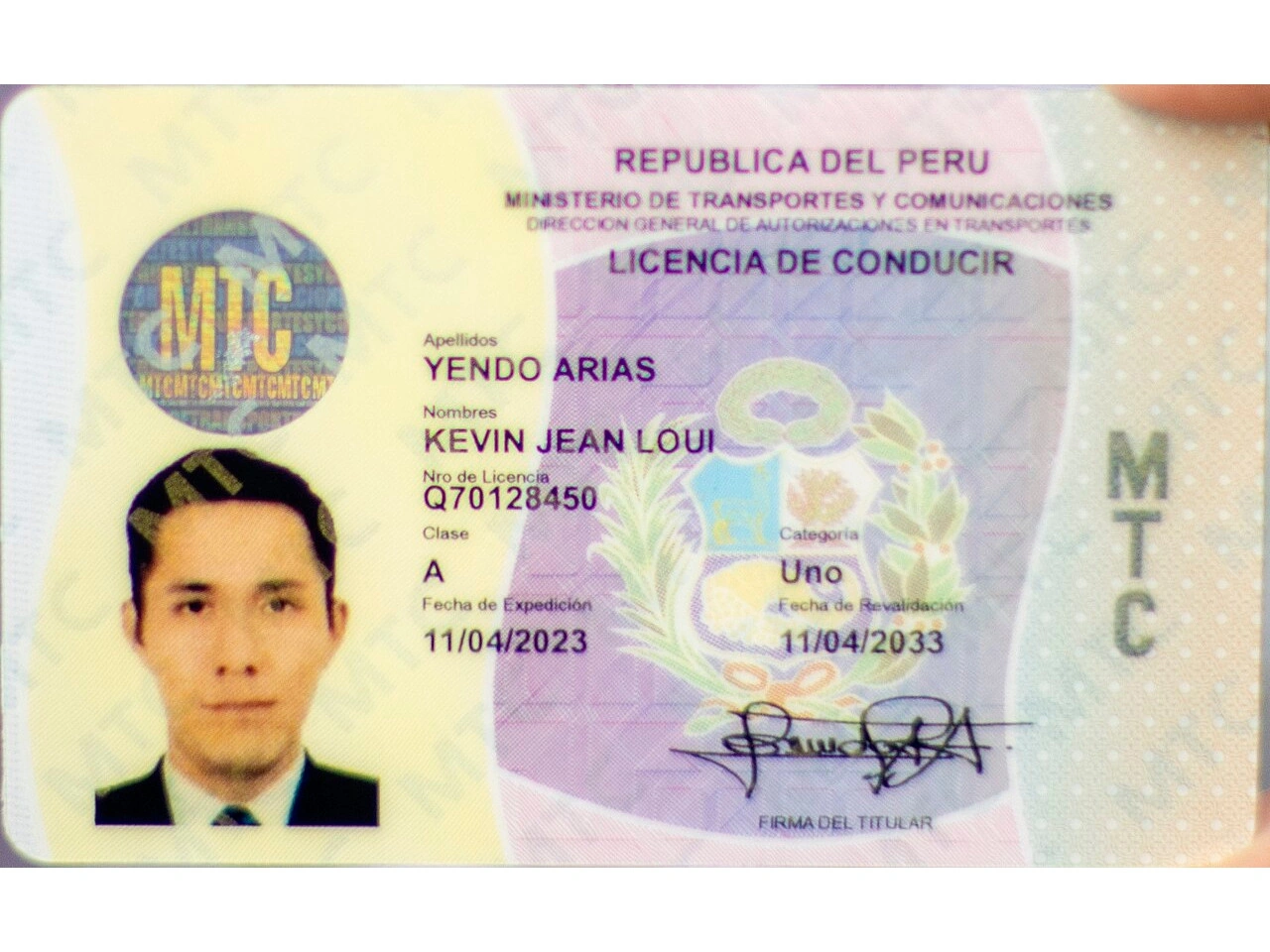
A driving licence is an official document authorising a person to drive one or more specified categories of motor vehicle. It may contain conditions, restrictions, category codes and expiry dates that determine which vehicles the holder may drive.
Drivers must hold a licence that is valid for the vehicle category and jurisdiction concerned. A licence may be provisional, full, restricted, suspended or withdrawn, and additional qualifications may be required for professional driving.
Wikimedia.org • GORE Callao • CC0
What is a driving licence?
A driving licence is an official authorisation to drive specified categories of motor vehicle.
Is a driving licence the same as a driving permit?
The terms may refer to the same document, depending on the country. Some countries use permit specifically for learners or temporary authorisations.
What is a provisional driving licence?
A provisional or learner licence allows a person to practise driving under specified restrictions before obtaining a full licence.
What is a full driving licence?
A full licence is issued after the holder has completed the required tests or training. Restrictions may still apply because of age, vehicle type, medical fitness or licence codes.
Does one licence allow you to drive every vehicle?
No. Driving licences are divided into categories for motorcycles, cars, buses, trucks, trailers and other vehicles.
What is a licence category?
A licence category identifies the type and size of vehicle the holder is authorised to drive.
Must the licence be valid for the vehicle being driven?
Yes. Holding a licence for one category does not normally authorise driving a vehicle belonging to another category.
Can a licence contain restrictions?
Yes. Codes may restrict the holder to an automatic transmission, corrective lenses, an adapted vehicle or another specified condition.
What is the difference between an automatic and manual licence?
In some countries, passing the test in an automatic vehicle restricts the holder to automatic vehicles until an additional test or procedure is completed.
Does a driving licence expire?
Usually, yes. The document, individual categories or medical authorisation may have expiry dates and require renewal.
May you drive with an expired licence?
No. The licence and the category required for the vehicle must remain valid.
Must you carry your driving licence?
This depends on local law. Many countries require drivers to carry the original licence and present it to an authorised officer when requested.
Is a photograph or copy of the licence sufficient?
Not normally. A photograph, scan or photocopy is not generally a substitute for the original document unless an official digital-licence system is legally recognised.
Does a driving licence prove that you own the vehicle?
No. It proves driving authorisation, not ownership, registration or insurance.
What tests are required to obtain a licence?
Requirements may include a theory test, eyesight test, practical driving test, medical examination or compulsory training.
Is there a universal minimum driving age?
No. Minimum ages differ between countries and vehicle categories.
Can a learner drive without supervision?
Only where the provisional-licence system permits independent driving. Other learners must be accompanied by an approved supervisor or instructor.
Can a learner drive in another country?
Often not. Provisional and learner licences are frequently valid only in the country or region that issued them.
What is an international driving permit?
An international driving permit is a standardised translation of a valid national licence intended to help authorities interpret it abroad.
Does an international driving permit replace a national licence?
No. It normally has legal value only when presented together with the valid national driving licence on which it is based.
Is a national licence valid abroad?
This depends on the destination, length of stay, residence status and agreements between the countries concerned. An exchange or international permit may be required.
Can a foreign licence be exchanged?
Some countries exchange recognised foreign licences without new tests, while others require theory, practical or medical examinations.
Can medical fitness affect a licence?
Yes. A medical condition may require an assessment, shorter validity period, adapted vehicle or licence restriction.
Must changes in medical fitness be reported?
This depends on local law. Drivers remain responsible for ensuring that they are physically and mentally fit to drive safely.
Do professional drivers need additional qualifications?
Often, yes. Drivers of trucks, buses, taxis or vehicles used commercially may require professional competence, medical examinations or periodic training.
What happens when a licence is suspended?
The holder may not drive during the suspension period, even if the physical document remains in their possession.
What is disqualification from driving?
Disqualification is a legal prohibition on driving, usually imposed by a court or competent authority for a specified period or until conditions are fulfilled.
What should you do if the licence is lost or stolen?
Report it where required and apply for a replacement through the competent licensing authority. Do not continue driving when local law requires the original document to be carried.
What should you do if the licence is damaged?
Request a replacement when the document is unreadable, damaged or no longer allows the holder to be identified reliably.
Does changing address require a new licence?
This depends on the country and whether the address appears on the licence. Drivers must follow the local notification and replacement procedure.
5. Reversing
Reversing means driving a vehicle backwards. It is commonly used when parking, leaving a confined space or repositioning a vehicle where forward movement is not practical.
Before reversing, the driver should check mirrors and blind spots, look carefully around the vehicle and make sure the area behind is clear. Reversing should be performed slowly and only for as long as necessary because visibility behind the vehicle is often limited.

Wikimedia.org • Kārlis Dambrāns • CC BY
What should you check before reversing?
Check behind and around the vehicle for pedestrians, cyclists, other vehicles and obstacles. Use mirrors and cameras where available, but also look directly because monitoring systems can have blind spots.
Who has priority when a vehicle is reversing?
In many countries, reversing is treated as a manoeuvre and the reversing driver must give way to other road users. The exact legal requirements depend on national traffic rules.
Should you reverse for a long distance?
No. Reversing should normally be limited to the distance necessary to complete the manoeuvre safely. Driving forward generally provides better visibility and vehicle control.
6. Licence plate
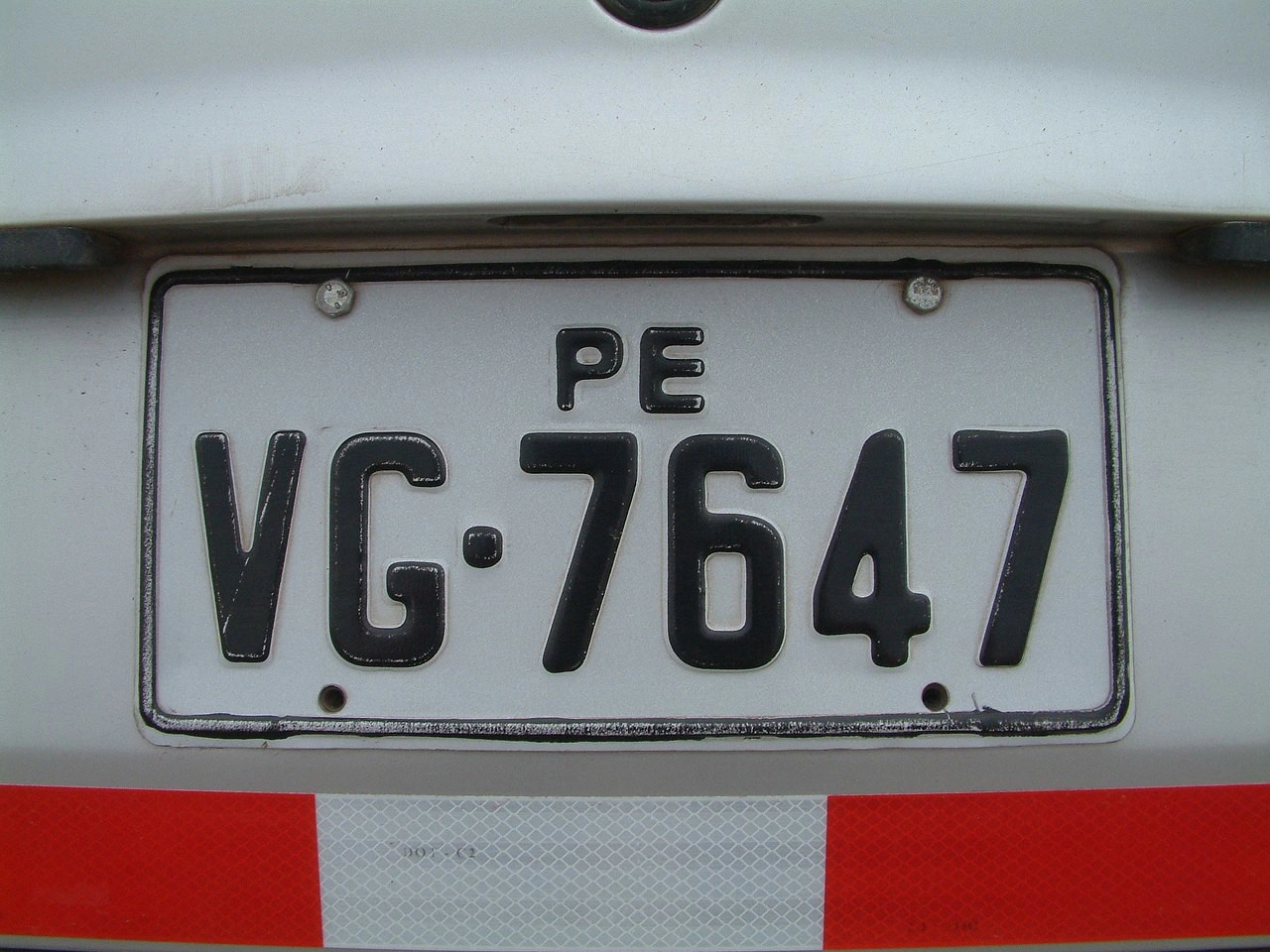
A licence plate, also called a registration plate or number plate, is a plate displaying a unique registration identifier assigned to a vehicle by the competent registration authority. It allows the vehicle to be identified for purposes such as registration, traffic enforcement, taxation, insurance and parking control.
The appearance, format, placement and number of plates required vary between countries and vehicle categories. Drivers must ensure that required licence plates are correctly fitted, clearly visible and legible and must follow the local rules when a plate is lost, stolen, damaged or replaced.
Wikimedia.org • 19petra • CC BY-SA
What is a licence plate?
A licence plate is a plate displaying the registration identifier assigned to a vehicle. It allows authorities and other authorised systems to identify the vehicle's registration.
Is a licence plate the same as a registration plate?
Yes. Licence plate, registration plate and number plate are different terms commonly used for the plate displaying a vehicle's official registration number.
Does every vehicle need a licence plate?
Most motor vehicles used on public roads must display one or more registration plates, but requirements differ for motorcycles, trailers, agricultural vehicles and other special vehicle categories.
Do vehicles need both front and rear licence plates?
This depends on the country and vehicle type. Cars commonly require front and rear plates, while motorcycles and certain other vehicles may require only a rear plate.
Must a licence plate remain visible?
Yes. A required registration plate must normally remain clearly visible and readable. It should not be hidden by luggage, dirt, accessories or other objects.
Can you modify a licence plate?
Generally no. Changing the characters, colours, dimensions or appearance of an official plate may make it invalid or illegal. Plates and authorised reproductions must comply with local specifications.
What should you do if a licence plate is lost or stolen?
Follow the local reporting and replacement procedure. Many countries require the loss or theft to be reported to the police or vehicle-registration authority before a replacement plate can be issued.
Can you drive with a damaged licence plate?
A plate must remain legible and compliant with local requirements. If damage prevents it from being read or makes it invalid, it should be replaced according to the local registration procedure.
Can a licence plate be personalised?
Some countries allow motorists to request a personalised registration combination. The available characters, formats and prohibited combinations are determined by the registration authority.
Does a licence plate stay with the vehicle when it is sold?
This varies between countries. In some systems the plate remains with the vehicle, while in others it remains associated with the registered holder and may be retained or returned when the vehicle is sold.
7. Bus
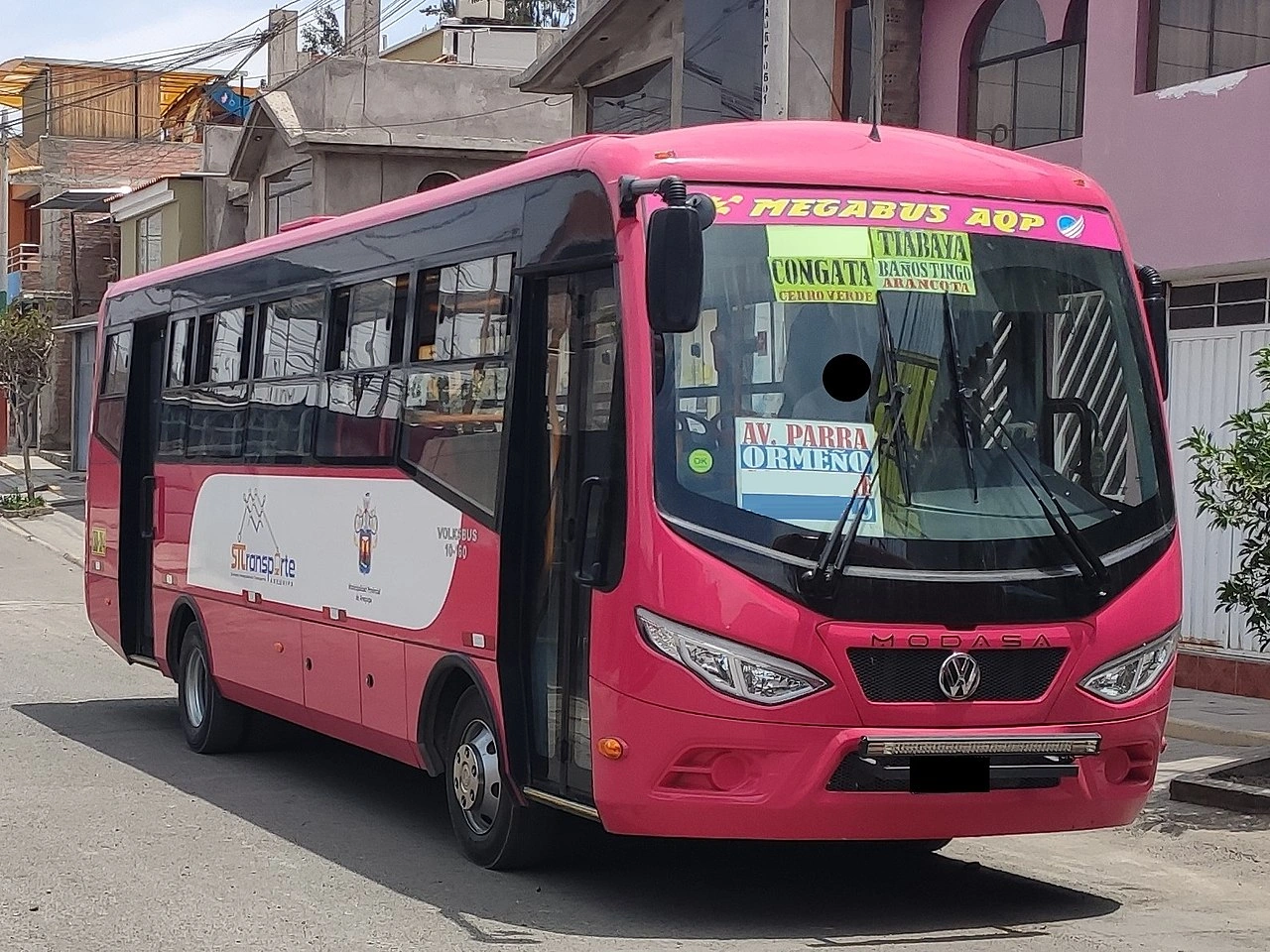
A bus is a motor vehicle designed to transport multiple passengers, usually along roads as part of public transport, school transport, private transport or another passenger service. Buses generally have more passenger capacity than cars and may be designed to carry seated passengers, standing passengers or both.
Special rules may apply to buses concerning the driving licence, passenger capacity, speed limits, seat belts, bus lanes, stops and passenger boarding. The legal classification of buses and coaches and the rules applying to them vary between countries, so drivers and passengers must follow the local traffic regulations.
Wikimedia.org • Leonar25 • CC BY-SA
What is a bus?
A bus is a motor vehicle designed to transport a relatively large number of passengers. It may be used for public transport, school transport, private services or other passenger transport.
What is the difference between a bus and a coach?
A bus is commonly designed for frequent passenger boarding and may allow standing passengers, while a coach is generally designed for longer journeys with passengers seated. Exact legal definitions vary between countries.
Do you need a special driving licence to drive a bus?
Yes. Driving a vehicle designed to carry more than a specified number of passengers normally requires a dedicated bus or passenger-vehicle driving licence.
Can passengers stand on a bus?
Only when the vehicle is designed and approved to carry standing passengers. Coaches and other vehicles designed exclusively for seated passengers must not be used beyond their approved passenger configuration.
Must bus passengers wear seat belts?
Where seat belts are provided and local law requires their use, passengers must wear them correctly. Urban buses designed for standing passengers may have seating positions or operating conditions that differ from coaches.
Can buses use bus lanes?
Yes, where permitted. Bus lanes are commonly reserved for public transport buses, although local signs may also allow taxis, bicycles or other specified vehicles to use them.
Do buses always have priority when leaving a bus stop?
No. Some countries require other drivers to give way to buses leaving designated stops, particularly in urban areas, while others apply the normal merging rules.
Should you take extra care near a stopped bus?
Yes. Passengers may be boarding, leaving or crossing the road near the bus. Reduce speed where necessary and watch carefully for pedestrians emerging from behind or in front of the vehicle.
Do buses have special speed limits?
They can. Some countries impose lower maximum speeds on buses than on passenger cars, particularly on high-speed roads. Different limits may apply to buses and coaches.
Can a bus use a motorway?
Yes, normally. Buses that satisfy the applicable construction and access requirements may use motorways, but they must obey any vehicle-specific speed limits, lane restrictions and other local rules.
8. Police
Police are public authorities responsible for enforcing laws, maintaining public safety and managing situations that may affect road traffic. In traffic, police officers may control vehicles, enforce traffic rules, investigate collisions, direct traffic and respond to emergencies.
Road users must follow lawful instructions given by police officers or other authorised traffic-control personnel. Police directions may temporarily override traffic lights, road signs or normal traffic arrangements, depending on local law.
Wikimedia.org • RG72 • CC BY-SA
What is the role of police in road traffic?
Police help enforce traffic laws, manage traffic, investigate collisions and respond to dangerous situations. They may also carry out roadside checks and direct road users.
Must you obey a police officer directing traffic?
Yes. Lawful directions given by an authorised police officer must be followed. In many countries, those directions take precedence over traffic lights, road signs and normal priority rules.
What should you do if police signal you to stop?
Slow down, follow the officer's directions and stop at a safe location as instructed. Do not make sudden movements or continue driving unless directed to do so.
Can police direct you through a red traffic light?
Yes, where authorised by local law. A police officer controlling traffic may instruct road users to proceed even when a traffic light or sign would normally require them to stop.
Can police check your driving documents?
Yes. Police may require drivers to provide documents such as a driving licence, vehicle registration, identification or proof of insurance according to local law.
Can police carry out alcohol or drug checks?
Yes. Traffic police may conduct legally authorised alcohol and drug checks using procedures such as breath, saliva or other approved tests.
Can police temporarily close a road?
Yes. Roads or lanes may be temporarily closed or traffic diverted because of collisions, emergencies, investigations, public events or other safety concerns.
What should you do near police controlling an accident scene?
Reduce speed, remain alert and follow all directions. Do not enter a closed area or interfere with emergency personnel, and leave sufficient space for emergency vehicles.
What should you do when a police vehicle approaches with emergency signals?
Follow the local rules for priority vehicles. Drivers generally have to make sufficient space, give way and stop where necessary so that the emergency vehicle can pass safely.
Can police order a parked vehicle to be moved?
Yes, where local law permits it. Police or another authorised authority may require a vehicle to be moved when it obstructs traffic, creates danger or must be removed for operational reasons.
9. Ambulance
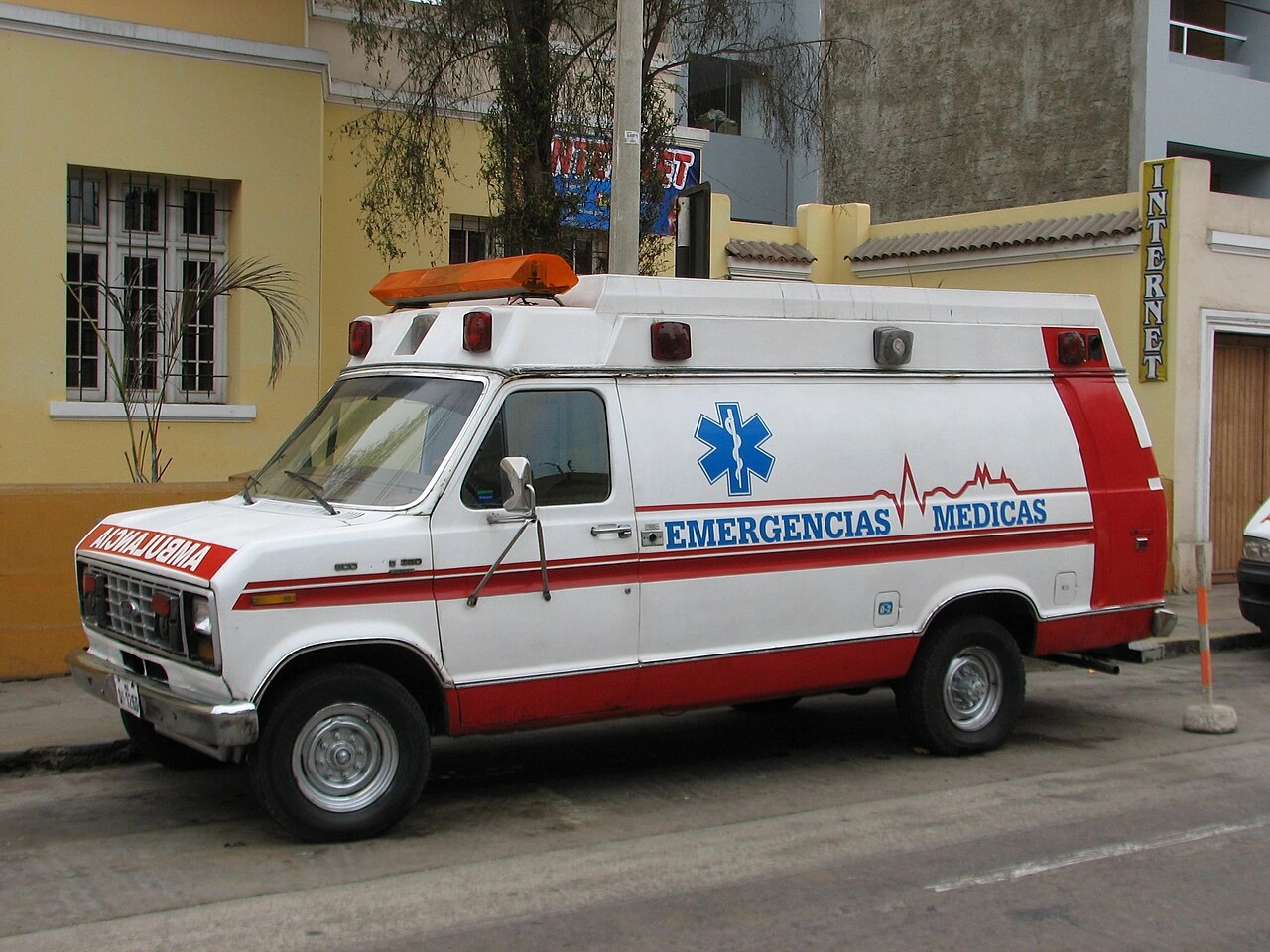
An ambulance is a vehicle equipped and used to provide emergency medical assistance or transport patients to or between healthcare facilities. Ambulances may carry medical equipment and trained personnel who can provide treatment during transport.
During an emergency response, an ambulance may use warning lights and a siren and may receive special priority or exemptions from certain traffic rules. Other road users must follow the local rules for emergency vehicles, make sufficient space and avoid obstructing their passage.
Wikimedia.org • AgainErick • CC BY-SA
What is an ambulance?
An ambulance is a specially equipped vehicle used to provide emergency medical assistance and transport sick or injured people.
When does an ambulance have priority?
This depends on the local traffic rules and warning signals being used. Ambulances responding to emergencies commonly use flashing lights and a siren to indicate that other road users must make way.
What should you do when an ambulance approaches?
Remain calm and make sufficient space for it to pass. Slow down or stop where necessary, but avoid sudden or dangerous manoeuvres.
Should you stop immediately when you hear an ambulance siren?
Not necessarily in your exact position. Move or stop in a way that creates a safe passage without blocking an intersection, pedestrian crossing or another part of the road needed by the ambulance.
Can an ambulance pass a red traffic light?
Emergency vehicles may be allowed to pass a red light during an urgent response under special legal conditions. The precise rules differ between countries, and the ambulance driver must still take appropriate precautions.
Can an ambulance exceed the speed limit?
Many countries permit emergency vehicles to depart from certain normal speed rules during an urgent mission, subject to safety requirements and national legislation.
Can an ambulance drive through a traffic queue?
Yes, when responding to an emergency and legally permitted to do so. Other road users should create space and keep emergency corridors or access routes clear where required.
Can you follow an ambulance through traffic?
You should not use the passage created for an ambulance as a way to bypass congestion. Maintain a safe distance and continue to obey the normal traffic rules.
Do ambulances always use their sirens?
No. The use of warning lights and sirens depends on the urgency of the mission and local regulations. An ambulance transporting a patient does not necessarily need to use emergency signals throughout the journey.
What should you do near a stationary ambulance?
Reduce speed and remain alert. Medical personnel, patients or other emergency workers may be entering the road, and the ambulance may need to move unexpectedly.
10. Pothole
A pothole is a hole or depression in the road surface caused by wear, weather, water, repeated traffic loads or deterioration of the pavement. Potholes can vary greatly in size and depth and may develop gradually or become worse after freezing, heavy rain or repeated vehicle traffic.
Potholes can affect steering, braking and vehicle stability and may damage tyres, wheels or suspension components. Drivers and riders should observe the road ahead, adapt their speed and avoid sudden or dangerous manoeuvres when encountering damaged road surfaces.

Wikimedia.org • State Farm • CC BY
What is a pothole?
A pothole is a hole or depression that develops in a road surface when the pavement becomes damaged or deteriorates.
How do potholes form?
Potholes can develop through a combination of water, temperature changes, traffic loads and deterioration of the road material. Cracks can gradually expand until pieces of the surface break away.
Why are potholes dangerous?
A pothole can cause a vehicle to change direction suddenly, lose stability or suffer tyre, wheel or suspension damage. Deep potholes can present a particularly serious hazard at higher speeds.
What should you do when you see a pothole?
Reduce speed when necessary, maintain control of the vehicle and avoid abrupt steering or braking. Only move around the pothole when this can be done safely without endangering other road users.
Should you brake while driving through a pothole?
If possible, reduce your speed before reaching the pothole. Sudden heavy braking or steering while passing over a damaged surface can make the vehicle less stable.
Are potholes particularly dangerous for motorcycles?
Yes. A pothole can disturb the steering or balance of a motorcycle and may cause the rider to lose control.
Are potholes dangerous for cyclists?
Yes. Bicycle wheels can be strongly affected by deep holes or sharp edges, particularly when the cyclist has little time or space to avoid the hazard.
Can a pothole damage a car?
Yes. Severe impacts can damage tyres, wheel rims, suspension components, steering parts or wheel alignment.
Should you swerve suddenly to avoid a pothole?
No. A sudden evasive movement may create a greater danger by bringing the vehicle into conflict with cyclists, pedestrians, oncoming traffic or vehicles in another lane.
Can a warning sign indicate potholes ahead?
Yes. Depending on the country's traffic-sign system, an uneven-road or general-danger warning sign may be used where poor road conditions create a significant hazard.
11. Path
A path is a relatively narrow route intended for pedestrians and, where permitted, other road users or small vehicles. Paths may run through urban areas, countryside, parks, forests or between other roads and can be surfaced or unsurfaced.
A path is not necessarily the same as a footpath or cycle path. The road users permitted to use it depend on its legal status, width, traffic signs and local regulations.

Wikimedia.org • Tangopaso • CC0
What is a path?
A path is a relatively narrow route intended primarily for pedestrians and, where permitted, other road users or small vehicles.
Is a path the same as a footpath?
Not necessarily. A footpath is specifically intended for pedestrians, while a path may also permit cyclists or other users according to local rules.
Is a path the same as a cycle path?
No. A cycle path is specifically designated for bicycles and other permitted users. An ordinary path does not automatically have that legal status.
Can cyclists use a path?
This depends on the legal status, width and signs applying to the path. Some paths permit cyclists, while others are reserved for pedestrians or particular users.
Can motor vehicles use a path?
This depends on local law. Some paths prohibit motor vehicles entirely, while narrow vehicles may be permitted on other paths unless traffic signs restrict access.
Can a path be part of the public-road network?
Yes. A narrow path can legally form part of the public-road network even when it is unsuitable for ordinary cars.
Does a path need to be paved?
No. Paths can be paved, gravelled, compacted or unsurfaced depending on their location and purpose.
Can traffic signs restrict access to a path?
Yes. Signs can reserve a path for particular road users or prohibit certain vehicles, regardless of whether they could physically fit on it.
Who has priority when a path joins a larger road?
The applicable local priority rules determine who must give way. Special rules often apply when a minor path joins an ordinary road.
Can pedestrians and cyclists share a path?
Yes, where both are permitted. Faster users should adapt their speed and avoid endangering or unnecessarily obstructing pedestrians.
Can a path cross another road?
Yes. At the crossing, users must follow the applicable priority signs, traffic lights, road markings and general right-of-way rules.
Is every narrow route legally a path?
No. Its legal classification depends on the definitions and regulations of the country concerned. A narrow route might instead be a footpath, cycle path, private access road or another type of facility.
12. Particulates
Particulates, or particulate matter (PM), are tiny solid particles or liquid droplets suspended in the air. In road traffic, particulate emissions can come from vehicle exhaust, brake wear, tyre wear and road-surface wear, as well as dust that is disturbed by passing traffic.
Particulate matter is commonly classified by particle size. PM10 refers to particles with a diameter of up to approximately 10 micrometres, while PM2.5 refers to finer particles of up to approximately 2.5 micrometres. Vehicle emission standards, particulate filters and air-quality measures are used to reduce exposure to these pollutants.

Wikimedia.org • wili hybrid • CC BY
What are particulates?
Particulates, or particulate matter, are very small solid particles or liquid droplets suspended in the air.
What are PM10 and PM2.5?
PM10 refers to particles with a diameter of up to approximately 10 micrometres. PM2.5 refers to finer particles with a diameter of up to approximately 2.5 micrometres.
Where do traffic particulates come from?
Road traffic can produce particles through engine exhaust, brake wear, tyre wear and road-surface wear. Passing traffic can also resuspend dust already present on the road.
Are diesel vehicles a source of particulates?
Yes. Combustion in diesel engines can produce very small soot particles. Modern diesel vehicles commonly use particulate filters to capture a large proportion of these exhaust particles.
What is a particulate filter?
A particulate filter is an exhaust-treatment device designed to trap particulate matter produced by an engine. Diesel particulate filters are commonly known as DPFs.
Do petrol engines produce particulates?
Yes. Petrol engines can also produce particulate emissions, particularly certain direct-injection engines. Appropriate emission-control systems may therefore include particulate filters.
Do electric vehicles produce particulates?
Fully electric vehicles produce no exhaust particulates from a combustion engine, but particles can still result from tyre wear, road wear and braking.
Are brake and tyre particles regulated?
Vehicle-emission regulation is increasingly addressing non-exhaust emissions. The European Euro 7 framework includes requirements concerning brake-particle emissions and tyre abrasion.
Is particulate matter the same as CO2?
No. Particulate matter consists of tiny airborne particles, while carbon dioxide is a gas. They are different types of vehicle emissions and are regulated for different environmental reasons.
How can vehicle particulate emissions be reduced?
Measures include effective particulate filters, cleaner vehicle technologies, correctly maintained emission-control systems and reductions in brake, tyre and road-wear emissions.
13. Air pollution
Air pollution is the presence of gases, particles or other substances in the air at concentrations that can harm human health, the environment or ecosystems. Road traffic contributes to air pollution through exhaust emissions and through non-exhaust sources such as brake wear, tyre wear and road dust.
Important traffic-related pollutants include nitrogen oxides, particulate matter, carbon monoxide and volatile organic compounds. Some pollutants are emitted directly by vehicles, while others can form in the atmosphere through chemical reactions. Vehicle-emission standards, cleaner technologies and traffic-management measures are used to reduce these emissions.

Wikimedia.org • Emmanuelkwizera • CC BY-SA
What is air pollution?
Air pollution is contamination of the air by gases, particles or other substances that can adversely affect human health, the environment or ecosystems.
How does road traffic cause air pollution?
Vehicles produce pollutants through fuel combustion, exhaust systems, brake wear, tyre wear and road-surface interaction. Moving traffic can also resuspend dust already present on the road.
Which air pollutants are associated with road traffic?
Important traffic-related pollutants include nitrogen oxides, particulate matter, carbon monoxide and volatile organic compounds. Their relative importance depends on the vehicle, fuel and driving conditions.
What is nitrogen dioxide?
Nitrogen dioxide (NO2) is an air pollutant associated particularly with combustion processes and road traffic. High concentrations are commonly found near busy roads and densely trafficked urban areas.
What is particulate matter?
Particulate matter consists of tiny solid particles or liquid droplets suspended in the air. Road traffic can produce particles from exhaust, brakes, tyres and road surfaces.
Is CO2 the same as ordinary air pollution?
No. Carbon dioxide is primarily regulated as a greenhouse gas because of its contribution to climate change. Local air-quality pollution generally focuses on substances such as nitrogen dioxide, particulate matter, ozone and other pollutants that directly affect air quality and health.
Do electric vehicles cause air pollution?
Fully electric vehicles produce no combustion-engine exhaust emissions while driving, but they can still contribute to non-exhaust particulate emissions through tyres, brakes and road wear.
Can air pollution be worse near busy roads?
Yes. Concentrations of traffic-related pollutants can be higher close to heavily trafficked roads because many emissions occur close to ground level and near where people live and travel.
What is a low-emission zone?
A low-emission zone is an area where access by more polluting vehicles is restricted in order to reduce traffic-related air pollution. Access criteria may depend on factors such as fuel type, vehicle category and emission standard.
How can traffic-related air pollution be reduced?
Measures include cleaner vehicles, stricter emission standards, effective emission-control equipment, low-emission zones, public transport, cycling and walking, as well as traffic-management measures that reduce unnecessary congestion and emissions.
14. Rush hour
Rush hour is a period when roads and public transport networks experience particularly high demand, commonly because large numbers of people are travelling to or from work, school or other regular destinations. It usually occurs during the morning and late afternoon or evening on working days.
Rush-hour traffic can result in congestion, slower speeds, longer journeys and frequent stopping. Drivers should maintain a safe following distance, remain patient, anticipate changing traffic conditions and follow any temporary or dynamic traffic-management measures.

Wikimedia.org • MDRX • CC BY-SA
What is rush hour?
Rush hour is a period when unusually large numbers of people travel at the same time, resulting in increased traffic and often congestion.
When does rush hour occur?
Rush hour commonly occurs during the morning and late afternoon or evening on working days, but the exact times vary according to the city, road and local travel patterns.
Does rush hour always last one hour?
No. The term does not mean that congestion lasts exactly one hour. In busy urban areas, peak traffic conditions may continue for several hours.
Why does traffic become congested during rush hour?
Congestion develops when traffic demand approaches or exceeds the available road capacity. Intersections, merging traffic, collisions, roadworks and weather can make the congestion worse.
Should you increase your following distance in rush-hour traffic?
Yes. Leave sufficient distance to react to sudden braking and frequent changes in traffic speed. Avoid following another vehicle too closely even when traffic is moving slowly.
Should you frequently change lanes during congestion?
Unnecessary lane changes can create additional conflicts and may not significantly reduce journey time. Choose an appropriate lane, observe surrounding traffic and change lane only when it can be done safely.
Can speed limits change during rush hour?
Yes. Roads equipped with variable traffic management may display lower speed limits during congestion. Drivers must follow the speed limit currently indicated.
What is a rush-hour lane?
A rush-hour lane is an additional traffic lane that can be opened during busy periods to increase road capacity. It may use a lane or shoulder that is closed to normal traffic at other times.
Can you use a rush-hour lane whenever traffic is congested?
No. Such a lane may only be used when traffic signals or signs indicate that it is open. Never assume that congestion alone permits its use.
How can you prepare for a journey during rush hour?
Check current traffic conditions and expected journey times, allow additional travel time and consider an alternative route, departure time or mode of transport where appropriate.
15. Road code
A road code is a collection of laws and traffic rules that regulate how people use public roads. It establishes rules for drivers, cyclists, pedestrians and other road users and covers subjects such as priority, speed, overtaking, parking, traffic lights, road signs and road markings.
Road codes differ between countries and sometimes between regions. Every road user is expected to know and follow the rules that apply where they are travelling, even when those rules differ from those in their home country.
What is a road code?
A road code is the body of traffic rules and regulations governing how road users must behave on public roads.
What does a road code regulate?
A road code can regulate subjects such as priority, speed, overtaking, turning, parking, traffic signals, road signs and road markings, as well as the responsibilities of different road users.
Are road codes the same in every country?
No. Although many traffic rules and signs are similar internationally, each country establishes its own traffic legislation and may apply different rules, signs, speed limits and requirements.
16. Street gutter
A street gutter is a narrow channel along the edge of a road or street that collects and carries rainwater toward drains or other drainage systems. It is commonly located between the carriageway and the kerb and may be formed from concrete, paving stones or part of the road surface.
A street gutter is primarily a drainage feature rather than a traffic lane. Road users should take care near gutters because they may contain water, debris, drain openings or uneven surfaces.

Wikimedia.org • Airman 1st Class Alystria Maurer • CC0
What is a street gutter?
A street gutter is a drainage channel along the edge of a road that collects rainwater and directs it toward drains or another drainage system.
Is a street gutter a traffic lane?
Normally, no. A gutter is primarily part of the road's drainage system and is not intended to function as a normal traffic lane.
Why should cyclists take care near street gutters?
Gutters may contain water, leaves, debris, drain covers or uneven surfaces, which can reduce grip or make cycling less stable.
17. Cargo bike
A cargo bike is a bicycle designed to transport goods, children or other larger loads than can normally be carried on a conventional bicycle. Cargo bikes may use a box or platform in front of or behind the rider, an extended rear carrier or a multi-wheel design.
Cargo bikes can be powered entirely by the rider or equipped with electric pedal assistance. Their permitted dimensions, passenger capacity, use of cycle paths and electrical-assistance limits depend on the local traffic and vehicle regulations.

Wikimedia.org • Clément Bucco-Lechat • CC BY-SA
What is a cargo bike?
A cargo bike is a bicycle designed to carry goods, children or larger loads than a conventional bicycle.
What types of cargo bikes are there?
Common designs include two-wheel box bikes, three-wheel cargo bikes and longtail bicycles with an extended rear carrying area.
Can a cargo bike be electric?
Yes. Many cargo bikes use electric pedal assistance to make it easier to move heavier loads or travel longer distances.
Is an electric cargo bike still a bicycle?
It can be. If the electrical assistance remains within the applicable power and assistance-speed limits, the vehicle may remain legally classified as a bicycle. More powerful or faster models may belong to another category.
Can a cargo bike carry children?
Yes, when it is designed and equipped for passenger transport. Children should use the seats, restraints, foot protection or other safety equipment provided by the manufacturer and required by local law.
Can a cargo bike carry goods?
Yes. Transporting goods is one of its main purposes. Loads must be securely positioned and must not make the bicycle unstable, obstruct the rider's view or exceed applicable dimensional or weight limits.
Can a cargo bike use a cycle path?
This depends on its dimensions and legal classification. Ordinary-sized cargo bicycles generally follow bicycle rules, while unusually wide models may be excluded from certain cycle facilities.
Does a cargo bike need a driving licence?
Normally not when it remains legally classified as an ordinary bicycle or electrically assisted bicycle. Faster or more powerful vehicles may be subject to different licensing requirements.
Is a helmet compulsory on a cargo bike?
This depends on the country's bicycle rules and the vehicle's classification. A model legally classified as a faster motorised vehicle may have different helmet requirements from an ordinary cargo bicycle.
Should you ride differently when a cargo bike is heavily loaded?
Yes. Additional weight can affect acceleration, braking, steering and stability. Reduce speed where necessary, allow greater stopping distance and take particular care when turning.
Can a cargo bike tow a trailer?
Yes, where permitted. The bicycle, trailer and total load must comply with the applicable dimensional, mass, braking and passenger-transport requirements.
Why should drivers take care around cargo bikes?
Cargo bikes can be longer, wider and heavier than ordinary bicycles and may need additional space when turning or stopping. Drivers should leave sufficient passing distance and avoid cutting across their path.
18. Forestry vehicle
A forestry vehicle is a vehicle designed, equipped or adapted for work connected with forestry and woodland management. It may be used to pull machinery, transport timber, carry equipment or perform operations such as harvesting, forwarding or maintaining forest land.
Forestry vehicles can include tractors, specialised self-propelled machines, trailers and interchangeable equipment. Their registration, driving-licence requirements, maximum speed, road access and technical requirements depend on the vehicle's legal classification and the local traffic regulations.
Wikimedia.org • Antti Leppänen • CC BY-SA
What is a forestry vehicle?
A forestry vehicle is a vehicle designed or adapted for forestry work, such as pulling machinery, carrying equipment, transporting timber or working on forest land.
Is a forestry vehicle always a tractor?
No. Forestry vehicles can include tractors, specialised self-propelled machines, trailers and other equipment. Their legal classification depends on their design and use.
What is a forestry tractor?
A forestry tractor is a powered vehicle primarily designed to pull, push, carry or operate equipment or trailers used for forestry work.
Can forestry vehicles travel on public roads?
Yes, when legally permitted and properly equipped. Registration, insurance, lighting, dimensions, speed and driving-licence requirements may apply before a forestry vehicle can use public roads.
Do you need a special driving licence for a forestry vehicle?
This depends on the vehicle classification, mass and country. Some countries have special agricultural or forestry vehicle licence categories, while other machines require ordinary car or heavy-vehicle licences.
Do forestry vehicles have special speed limits?
They may. The permitted speed can depend on the vehicle's construction speed, mass, road type and local traffic rules. Posted speed limits must also be respected.
Can forestry vehicles use motorways?
This depends on the country and vehicle classification. Agricultural and forestry vehicles are often restricted from high-speed roads, particularly when their construction speed is unsuitable for motorway traffic.
Why should drivers take care when passing a forestry vehicle?
Forestry vehicles can be large, slow, wide or equipped with projecting machinery. Reduce speed where necessary and overtake only when there is sufficient visibility and space.
Can a forestry vehicle tow a trailer?
Yes, where the vehicle is designed and approved to do so. Forestry tractors commonly tow trailers carrying timber, machinery or other forestry materials.
Can forestry equipment extend beyond the normal width of the vehicle?
Some machinery or loads may make a forestry vehicle unusually wide or long. Where legal limits are exceeded, special markings, lighting, permits or escort arrangements may be required under local law.
19. Construction vehicle
A construction vehicle is a vehicle or mobile machine designed or adapted for work connected with construction, roadworks, excavation, lifting or the movement of materials. Examples include excavators, loaders, bulldozers, road rollers, mobile cranes, dump trucks and concrete mixers.
Construction vehicles vary greatly in size, speed and legal classification. Some are ordinary road vehicles, while others are specialised machines intended mainly for use on construction sites. When travelling on public roads, they must comply with the applicable registration, licensing, lighting, dimensions, weight, speed and traffic rules.

Wikimedia.org • Sunridin • CC BY
What is a construction vehicle?
A construction vehicle is a vehicle or mobile machine used for construction, excavation, lifting, roadworks or transporting construction materials.
What are examples of construction vehicles?
Examples include excavators, wheel loaders, bulldozers, road rollers, mobile cranes, dump trucks and concrete mixers.
Is every construction vehicle legally the same type of vehicle?
No. A construction vehicle may legally be classified as a truck, mobile machine, special-purpose vehicle or another vehicle category depending on its design and use.
Can construction vehicles travel on public roads?
Yes, when the vehicle is legally permitted and suitably equipped for road use. Some machines are designed mainly for construction sites and may be subject to special restrictions when travelling on public roads.
Do you need a driving licence for a construction vehicle?
This depends on the vehicle category, mass, speed and local law. Heavy trucks, mobile cranes and specialised machines may require different licence categories.
Do construction vehicles have special speed limits?
They may. A vehicle's design speed, mass, tyres, suspension and legal classification can result in a lower permitted speed than that applying to ordinary cars.
Why should you take extra care near construction vehicles?
Construction vehicles can be large, slow and difficult to manoeuvre and may have significant blind spots. They may also turn, reverse or enter a construction site unexpectedly.
What do flashing amber lights on a construction vehicle mean?
Flashing amber lights generally warn other road users that the vehicle is working, moving slowly or creating an unusual obstruction or hazard. They do not normally give the vehicle the same priority as an emergency vehicle.
Can a construction vehicle be wider or heavier than an ordinary vehicle?
Yes. Some construction machinery exceeds normal vehicle dimensions or masses. Special permits, route restrictions, warning equipment or escorts may then be required.
What should you do when passing a construction vehicle?
Reduce speed where necessary and leave sufficient space. Be aware of blind spots, projecting equipment, wide turns and workers who may be present nearby.
20. Semi-trailer truck
A semi-trailer truck is a combination consisting of a road tractor and a semi-trailer used primarily for transporting goods. The semi-trailer is coupled to the tractor so that a significant part of its weight is supported by the tractor rather than entirely by its own wheels.
Semi-trailer trucks are commonly used for long-distance freight transport and may carry containers, refrigerated goods, liquids, bulk materials or other cargo. Special rules can apply concerning driving licences, maximum dimensions and masses, speed limits, lane use, overtaking, loading and driving and rest periods.

Wikimedia.org • High Contrast • CC BY
What is a semi-trailer truck?
A semi-trailer truck consists of a powered road tractor coupled to a semi-trailer primarily used to transport goods.
What is a semi-trailer?
A semi-trailer is a trailer designed so that part of the trailer and a significant part of its load are supported by the towing tractor.
What is the difference between a semi-trailer and an ordinary trailer?
An ordinary trailer generally supports its own weight through its axles, while a semi-trailer transfers a substantial vertical load to the tractor through its coupling.
How is a semi-trailer connected to the tractor?
The semi-trailer is normally connected through a kingpin and fifth-wheel coupling mounted behind the tractor cab.
Why are semi-trailer trucks called articulated vehicles?
The tractor and semi-trailer are connected by a pivoting coupling, allowing the two parts to turn relative to each other when the combination changes direction.
Do you need a special licence to drive a semi-trailer truck?
Yes. Heavy articulated trucks normally require a heavy-goods-vehicle licence that also authorises the driver to tow a heavy trailer or semi-trailer. The precise licence categories differ between countries.
Do semi-trailer trucks have lower speed limits?
They often do. Many countries impose vehicle-specific maximum speeds on heavy goods vehicles, particularly on motorways and other high-speed roads.
Why do semi-trailer trucks need more space to turn?
The semi-trailer's rear wheels follow a tighter path than the tractor's front wheels. Drivers therefore need additional space when turning, particularly at narrow intersections.
Why should you leave extra distance behind a semi-trailer truck?
Large trucks can restrict your view of traffic ahead and require considerable stopping distance. Keeping an appropriate following distance improves visibility and reaction time.
Why should you take care when driving beside a semi-trailer truck?
Large trucks have substantial blind spots around the cab and trailer. Avoid remaining beside the vehicle unnecessarily and be particularly careful when the truck is turning or changing lane.
21. Trolleybus
A trolleybus is an electrically powered bus that normally obtains its energy from overhead electrical wires through current collectors mounted on the vehicle. Unlike a tram, a trolleybus runs on ordinary road wheels and is steered by its driver rather than being guided by rails.
Trolleybuses are generally used for public passenger transport and may use bus lanes, stops and other public-transport infrastructure. Some modern trolleybuses also have batteries or auxiliary power systems that allow them to travel short distances without remaining connected to the overhead wires.

Wikimedia.org • Carl-Johan Aberger • CC0
What is a trolleybus?
A trolleybus is an electrically powered bus that normally receives electricity from overhead wires while travelling on ordinary road wheels.
Is a trolleybus the same as a tram?
No. A tram runs on rails and follows the path of its tracks. A trolleybus has ordinary tyres and is steered like a conventional bus.
Is a trolleybus an electric bus?
Yes. A trolleybus uses an electric motor, but unlike a battery-electric bus it traditionally receives most or all of its operating power from overhead electrical wires.
How does a trolleybus receive electricity?
Electrical current is normally collected from overhead wires through poles or another current-collection system mounted on the vehicle.
Can a trolleybus drive without overhead wires?
Some trolleybuses can. Modern vehicles may have batteries or auxiliary motors that allow limited operation away from the overhead wiring.
Can a trolleybus change lane?
Yes. Because it is steered rather than rail-guided, a trolleybus can move sideways within the range permitted by its overhead electrical connection and road layout.
Can trolleybuses use bus lanes?
Yes, where local rules permit. Trolleybuses operating public-transport services can normally use infrastructure reserved for authorised buses and public transport.
Do trolleybuses have priority when leaving stops?
This depends on the local traffic law. Some countries require other drivers to allow public-transport buses, including trolleybuses, to leave designated stops.
Should drivers slow down near a stopped trolleybus?
Yes. Passengers may be boarding, leaving or crossing the roadway. Drivers should approach carefully and give passengers sufficient space where required.
Does a trolleybus produce exhaust emissions?
A trolleybus operating entirely on electric power produces no combustion-engine exhaust emissions at the vehicle. Non-exhaust emissions from tyres, brakes and road wear can still occur.
22. Speed pedelec
A speed pedelec is a high-speed electrically assisted bicycle whose motor can continue providing pedal assistance above the normal electric-bicycle assistance limit, typically up to approximately 45 km/h. It has pedals and is primarily designed to assist the rider while pedalling.
Because of its higher speed, a speed pedelec may legally be treated differently from an ordinary bicycle or electric bicycle. Special rules can apply concerning the minimum age, driving licence, helmet, registration, insurance, cycle-path use and permitted roads, depending on the country.

Wikimedia.org • Sänger • CC BY-SA
What is a speed pedelec?
A speed pedelec is an electrically assisted pedal cycle capable of providing motor assistance at higher speeds than an ordinary electric bicycle, commonly up to approximately 45 km/h.
What is the difference between a speed pedelec and an ordinary electric bicycle?
An ordinary electrically assisted bicycle normally stops providing motor assistance at a lower speed, commonly around 25 km/h. A speed pedelec can continue assisting the rider at higher speeds.
Do you still have to pedal a speed pedelec?
Normally yes. A speed pedelec is primarily designed to provide assistance while the rider pedals, although limited walking or starting assistance may also be provided.
Can a speed pedelec travel at 45 km/h?
Many speed pedelecs are designed to provide assistance up to approximately 45 km/h. The actual permitted speed must still comply with the local speed limit and traffic conditions.
Do you need a driving licence for a speed pedelec?
This depends on the country's legal classification. Some countries classify speed pedelecs similarly to mopeds and require an appropriate driving licence.
Is a helmet compulsory on a speed pedelec?
Helmet requirements vary between countries, but because speed pedelecs travel considerably faster than ordinary bicycles, specific helmet requirements commonly apply.
Does a speed pedelec need a licence plate?
In countries where speed pedelecs are classified as mopeds or another motor-vehicle category, registration and a licence plate may be compulsory.
Does a speed pedelec need insurance?
This depends on its technical characteristics and local law. Some jurisdictions require motor-vehicle liability insurance, while others exempt pedal-assisted speed pedelecs under specified conditions.
Can a speed pedelec use a cycle path?
This depends on the country, road speed limit and traffic signs. Speed pedelecs may be permitted, required or prohibited on particular cycle paths.
Can a speed pedelec use a motorway?
Speed pedelecs are generally unsuitable for motorways and are commonly prohibited where mopeds or low-speed vehicles are not permitted. Follow the local access rules.
Can you carry a passenger on a speed pedelec?
This depends on the vehicle's construction and local rules. Where passengers are permitted, the speed pedelec must be designed and equipped to carry them safely.
Is a speed pedelec the same as an electric moped?
No. A speed pedelec is primarily designed to provide pedal assistance, while an electric moped can normally propel itself without requiring the rider to pedal. Their legal classifications may nevertheless be closely related.
23. Delivery vehicle
A delivery vehicle is a vehicle used to transport and deliver goods, parcels, supplies or other items to homes, businesses or other destinations. Delivery vehicles can include vans, trucks, cars, motorcycles, cargo bicycles and other vehicles depending on the type and quantity of goods being transported.
Delivery vehicles must follow the ordinary traffic rules applying to their vehicle category as well as any specific rules concerning loading and unloading, restricted-access areas, parking, vehicle dimensions and low-emission zones. Permission to make a delivery does not automatically allow a vehicle to stop or park anywhere.

Wikimedia.org • 28704869 • CC BY
What is a delivery vehicle?
A delivery vehicle is a vehicle used to transport goods, parcels, supplies or other items to a particular destination.
Is a delivery vehicle always a van or truck?
No. Deliveries can be made using vans, trucks, cars, motorcycles, cargo bicycles or other suitable vehicles.
Can a delivery vehicle stop to load or unload goods?
Yes, where stopping is legally permitted. Many traffic systems distinguish genuine loading or unloading from ordinary parking when the vehicle remains only for the time necessary to perform the activity.
Can a delivery driver wait in a loading area?
A loading area is intended for active loading or unloading. Remaining there after the delivery activity has finished may constitute parking and may therefore violate the applicable restrictions.
Can delivery vehicles use restricted streets?
Sometimes. Traffic signs may provide an exception for deliveries, loading and unloading or local access. The driver must comply with any times, vehicle restrictions or other conditions shown.
Can delivery vehicles enter pedestrian zones?
Only where local rules or signs specifically allow delivery access. Access may be limited to certain hours, and vehicles may be required to travel at very low speed and give priority to pedestrians.
Can a delivery vehicle park on a pavement or cycle path while unloading?
Not automatically. Loading or unloading does not override general stopping restrictions or rules protecting pavements, cycle paths and other road users.
Can a delivery vehicle use hazard warning lights while illegally stopped?
No. Hazard warning lights warn other road users but do not make an otherwise prohibited stopping or parking position legal.
Can delivery vehicles be restricted by low-emission zones?
Yes. Vans and trucks may be subject to low-emission-zone requirements based on factors such as fuel type, vehicle category and emission standard.
Should drivers take extra care around delivery vehicles?
Yes. Delivery vehicles may stop frequently, reverse, open doors or move between the roadway and loading areas. Other road users should allow sufficient space and anticipate pedestrians or workers moving around the vehicle.
24. Idling
Idling means allowing a vehicle's engine to continue running while the vehicle is stationary and the engine is not being used to move the vehicle. This may occur while waiting, parking, loading or unloading or before beginning a journey.
Unnecessary idling consumes fuel and produces exhaust emissions, air pollution and noise. Many countries or local authorities restrict prolonged or unnecessary idling, although exceptions may apply when the engine is required for safety, technical equipment or another necessary purpose.
Wikimedia.org • Spacekid • CC0
What is idling?
Idling means keeping a vehicle's engine running while the vehicle remains stationary and the engine is not being used to propel it.
Why should unnecessary idling be avoided?
Unnecessary idling uses fuel, produces exhaust emissions and creates noise without moving the vehicle.
Is idling illegal everywhere?
No. Rules differ between countries and local authorities. Some prohibit unnecessary idling generally, while others restrict it only in particular locations or circumstances.
Does an idling engine still produce exhaust emissions?
Yes. A combustion engine continues to produce exhaust gases while running even though the vehicle is not moving.
Does idling use fuel?
Yes. A combustion engine consumes fuel while it remains running, even when the vehicle is stationary.
Should you leave the engine running while waiting for someone?
Where it is safe and legal to switch the engine off, unnecessary prolonged idling should generally be avoided. Local rules may specifically require the engine to be switched off.
Is waiting at a red traffic light the same as parking with the engine idling?
No. A vehicle temporarily prevented from moving by traffic conditions is different from a vehicle voluntarily parked or waiting. The rules concerning engine shutdown may therefore differ.
Can an engine remain running when vehicle equipment needs power?
Some laws provide exceptions when the engine is genuinely required to operate refrigeration, hydraulic equipment, emergency equipment or another essential system. The precise exceptions depend on local law.
Should you rev the engine while stationary?
Unnecessary engine revving should be avoided because it increases noise, fuel consumption and emissions. It may also be specifically prohibited by local traffic or noise regulations.
Do electric vehicles idle?
Not in the conventional combustion-engine sense. An electric vehicle can remain stationary while switched on without an internal-combustion engine running, although electrical systems such as heating or air conditioning may still consume energy.
25. Tow truck
A tow truck is a specialised vehicle used to recover, tow, lift or transport vehicles that are broken down, damaged, incorrectly parked or otherwise unable to continue their journey normally. Tow trucks may use lifting equipment, a winch, wheel-lift equipment or a loading platform.
Because vehicle recovery can take place beside moving traffic, tow trucks commonly use warning lights and other safety equipment while working. Drivers approaching a recovery operation should reduce speed where necessary, leave sufficient space and follow any temporary traffic control or instructions from authorised personnel.
Wikimedia.org • Stolbovsky • CC BY-SA
What is a tow truck?
A tow truck is a specialised vehicle designed to recover, tow, lift or transport vehicles that are disabled, damaged or otherwise need to be removed.
How can a tow truck move another vehicle?
Tow trucks may use a wheel lift, lifting arm, winch, towing equipment or loading platform. The recovery method depends on the type and condition of the vehicle being moved.
What is a flatbed tow truck?
A flatbed tow truck carries the recovered vehicle on a loading platform rather than leaving some of its wheels on the road.
When is a tow truck used?
A tow truck may be used after a breakdown, collision, vehicle defect or other situation in which a vehicle cannot safely continue or must be removed.
Why do tow trucks use flashing warning lights?
Warning lights alert other road users that the tow truck is working, moving slowly or creating an unusual roadside hazard. The meaning and permitted colour of the lights depend on local law.
Do flashing lights give a tow truck emergency-vehicle priority?
Not necessarily. Warning lights used for vehicle recovery usually indicate a hazard rather than giving the tow truck the same legal priority as a police car, ambulance or fire vehicle.
Can any vehicle tow a broken-down car?
This depends on the local towing rules and equipment. Emergency towing may be permitted under limited conditions, while professional recovery vehicles can use specialised equipment designed for the task.
Can a tow truck recover a vehicle from a motorway?
Yes, where authorised and suitably equipped. Motorway recovery may be subject to special safety procedures because of the high traffic speeds and restricted stopping areas.
Should you slow down when passing a working tow truck?
Yes. Recovery personnel may be working close to live traffic and vehicles or equipment may occupy part of the roadway. Reduce speed where necessary and leave sufficient space.
Can a tow truck recover heavy trucks and buses?
Yes, if it is designed and rated for the vehicle concerned. Heavy recovery vehicles use specialised lifting and towing equipment for trucks, buses and other large vehicles.