


Seat beltPortugal
 Traffic rules
 Portugal
120. Seat belt
A seat belt is a restraint system designed to hold a vehicle occupant securely in their seat during sudden braking or a collision. It helps reduce the risk of the occupant striking the vehicle interior or being thrown from the vehicle.
A seat belt should fit firmly across the body, with the lap section positioned low across the hips and the shoulder section across the chest. It should not be twisted, placed behind the back or used in a way that reduces its protective effect.
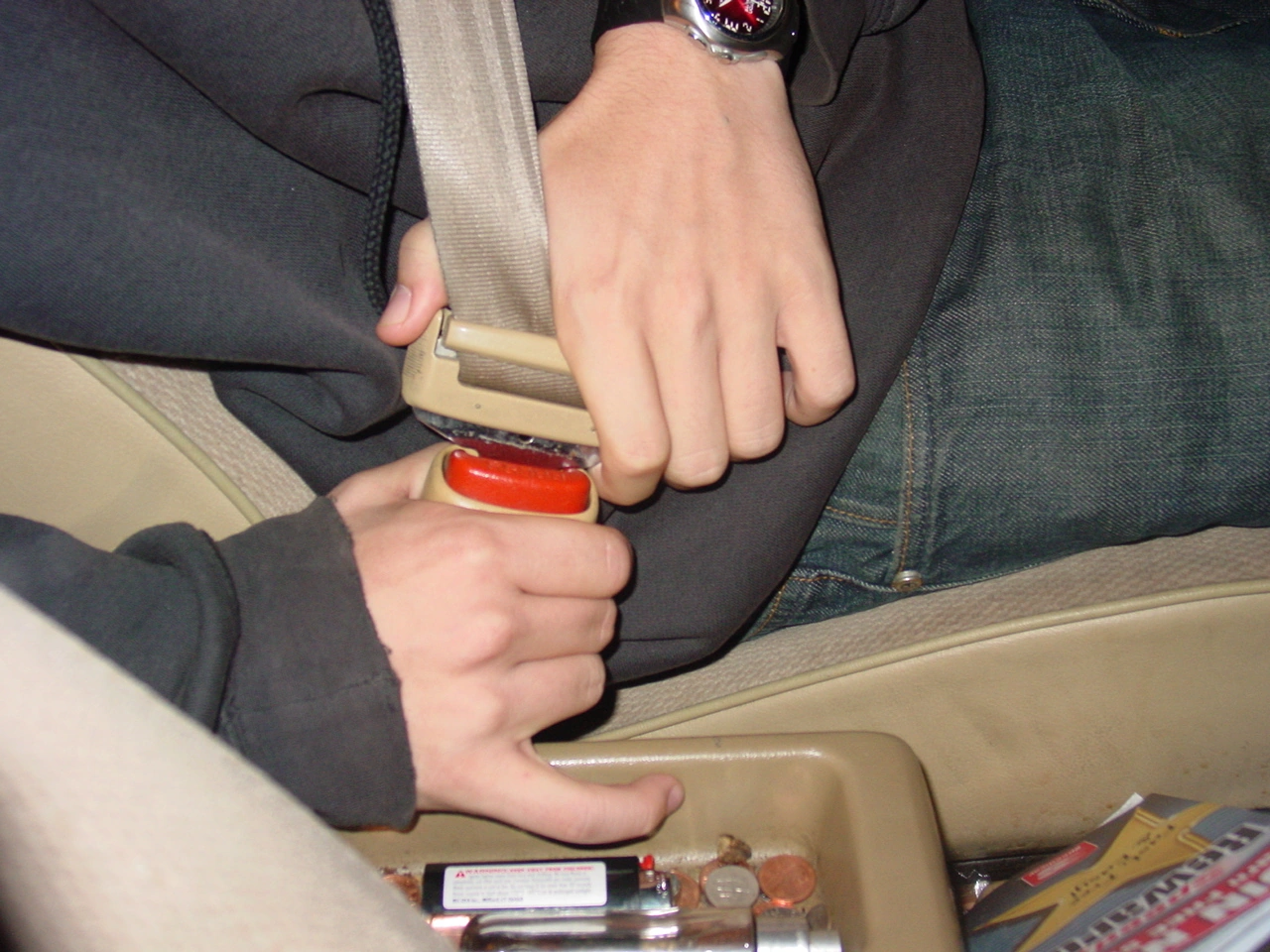
Wikimedia.org • Jusmar • CC0
Why is wearing a seat belt important?
A seat belt restrains the occupant during sudden deceleration or a collision, helping prevent contact with the vehicle interior and reducing the risk of being thrown from the vehicle.
🔗 nhtsa.gov • US NHTSA, air bags as supplemental protection
🔗 nhtsa.gov • US NHTSA, seat belts and occupant protection
🔗 bosch-mobility.com • Bosch, electronic stability program, ABS and traction-control functions
🔗 gov.uk • Great Britain Highway Code, Rules 99–102, restraints; national guidance example
Do airbags replace the need for a seat belt?
No. Seat belts and airbags are designed to work together. An airbag does not replace the restraint provided by a correctly worn seat belt.
🔗 nhtsa.gov • US NHTSA, air bags as supplemental protection
🔗 nhtsa.gov • US NHTSA, seat belts and occupant protection
🔗 bosch-mobility.com • Bosch, electronic stability program, ABS and traction-control functions
🔗 gov.uk • Great Britain Highway Code, Rules 99–102, restraints; national guidance example


