


Traffic rulesSerbia
 Traffic rules
 Serbia
1. Serbia
Serbia lies at the crossroads of Central and Southeastern Europe, and its position on major north-south routes makes it an important transit country between Central Europe and the southern Balkans. Traffic drives on the right. Motorways carry much of the international traffic, while secondary roads can become considerably more winding through the country's hill and mountain regions. Road signs deserve particular attention: on first-class state roads, place names are normally shown in both Cyrillic and Latin scripts, while Cyrillic may be used alone on second-class state roads, municipal roads and streets.
Serbian motorways use distance-based tolls rather than a vignette. Tolled motorway sections operate as a closed system, with payment at toll stations or electronically using an ENP tag. Winter rules depend on actual road conditions: from 1 November to 1 April, passenger cars must have winter tyres on all four wheels when the road is covered with snow, ice or black ice, with at least 4 mm tread depth. Snow chains or another approved traction device form part of the required winter equipment, while studded tyres are prohibited.
AI-generated by Rijbewijs-online.be • WCIT • CC BY-SA
What is the alcohol limit for driving in Serbia?
For drivers outside the zero-alcohol categories, the statutory blood-alcohol threshold is more than 0.2 g/l (0.2‰). Zero alcohol applies to several categories, including probationary drivers, motorcycle and moped riders and specified professional or special-service drivers. The safest choice is not to drink before driving.
🔗 abs.gov.rs • Serbian Road Traffic Safety Agency, Road Traffic Safety Law
🔗 abs.gov.rs • Serbian Road Traffic Safety Agency, April2026 operative-law citation
What speed limits apply to passenger cars in Serbia?
Built-up areas: The general maximum speed in a built-up area is 50 km/h, unless signs indicate otherwise. On suitable roads, a higher signed limit of up to 80 km/h may be permitted.
Outside built-up areas: For an ordinary passenger car, the general maximum on roads outside built-up areas other than motorways and motoput roads is 80 km/h, unless another limit is signed.
Expressways: The general maximum on a motoput is 100 km/h for an ordinary passenger car, unless a lower limit is signed.
Motorways: The general motorway maximum for an ordinary passenger car is 130 km/h, unless signs impose a lower limit.
School zones: In a designated school zone, the limit is normally 30 km/h in a built-up area and 50 km/h outside a built-up area between 07:00 and 21:00, unless signs specify a different period.
Lower limits apply to drivers with a Serbian probationary licence and to certain vehicle categories.
🔗 abs.gov.rs • Serbian Road Traffic Safety Agency, Road Traffic Safety Law
🔗 abs.gov.rs • Serbian Road Traffic Safety Agency, April2026 operative-law citation
Are seat belts compulsory in Serbia?
Yes. Drivers and passengers must use seat belts in seats that are equipped with them.
🔗 abs.gov.rs • Serbian Road Safety Agency, current child-seat and seat-belt guidance
Can you use a mobile phone while driving in Serbia?
A driver must not use a phone while driving unless using hands-free equipment, and must avoid activities that distract from driving. A driver with a Serbian probationary licence must not use a phone or other communication equipment while driving, including hands-free equipment.
🔗 abs.gov.rs • Serbian Road Traffic Safety Agency, Road Traffic Safety Law
🔗 abs.gov.rs • Serbian Road Traffic Safety Agency, April2026 operative-law citation
When must children use a child restraint in Serbia?
A person shorter than 135 cm must normally be transported in an approved child-restraint system appropriate for the child. The law provides specific conditions for the use of booster seats by older children.
🔗 abs.gov.rs • Serbian Road Safety Agency, current child-seat and seat-belt guidance
Are motorcycle helmets compulsory in Serbia?
Yes. Riders and passengers on motorcycles, mopeds, tricycles and quadricycles must wear a properly fastened, approved protective helmet, used as its manufacturer specifies. Article 91 provides an exception where the vehicle has a built-in cabin.
🔗 abs.gov.rs • Serbian Road Traffic Safety Agency, Road Traffic Safety Law
🔗 abs.gov.rs • Serbian Road Traffic Safety Agency, April2026 operative-law citation

2. Motorway
A motorway is a road specially designed and signposted for motor traffic. Motorways normally have separate carriageways for opposing traffic, controlled access through designated entrances and exits, no direct access to neighbouring properties, and no level crossings with other roads, railways or paths.
Special traffic rules apply on motorways. The permitted road users, speed limits, lane rules, tolls and emergency procedures vary between countries, so drivers must follow the local traffic signs and regulations.
Wikimedia.org • PetarM • CC BY-SA
How do people refer to a motorway in Serbia?
The Serbian term is autoput, written аутопут in Cyrillic. A motoput is a separate road category with a lower general car limit.
What speed limit applies to cars on a motorway in Serbia?
For an ordinary passenger car without a trailer, the general maximum is 130 km/h. Obey lower posted limits and reduce speed when traffic, weather or visibility requires it. Different limits can apply to other vehicle classes.
Should I expect tolls on Serbian motorways?
Yes, charged motorway sections use toll collection operated by Putevi Srbije. Check the operator’s current tariff for your journey and vehicle category; a motorway designation does not mean free travel.
Can I use electronic toll collection on Serbian motorways?
The motorway operator offers electronic toll collection using a TAG device. Obtain it through an authorised channel and check registration, payment and vehicle-category requirements before using an electronic lane.
3. Speed limit
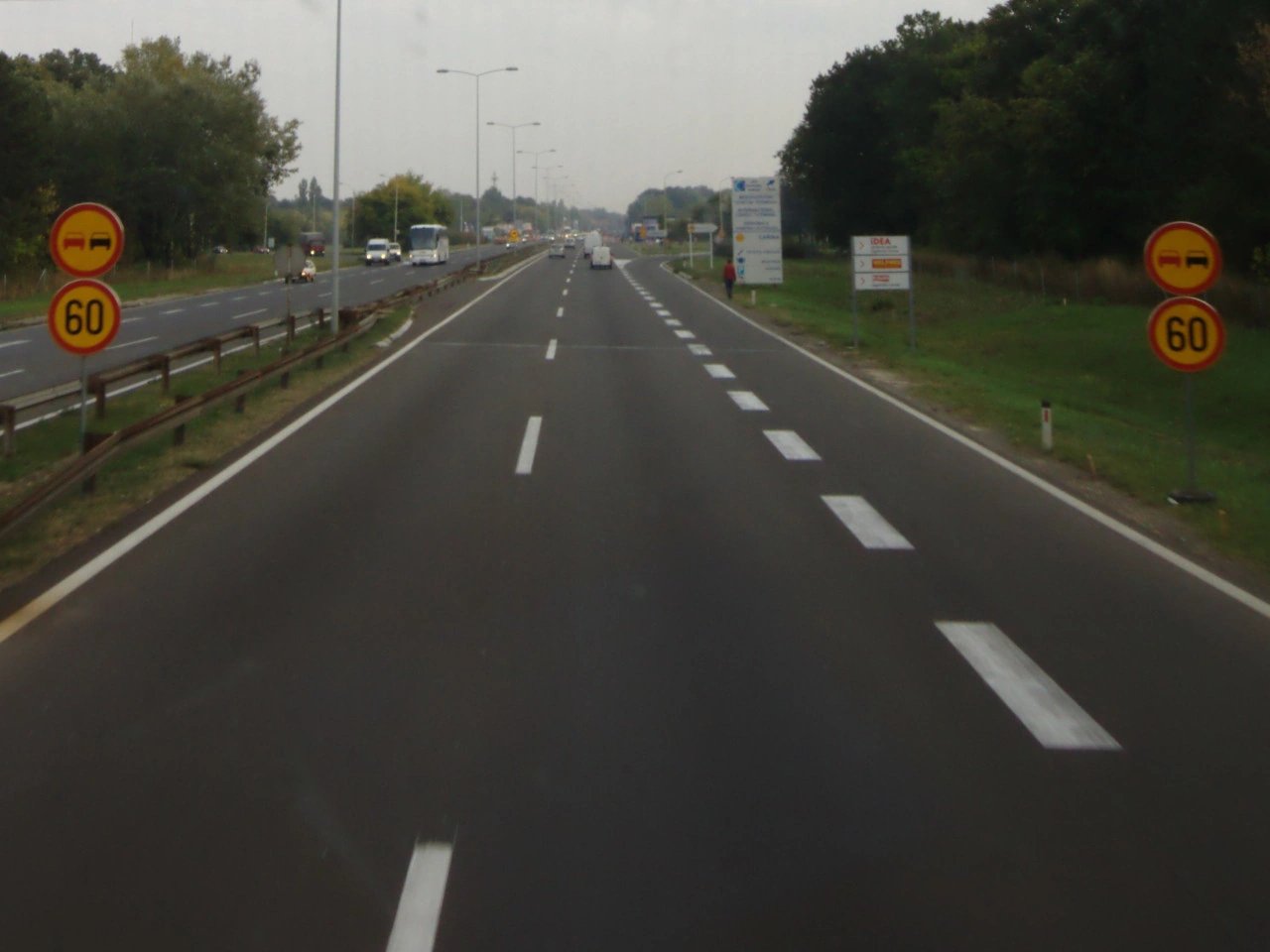
A speed limit is the maximum legal speed permitted on a road, lane or within a designated area. It may be established by general traffic law or indicated by fixed, variable or temporary traffic signs.
A speed limit is a maximum, not a target speed. Drivers must travel more slowly whenever traffic, visibility, weather, road conditions, vulnerable road users or the condition of the vehicle make the maximum permitted speed unsafe.
Wikimedia.org • Aktron • CC BY
Which general speed limits should car drivers know in Serbia?
For an ordinary car, the general maxima are 50 km/h in built-up areas, 80 km/h on other rural roads, 100 km/h on expressways and 130 km/h on motorways. Suitable urban roads may have a higher signed limit up to 80 km/h. Probationary drivers, school zones and particular vehicles have additional restrictions.
What lower speed rules apply to Serbian probationary drivers?
A driver with a probationary licence must not exceed 110 km/h on a motorway or 90 km/h on an expressway. On other roads, the ceiling is 90% of the permitted speed on that section. A lower applicable restriction still governs.
When do Serbia’s school-zone speed limits normally apply?
In a designated school zone, the maximum is generally 30 km/h within a built-up area and 50 km/h outside it, from 07:00 to 21:00. Signs can specify a different operating period. Check the actual school-zone conditions and slow further where children require it.
4. Bus stop
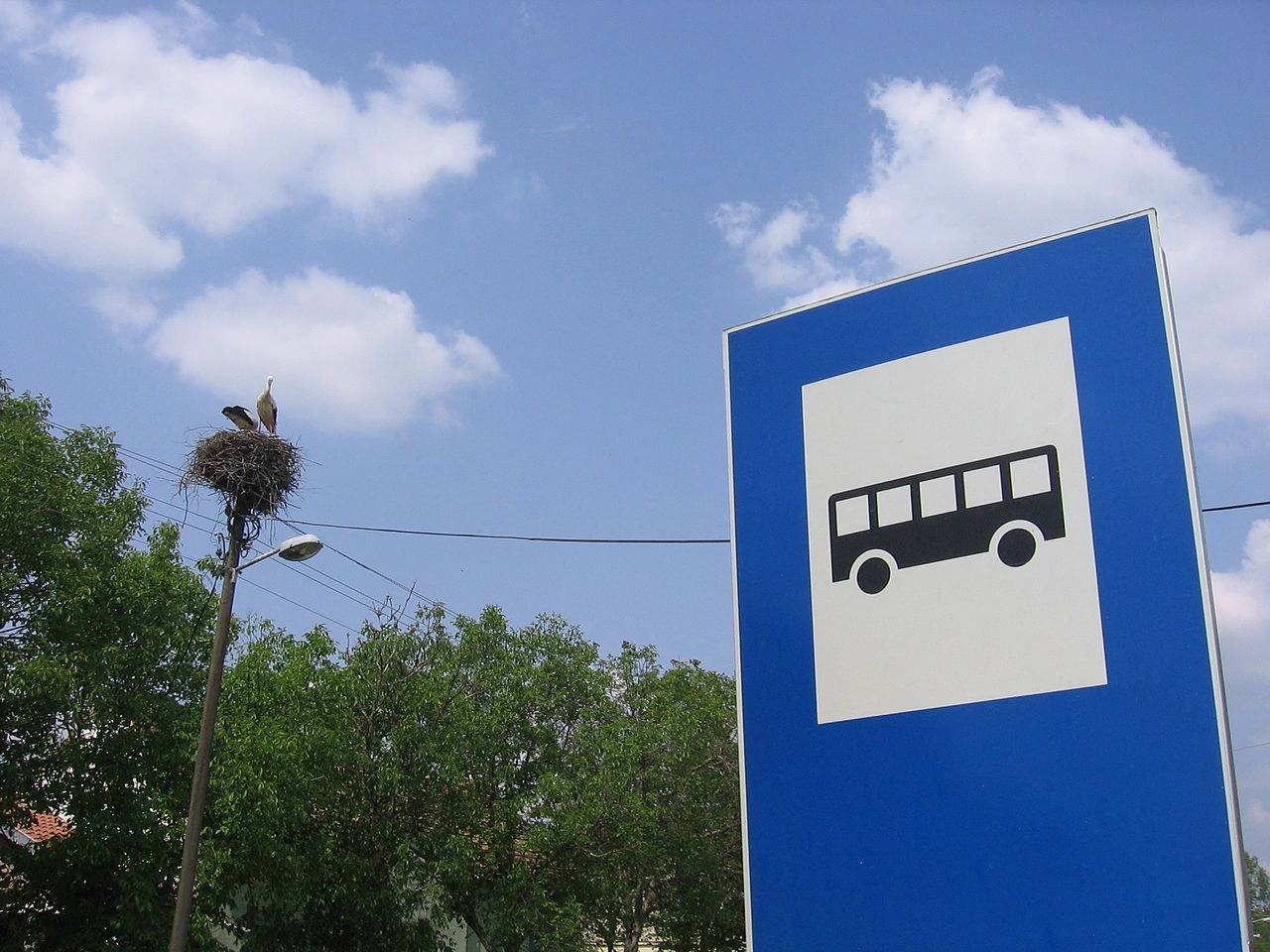
A bus stop is a designated place where buses stop to allow passengers to board or leave. It may be identified by a sign, shelter, raised platform, road marking or other public-transport infrastructure and can be located beside the road or in a specially constructed stopping area.
Drivers approaching a bus stop should watch carefully for buses, pedestrians and passengers crossing or entering the roadway. Parking or stopping restrictions may apply around bus stops to keep the area accessible and visible.
Wikimedia.org • Stebunik • CC BY-SA
What stopping or parking restrictions apply at bus stops in Serbia?
Serbia prohibits stopping and parking at public-transport stops and within 15 metres before and after the road marking identifying the stop, subject to the Act’s provisions.
May I briefly drop off a passenger at a bus stop in Serbia?
A private car has no general passenger-pick-up exemption in the protected stop area. The Act provides a specific exception for taxis for the time needed to board or alight passengers; it does not authorise waiting or parking.
What should I do near a stopped bus in Serbia?
In a built-up area, follow the Act’s provisions for public-transport vehicles entering traffic from a designated stop. Slow early, leave room and protect passengers near the vehicle.
5. Stop sign
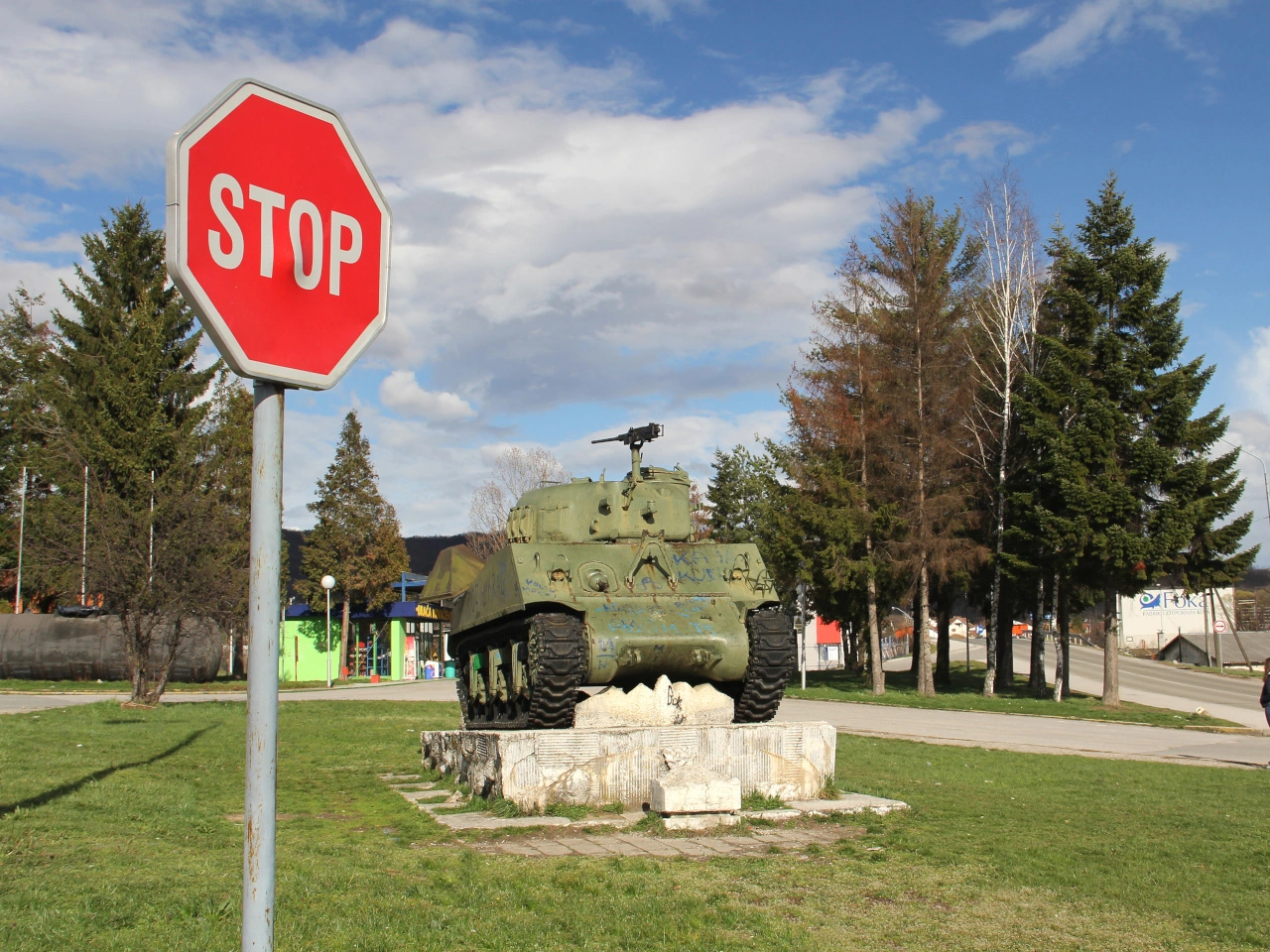
A stop sign requires drivers to bring their vehicle to a complete stop and give way before entering or crossing the road ahead. The stop must be made at the stop line or another legally prescribed position.
After stopping, the driver may continue only when this can be done safely and without interfering with traffic that has priority. The sign does not create priority for the driver who has stopped.
Wikimedia.org • BrankaVV • CC BY-SA
Must I stop completely at a stop sign in Serbia?
Yes. Come to a complete stop when the applicable stop sign controls your approach, even when you cannot see another road user. Slowing to a crawl is not a stop. The stopping duty is separate from the duty to give way before continuing.
Where must I stop at a stop-controlled junction in Serbia?
Stop before the marked stop line or the prescribed stopping position before the junction. Remain outside the conflicting route until you have a safe view and can give way to the traffic entitled to pass.
Does stopping first give me priority at a stop sign in Serbia?
A complete stop does not, by itself, give you priority. Give way to the road users entitled to pass under the junction’s signs and rules, check pedestrians and cyclists, and proceed only when the gap is safe. Do not follow another stopped vehicle through without satisfying your own stopping and yielding duties.
6. Roundabout
A roundabout is a circular road arrangement in which traffic travels around a central island in one designated direction. Vehicles enter and leave through connecting roads, and traffic signs or local rules determine who has priority.
Drivers should reduce speed, choose a suitable lane, observe all road users and signal as required when leaving. The direction of travel, entry priority, lane use and rules for cyclists and pedestrians depend on local traffic signs and regulations.
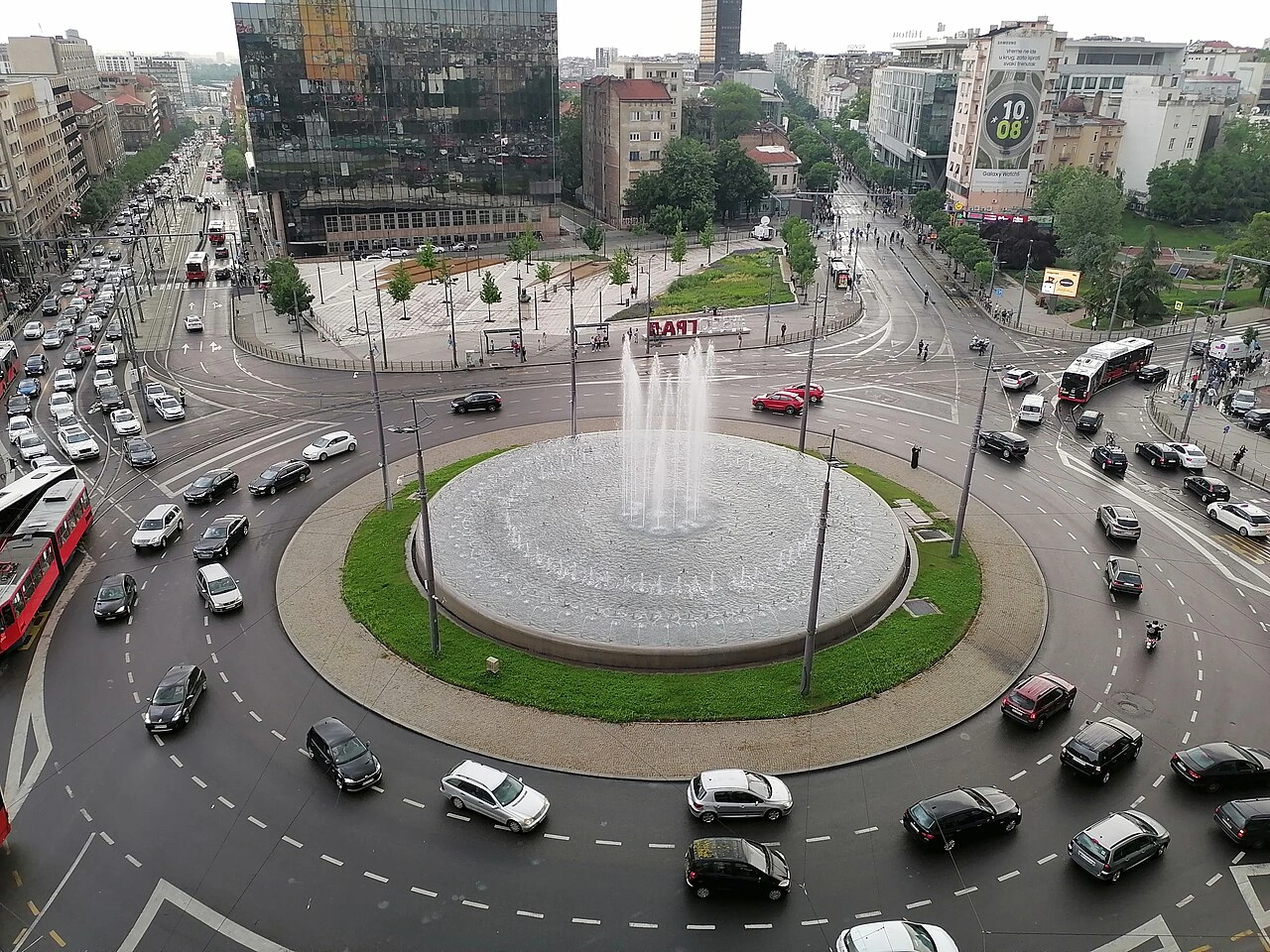
Wikimedia.org • Andrija12345678 • CC BY-SA
Who has priority at a roundabout in Serbia?
At a Serbian roundabout, follow the actual priority signs. A give-way control at entry requires yielding to the circular road; without a different control, the ordinary priority-from-the-right rule must not be ignored.
How should you choose a roundabout lane in Serbia?
Choose your intended exit before entering and follow the lane arrows and destination signs. Keep to the marked route and make any permitted lane change only when safe; having priority over entering traffic does not give you priority to change lanes.
What should you check when leaving a roundabout in Serbia?
Check the lane you will cross or enter, signal the manoeuvre as required and look for cyclists and pedestrians at the exit. Obey any separate crossing controls and do not force an exit across another vehicle’s path.
7. Railway crossing
A railway crossing, also called a level crossing or railroad crossing, is a place where a road or path crosses railway tracks at the same level. It may be protected by barriers, warning lights, bells, traffic signs or a combination of these measures.
Road users must approach carefully and never enter when a train is approaching, warning signals are active or the exit is blocked. They should cross promptly and must never stop, wait or become trapped on the tracks.
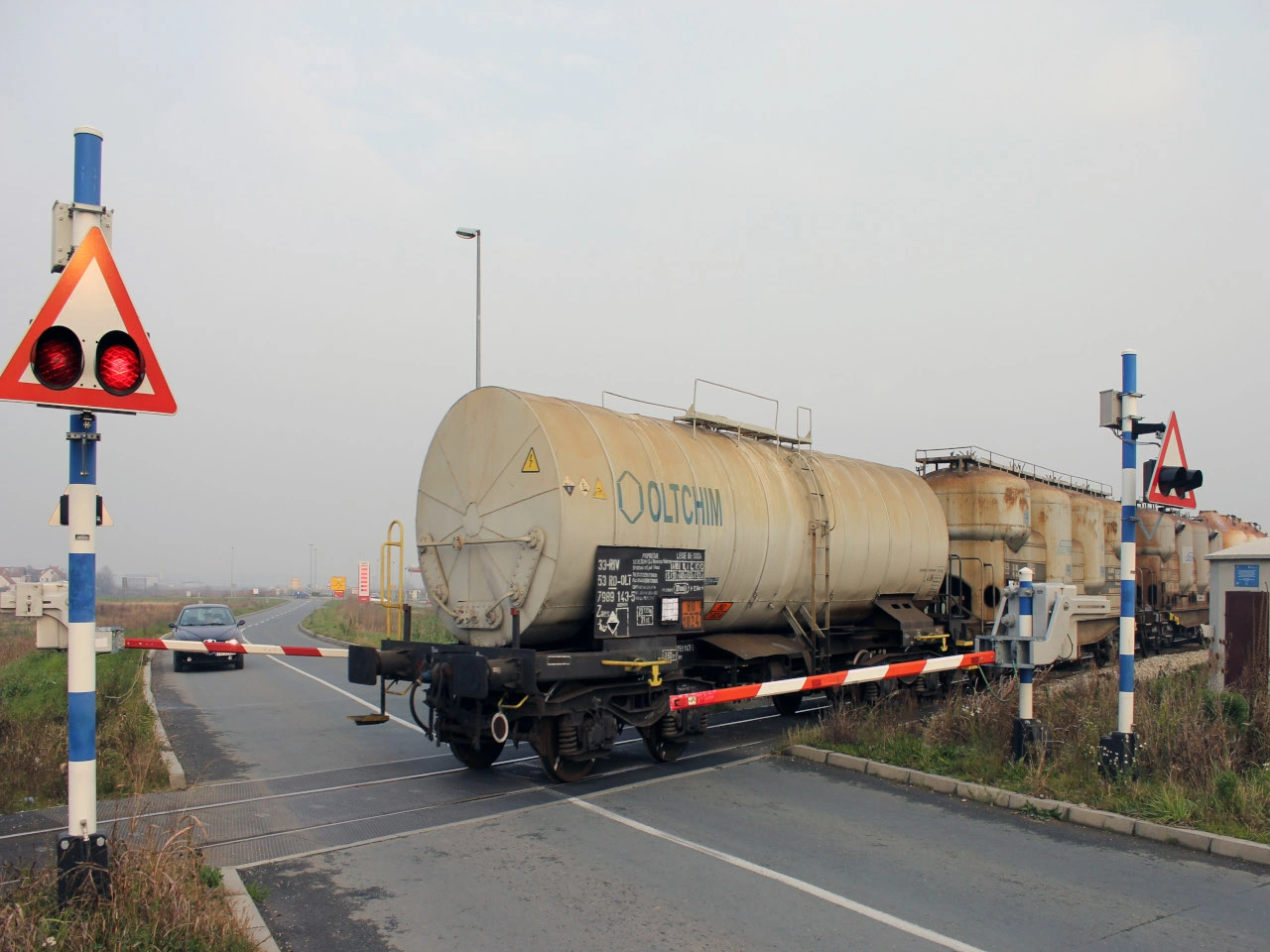
Wikimedia.org • Srđan Popović • CC BY-SA
When must drivers stop at a railway level crossing in Serbia?
Give way to rail vehicles and approach slowly enough to stop before the tracks. Stop when barriers are down or lowering, when light or sound warnings announce their closure, or when the crossing signal forbids passage. At a crossing with neither barriers nor train-warning devices, stop first and check that no train or other rail vehicle is approaching.
Must I stop at every unguarded railway crossing in Serbia?
Yes. At a level crossing with neither barriers nor devices warning of an approaching train, article 101 requires a full stop before crossing. Continue only after checking that no train or other rail vehicle is approaching. At other crossings, obey the installed controls and give way to rail traffic.
What if road traffic is queued beyond a railway crossing in Serbia?
Wait before the tracks until there is room to take your entire vehicle off the crossing. Do not follow another vehicle onto the tracks without checking the exit. Keep the tracks clear even if no train is visible.
🔗 abs.gov.rs • Serbian Road Traffic Safety Agency, Road Traffic Safety Law
8. School area
A school area is a road or group of roads near a school where large numbers of children may walk, cycle, cross the road or enter and leave vehicles. It may be identified by warning signs, zone signs, road markings, traffic-calming measures or flashing lights.
Special speed limits, parking restrictions or access rules may apply permanently or only during school arrival and departure times. Drivers should reduce speed, watch carefully for children and be prepared to stop.
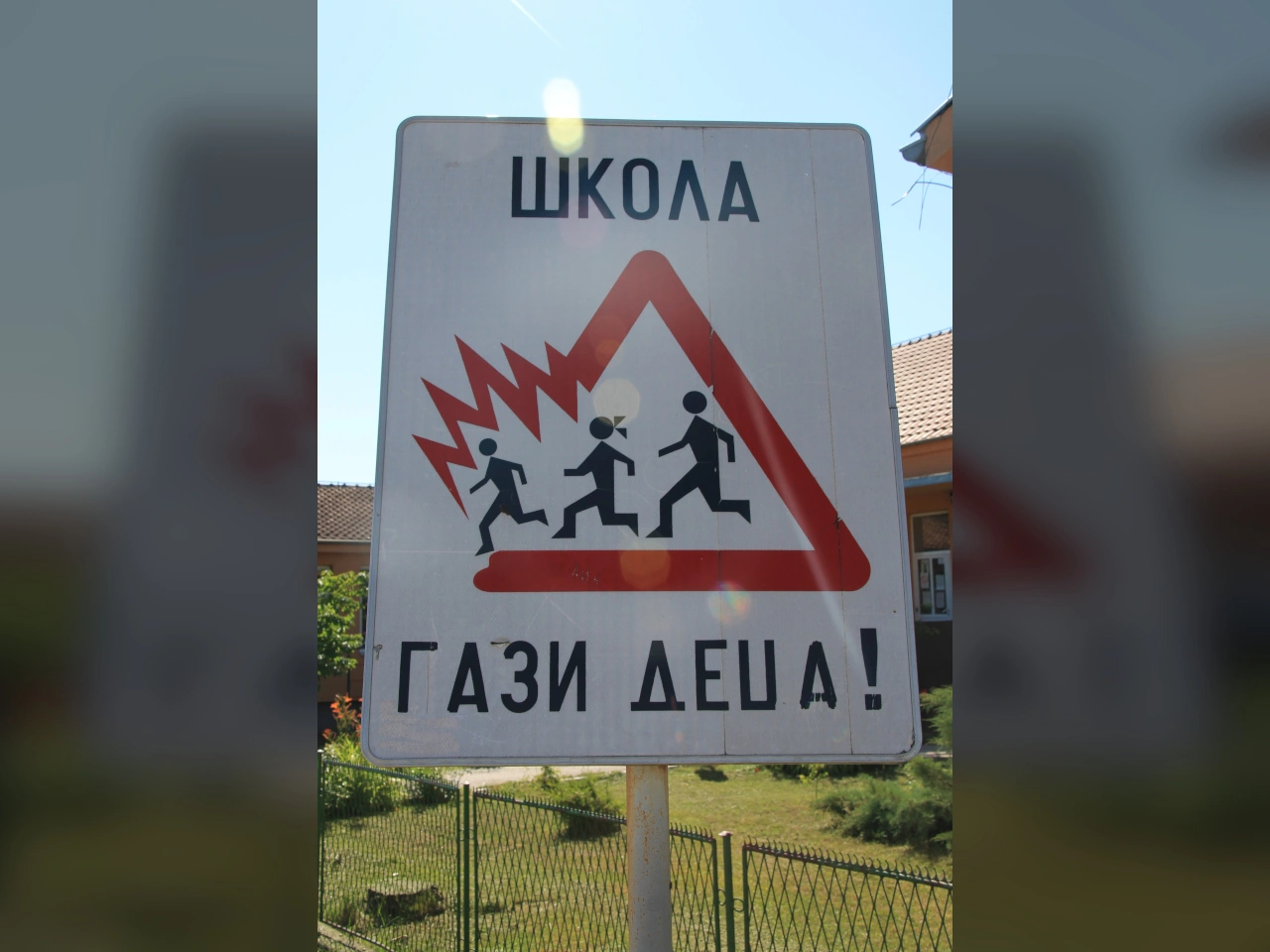
Wikimedia.org • Ванилица • CC BY-SA
What is the legal speed limit in a Serbian school zone?
In a legally designated Serbian school zone, the limit is generally 30 km/h within a built-up area and 50 km/h outside, normally from 07:00 to 21:00, unless the signed period differs.
Does a school warning sign in Serbia automatically set the speed limit?
A children or school warning alerts you to a potential hazard; the enforceable numerical speed limit depends on the applicable law, regulatory signs and any time or variable display. Slow further if children are near the road.
How should you pass a school entrance in Serbia?
Watch for children stepping out from between parked vehicles, obey crossings and any school patrol, and follow stopping or parking restrictions. Do not obstruct visibility near a crossing or school entrance; approach at a speed that permits a safe stop.
9. Wrong-way driving
Wrong-way driving occurs when a driver travels against the legally permitted direction of traffic. It may happen on a one-way road, divided road, motorway entrance or exit, or another road section reserved for traffic travelling in one direction.
Wrong-way driving creates an extreme risk of a head-on collision. Drivers must follow direction signs, no-entry signs, lane arrows and road markings. Anyone who accidentally enters a road in the wrong direction should slow down, warn other traffic, stop in the safest available place and contact the emergency services.
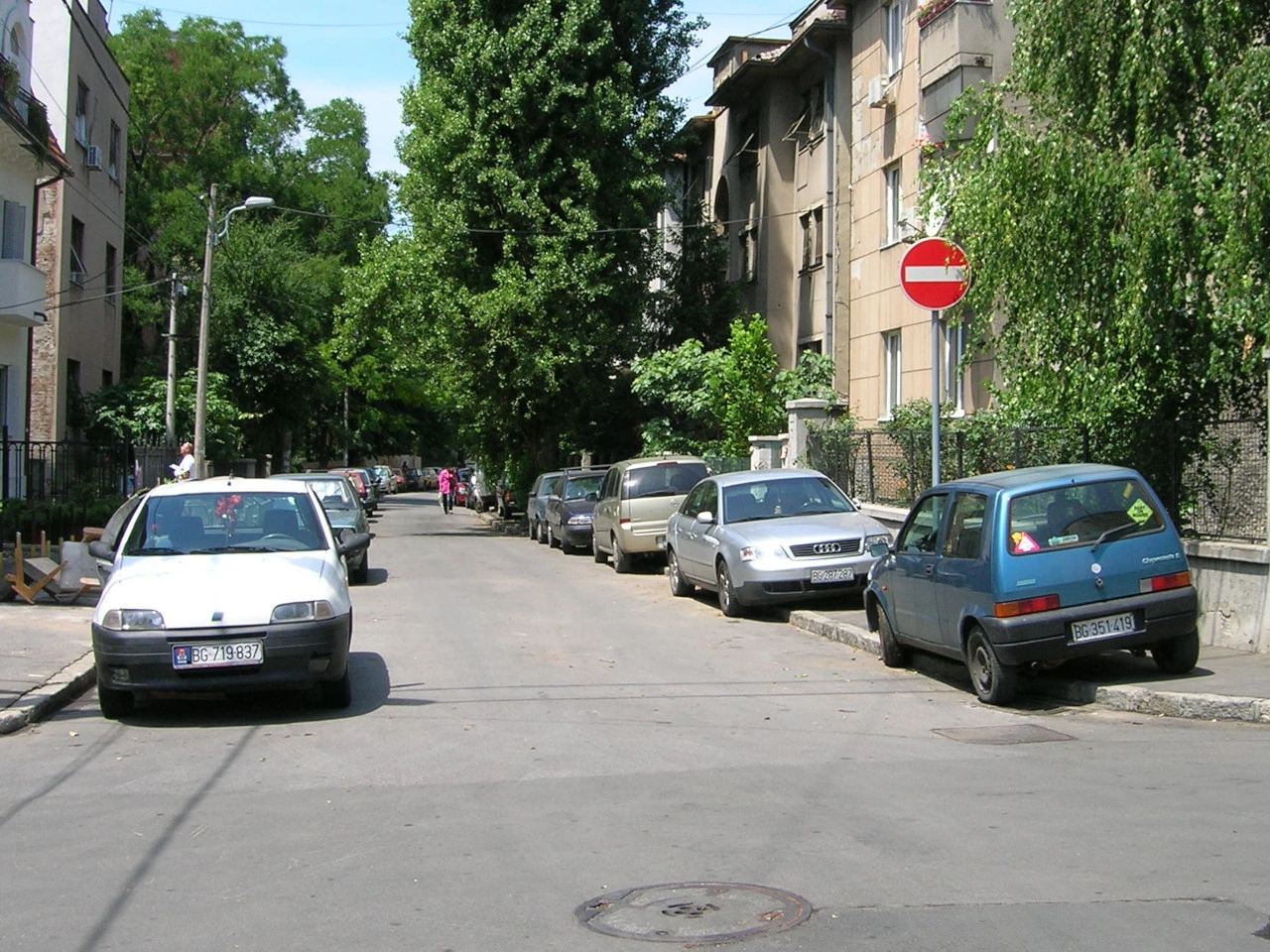
Wikimedia.org • voja Milenovic • CC BY-SA
How can you avoid driving the wrong way in Serbia?
Traffic normally keeps right here. Keep to the correct side of the road and use no-entry and one-way signs to identify prohibited approaches; do not enter an exit ramp against its permitted direction.
What signs can prevent wrong-way driving in Serbia?
Read no-entry signs, one-way signs, lane arrows and temporary directions together; a wide road is not automatically two-way. Before entering a motorway, expressway, one-way street or slip road, check the permitted direction rather than relying only on a navigation app.
10. Roadworks
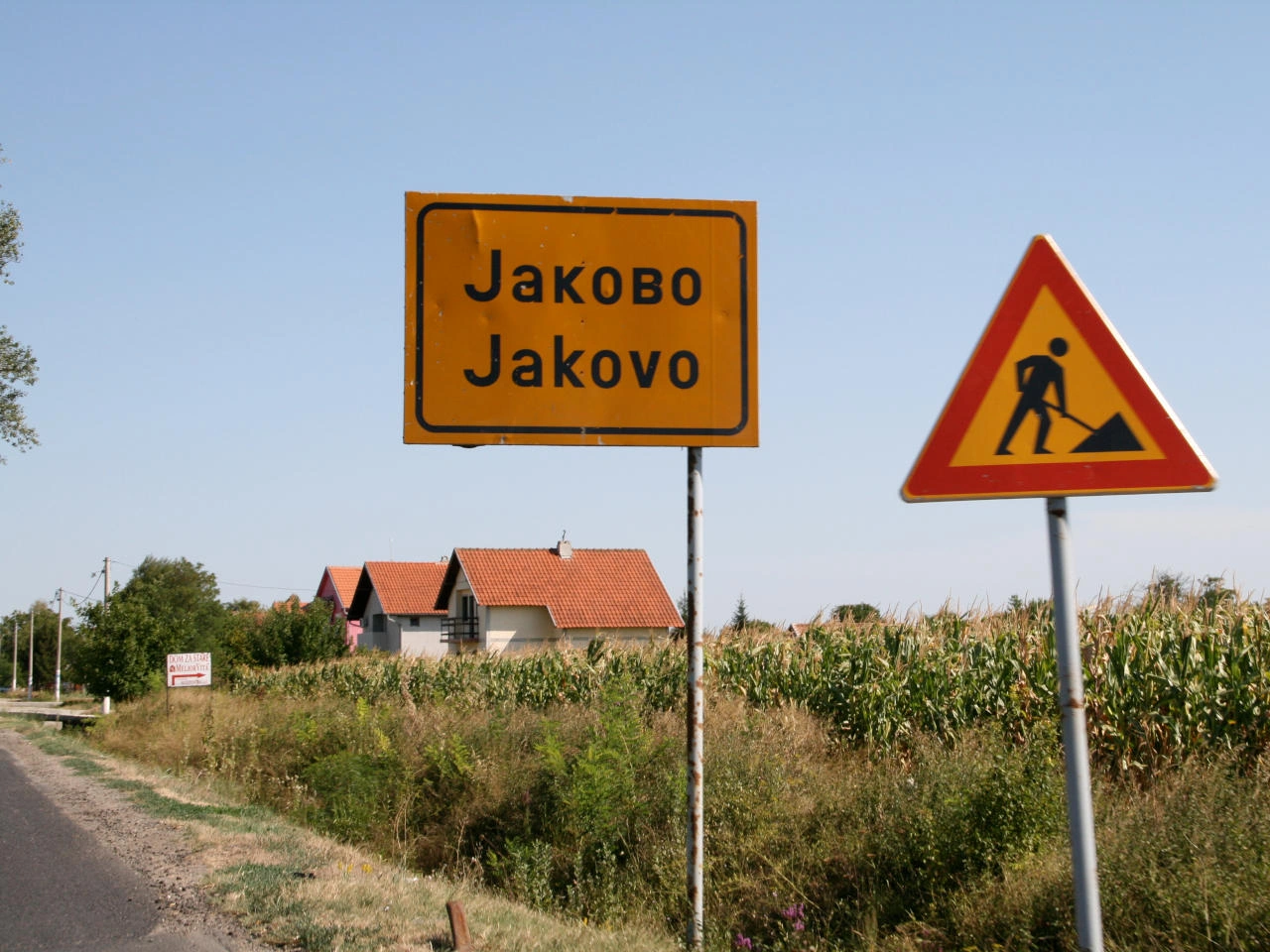
Roadworks are construction, maintenance, repair or inspection activities carried out on or beside a road. They may temporarily change the road layout, lane widths, speed limits, priority, permitted directions and facilities for pedestrians or cyclists.
Drivers must follow the temporary signs, traffic lights, barriers, road markings and instructions from authorised personnel. They should reduce speed, increase their following distance and remain prepared for narrow lanes, stopped traffic, workers, machinery and sudden changes in the route.
Wikimedia.org • Тајга • CC BY-SA
What should you watch for when approaching roadworks in Serbia?
Look for temporary warnings, cones, barriers, narrow lanes and construction vehicles. Road layouts can change temporarily, including lane shifts, traffic-light control and short one-way sections. Expect workers and slow or stationary traffic near the worksite.
Is a temporary speed limit at roadworks binding in Serbia?
Where an authorised temporary regulatory speed limit is in force, you must obey it. A roadworks warning alone should not be mistaken for a new numerical limit, but conditions may require driving more slowly.
What if only one lane remains open through roadworks in Serbia?
Follow the temporary signals, stop/go instructions, lane arrows and priority signs. Do not enter an opposing traffic lane until permitted, and give vulnerable road users and road workers extra room.
11. Traffic lights
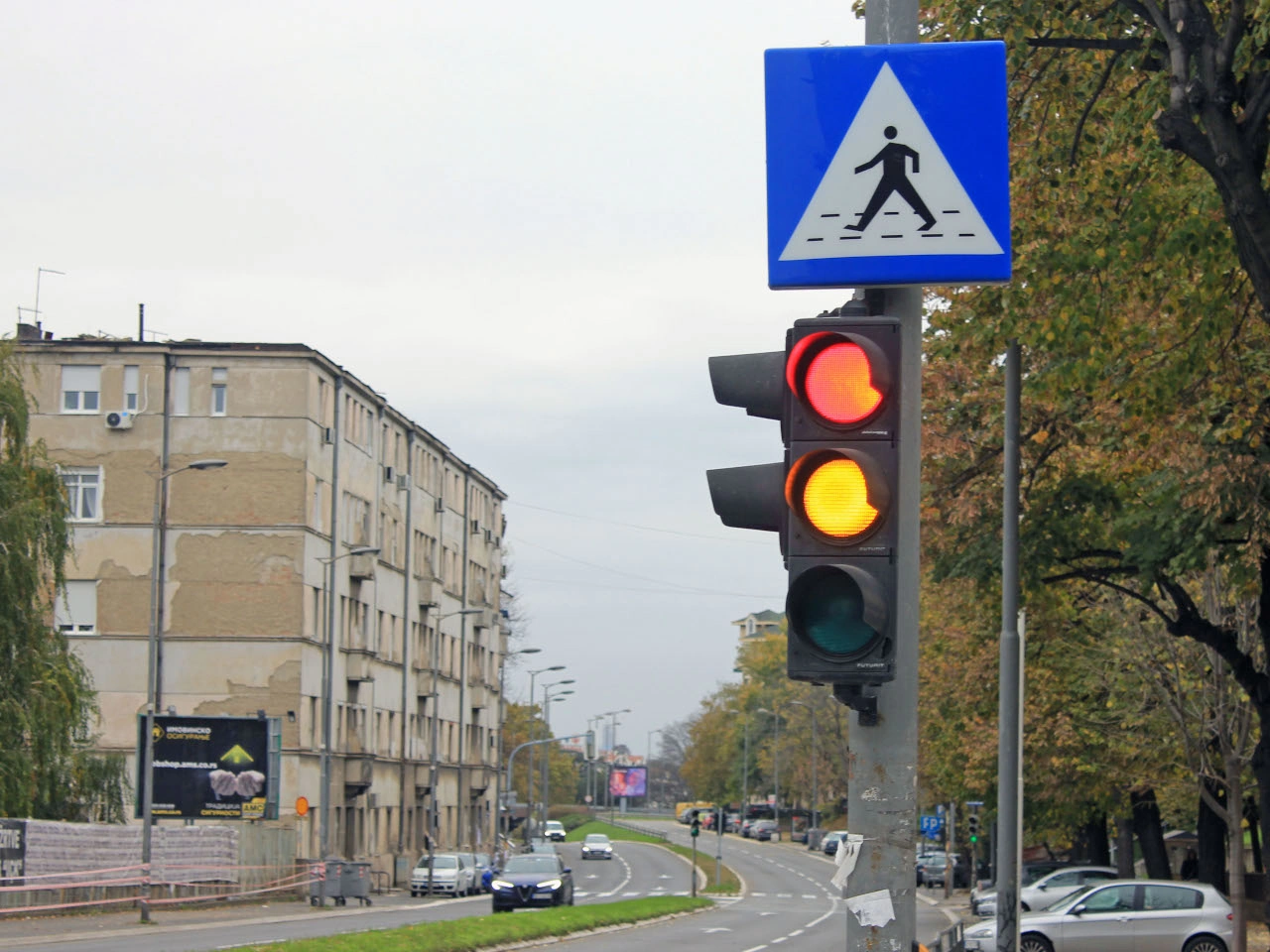
Traffic lights use coloured lights, arrows or symbols to regulate when road users may proceed, must prepare to stop or must remain stopped. Separate signals may apply to particular directions, lanes, pedestrians, cyclists or public-transport vehicles.
A green light permits movement only when the route is clear and the movement is otherwise legal. Road users must still follow priority rules, turning restrictions, lane markings and instructions from authorised traffic controllers.
Wikimedia.org • Srđan Popović • CC BY-SA
What must a driver do at red, amber and green signals in Serbia?
Red means stop. Red-and-amber also prohibits passage and warns that green is coming. Amber requires stopping unless you cannot stop safely; green permits passage subject to the remaining road rules.
🔗 abs.gov.rs • Road Traffic Safety Law, articles 97,99,142-146; agency edition through 19/2025
May you turn at a red traffic light in Serbia?
An illuminated supplementary green arrow permits movement only in its indicated direction even while red or amber is showing. Give way to vehicles on the road you enter and to pedestrians crossing. A plain red signal does not give that permission.
🔗 abs.gov.rs • Road Traffic Safety Law, articles 97,99,142-146; agency edition through 19/2025
Can a green light remove the need to give way to pedestrians in Serbia?
No. Allow pedestrians who entered, or indicated their intention to enter, while their signal permitted crossing to pass. When turning into a side road, give way to pedestrians on, entering, or clearly intending to enter its crossing; stop if necessary.
🔗 abs.gov.rs • Road Traffic Safety Law, articles 97,99,142-146; agency edition through 19/2025
12. Driving licence
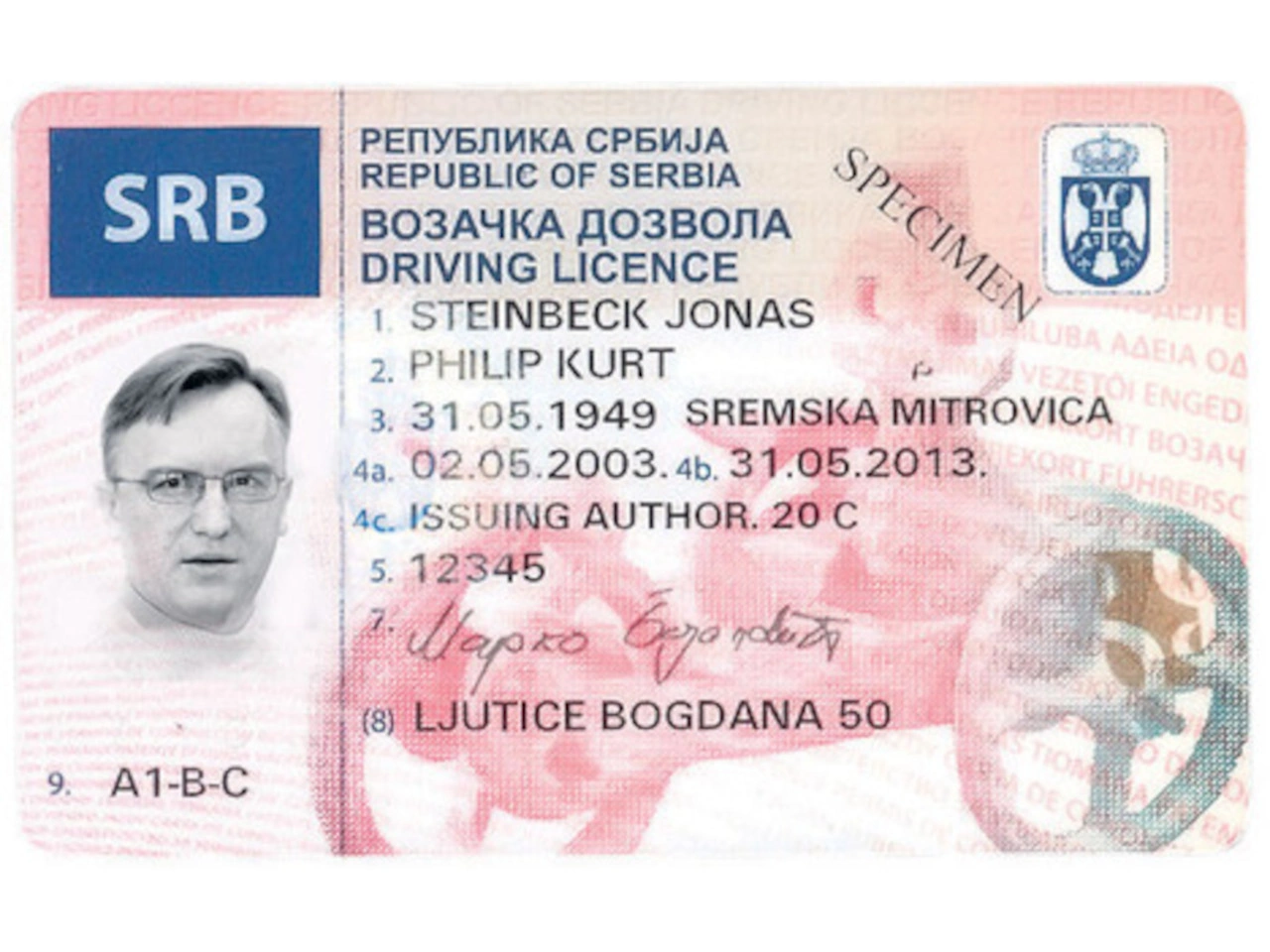
A driving licence is an official document authorising a person to drive one or more specified categories of motor vehicle. It may contain conditions, restrictions, category codes and expiry dates that determine which vehicles the holder may drive.
Drivers must hold a licence that is valid for the vehicle category and jurisdiction concerned. A licence may be provisional, full, restricted, suspended or withdrawn, and additional qualifications may be required for professional driving.
Wikimedia.org • Deusdies • CC BY-SA
Which driving-licence entitlement is needed for an ordinary car in Serbia?
In Serbia, an ordinary passenger car generally falls under category B, subject to the vehicle and trailer rules. A different entitlement may be needed for motorcycles, heavy vehicles, trailers or passenger transport.
Can a visitor drive in Serbia using a driving licence issued abroad?
Recognition depends on where the licence was issued, the category, its validity and the visitor’s status or length of stay. Check the local licensing authority before driving; temporary residence or employment can change the conditions.
Does an International Driving Permit replace the original licence in Serbia?
No. An International Driving Permit (IDP) accompanies the underlying valid driving licence; it does not replace it. Carry both when using an IDP and check which permit or translation is accepted for your licence and visit.
🔗 gov.uk • UK Government, IDP use with the underlying licence
🔗 gov.uk • UK Government, driving documents for visitors to Serbia
🔗 abs.gov.rs • Serbian Road Traffic Safety Agency, Road Traffic Safety Law
13. Traffic mirror
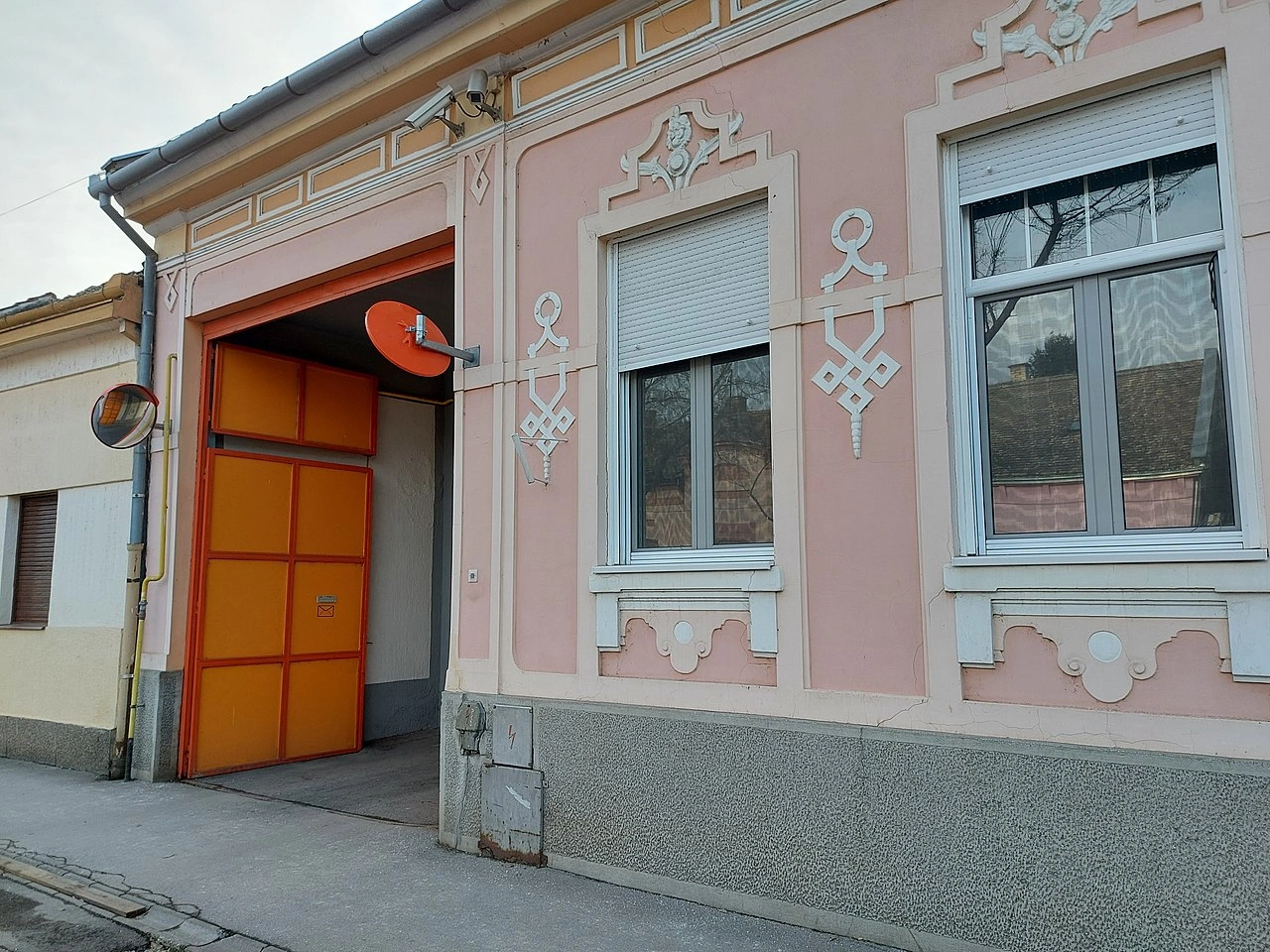
A traffic mirror is a convex mirror installed near an intersection, driveway, bend or other location with restricted visibility. Its curved surface provides a wider view of approaching road users than an ordinary flat mirror.
A traffic mirror is only a visibility aid. It may distort distance, speed and direction and may be affected by darkness, weather, dirt or damage. Drivers must continue to observe the road directly, obey all priority rules and proceed only when it is safe.
Wikimedia.org • Gzanag • CC BY-SA
What is a traffic mirror?
A traffic mirror is a roadside visibility aid that can help users see around a blind corner or obstruction. It gives an indirect view, which may be restricted or distorted; it does not replace checking whether it is safe to proceed.
🔗 monmouthshire.gov.uk • Monmouthshire Council, roadside visibility mirrors
🔗 devon.gov.uk • Devon County Council, mirrors on the highway
Does a traffic mirror show an exact image?
No. The reflected image can be distorted, and glare, bad weather or dirt can restrict the view. Judging an approaching vehicle’s speed from a mirror can be difficult. Do not rely on the mirror alone.
🔗 monmouthshire.gov.uk • Monmouthshire Council, roadside visibility mirrors
🔗 devon.gov.uk • Devon County Council, mirrors on the highway
Does seeing an empty mirror mean the road is clear?
No. Another road user may be outside the reflected area, hidden by glare or too small to notice. Always check the road directly before proceeding.
🔗 monmouthshire.gov.uk • Monmouthshire Council, roadside visibility mirrors
🔗 devon.gov.uk • Devon County Council, mirrors on the highway
14. Parking
Parking means leaving a vehicle stationary at a place for a period of time rather than stopping only briefly because of traffic conditions or another immediate necessity. Many countries distinguish parking from a short stop made to pick up or drop off passengers or to load or unload goods, although the exact legal definition varies.
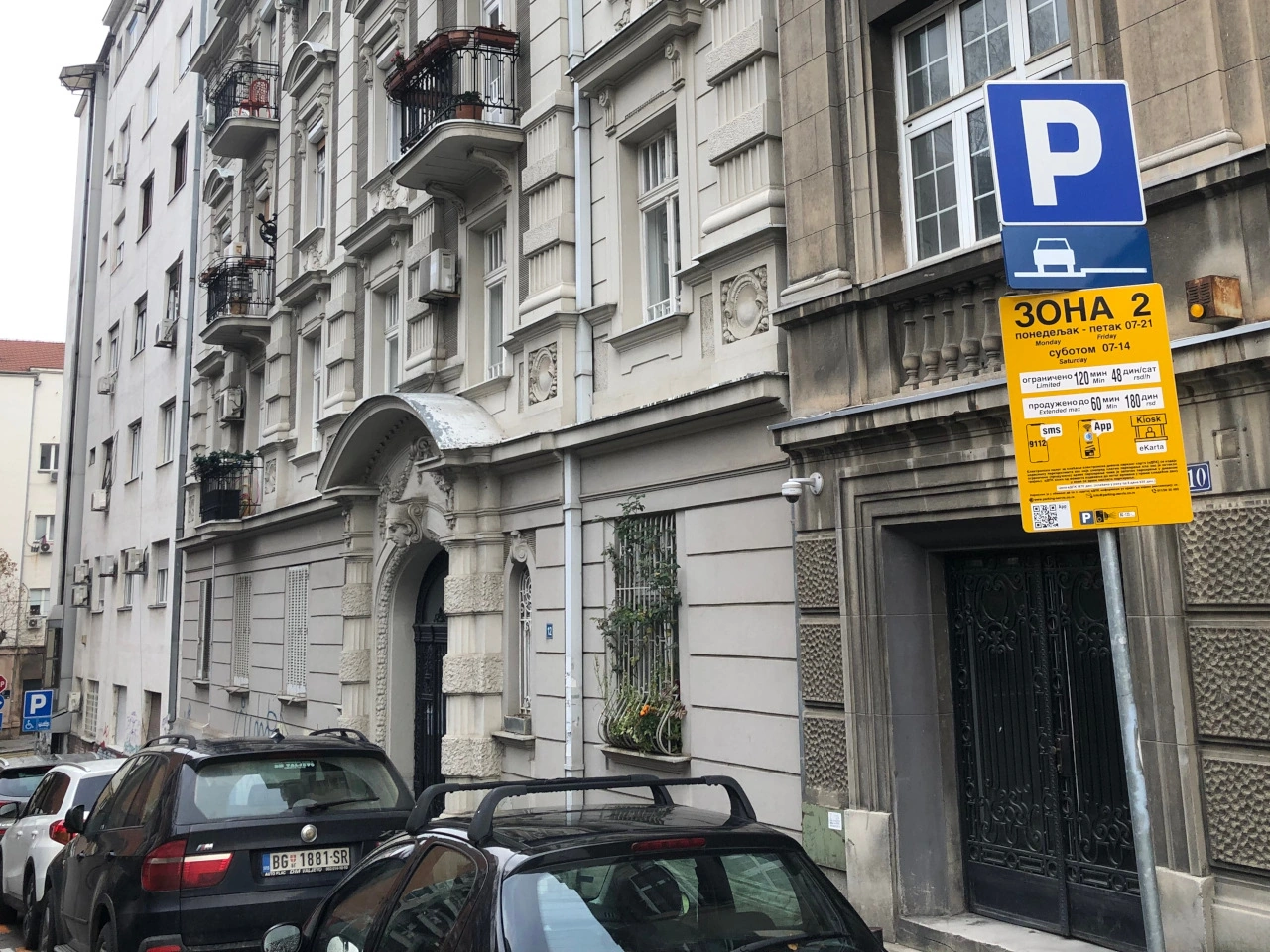
Parking may be permitted, restricted, reserved, time-limited or prohibited by traffic signs, road markings, parking zones and local regulations. Drivers must park without creating a danger or unnecessary obstruction and must comply with any conditions concerning payment, permits, vehicle categories or maximum parking duration.
Wikimedia.org • MMatea • CC BY-SA
Can you pay for Belgrade zoned parking through the official app?
Yes. Parking Service offers payment by SMS, payment card or funds deposited in the app.
🔗 parking-servis.co.rs • Belgrade Parking Service, hourly parking payments
Does the Belgrade parking app help identify the parking zone?
Yes. It uses GPS to suggest a zone. Check the actual signs before accepting the selection.
🔗 parking-servis.co.rs • Belgrade Parking Service, hourly parking payments
Can you buy several hours of Belgrade parking by sending several SMS messages?
Only within the zone’s permitted duration. The operator allows two or three messages together where the applicable time limit permits.
🔗 parking-servis.co.rs • Belgrade Parking Service, hourly parking payments
Does Belgrade’s blue-zone parking have the same time limit as its restricted zones?
No. The operator describes its general blue-zone spaces outside the zoned area as having no time limit. Check the local signs.
🔗 parking-servis.co.rs • Belgrade Parking Service, zoned parking
15. Reversing
Reversing means driving a vehicle backwards. It is commonly used when parking, leaving a confined space or repositioning a vehicle where forward movement is not practical.
Before reversing, the driver should check mirrors and blind spots, look carefully around the vehicle and make sure the area behind is clear. Reversing should be performed slowly and only for as long as necessary because visibility behind the vehicle is often limited.

Wikimedia.org • Kārlis Dambrāns • CC BY
How far may Serbian drivers normally reverse?
Only exceptionally over a short distance, without endangering or obstructing others.
Which side should Serbian reversing drivers use?
The same side previously used for forward travel.
Can you reverse where Serbian road visibility is poor?
No. Reversing is prohibited on obscured sections and in reduced visibility.
Can you reverse on Serbian railway crossings?
No. Reversing is prohibited there.
16. City limit
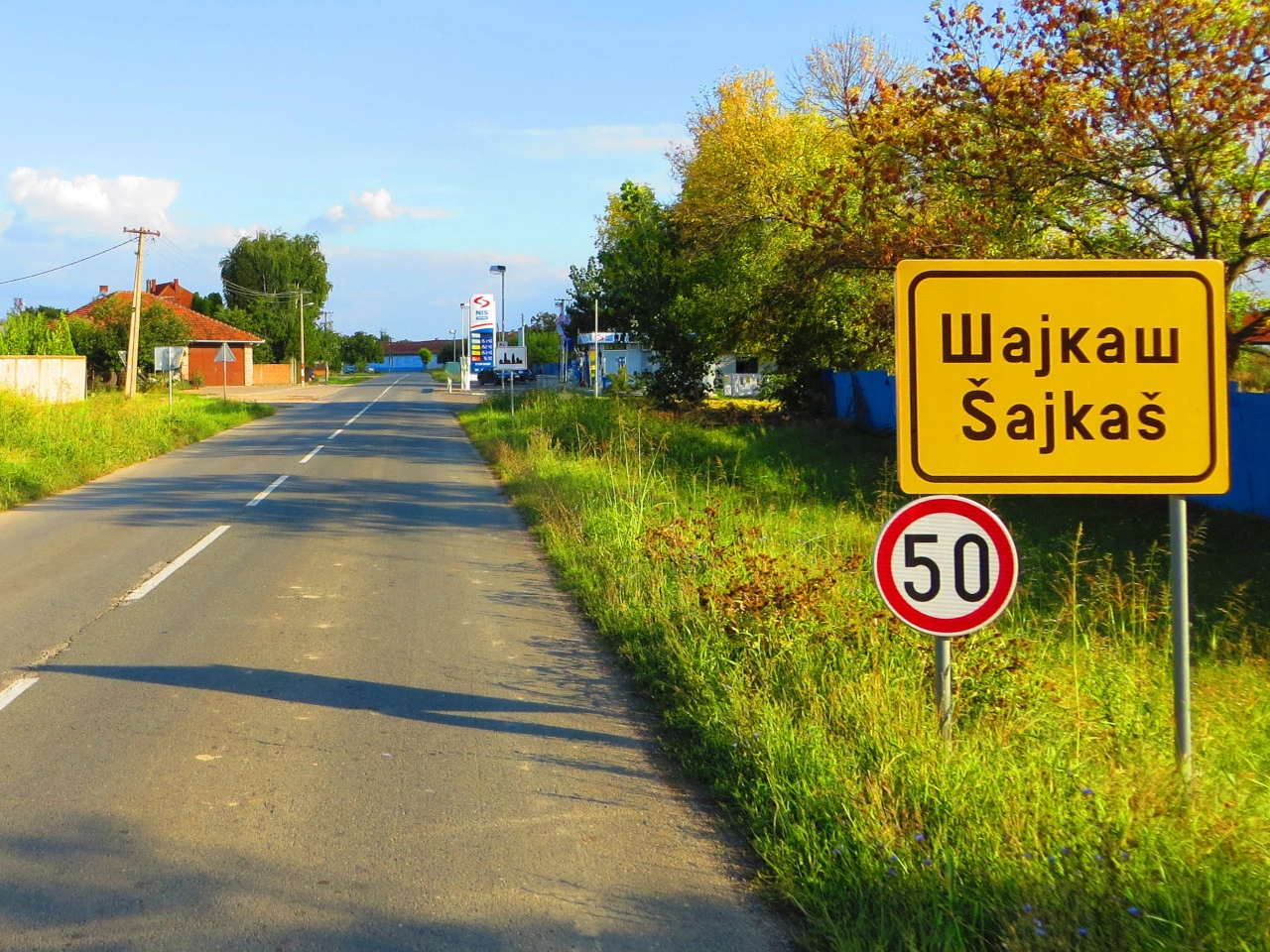
A city limit is a boundary or roadside indication showing that a driver is entering or leaving a named city, town, village, locality or municipality. It is commonly marked by a place-name or boundary sign.
The meaning of these signs varies between countries. A city-limit or locality sign may identify an administrative boundary, a named settlement or a traffic-related boundary. It does not necessarily mark the beginning or end of a legally defined built-up area, and passing the sign does not always change the applicable speed limit or other traffic rules.
Wikimedia.org • Mister No • CC BY
What is a city limit?
A city limit identifies the boundary of a named city, town or municipality. A roadside place-name or boundary sign may identify that boundary, a locality or a legally defined built-up area; its exact meaning depends on the sign system.
🔗 gov.uk • UK Department for Transport, Know Your Traffic Signs, boundary signs
Does a city-limit sign always mark a built-up area?
No. A city-limit or locality sign may simply identify a place or administrative boundary. A legally defined built-up area can use a different sign or definition.
🔗 gov.uk • UK Department for Transport, Know Your Traffic Signs, boundary signs
What is the difference between a city limit and a built-up area?
A city limit identifies the boundary of a named place or administrative area. A built-up area is a traffic-law concept that may affect rules such as default speed limits. The two boundaries can coincide, but they do not have to.
🔗 gov.uk • UK Department for Transport, Know Your Traffic Signs, boundary signs
17. Tourist attraction
A tourist attraction is a place of interest that visitors may travel to for cultural, historical, recreational, natural or entertainment purposes. Examples include monuments, castles, museums, scenic sites, amusement parks and other notable destinations.
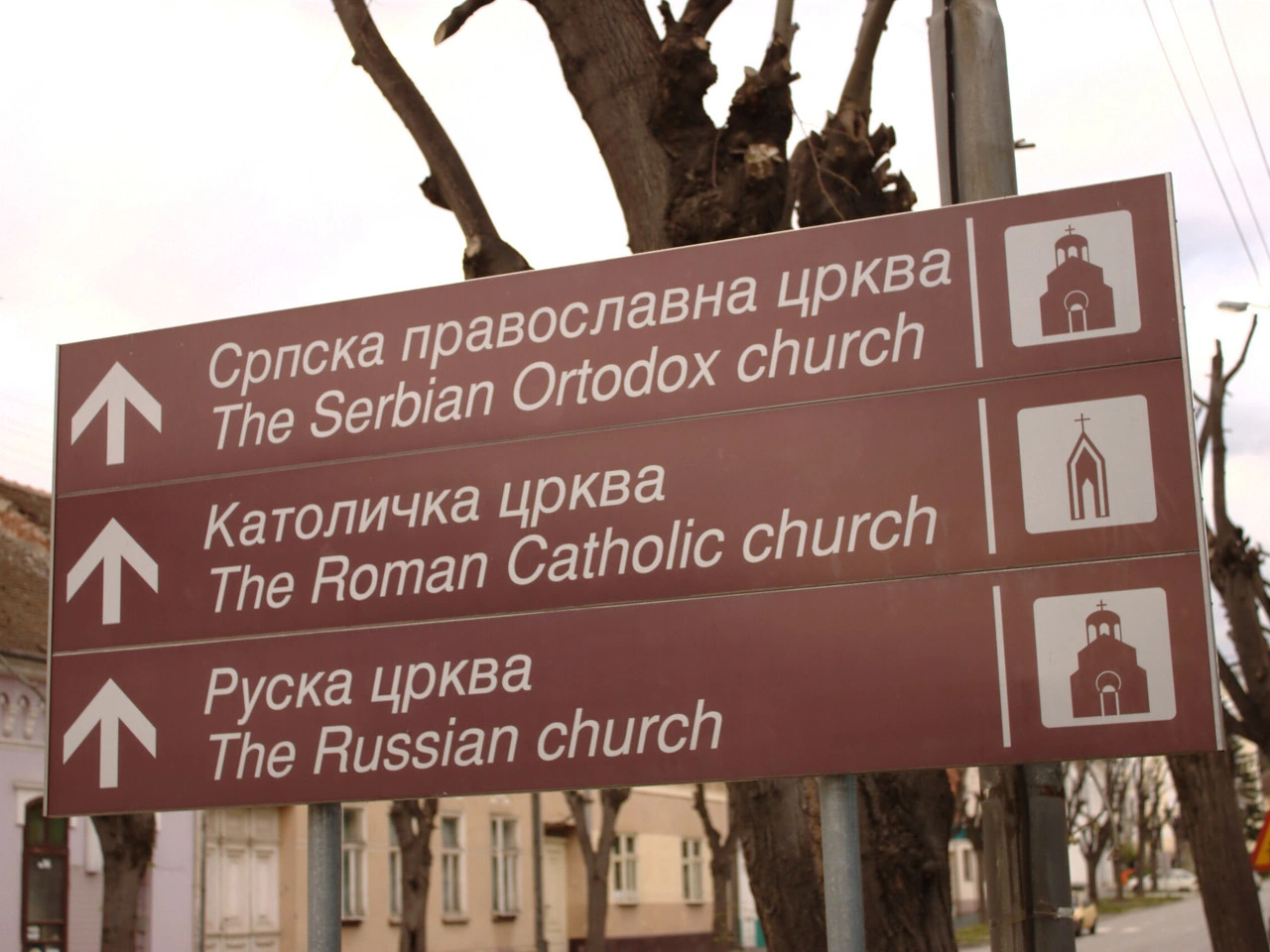
Tourist attractions may be indicated by tourist or direction signs that help travellers find the destination. The colours, symbols and types of attractions shown vary between countries.
Wikimedia.org • Aktron • CC BY
Can tourist attractions be indicated by road signs?
Yes. Many countries use tourist or direction signs to guide travellers toward important attractions and places of interest.
18. Bus
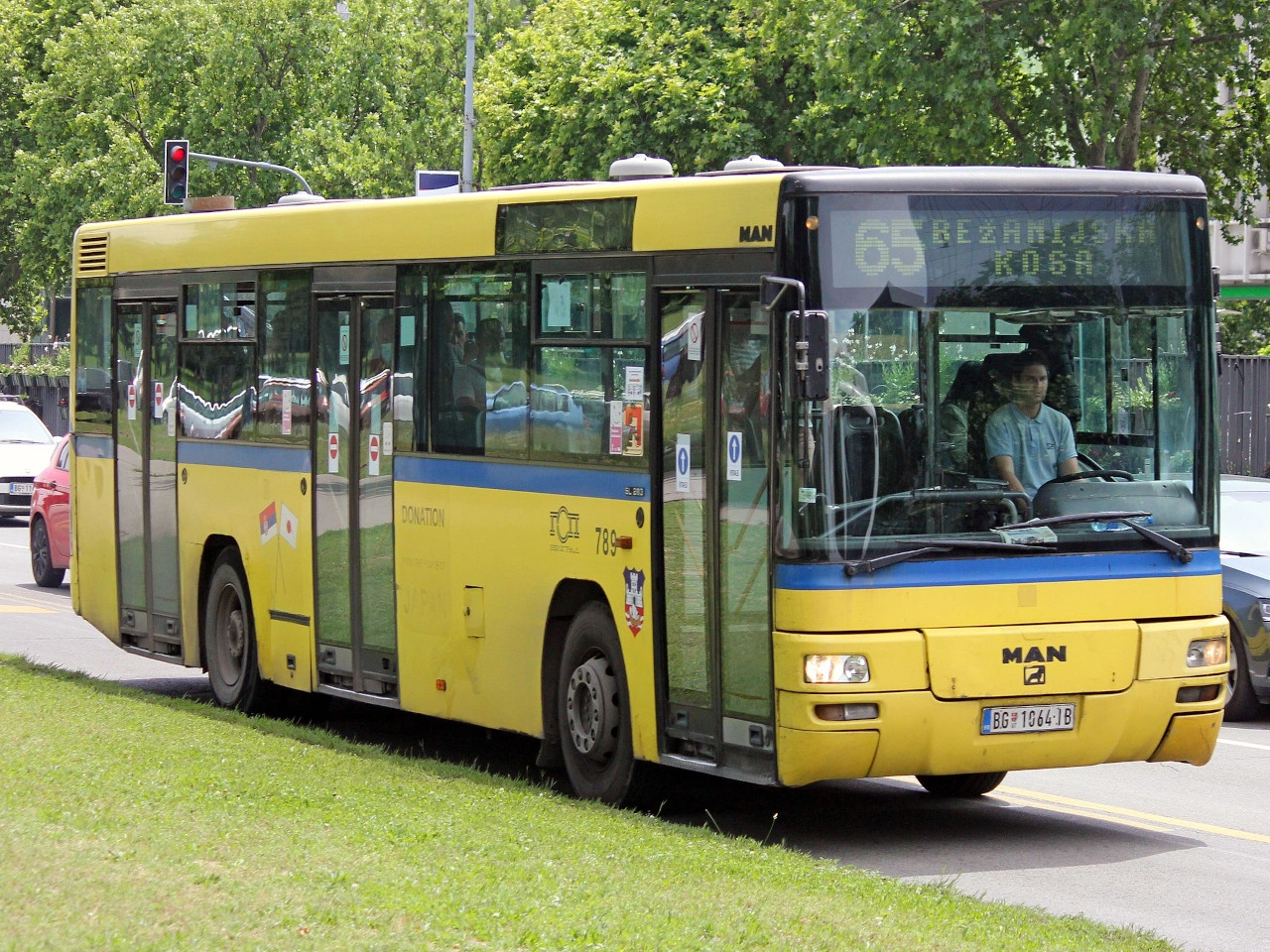
A bus is a motor vehicle designed to transport multiple passengers, usually along roads as part of public transport, school transport, private transport or another passenger service. Buses generally have more passenger capacity than cars and may be designed to carry seated passengers, standing passengers or both.
Special rules may apply to buses concerning the driving licence, passenger capacity, speed limits, seat belts, bus lanes, stops and passenger boarding. The legal classification of buses and coaches and the rules applying to them vary between countries, so drivers and passengers must follow the local traffic regulations.
Wikimedia.org • Srđan Popović • CC BY-SA
What is a bus?
A bus is a motor vehicle designed to transport a relatively large number of passengers. It may be used for public transport, school transport, private services or other passenger transport.
🔗 gov.uk • Great Britain Highway Code, Rules 83–88; national guidance example
🔗 gov.uk • Great Britain Highway Code, Rules 221–223; national guidance example
Do buses always have priority when leaving a bus stop?
No. Some countries require other drivers to give way to buses leaving designated stops, particularly in urban areas, while others apply the normal merging rules.
🔗 gov.uk • Great Britain Highway Code, Rules 83–88; national guidance example
🔗 gov.uk • Great Britain Highway Code, Rules 221–223; national guidance example
Do buses have special speed limits?
They can. Some countries impose lower maximum speeds on buses than on passenger cars, particularly on high-speed roads. Different limits may apply to buses and coaches.
🔗 gov.uk • Great Britain Highway Code, Rules 83–88; national guidance example
🔗 gov.uk • Great Britain Highway Code, Rules 221–223; national guidance example
19. Police
Police are public authorities responsible for enforcing laws, maintaining public safety and managing situations that may affect road traffic. In traffic, police officers may control vehicles, enforce traffic rules, investigate collisions, direct traffic and respond to emergencies.
Road users must follow lawful instructions given by police officers or other authorised traffic-control personnel. Police directions may temporarily override traffic lights, road signs or normal traffic arrangements, depending on local law.
Wikimedia.org • Imeao • CC0
What is the role of police in road traffic?
Police help enforce traffic law, investigate collisions and respond to risks on the road. For example, Greater Manchester Police describe targeted road enforcement, a round-the-clock roads-policing response and specialist serious-collision investigation. Exact responsibilities and powers vary by jurisdiction.
🔗 gmp.police.uk • Greater Manchester Police, Roads Policing Strategy2024–2026
Must you obey a police officer directing traffic?
Yes. Lawful directions given by an authorised police officer must be followed. In many countries, those directions take precedence over traffic lights, road signs and normal priority rules.
What should you do if police signal you to stop?
Slow down, follow the officer's directions and stop at a safe location as instructed. Do not make sudden movements or continue driving unless directed to do so.
20. Ambulance
An ambulance is a vehicle equipped and used to provide emergency medical assistance or transport patients to or between healthcare facilities. Ambulances may carry medical equipment and trained personnel who can provide treatment during transport.
During an emergency response, an ambulance may use warning lights and a siren and may receive special priority or exemptions from certain traffic rules. Other road users must follow the local rules for emergency vehicles, make sufficient space and avoid obstructing their passage.
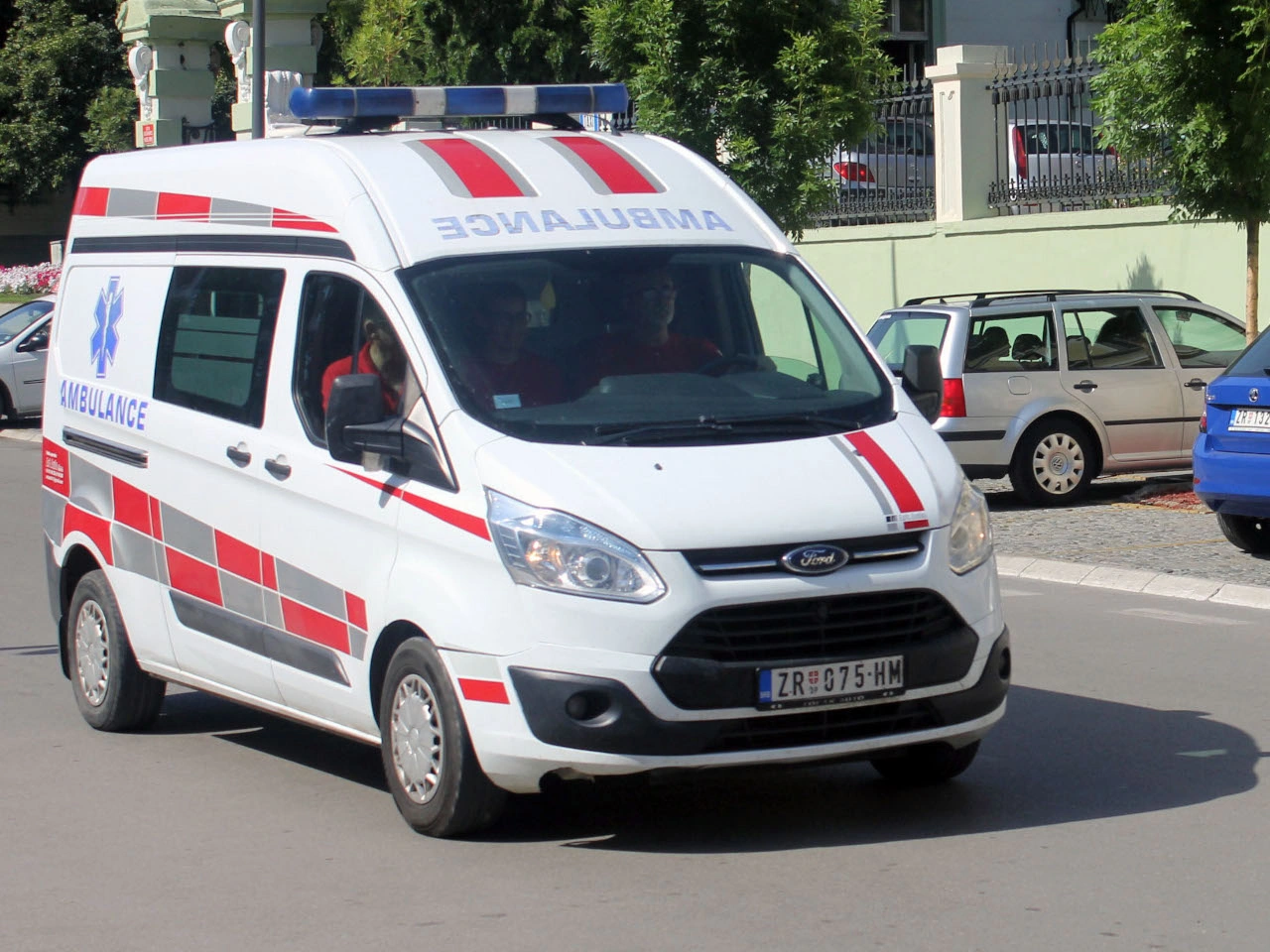
Wikimedia.org • Srđan Popović • CC BY-SA
What is an ambulance?
An ambulance is a specially equipped vehicle used to provide emergency medical assistance and transport sick or injured people.
🔗 gov.uk • Great Britain Highway Code, Rule 219, emergency vehicles; national guidance example
What should you do when an ambulance approaches?
Make space safely for an ambulance on an emergency response, following the local rules and any lawful directions. Slow down or stop where necessary without sudden or dangerous movements. Do not assume that its emergency status allows you to pass a red light or disregard another traffic control.
🔗 gov.uk • Great Britain Highway Code, Rule 219, emergency vehicles; national guidance example
Can an ambulance exceed the speed limit?
Many countries permit emergency vehicles to depart from certain normal speed rules during an urgent mission, subject to safety requirements and national legislation.
🔗 gov.uk • Great Britain Highway Code, Rule 219, emergency vehicles; national guidance example
21. Pothole
A pothole is a hole or depression in the road surface caused by wear, weather, water, repeated traffic loads or deterioration of the pavement. Potholes can vary greatly in size and depth and may develop gradually or become worse after freezing, heavy rain or repeated vehicle traffic.
Potholes can affect steering, braking and vehicle stability and may damage tyres, wheels or suspension components. Drivers and riders should observe the road ahead, adapt their speed and avoid sudden or dangerous manoeuvres when encountering damaged road surfaces.

Wikimedia.org • State Farm • CC BY
What is a pothole?
A pothole is a hole or depression that develops in a road surface when the pavement becomes damaged or deteriorates.
What should you do when you see a pothole?
Reduce speed when necessary, maintain control of the vehicle and avoid abrupt steering or braking. Only move around the pothole when this can be done safely without endangering other road users.
🔗 gov.uk • Great Britain Highway Code, Rules 226–237; national guidance example
Are potholes dangerous for cyclists?
Yes. Bicycle wheels can be strongly affected by deep holes or sharp edges, particularly when the cyclist has little time or space to avoid the hazard.
🔗 gov.uk • Great Britain Highway Code, Rules 226–237; national guidance example
22. Path
A path is a relatively narrow route intended for pedestrians and, where permitted, other road users or small vehicles. Paths may run through urban areas, countryside, parks, forests or between other roads and can be surfaced or unsurfaced.
A path is not necessarily the same as a footpath or cycle path. The road users permitted to use it depend on its legal status, width, traffic signs and local regulations.

Wikimedia.org • Tangopaso • CC0
Is a path the same as a footpath?
Not necessarily. A footpath is specifically intended for pedestrians, while a path may also permit cyclists or other users according to local rules.
Can cyclists use a path?
This depends on the legal status, width and signs applying to the path. Some paths permit cyclists, while others are reserved for pedestrians or particular users.
Can motor vehicles use a path?
This depends on local law. Some paths prohibit motor vehicles entirely, while narrow vehicles may be permitted on other paths unless traffic signs restrict access.
Who has priority when a path joins a larger road?
The applicable local priority rules determine who must give way. Special rules often apply when a minor path joins an ordinary road.
23. Particulates
Particulates, or particulate matter (PM), are tiny solid particles or liquid droplets suspended in the air. In road traffic, particulate emissions can come from vehicle exhaust, brake wear, tyre wear and road-surface wear, as well as dust that is disturbed by passing traffic.
Particulate matter is commonly classified by particle size. PM10 refers to particles with a diameter of up to approximately 10 micrometres, while PM2.5 refers to finer particles of up to approximately 2.5 micrometres. Vehicle emission standards, particulate filters and air-quality measures are used to reduce exposure to these pollutants.

Wikimedia.org • wili hybrid • CC BY
What are particulates?
Particulates, or particulate matter, are very small solid particles or liquid droplets suspended in the air.
🔗 epa.gov • US EPA, Particulate Matter Basics
🔗 fhwa.dot.gov • US FHWA, particulate matter and road-transport sources
🔗 epa.gov • US EPA, AP-42 section 13.2.1.1, paved-road emissions and dust resuspension
What are PM10 and PM2.5?
PM10 refers to particles with a diameter of up to approximately 10 micrometres. PM2.5 refers to finer particles with a diameter of up to approximately 2.5 micrometres.
🔗 epa.gov • US EPA, Particulate Matter Basics
🔗 fhwa.dot.gov • US FHWA, particulate matter and road-transport sources
🔗 epa.gov • US EPA, AP-42 section 13.2.1.1, paved-road emissions and dust resuspension
Where do traffic particulates come from?
Road traffic can produce particles through engine exhaust, brake wear, tyre wear and road-surface wear. Passing traffic can also resuspend dust already present on the road.
🔗 epa.gov • US EPA, Particulate Matter Basics
🔗 fhwa.dot.gov • US FHWA, particulate matter and road-transport sources
🔗 epa.gov • US EPA, AP-42 section 13.2.1.1, paved-road emissions and dust resuspension
24. Air pollution
Air pollution is the presence of gases, particles or other substances in the air at concentrations that can harm human health, the environment or ecosystems. Road traffic contributes to air pollution through exhaust emissions and through non-exhaust sources such as brake wear, tyre wear and road dust.
Important traffic-related pollutants include nitrogen oxides, particulate matter, carbon monoxide and volatile organic compounds. Some pollutants are emitted directly by vehicles, while others can form in the atmosphere through chemical reactions. Vehicle-emission standards, cleaner technologies and traffic-management measures are used to reduce these emissions.

Wikimedia.org • Emmanuelkwizera • CC BY-SA
What is air pollution?
Air pollution is the presence of harmful gases, particles or other contaminants in the air. Road transport can contribute through engine emissions, vehicle wear and dust; the sources and pollutants differ by vehicle and conditions.
🔗 epa.gov • US EPA, smog and vehicle emissions
🔗 epa.gov • US EPA, Particulate Matter Basics
🔗 fhwa.dot.gov • US FHWA, particulate matter and road-transport sources
🔗 epa.gov • US EPA, AP-42 section 13.2.1.1, paved-road emissions and dust resuspension
How does road traffic cause air pollution?
Vehicles with combustion engines can emit exhaust pollutants. Road traffic also produces particles through brake, tyre and road-surface wear and can stir up road dust. Vehicles without tailpipe emissions can still contribute to these non-exhaust sources.
🔗 epa.gov • US EPA, smog and vehicle emissions
🔗 epa.gov • US EPA, Particulate Matter Basics
🔗 fhwa.dot.gov • US FHWA, particulate matter and road-transport sources
🔗 epa.gov • US EPA, AP-42 section 13.2.1.1, paved-road emissions and dust resuspension
Which air pollutants are associated with road traffic?
Important traffic-related pollutants include nitrogen oxides, particulate matter, carbon monoxide and volatile organic compounds. Their relative importance depends on the vehicle, fuel and driving conditions.
🔗 epa.gov • US EPA, smog and vehicle emissions
🔗 epa.gov • US EPA, Particulate Matter Basics
🔗 fhwa.dot.gov • US FHWA, particulate matter and road-transport sources
🔗 epa.gov • US EPA, AP-42 section 13.2.1.1, paved-road emissions and dust resuspension
25. Rush hour
Rush hour is a period when roads and public transport networks experience particularly high demand, commonly because large numbers of people are travelling to or from work, school or other regular destinations. It usually occurs during the morning and late afternoon or evening on working days.
Rush-hour traffic can result in congestion, slower speeds, longer journeys and frequent stopping. Drivers should maintain a safe following distance, remain patient, anticipate changing traffic conditions and follow any temporary or dynamic traffic-management measures.

Wikimedia.org • MDRX • CC BY-SA
What is rush hour?
Rush hour is a period when unusually large numbers of people travel at the same time, resulting in increased traffic and often congestion.
🔗 gov.uk • Great Britain Highway Code, Rules 126 and 133–134; national guidance example
🔗 gov.uk • Great Britain Highway Code, Rules 174 and 192; national guidance example
Should you increase your following distance in rush-hour traffic?
Yes. Leave sufficient distance to react to sudden braking and frequent changes in traffic speed. Avoid following another vehicle too closely even when traffic is moving slowly.
🔗 gov.uk • Great Britain Highway Code, Rules 126 and 133–134; national guidance example
🔗 gov.uk • Great Britain Highway Code, Rules 174 and 192; national guidance example
Can speed limits change during rush hour?
Yes. Roads equipped with variable traffic management may display lower speed limits during congestion. Drivers must follow the speed limit currently indicated.
🔗 gov.uk • Great Britain Highway Code, Rules 126 and 133–134; national guidance example
🔗 gov.uk • Great Britain Highway Code, Rules 174 and 192; national guidance example