


Traffic signsSlovenia
 Traffic rules
 Slovenia
26. Roadworks
Roadworks are construction, maintenance, repair or inspection activities carried out on or beside a road. They may temporarily change the road layout, lane widths, speed limits, priority, permitted directions and facilities for pedestrians or cyclists.
Drivers must follow the temporary signs, traffic lights, barriers, road markings and instructions from authorised personnel. They should reduce speed, increase their following distance and remain prepared for narrow lanes, stopped traffic, workers, machinery and sudden changes in the route.

Wikimedia.org • Doremo • CC BY-SA
What should you watch for when approaching roadworks in Slovenia?
Look for temporary warnings, cones, barriers, narrow lanes and construction vehicles. Road layouts can change temporarily, including lane shifts, traffic-light control and short one-way sections. Expect workers and slow or stationary traffic near the worksite.
🔗 pisrs.si • Slovenia, ZPrCP — articles 45, 98–100; Signs warning and guidance catalogue
🔗 pisrs.si • Slovenia, current Signs Regulation — relevant national signs and markings
Is a temporary speed limit at roadworks binding in Slovenia?
Where an authorised temporary regulatory speed limit is in force, you must obey it. A roadworks warning alone should not be mistaken for a new numerical limit, but conditions may require driving more slowly.
🔗 pisrs.si • Slovenia, ZPrCP — articles 45, 98–100; Signs warning and guidance catalogue
🔗 pisrs.si • Slovenia, current Signs Regulation — relevant national signs and markings
What if only one lane remains open through roadworks in Slovenia?
Follow the temporary signals, stop/go instructions, lane arrows and priority signs. Do not enter an opposing traffic lane until permitted, and give vulnerable road users and road workers extra room.
🔗 pisrs.si • Slovenia, ZPrCP — articles 45, 98–100; Signs warning and guidance catalogue
🔗 pisrs.si • Slovenia, current Signs Regulation — relevant national signs and markings
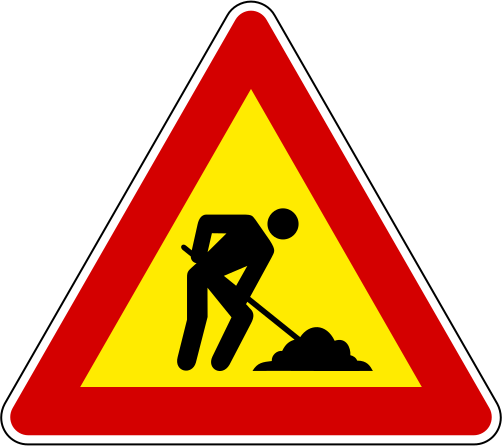 Warning for roadworks.
English • Traffic sign 1125 • Roadworks. A location where work is taking place on the road lies ahead.
Slovenščina • Prometni znak 1125 • Delo na cesti. Bližina mesta na cesti, kjer se izvajajo dela.
Sources
🔗 Commons.wikimedia.org
🔗 Pisrs.si • Pravilnik o prometni signalizaciji in prometni opremi na cestah • 13. člen • preglednica 9 • 1125 • NPB 2
🔗 Uradni-list.si • Uradni list RS, št. 26/2024 • 1125
SVG source: Government of Slovenia • Public domain • Original revision 2014-05-11. Wikimedia original unmodified.

27. Height limit
A height limit prohibits vehicles whose total height exceeds the value shown from entering or passing a road section, bridge, tunnel, gateway or other structure. The vehicle’s height includes its load and any equipment attached above it.
Drivers of high vehicles must know their exact height, observe advance warnings and use an alternative route when necessary. They should never rely only on visual judgement or attempt to pass beneath a structure when safe clearance is uncertain.
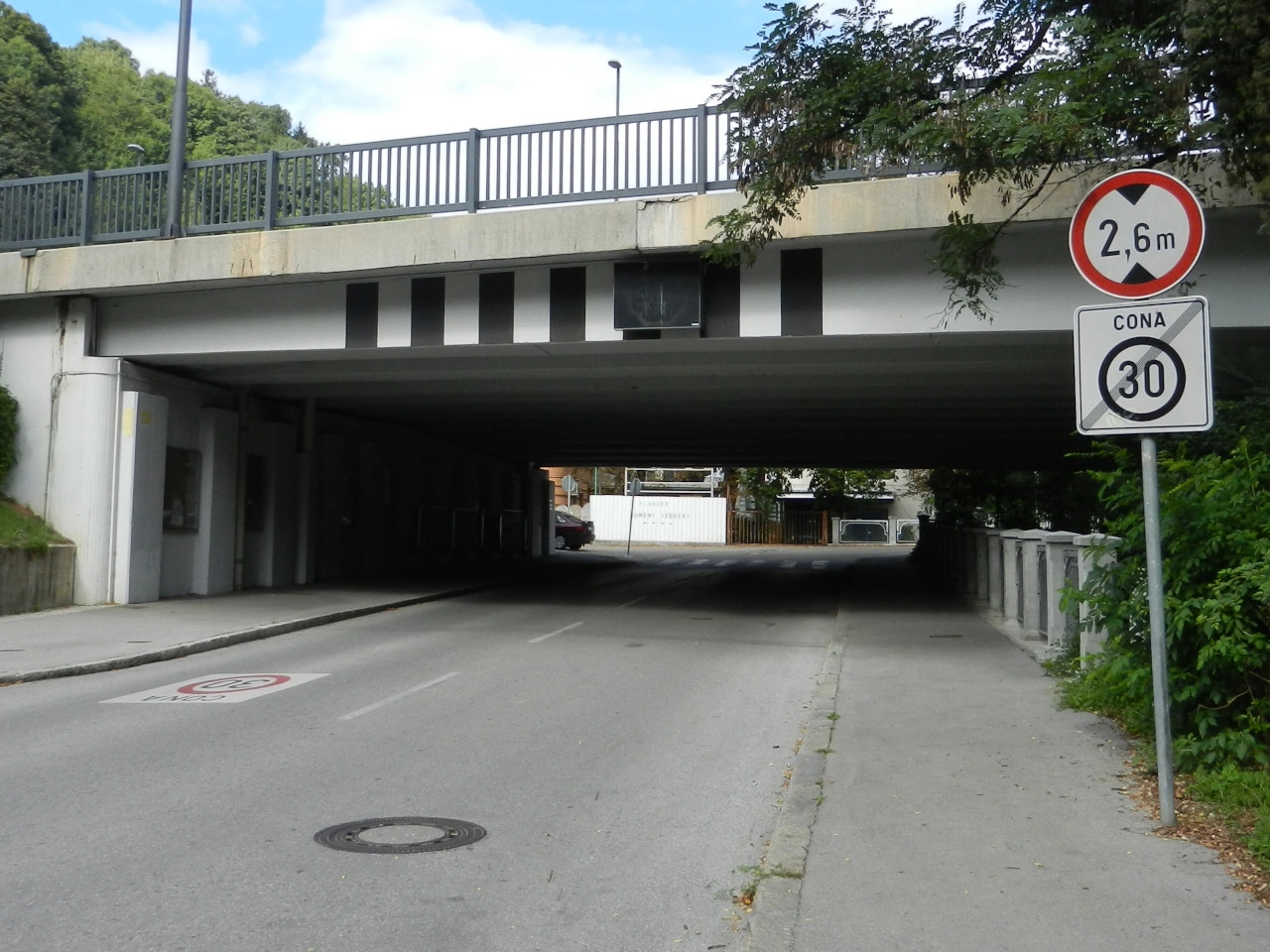
Wikimedia.org • Ljuba_brank • GFDL
How should you read a low-bridge height restriction in Slovenia?
Look for the locally prescribed height restriction or clearance warning near Alpine roads and historic town centres. The displayed clearance is normally in metres. A warning may describe a hazard ahead; a prohibitory sign indicates a route you cannot enter if your vehicle exceeds the limit.
🔗 pisrs.si • Slovenia, ZPrCP — articles 3, 98; Signs 2220–2223
🔗 pisrs.si • Slovenia, current Signs Regulation — relevant national signs and markings
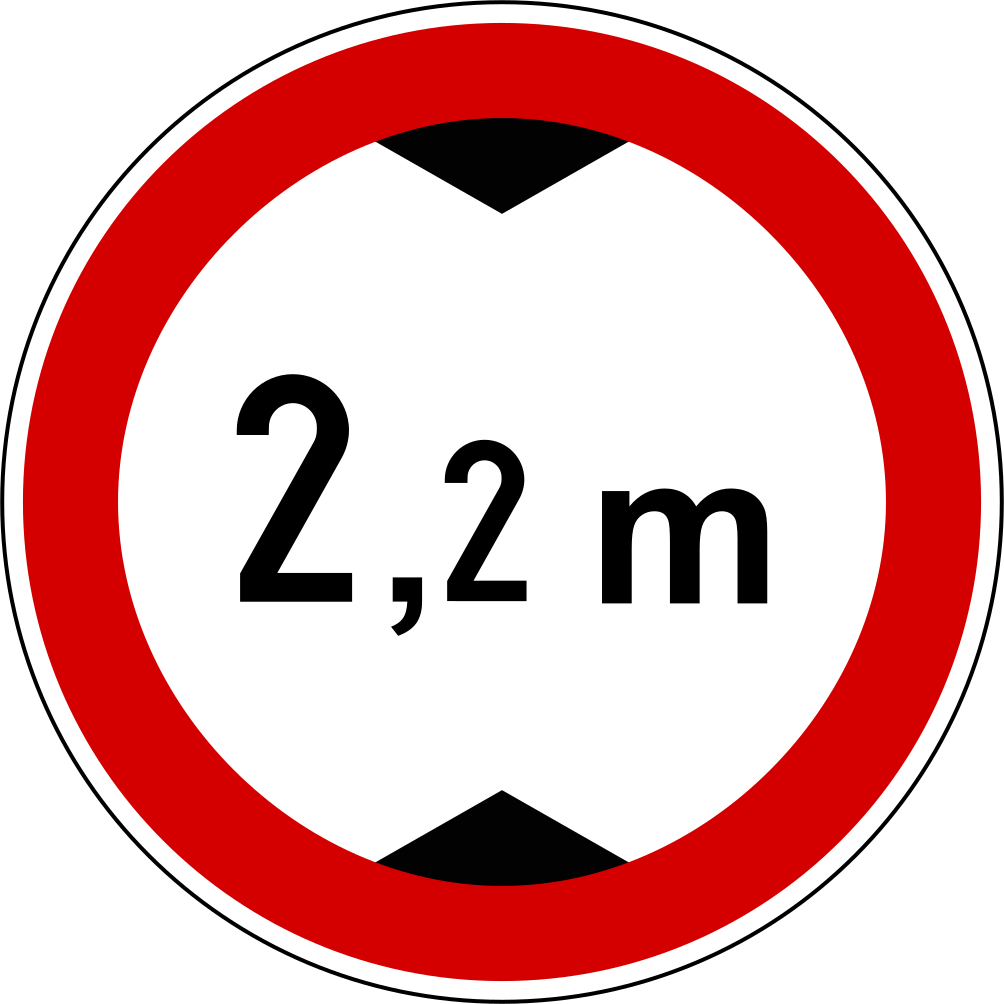 Vehicles higher than indicated prohibited.
English • Traffic sign 2221 • No vehicles exceeding the specified overall height. A road or section where vehicles whose maximum height exceeds the height shown are prohibited.
Slovenščina • Prometni znak 2221 • Prepovedan promet za vozila, katerih skupna višina presega določeno višino. Cesta ali njen del, kje je prepovedan promet za vozila, katerih največja višina presega višino, označeno na prometnem znaku.
Sources
🔗 Commons.wikimedia.org
🔗 Pisrs.si • Pravilnik o prometni signalizaciji in prometni opremi na cestah • 16. člen • preglednica 10 • 2221 • NPB 2
🔗 Uradni-list.si • Uradni list RS, št. 26/2024 • 2221
SVG source: Commons.wikimedia.org • Original SVG
Government of Slovenia • Public domain • Original revision 2014-05-12. Wikimedia original unmodified.
Artwork reviewed against the Slovenian government PISRS catalogue, published consolidation NPB 2 applicable from 28 February 2026: Pisrs.si • Signal 2221, PDF page 27. Catalogue-equivalent illustration; intentional update from the previous PNG. This is an educational illustration, not a manufacturing specification.
Does a roof load count when checking vehicle height in Slovenia?
Yes for practical clearance: measure the vehicle at its highest point with its load and fitted accessories, such as a roof box, bicycle or roof rack. Check the local legal measurement rules as well; an empty vehicle’s registered height is not enough when equipment has been added.
🔗 pisrs.si • Slovenia, ZPrCP — articles 3, 98; Signs 2220–2223
🔗 pisrs.si • Slovenia, current Signs Regulation — relevant national signs and markings
What should you do if your vehicle is too high for a bridge or tunnel in Slovenia?
Do not try to squeeze under the structure. Use the signed alternative route and, if you are already close to the obstruction, stop where safe and seek traffic-control assistance rather than reversing unpredictably into moving traffic.
🔗 pisrs.si • Slovenia, ZPrCP — articles 3, 98; Signs 2220–2223
🔗 pisrs.si • Slovenia, current Signs Regulation — relevant national signs and markings
28. Weight limit
A weight limit prohibits vehicles or vehicle combinations whose mass exceeds the value shown from entering or passing a road section, bridge, tunnel or other structure. Depending on local law, the restriction may concern the vehicle’s actual loaded mass, maximum authorised mass or load on an individual axle.
Drivers must know which type of mass the sign refers to and must include the vehicle, passengers, cargo and any trailer where required. A vehicle that exceeds the limit must use another suitable route.
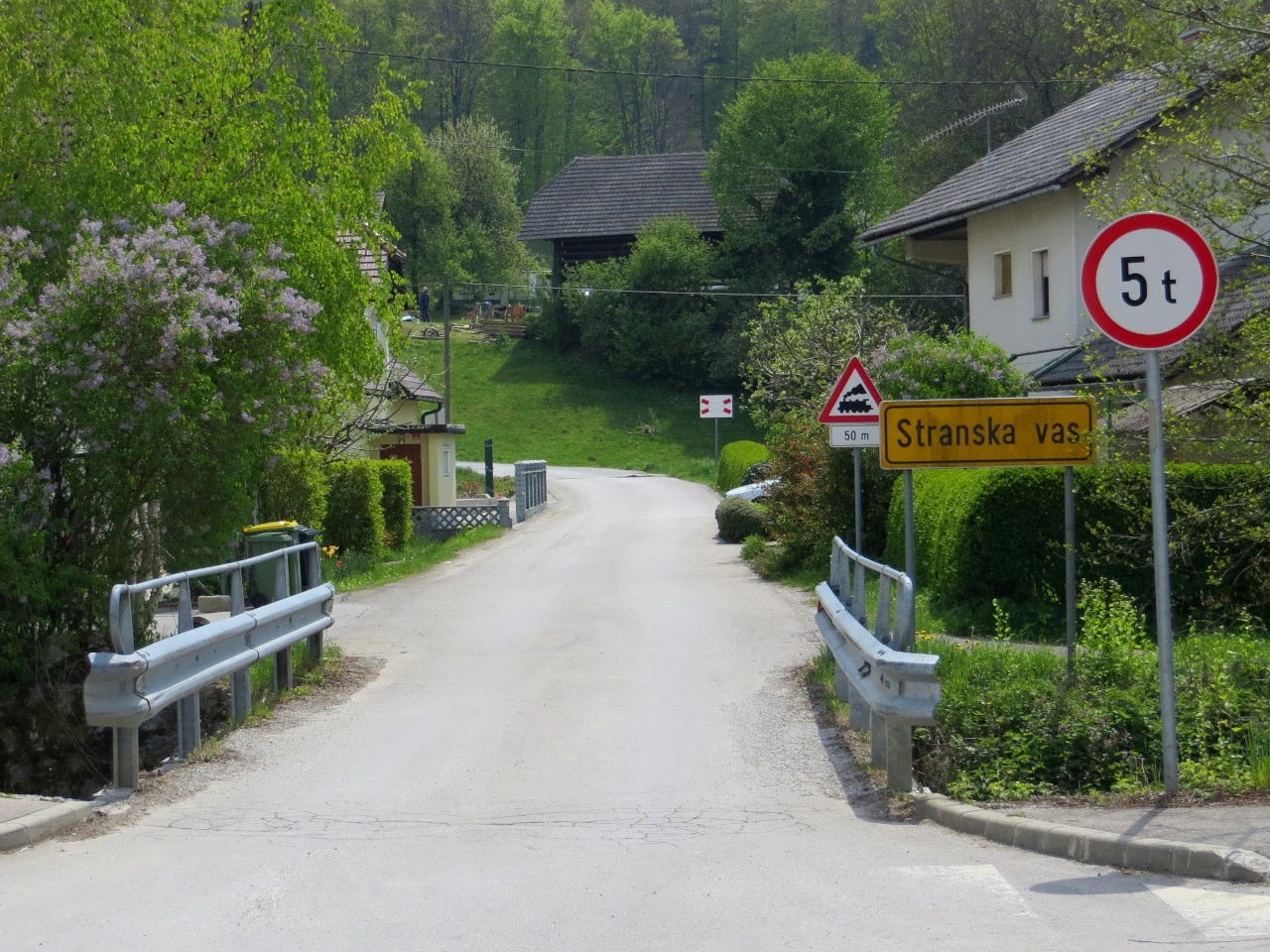
Wikimedia.org • Doremo • CC BY-SA
Does every weight-limit sign measure the same kind of vehicle weight in Slovenia?
No. Check whether the particular sign concerns actual loaded mass, authorised maximum mass, axle load or another specified vehicle class. These are different measurements; do not interpret every weight-restriction sign as the same type of limit.
🔗 pisrs.si • Slovenia, ZPrCP — articles 3, 98; Signs 2220–2223
🔗 pisrs.si • Slovenia, current Signs Regulation — relevant national signs and markings
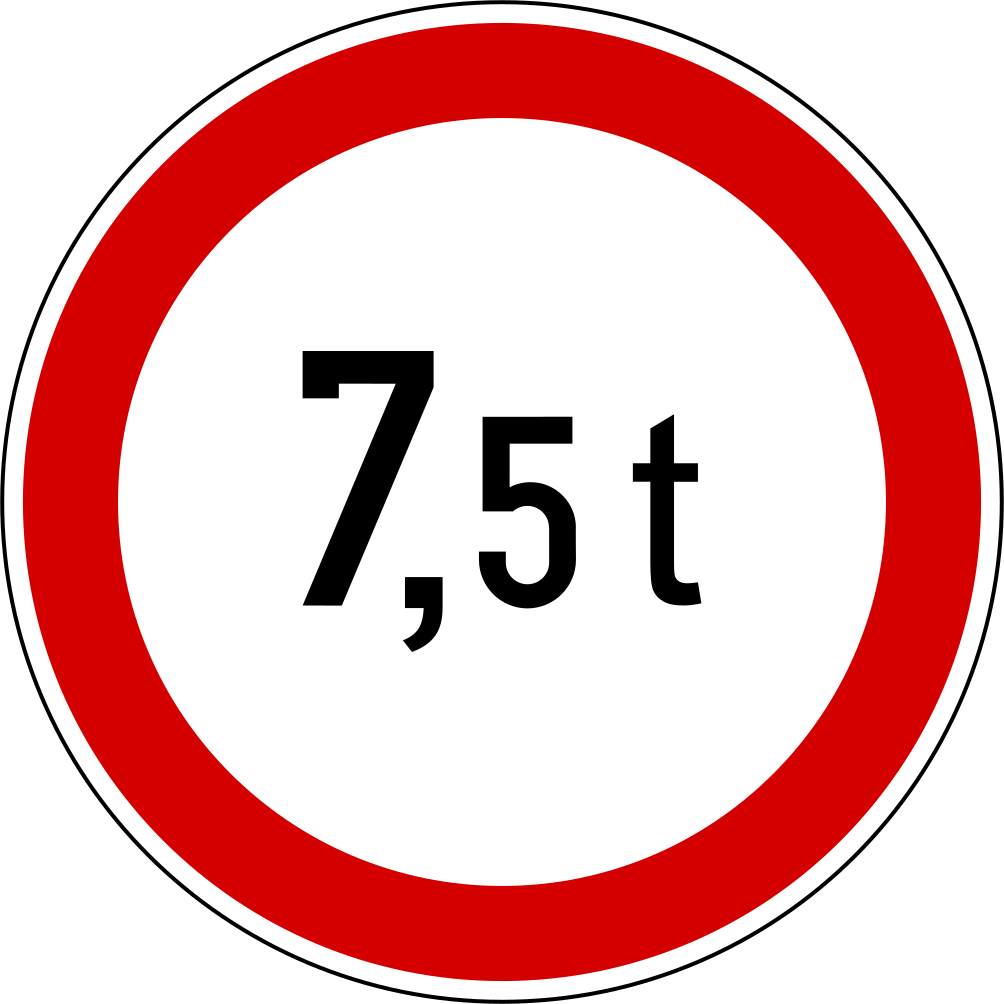 Vehicles heavier than indicated prohibited.
English • Traffic sign 2222 • No vehicles exceeding the specified total mass. A road or section where vehicles or vehicle combinations whose total mass exceeds the mass shown are prohibited. The total mass value in tonnes depends on the traffic arrangements prescribed for the road or section.
Slovenščina • Prometni znak 2222 • Prepovedan promet za vozila, katerih skupna masa presega določeno maso. Cesta ali njen del, kjer je prepovedan promet za vozila ali skupine vozil, katerih skupna masa presega maso, označeno na prometnem znaku. Označba skupne mase (v t) je odvisna od odrejene prometne ureditve na cesti ali njenem delu.
Sources
🔗 Commons.wikimedia.org
🔗 Pisrs.si • Pravilnik o prometni signalizaciji in prometni opremi na cestah • 16. člen • preglednica 10 • 2222 • NPB 2
🔗 Uradni-list.si • Uradni list RS, št. 26/2024 • 2222
SVG source: Commons.wikimedia.org • Original SVG
Government of Slovenia • Public domain • Original revision 2014-05-12. Wikimedia original unmodified.
Artwork reviewed against the Slovenian government PISRS catalogue, published consolidation NPB 2 applicable from 28 February 2026: Pisrs.si • Signal 2222, PDF page 27. Catalogue-equivalent illustration; intentional update from the previous PNG. This is an educational illustration, not a manufacturing specification.
Do cargo and trailers matter for a posted weight restriction in Slovenia?
Yes, whenever the rule is based on actual loaded mass or the total mass of a combination. Cargo, passengers and the trailer affect that figure; weight on individual axles may be limited separately. If the sign instead uses authorised maximum mass, an empty vehicle may still be prohibited.
🔗 pisrs.si • Slovenia, ZPrCP — articles 3, 98; Signs 2220–2223
🔗 pisrs.si • Slovenia, current Signs Regulation — relevant national signs and markings
What should you do if your vehicle exceeds a bridge weight limit in Slovenia?
Do not drive onto the bridge. Follow the signed alternative route and check the vehicle’s gross and axle loads as applicable. A general heavy-vehicle permit does not automatically authorise crossing every restricted bridge.
🔗 pisrs.si • Slovenia, ZPrCP — articles 3, 98; Signs 2220–2223
🔗 pisrs.si • Slovenia, current Signs Regulation — relevant national signs and markings
29. Traffic lights
Traffic lights use coloured lights, arrows or symbols to regulate when road users may proceed, must prepare to stop or must remain stopped. Separate signals may apply to particular directions, lanes, pedestrians, cyclists or public-transport vehicles.
A green light permits movement only when the route is clear and the movement is otherwise legal. Road users must still follow priority rules, turning restrictions, lane markings and instructions from authorised traffic controllers.

Wikimedia.org • StefanTiran • CC BY-SA
What must a driver do at red, amber and green signals in Slovenia?
Red means stop. Red-and-amber still means stop. Steady amber also requires stopping unless you are too close to stop safely. Green permits movement only in a lawful direction, with due care for other road users. Follow the applicable stop line, directional signals and junction-clearance rules.
May you turn at a red traffic light in Slovenia?
A plain red signal prohibits proceeding. A right-on-red sign permits a right turn when the way is clear. A supplementary green arrow permits its direction despite red or amber, but you must not obstruct traffic on the road you are joining.
Can a green light remove the need to give way to pedestrians in Slovenia?
No. Turning drivers must give way to pedestrians crossing the carriageway they are entering. Green does not permit driving into a pedestrian who has not yet cleared the crossing.
30. Pedestrian lights
Pedestrian lights are traffic signals that regulate when pedestrians may begin crossing a road. They normally display a red standing figure to prohibit starting and a green walking figure to permit crossing.
A flashing signal or countdown may warn that the permitted crossing period is ending. Pedestrians should cross without unnecessary delay, while turning drivers must remain alert and allow pedestrians who entered lawfully to finish crossing safely.
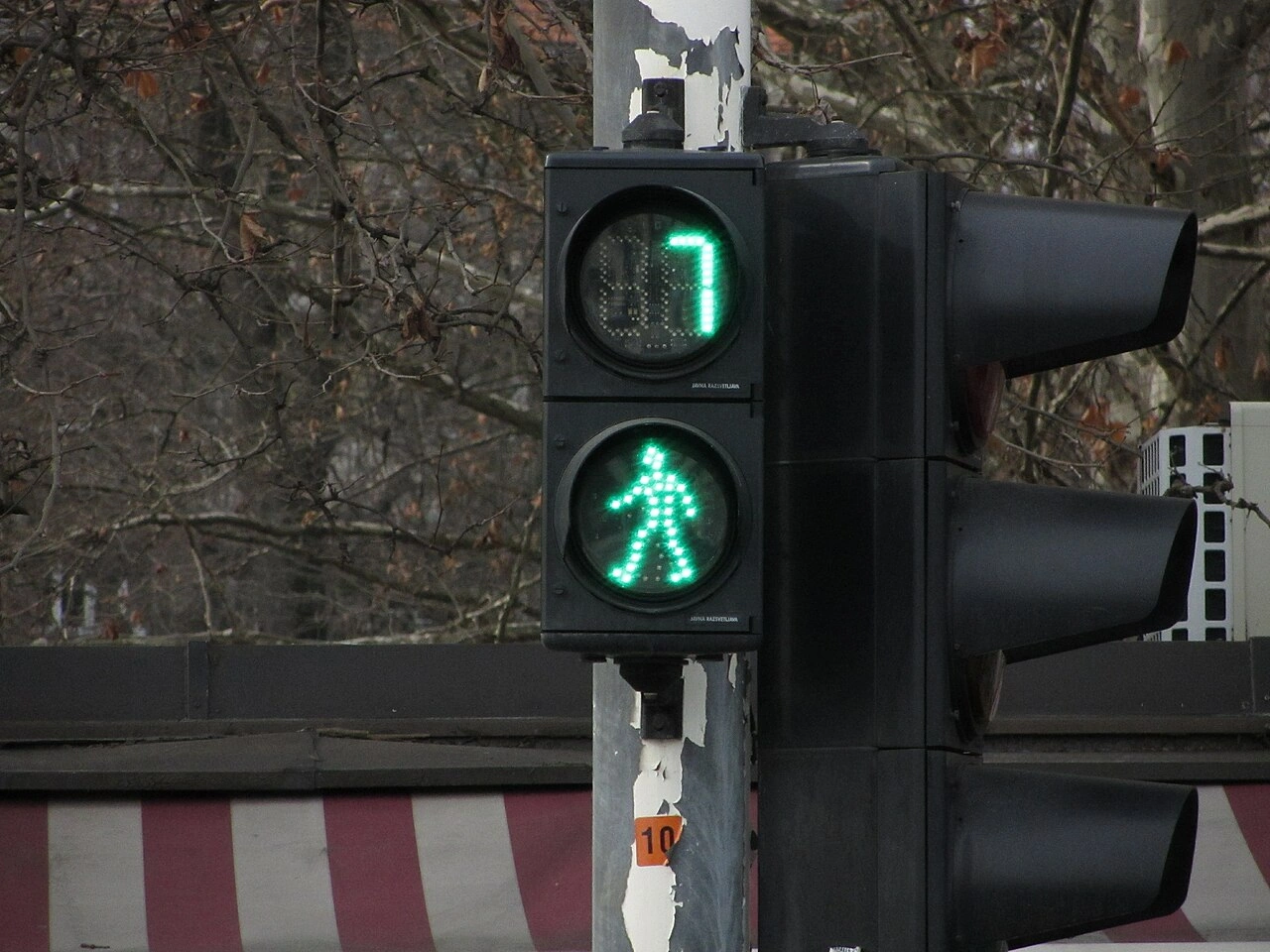
Wikimedia.org • StefanTiran • CC BY-SA
What do pedestrian traffic signals mean in Slovenia?
Green permits crossing and red prohibits starting. If the signal changes to red while you are crossing, you must continue crossing.
What if the pedestrian signal changes while you are crossing in Slovenia?
If the light changes from green to red while you are crossing, you must continue crossing. Do not stop unexpectedly on the carriageway or begin a new crossing on red.
May turning drivers ignore pedestrians on a signal-controlled crossing in Slovenia?
No. Turning drivers must give way to pedestrians crossing the carriageway they are entering. They must not drive into someone still on the crossing.
31. Traffic mirror
A traffic mirror is a convex mirror installed near an intersection, driveway, bend or other location with restricted visibility. Its curved surface provides a wider view of approaching road users than an ordinary flat mirror.
A traffic mirror is only a visibility aid. It may distort distance, speed and direction and may be affected by darkness, weather, dirt or damage. Drivers must continue to observe the road directly, obey all priority rules and proceed only when it is safe.
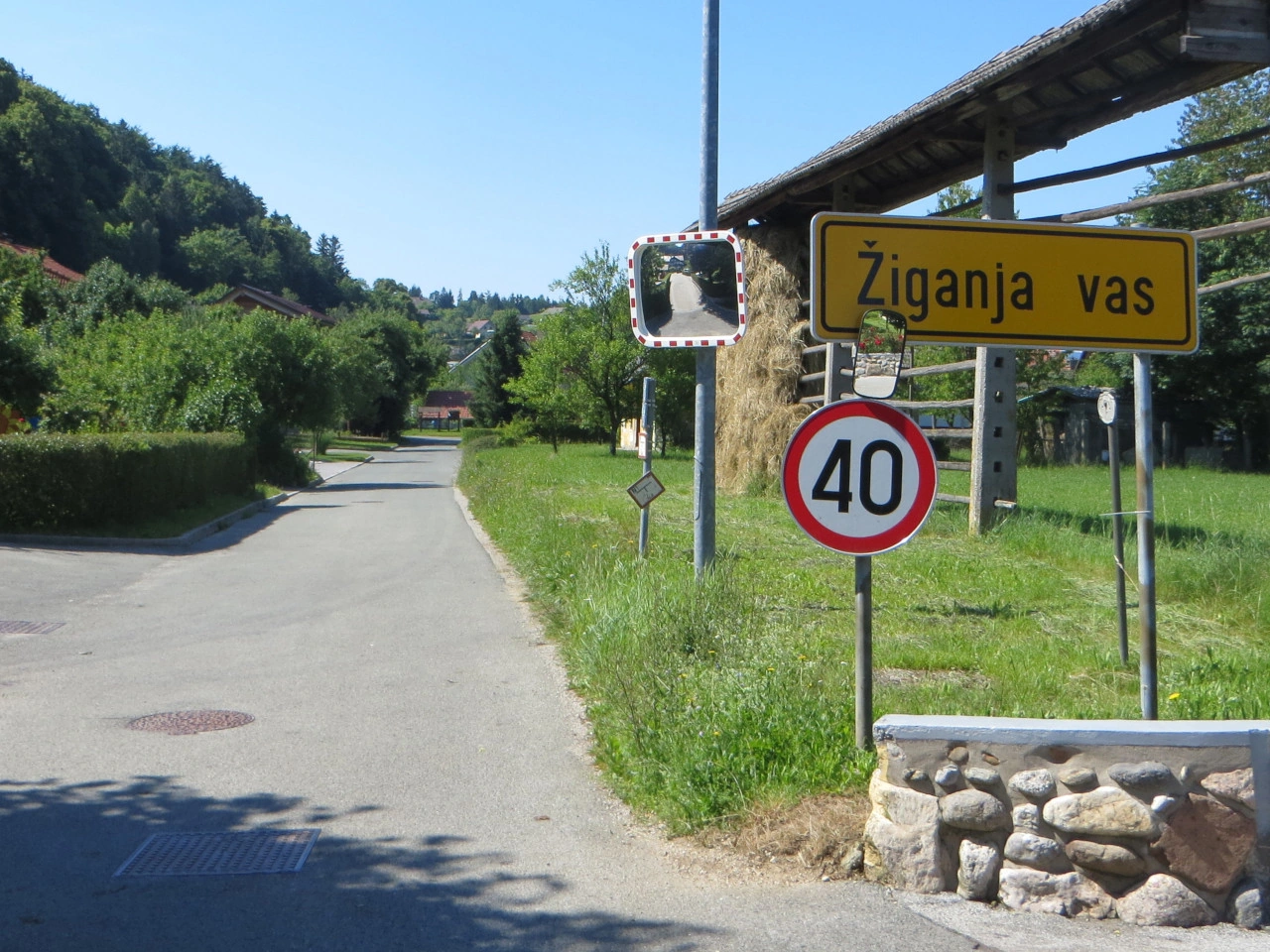
Wikimedia.org • Doremo • CC BY-SA
What is a traffic mirror?
A traffic mirror is a roadside visibility aid that can help users see around a blind corner or obstruction. It gives an indirect view, which may be restricted or distorted; it does not replace checking whether it is safe to proceed.
🔗 monmouthshire.gov.uk • Monmouthshire Council, roadside visibility mirrors
🔗 devon.gov.uk • Devon County Council, mirrors on the highway
Does a traffic mirror show an exact image?
No. The reflected image can be distorted, and glare, bad weather or dirt can restrict the view. Judging an approaching vehicle’s speed from a mirror can be difficult. Do not rely on the mirror alone.
🔗 monmouthshire.gov.uk • Monmouthshire Council, roadside visibility mirrors
🔗 devon.gov.uk • Devon County Council, mirrors on the highway
Does seeing an empty mirror mean the road is clear?
No. Another road user may be outside the reflected area, hidden by glare or too small to notice. Always check the road directly before proceeding.
🔗 monmouthshire.gov.uk • Monmouthshire Council, roadside visibility mirrors
🔗 devon.gov.uk • Devon County Council, mirrors on the highway
32. International border
An international border is the legal boundary between two countries. A border sign may identify the country being entered and remind drivers that different traffic laws, speed limits, road signs, vehicle requirements and document rules may apply.
The border sign itself does not normally require drivers to stop. Passport, immigration or customs controls may take place at a checkpoint, but some international borders can be crossed without routine controls under regional agreements.
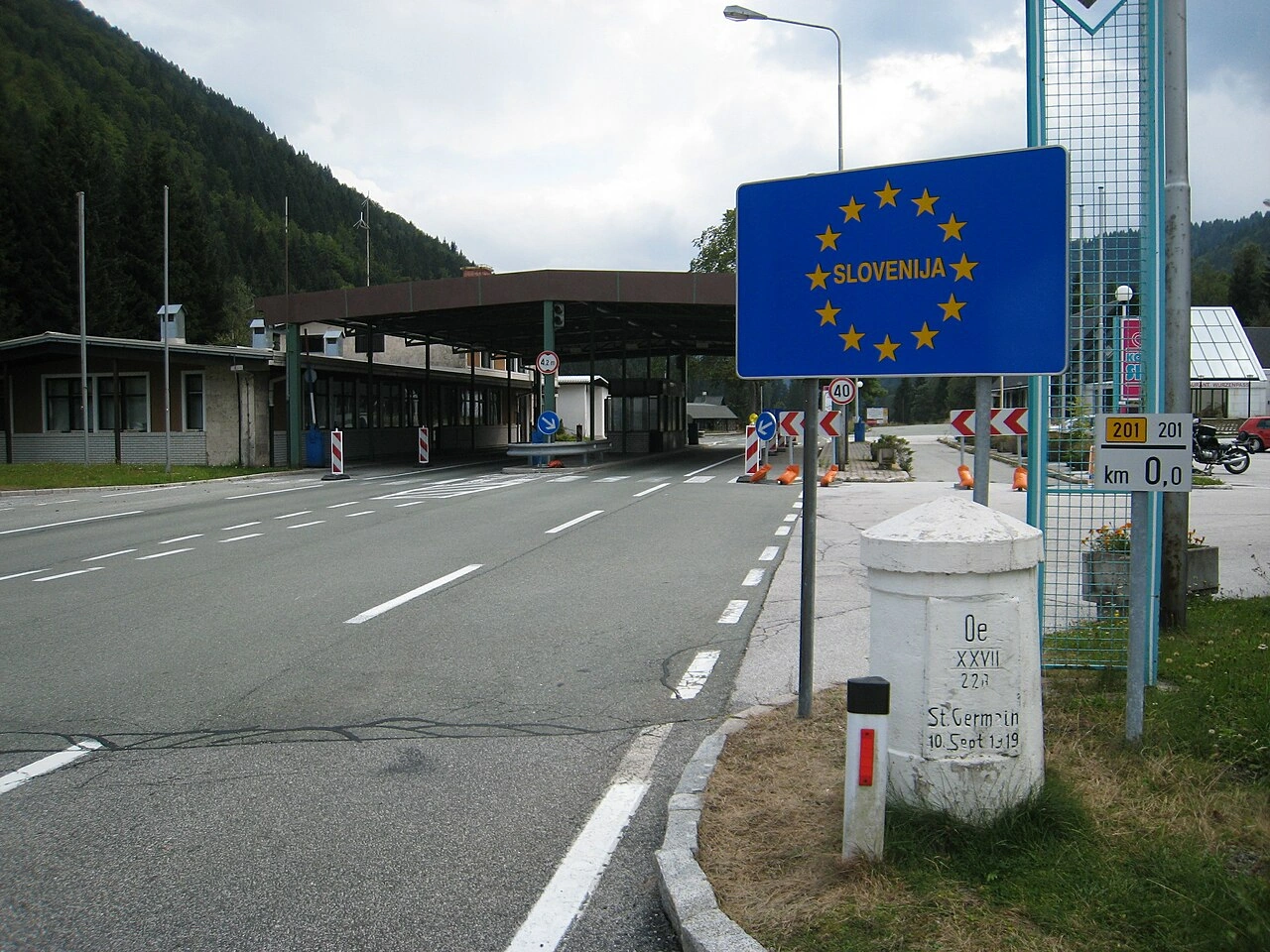
Wikimedia.org • David Edgar • CC BY-SA
What is an international border?
An international border is the legal boundary between two countries.
🔗 dictionary.cambridge.org • Cambridge Dictionary, international border definition
Does a border sign require you to stop?
Not normally. Stop only when required by traffic lights, barriers, officers, customs signs, passport controls or another instruction.
🔗 europa.eu • Your Europe, travel documents for EU nationals; EU example
Can speed limits change at the border?
Yes. The destination country may have different general limits for motorways, built-up areas, rural roads and particular vehicle categories.
🔗 europa.eu • Your Europe, travel documents for EU nationals; EU example
33. Cycling route
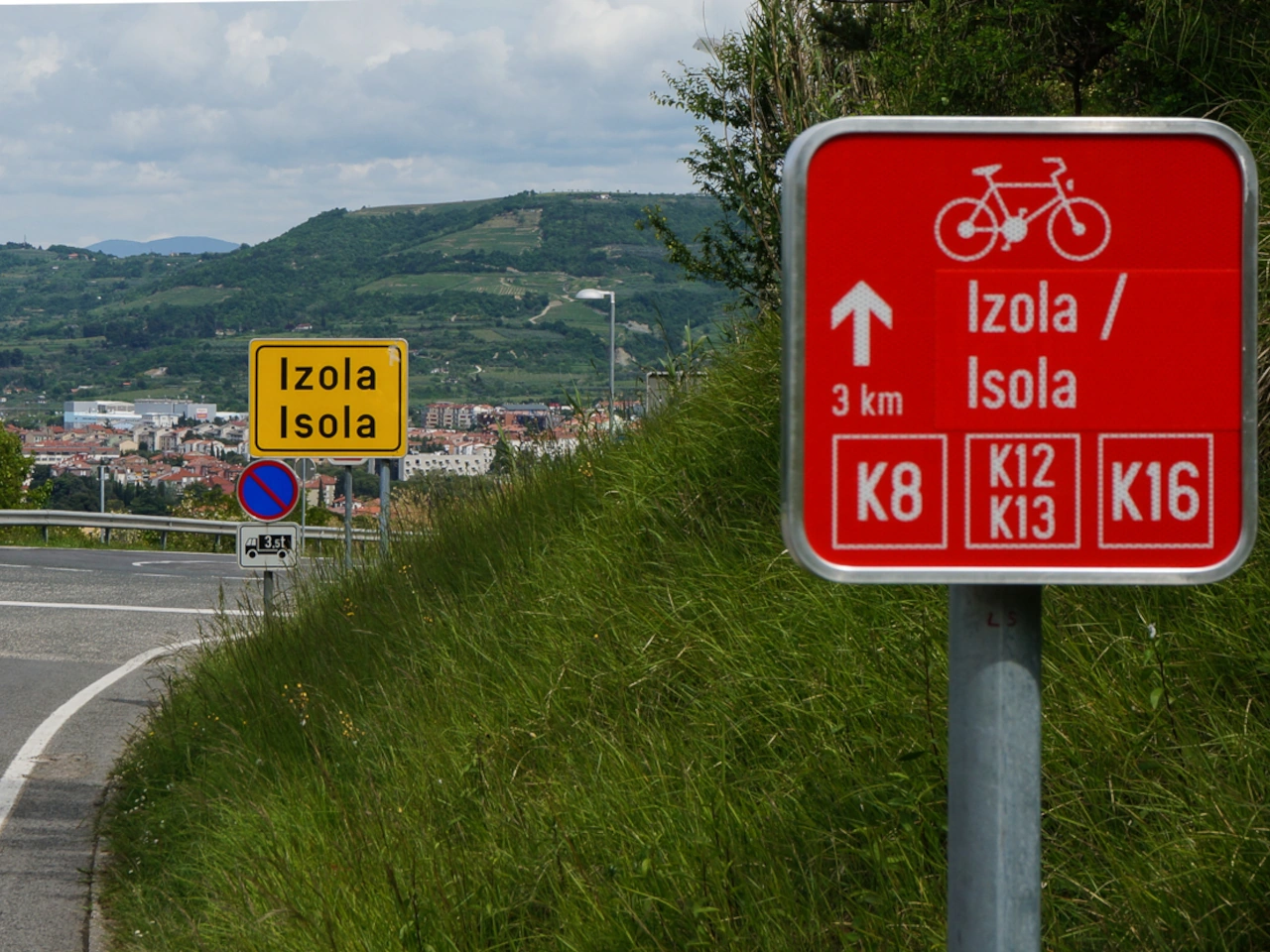
A cycling route is a planned or signposted route intended to guide cyclists between places or through a particular area. It may follow cycle paths, quiet streets, shared roads, greenways or other routes considered suitable for cycling.
A cycling route does not necessarily give cyclists exclusive use of the road or path and should not be confused with a cycle path or cycle lane. The traffic rules, priority rules and permitted road users depend on the individual roads and paths that form the route and on the local signs and regulations.
Wikimedia.org • Naturpuur • CC BY
How can you recognise a cycling route?
Cycling routes are commonly indicated by direction signs, bicycle symbols, route numbers, colours or destination markers. The design of the signs and route-numbering system varies between countries and regions.
Do cyclists have priority on a cycling route?
Not automatically. Being on a designated cycling route does not normally change the priority rules. Cyclists must continue to obey traffic lights, give-way and stop signs, crossing rules and other applicable traffic regulations.
What should you do when a cycling-route sign conflicts with a traffic sign?
Always follow the official traffic signs, signals and road markings. A route marker provides navigation and does not override a prohibition, mandatory direction, road closure or other traffic regulation.
34. Parking
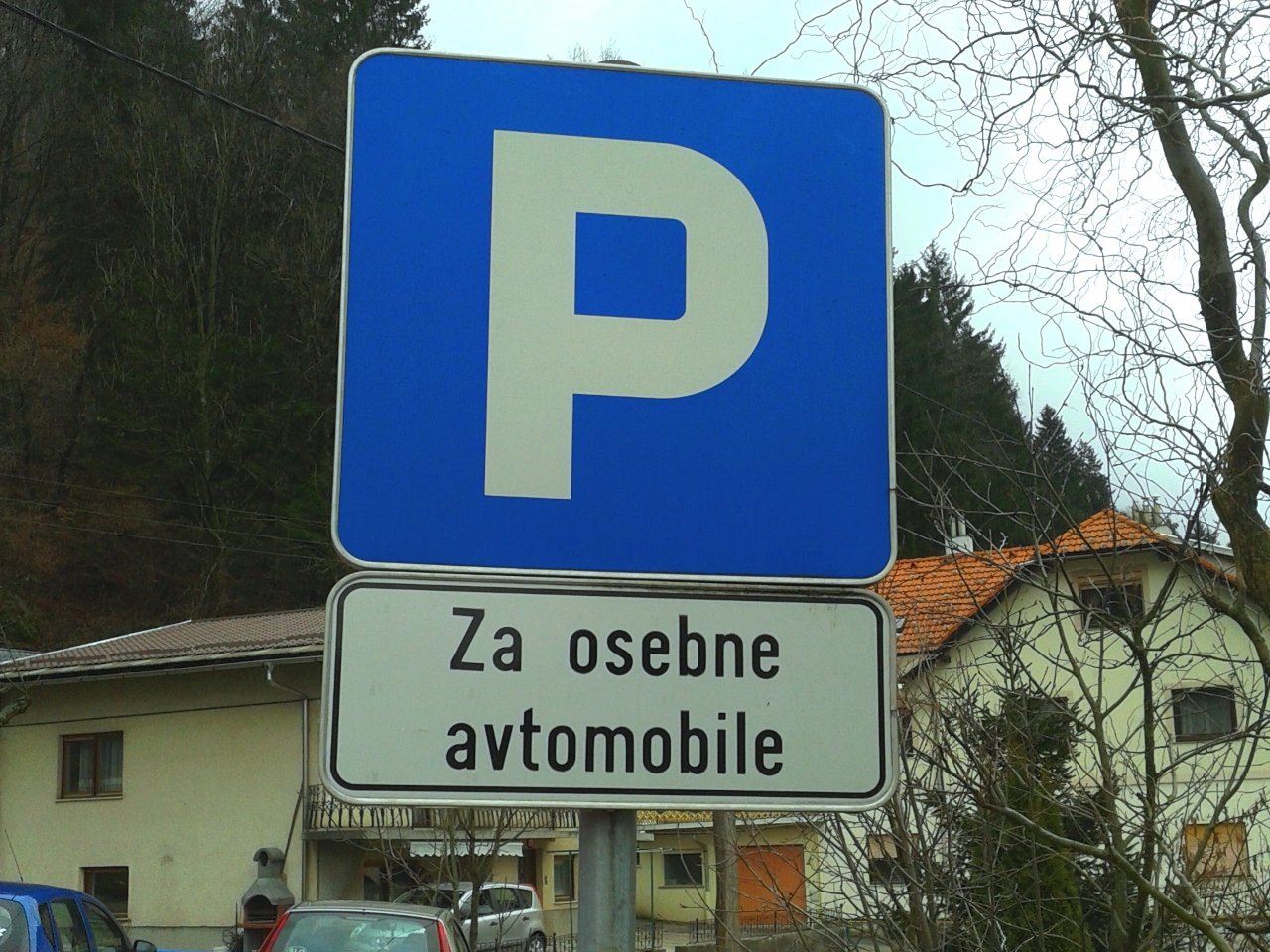
Parking means leaving a vehicle stationary at a place for a period of time rather than stopping only briefly because of traffic conditions or another immediate necessity. Many countries distinguish parking from a short stop made to pick up or drop off passengers or to load or unload goods, although the exact legal definition varies.
Parking may be permitted, restricted, reserved, time-limited or prohibited by traffic signs, road markings, parking zones and local regulations. Drivers must park without creating a danger or unnecessary obstruction and must comply with any conditions concerning payment, permits, vehicle categories or maximum parking duration.
Wikimedia.org • MZaplotnik • CC BY-SA
How close to the road edge should you park in Slovenia?
Normally parallel and no more than 30 centimetres from the edge, unless the traffic signs specify another arrangement.
Must you follow marked parking spaces in Slovenia?
Yes. Where spaces are marked, stop or park in accordance with those markings.
How much pedestrian space is required where pavement parking is signed in Slovenia?
Leave at least 1.60 metres for pedestrians, on the side away from the carriageway. Signs must permit pavement parking.
Where must a Ljubljana parking-machine ticket be displayed?
Put it visibly inside the windscreen. Choose a duration within the minimum and maximum allowed for that parking zone.
🔗 lpt.si • Ljubljana municipal parking operator, paying for parking
Do Ljubljana parking machines return change?
No. When paying with coins, use the exact amount for your intended parking period.
🔗 lpt.si • Ljubljana municipal parking operator, paying for parking
35. No stopping
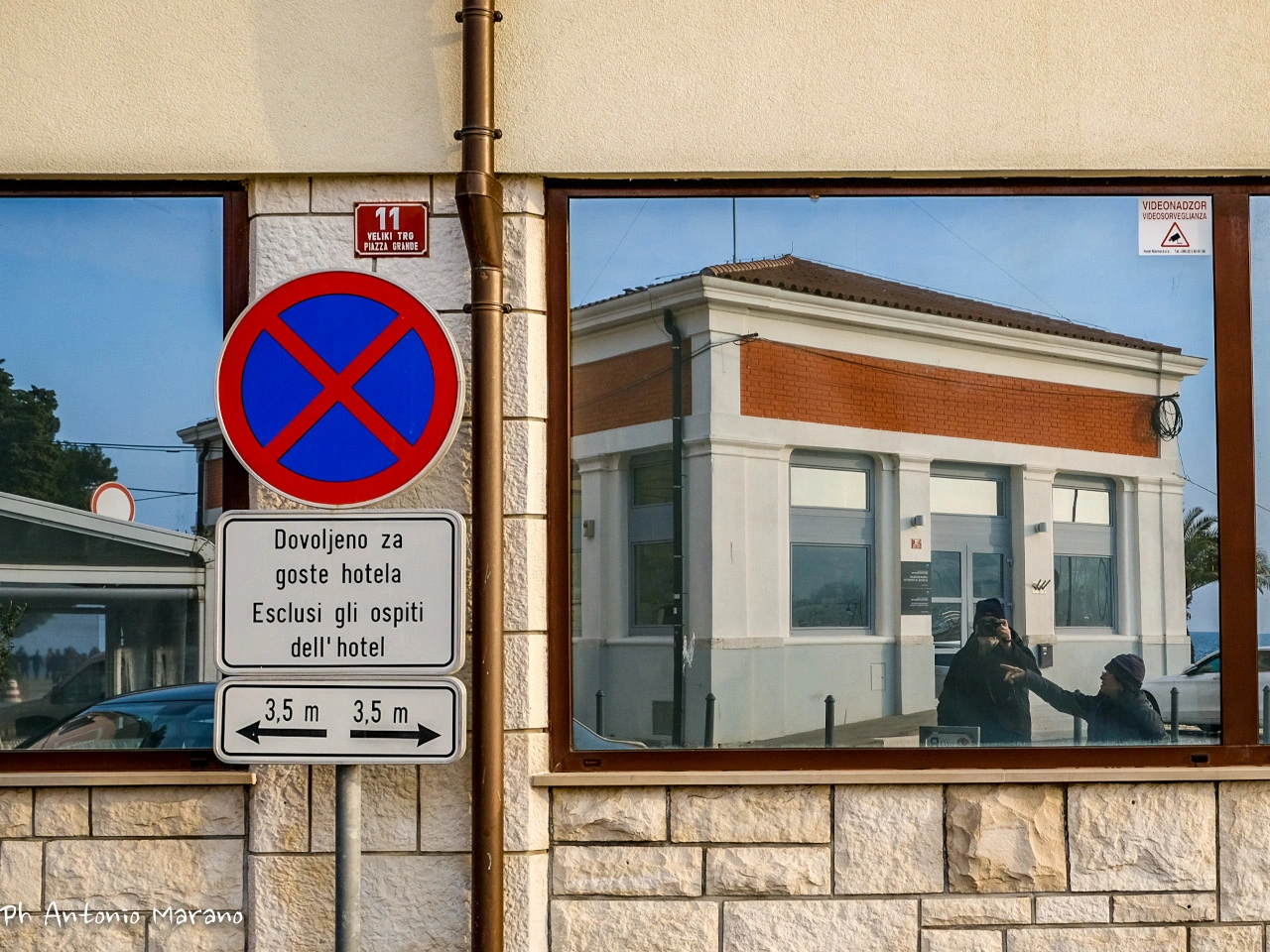
No stopping means that vehicles are not permitted to stop voluntarily at the indicated location, even briefly for picking up or dropping off passengers or loading or unloading goods. It is a stricter restriction than a no-parking rule.
A no-stopping restriction may be indicated by a traffic sign, road marking or local traffic regulation. Drivers should continue to a place where stopping is permitted unless they are forced to stop by traffic conditions, an emergency or another legal requirement.
Wikimedia.org • antonio • CC BY
What does a no stopping restriction mean?
It means that a driver may not voluntarily stop the vehicle in the restricted area. The prohibition normally includes stopping to pick up or drop off passengers or to load or unload goods.
🔗 ris.bka.gv.at • Austria, StVO sections 2, 23–24 and 52
🔗 gov.uk • Great Britain Highway Code, Rules 238–252; national guidance example
🔗 gov.uk • UK Department for Transport, parking-control signs and road markings
🔗 wegcode.be • Belgium, 1975 Road Code, Articles 2 and 23–27
Can you stop in a no-stopping area during an emergency?
A driver may have to stop because of an emergency, traffic conditions, a red light, police instructions or another situation outside the driver's control. Such compulsory stops are generally different from voluntarily stopping the vehicle.
🔗 ris.bka.gv.at • Austria, StVO sections 2, 23–24 and 52
🔗 gov.uk • Great Britain Highway Code, Rules 238–252; national guidance example
🔗 gov.uk • UK Department for Transport, parking-control signs and road markings
🔗 wegcode.be • Belgium, 1975 Road Code, Articles 2 and 23–27
36. Parking disc
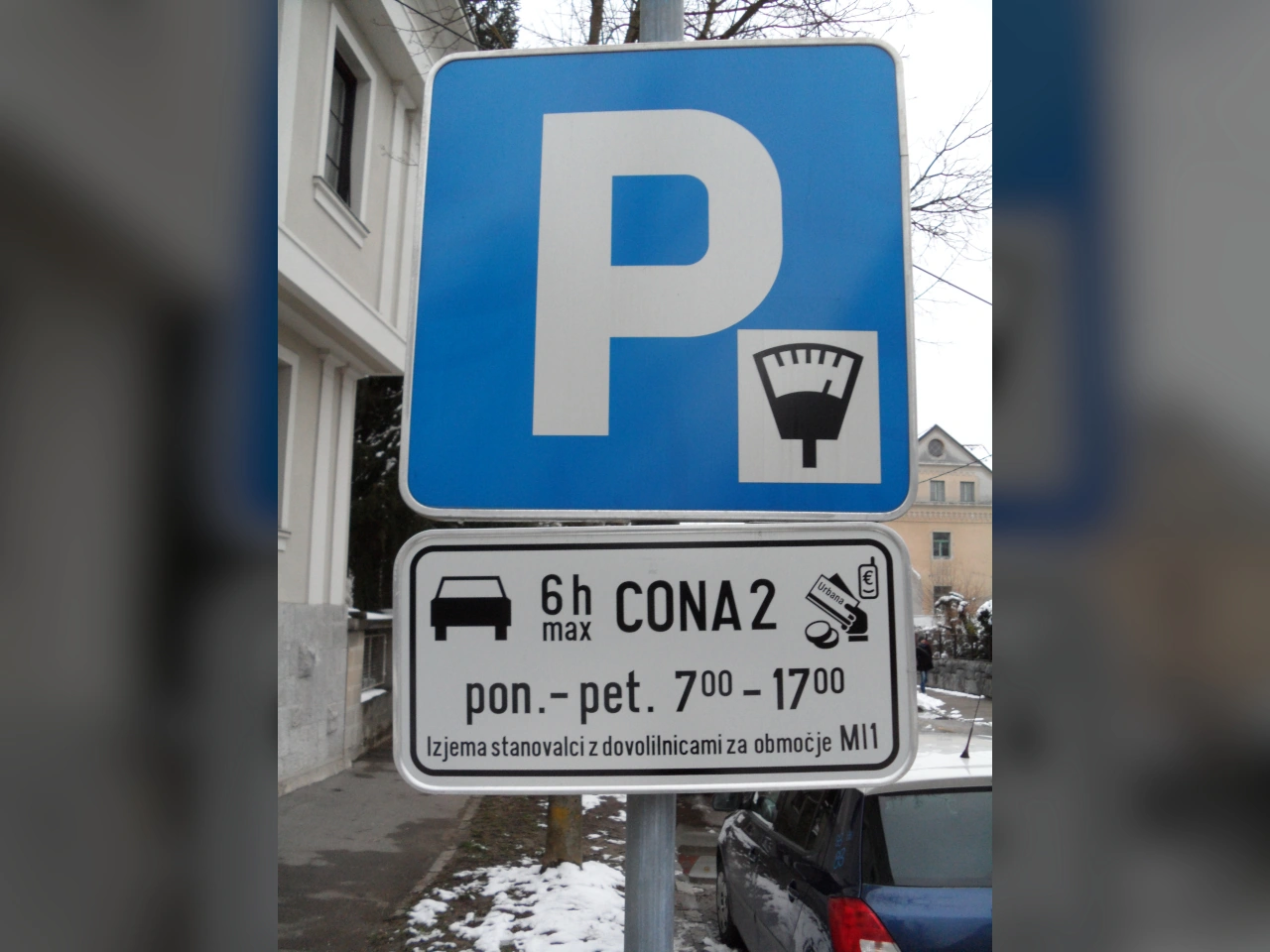
A parking disc is a device used to indicate the time a vehicle was parked in an area where parking duration is limited. The driver sets the disc to the required arrival time and displays it clearly inside the vehicle.
Parking-disc systems are commonly used in blue zones or other time-limited parking areas. The permitted parking duration, operating hours and method for setting the disc depend on national or local rules and the traffic signs in place.
Wikimedia.org • MZaplotnik • CC BY-SA
Can you reset the arrival time to extend free short-stay parking in Krško?
No. Krško’s ordinance prohibits changing the recorded arrival time to extend the permitted stay, before or after it expires.
🔗 pisrs.si • PISRS, Krško traffic ordinance, Article 11(3)
🔗 pisrs.si • PISRS Krško parking ordinance metadata and current versions
Does an arrival-time disc replace a paid parking ticket in Ljubljana?
No. In its paid on-street scheme, use an accepted payment method and observe the zone’s time limits.
🔗 lpt.si • Ljubljana municipal parking operator, paying for parking
37. Reversing
Reversing means driving a vehicle backwards. It is commonly used when parking, leaving a confined space or repositioning a vehicle where forward movement is not practical.
Before reversing, the driver should check mirrors and blind spots, look carefully around the vehicle and make sure the area behind is clear. Reversing should be performed slowly and only for as long as necessary because visibility behind the vehicle is often limited.

Wikimedia.org • Kārlis Dambrāns • CC BY
Can you reverse onto a Slovenian priority road?
No. Reversing from a non-priority road onto a priority road is prohibited.
🔗 pisrs.si • Slovenia, ZPrCP — articles 30, 37, 43
🔗 pisrs.si • Slovenia, current Signs Regulation — relevant national signs and markings
Can you reverse on Slovenian motorways?
No. The prohibition also applies to expressway carriageways.
🔗 pisrs.si • Slovenia, ZPrCP — articles 30, 37, 43
🔗 pisrs.si • Slovenia, current Signs Regulation — relevant national signs and markings
38. Emergency exit
An emergency exit is a marked escape route that allows road users to leave a tunnel or other enclosed traffic facility during a serious incident such as a fire, smoke development or another emergency. Emergency exits lead towards a safer area separated from the immediate danger.
In an emergency, occupants should leave their vehicle when evacuation is necessary and follow the emergency-exit signs and instructions. They should move away from the danger rather than remaining inside the tunnel or returning to their vehicle.
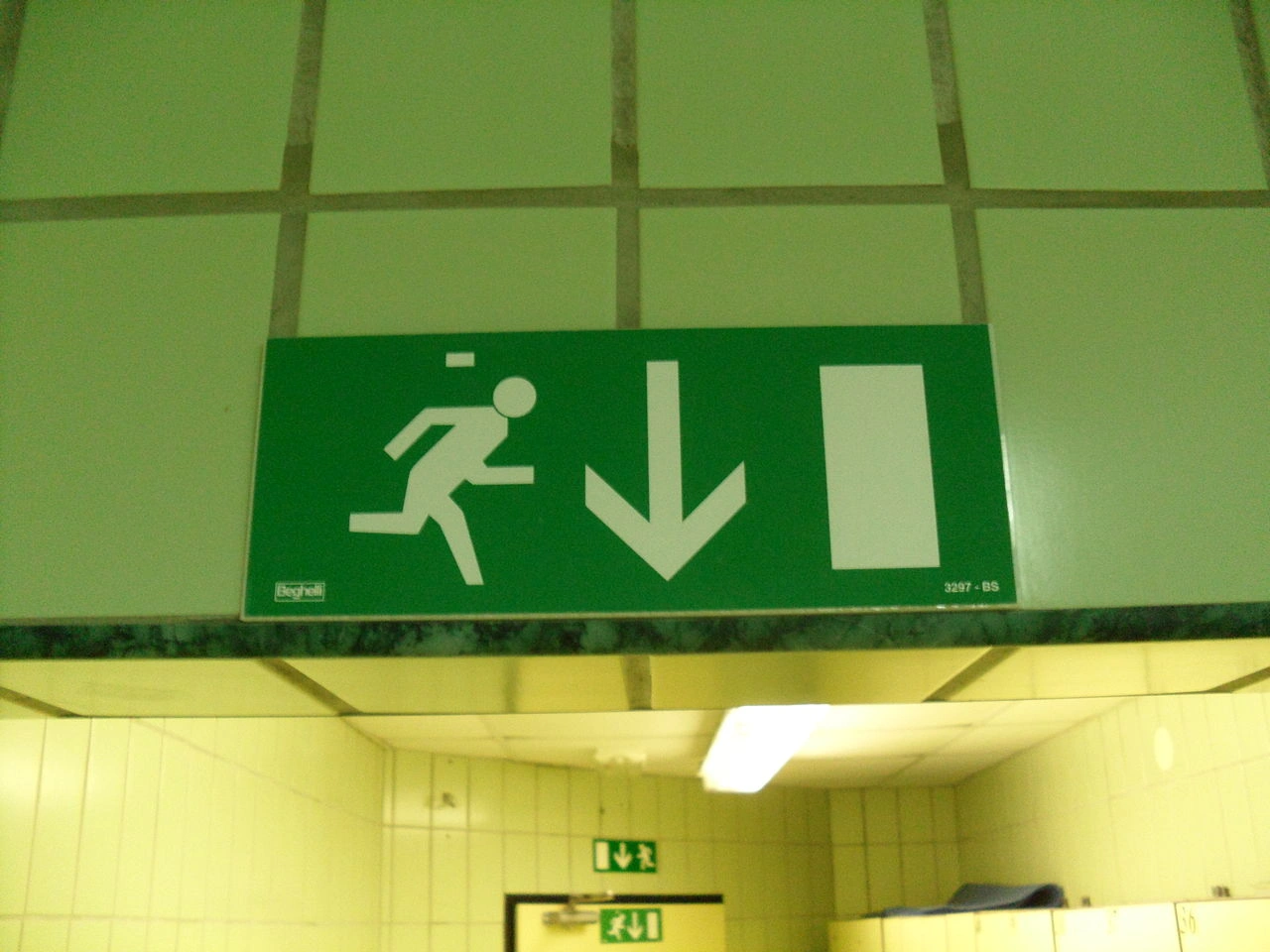
Wikimedia.org • MZaplotnik • CC BY-SA
Should you take your vehicle through an emergency exit?
No. Tunnel emergency exits are intended for people evacuating on foot. Leave the vehicle when necessary and follow the marked escape route towards safety.
🔗 crisiscenter.be • Belgian National Crisis Centre, tunnel evacuation on foot
🔗 merseytravel.gov.uk • Merseytravel, road-tunnel evacuation instructions
🔗 gov.uk • UK DfT, emergency-exit pedestrian signs and information symbols
39. City limit
A city limit is a boundary or roadside indication showing that a driver is entering or leaving a named city, town, village, locality or municipality. It is commonly marked by a place-name or boundary sign.
The meaning of these signs varies between countries. A city-limit or locality sign may identify an administrative boundary, a named settlement or a traffic-related boundary. It does not necessarily mark the beginning or end of a legally defined built-up area, and passing the sign does not always change the applicable speed limit or other traffic rules.
Wikimedia.org • Doremo • CC BY-SA
What is a city limit?
A city limit identifies the boundary of a named city, town or municipality. A roadside place-name or boundary sign may identify that boundary, a locality or a legally defined built-up area; its exact meaning depends on the sign system.
🔗 gov.uk • UK Department for Transport, Know Your Traffic Signs, boundary signs
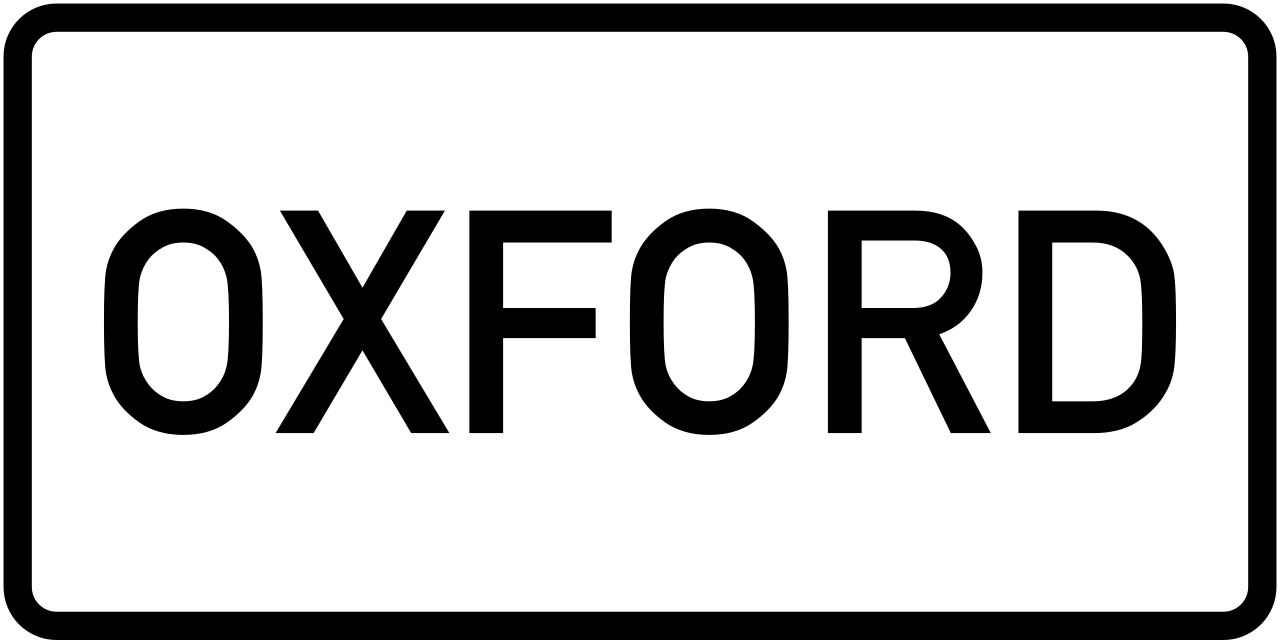 City limit.
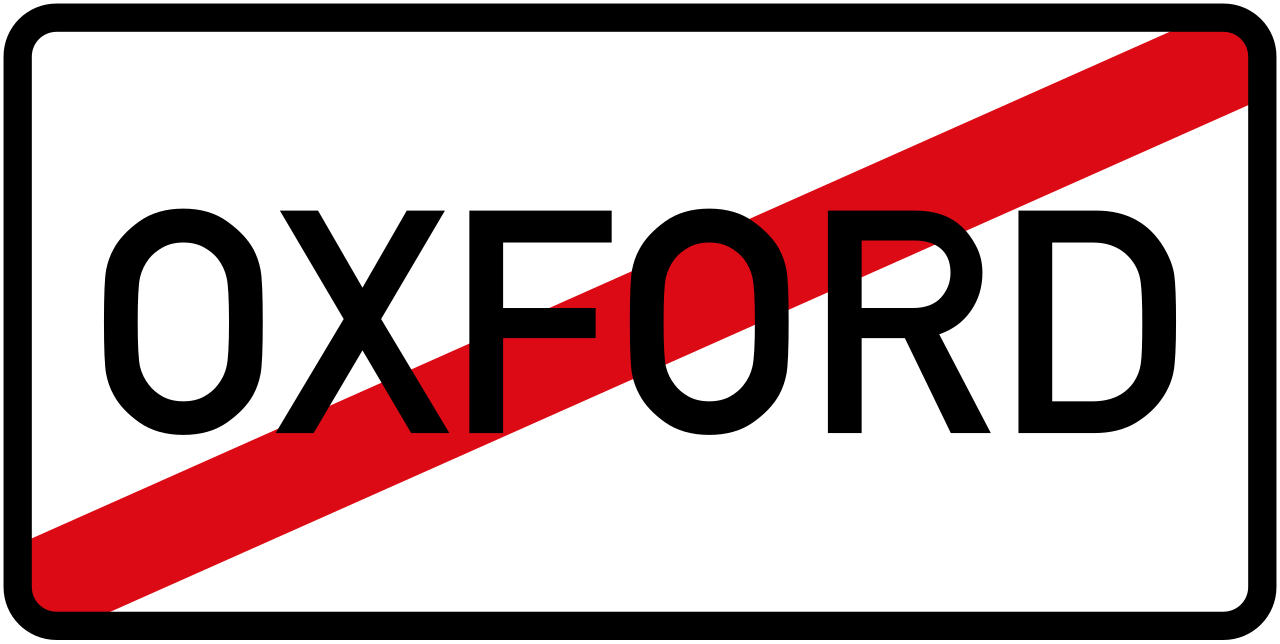 End of city limit.
Does a city-limit sign always mark a built-up area?
No. A city-limit or locality sign may simply identify a place or administrative boundary. A legally defined built-up area can use a different sign or definition.
🔗 gov.uk • UK Department for Transport, Know Your Traffic Signs, boundary signs
What is the difference between a city limit and a built-up area?
A city limit identifies the boundary of a named place or administrative area. A built-up area is a traffic-law concept that may affect rules such as default speed limits. The two boundaries can coincide, but they do not have to.
🔗 gov.uk • UK Department for Transport, Know Your Traffic Signs, boundary signs
40. Licence plate
A licence plate, also called a registration plate or number plate, is a plate displaying a unique registration identifier assigned to a vehicle by the competent registration authority. It allows the vehicle to be identified for purposes such as registration, traffic enforcement, taxation, insurance and parking control.
The appearance, format, placement and number of plates required vary between countries and vehicle categories. Drivers must ensure that required licence plates are correctly fitted, clearly visible and legible and must follow the local rules when a plate is lost, stolen, damaged or replaced.
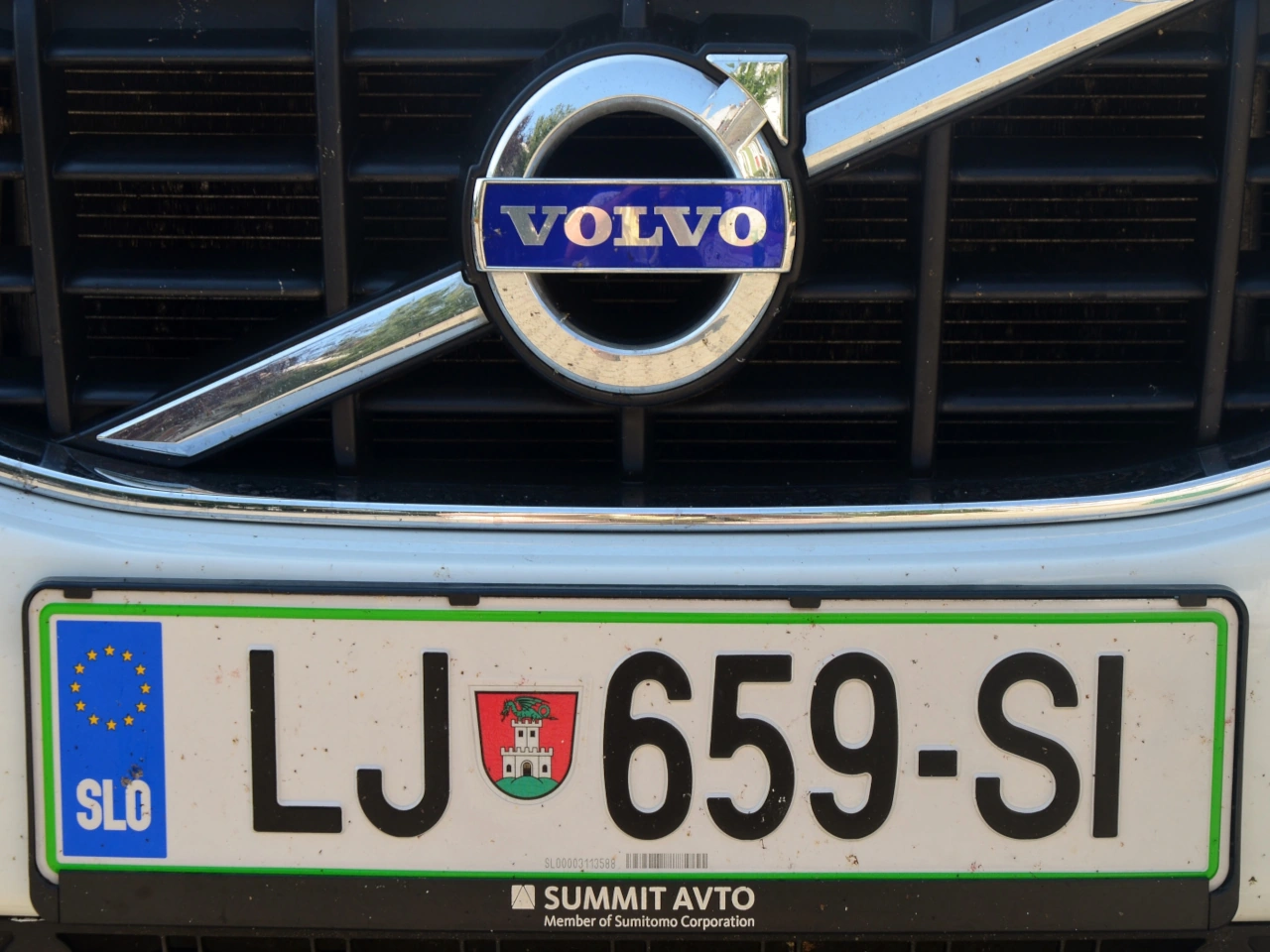
Wikimedia.org • CeeGee • CC BY-SA
What is a licence plate?
A licence plate is a plate displaying the registration identifier assigned to a vehicle. It allows authorities and other authorised systems to identify the vehicle's registration.
Is a licence plate the same as a registration plate?
Yes. Licence plate, registration plate and number plate are different terms commonly used for the plate displaying a vehicle's official registration number.
What should you do if a licence plate is lost or stolen?
Follow the local reporting and replacement procedure. For example, UK guidance says stolen plates should be reported to the police and DVLA, and replacement plates are needed before driving. Check the registration authority’s procedure for a lost plate; it may differ from the theft process.
41. Charging station
A charging station is a location equipped with one or more charging points where the battery of an electric or plug-in hybrid vehicle can be connected to an electricity supply and recharged. Charging stations may be located along public roads, in car parks, at service areas or on private property.
Charging spaces may be reserved for vehicles that are charging and can be subject to parking restrictions, time limits, payment requirements or other conditions. Drivers must follow the traffic signs, parking regulations and charging instructions applying at the location.
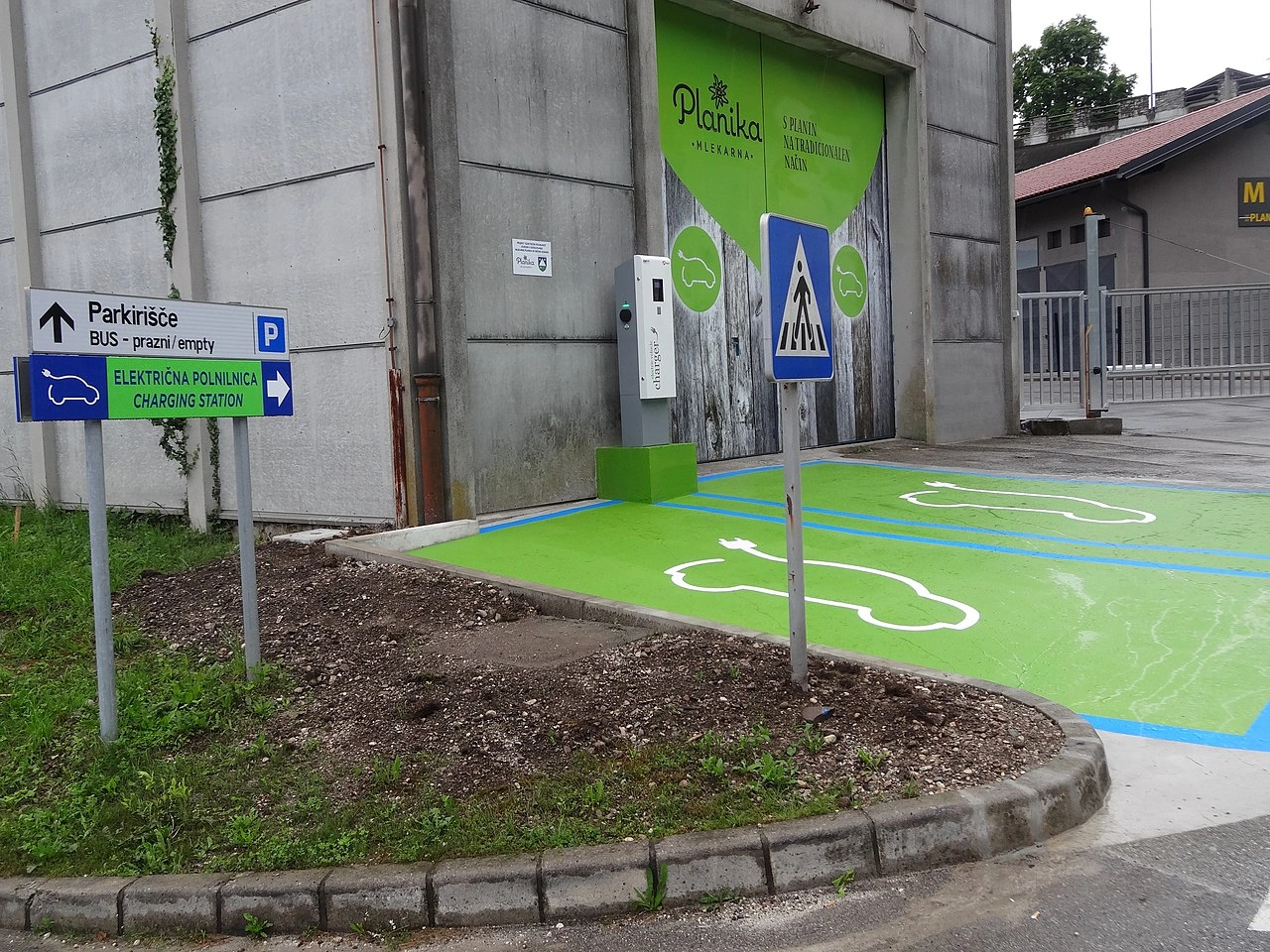
Wikimedia.org • CC0
What is a charging station?
A charging station is a location where electric vehicles can be connected to an electricity supply to recharge their batteries. A station may contain one or several individual charging points.
🔗 tfl.gov.uk • Transport for London, electric vehicles and charging points; London example
Who can use an electric-vehicle charging station?
Charging stations are intended for vehicles that can be externally charged, such as battery-electric vehicles and plug-in hybrid vehicles. The exact vehicle categories permitted may be indicated by local signs or operator conditions.
🔗 tfl.gov.uk • Transport for London, electric vehicles and charging points; London example
Can a charging station have a maximum parking time?
Yes. Traffic signs, parking regulations or charging conditions may establish a maximum duration to encourage drivers to move their vehicles and make the charger available to others.
🔗 tfl.gov.uk • Transport for London, electric vehicles and charging points; London example
42. Dangers
A general danger warning sign warns road users of a hazard ahead that is not represented by a more specific warning sign. The particular danger may be explained by a supplementary panel, text, symbol or other indication placed with the warning sign.
Drivers should increase their attention, observe the road ahead and adapt their speed to the nature of the hazard and surrounding conditions. The exact appearance of the sign and the way the danger is identified vary between countries, so road users must follow the local traffic signs and regulations.
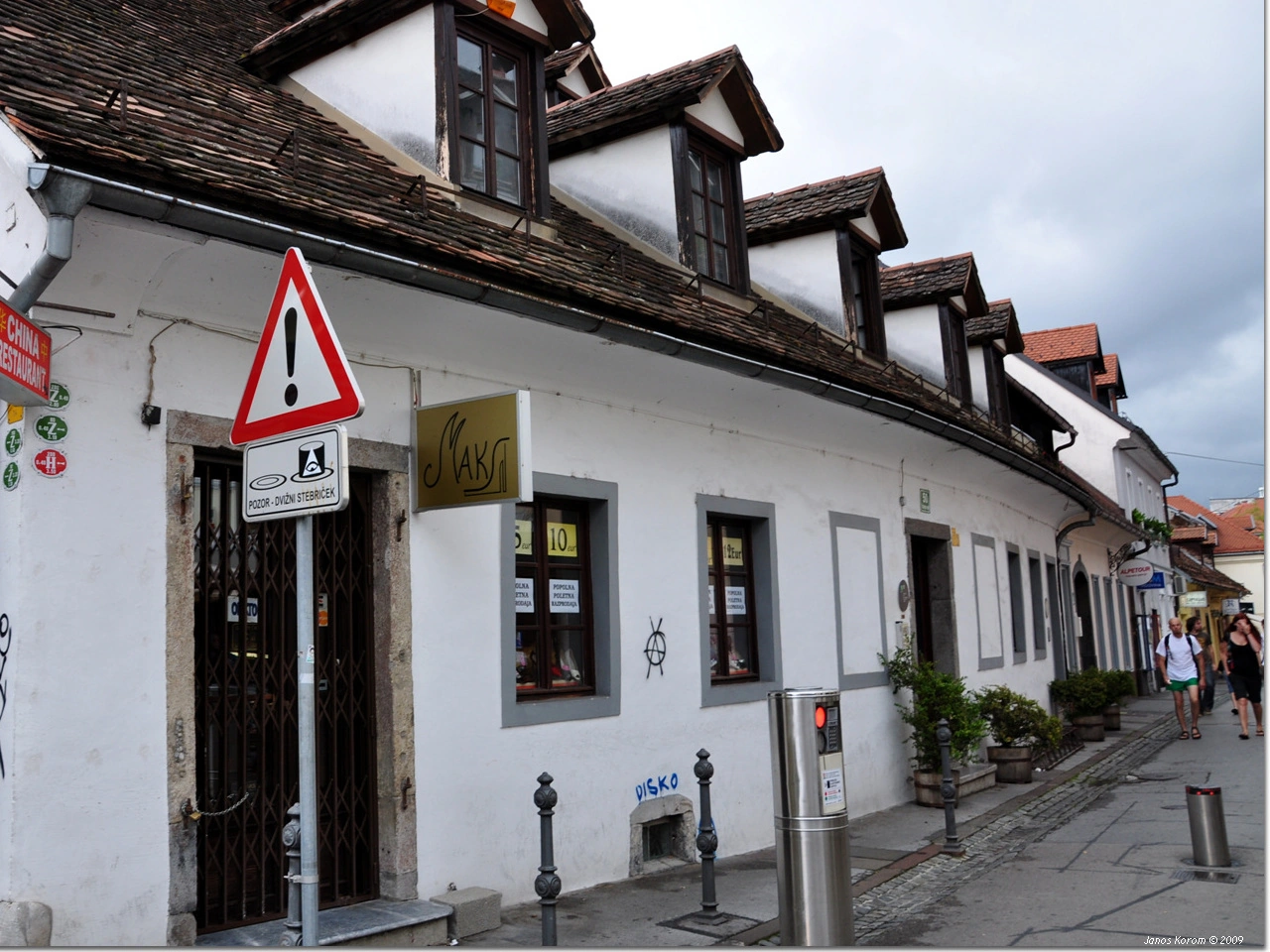
Wikimedia.org • János Korom Dr. • CC BY-SA
What does a general danger warning sign mean?
A general danger warning sign indicates that there is a hazard ahead that is not represented by a more specific warning sign in the local traffic-sign system.
 Warning for a danger with no specific traffic sign.
What should you do when you see a general danger warning sign?
Increase your attention, observe the road and surroundings carefully and adapt your speed where necessary so that you can respond safely to the hazard.
Does the sign impose a specific speed limit?
Not normally. A warning sign alerts road users to danger rather than establishing a numerical speed limit. A separate speed-limit sign may be provided where a specific maximum speed is required.
43. Dip
A dip is a low or sunken section of the road where the surface drops and then rises again over a relatively short distance. A dip can reduce visibility, affect vehicle stability and sometimes collect water, making it more difficult for drivers to judge the road ahead.
Drivers approaching a dip should reduce speed when necessary, maintain control and watch for hidden vehicles, pedestrians, cyclists or standing water beyond or within the depression.
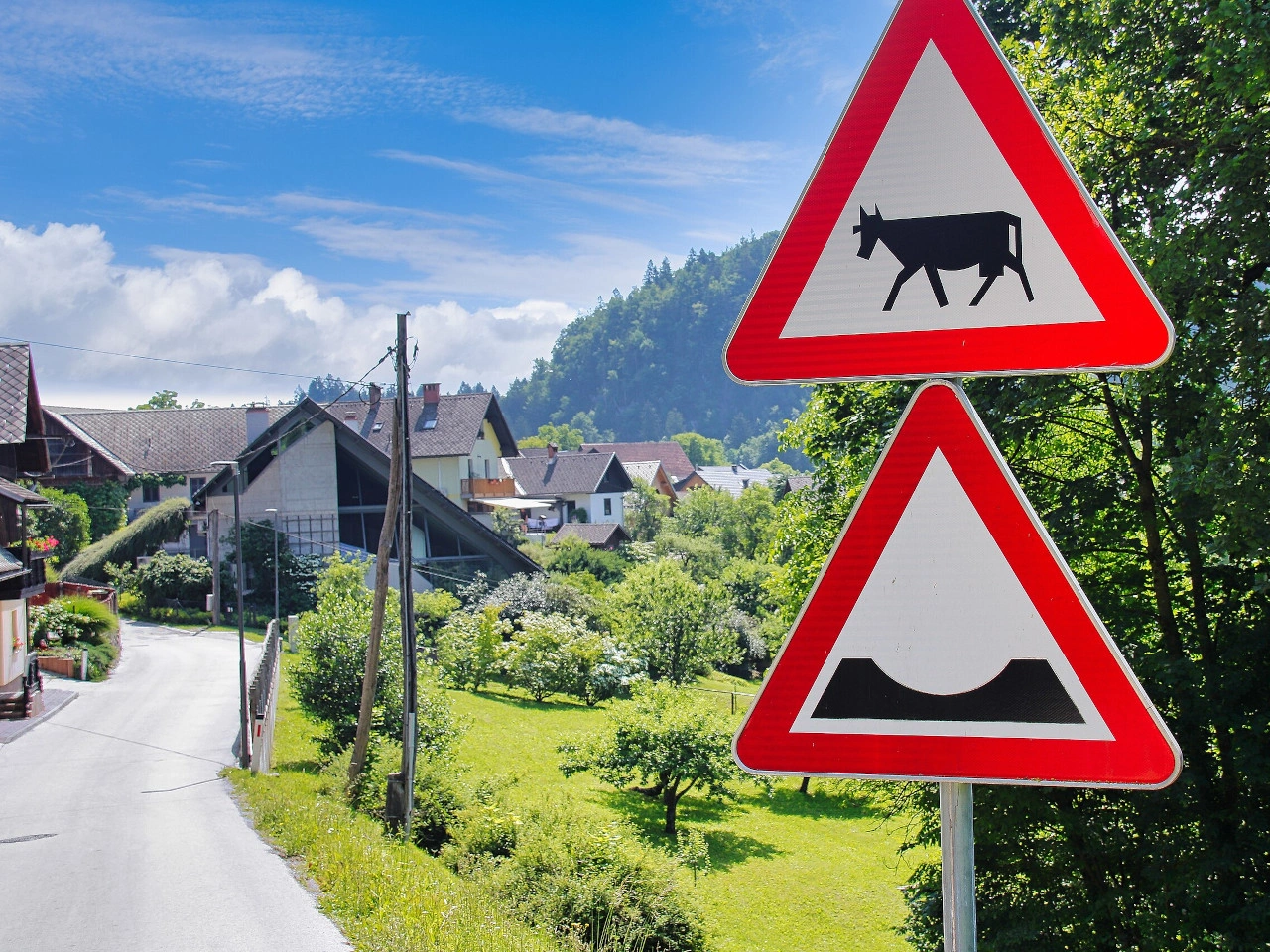
Wikimedia.org • Alain Rouiller • CC BY-SA
How should you drive through a dip?
Approach at a suitable speed, keep the vehicle under control and be prepared for hazards that may not be visible until you enter or leave the dip.
🔗 gov.uk • Great Britain Highway Code, Rules 226–237; national guidance example
44. Pedestrian
A pedestrian is a person travelling on foot along or across a road, street, path or other public space. Depending on local traffic law, people pushing bicycles, wheelchairs, prams or certain other small devices may also be treated as pedestrians.
Pedestrians normally use pavements, sidewalks, footpaths and pedestrian areas where these are available. When crossing a road or walking where no suitable pedestrian facility exists, they must follow the applicable crossing rules, traffic lights and other local traffic regulations.
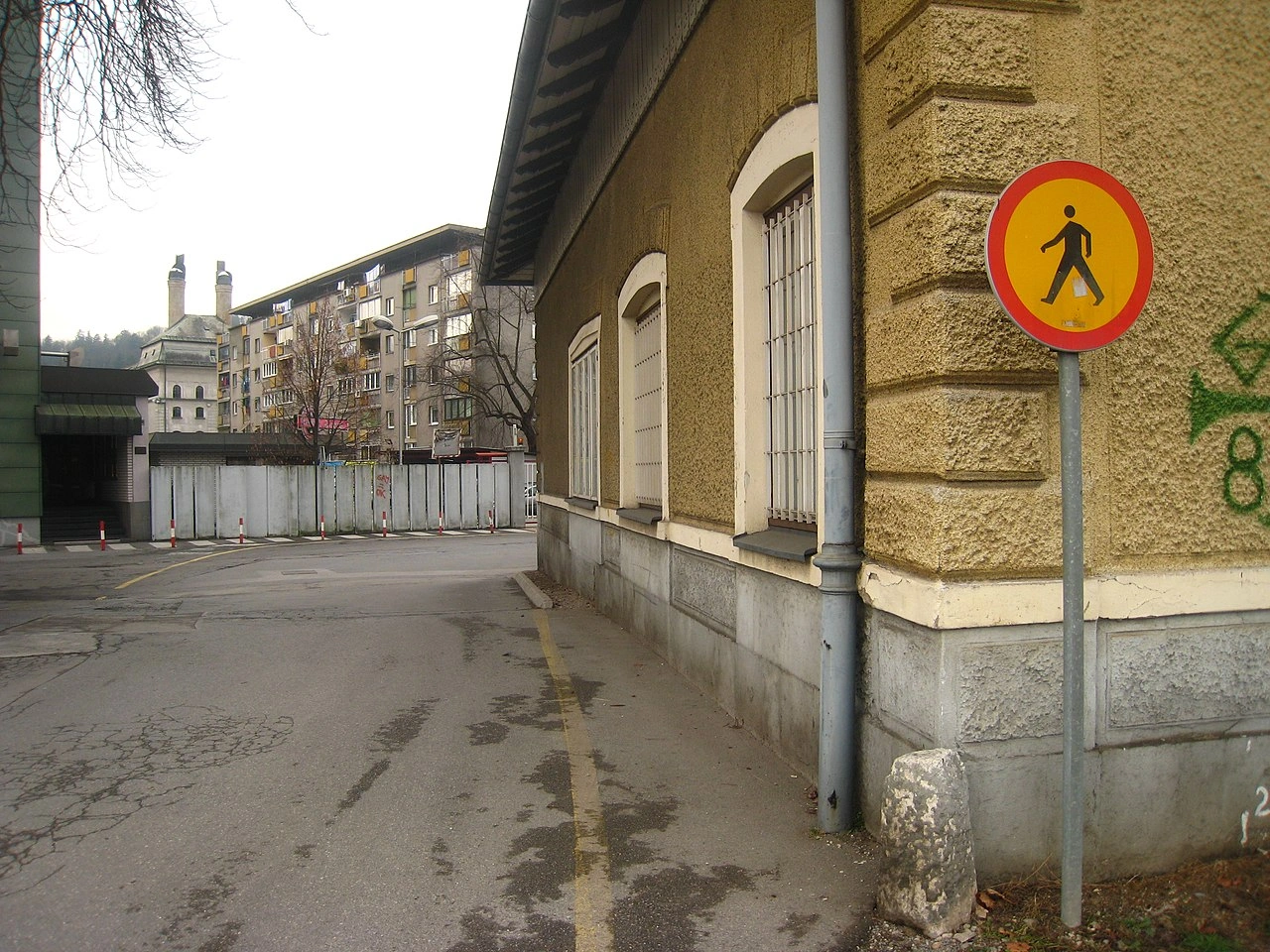
Wikimedia.org • Spodnja Siska • CC BY-SA
What is a pedestrian?
A pedestrian is primarily a person travelling on foot. Local traffic laws may also treat people pushing bicycles, wheelchairs, prams or certain other devices as pedestrians.
Which side of the road should pedestrians walk on when there is no pavement?
This depends on the country's traffic rules. Many countries require or recommend pedestrians to face approaching traffic, but the exact rule varies.
Do pedestrians always have priority at a pedestrian crossing?
The exact priority rule varies between countries. Drivers are commonly required to give way to pedestrians using or entering designated crossings, but pedestrians must still obey traffic lights and avoid entering the road dangerously.
45. Cyclist
A cyclist is a person who rides and controls a bicycle. Cyclists are road users and, in many countries, bicycles are legally treated as vehicles, meaning cyclists must follow many of the same traffic rules that apply to other drivers together with rules specifically intended for cycling.
Cyclists should use designated cycling facilities where required, obey traffic signs and signals and ride in a predictable and safe manner. The exact rules governing road position, priority, equipment and permitted cycling areas vary between countries.
Wikimedia.org • Jon Worth • CC BY
Where should cyclists ride?
This depends on local rules. Cyclists may be required to use a cycle path or designated cycling facility, while in other situations they may ride on the carriageway.
46. Truck
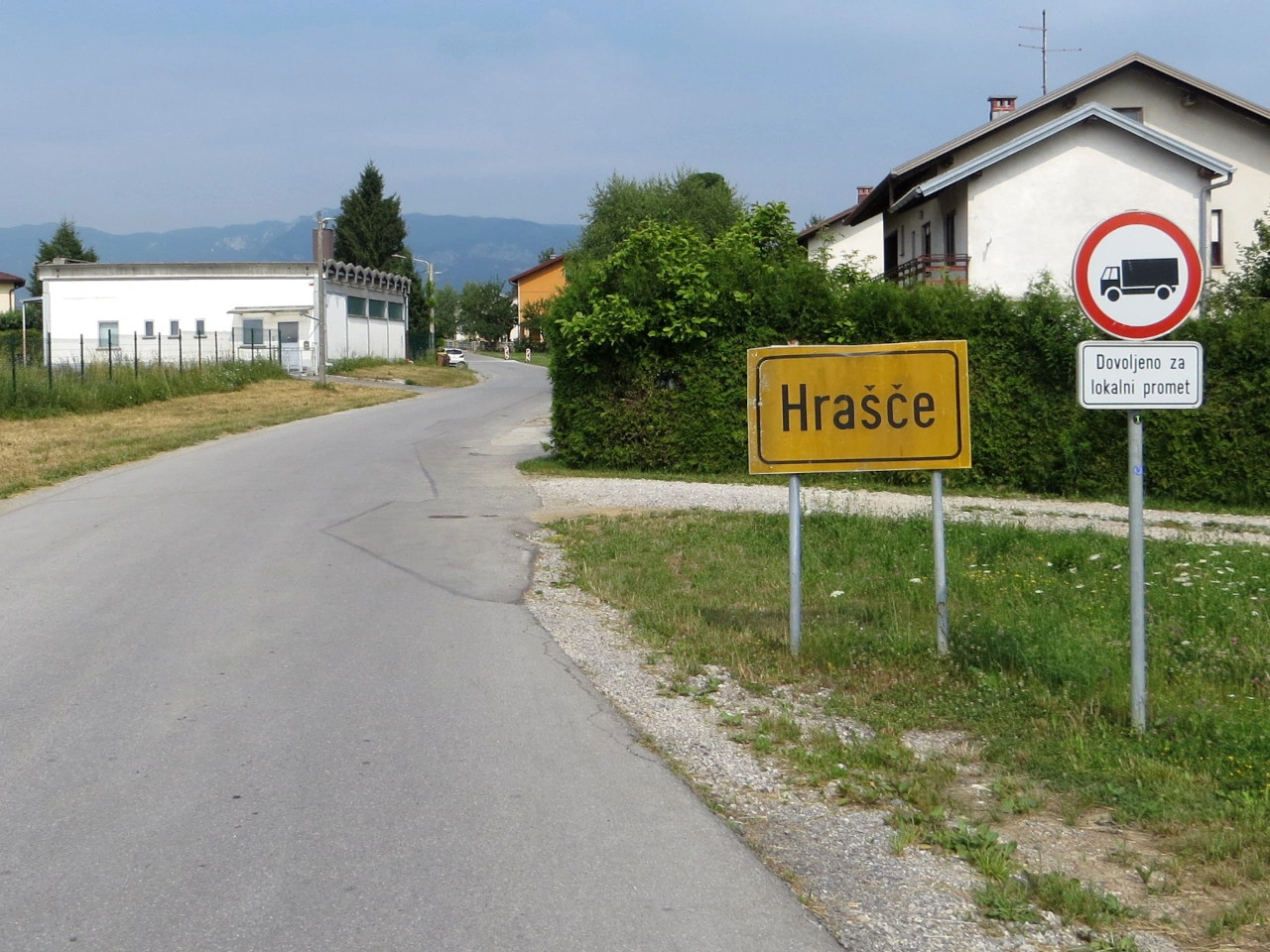
A truck is a motor vehicle designed primarily for transporting goods. Trucks range from relatively small delivery vehicles to large heavy goods vehicles and articulated combinations used for long-distance freight transport.
Because trucks are generally larger, heavier and slower to manoeuvre than passenger cars, they require more space for turning and braking and often have larger blind spots. Specific speed, lane-use, overtaking and access rules may apply depending on the vehicle's weight and the country.
Wikimedia.org • Doremo • CC BY-SA
Why should other road users take extra care around trucks?
Trucks may have larger blind spots, longer stopping distances and wider turning paths than smaller vehicles, so other road users should avoid remaining unnecessarily close beside or in front of them.
🔗 gov.uk • Great Britain Highway Code, Rules 83–88; national guidance example
🔗 gov.uk • Great Britain Highway Code, Rules 221–223; national guidance example
47. Bus
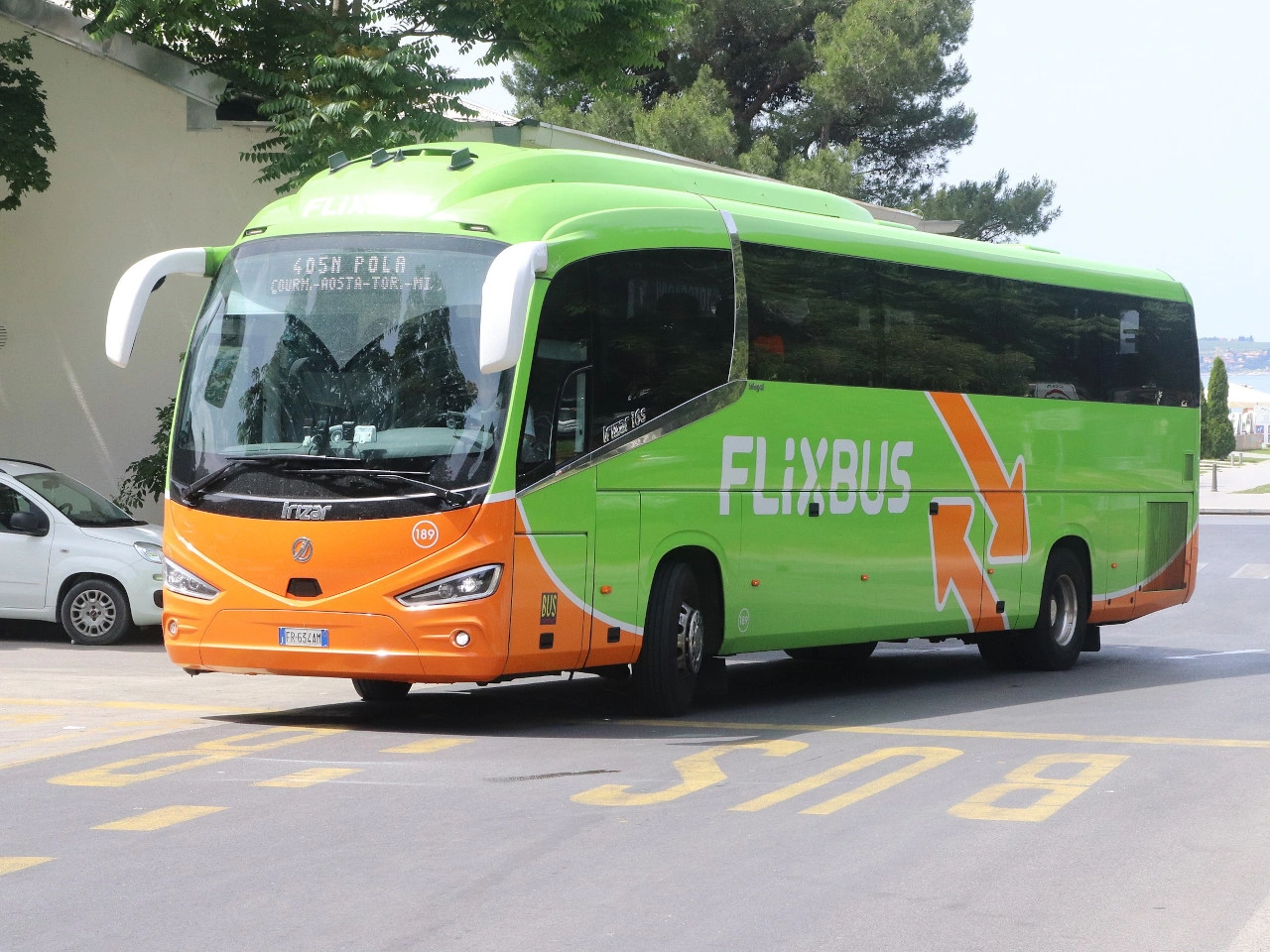
A bus is a motor vehicle designed to transport multiple passengers, usually along roads as part of public transport, school transport, private transport or another passenger service. Buses generally have more passenger capacity than cars and may be designed to carry seated passengers, standing passengers or both.
Special rules may apply to buses concerning the driving licence, passenger capacity, speed limits, seat belts, bus lanes, stops and passenger boarding. The legal classification of buses and coaches and the rules applying to them vary between countries, so drivers and passengers must follow the local traffic regulations.
Wikimedia.org • Andrzej Otrębski • CC BY-SA
What is a bus?
A bus is a motor vehicle designed to transport a relatively large number of passengers. It may be used for public transport, school transport, private services or other passenger transport.
🔗 gov.uk • Great Britain Highway Code, Rules 83–88; national guidance example
🔗 gov.uk • Great Britain Highway Code, Rules 221–223; national guidance example
Do buses always have priority when leaving a bus stop?
No. Some countries require other drivers to give way to buses leaving designated stops, particularly in urban areas, while others apply the normal merging rules.
🔗 gov.uk • Great Britain Highway Code, Rules 83–88; national guidance example
🔗 gov.uk • Great Britain Highway Code, Rules 221–223; national guidance example
Do buses have special speed limits?
They can. Some countries impose lower maximum speeds on buses than on passenger cars, particularly on high-speed roads. Different limits may apply to buses and coaches.
🔗 gov.uk • Great Britain Highway Code, Rules 83–88; national guidance example
🔗 gov.uk • Great Britain Highway Code, Rules 221–223; national guidance example
48. Police
Police are public authorities responsible for enforcing laws, maintaining public safety and managing situations that may affect road traffic. In traffic, police officers may control vehicles, enforce traffic rules, investigate collisions, direct traffic and respond to emergencies.
Road users must follow lawful instructions given by police officers or other authorised traffic-control personnel. Police directions may temporarily override traffic lights, road signs or normal traffic arrangements, depending on local law.
Wikimedia.org • Iswoar • CC BY-SA
What is the role of police in road traffic?
Police help enforce traffic law, investigate collisions and respond to risks on the road. For example, Greater Manchester Police describe targeted road enforcement, a round-the-clock roads-policing response and specialist serious-collision investigation. Exact responsibilities and powers vary by jurisdiction.
🔗 gmp.police.uk • Greater Manchester Police, Roads Policing Strategy2024–2026
Must you obey a police officer directing traffic?
Yes. Lawful directions given by an authorised police officer must be followed. In many countries, those directions take precedence over traffic lights, road signs and normal priority rules.
What should you do if police signal you to stop?
Slow down, follow the officer's directions and stop at a safe location as instructed. Do not make sudden movements or continue driving unless directed to do so.
49. Ambulance
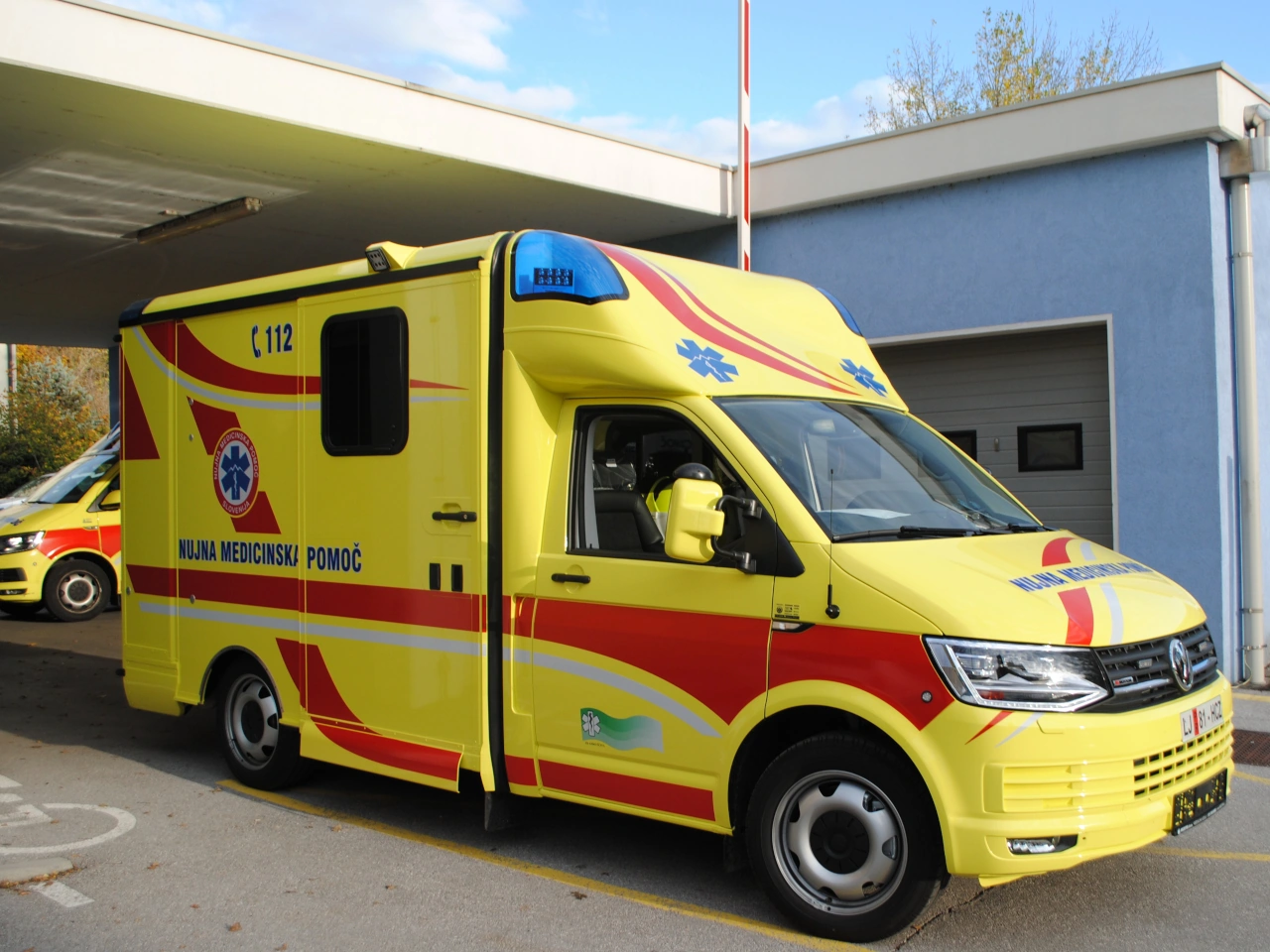
An ambulance is a vehicle equipped and used to provide emergency medical assistance or transport patients to or between healthcare facilities. Ambulances may carry medical equipment and trained personnel who can provide treatment during transport.
During an emergency response, an ambulance may use warning lights and a siren and may receive special priority or exemptions from certain traffic rules. Other road users must follow the local rules for emergency vehicles, make sufficient space and avoid obstructing their passage.
Wikimedia.org • Mario123Mario123 • CC BY-SA
What is an ambulance?
An ambulance is a specially equipped vehicle used to provide emergency medical assistance and transport sick or injured people.
🔗 gov.uk • Great Britain Highway Code, Rule 219, emergency vehicles; national guidance example
What should you do when an ambulance approaches?
Make space safely for an ambulance on an emergency response, following the local rules and any lawful directions. Slow down or stop where necessary without sudden or dangerous movements. Do not assume that its emergency status allows you to pass a red light or disregard another traffic control.
🔗 gov.uk • Great Britain Highway Code, Rule 219, emergency vehicles; national guidance example
Can an ambulance exceed the speed limit?
Many countries permit emergency vehicles to depart from certain normal speed rules during an urgent mission, subject to safety requirements and national legislation.
🔗 gov.uk • Great Britain Highway Code, Rule 219, emergency vehicles; national guidance example
50. Taxi
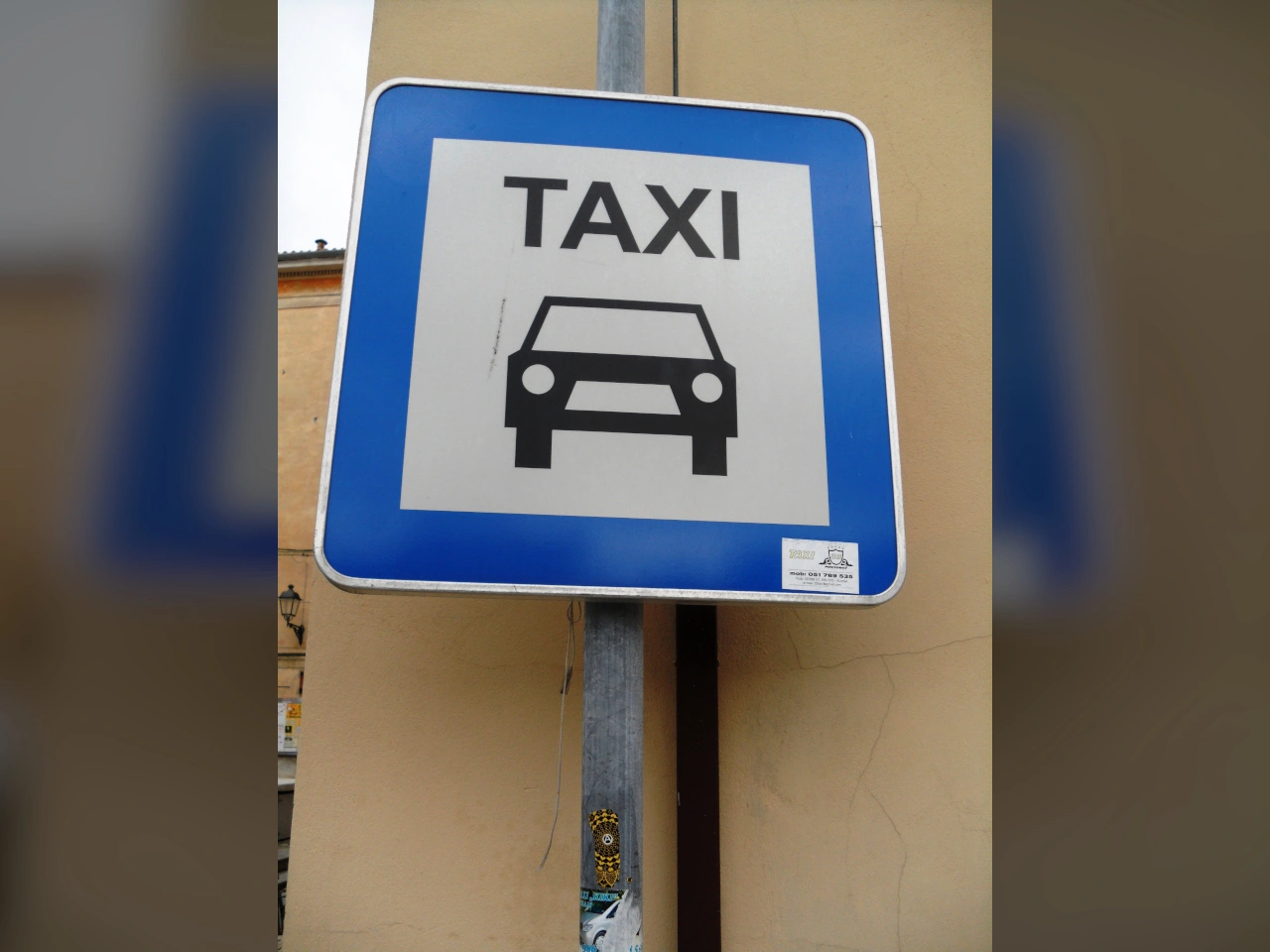
A taxi is a vehicle used to transport passengers for payment, usually providing individual or small-group journeys between locations chosen by the passenger. Taxi services may operate from designated taxi stands, accept street hails or be booked by telephone or digital platform.
Taxis are commonly identified by special markings, roof signs, licence plates or local taxi permits. The licensing, fare and operating rules vary between countries and cities.
Wikimedia.org • MZaplotnik • CC BY-SA
Are taxis regulated?
Yes. Taxi services are generally subject to licensing and operating requirements, although the exact rules concerning vehicles, drivers, fares and permitted operating areas vary between jurisdictions.