


ParkingSouth Africa
 Traffic rules
 South Africa
20. Parking
Parking means leaving a vehicle stationary at a place for a period of time rather than stopping only briefly because of traffic conditions or another immediate necessity. Many countries distinguish parking from a short stop made to pick up or drop off passengers or to load or unload goods, although the exact legal definition varies.
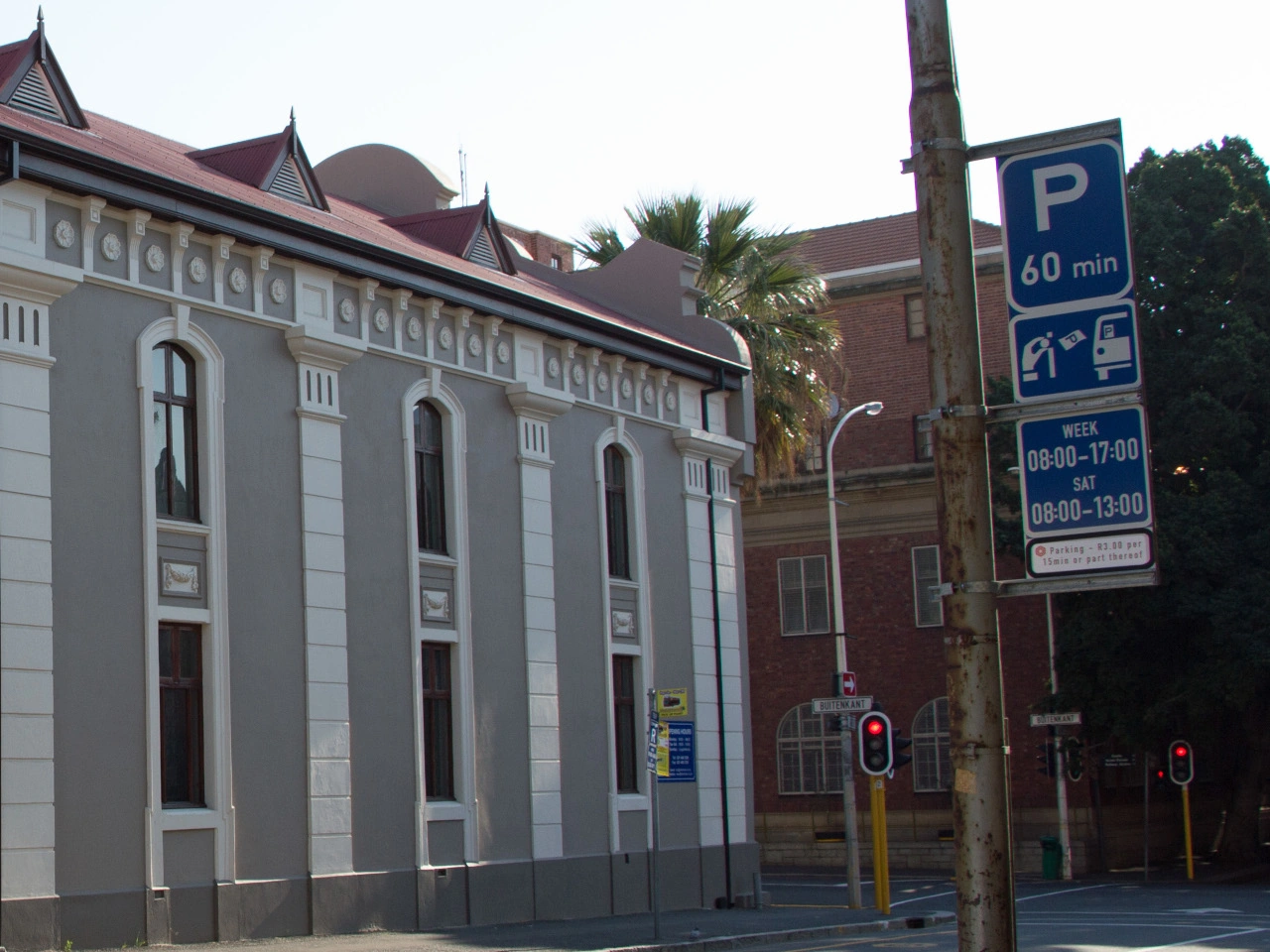
Parking may be permitted, restricted, reserved, time-limited or prohibited by traffic signs, road markings, parking zones and local regulations. Drivers must park without creating a danger or unnecessary obstruction and must comply with any conditions concerning payment, permits, vehicle categories or maximum parking duration.
Wikimedia.org • HelenOnline • CC BY-SA
What is the difference between parking and stopping?
Parking generally means leaving a vehicle stationary for longer than a brief stop required for passengers, loading or unloading. A vehicle stopped because of traffic lights, congestion, an emergency or another traffic condition is normally not considered parked. The precise legal definitions vary between countries.
🔗 wegcode.be • Belgian Road Code, articles 2, 23–27 and 70; 🔗 gesetze-im-internet.de • Germany, StVO, sections 12–13 and 19; 🔗 ris.bka.gv.at • Austria, StVO, sections 2, 23–25 and 52
How does paid parking work?
Where parking is subject to payment, drivers must follow the instructions displayed locally. Payment may be made through a parking meter, ticket machine, mobile application or another authorised system. The permitted duration and charging periods vary by location.
🔗 wegcode.be • Belgian Road Code, articles 2, 23–27 and 70; 🔗 gesetze-im-internet.de • Germany, StVO, sections 12–13 and 19; 🔗 paris.fr • City of Paris, parking payment FAQ
Can you leave a vehicle parked for an unlimited time?
Not necessarily. Local rules may impose a maximum parking duration, even where parking is otherwise permitted. Different limits may apply to abandoned, commercial, heavy or recreational vehicles.
🔗 wegcode.be • Belgian Road Code, articles 2, 23–27 and 70; 🔗 service-public.gouv.fr • French Government, prohibited and excessive parking


