


Traffic rulesSouth Africa
 Traffic rules
 South Africa
1. South Africa
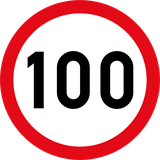
South Africa occupies the southern tip of Africa, with long-distance routes linking major cities across the Highveld, the semi-arid Karoo, coastal regions and several mountain ranges. Traffic drives on the left and normally overtakes on the right. National roads range from multi-lane freeways to long two-lane sections where fatigue, wildlife or livestock, heavy rain, fog and changing road conditions can become significant hazards. The general speed framework is 60 km/h in urban areas, 100 km/h outside urban areas and 120 km/h on freeways, unless a different limit is posted or a lower vehicle-specific limit applies.
South Africa has route-specific toll roads rather than a vignette, with conventional toll plazas on several national routes and electronic SANRAL tags available for many facilities. Gauteng's former open-road e-toll charging system was switched off in 2024. Motorcycles must use their headlamp at all times, while ordinary cars do not have a general daytime-headlight requirement. Road signs use the national South African system, relying heavily on standard symbols, with textual information commonly appearing in English and sometimes other official languages.
AI-generated by Rijbewijs-online.be • WCIT • CC BY-SA
Are seat belts compulsory in South Africa?
Yes. In an ordinary car, use the seat belts provided in both front and rear seats. The driver should make sure passengers buckle up, especially children; city guidance identifies the driver as responsible when a child passenger is not restrained.
Can you hold a mobile phone while driving in South Africa?
No. Do not hold a mobile phone to make calls or send messages while driving. Use a permitted hands-free setup if necessary; the City of Cape Town warns that hands-free conversations can still distract you. Stop in a safe place before handling the phone.
When must babies use a child seat in South Africa?
A child under three travelling in a motor vehicle on a public road must be secured in an appropriate child restraint. The regulation includes an exception for a minibus, midibus or bus operating for reward. Use a seat bearing the required approval mark.
🔗 gov.za • South African Government, compulsory infant restraints
Must you exchange a foreign licence after becoming a permanent resident of South Africa?
Yes. Convert it to a South African licence within one year of receiving permanent residence. The Government lists the required proof of validity, identification and any translation. If you do not convert it within that period, the foreign licence is regarded as invalid.
🔗 gov.za • South African Government, converting a foreign licence

2. Motorway
A motorway is a road specially designed and signposted for motor traffic. Motorways normally have separate carriageways for opposing traffic, controlled access through designated entrances and exits, no direct access to neighbouring properties, and no level crossings with other roads, railways or paths.
Special traffic rules apply on motorways. The permitted road users, speed limits, lane rules, tolls and emergency procedures vary between countries, so drivers must follow the local traffic signs and regulations.
Wikimedia.org • Coolcaesar • CC BY-SA
What speed limit applies to cars on a motorway in South Africa?
For an ordinary passenger car without a trailer, the general maximum is 120 km/h. Obey lower posted limits and reduce speed when traffic, weather or visibility requires it. Different limits can apply to other vehicle classes.
🔗 rtmc.co.za • RTMC, State of Road Safety Report 2025, section 4.1
🔗 tourism.gov.za • South African Department of Tourism, posted limits and road safety
Can pedestrians and cyclists use a South African freeway?
In Cape Town, pedal cycles are prohibited on freeways. Pedestrians are also excluded, except in signed stopping or parking areas, for a cause beyond their control, or for the specified official, rescue, maintenance and essential-service work. For roads elsewhere, check the applicable law and entry signs.
🔗 openbylaws.org.za • Cape Town Traffic Amendment By-law2026 — Gazette publication29 July2026
Can I stop on a South African freeway for a break?
In Cape Town, use an area signed for stopping or parking for an ordinary break. Other stopping is allowed to comply with a traffic sign or an authorised official’s direction, or for a cause beyond the driver’s control. The by-law also provides specified emergency, salvage, official and maintenance-service exemptions.
🔗 openbylaws.org.za • Cape Town Traffic Amendment By-law2026 — Gazette publication29 July2026
3. Speed limit
A speed limit is the maximum legal speed permitted on a road, lane or within a designated area. It may be established by general traffic law or indicated by fixed, variable or temporary traffic signs.
A speed limit is a maximum, not a target speed. Drivers must travel more slowly whenever traffic, visibility, weather, road conditions, vulnerable road users or the condition of the vehicle make the maximum permitted speed unsafe.
Wikimedia.org • South African Tourism • CC BY
Which general speed limits should car drivers know in South Africa?
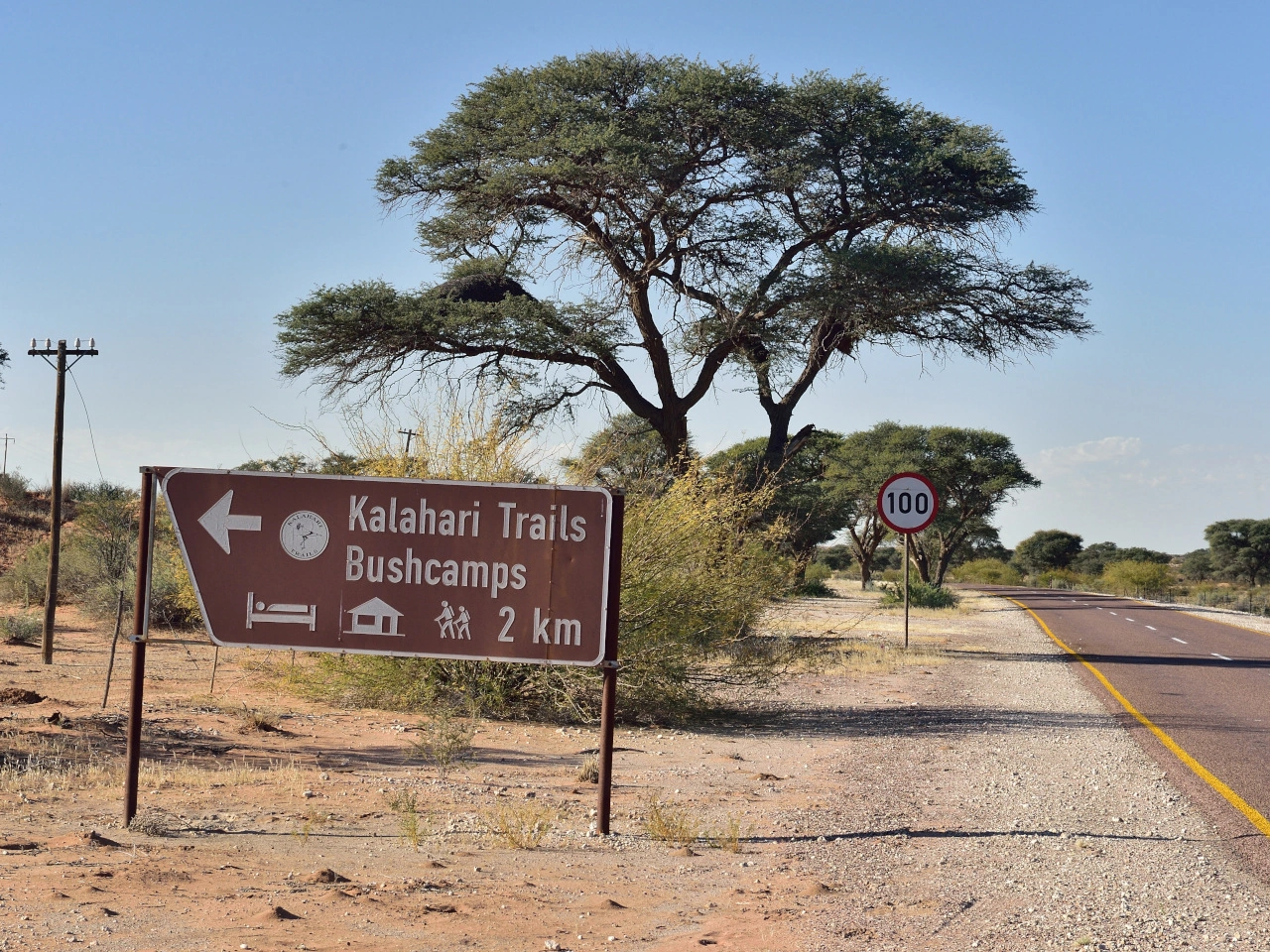
For an ordinary car, the general maxima are 60 km/h on public roads within urban areas, 100 km/h outside urban areas on roads other than freeways, and 120 km/h on freeways. Follow different signed limits and any lower vehicle-specific ceiling. Conditions can require a speed below the legal maximum.
🔗 rtmc.co.za • RTMC, State of Road Safety Report 2025, section 4.1
🔗 tourism.gov.za • South African Department of Tourism, posted limits and road safety
Is South Africa’s 120 km/h figure the general limit on every rural road?
No. It is the general freeway maximum for an ordinary car. Public roads outside urban areas that are not freeways generally have a 100 km/h maximum. Different signed restrictions and lower vehicle-specific ceilings can apply.
🔗 rtmc.co.za • RTMC, State of Road Safety Report 2025, section 4.1
🔗 tourism.gov.za • South African Department of Tourism, posted limits and road safety
4. Pedestrian warning
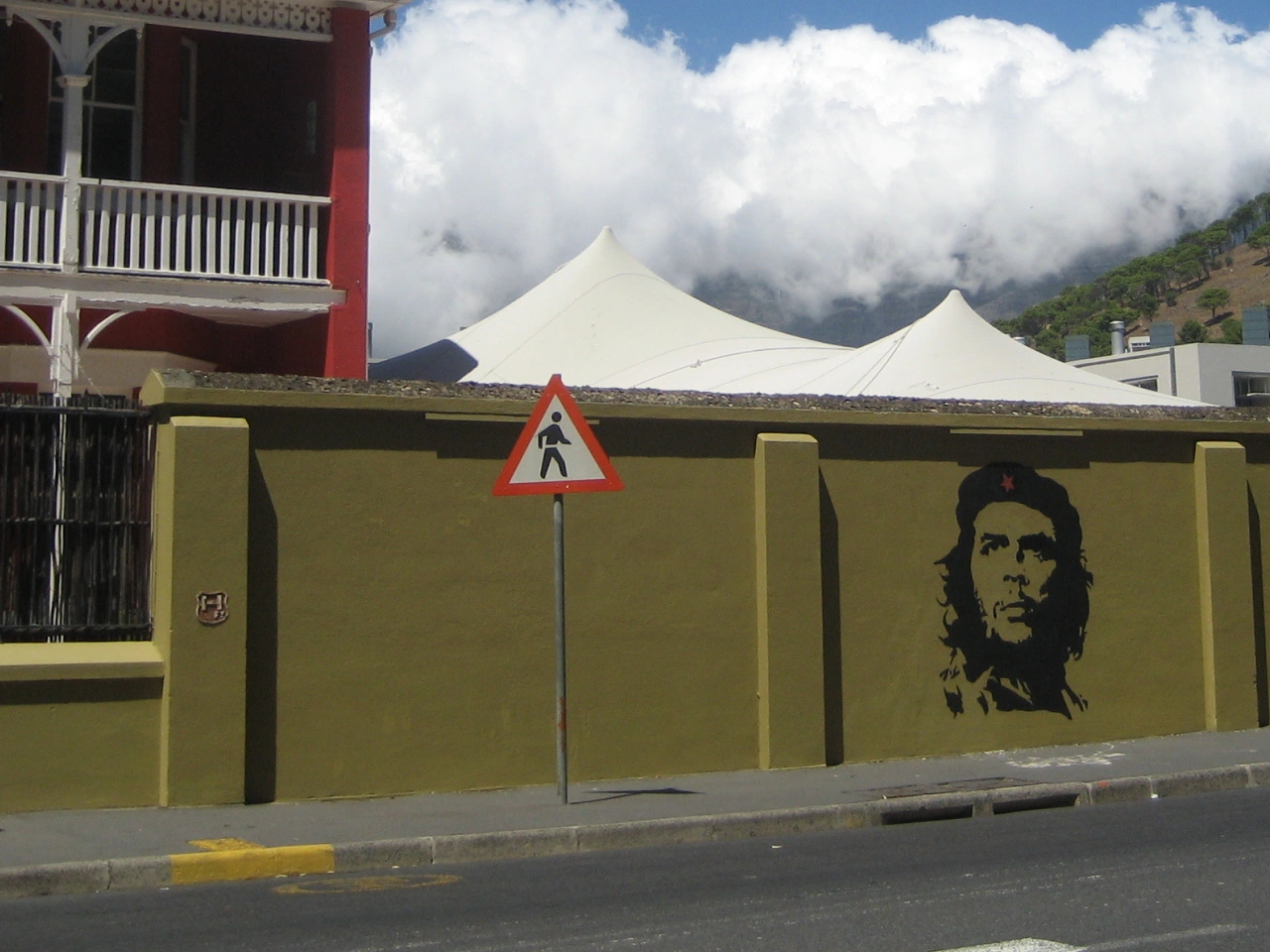
A pedestrian warning is a traffic warning indicating that pedestrians may be crossing or entering the roadway ahead. It is commonly used near pedestrian crossings or other locations where drivers need advance notice of frequent pedestrian activity.
Drivers approaching a pedestrian warning should reduce speed when necessary, watch carefully for pedestrians and be prepared to stop. The design of the warning sign and the priority rules at the crossing vary between countries.
Wikimedia.org • Vysotsky • CC BY-SA
How should I react to a pedestrian warning in South Africa?
Reduce speed, look along both sides of the road and be ready to stop. The warning identifies a pedestrian hazard ahead; children, people with limited mobility or others may enter the road unexpectedly.
🔗 transport.gov.za • South Africa, Department of Transport, SARTSM — pedestrian-warning
Does a pedestrian warning in South Africa identify the crossing itself?
Not necessarily. An advance warning alerts you to danger ahead. The actual crossing is identified by its own signs, markings or signals. Apply the crossing rules when you reach it, and follow any supplementary distance information.
🔗 transport.gov.za • South Africa, Department of Transport, SARTSM — pedestrian-warning
What should drivers know about pedestrian crossings in South Africa?
At a marked pedestrian crossing, slow down or stop as necessary to yield to pedestrians crossing or waiting to cross. Follow the applicable signs and signals: their controls take precedence over the crossing marking.
5. Speed bump
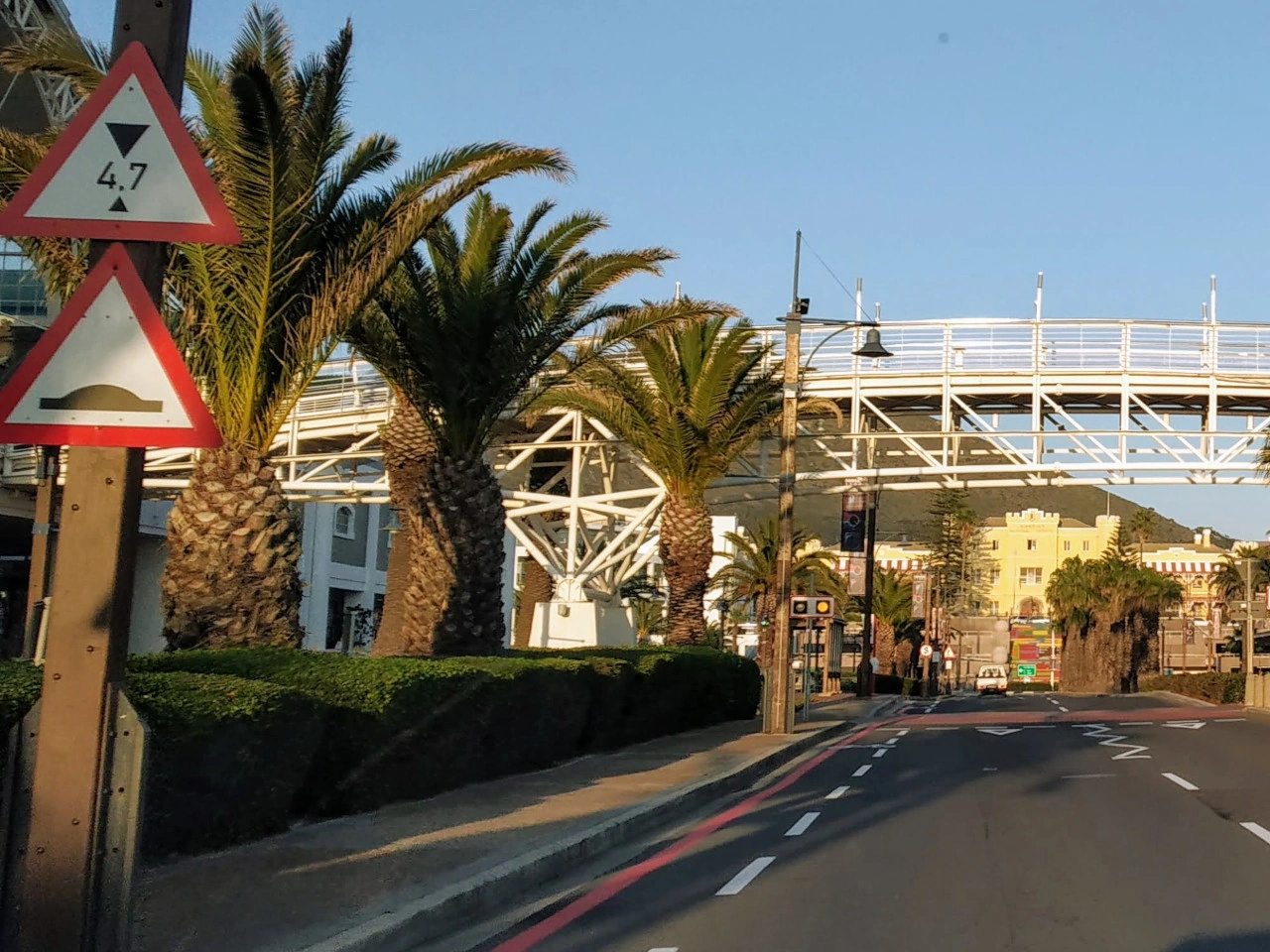
A speed bump is a raised traffic-calming device placed across all or part of a road to make drivers reduce their speed. It is commonly used near homes, schools, crossings, parking areas and other places where low vehicle speeds are important.
Speed bumps vary in shape, height and legal status. Drivers should approach them at a low, controlled speed and follow any warning signs or speed limits that apply.
Wikimedia.org • Jnanaranjan_sahu • CC BY-SA
How should I recognise and approach a speed bump in South Africa?
Look for a raised surface, approach warnings, road markings and any separate speed instruction. A traffic-calming device can be part of a raised crossing or junction, so identify the layout and the road users who may use it.
🔗 transport.gov.za • South Africa, Department of Transport, SARTSM — speed-bump
Which speed should I use at a raised device in South Africa?
Obey the applicable speed restriction and slow further for the device, visibility and other road users. Do not assume that a raised device carries the same numerical rule as one in another country; a safe approach can be well below the road’s maximum.
🔗 transport.gov.za • South Africa, Department of Transport, SARTSM — speed-bump
6. Toll road
A toll road is a road, motorway, bridge, tunnel or other route for which users must pay a charge. The toll may apply to all vehicles or only to particular vehicle categories, and the amount can depend on factors such as distance travelled, vehicle type, weight or emissions.
Tolls may be collected at toll booths, electronically or through a vignette or distance-based charging system. Drivers should check the applicable payment rules before using a toll road, especially when travelling in another country.
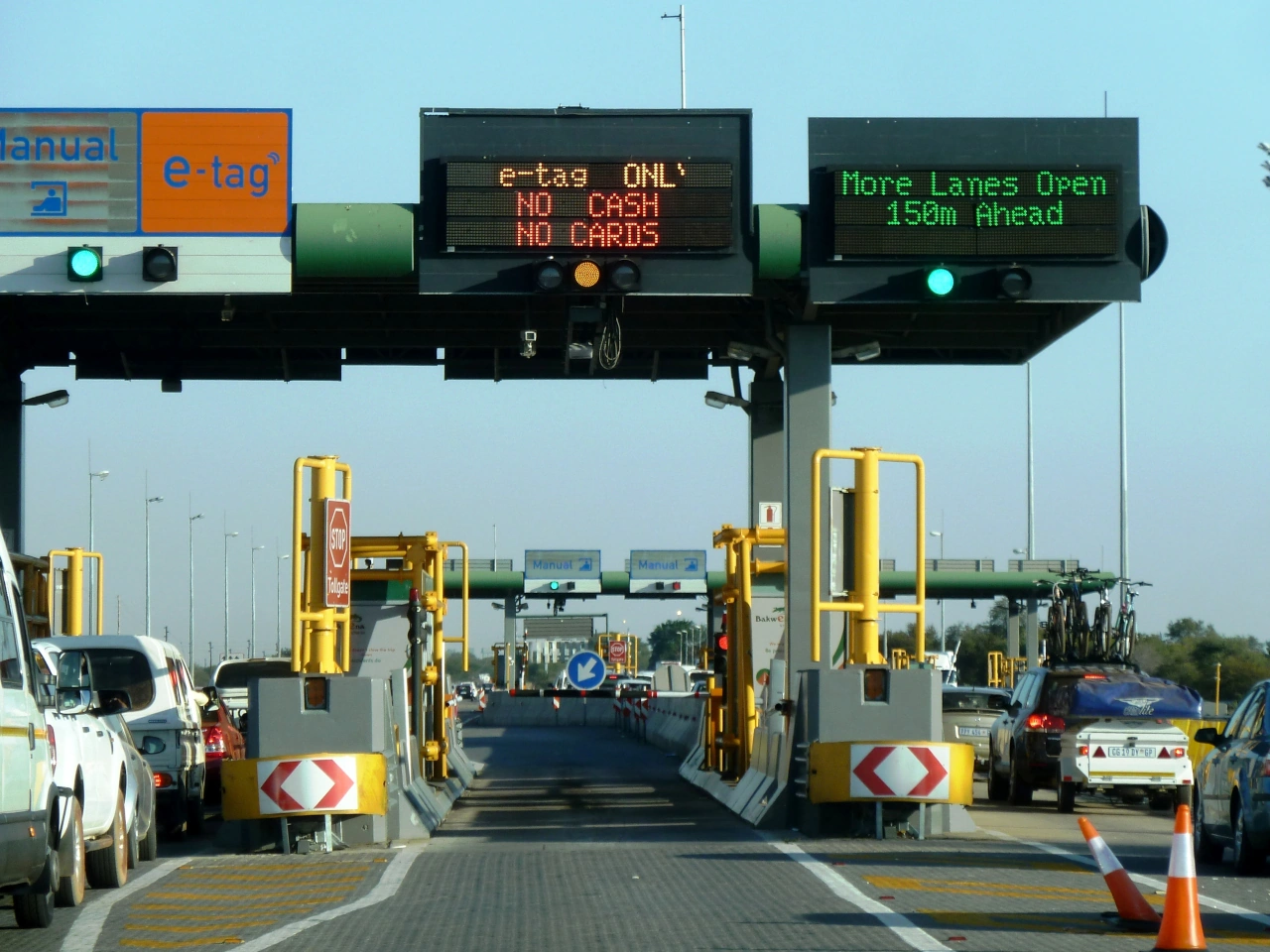
Wikimedia.org • JMK • CC BY-SA
Which road-charging system should I check in South Africa?
South Africa has toll plazas on specified roads operated by SANRAL and concessionaires. A toll-plaza charge must be distinguished from the former Gauteng freeway e-toll scheme; the actual route and current collection arrangements matter.
🔗 mobilityaccount.sanral.co.za • South Africa, official authority guidance — toll-road
What should I check before using a charged road in South Africa?
Check the responsible operator’s tariff, vehicle class and accepted payment method. An account, tag or past Gauteng arrangement must not be assumed to settle every current toll-plaza journey in South Africa.
🔗 mobilityaccount.sanral.co.za • South Africa, official authority guidance — toll-road
Does the absence of a toll booth prove that a road is free in South Africa?
The absence of a payment booth is not proof that a charged road is free. A vignette, electronic account, vehicle-registration record or another payment procedure may be used where the actual scheme provides for it. Follow the responsible authority or operator’s instructions for that road.
🔗 gov.za • South African Government — Gauteng GFIP e-tolls switched off from 12 April 2024
7. Dead end
A dead-end road is a road that does not provide a through route for some or all vehicles. It may end completely, terminate at a barrier or continue as a path that only certain road users may use.
Drivers may normally enter a dead-end road to reach homes, businesses, parking places or other destinations, but they must be prepared to turn around or leave by the same route. Signs may indicate that pedestrians or cyclists can continue beyond the point where motor traffic cannot.
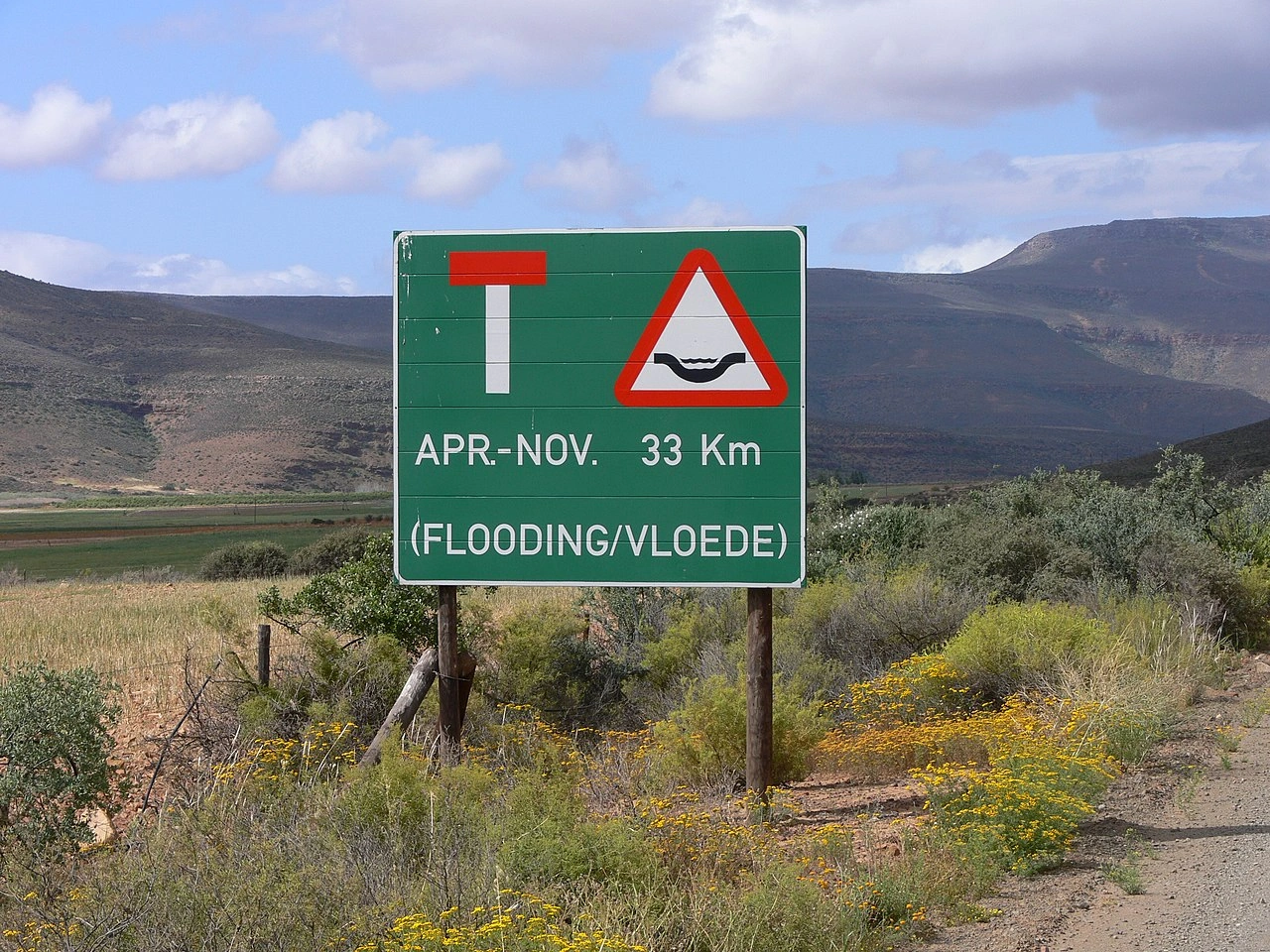
Wikimedia.org • Winfried Bruenken • CC BY-SA
What does a dead-end indication mean in South Africa?
South African no-through road information must be distinguished from No entry or a vehicle prohibition. It describes where the road or indicated route ends.
🔗 transport.gov.za • South Africa, Department of Transport, SARTSM — dead-end
Can pedestrians or cyclists continue beyond a motor-traffic dead end in South Africa?
Check any pedestrian or cycle continuation and its actual controls. A motor-vehicle dead end does not necessarily end a walking route, but it does not authorise driving onto that path.
🔗 transport.gov.za • South Africa, Department of Transport, SARTSM — dead-end
Does a dead-end indication change speed or priority rules in South Africa?
The no-through information itself does not assign junction priority or a numerical speed limit. Continue to obey the actual speed, access, parking and priority controls. If you need to turn around, use a suitable lawful place, check for pedestrians and cyclists, and do not obstruct the space needed for other vehicles to turn.
🔗 transport.gov.za • South Africa, Department of Transport, SARTSM — dead-end
8. Stop sign
A stop sign requires drivers to bring their vehicle to a complete stop and give way before entering or crossing the road ahead. The stop must be made at the stop line or another legally prescribed position.
After stopping, the driver may continue only when this can be done safely and without interfering with traffic that has priority. The sign does not create priority for the driver who has stopped.
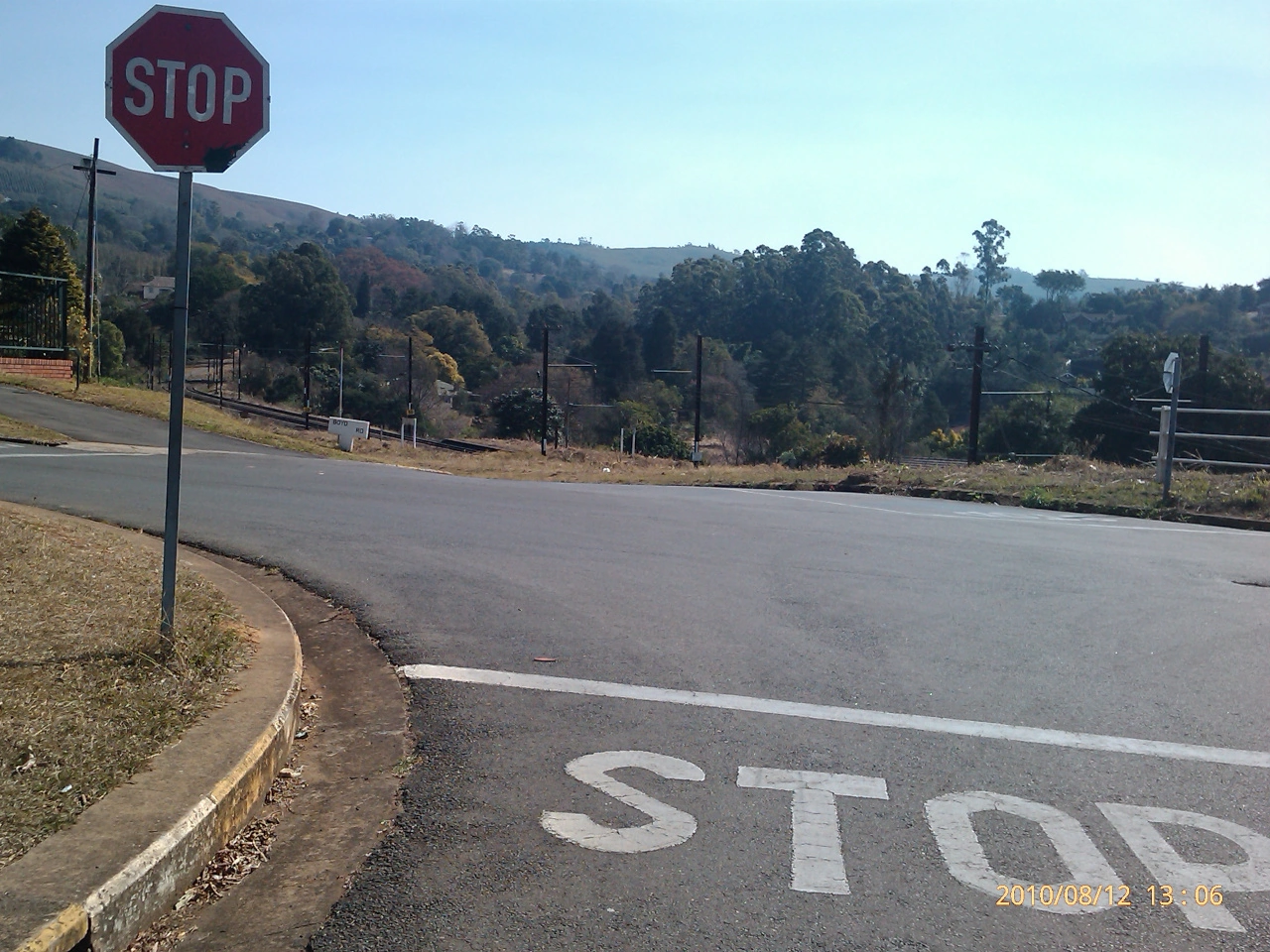
Wikimedia.org • Stevan.Karalic • CC BY
Must I stop completely at a stop sign in South Africa?
Yes. Come to a complete stop when the applicable stop sign controls your approach, even when you cannot see another road user. Slowing to a crawl is not a stop. The stopping duty is separate from the duty to give way before continuing.
🔗 transport.gov.za • South Africa, Department of Transport, SARTSM — stop-sign
Where must I stop at a stop-controlled junction in South Africa?
Stop at the stop line or the prescribed stopping position. Keep any pedestrian crossing clear and read whether the junction is controlled by an ordinary stop or an all-way stop before deciding who goes next.
🔗 transport.gov.za • South Africa, Department of Transport, SARTSM — stop-sign
Does stopping first give me priority at a stop sign in South Africa?
Read whether the South African junction has an ordinary stop or a three-way or four-way stop. At an all-way stop, order of arrival and the rules for vehicles arriving together matter; at an ordinary stop, stopping first does not give you priority over the road you are joining. Check pedestrians and all conflicting traffic before proceeding.
🔗 transport.gov.za • South Africa, Department of Transport, SARTSM — stop-sign
9. Give way
A give-way sign requires drivers to allow traffic with priority to proceed before entering, crossing or joining a road. Drivers must reduce speed, observe approaching traffic and stop when necessary.
Unlike a stop sign, a give-way sign does not always require a complete stop. The driver may continue without stopping only when the route is clearly safe and no road user with priority is forced to change speed or direction.
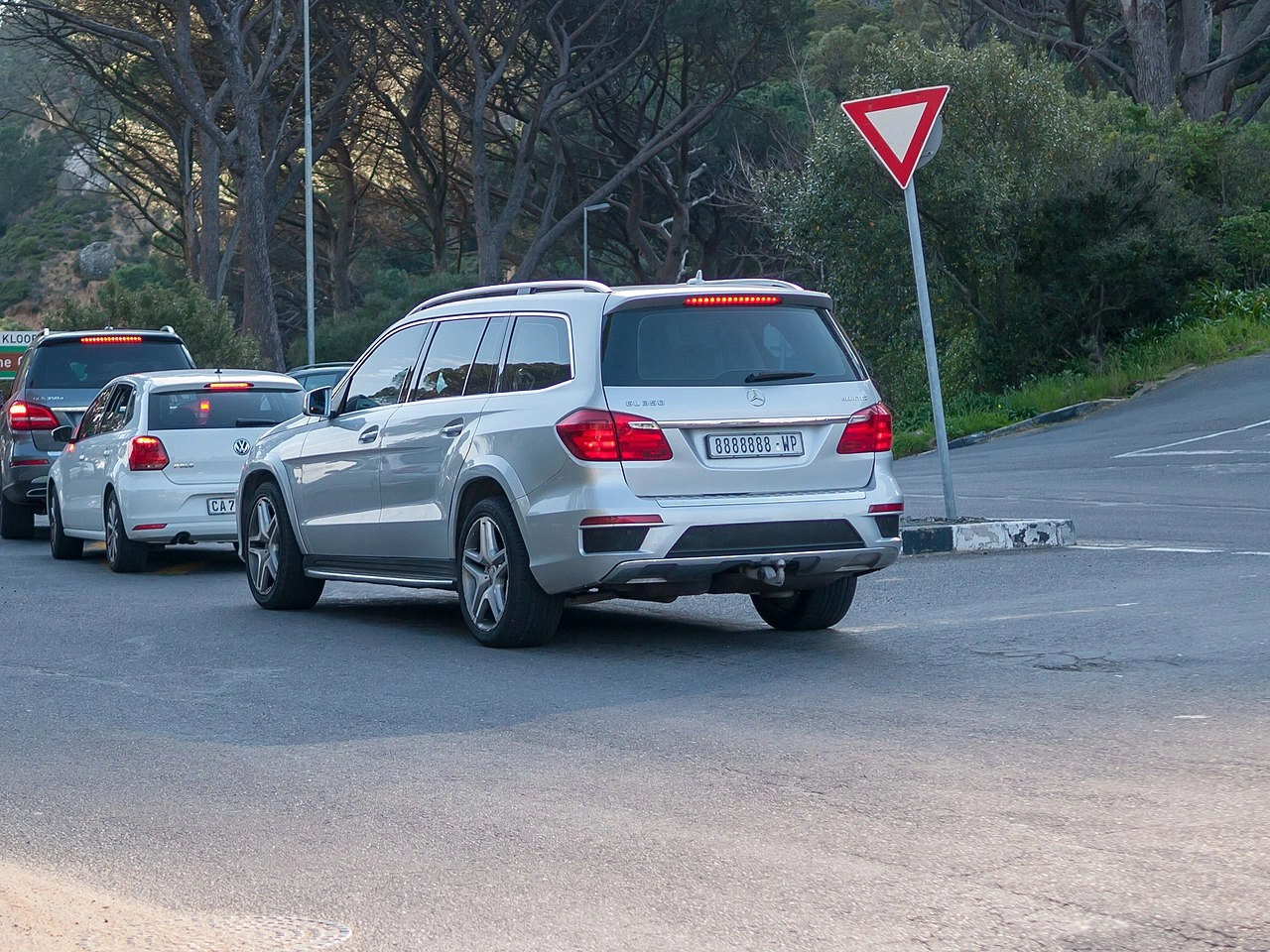
Wikimedia.org • Matti Blume • CC BY-SA
What does giving way mean in South Africa?
South African signs distinguish Yield from Stop. Slow down and let the traffic or other road users covered by the control pass before proceeding safely.
🔗 transport.gov.za • South Africa, Department of Transport, SARTSM — give-way
Must you always stop when giving way in South Africa?
No. A give-way control requires stopping when necessary to yield or obtain a safe view. A stop sign requires a complete stop even if the road appears empty.
🔗 transport.gov.za • South Africa, Department of Transport, SARTSM — give-way
What should you check before proceeding after giving way in South Africa?
Wait until the manoeuvre is safe. Check the priority traffic, the view in both directions and enough space to complete the entry. Giving way to one vehicle does not remove duties towards another driver, a cyclist or a pedestrian.
🔗 transport.gov.za • South Africa, Department of Transport, SARTSM — give-way
10. Roundabout
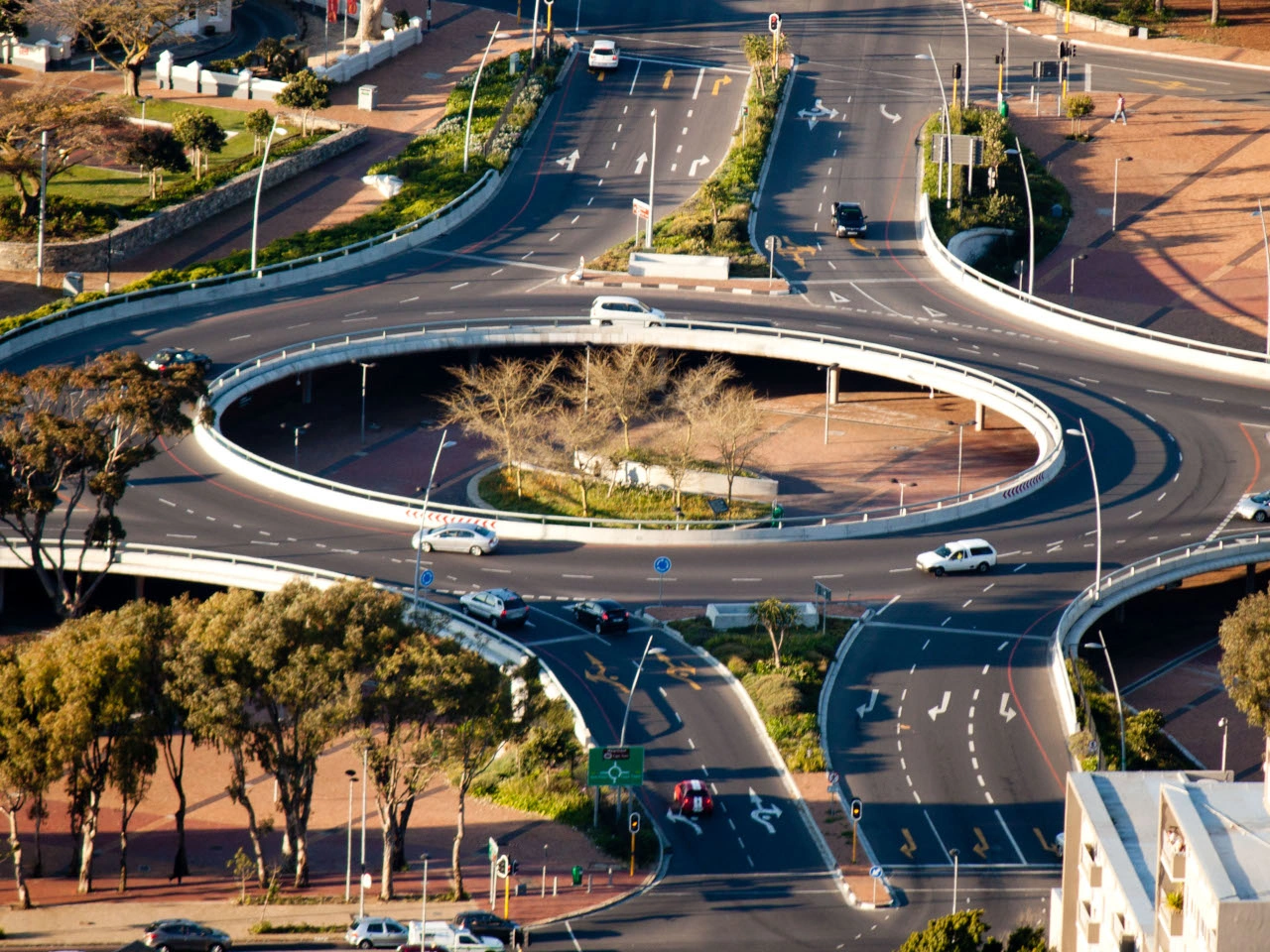
A roundabout is a circular road arrangement in which traffic travels around a central island in one designated direction. Vehicles enter and leave through connecting roads, and traffic signs or local rules determine who has priority.
Drivers should reduce speed, choose a suitable lane, observe all road users and signal as required when leaving. The direction of travel, entry priority, lane use and rules for cyclists and pedestrians depend on local traffic signs and regulations.
Wikimedia.org • Azwi • CC BY-SA
Who has priority at a roundabout in South Africa?
South African guidance distinguishes roundabouts or traffic circles from mini-circles. At a conventional circle, yield to traffic approaching from the right unless otherwise directed. At a mini-circle, give way to traffic crossing its yield line first.
🔗 transport.gov.za • South Africa, Department of Transport, SARTSM — roundabout
How should you choose a roundabout lane in South Africa?
Choose your intended exit before entering and follow the lane arrows and destination signs. Keep to the marked route and make any permitted lane change only when safe; having priority over entering traffic does not give you priority to change lanes.
🔗 transport.gov.za • South Africa, Department of Transport, SARTSM — roundabout
What should you check when leaving a roundabout in South Africa?
Check the lane you will cross or enter, signal the manoeuvre as required and look for cyclists and pedestrians at the exit. Obey any separate crossing controls and do not force an exit across another vehicle’s path.
🔗 transport.gov.za • South Africa, Department of Transport, SARTSM — roundabout
11. Pedestrian crossing
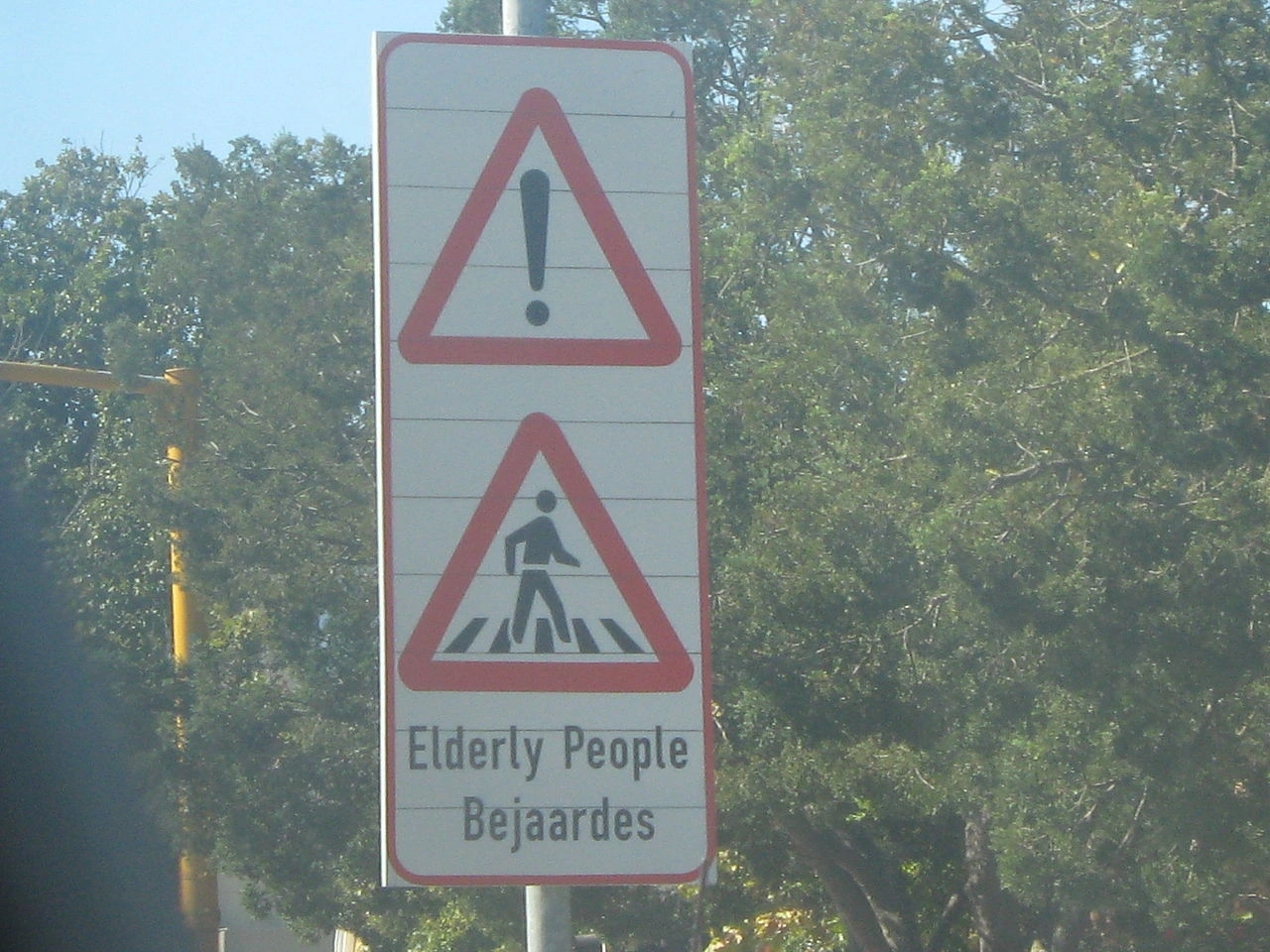
A pedestrian crossing is a designated place where pedestrians may cross a road. It is commonly indicated by road markings, traffic signs, signals or a combination of these measures.
Drivers must approach with appropriate caution and give way when required by local law. Pedestrians must also observe approaching traffic and follow any pedestrian signals or instructions from authorised traffic controllers.
Wikimedia.org • Bezuidenhout • CC BY-SA
When must drivers give way at a pedestrian crossing in South Africa?
At a pedestrian crossing without traffic signals, slow down or stop as needed to give way to a pedestrian on your half of the road, or approaching so closely from the opposite half that they would be in danger. At signal-controlled crossings, follow the signals. Pedestrians must not step suddenly into a vehicle’s path when it cannot yield.
🔗 cmbinary.gauteng.gov.za • South Africa, Gauteng government, National Road Traffic Act and Regulations, historical compiled edition; 🔗 transport.gov.za • South Africa, Department of Transport, Road Traffic Signs Manual, volume 2 chapter 3, May 2012
Are all pedestrian crossings controlled the same way in South Africa?
At a crossing controlled by traffic lights or an authorised person, comply with that control. Drivers turning across a pedestrian route must still check carefully for pedestrians.
🔗 cmbinary.gauteng.gov.za • South Africa, Gauteng government, National Road Traffic Act and Regulations, historical compiled edition; 🔗 gov.za • South Africa, Government Gazette 28446, K53 light motor vehicle test, 7 April 2006
May I enter a pedestrian crossing if the road beyond it is blocked in South Africa?
Wait before the crossing until you can clear it without obstructing pedestrians. Do not pass a vehicle stopped at the crossing to let pedestrians cross. Regulation 315(4) prohibits an approaching driver from passing it; the ban does not depend on the driver judging the manoeuvre safe.
12. Railway crossing
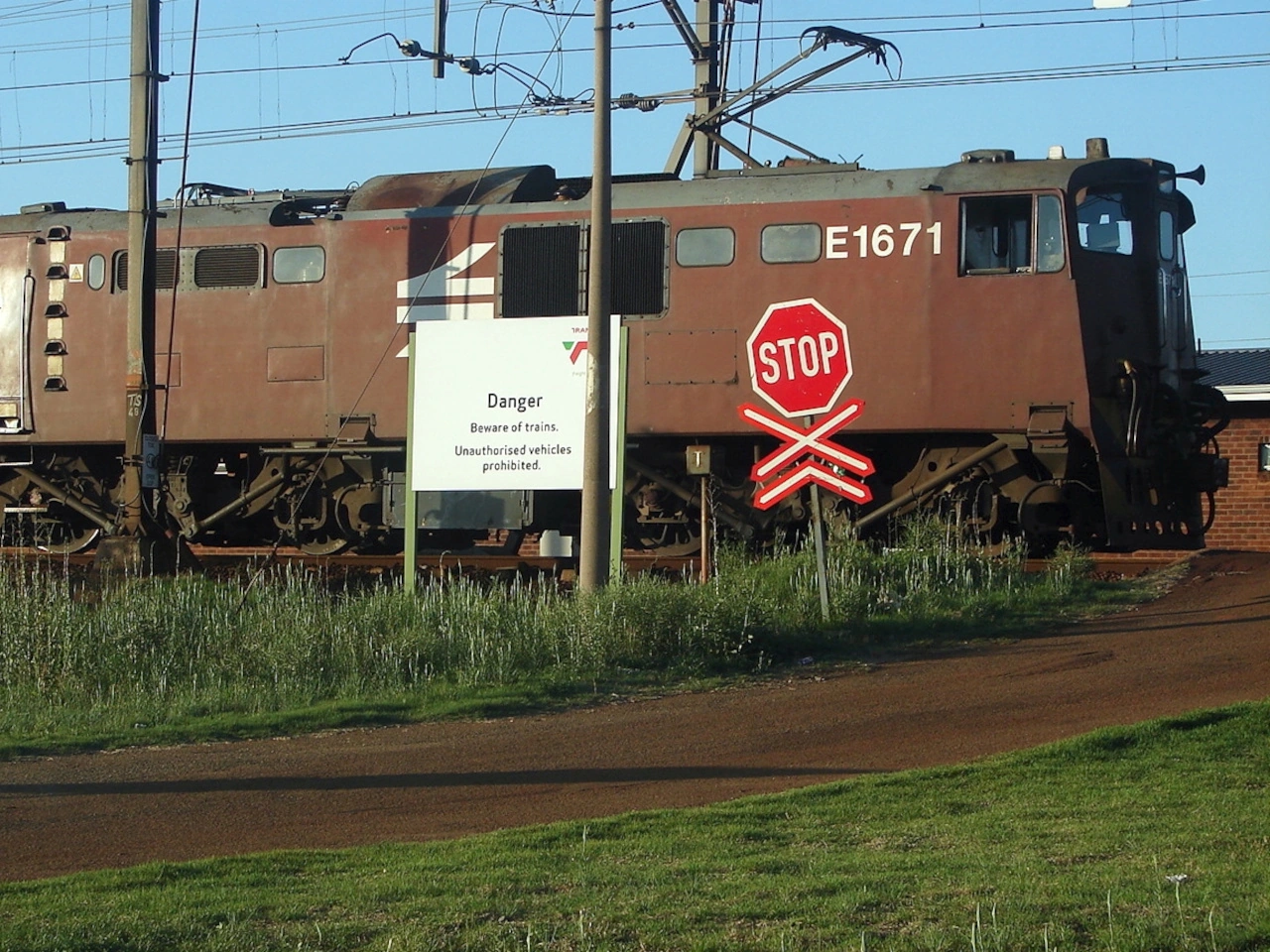
A railway crossing, also called a level crossing or railroad crossing, is a place where a road or path crosses railway tracks at the same level. It may be protected by barriers, warning lights, bells, traffic signs or a combination of these measures.
Road users must approach carefully and never enter when a train is approaching, warning signals are active or the exit is blocked. They should cross promptly and must never stop, wait or become trapped on the tracks.
Wikimedia.org • Col André Kritzinger • CC BY-SA
When must drivers stop at a railway level crossing in South Africa?
Obey the crossing’s STOP or YIELD control and any authorised stop instruction. A STOP sign still requires stopping when additional warning lights are not flashing. If red crossing signals are flashing, stop and wait until they cease; do not enter against a closed or moving barrier. Check for trains and enter only when you can clear the tracks.
Must I stop at every unguarded railway crossing in South Africa?
Not simply because it lacks barriers. South African railway crossings may be controlled by a STOP sign or a YIELD sign. Stop fully for STOP; at YIELD, slow down and give way to rail traffic, stopping when necessary. A railway crossbuck identifies the crossing and does not replace its regulatory control. Check both directions and cross only when safe.
What if road traffic is queued beyond a railway crossing in South Africa?
Wait before the tracks until there is room to take your entire vehicle off the crossing. Do not follow another vehicle onto the tracks without checking the exit. Keep the tracks clear even if no train is visible.
🔗 cmbinary.gauteng.gov.za • South Africa, Gauteng government, National Road Traffic Act and Regulations, historical compiled edition; 🔗 transport.gov.za • South Africa, Department of Transport, Road Traffic Signs Manual, volume 1 chapter 6, May 2012
13. School area
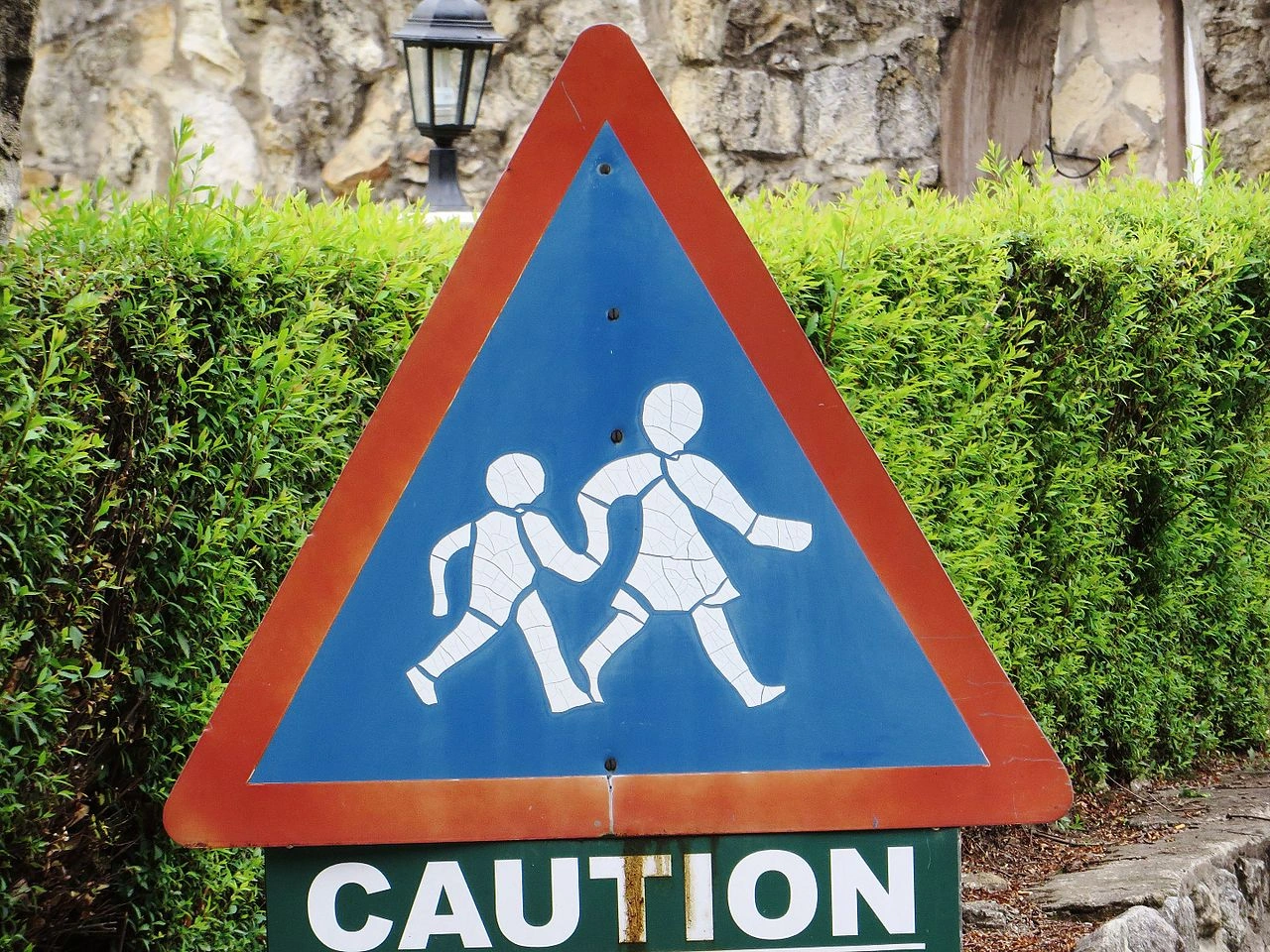
A school area is a road or group of roads near a school where large numbers of children may walk, cycle, cross the road or enter and leave vehicles. It may be identified by warning signs, zone signs, road markings, traffic-calming measures or flashing lights.
Special speed limits, parking restrictions or access rules may apply permanently or only during school arrival and departure times. Drivers should reduce speed, watch carefully for children and be prepared to stop.
Wikimedia.org • Dickelbers • CC BY-SA
What speed rules apply around schools in South Africa?
A school warning calls for heightened caution; a particular lower limit applies when established by the relevant speed-limit sign or local rule.
🔗 transport.gov.za • South Africa, Department of Transport, SARTSM — school-area
🔗 transport.gov.za • Department of Transport, SARTSM Vol1 Chapter3 — warnings and hazard markers
Does a school warning sign in South Africa automatically set the speed limit?
A children or school warning alerts you to a potential hazard; the enforceable numerical speed limit depends on the applicable law, regulatory signs and any time or variable display. Slow further if children are near the road.
🔗 transport.gov.za • South Africa, Department of Transport, SARTSM — school-area
🔗 transport.gov.za • Department of Transport, SARTSM Vol1 Chapter3 — warnings and hazard markers
How should you pass a school entrance in South Africa?
Watch for children stepping out from between parked vehicles, obey crossings and any school patrol, and follow stopping or parking restrictions. Do not obstruct visibility near a crossing or school entrance; approach at a speed that permits a safe stop.
🔗 transport.gov.za • South Africa, Department of Transport, SARTSM — school-area
🔗 transport.gov.za • Department of Transport, SARTSM Vol1 Chapter3 — warnings and hazard markers
14. Crossing animals
An animals-crossing warning indicates a place or road section where wild animals, livestock or ridden animals may enter or cross the road. Animals may appear suddenly, move unpredictably or be difficult to see in darkness, vegetation or poor weather.
Drivers should reduce speed, scan both sides of the road and remain prepared to stop. The warning sign does not itself give animals priority or impose a numerical speed limit, but drivers must avoid frightening, endangering or colliding with them.
Wikimedia.org • Bernard DUPONT • CC BY-SA
Which animals might drivers encounter on roads in South Africa?
Depending on the locality, drivers may meet livestock, antelope and wildlife on rural or game-area roads. Roadside animal-warning signs and local hazard information indicate where extra care may be needed; do not assume the hazard ends immediately after a sign.
🔗 transport.gov.za • South Africa, Department of Transport, SARTSM — crossing-animals
Does an animal-crossing warning sign in South Africa set a new speed limit?
A warning of animals is not, by itself, a numerical speed-limit sign. Continue to obey the applicable speed limit, but slow down whenever animals could enter the road or visibility is poor. A separate regulatory speed sign must also be obeyed.
🔗 transport.gov.za • South Africa, Department of Transport, SARTSM — crossing-animals
What should you do if an animal enters the road in South Africa?
Ease off the accelerator, assess the traffic behind and brake smoothly if necessary. Avoid abrupt swerving into opposing traffic or off the road. Give farm animals and ridden animals room, avoid frightening them with unnecessary horn use, and be alert for more animals following.
🔗 transport.gov.za • South Africa, Department of Transport, SARTSM — crossing-animals
15. Curve
A curve is a section of road that changes direction to the left or right. A sharp, unexpected or poorly visible curve can reduce a driver’s view of approaching traffic, stopped vehicles, pedestrians and other hazards.
Drivers should reduce speed before entering the curve, remain within their lane and use smooth steering, braking and acceleration. Warning signs may indicate the direction of the first curve or a series of successive curves.
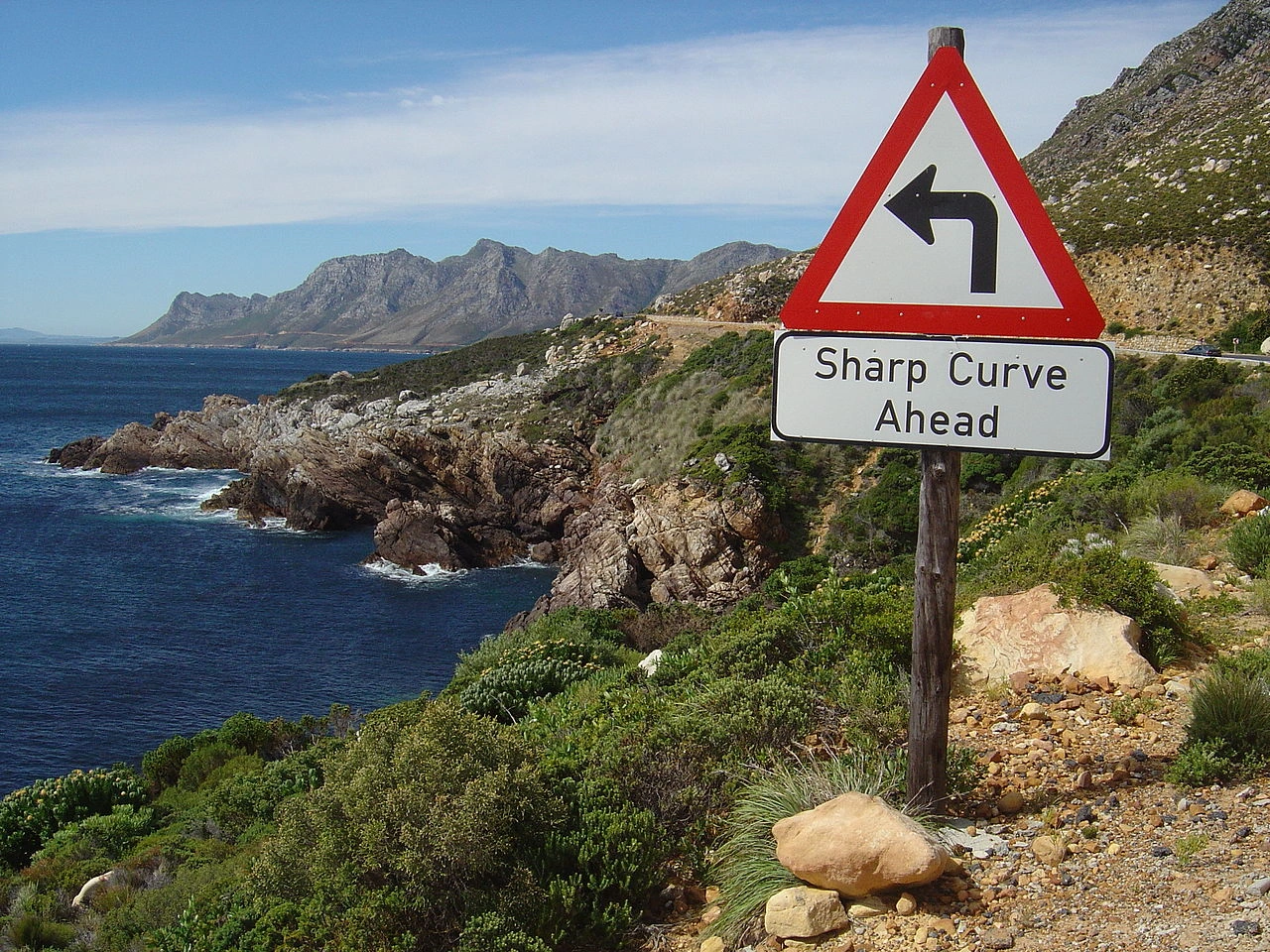
Wikimedia.org • Peter Southwood • CC BY-SA
What makes a bend dangerous in South Africa?
Curves shorten your view of the road ahead and can reduce the margin for correcting a mistake. Drivers may encounter mountain passes and rural bends where livestock or wildlife may be present; the safe speed can be well below the posted maximum. Watch for changing road surfaces and people or vehicles hidden beyond the curve.
🔗 transport.gov.za • South Africa, Department of Transport, SARTSM — curve
How should you approach a sharp curve in South Africa?
Slow down before the bend, select the correct lane position, look through the curve and steer smoothly. Keep enough grip and visible stopping distance for the road and weather conditions.
🔗 transport.gov.za • South Africa, Department of Transport, SARTSM — curve
Is overtaking safe on a blind bend in South Africa?
No. Do not start overtaking where your view of oncoming traffic is obstructed or where signs or road markings prohibit it. Wait until there is a lawful, clear and sufficiently long view ahead.
🔗 transport.gov.za • South Africa, Department of Transport, SARTSM — curve
16. Wrong-way driving
Wrong-way driving occurs when a driver travels against the legally permitted direction of traffic. It may happen on a one-way road, divided road, motorway entrance or exit, or another road section reserved for traffic travelling in one direction.
Wrong-way driving creates an extreme risk of a head-on collision. Drivers must follow direction signs, no-entry signs, lane arrows and road markings. Anyone who accidentally enters a road in the wrong direction should slow down, warn other traffic, stop in the safest available place and contact the emergency services.
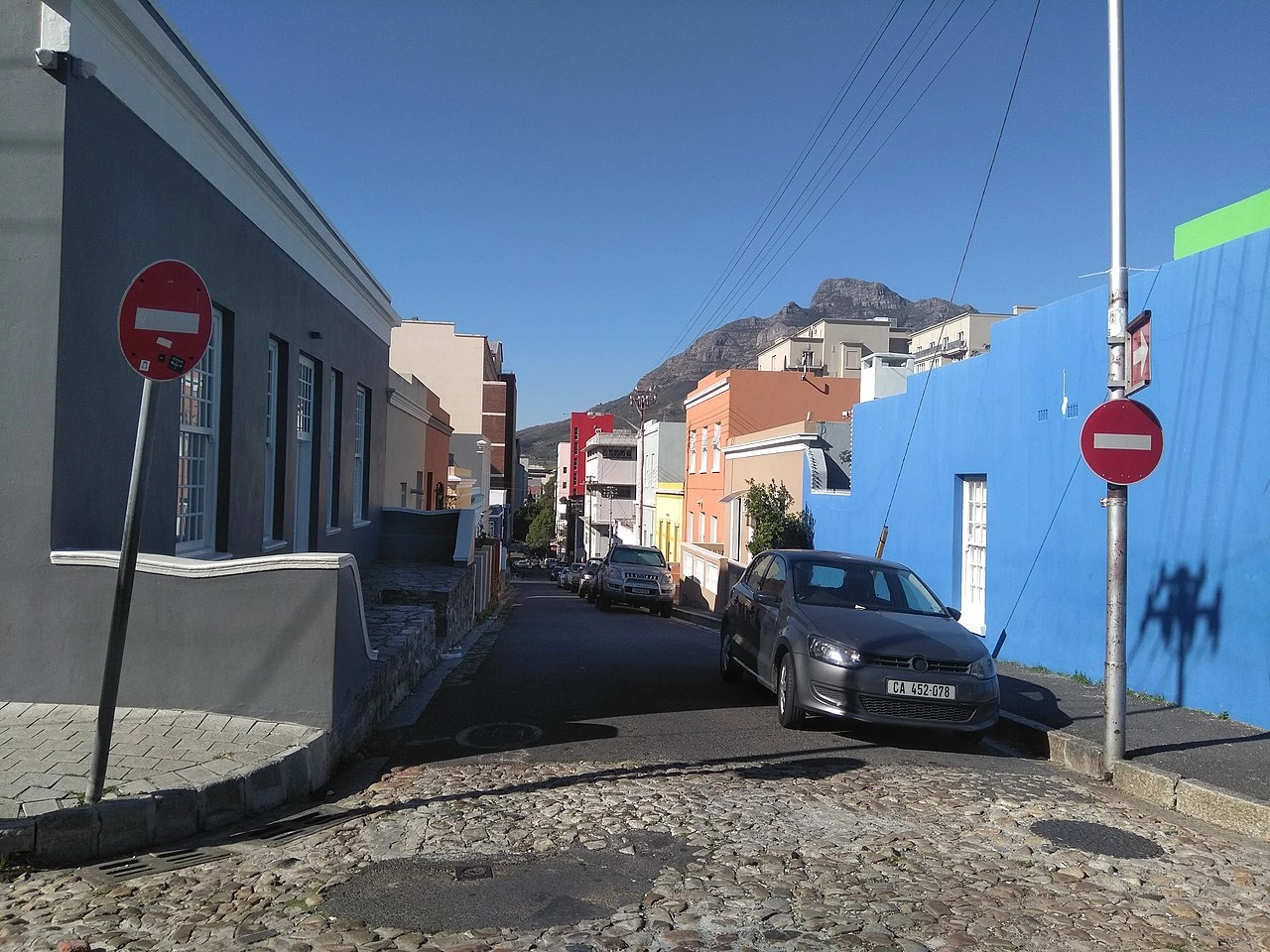
Wikimedia.org • NahidSultan • CC BY-SA
How can you avoid driving the wrong way in South Africa?
Traffic normally keeps left here. Keep to the correct side of the road and use no-entry and one-way signs to identify prohibited approaches; do not enter an exit ramp against its permitted direction.
🔗 transport.gov.za • South Africa, Department of Transport, SARTSM — wrong-way-driving
What signs can prevent wrong-way driving in South Africa?
Read no-entry signs, one-way signs, lane arrows and temporary directions together; a wide road is not automatically two-way. Before entering a motorway, expressway, one-way street or slip road, check the permitted direction rather than relying only on a navigation app.
🔗 transport.gov.za • South Africa, Department of Transport, SARTSM — wrong-way-driving
17. Traffic lights
Traffic lights use coloured lights, arrows or symbols to regulate when road users may proceed, must prepare to stop or must remain stopped. Separate signals may apply to particular directions, lanes, pedestrians, cyclists or public-transport vehicles.
A green light permits movement only when the route is clear and the movement is otherwise legal. Road users must still follow priority rules, turning restrictions, lane markings and instructions from authorised traffic controllers.
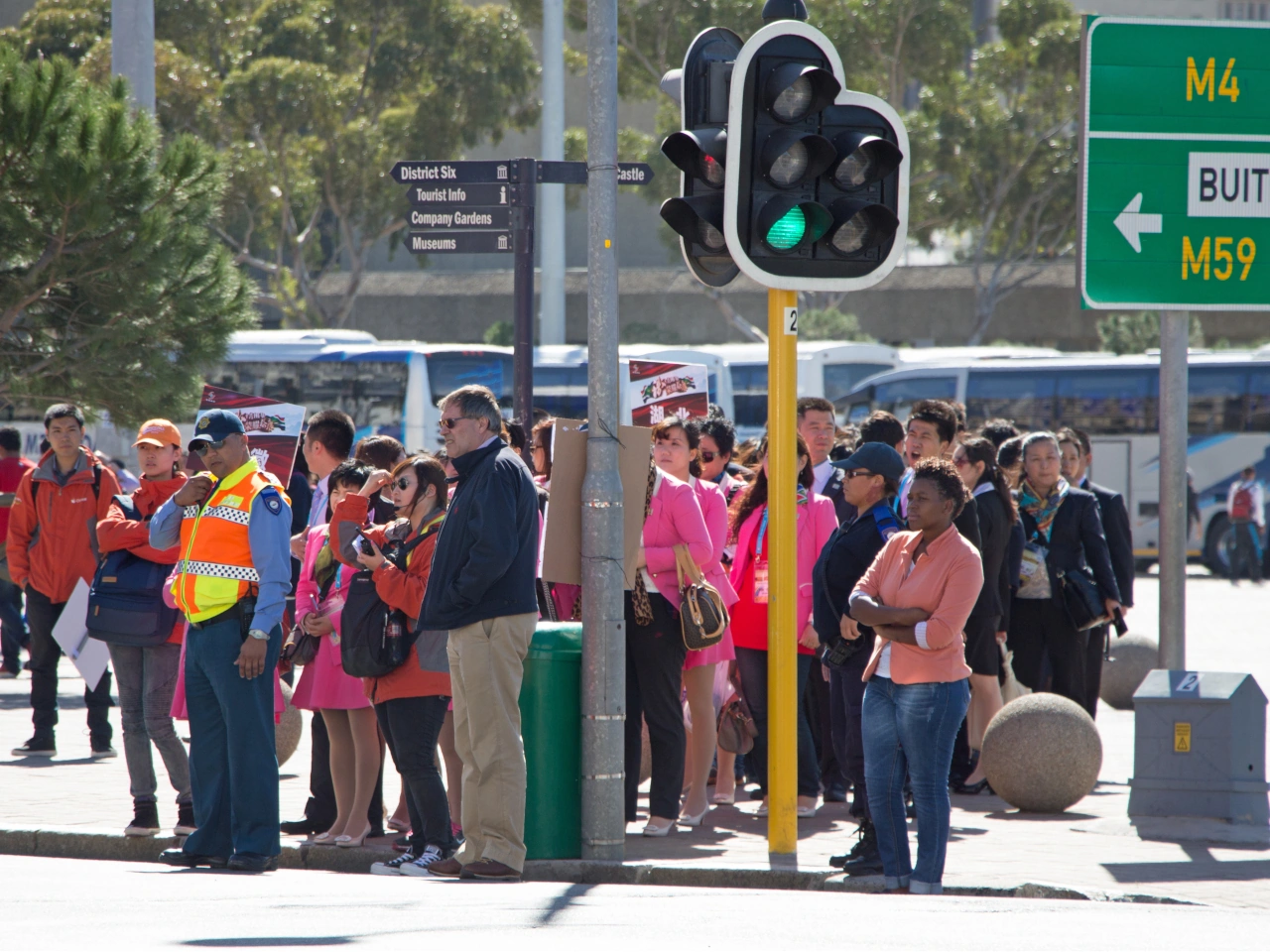
Wikimedia.org • HelenOnline • CC BY-SA
What must a driver do at red, amber and green signals in South Africa?
Red requires stopping behind the stop line and waiting for a permitted signal. Amber also requires stopping unless you are too close to stop safely, when you may continue cautiously. Green permits the applicable movement subject to safety and giving-way duties.
🔗 transport.gov.za • Official Traffic Signs Manual, May 2012, sections 6.2.7-6.2.10,6.3.2-6.3.3
May you turn at a red traffic light in South Africa?
A plain steady red disc requires you to stop and wait. Proceed only when the signal permits your movement, such as an applicable green arrow. A stationary arrow sign may identify the movement controlled by a red signal; it is not itself permission to turn on red.
🔗 transport.gov.za • Official Traffic Signs Manual, May 2012, sections 6.2.7-6.2.10,6.3.2-6.3.3
Can a green light remove the need to give way to pedestrians in South Africa?
No. A green signal does not remove the duty to give way to pedestrians crossing under their permitted signal. Turning drivers must take particular care where their path crosses the pedestrian crossing.
🔗 transport.gov.za • Official Traffic Signs Manual, May 2012, sections 6.2.7-6.2.10,6.3.2-6.3.3
18. Traffic lights warning
A traffic lights warning is a warning sign that alerts drivers that traffic signals are located ahead. It is commonly used where the signals may be unexpected, difficult to see from a distance or located on a road where drivers need additional time to prepare to stop.
Drivers approaching a traffic lights warning should reduce speed when necessary, watch for the signals ahead and be prepared to stop if the traffic light changes or traffic is waiting at the intersection.
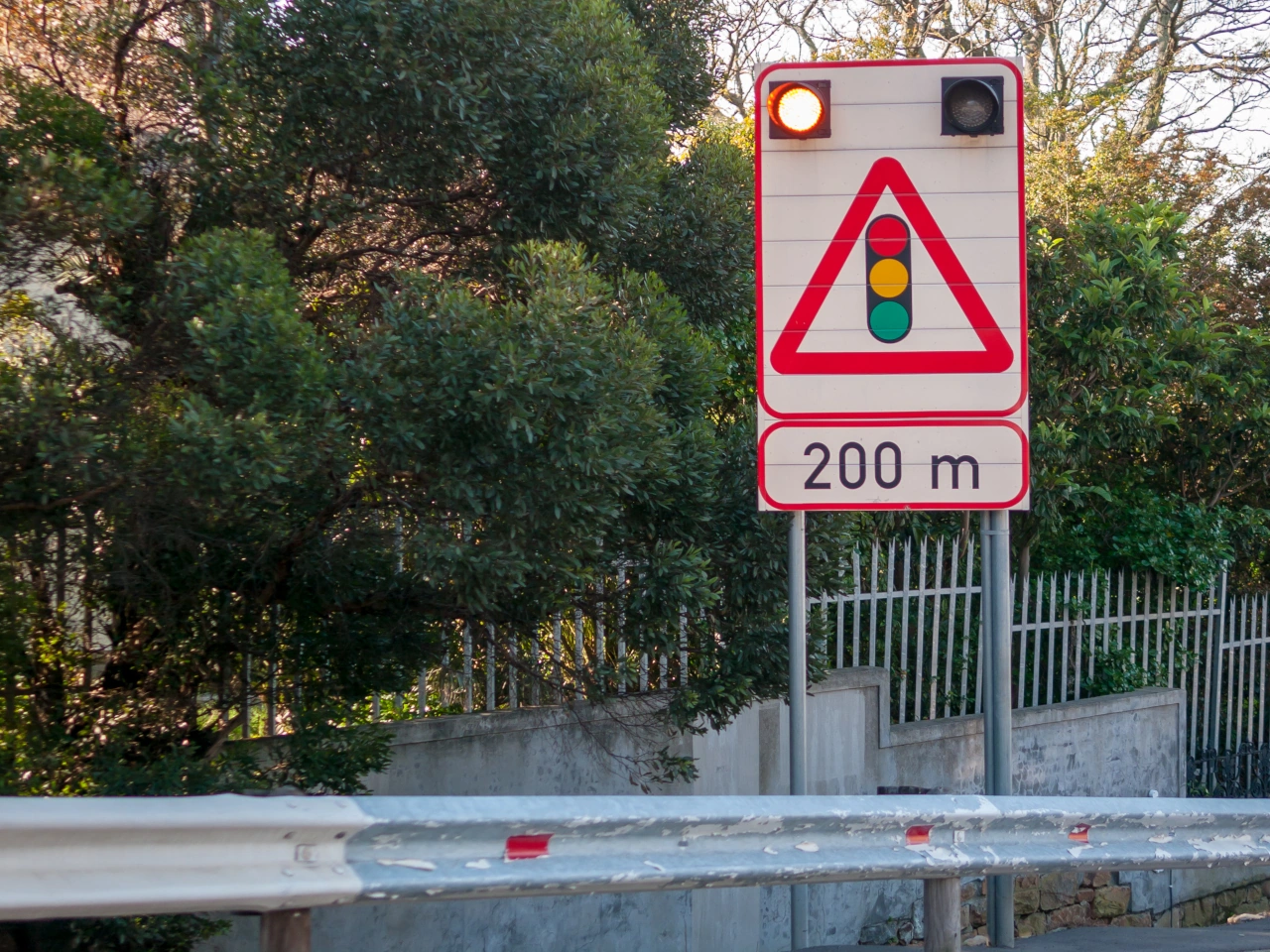
Wikimedia.org • Matti Blume • CC BY-SA
How are traffic lights ahead warned of in South Africa?
The warning-sign system commonly uses a red-bordered triangular sign with a traffic-light symbol. The precise design and placement depend on the national traffic-sign schedule. This warns of a signal ahead; it is not itself a red traffic light.
🔗 transport.gov.za • South Africa, Department of Transport, SARTSM — traffic-lights-warning
Does a traffic-lights-ahead warning require an immediate stop in South Africa?
No. A warning sign is not an automatic STOP instruction and does not create a new numerical speed limit. Reduce speed when necessary, look for a queue or a concealed signal, and obey the traffic lights and any separate speed or stop signs.
🔗 transport.gov.za • South Africa, Department of Transport, SARTSM — traffic-lights-warning
What should you check if the next traffic lights are difficult to see in South Africa?
Allow enough distance to stop before the marked line, watch for vehicles braking suddenly and be ready for a pedestrian or cyclist crossing. If the signals are out of order or flashing, follow the applicable local failure and priority rules rather than guessing from the warning sign.
🔗 transport.gov.za • South Africa, Department of Transport, SARTSM — traffic-lights-warning
19. Traffic mirror
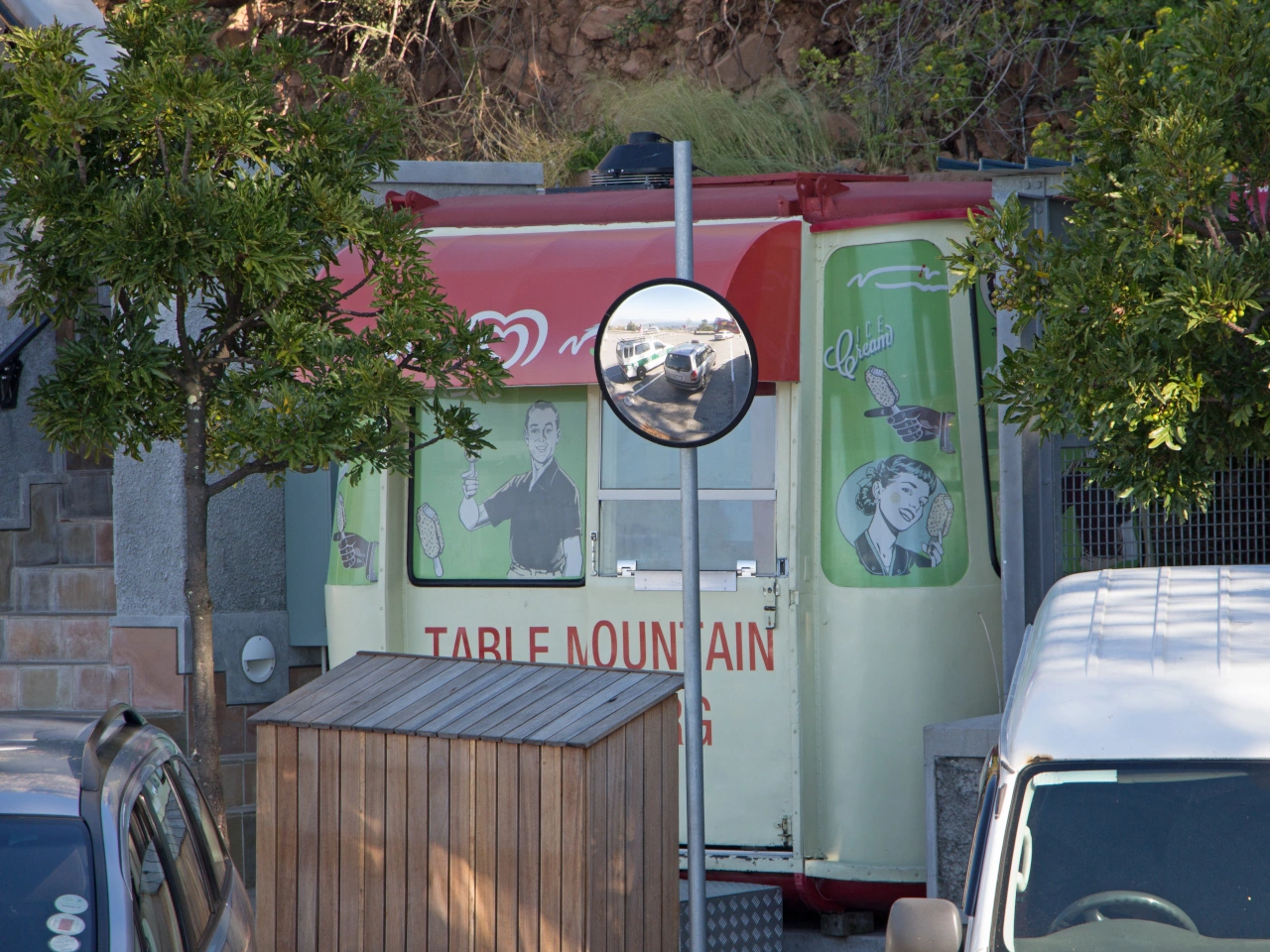
A traffic mirror is a convex mirror installed near an intersection, driveway, bend or other location with restricted visibility. Its curved surface provides a wider view of approaching road users than an ordinary flat mirror.
A traffic mirror is only a visibility aid. It may distort distance, speed and direction and may be affected by darkness, weather, dirt or damage. Drivers must continue to observe the road directly, obey all priority rules and proceed only when it is safe.
Wikimedia.org • HelenOnline • CC BY-SA
What is a traffic mirror?
A traffic mirror is a roadside visibility aid that can help users see around a blind corner or obstruction. It gives an indirect view, which may be restricted or distorted; it does not replace checking whether it is safe to proceed.
🔗 monmouthshire.gov.uk • Monmouthshire Council, roadside visibility mirrors
🔗 devon.gov.uk • Devon County Council, mirrors on the highway
Does a traffic mirror show an exact image?
No. The reflected image can be distorted, and glare, bad weather or dirt can restrict the view. Judging an approaching vehicle’s speed from a mirror can be difficult. Do not rely on the mirror alone.
🔗 monmouthshire.gov.uk • Monmouthshire Council, roadside visibility mirrors
🔗 devon.gov.uk • Devon County Council, mirrors on the highway
Does seeing an empty mirror mean the road is clear?
No. Another road user may be outside the reflected area, hidden by glare or too small to notice. Always check the road directly before proceeding.
🔗 monmouthshire.gov.uk • Monmouthshire Council, roadside visibility mirrors
🔗 devon.gov.uk • Devon County Council, mirrors on the highway
20. Parking
Parking means leaving a vehicle stationary at a place for a period of time rather than stopping only briefly because of traffic conditions or another immediate necessity. Many countries distinguish parking from a short stop made to pick up or drop off passengers or to load or unload goods, although the exact legal definition varies.
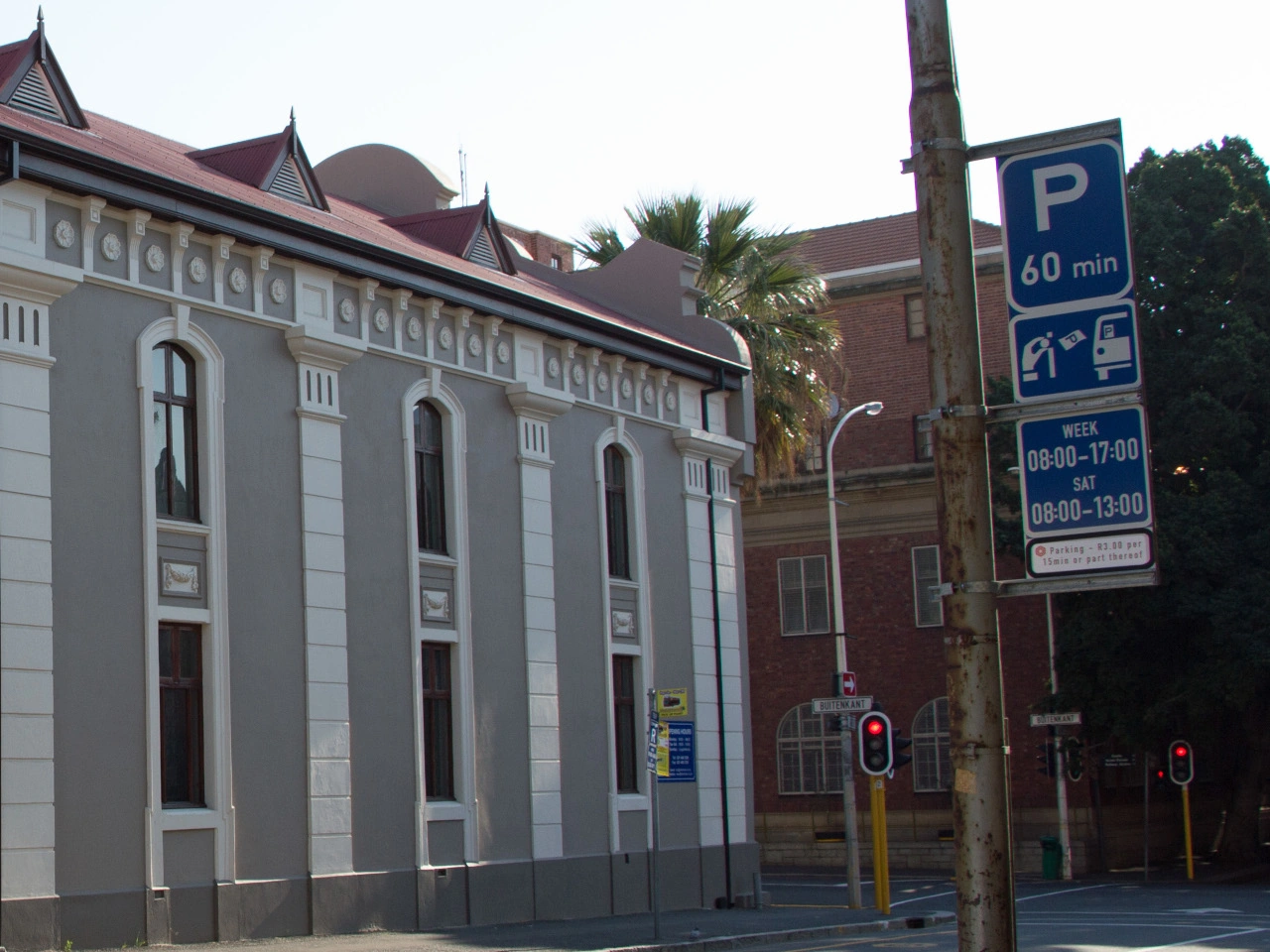
Parking may be permitted, restricted, reserved, time-limited or prohibited by traffic signs, road markings, parking zones and local regulations. Drivers must park without creating a danger or unnecessary obstruction and must comply with any conditions concerning payment, permits, vehicle categories or maximum parking duration.
Wikimedia.org • HelenOnline • CC BY-SA
What is the difference between parking and stopping?
Parking generally means leaving a vehicle stationary for longer than a brief stop required for passengers, loading or unloading. A vehicle stopped because of traffic lights, congestion, an emergency or another traffic condition is normally not considered parked. The precise legal definitions vary between countries.
🔗 wegcode.be • Belgian Road Code, articles 2, 23–27 and 70; 🔗 gesetze-im-internet.de • Germany, StVO, sections 12–13 and 19; 🔗 ris.bka.gv.at • Austria, StVO, sections 2, 23–25 and 52
How does paid parking work?
Where parking is subject to payment, drivers must follow the instructions displayed locally. Payment may be made through a parking meter, ticket machine, mobile application or another authorised system. The permitted duration and charging periods vary by location.
🔗 wegcode.be • Belgian Road Code, articles 2, 23–27 and 70; 🔗 gesetze-im-internet.de • Germany, StVO, sections 12–13 and 19; 🔗 paris.fr • City of Paris, parking payment FAQ
Can you leave a vehicle parked for an unlimited time?
Not necessarily. Local rules may impose a maximum parking duration, even where parking is otherwise permitted. Different limits may apply to abandoned, commercial, heavy or recreational vehicles.
🔗 wegcode.be • Belgian Road Code, articles 2, 23–27 and 70; 🔗 service-public.gouv.fr • French Government, prohibited and excessive parking
21. Reversing
Reversing means driving a vehicle backwards. It is commonly used when parking, leaving a confined space or repositioning a vehicle where forward movement is not practical.
Before reversing, the driver should check mirrors and blind spots, look carefully around the vehicle and make sure the area behind is clear. Reversing should be performed slowly and only for as long as necessary because visibility behind the vehicle is often limited.

Wikimedia.org • Kārlis Dambrāns • CC BY
What should you check before reversing?
Check behind and around the vehicle for pedestrians, cyclists, other vehicles and obstacles. Use mirrors and cameras where available, but also look directly because monitoring systems can have blind spots.
🔗 gov.uk • Great Britain Highway Code, Rules 200–203; national guidance example
Should you reverse for a long distance?
No. Reversing should normally be limited to the distance necessary to complete the manoeuvre safely. Driving forward generally provides better visibility and vehicle control.
🔗 gov.uk • Great Britain Highway Code, Rules 200–203; national guidance example
22. Tourist attraction
A tourist attraction is a place of interest that visitors may travel to for cultural, historical, recreational, natural or entertainment purposes. Examples include monuments, castles, museums, scenic sites, amusement parks and other notable destinations.
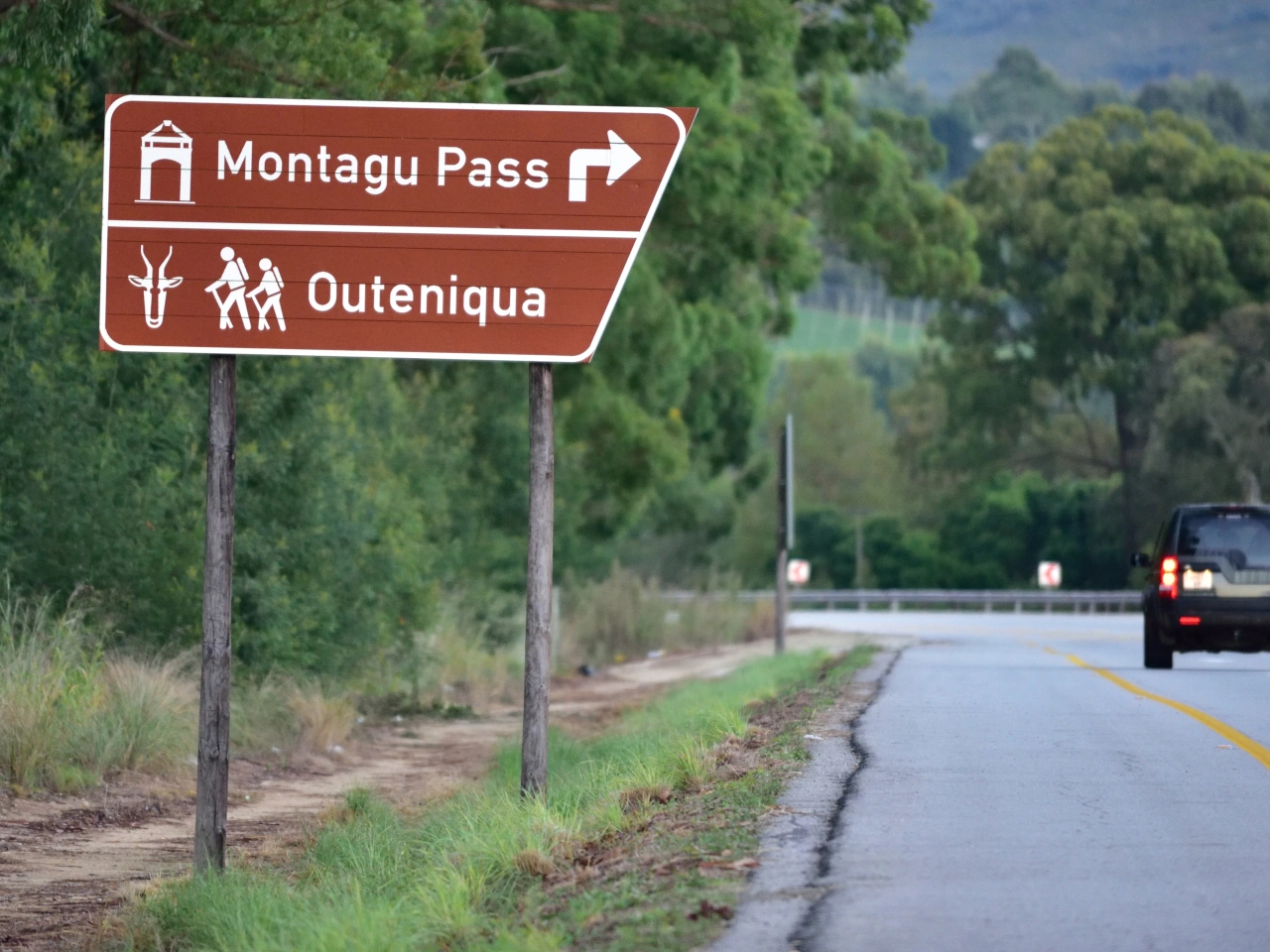
Tourist attractions may be indicated by tourist or direction signs that help travellers find the destination. The colours, symbols and types of attractions shown vary between countries.
Wikimedia.org • South African Tourism • CC BY
Can tourist attractions be indicated by road signs?
Yes. Many countries use tourist or direction signs to guide travellers toward important attractions and places of interest.
23. Dangers
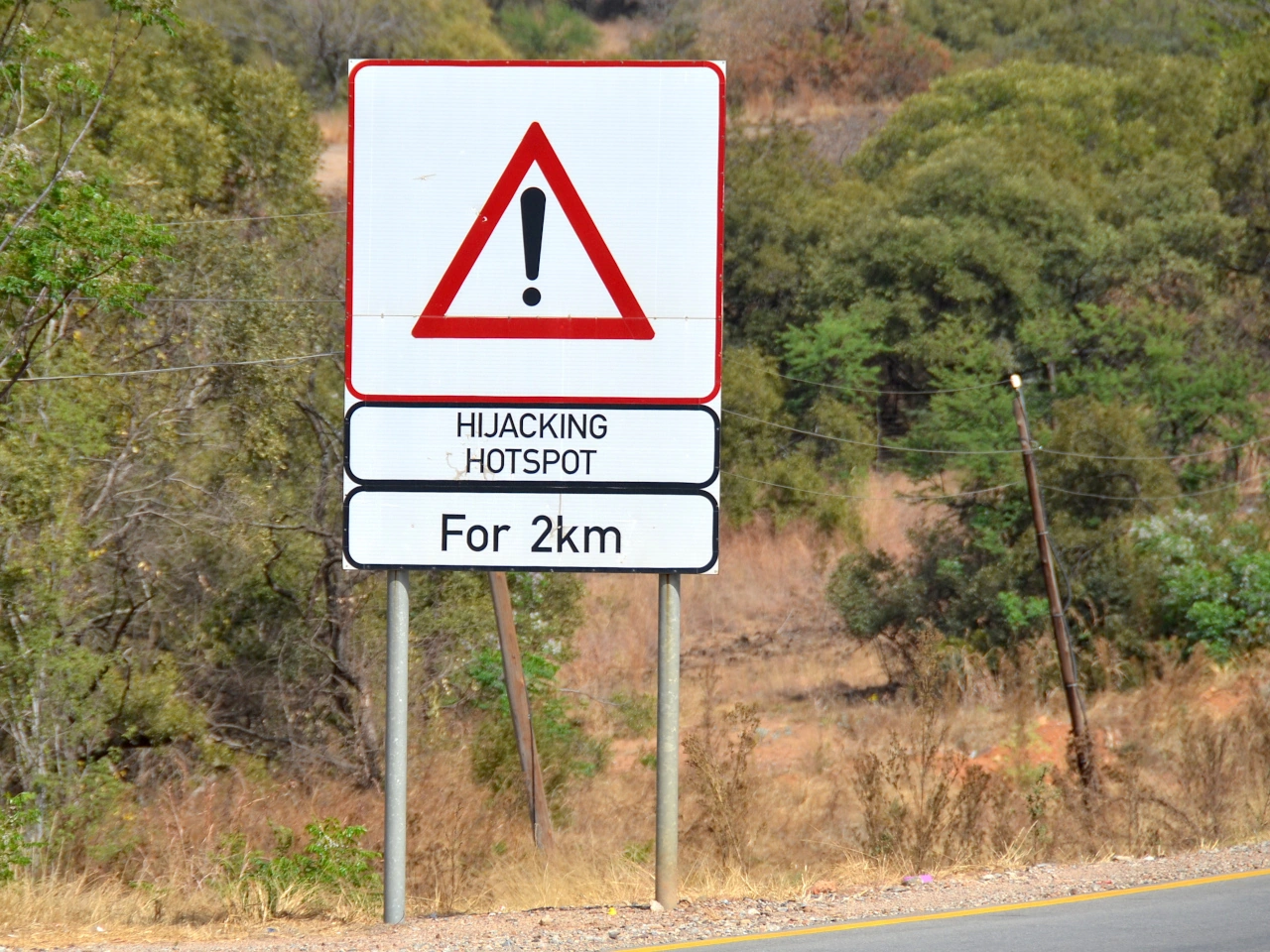
A general danger warning sign warns road users of a hazard ahead that is not represented by a more specific warning sign. The particular danger may be explained by a supplementary panel, text, symbol or other indication placed with the warning sign.
Drivers should increase their attention, observe the road ahead and adapt their speed to the nature of the hazard and surrounding conditions. The exact appearance of the sign and the way the danger is identified vary between countries, so road users must follow the local traffic signs and regulations.
Wikimedia.org • Olga_Ernst • CC BY-SA
What does a general danger warning sign mean?
A general danger warning sign indicates that there is a hazard ahead that is not represented by a more specific warning sign in the local traffic-sign system.
What should you do when you see a general danger warning sign?
Increase your attention, observe the road and surroundings carefully and adapt your speed where necessary so that you can respond safely to the hazard.
Does the sign impose a specific speed limit?
Not normally. A warning sign alerts road users to danger rather than establishing a numerical speed limit. A separate speed-limit sign may be provided where a specific maximum speed is required.
24. Bus
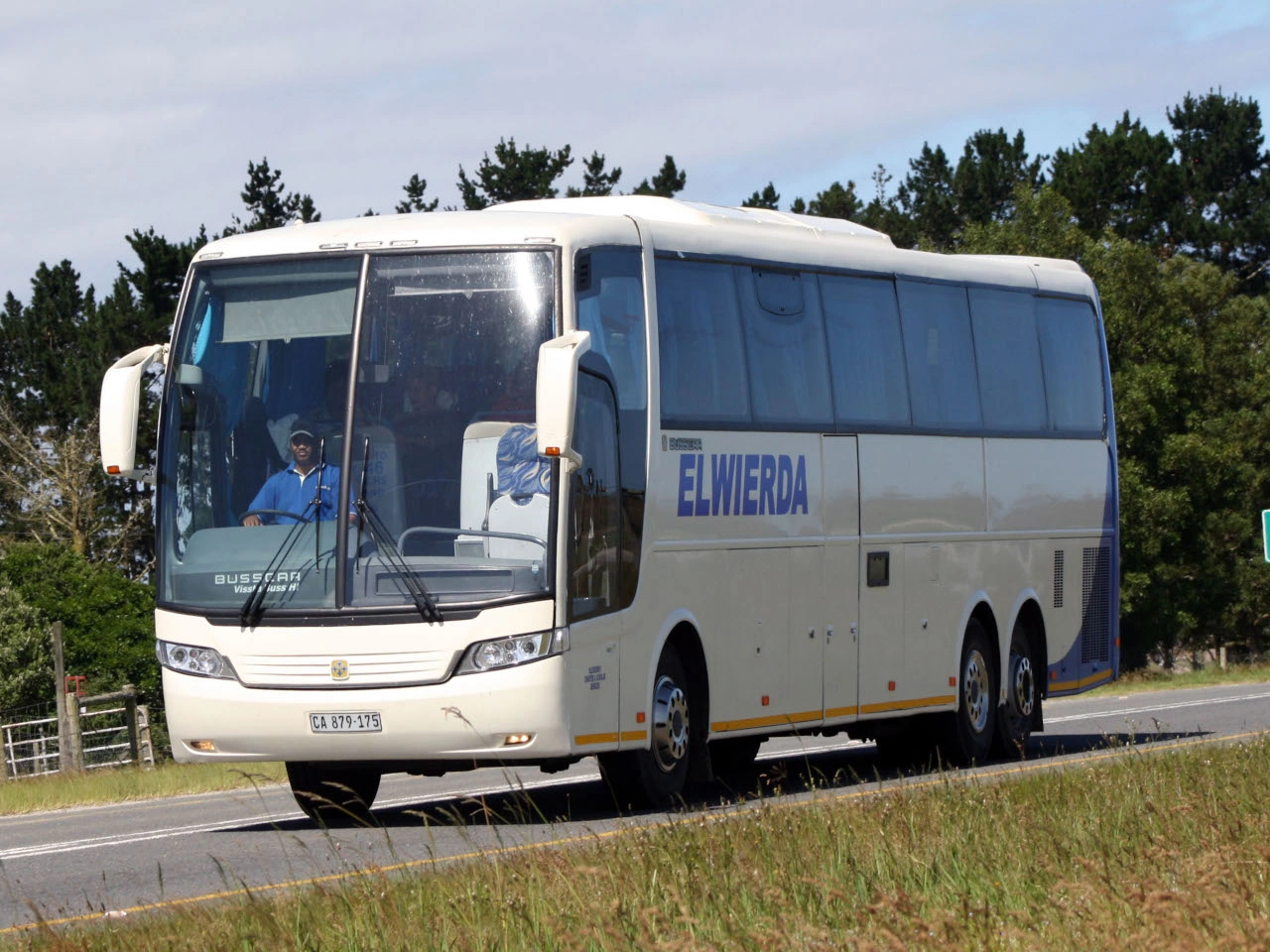
A bus is a motor vehicle designed to transport multiple passengers, usually along roads as part of public transport, school transport, private transport or another passenger service. Buses generally have more passenger capacity than cars and may be designed to carry seated passengers, standing passengers or both.
Special rules may apply to buses concerning the driving licence, passenger capacity, speed limits, seat belts, bus lanes, stops and passenger boarding. The legal classification of buses and coaches and the rules applying to them vary between countries, so drivers and passengers must follow the local traffic regulations.
Wikimedia.org • Bob Adams • CC BY-SA
What is a bus?
A bus is a motor vehicle designed to transport a relatively large number of passengers. It may be used for public transport, school transport, private services or other passenger transport.
🔗 gov.uk • Great Britain Highway Code, Rules 83–88; national guidance example
🔗 gov.uk • Great Britain Highway Code, Rules 221–223; national guidance example
Do buses always have priority when leaving a bus stop?
No. Some countries require other drivers to give way to buses leaving designated stops, particularly in urban areas, while others apply the normal merging rules.
🔗 gov.uk • Great Britain Highway Code, Rules 83–88; national guidance example
🔗 gov.uk • Great Britain Highway Code, Rules 221–223; national guidance example
Do buses have special speed limits?
They can. Some countries impose lower maximum speeds on buses than on passenger cars, particularly on high-speed roads. Different limits may apply to buses and coaches.
🔗 gov.uk • Great Britain Highway Code, Rules 83–88; national guidance example
🔗 gov.uk • Great Britain Highway Code, Rules 221–223; national guidance example
25. Police
Police are public authorities responsible for enforcing laws, maintaining public safety and managing situations that may affect road traffic. In traffic, police officers may control vehicles, enforce traffic rules, investigate collisions, direct traffic and respond to emergencies.
Road users must follow lawful instructions given by police officers or other authorised traffic-control personnel. Police directions may temporarily override traffic lights, road signs or normal traffic arrangements, depending on local law.
Wikimedia.org • Dickelbers • CC BY-SA
What is the role of police in road traffic?
Police help enforce traffic law, investigate collisions and respond to risks on the road. For example, Greater Manchester Police describe targeted road enforcement, a round-the-clock roads-policing response and specialist serious-collision investigation. Exact responsibilities and powers vary by jurisdiction.
🔗 gmp.police.uk • Greater Manchester Police, Roads Policing Strategy2024–2026
Must you obey a police officer directing traffic?
Yes. Lawful directions given by an authorised police officer must be followed. In many countries, those directions take precedence over traffic lights, road signs and normal priority rules.
What should you do if police signal you to stop?
Slow down, follow the officer's directions and stop at a safe location as instructed. Do not make sudden movements or continue driving unless directed to do so.