
Desprendimiento de rocasJapón

Aprende normas de tráfico con explicaciones claras y ejemplos visuales en nuestro libro ilustrado, diseñado para que estudiar sea sencillo y ameno.


29. Desprendimiento de rocas

Una advertencia de desprendimiento de rocas indica un tramo donde pueden caer piedras o rocas desde un acantilado, talud o pendiente pronunciada, o donde ya puede haber material caído en la calzada. El peligro puede afectar a toda la calzada y aparecer de forma repentina.

Los conductores deben reducir la velocidad, observar la carretera y las laderas por delante, aumentar la distancia de seguimiento y mantenerse preparados para detenerse. Deben evitar detenerse innecesariamente en el tramo expuesto y nunca intentar mover por sí mismos rocas inestables.
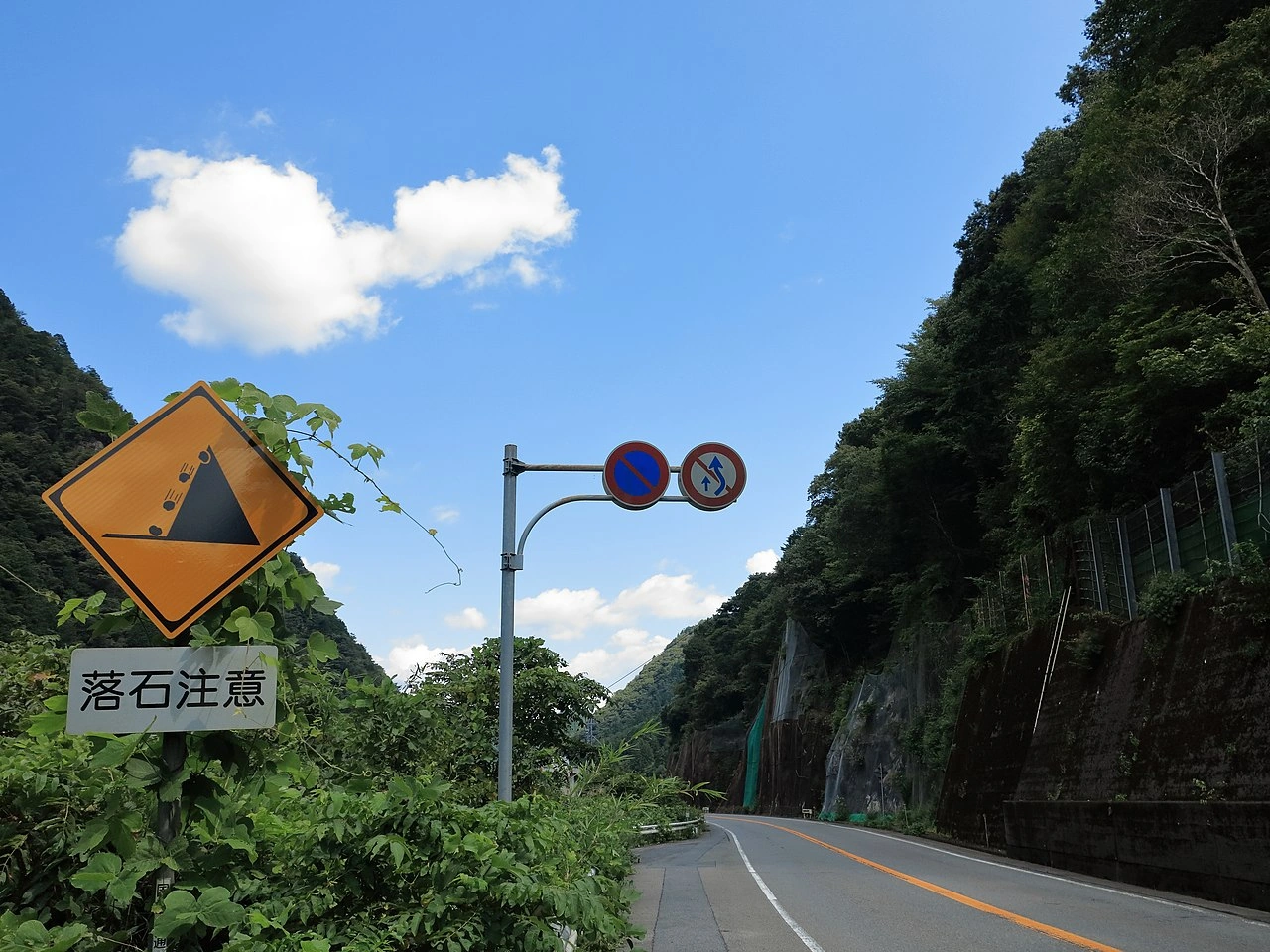
Desprendimiento de rocas
What does a rockfall warning mean?

It warns that rocks or stones may fall onto the road or may already be lying on the carriageway.

How can you recognise a rockfall sign?

It is commonly a triangular warning sign showing rocks falling from a steep slope. The exact colour and design vary between countries.

Does the sign mean rocks are falling at that moment?

No. It indicates an increased risk. The road may be clear, contain stones from an earlier fall or become dangerous without additional warning.

Does the sign warn only about falling rocks?

Not necessarily. It may also warn about loose or fallen stones already present on the road.

What can cause a rockfall?

Rockfalls may be caused by erosion, heavy rain, frost and thawing, storms, ground movement, vegetation loss, roadworks or natural instability.

When can the risk be greater?

The risk may increase during or after heavy rain, freezing weather, rapid thawing, strong winds, earthquakes or work on a nearby slope.

Does a rockfall sign impose a speed limit?

No. It normally warns of danger rather than setting a numerical limit. Drivers must reduce speed when necessary to react safely.

Does the sign change priority?

No. Traffic lights, priority signs and the ordinary priority rules remain applicable.

How should you approach a rockfall area?

Reduce speed smoothly, increase your following distance and watch the road surface, slope, barriers and vehicles ahead for signs of falling or fallen material.

Should you drive close to the vehicle ahead?

No. Leave additional distance so you can see stones on the road and react if the vehicle ahead brakes or changes direction suddenly.

Should you stop in a rockfall area?

Avoid unnecessary stopping in the exposed section. Stop only when required by traffic, an obstruction or an emergency, and choose the safest available location.

May you overtake in a rockfall area?

The warning sign does not necessarily prohibit overtaking, but drivers should avoid overtaking when visibility, road width, loose stones or the risk of falling material makes it unsafe.

May you stop or park beneath an unstable slope?

Avoid doing so. Even where parking is not expressly prohibited, remaining beneath an unstable cliff or slope may expose the vehicle and its occupants to unnecessary danger.

What should you do when stones are lying on the road?

Reduce speed without harsh steering or braking. Pass only when there is enough clear space and visibility; otherwise, stop at a safe distance and report the obstruction.

Should you swerve around a rock?

Avoid a sudden uncontrolled swerve. Brake while maintaining control and steer around the obstruction only when the adjacent space is clearly safe.

What if the road is completely blocked?

Stop at a safe distance, activate the hazard warning lights when appropriate and contact the police, road authority or emergency services. Do not attempt to drive over unstable debris.

What should you do during an active rockfall?

Do not enter the affected section. Stop well before the danger where possible and move away only when this can be done safely without reversing blindly or entering another hazard.

Should you leave the vehicle during an active rockfall?

Do not stand near the unstable slope or falling material. Leave the vehicle only when remaining inside creates a greater immediate danger and a protected escape route is available.

May you move rocks from the road yourself?

Normally not. A stone may be too heavy, unstable or followed by additional falling material. Keep a safe distance and allow trained services to clear the road.

Why are motorcycles and bicycles especially vulnerable?

Even small stones can cause a rider to lose balance or damage a tyre. Riders should reduce speed, avoid sudden steering and keep a greater distance from other traffic.

Can protective nets eliminate the danger?

No. Nets, barriers and retaining structures reduce the risk but cannot guarantee that every stone will be contained.

What does a distance panel below the sign mean?

It may indicate how far ahead the danger begins. Another panel may indicate the length of the hazardous road section.

What should you do after striking a rock?

Keep control of the vehicle, stop at a safe location and activate the hazard warning lights. Check the tyres, wheels and underside only when it is safe and report any dangerous debris.

Does the absence of a sign mean there is no rockfall risk?

No. Drivers must remain attentive wherever roads run beside cliffs, cuttings or steep slopes, even when no warning sign is displayed.

1 Japón 2 Autopista 3 Vía rápida 4 Zona 5 Límite de velocidad 6 Velocidad mínima 7 Senda peatonal 8 Carril bici 9 Vía compartida 10 Túnel 11 Carretera de peaje 12 Sentido único 13 Muelle 14 Pendiente 15 Carril bus 16 Parada de autobús 17 Señal de STOP 18 Ceda el paso 19 Glorieta 20 Estrechamiento de calzada 21 Paso de peatones 22 Paso a nivel 23 Dirección obligatoria 24 Prohibición de giro 25 Zona escolar 26 Adelantamiento 27 Cruce de animales 28 Calzada deslizante 29 Desprendimiento de rocas 30 Curva 31 Circulación en sentido contrario 32 Obras 33 Viento lateral 34 Límite de altura 35 Límite de anchura 36 Límite de peso 37 Señal de control de velocidad 38 Barreras selectivas 39 Señal de dirección en intersección 40 Semáforos 41 Advertencia de semáforos 42 Semáforos peatonales 43 Marcas viales 44 Permiso de conducir 45 Marcador de ubicación 46 Espejo de tráfico 47 Teléfono de emergencia 48 Ruta ciclista 49 Estacionamiento 50 Prohibido estacionar 51 Prohibido parar 52 Estacionamiento para personas con discapacidad 53 Gestión del tráfico 54 Marcha atrás 55 Cambio de sentido 56 Intersección sin regulación 57 Estado de la calzada 58 Permiso provisional 59 Salida de emergencia 60 Límite de población 61 Claxon 62 Matrícula 63 Estación de carga 64 Peligros 65 Peatón 66 Ciclista 67 Ciclomotor 68 Motocicleta 69 Turismo 70 Camión 71 Autobús 72 Policía 73 Ambulancia 74 Bache 75 Camino 76 Partículas 77 Contaminación del aire 78 Hora punta 79 Código de circulación 80 Doble sentido 81 Canaleta de la calle 82 Bicicleta de carga 83 Vehículo forestal 84 Vehículo de construcción 85 Camión articulado 86 Trolebús 87 Speed pedelec 88 Vehículo de reparto 89 Motor al ralentí 90 Grúa 91 Tracción a las cuatro ruedas 92 Prohibido el paso de vehículos 93 Bicicleta 94 Equipamiento de motocicleta 95 Tranvía 96 Vía férrea 97 Caravana 98 Remolque 99 Enganche de remolque 100 Camión de bomberos ...