
Traffic rulesJapan
Learn the traffic rules of Japan with lots of pictures, clear traffic signs and interactive quizzes. Simple, visual and easy to follow.


The driving-licence system in Japan
Who administers driving licences in Japan?
Prefectural public safety commissions and police administer applications, examinations, renewals and licence records.
Which national authority sets the main standards?
The National Police Agency (NPA) establishes national standards under the Road Traffic Act.
Is a Japanese licence valid nationwide?
Yes, subject to its categories, conditions and current legal status.
Are procedures identical in every prefecture?
No. Reservations, locations, languages, fees and document procedures can differ.
What is a designated driving school?
It is a school officially designated by a public safety commission whose graduates normally receive a practical-test exemption.
Can a person apply without attending a designated school?
Yes. The direct-examination route is available through a prefectural driving-licence centre.
What is a MyNa licence?
It is driving-licence information recorded on an eligible My Number Card under the system introduced on 24 March 2025.
Can a driver keep both licence formats?
Yes. A holder may choose the conventional card, the MyNa licence or both.
Can several vehicle categories appear on one licence?
Yes. All active categories and restrictions are recorded in one integrated driver record.
Where should local requirements be checked?
On the official website of the prefectural police responsible for the applicant’s registered address.
Eligibility and first applications
What is the minimum age for an ordinary car licence?
18 years.
What is the minimum age for an ordinary motorcycle licence?
16 years.
What is the minimum age for a large motorcycle licence?
18 years.
What is the minimum age for a moped licence?
16 years.
What is the ordinary minimum age for a semi-medium licence?
18 years.
Do higher categories require experience?
Yes. Medium, large and passenger-service licences require statutory age, experience or approved special training.
Where is a first application made?
At the licence centre or authorised facility serving the applicant’s registered residence.
What residence evidence is normally required?
A residence certificate showing registered domicile or nationality, plus accepted identification and photographs.
Can a foreign resident use the ordinary Japanese examination route?
Yes, when residence, identity, age, fitness and examination requirements are met.
Can a disqualified person apply?
Not until the suspension, cancellation disqualification period or other prohibition has ended.
Can fraud invalidate the process?
Yes. Impersonation, false documents or false declarations can cause refusal, cancellation and criminal action.
Medical fitness, eyesight and disability
Is an aptitude examination required?
Yes. Applicants and renewing drivers complete the checks prescribed for the category.
Is eyesight tested?
Yes. Higher categories can require stricter acuity and depth perception.
Can corrective lenses be required?
Yes. The licence records a condition requiring glasses or contact lenses.
Is colour recognition assessed?
A first applicant may be checked for the ability to distinguish red, blue and yellow.
Can hearing affect licensing?
Yes, although eligible hearing-impaired drivers may qualify with conditions such as special mirrors.
Can an adapted vehicle be required?
Yes. Conditions can require hand controls, additional mirrors or an automatic transmission.
Does disability automatically prevent licensing?
No. Fitness is assessed individually, often using a consultation and adapted vehicle.
Must relevant medical symptoms be disclosed?
Yes. Applications and renewals include questions about seizures, loss of consciousness, severe sleepiness and similar risks.
Can the police require a medical report?
Yes. A public safety commission may order specialist assessment or a doctor’s certificate.
Can later medical unfitness affect an existing licence?
Yes. The licence may be restricted, suspended or revoked.
Designated-school and direct-examination routes
What are the main routes to an ordinary licence?
Graduation from a designated driving school or direct testing at a prefectural licence centre.
What is taught at a designated school?
Traffic law, closed-course control, provisional-licence preparation, road driving and hazard awareness.
What happens during the first school stage?
The learner develops basic knowledge and control before the provisional examinations.
What happens after passing the provisional stage?
The learner enters supervised public-road training.
What is the second school stage?
It focuses on public-road driving, hazards, faster roads, emergencies and graduation preparation.
Does school graduation itself issue the licence?
No. The graduate still completes aptitude checks, the final knowledge test and licence issue.
What must a direct-test applicant complete?
Aptitude, provisional knowledge and skills, supervised road practice, final knowledge and final practical tests.
Is the direct route usually easier?
No. It normally requires very strong test readiness and can involve repeated visits.
Can a learner change designated schools?
Yes, subject to transfer records and the receiving school’s acceptance.
Does a non-designated school provide the same exemption?
No. Only the legally designated route provides the recognised practical-test exemption.
Can a learner practise alone on public roads?
No. Valid provisional entitlement and qualified supervision are required.
The provisional licence and road practice
What is a provisional licence?
A temporary entitlement permitting supervised public-road practice before the full licence.
How long is it normally valid?
Six months.
How many questions are in the ordinary provisional knowledge test?
Normally 50 true-or-false questions.
What score is normally required?
At least 45 correct answers.
Is a provisional practical test required?
Yes, unless the recognised designated-school procedure supplies the equivalent pass.
May a provisional driver practise alone?
No.
Who may supervise an ordinary-car learner?
Normally a person who has held the appropriate licence for at least three years or a qualified instructor.
Must provisional-driving signs be displayed?
Yes, clearly at the front and rear.
Can motorway practice be included?
Yes, when the learner is ready and every supervision and vehicle condition is met.
Can the provisional licence be used abroad?
No.
What happens when it expires?
Public-road practice must stop until valid provisional entitlement is obtained again.
Final knowledge and practical examinations
Who takes the final knowledge examination?
Ordinary first-time applicants, including most designated-school graduates.
How many questions are in the ordinary final test?
95 questions.
How is it normally scored?
Ninety one-point questions and five illustrated hazard questions worth two points each.
What is the maximum score?
100 points.
What is the pass mark?
At least 90 points.
How long is allowed?
50 minutes.
What subjects are tested?
Traffic rules, signs, safe behaviour, accident duties and hazard prediction.
Are foreign-language tests available?
Yes, but the available languages differ by prefecture.
Who must take the licence-centre final practical test?
Direct applicants and candidates without a valid designated-school exemption.
What does the practical test assess?
Observation, control, positioning, signalling, speed choice, intersections and pedestrian safety.
Can one serious error cause failure?
Yes. Dangerous conduct or examiner intervention can end the test.
How long is a designated-school graduation certificate normally usable?
Normally one year for the relevant exemption and application.
Beginner-driver rules
How long is the ordinary beginner period?
One year after first obtaining the applicable ordinary or semi-medium licence.
Must a beginner mark be displayed?
Yes, at the front and rear of the vehicle.
Is failing to display it an offence?
Yes, unless a statutory exemption applies.
Must other drivers protect marked beginners?
They must not crowd, cut in front of or unreasonably interfere with a properly marked beginner vehicle.
When can a beginner-driver course be required?
After three qualifying points during the first year, or normally four where one offence alone carries three points.
Is that course separate from an ordinary suspension?
Yes.
What happens if the required course is not completed?
The driver can be ordered to take a re-examination after the beginner period.
What happens after failing or missing that re-examination?
The relevant newly obtained category can be cancelled.
Does every added category restart all beginner rules?
No. The rules apply separately to specified newly obtained categories.
Can foreign experience create a beginner-mark exemption?
Sometimes, when at least one year of qualifying foreign driving experience is documented.
Does a converted foreign licence always avoid beginner status?
No. The result depends on the experience officially recognised during conversion.
Driving-licence categories
What does an ordinary vehicle licence cover?
Vehicles below 3.5 tonnes gross weight, below 2 tonnes payload and with no more than 10 occupants.
What does a semi-medium licence cover?
Vehicles from 3.5 to below 7.5 tonnes gross weight, with payload below 4.5 tonnes and no more than 10 occupants.
What does a medium licence cover?
Vehicles below 11 tonnes gross weight, below 6.5 tonnes payload and with no more than 29 occupants, subject to the lower boundary.
What does a large-vehicle licence cover?
Vehicles of 11 tonnes or more, payload of 6.5 tonnes or more, or capacity for 30 or more occupants.
What does an ordinary motorcycle licence cover?
Motorcycles within the ordinary motorcycle class, including available automatic restrictions.
What does a large motorcycle licence cover?
Motorcycles without the ordinary-category engine-size limit.
What does a moped licence cover?
Vehicles legally classified as mopeds under the current Road Traffic Act definitions.
What are second-class licences?
Professional passenger-service licences for taxis, buses and similar paid passenger transport.
Is separate towing entitlement available?
Yes, for qualifying combinations beyond the limited statutory exemptions.
Can restrictions be recorded by category?
Yes. Automatic, corrective-lens and vehicle-adaptation conditions can be attached to particular entitlements.
Must the vehicle registration be checked before driving?
Yes. The driver must confirm that the vehicle fits the weight, payload and seating limits of the held licence.
Professional, passenger and motorcycle rules
Is an ordinary licence enough for professional taxi work?
No. The appropriate second-class licence is normally required.
What is the ordinary route to most second-class licences?
Usually age 21 and at least three years of relevant experience, with approved special-training exceptions.
Do professional bus drivers need a large second-class licence?
Yes, for a large passenger-service vehicle.
Are operator requirements separate?
Yes. Employment, health, transport-business and company rules apply in addition to the licence.
How long must a motorcycle licence normally be held before carrying a passenger?
At least one year.
What is required before carrying a passenger on an expressway?
The rider must normally be at least 20 and have at least three years of relevant motorcycle-licence experience.
Can a motorcycle of 125 cm³ or less use an expressway?
No.
Are aptitude standards stricter for some professional categories?
Yes. Vision, depth perception and other standards can be stricter.
Can serious professional misconduct affect the licence?
Yes. Dangerous conduct or medical unfitness can cause suspension or revocation.
Does a second-class licence replace the vehicle category?
No. The driver needs both the vehicle entitlement and passenger-service entitlement.
Are commercial goods vehicles normally second-class vehicles?
No. Goods transport generally uses the appropriate first-class vehicle licence.
Validity, renewal and senior-driver reviews
How long is a licence commonly valid?
Often five years, but first-time, violator and older-driver licences can be shorter.
What do the licence-band colours indicate?
Green generally identifies a first licence, blue an ordinary licence and gold an excellent-driver licence.
When is the normal renewal window?
From one month before the birthday immediately preceding expiry until one month after that birthday.
Which renewal courses exist?
Excellent, general, violator and first-renewal courses, selected according to the driver record.
Can MyNa licence holders take renewal training online?
Eligible excellent and general drivers can complete the approved lecture online.
What validity applies at age 70?
Excellent and general drivers can receive five years; violator and first-renewal drivers receive three.
What validity applies at age 71?
Excellent and general drivers can receive four years; violator and first-renewal drivers receive three.
What validity applies from age 72?
Generally three years.
What course is required from age 70?
The prescribed senior-driver course.
What assessment is required from age 75?
A cognitive assessment measuring memory and judgement.
Who must take a senior driving-skill test?
A driver aged 75 or older with specified traffic violations during the relevant preceding three years.
Foreign licences and International Driving Permits
Can a visitor drive with a 1949 Geneva Convention International Driving Permit?
Yes, when lawfully issued, valid and carried with the supporting national licence and passport.
How long can it be used?
No longer than one year from issue and no longer than one year from the relevant entry into Japan, whichever ends first.
Can a Vienna Convention-only permit be used?
No. Japan recognises the 1949 Geneva format.
Can designated foreign licences be used with a Japanese translation?
Yes, when the licence and translation meet the statutory requirements.
Which commonly designated licences qualify?
Licences from Switzerland, Germany, France, Belgium, Monaco and Taiwan.
Can a resident convert a foreign licence?
Yes. The licence must be valid and the applicant must prove at least three months of residence in the issuing country after obtaining it.
What changed in the conversion knowledge check on 1 October 2025?
It became a 50-question test requiring at least 45 correct answers.
Was the conversion skills check also changed?
Yes. Additional tasks and stricter assessment were introduced.
Are some countries exempt from one or both checks?
Yes, under the current exemption list.
Must translations come from an authorised body?
Yes. The issuing authority, embassy, JAF or another legally accepted body must provide the translation.
Does a Japanese International Driving Permit replace the domestic licence abroad?
No. Both documents are required.
Points, alcohol, suspension and cancellation
How are administrative points calculated?
Violation and accident points are accumulated under the statutory period and prior-record rules.
When can a driver with no prior administrative record be suspended?
The ordinary threshold begins at six points.
When can the same driver face cancellation?
The ordinary threshold begins at 15 points.
Can an eligible six-point driver avoid the normal suspension?
Yes, by completing the designated violator course when the statutory conditions are met.
Do prior suspensions lower later thresholds?
Yes.
What breath-alcohol level triggers alcohol-impaired driving?
0.15 mg per litre or more.
What happens from 0.25 mg per litre?
The base points and administrative consequences become more severe, normally reaching cancellation for a driver without other points.
Can intoxication be punished regardless of the numerical reading?
Yes. Drunk driving is based on inability to drive normally.
Can helpers of a drink-driver be punished?
Yes. Vehicle providers, alcohol providers and knowing passengers can face penalties.
Can drug-impaired or dangerous driving cause immediate action?
Yes. Serious offences can cause direct suspension, cancellation and criminal penalties.
Sources and methodology
How was this FAQ prepared?
This FAQ was prepared from current National Police Agency guidance and official prefectural police licensing information.
Which source gives the national overview?
National Police Agency: Traffic Bureau and driving licencesWhich source explains tests, permits and driver signs?
Tokyo Metropolitan Police: driver-licence proceduresWhich source confirms the 95-question examination?
Osaka Prefectural Police: ordinary licence examinationWhich source explains the October 2025 conversion changes?
Tokyo Metropolitan Police: foreign-conversion changesWhich source explains conversion eligibility?
Osaka Prefectural Police: converting a foreign licenceWhich source explains beginner signs?
Tokyo Metropolitan Police: driver signsWhich source explains renewal and age-based validity?
Tokyo Metropolitan Police: renewal proceduresWhich source explains drink-driving sanctions?
Tokyo Metropolitan Police: drink-driving penaltiesIs this website affiliated with a Japanese authority?
This website is an independent educational resource and is not affiliated with the National Police Agency, a prefectural police force, public safety commission, driving-licence centre or driving school.
Official legislation and instructions from the competent prefectural authority always take precedence. Last reviewed: 4 August 2026.
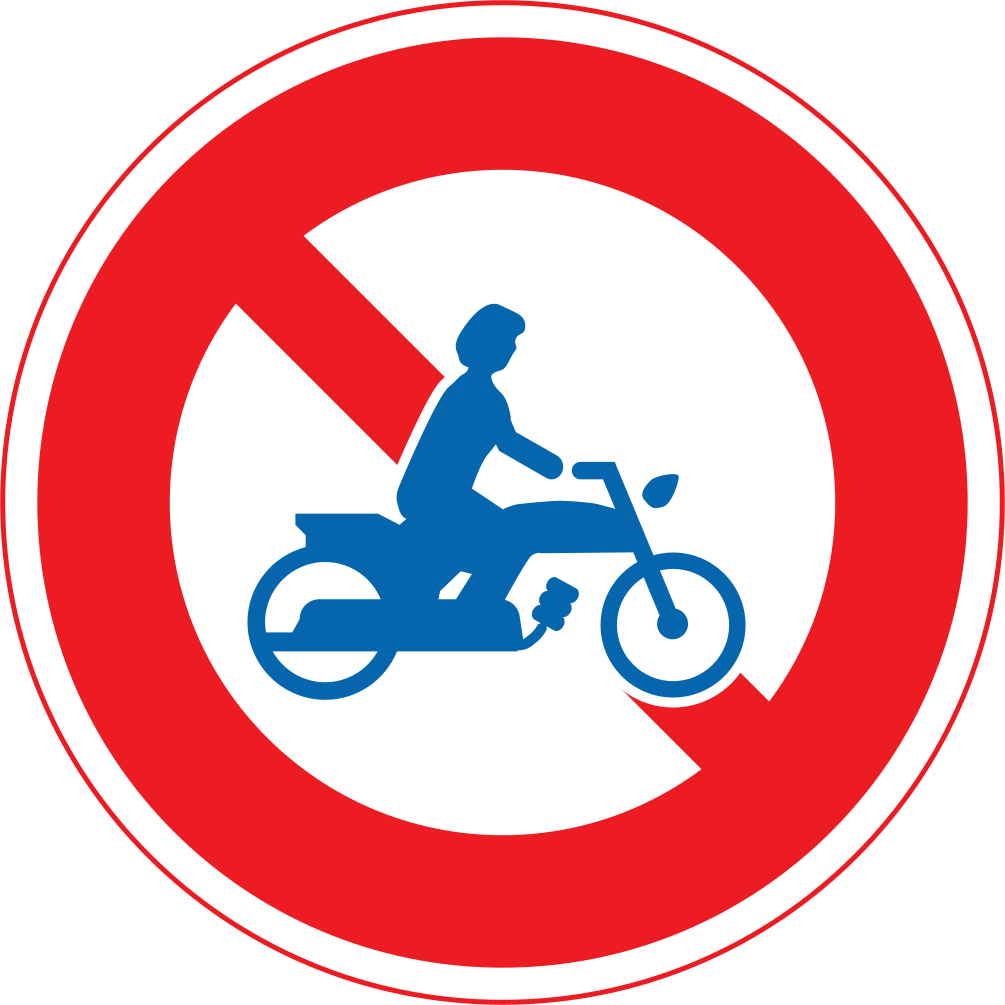
1. What does this traffic sign mean?
This traffic sign indicates that motorcycles are prohibited. Motorcyclists may not enter or continue beyond the sign. Other road users may still be permitted unless another restriction applies.
English • Traffic sign 307 • No two-wheeled motor vehicles or general motorised bicycles. Both categories are prohibited.
日本語 • 307 • 二輪の自動車・一般原動機付自転車通行止め。 二輪の自動車と一般原動機付自転車の通行を禁止しています。
Sources
🔗 Commons.wikimedia.org
🔗 Laws.e-gov.go.jp • 道路標識、区画線及び道路標示に関する命令、別表第一・第二
🔗 Mlit.go.jp • 国土交通省、道路標識一覧
SVG source: Monaneko • Public domain • Original revision 2013-06-20. Wikimedia original unmodified.
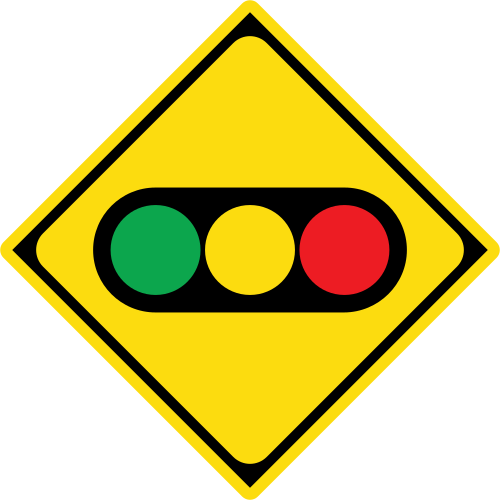
2. What does this traffic sign mean?
This traffic sign indicates a warning for traffic lights ahead. Traffic signals are located ahead and may not be visible early enough without advance warning. Reduce speed and be prepared to stop if the signal requires it.
English • Traffic sign 208の2 • Traffic signals ahead. Check the signal and be ready to stop if necessary.
日本語 • 208の2 • 信号機あり。 この先に信号機があります。信号を確認し、必要に応じて停止できるようにしてください。
Sources
🔗 Commons.wikimedia.org
🔗 Laws.e-gov.go.jp • 道路標識、区画線及び道路標示に関する命令、別表第一・第二
🔗 Mlit.go.jp • 国土交通省、道路標識一覧
SVG source: Monaneko • Public domain • Original revision 2013-06-19. Wikimedia original unmodified.
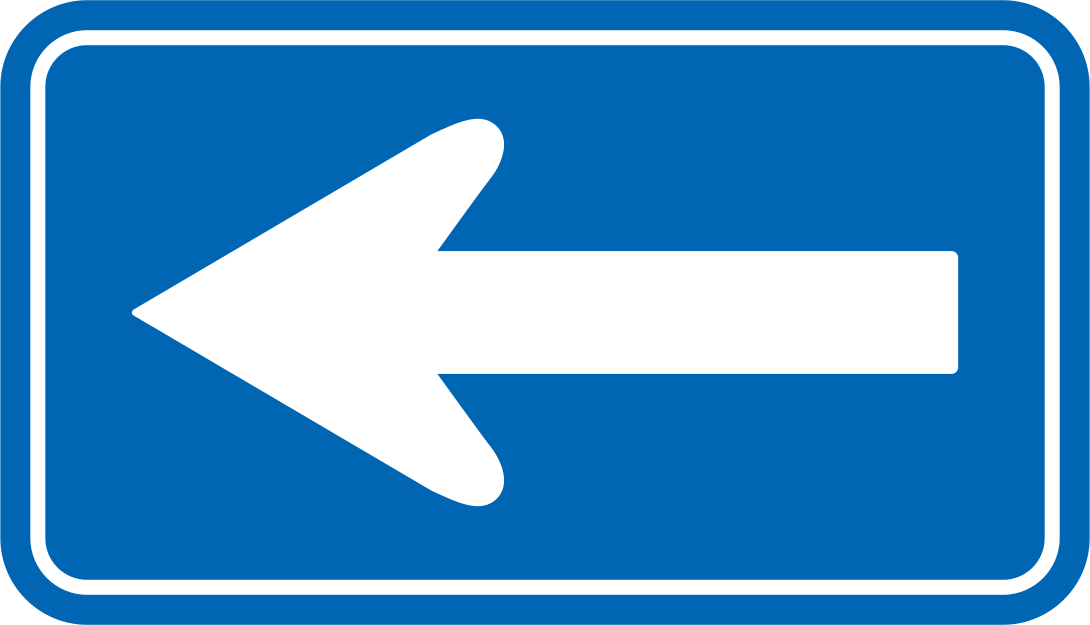
3. What does this traffic sign mean?
This traffic sign indicates a road with one-way traffic. Drivers may travel only in the permitted direction.
English • Traffic sign 326-A • One-way to the left. Follow the leftward arrow; opposite-direction travel is prohibited.
日本語 • 326-A • 一方通行:左方向。 車両は矢印の示す左方向に通行してください。反対方向への通行は禁止されています。
Sources
🔗 Commons.wikimedia.org
🔗 Laws.e-gov.go.jp • 道路標識、区画線及び道路標示に関する命令、別表第一・第二
🔗 Mlit.go.jp • 国土交通省、道路標識一覧
SVG source: Monaneko • Public domain • Original revision 2023-07-04. Wikimedia original unmodified.
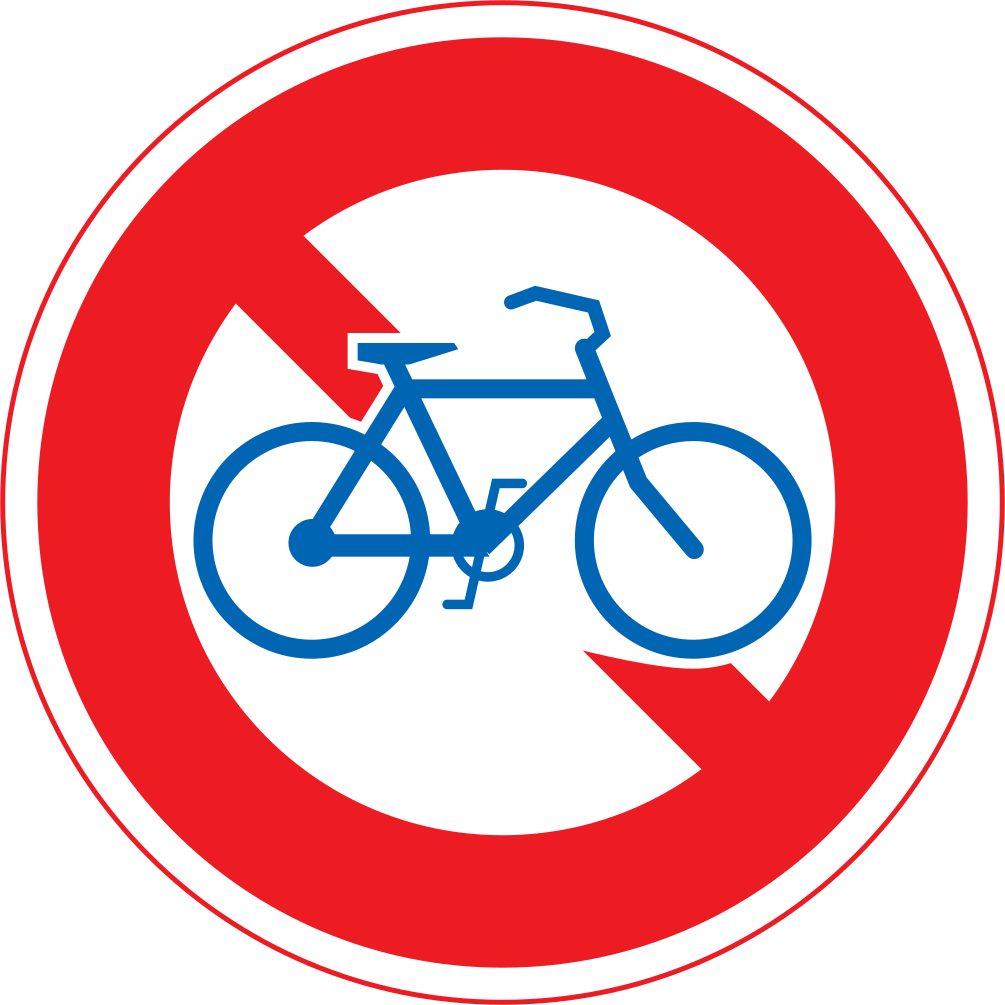
4. What does this traffic sign mean?
This traffic sign indicates that cyclists are prohibited. Cyclists may not enter or continue beyond the sign. Other road users may still be permitted unless another restriction applies.
English • Traffic sign 309 • No specified small motorised bicycles or bicycles. Both categories are prohibited.
日本語 • 309 • 特定小型原動機付自転車・自転車通行止め。 特定小型原動機付自転車と自転車の通行を禁止しています。
Sources
🔗 Commons.wikimedia.org
🔗 Laws.e-gov.go.jp • 道路標識、区画線及び道路標示に関する命令、別表第一・第二
🔗 Mlit.go.jp • 国土交通省、道路標識一覧
SVG source: Monaneko • Public domain • Original revision 2013-06-23. Wikimedia original unmodified.
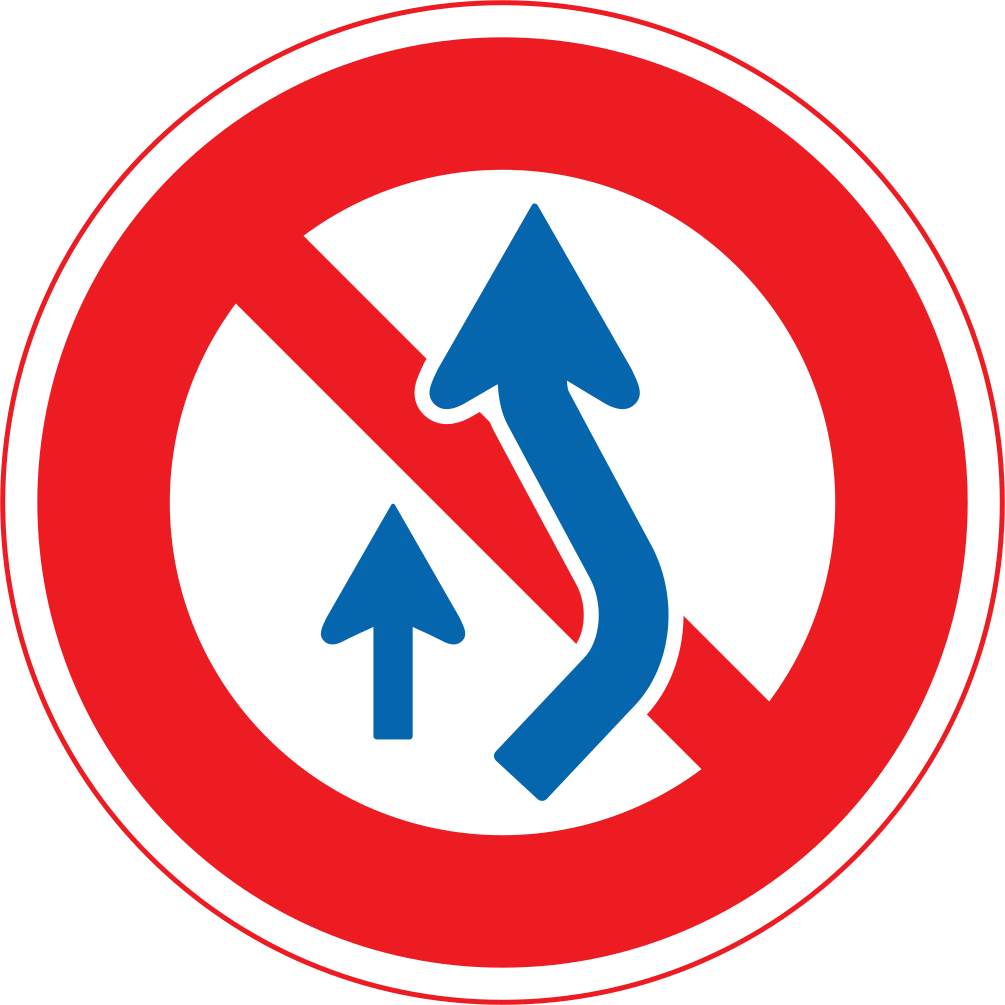
5. What does this traffic sign mean?
This traffic sign indicates that overtaking is prohibited. The vehicles covered by the prohibition and any categories that may still be overtaken depend on the applicable local rules.
English • Traffic sign 314 • Do not cross into the right-hand part of the road to overtake. This drawing alone does not prohibit all overtaking that stays out of the right-hand part.
日本語 • 314 • 追越しのための右側部分はみ出し通行禁止。 追越しのために道路の右側部分にはみ出して通行することを禁止しています。この図だけで、右側部分にはみ出さない追越しまで一律に禁止するものではありません。
Sources
🔗 Commons.wikimedia.org
🔗 Laws.e-gov.go.jp • 道路標識、区画線及び道路標示に関する命令、別表第一・第二
🔗 Mlit.go.jp • 国土交通省、道路標識一覧
SVG source: Monaneko • Public domain • Original revision 2013-06-23. Wikimedia original unmodified.
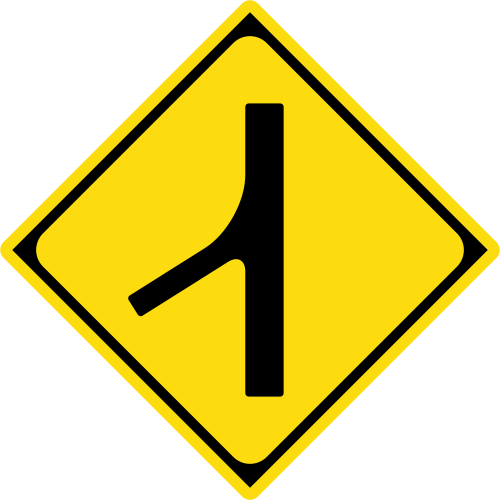
6. What does this traffic sign mean?
This traffic sign indicates a warning for a side road merging with the main road. Traffic from a side road joins the traffic flow ahead. Stay alert, maintain a safe gap and adjust your speed when necessary to allow traffic to merge safely.
English • Traffic sign 210 • Merging traffic. Vehicles join from the left ahead. Watch their movements.
日本語 • 210 • 合流交通あり。 この先で左側から交通が合流します。合流する車両の動きに注意してください。
Sources
🔗 Commons.wikimedia.org
🔗 Laws.e-gov.go.jp • 道路標識、区画線及び道路標示に関する命令、別表第一・第二
🔗 Mlit.go.jp • 国土交通省、道路標識一覧
SVG source: Monaneko • Public domain • Original revision 2013-06-19. Wikimedia original unmodified.
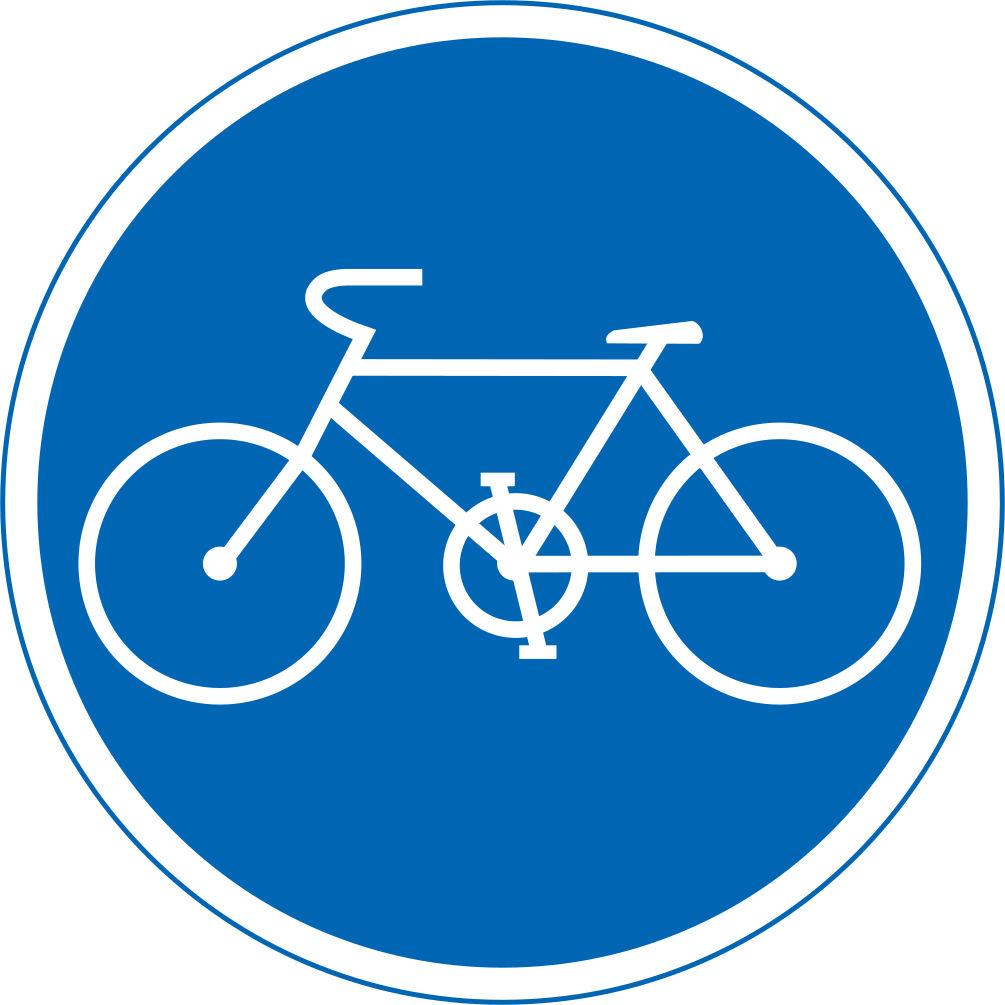
7. What does this traffic sign mean?
This traffic sign indicates a mandatory path for cyclists. Cyclists must use the designated path where the sign applies. Other road users may use the path only where the applicable signs or local rules permit them to do so.
English • Traffic sign 325の2 • Specified small motorised bicycles and bicycles only. Indicates a cycle path, bicycle-only road or road for these categories. Do not rely on the older bicycle-only name; check supplementary signs locally.
日本語 • 325の2 • 特定小型原動機付自転車・自転車専用。 自転車道、自転車専用道路、または特定小型原動機付自転車と自転車のための道路であることを示します。自転車だけを対象とする旧来の名称で判断せず、現地の補助標識も確認してください。
Sources
🔗 Commons.wikimedia.org
🔗 Laws.e-gov.go.jp • 道路標識、区画線及び道路標示に関する命令、別表第一・第二
🔗 Mlit.go.jp • 国土交通省、道路標識一覧
🔗 Npa.go.jp • 警察庁、交通規制基準(令和8年3月16日改正)、PDF 66ページ
SVG source: Monaneko • Public domain • Original revision 2021-10-06. Wikimedia original unmodified.
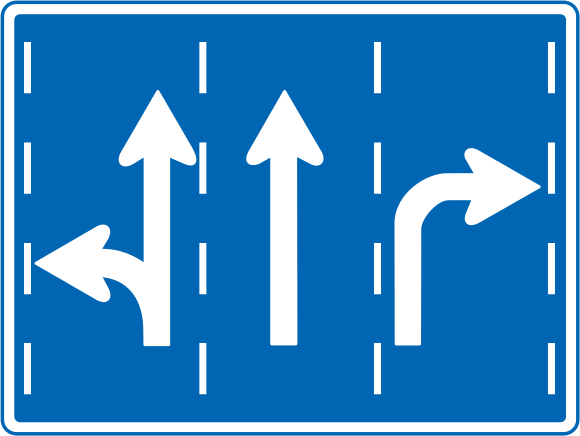
8. What does this traffic sign mean?
This traffic sign gives an overview of the lanes and their direction. The arrows or other indications show how the lanes continue and which directions or destinations they serve.
English • Traffic sign 327の7 • Lane directions. Arrows specify directions from each lane. Select a lane for your destination and observe any different rules applying to ordinary bicycles and related categories.
日本語 • 327の7 • 進行方向別通行区分。 各車両通行帯から進める方向を矢印で指定しています。進みたい方向に合う通行帯を選んでください。普通自転車等に適用される別の通行方法にも注意してください。
Sources
🔗 Commons.wikimedia.org
🔗 Laws.e-gov.go.jp • 道路標識、区画線及び道路標示に関する命令、別表第一・第二
🔗 Mlit.go.jp • 国土交通省、道路標識一覧
SVG source: Monaneko (talk) • Public domain • Original revision 2010-04-06. Wikimedia original unmodified.
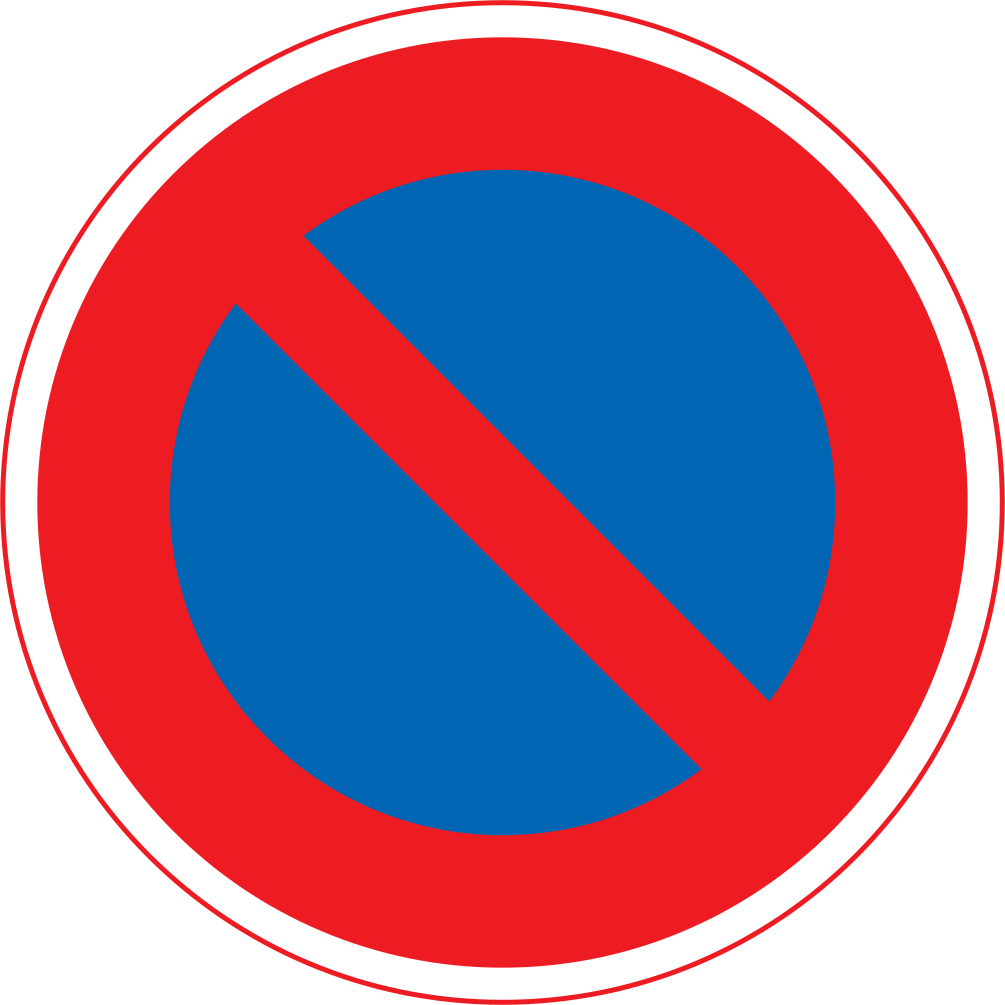
9. What does this traffic sign mean?
This traffic sign indicates that parking is prohibited. Vehicles may not be parked in the area covered by the sign unless an exception applies. Brief stopping to pick up or drop off passengers or to load or unload goods may still be permitted where local rules allow it.
English • Traffic sign 316 • No parking. Vehicles must not park at this location or section.
日本語 • 316 • 駐車禁止。 この場所や区間で車両を駐車することを禁止しています。
Sources
🔗 Commons.wikimedia.org
🔗 Laws.e-gov.go.jp • 道路標識、区画線及び道路標示に関する命令、別表第一・第二
🔗 Mlit.go.jp • 国土交通省、道路標識一覧
SVG source: Monaneko • Public domain • Original revision 2013-06-20. Wikimedia original unmodified.
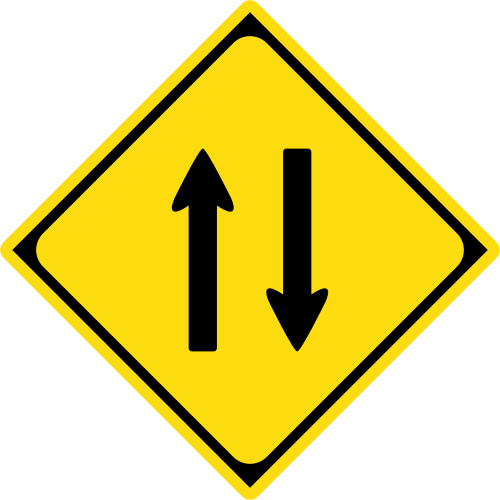
10. What does this traffic sign mean?
This traffic sign indicates a warning for two-way traffic. Oncoming traffic will use the same road or carriageway ahead. Keep to the correct side of the road and overtake only where it is permitted and clearly safe.
English • Traffic sign 212の2 • Two-way traffic. Keep left and watch oncoming vehicles on the road ahead.
日本語 • 212の2 • 二方向交通。 この先は対向交通のある道路になります。対向車に注意して左側を通行してください。
Sources
🔗 Commons.wikimedia.org
🔗 Laws.e-gov.go.jp • 道路標識、区画線及び道路標示に関する命令、別表第一・第二
🔗 Mlit.go.jp • 国土交通省、道路標識一覧
SVG source: Monaneko • Public domain • Original revision 2013-06-19. Wikimedia original unmodified.
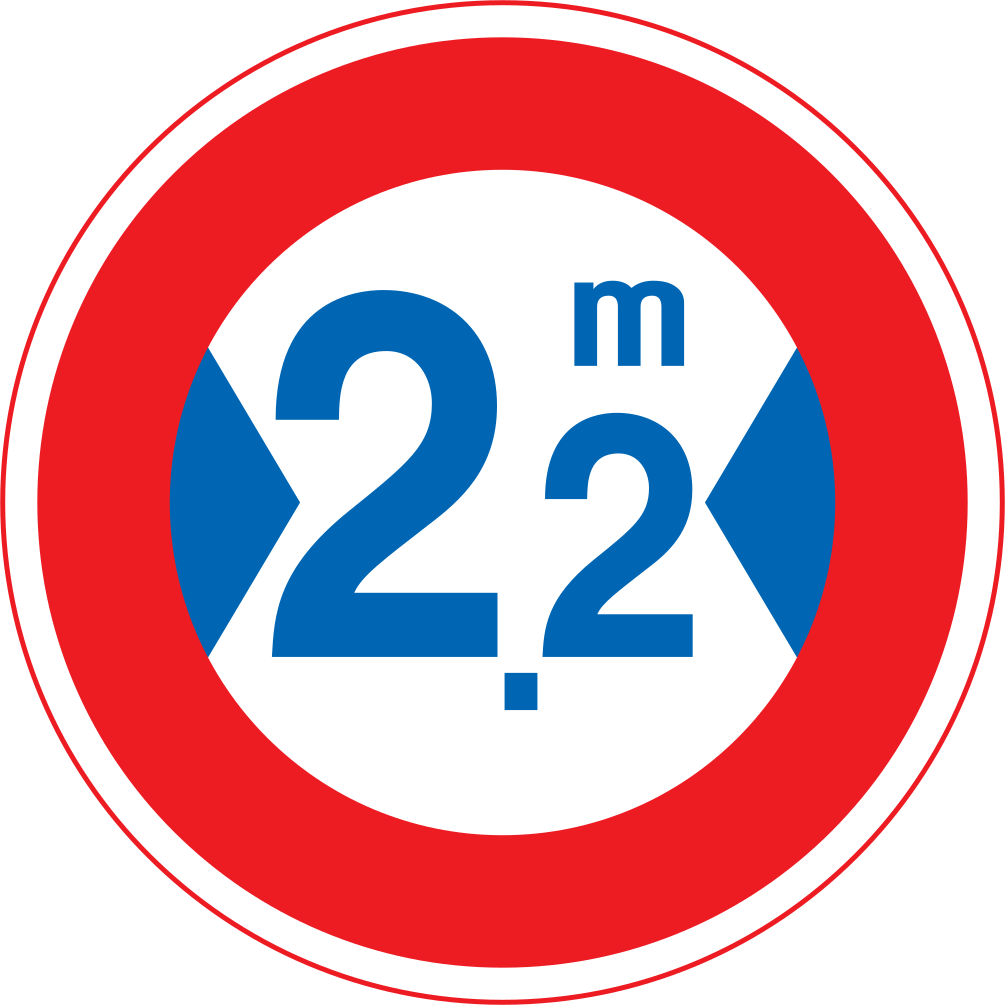
11. What does this traffic sign mean?
This traffic sign indicates that vehicles wider than indicated are prohibited. A vehicle or vehicle combination whose overall width, including its load, exceeds the displayed limit may not continue beyond the sign.
English • Traffic sign 322 • Maximum width: 2.2 m. Vehicles wider than 2.2 m must not pass. Include the load when checking width.
日本語 • 322 • 最大幅:2.2 m。 車両の幅が2.2メートルを超える場合は通行できません。積載した貨物の幅も含めて確認してください。
Sources
🔗 Commons.wikimedia.org
🔗 Laws.e-gov.go.jp • 道路標識、区画線及び道路標示に関する命令、別表第一・第二
🔗 Mlit.go.jp • 国土交通省、道路標識一覧
SVG source: Monaneko • Public domain • Original revision 2013-10-22. Wikimedia original unmodified.
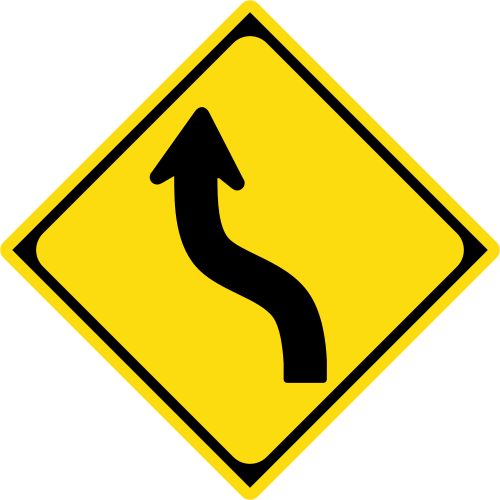
12. What does this traffic sign mean?
This traffic sign indicates a warning for successive curves, with the first curve to the left. Reduce speed before entering the winding section, maintain your lane position and be prepared for further changes in direction.
English • Traffic sign 204 • Double bend, first to the left. Successive bends begin to the left.
日本語 • 204 • 左背向屈曲あり。 この先に連続するカーブがあり、最初は左に曲がります。
Sources
🔗 Commons.wikimedia.org
🔗 Laws.e-gov.go.jp • 道路標識、区画線及び道路標示に関する命令、別表第一・第二
🔗 Mlit.go.jp • 国土交通省、道路標識一覧
SVG source: Monaneko • Public domain • Original revision 2013-06-20. Wikimedia original unmodified.
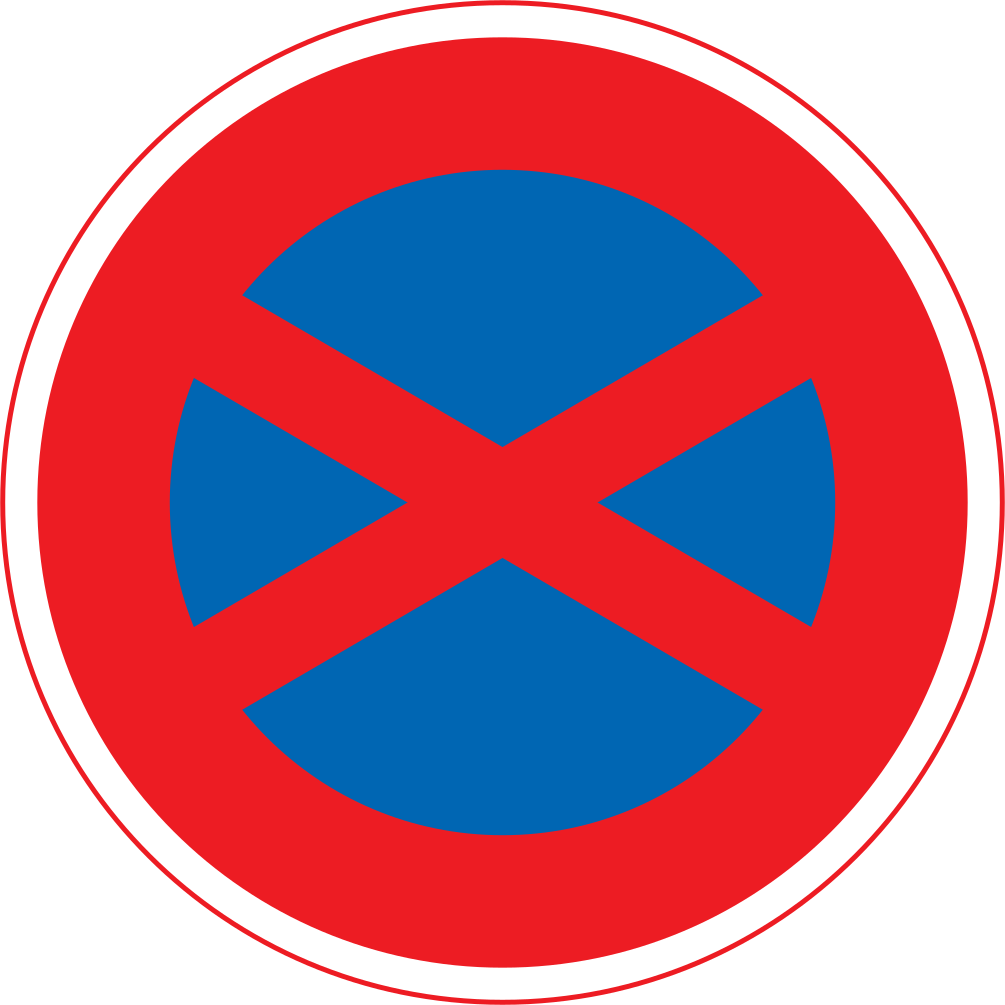
13. What does this traffic sign mean?
This traffic sign indicates that parking and stopping are prohibited. Vehicles may not stop or park voluntarily where the restriction applies, except where an applicable rule provides an exemption or stopping is required by traffic conditions.
English • Traffic sign 315 • No stopping or parking. Vehicles must not stop or park at this location or section.
日本語 • 315 • 駐停車禁止。 この場所や区間で車両を駐車、停車することを禁止しています。
Sources
🔗 Commons.wikimedia.org
🔗 Laws.e-gov.go.jp • 道路標識、区画線及び道路標示に関する命令、別表第一・第二
🔗 Mlit.go.jp • 国土交通省、道路標識一覧
SVG source: Monaneko • Public domain • Original revision 2013-06-20. Wikimedia original unmodified.
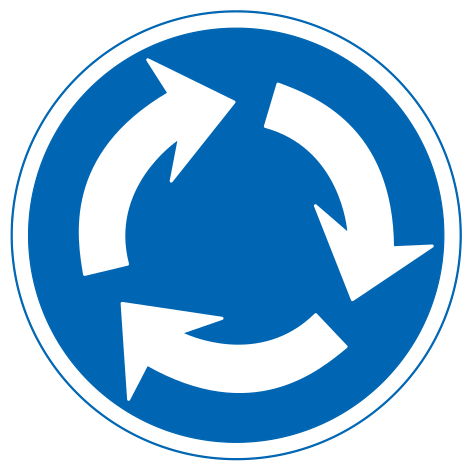
14. What does this traffic sign mean?
This traffic sign indicates the mandatory direction around a roundabout. Traffic must circulate in the direction shown by the arrows. The sign does not itself determine priority; follow the applicable priority signs, traffic signals and local rules.
English • Traffic sign 327の10 • Clockwise roundabout circulation. Travel clockwise around the circular junction.
日本語 • 327の10 • 環状の交差点における右回り通行。 環状交差点では右回り、つまり時計回りに通行してください。
Sources
🔗 Commons.wikimedia.org
🔗 Laws.e-gov.go.jp • 道路標識、区画線及び道路標示に関する命令、別表第一・第二
🔗 Mlit.go.jp • 国土交通省、道路標識一覧
🔗 Npa.go.jp • 警察庁、交通規制基準(令和8年3月16日改正)、PDF 148ページ
SVG source: Monaneko • Public domain • Original revision 2017-10-15. Wikimedia original unmodified.
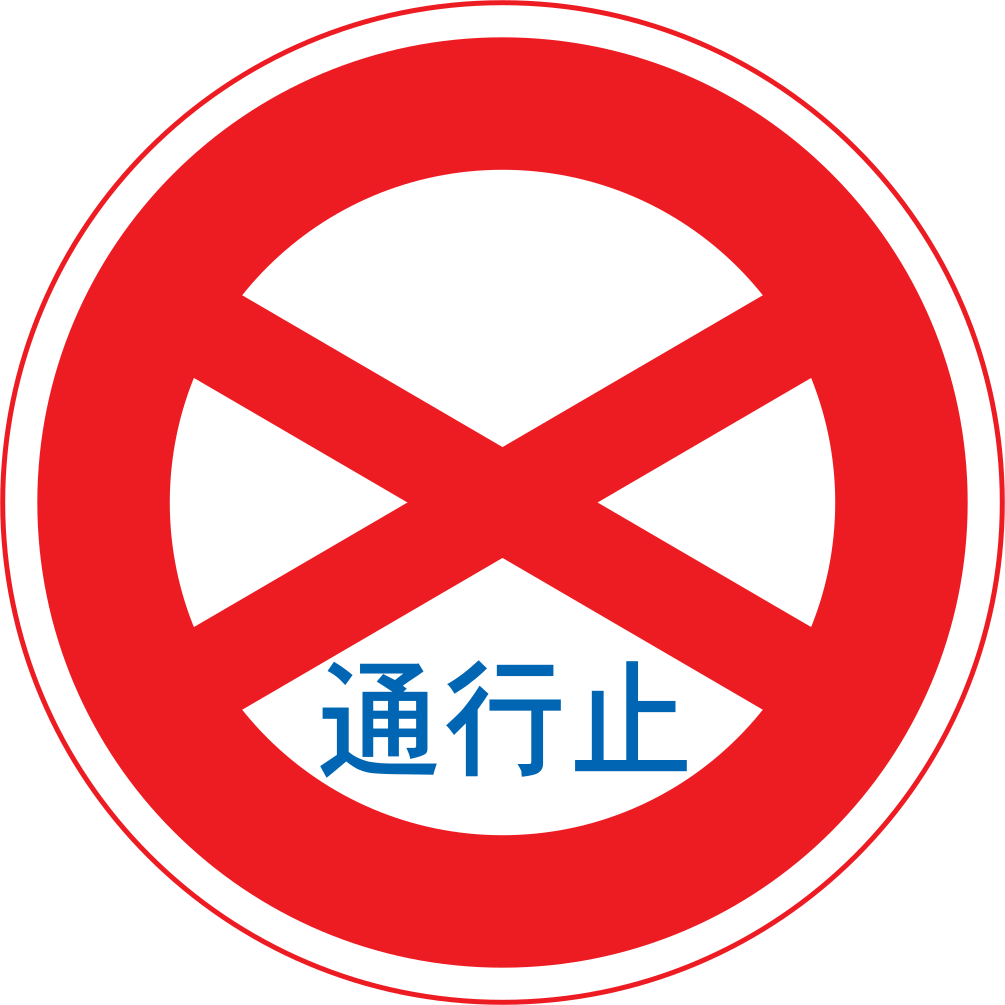
15. What does this traffic sign mean?
This traffic sign indicates that drivers may not enter the road from either direction.
English • Traffic sign 301 • Road closed. Prohibits pedestrians and similar users, vehicles and trams. Differs from the sign closing a road only to vehicles.
日本語 • 301 • 通行止め。 歩行者等、車両、路面電車の通行を禁止しています。車両だけを対象とする「車両通行止め」とは異なります。
Sources
🔗 Commons.wikimedia.org
🔗 Laws.e-gov.go.jp • 道路標識、区画線及び道路標示に関する命令、別表第一・第二
🔗 Mlit.go.jp • 国土交通省、道路標識一覧
SVG source: Monaneko • Public domain • Original revision 2013-06-20. Wikimedia original unmodified.
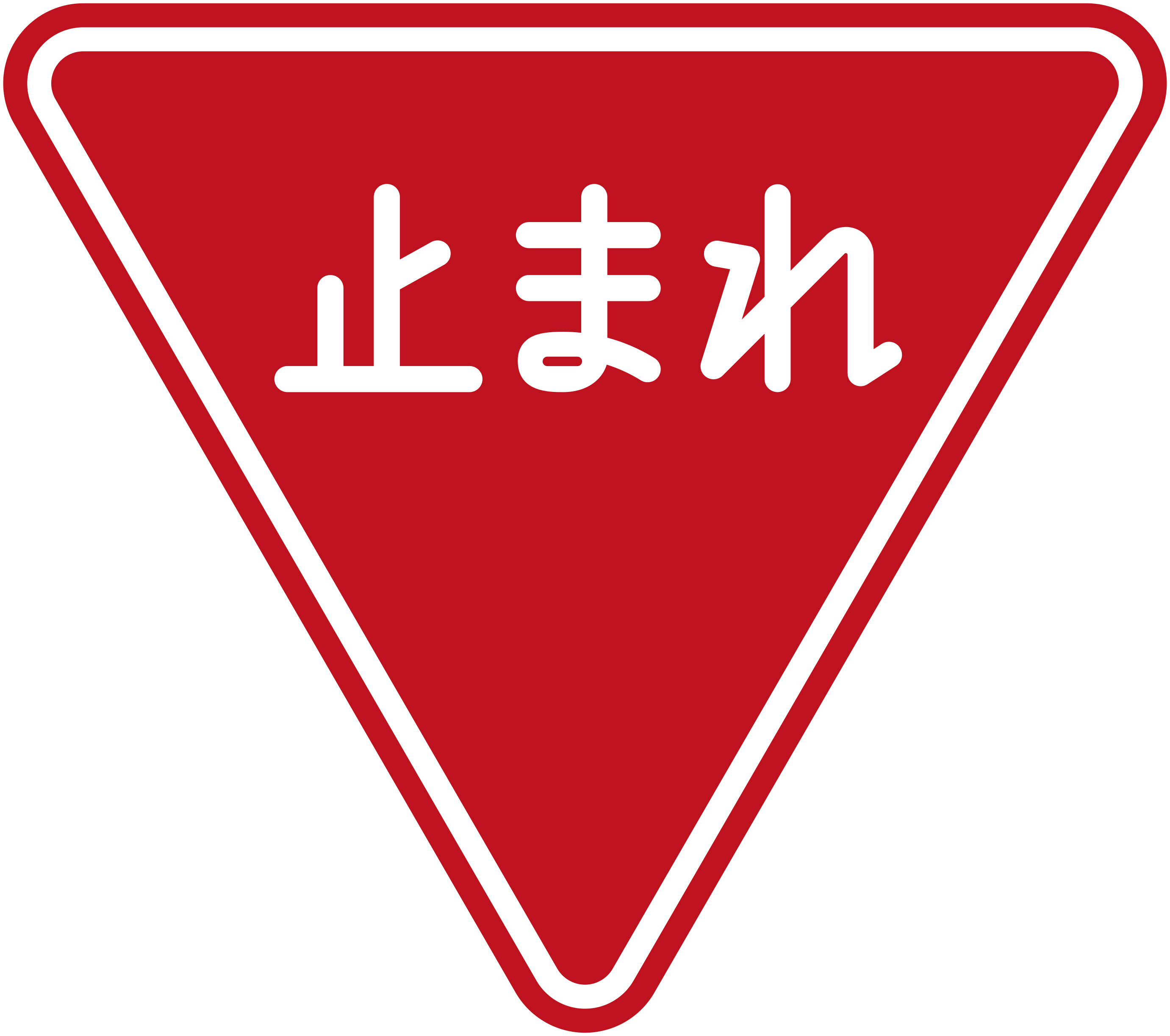
16. What does this traffic sign mean?
This traffic sign means give way. Slow down and give way to traffic that has priority. Stop if necessary and proceed only when it is safe.
English • Traffic sign 330-B • Stop. Stop completely immediately before the stop line or, if none exists, immediately before the junction. Proceed without obstructing traffic on the intersecting road.
日本語 • 330-B • 一時停止。 停止線の直前で完全に停止してください。停止線がない場合は交差点の直前で停止し、交差する道路の交通を妨げないように進んでください。
Sources
🔗 Commons.wikimedia.org
🔗 Laws.e-gov.go.jp • 道路標識、区画線及び道路標示に関する命令、別表第一・第二
🔗 Mlit.go.jp • 国土交通省、道路標識一覧
🔗 Npa.go.jp • 警察庁、交通規制基準(令和8年3月16日改正)、PDF 153ページ
SVG source: Eastwind41 • Public domain • Original revision 2017-11-24. Wikimedia original unmodified.
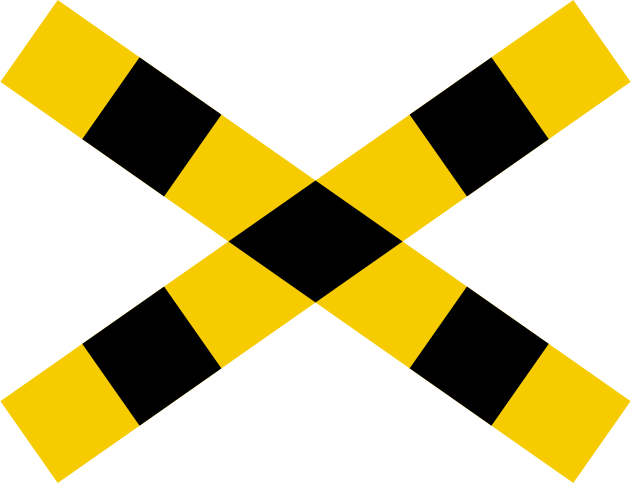
17. What does this traffic sign mean?
This traffic sign indicates a warning for a railway crossing with one track. It alerts drivers to a level crossing where a single railway track crosses the road. Drivers should approach with caution and be prepared to stop, even if no barriers or warning lights are active.
English • Traffic sign Railway facility · crossing warning • Railway crossbuck. The yellow and black cross indicates a level crossing. Watch the tracks and trains and obey crossing warnings and barriers.
日本語 • 鉄道施設 · 踏切警標 • 踏切のクロスマーク。 黄色と黒色の十字形の警標は、踏切の存在を示します。線路や列車に注意し、踏切の警報や遮断機の指示に従ってください。
Sources
🔗 Commons.wikimedia.org
🔗 Courts.go.jp • 裁判所公開判決、PDF 13ページ(黄黒の板2枚を交差させた警標の記述)
🔗 Jtsb.mlit.go.jp • 運輸安全委員会、鉄道事故調査報告書、PDF 8ページ(踏切クロスマークの例)
SVG source: User:Fry1989 • Public domain • Original revision 2013-06-16. Wikimedia original unmodified.
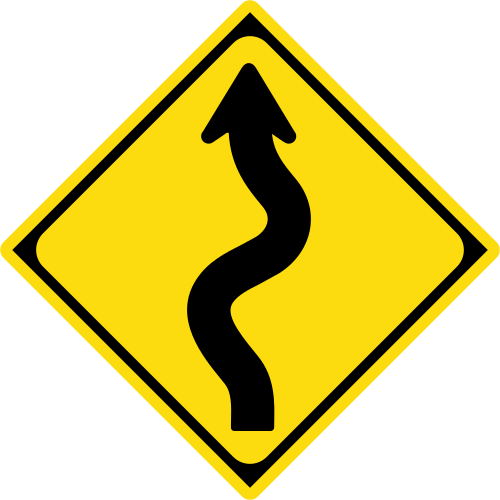
18. What does this traffic sign mean?
This traffic sign indicates a warning for a series of curves. One or more changes in direction lie ahead and may occur in quick succession. Reduce speed before entering the winding section, maintain your lane position and use smooth steering.
English • Traffic sign 206 • Winding road, first to the left. Adjust speed to visibility and road layout.
日本語 • 206 • 左つづら折りあり。 この先に曲がりくねった道路が続き、最初は左に曲がります。見通しと道路形状に合わせて速度を調整してください。
Sources
🔗 Commons.wikimedia.org
🔗 Laws.e-gov.go.jp • 道路標識、区画線及び道路標示に関する命令、別表第一・第二
🔗 Mlit.go.jp • 国土交通省、道路標識一覧
SVG source: Monaneko • Public domain • Original revision 2013-06-20. Wikimedia original unmodified.
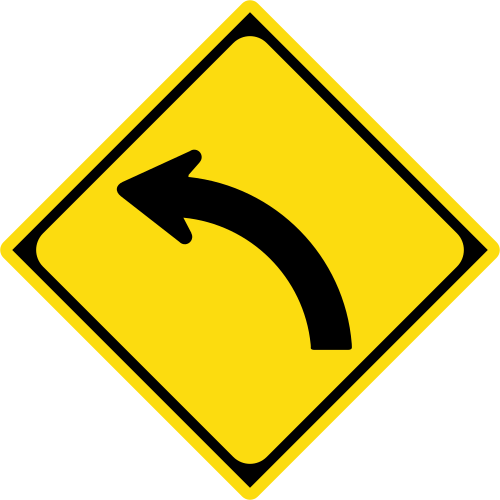
19. What does this traffic sign mean?
This traffic sign indicates a warning for a curve to the left. A left-hand bend lies ahead. Reduce speed before entering the curve, maintain your lane position and use smooth steering.
English • Traffic sign 202 • Left-hand bend. Adjust speed before entering.
日本語 • 202 • 左方屈曲あり。 この先に左カーブがあります。カーブに入る前に速度を調整してください。
Sources
🔗 Commons.wikimedia.org
🔗 Laws.e-gov.go.jp • 道路標識、区画線及び道路標示に関する命令、別表第一・第二
🔗 Mlit.go.jp • 国土交通省、道路標識一覧
SVG source: Monaneko • Public domain • Original revision 2013-06-20. Wikimedia original unmodified.
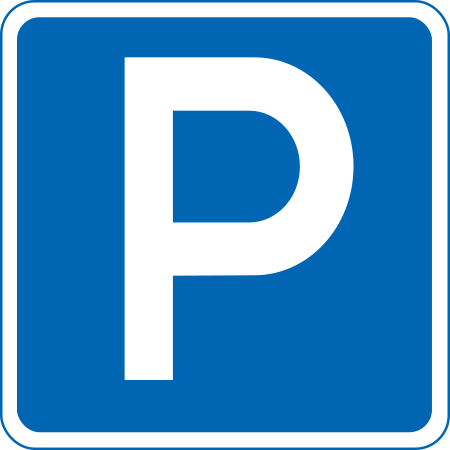
20. What does this traffic sign mean?
This traffic sign indicates that parking is allowed. Vehicles may be parked in the area covered by the sign subject to any indicated conditions, restrictions or local parking rules.
English • Traffic sign 117-A/403 · symbol identification scope • Car park or parking permitted. A white P on blue concerns parking. As a car-park direction sign it indicates a car park; as an on-road parking-permitted sign it permits parking at the designated place. The symbol is used by guide sign 117-A and indication sign 403. This isolated drawing cannot establish which meaning applies at a particular location.
日本語 • 117-A/403 · 図柄の識別範囲 • 駐車場・駐車可。 青地の白いPは駐車に関する標識です。駐車場を案内する標識として使われる場合は駐車場の場所を示し、道路上の「駐車可」として使われる場合は指定された場所で駐車できることを示します。 Pの図柄は案内標識117-Aと指示標識403で使われます。この単独の図だけでは、現地でどちらの意味で設置されているか確定できません。
Sources
🔗 Commons.wikimedia.org
🔗 Laws.e-gov.go.jp • 道路標識、区画線及び道路標示に関する命令、別表第一・第二
🔗 Mlit.go.jp • 国土交通省、道路標識一覧
SVG source: Widehawk (talk) • Public domain • Original revision 2022-10-02. Wikimedia original unmodified.
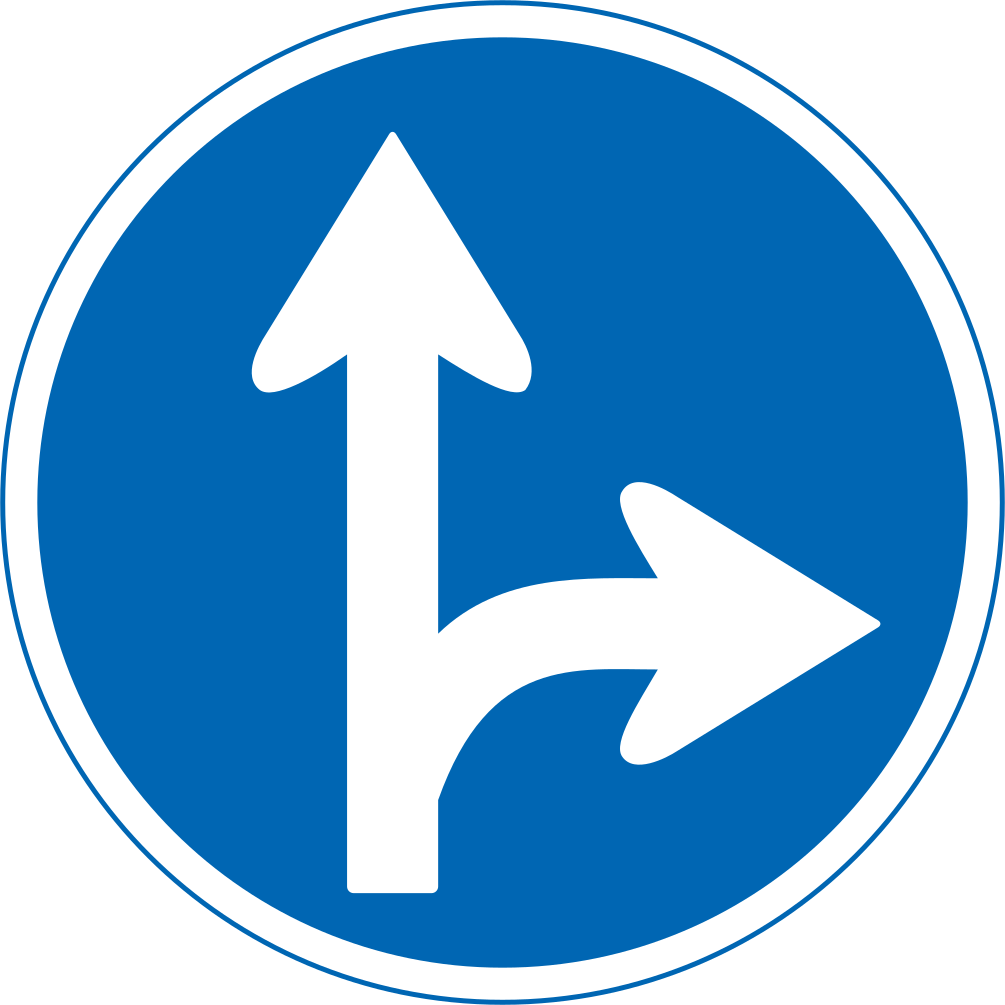
21. What does this traffic sign mean?
This traffic sign indicates that traffic must continue straight ahead or turn right. One of the indicated directions must be followed; turning left is prohibited.
English • Traffic sign 311-A • Straight ahead or right only. Directions not indicated by the arrows are prohibited.
日本語 • 311-A • 指定方向外進行禁止:直進・右折。 直進または右折の方向に進めます。矢印で示されていない方向には進めません。
Sources
🔗 Commons.wikimedia.org
🔗 Laws.e-gov.go.jp • 道路標識、区画線及び道路標示に関する命令、別表第一・第二
🔗 Mlit.go.jp • 国土交通省、道路標識一覧
SVG source: Fry1989 • Public domain • Original revision 2013-06-20. Wikimedia original unmodified.
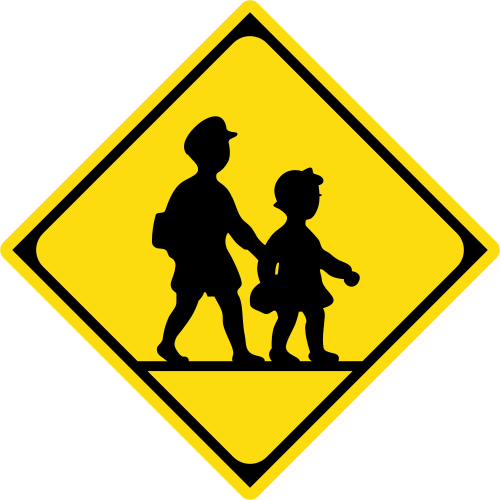
22. What does this traffic sign mean?
This traffic sign indicates a warning for children. Children may be present on or near the road and may cross unexpectedly. Reduce speed, scan both sides of the road carefully and be prepared to stop.
English • Traffic sign 208 • School, nursery or kindergarten nearby. Reduce speed and watch carefully for children.
日本語 • 208 • 学校、幼稚園、保育所等あり。 この先に学校、幼稚園、保育所などがあり、子どもの通行に注意が必要です。速度を落として周囲をよく確認してください。
Sources
🔗 Commons.wikimedia.org
🔗 Laws.e-gov.go.jp • 道路標識、区画線及び道路標示に関する命令、別表第一・第二
🔗 Mlit.go.jp • 国土交通省、道路標識一覧
SVG source: Monaneko • Public domain • Original revision 2021-10-12. Wikimedia original unmodified.
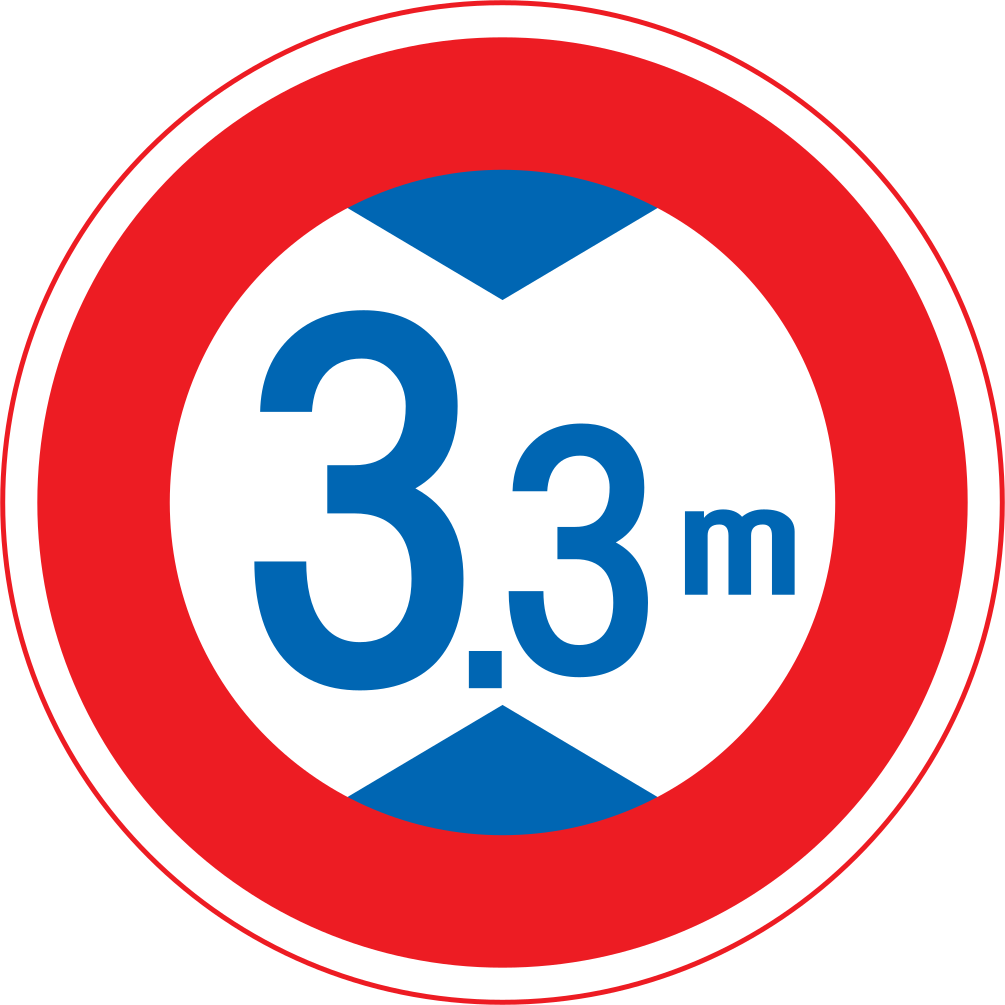
23. What does this traffic sign mean?
This traffic sign indicates that vehicles higher than indicated are prohibited. A vehicle or vehicle combination whose overall height, including its load, exceeds the displayed limit may not continue beyond the sign.
English • Traffic sign 321 • Height limit: 3.3 m. Vehicles higher than 3.3 m must not pass. Include the load when checking height.
日本語 • 321 • 高さ制限:3.3 m。 車両の高さが3.3メートルを超える場合は通行できません。積載した貨物を含む高さを確認してください。
Sources
🔗 Commons.wikimedia.org
🔗 Laws.e-gov.go.jp • 道路標識、区画線及び道路標示に関する命令、別表第一・第二
🔗 Mlit.go.jp • 国土交通省、道路標識一覧
SVG source: Monaneko • Public domain • Original revision 2013-10-22. Wikimedia original unmodified.
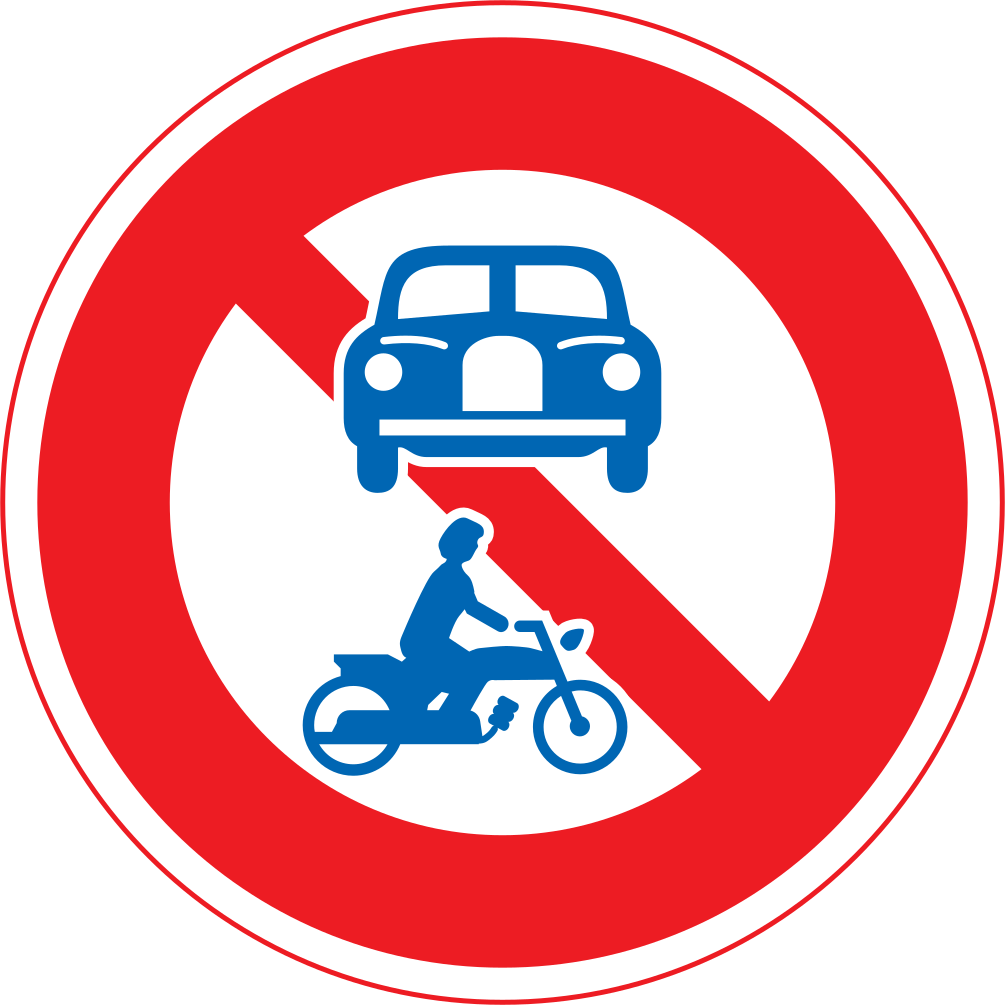
24. What does this traffic sign mean?
This traffic sign indicates that motorcycles and cars are prohibited. Motorcycles and cars may not enter or continue beyond the sign. Other road users may still be permitted unless another restriction applies.
English • Traffic sign 310 • Combined vehicle prohibition. Prohibits the illustrated motor vehicles other than two-wheelers, and two-wheeled motor vehicles and general motorised bicycles.
日本語 • 310 • 車両の組合せ通行止め。 図柄で示された二輪以外の自動車と、二輪の自動車・一般原動機付自転車の通行を禁止しています。
Sources
🔗 Commons.wikimedia.org
🔗 Laws.e-gov.go.jp • 道路標識、区画線及び道路標示に関する命令、別表第一・第二
🔗 Mlit.go.jp • 国土交通省、道路標識一覧
SVG source: Fry1989 eh? • Public domain • Original revision 2013-06-23. Wikimedia original unmodified.
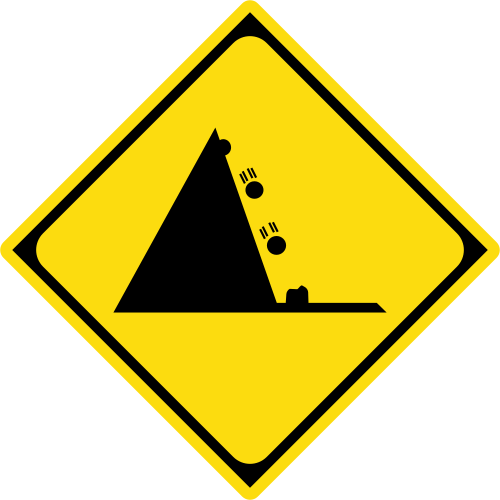
25. What does this traffic sign mean?
This traffic sign indicates a warning for falling rocks. Rocks or stones may fall from nearby slopes or may already be lying on the road. Reduce speed, scan the road ahead and be prepared to avoid or stop for fallen material.
English • Traffic sign 209の2 • Falling rocks. Check the surroundings and surface for falling rocks or stones already on the road.
日本語 • 209の2 • 落石のおそれあり。 この先では落石や路面に落ちている石に注意が必要です。周囲と路面をよく確認してください。
Sources
🔗 Commons.wikimedia.org
🔗 Laws.e-gov.go.jp • 道路標識、区画線及び道路標示に関する命令、別表第一・第二
🔗 Mlit.go.jp • 国土交通省、道路標識一覧
SVG source: Monaneko • Public domain • Original revision 2015-05-27. Wikimedia original unmodified.
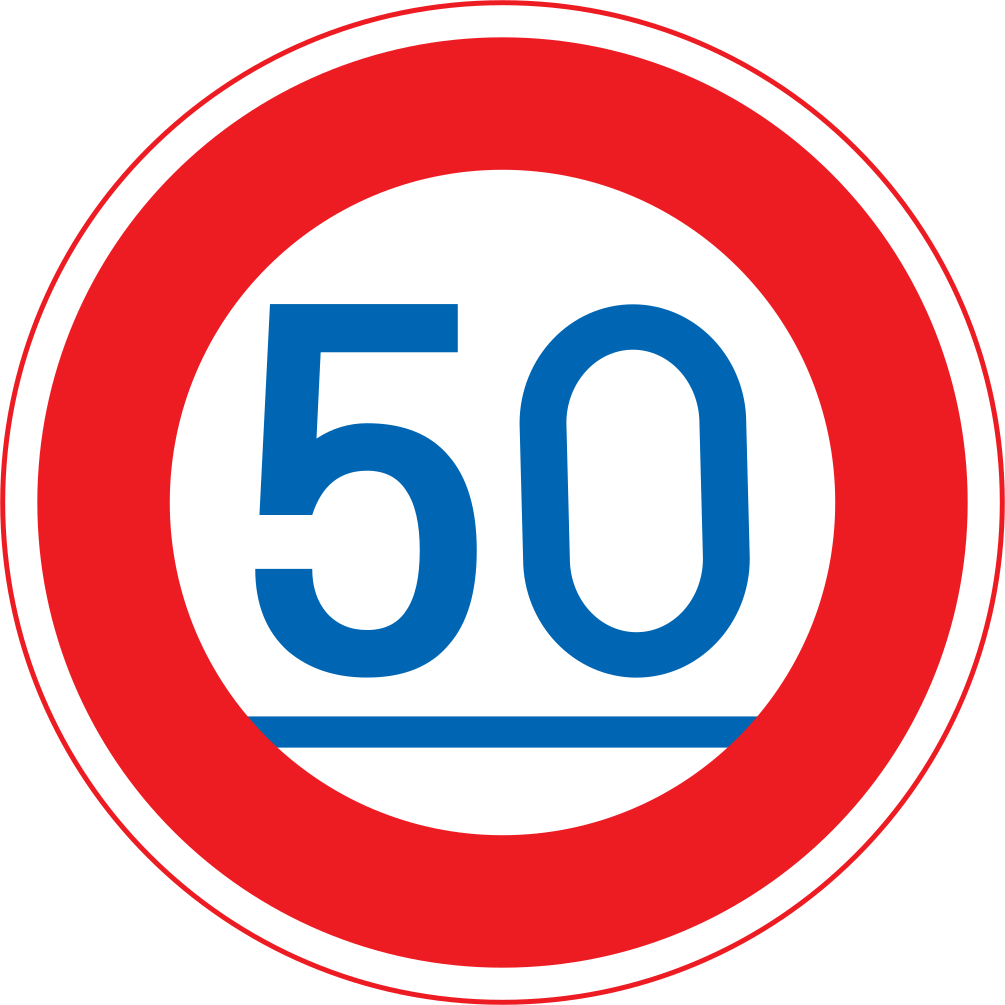
26. What does this traffic sign mean?
This traffic sign indicates the start of a minimum speed. Road users covered by the sign must travel at or above the indicated speed when conditions allow. Driving more slowly may still be necessary because of traffic, weather, road conditions or another safety-related reason.
English • Traffic sign 324 • Minimum speed: 50 km/h. Sets the minimum for motor vehicles. It does not require maintaining that speed when safety demands otherwise.
日本語 • 324 • 最低速度:50 km/h。 自動車の最低速度を時速50キロメートルに指定しています。安全上必要な場合にも無理に速度を維持するという意味ではありません。
Sources
🔗 Commons.wikimedia.org
🔗 Laws.e-gov.go.jp • 道路標識、区画線及び道路標示に関する命令、別表第一・第二
🔗 Mlit.go.jp • 国土交通省、道路標識一覧
🔗 Npa.go.jp • 警察庁、交通規制基準(令和8年3月16日改正)、PDF 137ページ
SVG source: Monaneko • Public domain • Original revision 2013-08-19. Wikimedia original unmodified.
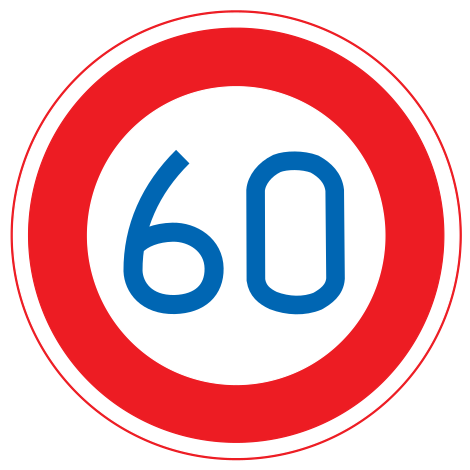
27. What does this traffic sign mean?
This traffic sign indicates the start of a speed limit. The displayed value is the maximum permitted speed from this point. The limit remains in force until it ends or is replaced according to the applicable traffic signs and local rules.
English • Traffic sign 323 • Maximum speed: 60 km/h. Observe any lower statutory vehicle-category limit and a speed safe for road conditions.
日本語 • 323 • 最高速度:60 km/h。 表示された最高速度は時速60キロメートルです。車種ごとの、これより低い法定速度や道路状況に応じた安全な速度にも従ってください。
Sources
🔗 Commons.wikimedia.org
🔗 Laws.e-gov.go.jp • 道路標識、区画線及び道路標示に関する命令、別表第一・第二
🔗 Mlit.go.jp • 国土交通省、道路標識一覧
SVG source: Monaneko • Public domain • Original revision 2007-03-19. Wikimedia original unmodified.
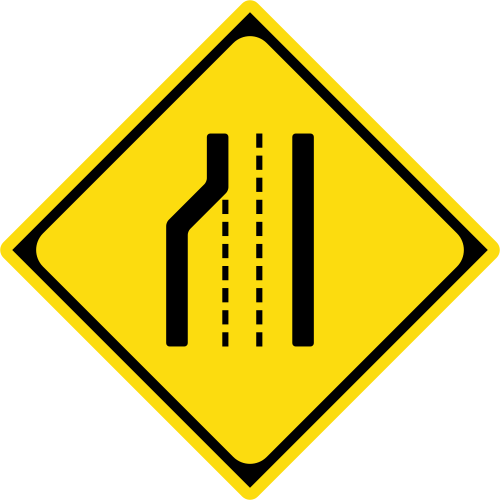
28. What does this traffic sign mean?
This traffic sign indicates a warning for a road narrowing on the left. The available road width decreases from the left side ahead. Reduce speed, follow the lane markings and maintain sufficient clearance from other traffic and the road edge.
English • Traffic sign 211 • Lane reduction. The left lane ends ahead. Check surrounding traffic and change lanes with a safe gap.
日本語 • 211 • 車線数減少。 この先で左側の車線がなくなります。周囲を確認し、安全な間隔を確保して車線を移ってください。
Sources
🔗 Commons.wikimedia.org
🔗 Laws.e-gov.go.jp • 道路標識、区画線及び道路標示に関する命令、別表第一・第二
🔗 Mlit.go.jp • 国土交通省、道路標識一覧
SVG source: Monaneko • Public domain • Original revision 2013-06-19. Wikimedia original unmodified.
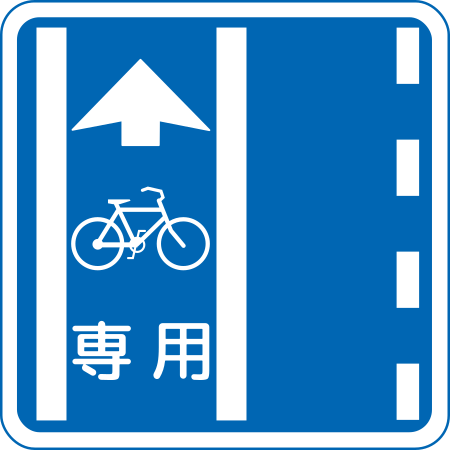
29. What does this traffic sign mean?
This traffic sign indicates a lane for cyclists. The lane is designated for bicycle traffic, subject to the applicable road markings, traffic signs and local rules.
English • Traffic sign 327の4の2 • Ordinary bicycle lane. Designates a lane for ordinary bicycles. The law also addresses specified small motorised bicycles and other light vehicles; it does not uniformly exclude every other vehicle category.
日本語 • 327の4の2 • 普通自転車専用通行帯。 普通自転車が通行する車両通行帯を指定しています。法令上、特定小型原動機付自転車や他の軽車両の通行に関する扱いもあるため、すべての他車種を一律に排除するという意味ではありません。
Sources
🔗 Commons.wikimedia.org
🔗 Laws.e-gov.go.jp • 道路標識、区画線及び道路標示に関する命令、別表第一・第二
🔗 Mlit.go.jp • 国土交通省、道路標識一覧
🔗 Npa.go.jp • 警察庁、交通規制基準(令和8年3月16日改正)、PDF 112ページ
SVG source: Monaneko (talk) • Public domain • Original revision 2013-09-21. Wikimedia original unmodified.
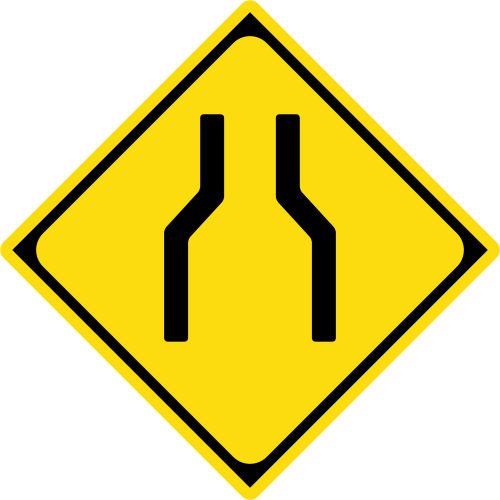
30. What does this traffic sign mean?
This traffic sign indicates a warning for a road narrowing. The available width of the road or carriageway decreases ahead. Reduce speed, maintain sufficient lateral clearance and watch carefully for approaching or adjacent traffic.
English • Traffic sign 212 • Road width decreases. Watch clearance from oncoming vehicles.
日本語 • 212 • 幅員減少。 この先で道路の幅が狭くなります。対向車との間隔に注意してください。
Sources
🔗 Commons.wikimedia.org
🔗 Laws.e-gov.go.jp • 道路標識、区画線及び道路標示に関する命令、別表第一・第二
🔗 Mlit.go.jp • 国土交通省、道路標識一覧
SVG source: Monaneko • Public domain • Original revision 2013-06-19. Wikimedia original unmodified.
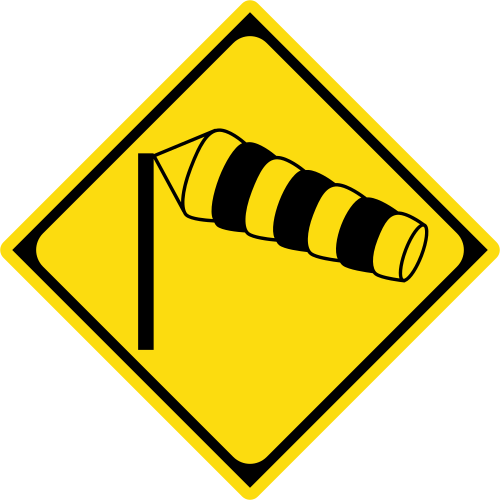
31. What does this traffic sign mean?
This traffic sign indicates a warning for strong crosswinds. Side winds may suddenly affect vehicle stability and steering. Reduce speed, keep a firm but controlled grip on the steering wheel and take extra care with high-sided vehicles, motorcycles and trailers.
English • Traffic sign 214 • Crosswinds. Strong side winds may occur; watch vehicle instability and adjust speed.
日本語 • 214 • 横風注意。 この先では強い横風のおそれがあります。車両のふらつきに注意し、速度を調整してください。
Sources
🔗 Commons.wikimedia.org
🔗 Laws.e-gov.go.jp • 道路標識、区画線及び道路標示に関する命令、別表第一・第二
🔗 Mlit.go.jp • 国土交通省、道路標識一覧
SVG source: Monaneko • Public domain • Original revision 2013-06-19. Wikimedia original unmodified.
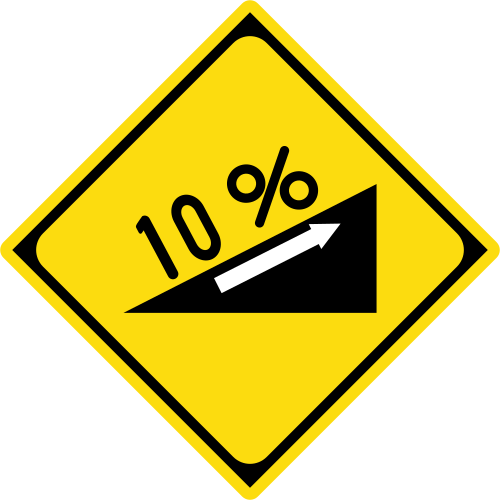
32. What does this traffic sign mean?
This traffic sign indicates a warning for a steep ascent. A steep uphill gradient lies ahead and may cause heavy or low-powered vehicles to lose speed. Select a suitable gear, maintain a safe following distance and be prepared for slower traffic.
English • Traffic sign 212の3 • Steep ascent: 10%. Select a speed and gear suitable for road conditions.
日本語 • 212の3 • 上り急勾配あり:10%。 この先に勾配10%の急な上り坂があります。道路状況に適した速度とギアを選んでください。
Sources
🔗 Commons.wikimedia.org
🔗 Laws.e-gov.go.jp • 道路標識、区画線及び道路標示に関する命令、別表第一・第二
🔗 Mlit.go.jp • 国土交通省、道路標識一覧
SVG source: Monaneko • Public domain • Original revision 2013-06-19. Wikimedia original unmodified.
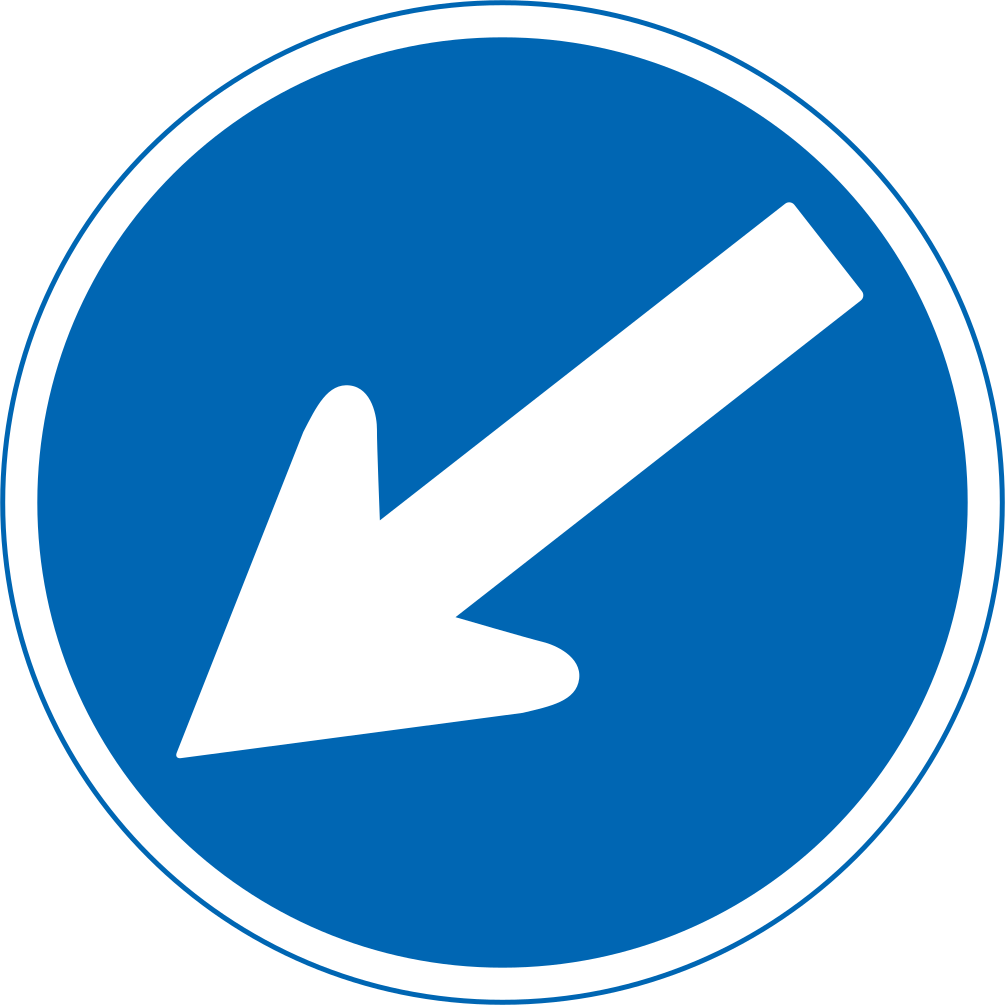
33. What does this traffic sign mean?
This traffic sign indicates that traffic must pass an obstacle on the left. Keep to the left of the obstacle and follow any accompanying signs or road markings.
English • Traffic sign 311-F • Pass on the left only. Follow the arrow; do not pass on the obstacle's right.
日本語 • 311-F • 指定方向外進行禁止:左側を通行。 矢印が示す左側を通行してください。障害物などの右側には進めません。
Sources
🔗 Commons.wikimedia.org
🔗 Laws.e-gov.go.jp • 道路標識、区画線及び道路標示に関する命令、別表第一・第二
🔗 Mlit.go.jp • 国土交通省、道路標識一覧
SVG source: Monaneko • Public domain • Original revision 2013-06-20. Wikimedia original unmodified.
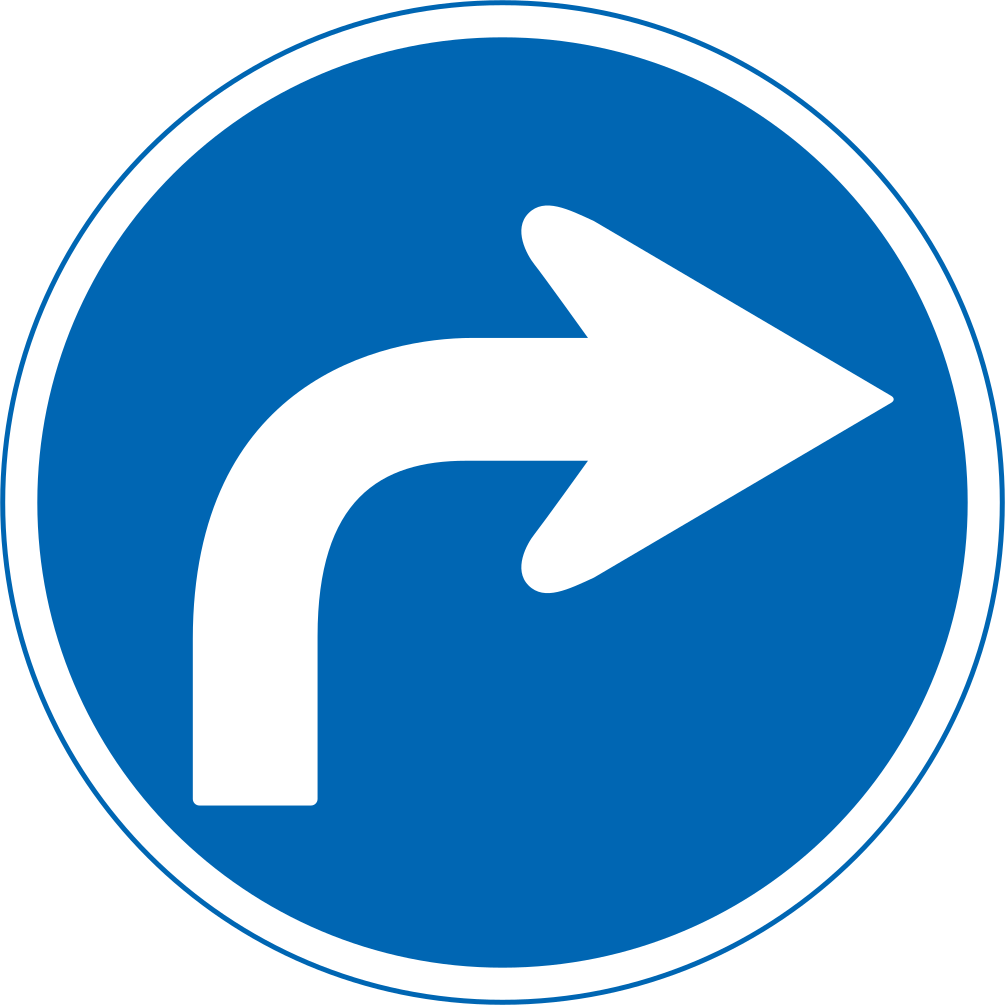
34. What does this traffic sign mean?
This traffic sign indicates that turning right is mandatory at the junction ahead. Traffic must turn right and may not continue straight ahead or turn left.
English • Traffic sign 311-B • Right turn only. Directions other than the rightward arrow are prohibited. Turn right here.
日本語 • 311-B • 指定方向外進行禁止:右折。 矢印の示す右方向以外への進行を禁止しています。この場所では右折してください。
Sources
🔗 Commons.wikimedia.org
🔗 Laws.e-gov.go.jp • 道路標識、区画線及び道路標示に関する命令、別表第一・第二
🔗 Mlit.go.jp • 国土交通省、道路標識一覧
SVG source: Fry1989 • Public domain • Original revision 2013-06-20. Wikimedia original unmodified.
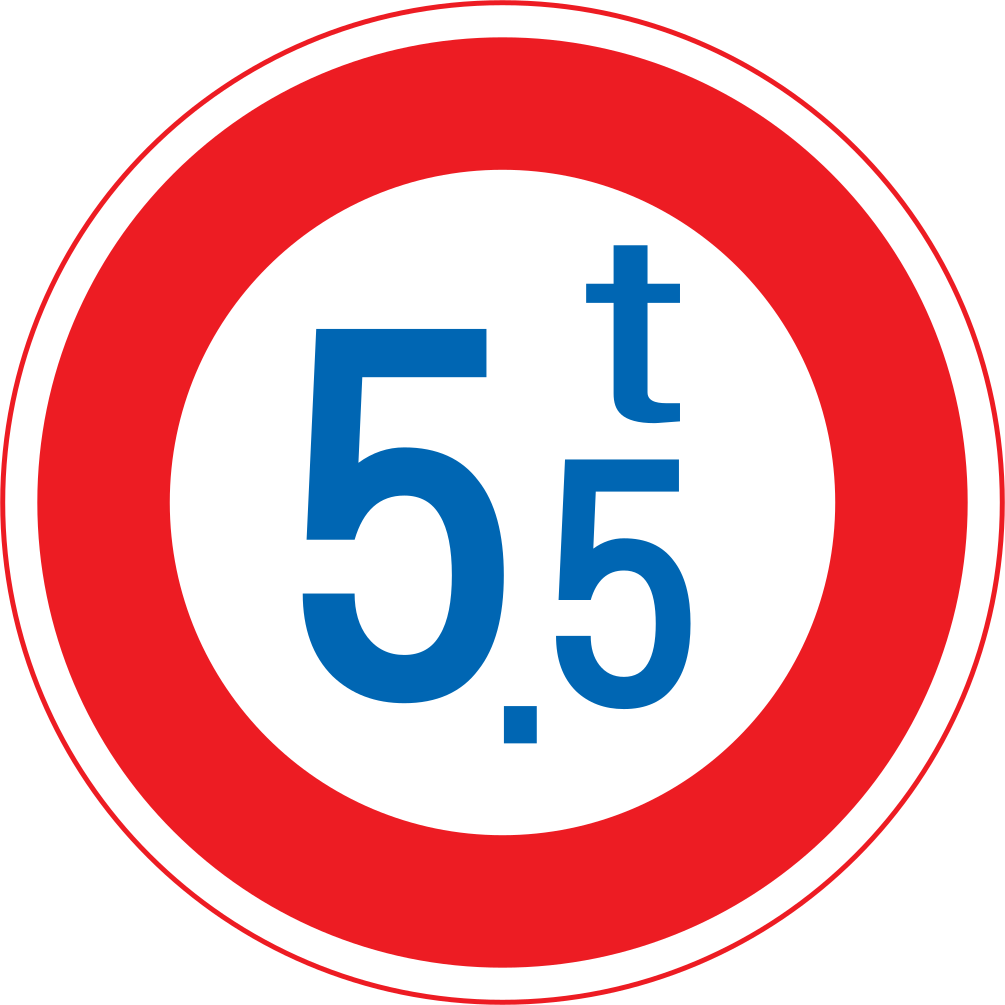
35. What does this traffic sign mean?
This traffic sign indicates that vehicles heavier than indicated are prohibited. Vehicles or vehicle combinations exceeding the displayed mass limit may not continue beyond the sign. The legally relevant mass is determined by the applicable local rules.
English • Traffic sign 320 • Mass limit: 5.5 t. Vehicles whose gross mass exceeds 5.5 tonnes must not pass. Include the vehicle, load and other components of gross mass.
日本語 • 320 • 重量制限:5.5 t。 総重量が5.5トンを超える車両は通行できません。車両と積載物などを含む総重量で判断してください。
Sources
🔗 Commons.wikimedia.org
🔗 Laws.e-gov.go.jp • 道路標識、区画線及び道路標示に関する命令、別表第一・第二
🔗 Mlit.go.jp • 国土交通省、道路標識一覧
SVG source: Monaneko • Public domain • Original revision 2013-08-19. Wikimedia original unmodified.
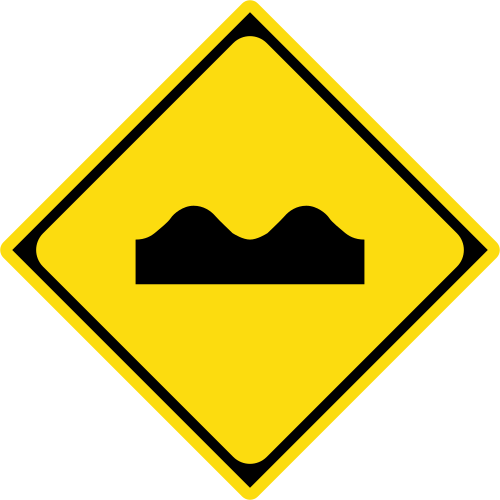
36. What does this traffic sign mean?
This traffic sign indicates a warning for a bad or uneven road surface. Potholes, bumps, depressions or other surface irregularities may affect vehicle stability and braking. Reduce speed and avoid sudden manoeuvres.
English • Traffic sign 209の3 • Uneven road surface. Reduce speed and watch vehicle movement and tyre contact with the surface.
日本語 • 209の3 • 路面凹凸あり。 この先の路面に凹凸があります。速度を落とし、車両の揺れや接地状態に注意してください。
Sources
🔗 Commons.wikimedia.org
🔗 Laws.e-gov.go.jp • 道路標識、区画線及び道路標示に関する命令、別表第一・第二
🔗 Mlit.go.jp • 国土交通省、道路標識一覧
SVG source: Monaneko • Public domain • Original revision 2013-06-19. Wikimedia original unmodified.
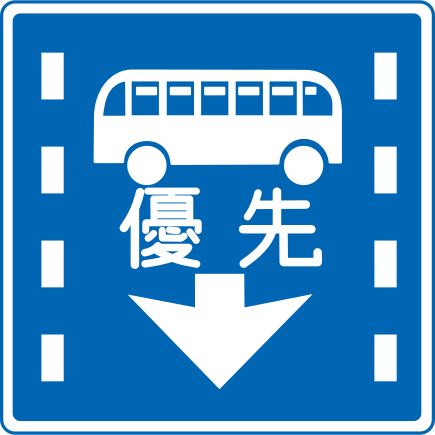
37. What does this traffic sign mean?
This traffic sign indicates a lane for buses. The lane is intended for buses and any other road users permitted by the applicable signs or local rules.
English • Traffic sign 327の5 • Priority lane for scheduled buses and similar vehicles. Gives these vehicles priority; differs from a bus-only lane symbol. Do not obstruct eligible buses and other covered vehicles.
日本語 • 327の5 • 路線バス等優先通行帯。 路線バス等を優先する車両通行帯です。バス専用通行帯を示す図柄とは異なります。対象のバス等の通行を妨げないようにしてください。
Sources
🔗 Commons.wikimedia.org
🔗 Laws.e-gov.go.jp • 道路標識、区画線及び道路標示に関する命令、別表第一・第二
🔗 Mlit.go.jp • 国土交通省、道路標識一覧
🔗 Npa.go.jp • 警察庁、交通規制基準(令和8年3月16日改正)、PDF 108ページ
SVG source: Monaneko (talk) • Public domain • Original revision 2012-08-26. Wikimedia original unmodified.
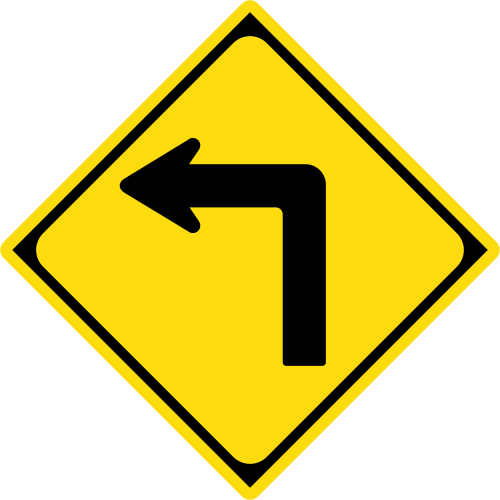
38. What does this traffic sign mean?
This traffic sign indicates a warning for a sharp curve to the left. A tight left-hand bend lies ahead. Reduce speed before entering the curve, remain within your lane and use smooth steering.
English • Traffic sign 203 • Sharp left-hand bend. Slow down sufficiently before proceeding.
日本語 • 203 • 左方屈折あり。 この先に急な左カーブがあります。十分に減速してから進んでください。
Sources
🔗 Commons.wikimedia.org
🔗 Laws.e-gov.go.jp • 道路標識、区画線及び道路標示に関する命令、別表第一・第二
🔗 Mlit.go.jp • 国土交通省、道路標識一覧
SVG source: Monaneko • Public domain • Original revision 2013-06-20. Wikimedia original unmodified.
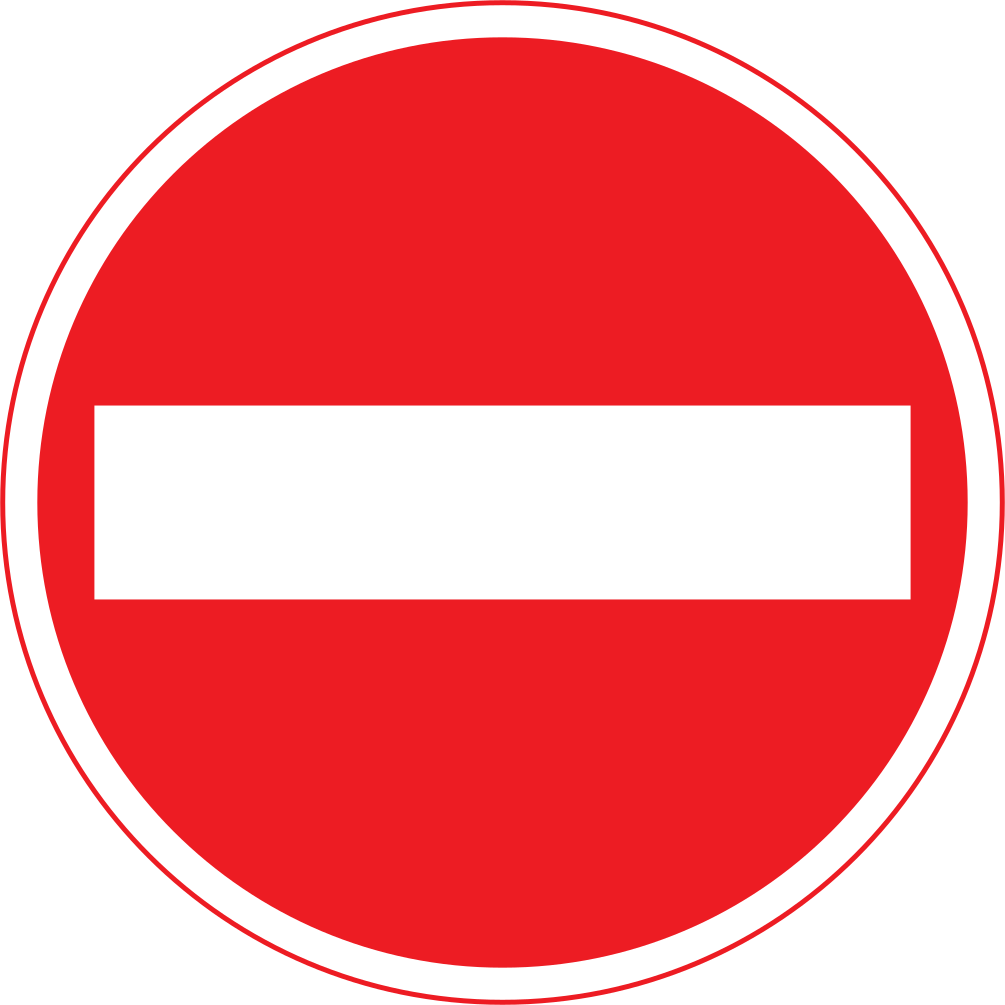
39. What does this traffic sign mean?
This traffic sign means no entry. Drivers may not enter from the direction in which the sign is placed.
English • Traffic sign 303 • No entry for vehicles. Vehicles must not enter from this direction.
日本語 • 303 • 車両進入禁止。 この方向から車両が進入することを禁止しています。
Sources
🔗 Commons.wikimedia.org
🔗 Laws.e-gov.go.jp • 道路標識、区画線及び道路標示に関する命令、別表第一・第二
🔗 Mlit.go.jp • 国土交通省、道路標識一覧
SVG source: Monaneko • Public domain • Original revision 2013-06-20. Wikimedia original unmodified.
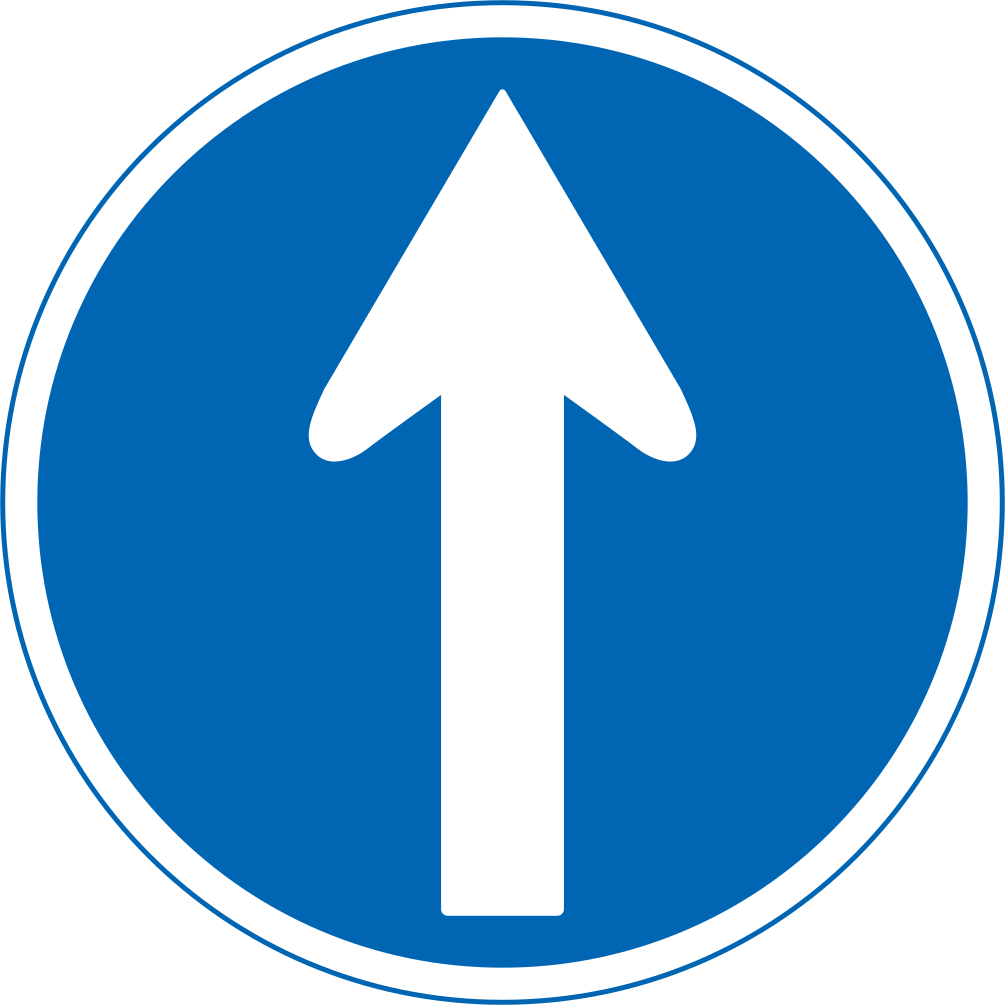
40. What does this traffic sign mean?
This traffic sign indicates that driving straight ahead is mandatory. Traffic must continue straight ahead and may not turn left or right at the location to which the sign applies.
English • Traffic sign 311-C • Straight ahead only. Travel in directions other than the forward arrow is prohibited.
日本語 • 311-C • 指定方向外進行禁止:直進。 矢印の示す直進方向以外への進行を禁止しています。
Sources
🔗 Commons.wikimedia.org
🔗 Laws.e-gov.go.jp • 道路標識、区画線及び道路標示に関する命令、別表第一・第二
🔗 Mlit.go.jp • 国土交通省、道路標識一覧
SVG source: Monaneko • Public domain • Original revision 2013-06-20. Wikimedia original unmodified.
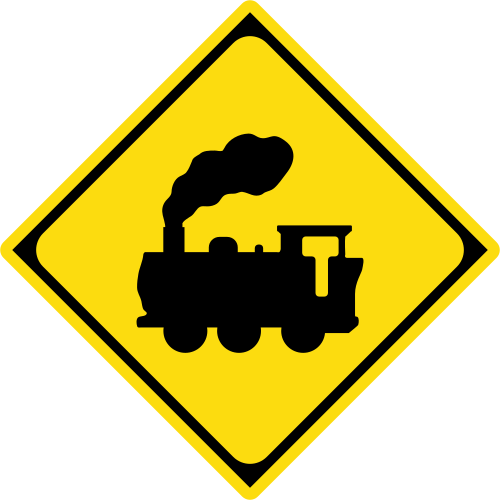
41. What does this traffic sign mean?
This traffic sign indicates a warning for a railway crossing without barriers. It alerts drivers to an upcoming level crossing where railway tracks cross the road and no barriers or gates are present to stop traffic. Drivers should slow down and look both ways for trains.
English • Traffic sign 207-A • Railway crossing ahead. Watch for trains, signals and barriers.
日本語 • 207-A • 踏切あり。 この先に踏切があります。列車や踏切の信号、遮断機に注意してください。
Sources
🔗 Commons.wikimedia.org
🔗 Laws.e-gov.go.jp • 道路標識、区画線及び道路標示に関する命令、別表第一・第二
🔗 Mlit.go.jp • 国土交通省、道路標識一覧
SVG source: Monaneko • Public domain • Original revision 2013-06-19. Wikimedia original unmodified.
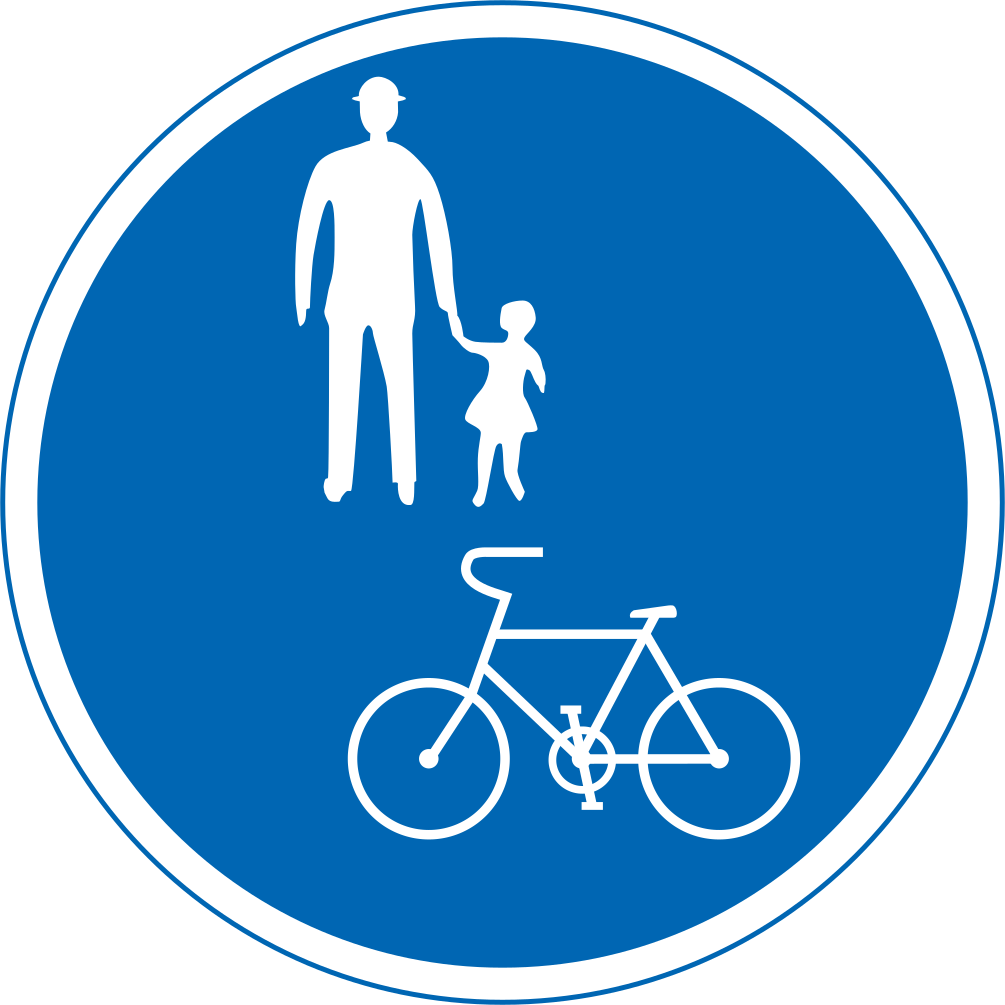
42. What does this traffic sign mean?
This traffic sign indicates a mandatory shared path for pedestrians and cyclists. Pedestrians and cyclists must use the same designated path rather than separate sections. They must share the space safely and follow the applicable local rules.
English • Traffic sign 325の3 • Ordinary bicycles and similar users, and pedestrians only. Indicates a road for bicycles and pedestrians, or a pavement usable by ordinary bicycles and related categories. Also concerns eligible specified small motorised bicycles; check the road type and supplementary signs. Give pedestrians priority on pavements.
日本語 • 325の3 • 普通自転車等及び歩行者等専用。 自転車と歩行者のための道路、または普通自転車等が通行できる歩道を示します。対象となる特定小型原動機付自転車の通行にも関係するため、道路の種類と補助標識を確認してください。歩道では歩行者を優先してください。
Sources
🔗 Commons.wikimedia.org
🔗 Laws.e-gov.go.jp • 道路標識、区画線及び道路標示に関する命令、別表第一・第二
🔗 Mlit.go.jp • 国土交通省、道路標識一覧
🔗 Npa.go.jp • 警察庁、交通規制基準、PDF 175ページ(歩道通行の用法)
🔗 Npa.go.jp • 警察庁、交通規制基準(令和8年3月16日改正)、PDF 67ページ
SVG source: Monaneko • Public domain • Original revision 2021-10-06. Wikimedia original unmodified.
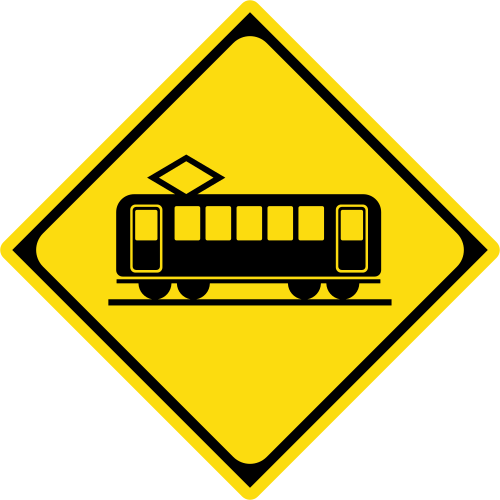
43. What does this traffic sign mean?
This traffic sign indicates a warning for trams. Tram tracks cross or run along the road ahead, and trams may enter the traffic path. Reduce speed, watch carefully for approaching trams and follow the applicable traffic signals, priority signs and local rules.
English • Traffic sign 207-B • Railway crossing ahead. The electric-train symbol also warns of a level crossing; it does not refer only to trams.
日本語 • 207-B • 踏切あり。 この先に踏切があります。電車の図柄も踏切を予告するもので、路面電車だけを示す標識ではありません。
Sources
🔗 Commons.wikimedia.org
🔗 Laws.e-gov.go.jp • 道路標識、区画線及び道路標示に関する命令、別表第一・第二
🔗 Mlit.go.jp • 国土交通省、道路標識一覧
SVG source: Monaneko • Public domain • Original revision 2013-06-19. Wikimedia original unmodified.
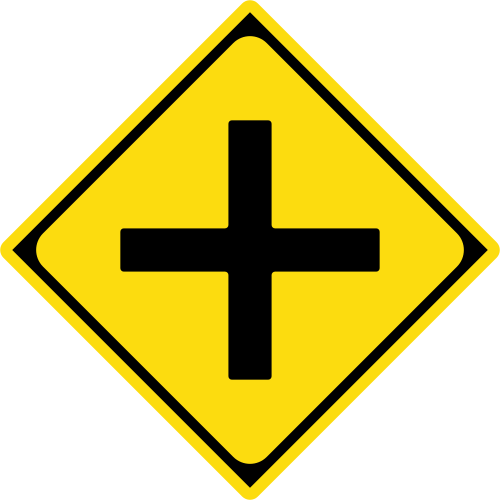
44. What does this traffic sign mean?
This traffic sign indicates a warning for an uncontrolled crossroad. An intersection without traffic signals or signs assigning priority lies ahead. Reduce speed, watch for traffic approaching from other directions and follow the applicable local priority rules.
English • Traffic sign 201-A • Crossroads ahead. Watch crossing traffic and reduce speed to pass safely.
日本語 • 201-A • 十字形道路交差点あり。 この先に十字形の交差点があります。交差する交通に注意し、安全に通過できる速度に落としてください。
Sources
🔗 Commons.wikimedia.org
🔗 Laws.e-gov.go.jp • 道路標識、区画線及び道路標示に関する命令、別表第一・第二
🔗 Mlit.go.jp • 国土交通省、道路標識一覧
SVG source: Monaneko • Public domain • Original revision 2013-06-20. Wikimedia original unmodified.
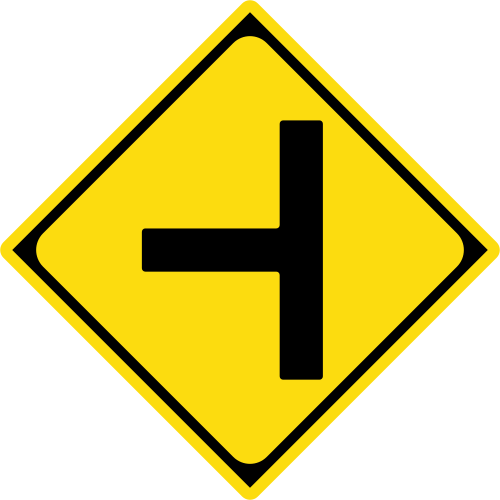
45. What does this traffic sign mean?
This traffic sign indicates a warning for a side road from the left. A side road joins the road ahead from the left at an uncontrolled junction. Reduce speed, watch for traffic entering from the side road and follow the applicable default priority rules.
English • Traffic sign 201-B • Side road on the left. Watch traffic from the left.
日本語 • 201-B • 左側に交差道路あり。 この先で左側から道路が交差します。左側からの交通に注意してください。
Sources
🔗 Commons.wikimedia.org
🔗 Laws.e-gov.go.jp • 道路標識、区画線及び道路標示に関する命令、別表第一・第二
🔗 Mlit.go.jp • 国土交通省、道路標識一覧
SVG source: Monaneko • Public domain • Original revision 2013-06-20. Wikimedia original unmodified.
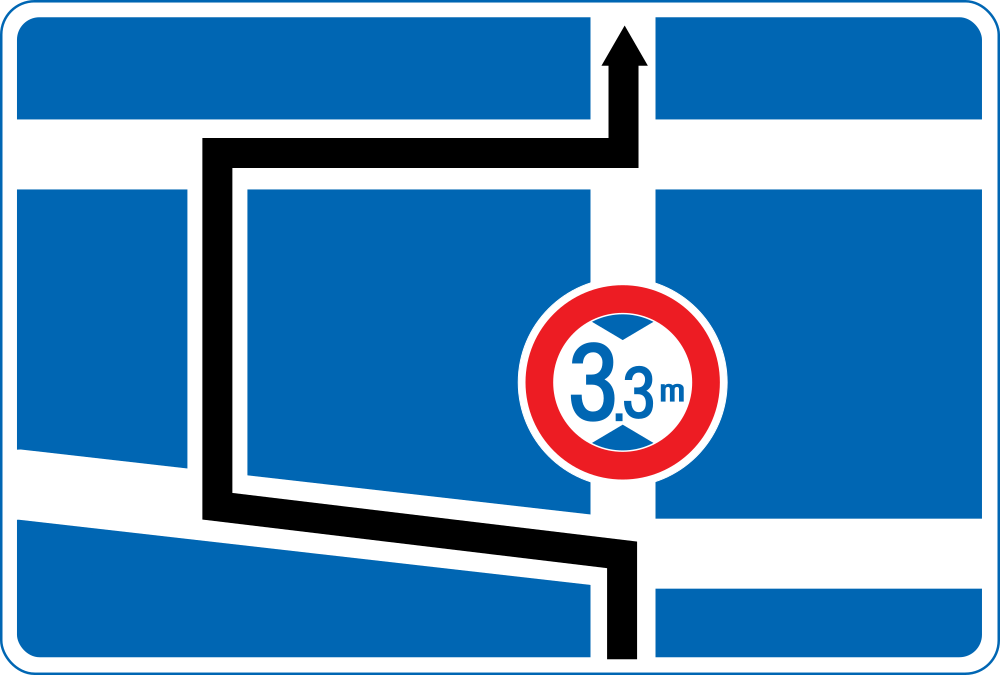
46. What does this traffic sign mean?
This traffic sign indicates a detour for vehicles that cannot continue on the normal route. Vehicles affected by the relevant restriction should follow the indicated alternative route.
English • Traffic sign 120-B • Diversion for a height limit. Shows a route avoiding a 3.3 m restriction. Check vehicle height and the indicated alternative route.
日本語 • 120-B • まわり道:高さ制限。 高さ制限3.3メートルの場所を避ける経路を案内しています。自分の車両の高さと、図に示されたまわり道を確認してください。
Sources
🔗 Commons.wikimedia.org
🔗 Laws.e-gov.go.jp • 道路標識、区画線及び道路標示に関する命令、別表第一・第二
🔗 Mlit.go.jp • 国土交通省、道路標識一覧
SVG source: Monaneko (talk) • Public domain • Original revision 2013-09-25. Wikimedia original unmodified.
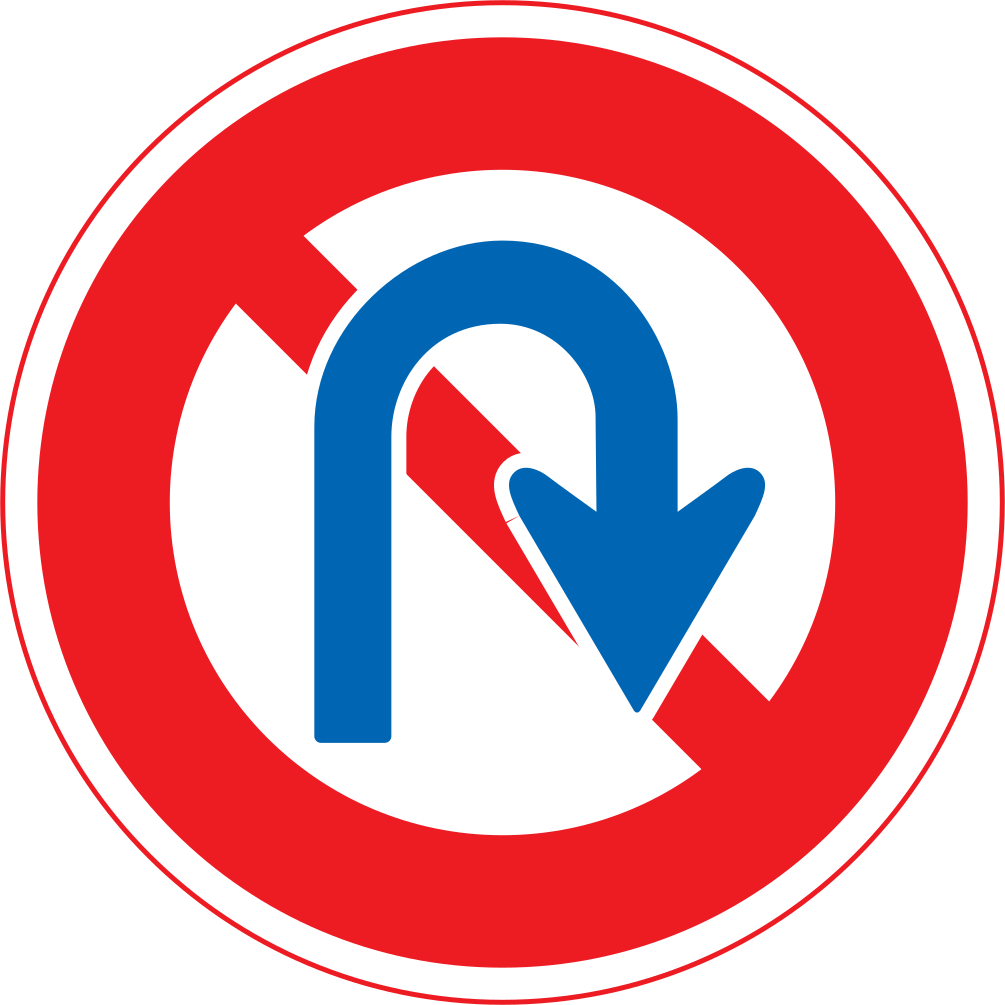
47. What does this traffic sign mean?
This traffic sign indicates that turning around (making a U-turn) is prohibited. A U-turn may not be made where the prohibition applies. Other movements may still be permitted unless another restriction applies.
English • Traffic sign 313 • No U-turns. Turning a vehicle around is prohibited.
日本語 • 313 • 転回禁止。 車両の転回、つまりUターンを禁止しています。
Sources
🔗 Commons.wikimedia.org
🔗 Laws.e-gov.go.jp • 道路標識、区画線及び道路標示に関する命令、別表第一・第二
🔗 Mlit.go.jp • 国土交通省、道路標識一覧
SVG source: Monaneko • Public domain • Original revision 2013-06-23. Wikimedia original unmodified.
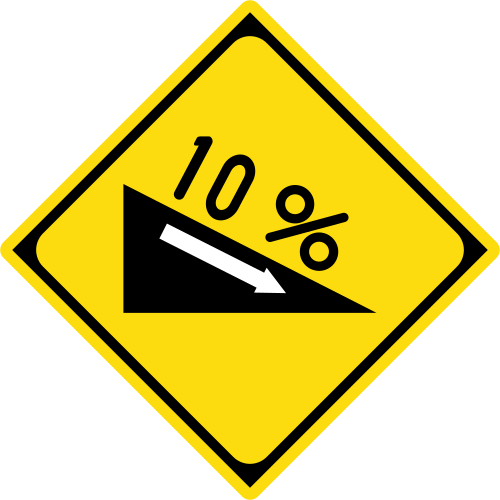
48. What does this traffic sign mean?
This traffic sign indicates a warning for a steep descent. A steep downhill gradient lies ahead and the vehicle may gain speed quickly. Reduce speed before the descent, select a suitable gear and use engine braking where appropriate. Allow extra distance for heavy or towing vehicles.
English • Traffic sign 212の4 • Steep descent: 10%. Use an appropriate gear to avoid excessive speed.
日本語 • 212の4 • 下り急勾配あり:10%。 この先に勾配10%の急な下り坂があります。速度が上がりすぎないよう、適切なギアを使ってください。
Sources
🔗 Commons.wikimedia.org
🔗 Laws.e-gov.go.jp • 道路標識、区画線及び道路標示に関する命令、別表第一・第二
🔗 Mlit.go.jp • 国土交通省、道路標識一覧
SVG source: Monaneko • Public domain • Original revision 2013-06-19. Wikimedia original unmodified.
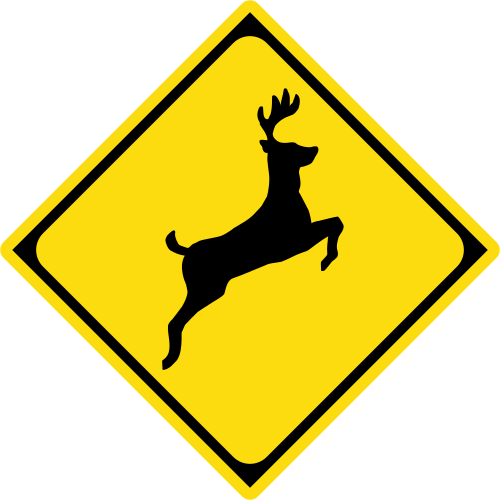
49. What does this traffic sign mean?
This traffic sign indicates a warning for crossing deer. Deer or other wild animals may enter the road unexpectedly, especially around dawn or dusk. Reduce speed, watch the roadside carefully and be prepared for more than one animal to cross.
English • Traffic sign 214の2 • Animals may emerge. Deer or other animals may suddenly enter the road. Check the surroundings and be prepared.
日本語 • 214の2 • 動物が飛び出すおそれあり。 この先ではシカなどの動物が道路に飛び出すおそれがあります。周囲を確認し、急な出現に備えてください。
Sources
🔗 Commons.wikimedia.org
🔗 Laws.e-gov.go.jp • 道路標識、区画線及び道路標示に関する命令、別表第一・第二
🔗 Mlit.go.jp • 国土交通省、道路標識一覧
SVG source: Monaneko • Public domain • Original revision 2013-06-19. Wikimedia original unmodified.
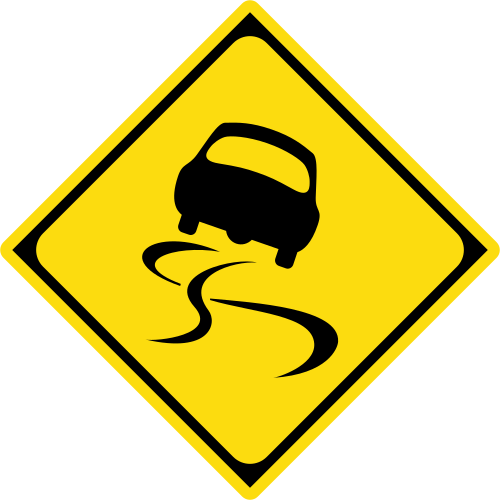
50. What does this traffic sign mean?
This traffic sign indicates a warning for a slippery road surface. The road ahead may provide reduced tyre grip because of water, ice, mud, oil or another surface condition. Reduce speed and avoid sudden braking, acceleration or steering movements.
English • Traffic sign 209 • Slippery surface. Avoid harsh braking or sudden steering.
日本語 • 209 • すべりやすい。 この先は路面がすべりやすい場所です。急ブレーキや急なハンドル操作を避けてください。
Sources
🔗 Commons.wikimedia.org
🔗 Laws.e-gov.go.jp • 道路標識、区画線及び道路標示に関する命令、別表第一・第二
🔗 Mlit.go.jp • 国土交通省、道路標識一覧
SVG source: Monaneko • Public domain • Original revision 2013-06-19. Wikimedia original unmodified.