Zona escolarPolonia

Aprende normas de tráfico con explicaciones claras y ejemplos visuales en nuestro libro ilustrado, diseñado para que estudiar sea sencillo y ameno.


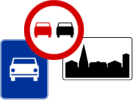
34. Zona escolar

Una zona escolar es una carretera o conjunto de carreteras cerca de un colegio donde numerosos niños pueden caminar, montar en bicicleta, cruzar la calzada o subir y bajar de vehículos. Puede identificarse mediante señales de advertencia, señales de zona, marcas viales, medidas de calmado del tráfico o luces intermitentes.

Pueden aplicarse límites de velocidad especiales, restricciones de estacionamiento o normas de acceso de forma permanente o únicamente durante las horas de entrada y salida. Los conductores deben reducir la velocidad, vigilar atentamente a los niños y estar preparados para detenerse.

What is a school area?

A school area is a road or group of roads near a school where drivers should expect large numbers of children, pedestrians, cyclists and stopping vehicles.

How can you recognise a school area?

It may be identified by school warning signs, speed-zone signs, flashing lights, road markings, coloured surfacing or traffic-calming measures. The signs differ between countries.

Does every road beside a school have special legal rules?

No. Special school-area rules normally apply only where signs, signals or local legislation establish them.

What is the speed limit in a school area?

There is no universal school-area speed limit. The applicable limit depends on the country, region, signs and whether a variable restriction is active.

Is the school-area speed limit always active?

Some limits apply permanently, while others apply only during displayed times or when flashing or variable signs are active. Drivers must observe the actual sign arrangement.

Must you drive below the displayed limit?

Yes, when necessary. The displayed speed is a maximum. Children, congestion, poor visibility or vehicles stopping near the school may require a much lower speed.

Why are children especially vulnerable in traffic?

Children may have difficulty judging speed and distance, may be hidden by parked vehicles and may enter the road unexpectedly.

How should you approach a school area?

Reduce speed early, increase your observation and be prepared for children crossing, cyclists changing direction, vehicle doors opening and cars stopping suddenly.

Do children automatically have priority everywhere?

No. Priority depends on crossings, traffic lights, authorised crossing supervisors and local rules. Drivers must nevertheless take exceptional care to avoid endangering children.

Must you obey a school crossing supervisor?

Yes. Drivers and other road users must follow lawful instructions given by an authorised person controlling traffic for children.

May children cross away from a pedestrian crossing?

This depends on local pedestrian rules. Drivers should remain prepared for children to cross unexpectedly, even where they are required to use a nearby crossing.

Does a school sign create pedestrian priority?

Not by itself. A school warning sign alerts drivers to children but does not normally create the legal effect of a pedestrian crossing.

Does a school area change intersection priority?

No. Traffic lights, priority signs and the ordinary intersection rules remain applicable unless another traffic arrangement provides otherwise.

May you overtake in a school area?

Overtaking may be restricted by signs or local law. Even where it is permitted, drivers should not overtake when children, crossings, limited visibility or stopped vehicles make the manoeuvre unsafe.

May you stop to drop off a child?

Only where stopping is permitted and can be completed safely. Do not stop on a crossing, pavement, bike path, bus stop or another prohibited or dangerous location.

May you park near a school entrance?

Follow the parking signs and markings. Do not block entrances, pavements, bike paths, crossings, visibility or access for buses and emergency vehicles.

Why is double parking dangerous near a school?

It blocks traffic and visibility and may force children to walk between moving vehicles or enter the road from behind an obstruction.

What should you watch for near school buses?

Expect children to enter or leave the vehicle and possibly cross the road. Reduce speed and follow any special warning lights, signs or local school-bus rules.

May cyclists ride through a school area?

Normally, yes. They must follow the applicable road, bike-path, speed and priority rules. Drivers should expect inexperienced young cyclists.

Is a school area the same as a school street?

No. A school area normally remains open to traffic under special caution or speed rules. A school street temporarily restricts or excludes motor traffic during specified periods.

Is a school area the same as a Zone 30?

Not universally. A school area may form part of a Zone 30, use another speed limit or have a variable restriction that applies only at particular times.

When do the school-area rules end?

They normally end at an end sign, at the end of the stated time period or when the variable signal is no longer active. The surrounding road rules then apply.

1 Polonia 2 Autopista 3 Vía rápida 4 Zona residencial 5 Zona urbana 6 Zona 7 Límite de velocidad 8 Senda peatonal 9 Carril bici 10 Vía compartida 11 Vía separada 12 Advertencia de peatones 13 Túnel 14 Resalto 15 Carretera de peaje 16 Aduana 17 Sentido único 18 Muelle 19 Pendiente 20 Carril bus 21 Parada de autobús 22 Calle sin salida 23 Señal de STOP 24 Ceda el paso 25 Glorieta 26 Vía con prioridad 27 Estrechamiento de calzada 28 Prioridad sobre el tráfico en sentido contrario 29 Ceda el paso al tráfico en sentido contrario 30 Paso de peatones 31 Paso a nivel 32 Dirección obligatoria 33 Prohibición de giro 34 Zona escolar 35 Adelantamiento 36 Cruce de animales 37 Curva 38 Panel direccional 39 Circulación en sentido contrario 40 Obras 41 Límite de altura 42 Límite de peso 43 Señal de control de velocidad 44 Prioridad en la próxima intersección 45 Semáforos 46 Advertencia de semáforos 47 Semáforos peatonales 48 Marcas viales 49 Esquema de intersección 50 Permiso de conducir 51 Espejo de tráfico 52 Frontera internacional 53 Paso inferior peatonal 54 Ruta ciclista 55 Estacionamiento 56 Prohibido estacionar 57 Prohibido parar 58 Aparcamiento disuasorio 59 Kiss and Ride 60 Estacionamiento para personas con discapacidad 61 Gestión del tráfico 62 Incorporación 63 Marcha atrás 64 Cambio de sentido 65 Estado de la calzada 66 Permiso provisional 67 Mercancías peligrosas 68 Servicio de radio 69 Atracción turística 70 Claxon 71 Matrícula 72 Estación de carga 73 Peligros 74 Seguridad ferroviaria 75 Peatón 76 Ciclista 77 Turismo 78 Camión 79 Autobús 80 Policía 81 Ambulancia 82 Taxi 83 Norma europea de emisiones 84 Vía pública 85 Bache 86 Propiedad privada 87 Camino 88 Partículas 89 Contaminación del aire 90 Hora punta 91 Código de circulación 92 Doble sentido 93 Canaleta de la calle 94 Bicicleta de carga 95 Vehículo forestal 96 Vehículo de construcción 97 Camión articulado 98 Trolebús 99 Speed pedelec 100 Vehículo de reparto ...