


交通ルールフィリピン
 交通ルール
交通ルール
 フィリピン
フィリピン
1. フィリピン
フィリピンは東南アジアの島嶼国で、交通は右側通行です。運転環境はマニラ首都圏など大都市の激しい渋滞から、地方幹線道路、海岸道路、山岳地帯の急な道路まで大きく異なります。熱帯気候も重要で、モンスーン豪雨や熱帯低気圧により洪水、地滑り、道路閉鎖が起こることがあるため、悪天候時の長距離移動では事前に道路状況を確認する必要があります。
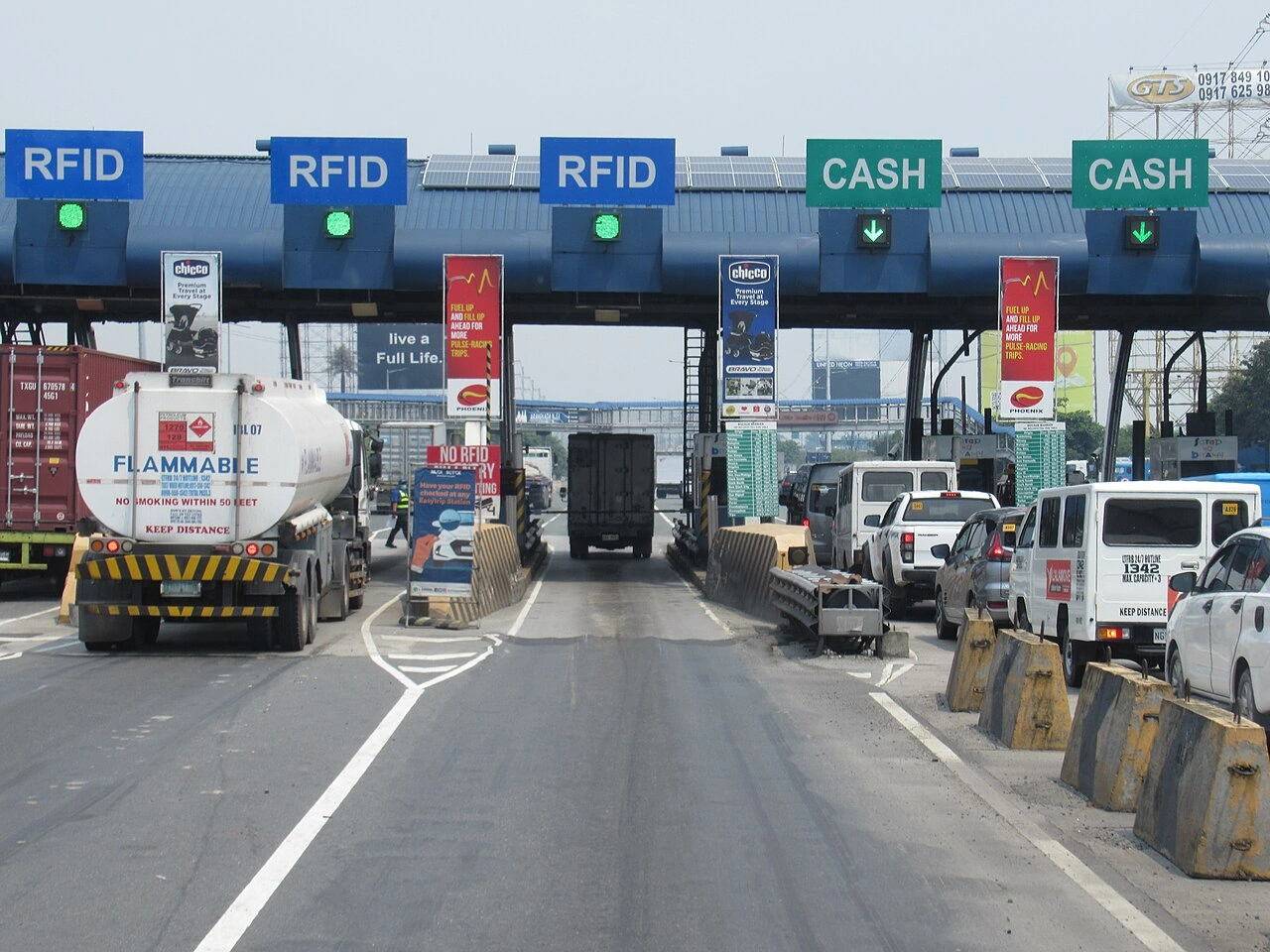
ルソン島には広いアクセス制御高速道路網があり、その多くが有料です。全国共通ヴィネットはなく、有料高速道路ではRFIDを使ったキャッシュレス・非接触型電子料金徴収が行われています。道路標識は国のDPWH基準に従い、国際的に分かりやすい記号を使用し、文字や方面標識では英語が広く使われます。有効な外国運転免許証を持つ観光客は、通常入国後90日間まで運転できます。
フィリピンでは道路のどちら側を走りますか?
道路の右側を走ります。
フィリピンではどちら側から追い越しますか?
通常は左側から追い越します。前車が左折中または左折しようとしており、安全に行える場合など、一定の状況では右側からの追い越しも認められます。
フィリピンの緊急通報番号は何番ですか?
全国Unified 911 Emergency Hotlineの911へ電話します。警察、消防、救急、救助サービスにつながります。
フィリピンの飲酒運転のアルコール基準値は?
車両総重量4500 kg以下の自家用自動車運転者は、BAC0.05%以上で酒気帯び運転の決定的証拠となります。トラック、バス、オートバイ、公共交通車両では0.0%を超えるBACが決定的証拠となります。
フィリピンの一般速度制限は?
法定速度は道路と車種により異なります。乗用車・オートバイは一般に、条件を満たす郊外道路80 km/h、指定幹線・大通り40 km/h、交通量の少ない市町村道路30 km/h、混雑または特に危険な状況20 km/hです。一部道路ではトラック・バスに低い制限があります。
フィリピンの郊外道路の速度制限は?
見通しの悪いカーブがなく住宅が密集していない郊外道路では、法定最高速度は乗用車・オートバイ80 km/h、トラック・バス50 km/hです。
フィリピンの町・都市の速度制限は?
幹線道路に指定されていない交通量の少ない市町村道路は通常30 km/h、混雑道路、見通しの悪い交差点付近、学校区域など危険な状況では20 km/hです。
フィリピンの高速道路の速度制限は?
高速道路には掲示された速度制限と運用規則があり、有料道路ごとに異なります。一般の郊外道路速度をそのまま適用せず、利用する高速道路の標識に従ってください。
フィリピンではヴィネットが必要ですか?
全国共通ヴィネットはありません。特定の有料高速道路を利用するときに通行料金を支払います。
フィリピンでは高速道路料金をどう支払いますか?
有料高速道路はキャッシュレス・非接触の電子料金徴収を使用します。高速道路群によってAutosweepやEasytripなどのRFID制度が異なるため、予定ルートに対応する制度を確認してください。
フィリピンの高速道路でオートバイは走れますか?
有料高速道路への進入が認められるオートバイは一般に排気量400 cc以上です。高速道路ごとの規則と車両区分にも従う必要があります。
フィリピンではシートベルトは義務ですか?
はい。運転者と対象となる乗客はシートベルトを着用しなければなりません。対象範囲は車種にもよりますが、通常の自家用乗用車・SUVでは後部座席の乗客にも適用されます。
フィリピンではチャイルドシートは義務ですか?
はい。対象車両の子どもは通常、適切なチャイルドシートを使用しなければなりません。ただし身長150 cm(59インチ)以上で通常のシートベルトを正しく使用できる場合は除きます。
フィリピンでは子どもは前席に座れますか?
12歳以下の子どもは通常、身長150 cm以上で通常のシートベルトを正しく使用できる場合を除き、前席に座れません。
フィリピンではオートバイのヘルメットは義務ですか?
はい。オートバイの運転者と後部同乗者の両方が標準規格の保護ヘルメットを着用しなければなりません。
フィリピンではオートバイに何人まで同乗できますか?
オートバイまたはスクーターは通常後部同乗者1人を乗せることができ、適切な座席とフットレストが必要です。
フィリピンでは子どもをオートバイに乗せられますか?
特別規則があります。Children's Safety on Motorcycles Actの対象道路では、子どもの同乗者は標準フットペグへ足が届き、運転者の腰につかまり、標準規格の保護ヘルメットを着用できなければなりません。法律上の例外もあります。
フィリピンでは運転中に携帯電話を使用できますか?
Anti-Distracted Driving Actは、赤信号で一時停止中を含め、運転中に手持ちの携帯通信機器や電子娯楽機器を使用することを禁止しています。視界を妨げない適切なハンズフリー使用は認められます。
フィリピンでは昼間もヘッドライトが必要ですか?
すべての乗用車に一般的な昼間点灯義務はありませんが、オートバイは昼間を含め、高速道路を走行中にヘッドライトを点灯しなければなりません。
フィリピンの無規制交差点では誰が優先ですか?
2台がほぼ同時に交差点へ接近・進入する場合、左側の車両が右側の車両へ道を譲ります。すでに交差点内にいる車両は、まだ進入していない車両より一般に優先します。
フィリピンのラウンドアバウトでは誰が優先ですか?
ラウンドアバウトへ進入する運転者はすでに環状路を走行している車両へ道を譲る必要があります。退出前に合図し、他の交通を確認します。
フィリピンの横断歩道では歩行者が優先ですか?
商業・住宅地区では、交通整理員や信号で規制されている場合を除き、運転者は横断歩道を利用する歩行者へ道を譲る必要があります。
フィリピンで緊急車両が接近したらどうすればよいですか?
公務中で警報音を使用している警察車両、消防車、救急車へ道を譲ります。別の指示がない限り、できるだけ道路右端または縁石へ寄せて停止し、緊急車両が通過するのを待ちます。
フィリピンではどこが駐車禁止ですか?
国法では、交差点、横断歩道上、私有車道の前、消火栓から4メートル以内など複数の場所への駐車を禁止しています。地域の駐車標識・規制にも従います。
フィリピンでは警告三角表示板を携行する必要がありますか?
オートバイと三輪車を除き、自動車には2枚1組のEarly Warning Devices(EWD)を搭載する必要があります。車両が故障・停止した際に使う反射式警告三角表示板です。
観光客は外国の運転免許証でフィリピンを運転できますか?
はい。正規の観光客は有効な外国運転免許証で通常入国後90日間まで運転できます。長期滞在では通常、フィリピン免許への切替・取得が必要です。
フィリピンの道路標識ではどの言語が使われますか?
道路標識は国のDPWH基準に従い、国際的に認識しやすい記号と英語表記を多用します。一部の地域・補助標識ではフィリピノ語表記もあります。
台風や大雨はフィリピンでの運転にどう影響しますか?
熱帯低気圧やモンスーン雨が頻繁で、大雨により洪水、地滑り、視界不良、道路閉鎖が起こります。PAGASAと地方自治体の警報に従い、冠水道路へ進入しないでください。
フィリピンではオートバイの車線間走行は認められますか?
LTOのオートバイ規則では車線間走行は禁止されています。オートバイは車両の列の間ではなく、通常の交通車線内を走行します。

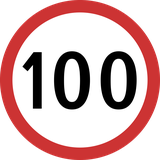
2. 速度制限
速度制限は、道路、車線、または指定区域で法律上許可される最高速度です。一般交通法規によって定められる場合も、固定式・可変式・一時的な標識で示される場合もあります。
速度制限は上限であり、目標速度ではありません。交通、視界、天候、路面状況、交通弱者、車両状態などにより上限速度が安全でない場合、運転者はさらに減速する必要があります。
What is a speed limit?
A speed limit is the maximum legal speed permitted on a road, lane or within a designated area. It does not require drivers to travel at that speed.
How can you recognise a speed limit?
A speed limit is commonly displayed as a number on a regulatory traffic sign. General limits may also apply automatically because of the country, road category, vehicle type or surrounding area, even when no speed-limit sign is present.
Is the speed limit a recommended driving speed?
No. It is the highest speed legally permitted under suitable conditions. Drivers must reduce their speed whenever travelling at the limit would be unsafe.
Can you drive more slowly than the speed limit?
Yes. Drivers should travel more slowly when required by traffic, weather, visibility, road conditions or nearby vulnerable road users. Driving unnecessarily slowly may nevertheless be prohibited when it obstructs normal traffic.
Does the same speed limit apply to every vehicle?
Not always. Lower limits may apply to heavy vehicles, buses, vehicles towing trailers, novice drivers or other vehicle categories. The lowest applicable limit must be respected.
What is a default speed limit?
A default speed limit applies automatically to a particular road type or area when no traffic sign indicates another limit. Examples include general limits for motorways, built-up areas or roads outside built-up areas.
Does a posted speed limit replace the default limit?
Usually, yes. A legally placed speed-limit sign normally introduces another maximum speed, although lower vehicle-specific or special-road limits may continue to apply.
When does a speed-limit sign take effect?
A speed restriction normally begins at the location of the sign. Drivers should reduce their speed before passing the sign so that they are already travelling within the limit when it takes effect.
When does a speed limit end?
A signed limit may end at an intersection, an end-of-limit sign, another speed-limit sign or the beginning or end of a legally defined area. The exact rule differs between countries.
Does an intersection end a speed limit?
This depends on local law. An ordinary speed restriction may end at an intersection in some countries, while a zonal speed limit normally continues across intersections until an end-of-zone sign.
What is a speed zone?
A speed zone is an area in which the displayed maximum speed applies throughout all included roads. The limit normally remains in force until the corresponding end-of-zone sign.
What is a variable speed limit?
A variable speed limit is displayed on an electronic or changeable sign and may be adjusted according to congestion, weather, incidents or roadworks. When activated, it has the same legal importance as another applicable regulatory speed sign.
Can different lanes have different speed limits?
Yes. Signs positioned above individual lanes may impose different limits on those lanes. Drivers must observe the limit applying to the lane they use.
Can a temporary speed limit apply?
Yes. Temporary limits may be introduced near roadworks, collisions, hazards or special events. Drivers must follow the temporary traffic signs and instructions that are legally in force.
May you exceed the speed limit while overtaking?
No. Overtaking does not normally permit a driver to exceed the applicable maximum speed. The manoeuvre must be completed safely while respecting the speed limit.
Do poor conditions change the legal speed limit?
Some countries impose specific lower limits in rain, snow or other conditions. Even where the numerical limit does not change, drivers must reduce their speed sufficiently for the conditions.
3. 自転車道
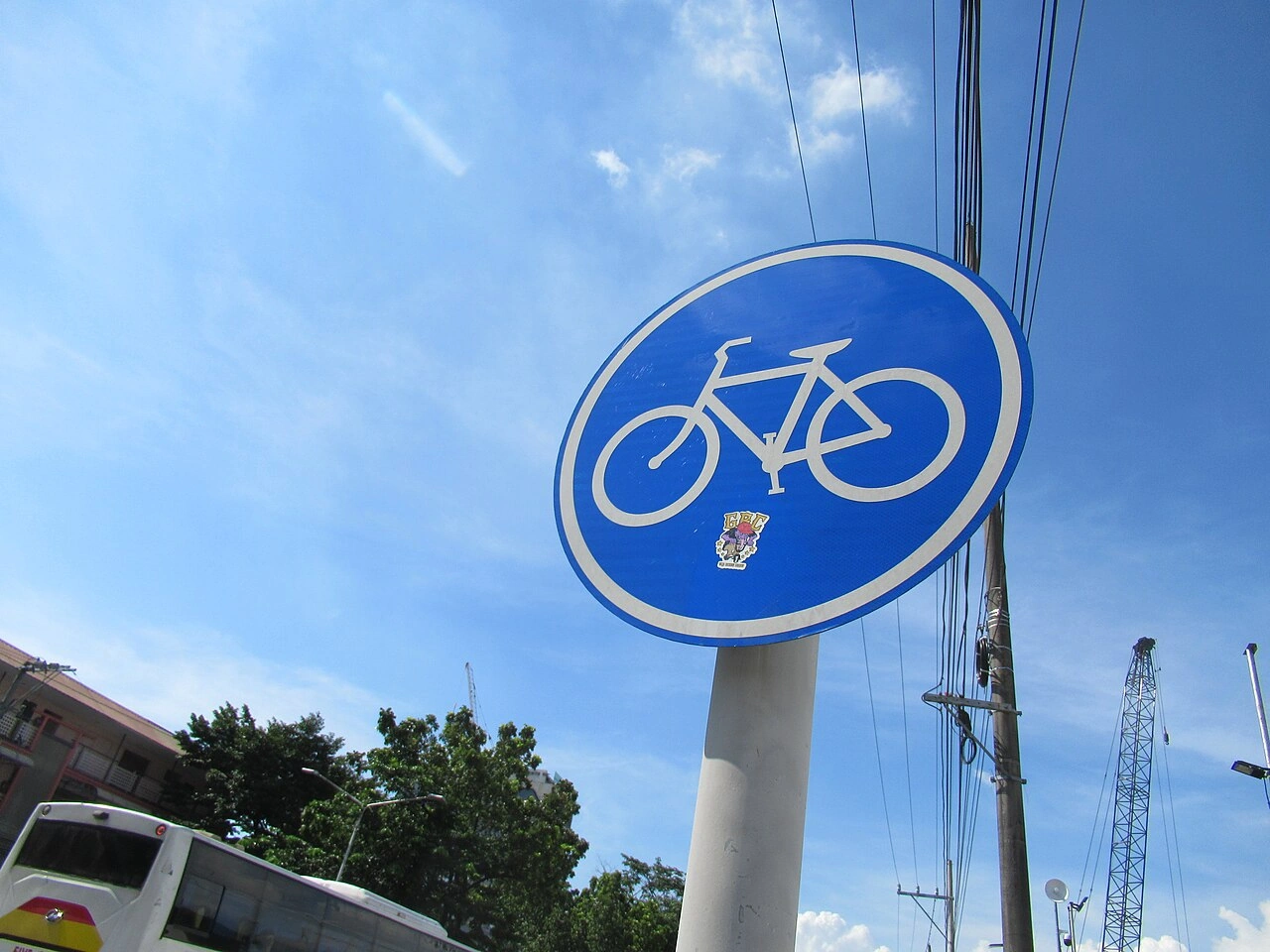
自転車道は、主にまたは専ら自転車利用者のために設けられた道路の一部または独立した通路です。自動車交通から物理的に分離される場合、路面標示で示される場合、標識で指定される場合があります。
自転車道には一方通行、双方向、他の道路利用者との共用があります。利用可能者、進行方向、優先規則、利用義務は現地の交通標識と規則に従います。
How can you recognise a bike path?
A bike path may be identified by a bicycle traffic sign, bicycle symbols, coloured surfacing or road markings. It may run beside the carriageway or follow a completely separate route.
Is a bike path the same as a bike lane?
Not always. A bike lane is normally marked directly on or beside the carriageway, while a bike path may be physically separated from motor traffic. The terminology and legal distinction vary between countries.
Must cyclists use a bike path?
This depends on local law and the signs displayed. Some bike paths are mandatory, while others are optional. Cyclists may also be permitted to leave a path to turn, overtake or avoid an obstruction.
Can a bike path carry traffic in both directions?
Yes. Some bike paths are two-way, but others may be used only in the direction indicated by signs, markings or their position beside the road. Cyclists should not assume that every path permits travel in both directions.
May pedestrians use a bike path?
Pedestrians may use a bike path where it is designated as a shared-use path or where local law permits it. On a cycle-only path, pedestrians may be prohibited or permitted only when no suitable pedestrian facility is available.
May mopeds or speed pedelecs use a bike path?
This depends on the country, vehicle category, road speed and traffic signs. Some bike paths permit or require certain mopeds or speed pedelecs, while others are reserved exclusively for ordinary bicycles.
May motor vehicles use a bike path?
Normally not. Motor vehicles may cross a bike path to enter another road or property where this is permitted, but they must follow the applicable priority rules and must not endanger path users.
Who has priority where a vehicle crosses a bike path?
Priority depends on the road layout, signs, signals and local law. Drivers crossing a continuous bike path commonly have to give way to its users, but cyclists approaching a separate cycle crossing may not automatically have priority before entering it.
Does a cyclist always have priority at a cycle crossing?
No. A marked cycle crossing does not universally give an approaching cyclist priority. Cyclists should enter cautiously and observe approaching traffic unless signs, signals or local rules clearly give them priority.
Is there a speed limit on a bike path?
Some countries or local authorities impose specific limits, particularly on shared paths. Even without a posted limit, cyclists must travel at a safe and considerate speed for the width, visibility and number of other users.
May you stop or park on a bike path?
Normally not. Stopping or parking on a bike path can force cyclists into motor traffic and may be expressly prohibited by law.
What should cyclists do when passing pedestrians?
Reduce speed, give a clear warning where appropriate and leave sufficient space. Pedestrians may change direction unexpectedly, especially on a shared path.
What should cyclists do when a bike path is blocked?
Slow down and check surrounding traffic before leaving the path. Avoid the obstruction safely and return to the bike path when permitted and practical.
Can cyclists ride side by side on a bike path?
This depends on local law and the available width. Even where riding side by side is permitted, cyclists must not block, endanger or unnecessarily hinder other path users.
What is the difference between a bike path and a shared-use path?
A bike path is intended primarily or exclusively for cycling. A shared-use path is legally intended for cyclists together with pedestrians or other indicated road users, who must use the space considerately.
4. 橋
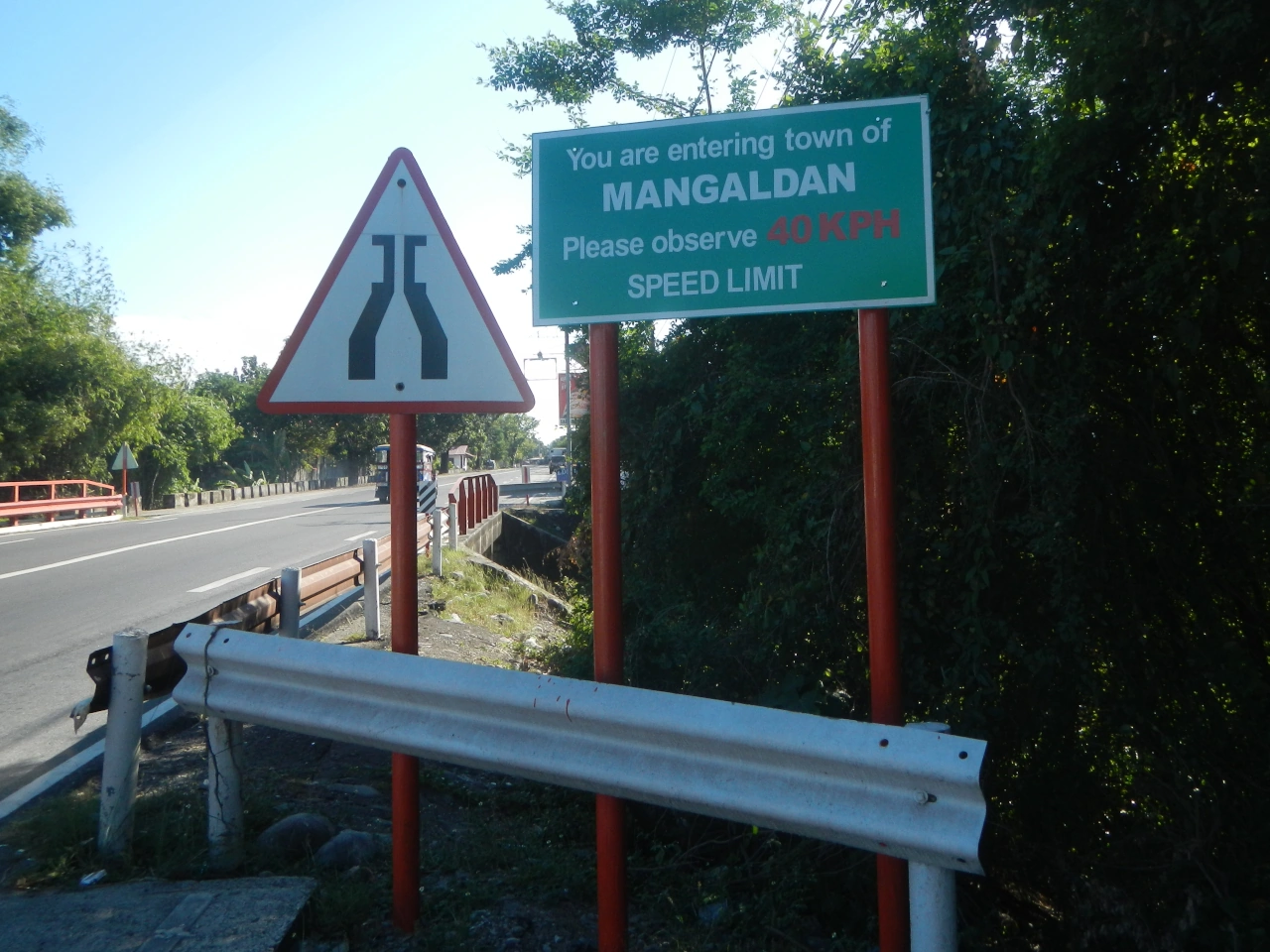
橋は、道路、通路、鉄道を川、谷、鉄道路線、別の道路などの障害物の上に通す構造物です。道路橋には1本以上の車道に加え、歩道や自転車施設が設けられる場合があります。
運転者は橋に適用される速度、重量、高さ、幅、車両進入制限に従う必要があります。狭い橋、風にさらされる橋、可動橋では特に注意し、風、雨、氷などが路面に影響する場合も慎重に運転します。
What is a bridge?
A bridge is a structure that carries a road, path or railway over an obstacle such as a river, valley, railway or another road.
Can a bridge carry several traffic lanes?
Yes. Road bridges may carry one or several traffic lanes and can also contain pavements, cycle facilities or public-transport infrastructure.
Can a bridge have a weight limit?
Yes. A bridge may have restrictions on the maximum vehicle mass or axle load that it can safely accommodate. Drivers of heavy vehicles must obey the applicable signs.
Can a bridge have a width or height restriction?
Yes. Narrow bridges or structures forming part of a bridge can have width, height or other dimensional restrictions indicated by traffic signs.
What is a movable bridge?
A movable bridge is a bridge that can open, lift, swing or otherwise move to allow ships or other traffic to pass beneath or through it.
What should you do when a movable bridge is opening?
Stop when required by the traffic lights, barriers or other signals and remain behind the designated stopping point until the crossing is reopened.
Can bridges become slippery?
Yes. Bridge surfaces can become wet, icy or slippery and may sometimes cool differently from the surrounding road. Drivers should adapt their speed to the actual conditions.
Can strong winds be dangerous on a bridge?
Yes. Exposed bridges can be affected by crosswinds, particularly for motorcycles, bicycles, high-sided vehicles and vehicles towing trailers.
Can you stop or park on a bridge?
This depends on the local traffic rules, road layout and signs. Stopping or parking may be prohibited where it would create danger, obstruct traffic or reduce the available road width.
Can pedestrians and cyclists use a bridge?
Yes, where permitted. Bridges may provide pavements, cycle paths or shared facilities, while high-speed or restricted bridges may prohibit certain road users.
Can traffic be restricted to one direction on a narrow bridge?
Yes. Priority signs, traffic lights or other traffic-management measures may control which direction passes first where two-way traffic cannot safely meet.
Should you overtake on a narrow bridge?
Only when overtaking is legal and clearly safe. Limited width or visibility can make overtaking inappropriate even where no specific prohibition is shown.
5. 有料道路
有料道路は、利用するため料金の支払いが必要な道路、橋、トンネル、または道路区間です。料金は建設、維持管理、運営などの費用に充てられます。
支払い方法には料金所の現金・カード、電子タグ、ナンバープレート認識、オンライン決済などがあります。利用前に料金、支払方法、期限を確認し、外国登録車に特別な登録要件がある場合は従う必要があります。
What is a toll road?
A toll road is a road or section of road for which a charge must be paid to use it. Tolls may also apply to particular bridges, tunnels or other road infrastructure.
How are road tolls paid?
Depending on the country, tolls may be paid at a toll booth, through an electronic toll system, vignette or distance-based charging system.
Do all vehicles pay the same toll?
Not necessarily. Toll rates can vary according to vehicle type, size, weight, emissions, distance travelled or the particular road being used.
6. 一方通行
一方通行は、車両が一方向にのみ通行できる道路または車道です。標識、道路標示、道路設計によって進行方向が示されます。
運転者は逆方向へ進入してはならず、曲がる際や駐車する際も現地の規則に従う必要があります。自転車などに対し反対方向通行の例外が認められる場合は、標識で明示されます。
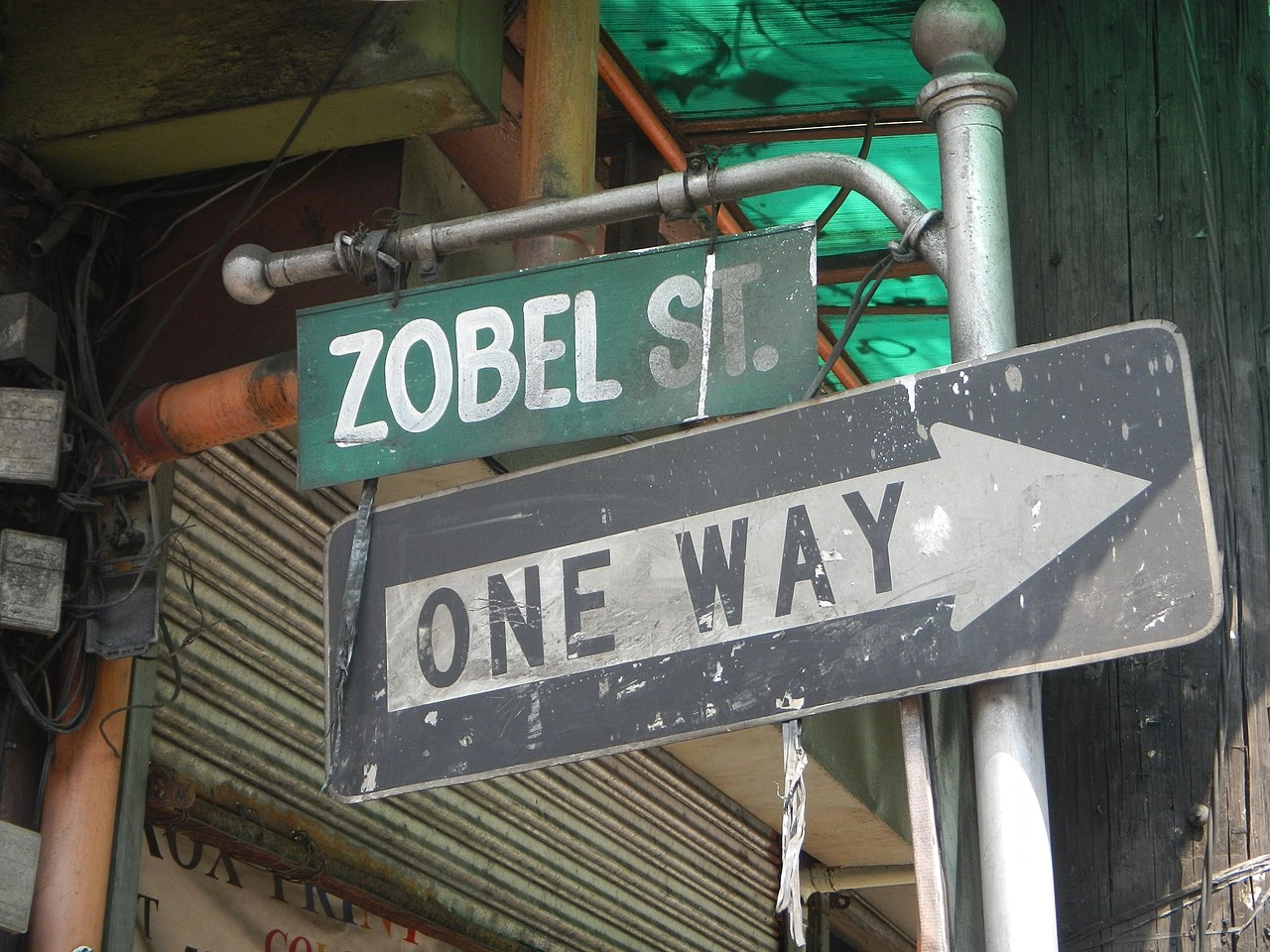
What is a one-way road?
A one-way road is a road or carriageway on which vehicles may travel only in the designated direction.
How can you recognise one-way traffic?
One-way traffic is normally indicated by a one-way sign at the entrance and a no-entry sign at the opposite end. Lane arrows and road markings may provide additional guidance.
Is a one-way sign the same as a no-entry sign?
No. A one-way sign confirms the permitted direction of travel. A no-entry sign prohibits drivers from entering from the opposite direction.
Does one-way traffic apply to the entire road?
It may apply to an entire road, one carriageway, a particular lane or only a designated section. Drivers must follow the signs and markings applying to the part of the road they use.
Can a divided road have one-way traffic on each carriageway?
Yes. On a divided road, each carriageway normally carries traffic in one direction even though the road as a whole carries traffic in both directions.
May cyclists travel against one-way traffic?
Only when traffic signs or local law expressly permit contraflow cycling. Drivers should check supplementary signs and remain alert for cyclists approaching from the opposite direction.
May buses travel against one-way traffic?
Public-transport vehicles may use a contraflow lane where signs and road markings permit it. Other drivers may not use that lane unless they are also authorised.
Does a one-way road have its own speed limit?
No. The applicable speed depends on the country, road type, surrounding area and traffic signs.
Does one-way traffic change priority at intersections?
No. Drivers must continue to follow traffic lights, priority signs and the ordinary local priority rules.
Does traffic on a one-way road always have priority?
No. The one-way designation regulates direction of travel, not priority. Traffic entering or crossing the road may still have priority under signs or local law.
Which lane should you use on a one-way road?
Follow the local lane-positioning rules, lane arrows and destination signs. Drivers commonly keep to the normal side of the road unless overtaking, turning or choosing a marked lane.
Where should you position yourself before turning?
Use the lane or side indicated for the intended direction. On many one-way roads, drivers turning towards the opposite side of the road may position themselves closer to that side before turning.
May you overtake on a one-way road?
Overtaking may be permitted where there is sufficient space and no sign or rule prohibits it. The normal overtaking side and safety requirements continue to apply unless local law provides otherwise.
May you reverse on a one-way road?
A short reversing manoeuvre may be permitted where local law allows it and it can be completed safely. Drivers must not use reversing to travel along the road in the prohibited direction.
May you make a U-turn on a one-way road?
You may not turn around and continue against the permitted direction. A U-turn may also be prohibited by signs or general traffic law.
May you park on both sides of a one-way road?
This depends on local law, signs, markings and the available width. Some countries permit parking along either side, while others retain stricter positioning rules.
Can pedestrians come from both directions?
Yes. One-way traffic restrictions normally apply to vehicles using the carriageway, not to pedestrians using pavements or other pedestrian facilities.
Should you still check both directions?
Yes. Cyclists, buses, emergency vehicles or other authorised users may approach from the opposite direction. Drivers should check both directions before turning, crossing or opening a vehicle door.
What should you do if you enter a one-way road incorrectly?
Do not continue against traffic. Stop somewhere safe without creating additional danger and follow lawful directions to leave or correct the situation. Do not reverse blindly into an intersection.
How does one-way traffic end?
The restriction may end at an end sign, an intersection, a change in road design or a sign warning that two-way traffic resumes. Follow the local signs and road layout.
7. 一時停止標識
一時停止標識は、運転者に指定された停止位置で完全に停止することを求める規制標識です。停止線がある場合はその手前、なければ交差点や見通しを確保できる位置で停止します。
停止後、運転者は優先権のある交通や歩行者に道を譲り、安全を確認してから進みます。標識の文字や形状は国によって多少異なります。
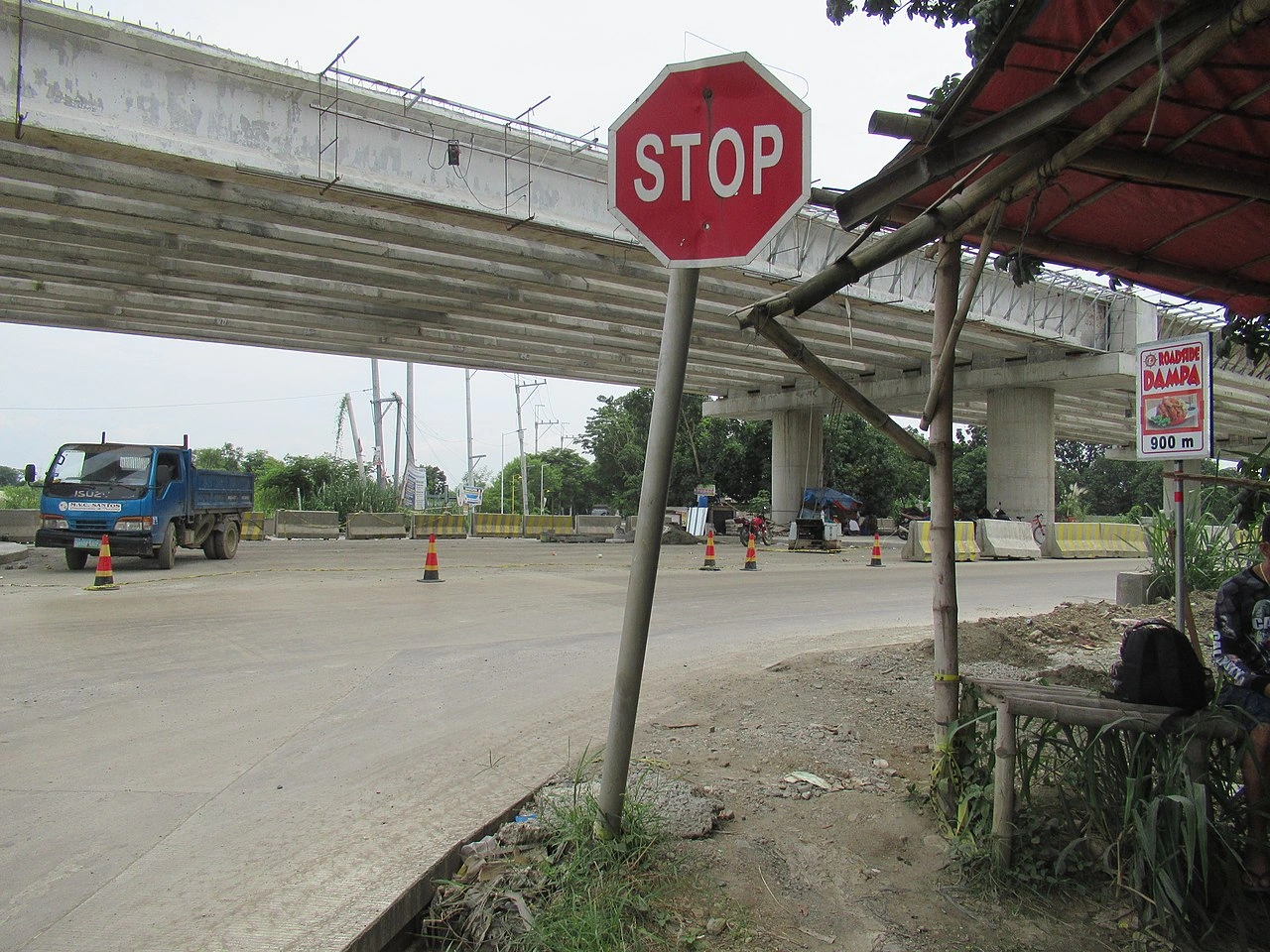
What does a stop sign mean?
A stop sign requires a driver to come to a complete stop and give way before proceeding.
How can you recognise a stop sign?
A stop sign is commonly a red octagonal sign displaying the word STOP. Some countries use another legally recognised design, so drivers must learn the signs used locally.
Must you stop when no other traffic is visible?
Yes. The obligation to stop applies even when the road appears completely clear.
What is a complete stop?
A complete stop means that the vehicle has ceased moving entirely. Merely slowing down or allowing the vehicle to continue rolling does not satisfy the requirement.
Where should you stop?
Stop before the stop line where one is provided. Without a line, stop at the legally prescribed position before entering the intersection, crossing or priority road.
May you stop beyond the stop line?
No. The required first stop must be made before the line. If visibility is limited, move forward cautiously after stopping and stop again where necessary before proceeding.
Must every vehicle in a queue stop separately?
Yes. Each driver must make an individual complete stop. Following another vehicle through without stopping is not permitted.
Does stopping give you priority?
No. After stopping, you must continue to give way to all road users who have priority.
Who must you give way to?
Give way to traffic on the road being entered or crossed and to pedestrians, cyclists or other road users who have priority under the applicable rules.
What is the difference between a stop sign and a give-way sign?
A stop sign always requires a complete stop. A give-way sign requires the driver to yield but normally allows continued movement when the road is clearly free.
May you turn after stopping?
Yes. After stopping and giving way, you may turn in any direction permitted by signs, signals, lane arrows and road markings.
May you turn right at a red traffic light after stopping?
This depends entirely on local law and traffic signs. A stop sign does not by itself permit a turn against a red light.
Does a stop sign impose a speed limit?
No. It imposes a stopping and yielding obligation. The normal posted or general speed limit remains applicable before and after the intersection.
Does a stop sign apply to cyclists?
In many countries, cyclists are drivers and must stop unless a specific sign or local rule provides an exception.
What happens at an all-way stop?
The order in which drivers may proceed depends on local rules, commonly involving arrival order, vehicle position and turning direction. Drivers should communicate cautiously and never assume another driver will yield.
What if two vehicles stop at the same time?
Apply the local priority rule and proceed only when the intentions of the other driver are clear. Avoid forcing the other vehicle to brake or change direction.
Do traffic lights override a stop sign?
Where functioning traffic lights control the same movement, they commonly take precedence over the stop sign. Local rules determine what applies when the lights are switched off or flashing.
Do instructions from a police officer override a stop sign?
Yes. Instructions from an authorised traffic officer normally take precedence over traffic signs and ordinary priority rules.
Can a temporary stop sign be legally binding?
Yes. A correctly placed temporary stop sign at roadworks, an event or another temporary traffic arrangement must be obeyed.
What should you do when the stop sign is partly hidden?
If you recognise that a stop sign applies, reduce speed and obey it. Report damaged, obscured or missing signs to the responsible road authority where appropriate.
8. 譲れ
譲れ標識は、運転者に速度を落とし、必要に応じて停止して、優先権を持つ道路利用者へ道を譲ることを求めます。一般に逆三角形の標識が使われます。
必ず完全停止する必要はありませんが、安全に進めない場合は停止しなければなりません。どの交通に譲るかは交差点の構造、標識、現地の優先規則によって決まります。
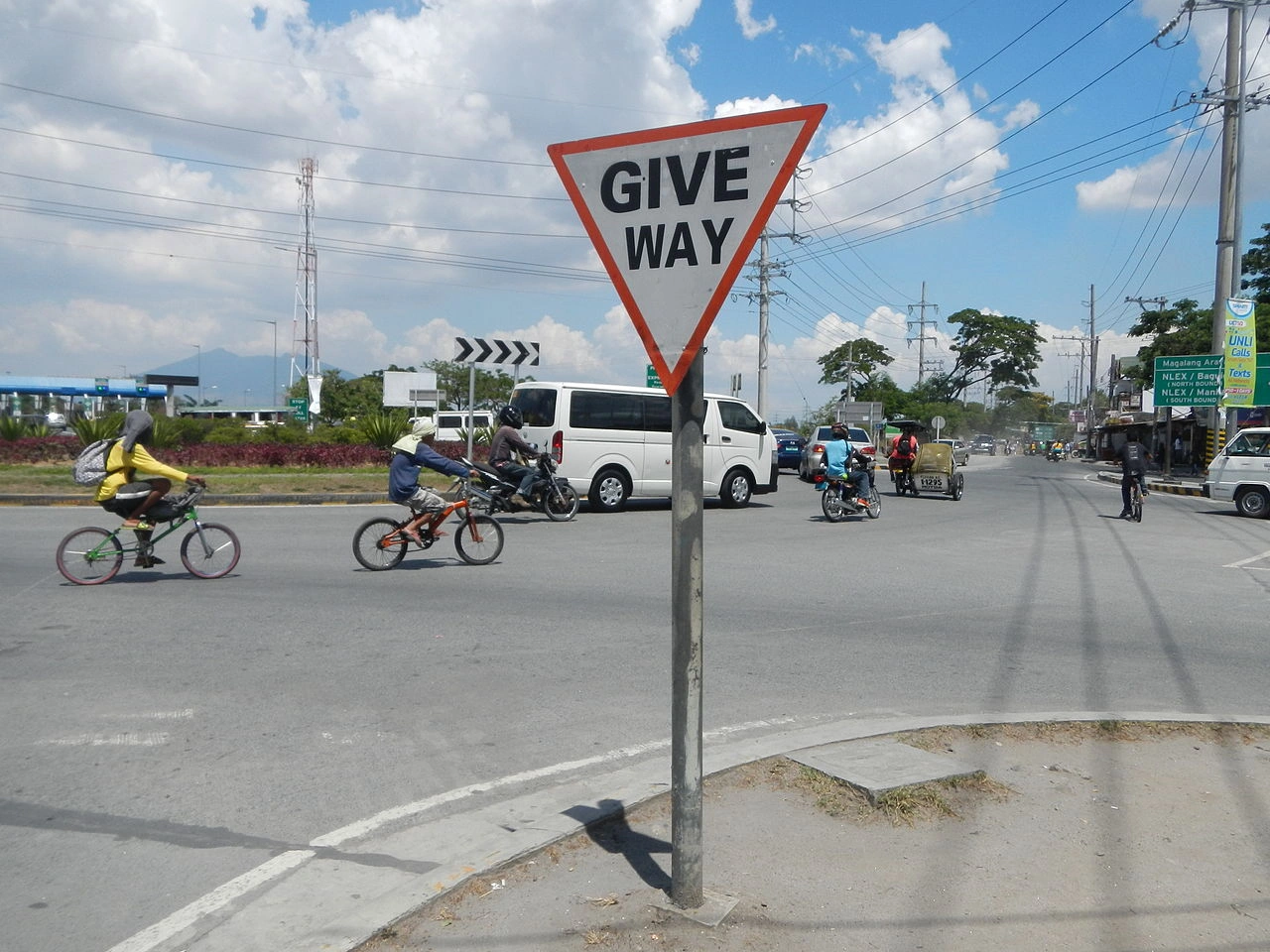
What does a give-way sign mean?
A give-way sign requires drivers to allow traffic with priority to proceed first. The driver must slow down and stop when necessary.
How can you recognise a give-way sign?
It is commonly an inverted triangular sign with a red border and a light-coloured centre. In some countries, it is called a yield sign.
Must you always stop at a give-way sign?
No. You must stop only when necessary to give way or obtain a sufficiently clear view. You may continue slowly when the road is clearly free.
What does giving way mean?
Giving way means allowing another road user to continue without being forced to brake, accelerate, stop or change direction because of your movement.
Where should you stop when necessary?
Stop before the give-way line where one is provided. Without a line, stop before entering the intersection or priority road at a position where you can observe traffic safely.
May you cross the give-way line before stopping?
You may move beyond the line only when this does not interfere with traffic that has priority. Where visibility is limited, first slow or stop at the line and then move forward cautiously.
What is the difference between give way and stop?
A stop sign always requires a complete stop. A give-way sign permits the driver to continue without stopping when the road is clearly free and it is safe to proceed.
Does slowing down satisfy the give-way requirement?
Only when slowing down is sufficient to let all priority traffic proceed safely. If another road user would be hindered, the driver must slow further or stop.
Who must you give way to?
Give way to traffic travelling on the road being entered or crossed and to any pedestrians, cyclists or other road users who have priority under the applicable rules.
Does giving way apply only to vehicles approaching from one direction?
No. Check every direction from which lawful traffic may approach, including cycle paths, one-way roads with authorised contraflow traffic and separate carriageways.
Does a give-way sign give the other road permanent priority?
The sign determines priority at the particular location. The priority arrangement at later intersections may be different unless the road is separately identified as a priority road.
Does giving way give you priority afterwards?
No. You may proceed only when it is safe. Another driver’s hesitation or courtesy does not remove your responsibility to avoid danger.
Must every vehicle in a queue give way separately?
Yes. Each driver must observe the road and make an individual decision. You may not follow another vehicle through without checking that the way remains clear.
Does a give-way sign apply to cyclists?
Normally, yes. Cyclists are generally treated as drivers and must obey the sign unless a supplementary sign or local rule provides otherwise.
Can a give-way sign apply only to cyclists?
Yes. Some countries use supplementary signs or path-specific signs to require cyclists to give way while other traffic follows a different priority arrangement.
Does a give-way sign change the speed limit?
No. It regulates priority rather than speed. Drivers must still approach slowly enough to observe traffic and stop when necessary.
Does a give-way sign change turning rules?
No. Drivers must still obey traffic lights, lane arrows, mandatory-direction signs and turning prohibitions.
How does give way work at a roundabout?
Many roundabout entrances have give-way signs requiring entering traffic to yield to vehicles already circulating. Drivers must follow the actual signs because roundabout priority rules differ between countries.
Do traffic lights override a give-way sign?
Functioning traffic lights commonly take precedence over priority signs controlling the same movement. The give-way sign may apply again when the lights are switched off or flashing, depending on local law.
Do police instructions override a give-way sign?
Yes. Instructions from an authorised traffic officer normally take precedence over traffic signs and ordinary priority rules.
What should you do when visibility is limited?
Reduce speed substantially and stop when necessary. Move forward cautiously only after giving way and checking that the road can be entered without danger.
9. 横断歩道
横断歩道は、歩行者が道路を横断するために指定された場所です。路面標示、交通標識、信号、またはそれらの組み合わせで示されます。
運転者は適切に注意して接近し、現地法で必要な場合は歩行者へ道を譲ります。歩行者も接近車両を確認し、歩行者信号や交通整理員の指示に従う必要があります。
What is a pedestrian crossing?
A pedestrian crossing is a designated place for pedestrians to cross a road. It may be controlled by traffic lights or operate without signals.
How can you recognise a pedestrian crossing?
It may be indicated by white road markings, traffic signs, flashing lights, pedestrian signals or a raised crossing. Its appearance varies between countries.
Is a pedestrian crossing the same as a zebra crossing?
A zebra crossing is a type of pedestrian crossing marked by broad contrasting stripes or rectangles. Not every pedestrian crossing uses this design.
Do pedestrians always have priority?
Not universally. Priority depends on local law, traffic signals and whether the pedestrian is already crossing or clearly preparing to cross.
Must drivers stop for pedestrians waiting beside the crossing?
This depends on local law. In many countries, drivers must give way when a pedestrian is clearly intending or preparing to enter the crossing.
How should drivers approach a pedestrian crossing?
Reduce speed, observe both sides of the road and be prepared to stop. Pay particular attention to children, older people and persons with limited mobility.
May you enter a crossing when traffic is congested?
No. Do not enter when traffic ahead may force you to stop on the crossing and block pedestrians.
Where should you stop for a pedestrian?
Stop before the crossing or before the applicable stop line. Leave the crossing completely clear.
May you overtake near a pedestrian crossing?
Overtaking may be prohibited, particularly when another vehicle has stopped or slowed for the crossing. Even where no specific prohibition applies, overtaking is unsafe when pedestrians may be hidden from view.
May you stop or park on a pedestrian crossing?
Normally not. Stopping or parking on or immediately before a crossing can obstruct pedestrians and hide them from approaching drivers.
Does a pedestrian crossing impose a speed limit?
Not by itself. Drivers must respect the applicable speed limit and reduce their speed further when necessary to stop safely.
Do traffic lights change the priority rules?
Yes. Drivers and pedestrians must follow the signals applying to them. Drivers must still allow pedestrians who lawfully started crossing to finish safely.
May pedestrians cross when their signal is red?
No. Pedestrians must wait when the pedestrian signal prohibits them from entering the road.
What if the pedestrian signal changes while someone is crossing?
A pedestrian who entered lawfully should continue at a normal pace. Drivers must allow the crossing to be completed safely.
May cyclists ride across a pedestrian crossing?
This depends on local law. In many countries, a person riding a bicycle is treated as a driver and does not receive pedestrian priority. A cyclist walking beside the bicycle is normally treated as a pedestrian.
Is a pedestrian crossing also a cycle crossing?
Not automatically. A separate cycle crossing, cycle path or combined crossing may be indicated by additional markings or signs.
Must pedestrians use a nearby crossing?
Some countries require pedestrians to use a crossing when one is located within a specified distance. Other countries allow crossing elsewhere when it can be done safely.
May pedestrians remain standing on the crossing?
No. Pedestrians should cross without unnecessary delay and should not obstruct traffic by stopping or lingering on the road.
Does a raised pedestrian crossing change priority?
The raised surface itself does not necessarily determine priority. Drivers and pedestrians must follow the crossing markings, signs, signals and local rules.
What should drivers check when turning across a crossing?
Check for pedestrians approaching from both sides and give way where required. Turning drivers should not focus only on motor traffic.
What should pedestrians do before crossing?
Observe approaching traffic, make sure drivers have sufficient time to react and cross carefully. Priority does not remove the need to avoid stepping into the path of a vehicle that cannot stop safely.
10. 踏切
踏切は、道路または通路と鉄道線路が同じ高さで交差する場所で、level crossingやrailroad crossingとも呼ばれます。遮断機、警報灯、警報音、標識などで保護される場合があります。
道路利用者は慎重に接近し、列車が接近している場合、警報が作動している場合、出口側が塞がれている場合は進入してはいけません。速やかに横断し、線路上で停止、待機、立ち往生してはなりません。
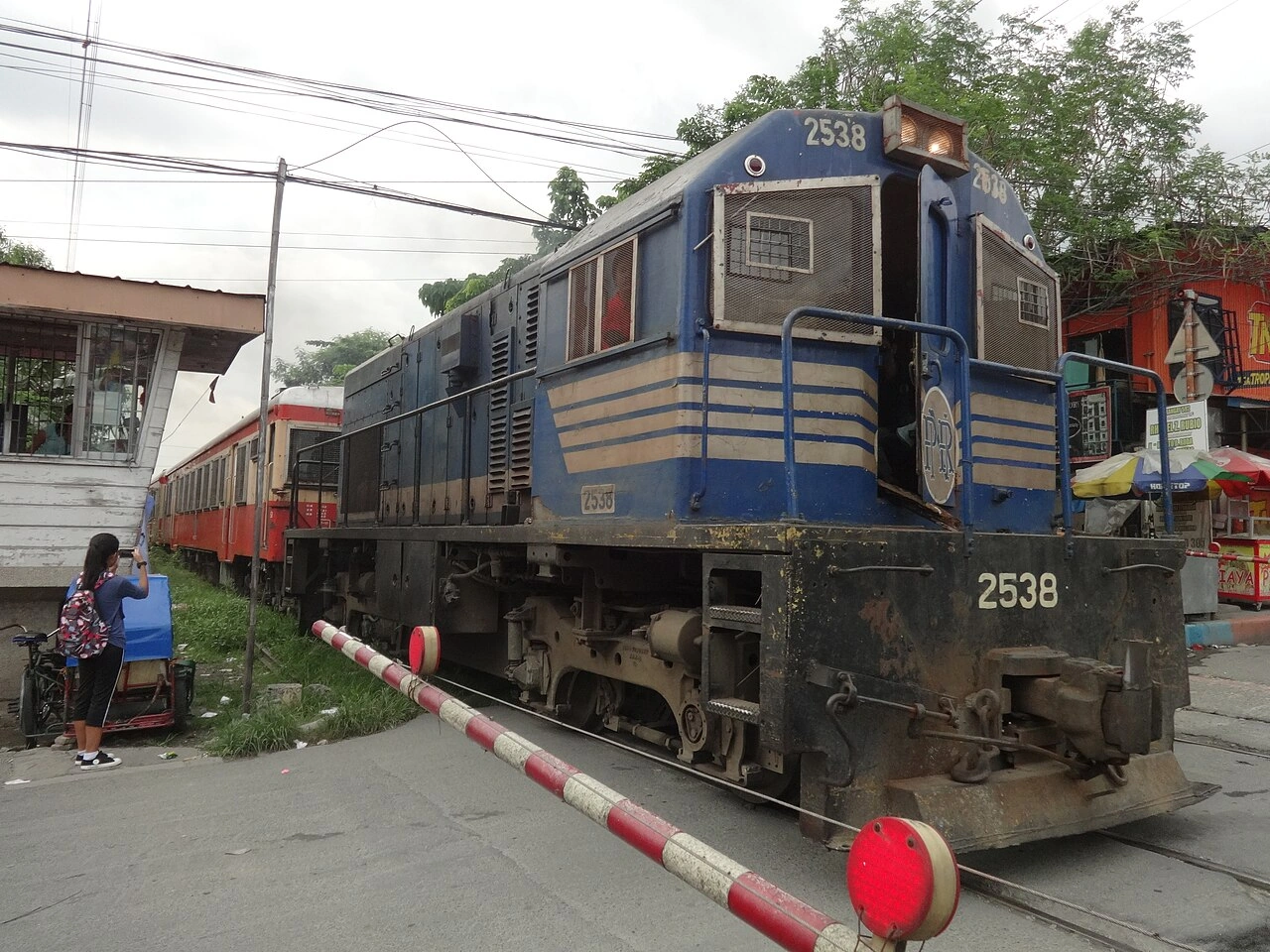
What is a railway crossing?
A railway crossing is a place where a road or path crosses railway tracks at the same level.
What is another name for a railway crossing?
It may also be called a level crossing or, particularly in North America, a railroad crossing.
How can you recognise a railway crossing?
It may be indicated by warning signs, crossbuck signs, barriers, flashing lights, bells or road markings. The design differs between countries.
What is the difference between a crossing with and without barriers?
A protected crossing uses full or partial barriers to block road traffic when a train approaches. A crossing without barriers relies on signs, lights, bells or the road user’s own observation.
Must you always stop at a railway crossing?
Not necessarily. You must stop when required by lights, barriers, signs, an approaching train or an authorised person. At an unprotected crossing, slow down and proceed only after checking that no train is approaching.
What do flashing red lights mean?
Flashing red lights mean stop and do not enter the crossing. Remain stopped until the signal permits you to continue.
May you cross while a barrier is moving?
No. Do not enter while a barrier is lowering, rising or closed. Wait until the crossing is fully open and all prohibiting signals have stopped.
May you drive around a closed barrier?
No. Never drive, cycle or walk around or underneath a closed or moving barrier.
What does a warning bell mean?
A warning bell or audible signal normally means that the crossing is closing or that a train is approaching. Do not enter the crossing while it is sounding.
What does a flashing white light mean?
In some countries, a flashing white light indicates that the crossing equipment is operating and road users may pass when the route is clear. Its exact meaning depends on local law.
What should you do at a crossing without lights or barriers?
Reduce speed, look and listen carefully in both directions and cross only after making sure that no train or other rail vehicle is approaching.
May you cross immediately after a train has passed?
Not automatically. Another train may approach on a second track. Wait until all warning signals stop and the crossing is fully open.
What if traffic ahead is blocking the exit?
Do not enter the crossing unless there is enough room beyond the tracks for your entire vehicle. Never rely on traffic moving before a train arrives.
May you wait on the tracks?
No. Railway tracks must always remain clear. Do not stop because of congestion, traffic lights or another obstruction beyond the crossing.
May you overtake at a railway crossing?
Overtaking is often prohibited or restricted because another vehicle can obstruct the view of an approaching train or warning signal. Follow local signs and overtaking rules.
May you stop or park on a railway crossing?
No. Stopping or parking on the tracks creates an immediate and potentially fatal danger.
Do the crossing signals apply to pedestrians and cyclists?
Yes. Pedestrians and cyclists must obey barriers, lights, bells and authorised personnel in the same way as other road users.
Should cyclists ride across the tracks at an angle?
Where possible, cross the rails at an angle close to 90 degrees. Rails can trap a bicycle wheel, especially when they are wet or cross the road diagonally.
What should drivers of long vehicles check?
Make sure the entire vehicle and any trailer can clear the crossing without stopping. Consider the available space, road gradient, turning room and traffic beyond the tracks.
What should drivers of high vehicles check?
Observe all height restrictions and warning signs. Electrified railway lines may have overhead equipment that can be struck by an excessively high vehicle or load.
What should you do if the signals appear defective?
Treat the crossing with extreme caution. Do not assume that no train is approaching merely because the lights or barriers are not operating.
What should you do if your vehicle becomes stuck on the tracks?
Evacuate everyone immediately, move well away from the railway and contact the emergency services or railway operator. Do not remain in the vehicle or return for belongings.
Is a railway crossing the same as tram tracks in the road?
Not always. A railway crossing normally crosses tracks that are separate from the carriageway, while tram or street-running railway tracks may form part of the road itself.
11. 右左折禁止
右左折禁止は、交通標識で示された方向への右折、左折、またはUターンを禁止する規制です。交差点または指定道路区間で適用されます。
運転者は許可された経路を進み、車線矢印や指定方向標識に従います。この禁止はそれ自体で優先関係や速度を定めず、自転車、公共交通などへの例外は明示されている場合のみ適用されます。
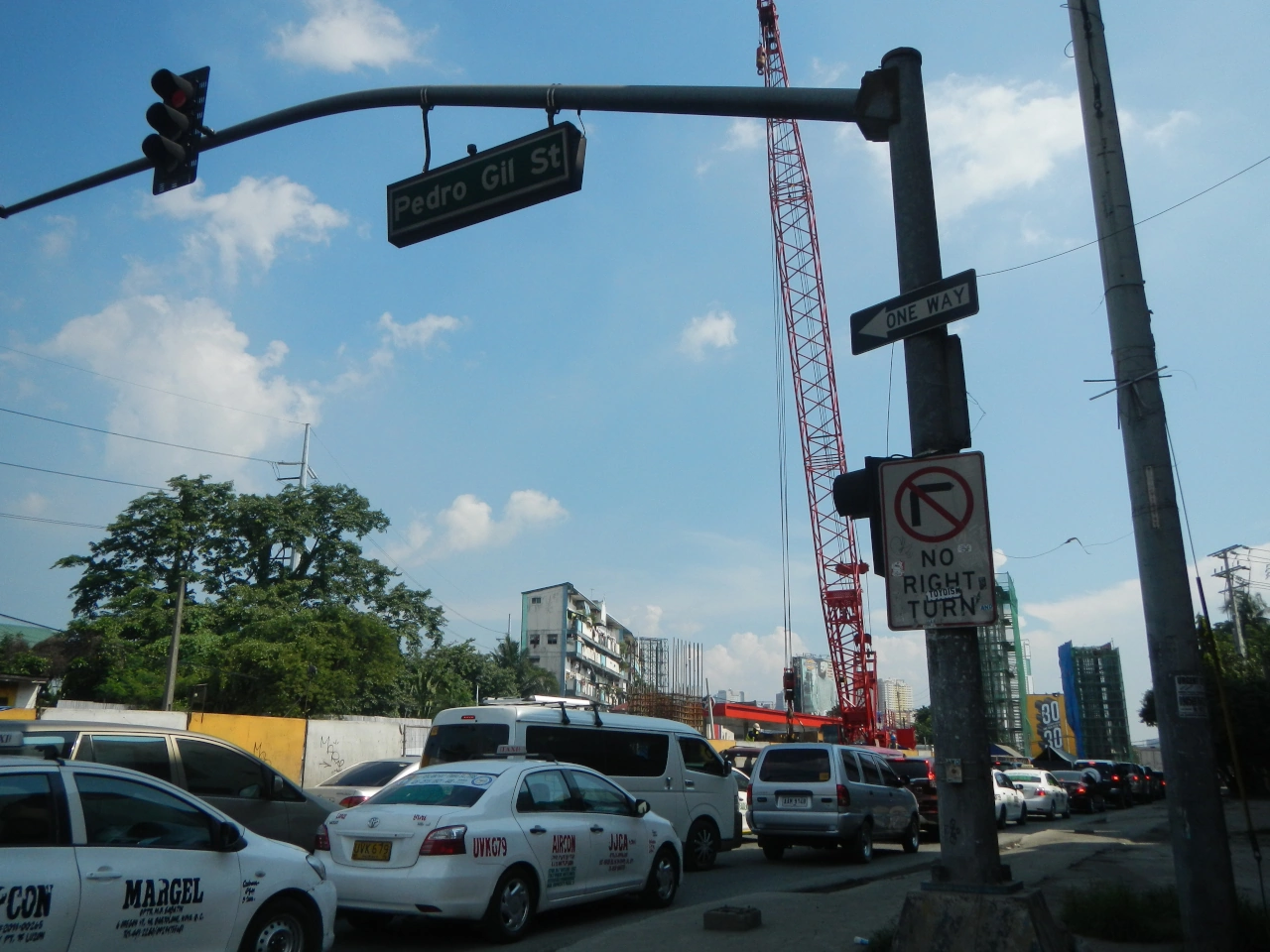
What is a turn prohibition?
A turn prohibition prevents drivers from making a particular turn or change of direction indicated by a traffic sign.
How can you recognise a turn-prohibition sign?
It is commonly a circular sign with a red border showing a crossed or barred turning arrow. The arrow indicates the movement that is prohibited.
What does a no-left-turn sign mean?
It prohibits drivers from turning left at the location or intersection to which the sign applies.
What does a no-right-turn sign mean?
It prohibits drivers from turning right at the location or intersection to which the sign applies.
What does a no-U-turn sign mean?
It prohibits drivers from turning around to travel in the opposite direction.
Is a prohibited turn the same as a mandatory direction?
No. A prohibition sign identifies a movement that may not be made. A mandatory-direction sign identifies the direction or directions that must be followed.
Is a turn prohibition the same as a no-entry sign?
No. A turn prohibition prevents a particular approach from turning into a road. A no-entry sign prohibits vehicles from entering the road from the direction where it is displayed.
Is a turn prohibition the same as one-way traffic?
No. A one-way rule controls the permitted direction along a road. A turn prohibition controls a particular movement at or near an intersection.
When does a turn prohibition apply?
It may apply at the sign, at the next intersection or throughout a stated section. Drivers must follow the sign design and the rules of the country concerned.
Can a turn prohibition be announced in advance?
Yes. An advance sign or supplementary distance panel may warn drivers that the prohibited turn is farther ahead.
Can the sign apply to only one lane?
Yes. A sign positioned above or clearly associated with one lane may apply only to drivers using that lane.
Do lane arrows also restrict turning?
Yes. Drivers must choose the correct lane and follow one of the directions displayed by its legally binding arrows.
Does a green traffic light permit a prohibited turn?
No. A green light permits traffic to proceed, but drivers must still respect turn prohibitions, lane arrows and other regulatory signs.
Does a turn prohibition change priority?
No. Drivers making another permitted movement must still follow traffic lights, priority signs and the ordinary rules concerning pedestrians, cyclists and other vehicles.
Does a turn prohibition impose a speed limit?
No. The applicable general, zonal or posted speed limit remains in force.
Must you use an indicator for a permitted turn?
Yes, where local law requires it. Signal early enough to communicate your intention and stop signalling after completing the movement.
Does signalling make a prohibited turn legal?
No. An indicator communicates an intention but cannot authorise a movement prohibited by a traffic sign.
May cyclists be exempted?
Yes. A supplementary sign may allow cyclists or other specified road users to make a turn that remains prohibited for general traffic.
May buses or taxis be exempted?
Public transport, taxis or other authorised vehicles may be exempted where a supplementary sign or local rule expressly permits the movement.
Does a no-left-turn sign also prohibit a U-turn?
Not universally. Some countries treat these as separate prohibitions. Drivers must check whether a separate no-U-turn sign or general rule applies.
May you turn into a driveway before the prohibited intersection?
This depends on the exact legal scope of the sign. A sign applying specifically to the next intersection may not regulate an earlier property entrance, but another sign or road marking may still prohibit the movement.
May you reverse to avoid the turn prohibition?
No. Do not reverse through traffic or into an intersection to evade the sign. Continue along a permitted route and change direction later where it is legal and safe.
What should you do after entering the wrong lane?
Follow the movement permitted from that lane. Do not turn suddenly across another lane or ignore the sign; continue and choose another legal route.
Can a temporary turn prohibition be binding?
Yes. Properly placed temporary signs near roadworks, incidents or events must be obeyed.
Do instructions from an authorised officer override the sign?
Yes. Follow instructions from an authorised traffic officer even when they differ from the displayed turn prohibition.
12. 学校周辺
学校周辺は、多くの子どもが徒歩、自転車で通行し、道路を横断したり車両へ乗降したりする可能性が高い学校付近の道路または道路群です。警戒標識、ゾーン標識、路面表示、交通静穏化設備、点滅灯などで示されます。
特別な速度制限、駐車規制、進入規制が常時または登下校時間だけ適用されることがあります。運転者は減速し、子どもを注意深く確認し、停止できるよう備える必要があります。
What is a school area?
A school area is a road or group of roads near a school where drivers should expect large numbers of children, pedestrians, cyclists and stopping vehicles.
How can you recognise a school area?
It may be identified by school warning signs, speed-zone signs, flashing lights, road markings, coloured surfacing or traffic-calming measures. The signs differ between countries.
Does every road beside a school have special legal rules?
No. Special school-area rules normally apply only where signs, signals or local legislation establish them.
What is the speed limit in a school area?
There is no universal school-area speed limit. The applicable limit depends on the country, region, signs and whether a variable restriction is active.
Is the school-area speed limit always active?
Some limits apply permanently, while others apply only during displayed times or when flashing or variable signs are active. Drivers must observe the actual sign arrangement.
Must you drive below the displayed limit?
Yes, when necessary. The displayed speed is a maximum. Children, congestion, poor visibility or vehicles stopping near the school may require a much lower speed.
Why are children especially vulnerable in traffic?
Children may have difficulty judging speed and distance, may be hidden by parked vehicles and may enter the road unexpectedly.
How should you approach a school area?
Reduce speed early, increase your observation and be prepared for children crossing, cyclists changing direction, vehicle doors opening and cars stopping suddenly.
Do children automatically have priority everywhere?
No. Priority depends on crossings, traffic lights, authorised crossing supervisors and local rules. Drivers must nevertheless take exceptional care to avoid endangering children.
Must you obey a school crossing supervisor?
Yes. Drivers and other road users must follow lawful instructions given by an authorised person controlling traffic for children.
May children cross away from a pedestrian crossing?
This depends on local pedestrian rules. Drivers should remain prepared for children to cross unexpectedly, even where they are required to use a nearby crossing.
Does a school sign create pedestrian priority?
Not by itself. A school warning sign alerts drivers to children but does not normally create the legal effect of a pedestrian crossing.
Does a school area change intersection priority?
No. Traffic lights, priority signs and the ordinary intersection rules remain applicable unless another traffic arrangement provides otherwise.
May you overtake in a school area?
Overtaking may be restricted by signs or local law. Even where it is permitted, drivers should not overtake when children, crossings, limited visibility or stopped vehicles make the manoeuvre unsafe.
May you stop to drop off a child?
Only where stopping is permitted and can be completed safely. Do not stop on a crossing, pavement, bike path, bus stop or another prohibited or dangerous location.
May you park near a school entrance?
Follow the parking signs and markings. Do not block entrances, pavements, bike paths, crossings, visibility or access for buses and emergency vehicles.
Why is double parking dangerous near a school?
It blocks traffic and visibility and may force children to walk between moving vehicles or enter the road from behind an obstruction.
What should you watch for near school buses?
Expect children to enter or leave the vehicle and possibly cross the road. Reduce speed and follow any special warning lights, signs or local school-bus rules.
May cyclists ride through a school area?
Normally, yes. They must follow the applicable road, bike-path, speed and priority rules. Drivers should expect inexperienced young cyclists.
Is a school area the same as a school street?
No. A school area normally remains open to traffic under special caution or speed rules. A school street temporarily restricts or excludes motor traffic during specified periods.
Is a school area the same as a Zone 30?
Not universally. A school area may form part of a Zone 30, use another speed limit or have a variable restriction that applies only at particular times.
When do the school-area rules end?
They normally end at an end sign, at the end of the stated time period or when the variable signal is no longer active. The surrounding road rules then apply.
13. 追い越し
追い越しは、同じ方向へ進む他の道路利用者を通過する行為です。通常は位置や車線を変え、遅い道路利用者を通過した後、安全を確認して適切な位置へ戻ります。
追い越し前には十分な視界と空間を確認し、ミラーと死角を確認し、必要な合図を行い、他の道路利用者がすでに追い越し中でないことを確かめます。速度制限を超えたり、他者を危険にさらしたりせず完了しなければなりません。
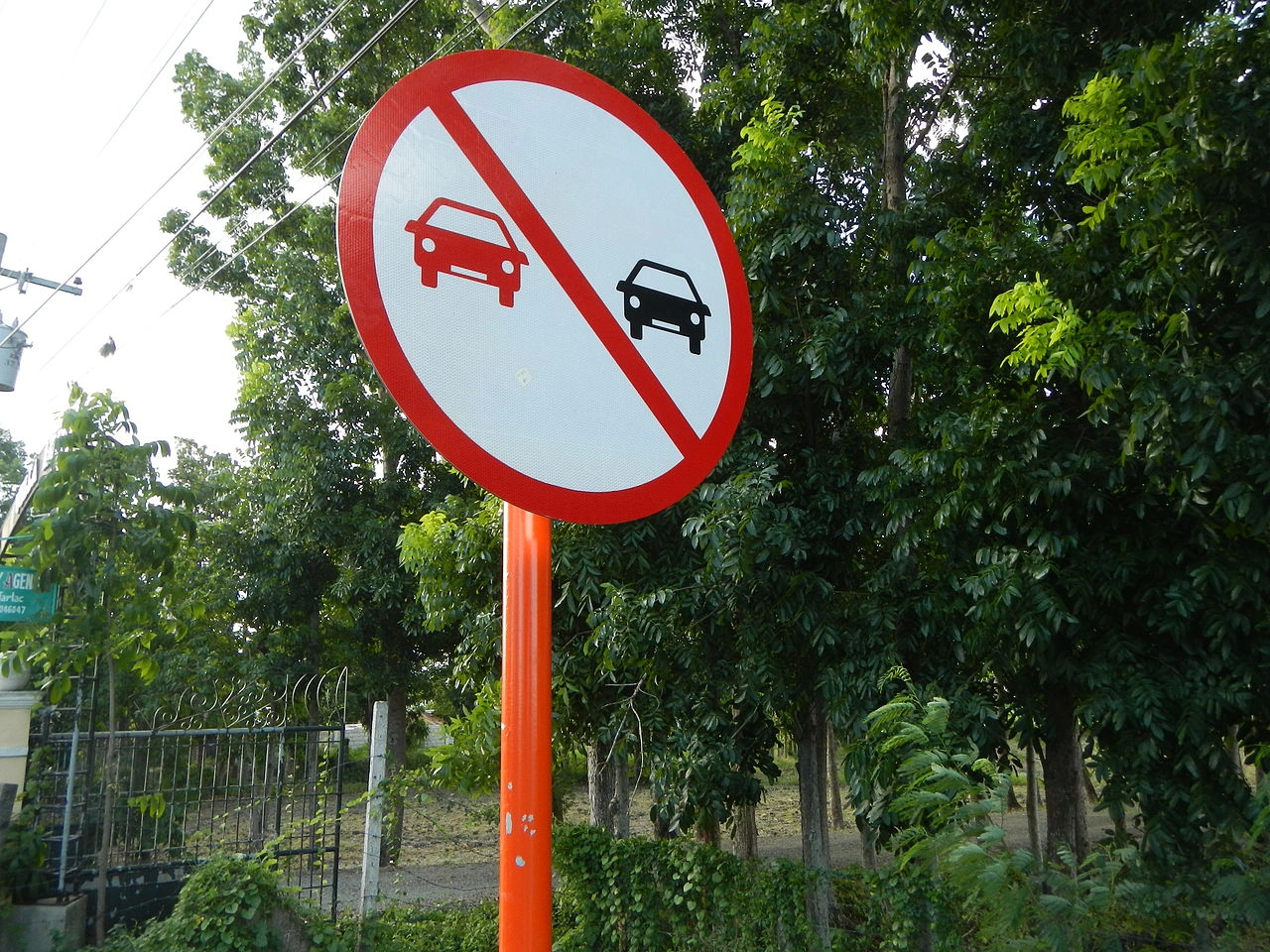
On which side should you overtake?
In right-hand traffic countries, overtaking normally takes place on the left. In left-hand traffic countries, it normally takes place on the right. National rules can provide exceptions in particular situations.
What should you check before overtaking?
Make sure there is sufficient visibility and space, check mirrors and blind spots, ensure that nobody behind has already started overtaking and confirm that you can safely return to your normal position after passing.
When should you not overtake?
Do not overtake where signs or road markings prohibit it or where visibility, approaching traffic, intersections, crossings, bends, hills or other conditions make the manoeuvre unsafe.
14. カーブ
カーブは、道路が左または右へ方向を変える区間です。急なカーブ、予期しにくいカーブ、見通しの悪いカーブでは、対向車、停止車両、歩行者、その他の危険を確認できる距離が短くなります。
運転者はカーブに入る前に減速し、自分の車線内を保ち、滑らかに操舵、制動、加速します。警戒標識は最初のカーブ方向や連続カーブを示す場合があります。
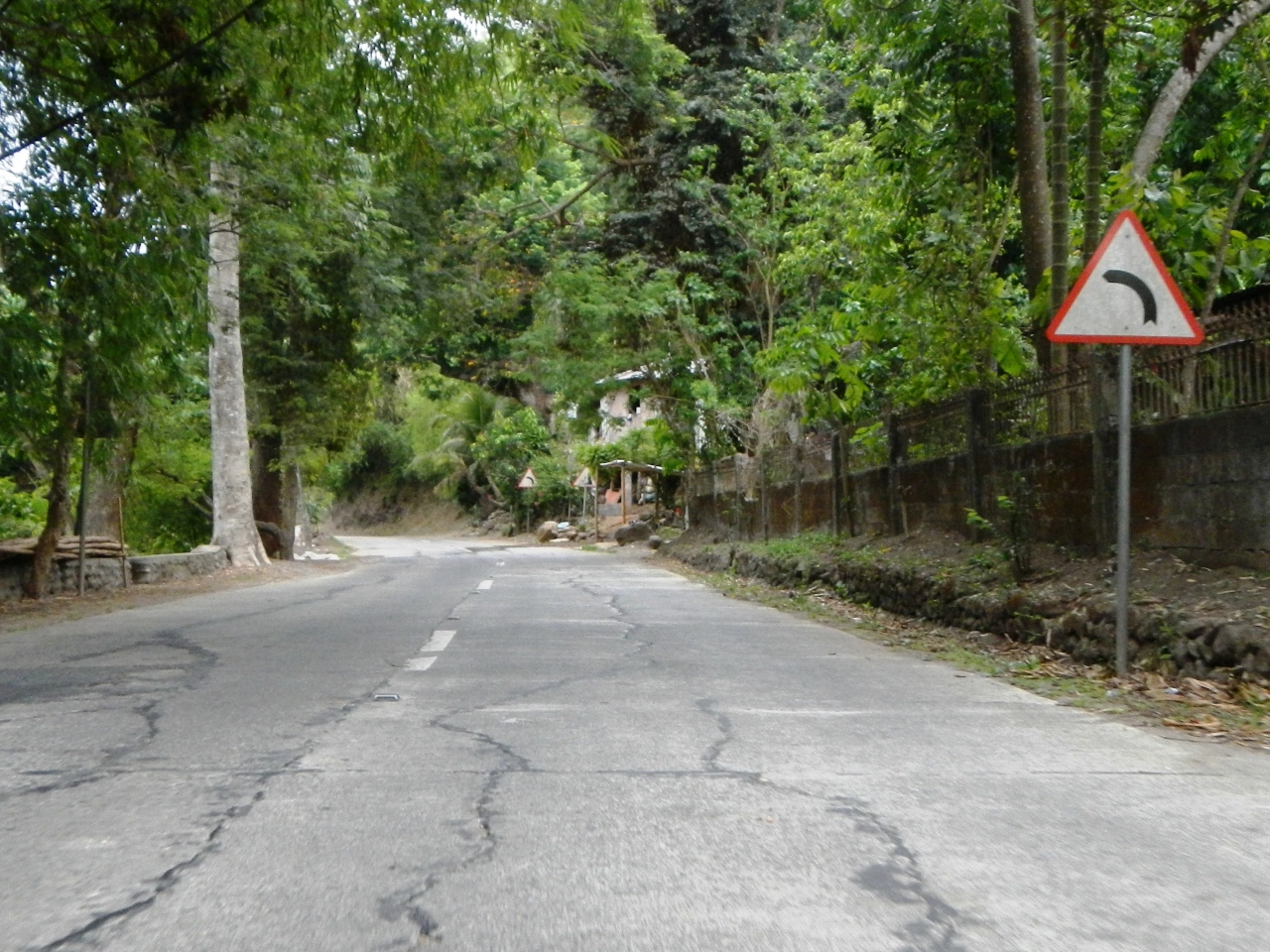
What is a road curve?
A road curve is a section where the road changes direction to the left or right.
How can you recognise a dangerous curve?
It may be indicated by a triangular warning sign showing a curved line. The symbol normally indicates whether the first curve turns left or right.
What is a double curve?
A double curve consists of two curves in opposite directions. The warning sign normally shows the direction of the first curve.
Can a sign warn of more than two curves?
Yes. A double-curve symbol may also warn of a longer sequence of successive curves. A supplementary panel may indicate the length of the winding section.
Does a curve-warning sign impose a speed limit?
No. It normally warns of danger rather than setting a numerical limit. Drivers must still reduce speed when the permitted maximum would be unsafe.
When should you reduce speed for a curve?
Reduce speed before entering the curve, while the vehicle is travelling straight and has maximum stability.
Should you brake heavily while cornering?
No. Harsh braking in a curve can reduce stability and grip. Complete most braking beforehand and use smooth adjustments where necessary.
Should you accelerate through a curve?
Maintain a controlled speed through the curve. Accelerate smoothly only when the exit becomes visible and the vehicle is stable.
Where should you look while driving through a curve?
Look towards the path you intend to follow and the visible exit of the curve. Continue checking the road surface, lane position and nearby traffic.
Must you remain in your lane?
Yes. Do not cross the centre line or cut across another lane, even when this would make the curve appear easier to negotiate.
Why is visibility limited in a curve?
Buildings, vegetation, slopes, barriers and the road alignment may hide oncoming traffic, cyclists, pedestrians, stopped vehicles or debris.
How fast should you drive through a curve?
Choose a speed that allows you to remain in your lane and stop within the distance you can see to be clear. The safe speed may be far below the legal maximum.
What is an advisory speed for a curve?
An advisory speed is a recommended safe speed for negotiating the curve under suitable conditions. It is not necessarily the legal maximum speed.
How do rain, snow or ice affect a curve?
They reduce tyre grip and increase the risk of skidding. Reduce speed earlier, use smooth controls and leave additional distance from other vehicles.
What should you do if gravel or debris is present?
Avoid sudden braking or steering. Reduce speed smoothly and follow a clear path without entering another traffic lane.
May you overtake in a curve?
Do not overtake when visibility is insufficient to see approaching traffic and complete the manoeuvre safely. Local law, signs and continuous road markings may also prohibit overtaking.
May you stop or park in a curve?
Only where it is permitted and the vehicle remains clearly visible. Stopping or parking in a poorly visible curve may create a serious hazard and is often prohibited.
Should you follow another vehicle closely through a curve?
No. Leave enough distance to react if the vehicle ahead brakes for a hidden obstruction or a sharper part of the curve.
Why should motorcyclists take extra care?
Motorcycles require grip for both cornering and braking. Riders should reduce speed before the curve, choose a stable line and avoid painted markings, gravel and slippery surfaces.
How can a curve affect a trailer or caravan?
A trailer may sway, track closer to the inside of the curve or become unstable when speed and steering inputs are excessive. Enter slowly and steer smoothly.
Why do large vehicles need more space?
Buses and trucks may move closer to lane boundaries because of their length and width. Other drivers should avoid travelling beside them through a tight curve.
What should you do if an oncoming vehicle crosses the centre line?
Reduce speed, move safely towards your side of the road and avoid a sudden manoeuvre that could cause another collision. Sound a warning only when reasonably necessary.
Does the absence of a warning sign mean every curve is safe at the speed limit?
No. Drivers must assess every curve and adapt their speed even when no warning sign is displayed.
15. シェブロン標識
シェブロンは、道路の急な方向変化を示すV字形または矢印形の道路表示板です。通常、カーブ外側に設置され、先端が道路の進行方向を示します。
暗闇や悪天候でもカーブの位置と方向を分かりやすくします。通常、速度制限や優先関係そのものを定めるものではないため、運転者はカーブ前で減速し、他の標識や路面表示にも従う必要があります。
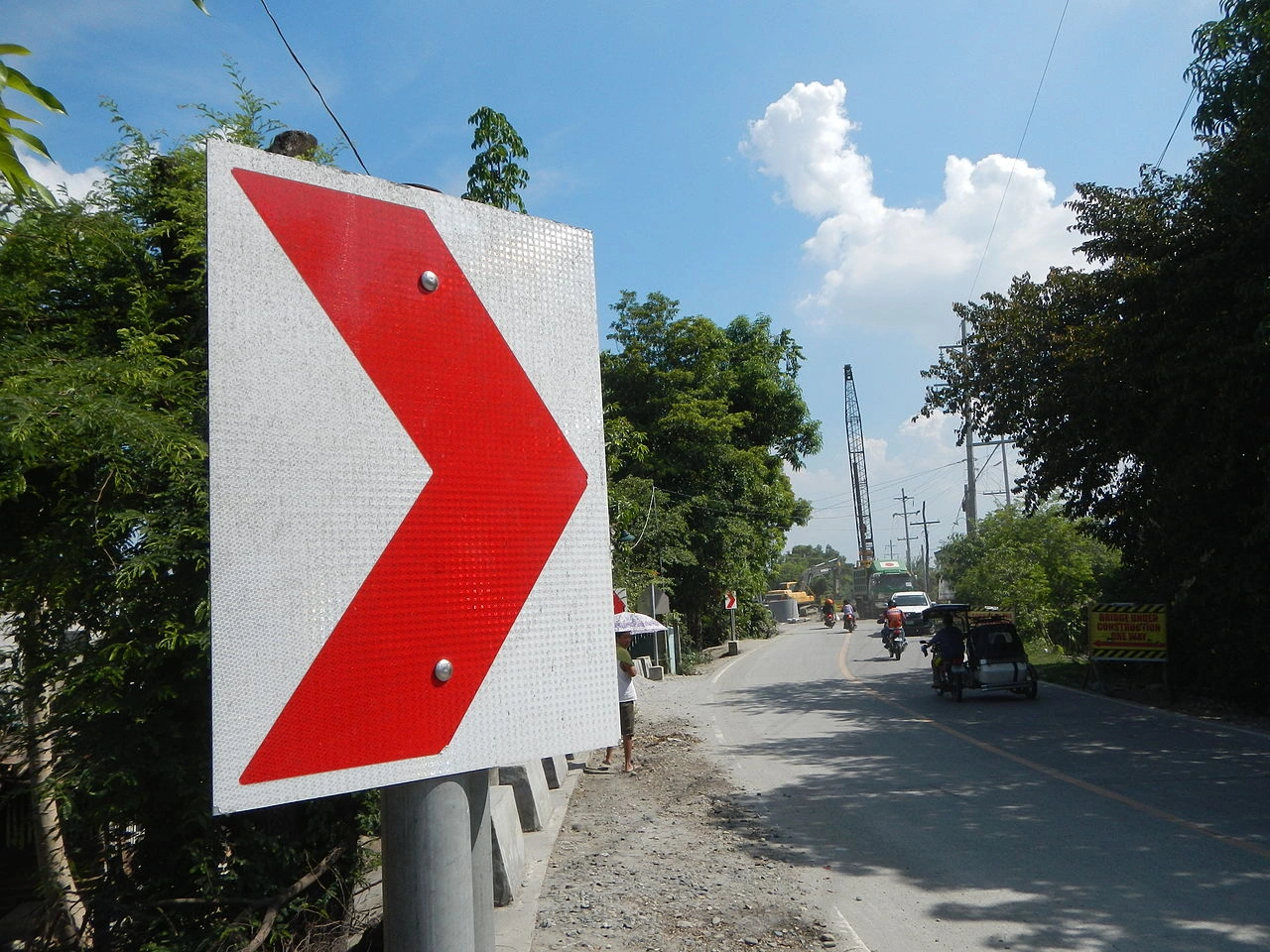
What is a road chevron?
A road chevron is a V-shaped or arrow-shaped marker used to guide drivers through a curve or another sharp change in road direction.
How can you recognise a chevron?
It is normally displayed on a rectangular board using strongly contrasting colours. Several chevrons may be placed in sequence around a curve.
Which direction does a chevron indicate?
The point of the chevron indicates the direction in which the road continues. A chevron pointing left guides traffic through a left curve, while one pointing right guides traffic through a right curve.
Where are chevrons normally placed?
They are generally placed along the outside of a curve, facing approaching traffic so that drivers can clearly see the road alignment.
What is the purpose of a series of chevrons?
A series of chevrons visually traces the curve and helps drivers judge its direction, length and changing alignment.
Is a chevron the same as a curve-warning sign?
No. A curve-warning sign normally warns drivers before the curve. Chevron boards are usually positioned within or around the curve to guide drivers through it.
Does a chevron impose a speed limit?
No. It guides drivers through the change in direction but does not normally introduce a numerical speed limit.
Does a chevron show a recommended speed?
Not by itself. A separate advisory-speed or speed-limit sign may indicate an appropriate or legally required speed.
Does a chevron determine priority?
No. Traffic lights, priority signs and the ordinary priority rules remain applicable.
Does a chevron mean the curve is dangerous?
It normally indicates that the curve requires additional visual guidance. Drivers should expect a noticeable or potentially sharp change in direction.
Does the number of chevrons show how sharp the curve is?
Not directly. The number and spacing depend on the length, radius and design of the curve and on the road authority’s signing standards.
Does a larger chevron mean a sharper curve?
Not necessarily. Larger boards may be used where approach speeds are higher or where greater visibility is needed.
How should you approach chevrons?
Reduce speed before the curve, observe the direction of the boards and remain within your traffic lane.
Should you brake heavily after reaching the chevrons?
No. Complete most braking before entering the curve and use smooth steering, braking and acceleration while following it.
May you drive towards the chevron boards?
No. The boards normally mark the outside edge of the curve. Follow the road around them rather than steering towards them.
May you cut across the centre line to straighten the curve?
No. Remain within your lane and do not enter the path of oncoming traffic.
May you overtake beside chevrons?
The chevrons do not automatically prohibit overtaking, but overtaking is unsafe when the curve restricts visibility or available road width.
Why are chevrons reflective?
Reflective material makes the boards easier to see in darkness and poor weather when illuminated by vehicle headlights.
Can chevrons be illuminated?
Yes. Some high-risk curves use illuminated or flashing chevrons to make the change in direction more conspicuous.
Can chevrons have different colours?
Yes. Their colours and design vary between countries, but contrasting colours are used to make the direction clearly visible.
What should motorcyclists consider?
Reduce speed before the curve, choose a stable path and look through the turn. Do not focus exclusively on the chevrons or allow the motorcycle to cross the centre line while leaning.
Does the absence of chevrons mean a curve is safe at the speed limit?
No. Drivers must assess every curve and select a safe speed whether or not chevron boards are installed.
16. 道路工事
道路工事は、道路上または道路脇で行われる建設、維持、修理、点検作業です。道路配置、車線幅、速度制限、優先関係、通行方向、歩行者・自転車施設が一時的に変更されることがあります。
運転者は仮設標識、信号、バリア、路面表示、作業員の指示に従い、減速し、車間距離を増やし、狭い車線、渋滞、作業員、重機、急な経路変更に備える必要があります。
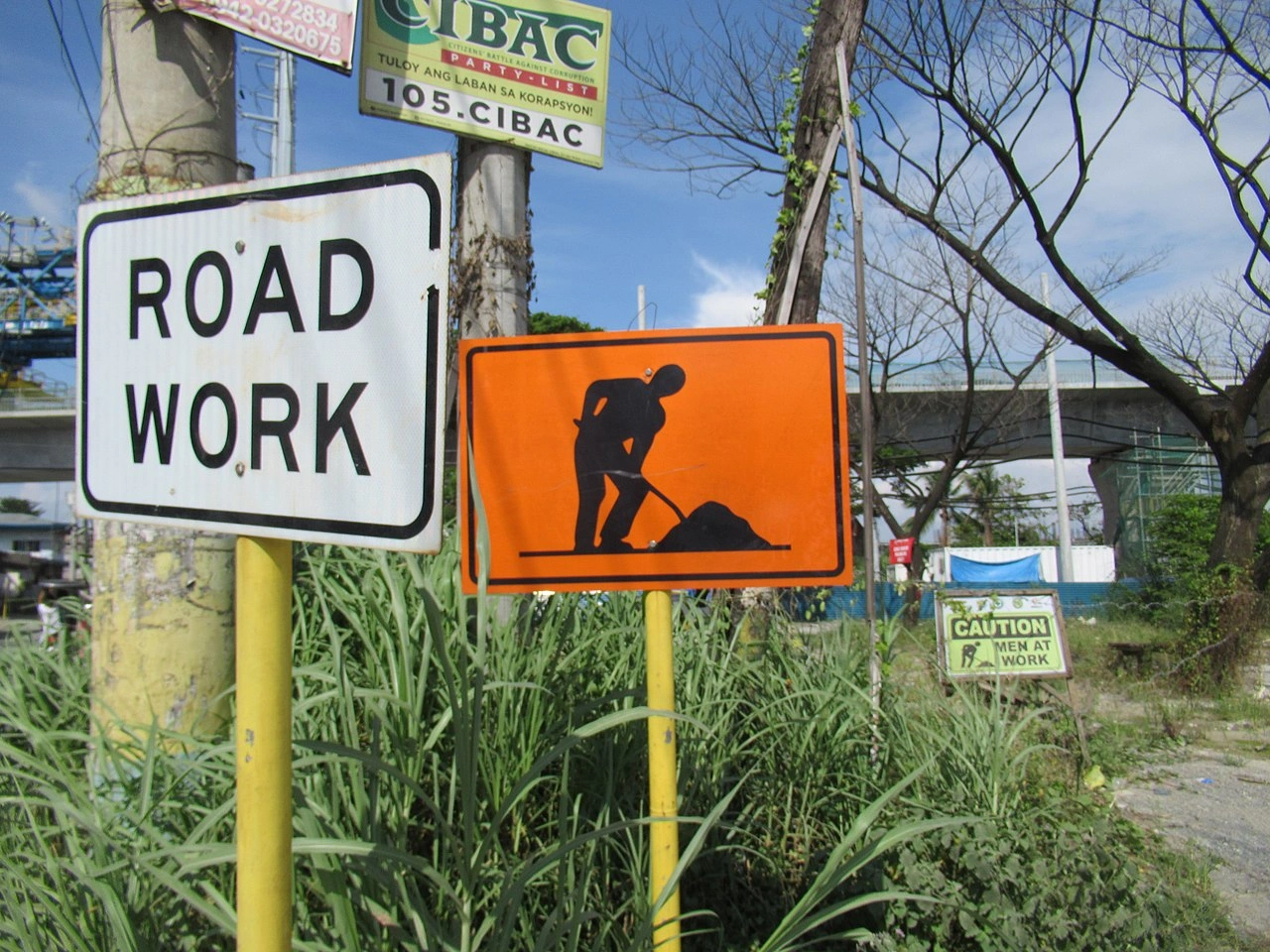
What are roadworks?
Roadworks are construction, maintenance, repair or inspection activities carried out on or beside a road.
How can you recognise roadworks?
They may be indicated by a roadworks warning sign, cones, barriers, temporary markings, flashing lights, machinery or workers.
Does a roadworks sign impose a speed limit?
No, not by itself. A separate temporary or permanent speed-limit sign establishes the legal maximum speed.
Must you drive below the speed limit?
Yes, when necessary. Narrow lanes, workers, machinery, poor surfaces, congestion or limited visibility may require a substantially lower speed.
Are temporary traffic signs legally binding?
Yes. Correctly installed temporary signs must be obeyed for as long as they are in force.
Which road markings should you follow?
Follow the temporary markings that guide traffic through the works. Local law determines how they take priority over older permanent markings.
Must you obey temporary traffic lights?
Yes. Stop at the line or signal when required and do not proceed until the applicable light permits it.
Must you obey road workers directing traffic?
Obey instructions from workers or controllers who are legally authorised to regulate traffic. Their signals may temporarily replace the ordinary traffic arrangement.
What should you do when a lane closes?
Observe the signs and lane arrows, check mirrors and blind spots and merge safely into the continuing lane.
What is zipper merging?
Zipper merging means that vehicles in an ending or blocked lane merge alternately with vehicles in the continuing lane near the narrowing during congested traffic.
Should you merge early?
This depends on local law and traffic conditions. Where zipper merging applies during congestion, use both lanes and merge near the narrowing. In flowing traffic, change lanes when a safe gap is available.
Who has priority when your lane is obstructed?
Without another traffic control, the driver whose route is obstructed commonly has to yield before moving into the path of approaching or adjacent traffic.
Can temporary lights control alternating traffic?
Yes. Temporary signals may allow only one direction at a time through a narrow section.
May you enter when the exit is blocked?
No. Do not enter a narrow section, intersection or temporary crossing when congestion may leave you stopped inside it.
May you move cones or barriers?
No. Do not move, pass around or ignore traffic-control equipment unless an authorised person instructs you to do so.
May you overtake in roadworks?
Only when signs and markings permit it and sufficient width and visibility remain. Overtaking is often unsafe in narrow or shifted lanes.
May you stop or park in roadworks?
Only where temporary and permanent signs permit it. Do not obstruct workers, machinery, emergency access or temporary pedestrian and cycle routes.
What should you watch for near workers?
Expect workers to enter the road, machinery to move or reverse and vehicles to leave the worksite. Reduce speed and leave generous space.
What should cyclists do at roadworks?
Follow the signed temporary cycle route or lane. Check surrounding traffic carefully before leaving a closed or obstructed bike path.
What should pedestrians do?
Use the designated temporary walkway or crossing and follow barriers, signs, signals and instructions from authorised personnel.
Why should you increase your following distance?
Traffic may brake suddenly because of queues, lane changes, machinery, debris or changing signals. Additional distance provides more time to react.
What should you do if your vehicle breaks down in roadworks?
Move to the safest available location where possible, activate the hazard warning lights and contact assistance. Avoid standing in a live or narrow traffic lane.
Do ordinary traffic rules still apply?
Yes. Rules concerning safe speed, following distance, signalling, priority and vulnerable road users continue to apply unless a lawful temporary arrangement changes them.
17. 重量制限
重量制限は、表示された値を超える質量の車両または車両組合せが道路区間、橋、トンネル、その他の構造物へ進入・通過することを禁止します。現地法により、実際の積載質量、最大許容質量、または個別車軸荷重を指す場合があります。
運転者は標識がどの質量を指すか理解し、必要に応じて車両、乗員、積荷、トレーラーを含めて計算する必要があります。制限を超える車両は別の適切な経路を使用しなければなりません。
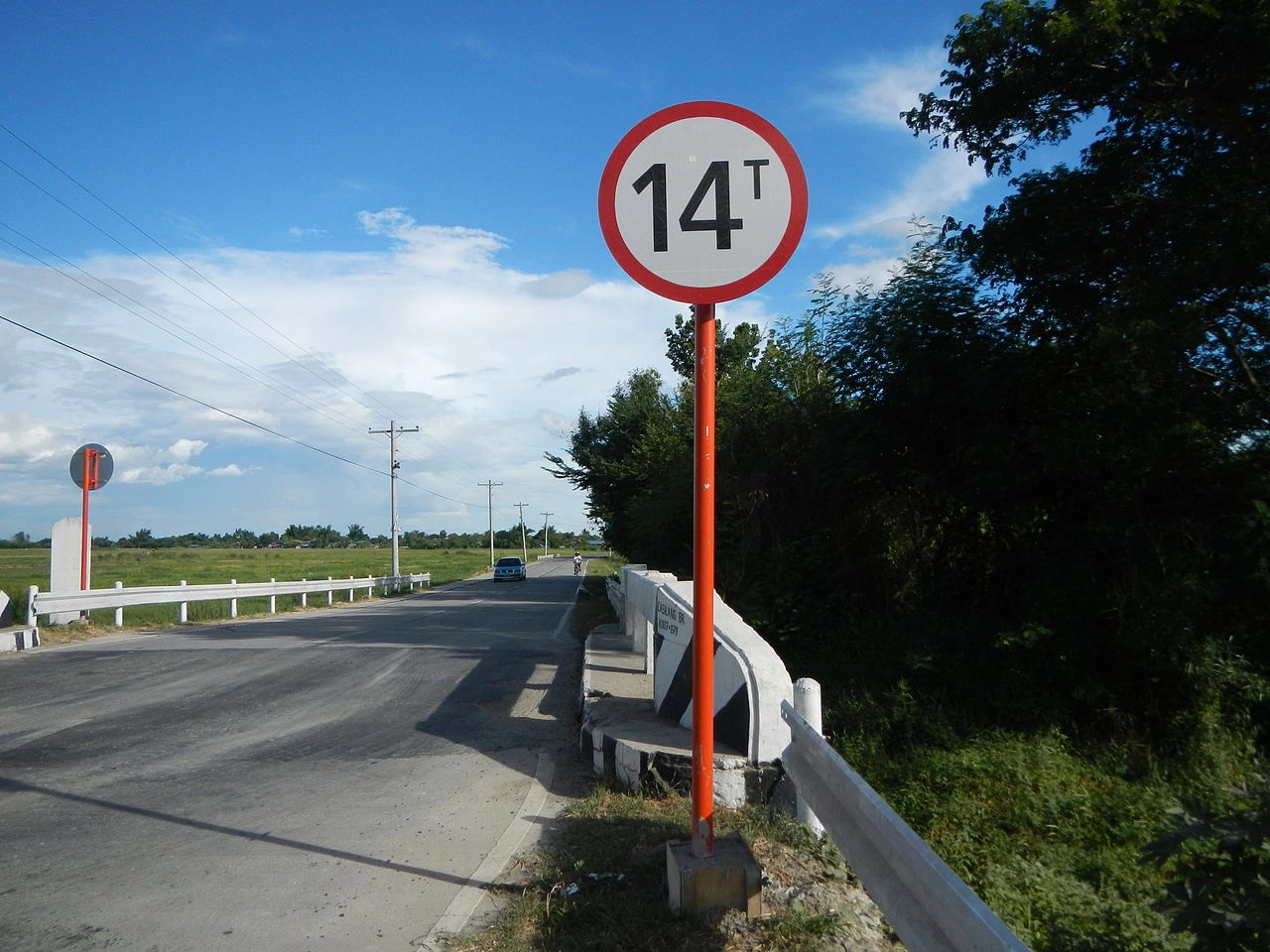
What does a weight-limit sign mean?
It prohibits vehicles or vehicle combinations whose relevant mass exceeds the value displayed on the sign.
How can you recognise a weight-limit sign?
It is commonly a circular regulatory sign showing a mass in tonnes, kilograms or another local unit.
Is a weight-limit sign a warning or a prohibition?
It is normally a prohibition. A vehicle exceeding the displayed limit may not continue beyond the sign.
What is actual loaded mass?
Actual loaded mass is the weight of the vehicle as it is currently travelling, including the vehicle itself, its load, driver, passengers and other relevant equipment.
What is maximum authorised mass?
Maximum authorised mass is the highest total mass at which the vehicle is legally approved to operate. It is normally recorded in the vehicle documents.
Is actual mass the same as maximum authorised mass?
No. A lightly loaded vehicle may have an actual mass below its maximum authorised mass. A restriction may legally refer to either measurement, depending on the sign and local law.
Does the load count towards the weight limit?
Yes. Cargo, passengers, fuel, equipment and other carried items may all contribute to the vehicle’s actual loaded mass.
Does the driver’s weight count?
Where the restriction concerns actual loaded mass, the driver and other occupants are normally included.
Does a trailer count?
This depends on the wording of the restriction. It may apply to each vehicle separately or to the combined mass of the complete vehicle combination.
What is an axle-weight limit?
An axle-weight limit restricts the amount of mass carried by one axle or axle group rather than the total mass of the vehicle.
Why can axle load matter when total mass is legal?
A vehicle may comply with the total weight limit while too much of its load is concentrated over one axle, creating excessive stress on the road or bridge.
Where are weight limits commonly used?
They are often used at bridges, weak roads, historic centres, tunnels, temporary structures and roads unsuitable for heavy traffic.
Does the sign show the maximum capacity of a bridge?
Not necessarily. The displayed legal limit may include engineering and safety margins and should not be interpreted as the structure’s exact failure point.
May a vehicle exactly equal to the displayed weight pass?
A sign normally prohibits vehicles exceeding the displayed value. The driver must still be certain that the relevant mass does not exceed it.
How can a driver determine the actual mass?
The most reliable method is to use an authorised or suitable weighbridge. Vehicle documents alone normally show approved limits rather than the vehicle’s current loaded mass.
Can the mass be estimated from the cargo weight?
An estimate may help with planning, but it must include the vehicle, fuel, occupants, equipment, load and trailer. A weighbridge is preferable when the remaining margin is small.
Can moving a load change the total mass?
No. Moving cargo within the vehicle does not change its total mass, but it can change the load carried by each axle.
Can unloading part of the cargo make the vehicle legal?
Yes, when done lawfully and safely. The vehicle may continue only after its relevant mass complies and the remaining load is properly secured.
Can a temporary weight limit apply?
Yes. Temporary restrictions may protect a damaged bridge, weakened road, roadworks structure or road affected by flooding or thawing.
Can different lanes have different weight limits?
Yes. Lane-specific signs may direct heavier vehicles towards a lane or structure designed to carry them.
Can a weight restriction be announced in advance?
Yes. Advance signs may give the distance to the restriction or indicate a diversion so affected vehicles can choose another route.
Does a weight-limit sign impose a speed limit?
No. The applicable general, zonal or posted speed limit remains in force.
Does the sign change priority?
No. Traffic lights, priority signs and ordinary priority rules remain applicable.
What should you do when your vehicle exceeds the limit?
Do not continue. Stop where safe and follow a signed diversion or another route suitable for the vehicle’s mass.
Should you rely on a navigation system?
No. Navigation information may be incomplete or outdated. Traffic signs and official restrictions always take precedence.
May you reverse away from a restriction?
Only when reversing is lawful and can be completed safely. Use assistance where necessary, particularly with a long or heavy vehicle combination.
What can happen if an overweight vehicle continues?
The vehicle may damage the road or structure and may be stopped, fined, unloaded or prohibited from continuing under local law.
18. 信号機
信号機は、色灯、矢印、記号によって道路利用者が進行できる時、停止準備をする時、停止し続ける時を規制します。進行方向、車線、歩行者、自転車、公共交通ごとに別の信号がある場合があります。
青信号でも、進路が空いており、その動きが法的に許可される場合にのみ進めます。優先規則、右左折制限、車線表示、交通整理員の指示にも従う必要があります。
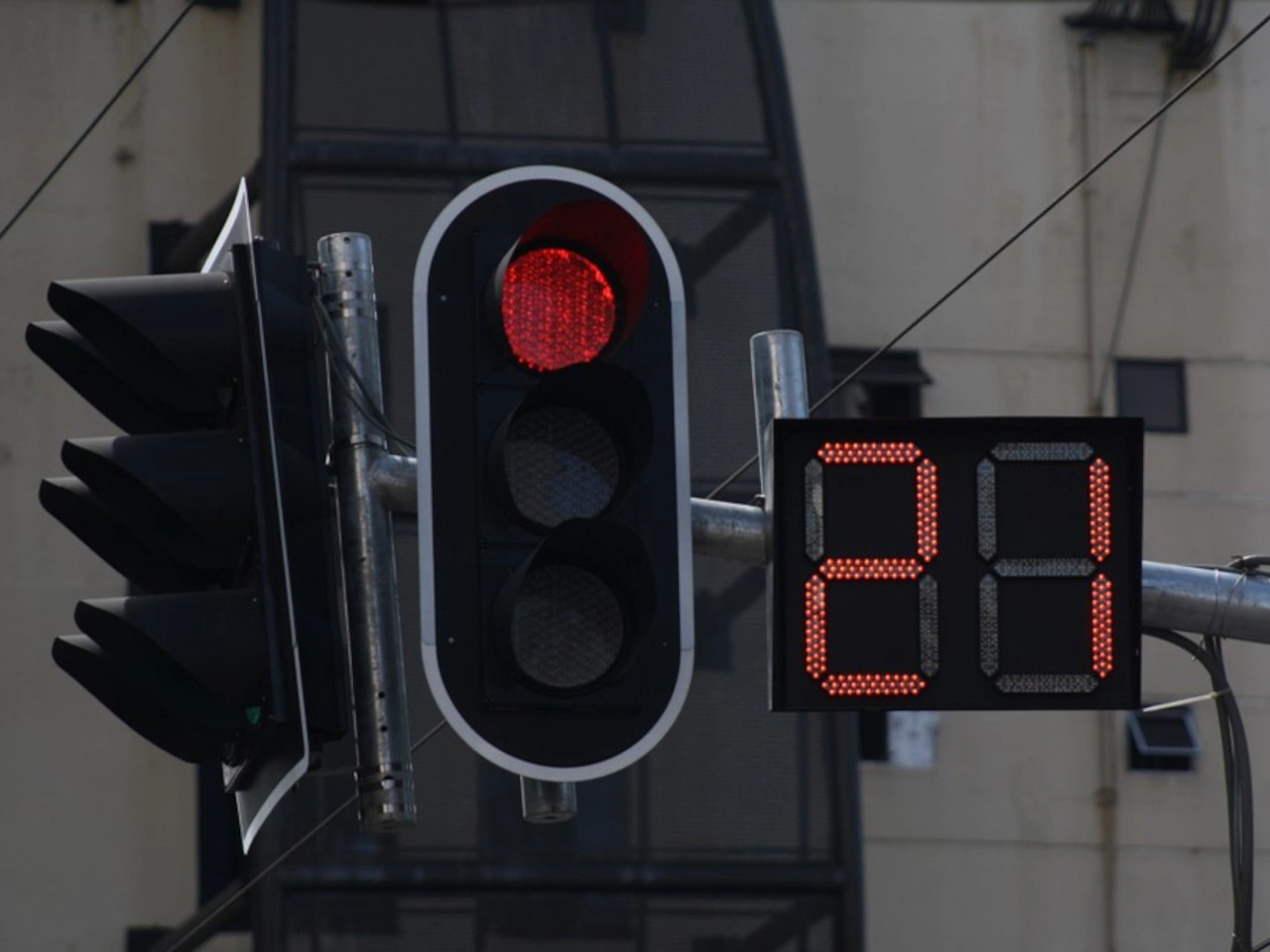
What are traffic lights?
Traffic lights are signals that use coloured lights, arrows or road-user symbols to regulate traffic movements.
What does a red traffic light mean?
A red light requires road users to stop before the stop line or signal and remain stopped until movement is permitted.
What does a steady amber light mean?
A steady amber light normally requires drivers to stop unless they are already too close to stop safely. It warns that the signal is changing to red.
What does a green traffic light mean?
A green light permits road users to pass the signal, but only when the route is clear and the intended movement is otherwise legal.
Does green mean that you have priority over everyone?
No. You may still have to give way to pedestrians, cyclists, oncoming traffic or other road users when turning or following a conditional arrow.
May you enter a blocked intersection on green?
No. Do not enter when congestion is likely to leave you stopped inside the intersection and obstructing crossing traffic.
Where should you stop at a red light?
Stop before the stop line. When no stop line is provided, stop before the traffic light or at another legally prescribed position.
May you cross the stop line and then stop?
No. The required stop must normally be completed before the stop line. Do not stop on a pedestrian or cycle crossing.
What if the light changes to amber while you are approaching?
Stop when this can be done safely. Continue only when you are already too close to stop without creating danger.
Should you accelerate to pass an amber light?
No. Do not accelerate to avoid stopping. Maintain control and stop unless doing so safely is no longer possible.
What do arrow-shaped traffic lights mean?
They have the same general meaning as circular lights, but the prohibition or permission applies only to the direction shown by the arrow.
What does a green arrow displayed with a red light mean?
It may permit travel in the indicated direction while other movements remain prohibited. Drivers may still have to give way to conflicting traffic and pedestrians.
Does a green arrow override a no-turn sign?
Not universally. Drivers must follow the complete local sign arrangement. A traffic signal does not necessarily cancel a separate regulatory prohibition.
May you turn right on red?
Only where local law or a specific sign or signal expressly permits it. There is no universal right to turn on red.
What does a flashing amber light mean?
It warns of a potential hazard and normally allows cautious passage. The ordinary priority arrangement remains applicable.
What should you do when the normal lights are flashing amber?
Reduce speed, observe the intersection carefully and follow the applicable priority signs or default priority rules.
What does a flashing red light mean?
Its meaning depends on local law. At railway crossings and some movable bridges, flashing red lights normally require road users to stop.
What do lane-control signals mean?
A red cross normally closes the lane, a green downward arrow opens it and an amber diagonal arrow instructs drivers to leave the lane in the indicated direction.
May you continue beneath a red lane-control cross?
No. Move out of the lane safely before reaching the red cross unless an authorised person or emergency rule directs otherwise.
What does an amber diagonal lane arrow mean?
It warns that the lane is closing or unavailable ahead. Drivers must move into the adjacent lane indicated by the arrow when safe.
Can separate lights apply to cyclists?
Yes. A signal displaying a bicycle symbol applies to the road users legally covered by that signal rather than to general motor traffic.
Can separate lights apply to pedestrians?
Yes. Pedestrian lights normally use red and green human figures to indicate whether pedestrians may begin crossing.
What does a flashing green pedestrian light mean?
It normally warns that the crossing period is about to end. Pedestrians who have not started should wait for the next green signal.
What if the pedestrian signal changes while someone is crossing?
A person who entered lawfully should continue without unnecessary delay. Turning drivers must allow the crossing to be completed safely.
Can buses and trams have separate traffic lights?
Yes. Public-transport signals may use bars, circles, triangles or other symbols that apply only to authorised service vehicles.
Do functioning traffic lights override priority signs?
They commonly replace the priority arrangement at that location. Priority signs may apply again when the normal signals are inactive or flashing.
Do instructions from a police officer override traffic lights?
Yes. Instructions from an authorised traffic controller normally take precedence over lights, signs, markings and ordinary rules.
What should you do when the lights are not working?
Reduce speed and follow the priority signs, temporary signals, authorised personnel or default priority rules that apply.
May you clear an intersection after the light turns red?
Yes, when you entered lawfully and must leave the intersection. Complete the movement cautiously without endangering other road users.
Does a green light impose a minimum speed?
No. Drivers may proceed but must continue at a safe and legal speed.
May you use a handheld phone while waiting at red?
This depends on local law. In many countries, a driver temporarily stopped in traffic is still considered to be driving and may not use a handheld device.
19. 歩行者信号
歩行者信号は、歩行者が道路を横断し始めてよい時を規制する信号です。通常、赤い立ち姿で横断開始を禁止し、青または緑の歩行姿で横断を許可します。
点滅表示やカウントダウンで横断可能時間の終了を知らせることがあります。歩行者は不必要に遅れず横断し、右左折車は注意して、適法に横断を開始した歩行者が安全に渡り終えられるようにします。
What are pedestrian lights?
Pedestrian lights are traffic signals that indicate when pedestrians may begin crossing a road.
How can you recognise pedestrian lights?
They commonly display a red standing person and a green walking person. Their design may vary between countries.
What does the red pedestrian light mean?
It means that pedestrians must not begin crossing.
What does the green pedestrian light mean?
It means that pedestrians may begin crossing, provided they still observe the road and cross without unnecessary delay.
Does green guarantee that no vehicle will cross your path?
No. Turning vehicles, emergency vehicles or traffic following another authorised signal may still cross the pedestrian route. Pedestrians should remain attentive.
What does a flashing green pedestrian light mean?
It normally warns that the permitted crossing period is about to end. Pedestrians who have not started should consider waiting for the next green signal.
What does a flashing red pedestrian light mean?
Its meaning varies between countries. It commonly means that pedestrians must not begin crossing, while those already on the road should finish without delay.
What does a countdown display mean?
A countdown may show approximately how much time remains before the signal changes. It does not remove the duty to cross cautiously.
May you begin crossing when the countdown is nearly finished?
Begin only when there is enough time to cross safely and without stopping unnecessarily on the road. Waiting for the next green phase may be safer.
What if the signal changes to red while you are crossing?
Continue crossing at a normal pace towards the nearest safe side. Do not turn back suddenly, stop unnecessarily or run into another traffic stream.
Must drivers allow pedestrians to finish crossing?
Yes. Drivers should allow pedestrians who entered lawfully to complete the crossing safely, even when vehicle traffic receives permission to proceed.
May turning drivers cross during the pedestrian green phase?
Some signal systems permit turning vehicles and pedestrians at the same time. Turning drivers must give way where required and must not endanger pedestrians.
What is a conflict-free pedestrian phase?
It is a signal phase during which conflicting vehicle movements are stopped so pedestrians can cross without permitted traffic turning across their route.
What is an all-pedestrian phase?
It is a phase in which pedestrians may cross several or all approaches while vehicle traffic is stopped. Diagonal crossing is permitted only when the signals and markings allow it.
What do arrows around a pedestrian symbol mean?
They may indicate that the same pedestrian signal applies simultaneously to several crossing directions. The exact meaning depends on local law.
What should pedestrians do before stepping onto the road?
Check that approaching and turning vehicles are stopping and that the route is clear. A green signal does not make a collision impossible.
Must pedestrians cross without delay?
Yes. They should proceed at a normal pace and should not linger, stop unnecessarily or obstruct traffic on the crossing.
What if there are no pedestrian lights?
Pedestrians may have to follow the traffic lights controlling vehicles, an authorised officer or the ordinary pedestrian-crossing rules.
What is a pedestrian push button?
A push button normally registers a request for a pedestrian crossing phase. Pressing it does not itself permit crossing; pedestrians must wait for the appropriate signal.
Does repeatedly pressing the button make the signal change faster?
Normally not. Once the request has been registered, additional presses usually have no effect.
What are audible pedestrian signals?
Audible signals use sounds to help pedestrians with visual impairments identify when crossing is permitted or when the signal is changing.
What are tactile pedestrian signals?
Tactile signals may use a vibrating button, rotating cone or raised markings to provide crossing information to pedestrians with visual impairments.
Do pedestrian lights apply to cyclists?
Not normally. A cyclist riding a bicycle must follow the applicable cycle or vehicle signal unless a combined pedestrian-and-cycle signal applies.
What if a cyclist walks beside the bicycle?
A person walking beside a bicycle is normally treated as a pedestrian and follows the pedestrian signal.
What are combined pedestrian-and-cycle lights?
They display pedestrian and bicycle symbols and apply to the road users indicated by those symbols.
May pedestrians cross when an authorised officer signals them to wait?
No. Instructions from an authorised traffic controller normally take precedence over pedestrian lights.
What should you do when the pedestrian lights are not working?
Cross only according to the functioning vehicle signals, priority rules and instructions from authorised personnel. Proceed cautiously and take approaching traffic into account.
20. 運転免許証
運転免許証は、特定の1種類以上の自動車カテゴリーを運転することを許可する公的文書です。運転可能な車両を決める条件、制限、カテゴリーコード、有効期限が記載されることがあります。
運転者は対象車種と管轄地域で有効な免許を所持しなければなりません。免許には仮免許、本免許、限定免許、停止中、取消などがあり、職業運転には追加資格が必要な場合があります。
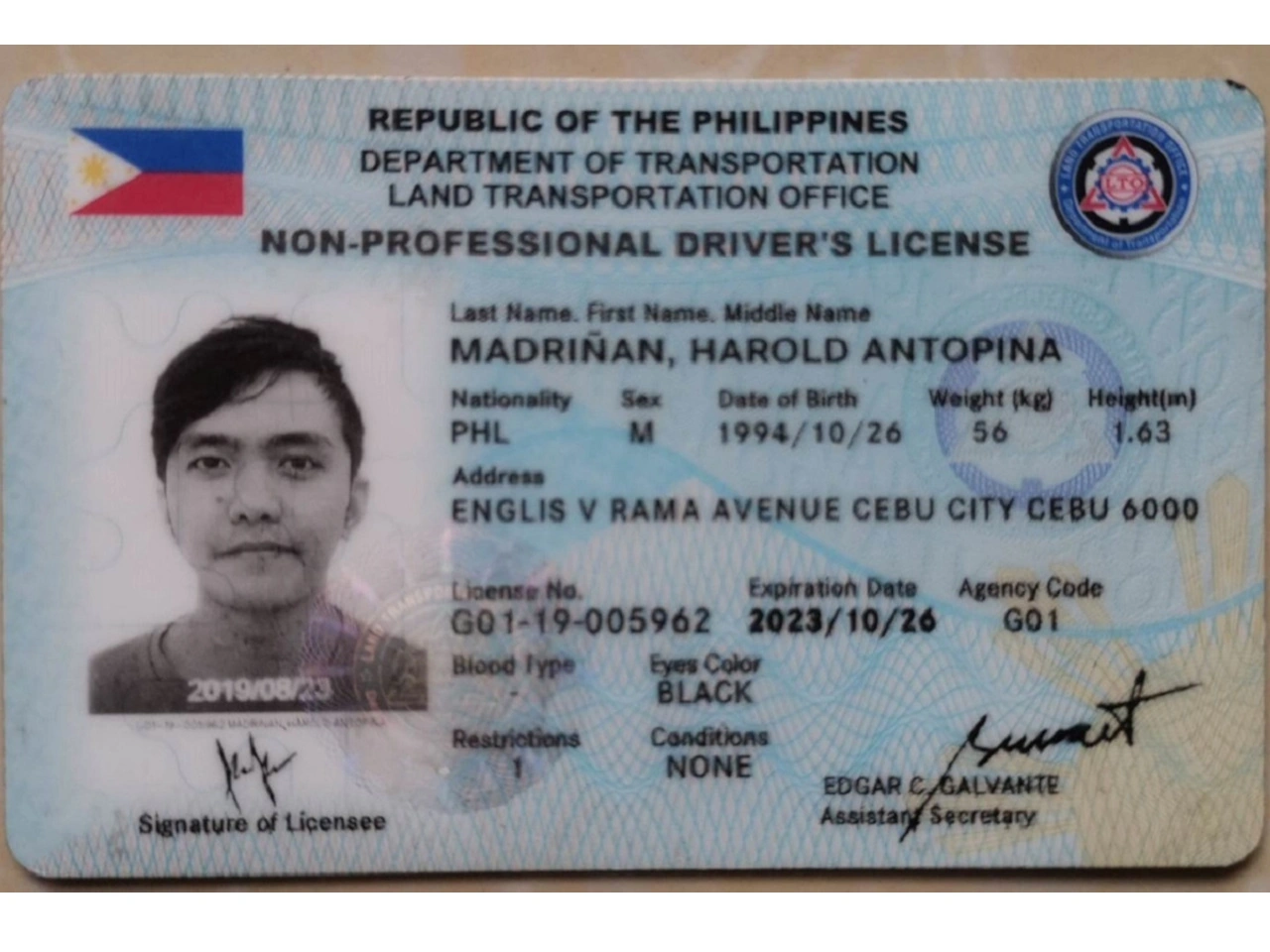
What is a driving licence?
A driving licence is an official authorisation to drive specified categories of motor vehicle.
Is a driving licence the same as a driving permit?
The terms may refer to the same document, depending on the country. Some countries use permit specifically for learners or temporary authorisations.
What is a provisional driving licence?
A provisional or learner licence allows a person to practise driving under specified restrictions before obtaining a full licence.
What is a full driving licence?
A full licence is issued after the holder has completed the required tests or training. Restrictions may still apply because of age, vehicle type, medical fitness or licence codes.
Does one licence allow you to drive every vehicle?
No. Driving licences are divided into categories for motorcycles, cars, buses, trucks, trailers and other vehicles.
What is a licence category?
A licence category identifies the type and size of vehicle the holder is authorised to drive.
Must the licence be valid for the vehicle being driven?
Yes. Holding a licence for one category does not normally authorise driving a vehicle belonging to another category.
Can a licence contain restrictions?
Yes. Codes may restrict the holder to an automatic transmission, corrective lenses, an adapted vehicle or another specified condition.
What is the difference between an automatic and manual licence?
In some countries, passing the test in an automatic vehicle restricts the holder to automatic vehicles until an additional test or procedure is completed.
Does a driving licence expire?
Usually, yes. The document, individual categories or medical authorisation may have expiry dates and require renewal.
May you drive with an expired licence?
No. The licence and the category required for the vehicle must remain valid.
Must you carry your driving licence?
This depends on local law. Many countries require drivers to carry the original licence and present it to an authorised officer when requested.
Is a photograph or copy of the licence sufficient?
Not normally. A photograph, scan or photocopy is not generally a substitute for the original document unless an official digital-licence system is legally recognised.
Does a driving licence prove that you own the vehicle?
No. It proves driving authorisation, not ownership, registration or insurance.
What tests are required to obtain a licence?
Requirements may include a theory test, eyesight test, practical driving test, medical examination or compulsory training.
Is there a universal minimum driving age?
No. Minimum ages differ between countries and vehicle categories.
Can a learner drive without supervision?
Only where the provisional-licence system permits independent driving. Other learners must be accompanied by an approved supervisor or instructor.
Can a learner drive in another country?
Often not. Provisional and learner licences are frequently valid only in the country or region that issued them.
What is an international driving permit?
An international driving permit is a standardised translation of a valid national licence intended to help authorities interpret it abroad.
Does an international driving permit replace a national licence?
No. It normally has legal value only when presented together with the valid national driving licence on which it is based.
Is a national licence valid abroad?
This depends on the destination, length of stay, residence status and agreements between the countries concerned. An exchange or international permit may be required.
Can a foreign licence be exchanged?
Some countries exchange recognised foreign licences without new tests, while others require theory, practical or medical examinations.
Can medical fitness affect a licence?
Yes. A medical condition may require an assessment, shorter validity period, adapted vehicle or licence restriction.
Must changes in medical fitness be reported?
This depends on local law. Drivers remain responsible for ensuring that they are physically and mentally fit to drive safely.
Do professional drivers need additional qualifications?
Often, yes. Drivers of trucks, buses, taxis or vehicles used commercially may require professional competence, medical examinations or periodic training.
What happens when a licence is suspended?
The holder may not drive during the suspension period, even if the physical document remains in their possession.
What is disqualification from driving?
Disqualification is a legal prohibition on driving, usually imposed by a court or competent authority for a specified period or until conditions are fulfilled.
What should you do if the licence is lost or stolen?
Report it where required and apply for a replacement through the competent licensing authority. Do not continue driving when local law requires the original document to be carried.
What should you do if the licence is damaged?
Request a replacement when the document is unreadable, damaged or no longer allows the holder to be identified reliably.
Does changing address require a new licence?
This depends on the country and whether the address appears on the licence. Drivers must follow the local notification and replacement procedure.
21. 駐車
駐車とは、交通状況や直ちに必要な事情による短時間停止ではなく、一定時間車両を静止させておくことです。多くの国では、乗客の乗降や荷物の積み下ろしのための短時間停止と駐車を区別しますが、法的定義は異なります。
駐車は交通標識、路面表示、駐車ゾーン、地域規則により許可、制限、予約、時間制、禁止となります。危険や不必要な妨害を生じないようにし、支払、許可証、車種、最長時間などの条件に従います。
What is the difference between parking and stopping?
Parking generally means leaving a vehicle stationary for longer than a brief stop required for passengers, loading or unloading. A vehicle stopped because of traffic lights, congestion, an emergency or another traffic condition is normally not considered parked. The precise legal definitions vary between countries.
How can you tell where parking is allowed?
Look for parking signs, prohibition signs, road markings and parking-zone signs. Local rules may also permit parking along certain roads even when individual parking spaces are not marked.
Can you park anywhere if there is no sign prohibiting parking?
No. General traffic rules can prohibit parking even when no specific prohibition sign is present. Common examples include locations where a parked vehicle would obstruct visibility, crossings, intersections, cycle facilities or the movement of other traffic.
Can you park on a pavement or sidewalk?
Parking on a pavement or sidewalk is prohibited or restricted in many countries unless signs or markings specifically allow it. Vehicles must not force pedestrians into the roadway or block an accessible pedestrian route.
Can you park near a pedestrian crossing?
Parking on or close to a pedestrian crossing is generally restricted because a vehicle can hide pedestrians from approaching drivers. The required clearance distance varies between countries.
Can you park close to an intersection?
Many countries prohibit parking within a specified distance of an intersection because parked vehicles can reduce visibility and obstruct turning traffic. Follow the local distance requirements and any signs or markings.
What does a parking sign mean?
A parking sign identifies a place or area where parking is permitted or regulated. Additional signs or panels may specify time limits, payment requirements, vehicle categories, permits or particular parking arrangements.
How does paid parking work?
Where parking is subject to payment, drivers must follow the instructions displayed locally. Payment may be made through a parking meter, ticket machine, mobile application or another authorised system. The permitted duration and charging periods vary by location.
Who may use an accessible parking space?
Spaces marked for people with disabilities are reserved for vehicles displaying or registered with the required disability parking permit. Eligibility, permit display requirements and parking privileges depend on national and local law.
Can you leave a vehicle parked for an unlimited time?
Not necessarily. Local rules may impose a maximum parking duration, even where parking is otherwise permitted. Different limits may apply to abandoned, commercial, heavy or recreational vehicles.
22. 駐車禁止
駐車禁止は、指定場所または対象区間に車両を駐車してはならないことを示します。現地法によっては、停止自体が禁止されていなければ乗客の乗降や荷物の積み下ろしのため短時間停止できる場合があります。
規制は常時または指定時間、曜日、車種、道路区間だけ適用されることがあります。範囲と例外は標識、補助標識、路面表示、現地規則で決まります。
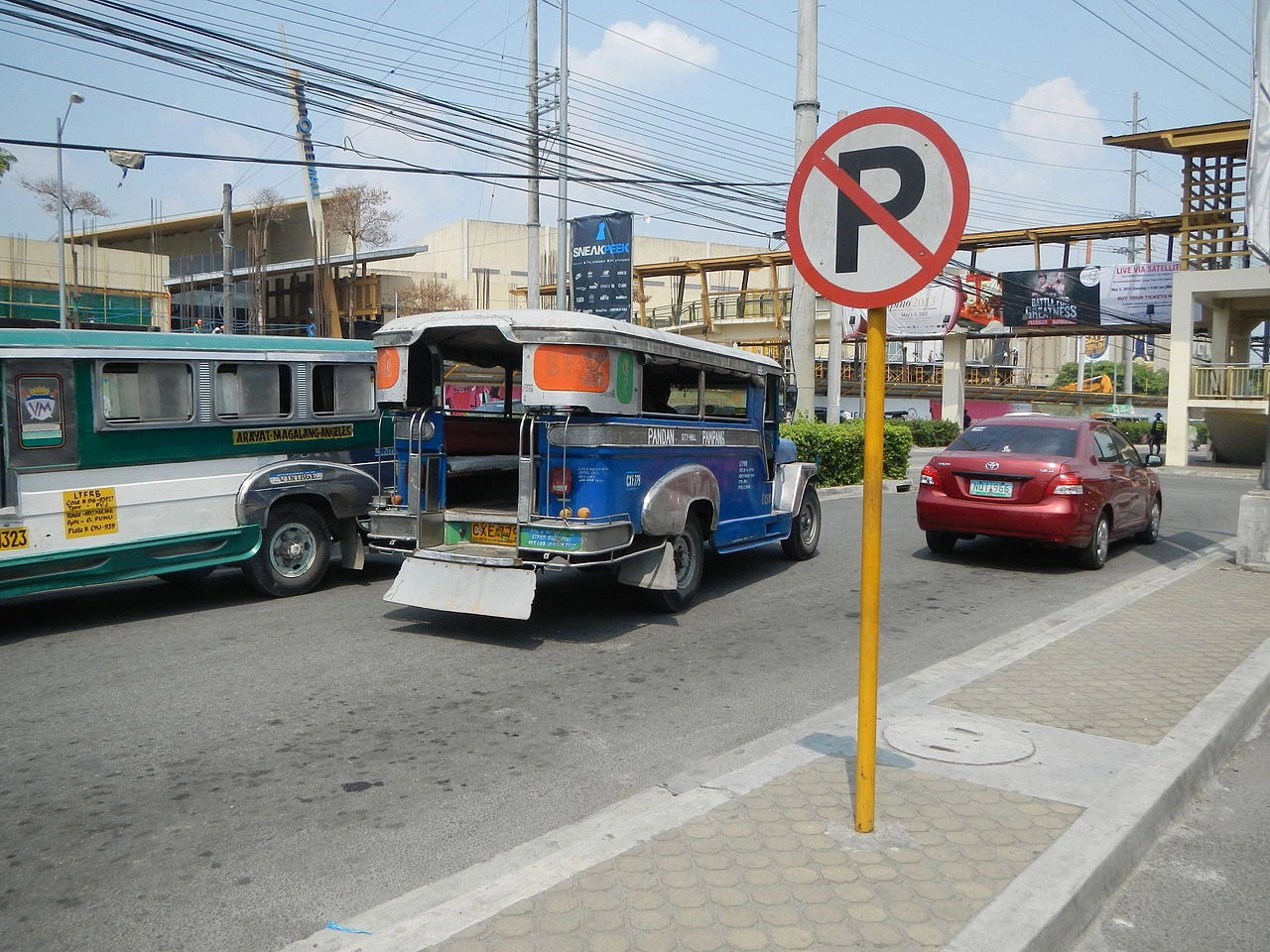
What does a no-parking sign mean?
A no-parking sign prohibits leaving a vehicle parked in the area or along the section of road to which the restriction applies. The exact legal definition of parking and the extent of the prohibition vary between countries.
Is no parking the same as no stopping?
No. A no-parking restriction commonly still permits certain brief stops, such as picking up or dropping off passengers or loading or unloading goods. A no-stopping restriction is stricter and generally prohibits voluntary stopping as well as parking.
Can you wait in your vehicle where parking is prohibited?
Remaining inside the vehicle does not necessarily mean that it is not parked. If the vehicle remains stationary beyond what local law permits as a brief stop, it may legally be considered parked even when the driver stays inside.
Can you pick up or drop off passengers in a no-parking area?
Often yes, if stopping is permitted and the vehicle remains there only as long as reasonably necessary for passengers to get in or out. Local rules may impose stricter restrictions at particular locations.
Can you load or unload goods where parking is prohibited?
In many countries, genuine loading or unloading is treated as stopping rather than parking and may therefore be permitted. The vehicle should remain there only for the time reasonably necessary for the activity.
How far does a no-parking restriction apply?
This depends on the country's signing rules. The restriction may continue to the next intersection, an end sign, a stated distance or the end of a designated zone. Supplementary arrows or distance panels may indicate its exact extent.
Does a no-parking sign apply on both sides of the road?
Usually a roadside no-parking sign applies only to the side of the road on which it is placed, unless it forms part of a zonal restriction or local signs indicate otherwise.
Can a no-parking restriction apply only at certain times?
Yes. A supplementary panel may restrict the prohibition to particular hours, days or periods. Outside those periods, parking may be permitted if no other rule prohibits it.
Can a no-parking restriction apply only to certain vehicles?
Yes. Additional signs or symbols may make a parking restriction applicable to particular vehicle categories, such as heavy vehicles, motorcycles or other specified vehicles.
Can you park immediately after a no-parking sign ends?
Only if parking is otherwise legal. The end of a specific no-parking restriction does not override general parking prohibitions near crossings, intersections, driveways, traffic signs or other protected locations.
23. 後退
後退は車両を後ろ向きに動かすことです。駐車、狭い場所から出るとき、前進では位置調整できない場合などに使われます。
後退前にミラーと死角を確認し、車両周囲をよく見て後方が空いていることを確かめます。後方視界は限られるため、ゆっくり、必要な距離だけ後退します。

What should you check before reversing?
Check behind and around the vehicle for pedestrians, cyclists, other vehicles and obstacles. Use mirrors and cameras where available, but also look directly because monitoring systems can have blind spots.
Who has priority when a vehicle is reversing?
In many countries, reversing is treated as a manoeuvre and the reversing driver must give way to other road users. The exact legal requirements depend on national traffic rules.
Should you reverse for a long distance?
No. Reversing should normally be limited to the distance necessary to complete the manoeuvre safely. Driving forward generally provides better visibility and vehicle control.
24. 無規制交差点
無規制交差点は、特定の進入方向に対する優先が信号、交通整理員、優先指定標識で明確に定められていない交差点です。その国の既定交通規則により誰が優先か判断します。
国によって右方優先、左方優先、その他の既定優先規則があります。慎重に接近して全方向を確認し、道路幅が広い、交通量が多いという理由だけで優先と決めつけてはいけません。
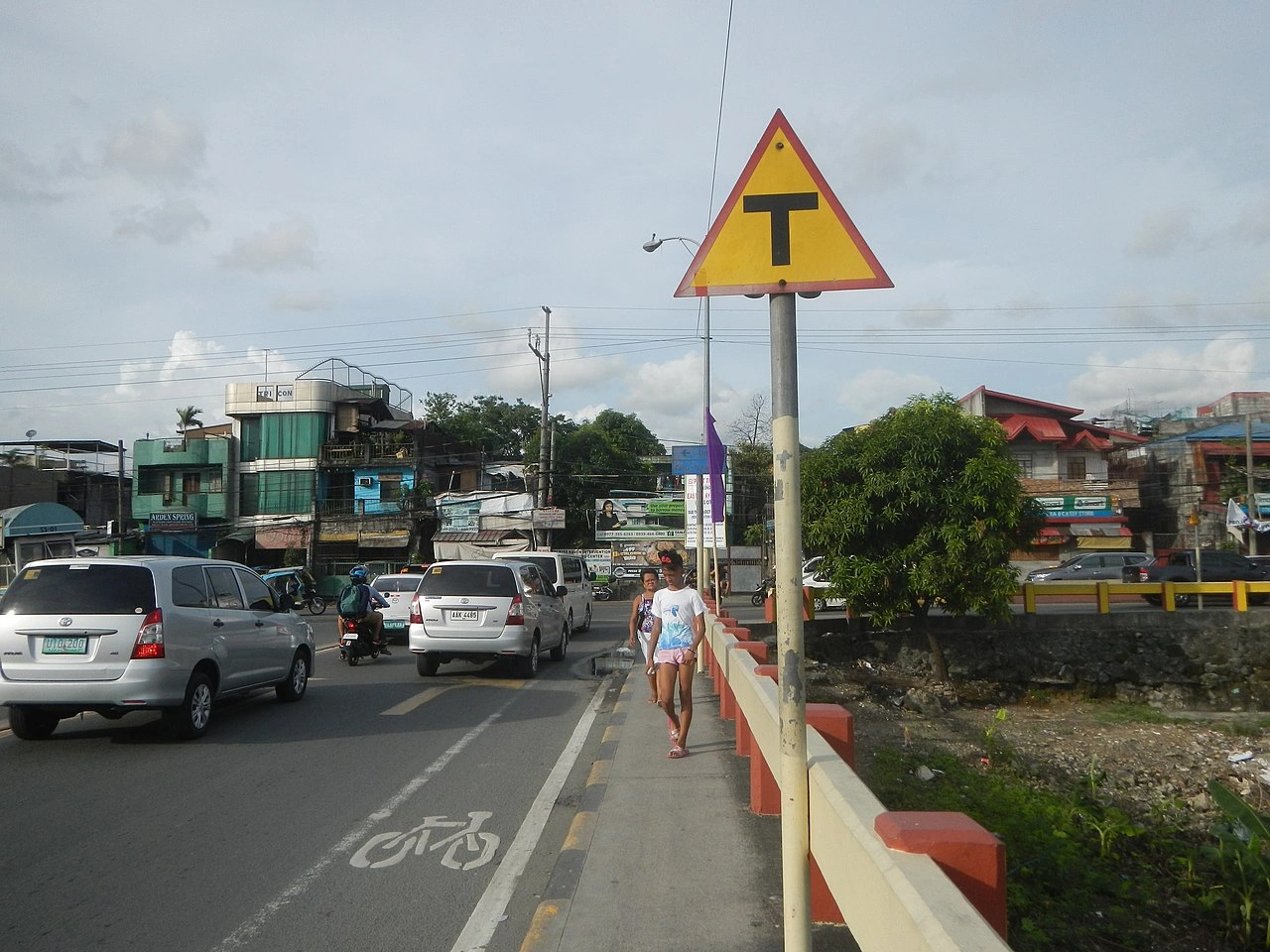
What is an uncontrolled crossroad?
An uncontrolled crossroad is an intersection where priority is not specifically assigned by traffic lights, an authorised person or priority signs. Drivers must use the default priority rules of the country.
Who has priority at an uncontrolled crossroad?
This depends on the local traffic law. Some countries use priority from the right, while others use different rules. Drivers should know the default intersection rule of the country in which they are driving.
Does the wider road automatically have priority?
Not necessarily. The width, surface or amount of traffic on a road does not by itself determine priority unless local law specifically provides otherwise.
Should you slow down at an uncontrolled crossroad?
Yes. Approach at a speed that allows you to observe approaching traffic, determine who has priority and stop safely if necessary.
Do cyclists have to follow the priority rules at an uncontrolled crossroad?
Yes. Cyclists generally follow the applicable intersection priority rules unless a specific cycle facility, sign or local rule provides otherwise.
Does driving straight ahead automatically give you priority?
No. Continuing straight ahead does not automatically give priority over traffic approaching on another road. The applicable priority rules must still be followed.
Does turning right or left change the priority rules?
Turning may create additional obligations, particularly towards pedestrians, cyclists or opposing traffic. Drivers must follow both the intersection priority rule and the rules governing the intended turn.
What if two vehicles reach an uncontrolled crossroad at the same time?
Apply the country's default priority rule. Do not rely simply on which vehicle appears to have arrived first unless local law specifically uses that rule.
What if the traffic lights at an intersection are not working?
The intersection is not necessarily completely uncontrolled. Priority signs, road markings and default priority rules may still determine who must give way. Drivers should approach with particular caution.
What should you do if you are unsure who has priority?
Reduce speed and be prepared to stop. Never force your way through an intersection simply because the priority situation is unclear.
25. 仮運転免許
仮運転免許は、本免許取得前に学習者が公道で運転練習することを許可する免許です。国によって条件は異なり、認定同乗者の必要性、運転できる車両、運転できる場所や時間、有効期間などが定められます。通常、本免許より厳しい規則が適用され、運転技術を学び実地経験を積むためのものです。
What is a provisional driving licence?
A provisional driving licence allows a learner driver to practise driving under specified conditions before obtaining a full driving licence.
Can you drive alone with a provisional licence?
This depends on the type of provisional licence and local rules. Some licences require an approved supervisor, while others allow the learner to practise alone after completing specified training.
How long is a provisional licence valid?
The validity period varies between countries and licence types. If it expires before the learner passes the practical exam, additional conditions may apply before another provisional licence can be obtained.
Can you drive abroad with a provisional licence?
Often not. A provisional licence may be valid only in the country that issued it. Learners should check the applicable rules before attempting to drive abroad.
Are there restrictions on when a learner may drive?
Yes, in some countries. Provisional licences may include restrictions on night driving, passengers, trailers, vehicle types or certain roads.
Do you need to display a learner sign?
Many countries require a learner vehicle to display an L plate or another learner-driver sign. The design and conditions vary by country.