KreisverkehrRussland

Lerne Verkehrsregeln mit klaren Erklärungen und visuellen Beispielen in unserem illustrierten Buch – einfach, verständlich und anschaulich.


15. Kreisverkehr

Ein Kreisverkehr ist ein Knotenpunkt, an dem der Verkehr um eine Mittelinsel in einer festgelegten Richtung geführt wird. Einfahrten werden normalerweise durch Verkehrszeichen und Fahrbahnmarkierungen geregelt; je nach Land müssen einfahrende Fahrzeuge dem bereits im Kreisverkehr fahrenden Verkehr Vorfahrt gewähren oder es gelten andere Prioritätsregeln.

Fahrer sollten sich rechtzeitig einordnen, alle Verkehrsteilnehmer beobachten und beim Verlassen entsprechend blinken. Fahrtrichtung, Einfahrtsvorfahrt, Fahrstreifennutzung sowie Regeln für Radfahrer und Fußgänger richten sich nach den örtlichen Verkehrszeichen und Vorschriften.
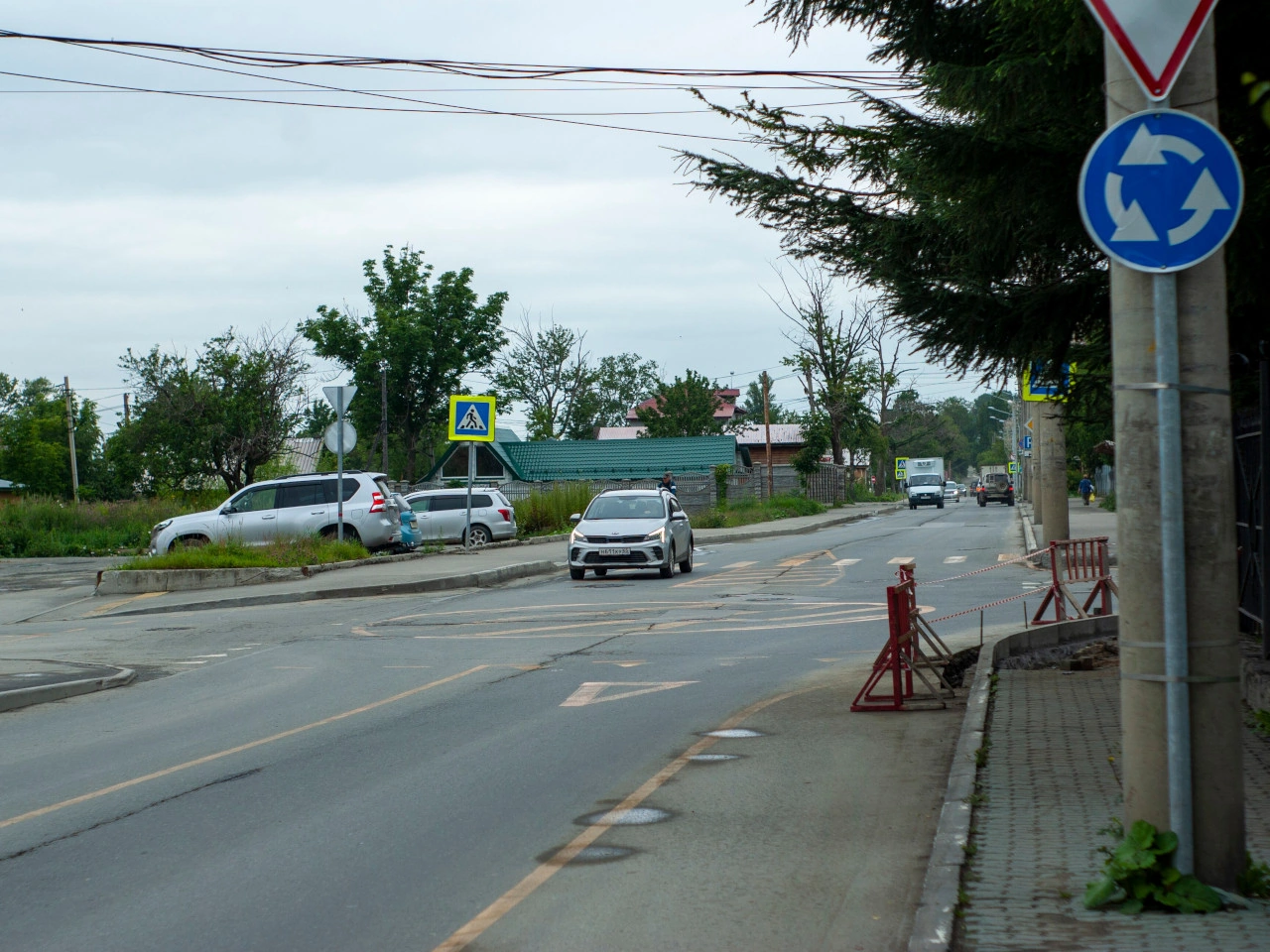
Kreisverkehr
What is a roundabout?

A roundabout is a circular road arrangement where traffic travels in one direction around a central island before leaving through the chosen exit.

How can you recognise a roundabout?

A roundabout is normally identified by a circular-direction sign, a central island and entry roads controlled by signs, markings or local priority rules.

Which direction does traffic travel around a roundabout?

The direction depends on the country’s driving side. Traffic normally travels anticlockwise in right-hand-traffic countries and clockwise in left-hand-traffic countries.

Who has priority at a roundabout?

Priority differs between countries and roundabout designs. Entering traffic commonly gives way to traffic already circulating, but drivers must always follow the actual priority signs and signals.

Must you stop before entering a roundabout?

Not always. Stop when required by a stop sign, traffic light or approaching priority traffic. Otherwise, reduce speed and enter only when there is a safe gap.

Does a roundabout always have a give-way sign?

No. The sign arrangement depends on local law. Some circular intersections use ordinary priority rules or traffic lights instead.

How should you approach a roundabout?

Reduce speed, observe the signs and markings, choose the appropriate lane and check for pedestrians, cyclists and circulating traffic.

Which lane should you choose?

Follow the lane arrows and destination signs. As a general guide, use the lane appropriate for your exit, but exact lane-selection rules differ between countries and roundabout layouts.

May you use an inner lane?

Yes, where the road layout and local rules permit it. Before leaving, change lanes safely and give way to road users already travelling in the lane you wish to enter.

Do you need to signal when entering?

This depends on local law. Some countries require a signal for particular exits, while others require no signal when entering.

Do you need to signal when leaving?

Usually, yes. Signal in the direction of the exit early enough to inform other road users, but not so early that your intention becomes misleading.

Does signalling give you priority?

No. A direction indicator communicates your intention but does not permit you to force another road user to brake or change direction.

May you change lanes on a roundabout?

Only when the lane markings permit it and the manoeuvre can be completed safely. Check mirrors and blind spots, signal where required and give way to traffic already in the target lane.

What should you do if you miss your exit?

Continue around the roundabout and approach the exit again. Do not stop, reverse or cut suddenly across another lane.

May you drive over the central island?

Normally not. Some small roundabouts have a mountable central section intended only for vehicles that cannot otherwise negotiate the road safely.

Do cyclists have priority at a roundabout?

Priority depends on whether cyclists use the carriageway, a continuing bike path or a separate cycle crossing. Drivers and cyclists must follow the signs, markings and local priority rules.

What should drivers check before leaving?

Check mirrors and blind spots for cyclists, mopeds, motorcycles and vehicles beside you. Also check for pedestrians crossing the exit road.

Do pedestrians have priority at roundabout exits?

Pedestrian priority depends on crossings and local law. Drivers should approach exits slowly and be prepared to yield to pedestrians crossing or about to cross.

Does a roundabout have a special speed limit?

Not universally. The posted or general road limit applies, but drivers must travel slowly enough to negotiate the roundabout safely.

May you overtake on a roundabout?

Passing another vehicle may be permitted on a multilane roundabout, but drivers must remain within their lane and avoid unsafe lane changes. Local overtaking restrictions may apply.

May you stop or park on a roundabout?

Follow local signs and parking rules. Stopping or parking on the circulating roadway is commonly prohibited or unsafe because it obstructs traffic and reduces visibility.

Is every circular intersection a roundabout?

No. A circular junction may be governed by traffic lights, ordinary priority rules or another road design. Its legal status depends on its signs and local definition.

1 Russland 2 Autobahn 3 Wohngebiet 4 Zone 5 Geschwindigkeitsbegrenzung 6 Gehweg 7 Radweg 8 Brücke 9 Bremsschwelle 10 Einbahnverkehr 11 Busspur 12 Bushaltestelle 13 Stoppschild 14 Vorfahrt gewähren 15 Kreisverkehr 16 Vorfahrtstraße 17 Vorrang vor dem Gegenverkehr 18 Gegenverkehr Vorrang gewähren 19 Fußgängerüberweg 20 Bahnübergang 21 Vorgeschriebene Fahrtrichtung 22 Schulbereich 23 Überholen 24 Wild- oder Viehwechsel 25 Rutschige Fahrbahn 26 Kurve 27 Falschfahrt 28 Straßenarbeiten 29 Höhenbegrenzung 30 Ampeln 31 Fußgängerampeln 32 Fahrbahnmarkierungen 33 Führerschein 34 Kilometrierungsmarkierung 35 Entfernungstafeln 36 Notruftelefon 37 Parken 38 Halteverbot 39 Behindertenparkplatz 40 Rückwärtsfahren 41 Fahrbahnschäden 42 Vorläufiger Führerschein 43 Notausgang 44 Ortsgrenze 45 Sehenswürdigkeit 46 Hupe 47 Kennzeichen 48 Ladestation 49 Radfahrer 50 Moped 51 Motorrad 52 Bus 53 Polizei 54 Krankenwagen 55 Taxi 56 Schlagloch 57 Weg 58 Feinstaub 59 Luftverschmutzung 60 Kreuzung 61 Hauptverkehrszeit 62 Straßenverkehrsordnung 63 Straßenrinne 64 Lastenfahrrad 65 Forstfahrzeug 66 Baufahrzeug 67 Sattelzug 68 Oberleitungsbus 69 Speed-Pedelec 70 Lieferfahrzeug 71 Leerlauf 72 Abschleppwagen 73 Allradantrieb 74 Fahrrad 75 Motorradausrüstung 76 Straßenbahn 77 Zug 78 Gleis 79 Wohnwagen 80 Anhänger 81 Anhängerkupplung 82 Feuerwehrfahrzeug 83 Sirene 84 Konvoi 85 Warnbeleuchtung von Einsatzfahrzeugen 86 Landwirtschaftliche Maschinen 87 Elektrofahrrad 88 Elektrofahrzeug 89 Pedelec 90 Leichtkraftfahrzeug 91 Microcar 92 Geländefahrzeug 93 Lieferwagen 94 Freizeitfahrzeug 95 Motorroller 96 Trikke 97 Persönliches Mobilitätsgerät 98 Skateboard 99 Segway 100 Tretroller ...