


Minimum speedCanada
 Traffic rules
 Canada
1. Minimum speed
A minimum speed is the lowest speed that vehicles are required to maintain on a particular road or under specified conditions. Minimum-speed rules are intended to prevent vehicles travelling unnecessarily slowly from disrupting traffic or creating large speed differences between road users.
A minimum speed does not require drivers to maintain that speed when traffic, weather, visibility, road conditions or safety require them to slow down. The way minimum speeds are indicated and enforced varies between countries.
Does Canada have one nationwide motorway minimum speed?
No single numerical motorway minimum applies throughout Canada. Provincial and territorial rules govern. For example, Québec generally sets a 60 km/h autoroute minimum, subject to the Code’s exceptions and applicable signs; that figure must not be treated as a Canadian national rule.
🔗 legisquebec.gouv.qc.ca • Québec Government, Highway Safety Code, sections 327–331; official consolidation updated 12 August 2026; 🔗 canada.ca • Government of Canada, Driving in Canada, provincial and territorial driving rules
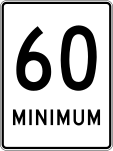 Start of a minimum speed.
English • Québec P-70-1 • Minimum speed: 60 km/h. This sign prescribes a minimum speed of 60 km/h for the road where it applies. It is not a nationwide minimum for all Canadian roads.
Sources
🔗 Commons.wikimedia.org
🔗 Cdn-contenu.quebec.ca • Québec MTMD · Regulatory signs poster, April 2026, p. 1
🔗 Legisquebec.gouv.qc.ca • Québec · Road signs regulation C-24.2, r. 41, section 12 (official consolidation, 1 May 2026) (FR)
SVG source: Transports Québec • Public domain • Original revision 2013-07-29. Wikimedia original unmodified.
Does Quebec require 60 km/h on an autoroute in a traffic queue?
No. The Code allows the necessary slowing for safety and its other exceptions. Variable signs can also establish an authorised minimum or maximum for the section. Do not maintain 60 km/h towards slower or stationary traffic.

