


QuizTraffic signsSwitzerland
Test your knowledge with our multiple-choice quiz. Learn from each answer and improve your understanding of the traffic rules and road signs of Switzerland.
 Traffic signs
 Traffic rules
 Switzerland

1. What does this traffic sign mean?
This traffic sign indicates a road narrowing where oncoming drivers have to give way.
English • Traffic sign 3.10 • Priority over oncoming vehicles.
Deutsch • Verkehrssignal 3.10 • Vortritt vor dem Gegenverkehr.
Français • Signal 3.10 • Priorité par rapport aux véhicules venant en sens inverse.
Italiano • Segnale 3.10 • Precedenza rispetto al traffico inverso.
Sources
🔗 Commons.wikimedia.org
🔗 Fedlex.admin.ch • SSV, Anhang 2 (DE)
🔗 Fedlex.admin.ch • OSR, annexe 2 (FR)
🔗 Fedlex.admin.ch • OSStr, allegato 2 (IT)
SVG source: Commons.wikimedia.org • Original SVG
Bundesamt für Strassen (ASTRA) • Public domain • Original revision 2017-07-02. Wikimedia original unmodified.
Artwork reviewed against the Swiss signalling ordinance, version 1 October 2026, annex 2: Fedlex.admin.ch • Signal 3.10, PDF page 112. Catalogue-equivalent illustration; intentional update from the previous PNG. This is an educational illustration, not a manufacturing specification.

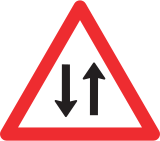
2. What does this traffic sign mean?
This traffic sign indicates a warning for two-way traffic. Oncoming traffic will use the same road or carriageway ahead. Keep to the correct side of the road and overtake only where it is permitted and clearly safe.
English • Traffic sign 1.26 • Two-way traffic.
Deutsch • Verkehrssignal 1.26 • Gegenverkehr.
Français • Signal 1.26 • Circulation en sens inverse.
Italiano • Segnale 1.26 • Traffico in senso inverso.
Sources
🔗 Commons.wikimedia.org
🔗 Fedlex.admin.ch • SSV, Anhang 2 (DE)
🔗 Fedlex.admin.ch • OSR, annexe 2 (FR)
🔗 Fedlex.admin.ch • OSStr, allegato 2 (IT)
SVG source: Bundesamt für Strassen (ASTRA) • Public domain • Original revision 2017-07-01. Wikimedia original unmodified.

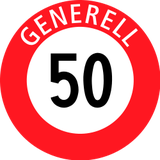
3. What does this traffic sign mean?
This traffic sign indicates the end of the previously indicated speed limit. From this point, follow any newly posted limit or the applicable default speed rules for the road and vehicle category.
English • Traffic sign 2.53.1 • End of the general maximum speed limit of 50.
Deutsch • Verkehrssignal 2.53.1 • Ende der Höchstgeschwindigkeit 50 generell.
Français • Signal 2.53.1 • Fin de la vitesse maximale 50, Limite générale.
Italiano • Segnale 2.53.1 • Fine della velocità massima 50, Limite generale.
Sources
🔗 Commons.wikimedia.org
🔗 Fedlex.admin.ch • SSV, Anhang 2 (DE)
🔗 Fedlex.admin.ch • OSR, annexe 2 (FR)
🔗 Fedlex.admin.ch • OSStr, allegato 2 (IT)
SVG source: Commons.wikimedia.org • Original SVG
Bundesamt für Strassen (ASTRA) • Public domain • Original revision 2017-07-05. Wikimedia original unmodified.
Artwork reviewed against the Swiss signalling ordinance, version 1 October 2026, annex 2: Fedlex.admin.ch • Signal 2.53.1, PDF page 108. Catalogue-equivalent illustration; intentional update from the previous PNG. This is an educational illustration, not a manufacturing specification.
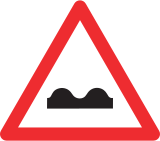
4. What does this traffic sign mean?
This traffic sign indicates a warning for a bad or uneven road surface. Potholes, bumps, depressions or other surface irregularities may affect vehicle stability and braking. Reduce speed and avoid sudden manoeuvres.
English • Traffic sign 1.06 • Uneven road surface.
Deutsch • Verkehrssignal 1.06 • Unebene Fahrbahn.
Français • Signal 1.06 • Cassis.
Italiano • Segnale 1.06 • Cunetta.
Sources
🔗 Commons.wikimedia.org
🔗 Fedlex.admin.ch • SSV, Anhang 2 (DE)
🔗 Fedlex.admin.ch • OSR, annexe 2 (FR)
🔗 Fedlex.admin.ch • OSStr, allegato 2 (IT)
SVG source: Bundesamt für Strassen (ASTRA) • Public domain • Original revision 2017-07-01. Wikimedia original unmodified.
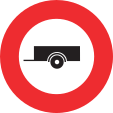
5. What does this traffic sign mean?
This traffic sign indicates that trailers are prohibited. Vehicles towing trailers covered by the sign may not enter or continue beyond it. Vehicles without a trailer may still be permitted unless another restriction applies.
English • Traffic sign 2.09 • No trailers.
Deutsch • Verkehrssignal 2.09 • Verbot für Anhänger.
Français • Signal 2.09 • Circulation interdite aux remorques.
Italiano • Segnale 2.09 • Divieto di circolazione per i rimorchi.
Sources
🔗 Commons.wikimedia.org
🔗 Fedlex.admin.ch • SSV, Anhang 2 (DE)
🔗 Fedlex.admin.ch • OSR, annexe 2 (FR)
🔗 Fedlex.admin.ch • OSStr, allegato 2 (IT)
SVG source: Commons.wikimedia.org • Original SVG
Bundesamt für Strassen (ASTRA) • Public domain • Original revision 2017-07-04. Wikimedia original unmodified.
Artwork reviewed against the Swiss signalling ordinance, version 1 October 2026, annex 2: Fedlex.admin.ch • Signal 2.09, PDF page 104. Catalogue-equivalent illustration; intentional update from the previous PNG. This is an educational illustration, not a manufacturing specification.
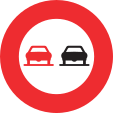
6. What does this traffic sign mean?
This traffic sign indicates that overtaking is prohibited. The vehicles covered by the prohibition and any categories that may still be overtaken depend on the applicable local rules.
English • Traffic sign 2.44 • No overtaking.
Deutsch • Verkehrssignal 2.44 • Überholen verboten.
Français • Signal 2.44 • Interdiction de dépasser.
Italiano • Segnale 2.44 • Divieto di sorpasso.
Sources
🔗 Commons.wikimedia.org
🔗 Fedlex.admin.ch • SSV, Anhang 2 (DE)
🔗 Fedlex.admin.ch • OSR, annexe 2 (FR)
🔗 Fedlex.admin.ch • OSStr, allegato 2 (IT)
SVG source: Commons.wikimedia.org • Original SVG
Bundesamt für Strassen (ASTRA) • Public domain • Original revision 2017-07-05. Wikimedia original unmodified.
Artwork reviewed against the Swiss signalling ordinance, version 1 October 2026, annex 2: Fedlex.admin.ch • Signal 2.44, PDF page 107. Catalogue-equivalent illustration; intentional update from the previous PNG. This is an educational illustration, not a manufacturing specification.
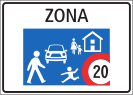
7. What does this traffic sign mean?
This traffic sign indicates the start of a residential area. Special traffic rules apply within the area according to the applicable signs and local regulations. These rules may affect speed, parking and how different road users use the road.
English • Traffic sign 2.59.5 • Residential area.
Deutsch • Verkehrssignal 2.59.5 • Begegnungszone.
Français • Signal 2.59.5 • Zone de rencontre.
Italiano • Segnale 2.59.5 • Zona d’incontro.
Sources
🔗 Commons.wikimedia.org
🔗 Fedlex.admin.ch • SSV, Anhang 2 (DE)
🔗 Fedlex.admin.ch • OSR, annexe 2 (FR)
🔗 Fedlex.admin.ch • OSStr, allegato 2 (IT)
SVG source: Commons.wikimedia.org • Original SVG
Bundesamt für Strassen (ASTRA) • Public domain • Original revision 2017-07-08. Wikimedia original unmodified.
Artwork reviewed against the Swiss signalling ordinance, version 1 October 2026, annex 2: Fedlex.admin.ch • Signal 2.59.5, PDF page 112. Catalogue-equivalent illustration; intentional update from the previous PNG. This is an educational illustration, not a manufacturing specification.

8. What does this traffic sign mean?
This traffic sign indicates a road narrowing where you must give way to oncoming traffic. Allow approaching traffic to pass before entering or continuing through the narrow section when required.
English • Traffic sign 3.09 • Give way to oncoming vehicles.
Deutsch • Verkehrssignal 3.09 • Dem Gegenverkehr Vortritt lassen.
Français • Signal 3.09 • Laissez passer les véhicules en sens inverse.
Italiano • Segnale 3.09 • Lasciar passare i veicoli provenienti in senso inverso.
Sources
🔗 Commons.wikimedia.org
🔗 Fedlex.admin.ch • SSV, Anhang 2 (DE)
🔗 Fedlex.admin.ch • OSR, annexe 2 (FR)
🔗 Fedlex.admin.ch • OSStr, allegato 2 (IT)
SVG source: Commons.wikimedia.org • Original SVG
Bundesamt für Strassen (ASTRA) • Public domain • Original revision 2017-07-02. Wikimedia original unmodified.
Artwork reviewed against the Swiss signalling ordinance, version 1 October 2026, annex 2: Fedlex.admin.ch • Signal 3.09, PDF page 112. Catalogue-equivalent illustration; intentional update from the previous PNG. This is an educational illustration, not a manufacturing specification.
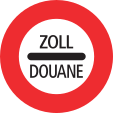
9. What does this traffic sign mean?
This traffic sign indicates a checkpoint with restricted entry. Road users may not proceed beyond the checkpoint unless they are authorised or permitted to continue according to the applicable rules and instructions.
English • Traffic sign 2.51 • Stop near a customs post.
Deutsch • Verkehrssignal 2.51 • Zollhaltestelle.
Français • Signal 2.51 • Arrêt à proximité d’un poste de douane.
Italiano • Segnale 2.51 • Fermata al posto di dogana.
Sources
🔗 Commons.wikimedia.org
🔗 Fedlex.admin.ch • SSV, Anhang 2 (DE)
🔗 Fedlex.admin.ch • OSR, annexe 2 (FR)
🔗 Fedlex.admin.ch • OSStr, allegato 2 (IT)
SVG source: Commons.wikimedia.org • Original SVG
Bundesamt für Strassen (ASTRA) • Public domain • Original revision 2017-07-05. Wikimedia original unmodified.
Artwork reviewed against the Swiss signalling ordinance, version 1 October 2026, annex 2: Fedlex.admin.ch • Signal 2.51, PDF page 108. Catalogue-equivalent illustration; intentional update from the previous PNG. This is an educational illustration, not a manufacturing specification.

10. What does this traffic sign mean?
This traffic sign indicates the end of the priority road. The road no longer has continuing priority at subsequent intersections. Follow the applicable traffic lights, priority signs and default priority rules.
English • Traffic sign 3.04 • End of priority road.
Deutsch • Verkehrssignal 3.04 • Ende der Hauptstrasse.
Français • Signal 3.04 • Fin de la route principale.
Italiano • Segnale 3.04 • Fine della strada principale.
Sources
🔗 Commons.wikimedia.org
🔗 Fedlex.admin.ch • SSV, Anhang 2 (DE)
🔗 Fedlex.admin.ch • OSR, annexe 2 (FR)
🔗 Fedlex.admin.ch • OSStr, allegato 2 (IT)
SVG source: Commons.wikimedia.org • Original SVG
Bundesamt für Strassen (ASTRA) • Public domain • Original revision 2017-07-02. Wikimedia original unmodified.
Artwork reviewed against the Swiss signalling ordinance, version 1 October 2026, annex 2: Fedlex.admin.ch • Signal 3.04, PDF page 111. Catalogue-equivalent illustration; intentional update from the previous PNG. This is an educational illustration, not a manufacturing specification.
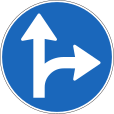
11. What does this traffic sign mean?
This traffic sign indicates that traffic must continue straight ahead or turn right. One of the indicated directions must be followed; turning left is prohibited.
English • Traffic sign 2.40 • Go straight ahead or turn right.
Deutsch • Verkehrssignal 2.40 • Geradeaus oder Rechtsabbiegen.
Français • Signal 2.40 • Circuler tout droit ou obliquer à droite.
Italiano • Segnale 2.40 • Circolare diritto o svoltare a destra.
Sources
🔗 Commons.wikimedia.org
🔗 Fedlex.admin.ch • SSV, Anhang 2 (DE)
🔗 Fedlex.admin.ch • OSR, annexe 2 (FR)
🔗 Fedlex.admin.ch • OSStr, allegato 2 (IT)
SVG source: Commons.wikimedia.org • Original SVG
Bundesamt für Strassen (ASTRA) • Public domain • Original revision 2017-07-05. Wikimedia original unmodified.
Artwork reviewed against the Swiss signalling ordinance, version 1 October 2026, annex 2: Fedlex.admin.ch • Signal 2.40, PDF page 106. Catalogue-equivalent illustration; intentional update from the previous PNG. This is an educational illustration, not a manufacturing specification.

12. What does this traffic sign mean?
This traffic sign indicates that turning right is mandatory at the junction ahead. Traffic must turn right and may not continue straight ahead or turn left.
English • Traffic sign 2.37 • Turn right.
Deutsch • Verkehrssignal 2.37 • Rechtsabbiegen.
Français • Signal 2.37 • Obliquer à droite.
Italiano • Segnale 2.37 • Svoltare a destra.
Sources
🔗 Commons.wikimedia.org
🔗 Fedlex.admin.ch • SSV, Anhang 2 (DE)
🔗 Fedlex.admin.ch • OSR, annexe 2 (FR)
🔗 Fedlex.admin.ch • OSStr, allegato 2 (IT)
SVG source: Commons.wikimedia.org • Original SVG
Bundesamt für Strassen (ASTRA) • Public domain • Original revision 2017-07-05. Wikimedia original unmodified.
Artwork reviewed against the Swiss signalling ordinance, version 1 October 2026, annex 2: Fedlex.admin.ch • Signal 2.37, PDF page 106. Catalogue-equivalent illustration; intentional update from the previous PNG. This is an educational illustration, not a manufacturing specification.
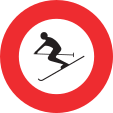
13. What does this traffic sign mean?
This traffic sign indicates that skiers are prohibited. Skiers may not enter or continue beyond the sign. Other road users may still be permitted unless another restriction applies.
English • Traffic sign 2.15.1 • No skiing.
Deutsch • Verkehrssignal 2.15.1 • Skifahren verboten.
Français • Signal 2.15.1 • Interdiction de skier.
Italiano • Segnale 2.15.1 • Divieto di sciare.
Sources
🔗 Commons.wikimedia.org
🔗 Fedlex.admin.ch • SSV, Anhang 2 (DE)
🔗 Fedlex.admin.ch • OSR, annexe 2 (FR)
🔗 Fedlex.admin.ch • OSStr, allegato 2 (IT)
SVG source: Commons.wikimedia.org • Original SVG
Bundesamt für Strassen (ASTRA) • Public domain • Original revision 2017-07-04. Wikimedia original unmodified.
Artwork reviewed against the Swiss signalling ordinance, version 1 October 2026, annex 2: Fedlex.admin.ch • Signal 2.15.1, PDF page 105. Catalogue-equivalent illustration; intentional update from the previous PNG. This is an educational illustration, not a manufacturing specification.
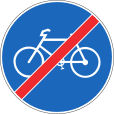
14. What does this traffic sign mean?
This traffic sign indicates the end of the mandatory path for cyclists. The requirement associated with the designated path ends at this point. Cyclists must continue according to the road layout, other traffic signs and applicable local rules.
English • Traffic sign 2.60.1 • End of cycle track.
Deutsch • Verkehrssignal 2.60.1 • Ende des Radweges.
Français • Signal 2.60.1 • Fin de la piste cyclable.
Italiano • Segnale 2.60.1 • Fine della ciclopista.
Sources
🔗 Commons.wikimedia.org
🔗 Fedlex.admin.ch • SSV, Anhang 2 (DE)
🔗 Fedlex.admin.ch • OSR, annexe 2 (FR)
🔗 Fedlex.admin.ch • OSStr, allegato 2 (IT)
SVG source: Commons.wikimedia.org • Original SVG
Bundesamt für Strassen (ASTRA) • Public domain • Original revision 2017-07-08. Wikimedia original unmodified.
Artwork reviewed against the Swiss signalling ordinance, version 1 October 2026, annex 2: Fedlex.admin.ch • Signal 2.60.1, PDF page 110. Catalogue-equivalent illustration; intentional update from the previous PNG. This is an educational illustration, not a manufacturing specification.
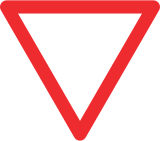
15. What does this traffic sign mean?
This traffic sign means give way. Slow down and give way to traffic that has priority. Stop if necessary and proceed only when it is safe.
English • Traffic sign 3.02 • Give way.
Deutsch • Verkehrssignal 3.02 • Kein Vortritt.
Français • Signal 3.02 • Cédez le passage.
Italiano • Segnale 3.02 • Dare precedenza.
Sources
🔗 Commons.wikimedia.org
🔗 Fedlex.admin.ch • SSV, Anhang 2 (DE)
🔗 Fedlex.admin.ch • OSR, annexe 2 (FR)
🔗 Fedlex.admin.ch • OSStr, allegato 2 (IT)
SVG source: Bundesamt für Strassen (ASTRA) • Public domain • Original revision 2017-07-02. Wikimedia original unmodified.
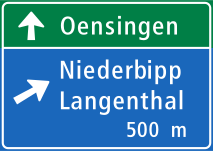
16. What does this traffic sign mean?
This traffic sign gives information about the next exit. It may show the exit number, destination, direction or distance to the exit.
English • Traffic sign 4.61 • Advance direction sign for junctions.
Deutsch • Verkehrssignal 4.61 • Vorwegweiser bei Anschlüssen.
Français • Signal 4.61 • Indicateur de direction avancé, destiné aux jonctions.
Italiano • Segnale 4.61 • Segnale di preavviso ai raccordi.
Sources
🔗 Commons.wikimedia.org
🔗 Fedlex.admin.ch • SSV, Anhang 2 (DE)
🔗 Fedlex.admin.ch • OSR, annexe 2 (FR)
🔗 Fedlex.admin.ch • OSStr, allegato 2 (IT)
SVG source: Commons.wikimedia.org • Original SVG
Bundesamt für Strassen (ASTRA) • Public domain • Original revision 2017-06-30. Wikimedia original unmodified.
Artwork reviewed against the Swiss signalling ordinance, version 1 October 2026, annex 2: Fedlex.admin.ch • Signal 4.61, PDF page 123. Catalogue-equivalent illustration; intentional update from the previous PNG. This is an educational illustration, not a manufacturing specification.
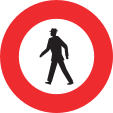
17. What does this traffic sign mean?
This traffic sign indicates that pedestrians are prohibited. Pedestrians may not enter or continue beyond the sign. Other road users may still be permitted unless another restriction applies.
English • Traffic sign 2.15 • No pedestrians.
Deutsch • Verkehrssignal 2.15 • Verbot für Fussgänger.
Français • Signal 2.15 • Accès interdit aux piétons.
Italiano • Segnale 2.15 • Accesso vietato ai pedoni.
Sources
🔗 Commons.wikimedia.org
🔗 Fedlex.admin.ch • SSV, Anhang 2 (DE)
🔗 Fedlex.admin.ch • OSR, annexe 2 (FR)
🔗 Fedlex.admin.ch • OSStr, allegato 2 (IT)
SVG source: Commons.wikimedia.org • Original SVG
Bundesamt für Strassen (ASTRA) • Public domain • Original revision 2017-07-04. Wikimedia original unmodified.
Artwork reviewed against the Swiss signalling ordinance, version 1 October 2026, annex 2: Fedlex.admin.ch • Signal 2.15, PDF page 105. Catalogue-equivalent illustration; intentional update from the previous PNG. This is an educational illustration, not a manufacturing specification.
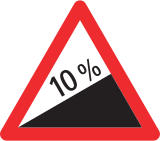
18. What does this traffic sign mean?
This traffic sign indicates a warning for a steep ascent. A steep uphill gradient lies ahead and may cause heavy or low-powered vehicles to lose speed. Select a suitable gear, maintain a safe following distance and be prepared for slower traffic.
English • Traffic sign 1.11 • Steep ascent.
Deutsch • Verkehrssignal 1.11 • Starke Steigung.
Français • Signal 1.11 • Forte montée.
Italiano • Segnale 1.11 • Salita ripida.
Sources
🔗 Commons.wikimedia.org
🔗 Fedlex.admin.ch • SSV, Anhang 2 (DE)
🔗 Fedlex.admin.ch • OSR, annexe 2 (FR)
🔗 Fedlex.admin.ch • OSStr, allegato 2 (IT)
SVG source: Bundesamt für Strassen (ASTRA) • Public domain • Original revision 2017-07-01. Wikimedia original unmodified.
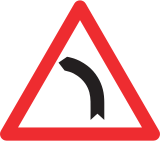
19. What does this traffic sign mean?
This traffic sign indicates a warning for a curve to the left. A left-hand bend lies ahead. Reduce speed before entering the curve, maintain your lane position and use smooth steering.
English • Traffic sign 1.02 • Left-hand bend.
Deutsch • Verkehrssignal 1.02 • Linkskurve.
Français • Signal 1.02 • Virage à gauche.
Italiano • Segnale 1.02 • Curva a sinistra.
Sources
🔗 Commons.wikimedia.org
🔗 Fedlex.admin.ch • SSV, Anhang 2 (DE)
🔗 Fedlex.admin.ch • OSR, annexe 2 (FR)
🔗 Fedlex.admin.ch • OSStr, allegato 2 (IT)
SVG source: Bundesamt für Strassen (ASTRA) • Public domain • Original revision 2017-07-01. Wikimedia original unmodified.
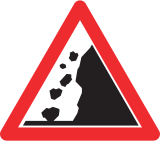
20. What does this traffic sign mean?
This traffic sign indicates a warning for falling rocks. Rocks or stones may fall from nearby slopes or may already be lying on the road. Reduce speed, scan the road ahead and be prepared to avoid or stop for fallen material.
English • Traffic sign 1.13 • Falling rocks.
Deutsch • Verkehrssignal 1.13 • Steinschlag.
Français • Signal 1.13 • Chute de pierres.
Italiano • Segnale 1.13 • Caduta di sassi.
Sources
🔗 Commons.wikimedia.org
🔗 Fedlex.admin.ch • SSV, Anhang 2 (DE)
🔗 Fedlex.admin.ch • OSR, annexe 2 (FR)
🔗 Fedlex.admin.ch • OSStr, allegato 2 (IT)
SVG source: Bundesamt für Strassen (ASTRA) • Public domain • Original revision 2017-07-01. Wikimedia original unmodified.
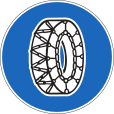
21. What does this traffic sign mean?
This traffic sign indicates that snow chains are mandatory. Vehicles covered by the sign must use snow chains from this point as required by the applicable rules. Follow any supplementary signs or local instructions specifying the affected vehicles, wheels or conditions.
English • Traffic sign 2.48 • Snow chains compulsory.
Deutsch • Verkehrssignal 2.48 • Schneeketten obligatorisch.
Français • Signal 2.48 • Chaînes à neige obligatoires.
Italiano • Segnale 2.48 • Catene per la neve obbligatorie.
Sources
🔗 Commons.wikimedia.org
🔗 Fedlex.admin.ch • SSV, Anhang 2 (DE)
🔗 Fedlex.admin.ch • OSR, annexe 2 (FR)
🔗 Fedlex.admin.ch • OSStr, allegato 2 (IT)
SVG source: Commons.wikimedia.org • Original SVG
Bundesamt für Strassen (ASTRA) • Public domain • Original revision 2017-07-05. Wikimedia original unmodified.
Artwork reviewed against the Swiss signalling ordinance, version 1 October 2026, annex 2: Fedlex.admin.ch • Signal 2.48, PDF page 108. Catalogue-equivalent illustration; intentional update from the previous PNG. This is an educational illustration, not a manufacturing specification.
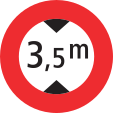
22. What does this traffic sign mean?
This traffic sign indicates that vehicles higher than indicated are prohibited. A vehicle or vehicle combination whose overall height, including its load, exceeds the displayed limit may not continue beyond the sign.
English • Traffic sign 2.19 • Maximum height.
Deutsch • Verkehrssignal 2.19 • Höchsthöhe.
Français • Signal 2.19 • Hauteur maximale.
Italiano • Segnale 2.19 • Altezza massima.
Sources
🔗 Commons.wikimedia.org
🔗 Fedlex.admin.ch • SSV, Anhang 2 (DE)
🔗 Fedlex.admin.ch • OSR, annexe 2 (FR)
🔗 Fedlex.admin.ch • OSStr, allegato 2 (IT)
SVG source: Commons.wikimedia.org • Original SVG
Bundesamt für Strassen (ASTRA) • Public domain • Original revision 2017-07-04. Wikimedia original unmodified.
Artwork reviewed against the Swiss signalling ordinance, version 1 October 2026, annex 2: Fedlex.admin.ch • Signal 2.19, PDF page 105. Catalogue-equivalent illustration; intentional update from the previous PNG. This is an educational illustration, not a manufacturing specification.
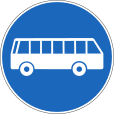
23. What does this traffic sign mean?
This traffic sign indicates a mandatory lane for buses. Buses must use the designated lane where the sign applies. Other road users may use the lane only where the applicable signs or local rules permit them to do so.
English • Traffic sign 2.64 • Roadway reserved for buses.
Deutsch • Verkehrssignal 2.64 • Busfahrbahn.
Français • Signal 2.64 • Chaussée réservée aux bus.
Italiano • Segnale 2.64 • Carreggiata riservata agli autobus.
Sources
🔗 Commons.wikimedia.org
🔗 Fedlex.admin.ch • SSV, Anhang 2 (DE)
🔗 Fedlex.admin.ch • OSR, annexe 2 (FR)
🔗 Fedlex.admin.ch • OSStr, allegato 2 (IT)
SVG source: Commons.wikimedia.org • Original SVG
Bundesamt für Strassen (ASTRA) • Public domain • Original revision 2017-07-08. Wikimedia original unmodified.
Artwork reviewed against the Swiss signalling ordinance, version 1 October 2026, annex 2: Fedlex.admin.ch • Signal 2.64, PDF page 110. Catalogue-equivalent illustration; intentional update from the previous PNG. This is an educational illustration, not a manufacturing specification.
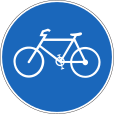
24. What does this traffic sign mean?
This traffic sign indicates a mandatory path for cyclists. Cyclists must use the designated path where the sign applies. Other road users may use the path only where the applicable signs or local rules permit them to do so.
English • Traffic sign 2.60 • Cycle track.
Deutsch • Verkehrssignal 2.60 • Radweg.
Français • Signal 2.60 • Piste cyclable.
Italiano • Segnale 2.60 • Ciclopista.
Sources
🔗 Commons.wikimedia.org
🔗 Fedlex.admin.ch • SSV, Anhang 2 (DE)
🔗 Fedlex.admin.ch • OSR, annexe 2 (FR)
🔗 Fedlex.admin.ch • OSStr, allegato 2 (IT)
SVG source: Commons.wikimedia.org • Original SVG
Bundesamt für Strassen (ASTRA) • Public domain • Original revision 2017-07-08. Wikimedia original unmodified.
Artwork reviewed against the Swiss signalling ordinance, version 1 October 2026, annex 2: Fedlex.admin.ch • Signal 2.60, PDF page 110. Catalogue-equivalent illustration; intentional update from the previous PNG. This is an educational illustration, not a manufacturing specification.
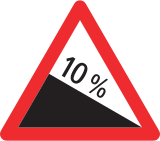
25. What does this traffic sign mean?
This traffic sign indicates a warning for a steep descent. A steep downhill gradient lies ahead and the vehicle may gain speed quickly. Reduce speed before the descent, select a suitable gear and use engine braking where appropriate. Allow extra distance for heavy or towing vehicles.
English • Traffic sign 1.10 • Steep descent.
Deutsch • Verkehrssignal 1.10 • Gefährliches Gefälle.
Français • Signal 1.10 • Descente dangereuse.
Italiano • Segnale 1.10 • Discesa pericolosa.
Sources
🔗 Commons.wikimedia.org
🔗 Fedlex.admin.ch • SSV, Anhang 2 (DE)
🔗 Fedlex.admin.ch • OSR, annexe 2 (FR)
🔗 Fedlex.admin.ch • OSStr, allegato 2 (IT)
SVG source: Bundesamt für Strassen (ASTRA) • Public domain • Original revision 2017-07-01. Wikimedia original unmodified.
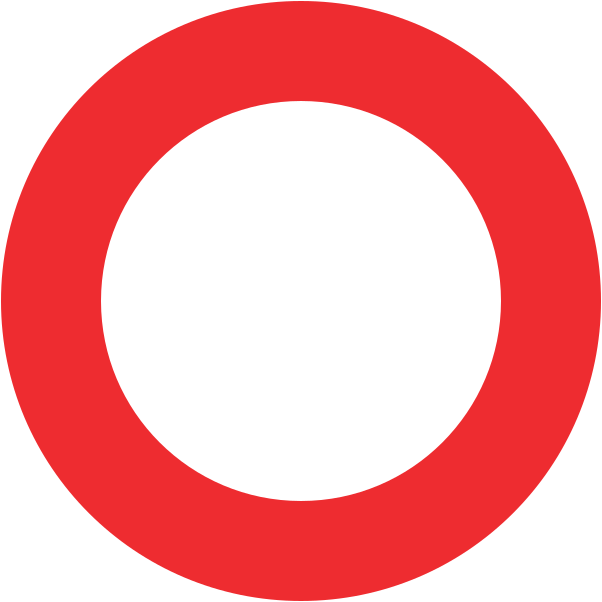
26. What does this traffic sign mean?
This traffic sign indicates that drivers may not enter the road from either direction.
English • Traffic sign 2.01 • No traffic in either direction.
Deutsch • Verkehrssignal 2.01 • Allgemeines Fahrverbot in beiden Richtungen.
Français • Signal 2.01 • Interdiction générale de circuler dans les deux sens.
Italiano • Segnale 2.01 • Divieto generale di circolazione nelle due direzioni.
Sources
🔗 Commons.wikimedia.org
🔗 Fedlex.admin.ch • SSV, Anhang 2 (DE)
🔗 Fedlex.admin.ch • OSR, annexe 2 (FR)
🔗 Fedlex.admin.ch • OSStr, allegato 2 (IT)
SVG source: Commons.wikimedia.org • Original SVG
Bundesamt für Strassen (ASTRA) • Public domain • Original revision 2022-01-27. Wikimedia original unmodified.
Artwork reviewed against the Swiss signalling ordinance, version 1 October 2026, annex 2: Fedlex.admin.ch • Signal 2.01, PDF page 103. Catalogue-equivalent illustration; intentional update from the previous PNG. This is an educational illustration, not a manufacturing specification.

27. What does this traffic sign mean?
This traffic sign indicates a road with one-way traffic. Vehicular traffic may travel only in the permitted direction, subject to any exceptions indicated by traffic signs or local rules.
English • Traffic sign 4.08 • One-way traffic.
Deutsch • Verkehrssignal 4.08 • Einbahnstrasse.
Français • Signal 4.08 • Sens unique.
Italiano • Segnale 4.08 • Senso unico.
Sources
🔗 Commons.wikimedia.org
🔗 Fedlex.admin.ch • SSV, Anhang 2 (DE)
🔗 Fedlex.admin.ch • OSR, annexe 2 (FR)
🔗 Fedlex.admin.ch • OSStr, allegato 2 (IT)
SVG source: Commons.wikimedia.org • Original SVG
Bundesamt für Strassen (ASTRA) • Public domain • Original revision 2017-06-30. Wikimedia original unmodified.
Artwork reviewed against the Swiss signalling ordinance, version 1 October 2026, annex 2: Fedlex.admin.ch • Signal 4.08, PDF page 113. Catalogue-equivalent illustration; intentional update from the previous PNG. This is an educational illustration, not a manufacturing specification.
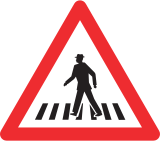
28. What does this traffic sign mean?
This traffic sign indicates a warning for a pedestrian crossing. A designated pedestrian crossing lies ahead. Reduce speed when necessary, watch carefully for pedestrians and be prepared to give way or stop according to the applicable local priority rules.
English • Traffic sign 1.22 • Pedestrian crossing.
Deutsch • Verkehrssignal 1.22 • Fussgängerstreifen.
Français • Signal 1.22 • Passage pour piétons.
Italiano • Segnale 1.22 • Pedoni.
Sources
🔗 Commons.wikimedia.org
🔗 Fedlex.admin.ch • SSV, Anhang 2 (DE)
🔗 Fedlex.admin.ch • OSR, annexe 2 (FR)
🔗 Fedlex.admin.ch • OSStr, allegato 2 (IT)
SVG source: Bundesamt für Strassen (ASTRA) • Public domain • Original revision 2017-07-01. Wikimedia original unmodified.
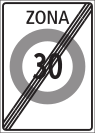
29. What does this traffic sign mean?
This traffic sign indicates the end of the zone with a speed limit. The zonal speed limit ends at this point. Follow any newly posted limit or the applicable default speed rules.
English • Traffic sign 2.59.2 • End-of-zone sign.
Deutsch • Verkehrssignal 2.59.2 • Ende-Zonensignal (z.B. Ende Tempo-30-Zone).
Français • Signal 2.59.2 • Signal de fin de zone.
Italiano • Segnale 2.59.2 • Fine del segnale per zone (ad es. limite di velocità massimo di 30 km/h).
Sources
🔗 Commons.wikimedia.org
🔗 Fedlex.admin.ch • SSV, Anhang 2 (DE)
🔗 Fedlex.admin.ch • OSR, annexe 2 (FR)
🔗 Fedlex.admin.ch • OSStr, allegato 2 (IT)
SVG source: Commons.wikimedia.org • Original SVG
Bundesamt für Strassen (ASTRA) • Public domain • Original revision 2017-07-08. Wikimedia original unmodified.
Artwork reviewed against the Swiss signalling ordinance, version 1 October 2026, annex 2: Fedlex.admin.ch • Signal 2.59.2, PDF page 112. Catalogue-equivalent illustration; intentional update from the previous PNG. This is an educational illustration, not a manufacturing specification.

30. What does this traffic sign mean?
This traffic sign indicates that turning left or right is mandatory at the junction ahead. Traffic may turn either left or right but may not continue straight ahead.
English • Traffic sign 2.39 • Turn right or left.
Deutsch • Verkehrssignal 2.39 • Rechts- oder Linksabbiegen.
Français • Signal 2.39 • Obliquer à droite ou à gauche.
Italiano • Segnale 2.39 • Svoltare a destra o a sinistra.
Sources
🔗 Commons.wikimedia.org
🔗 Fedlex.admin.ch • SSV, Anhang 2 (DE)
🔗 Fedlex.admin.ch • OSR, annexe 2 (FR)
🔗 Fedlex.admin.ch • OSStr, allegato 2 (IT)
SVG source: Commons.wikimedia.org • Original SVG
Bundesamt für Strassen (ASTRA) • Public domain • Original revision 2017-07-05. Wikimedia original unmodified.
Artwork reviewed against the Swiss signalling ordinance, version 1 October 2026, annex 2: Fedlex.admin.ch • Signal 2.39, PDF page 106. Catalogue-equivalent illustration; intentional update from the previous PNG. This is an educational illustration, not a manufacturing specification.
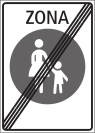
31. What does this traffic sign mean?
This traffic sign indicates the end of the pedestrian zone. The special traffic rules associated with the pedestrian zone end at this point. Follow the traffic signs and rules that apply beyond the zone.
English • Traffic sign 2.59.4 • End of pedestrian zone.
Deutsch • Verkehrssignal 2.59.4 • Ende der Fussgängerzone.
Français • Signal 2.59.4 • Fin de la zone piétonne.
Italiano • Segnale 2.59.4 • Fine della zona pedonale.
Sources
🔗 Commons.wikimedia.org
🔗 Fedlex.admin.ch • SSV, Anhang 2 (DE)
🔗 Fedlex.admin.ch • OSR, annexe 2 (FR)
🔗 Fedlex.admin.ch • OSStr, allegato 2 (IT)
SVG source: Commons.wikimedia.org • Original SVG
Bundesamt für Strassen (ASTRA) • Public domain • Original revision 2017-07-08. Wikimedia original unmodified.
Artwork reviewed against the Swiss signalling ordinance, version 1 October 2026, annex 2: Fedlex.admin.ch • Signal 2.59.4, PDF page 112. Catalogue-equivalent illustration; intentional update from the previous PNG. This is an educational illustration, not a manufacturing specification.

32. What does this traffic sign mean?
This traffic sign shows the shape or layout of an upcoming junction. The diagram indicates how the approaching road and connecting roads are arranged.
English • Supplementary plate 5.09 • Direction of the priority road.
Deutsch • Zusatztafel 5.09 • Richtung der Hauptstrasse.
Français • Plaque complémentaire 5.09 • Direction de la route principale.
Italiano • Cartello complementare 5.09 • Direzione della strada principale.
Sources
🔗 Commons.wikimedia.org
🔗 Fedlex.admin.ch • SSV, Anhang 2 (DE)
🔗 Fedlex.admin.ch • OSR, annexe 2 (FR)
🔗 Fedlex.admin.ch • OSStr, allegato 2 (IT)
SVG source: Commons.wikimedia.org • Original SVG
Bundesamt für Strassen (ASTRA) • Public domain • Original revision 2009-03-18. Wikimedia original unmodified.
Artwork reviewed against the Swiss signalling ordinance, version 1 October 2026, annex 2: Fedlex.admin.ch • Signal 5.09, PDF page 131. Catalogue-equivalent illustration; intentional update from the previous PNG. This is an educational illustration, not a manufacturing specification.
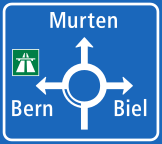
33. What does this traffic sign mean?
This traffic sign gives information about directions at a roundabout. The diagram shows the available exits and the destinations reached from them.
English • Traffic sign 4.54 • Advance direction sign for a roundabout (example).
Deutsch • Verkehrssignal 4.54 • Vorwegweiser bei Kreisverkehrsplatz (Beispiel).
Français • Signal 4.54 • Indicateur de direction avancé pour carrefour à sens giratoire (exemple).
Italiano • Segnale 4.54 • Segnale di preavviso presso aree con percorso rotatorio obbligato (esempio).
Sources
🔗 Commons.wikimedia.org
🔗 Fedlex.admin.ch • SSV, Anhang 2 (DE)
🔗 Fedlex.admin.ch • OSR, annexe 2 (FR)
🔗 Fedlex.admin.ch • OSStr, allegato 2 (IT)
SVG source: Commons.wikimedia.org • Original SVG
Bundesamt für Strassen (ASTRA) • Public domain • Original revision 2017-06-30. Wikimedia original unmodified.
Artwork reviewed against the Swiss signalling ordinance, version 1 October 2026, annex 2: Fedlex.admin.ch • Signal 4.54, PDF page 122. Catalogue-equivalent illustration; intentional update from the previous PNG. This is an educational illustration, not a manufacturing specification.
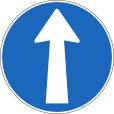
34. What does this traffic sign mean?
This traffic sign indicates that driving straight ahead is mandatory. Traffic must continue straight ahead and may not turn left or right at the location to which the sign applies.
English • Traffic sign 2.36 • Go straight ahead.
Deutsch • Verkehrssignal 2.36 • Geradeausfahren.
Français • Signal 2.36 • Circuler tout droit.
Italiano • Segnale 2.36 • Circolare diritto.
Sources
🔗 Commons.wikimedia.org
🔗 Fedlex.admin.ch • SSV, Anhang 2 (DE)
🔗 Fedlex.admin.ch • OSR, annexe 2 (FR)
🔗 Fedlex.admin.ch • OSStr, allegato 2 (IT)
SVG source: Commons.wikimedia.org • Original SVG
Bundesamt für Strassen (ASTRA) • Public domain • Original revision 2017-07-05. Wikimedia original unmodified.
Artwork reviewed against the Swiss signalling ordinance, version 1 October 2026, annex 2: Fedlex.admin.ch • Signal 2.36, PDF page 106. Catalogue-equivalent illustration; intentional update from the previous PNG. This is an educational illustration, not a manufacturing specification.
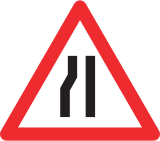
35. What does this traffic sign mean?
This traffic sign indicates a warning for a road narrowing on the left. The available road width decreases from the left side ahead. Reduce speed, follow the lane markings and maintain sufficient clearance from other traffic and the road edge.
English • Traffic sign 1.09 • Road narrows on the left.
Deutsch • Verkehrssignal 1.09 • Verengung links.
Français • Signal 1.09 • Chaussée rétrécie à gauche.
Italiano • Segnale 1.09 • Restringimento a sinistra.
Sources
🔗 Commons.wikimedia.org
🔗 Fedlex.admin.ch • SSV, Anhang 2 (DE)
🔗 Fedlex.admin.ch • OSR, annexe 2 (FR)
🔗 Fedlex.admin.ch • OSStr, allegato 2 (IT)
SVG source: Bundesamt für Strassen (ASTRA) • Public domain • Original revision 2017-07-01. Wikimedia original unmodified.
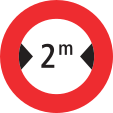
36. What does this traffic sign mean?
This traffic sign indicates that vehicles wider than indicated are prohibited. A vehicle or vehicle combination whose overall width, including its load, exceeds the displayed limit may not continue beyond the sign.
English • Traffic sign 2.18 • Maximum width.
Deutsch • Verkehrssignal 2.18 • Höchstbreite.
Français • Signal 2.18 • Largeur maximale.
Italiano • Segnale 2.18 • Larghezza massima.
Sources
🔗 Commons.wikimedia.org
🔗 Fedlex.admin.ch • SSV, Anhang 2 (DE)
🔗 Fedlex.admin.ch • OSR, annexe 2 (FR)
🔗 Fedlex.admin.ch • OSStr, allegato 2 (IT)
SVG source: Commons.wikimedia.org • Original SVG
Bundesamt für Strassen (ASTRA) • Public domain • Original revision 2017-07-04. Wikimedia original unmodified.
Artwork reviewed against the Swiss signalling ordinance, version 1 October 2026, annex 2: Fedlex.admin.ch • Signal 2.18, PDF page 105. Catalogue-equivalent illustration; intentional update from the previous PNG. This is an educational illustration, not a manufacturing specification.
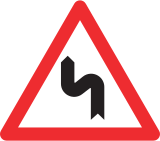
37. What does this traffic sign mean?
This traffic sign indicates a warning for successive curves, with the first curve to the left. Reduce speed before entering the winding section, maintain your lane position and be prepared for further changes in direction.
English • Traffic sign 1.04 • Double bend, first to the left.
Deutsch • Verkehrssignal 1.04 • Doppelkurve nach links beginnend.
Français • Signal 1.04 • Double virage, le premier à gauche.
Italiano • Segnale 1.04 • Doppia curva, la prima a sinistra.
Sources
🔗 Commons.wikimedia.org
🔗 Fedlex.admin.ch • SSV, Anhang 2 (DE)
🔗 Fedlex.admin.ch • OSR, annexe 2 (FR)
🔗 Fedlex.admin.ch • OSStr, allegato 2 (IT)
SVG source: Bundesamt für Strassen (ASTRA) • Public domain • Original revision 2017-07-01. Wikimedia original unmodified.
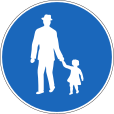
38. What does this traffic sign mean?
This traffic sign indicates the start of a mandatory path for pedestrians. Pedestrians must use the designated path, while other road users may use it only where the applicable signs or local rules permit them to do so.
English • Traffic sign 2.61 • Footpath.
Deutsch • Verkehrssignal 2.61 • Fussweg.
Français • Signal 2.61 • Chemin pour piétons.
Italiano • Segnale 2.61 • Strada pedonale.
Sources
🔗 Commons.wikimedia.org
🔗 Fedlex.admin.ch • SSV, Anhang 2 (DE)
🔗 Fedlex.admin.ch • OSR, annexe 2 (FR)
🔗 Fedlex.admin.ch • OSStr, allegato 2 (IT)
SVG source: Commons.wikimedia.org • Original SVG
Bundesamt für Strassen (ASTRA) • Public domain • Original revision 2017-07-08. Wikimedia original unmodified.
Artwork reviewed against the Swiss signalling ordinance, version 1 October 2026, annex 2: Fedlex.admin.ch • Signal 2.61, PDF page 110. Catalogue-equivalent illustration; intentional update from the previous PNG. This is an educational illustration, not a manufacturing specification.
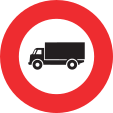
39. What does this traffic sign mean?
This traffic sign indicates that trucks are prohibited. Trucks covered by the sign may not enter or continue beyond it. Any applicable weight threshold or vehicle-category limitation is determined by the sign, supplementary information and local rules.
English • Traffic sign 2.07 • No lorries.
Deutsch • Verkehrssignal 2.07 • Verbot für Lastwagen.
Français • Signal 2.07 • Circulation interdite aux camions.
Italiano • Segnale 2.07 • Divieto di circolazione per gli autocarri.
Sources
🔗 Commons.wikimedia.org
🔗 Fedlex.admin.ch • SSV, Anhang 2 (DE)
🔗 Fedlex.admin.ch • OSR, annexe 2 (FR)
🔗 Fedlex.admin.ch • OSStr, allegato 2 (IT)
SVG source: Commons.wikimedia.org • Original SVG
Bundesamt für Strassen (ASTRA) • Public domain • Original revision 2017-07-04. Wikimedia original unmodified.
Artwork reviewed against the Swiss signalling ordinance, version 1 October 2026, annex 2: Fedlex.admin.ch • Signal 2.07, PDF page 104. Catalogue-equivalent illustration; intentional update from the previous PNG. This is an educational illustration, not a manufacturing specification.
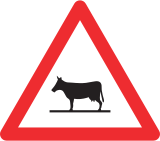
40. What does this traffic sign mean?
This traffic sign indicates a warning for cattle. Cattle or other livestock may be crossing, walking along or standing near the road. Reduce speed, be prepared to stop and avoid sudden movements or unnecessary use of the horn that could startle the animals.
English • Traffic sign 1.25 • Animals.
Deutsch • Verkehrssignal 1.25 • Tiere.
Français • Signal 1.25 • Animaux.
Italiano • Segnale 1.25 • Animali.
Sources
🔗 Commons.wikimedia.org
🔗 Fedlex.admin.ch • SSV, Anhang 2 (DE)
🔗 Fedlex.admin.ch • OSR, annexe 2 (FR)
🔗 Fedlex.admin.ch • OSStr, allegato 2 (IT)
SVG source: Commons.wikimedia.org • Original SVG
Bundesamt für Strassen (ASTRA) • Public domain • Original revision 2017-07-01. Wikimedia original unmodified.
Artwork reviewed against the Swiss signalling ordinance, version 1 October 2026, annex 2: Fedlex.admin.ch • Signal 1.25, PDF page 101. Catalogue-equivalent illustration; intentional update from the previous PNG. This is an educational illustration, not a manufacturing specification.
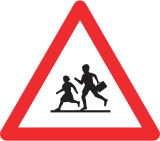
41. What does this traffic sign mean?
This traffic sign indicates a warning for children. Children may be present on or near the road and may cross unexpectedly. Reduce speed, scan both sides of the road carefully and be prepared to stop.
English • Traffic sign 1.23 • Children.
Deutsch • Verkehrssignal 1.23 • Kinder.
Français • Signal 1.23 • Enfants.
Italiano • Segnale 1.23 • Bambini.
Sources
🔗 Commons.wikimedia.org
🔗 Fedlex.admin.ch • SSV, Anhang 2 (DE)
🔗 Fedlex.admin.ch • OSR, annexe 2 (FR)
🔗 Fedlex.admin.ch • OSStr, allegato 2 (IT)
SVG source: Bundesamt für Strassen (ASTRA) • Public domain • Original revision 2017-07-01. Wikimedia original unmodified.
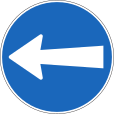
42. What does this traffic sign mean?
This traffic sign indicates a mandatory direction to the left. Traffic must proceed to the left at the sign and may not continue straight ahead or to the right.
English • Traffic sign 2.33 • Mandatory direction to the left.
Deutsch • Verkehrssignal 2.33 • Fahrtrichtung links.
Français • Signal 2.33 • Sens obligatoire à gauche.
Italiano • Segnale 2.33 • Direzione obbligatoria a sinistra.
Sources
🔗 Commons.wikimedia.org
🔗 Fedlex.admin.ch • SSV, Anhang 2 (DE)
🔗 Fedlex.admin.ch • OSR, annexe 2 (FR)
🔗 Fedlex.admin.ch • OSStr, allegato 2 (IT)
SVG source: Commons.wikimedia.org • Original SVG
Bundesamt für Strassen (ASTRA) • Public domain • Original revision 2017-07-05. Wikimedia original unmodified.
Artwork reviewed against the Swiss signalling ordinance, version 1 October 2026, annex 2: Fedlex.admin.ch • Signal 2.33, PDF page 106. Catalogue-equivalent illustration; intentional update from the previous PNG. This is an educational illustration, not a manufacturing specification.
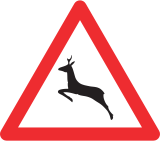
43. What does this traffic sign mean?
This traffic sign indicates a warning for crossing deer. Deer or other wild animals may enter the road unexpectedly, especially around dawn or dusk. Reduce speed, watch the roadside carefully and be prepared for more than one animal to cross.
English • Traffic sign 1.24 • Wild animals crossing.
Deutsch • Verkehrssignal 1.24 • Wildwechsel.
Français • Signal 1.24 • Passage de gibier.
Italiano • Segnale 1.24 • Passaggio di selvaggina.
Sources
🔗 Commons.wikimedia.org
🔗 Fedlex.admin.ch • SSV, Anhang 2 (DE)
🔗 Fedlex.admin.ch • OSR, annexe 2 (FR)
🔗 Fedlex.admin.ch • OSStr, allegato 2 (IT)
SVG source: Commons.wikimedia.org • Original SVG
Bundesamt für Strassen (ASTRA) • Public domain • Original revision 2017-07-01. Wikimedia original unmodified.
Artwork reviewed against the Swiss signalling ordinance, version 1 October 2026, annex 2: Fedlex.admin.ch • Signal 1.24, PDF page 101. Catalogue-equivalent illustration; intentional update from the previous PNG. This is an educational illustration, not a manufacturing specification.
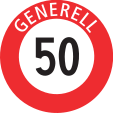
44. What does this traffic sign mean?
This traffic sign indicates the start of a speed limit. The displayed value is the maximum permitted speed from this point. The limit remains in force until it ends or is replaced according to the applicable traffic signs and local rules.
English • Traffic sign 2.30.1 • General maximum speed limit of 50.
Deutsch • Verkehrssignal 2.30.1 • Höchstgeschwindigkeit 50 generell.
Français • Signal 2.30.1 • Vitesse maximale 50, Limite générale.
Italiano • Segnale 2.30.1 • Velocità massima 50, Limite generale.
Sources
🔗 Commons.wikimedia.org
🔗 Fedlex.admin.ch • SSV, Anhang 2 (DE)
🔗 Fedlex.admin.ch • OSR, annexe 2 (FR)
🔗 Fedlex.admin.ch • OSStr, allegato 2 (IT)
SVG source: Commons.wikimedia.org • Original SVG
Bundesamt für Strassen (ASTRA) • Public domain • Original revision 2017-07-04. Wikimedia original unmodified.
Artwork reviewed against the Swiss signalling ordinance, version 1 October 2026, annex 2: Fedlex.admin.ch • Signal 2.30.1, PDF page 106. Catalogue-equivalent illustration; intentional update from the previous PNG. This is an educational illustration, not a manufacturing specification.
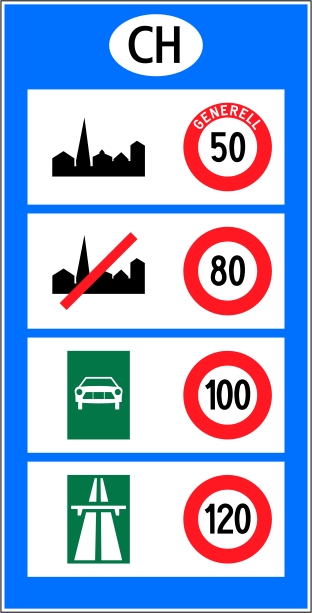
45. What does this traffic sign mean?
This traffic sign indicates the national speed limits. The applicable default maximum speeds depend on the road type, vehicle category and local traffic rules when no different speed limit is indicated.
English • Traffic sign 4.93 • Information on general speed limits.
Deutsch • Verkehrssignal 4.93 • Anzeige der allgemeinen Höchstgeschwindigkeiten.
Français • Signal 4.93 • Information sur les limitations générales de vitesse.
Italiano • Segnale 4.93 • Informazioni sui limiti generali di velocità.
Sources
🔗 Commons.wikimedia.org
🔗 Fedlex.admin.ch • SSV, Anhang 2 (DE)
🔗 Fedlex.admin.ch • OSR, annexe 2 (FR)
🔗 Fedlex.admin.ch • OSStr, allegato 2 (IT)
SVG source: Bundesamt für Strassen (ASTRA) • Public domain • Original revision 2021-08-11. Wikimedia original unmodified.
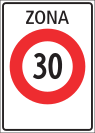
46. What does this traffic sign mean?
This traffic sign indicates the start of a zone with a speed limit. The displayed speed limit applies throughout the zone according to the applicable zonal rules, until the zone is ended or another rule replaces it.
English • Traffic sign 2.59.1 • Zone sign (for example, a 30 zone).
Deutsch • Verkehrssignal 2.59.1 • Zonensignal (z.B. Tempo-30-Zone).
Français • Signal 2.59.1 • Signal de zone (p. ex. zone 30).
Italiano • Segnale 2.59.1 • Segnale per zone (ad es. limite di velocità massima di 30 km/h).
Sources
🔗 Commons.wikimedia.org
🔗 Fedlex.admin.ch • SSV, Anhang 2 (DE)
🔗 Fedlex.admin.ch • OSR, annexe 2 (FR)
🔗 Fedlex.admin.ch • OSStr, allegato 2 (IT)
SVG source: Commons.wikimedia.org • Original SVG
Bundesamt für Strassen (ASTRA) • Public domain • Original revision 2017-07-08. Wikimedia original unmodified.
Artwork reviewed against the Swiss signalling ordinance, version 1 October 2026, annex 2: Fedlex.admin.ch • Signal 2.59.1, PDF page 112. Catalogue-equivalent illustration; intentional update from the previous PNG. This is an educational illustration, not a manufacturing specification.
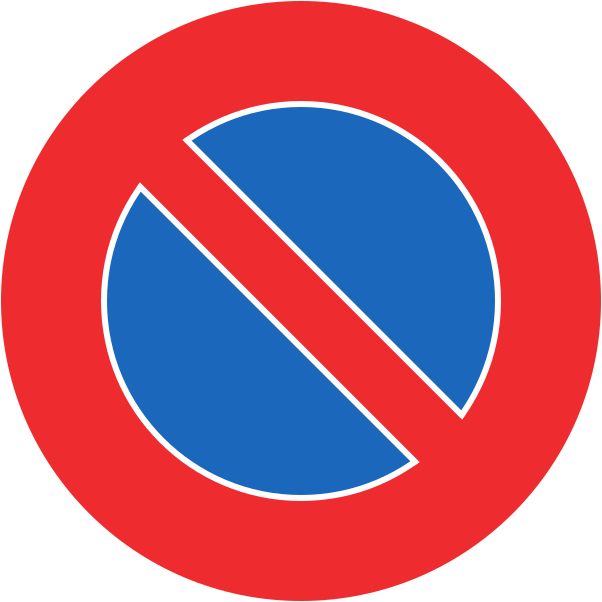
47. What does this traffic sign mean?
This traffic sign indicates that parking is prohibited. Vehicles may not be parked in the area covered by the sign unless an exception applies. Brief stopping to pick up or drop off passengers or to load or unload goods may still be permitted where local rules allow it.
English • Traffic sign 2.50 • No parking.
Deutsch • Verkehrssignal 2.50 • Parkieren verboten.
Français • Signal 2.50 • Interdiction de parquer.
Italiano • Segnale 2.50 • Divieto di parcheggio.
Sources
🔗 Commons.wikimedia.org
🔗 Fedlex.admin.ch • SSV, Anhang 2 (DE)
🔗 Fedlex.admin.ch • OSR, annexe 2 (FR)
🔗 Fedlex.admin.ch • OSStr, allegato 2 (IT)
SVG source: Commons.wikimedia.org • Original SVG
Bundesamt für Strassen (ASTRA) • Public domain • Original revision 2022-01-27. Wikimedia original unmodified.
Artwork reviewed against the Swiss signalling ordinance, version 1 October 2026, annex 2: Fedlex.admin.ch • Signal 2.50, PDF page 108. Catalogue-equivalent illustration; intentional update from the previous PNG. This is an educational illustration, not a manufacturing specification.
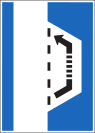
48. What does this traffic sign mean?
This traffic sign indicates a place where vehicles can let other traffic pass. A passing place provides additional space where vehicles can temporarily move aside when the road is too narrow for traffic to pass normally.
English • Traffic sign 4.15 • Passing place.
Deutsch • Verkehrssignal 4.15 • Ausstellplatz.
Français • Signal 4.15 • Place d’évitement.
Italiano • Segnale 4.15 • Piazzuola.
Sources
🔗 Commons.wikimedia.org
🔗 Fedlex.admin.ch • SSV, Anhang 2 (DE)
🔗 Fedlex.admin.ch • OSR, annexe 2 (FR)
🔗 Fedlex.admin.ch • OSStr, allegato 2 (IT)
SVG source: Commons.wikimedia.org • Original SVG
Bundesamt für Strassen (ASTRA) • Public domain • Original revision 2017-06-30. Wikimedia original unmodified.
Artwork reviewed against the Swiss signalling ordinance, version 1 October 2026, annex 2: Fedlex.admin.ch • Signal 4.15, PDF page 114. Catalogue-equivalent illustration; intentional update from the previous PNG. This is an educational illustration, not a manufacturing specification.
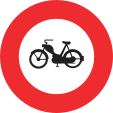
49. What does this traffic sign mean?
This traffic sign indicates that mopeds are prohibited. Moped riders may not enter or continue beyond the sign. The affected moped categories depend on the applicable local rules. Other road users may still be permitted unless another restriction applies.
English • Traffic sign 2.06 • No mopeds.
Deutsch • Verkehrssignal 2.06 • Verbot für Motorfahrräder.
Français • Signal 2.06 • Circulation interdite aux cyclomoteurs.
Italiano • Segnale 2.06 • Divieto di circolazione per i ciclomotori.
Sources
🔗 Commons.wikimedia.org
🔗 Fedlex.admin.ch • SSV, Anhang 2 (DE)
🔗 Fedlex.admin.ch • OSR, annexe 2 (FR)
🔗 Fedlex.admin.ch • OSStr, allegato 2 (IT)
SVG source: Commons.wikimedia.org • Original SVG
Bundesamt für Strassen (ASTRA) • Public domain • Original revision 2017-07-04. Wikimedia original unmodified.
Artwork reviewed against the Swiss signalling ordinance, version 1 October 2026, annex 2: Fedlex.admin.ch • Signal 2.06, PDF page 103. Catalogue-equivalent illustration; intentional update from the previous PNG. This is an educational illustration, not a manufacturing specification.
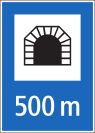
50. What does this traffic sign mean?
This traffic sign indicates the start of a tunnel and shows its length. The displayed value indicates the length of the tunnel. Follow the traffic rules and any special requirements that apply within it.
English • Traffic sign 4.07 • Tunnel.
Deutsch • Verkehrssignal 4.07 • Tunnel.
Français • Signal 4.07 • Tunnel.
Italiano • Segnale 4.07 • Galleria.
Sources
🔗 Commons.wikimedia.org
🔗 Fedlex.admin.ch • SSV, Anhang 2 (DE)
🔗 Fedlex.admin.ch • OSR, annexe 2 (FR)
🔗 Fedlex.admin.ch • OSStr, allegato 2 (IT)
Image via Commons.wikimedia.org
Bundesamt für Strassen (ASTRA) • Public domain • Source revision 2017-06-30. Wikimedia original unmodified.