


Mandatory signsSpain
 Traffic rules
 Spain
 Priority signs
 Warning signs
 Prohibitory signs
 Mandatory signs
 Information signs
Mandatory signs
A mandatory sign is a traffic sign that tells drivers what they must do. Instead of prohibiting actions, these signs impose obligations such as following a specific direction, using a particular lane, or keeping a minimum speed. Their purpose is to guide traffic safely and efficiently by ensuring that all road users follow the same required behaviour in places where it is necessary for order and safety.














How are compulsory instructions shown in Spain?
Obligation signs are a regulatory subdivision. They prescribe directions, routes or other required actions.
🔗 boe.es • Spain: Regulation articles 65,132; catalogue R-400 series
🔗 boe.es • Spain: official sign catalogue, Royal Decree 465/2025
What does a mandatory-direction sign require in Spain?
Where a compulsory-direction sign is installed in Spain, follow only the arrow direction or permitted combination of directions. The restriction applies at the location or movement it regulates; it is not an instruction to ignore other traffic controls.
🔗 boe.es • Spain: Regulation articles 65,132; catalogue R-400 series
🔗 boe.es • Spain: official sign catalogue, Royal Decree 465/2025
Does a mandatory-direction sign give me priority over pedestrians in Spain?
No. The arrow prescribes direction. Give way at marked pedestrian crossings and, when turning into another road, to pedestrians crossing it even without a marked crossing. Obey traffic signals and other applicable controls.
🔗 boe.es • Spain: Regulation articles 65,132; catalogue R-400 series
🔗 boe.es • Spain: official sign catalogue, Royal Decree 465/2025

1. Mandatory roundabout direction
This traffic sign indicates the mandatory direction around a roundabout. Traffic must circulate in the direction shown by the arrows. The sign does not itself determine priority; follow the applicable priority signs, traffic signals and local rules.
English • Traffic sign R-402 • Compulsory direction at a roundabout. The arrows show the direction in which vehicles must circulate.
Español • R-402 • Sentido obligatorio en glorieta. Las flechas señalan la dirección y sentido del movimiento giratorio que los vehículos deben seguir.
Sources
🔗 Commons.wikimedia.org (Majafego • CC BY-SA 4.0)
🔗 Boe.es • Reglamento General de Circulación • anexo I • catálogo vigente
🔗 Boe.es • Real Decreto 465/2025 • R-402 • página 62
SVG source: Majafego • CC BY-SA 4.0 • Original revision 2025-09-17. Wikimedia original unmodified.
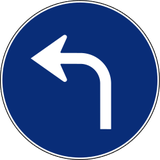
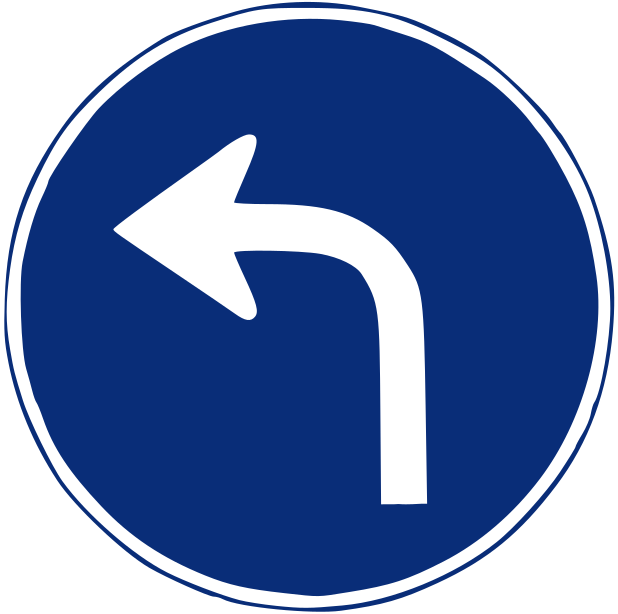
2. Turning left mandatory
This traffic sign indicates that turning left is mandatory at the junction ahead. Traffic must turn left and may not continue straight ahead or turn right.
English • Traffic sign R-400e • Compulsory direction. The arrow shows the direction vehicles must follow.
Español • R-400e • Sentido obligatorio. La flecha señala la dirección y sentido que los vehículos tienen la obligación de seguir.
Sources
🔗 Commons.wikimedia.org
🔗 Boe.es • Reglamento General de Circulación • anexo I • catálogo vigente
🔗 Boe.es • Real Decreto 465/2025 • R-400e • página 61
SVG source: NACLE2 • CC0 • Original revision 2011-08-05. Wikimedia original unmodified.
3. Turning left or right mandatory
This traffic sign indicates that turning left or right is mandatory at the junction ahead. Traffic may turn either left or right but may not continue straight ahead.
English • Traffic sign R-403c • Only permitted direction and senses of travel. The arrows show the only direction and senses of travel vehicles may take.
Español • R-403c • Única dirección y sentidos permitidos. Las flechas señalan la única dirección y sentidos que los vehículos pueden tomar.
Sources
🔗 Commons.wikimedia.org (Gigillo83 • CC BY-SA 3.0)
🔗 Boe.es • Reglamento General de Circulación • anexo I • catálogo vigente
🔗 Boe.es • Real Decreto 465/2025 • R-403c • página 62
SVG source: Gigillo83 • CC BY-SA 3.0 • Original revision 2025-09-17. Wikimedia original unmodified.
4. Turning right mandatory
This traffic sign indicates that turning right is mandatory at the junction ahead. Traffic must turn right and may not continue straight ahead or turn left.
English • Traffic sign R-400d • Compulsory direction. The arrow shows the direction vehicles must follow.
Español • R-400d • Sentido obligatorio. La flecha señala la dirección y sentido que los vehículos tienen la obligación de seguir.
Sources
🔗 Commons.wikimedia.org
🔗 Boe.es • Reglamento General de Circulación • anexo I • catálogo vigente
🔗 Boe.es • Real Decreto 465/2025 • R-400d • página 61
SVG source: NACLE2 • CC0 • Original revision 2011-08-05. Wikimedia original unmodified.
5. Pass obstacle on the left
This traffic sign indicates that traffic must pass an obstacle on the left. Keep to the left of the obstacle and follow any accompanying signs or road markings.
English • Traffic sign R-401b • Pass on the indicated side. The arrow shows the side of the refuge, island or obstacle on which vehicles must pass.
Español • R-401b • Paso obligatorio. La flecha señala el lado del refugio, de la isleta o del obstáculo por el que los vehículos han de pasar obligatoriamente.
Sources
🔗 Commons.wikimedia.org (Gigillo83 • CC BY-SA 3.0)
🔗 Boe.es • Reglamento General de Circulación • anexo I • catálogo vigente
🔗 Boe.es • Real Decreto 465/2025 • R-401b • página 61
SVG source: Gigillo83 • CC BY-SA 3.0 • Original revision 2025-09-17. Wikimedia original unmodified.
6. Pass obstacle on either side
This traffic sign indicates that traffic must pass an obstacle on either the left or the right. Use either permitted side while following the road layout and any accompanying signs or markings.
English • Traffic sign R-401c • Pass on either indicated side. The arrows show the sides of the refuge, island or obstacle on one of which vehicles must pass.
Español • R-401c • Paso obligatorio. Las flechas señalan los lados del refugio, de la isleta o del obstáculo por uno de los cuales los vehículos han de pasar obligatoriamente.
Sources
🔗 Commons.wikimedia.org (Gigillo83 • CC BY-SA 3.0)
🔗 Boe.es • Reglamento General de Circulación • anexo I • catálogo vigente
🔗 Boe.es • Real Decreto 465/2025 • R-401c • página 62
SVG source: Gigillo83 • CC BY-SA 3.0 • Original revision 2025-09-17. Wikimedia original unmodified.
7. Pass obstacle on the right
This traffic sign indicates that traffic must pass an obstacle on the right. Keep to the right of the obstacle and follow any accompanying signs or road markings.
English • Traffic sign R-401a • Pass on the indicated side. The arrow shows the side of the refuge, island or obstacle on which vehicles must pass.
Español • R-401a • Paso obligatorio. La flecha señala el lado del refugio, de la isleta o del obstáculo por el que los vehículos han de pasar obligatoriamente.
Sources
🔗 Commons.wikimedia.org (Gigillo83 • CC BY-SA 3.0)
🔗 Boe.es • Reglamento General de Circulación • anexo I • catálogo vigente
🔗 Boe.es • Real Decreto 465/2025 • R-401a • página 61
SVG source: Gigillo83 • CC BY-SA 3.0 • Original revision 2025-09-17. Wikimedia original unmodified.
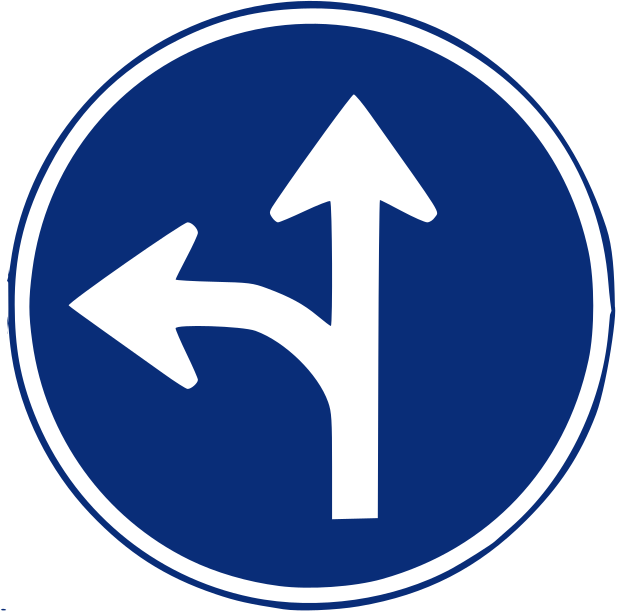
8. Driving straight ahead or turning left mandatory
This traffic sign indicates that traffic must continue straight ahead or turn left. One of the indicated directions must be followed; turning right is prohibited.
English • Traffic sign R-403b • Only permitted directions. The arrows show the only directions vehicles may take.
Español • R-403b • Únicas direcciones y sentidos permitidos. Las flechas señalan las únicas direcciones y sentidos que los vehículos pueden tomar.
Sources
🔗 Commons.wikimedia.org
🔗 Boe.es • Reglamento General de Circulación • anexo I • catálogo vigente
🔗 Boe.es • Real Decreto 465/2025 • R-403b • página 62
SVG source: NACLE2 • CC0 • Original revision 2011-08-05. Wikimedia original unmodified.
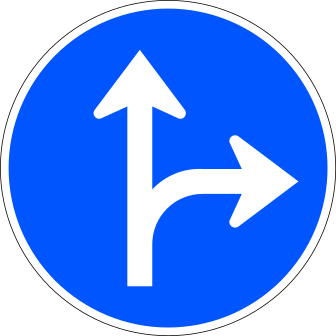
9. Driving straight ahead or turning right mandatory
This traffic sign indicates that traffic must continue straight ahead or turn right. One of the indicated directions must be followed; turning left is prohibited.
English • Traffic sign R-403a • Only permitted directions. The arrows show the only directions vehicles may take.
Español • R-403a • Únicas direcciones y sentidos permitidos. Las flechas señalan las únicas direcciones y sentidos que los vehículos pueden tomar.
Sources
🔗 Commons.wikimedia.org (Gigillo83 • CC BY-SA 3.0)
🔗 Boe.es • Reglamento General de Circulación • anexo I • catálogo vigente
🔗 Boe.es • Real Decreto 465/2025 • R-403a • página 62
SVG source: Gigillo83 • CC BY-SA 3.0 • Original revision 2025-09-17. Wikimedia original unmodified.
10. Mandatory left
This traffic sign indicates a mandatory direction to the left. Traffic must proceed to the left at the sign and may not continue straight ahead or to the right.
English • Traffic sign R-400b • Compulsory direction. The arrow shows the direction vehicles must follow.
Español • R-400b • Sentido obligatorio. La flecha señala la dirección y sentido que los vehículos tienen la obligación de seguir.
Sources
🔗 Commons.wikimedia.org (Gigillo83 • CC BY-SA 3.0)
🔗 Boe.es • Reglamento General de Circulación • anexo I • catálogo vigente
🔗 Boe.es • Real Decreto 465/2025 • R-400b • página 61
SVG source: Gigillo83 • CC BY-SA 3.0 • Original revision 2025-09-17. Wikimedia original unmodified.
11. Mandatory right
This traffic sign indicates a mandatory direction to the right. Traffic must proceed to the right at the sign and may not continue straight ahead or to the left.
English • Traffic sign R-400a • Compulsory direction. The arrow shows the direction vehicles must follow.
Español • R-400a • Sentido obligatorio. La flecha señala la dirección y sentido que los vehículos tienen la obligación de seguir.
Sources
🔗 Commons.wikimedia.org (Gigillo83 • CC BY-SA 3.0)
🔗 Boe.es • Reglamento General de Circulación • anexo I • catálogo vigente
🔗 Boe.es • Real Decreto 465/2025 • R-400a • página 61
SVG source: Gigillo83 • CC BY-SA 3.0 • Original revision 2025-09-17. Wikimedia original unmodified.
12. Driving straight ahead mandatory
This traffic sign indicates that driving straight ahead is mandatory. Traffic must continue straight ahead and may not turn left or right at the location to which the sign applies.
English • Traffic sign R-400c • Compulsory direction. The arrow shows the direction vehicles must follow.
Español • R-400c • Sentido obligatorio. La flecha señala la dirección y sentido que los vehículos tienen la obligación de seguir.
Sources
🔗 Commons.wikimedia.org (Gigillo83 • CC BY-SA 3.0)
🔗 Boe.es • Reglamento General de Circulación • anexo I • catálogo vigente
🔗 Boe.es • Real Decreto 465/2025 • R-400c • página 61
SVG source: Gigillo83 • CC BY-SA 3.0 • Original revision 2025-09-17. Wikimedia original unmodified.
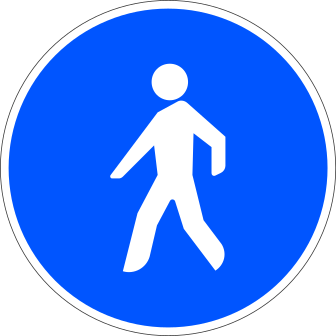
13. Mandatory path for pedestrians
This traffic sign indicates the start of a mandatory path for pedestrians. Pedestrians must use the designated path, while other road users may use it only where the applicable signs or local rules permit them to do so.
English • Traffic sign R-410 • Reserved compulsory footpath. Pedestrians must use the path at whose entrance the sign stands; other road users must not use it.
Español • R-410 • Camino reservado y obligatorio para peatones. Obligación para los peatones de transitar por el camino a cuya entrada esté situada y prohibición a los demás usuarios de la vía de utilizarlo.
Sources
🔗 Commons.wikimedia.org
🔗 Boe.es • Reglamento General de Circulación • anexo I • catálogo vigente
🔗 Boe.es • Real Decreto 465/2025 • R-410 • página 64
SVG source: NACLE2 • CC0 • Original revision 2025-09-23. Wikimedia original unmodified.
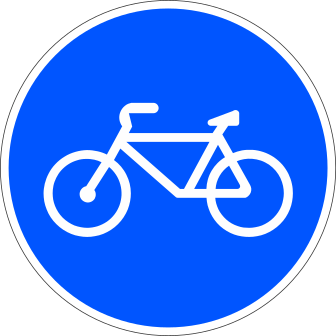
14. Mandatory path for cyclists
This traffic sign indicates a mandatory path for cyclists. Cyclists must use the designated path where the sign applies. Other road users may use the path only where the applicable signs or local rules permit them to do so.
English • Traffic sign R-407a • Reserved compulsory cycle route. Cycle riders must use the route at whose entrance the sign stands; other road users must not use it.
Español • R-407a • Vía reservada y obligatoria para ciclos. Obligación para los conductores de ciclos de circular por la vía a cuya entrada esté situada y prohibición a los demás usuarios de la vía de utilizarla.
Sources
🔗 Commons.wikimedia.org
🔗 Boe.es • Reglamento General de Circulación • anexo I • catálogo vigente
🔗 Boe.es • Real Decreto 465/2025 • R-407a • página 63
SVG source: NACLE2 • CC0 • Original revision 2025-09-17. Wikimedia original unmodified.
15. End of mandatory path for cyclists
This traffic sign indicates the end of the mandatory path for cyclists. The requirement associated with the designated path ends at this point. Cyclists must continue according to the road layout, other traffic signs and applicable local rules.
English • Traffic sign R-505 • End of reserved compulsory cycle route. Marks where a previous reserved compulsory cycle route sign ceases to apply.
Español • R-505 • Fin de vía reservada y obligatoria para ciclos. Señala el lugar desde donde deja de ser aplicable una señal anterior de vía reservada y obligatoria para ciclos.
Sources
🔗 Commons.wikimedia.org (Gigillo83 • CC BY-SA 3.0)
🔗 Boe.es • Reglamento General de Circulación • anexo I • catálogo vigente
🔗 Boe.es • Real Decreto 465/2025 • R-505 • página 68
SVG source: Gigillo83 • CC BY-SA 3.0 • Original revision 2014-10-02. Wikimedia original unmodified.
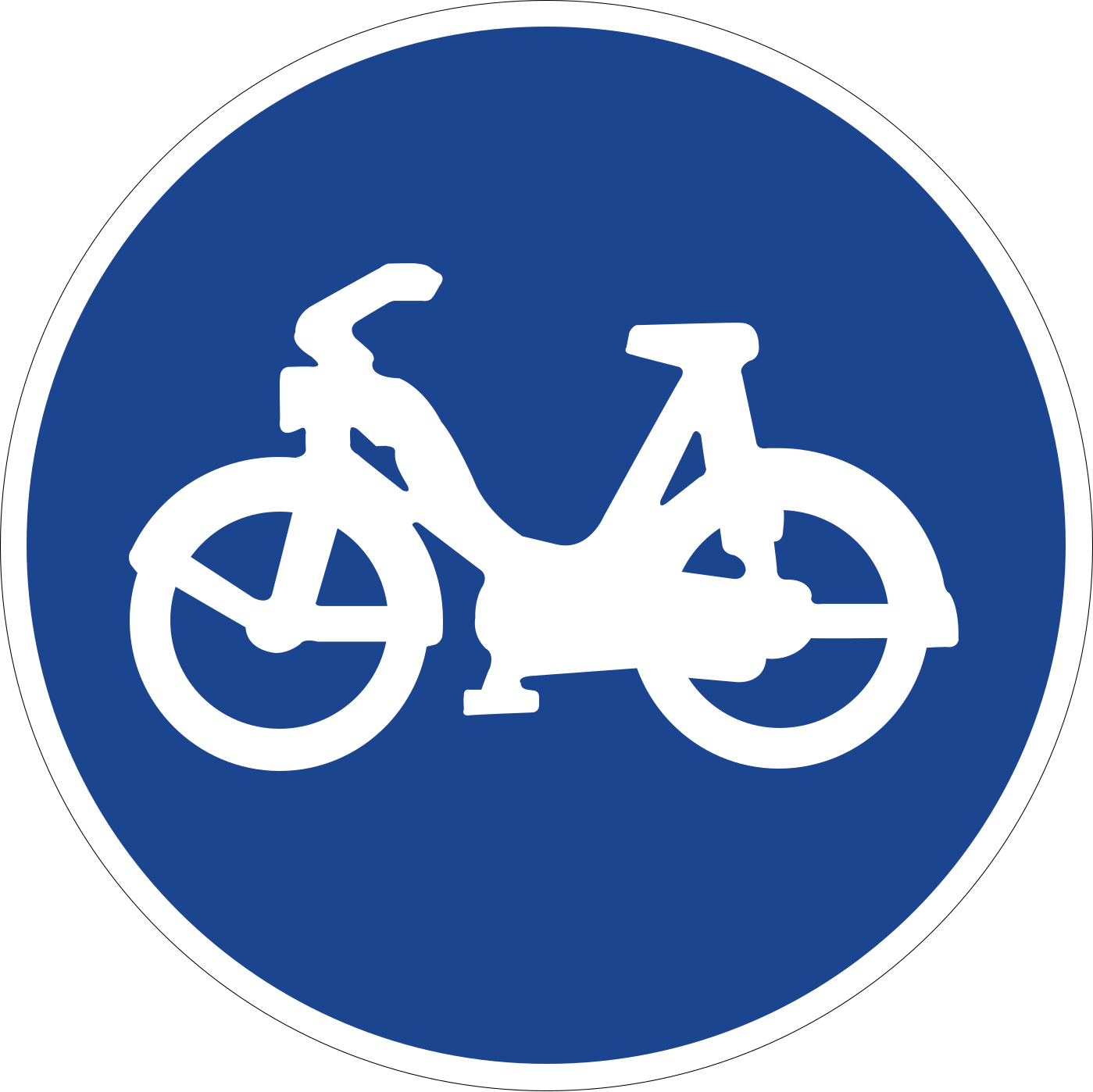
16. Mandatory path for mopeds
This traffic sign indicates a mandatory path for mopeds. The moped categories covered by the sign must use the designated path. Other road users may use it only where the applicable signs or local rules permit them to do so.
English • Traffic sign R-407b • Reserved compulsory moped route. Moped riders must use the route at whose entrance the sign stands; other road users must not use it.
Español • R-407b • Vía reservada y obligatoria para ciclomotores. Obligación para los conductores de ciclomotores de circular por la vía a cuya entrada esté situada y prohibición a los demás usuarios de la vía de utilizarla.
Sources
🔗 Commons.wikimedia.org (Gigillo83 • CC BY-SA 3.0)
🔗 Boe.es • Reglamento General de Circulación • anexo I • catálogo vigente
🔗 Boe.es • Real Decreto 465/2025 • R-407b • página 63
SVG source: Gigillo83 • CC BY-SA 3.0 • Original revision 2026-07-01. Wikimedia original unmodified.
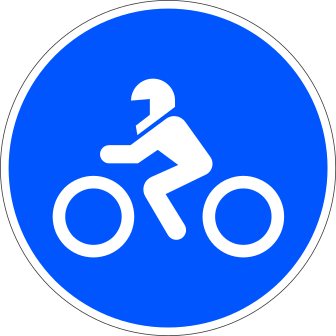
17. Mandatory path for motorcycles
This traffic sign indicates a mandatory path for motorcycles. Motorcyclists must use the designated path or route where the sign applies. Other road users may use it only where the applicable signs or local rules permit them to do so.
English • Traffic sign R-405 • Compulsory carriageway for two-wheeled motorcycles. Riders of two-wheeled motorcycles and three-wheeled vehicles treated as motorcycles must use the carriageway at whose entrance the sign stands.
Español • R-405 • Calzada obligatoria para motocicletas de dos ruedas. Obligación para los conductores de motocicletas de dos ruedas y vehículos de tres ruedas asimilados a motocicletas de circular por la calzada a cuya entrada esté situada.
Sources
🔗 Commons.wikimedia.org
🔗 Boe.es • Reglamento General de Circulación • anexo I • catálogo vigente
🔗 Boe.es • Real Decreto 465/2025 • R-405 • página 63
SVG source: NACLE2 • CC0 • Original revision 2025-09-22. Wikimedia original unmodified.
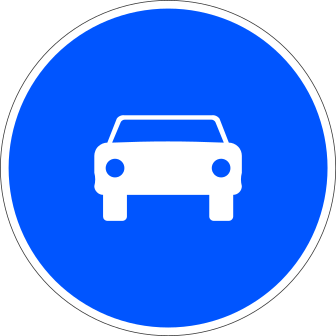
18. Mandatory lane for cars
This traffic sign indicates a mandatory lane for cars. Cars must use the designated lane or route where the sign applies. Other road users may use it only where the applicable signs or local rules permit them to do so.
English • Traffic sign R-404 • Compulsory carriageway for motor vehicles except two-wheeled motorcycles. Drivers of motor vehicles, other than two-wheeled motorcycles and three-wheeled vehicles treated as motorcycles, must use the carriageway at whose entrance the sign stands.
Español • R-404 • Calzada obligatoria para automóviles, excepto motocicletas de dos ruedas. Obligación para los conductores de automóviles, excepto motocicletas de dos ruedas y vehículos de tres ruedas asimilados a motocicletas, de circular por la calzada a cuya entrada esté situada.
Sources
🔗 Commons.wikimedia.org
🔗 Boe.es • Reglamento General de Circulación • anexo I • catálogo vigente
🔗 Boe.es • Real Decreto 465/2025 • R-404 • página 62
SVG source: NACLE2 • CC0 • Original revision 2025-09-22. Wikimedia original unmodified.
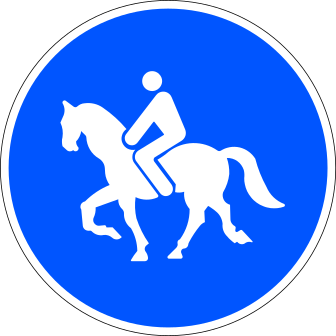
19. Mandatory path for equestrians
This traffic sign indicates a mandatory path for equestrians. Equestrians must use the designated path where the sign applies. Other road users may use it only where the applicable signs or local rules permit them to do so.
English • Traffic sign R-409 • Reserved compulsory route for riding animals. Riders must use the route at whose entrance the sign stands; other road users must not use it.
Español • R-409 • Camino reservado y obligatorio para animales de montura. Obligación para los jinetes de utilizar con sus animales de montura el camino a cuya entrada esté situada y prohibición a los demás usuarios de la vía de utilizarlo
Sources
🔗 Commons.wikimedia.org (Gigillo83 • CC BY-SA 3.0)
🔗 Boe.es • Reglamento General de Circulación • anexo I • catálogo vigente
🔗 Boe.es • Real Decreto 465/2025 • R-409 • página 64
SVG source: Gigillo83 • CC BY-SA 3.0 • Original revision 2025-09-17. Wikimedia original unmodified.
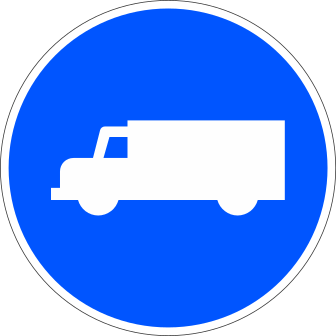
20. Mandatory lane for trucks
This traffic sign indicates a mandatory lane for trucks. Trucks must use the designated lane where the sign applies. Other road users may use the lane only where the applicable signs or local rules permit them to do so.
English • Traffic sign R-406 • Compulsory carriageway for lorries, tractor units, vans and light vans. Drivers of these vehicles must use the carriageway regardless of mass. A tonnage on the vehicle symbol or a supplementary plate means the obligation applies only where the vehicle's or combination's maximum authorised mass exceeds that value.
Español • R-406 • Calzada obligatoria para camiones, tractocamiones y furgones o furgonetas. Obligación para los conductores de toda clase de camiones, tractocamiones y furgones o furgonetas, independientemente de su masa, de circular por la calzada a cuya entrada esté situada. La inscripción de una cifra de tonelaje sobre la silueta del vehículo o en una placa suplementaria, significa que la obligación solo se aplica cuando la masa máxima autorizada del vehículo o del conjunto de vehículos supere la citada cifra.
Sources
🔗 Commons.wikimedia.org
🔗 Boe.es • Reglamento General de Circulación • anexo I • catálogo vigente
🔗 Boe.es • Real Decreto 465/2025 • R-406 • página 63
SVG source: NACLE2 • CC0 • Original revision 2025-09-22. Wikimedia original unmodified.
21. Snow chains mandatory
This traffic sign indicates that snow chains are mandatory. Vehicles covered by the sign must use snow chains from this point as required by the applicable rules. Follow any supplementary signs or local instructions specifying the affected vehicles, wheels or conditions.
English • Traffic sign R-412 • Snow chains. Drivers must not proceed without snow chains or other authorised anti-skid devices acting on at least one wheel on each side of the same driven axle, or special snow tyres.
Español • R-412 • Cadenas para nieve. Obligación de no proseguir la marcha sin cadenas para nieve u otros dispositivos antideslizantes autorizados que actúen al menos en una rueda a cada lado del mismo eje motor, o neumáticos especiales de nieve.
Sources
🔗 Commons.wikimedia.org
🔗 Boe.es • Reglamento General de Circulación • anexo I • catálogo vigente
🔗 Boe.es • Real Decreto 465/2025 • R-412 • página 64
SVG source: NACLE2 • CC0 • Original revision 2025-07-29. Wikimedia original unmodified.
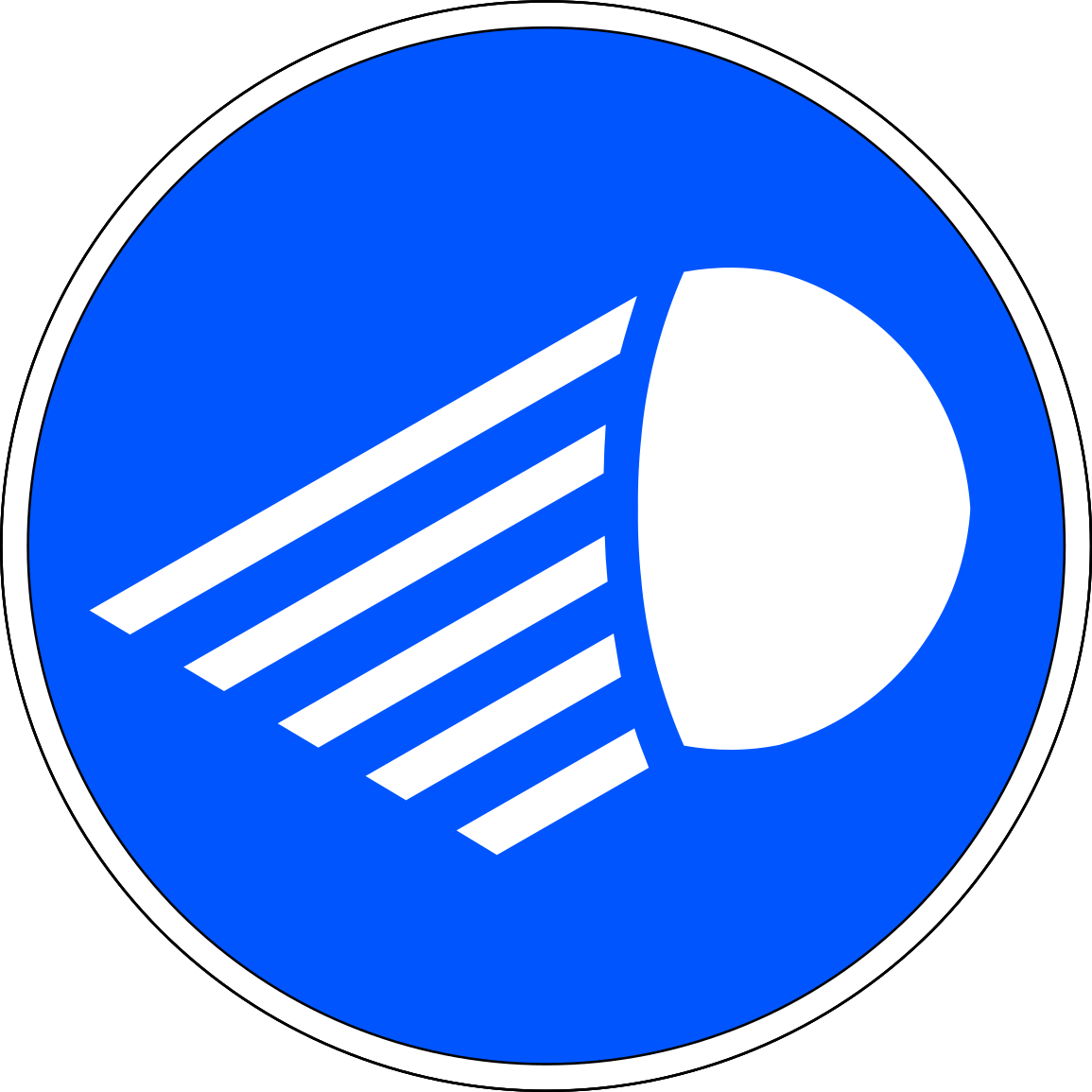
22. Dipped headlights mandatory
This traffic sign indicates that the use of dipped headlights is mandatory. Drivers must use dipped headlights from this point until the requirement ends or is replaced, while continuing to follow the general lighting rules.
English • Traffic sign R-413 • Dipped headlights. Drivers must use at least dipped headlights regardless of visibility or road lighting, from this sign to a sign ending the obligation.
Español • R-413 • Alumbrado de corto alcance. Obligación para los conductores de circular con el alumbrado al menos de corto alcance, con independencia de las condiciones de visibilidad e iluminación de la vía, desde el lugar en que esté situada la señal hasta otra de fin de esta obligación.
Sources
🔗 Commons.wikimedia.org
🔗 Boe.es • Reglamento General de Circulación • anexo I • catálogo vigente
🔗 Boe.es • Real Decreto 465/2025 • R-413 • página 65
SVG source: NACLE2 • CC0 • Original revision 2025-09-23. Wikimedia original unmodified.
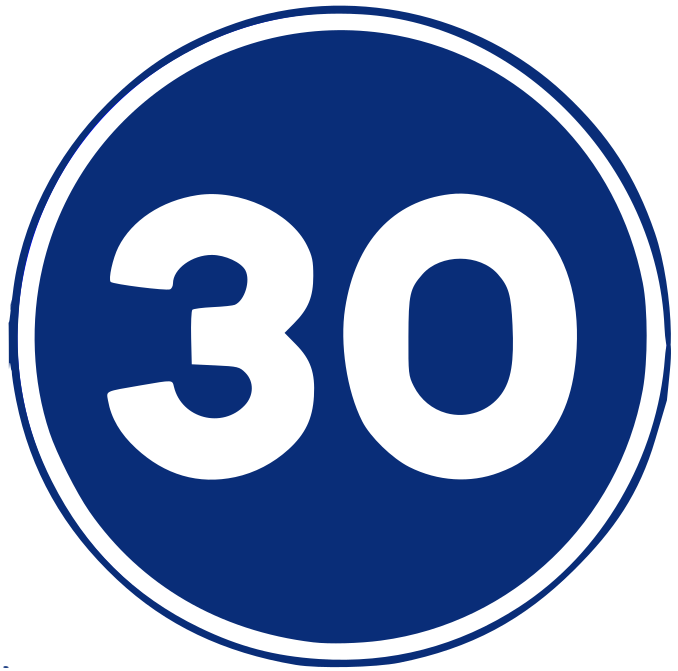
23. Start of a minimum speed
This traffic sign indicates the start of a minimum speed. Road users covered by the sign must travel at or above the indicated speed when conditions allow. Driving more slowly may still be necessary because of traffic, weather, road conditions or another safety-related reason.
English • Traffic sign R-411 • Minimum speed. Drivers must travel at least at the indicated speed in km/h, from this sign to a different minimum speed sign, an end-of-minimum-speed sign, or a maximum speed sign with an equal or lower value.
Español • R-411 • Velocidad mínima. Obligación para los conductores de vehículos de circular, por lo menos, a la velocidad indicada por la cifra, en kilómetros por hora, que figure en la señal, desde el lugar en que esté situada hasta otra de velocidad mínima diferente, o de fin de velocidad mínima o de velocidad máxima de valor igual o inferior.
Sources
🔗 Commons.wikimedia.org
🔗 Boe.es • Reglamento General de Circulación • anexo I • catálogo vigente
🔗 Boe.es • Real Decreto 465/2025 • R-411 • página 64
SVG source: NACLE2 • CC0 • Original revision 2011-08-10. Wikimedia original unmodified.
24. End of the minimum speed
This traffic sign indicates the end of the minimum speed. The previously indicated minimum speed no longer applies beyond this point. Continue to follow any other posted speed requirements and the applicable traffic rules.
English • Traffic sign R-506 • End of minimum speed. Marks where a previous minimum speed sign ceases to apply.
Español • R-506 • Fin de velocidad mínima. Señala el lugar desde donde deja de ser aplicable una señal anterior de velocidad mínima.
Sources
🔗 Commons.wikimedia.org (Gigillo83 • CC BY-SA 3.0)
🔗 Boe.es • Reglamento General de Circulación • anexo I • catálogo vigente
🔗 Boe.es • Real Decreto 465/2025 • R-506 • página 68
SVG source: Gigillo83 • CC BY-SA 3.0 • Original revision 2013-09-15. Wikimedia original unmodified.
25. Mandatory route for dangerous goods
This traffic sign indicates a mandatory route for vehicles carrying dangerous goods. Vehicles carrying dangerous goods must use the route indicated by the sign.
English • Traffic sign R-414 • Compulsory carriageway for vehicles carrying dangerous goods. Drivers of vehicles carrying dangerous goods requiring markings under the relevant regulations must use the carriageway at whose entrance the sign stands.
Español • R-414 • Calzada obligatoria para vehículos que transporten mercancías peligrosas. Obligación para los conductores de toda clase de vehículos que transporten mercancías peligrosas y requieran estar señalizados de acuerdo con su normativa específica de circular por la calzada a cuya entrada esté situada.
Sources
🔗 Commons.wikimedia.org
🔗 Boe.es • Reglamento General de Circulación • anexo I • catálogo vigente
🔗 Boe.es • Real Decreto 465/2025 • R-414 • página 65
SVG source: NACLE2 • CC0 • Original revision 2025-09-23. Wikimedia original unmodified.
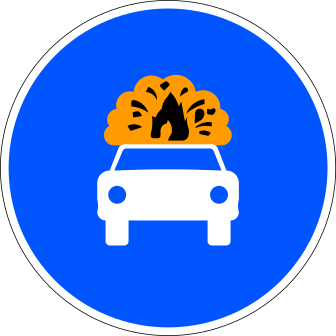
26. Mandatory route for explosive materials
This traffic sign indicates a mandatory route for vehicles carrying explosive materials. Vehicles carrying explosive materials must use the route indicated by the sign.
English • Traffic sign R-416 • Compulsory carriageway for vehicles carrying explosive or flammable goods. Drivers of vehicles carrying explosive or readily flammable goods requiring markings under the relevant regulations must use the carriageway at whose entrance the sign stands.
Español • R-416 • Calzada obligatoria para vehículos que transporten mercancías explosivas e inflamables. Obligación para los conductores de toda clase de vehículos que transporten mercancías explosivas o fácilmente inflamables y requieran estar señalizados de acuerdo con su normativa específica de circular por la calzada a cuya entrada esté situada.
Sources
🔗 Commons.wikimedia.org (Gigillo83 • CC BY-SA 3.0)
🔗 Boe.es • Reglamento General de Circulación • anexo I • catálogo vigente
🔗 Boe.es • Real Decreto 465/2025 • R-416 • página 65
SVG source: Gigillo83 • CC BY-SA 3.0 • Original revision 2025-09-23. Wikimedia original unmodified.
27. Mandatory route for water-polluting substances
This traffic sign indicates a mandatory route for vehicles carrying water-polluting substances. Vehicles carrying water-polluting substances must use the route indicated by the sign.
English • Traffic sign R-415 • Compulsory carriageway for vehicles carrying water-polluting products. Drivers of vehicles carrying more than 1,000 litres of products capable of polluting water must use the carriageway at whose entrance the sign stands.
Español • R-415 • Calzada obligatoria para vehículos que transporten productos contaminantes del agua. Obligación para los conductores de toda clase de vehículos que transporten más de 1.000 litros de productos capaces de contaminar el agua de circular por la calzada a cuya entrada esté situada.
Sources
🔗 Commons.wikimedia.org
🔗 Boe.es • Reglamento General de Circulación • anexo I • catálogo vigente
🔗 Boe.es • Real Decreto 465/2025 • R-415 • página 65
SVG source: NACLE2 • CC0 • Original revision 2025-09-23. Wikimedia original unmodified.
