


Warning signsSpain
 Traffic rules
 Spain
 Priority signs
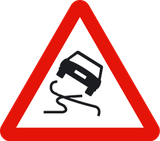 Warning signs
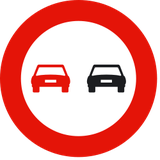 Prohibitory signs
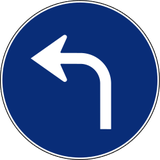 Mandatory signs
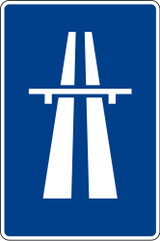 Information signs
Warning signs
A warning sign is a traffic sign that alerts drivers to a potential danger or change in road conditions ahead, giving them enough time to slow down and react safely. These signs warn about hazards such as sharp bends, pedestrian crossings, slippery surfaces, merging traffic, animals on the road, or upcoming intersections. Their purpose is not to forbid or command anything, but simply to prepare drivers for situations that require extra attention.










How should I recognise hazard warnings in Spain?
P signs identify hazards. Prepare for the danger shown and read any supplementary information.
🔗 boe.es • Spain: Regulation articles 45-46,65; catalogue P-3,P-20 and light signals
🔗 boe.es • Spain: official sign catalogue, Royal Decree 465/2025
How should I react to a pedestrian warning in Spain?
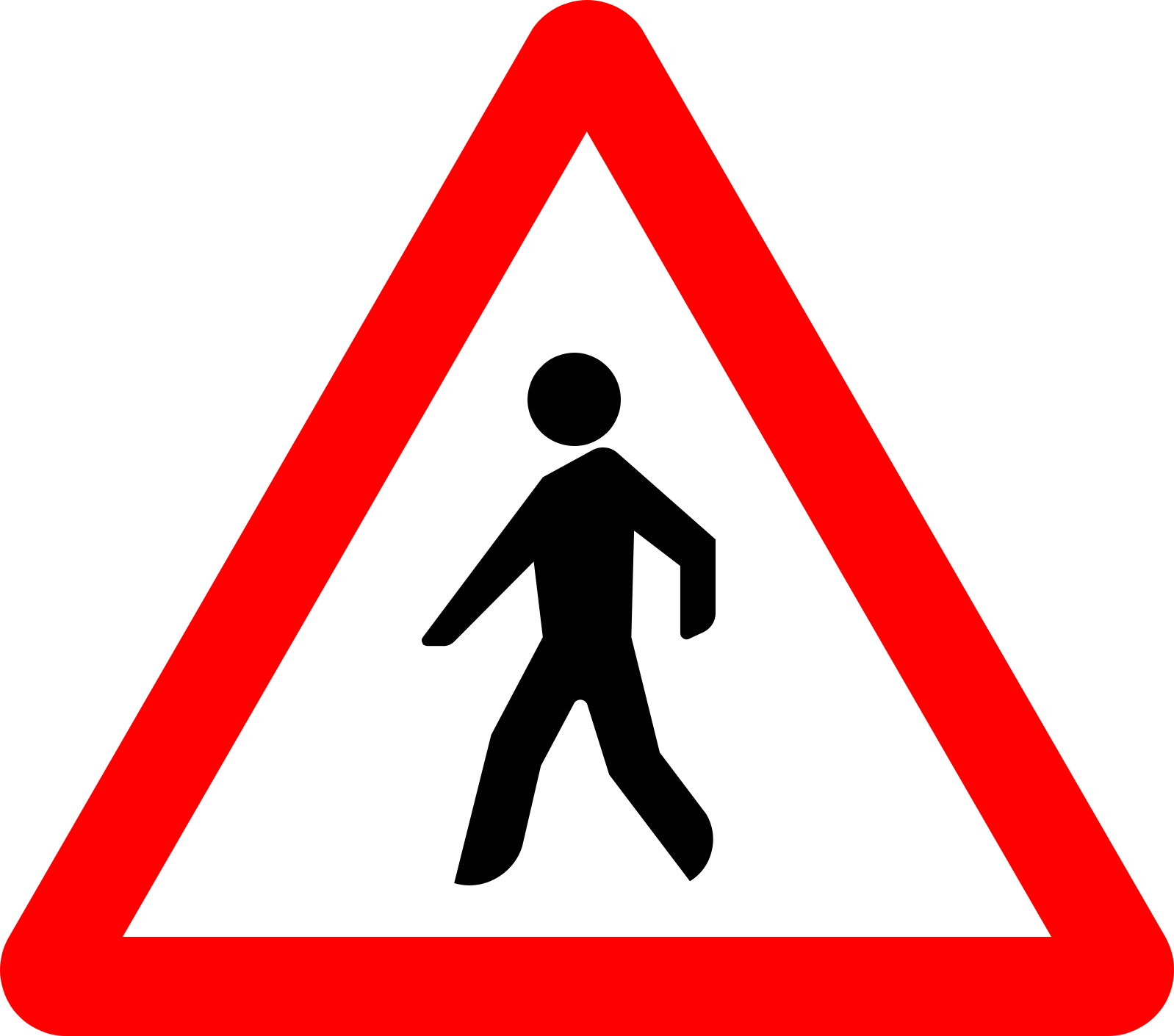
Reduce speed, look along both sides of the road and be ready to stop. The warning identifies a pedestrian hazard ahead; children, people with limited mobility or others may enter the road unexpectedly.
🔗 boe.es • Spain: Regulation articles 45-46,65; catalogue P-3,P-20 and light signals
🔗 boe.es • Spain: official sign catalogue, Royal Decree 465/2025
Does a traffic-lights-ahead warning require an immediate stop in Spain?
No. A warning sign is not an automatic STOP instruction and does not create a new numerical speed limit. Reduce speed when necessary, look for a queue or a concealed signal, and obey the traffic lights and any separate speed or stop signs.
🔗 boe.es • Spain: Regulation articles 45-46,65; catalogue P-3,P-20 and light signals
🔗 boe.es • Spain: official sign catalogue, Royal Decree 465/2025

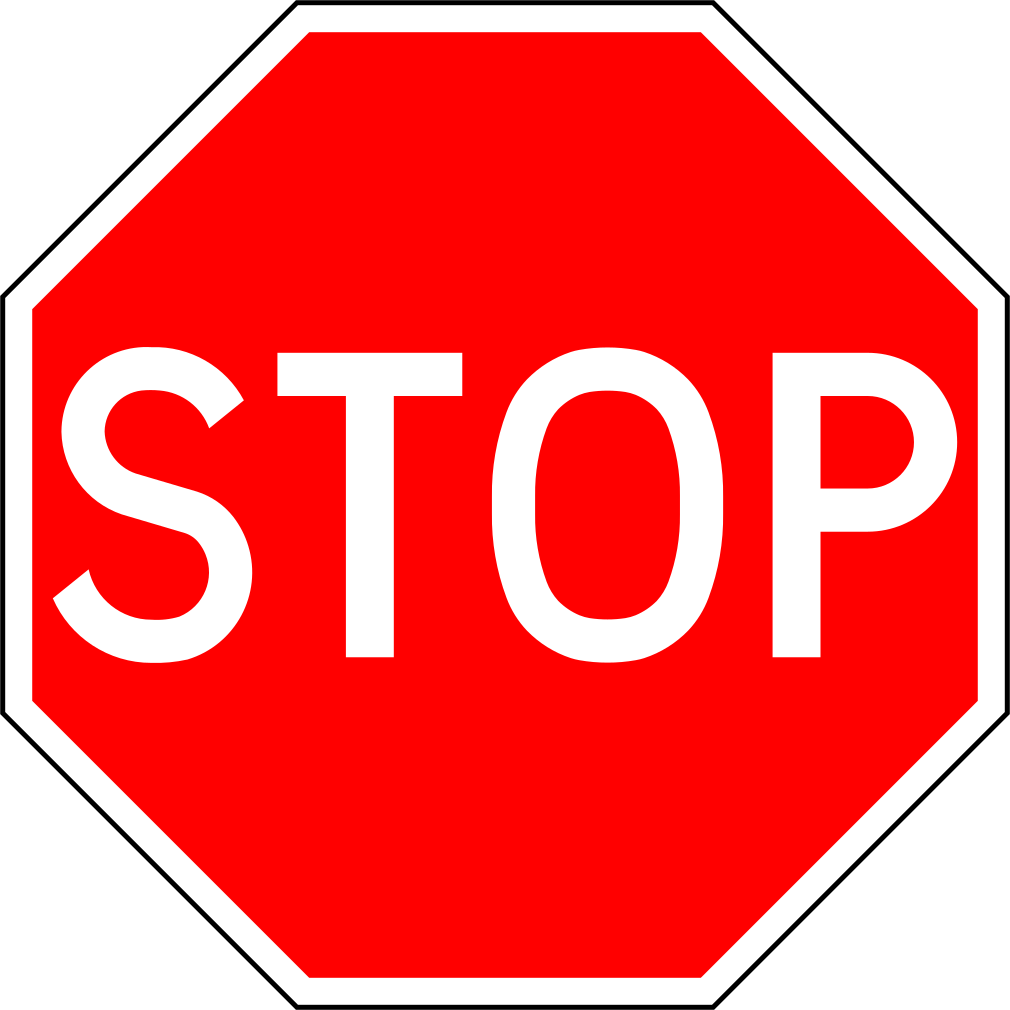
1. Stop and give way
This traffic sign means stop and give way. You must come to a complete stop before entering the intersection and give way to traffic that has priority. Proceed only when it is safe.
English • Traffic sign R-2 • Stop. Every driver must stop before the next stop line or, if none exists, immediately before the junction, and give way to vehicles on the road being approached. If exceptional circumstances mean visibility from the stopping point is insufficient, the driver must stop again where visibility is adequate without endangering any road user.
Español • R-2 • Detención obligatoria o stop. Obligación para todo conductor de detener su vehículo ante la próxima línea de detención o, si no existe, inmediatamente antes de la intersección, y ceder el paso en ella a los vehículos que circulen por la vía a la que se aproxime. Si, por circunstancias excepcionales, desde el lugar donde se ha efectuado la detención no existe visibilidad suficiente, el conductor deberá detenerse de nuevo en el lugar desde donde tenga visibilidad, sin poner en peligro a ningún usuario de la vía.
Sources
🔗 Commons.wikimedia.org
🔗 Boe.es • Reglamento General de Circulación • anexo I • catálogo vigente
🔗 Boe.es • Real Decreto 465/2025 • R-2 • página 45
Replacement SVG: Commons.wikimedia.org • Wikimedia Commons original • Fer1997 • CC BY-SA 3.0 • Original revision 2016-09-01. Wikimedia original unmodified.
Image via Commons.wikimedia.org
Fer1997 • CC BY-SA 3.0 • Source revision 2016-09-01. Wikimedia original unmodified.
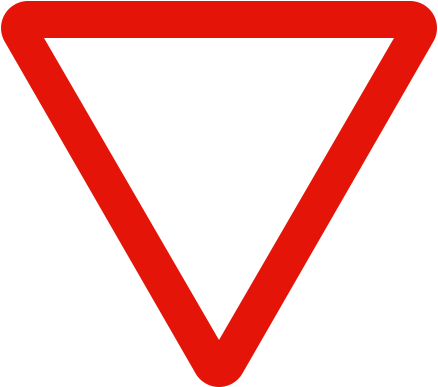
2. Give way
This traffic sign means give way. Slow down and give way to traffic that has priority. Stop if necessary and proceed only when it is safe.
English • Traffic sign R-1 • Give way. Every driver must give way at the next junction to vehicles on the road being approached or in the lane being joined.
Español • R-1 • Ceda el paso. Obligación para todo conductor de ceder el paso en la próxima intersección a los vehículos que circulen por la vía a la que se aproxime o al carril al que pretende incorporarse.
Sources
🔗 Commons.wikimedia.org
🔗 Boe.es • Reglamento General de Circulación • anexo I • catálogo vigente
🔗 Boe.es • Real Decreto 465/2025 • R-1 • página 45
SVG source: Unknown authorUnknown author • Public domain • Original revision 2013-05-31. Wikimedia original unmodified.
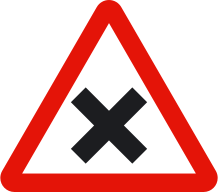
3. Warning for an uncontrolled crossroad
This traffic sign indicates a warning for an uncontrolled crossroad. An intersection without traffic signals or signs assigning priority lies ahead. Reduce speed, watch for traffic approaching from other directions and follow the applicable local priority rules.
English • Traffic sign P-2 • Junction with priority to the right. Warns of a junction where the general priority rule applies.
Español • P-2 • Intersección con prioridad de la derecha. Peligro por la proximidad de una intersección en la que rige la regla general de prioridad de paso.
Sources
🔗 Commons.wikimedia.org
🔗 Boe.es • Reglamento General de Circulación • anexo I • catálogo vigente
🔗 Boe.es • Real Decreto 465/2025 • P-2 • página 35
SVG source: Unknown authorUnknown author • Public domain • Original revision 2013-08-12. Wikimedia original unmodified.
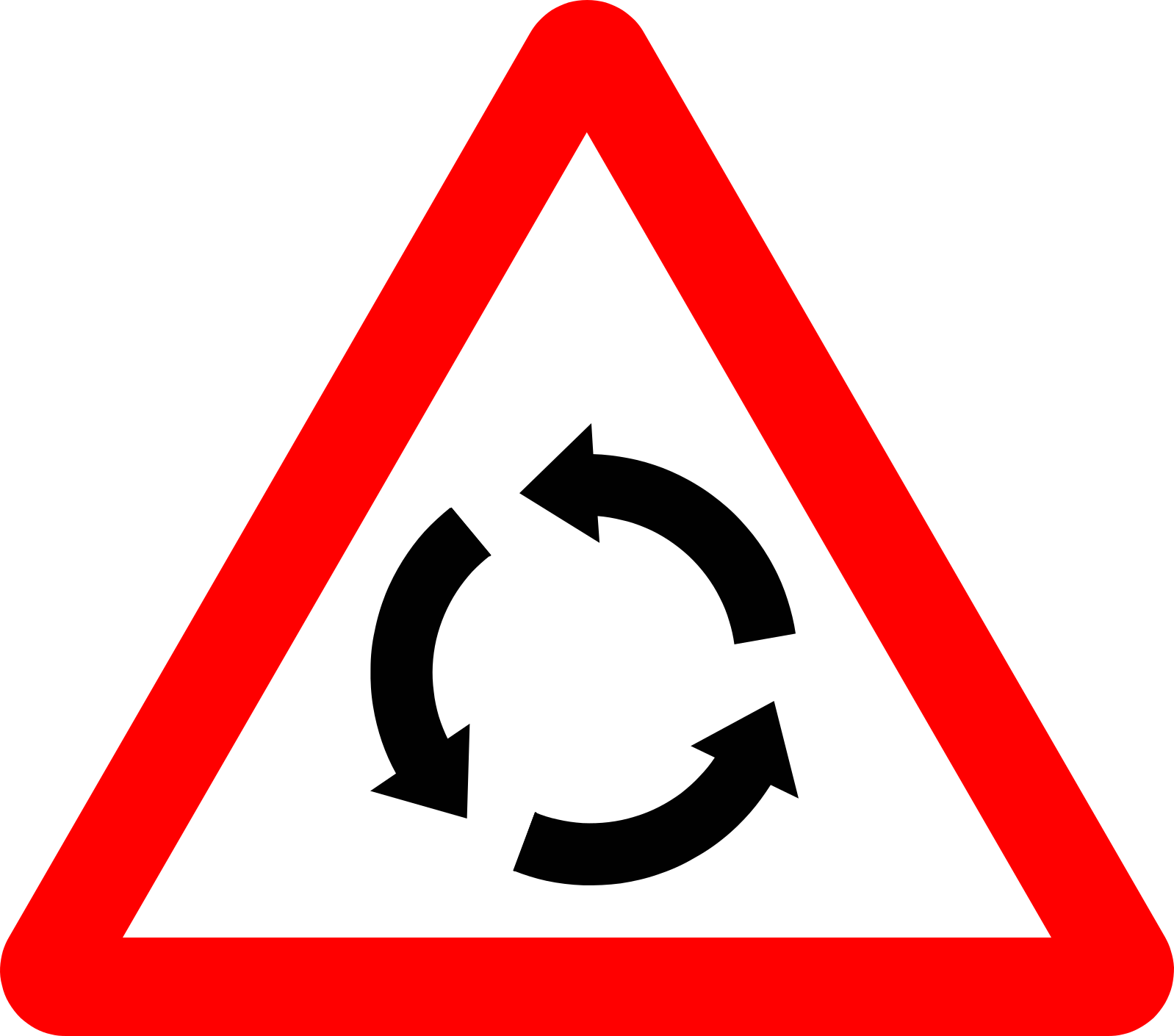
4. Warning for a roundabout
This traffic sign indicates a warning for a roundabout. A roundabout lies ahead. Reduce speed and follow the applicable priority signs, traffic signals and local roundabout rules when approaching and entering it.
English • Traffic sign P-4 • Roundabout. Warns of a roundabout with circulation in the direction shown by the arrows.
Español • P-4 • Glorieta. Peligro por la proximidad de una glorieta con circulación en el sentido indicado por las flechas.
Sources
🔗 Commons.wikimedia.org
🔗 Boe.es • Reglamento General de Circulación • anexo I • catálogo vigente
🔗 Boe.es • Real Decreto 465/2025 • P-4 • página 36
SVG source: No machine-readable author provided. Benedicto16 assumed (based on copyright claims). • Public domain • Original revision 2026-09-10. Wikimedia original unmodified.
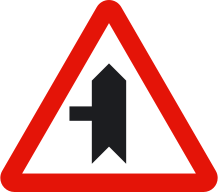
5. Priority at the junction
This traffic sign indicates that you have priority at the next intersection. A side road joins from the left, and traffic entering from that side road must give way.
English • Traffic sign P-1b • Junction with priority over a road on the left. Warns of a road joining from the left whose users must give way.
Español • P-1b • Intersección con prioridad sobre vía a la izquierda. Peligro por la proximidad de una intersección con una vía a la izquierda, cuyos usuarios deben ceder el paso.
Sources
🔗 Commons.wikimedia.org
🔗 Boe.es • Reglamento General de Circulación • anexo I • catálogo vigente
🔗 Boe.es • Real Decreto 465/2025 • P-1b • página 35
SVG source: Author not stated on source page • Public domain • Original revision 2013-08-10. Wikimedia original unmodified.
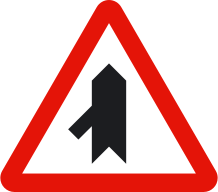
6. Warning for merging traffic from the left
This traffic sign indicates a warning for merging traffic from the left. Traffic travelling in the same general direction may join your traffic stream from the left. Stay alert and adjust your speed or position when necessary to allow traffic to merge safely.
English • Traffic sign P-1d • Priority over traffic merging from the left. Warns of a road merging from the left whose users must give way.
Español • P-1d • Intersección con prioridad sobre incorporación por la izquierda. Peligro por la proximidad de una incorporación por la izquierda de una vía, cuyos usuarios deben ceder el paso.
Sources
🔗 Commons.wikimedia.org
🔗 Boe.es • Reglamento General de Circulación • anexo I • catálogo vigente
🔗 Boe.es • Real Decreto 465/2025 • P-1d • página 35
SVG source: Author not stated on source page • Public domain • Original revision 2013-08-12. Wikimedia original unmodified.
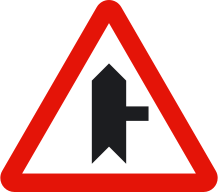
7. Priority at the junction
This traffic sign indicates that you have priority at the next intersection. A side road joins from the right, and traffic entering from that side road must give way.
English • Traffic sign P-1a • Junction with priority over a road on the right. Warns of a road joining from the right whose users must give way.
Español • P-1a • Intersección con prioridad sobre vía a la derecha. Peligro por la proximidad de una intersección con una vía a la derecha, cuyos usuarios deben ceder el paso.
Sources
🔗 Commons.wikimedia.org
🔗 Boe.es • Reglamento General de Circulación • anexo I • catálogo vigente
🔗 Boe.es • Real Decreto 465/2025 • P-1a • página 35
SVG source: Author not stated on source page • Public domain • Original revision 2013-08-10. Wikimedia original unmodified.
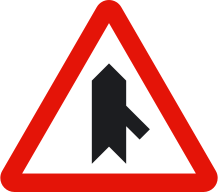
8. Warning for merging traffic from the right
This traffic sign indicates a warning for merging traffic from the right. Traffic travelling in the same general direction may join your traffic stream from the right. Stay alert and adjust your speed or position when necessary to allow traffic to merge safely.
English • Traffic sign P-1c • Priority over traffic merging from the right. Warns of a road merging from the right whose users must give way.
Español • P-1c • Intersección con prioridad sobre incorporación por la derecha. Peligro por la proximidad de una incorporación por la derecha de una vía, cuyos usuarios deben ceder el paso.
Sources
🔗 Commons.wikimedia.org
🔗 Boe.es • Reglamento General de Circulación • anexo I • catálogo vigente
🔗 Boe.es • Real Decreto 465/2025 • P-1c • página 35
SVG source: Author not stated on source page • Public domain • Original revision 2013-08-12. Wikimedia original unmodified.
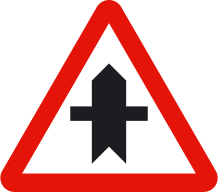
9. Priority at the junction
This traffic sign indicates that you have priority at the next intersection. Side roads join from the left and right, and traffic entering from those side roads must give way.
English • Traffic sign P-1 • Junction with priority. Warns of a junction with a road whose users must give way.
Español • P-1 • Intersección con prioridad. Peligro por la proximidad de una intersección con una vía, cuyos usuarios deben ceder el paso.
Sources
🔗 Commons.wikimedia.org
🔗 Boe.es • Reglamento General de Circulación • anexo I • catálogo vigente
🔗 Boe.es • Real Decreto 465/2025 • P-1 • página 35
SVG source: Author not stated on source page • Public domain • Original revision 2013-08-10. Wikimedia original unmodified.
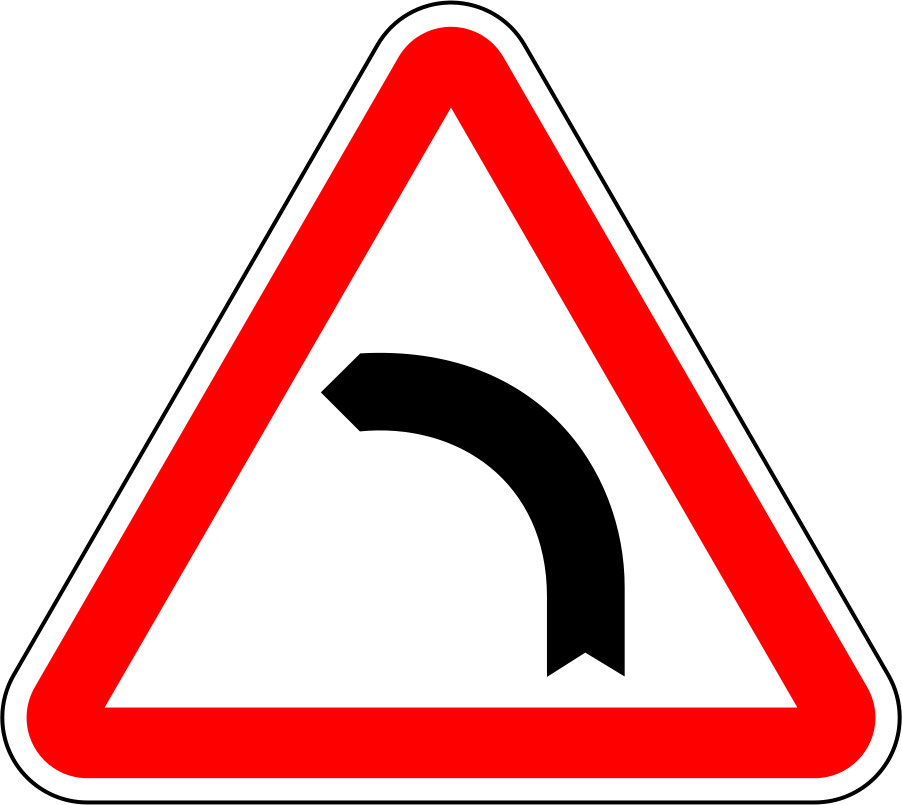
10. Warning for a curve to the left
This traffic sign indicates a warning for a curve to the left. A left-hand bend lies ahead. Reduce speed before entering the curve, maintain your lane position and use smooth steering.
English • Traffic sign P-13b • Dangerous left-hand bend. Warns of a dangerous bend to the left ahead.
Español • P-13b • Curva peligrosa hacia la izquierda. Peligro por la proximidad de una curva peligrosa hacia la izquierda.
Sources
🔗 Commons.wikimedia.org
🔗 Boe.es • Reglamento General de Circulación • anexo I • catálogo vigente
🔗 Boe.es • Real Decreto 465/2025 • P-13b • página 38
Replacement SVG: Commons.wikimedia.org • Wikimedia Commons original • Gigillo83 • CC BY-SA 4.0 • Original revision 2015-03-16. Wikimedia original unmodified.
Image via Commons.wikimedia.org
Gigillo83 • CC BY-SA 4.0 • Source revision 2015-03-16. Wikimedia original unmodified.
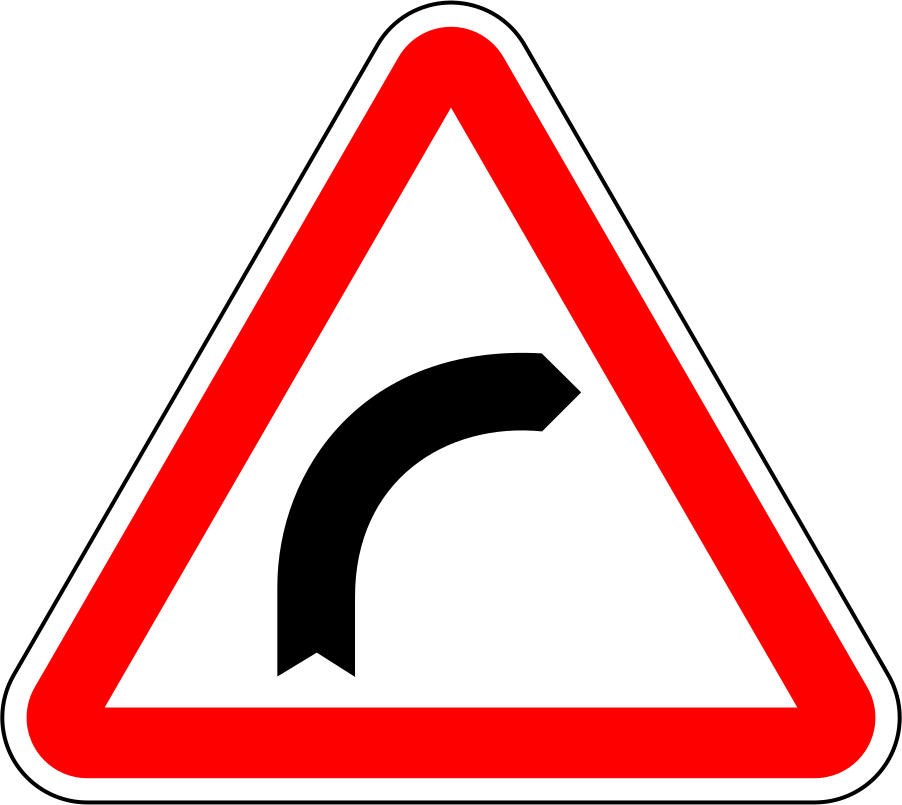
11. Warning for a curve to the right
This traffic sign indicates a warning for a curve to the right. A right-hand bend lies ahead. Reduce speed before entering the curve, maintain your lane position and use smooth steering.
English • Traffic sign P-13a • Dangerous right-hand bend. Warns of a dangerous bend to the right ahead.
Español • P-13a • Curva peligrosa hacia la derecha. Peligro por la proximidad de una curva peligrosa hacia la derecha.
Sources
🔗 Commons.wikimedia.org
🔗 Boe.es • Reglamento General de Circulación • anexo I • catálogo vigente
🔗 Boe.es • Real Decreto 465/2025 • P-13a • página 38
Replacement SVG: Commons.wikimedia.org • Wikimedia Commons original • Gigillo83 • CC BY-SA 4.0 • Original revision 2015-03-16. Wikimedia original unmodified.
Image via Commons.wikimedia.org
Gigillo83 • CC BY-SA 4.0 • Source revision 2015-03-16. Wikimedia original unmodified.
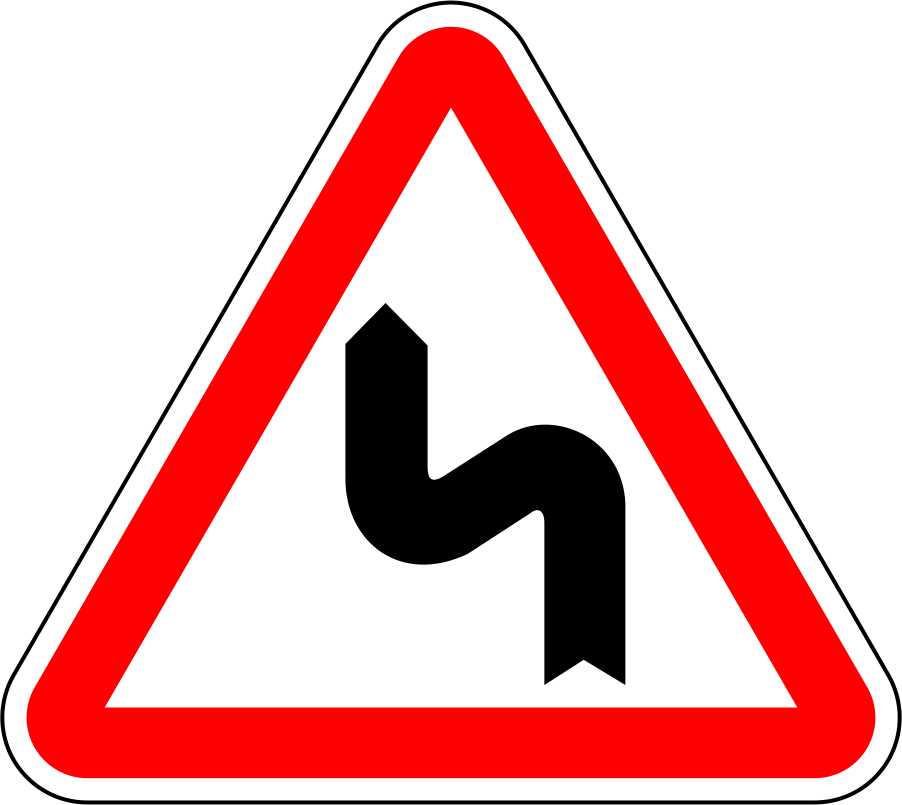
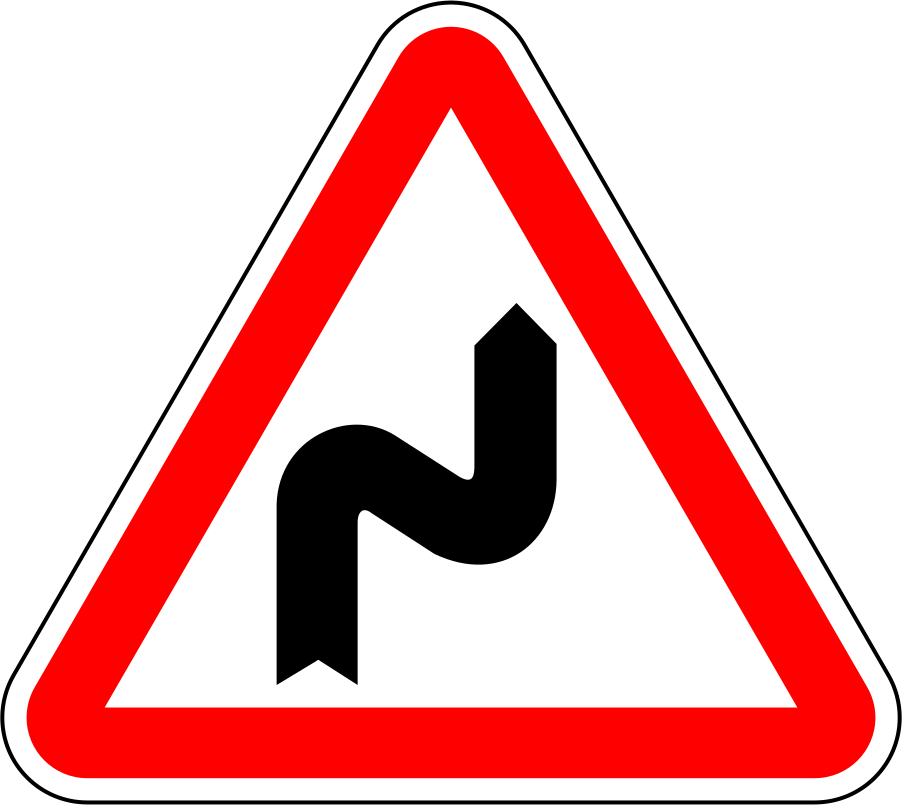
12. Warning for a double curve, first left then right
This traffic sign indicates a warning for successive curves, with the first curve to the left. Reduce speed before entering the winding section, maintain your lane position and be prepared for further changes in direction.
English • Traffic sign P-14b • Dangerous bends, first to the left. Warns of a series of closely spaced dangerous bends, first to the left.
Español • P-14b • Curvas peligrosas hacia la izquierda. Peligro por la proximidad de una sucesión de curvas peligrosas próximas entre sí, siendo la primera de ellas hacia la izquierda.
Sources
🔗 Commons.wikimedia.org
🔗 Boe.es • Reglamento General de Circulación • anexo I • catálogo vigente
🔗 Boe.es • Real Decreto 465/2025 • P-14b • página 38
Replacement SVG: Commons.wikimedia.org • Wikimedia Commons original • Gigillo83 • CC BY-SA 4.0 • Original revision 2015-03-16. Wikimedia original unmodified.
Image via Commons.wikimedia.org
Gigillo83 • CC BY-SA 4.0 • Source revision 2015-03-16. Wikimedia original unmodified.
13. Warning for a double curve, first right then left
This traffic sign indicates a warning for successive curves, with the first curve to the right. Reduce speed before entering the winding section, maintain your lane position and be prepared for further changes in direction.
English • Traffic sign P-14a • Dangerous bends, first to the right. Warns of a series of closely spaced dangerous bends, first to the right.
Español • P-14a • Curvas peligrosas hacia la derecha. Peligro por la proximidad de una sucesión de curvas peligrosas próximas entre sí, siendo la primera de ellas hacia la derecha.
Sources
🔗 Commons.wikimedia.org
🔗 Boe.es • Reglamento General de Circulación • anexo I • catálogo vigente
🔗 Boe.es • Real Decreto 465/2025 • P-14a • página 38
Replacement SVG: Commons.wikimedia.org • Wikimedia Commons original • Gigillo83 • CC BY-SA 4.0 • Original revision 2015-03-16. Wikimedia original unmodified.
Image via Commons.wikimedia.org
Gigillo83 • CC BY-SA 4.0 • Source revision 2015-03-16. Wikimedia original unmodified.
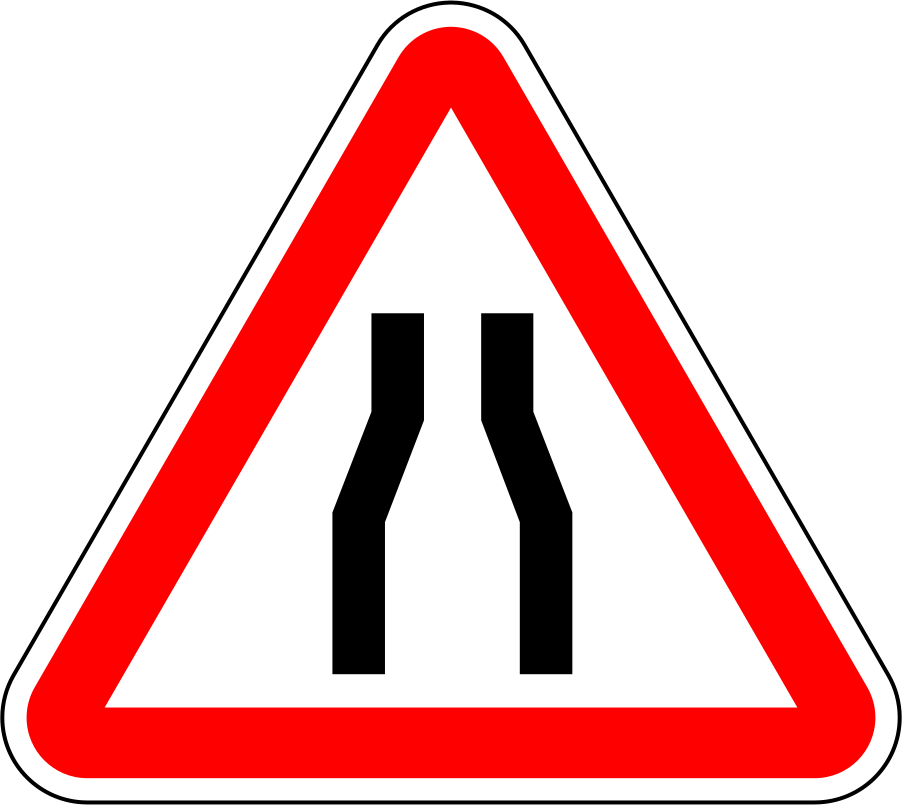
14. Warning for a road narrowing
This traffic sign indicates a warning for a road narrowing. The available width of the road or carriageway decreases ahead. Reduce speed, maintain sufficient lateral clearance and watch carefully for approaching or adjacent traffic.
English • Traffic sign P-17 • Road narrows. Warns of a narrowing carriageway. May also be used where the shoulders become narrower. Must not be used where the number of lanes decreases but the remaining lanes and shoulders retain their widths.
Español • P-17 • Estrechamiento de calzada. Peligro por la proximidad de una zona de la vía en la que se estrecha la calzada. También puede ser utilizada cuando se reduzca la anchura de los arcenes de la calzada. No se utilizará cuando, tras una reducción del número de carriles de la calzada, la anchura de los carriles restantes y de los arcenes no haya variado.
Sources
🔗 Commons.wikimedia.org
🔗 Boe.es • Reglamento General de Circulación • anexo I • catálogo vigente
🔗 Boe.es • Real Decreto 465/2025 • P-17 • página 39
Replacement SVG: Commons.wikimedia.org • Wikimedia Commons original • Gigillo83 • CC BY-SA 4.0 • Original revision 2015-03-17. Wikimedia original unmodified.
Image via Commons.wikimedia.org
Gigillo83 • CC BY-SA 4.0 • Source revision 2015-03-17. Wikimedia original unmodified.
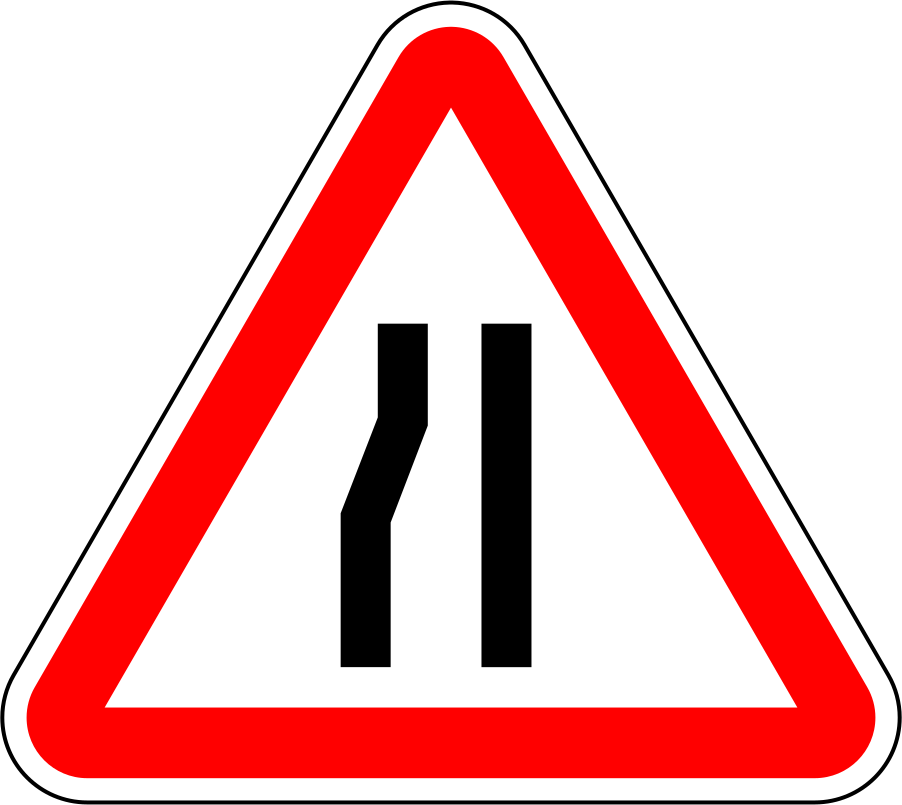
15. Warning for a road narrowing on the left
This traffic sign indicates a warning for a road narrowing on the left. The available road width decreases from the left side ahead. Reduce speed, follow the lane markings and maintain sufficient clearance from other traffic and the road edge.
English • Traffic sign P-17b • Road narrows on the left. Warns of a narrowing on the left side of the carriageway. May also be used where the left shoulder narrows on a one-way carriageway. Must not be used where lanes are removed on the left but the remaining lanes and shoulders retain their widths.
Español • P-17b • Estrechamiento de calzada por la izquierda. Peligro por la proximidad de una zona de la vía en la que la calzada se estrecha por el lado de la izquierda. También puede ser utilizada cuando se reduzca la anchura del arcén izquierdo de la calzada cuando esta sea de un solo sentido de circulación. No se utilizará cuando, tras una reducción del número de carriles de la calzada por la izquierda, la anchura de los carriles restantes y de los arcenes no haya variado.
Sources
🔗 Commons.wikimedia.org
🔗 Boe.es • Reglamento General de Circulación • anexo I • catálogo vigente
🔗 Boe.es • Real Decreto 465/2025 • P-17b • página 40
Replacement SVG: Commons.wikimedia.org • Wikimedia Commons original • Gigillo83 • CC BY-SA 4.0 • Original revision 2015-03-17. Wikimedia original unmodified.
Image via Commons.wikimedia.org
Gigillo83 • CC BY-SA 4.0 • Source revision 2015-03-17. Wikimedia original unmodified.
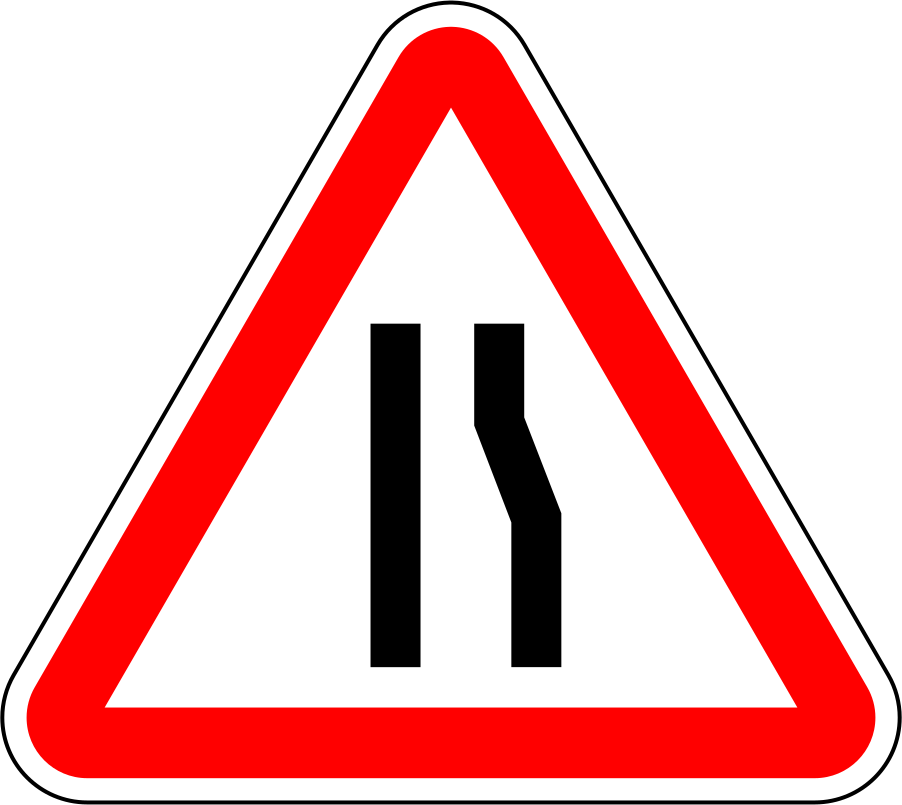
16. Warning for a road narrowing on the right
This traffic sign indicates a warning for a road narrowing on the right. The available road width decreases from the right side ahead. Reduce speed, follow the lane markings and maintain sufficient clearance from other traffic and the road edge.
English • Traffic sign P-17a • Road narrows on the right. Warns of a narrowing on the right side of the carriageway. May also be used where the right shoulder narrows. Must not be used where lanes are removed on the right but the remaining lanes and shoulders retain their widths.
Español • P-17a • Estrechamiento de calzada por la derecha. Peligro por la proximidad de una zona de la vía en la que la calzada se estrecha por el lado de la derecha. También puede ser utilizada cuando se reduzca la anchura del arcén derecho de la calzada. No se utilizará cuando, tras una reducción del número de carriles de la calzada por la derecha, la anchura de los carriles restantes y de los arcenes no haya variado.
Sources
🔗 Commons.wikimedia.org
🔗 Boe.es • Reglamento General de Circulación • anexo I • catálogo vigente
🔗 Boe.es • Real Decreto 465/2025 • P-17a • página 39
Replacement SVG: Commons.wikimedia.org • Wikimedia Commons original • Gigillo83 • CC BY-SA 4.0 • Original revision 2015-03-17. Wikimedia original unmodified.
Image via Commons.wikimedia.org
Gigillo83 • CC BY-SA 4.0 • Source revision 2015-03-17. Wikimedia original unmodified.
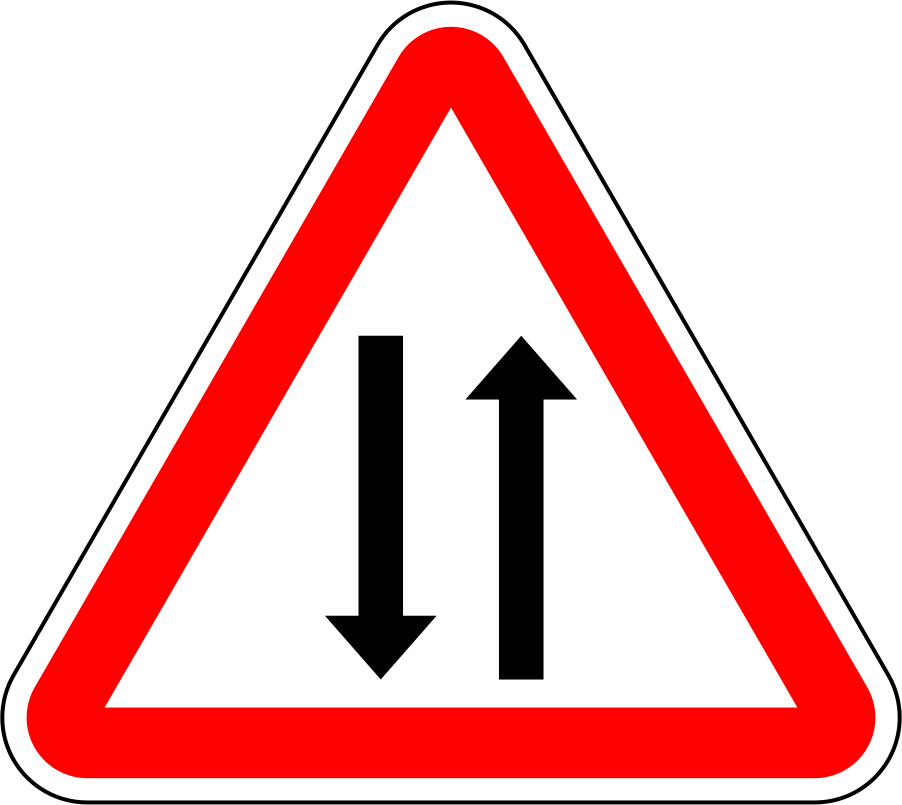
17. Warning for a road with two-way traffic
This traffic sign indicates a warning for two-way traffic. Oncoming traffic will use the same road or carriageway ahead. Keep to the correct side of the road and overtake only where it is permitted and clearly safe.
English • Traffic sign P-25 • Two-way traffic. Warns of a section carrying traffic in both directions.
Español • P-25 • Circulación en los dos sentidos. Peligro por la proximidad de un tramo con circulación en ambos sentidos.
Sources
🔗 Commons.wikimedia.org
🔗 Boe.es • Reglamento General de Circulación • anexo I • catálogo vigente
🔗 Boe.es • Real Decreto 465/2025 • P-25 • página 42
Replacement SVG: Commons.wikimedia.org • Wikimedia Commons original • Fer1997 • CC BY-SA 3.0 • Original revision 2015-03-16. Wikimedia original unmodified.
Image via Commons.wikimedia.org
Fer1997 • CC BY-SA 3.0 • Source revision 2015-03-16. Wikimedia original unmodified.
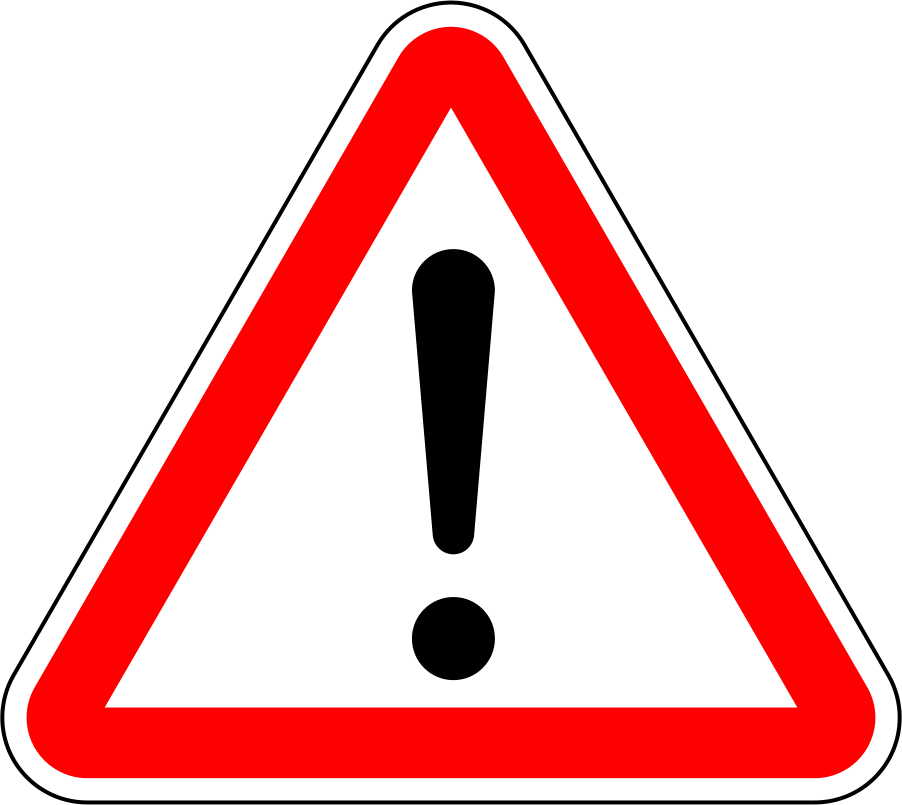
18. Warning for a danger with no specific traffic sign
This traffic sign indicates a warning for a danger with no specific traffic sign. It's a general warning sign used when there is a hazard ahead that does not have its own dedicated warning sign. For example: road accidents, flooded roads and roads blocked by fallen trees. It usually has a supplementary sign attached that tells drivers of what hazard to expect.
English • Traffic sign P-50 • Other dangers. Warns of a danger other than those indicated by other signs.
Español • P-50 • Otros peligros. Indica la proximidad de un peligro distinto de los advertidos por otras señales.
Sources
🔗 Commons.wikimedia.org
🔗 Boe.es • Reglamento General de Circulación • anexo I • catálogo vigente
🔗 Boe.es • Real Decreto 465/2025 • P-50 • página 43
Replacement SVG: Commons.wikimedia.org • Wikimedia Commons original • Gigillo83 • CC BY-SA 4.0 • Original revision 2015-03-17. Wikimedia original unmodified.
Image via Commons.wikimedia.org
Gigillo83 • CC BY-SA 4.0 • Source revision 2015-03-17. Wikimedia original unmodified.
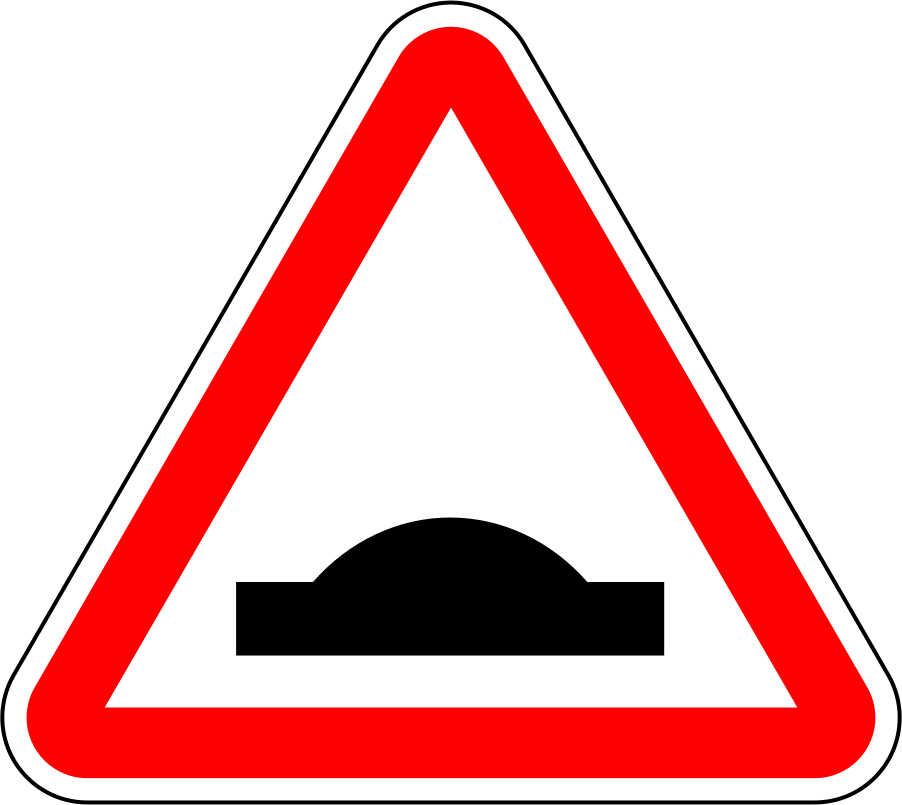
19. Warning for a speed bump
This traffic sign indicates a warning for a speed bump. A raised traffic-calming feature lies ahead. Reduce speed before reaching it to maintain vehicle control and avoid damage or discomfort.
English • Traffic sign P-15a • Hump. Warns of a hump in the road.
Español • P-15a • Resalte. Peligro por la proximidad de un resalte en la vía.
Sources
🔗 Commons.wikimedia.org
🔗 Boe.es • Reglamento General de Circulación • anexo I • catálogo vigente
🔗 Boe.es • Real Decreto 465/2025 • P-15a • página 39
Replacement SVG: Commons.wikimedia.org • Wikimedia Commons original • Gigillo83 • CC BY-SA 4.0 • Original revision 2015-03-16. Wikimedia original unmodified.
Image via Commons.wikimedia.org
Gigillo83 • CC BY-SA 4.0 • Source revision 2015-03-16. Wikimedia original unmodified.
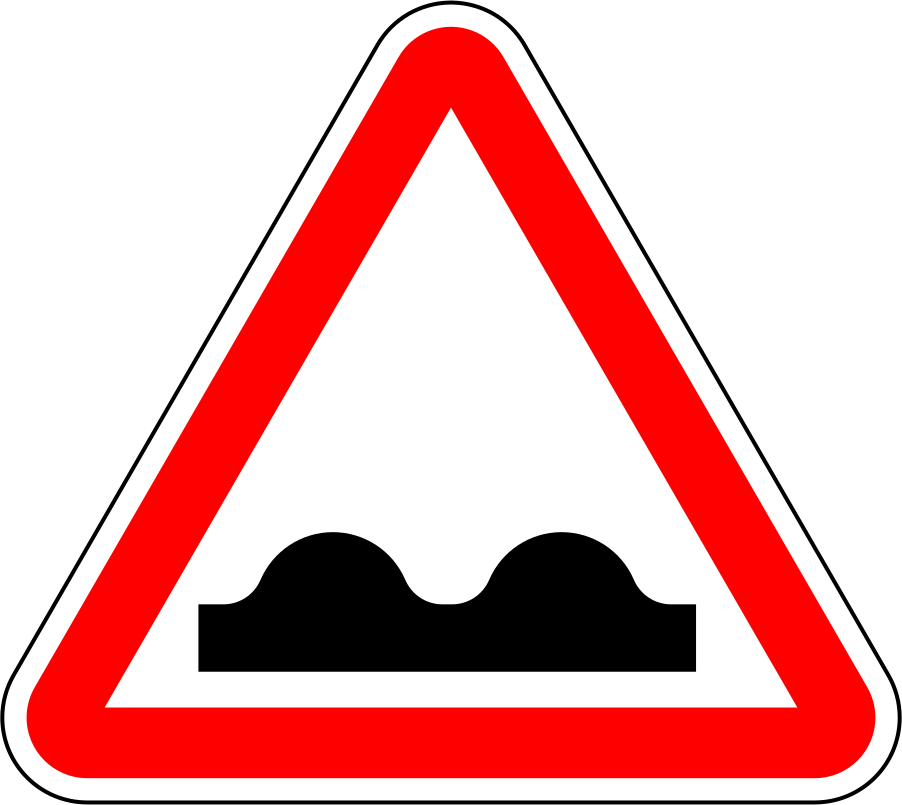
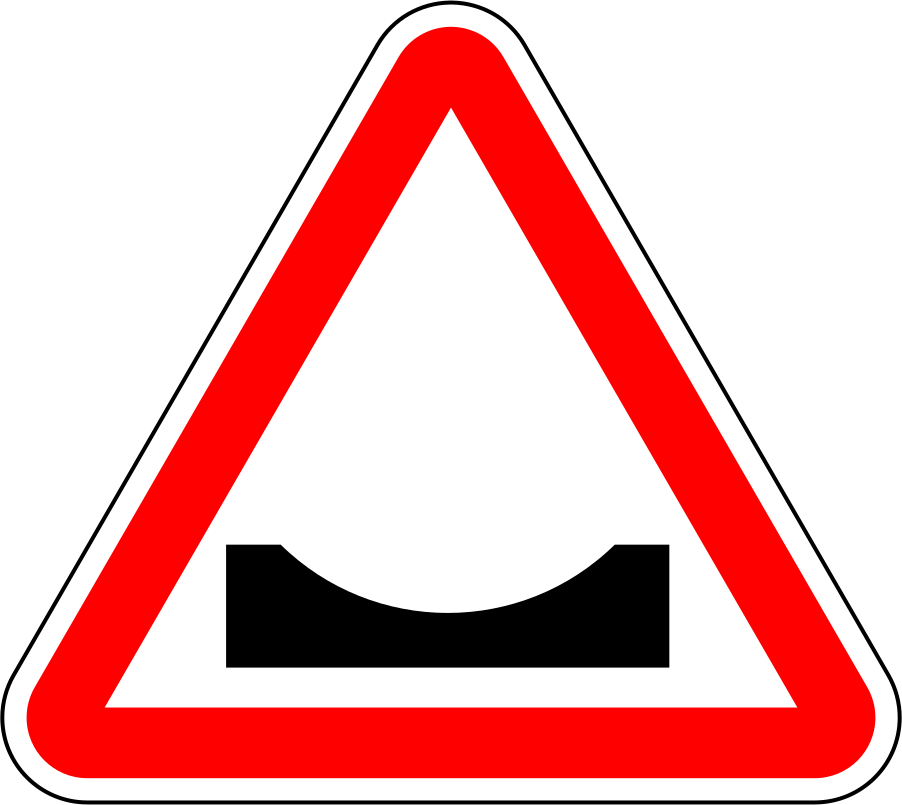
20. Warning for a bad road surface
This traffic sign indicates a warning for a bad or uneven road surface. Potholes, bumps, depressions or other surface irregularities may affect vehicle stability and braking. Reduce speed and avoid sudden manoeuvres.
English • Traffic sign P-15 • Uneven road. Warns of a hump, dip or poor road surface.
Español • P-15 • Perfil irregular. Peligro por la proximidad de un resalte o badén en la vía o pavimento en mal estado.
Sources
🔗 Commons.wikimedia.org
🔗 Boe.es • Reglamento General de Circulación • anexo I • catálogo vigente
🔗 Boe.es • Real Decreto 465/2025 • P-15 • página 38
Replacement SVG: Commons.wikimedia.org • Wikimedia Commons original • Gigillo83 • CC BY-SA 4.0 • Original revision 2015-03-16. Wikimedia original unmodified.
Image via Commons.wikimedia.org
Gigillo83 • CC BY-SA 4.0 • Source revision 2015-03-16. Wikimedia original unmodified.
21. Warning for a dip in the road
This traffic sign indicates a warning for a dip in the road. A sudden depression in the road surface lies ahead and may affect vehicle stability or visibility. Reduce speed before reaching the dip and be prepared for water or other hazards that may collect in the lowered section.
English • Traffic sign P-15b • Dip. Warns of a dip in the road.
Español • P-15b • Badén. Peligro por la proximidad de un badén en la vía
Sources
🔗 Commons.wikimedia.org
🔗 Boe.es • Reglamento General de Circulación • anexo I • catálogo vigente
🔗 Boe.es • Real Decreto 465/2025 • P-15b • página 39
Replacement SVG: Commons.wikimedia.org • Wikimedia Commons original • Gigillo83 • CC BY-SA 4.0 • Original revision 2015-03-16. Wikimedia original unmodified.
Image via Commons.wikimedia.org
Gigillo83 • CC BY-SA 4.0 • Source revision 2015-03-16. Wikimedia original unmodified.
22. Warning for a steep ascent
This traffic sign indicates a warning for a steep ascent. A steep uphill gradient lies ahead and may cause heavy or low-powered vehicles to lose speed. Select a suitable gear, maintain a safe following distance and be prepared for slower traffic.
English • Traffic sign P-16b • Steep ascent. Warns of a steep uphill section. The figure gives the gradient as a percentage.
Español • P-16b • Subida con fuerte pendiente. Peligro por la existencia de un tramo de vía con fuerte pendiente ascendente. La cifra indica la inclinación de la pendiente en porcentaje.
Sources
🔗 Commons.wikimedia.org
🔗 Boe.es • Reglamento General de Circulación • anexo I • catálogo vigente
🔗 Boe.es • Real Decreto 465/2025 • P-16b • página 39
Image via Commons.wikimedia.org
No machine-readable author provided. Benedicto16 assumed (based on copyright claims). • Public domain • Source revision 2006-09-07. Wikimedia original unmodified.
23. Warning for a steep descent
This traffic sign indicates a warning for a steep descent. A steep downhill gradient lies ahead and the vehicle may gain speed quickly. Reduce speed before the descent, select a suitable gear and use engine braking where appropriate. Allow extra distance for heavy or towing vehicles.
English • Traffic sign P-16a • Steep descent. Warns of a steep downhill section. The figure gives the gradient as a percentage.
Español • P-16a • Bajada con fuerte pendiente. Peligro por la existencia de un tramo de vía con fuerte pendiente descendente. La cifra indica la inclinación de la pendiente en porcentaje.
Sources
🔗 Commons.wikimedia.org
🔗 Boe.es • Reglamento General de Circulación • anexo I • catálogo vigente
🔗 Boe.es • Real Decreto 465/2025 • P-16a • página 39
Image via Commons.wikimedia.org
No machine-readable author provided. Benedicto16 assumed (based on copyright claims). • Public domain • Source revision 2006-09-07. Wikimedia original unmodified.
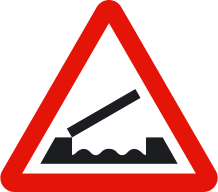
24. Warning for a movable bridge
This traffic sign indicates a warning for a movable bridge. The bridge ahead can open, lift or move to allow water traffic to pass. Reduce speed and be prepared to stop when required by barriers, traffic lights or other signals.
English • Traffic sign P-5 • Opening bridge. Warns of a bridge that can be raised or turned, temporarily interrupting traffic.
Español • P-5 • Puente móvil. Peligro ante la proximidad de un puente que puede ser levantado o girado, interrumpiéndose así temporalmente la circulación.
Sources
🔗 Commons.wikimedia.org
🔗 Boe.es • Reglamento General de Circulación • anexo I • catálogo vigente
🔗 Boe.es • Real Decreto 465/2025 • P-5 • página 36
SVG source: Author not stated on source page • Public domain • Original revision 2013-08-12. Wikimedia original unmodified.
25. Warning for a quayside or riverbank
This traffic sign indicates a warning for a quayside or riverbank. The road approaches or runs close to an edge beside water, where a vehicle could leave the roadway and enter the water. Reduce speed, identify the road edge carefully and take extra care in darkness or poor visibility.
English • Traffic sign P-27 • Quayside. Warns that the road ends at a quay or watercourse.
Español • P-27 • Muelle. Peligro debido a que la vía desemboca en un muelle o en una corriente de agua.
Sources
🔗 Commons.wikimedia.org
🔗 Boe.es • Reglamento General de Circulación • anexo I • catálogo vigente
🔗 Boe.es • Real Decreto 465/2025 • P-27 • página 42
Image via Commons.wikimedia.org
No machine-readable author provided. Benedicto16 assumed (based on copyright claims). • Public domain • Source revision 2006-09-07. Wikimedia original unmodified.
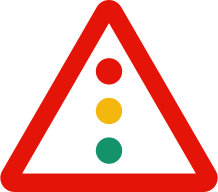
26. Warning for traffic lights ahead
This traffic sign indicates a warning for traffic lights ahead. Traffic signals are located ahead and may not be visible early enough without advance warning. Reduce speed and be prepared to stop if the signal requires it.
English • Traffic sign P-3 • Traffic signals. Warns of an isolated junction or road section controlled by traffic signals.
Español • P-3 • Semáforos. Peligro por la proximidad de una intersección aislada o tramo con la circulación regulada por semáforos.
Sources
🔗 Commons.wikimedia.org
🔗 Boe.es • Reglamento General de Circulación • anexo I • catálogo vigente
🔗 Boe.es • Real Decreto 465/2025 • P-3 • página 36
SVG source: Benedicto16 • Public domain • Original revision 2013-08-12. Wikimedia original unmodified.
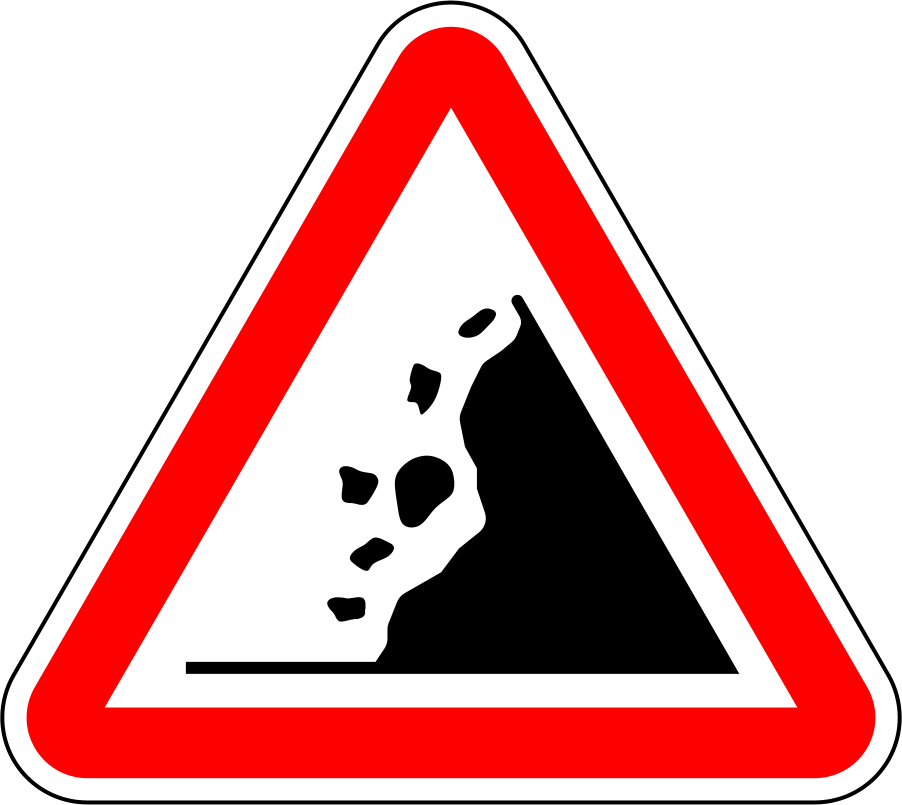
27. Warning for falling rocks
This traffic sign indicates a warning for falling rocks. Rocks or stones may fall from nearby slopes or may already be lying on the road. Reduce speed, scan the road ahead and be prepared to avoid or stop for fallen material.
English • Traffic sign P-26 • Falling rocks. Warns of an area with frequent rockfalls and possible obstacles on the carriageway as a result.
Español • P-26 • Desprendimiento. Peligro por la proximidad a una zona con desprendimientos frecuentes y la consiguiente posible presencia de obstáculos en la calzada.
Sources
🔗 Commons.wikimedia.org
🔗 Boe.es • Reglamento General de Circulación • anexo I • catálogo vigente
🔗 Boe.es • Real Decreto 465/2025 • P-26 • página 42
Replacement SVG: Commons.wikimedia.org • Wikimedia Commons original • Gigillo83 • CC BY-SA 4.0 • Original revision 2015-03-17. Wikimedia original unmodified.
Image via Commons.wikimedia.org
Gigillo83 • CC BY-SA 4.0 • Source revision 2015-03-17. Wikimedia original unmodified.
28. Warning for loose chippings on the road surface
This traffic sign indicates a warning for loose chippings. Loose stones or gravel may reduce tyre grip and can be thrown up by passing vehicles. Reduce speed, increase your following distance and avoid sudden braking, acceleration or steering movements.
English • Traffic sign P-28 • Loose chippings. Warns of a section where passing vehicles may throw up chippings.
Español • P-28 • Proyección de gravilla. Peligro por la proximidad de un tramo de vía donde existe el riesgo de que se proyecte gravilla al pasar los vehículos.
Sources
🔗 Commons.wikimedia.org
🔗 Boe.es • Reglamento General de Circulación • anexo I • catálogo vigente
🔗 Boe.es • Real Decreto 465/2025 • P-28 • página 42
Image via Commons.wikimedia.org
No machine-readable author provided. Benedicto16 assumed (based on copyright claims). • Public domain • Source revision 2006-09-07. Wikimedia original unmodified.
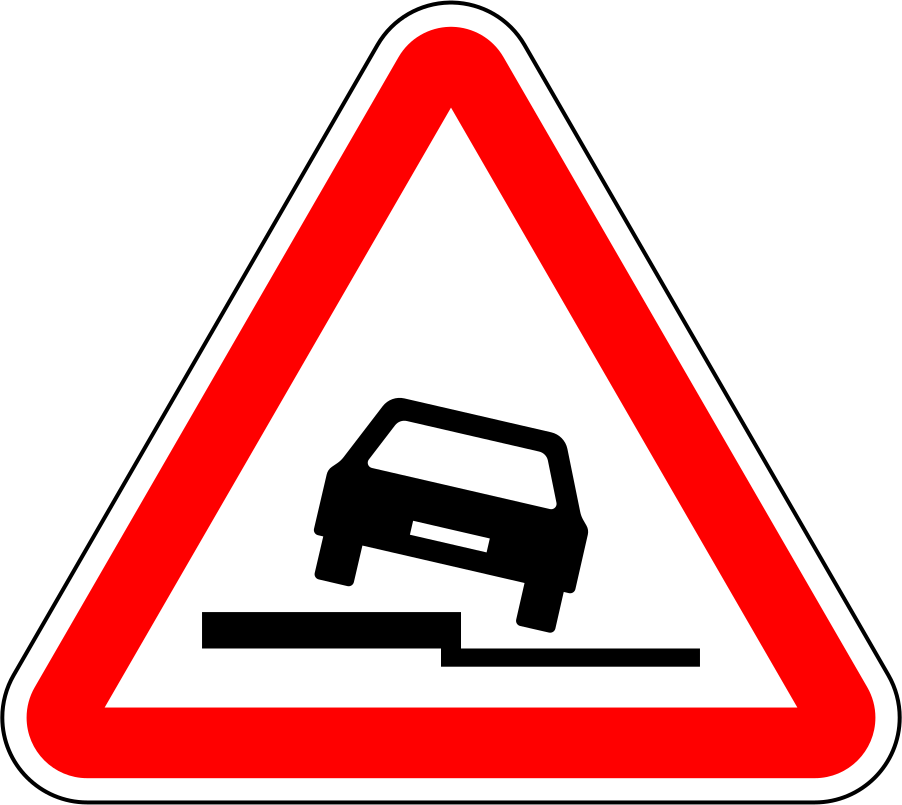
29. Warning for a soft verge
This traffic sign indicates a warning for a soft or unstable verge. The edge of the road may provide less grip or support than the roadway and can affect steering or vehicle stability. Avoid driving onto the verge unless necessary and reduce speed if you must use it.
English • Traffic sign P-30 • Edge drop. Warns of a difference in level along the side of the road shown by the symbol.
Español • P-30 • Escalón lateral. Peligro por la existencia de un desnivel a lo largo de la vía en el lado que indique el símbolo.
Sources
🔗 Commons.wikimedia.org
🔗 Boe.es • Reglamento General de Circulación • anexo I • catálogo vigente
🔗 Boe.es • Real Decreto 465/2025 • P-30 • página 42
Replacement SVG: Commons.wikimedia.org • Wikimedia Commons original • Fer1997 • CC BY-SA 3.0 • Original revision 2015-03-16. Wikimedia original unmodified.
Image via Commons.wikimedia.org
Fer1997 • CC BY-SA 3.0 • Source revision 2015-03-16. Wikimedia original unmodified.
30. Warning for accidents
This traffic sign indicates a warning for accidents. It warns drivers of an accident hazard or an accident affecting the road ahead. Reduce speed, increase your following distance and be prepared for stopped traffic, emergency services or an obstruction.
English • Traffic sign P-32 • Carriageway obstructed. Warns of vehicles obstructing the carriageway because of a breakdown, accident or other cause.
Español • P-32 • Obstrucción en la calzada. Peligro por la proximidad de un lugar en que hay vehículos que obstruyen la calzada debido a avería, accidente u otras causas.
Sources
🔗 Commons.wikimedia.org
🔗 Boe.es • Reglamento General de Circulación • anexo I • catálogo vigente
🔗 Boe.es • Real Decreto 465/2025 • P-32 • página 43
Image via Commons.wikimedia.org
No machine-readable author provided. Benedicto16 assumed (based on copyright claims). • Public domain • Source revision 2006-09-07. Wikimedia original unmodified.
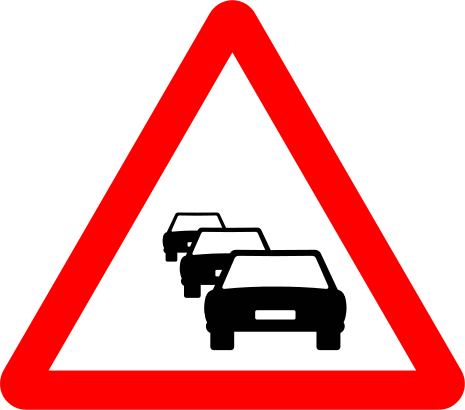
31. Warning for traffic queues
This traffic sign indicates a warning for traffic queues. Slow-moving or stationary traffic may occur ahead, sometimes unexpectedly. Reduce speed, increase your following distance and be prepared to stop.
English • Traffic sign P-31 • Congestion. Warns of a section where traffic is frequently stopped or impeded by congestion.
Español • P-31 • Congestión. Peligro por la proximidad de un tramo en el que frecuentemente la circulación se encuentra detenida o dificultada por congestión del tráfico.
Sources
🔗 Commons.wikimedia.org
🔗 Boe.es • Reglamento General de Circulación • anexo I • catálogo vigente
🔗 Boe.es • Real Decreto 465/2025 • P-31 • página 42
SVG source: No machine-readable author provided. Benedicto16 assumed (based on copyright claims). • Public domain • Original revision 2026-02-08. Wikimedia original unmodified.
32. Warning for a slippery road surface
This traffic sign indicates a warning for a slippery road surface. The road ahead may provide reduced tyre grip because of water, ice, mud, oil or another surface condition. Reduce speed and avoid sudden braking, acceleration or steering movements.
English • Traffic sign P-19 • Slippery surface. Warns of a carriageway section whose surface may be slippery.
Español • P-19 • Pavimento deslizante. Peligro por la proximidad de una zona de la calzada cuyo pavimento puede resultar deslizante.
Sources
🔗 Commons.wikimedia.org
🔗 Boe.es • Reglamento General de Circulación • anexo I • catálogo vigente
🔗 Boe.es • Real Decreto 465/2025 • P-19 • página 40
Image via Commons.wikimedia.org
No machine-readable author provided. Benedicto16 assumed (based on copyright claims). • Public domain • Source revision 2006-09-07. Wikimedia original unmodified.
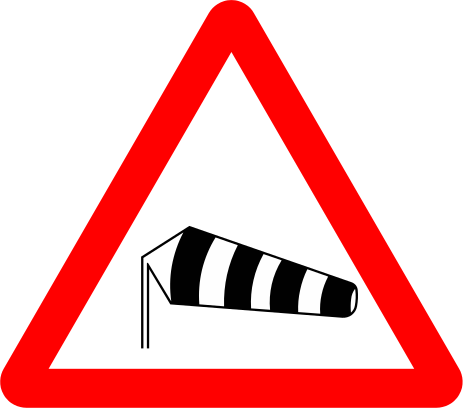
33. Warning for strong crosswinds
This traffic sign indicates a warning for strong crosswinds. Side winds may suddenly affect vehicle stability and steering. Reduce speed, keep a firm but controlled grip on the steering wheel and take extra care with high-sided vehicles, motorcycles and trailers.
English • Traffic sign P-29 • Crosswinds. Warns of an area frequently affected by strong winds across the road.
Español • P-29 • Viento transversal. Peligro por la proximidad de una zona donde sopla frecuentemente viento fuerte en dirección transversal.
Sources
🔗 Commons.wikimedia.org
🔗 Boe.es • Reglamento General de Circulación • anexo I • catálogo vigente
🔗 Boe.es • Real Decreto 465/2025 • P-29 • página 42
SVG source: No machine-readable author provided. Benedicto16 assumed (based on copyright claims). • Public domain • Original revision 2026-02-08. Wikimedia original unmodified.
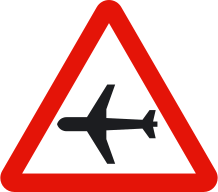
34. Warning for low-flying aircraft
This traffic sign indicates a warning for low-flying aircraft. Aircraft may pass over the road at low altitude and can create sudden noise or visual distraction. Keep your attention on the road and maintain control of the vehicle.
English • Traffic sign P-12 • Airport. Warns of a place where aircraft frequently fly low over the road and may cause unexpected noise.
Español • P-12 • Aeropuerto. Peligro por la proximidad de un lugar donde frecuentemente vuelan aeronaves a baja altura sobre la vía y que pueden originar ruidos imprevistos.
Sources
🔗 Commons.wikimedia.org
🔗 Boe.es • Reglamento General de Circulación • anexo I • catálogo vigente
🔗 Boe.es • Real Decreto 465/2025 • P-12 • página 38
SVG source: No machine-readable author provided. Benedicto16 assumed (based on copyright claims). • Public domain • Original revision 2013-08-10. Wikimedia original unmodified.
35. Warning for cattle on the road
This traffic sign indicates a warning for cattle. Cattle or other livestock may be crossing, walking along or standing near the road. Reduce speed, be prepared to stop and avoid sudden movements or unnecessary use of the horn that could startle the animals.
English • Traffic sign P-23 • Domestic animals or livestock crossing. Warns of a place where domestic animals or livestock frequently cross the road.
Español • P-23 • Paso de animales domésticos o ganado. Peligro por la proximidad de un lugar donde frecuentemente la vía puede ser atravesada por animales domésticos o ganado.
Sources
🔗 Commons.wikimedia.org
🔗 Boe.es • Reglamento General de Circulación • anexo I • catálogo vigente
🔗 Boe.es • Real Decreto 465/2025 • P-23 • página 41
Image via Commons.wikimedia.org
No machine-readable author provided. Benedicto16 assumed (based on copyright claims). • Public domain • Source revision 2006-09-07. Wikimedia original unmodified.
36. Warning for crossing deer
This traffic sign indicates a warning for crossing deer. Deer or other wild animals may enter the road unexpectedly, especially around dawn or dusk. Reduce speed, watch the roadside carefully and be prepared for more than one animal to cross.
English • Traffic sign P-24 • Free-roaming animals crossing. Warns of a place where free-roaming animals frequently cross the road.
Español • P-24 • Paso de animales en libertad. Peligro por la proximidad de un lugar donde frecuentemente la vía puede ser atravesada por animales en libertad.
Sources
🔗 Commons.wikimedia.org
🔗 Boe.es • Reglamento General de Circulación • anexo I • catálogo vigente
🔗 Boe.es • Real Decreto 465/2025 • P-24 • página 41
Image via Commons.wikimedia.org
No machine-readable author provided. Benedicto16 assumed (based on copyright claims). • Public domain • Source revision 2006-09-07. Wikimedia original unmodified.
37. Warning for children
This traffic sign indicates a warning for children. Children may be present on or near the road and may cross unexpectedly. Reduce speed, scan both sides of the road carefully and be prepared to stop.
English • Traffic sign P-21a • Children. Warns of a place frequented by children, such as a school or play area.
Español • P-21a • Niños. Peligro por la proximidad de un lugar frecuentado por niños, como una escuela, una zona de juegos, etc.
Sources
🔗 Commons.wikimedia.org
🔗 Boe.es • Reglamento General de Circulación • anexo I • catálogo vigente
🔗 Boe.es • Real Decreto 465/2025 • P-21a • página 41
Image via Commons.wikimedia.org
No machine-readable author provided. Benedicto16 assumed (based on copyright claims). • Public domain • Source revision 2006-09-07. Wikimedia original unmodified.
38. Warning for pedestrians
This traffic sign indicates a warning for pedestrians. Pedestrians may be walking near or crossing the road ahead. Reduce speed, watch carefully and be prepared to stop.
English • Traffic sign P-20b • Pedestrians. Warns of a place or section with heavy pedestrian traffic.
Español • P-20b • Peatones. Peligro por la proximidad de un lugar o tramo con elevado tránsito de peatones.
Sources
🔗 Commons.wikimedia.org
🔗 Boe.es • Reglamento General de Circulación • anexo I • catálogo vigente
🔗 Boe.es • Real Decreto 465/2025 • P-20b • página 40
SVG source: No machine-readable author provided. Benedicto16 assumed (based on copyright claims). • Public domain • Original revision 2026-09-10. Wikimedia original unmodified.
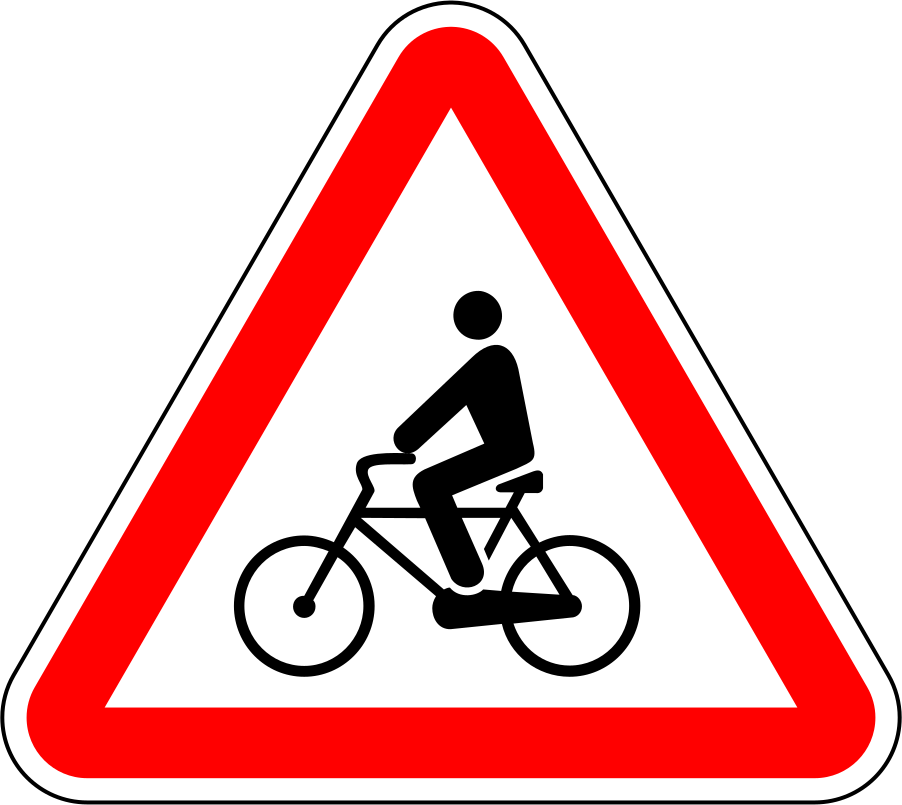
39. Warning for cyclists
This traffic sign indicates a warning for cyclists. Cyclists may be riding along or crossing the road ahead. Reduce speed, watch carefully for cyclists and maintain the passing distance required by the applicable local rules.
English • Traffic sign P-22b • Cyclists. Warns of a section frequently used by cyclists.
Español • P-22b • Ciclistas. Peligro por la proximidad de un tramo con circulación frecuente de ciclistas.
Sources
🔗 Commons.wikimedia.org
🔗 Boe.es • Reglamento General de Circulación • anexo I • catálogo vigente
🔗 Boe.es • Real Decreto 465/2025 • P-22b • página 41
Replacement SVG: Commons.wikimedia.org • Wikimedia Commons original • Republic of Portugal • Public domain • Original revision 2015-03-17. Wikimedia original unmodified.
Image via Commons.wikimedia.org
Republic of Portugal • Public domain • Source revision 2015-03-17. Wikimedia original unmodified.
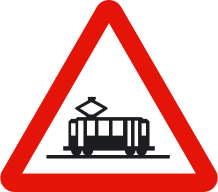
40. Warning for trams
This traffic sign indicates a warning for trams. Tram tracks cross or run along the road ahead, and trams may enter the traffic path. Reduce speed, watch carefully for approaching trams and follow the applicable traffic signals, priority signs and local rules.
English • Traffic sign P-6 • Tram crossing. Warns of a crossing with a tram line whose traffic has priority.
Español • P-6 • Cruce de tranvía. Peligro por la proximidad de cruce con una línea de tranvía, que tiene prioridad de paso.
Sources
🔗 Commons.wikimedia.org
🔗 Boe.es • Reglamento General de Circulación • anexo I • catálogo vigente
🔗 Boe.es • Real Decreto 465/2025 • P-6 • página 36
SVG source: Author not stated on source page • Public domain • Original revision 2013-08-14. Wikimedia original unmodified.
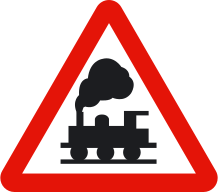
41. Warning for a railway crossing without barriers
This traffic sign indicates a warning for a railway crossing without barriers. It alerts drivers to an upcoming level crossing where railway tracks cross the road and no barriers or gates are present to stop traffic. Drivers should slow down and look both ways for trains.
English • Traffic sign P-8 • Level crossing without barriers. Warns of a crossing without barriers or half-barriers.
Español • P-8 • Paso a nivel sin barreras. Peligro por la proximidad de un paso a nivel no provisto de barreras o semibarreras.
Sources
🔗 Commons.wikimedia.org
🔗 Boe.es • Reglamento General de Circulación • anexo I • catálogo vigente
🔗 Boe.es • Real Decreto 465/2025 • P-8 • página 36
SVG source: No machine-readable author provided. Benedicto16 assumed (based on copyright claims). • Public domain • Original revision 2013-08-14. Wikimedia original unmodified.
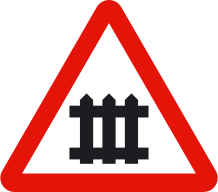
42. Warning for a railway crossing with barriers
This traffic sign indicates a warning for a railway crossing with barriers. It alerts drivers to an upcoming level crossing with gates or barriers that close when a train approaches. Drivers should be ready to stop when the barriers are down or flashing lights activate. Never attempt to cross when gates are closing or closed.
English • Traffic sign P-7 • Level crossing with barriers. Warns of a crossing with barriers or half-barriers.
Español • P-7 • Paso a nivel con barreras. Peligro por la proximidad de un paso a nivel provisto de barreras o semibarreras.
Sources
🔗 Commons.wikimedia.org
🔗 Boe.es • Reglamento General de Circulación • anexo I • catálogo vigente
🔗 Boe.es • Real Decreto 465/2025 • P-7 • página 36
SVG source: No machine-readable author provided. Benedicto16 assumed (based on copyright claims). • Public domain • Original revision 2013-08-14. Wikimedia original unmodified.
43. Warning for a railway crossing with one track
This traffic sign indicates a warning for a railway crossing with one track. It alerts drivers to a level crossing where a single railway track crosses the road. Drivers should approach with caution and be prepared to stop, even if no barriers or warning lights are active.
English • Traffic sign P-11 • Location of a level crossing without barriers. Warns of a crossing without barriers immediately ahead.
Español • P-11 • Situación de un paso a nivel sin barreras. Peligro por la presencia inmediata de un paso a nivel sin barreras
Sources
🔗 Commons.wikimedia.org
🔗 Boe.es • Reglamento General de Circulación • anexo I • catálogo vigente
🔗 Boe.es • Real Decreto 465/2025 • P-11 • página 37
Image via Commons.wikimedia.org
No machine-readable author provided. Benedicto16 assumed (based on copyright claims). • Public domain • Source revision 2006-09-07. Wikimedia original unmodified.
44. Warning for a railway crossing with two or more tracks
This traffic sign indicates a warning for a railway crossing with two or more tracks. It alerts drivers to a level crossing where more than one railway track crosses the road. More than one train may pass in succession or from different directions, so drivers should check carefully before crossing and never proceed until all tracks are clear.
English • Traffic sign P-11a • Location of a level crossing without barriers with more than one track. Warns of a multi-track crossing without barriers immediately ahead.
Español • P-11a • Situación de un paso a nivel sin barreras de más de una vía férrea. Peligro por la presencia inmediata de un paso a nivel sin barreras con más de una vía férrea.
Sources
🔗 Commons.wikimedia.org
🔗 Boe.es • Reglamento General de Circulación • anexo I • catálogo vigente
🔗 Boe.es • Real Decreto 465/2025 • P-11a • página 38
Image via Commons.wikimedia.org
No machine-readable author provided. Benedicto16 assumed (based on copyright claims). • Public domain • Source revision 2006-09-07. Wikimedia original unmodified.
