


IrelandIreland
 Traffic rules
 Ireland
1. Ireland
Ireland is an island country in north-western Europe, occupying most of the island of Ireland and sharing a land border with Northern Ireland. Traffic drives on the left, and speed limits are shown in kilometres per hour rather than miles per hour as they are across the border in Northern Ireland. Beyond the main motorways and national roads, drivers frequently encounter narrow rural roads bordered by hedges or stone walls, sometimes with limited visibility and enough space for only one vehicle at a time.
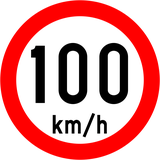
Ireland has two official languages: Irish and English, and both are commonly encountered on direction and place-name signs. In Gaeltacht areas, where Irish remains the community language, official place names may appear in Irish only. Ireland has no motorway vignette, although several motorways, bridges and tunnels are tolled. Drivers should also be aware that the default limit on many rural local roads was reduced from 80 km/h to 60 km/h in 2025 as part of a wider programme of speed-limit reform.
AI-generated by Rijbewijs-online.be • WCIT • CC BY-SA
Which number can you call in an emergency in Ireland?
Call 112 for urgent emergency assistance. Give the operator your location and explain what happened.
🔗 112.ie • Ireland’s Emergency Call Answering Service, making an emergency call
What is the legal alcohol limit for drivers in Ireland?
The maximum blood-alcohol concentration is 50 mg per 100 ml of blood for most fully licensed drivers. A lower limit of 20 mg per 100 ml applies to learner, novice and professional drivers.
What are the seat-belt and child-restraint rules in Ireland?
Seat belts must be worn by drivers and passengers where they are fitted, subject to limited legal exemptions.
Children who are shorter than 150 cm and weigh less than 36 kg must normally use a suitable child restraint in a car. The legal requirement ends when either 150 cm or 36 kg is reached; the Road Safety Authority recommends continuing with a suitable restraint until 150 cm regardless of weight.
Taxis are exempt from providing child seats, although an appropriate seat can be arranged. A rear-facing seat must not be placed in front of an active frontal airbag. Drivers are responsible for ensuring that passengers under 17 are appropriately restrained.
🔗 europa.eu • Your Europe / national authorities, Ireland road rules, Seat belts and child restraints; 🔗 irishstatutebook.ie • Irish child-restraint regulations, S.I. 240/2006, definition of child; 🔗 rsa.ie • Irish Road Safety Authority, child-seat thresholds, taxi provisions and driver responsibility
Can you use a handheld mobile phone while driving in Ireland?
No. It is illegal to hold a mobile phone while driving. Drivers must remain in proper control of the vehicle even when using permitted hands-free equipment.
🔗 europa.eu • Your Europe / national authorities, Ireland road rules, Mobile telephone
Can a visitor use a driving licence issued in another EU country in Ireland?
Yes. A valid, full EU driving licence is recognised for the vehicle categories it covers. You must meet the applicable minimum age. A learner licence or a temporary replacement certificate does not have the same automatic recognition.
When must children use a child seat in Ireland?
A child who is both shorter than 150 cm and weighs less than 36 kg must normally use a suitable child restraint in a car or goods vehicle, subject to the taxi exception. The legal requirement ends when either threshold is reached. The Road Safety Authority recommends continuing with a suitable restraint until 150 cm regardless of weight. Never place a rear-facing child seat in front of an active frontal airbag.
🔗 irishstatutebook.ie • Ireland, S.I. 240/2006, regulation 2 child definition and restraint duties

