


Railway crossingIreland
 Traffic rules
 Ireland
19. Railway crossing
A railway crossing, also called a level crossing or railroad crossing, is a place where a road or path crosses railway tracks at the same level. It may be protected by barriers, warning lights, bells, traffic signs or a combination of these measures.
Road users must approach carefully and never enter when a train is approaching, warning signals are active or the exit is blocked. They should cross promptly and must never stop, wait or become trapped on the tracks.
Wikimedia.org • Mucklagh • CC BY-SA
When must drivers stop at a railway level crossing in Ireland?
Obey the signs and markings, slow down and be ready to stop. Stop safely for amber and flashing red lights; at automatic crossings, wait until all lights are out and barriers are raised. At unattended crossings, use the Rail Cross Code and give trains priority.
🔗 rsa.ie • Ireland, RSA Rules of the Road, March 2025 law edition, railway-crossing guidance
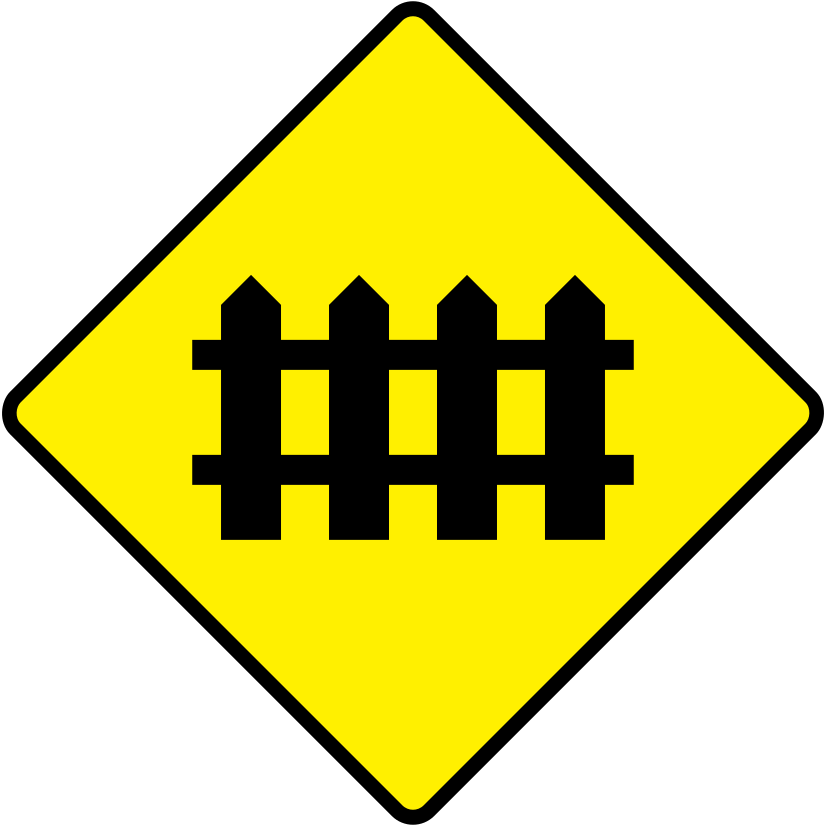 Warning for a railway crossing with barriers.
English • W 121 • Level crossing without flashing red signals. A railway level crossing without flashing red signals is ahead. Follow its signs and crossing arrangements; this warning does not alone specify whether a gate or barrier is fitted.
Sources
🔗 Commons.wikimedia.org
🔗 Roadguidelines.ie • Department of Transport • Traffic Signs Manual • W 121
SVG source: Government of Ireland – Department of Transport • Public domain • Original revision 2022-07-05. Wikimedia original unmodified.
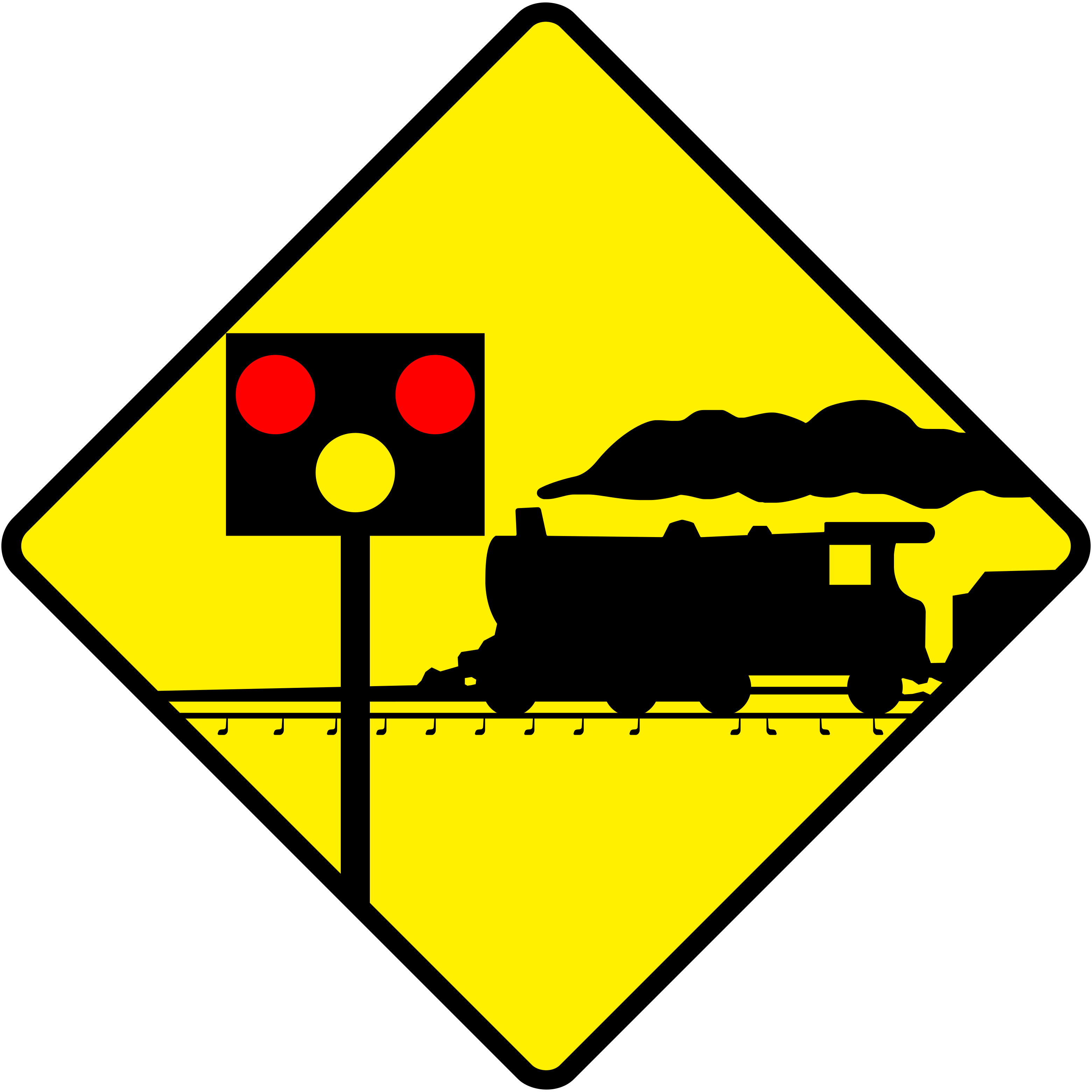 Warning for a railway crossing without barriers.
English • W 120 • Level crossing with flashing red signals. A railway level crossing controlled by flashing red signals is ahead. Stop when required by the signals; do not proceed until it is safe and the signals permit it.
Sources
🔗 Commons.wikimedia.org
🔗 Roadguidelines.ie • Department of Transport • Traffic Signs Manual • W 120
SVG source: Government of Ireland – Department of Transport • Public domain • Original revision 2021-11-05. Wikimedia original unmodified.
Artwork verified against Roadguidelines.ie • official published diagram W 120.
Must I stop at every unguarded railway crossing in Ireland?
At unattended crossings, use the Rail Cross Code: stop at least 2 metres before the railway line, look both ways and listen, and give trains priority. Cross quickly only when clear. Where automatic lights control a crossing without gates, obey those lights.
🔗 rsa.ie • Ireland, RSA Rules of the Road, March 2025 law edition, railway-crossing guidance
What if road traffic is queued beyond a railway crossing in Ireland?
Wait before the tracks until there is room to take your entire vehicle off the crossing. Do not follow another vehicle onto the tracks without checking the exit. Keep the tracks clear even if no train is visible.


