


Prohibitory signsIndia
 Traffic rules
 India
 Priority signs
 Warning signs
 Prohibitory signs
 Mandatory signs
 Information signs
Prohibitory signs
A prohibitory sign is a traffic sign that tells drivers what is not allowed on that specific road or in that situation. These signs impose restrictions such as no entry, no overtaking, no parking, speed limits, or bans on certain types of vehicles. Their purpose is to clearly indicate actions that are forbidden to ensure safety, maintain traffic flow, and protect vulnerable road users.

How are prohibitory signs classified in India?
Regulatory signs include entry, overtaking, turning and other prohibitions or restrictions.
🔗 morth.gov.in • MoRTH — GSR 38(E), 15 January 2024, clause 12: indirect-vision devices
🔗 pib.gov.in • PIB/MoRTH — official confirmation of the 2020 driving-regulation amendment
🔗 transport.jharkhand.gov.in • Jharkhand Transport — cautionary signs, actual hazard guidance
🔗 transport.jharkhand.gov.in • Jharkhand Transport — direction and facility information
What does a no-turn sign prohibit in India?
It prohibits the left, right or other turn shown at the junction or position controlled by the sign in India. Follow any supplementary panel or authorised direction and choose another legal route.
🔗 morth.gov.in • MoRTH — GSR 38(E), 15 January 2024, clause 12: indirect-vision devices
🔗 pib.gov.in • PIB/MoRTH — official confirmation of the 2020 driving-regulation amendment
🔗 transport.jharkhand.gov.in • Jharkhand Transport — cautionary signs, actual hazard guidance
🔗 transport.jharkhand.gov.in • Jharkhand Transport — direction and facility information
Can a no-turn restriction apply only to certain vehicles or hours in India?
Yes, where the local sign system provides a supplementary condition or exemption, such as a vehicle class, time or authorised access. Without a valid exception, comply with the prohibited movement shown.
🔗 morth.gov.in • MoRTH — GSR 38(E), 15 January 2024, clause 12: indirect-vision devices
🔗 pib.gov.in • PIB/MoRTH — official confirmation of the 2020 driving-regulation amendment
🔗 transport.jharkhand.gov.in • Jharkhand Transport — cautionary signs, actual hazard guidance
🔗 transport.jharkhand.gov.in • Jharkhand Transport — direction and facility information

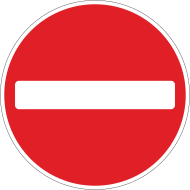
1. No entry
This traffic sign means no entry. Drivers may not enter from the direction in which the sign is placed.
English • IRC:67-2022 • Fig. 14.20 • No entry. Vehicles must not enter from this direction.
Sources
🔗 Commons.wikimedia.org
🔗 My.folderit.com • IRC:67-2022 • primary-text mirror • PDF page91
SVG source: Indian Road Congress • Public domain • Original revision 2025-04-02. Wikimedia original unmodified.
Artwork verified against My.folderit.com • official published diagram 14.20.
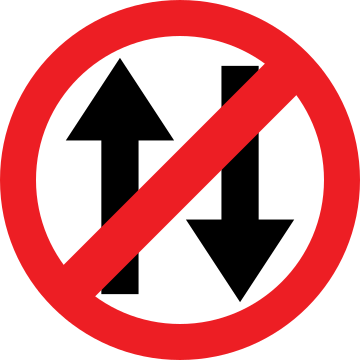
2. Access prohibited in both directions
This traffic sign indicates that drivers may not enter the road from either direction.
English • Delhi Police — unnumbered • Vehicles prohibited in both directions. Vehicles may not use this road in either direction. Delhi Police guidance identifies this older design; no exact counterpart was confirmed in the IRC:67-2022 catalogue. Meaning identified at sign-family or illustration level; this complete drawing is not confirmed as an exact current standard design.
Sources
🔗 Commons.wikimedia.org
🔗 Traffic.delhipolice.gov.in • Delhi Police • Road Signs • PDF page1(older IRC67-1977 chart)
SVG source: Commons.wikimedia.org
Saurmandal • Public domain. Original SVG unmodified.
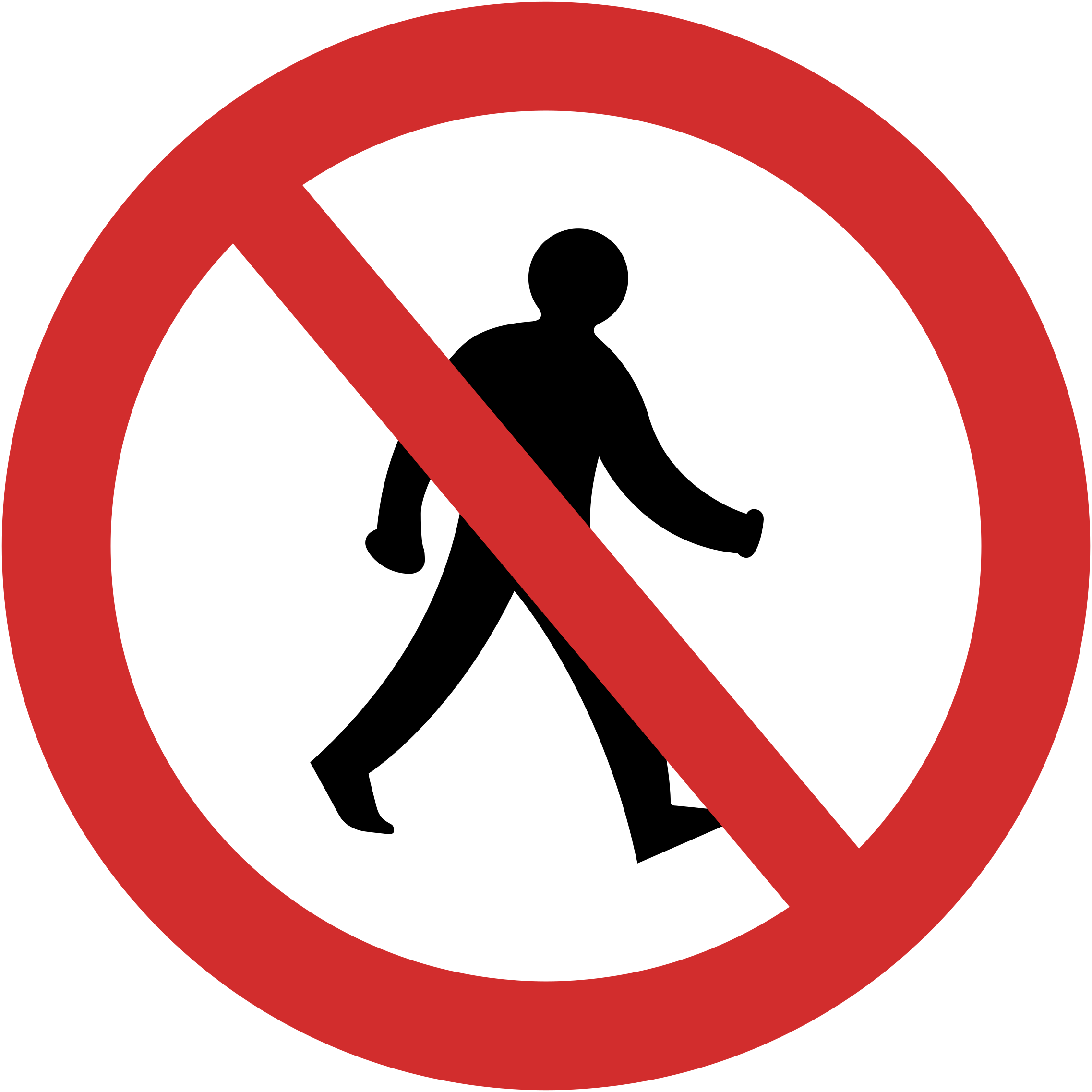
3. Pedestrians prohibited
This traffic sign indicates that pedestrians are prohibited. Pedestrians may not enter or continue beyond the sign. Other road users may still be permitted unless another restriction applies.
English • IRC:67-2022 • Fig. 14.18 • Pedestrians prohibited. Pedestrians may not enter.
Sources
🔗 Commons.wikimedia.org
🔗 My.folderit.com • IRC:67-2022 • primary-text mirror • PDF page91
Image via Commons.wikimedia.org
Nepali Department of Roads • Public domain • Source revision 2021-11-27. Wikimedia original unmodified.
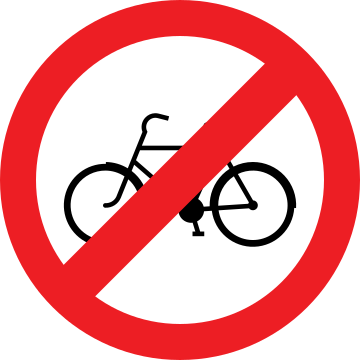
4. Cyclists prohibited
This traffic sign indicates that cyclists are prohibited. Cyclists may not enter or continue beyond the sign. Other road users may still be permitted unless another restriction applies.
English • IRC:67-2022 • Fig. 14.17 • Cycles prohibited. Bicycles may not enter.
Sources
🔗 My.folderit.com • IRC:67-2022 • primary-text mirror • PDF page91
SVG source: Commons.wikimedia.org
Ministry of Road Transport & Highways, Govt. of India • GODL-India. Source publication: Book on Road Safety Signage & Signs. Original SVG unmodified.
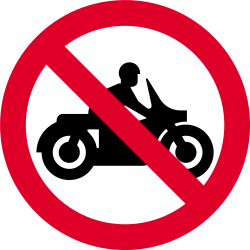
5. Motorcycles prohibited
This traffic sign indicates that motorcycles are prohibited. Motorcyclists may not enter or continue beyond the sign. Other road users may still be permitted unless another restriction applies.
English • IRC:67-2022 • Fig. 14.16 • Two-wheelers prohibited. Motorised two-wheelers may not enter.
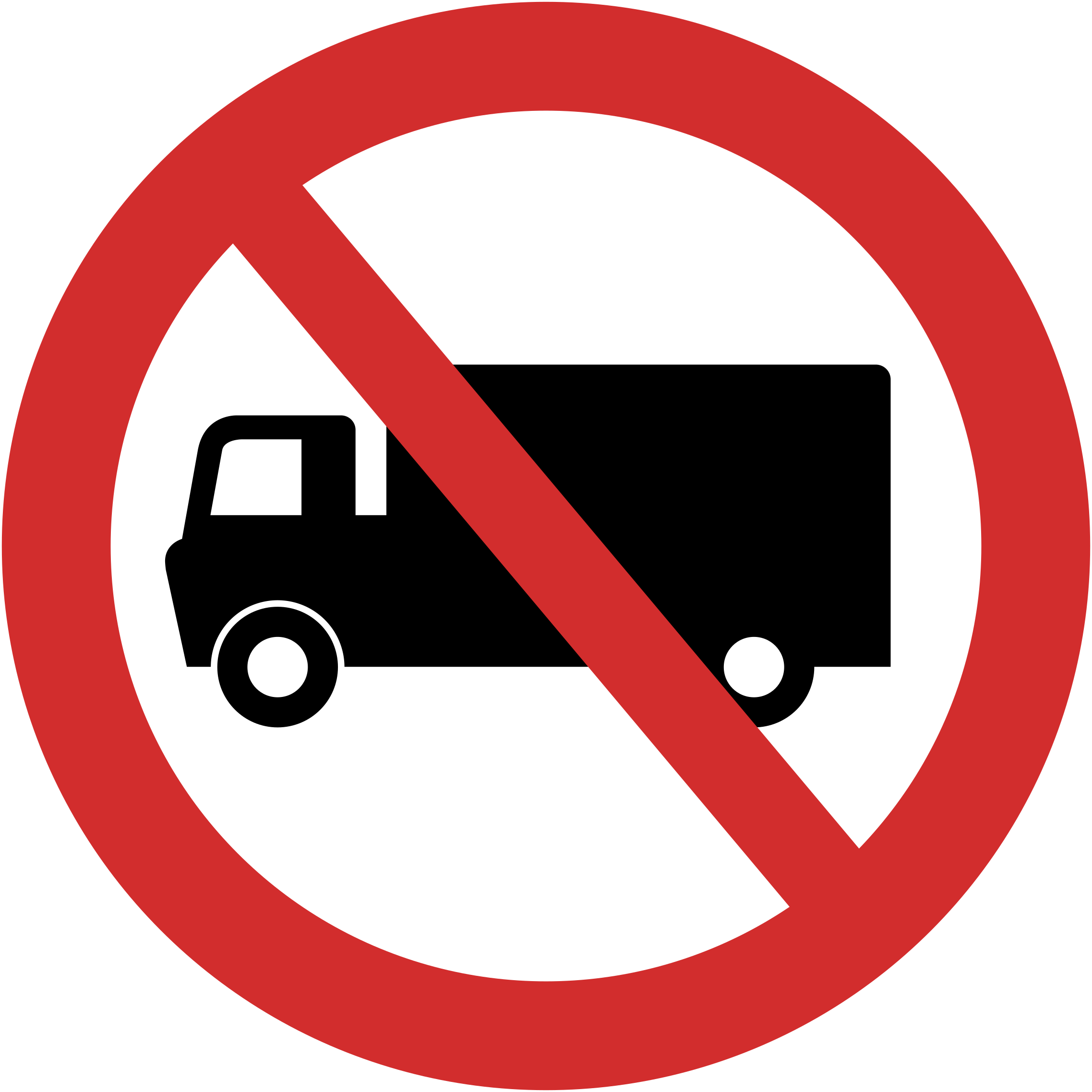
6. Trucks prohibited
This traffic sign indicates that trucks are prohibited. Trucks covered by the sign may not enter or continue beyond it. Any applicable weight threshold or vehicle-category limitation is determined by the sign, supplementary information and local rules.
English • IRC:67-2022 • Fig. 14.12 • Trucks prohibited. Lorries may not enter.
Sources
🔗 Commons.wikimedia.org
🔗 My.folderit.com • IRC:67-2022 • primary-text mirror • PDF page90
Image via Commons.wikimedia.org
Nepali Department of Roads • Public domain • Source revision 2020-02-13. Wikimedia original unmodified.
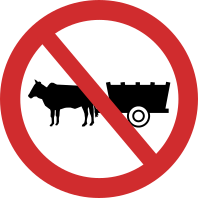
7. Horsecarts prohibited
This traffic sign indicates that horsecarts are prohibited. Horse-drawn vehicles may not enter or continue beyond the sign. Other road users may still be permitted unless another restriction applies.
English • IRC:67-2022 • Fig. 14.04 • Bullock carts prohibited. Bullock carts may not enter.
Sources
🔗 Commons.wikimedia.org
🔗 My.folderit.com • IRC:67-2022 • primary-text mirror • PDF page89
Image via Commons.wikimedia.org
Nepali Department of Roads • Public domain • Source revision 2025-06-27. Wikimedia original unmodified.
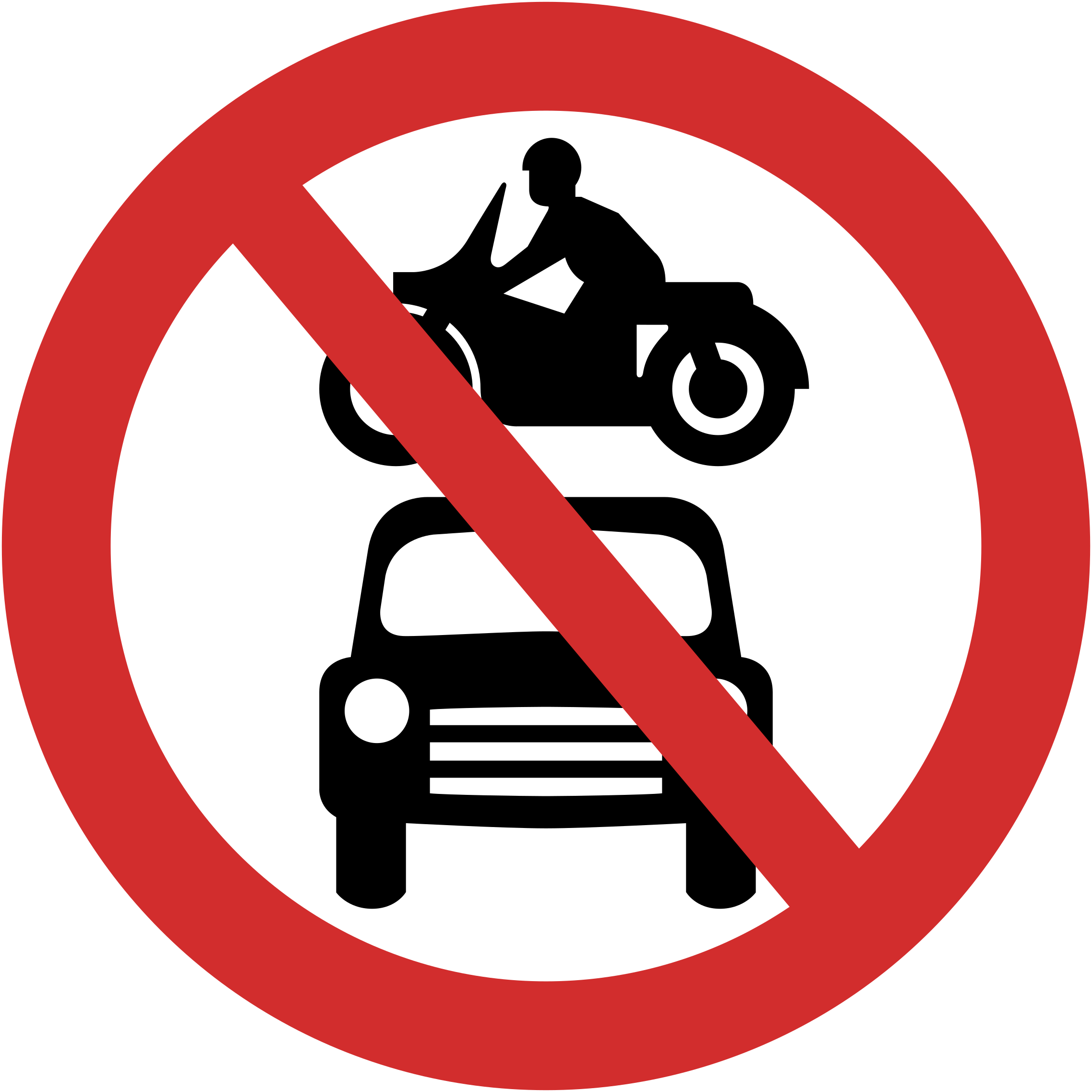
8. Motorcycles and cars prohibited
This traffic sign indicates that motorcycles and cars are prohibited. Motorcycles and cars may not enter or continue beyond the sign. Other road users may still be permitted unless another restriction applies.
English • Delhi Police — unnumbered • All motor vehicles prohibited. Motor vehicles may not enter. Delhi Police guidance identifies this older combined motorcycle-and-car design; no exact counterpart was confirmed in the IRC:67-2022 catalogue. Meaning identified at sign-family or illustration level; this complete drawing is not confirmed as an exact current standard design.
Sources
🔗 Commons.wikimedia.org
🔗 Traffic.delhipolice.gov.in • Delhi Police • Road Signs • PDF page1(older IRC67-1977 chart)
Image via Commons.wikimedia.org
Nepali Department of Roads • Public domain • Source revision 2020-02-17. Wikimedia original unmodified.
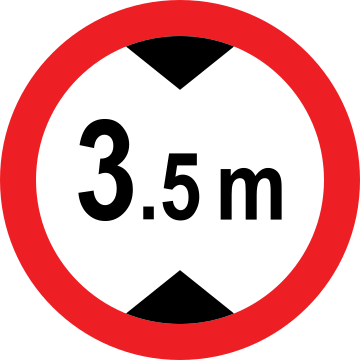
9. Vehicles higher than indicated prohibited
This traffic sign indicates that vehicles higher than indicated are prohibited. A vehicle or vehicle combination whose overall height, including its load, exceeds the displayed limit may not continue beyond the sign.
English • IRC:67-2022 • Fig. 14.35 • Height limit 3.5 m. Vehicles taller than 3.5 m may not enter.
Sources
🔗 Commons.wikimedia.org
🔗 My.folderit.com • IRC:67-2022 • primary-text mirror • PDF page95
SVG source: Commons.wikimedia.org
Ministry of Road Transport & Highways, Govt. of India • GODL-India. Source publication: Book on Road Safety Signage & Signs. Original SVG unmodified.
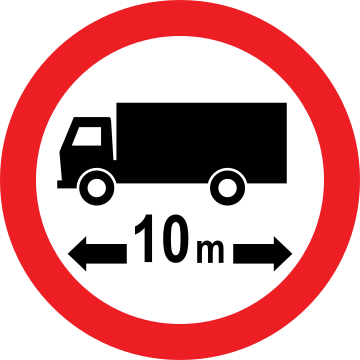
10. Vehicles longer than indicated prohibited
This traffic sign indicates that vehicles longer than indicated are prohibited. A vehicle or vehicle combination whose overall length, including its load, exceeds the displayed limit may not continue beyond the sign.
English • IRC:67-2022 • Fig. 14.36 • Length limit 10 m. Vehicles longer than 10 m may not enter.
Sources
🔗 Commons.wikimedia.org (Ministry of Road Transport & Highways, Govt. of India
🔗 Morth.nic.in • Source • GODL-India)
🔗 My.folderit.com • IRC:67-2022 • primary-text mirror • PDF page95
Image via Commons.wikimedia.org
Ministry of Road Transport & Highways, Govt. of India • GODL-India • Source revision 2023-07-03. Wikimedia original unmodified.
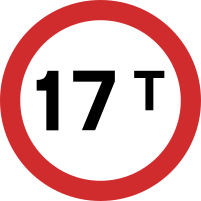
11. Vehicles heavier than indicated prohibited
This traffic sign indicates that vehicles heavier than indicated are prohibited. Vehicles or vehicle combinations exceeding the displayed mass limit may not continue beyond the sign. The legally relevant mass is determined by the applicable local rules.
English • IRC:67-2022 • Fig. 14.37 • Laden weight limit 17 tonnes. Vehicles whose total weight, including their load, exceeds 17 tonnes may not enter.
Sources
🔗 Commons.wikimedia.org
🔗 My.folderit.com • IRC:67-2022 • primary-text mirror • PDF page95
SVG source: Nepali Department of Roads • Public domain • Original revision 2025-06-27. Wikimedia original unmodified.
Artwork verified against My.folderit.com • official published diagram 14.37.
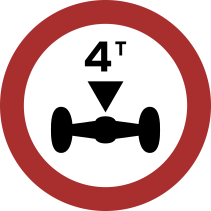
12. Vehicles exceeding the axle-load limit prohibited
This traffic sign indicates that vehicles exceeding the indicated axle-load limit are prohibited. A vehicle whose load on an axle exceeds the displayed limit may not continue beyond the sign.
English • IRC:67-2022 • Fig. 14.34 • Axle load limit 4 tonnes. Vehicles with an axle load above 4 tonnes may not enter.
Sources
🔗 Commons.wikimedia.org
🔗 My.folderit.com • IRC:67-2022 • primary-text mirror • PDF page95
Image via Commons.wikimedia.org
Design: India Road Congresses Vectorization: Big guy 637 • Public domain • Source revision 2026-01-17. Wikimedia original unmodified.
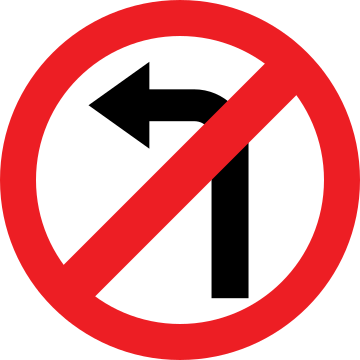
13. Turning left prohibited
This traffic sign indicates that turning left is prohibited. A left turn may not be made where the sign applies. Other movements may still be permitted unless another restriction applies.
English • IRC:67-2022 • Fig. 14.22 • Left turn prohibited. Do not turn left.
Sources
🔗 Commons.wikimedia.org
🔗 My.folderit.com • IRC:67-2022 • primary-text mirror • PDF page92
SVG source: Commons.wikimedia.org
Ministry of Road Transport & Highways, Govt. of India • GODL-India. Source publication: Book on Road Safety Signage & Signs. Original SVG unmodified.
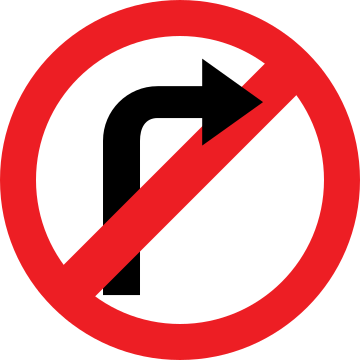
14. Turning right prohibited
This traffic sign indicates that turning right is prohibited. A right turn may not be made where the sign applies. Other movements may still be permitted unless another restriction applies.
English • IRC:67-2022 • Fig. 14.23 • Right turn prohibited. Do not turn right.
Sources
🔗 Commons.wikimedia.org
🔗 My.folderit.com • IRC:67-2022 • primary-text mirror • PDF page92
SVG source: Commons.wikimedia.org
Ministry of Road Transport & Highways, Govt. of India • GODL-India. Source publication: Book on Road Safety Signage & Signs. Original SVG unmodified.
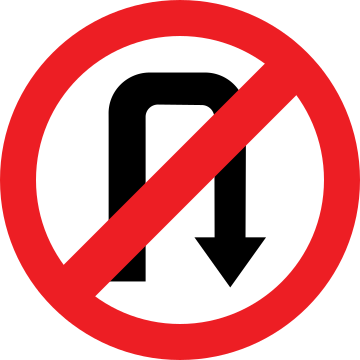
15. Turning around prohibited (U-turn)
This traffic sign indicates that turning around (making a U-turn) is prohibited. A U-turn may not be made where the prohibition applies. Other movements may still be permitted unless another restriction applies.
English • IRC:67-2022 • Fig. 14.25 • U-turn prohibited. Do not make a U-turn.
Sources
🔗 Commons.wikimedia.org (Ministry of Road Transport & Highways, Govt. of India
🔗 Morth.nic.in • Source • GODL-India)
🔗 My.folderit.com • IRC:67-2022 • primary-text mirror • PDF page92
Image via Commons.wikimedia.org
Ministry of Road Transport & Highways, Govt. of India • GODL-India • Source revision 2023-07-02. Wikimedia original unmodified.
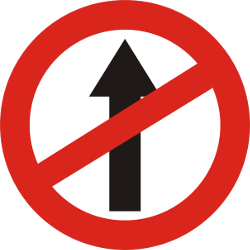
16. Driving straight ahead prohibited
This traffic sign indicates that driving straight ahead is prohibited. Traffic may not continue straight ahead where the sign applies. Other movements may still be permitted unless another restriction applies.
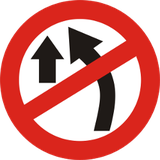
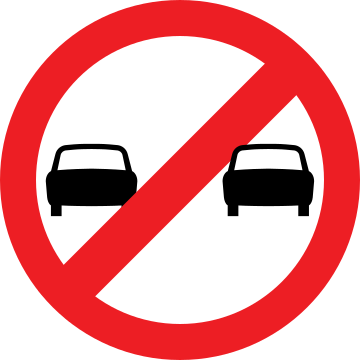
17. Overtaking prohibited
This traffic sign indicates that overtaking is prohibited. The vehicles covered by the prohibition and any categories that may still be overtaken depend on the applicable local rules.
English • IRC:67-2022 • Fig. 14.24 • Overtaking prohibited. Do not overtake other vehicles on the controlled section.
Sources
🔗 Commons.wikimedia.org
🔗 My.folderit.com • IRC:67-2022 • primary-text mirror • PDF page92
SVG source: Commons.wikimedia.org
Ministry of Road Transport & Highways, Govt. of India • GODL-India. Source publication: Book on Road Safety Signage & Signs. Original SVG unmodified. Previous PNG showed a turn-prohibition symbol; SVG shows the overtaking prohibition matching the existing topic and description.
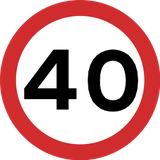
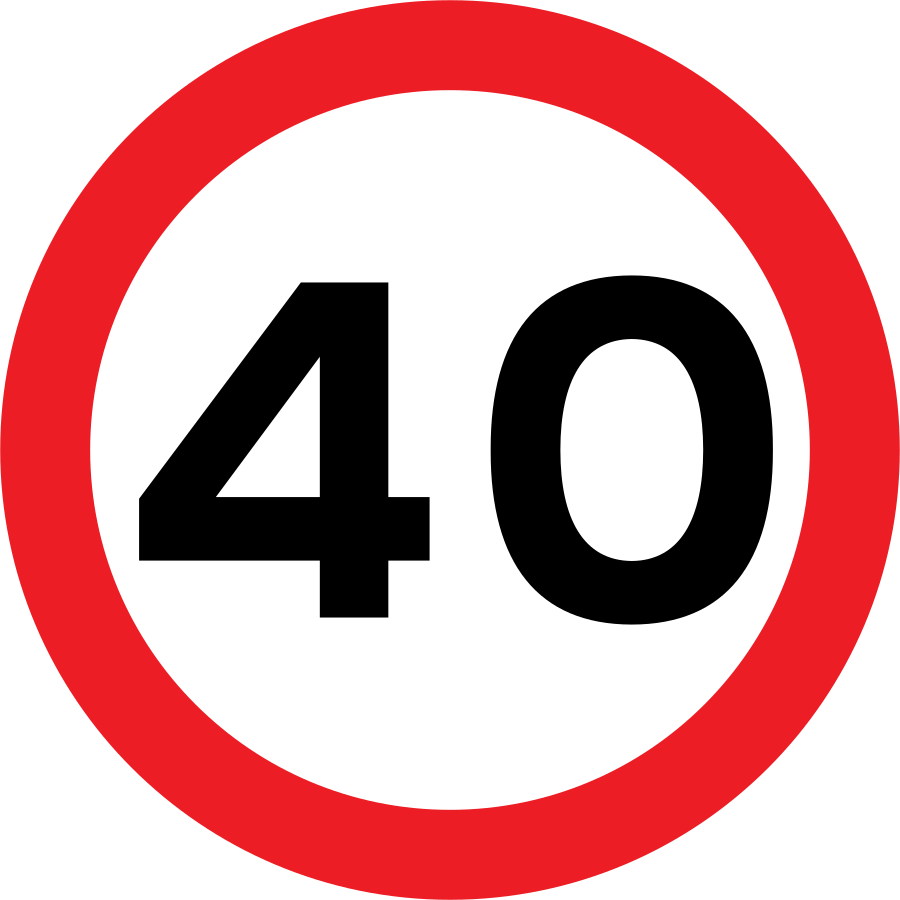
18. Start of a speed limit
This traffic sign indicates the start of a speed limit. The displayed value is the maximum permitted speed from this point. The limit remains in force until it ends or is replaced according to the applicable traffic signs and local rules.
English • IRC:67-2022 • Fig. 14.39 • Maximum speed 40 km/h. Do not exceed 40 km/h.
Sources
🔗 Commons.wikimedia.org
🔗 My.folderit.com • IRC:67-2022 • primary-text mirror • PDF page95
SVG source: UK Government • Public domain • Original revision 2014-09-27. Wikimedia original unmodified.
Artwork verified against My.folderit.com • official published diagram 14.39.
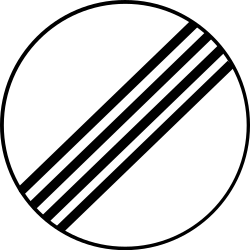
19. End of the speed limit
This traffic sign indicates the end of the previously indicated speed limit. From this point, follow any newly posted limit or the applicable default speed rules for the road and vehicle category.
English • IRC:67-2022 • Fig. 14.42 — family • Restrictions end. Ends prohibitions previously indicated for moving vehicles. Observe any applicable speed limit. The website uses several diagonal lines; the current plate shows one diagonal black band. Meaning identified at sign-family or illustration level; this complete drawing is not confirmed as an exact current standard design.
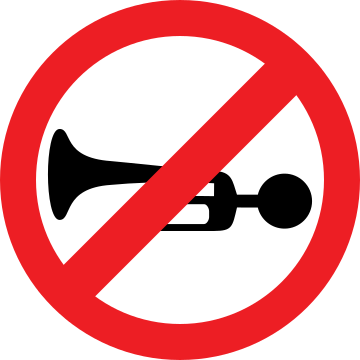
20. Using the horn prohibited
This traffic sign indicates that using the horn is prohibited. The horn or other audible warning device may not be used where the prohibition applies, except where an applicable local rule permits or requires it.
English • IRC:67-2022 • Fig. 14.19 • Horn prohibited. Do not sound the horn on the controlled section.
Sources
🔗 Commons.wikimedia.org
🔗 My.folderit.com • IRC:67-2022 • primary-text mirror • PDF page91
SVG source: Commons.wikimedia.org
en:User:Sn1per • Public domain. Original SVG unmodified.
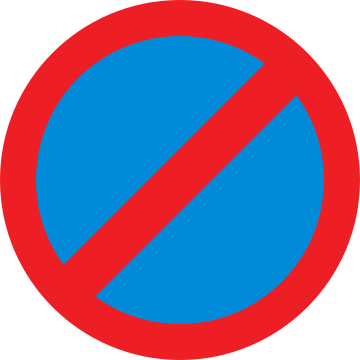
21. Parking prohibited
This traffic sign indicates that parking is prohibited. Vehicles may not be parked in the area covered by the sign unless an exception applies. Brief stopping to pick up or drop off passengers or to load or unload goods may still be permitted where local rules allow it.
English • IRC:67-2022 • Fig. 14.31 • No parking. Do not park on the controlled section.
Sources
🔗 Commons.wikimedia.org
🔗 My.folderit.com • IRC:67-2022 • primary-text mirror • PDF page94
SVG source: Commons.wikimedia.org
Indian Roads Congress • Public domain. Original SVG unmodified. Replaces the legacy P/slash illustration with the source no-parking symbol; the existing restriction and description are unchanged.
22. Parking and stopping prohibited
This traffic sign indicates that parking and stopping are prohibited. Vehicles may not stop or park voluntarily where the restriction applies, except where an applicable rule provides an exemption or stopping is required by traffic conditions.
English • IRC:67-2022 • Fig. 14.30 • No stopping. Do not stop, even briefly, on the controlled section.
Sources
🔗 Commons.wikimedia.org
🔗 My.folderit.com • IRC:67-2022 • primary-text mirror • PDF page94
SVG source: Indian Roads Congress • Public domain • Original revision 2026-02-14. Wikimedia original unmodified.
